Retail News CRM

Tag: DHL

  • DHL Express Unveals Tsing Yi Service Center in Hong Kong

    DHL Express Unveals Tsing Yi Service Center in Hong Kong

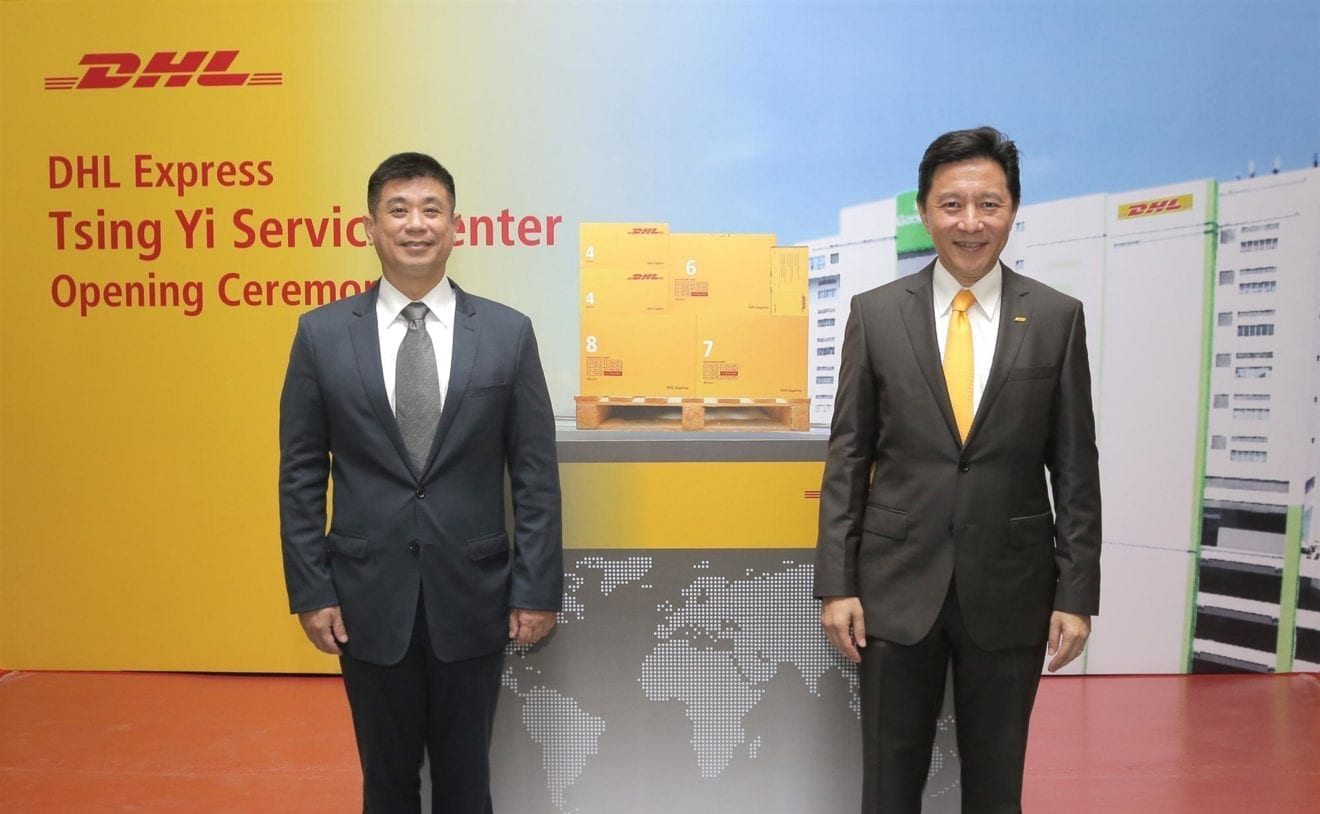
    According to DHL, the new HK$78 million facility is capable of handling 380 tonnes of shipments per day, the strongest out of all DH service centres worldwide.

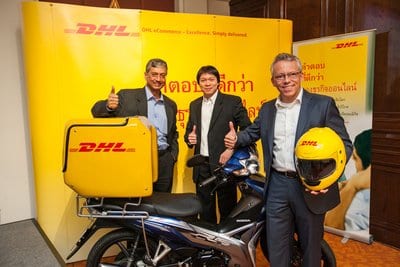
    “The opening of the new Tsing Yi Service Center follows double-digit growth in our international shipments over the past year, and underscores our confidence in the Hong Kong market,” said Herbert Vongpusanachai, senior vice president and managing director of DHL Express Hong Kong and Macau [right in photo]. “With a steady growth in our Hong Kong business contributed by the strong e-commerce sector, this facility is set to cement our market leadership with its enhanced handling capacity.

    Features include a high-speed reweigh and remeasure machine capable of processing 2,200 pieces per hour, 122 CCTVs and 24-hour monitoring.

    The 13,000m2 centre is located at Goodman Interlink and is double the size of the previous facility, which was located in the same building, according to DHL.

  • DHL and UN Development Programme Hold Airport Disaster Workshops

    DHL and UN Development Programme Hold Airport Disaster Workshops

    Germany’s Deutsche Post DHL Group and the United Nations Development Programme (UNDP) are once again conducting their joint preventative training, known as Get Airports Ready for Disaster (GARD), from September 5 to 9 at Bali’s Ngurah Rai International Airport, Lombok International Airport and Selaparang Airport in Lombok. Indonesia was the pilot country when the program was implemented globally in 2009 – in Makassar and Palu.

    Indonesia is located on the Pacific Ring of Fire where several continental plates collide. As a result, the chain of islands is at frequent risk of earthquakes, tsunamis and active volcanoes. Additionally, Bali and Lombok are categorized as high risk areas in the Indonesian Disaster Risk Index (2013). Airports in both provinces experienced operations shutdown due to volcanic eruptions from nearby Mount Rinjani.

    The multi-day workshop involves over 50 participants – including representatives from the airport operating company, aviation safety experts, national and regional Disaster Management Planning Agencies, Indonesian Red Cross, immigration authorities, the military and the police force – who will be trained to handle the high volume of incoming relief goods and increasing number of passengers during the aftermath of natural disasters.

    “Following natural disasters, airports become vital hubs for the processing of incoming relief supplies,” says Christof Ehrhart, Head of Corporate Communications and Responsibility at Deutsche Post DHL Group. “With sound processes in place at the airport and with the relevant agencies, relief goods and aid can be channeled through airports to reach the affected communities quickly and efficiently. This program continues to help improve disaster management in this geologically high-risk region.”

    “Often airports are unprepared to manage large disasters or humanitarian crisis and as a result, assistance gets slower in getting to those most affected. GARD is working specifically with all partners on the ground to solve any potential bottlenecks that could impede fast response to save lives. I praise the Indonesian government for its commitment to preparedness and the airport authorities for their risk informed management.” says United Nations Resident Coordinator in Indonesia, Douglas Broderick.

    The training includes evaluation of the airports’ capacities for processing high volumes of passengers and cargo and warehousing relief supplies. Location-specific disaster plans are drawn up as well.

    Since 2009, GARD trainings have been held in eight airports in Indonesia, namely Sultan Hassanuddin Airport in Makassar (2009), Mutiara Airport in Palu (2009), Ngurah Rai Airport (old airport) in Denpasar (2011), El Tari Airport in Kupang (2011), Polonia Airport in Medan (2012), Sultan Iskandarsyah Airport in Banda Aceh (2012), Fatmawati Airport in Bengkulu (2012) and Minangkabau Airport in Padang (2013).

  • DHL Introduces Multimodel Mongolian Connection

    DHL Introduces Multimodel Mongolian Connection

    DHL Global Forwarding has launched road and multimodal freight services linking Mongolia to Europe and the US.

    The new road connection to continental Europe has a transit time of less than 20 days and passes through Russia and Belarus. It supports different business sizes by offering both full truck load and less-than-truck load options.

    “Mongolia’s economy is rebounding from the mining downturn, further building on its status as the world’s second-largest cashmere producer and a food and agricultural export hub,” said Kelvin Leung, CEO of DHL Global Forwarding Asia Pacific. “With Mongolian businesses gaining a growing slice of global market share, supported by an increasingly solid network of regional free trade agreements, Mongolia’s dominant trading partners also stand to gain from increases in domestic consumption of foreign goods.”

    The new service is aimed at the movement of goods such as furniture, medicines wine into Mongolia, and exports such as mining spare parts, cashmere products and all-terrain bikes.

    The new multimodal connection with the US offers full container load and less-than-container load options. With a transit time of as few as 18 days, it passes from the US by air to South Korea, by ocean to China and then by rail and road to Mongolia.

    “The new road freight and multimodal services provide both small businesses and large enterprises with an especially cost-effective and timely way of testing demand and establishing consistent trade between both markets,” said Charles Kaufmann, CEO of North Asia and head of value-added services at DHL Global Forwarding Asia Pacific. “As the only international logistics provider with a local presence in Mongolia, DHL enables overseas exporters to gain a head-start in accessing the ‘Wolf Economy’ as it continues its path to the front of the pack.”

    Goods expected to be transported into Mongolia include watches, coffee machines and motorcycles, while exports include aviation spare parts, camel wool and rally cars, according to DHL.

  • Southco chooses DHL as sole global logistics provider

    Southco chooses DHL as sole global logistics provider

    DHL Global Forwarding announced that   Southco, a global source for engineered access hardware solutions, has chosen DHL once again as its sole global logistics provider.

    The company renewed their existing contract with DHL for another four years for a combination of air, ocean, domestic and customs brokerage services on various trade lanes.

    Southco currently uses DHL Global Forwarding to ship a variety of its latches, hinges and engineered access hardware products between its 17 engineering and manufacturing locations in the Americas,Europe and Asia Pacific .

    DHL transports Southco’s access hardware products via ocean freight and via DHL’s Less-Than-Container Load (LCL) solution. In Europe , the company uses DHL’s road freight to move its finished products from its manufacturing plant in the United Kingdom to continental Europe .

    “With their focus on delivering customized engineering solutions for applications in industries such as automotive, aerospace, mass transit and off-highway/construction, timely delivery and efficient supply chain management is critical to Southco and its customers. Their renewal of the DHL contract for another four years is testament to their confidence in our track record of delivering to their expectations. Our experienced team will continue to optimize their supply chain between South China and the U.S.,” said Piak-Hwee Tan , Senior Vice President, Marketing & Sales, DHL Global Forwarding Asia Pacific.

    “The relationship we have developed with DHL has been crucial to the success of our manufacturing facilities maintaining a continuous production flow, allowing us to get our products to market faster,” said Paul Smith , director, Global Supply Chain, Southco, Inc.

    “With DHL Global Forwarding’s presence in the markets where we operate, it has helped us minimize or avoid unnecessary disruptions to our supply chain during any type of natural disaster or major event. DHL Global Forwarding also provides us with a global point of contact along with regional points of contacts in all regions where Southco operates, providing us day-to-day updates of our shipments and how we perform against our key performance indicators.”

    Southco has more than 100 years’ experience in helping its customers overcome engineering challenges, with a focus on differentiating the engineered “touch points” of their products to ultimately improve the end user experience.

    DHL Global Forwarding has more than 200 years helping its customers meet their needs, including those in the engineering and manufacturing industry with its warehousing, order fulfillment, sub-assembly and transportation management, among other core services.

  • DHL collaborates with Electrolux on LCL ocean freight shipments

    DHL collaborates with Electrolux on LCL ocean freight shipments

    Electrolux and DHL collaborates. As of now, DHL Global Forwarding, the air and ocean freight specialist of Deutsche Post DHL Group, is responsible for the majority of Electrolux’ global ocean freight Less-Than-Container-Load (LCL) shipments.

    The appointment by the Swedish home appliance manufacturer comprises an annual estimated cargo volume of more than 20,000 cubic meters, approximately 70 percent of their global volume, and includes shipments from all regions including Asia, Oceania, North America, Europe and Latin America.

    “LCL shipments are important to Electrolux, particularly for project shipments, small urgent consignments and spare parts distribution, and are an integral part of our global supply chain. We have chosen DHL Global Forwarding for this task due to the unparalleled global network coverage and the high reliability which DHL Ocean Connect LCL has been providing for many years now,” said Bjorn Vang Jensen, Vice President, Global Logistics at Electrolux.

    DHL’s ocean freight network for LCL shipments includes more than 45,000 Container Freight Station point pairs which connect the globe. The company’s “Shipped as Booked” policy guarantees that goods are scheduled for a specific vessel and will ship on that vessel whether the container is full or not.

    This has been a major criterion for Electrolux in the selection process, since special project or spare part shipments need to be shipped in various, fluctuating quantities and for which demand is unpredictable.

    Moreover, these volumes are not necessarily sufficient for a full container box all the time.

    “We are extremely delighted to continue our long-lasting relationship with Electrolux. This new nomination is a fantastic acknowledgement of our DHL Ocean Connect LCL offering and the services provided in other areas in recent years,” says Michael Young, Executive Vice President, Global Head Marketing & Sales, DHL Global Forwarding.

    Electrolux has been a DHL customer for more than 10 years. The other services that DHL provides for the company are global airfreight, international supply chain services, customs brokerage and multimodal solutions including rail and trucking.

  • DHL eCommerce expands presence in China

    DHL eCommerce expands presence in China

    DHL eCommerce has opened a Distribution Centre in Shenzhen as part of its effort to expand its presence in China by at least another 50 percent.

    The new centre will support the manufacturing and online retail sectors. It can handle 18 million shipments per year and will allow shipment and clearance of e-commerce exports across the globe. It will also consolidate international outbound shipments in Southern China and will provide customer service support for locally-based online merchants.

    “We see significant potential in China’s e-commerce sector, particularly between China and the U.S., where we’ve seen triple digit growth since 2015,” said Charles Brewer, CEO of DHL eCommerce in a press statement.

    “With China accounting for more than 40 percent of global retail e-commerce sales in 2015, our investments in China demonstrate our focus on developing efficient and reliable logistics services, to bring high quality e-commerce services to Chinese retailers and meet changing consumer expectations.”

    DHL eCommerce is also making serious plans to expand existing distribution centres in Shanghai and Hong Kong – the centres will be able to handle 48 million and 71 million shipments a year, respectively.

    “Since its launch last July, the DHL eCommerce Shanghai Distribution Centre has seen a 700 percent increase in the volume of e-commerce goods being shipped out of China. With our plans to expand our existing capabilities in Shanghai and Hong Kong, we are confident that this will provide our customers with the fullest support they need, in order to reach their global customer base,” said Malcolm Monteiro, CEO of DHL eCommerce in Asia Pacific.

  • DHL Inaugurates S$160-million Advanced Regional Center in Singapore

    DHL Inaugurates S$160-million Advanced Regional Center in Singapore

    DHL Supply Chain has launched its Advanced Regional Center (ARC) in Singapore. Built at an investment of more than S$160 million, the new 90,000 sqm facility features an S$18.8 million multi-customer automation system featuring advanced robotics.

    The pioneering system allows customers to enjoy the benefits of automation solution without the need for significant capital investment. The technological enhancement uses 130 robotic shuttles to pick and store products from 72,000 locations spread across 26 levels, improving picking efficiency by 20 per cent and utilising 40 per cent less space than conventional warehousing operations.

    This is the first of its kind deployed by DHL globally and creates a model for the future of warehousing in land-scarce countries and dense cities where land availability is limited and expensive.

    “As an organisation, our spirit thrives on a hunger for new knowledge and innovations that we can bring to customers to meet the challenges of Industry 4.0, the fourth industrial revolution. We see the Asian region as a swift adopter of technologies for enhanced productivity and efficiency. By 2020, Asia will constitute 30 per cent of our total revenue. Facilities like the Advanced Regional Center offer a ready model of innovations that reduce complexity, improve accuracy and maximize opportunities for productivity gains,” said Frank Appel, Chief Executive Officer, Deutsche Post DHL Group.

    Co-located within the ARC is the DHL Asia Pacific Innovation Center (APIC), DHL’s first innovation centre outside of Germany and a joint development with the Singapore Economic Development Board (EDB). Launched in 2015, APIC is the first dedicated centre for innovative logistics services in the Asia Pacific region and showcases futuristic technologies.

    As a multi-customer facility, the Advanced Regional Center also offers bespoke solutions to cater to specific industry needs. For example, the facility boasts clean rooms for Life Sciences & Healthcare businesses, specialised infrastructure for aerospace operations and customized storage solutions for managing service parts for technology customers.

    Purpose-built to industry-leading standards, the ARC facility has been awarded ‘gold status’ for its energy and environmental design. The company has also implemented robust security measures that are in accordance with global TAPA standards.

  • DHL, UPS Bid for South Korea’s Logen Logistics

    DHL, UPS Bid for South Korea’s Logen Logistics

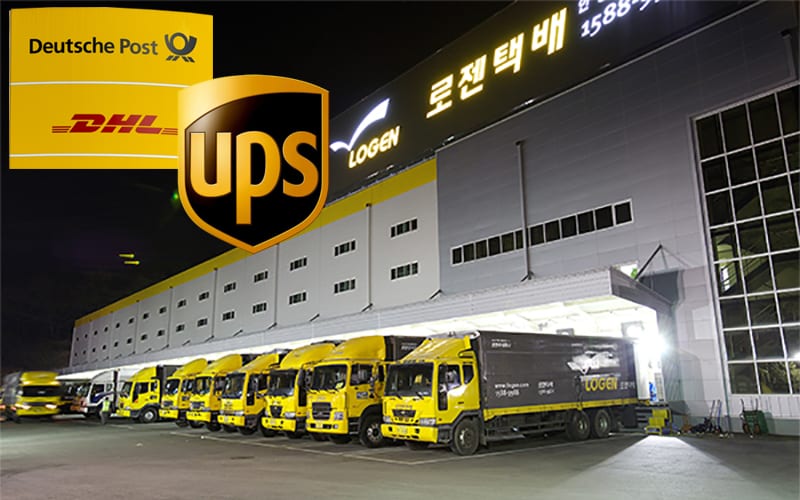
    Deutsche Post DHL Group and UPS are reportedly among the companies which have submitted preliminary offers for South Korean package delivery firm Logen Logistics.

    According to a report today, Affinity Equity Partners, CVC Capital Partners and STIC Investment were also among the bidders.

    Logen is currently wholly owned by Hong Kong-based Baring Private Equity Asia, which bought the delivery specialist from Mirae Asset Private Equity in 2013.

    Logen is reported to be the fourth largest courier services company in South Korea – behind CJ Korea Express, Hyundai Logistics and Hanjin Transportation.

    Global logistics companies UPS and DHL are eying Logen amid burgeoning e-commerce and online shopping in Korea and as part of expansion to the Asian market.

    Private equity firms also believe the logistics business is lucrative investment.

    Moreover, Logen is a solid company with a loyal client base and growing earnings.

    Unlike other parcel delivery service companies, Logen is based on the customer to customer (C2C) business that connects deals between merchants and consumers.

    Logen last year bought a 70 percent stake in KGB Logis Co. for 25.0 billion won, making it the industry’s fourth with a combined market share of over 10 percent.

    Logen recorded 20.7 billion won in operating profit on sales of 263.5 billion won last year.

    The combined earnings before interest, taxes, and amortization of the Logen and KGB Logis are estimated at 40 billion won for this year, up from last year’s around 30 billion won.

  • DHL extends TAPA certification stronghold in Asia Pacific

    DHL extends TAPA certification stronghold in Asia Pacific

    DHL Express, the world’s leading international express provider, has recorded a new milestone in its continuous drive to offer superior security and service levels in end-to-end supply chain solutions in Asia Pacific. The Transported Asset Protection Association (TAPA) Asia recognized DHL Express for having the most Freight Security Requirement (FSR) sites in Asia Pacific.

    The company’s North Operating Center in Beijing is the 100th facility within the DHL Express network in Asia Pacific to be awarded the prestigious TAPA ‘FSR’ security certification. It is also the company’s 22nd facility in China to be TAPA ‘A’ certified.

    The internationally-recognized TAPA certification is a highly sought-after logistics security accreditation and certification, and considered to be one of the industry’s most rigorous independent certification. Facilities are certified after a detailed audit conducted by independent TAPA-trained auditors on areas such as the way high value goods are handled, warehoused and transported as they move throughout the global supply chain.

    “Obtaining TAPA certification for our facilities is critical to ensuring the safety and security of our facilities and shipments as this is an increasing concern of our customers. With Asia Pacific accounting for 25% of total international express traffic, the second largest after Europe¹, it is critical that we have a robust system to safeguard the integrity of shipments that we handle. This achievement fortifies our position as the industry leader in Asia Pacific,” said Ken Lee, CEO, Asia Pacific, DHL Express.

    Security awareness is firmly embedded within DHL Express. Within its award-winning global Certified International Specialist (CIS) engagement and development program, DHL Express has incorporated a CIS Security Awareness module. This module ensures that every employee globally is equipped with knowledge on the fundamentals of security, including a sound understanding of the security risks and threats faced and knowing what can be done to help prevent or minimize the risk of security incidents occurring.

    Tony Lugg, Chairman of TAPA Asia, said, “DHL has consistently and effectively demonstrated their efforts to integrate TAPA standards in their global network. Their commendable resolve echoes TAPA’s mission of enhancing the security and integrity of the global supply chain by protecting high value goods from risks and contributing to sustainable economic growth.”

    Adrian Whelan, Senior Vice President, Head of Global Customs and Security and a former TAPA Asia Board Member commented on this milestone achievement, ‘DHL Express was one of the first logistics companies to subscribe to the TAPA Freight Security Requirement standards. We are now the global leader in terms of TAPA certified sites with over 270 sites certified globally, with 100 of these from Asia Pacific. We will continue to invest in the security of our global supply chain.”

  • The future of cross-border eCommerce

    The future of cross-border eCommerce

    Unrestricted by geographic borders, today’s consumers are buying from international merchants more than ever before.

    While B2C eCommerce sales in Asia Pacific are projected to increase at moderate double-digit rates through to 2019, consumers are increasingly expecting brands to maintain service levels with prompt delivery and regular updates on their order status.

    Nevertheless, retailers serving eCommerce customers in other countries often face challenges  with customs procedures, regulatory requirements and taxation issues. These complications can lead to delays in shipping, as well as making it hard to predict delivery times.

    With the final part of the delivery journey (the “last mile”) being the most important touchpoint between a brand and a consumer, having the right fulfilment strategy is vital.

    Technology helps determine the efficiency of cross-border eCommerce. For example, Flexible Order Management Systems and Warehouse Management Systems are software packages designed to support eRetailers with multi-channel sales and distribution. They help to improve order accuracy as well as drive efficiency in processing orders.

    Moreover, data analytics offer businesses insights into buying behaviour, sales cycles and trends, as well as help with troubleshooting.

    Internet of Things (IoT) technologies also play a significant role in last-mile fulfilment by connecting parcels, machineries, logistical equipment and transport vehicles, thus driving dynamic new business models.

    One interesting aspect in IoT-enabled last-mile fulfilment is the flexible delivery address. This offers recipients greater accuracy about expected delivery times, enabling them to specify a change in address if necessary (such as having their parcel delivered to their workplace instead of their home).

    It is crucial for retailers to work with the right fulfilment partners, especially with consumers demanding greater flexibility in shipping options. Partners that offer both domestic and international delivery options at affordable rates will allow businesses to meet customers’ wishes regarding deliveries.

    Another key consideration is a fulfilment partner’s ability to overcome the legal limitations of each country. Duties and taxes, import and export laws, packaging and returns, and varied consumer privacy and protection laws hinder prompt door-to-door delivery. A fulfilment centre in the right location is an asset to online and offline merchants, who will be seen as reliable while slashing costs commonly associated with cross-border logistics.

    eCommerce consumers have zero tolerance for delivery delays or problems. Retailers, logistic service providers and fulfilment centres all play an integral role in ensuring the “last mile” is a success. The entire eCommerce chain needs to collaborate to ensure delivery times are prompt, costs are kept low and customer experiences stay positive.

  • Alibaba Beats, Changyou Beats on Earnings

    Alibaba Beats, Changyou Beats on Earnings

    Markets experienced another volatile week, gaining and losing on alternate days ahead of the Lunar New Year holidays next week. The Shanghai Composite Index declined on Monday after the official purchasing managers index suffered its sixth consecutive monthly fall. The benchmark index increased on Tuesday, moving up 2.3% after the People’s Bank of China moved to raise liquidity in the financial system.

    The Shanghai Composite Index moved lower on Wednesday as investors turned cautious and oil prices declined heavily. The benchmark index increased 1.5% on Thursday closing at its highest level since Jan 25.

    Alibaba Group Holding Ltd. reported third-quarter fiscal 2016 (ended Dec 30, 2015) earnings of 73 cents per share, which exceeded the Zacks Consensus Estimate of 70 cents. Changyou.com Ltd. reported adjusted fourth-quarter 2015 earnings of 73 cents per share, which exceeded the Zacks Consensus Estimate of 54 cents.

    Last Week’s Developments

    Last Friday, the Shanghai Composite Index surged 3.1%, reducing its monthly loss to 23%. Despite the day’s gains, the decline for the month was the worst since Oct 2008. Stocks moved up for the first time in four days following speculation that the worst selloff in over a month was excessive in nature. Industrial and financial stocks led gains.

    Additionally, China’s central bank announced it will undertake open market operations on every working day around the Lunar New Year holiday. The number of these operations will be increased from their normal biweekly pace to increase liquidity in the banking system ahead of the holiday. This statement also boosted stocks.

    The CSI 300 added 3.2%. A gauge of brokerages and banks increased 3.2%. A measure of industrial shares increased 3.6%, the highest among the 10 industrial sectors. The Hang Seng increased for a third day, moving up 2.5%. The Hang Seng China Enterprises Index increased 2.7%. The H-share index increased after the Bank of Japan lowered interest rates into the negative zone in order to stimulate its flagging economy.

    Markets and the Economy This Week

    The Shanghai Composite Index declined 1.8% on Monday, increasing January’s selloff. The official purchasing managers index declined to 49.4, the sixth consecutive monthly fall. This is the lowest level experienced in three years. Additionally, the country’s most established companies issued warnings about a fall in earnings.

    Among other economic reports, official non-manufacturing PMI fell from 54.4 in December to 53.5 in January. In contrast, Caixin China Manufacturing PMI increased from 48.2 to 48.4 in January.

    The CSI 300 declined 1.5%. A sub index of energy stocks declined 2.8%, emerging as the largest decliner among the 10 industry groups. PetroChina Co. lktglost 2.8% after stating that falling crude and gas prices would hurt full year earnings.  The Hang Seng declined for the first time in four days, falling 0.5%. The Hang Seng China Enterprises Index moved down 1.2%.

    The benchmark index increased on Tuesday, moving up 2.3% after the People’s Bank of China moved to raise liquidity in the financial system. The central bank injected 100 billion yuan ($15 billion) into the country’s banks via reverse repurchase agreements ahead of the new year holidays.

    Tech and industrial stocks led gains. A measure of tech stocks rose to its highest level in seven days. The CSI 300 advanced 2.1%. All of its sub-indexes increased while measures of tech and industrial stocks increased by a minimum of 2.7%.  The Hang Seng declined 0.8% The Hang Seng China Enterprises Index moved down 1.1%.

    The Shanghai Composite Index lost 0.4% on Wednesday as investors turned cautious and oil prices declined heavily. A measure of energy stocks declined 1.6% as oil prices moved to around $30 a barrel following the steepest two day decline in seven years. PetroChina declined by 1.4% in Shanghai and lost 4.2% in Hong Kong.

    Positive economic data provided little comfort to investors. The Caixin China Services PMI increased to 52.4 in January from 50.2 in December. This was the highest level witnessed since July. A measure of energy stocks declined 1.6% due to the drop in oil prices.

    A sub-index of property stocks increased 0.4% on the Shanghai exchange. This was primarily due to the central bank’s decision to reduce down payments on mortgages for first time home buyers. The CSI 300 declined 0.4%. The Hang Seng fell for a third successive day, declining 2.3%. The Hang Seng China Enterprises Index sank, losing 2.5 percent, to its lowest point in more than a year.

    The benchmark index increased 1.5% on Thursday closing at its highest level since Jan 25. Commodity stocks surged and the People’s Bank of China intensified its efforts to reduce shortage of cash before markets close for the new year holidays. A gauge of energy stocks moved up from record low levels following the longest rally in crude futures in nearly two weeks.

    The central bank pumped 80 billion yuan ($12 billion) into the monetary system utilizing reverse repurchase agreements lasting 14 days. This open market operation is part of the monetary authority’s efforts to control rising borrowing costs even as capital outflows and demand for funds rise.  Meanwhile the People’s Bank of China increased yuan fixing by the highest extent in two months.

    The CSI 300 added 1.2%. A sub-index of material stocks within the CSI 300 gained 2.8%, the highest among its industry groups. PetroChina gained 0.6% during the session. The Hang Seng China Enterprises Index rebounded, moving up 1.5%.

    Stocks in the News

    Alibaba Group Holding Limited reported third-quarter fiscal 2016 (ended Dec 30, 2015) earnings of 73 cents per share, which exceeded the Zacks Consensus Estimate of 70 cents. The adjusted figure excludes one-time items but includes stock-based compensation expense.

    Alibaba reported revenues of RMB34.54 billion (US$5.3 billion), up 55.8% sequentially and 31.9% year over year, driven by strong mobile revenues. Also, revenues surpassed the Zacks Consensus Estimate of $5.08 billion.

    Total China retail marketplaces GMV came in at RMB964.0 billion (US$149.0 billion), up 23% year over year. China retail marketplaces had 407 million annual active buyers in the 12-month period ended Dec 31, 2015, representing a 22% year-over-year growth.

    Mobile GMV was RMB651.0 billion (US$101.0 billion), a 99% year-over-year surge. Mobile GMV accounted for 68% of total China retail marketplaces GMV as against 62% last quarter and 42% in the previous year. Mobile MAUs grew to 393 million, improving 48% year over year, driven by increased promotion of mobile apps.

    Changyou.com Ltd. reported adjusted fourth-quarter 2015 earnings of 73 cents per share, which exceeded the Zacks Consensus Estimate of 54 cents. This was also a significant improvement over earnings of 21 cents per share reported in the same period last year. However, this was lower than the adjusted earnings of $1.55 cents reported in the third quarter of 2015.

    Changyou.com reported revenues of $162 million, down 14% from third quarter 2015. Additionally, revenues declined 25% compared to the same period last year. Revenues from online games came in at $127 million, falling 31% on a year-over-year basis.

    For fiscal year 2015, Changyou.com reported revenues of $762 million, an improvement over 2014’s figure of $755 million. Revenues from online games came in at $637 million, declining from $652 million reported in 2014. .

    TAL Education Group reported adjusted third-quarter 2015 earnings of 12 cents per share, in line with the Zacks Consensus Estimate. This is marginally lower than the 13 cents reported in the year-ago period. However, this is significantly lower than the adjusted earnings of 72 cents reported in the second quarter of 2015.

    TAL Education Group reported revenues of $142.2 million, representing a 43.1% increase over the same period last year. However, revenues declined significantly from the $173 million reported in second quarter 2015.

    For the nine months ended Nov 2015, TAL Education reported revenues of $ 444.9 million, which represents a 43.2% improvement on a yearly basis. During this period, total student enrollments increased by 53.4% on a yearly basis.

    JD.com, Inc. has inked an agreement with DHL per which they will collaborate across a number of cross border supply chain activities. These initiatives will utilize each company’s unique capabilities, of ecommerce and logistics and widen their existing relationship.

    Earlier, in July last year the two companies had revealed that DHL was becoming the preferred logistics service provider for delivery of certain orders made on the Chinese ecommerce giant’s U.S. Mall. The agreement related to deliveries would pertain to those products delivered to China as well as across that country.

    DHL will be the preferred logistics provider for JD.com’s International Business Group per the terms of the new agreement. This unit concentrates on consumers placing orders from outside China. Further, JD.com will now be a strategic customer per the Fast Growing Enterprises initiative of DHL. This will provide the ecommerce company access to a number of logistics solutions from all of DHL’s business units.

    CNOOC Ltd. said it has started production at two offshore projects. These are the Weizhou 12-2 oilfield joint development project and the Weizhou 11-4 North oilfield Phase II project. Both of these projects are located in South China Sea’s Beibu Gulf Basin.

    With an average water depth of around 36 meters, the Weizhou 12-2 project has three oilfields. Production facilities include three wellhead platforms, including 18 wells on all of which production has started. Total production has touched a daily rate of 16,000 barrels, achieving the peak production of its overall developing plan.

    The Weizhou 11-4 North Project’s average water depth is around 40 meters. It has two wellhead platforms and 15 producing wells. At present, one well is producing oil at a daily rate of 500 barrels and is projected to touch peak production of 8,000 bpd by end 2016.

    Performance of Most Actively Traded US-Listed Chinese Stocks                              

    The table given below shows the price movements of 10 Chinese companies with the highest three-month average trading volume on U.S. exchanges. Price movements over the last five days and during the last six months have been included.

    Ticker Last 5 Day’s Performance 6-Month Performance
    BABA -9.2% -19.6%
    JD -7.2% -30%
    VIPS -6.4% -41.3%
    CTRP -5% +1.6%
    SFUN -5.3% -19.2%
    BIDU -5.5% -10.1%
    YOKU -0.1% +41.3%
    JMEI -8% -67.9%
    QIHU -0.8% +12.4%
    TSL +1.2% +4.6%


  • DHL launches S$10m innovation centre in Singapore

    DHL launches S$10m innovation centre in Singapore

    DHL  launched its Asia Pacific Innovation Centre (APIC) in Singapore, its first innovation centre outside of Germany.

    Located at DHL’s Supply Chain Advanced Regional Centre building at Tampines LogisPark, the S$10 million facility is also the company’s first dedicated centre for innovation logistics services in the Asia Pacific region.

    DHL-Innovation-Center-1_xlarge

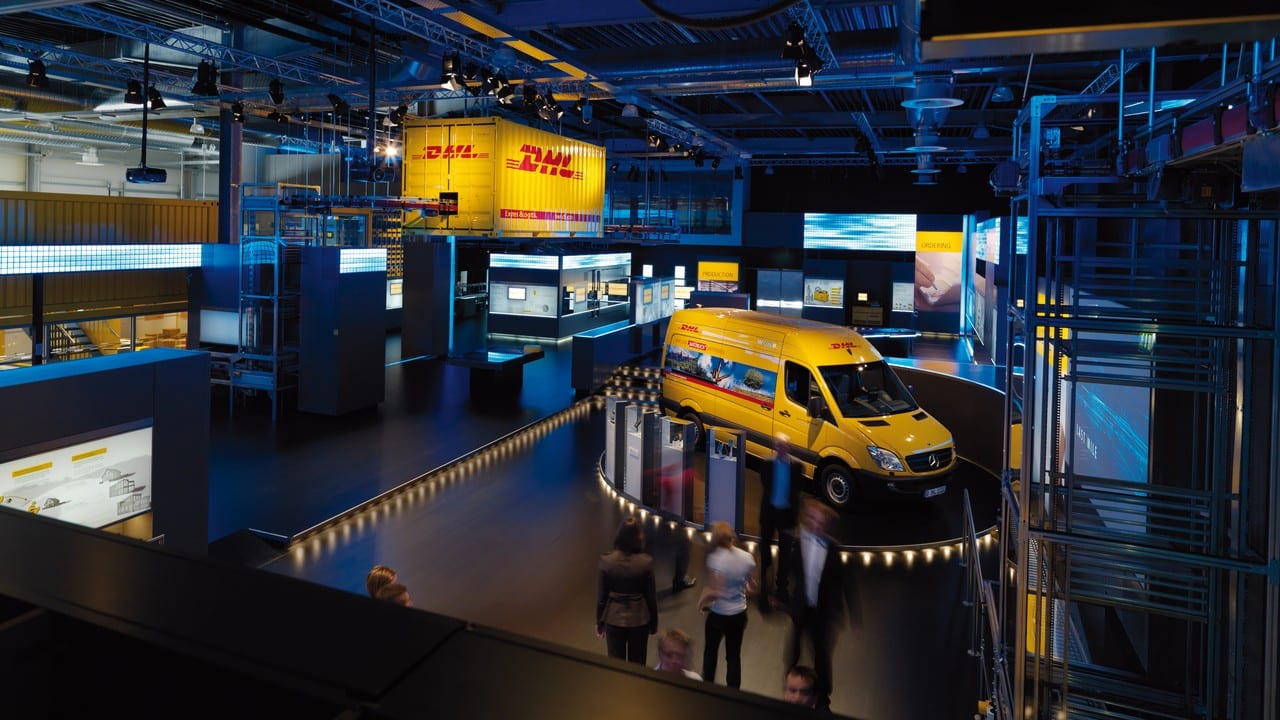
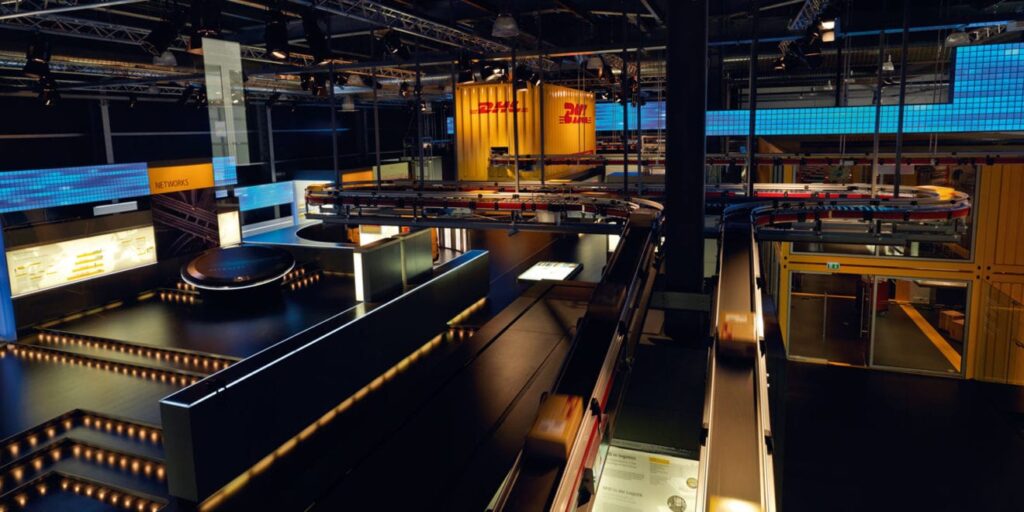
    APIC showcases technologies that will transform logistics operations, such as driverless shuttles for faster and more efficient transportation, and drones for the delivery of time-critical goods such as medicines. It was launched with the support of the Economic Development Board (EDB), the company said.

    Additionally, APIC also serves as a regional platform for collaborative innovation between DHL and its partners. The centre will also drive research initiatives that focuses on emerging trends in Asian logistics and economic activity. For instance, DHL’s Chief Commercial Officer Bill Meahl cited growing opportunities in e-commerce as well as growth in markets like India and China.

    There are also guided tours, innovation workshops and forums available for visitors to the facility, it added.

    DHL_pics_1600x800_01

    Said Mr Lee Eng Keat, Director, Logistics and Natural Resources at EDB: “The launch of the APIC is another important step towards enhancing Singapore’s value-adding role in the realm of global supply chain solutions.

    “With DHL as a strategic partner in this journey, Singapore is well positioned to serve the needs and harness the opportunities presented by the dynamic supply chain landscape and emerging technology and trends globally.”

  • Logistics operators intensify e-commerce focus in Thailand and China

    Logistics operators intensify e-commerce focus in Thailand and China

    Global logistics companies continue to pile into the Asia e-commerce market, with Damco launching a China solution and DHL expanding its growing presence in the region deeper into Thailand.

    DHL is building a 32,000 square foot, central distribution center in Bangkok and a network of over 20 depots located throughout Thailand to provide full coverage across the country. To meet increasing business demands, the integrator plans to more than double the number of depots in Thailand by 2017 and expand its fleet primarily in two-wheel vehicles that can operate more efficiently in the traffic situations in Thailand’s major cities.

    “The Thai e-commerce market is expected to more than triple in size to $3.93 billion between now and 2020 and with this investment, we are well positioned to support the growth of e-commerce businesses in Thailand,”  said Thomas Kipp, CEO, DHL eCommerce.

    Only 1.7 percent of total sales in Thailand were obtained from e-commerce, compared to more than 10 percent in China, said Malcolm Monteiro, CEO, Asia Pacific, DHL eCommerce.

    “We see major strategic opportunities for e-commerce growth in Thailand, particularly with the Asean Economic Community which is expected to increase the movement of goods within the region,” Monteiro said.

    “Despite e-commerce already being a billion-dollar sector with extremely rapid adoption, Thailand’s e-commerce share of the retail market is still relatively low compared to other high-growth economies.”

    Damco has focused its latest service offering in China where it is launching an end-to-end e-commerce solution, from inbound goods management and consumer order receipt to final delivery.

    Damon Gu, Damco’s head of supply chain management for Asia, said the large and rapidly growing Chinese market for online shopping was a magnet for both importers and domestic producers.

    “Online shopping events such as China Singles Day are already creating world-beating levels of activity for e-retailers locally in China, as well as globally,” he said. “Discerning Chinese consumers in this highly competitive marketplace expect the highest standards of fulfilment. This new program helps companies to guarantee that level of service.”

    Using its 1,500 local staff and 26 locations in China, Damco will arrange delivery to end-consumers in more than 1,600 Chinese cities.

  • DHL Signs EMS Deal with Pos Indonesia

    DHL Signs EMS Deal with Pos Indonesia

    International logistics service provider DHL Express has signed an addendum to the  cooperation agreement with PT Pos Indonesia (Persero) for an Express Mail Service (EMS) to overseas destinations.

    The agreement was signed on Wednesday, January 20 by DHL Express Indonesia’s senior technical advisor Ahmad Mohamad and PT Pos’ president director Gilarsi Wahyu Setijono.

    The collaboration is aimed at supporting the growth of small and medium enterprises (SMEs) in Indonesia, through the provision of a reliable international express delivery service to more than 220 countries and territories within DHL’s global network; facilitating the growth of SMEs on a global scale.

    The partnership was first developed in 2005, and has since provided significant benefits for SMEs through the opening of access to global markets. Pos Indonesia can learn best practices in handling international express delivery service through this cooperation.

    “The most important thing is that, through this cooperation, Pos Indonesia and DHL Express Indonesia can grow and advance together to serve the people of Indonesia,” Gilarsi said.

  • DHL eCommerce Eyes Thailand’s Fast-Growing Online Retail Sector

    DHL eCommerce Eyes Thailand’s Fast-Growing Online Retail Sector

    DHL eCommerce, a division of the world’s leading logistics company, Deutsche Post DHL Group, has expanded its operations into Thailand and is offering end-to-end domestic delivery service for Thai e-commerce merchants. With its new service, DHL eCommerce is offering a range of unique service options that caters to Thailand’s burgeoning e-commerce market.

    Understanding that a strong backbone for e-commerce growth lies in a good logistics system, DHL eCommerce aims to enable a better e-commerce experience for both consumers and merchants through efficient logistics and a seamless online shopping experience. Major additions will be made to DHL’s delivery infrastructure in the country, including a 3,000 sqm central distribution center in Bangkok and a network of over 20 depots located throughout Thailand ensuring full coverage across the entire country. To meet increasing business demands, DHL plans to more than double the number of depots in Thailand by 2017 and expand its fleet primarily in two-wheel vehicles that can operate more efficiently in the traffic situations in Thailand’s major cities.

    As part of its service offerings, DHL eCommerce’s fleet of two- and four-wheel vehicles will provide next-day delivery to all urban areas, and a 2-3 day delivery to all other locations. All merchants have access to Cash on Delivery (COD) with daily remittance and access to a multilingual call center.

    DHL eCommerce launches in Thailand

    The launch of DHL eCommerce in Thailand is a great showcase for Strategy 2020, the corporate strategy of Deutsche Post DHL Group, which has seen a rename of its Mail division to “Post – eCommerce – Parcel” to better reflect the focus on products and services offered for the high-growth e-commerce market. DHL has been operating in Thailand since 1973, through its other business units – DHL Express, DHL Global Forwarding and DHL Supply Chain.

    “Thailand, with its tremendous growth potential, fast e-commerce adoption and high smartphone penetration rates, has been identified as the first Southeast Asian country to launch DHL eCommerce’s domestic delivery service in line with our group’s Strategy 2020,” said Thomas Kipp, CEO, DHL eCommerce. “The Thai e-commerce market is expected to more than triple in size to EUR 3.6 billion between now and 2020[1] and with this investment, we are well positioned to support the growth of e-commerce businesses in Thailand.” 

    “We see major strategic opportunities for e-commerce growth in Thailand, particularly with the Asean Economic Community which is expected to increase the movement of goods within the region. Despite e-commerce already being a billion-dollar sector with extremely rapid adoption, Thailand’s e-commerce share of the retail market is still relatively low compared to other high-growth economies. Only 1.7% of total sales in Thailand are obtained from e-commerce, compared to more than 10% in China,” said Malcolm Monteiro, CEO, Asia Pacific, DHL eCommerce. “Thailand is ranked as one of our top priority markets in Southeast Asia: its expected annual market growth of more than 20% (from 2014 to 2020) is likely to be largely driven by significant numbers of SMEs beginning to extend their business models into online marketplaces.”[2]

    “In order to fulfill Thai consumers’ expectations of seamless and simple e-commerce, businesses need logistics services that keep up with extremely rapid changes in consumers’ expectations while providing high operational excellence,” said Kiattichai Pitpreecha, Managing Director, DHL eCommerce Thailand. “This makes the need for a tailored e-commerce delivery service greater than ever before – so that merchants, especially SMEs, can focus on their core business and grow faster based on a high performing logistical backbone.”

    “Our successful offerings in India and China have proven that exceptional customer service bolstered by robust and scalable end-to-end delivery networks are the two essential ingredients needed to win e-commerce market share. That applies to all players, from small businesses to multinational retail conglomerates,” added Malcolm Monteiro, CEO, Asia Pacific, DHL eCommerce. “As Thai consumers continue to come online and join the region’s appetite for e-commerce, we are confident that our services will give customers both a first-mover advantage and a unique competitive edge.”