Retail News CRM

Tag: DHL

  • DHL Express launches On Demand Delivery

    DHL Express launches On Demand Delivery

    DHL Express has launched a new “On Demand Delivery”, which it says has been developed in response to significant growth in premium cross-border e-commerce volumes.

    With On Demand Delivery, shippers can choose to activate specific delivery options and have DHL Express notify their customers via email or SMS about a shipment’s progress. The customers can then select the delivery option that best suits their requirements via the On Demand Delivery website.

    DHL said that the service is “specifically tailored” to the demands of international e-commerce deliveries, where the majority of shipments are addressed to residential addresses and customers crave flexibility and convenience.

    “We have seen the share of e-commerce deliveries grow from about 10% in 2013 to more than 20% of the international volumes of DHL Express in 2016,” said John Pearson, CEO Europe and Global Head of Commercial, DHL Express Europe.

    “This has primarily been driven by the strong demand for high-value and premium goods in the global marketplace, as well as the emergence of start-up retailers who are expanding opportunistically to new overseas markets and therefore require a worldwide door-to-door delivery service. In response to the dynamic growth and to ensure that our services continue to exceed customer expectations, we have launched On Demand Delivery.”

    Charlie Dobbie, Executive Vice President, Network Operations, Aviation and IT, DHL Express, said: “On Demand Delivery isn’t just a new customer interface – it also represents an enhancement of our worldwide network, as we have tailored our last-mile operations to meet the specific demands of cross-border e-commerce deliveries.

    “Thanks to On Demand Delivery, we can support the service offering of online shippers and improve the delivery experience for their customers, while improving our own efficiency, particularly for last-mile deliveries.”

    The  On Demand Delivery site can be accessed from smartphones, tablets and PCs, and offers receivers up to six delivery options. Shippers can incorporate their own branding into customer notifications.

    Receivers can schedule a delivery, arrange delivery to a nearby DHL Service Point or their own alternate address, and request that a shipment is put on hold during a vacation.

    DHL Express plans to roll out the On Demand Delivery to more than 100 countries through 2016 and 2017.

  • DHL eCommerce unveils new distribution center in Japan

    DHL eCommerce unveils new distribution center in Japan

    DHL eCommerce, a division of Deutsche Post DHL Group, unveiled its plans to establish an outbound cross-border eCommerce distribution center in Narita, Japan by April 2017.

    The distribution center will be co-located with the Japan Global Distribution Center, created by one of DHL’s divisions. The cross-border shipping product DHL Parcel International Direct will provide affordable deliveries from Japan to the United States and the United Kingdom, guaranteeing transit times of four to six business days, DHL eCommerce said. DHL GlobalMail Packet Plus, another cross-border shipping product, will provide the best rates for Japan-Europe deliveries, offering transit times of five to 10 business days and a high degree of visibility into the status of shipments.

    The expansion plans in Japan are part of DHL eCommerce’s larger strategy in the Asia Pacific. The company recently unveiled its 70 million euro (U.S. $74.3 million) investment in India to boost the capabilities of the air hubs in Delhi and Mumbai to enhance B2C e-commerce delivery in India.

    In June 2016, DHL eCommerce announced its plans to grow its overall footprint in China by 50 percent. In January 2016, the company launched domestic delivery operations in Thailand and announced plans to double its fleet and number of depots by 2017.

  • DHL eCommerce will invest €70 million to expand its air hubs in Delhi and Mumbai

    DHL eCommerce will invest €70 million to expand its air hubs in Delhi and Mumbai

    DHL eCommerce will invest €70 million (US$75.1 million) to expand its air hubs in Delhi and Mumbai, supporting the growing e-commerce industry in India.

    According to DHL, the 5,761m2 Delhi hub and 4,274m2 Mumbai hub will be equipped with automation to handle a daily volume of more than 500 tonnes. The upgrade will allow Blue Dart Express, a subsidiary of DHL, to process more shipments faster and deliver them to Indian consumers by air.

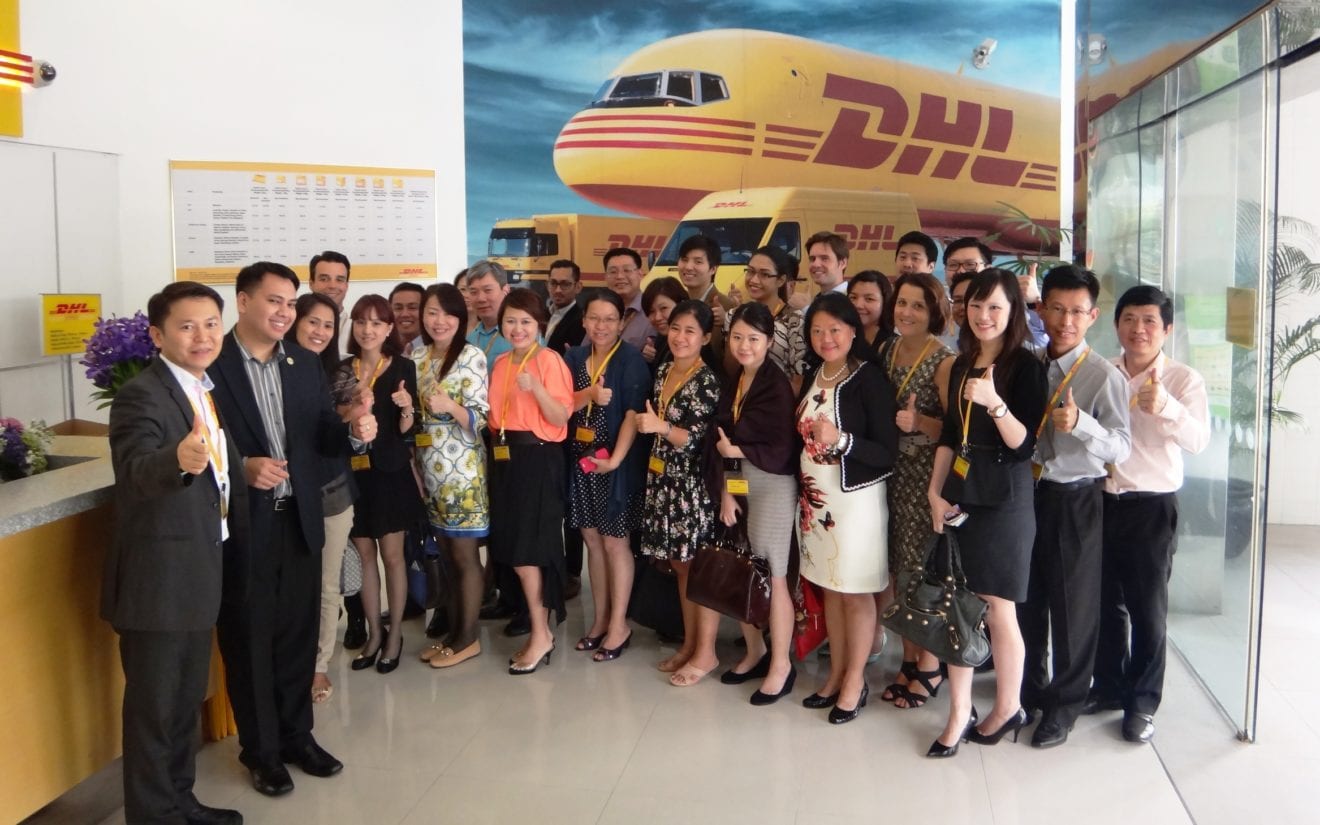
    “The e-commerce industry is an extremely exciting one that offers tremendous opportunities for businesses and consumers alike,” said Juergen Gerdes, CEO of post, e-commerce and parcel at Deutsche Post DHL Group [third from right in photo]. “The global B2C cross border e-commerce market will multiply in size to US$1 trillion in 2020. The growth is driven by increasing consumption from expanding middle classes, greater mobile and internet penetration and improving logistics and infrastructure as consumers increasingly shop online and expect shorter delivery times. With our added focus on innovation such as the StreetScooter and In-Car Delivery, we are gearing up to ensure we stay ahead of the game and be able to anticipate and meet the needs of the overall industry, e-tailers and end customers.”

    Charles Brewer, CEO of DHL eCommerce, said that the completion of the upgrades will mark another milestone in the expansion of the DHL eCommerce logistics network.

    “India is a really important market for us and is one of the fastest-growing, with B2C e-commerce expected to grow from €9.6 billion (US$10.3 billion) in 2016 to between €30-40 billion (US$32.2-42.9 billion) in 2020,” said Brewer. “This investment in India, as well as recent investments in the Americas and elsewhere in Asia Pacific this year, showcases our commitment to the e-commerce industry by delivering high quality, reliable logistics solutions to meet the rising demands of e-commerce consumers.”

  • DHL Appoints New Hong Kong and Macau Managing Director

    DHL Appoints New Hong Kong and Macau Managing Director

    According to DHL, McQueen will be responsible for long-term growth across sectors such as aviation, consumer goods, healthcare, retail and technology. He will also be in charge of integrating solutions with freight and logistics services from South China’s major development zones.

    “Designing supply chain solutions that meet and exceed the unique needs of customers isn’t just my passion – it’s also essential for long-term growth that can withstand constant disruption and volatility in the marketplace,” said McQueen. “Having laid the foundations for such growth in the Greater China region, I’m excited to be focusing on Hong Kong as the linchpin in our regional operations, and look forward to leading our excellent team of more than 1,000 experienced supply chain employees to even greater heights.”

    McQueen has 24 years of supply chain experience. He was most recently in charge of business development at DHL Supply Chain Greater China, and was previously head of industrial development and solution design director for the Middle East and Africa.

    “We appointed Jez to lead our Hong Kong and Macau operations because of his outstanding track record in delivering rapid and sustainable growth across a wide variety of industries,” said Yin Zou, CEO of DHL Supply Chain Greater China. “Jez has proven invaluable as the head of business development for our operations in Greater China, combining deep expertise in all sectors with formidable acumen for turning supply chain innovations into substantial long-term improvements in customer satisfaction and revenues alike. Hong Kong remains a pivotal market for DHL Supply Chain, and I believe Jez’s skill set and passion for business development make him uniquely suited to handling its broad and dynamic range of multi-industry needs.”

  • DHL launches air freight service for emergency logistics

    DHL launches air freight service for emergency logistics

    DHL Global Forwarding extends its product portfolio and launches DHL SameDay Speedline. This new air freight product offers forwarding customers a mission critical solution for emergency shipments. Providing a best flight out service at an optimal cost-performance ratio, each unaccompanied shipment will be proactively monitored from origin to destination.

    With benefits such as 24/7/365 pickup and delivery, collection within 120 minutes and quotations within 60 minutes, the DHL SameDay Speedline product will fill the gap for a much needed global expedited solution. This new service covers urgent delivery of spare parts, critical medical supplies or newly launched products.

    Although DHL SameDay Speedline is a multisector product, it‘s especially attractive for aerospace & aviation, automotive, electronics, energy and life sciences industries.

    “The emergency shipment market is growing with just-in-time inventories for industries from aerospace and energy to manufacturing to adapt their supply chains. The need for mission critical shipment delivery to avoid line down situations continues to arise and requires a partner that has the global reach combined with the technology to provide transparency to each sector specific logistical challenge. DHL SameDay Speedline fills this gap and provides added value through its many service features,” states Ingo-Alexander Rahn, Global Head of Air Freight, DHL Global Forwarding.

    The launch of DHL SameDay Speedline’ s global network of 50+ stations will cover the greatest geographical demand for emergency shipments, with the expectation, that the network will grow through customer demand. A core strength of DHL SameDay Speedline are the 24/7/365 SameDay Contact Centers in the US, Singapore and Ireland, where each shipment is proactively monitored from origin to destination.

    Dedicated customer service representatives will handle the majority of quotes and routing option for door-to-door transits in less than 60 minutes. Customers of DHL SameDay Speedline will receive customized milestone updates of their shipments movement after the logistical event. In case of an irregularity, a resolution to the issue is available within minutes.

    Next to specific industry sectors solutions, the scope of DHL SameDay are those customers that need to ship time-critical cargo regularly or experience unplanned emergencies.

    “We see DHL SameDay Speedline as a multi sector product offering that is especially attractive for aerospace & aviation, automotive, technology, energy, marine logistics and life sciences industries, including temperature controlled, dangerous or out-of-gauge goods,” Rahn adds.

    After surveying more than 200 customers from various industry sectors with emergency shipment needs, DHL Global Forwarding saw a need to develop a product utilizing the best of both worlds, the leverage of the DHL relationships in country with the emergency product technology and intelligence of the DHL SameDay team.

    “Our customers will choose DHL SameDay Speedline for the best flight options to meet just-in-time demand at an optimal cost performance ratio,” stresses Ingo-Alexander Rahn.

  • DHL encourages employees to help local communities

    DHL encourages employees to help local communities

    Deutsche Post DHL calls upon its 500,000 employees to participate in Global Volunteer Day (GVD) for the sixth year in a row. During this year’s official GVD period, employees from all business units will again team up with independent organizations and charities to help in numerous non-profit projects to benefit the local communities in which they live.

    As Christof Ehrhart, Executive Vice President of Corporate Communications and Responsibility at Deutsche Post DHL Group, explains, the Global Volunteer Day 2016 motto – “Working Together for a Better World” – stresses the importance the company places on collaboration: “Employee volunteerism lies at the core of our efforts to connect people and improve their lives. Our GVD activities highlight the fact that when our employees join forces, not only do they donate their energy and skills to help their local communities, but they also grow together as a team. They achieve common goals, they enjoy and are proud of what they do, and they incorporate the GVD spirit into their daily work.”

    In addition to a wide range of specially planned activities for the core GVD period, many employees remain active year-round, cementing lasting ties with the charitable organizations with which they work. Entirely separate from GVD, more than 13,000 Deutsche Post DHL Group employees in Germany have volunteered to participate in initiatives to help refugees. The Group thus operates a dedicated fund to which employees can apply for financial support on behalf of the projects they themselves commit to all year round.

    The vast majority of GVD projects at Deutsche Post DHL Group focus on one or other of the company’s long-standing GoTeach, GoHelp and GoGreen initiatives. Many activities take place in kindergartens and schools, while others take the form of job application workshops.

    However, others see employees volunteer to help people in need, becoming involved in restructuring efforts to rebuild homes in the wake of natural disasters or by organizing donation drives. And as environmental protection remains a major concern for many employees, some choose to plant trees, clean waste from beaches and parks, and support the upcycling trend by turning old, discarded materials into something useful and new.

    Deutsche Post DHL Group launched Global Volunteer Day in 2008. By 2015, over 110,000 employees were involved in providing support to non-profit projects in their local communities as part of the GVD program, contributing more than 260,000 volunteer hours in more than 2,000 individual projects in 114 countries around the world. As an integral component of our Corporate Citizenship activities, Global Volunteer Day supports our sustainability strategy to serve the company’s economic interests and those of our stakeholders’ while balancing these with social and environmental needs.

  • How to make the most of the Asian food retailing boom

    How to make the most of the Asian food retailing boom

    Asia’s consumers are expected to spend US$5.9 trillion on food, beverages, and tobacco by 2018, making up 60 per cent of global expenditure in this category.

    This means retailers need to expand aggressively, scaling up in new markets and keeping their supply chains adaptable to target more customers to make the most of the Asian food retailing boom. The middle class population in Southeast Asia is projected to grow to 400 million by 2020 and businesses that fail to scale will miss out on this tremendous market opportunity.

    Food retailing is all about delivering the best customer experience through high on-shelf availability (OSA), wide stock variety, and immaculate product quality to drive sales. Whether you are a convenience store chain, supermarket, or hypermarket, the goal is to build and retain a loyal customer base while keeping operating costs low to ensure prices remain competitive. However, food retailers in Asia Pacific face a unique set of roadblocks.

    Countries across the region are at different stages of development. With geographic diversity, companies face significant challenges when it comes to taking advantage of the growth possibilities. This will prove problematic, especially with Asia Pacific’s status as the world’s largest and fastest growing B2C eCommerce region. Consumers will expect faster, better services from food retailers as their threshold for waiting times lower in the “on-demand” age.  A recent announcement by Kantar Worldpanel forecast online grocery sales will be worth US$150 billion by 2025 – currently South Korea and Japan hold the first and second spots on the global e-commerce grocery market with Taiwan in the fifth position and China coming in sixth.

    The Four Ingredients of Supply Chain Success

    Asian food retailers , especially those selling fresh or frozen products, face issues due to the time-sensitive nature of the products which spoil quickly if not kept in the right conditions. Delivering chilled or frozen food across long distances is difficult due to infrastructure and asset availability, with options such as local sourcing or storage not always feasible. In light of these factors, it is critical to change the mindset to view the supply chain as a strategic business enabler driving competitive advantage, rather than a backend function focused on transport and storage. Here are four key ingredients to get you on your way.

    1. Take a fresh look at your supply chain

    Make a commitment to review your supply chain from end to end. What you need to look out for are potential cost inefficiencies and gaps in service performance, and understand the underlying reasons why these occur to help identify appropriate new solutions. For example, can you automate packing processes to speed up your deliveries down the line? Are you facing over- and under-stocked inventories because you cannot accurately anticipate supply and demand? Getting these questions answered is vital to your success. One route is to engage a consultant to assist. However, a specialist supply chain partner with extensive expertise will not only help with the review and design, but also has the capability to deliver. But also think about the long-term strategy and predicted expansion so that the new design is fit not just for today, but for your future business.

    1. Streamline your operations end to end

    Facilities, people, transportation, and technology are the ingredients within your supply chain that influence your overall business performance. Hence, it is important to make the right investments and realise the maximum benefits through continual review and optimisation.

    You can begin by analysing your truck fleets and find ways to fully use their capacity and improve routing. New designs and technologies enable delivery trucks to have different temperature zones to transport ambient, chilled, and frozen products in the same vehicle – enabling food products to be consolidated and transported using a single vehicle rather than needing to run multiple vehicles to the same location. And to accelerate deliveries, transport management systems provide insight and data analysis to determine the quickest and most cost-effective routes – incorporating telematics and real-time tracking gives full visibility throughout the journey which can lead to far more efficient unloading processes at the receiving end. Often, retailers can leverage a specialist 3PL like DHL and its existing investments in resource, technology, facilities and assets, such as trucking, to reduce retailers’ cash outflow and deliver a competitive cost-per-unit. In addition, a good supply chain management (SCM) partner with inroads in emerging markets can offer effective consultation on building delivery networks in new territories.

    1. Add visibility and control

    Gaining more control over your supply chain empowers you to navigate and anticipate any potential disruptions to food product deliveries. The first step is to improve visibility over inventory levels to maximise OSA whilst minimising spoilage – it’s a fine balance to manage and focus on the detailed insights of supply and demand patterns. Inventory optimisation manages stock cost effectively, balancing stock holding with customer service levels by taking into account availability, requirements, and lead time variability.

    A high level of inventory is not only capital intensive but also expensive to service through increased indirect spend, such as warehousing, transport, and procurement. Hence, not only will inventory optimisation reduce logistics costs, but drive excellent service to create satisfied customers by having the right stock at the right location.

    By looking at inventory holding, you can then make informed decisions about your storage requirements, and whether other options are more suitable. For instance, instead of using a conventional warehousing model, you can complement it with cross-docking for fast-moving goods. This speeds up distribution and reduces warehousing space as stock is not moved into storage. You can also consider hybrid inventory models to make the most of your existing warehouse facilities. Effective solutions can help you achieve an average inventory age of between 15 and 30 days which brings the additional benefit of improving cash flow. Achieving these metrics is not easy but specialist knowledge, experience, and sophisticated systems are the catalysts to creating a lean and responsive operation.

    1. Innovate to deliver

    Innovation has become a critical differentiator for food retailers in recent years. Automated sorting and storage retrieval solutions can speed up picking processes and shrink warehousing footprints; packaging technologies can quickly create promotional packs with minimal labor requirements; and IT system development will enhance customer experience should shoppers switch from purchasing in-store to online, where they will have home delivery or “click and collect” options. These are just a few developments and there are many more taking place to help meet the ever-increasing customer expectations when making decisions.

    Get Your Supply Chain Right

    Supply chains are no longer just “part of the organisation” for today’s food retailers. An adaptive and flexible supply chain is the difference between winning and losing the market – given the escalating demands of customers. You must understand your customers, and then focus on those elements which are most important to them to drive sales. Whether you are competing on price, convenience, or quality or even a combination of all three, these best practices will give you a head-start in creating an integrated supply chain that will bring advantages now and into the future.

    If you are part of the Asian food retailing industry, you need to start re-thinking your supply chains today to meet the challenges of tomorrow.

    -Dean Eichorn-
  • DHL Expands Presence in Hong Kong

    DHL Expands Presence in Hong Kong

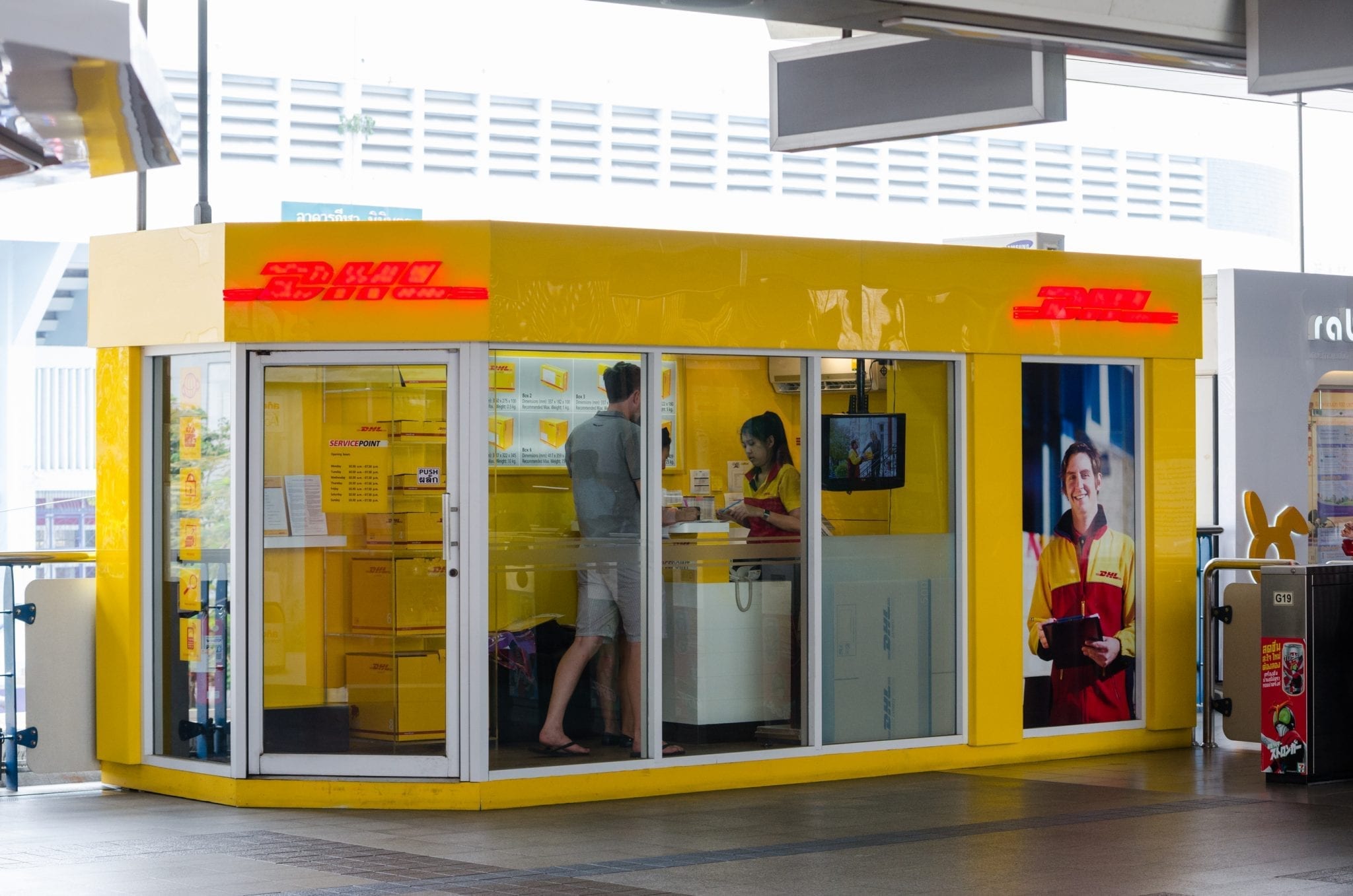
    DHL Express has opened its new Tsing Yi Service Center, a HK$78 million (US$10.1 million) facility on the third floor of the Goodman Interlink building in Hong Kong.

    “The opening of the new Tsing Yi Service Center follows double-digit growth in our international shipments over the past year, and underscores our confidence in the Hong Kong market,” said Herbert Vongpusanachai, senior vice president and managing director of DHL Express Hong Kong and Macau. “With a steady growth in our Hong Kong business contributed by the strong e-commerce sector, this facility is set to cement our market leadership with its enhanced handling capacity.”

    The 12,777-square-metre facility is double the size of the previous facility located in the same building and is capable of handling 380 tonnes of shipments per day, the strongest out of all DHL service centres worldwide.

    “We’ve been looking for a site since 2014,” said Vongpusanachai. “Hong Kong hasn’t been the easiest place in which to look for a new warehouse. There are very few fully equipped warehouses that have the size and scale that we needed based on our requirements.”

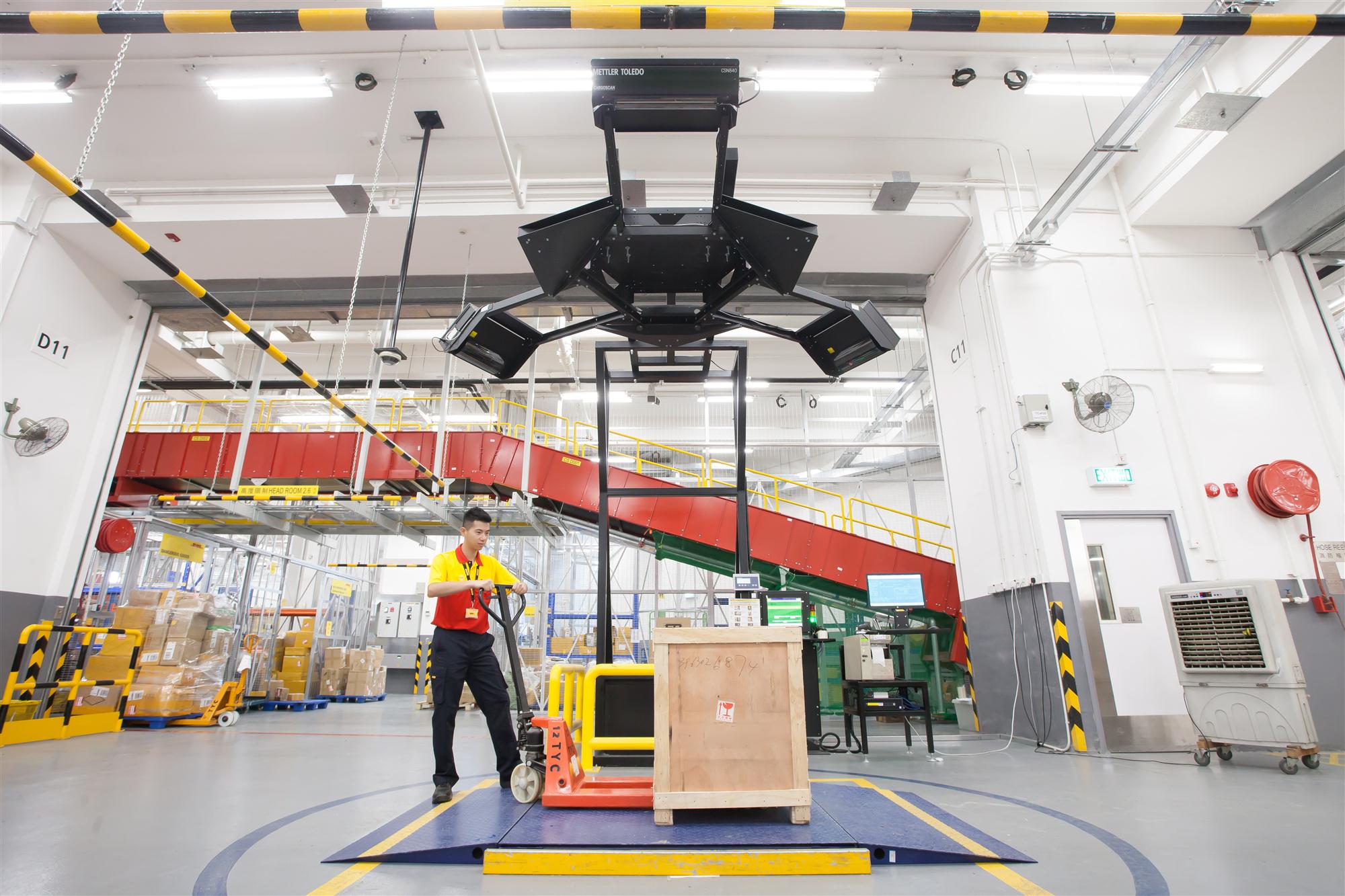
    Self Photos / Files - 3D reweigh & dimensioning machine

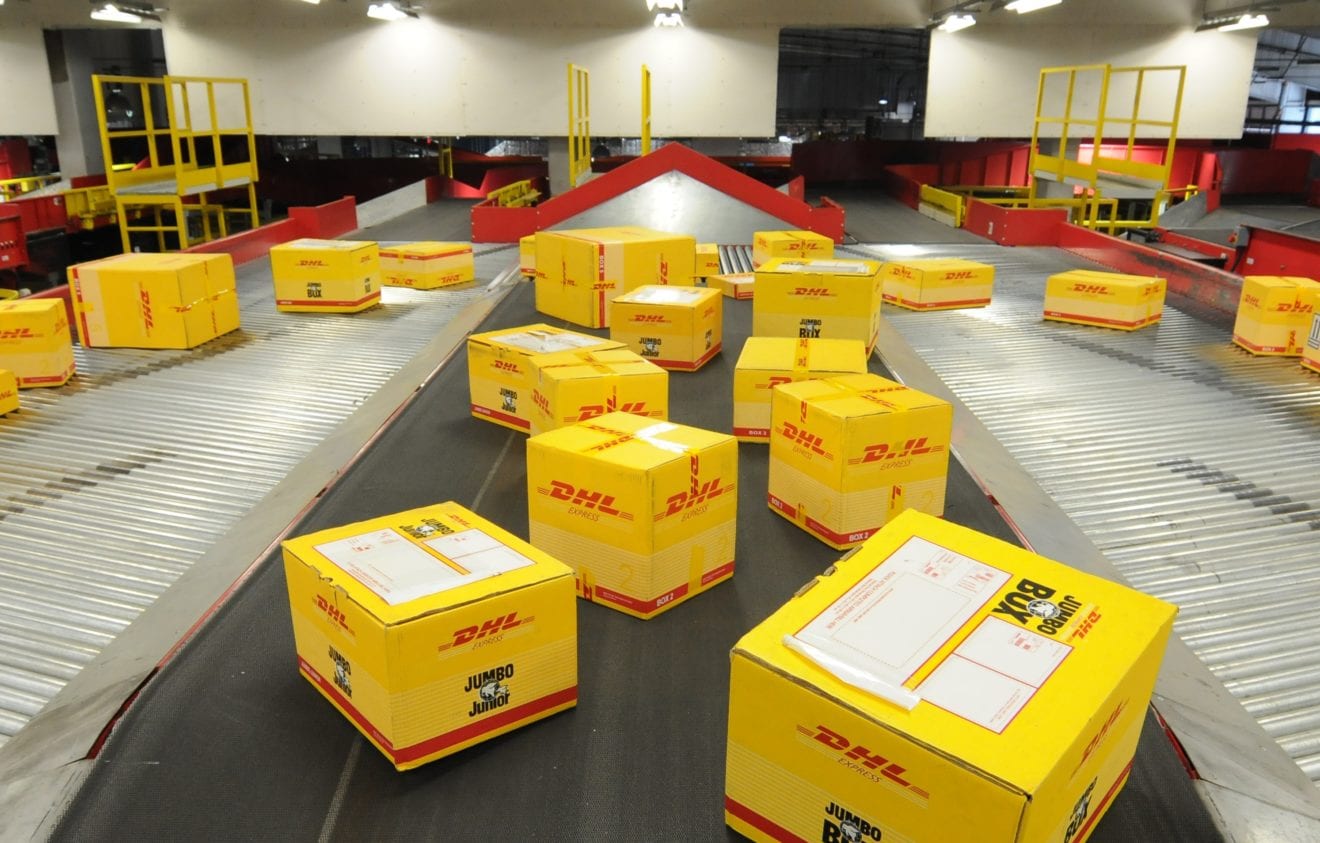
    Features include a high-speed automated reweigh and dimensioning machine capable of processing 2,200 pieces per hour, a 3D dimensioning and reweigh machine for unconveyable shipments that need volumetric measuring, a singulator which rearranges shipments so they travel down the conveyor belt one by one, and 122 CCTVs providing 24-hour monitoring.

    “It’s got all the technologies that we wanted,” said Vongpusanachai. “We want to be able to scan the shipments automatically when they come in, we want to sort them so that they go to the correct belt automatically, and we want to be able to build our own aircraft ULDs that we can bring straight to the airport.”

    One other “secret weapon,” according to Vongpusanachai, is the Clear-In-The-Air system, which allows all customs clearance information to be sent to the destination and handled while the plane is still in the air, cutting down transit times.

    Even though economic and trade conditions around the region have been disappointing, Vongpusanachai said that he wasn’t too concerned.

    “We’ve seen a bit of an economic slowdown over the past few quarters, but with the uptick in last quarter’s numbers and with our medium- to long-term look at the economy, we’re confident that we’ll actually see moderate growth in the near term,” he said. “There’s also still a lot of potential in the growth of certain sectors. The government has also increased its forecast for next year in terms of air trade.”

    The major driver of growth for DHL Express in recent times has been e-commerce, which was the predominant motivation for an upgraded facility.

    “We’ve seen a lot of customers moving away from big breakbulk to smaller shipments directly to the workplace or residence,” said Vongpusanachai. “That has been an emerging trend. This facility will allow us to increase our capacity and become more efficient in handling these types of shipments. Our focus as an express company is on time-definite international shipments.”

    The new Tsing Yi centre, which had its soft opening in July 2016, adds to DHL Express Hong Kong’s two other service centres in Cheung Sha Wan and Tsuen Wan.

    “These are some of the largest facilities that we have across the whole network, since Hong Kong is a high-capacity, high-volume exporter,” said Vongpusanachai. “We are always looking for new places. There is a plan but it’s a longer-term plan. Sometimes facilities might not be available yet, but we’re always looking ahead to see where we can expand.”

    The third-runway project at Hong Kong International Airport, which is scheduled to be completed by 2023, will give DHL Express the possibility of increasing capacity by operating more flights, allowing the DHL Central Asia hub to expand.

    “That’s something that we’re looking forward to,” Vongpusanachai said. “We’re very excited about the project and how we can participate in the growth of Hong Kong’s economy.”

  • DHL leverages on China’s Belt and Road

    DHL leverages on China’s Belt and Road

    DHL Global Forwarding continues to enhance its services which leverage infrastructure developed as part of “Belt and Road”, the Chinese trade initiative that could influence up to half of all global trade once completed.

    “Trade is the enabler for greater prosperity and a sustainable future. We believe logistics is the backbone of global trade, and nowhere more than in Asia have we seen the tremendous transformation of the economies as rising standards of living and a growing middle class has fuelled increased consumption and trade,’ said Frank Appel, CEO, Deutsche Post DHL Group.

    Frank Appel was speaking in conjunction with DHL’s Delphi Dialog forum on the implications of “Belt and Road” for international trade. The forum, with renowned experts from the government, business and academia, is the latest in a series which examines trends and developments that shape our world and the logistics industry.

    Making ‘Belt and Road’ accessible for business

    China’s investment in Belt and Road infrastructure – more than US$75bn (Euro 67.5bn) in the 18 months to June 2016 – bolsters regional cooperation and promotes trade. Since 2010 and in line with the vision for “Belt and Road”, DHL has been developing scheduled connections offering rail services across multiple cities in China, and linking it to road solutions throughout South East Asia and ferry services from North Asian cities in Japan and Taiwan.

    From South East Asia and other parts of North Asia, the road and ferry connections feed into China’s rail system which connects into Europe, with final distribution by road across the continent. This intricate connection of rail, road and sea services offers customers an additional logistics route, fostering trade between economic powerhouses of Europe and Asia.

    “We have been focused on building connectivity between China and regional countries, and connections into Europe via all combinations of road, rail and sea services,” said Steve Huang, CEO, DHL Global Forwarding China. “A multimodal solution – combining all modes of transport – enables customers to better manage their supply chains – offering flexibility, cost savings and potentially a reduced carbon footprint.”

    “The new service provides greater flexibility and speed for Japan’s exporters, including sectors like automotive and electronics production which already enjoy market dominance in Europe,” said Mark Slade, President and Representative Director, DHL Global Forwarding Japan.

    “With Less-than-Container Load services to Europe, Japanese businesses can improve the efficiency of fulfillment and inventory management at cost-effective rates, helping them maintain their competitive edge as world-class manufacturers.”

    Broadly, combinations of multimodal services can reduce transport costs by up to six times and up to 90% reduction in carbon footprint as compared with air freight, making it an increasingly attractive option for SME and MNC customers alike.

    DHL launched a further three new multimodal services:

    • Sea & Rail service: A Less-than-Container Load (LCL) service between Japan and Germany which allows businesses to export low-volume shipments for as little as half the cost of standard air freight. With a transit time of about 22 days, shipments are moved from Kobe to Taicang via sea, and by rail to Hamburg through hubs like Duisburg, Lodz, Malaszewicze and Warsaw.
    • Road & Rail service: The Vietnam-Europe service takes Full Container Load (FCL) cargo from Hanoi to Chengdu via road, followed by rail to hubs like Lodz, Duisburg and Hamburg in Europe, arriving in 21 days. An LCL option for the Vietnam-Europe service will commence in Q4 2016.
    • Rail, Road & Sea: Further boosting our Southern rail corridor offering announced last year, the new Chengdu-Istanbul service traverses three Central Asian countries – Kazakhstan, Azerbaijan, and Georgia – as well as two sea transit segments before arriving at Istanbul in 14 days.

    The three new services build on a series of major DHL investments in the last 12 months, including a multimodal service between Japan and Warsaw via Suzhou announced in November 2015; and an MOU signed in May 2016 with Chengdu’s Gateway Logistics Office to upgrade infrastructure and customs processes. DHL has been developing multimodal services along the Belt and Road since 2010, when it launched a suite of five services – International Rail, Rail-Air; Sea/River-Rail; Sea-Air and Cross-Border Road Freight.

  • DHL eCommerce Singapore has launched a hybrid shipping product to help e-tailers

    DHL eCommerce Singapore has launched a hybrid shipping product to help e-tailers

    DHL eCommerce Singapore has launched a hybrid shipping product to help e-tailers in Singapore tap into the cross-border e-commerce market in Australia.

    According to DHL, the new product, called Parcel International Direct Australia, delivers shipments of up to 20kg to major Australian cities in four to six business days.

    “Consumers worldwide are increasingly expecting greater choice and convenience in their delivery options, and demanding greater visibility and reliability during the process,” said Malcolm Monteiro, CEO of Asia Pacific at DHL eCommerce. “In a recent DHL study, we found that over 59% of customers consider shipping costs, delivery time and choice of the delivery partner before making an online purchase. As a result, e-tailing businesses and online sellers require more cost-effective and varied means to ship their products to remain competitive. Parcel International Direct Australia is a versatile shipping product that will help merchants expand their footprint in the online cross-border market.”

    Deliveries can be made to conventional addresses, P.O. boxes or parcel lockers. No additional charges will be imposed for delivery to remote addresses, according to DHL.

  • DHL, UN hold airport disaster preparedness workshops in Indonesia

    DHL, UN hold airport disaster preparedness workshops in Indonesia

    Germany’s Deutsche Post DHL Group and the United Nations Development Programme (UNDP) are once again conducting their joint preventative training, known as Get Airports Ready for Disaster (GARD), at Bali’s Ngurah Rai International Airport, Lombok International Airport and Selaparang Airport in Lombok.  Indonesia was the pilot country when the program was implemented globally in 2009 — in Makassar and Palu.

    Deutsche Post DHL Group and United Nations Development Programme Hold Airport Disaster Preparedness Workshops in Bali and Lombok. L-R: Teguh Pratomo (MoT); Medi Herlianto (BNPB); Christian Usfinit (UNDP); Welani Widjaja, Managing Director, DHL Global Forwarding Indonesia; Chris Weeks, Director of Humanitarian Affairs, Deutsche Post DHL Group.

    Indonesia is located on the Pacific Ring of Fire where several continental plates collide. As a result, the chain of islands is at frequent risk of earthquakes, tsunamis and active volcanoes. Additionally, Bali and Lombok are categorized as high risk areas in the Indonesian Disaster Risk Index (2013). Airports in both provinces experienced operations shutdown due to volcanic eruptions from nearby Mount Rinjani.

    The multi-day workshop involves over 50 participants — including representatives from the airport operating company, aviation safety experts, national and regional Disaster Management Planning Agencies, Indonesian Red Cross, immigration authorities, the military and the police force — who will be trained to handle the high volume of incoming relief goods and increasing number of passengers during the aftermath of natural disasters.

    “Following natural disasters, airports become vital hubs for the processing of incoming relief supplies,” says Christof Ehrhart, Head of Corporate Communications and Responsibility at Deutsche Post DHL Group. “With sound processes in place at the airport and with the relevant agencies, relief goods and aid can be channeled through airports to reach the affected communities quickly and efficiently. This program continues to help improve disaster management in this geologically high-risk region.”

    “Often airports are unprepared to manage large disasters or humanitarian crisis and as a result, assistance gets slower in getting to those most affected. GARD is working specifically with all partners on the ground to solve any potential bottlenecks that could impede fast response to save lives. I praise the Indonesian government for its commitment to preparedness and the airport authorities for their risk informed management,” says United Nations Resident Coordinator in Indonesia, Douglas Broderick.

    The training includes evaluation of the airports’ capacities for processing high volumes of passengers and cargo and warehousing relief supplies. Location-specific disaster plans are drawn up as well.

    Since 2009, GARD trainings have been held in eight airports in Indonesia, namely Sultan Hassanuddin Airport in Makassar (2009), Mutiara Airport in Palu (2009), Ngurah Rai Airport (old airport) in Denpasar (2011), El Tari Airport in Kupang (2011), Polonia Airport in Medan (2012), Sultan Iskandarsyah Airport inBanda Aceh (2012), Fatmawati Airport in Bengkulu (2012) and Minangkabau Airport in Padang (2013).

  • DHL rolls out global augmented reality program

    DHL rolls out global augmented reality program

    DHL Supply Chain is rolling out the next phase of its Vision Picking Program following a successful trial of the augmented reality technology in the Netherlands. Since the trial, DHL and partners Google, Vuzix and Ubimax have refined the vision picking solution and DHL is now expanding the program across different industry sectors on a global scale, forging another step forward for augmented reality solutions in logistics.

    “We are excited to further test and develop vision picking as a solution that can be readily available to our customers. More importantly, this technology is not just one step towards digitalizing manual processes on the shop floor, it also takes us one step closer towards Industry 4.0. Testing technologies like augmented reality, robotics and Internet of Things will continue to be a big part of our DNA,” said John Gilbert, CEO Supply Chain.

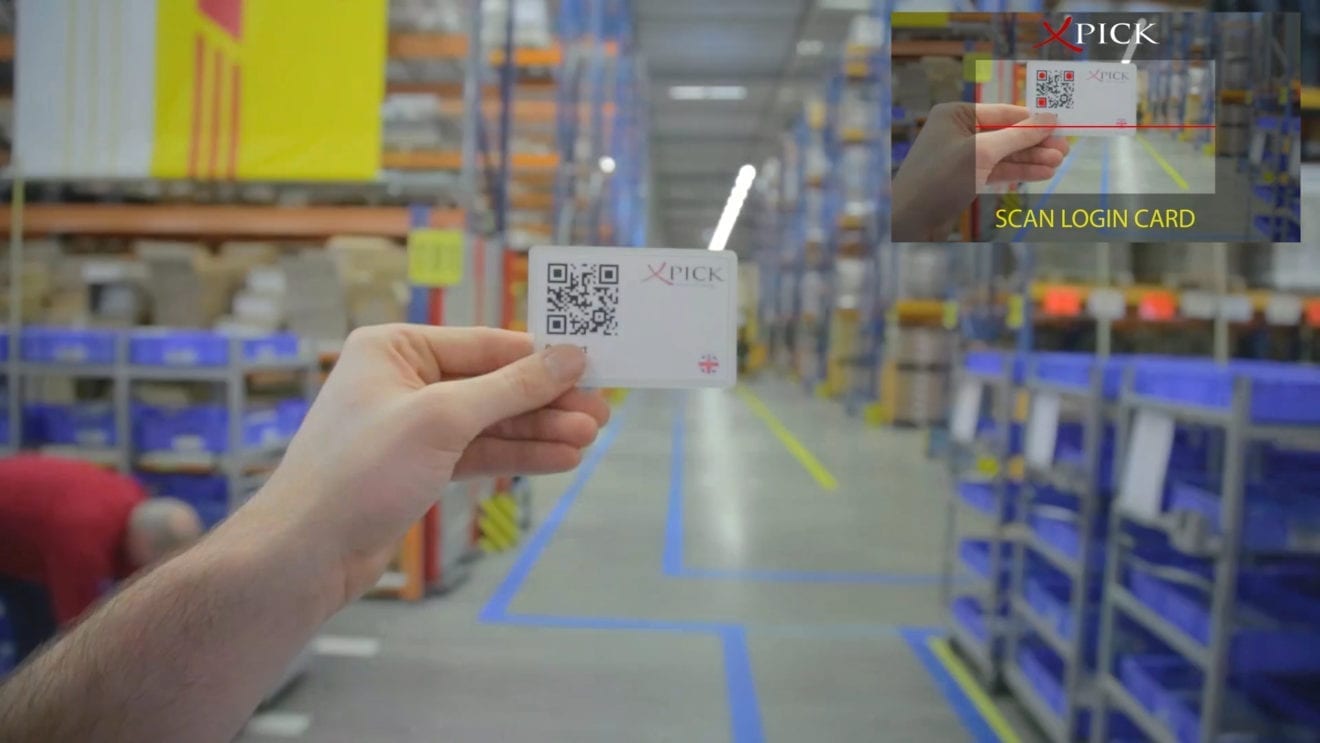
    Pickers are equipped with advanced smart glasses which visually display where each picked item needs to be placed on the trolley. Vision Picking enables hands free order picking at a faster pace, along with reduced error rates. Throughout 2016, the smart glasses will be piloted across various industries such as technology, retail, consumer and automotive industries. The data available from these pilots will further determine the technology’s potential for broader implementation. The pilot sites are spread across the United States, Mainland Europe and the United Kingdom, with the Ricoh facility in Bergen op Zoom, the Netherlands, where the solution was first tested, being the launch site for this new exploration phase.

    “The Vision Picking Program is DHL Supply Chain’s first translation of what augmented reality solutions can look like for supply chains. The broad spectrum in which the technology can be applied across various sectors is exciting to us, and the potential of this technology for business is still largely untapped. We believe this program is a game changer in how we run our supply chain operations and deliver added value to our customers,” states Markus Voss, CIO Supply Chain.

    Augmented reality market with exceptional potential growth

    The augmented reality and virtual reality market is said to be the next big thing after smartphones, although estimates vary significantly. Goldman Sachs estimate in their base case $80 billion for both virtual and augmented reality by 2025, while M&A advisory firm Digi-Capital predicts a total volume of $150 billion by 2020. Regardless of the actual size, exceptional growth seems to be certain if the current success of mobile app Pokémon Go is anything to go by. Investors are also convinced of the technology’s prospects, having made 225 venture capital investments worth $3.5 billion in the last two years.

    DHL Supply Chain will be one of the first companies to widely implement the technology into their operations. The initial 2014 test in the Netherlands showed a significant increase in productivity, reduced error rates and overall rise in employee satisfaction, proving that augmented reality can make an impactful difference in reality.

  • DHL Express has opened its Jakarta Gateway 530 facility

    DHL Express has opened its Jakarta Gateway 530 facility

    DHL Express has opened its Jakarta Gateway 530 facility at Soekarno-Hatta International Airport to support Indonesian trade.

    According to DHL, the new 1,353-square-metre facility is an addition to the existing Gateway 510, which is at full capacity. Gateway 530 is capable of handling up to 2 million shipments per year and is equipped with dual-view X-ray screening, an explosive trace detector system and 103 CCTV cameras.

    “Our new Jakarta Gateway 530 will enable local businesses to trade seamlessly with customers around the world,” said Ken Lee, CEO of DHL Express Asia Pacific. “SMEs play a vital role in the Indonesian economy, contributing close to 58% of Indonesia’s GDP and Indonesia remains a key pillar in supporting South East Asia’s economic growth. This new facility allows DHL to continue supporting the growing export and import needs in Indonesia by providing greater access to international markets.”

    The facility offers direct airside access and in-house customs. Major trading partners that will benefit from Gateway 530 include mainland China, Germany, Japan, Hong Kong, Singapore and the US, according to DHL.

  • DHL Opens Link between Bangkok and Phnom Phen

    DHL Opens Link between Bangkok and Phnom Phen

    DHL Express has launched a flight connection between its Bangkok hub and Phnom Penh. According to DHL, the new flight is operated five times a week by K-Mile Air using a Boeing 737-400F, which offers a gross payload of 19 tons. The service is aimed at the growing import and export demands of industries such as garments and construction.

    “This new flight is another step towards unlocking Cambodia’s vast potential for trade in Southeast Asia,” said Ken Lee, CEO of DHL Express Asia Pacific. “Trade between Cambodia and Thailand reached US$5.1 billion in 2015, and the country also imported US$1.05 billion worth of goods from Singapore in 2014. By improving inbound and outbound capacities from markets like Thailand and Singapore where our hubs are located, we are confident that this new flight will further develop Cambodia’s market. With our extensive air network, this dedicated service will enhance the country’s global connectivity and trade relations.”

    Sean Wall, executive vice president of network operations and aviation at DHL Express Asia Pacific, said that the demand for movement of goods will grow further as Cambodia increasingly becomes an important trading player in Southeast Asia.

    “Our latest service is good news for businesses in Cambodia, offering them the capacity, frequency, and seamless export capabilities they need to reach more customers in new markets,” he said. “It also underscores our ongoing commitment to continuously strengthen our network and connectivity to provide more efficient routes for customers.”

  • DHL Express Launches Expanded Auckland Facility

    DHL Express Launches Expanded Auckland Facility

    DHL Express has opened an expanded facility at Auckland Airport to cater to growing demand for trade in and out of New Zealand.

    According to DHL, the new NZ$15.3 million (US$11.2 million) Auckland Gateway measures approximately 5,000m2 and doubles the processing capability of the previous facility.

    “International trade via imports and exports now comprises approximately 60% of New Zealand’s overall economic activity and is growing,” said Ken Lee, CEO of DHL Express Asia Pacific. “DHL Express is proud to facilitate trade for local businesses via our international network that connects New Zealand with over 220 countries and territories globally. The most popular trading partners for goods moving in and out of this Auckland-based facility include Australia, China, Hong Kong, Singapore, the UK and USA — with all trade lanes showing solid performance in recent months.”

    Some of the features include high-speed reweigh machines, telescopic extendable conveyors and 360-degreee CCTVs providing 24-hour monitoring.

    Mark Foy, country manager of DHL Express New Zealand, said that the company is committed to helping Kiwi businesses export and import products to facilitate global trade.

    “A key driver for this expanded gateway has been the growth in New Zealand SMEs shipping products internationally via DHL Express,” he said. “This expansion will assist with volume increases from all areas of the country, as innovative Kiwi businesses continue to tap into the global marketplace and reach international customers like never before.”