Tag: EV

  • EU Extends Investigation Into Samsung’s EV Battery Plant In Hungary

    EU Extends Investigation Into Samsung’s EV Battery Plant In Hungary

    EU competition enforcers have extended a near two-year investigation into Hungarian state aid for South Korean manufacturer Samsung SDI Co Ltd’s electric vehicle (EV) battery factory after Hungary submitted new data to back its case.

    Samsung SDI, an affiliate of South Korean tech giant Samsung Electronics Co Ltd, began production at the Hungarian plant in 2018, making batteries for 50,000 EVs a year.

    The European Commission opened an investigation in October 2019 to assess whether Hungary’s plans to grant 108 million euros ($128.5 million) in state aid complied with the bloc’s competition rules.

    “Hungary now argues that Samsung could have benefited from an investment grant and a tax exemption in an alternative location outside the EU, which would have increased the viability of the alternative location with respect to Hungary,” the Commission said.

    It said Budapest has also produced new documentary evidence to show that Samsung’s search for a location for the plant had also included a number of new production facilities in Europe and an alternative location in a less developed region in the EU.

    Extending the EU investigation will allow third parties to comment on the Hungarian aid.

    Earlier this year, Samsung said it would invest 942 billion won ($849 million) to expand the plant.

  • Porsche Cayenne Turbo GT Breaks Cover

    Porsche Cayenne Turbo GT Breaks Cover

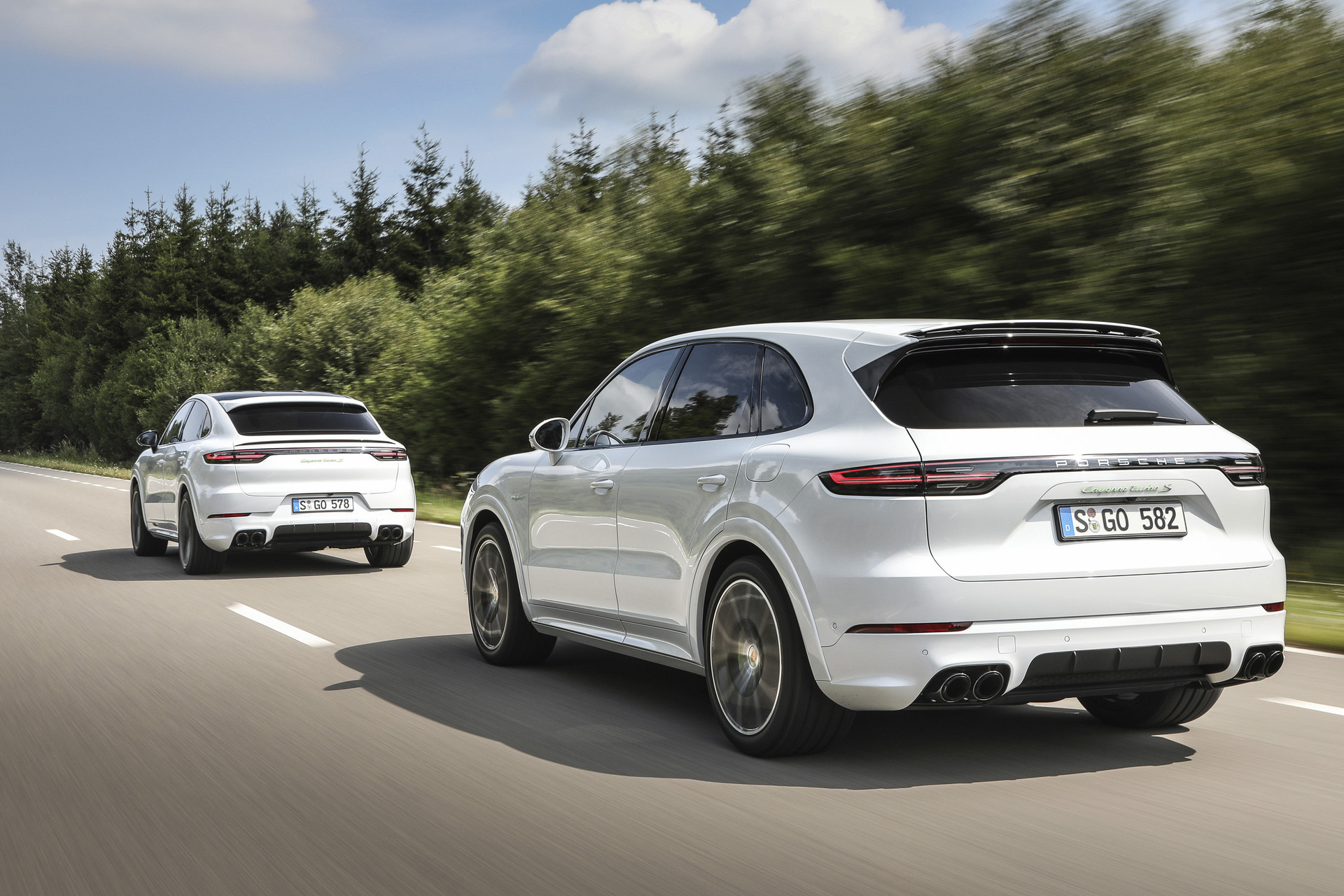
    Porsche has revealed the new Cayenne Turbo GT and yes, it looks absolutely stunning. But let’s directly talk about the engine. The Cayenne Turbo GT gets a 4-litre biturbo V8 which pushes out 632 bhp and 850 Nm of torque. The Cayenne GT Turbo gets 90 bhp more power and an increase of 80 Nm as well compared to the Turbo Coupe. The 0-100 kmph sprint takes 3.3 seconds (0.6 s less than Turbo Coupe ) and top speed is now 300 km/h (an increase of 14 kmph). With even sportier lines and available exclusively as a four-seater Coupé, the Cayenne Turbo GT comes with all available chassis systems fitted as standard and performance tyres developed specially for this model.

    The powertrain and chassis also have a unique set-up specifically tuned for the Cayenne Turbo GT. This has been proven by Porsche test driver Lars Kern, who lapped the 20.832 km Nurburgring Nordschleife with the Cayenne Turbo GT in a time of 7:38.9 minutes, setting a new official SUV record.

    Compared to the Cayenne Turbo Coupé, the Turbo GT rides up to 17 millimeters lower. Based on this, both the passive chassis components and active control systems have been re-engineered and optimized for handling and performance. They also feature specific calibration to guarantee perfect interaction between them. As an example, the rigidity of the three-chamber air suspension has been increased by up to 15 percent, and the damper characteristics of the Porsche Active Suspension Management (PASM) as well as the application of the Power Steering Plus and rear-axle steering have also been adapted. The Porsche Dynamic Chassis Control (PDCC) active roll stabilisation system now operates with performance-oriented control software.

    The result is even better roll stability as well as more precise turn-in behavior at higher cornering speeds. In line with this, the Porsche Torque Vectoring system allows higher torque bias ratios. The comprehensively optimized front axle also improves handling. Compared to the Turbo Coupé, its front wheels are an inch wider and the negative camber has been increased by 0.45 degrees to give the new 22-inch Pirelli P Zero Corsa performance tyres, specially developed for the Turbo GT, a larger contact patch. Braking duties are performed by the standard-fit Porsche Ceramic Composite Brake (PCCB) system.

    The faster-shifting eight-speed Tiptronic S and the Porsche Traction Management (PTM) system have also been modified. There is also additional water cooling for the transfer case. The standard sports exhaust system, with its central tailpipes, is unique to the Cayenne Turbo GT. From the middle of the vehicle, the exhaust system, including the rear silencer, is made from lightweight and particularly heat-resistant titanium. An additional weight saving is achieved through the omission of the centre silencer.

    Optionally available with paintwork in the new Arctic Grey color, the Cayenne Turbo GT gets a GT-specific front apron with striking spoiler lip and enlarged side cooling air intakes, which create a unique front view. A contoured carbon roof and black wheel arch extensions, together with 22-inch GT Design wheels in Neodyme, dominate its side view. The carbon side plates fitted lengthwise to the roof spoiler are GT-specific, as is the adaptively extendable rear spoiler’s lip, which is 25 mm larger than that fitted to the Turbo. This increases downforce at the car’s top speed by up to 40 kilograms. The rear view is rounded off by a striking diffuser panel made of carbon.

    Inside you get eight-way adjustable sport seats and each come GT-specific with perforated seat centre panels in Alcantara, contrast accents in Neodyme or Arctic Grey and ‘turbo GT’ lettering on their headrests. With the Turbo GT, Porsche also brings in the next-generation Porsche Communication Management (PCM) system. PCM 6.0 is fully compatible with Apple CarPlay but now also allows for in-depth integration of Apple Music and Apple Podcasts. In addition, the infotainment system now also includes Android Auto, which means that all popular smartphones can now be integrated.

  • Ride-hailing firm Grab to launch electric cars in Vietnam

    Ride-hailing firm Grab to launch electric cars in Vietnam

    Ride-hailing firm Grab plans to launch electric car services in Vietnam and Indonesia after piloting a program in Singapore at the end of this year.

    Grab is partnering with South Korea’s automotive manufacturer Hyundai Motor to encourage the adoption of electric vehicles in Southeast Asia.

    Both parties will test new business models including battery and electric vehicles leasing, thus lowering the entry barrier for its driver as the cost to own an electric car is high.

    Grab had said in an earlier report that some of the concerns that make drivers reluctant to use electric vehicles are their price, lack of charging stations and long waiting time for the battery to be fully charged.

    Russell Cohen, Grab’s managing director of operations, said that the company hopes governments will have incentive policies and essential infrastructure like charging stations so that electric vehicles will have many opportunities to develop.

    Grab and Hyundai have been partners since 2018. In 2019, the ride-hailing firm purchased 200 Hyundai Kona electric cars for its car-hiring service GrabRentals in Singapore.

  • Chinese EV Battery Maker CATL Extends Deal With Tesla

    Chinese EV Battery Maker CATL Extends Deal With Tesla

    Chinese electric vehicle battery maker CATL said on Monday it has extended a battery supply deal with U.S. EV maker Tesla Inc to 2025.

    Ningde-based CATL said in a stock exchange filing that it would supply battery cells to Tesla, which is making Model 3 sedans and Model Y sport-utility vehicles in Shanghai, until December 2025.

    Other Tesla battery suppliers include Panasonic Corp and LG Energy Solution.

  • Porsche Setting Up Battery JV With Customcells For An EV Future

    Porsche Setting Up Battery JV With Customcells For An EV Future

    Porsche has made waves around the world with its Taycan and Taycan Cross Turismo EVs which have been dubbed as the most driver-centric EVs in the world, more so than even Tesla’s groundbreaking vehicles. To further an electrified future, like all things Volkswagen group, it is forming a joint venture with Customcells that will create high-performance batteries that will significantly reduce charge times.

    Like Porsche, Customcells is also a German company hailing from the Southern German region specializing in lithium-ion batteries aiming to create packs that have higher energy density than what Porsche is already using in cars like the Taycan.

    More importantly, it is part of a broadened push towards enhancing the battery supply chain in Europe which is currently dominated by Asia. The Volkswagen group has been making huge investments in this space as the EU has stricter emissions norms which means European manufacturers have to go green faster than automakers around the world.

    One of the keys to achieving better battery efficacy is enhancing the energy density which in turn results in less raw material being used. It will also cut battery production costs and help make electric cars more affordable.

    As a part of the JV, Porsche doesn’t disclose its investment but does say it is a number upwards of 10 million Euros and it holds an 80 percent stake in the venture. The production facility in the equation will have an aim to deliver 100 kWh of capacity which could service about 1000 cars per year. This is a tie-in from what Porsche chief executive officer Oliver Blume said in April which was indicative of the legendary German sports cars marquee ramping up its e-mobility plans for a German factory in Tuebingen for battery production. It so happens this JV with Customcells is based in Tuebingen.

    Porsche parent, Volkswagen has even broader plans of building 6 battery cell plants across Europe and expand its infrastructure for the charging of electric vehicles.

  • Mercedes-Benz India Has No Plans To Launch The EQS Or Any Other EV This Year

    Mercedes-Benz India Has No Plans To Launch The EQS Or Any Other EV This Year

    Despite the challenges caused by the second wave of the COVID-19 pandemic, Mercedes-Benz India has been among the select few carmakers that have stayed on course with regard to product launches. The Stuttgart-based luxury carmaker has confirmed that it will launch 15 new models in India this year, however, that will not include any electric vehicles. When asked about the launch timeline for the EQS, during the post-launch interaction for the Maybach GLS 600, Santosh Iyer, VP – Sales & Marketing, Mercedes-Benz India confirmed that the company has no plans to launch the EQS or any other EV at least for next one year.

    Talking about the company’s product plan with regards to the EQS and other electric vehicles, Iyer said, “The EV portfolio for Mercedes-Benz is strong. You already saw the EQA, the EQB, there are many products that are getting launched. So, we’ll pick up the right products and definitely, surely introduce them in India. But, for now, the EQC remains our key driver when it comes to the volumes here. Again, we are struggling with the availability of EQC so no point in again launching more EVs and putting some confusion in the market at this stage. Also, EQS is available for sale only in the last part of the year, even worldwide. So, nothing in the next one year at least as far as the EQS or anything else goes.”

    Iyer pointed out that a lot of these electric vehicles introduced globally are high on demand worldwide, and they will make it other markets gradually. Assuring that India is a priority market for the brand, he said that there is no point in launching a product and not being able to cater to the demand. Right now, it’s even struggling with the demand for the EQC. So, before bringing a high-value product like the EQS electric sedan, the carmaker wants to get some volume and certain clarity.

    Having said that, Mercedes-Benz India has already listed its flagship electric vehicle – the EQS on its official website. When asked what that means for the Indian market, Iyer said, “For us electric is not an option. It is something that the automotive industry will transform, and we take pride that in India we were the first to start, and we’ll now continue to bring in new products. As regards that EQS, I think that a statement in terms of our brand, in terms of our commitment to electric.” He further added, “I think the EQS transforms, it makes a paradigm shift into the technology scape, into the luxury space apart from being a very good EV in terms of driving, in terms of battery charging, and some of the other dynamics. So, it was natural for us when there is a global unveil of such a product, which is now our flagship when it comes to the EV story to be there on our website.”

    The Mercedes-Benz EQS is the company’s flagship electric vehicle, and it was just in April 2021 that the sedan version of the EV made its debut. Mercedes also plans to introduce an SUV version of the EQS, which is likely to make its global debut in late 2022. The EQS sedan comes with a 107.8 kWh Lithium-Ion battery, promising a 770 km WLTP cycle certified drive range on a full charge. However, the carmaker has not provided detailed variant-wise range options. The car comes with a standard onboard charger of 11 kW with an optional 22 kW charger. The EQS can be charged from 10 to 80 percent in 35 minutes using a 110 kW DC fast charging, while a 240-volt household wall charger will take 11 hours for the same range.

  • Rimac Nevera Electric Hypercar Unveiled

    Rimac Nevera Electric Hypercar Unveiled

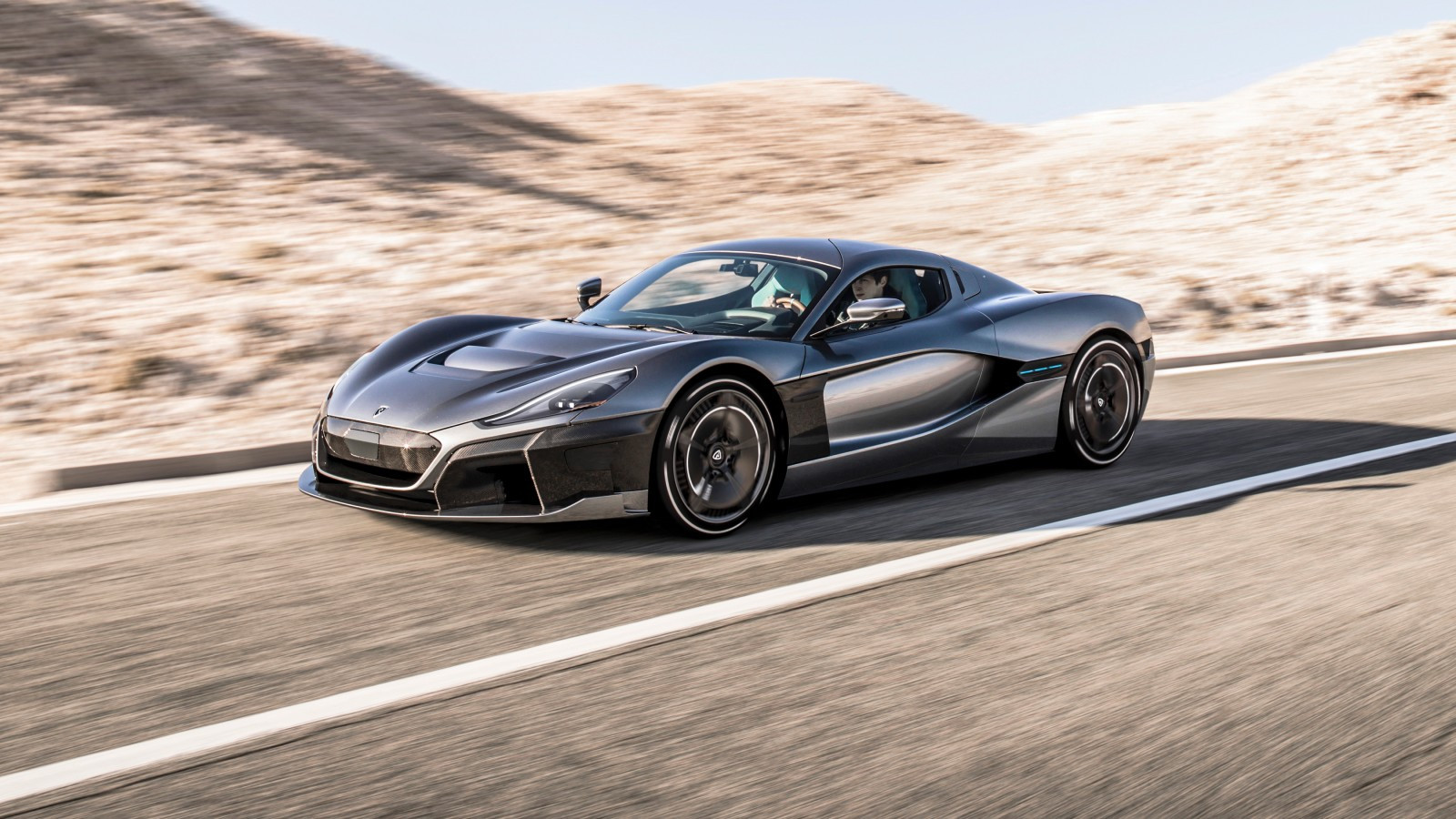
    After a long wait, Rimac Automobili has finally unveiled the Nevera, an all-electric, hypercar that has been designed and engineered to surpass anyone’s expectation of an electric car. The Nevera is the production-ready iteration of the Rimac C_Two concept car, which was revealed at the International Geneva Motor Show in 2018. Since then, Rimac’s engineers have refined the new flagship car. The Nevera was developed in-house at Rimac’s headquarters in Croatia and only 150 examples of the car will be made.

    Underlining his own commitment to the project, Mate Rimac will personally test and sign off each of the Neveras, before they are delivered to customers from the company’s current production site on the outskirts of Zagreb, Croatia.

    Nevera’s monocoque construction includes a bonded carbon roof, integrated structural battery pack, and rear carbon subframe, is forming the largest single carbon fibre piece in the entire automotive industry. Weighing less than 200 kg and utilizing 2200 carbon fibre plys and 222 aluminum inserts, the monocoque encases the car’s battery to form a compact yet incredibly strong structure with a torsional stiffness of 70.000 Nm/degree.

    The unique H-shaped, liquid-cooled, 120kWh, 6960-cell battery was designed from scratch by Rimac and sits at the heart of the Nevera. Capable of producing 1.4MW of power, the Lithium/Manganese/Nickel battery also forms an integral part of the car’s core, adding 37 percent structural stiffness to the carbon fibre monocoque. The battery’s optimum positioning low and central within the car’s floor contributes to an ultra-low centre of gravity. This helps create a 48/52 front/rear weight distribution.

    Four bespoke surface-mounted permanent magnet motors drive the Nevera’s four wheels individually. Together, they enable 1914 horsepower and 2360 Nm of torque, which is triple the output of a ‘conventional-engined’ supercar. The front and rear wheels are each connected to a pair of single-speed gearboxes.

    With the ability to sprint to 96.5 kmph in 1.85 seconds and continue the acceleration all the way to a 412 kmph which is its top speed, the Nevera opens up a new dimension in hypercar performance. Accelerating from rest to 161 kmph requires just 4.3 seconds and it maintains acceleration throughout a full-throttle cycle, achieving 300 kmph from rest in 9.3 seconds, shredding a whole 2.5 seconds from the initial targets.

    Rimac’s All-Wheel Torque Vectoring 2 (R-AWTV 2) system replaces traditional Electronic Stability Program and Traction Control systems to further bolster grip and traction. Meanwhile, the Nevera’s R-AWTV 2 system enables infinitely variable dynamic responses to road and track conditions by calibrating the amount of torque supplied to each wheel. R-AWTV 2 calculates the precise level of torque to channel through each wheel for ultimate stability and exceptional agility. Both predictive and responsive, R-AWTV reads the road and makes over 100 calculations per second to tailor the level of torque to achieve the desired driving style.

  • Hyundai To Slash Combustion Engine Line-Up, Invest In EVs

    Hyundai To Slash Combustion Engine Line-Up, Invest In EVs

    Hyundai Motor Group will slash the number of combustion engine models in its line-up to free up resources to invest in electric vehicles (EVs), two people close to the South Korean automaker told Reuters. The move will result in a 50% reduction in models powered by fossil fuels, one of the people said, adding the strategy was approved by top management in March. “It is an important business move, which first and foremost allows the release of R&D resources to focus on the rest: electric motors, batteries, fuel cells,” the person said, without giving a timeframe for the plan.

    While Hyundai did not specifically address a Reuters query on its plans for combustion engine models, it said in an email on Thursday that it was accelerating the adoption of eco-friendly vehicles such as hydrogen fuel cell vehicles and battery EVs. The automaker added that it aims to gradually expand battery EV offerings in key markets such as the United States, Europe, and China with a goal for full electrification by 2040.

    Hyundai Motor Group, which houses Hyundai Motor Co and Kia Corp and Genesis, aims to sell about one million EVs per year by 2025 to achieve a 10% share of the global EV market. Facing tightening CO2 emission targets in Europe and China, all major automakers are accelerating their shift to EVs. The huge cost of developing electric motors and increasing the driving range of car batteries has already led some to say their days of investing in conventional engines are over. “Hyundai has stopped developing new powertrains for internal combustion engine cars,” one of the people said.

    PSA Group said in November, shortly before merging with Fiat Chrysler to form Stellantis, that it was no longer investing in combustion engines. Daimler has recently revamped its combustion engines and executives say the new generation will see it through the electrification process. Some carmakers have already announced plans to go fully electric, with Sweden’s Volvo, which is owned by China’s Geely, saying it would do that by 2030. Ford Motor Co says its line-up in Europe will be fully electric by the same date.

    For Hyundai, which together with Kia is one of the world’s top ten auto groups, the move is particularly important because it has one of the broadest ranges of engine and transmission technologies in the industry. The group will finalize its strategy to switch to all-electric models within the next six months, one source said. In April, Hyundai said it would cut the number of its gasoline models in China to 14 from 21 by 2025, while launching new electric models every year starting in 2022. In February, the group said it was no longer in talks with Apple to develop an autonomous vehicle. Sources familiar with the matter said the idea of the group becoming a contract manufacturer for Apple encountered strong internal opposition.

  • Ford Boosts EV Spending, Aims To Have 40% Of Volume All-Electric By 2030

    Ford Boosts EV Spending, Aims To Have 40% Of Volume All-Electric By 2030

    Ford Motor Co on Wednesday outlined plans to boost spending on its electrification efforts by more than a third and said it aims to have 40% of its global volume be all-electric by 2030 in a move to have investors value it more like a technology company.

    Under a plan dubbed “Ford+,” the No. 2 U.S. automaker said it now expects to spend more than $30 billion on electrification, including battery development, by 2030, up from its prior target of $22 billion. It has launched the all-electric Mustang Mach-E crossover and plans to introduce electric versions of the Transit van and F-150 pickup.

    In premarket trading, Ford shares were up about 2%.

    “This is our biggest opportunity for growth and value creation since Henry Ford started to scale the Model T,” Ford Chief Executive Jim Farley said in a statement.

    Ford plans to develop two dedicated EV platforms, one for full-size trucks and SUVs, the other for cars and smaller SUVs.

    Ford and other global automakers are racing to shift their gasoline-powered lineups to all-electric power under pressure from regions like Europe and China to cut vehicle emissions. U.S. President Joe Biden has called for $174 billion to boost U.S. EV production, sales and infrastructure.

    Ford rival General Motors Co has said it aspires to halt U.S. sales of gasoline-powered passenger vehicles by 2035. The Detroit automaker said last year it was investing $27 billion in electric and autonomous vehicles over the next five years.

    Some analysts see Ford as trailing its rivals in the electrification race, but Ford officials disagree with that view, pointing to the Mach-E rollout and its other plans.

    Ahead of an investor meeting, Ford said it expects to deliver an 8% operating margin in 2023.

    The Dearborn, Michigan-based company also said it is forming a new unit, called Ford Pro, to focus exclusively on commercial and government customers, a segment Farley sees as a huge growth opportunity for the company.

    The company is targeting increasing revenue for the commercial market for hardware and related services addressable by Ford to $45 billion by 2025, up from $27 billion in 2019.

    Ford said it will also aim to develop EV batteries, from lithium-ion versions to lithium-ion phosphate for commercial vehicles and eventually low-cost solid-state batteries in partnership with startup Solid Power, in which the automaker has invested.

    Last week, the automaker announced a memorandum of understanding to form a battery joint venture with South Korea’s SK Innovation, to make battery cells at two U.S. plants.

    Ford also said it expects to have 1 million vehicles capable of receiving over-the-air software updates on the road by the end of the year, and scaling that to 33 million by 2028.

    It sees the overall market for connected functions like driver-assist technologies, new features and upgraded software content, and EV charging hitting a projected $20 billion by 2030.

    Sources previously told Reuters Ford plans to develop two dedicated EV platforms, one for full-size trucks and SUVs, the other for cars and smaller SUVs.

    The sources said Ford is planning to launch at least nine all-electric cars and car-based SUVs and at least three electric trucks, vans and larger SUVs, including second-generation editions of the Ford F-150 Lightning and Mach-E at mid-decade.

  • Elon Musk Reaffirms 1.1 Second kmph Time For Telsa Roadster EV Is Possible

    Elon Musk Reaffirms 1.1 Second kmph Time For Telsa Roadster EV Is Possible

    The second-generation Tesla Roadster was revealed about three years ago but the EV maker took quite a while to materialize it. Finally, it is expected to arrive later this year or early in 2022 but one production-ready version is already on display at the Petersen Automotive Museum with some details of its specifications. The most interesting of all is that the readout at the museum claims a 0-100 kmph sprint in an earth-staggering 1.1 seconds when the Roadster is equipped with the SpaceX package.

    Now what’s even more interesting is that Elon Musk took to Twitter to confirm the specifications. Replying to one of the tweets he reaffirmed it’s possible with “the SpaceX rocket thruster option package. The Roadster will possibly be equipped with cold air thrusters, supplied by compressed air tanks with the thrusters hidden behind the license plate, that’ll help propel the all-wheel-drive sports to manic speeds. Now without the SpaceX package, the EV maker is claiming 1.9 seconds to triple-digit speeds, which still is fast enough to give something like the mighty Bugatti Chiron with a W16 engine, a sweat.

    Now going with what Musk has claimed earlier, the Tesla Roadster is not just about speed. It will deliver quite an impressive electric range of 998 km with a tri-motor configuration. One of them will be positioned in the front and the remaining two at the rear that will power all four wheels. It will get its juices from a 250 kWh battery pack and it will put out an unbelievable 10,000 Nm of peak torque helping it to clock 160 kmph in just 4.2 seconds. Now that’s quicker than what many sportscars take to clock triple-digit speeds.

  • Electric Cars Expected To Be Launched In India In 2021

    Electric Cars Expected To Be Launched In India In 2021

    Electric cars are the future, and the year 2021 will offer the slightest glimpse of the electric vehicle (EV) revolution. Though EVs represent a very small percentage of global car sales, several automakers have already made massive investments in electric mobility foreseeing the demand it could create in the coming years. As India is moving towards e-mobility, there has been substantial investment in electric vehicles (EVs) by domestic and global auto majors. The models like the Tata Nexon EV and MG ZS EV have received a decent amount of success in the Indian EV market. Other automakers too are planning to enter into the electric vehicle space in India. On that note, we list down the EVs that are expected to go on sale in the Indian market this year.

    Tesla Model 3:

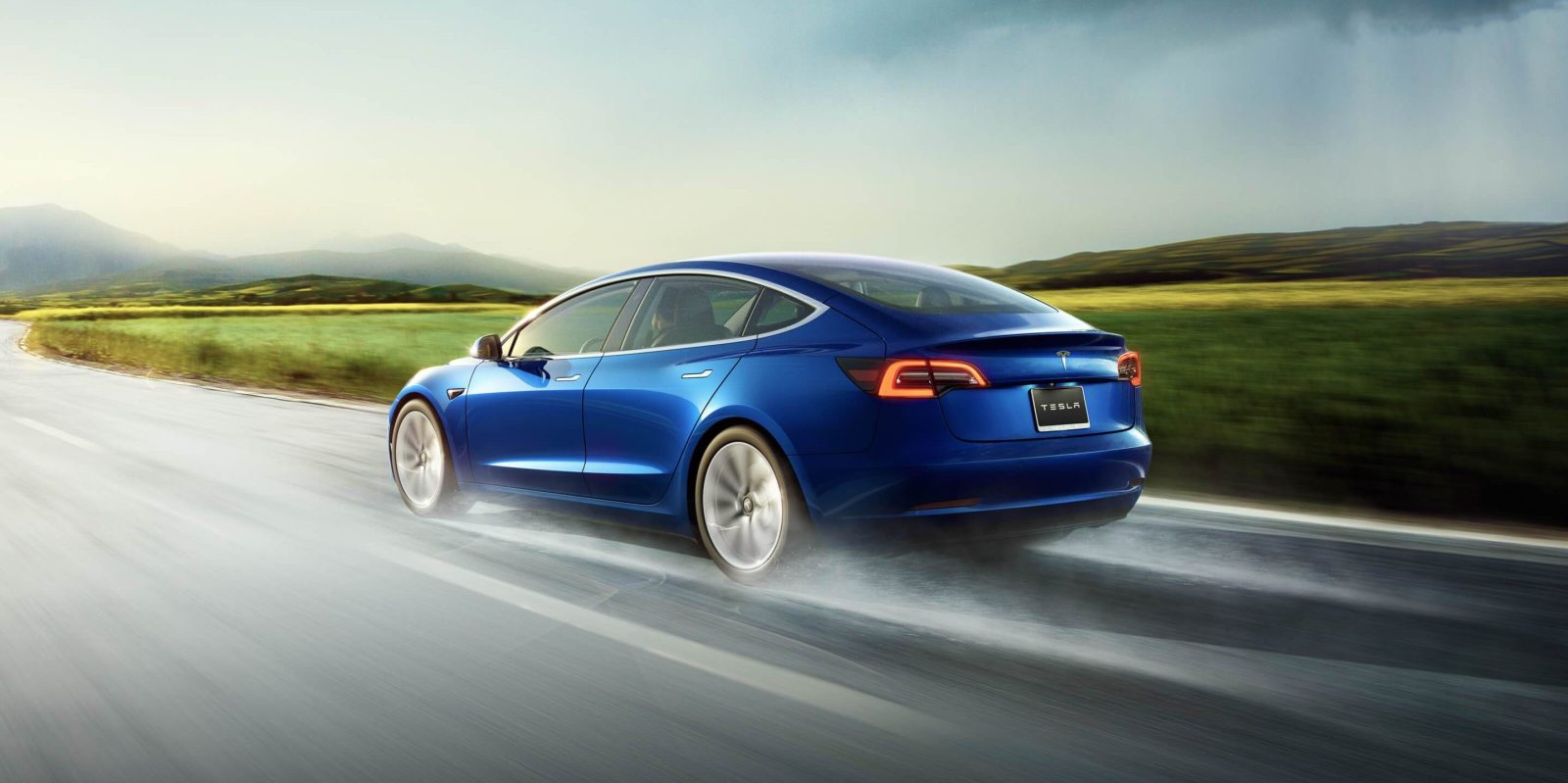
    Tesla is all set to roll out its first electric car, the Model S, in the country this year. The EV maker will set up India headquarters in Mumbai’s Lower Parel location while the production base will be established in Karnataka. The American EV maker will start its sales operations with the Model 3 which is the most affordable offering in its line-up. The Tesla Model 3 will come to India as a completely built unit (CBU) model. The car is rumored to be priced somewhere ₹ 55 lakh in the country. The Tesla Model 3 has a range of up to 500 kilometers and a top speed of 162 kmph. It can even do 0-100 kmph in 3.1 seconds.

    Volvo XC40 Recharge:

    Volvo Car India revealed the new XC40 Recharge electric SUV in the country a couple of months ago. It will be the first all-electric offering from a Chinese-owned Swedish carmaker. The company will start accepting pre-bookings for the electric SUV next month, while deliveries will commence in October 2021. The Volvo XC40 Recharge will come to India as a completely built unit (CBU) model. The electric SUV comes with a dual-motor powertrain with 150 kW electric motors on each axle that converts to 402 bhp and 660 Nm of peak torque. The electric motors are powered by a 78 kWh battery pack that offers an approximate range of up to 418 km. It can achieve 0-100 kmph in 4.9 seconds.

    Audi e-Tron:

    Audi India has confirmed the arrival of the e-Tron alongside the e-Tron Sportback in the country this year. It will be the German carmaker’s first all-electric offering in India. The electric SUV was previously slated to go on sale last year, which was delayed due to the COVID-19 pandemic. Both the Audi e-Tron and the e-Tron Sportback share the same underpinnings, but the latter gets the coupe-like sloping roofline and a redesigned rear profile. Both the EVs come with two electric motors that develop 355 bhp and 561 Nm of peak torque. In the boost mode, the power output increases up to 408 bhp and 664 Nm. The EVs use a 95 kWh battery pack that offers a range of about 452 km on a single charge and can be fully charged in eight and a half hours using a regular charger.

    Mahindra eKUV100:

    Mahindra is all set to launch the eKUV100 in the Indian market in the coming months. The Indian carmaker has already announced prices of the EV at the 2020 Auto Expo, which costs ₹ 8.25 lakh (ex-showroom, India). While the eKUV100 will be targeted at fleet operators, the EV will also be offered for private buyers. Visually, the car looks identical to its petrol counterpart. However, we expect minimal changes on the production-spec version including possibly a revised grille, along with reworked headlamps and taillights. The Mahindra eKUV100 will use a 40 kW electric that belts out about 53 bhp and 120 Nm of peak torque. A single-speed transmission will be sending power to the front wheels. The car will come with a 15.9 kWh lithium-ion battery and is expected to offer a range of 120 km on a single charge.

    Porsche Taycan:

    The all-new Porsche Taycan electric sports car will be introduced in India this year. It is the first fully-electric sedan from the Stuttgart-based luxury carmaker, which will be based on the Porsche Mission E Concept that was showcased in 2015. The new Porsche Taycan will sport two permanently excited synchronous electric motors that can churn out a maximum of 600 bhp and will a range of over 500 km thanks to its high voltage lithium-ion batteries. The EV will get 800-volt chargers with fast charging capability, which can offer a 400 km range in 15 minutes of charge time. The carmaker claims that the EV can sprint from 0-100 kmph in under 3.5 seconds.

    Tata Altroz EV:

    The Altroz EV will be the next electric vehicle from the Indian automaker’s stable, which was showcased at the 2019 Geneve Motor Show. The fully electric version of the premium hatchback is expected to go on sale in India this year. Like its ICE derivative, the EV version will also be built on the all-new Agile Light Flexible Advanced (ALFA) Architecture. Tata Motors has already confirmed that all its future electric vehicles will use the Ziptron powertrain technology. So, the Altroz EV will get a Lithium-ion battery with IP67 certification.

    Mercedes-Benz EQS:

    It was last month that Mercedes-Benz revealed the EQS electric sedan in the global market. The electric sedan has been listed on the official India website, suggesting it could be launched in our market later this year. The luxury electric sedan will be available in two trims – EQS 450+ and EQS 580 4MATIC. The EQS 450+ is the base variant that features a single electric motor on the rear axle for a total of 328 bhp and 568 Nm of peak torque. The EQS 580 4MATIC is an all-wheel-drive (AWD) range-topping trim and gets an electric motor on both front and rear axles. Total output in combination here is 516 bhp and a whopping 855 Nm of peak torque, good for a 4.1 seconds sprint to 100 kmph from a standstill.

  • EV Owners Shifting Back To Gas Power In The U

    EV Owners Shifting Back To Gas Power In The U

    A study by the University of California, Davis, which has been published by the Nature Energy Journal has shown some disturbing signs for EVs. While the world makes this tectonic shift away from gasoline-powered vehicles, between 2015-2019, 18 percent of EV owners in California shifted back to gasoline while 20 percent of the plug-in hybrid owners also did the same. The study reveals the primary culprit for the switch was the lack of reliable level 2 charging, particularly at home. While EVs, despite being more expensive than gasoline-powered vehicles, are considered more affordable because of the more affordable nature of charging and almost no after-sale cost which makes these vehicles more reliable, the limitations of range and the time that it takes to charge a vehicle offset these benefits.

    According to the research paper, almost half of the respondents who bought an EV had access to level 2 charging. 30 percent of them also had proper plugin charging at home and they still dumped their EVs. Interestingly, 54 percent of the respondents were less likely to buy an EV if they didn’t have access to convenient at-home charging.

    In the US particularly, things have moved along quite a bit in the last two years. EVs have become more ubiquitous because of the Tesla Model 3 which has become the best selling executive sedan in the world. Tesla also has a rather affordable SUV in the Tesla Model Y and there is a legion of new vehicles coming to the US mostly from traditional automakers.

    While all of this has happened, the charging technology has moved along. Tesla’s supercharger network has grown while also Volkswagen’s Electrify America has become the biggest charging network in North America. But more players are entering the space like Rivian which is highly capitalized and also pouring its cash into developing its charging network. GM has now partnered with 7 networks via a super app for charging its vehicles.

    The government has also changed in the US. Under Biden, EVs are getting a huge push and if tax credits come back, then things will be even more lucrative for EV adoption. The data from the report is also likely skewed slightly from the current trends because it takes broad 4 year period when EVs and their infrastructure weren’t as developed or refined.

  • Volkswagen Begins Construction Of New Electric Plant In China

    Volkswagen Begins Construction Of New Electric Plant In China

    Volkswagen Group China has begun construction of an all-new MEB plant at Volkswagen Anhui recently. As the third of the Group’s pure-electric vehicle manufacturing facilities in China, following completion of the Anting (SAIC VW) and Foshan (FAW-VW) plants, the Volkswagen Anhui plant will be powered by green energy from day one. Due for completion mid-2022, the plant is set for the start of production in the second half of 2023.

    By 2025, Volkswagen Group China plans to deliver up to 1.5 million new energy vehicles (NEVs) per year. Dr. Stephan Wollenstein, CEO of Volkswagen Group China, said, “As China is the world’s largest single market for NEV vehicles, we need to strengthen our local competence, and Volkswagen Anhui is a significant part of it. With the plant to be powered by green energy from day one, we are demonstrating our commitment to reducing carbon emissions beyond our fleet.”

    The new body shop will cover roughly 141,000 square meters and makes up part of the total project area, together covering around 500,000m2. The new plant will incorporate a number of energy-saving strategies as part of comprehensive efforts to reduce overall carbon emissions, including the adoption of low energy consumption production equipment. A supplier park for batteries and components is also planned for construction in the area.

    Volkswagen Anhui will have a staff of around 500 on board by 2025, with a focus on R&D and engineering innovations. Combining R&D, quality assurance, pre-sales manufacturing, and testing under one roof, Volkswagen Anhui will provide the Group with a faster time-to-market for new e-mobility products.

  • Tesla To Add EV Components Recycling Facilities At Shanghai Factory

    Tesla To Add EV Components Recycling Facilities At Shanghai Factory

    U.S. electric vehicle (EV) maker Tesla Inc plans to add facilities at its Shanghai factory to repair and reproduce key components such as electric motors and battery cells, a document submitted by Tesla to Shanghai authorities shows.

    China, the world’s biggest car market, sold over 1.3 million electric and plug-in hybrid vehicles last year. China’s regulators are adding rules on the recycling of key EV components to save materials and protect the environment.

    The document also said Tesla will add manufacturing capacities for car structures and electric motor controllers. It did not put detailed figures of its manufacturing capacities.

    Tesla, which is making electric Model 3 and Model Y vehicles, is expanding the manufacturing capacity of EV components to localize the supply chain. It also added a factory to make EV chargers in Shanghai last year.

    Tesla, which said on its website that materials in a Tesla car’s battery are recoverable and recyclable, did not immediately respond to a request for comment.

    Tesla sold more than 35,000 locally-made vehicles last month in China and is exporting China-made cars to Europe.

  • Porsche To Build EV Battery Cells Factory In Germany

    Porsche To Build EV Battery Cells Factory In Germany

    In a bid to speed up its e-mobility drive, the German carmaker Porsche is reportedly planning to set up a factory to produce battery cells for electric vehicles. This plan was confirmed by the company’s CEO to a local German newspaper. The European carmakers are looking to ramp up production of the electric cars to meet stringent environmental rules in the European Union. Moreover, they are also aiming to reduce their dependence on battery suppliers in Asia.

    In an interview with a local newspaper, Oliver Blume said that “Battery cells are a key technology for Germany’s automobile industry which we must also have in our own country.” He also said the carmaker wants to play a pioneering role in this step.

    He also confirmed that the battery cell factory would be built in the Swabian town of Tuebingen, Germany. Moreover, the company will purchase EV batteries from its parent company, which plans to build half a dozen battery cell plants across Europe. Volkswagen also intends to expand infrastructure for charging electric vehicles across the globe.

    Blume further said, “But there will also be a segment for high-performance battery cells. It’s a Porsche domain. Just as we developed high-performance internal combustion engines, we now want to be at the forefront of high-performance batteries.”