Retail News CRM

Tag: EV

  • BMW Previews iX3, i4 and iNext EVs

    BMW Previews iX3, i4 and iNext EVs

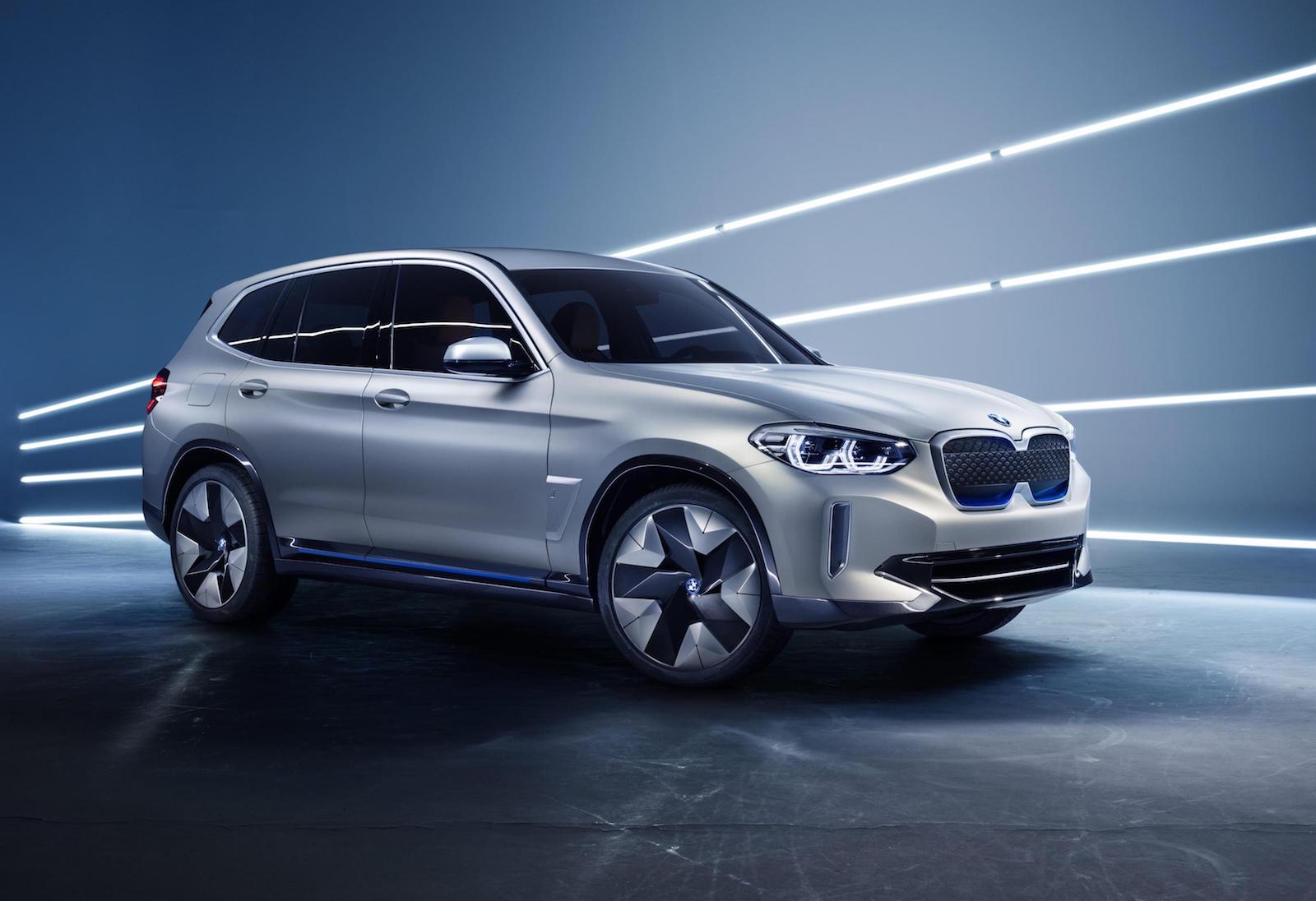
    BMW i is preparing to launch the next generation of pure electric models and three of its cars are currently going through a key phase of their series development process at the BMW Group’s winter test centre in Arjeplog, Sweden. In fact the company is so kicked about this, that they couldn’t help but share a teaser of the cars undergoing some winter testing at the edge of the Arctic Circle. Seen here in the picture are the BMW iX3, i4 and the iNext  all-electric vehicles.

    Together with the BMW iX3 already due to go on sale next year, the BMW i4 and the BMW iNEXT, will be brought to market in 2021. These are currently completing an intensive test programme. The drive and suspension components of these electric cars are being put to the test under extreme weather and road conditions. On the icy surfaces of frozen lakes, on snow and in the bitter cold, the electric motors, the high-voltage batteries and the power electronics of BMW eDrive technology as well as the suspension control systems will be put to the test in terms of durability and reliability.

    The BMW iX3 will already feature the fifth generation of BMW eDrive technology for the first time. It’s a powerful electric motor and a high-voltage storage unit featuring state-of-the-art battery cell technology facilitate purely electric driving pleasure in a new dimension. With a range of over 400 kilometres and the possibility to use DC charging stations with a capacity of 150 kW to charge its battery, the first all-electric SAV is ideally suitable for day-to-day use and long-distance travel. The BMW iX3 will be the first model produced for the entire global market by the BMW Brilliance Automotive Joint Venture at the Chinese production location in Shenyang.

    The BMW i4 is a four-door coupe positioned in the premium midrange segment  and will use the fifth-generation BMW eDrive technology. This will give the car an all electric range of over 600 kilometres. The BMW i4 sprints from a standstill to 100 km/h in a mere 4 seconds and reaches a top speed of over 200 km/h. The BMW i4 will be produced at the BMW Munich plant starting 2021.
    The BMW iNEXT is based on the Group’s future modular construction system, it combines the latest innovations in the areas of design, automated driving, connectivity, electrification among others. The BMW eDrive ensures a range exceeding 600 kilometres and the car is equipped with the latest connectivity features and designed for Level 3 automated driving. The BMW Group’s new technology flagship will be produced at the BMW Dingolfing plant as from 2021.
  • Oslo Becomes The First City In The World To Get Wireless Charging Systems For EVs

    Oslo Becomes The First City In The World To Get Wireless Charging Systems For EVs

    Norway’s capital Oslo will become the first city in the world to install wireless charging systems for electric taxis, hoping to make recharging quick and efficient enough to speed the takeup of non-polluting cabs. The project will use induction technology, with charging plates installed in the road at taxi ranks linking to receivers installed in the vehicle, Finnish utility Fortum said.

    From 2023 onward all taxis in Oslo will have to be zero emission and Norway wants all new cars to be zero emission by 2025. Among other nations, Britain and France have similar goals for 2040. Fortum, which is working with U.S. firm Momentum Dynamics and the City of Oslo on the scheme, said the greatest hurdle for electrification of taxis had so far been the infrastructure, as it is too time consuming for cabbies to find a charger, plug in, then wait for the car to charge.

    Induction is more energy efficient and enables charging the taxis while they are in the slowly moving queues at taxi ranks. “Time equals money when taxi drivers are working,” said Ole Gudbrann Hempel, head of Fortum’s public charging network in Norway.Norway has the world’s highest rate of electric car ownership, partly thanks to long-term perks such as free or discounted road tolls, parking and charging points. Last year, almost one in three new cars sold was electric.

    The government also exempts electric vehicles from taxes on traditional vehicles that are very high in a country which does not have its own fossil fuel car industry to lobby against them. With just five million people, Norway bought 46,143 new battery electric cars in 2018, making it the biggest market in Europe, ahead of Germany with 36,216 and France on 31,095, according to the European Automobile Manufacturers’ Association.

  • Kia Partners With Amazon To Sell Charging Stations For Electric Vehicles

    Kia Partners With Amazon To Sell Charging Stations For Electric Vehicles

    Kia Motors America (KMA) in partnership with Amazon Home Services has announced a new program for its plug-in vehicle customers. The program will see Amazon sell and install electric vehicle charging stations at the customers house or office. The tie-up makes Kia, the second automaker after Tesla in America to offer the service online with the electric charging network. The manufacturer says the process of purchasing and installing a charging station will be as easy as buying other products on Amazon.

    Speaking about the new initiative, KMA – Car Planning and Telematics, Executive Director, Orth Hedrick said, “Home-charging can’t get any easier than this. Being able to order a Level 2 charger and installation through Amazon further demystifies and simplifies the experience for new Kia EV and PHEV owners. It’s just another example of how we’re constantly striving to provide the very best vehicles and customer experience.”

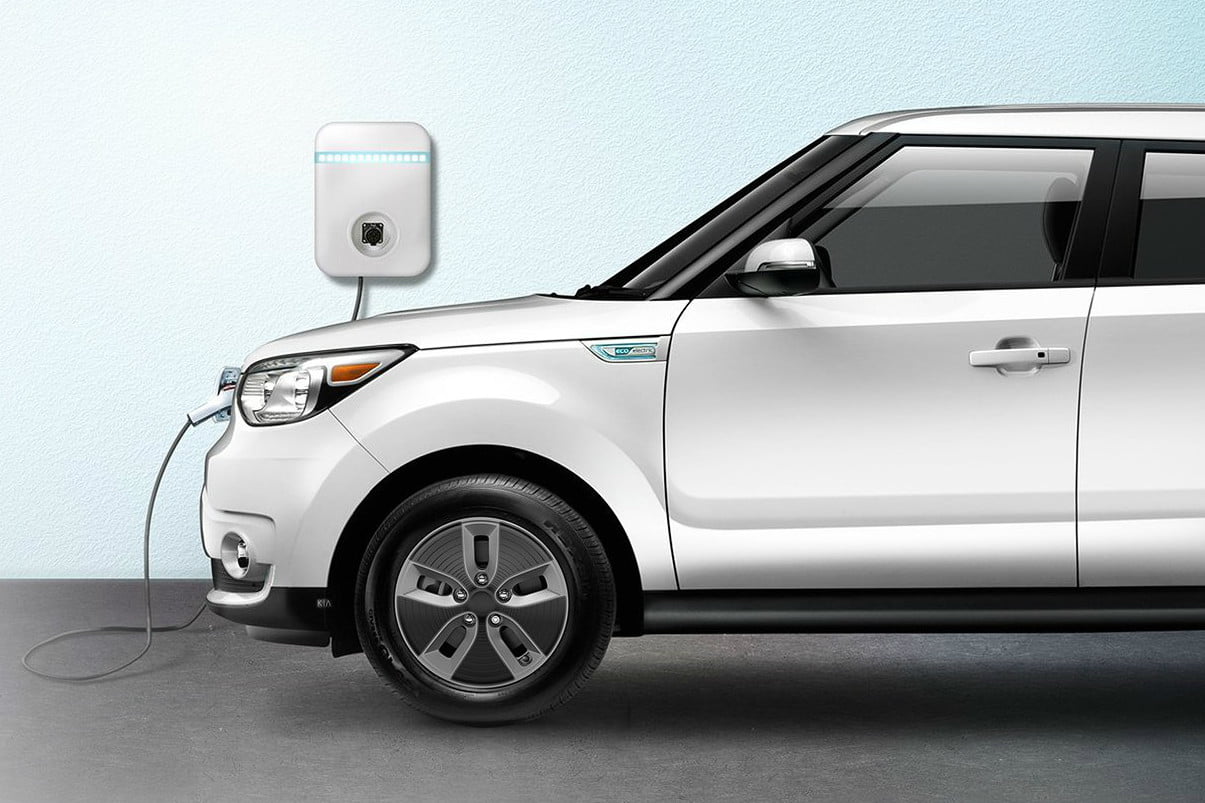
    Kia Motors has been actively working on improving its charging infrastructure in the US as it adds more electric cars to its portfolio. The company currently retails the Soul EV, Niro EV1, Niro PHEV and Optima PHEV, among other models in the country. Customers will find recommended Level 2 or 240-volt charging units selected by Kia on Amazon, along with information about home charging installation and customer reviews. The site also gives customers the cost for the installation and will schedule a licensed electrician for the same, if needed. The charging stations are backed by Amazon’s Happiness Guarantee plan. Kia’s vehicles in the US are offered with a 10 year/160,000 km warranty cover and roadside assistance.

    Kia and Amazon have set up a new ‘Charge my Kia’ portal for the sale of the electric charging stations. While buyers can purchase the Bosch 40-amp station that is available in partnership with the manufacturer, there are other charging stations available as well from companies like Chargepoint and Juicebox.

  • 2018 sales of EV doubled in Korea

    2018 sales of EV doubled in Korea

    Hyundai Motor Executive Vice Chairman Chung Eui-sun laid out a plan to develop 44 electric vehicle models (EVs) and sell 1.67 million of the cars by 2025 during his New Year’s message held at the beginning of this year. The goal was a dramatic increase on the 38 models he planned to have by 2025 at the start of 2018. The revised goal is rooted in the fact that EVs are growing at an unprecedented pace in the global auto industry.

    According to U.S. market research firm S&P Global Platts, the number of electric cars sold worldwide exceeded 2 million in 2018 including plug-in hybrids, double the 1 million sold in 2017.

    This achievement came seven years after Tesla rolled out its Model S, opening the era of EVs, and more than two decades since Toyota released the world’s first hybrid, the Prius.

    Among the total number of EV cars sold, battery-electric vehicles sold 1.45 million units last year, followed by plug-in hybrids at 550,000 units.

    The most popular model was Tesla’s Model 3, which started mass production last year. Unlike the Model S and X, which cost over 100 million won ($88,850), the Model 3 was released as a more affordable model with a price tag around 50 to 60 million won. It sold 146,846 units, taking the top spot.

    Four Chinese companies ranked high in the top 10. The EC Series from Beijing Automotive Group ranked second. BYD’s eco-friendly plug-in hybrid, the e5, and JAC Motor’s iEV E/S were also on the list. Among Japanese cars, Nissan’s Leaf placed third while Toyota’s Prius Prime was ninth and Mitsubishi Outlander plug-in hybrid placed 10th.

    Hyundai and Kia both made it to the top 10 list of automakers for the first time. Combined, the two sold 90,860 units last year, taking the eighth spot.

    Tesla sold the most cars, at 245,240, followed by China’s BYD at 229,338. German brands, traditionally strong players in the vehicle market, had BMW at fifth and Volkswagen at ninth.

    Industry analysts project the market for electric cars will expand at an even faster speed. Deloitte, a global consulting firm, expects 4 million EVs to be sold in 2020 and 14 million in 2025. By 2030 it expects EV sales to hit 21 million.

    Considering that 98 million cars are sold worldwide annually, within 20 years one of every five cars purchased will be an EV.

    Experts say that while the United States and China have led the growth of the EV market, that is likely to change in the future.

    Deloitte forecast that cost reductions from technology development will pull down the price of EVs to be on a par with diesel cars by 2022. This means the product sector will gain price competitiveness, no longer relying on government subsidies.

    The market will also get more competitive. Toyota and Volkswagen are both planning to release new electric cars in the near future, with Volkswagen aiming to make 25 percent of the cars it produces EVs by 2025. Its investment in electric cars is already worth 20 billion euros ($2.25 billion).

    According to consulting firm AlixPartners, Volkswagen Group is planning to release 55 EV models by 2022. This accounts for half of all EV models slated for release by then.

    “Government subsidies played a big role in enabling Chinese firms to sell large numbers of EVs, but its finances have hit the limit,” said Kwon Yong-ju, a professor from Kookmin University’s department of automotive & transportation design.

    “With European companies having accumulated technology and capital while waiting for the commercialization of EVs, the future could be quite different from now.”

    “Major countries, like the United States and Europe, have tightened regulations toward environmental pollution more than before,” said Koh Tae-bong, head of research center at Hi Investment & Securities. “For car companies, it is inevitable that they will expand the amount of electric cars they make.”

  • Report urges auto industry to go electric

    Report urges auto industry to go electric

    Korea needs to give equal emphasis to the development of battery electric vehicles and fuel cell cars, considering the estimated future demand and the country’s competitiveness, a report said Thursday. “It’s a well-known fact that our car manufacturers have the mass-production technology for fuel cell automobiles,” the report from the Korea Institute for Industrial Economics & Trade (KIET) said. “However, the accumulated sales of fuel cell electric vehicles (FCEVs) worldwide stopped at 10,000 as of the end of 2018. The demand for fuel cell vehicles in 2030 will be less than 2 percent of the global sales of new automobiles.”

    In comparison, sales of battery electric vehicles (EVs) are estimated to exceed the demand for hybrids this year, 10 years since their commercialization, and show fast-paced growth, the report argued. Global rivals are due to market more than 100 different EV models by 2022, it noted.

    Korea’s high competitiveness in EV batteries is another reason why the government should not neglect investment in electric cars, the report said, warning that the relative weaknesses in the availability of charging stations and other networks could drag down the industry, despite efforts by local automakers to diversify their EV models. The report responded skeptically to the government announcement in December to give 2 trillion won ($1.79 billion) in assistance to reform the car parts industry.

    “If the auto industry, the recipient, is unable to fully accommodate, it could be difficult for the assistance to have the desired effect,” it said.

    The same report predicted hard times ahead for local auto companies, affected by the global slump in the car industry.

  • Honda considers developing all solid-state EV batteries

    Honda considers developing all solid-state EV batteries

    Honda Motor is considering developing all solid-state batteries for electric vehicles (EVs) as a growing number of global automakers look to come up with powerful, next-generation car batteries to reduce vehicle emissions.

    Tighter global emissions regulations are forcing automakers worldwide to shift to electric cars, including all-battery EVs that will require capacity to deliver longer ranges and faster charge times, but at lower cost than lithium-ion batteries.

    “We’ve been researching all solid-state batteries,” Honda spokesman Teruhiko Tatebe said.

    “At the moment we’re not developing them with another automaker.”

    Kyodo News reported on Thursday that Honda and Nissan Motor Co were developing all solid-state EV batteries. Nissan was not immediately available for comment.

    A growing number of automakers including Toyota Motor Corp and Volkswagen  are developing all solid-state batteries, which offer more capacity and better safety than conventional lithium-ion batteries by replacing their liquid electrolyte with a solid, conductive material.

    Earlier this month, Toyota said it was considering jointly developing the next-generation batteries with Panasonic to share high R&D costs.

    The automaker is planning to have a production-ready battery in the early 2020s, and has highlighted the need to accelerate the pace of battery development as it and other automakers plan to ramp up the number of electric models they sell in the coming decades.

  • Hyundai and Michelin join to develop nextgen tyres for EVs

    Hyundai and Michelin join to develop nextgen tyres for EVs

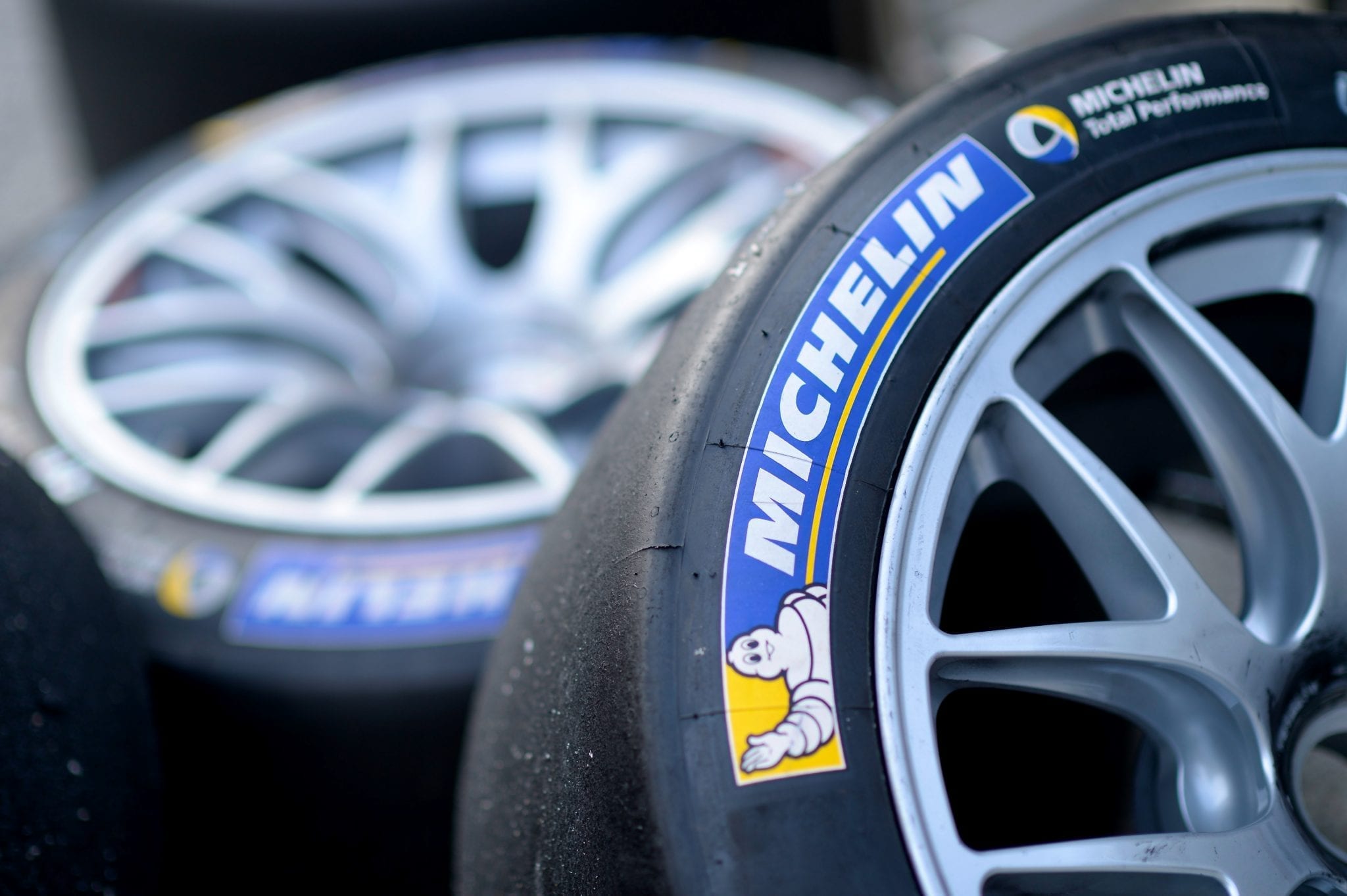
    Hyundai Motor has signed a technical partnership with Michelin to equip next-generation tyres for electric and luxury vehicles. The co-operative deal links the research and development work of the two companies and will enable Hyundai Motor to strengthen its capabilities in tyre performance technology.

    Within the partnership, Hyundai Motor and Michelin will work together to develop a new all-season tyre for electric vehicles. The use of Michelin’s next-generation tyre material and structural technology will help Hyundai Motor optimise overall vehicle efficiency and performance.

    Michelin will also collaborate in the development of a bespoke tyre for a successor model to the Genesis G80 luxury sedan. Co-operative testing and analysis will help determine tyre vibration characteristics at high speeds, both in a laboratory setting and using evaluation conditions set to match the Nürburgring circuit.

    The two companies are striving to achieve the best levels of ride and handling, while minimising noise, vibration and harshness (NVH). The resulting improvements in tyre performance and vehicle dynamics will also contribute to enhanced consumer satisfaction and driving pleasure.

    Woong-chul Yang, vice chairman of Hyundai Motor, said: “I am pleased to announce this new collaborative relationship with Michelin, which will allow Hyundai Motor to accelerate the development and deployment of new tyre technologies. With this enriched knowledge, the next generation of Hyundai Motor electric cars will offer improved performance and efficiency, bringing a direct benefit to the consumer. Working with Michelin will also strengthen Hyundai Motor’s tyre technology on a broader scale, as we also focus on developing luxury Genesis cars and high-performance vehicles.”

    Hyundai Motor representatives visited Michelin’s Research and Development Centre in Clermont-Ferrand, France, to sign the agreement.

    “This cooperation between our two groups is a major milestone for Michelin, and we are proud to have been chosen by Hyundai Motor to put together the best of our leadership and expertise in order to improve their future electric and luxury vehicles.” added Vincent Rousset-Rouviere, president of Michelin Original Equipment Division. “Michelin has been investing constantly in new technologies and innovations to enhance the performance of our tires, so that mobility becomes safer, more sustainable and more enjoyable for all consumers. This new partnership with Hyundai Motor will allow us to open a broad range of new opportunities.”

    Earlier this year, Michelin was awarded top honours in four segments of the 2017 JD Power Original Equipment Tyre Customer Satisfaction Study, excelling in the Luxury, Passenger Car, Truck / Utility, and Performance Sports categories.

  • Honda to focus on self-driving cars, robotics, EVs through 2030

    Honda to focus on self-driving cars, robotics, EVs through 2030

    Japanese carmaker Honda Motor on Thursday spelled out for the first time its plans to develop autonomous cars which can drive on city streets by 2025, building on its strategy to take on rivals in the auto market of the future.

    Unveiling its mid-term Vision 2030 strategy plan, Honda said it would boost coordination between R&D, procurement and manufacturing to tame development costs as it acknowledged it must look beyond conventional vehicles to survive in an industry which is moving rapidly into electric and self-driving cars.

    Honda has already spelled out plans to market a vehicle which can drive itself on highways by 2020, and the new target for city-capable self-driving cars puts its progress slightly behind rivals like BMW.

    “We’re going to place utmost priority on electrification and advanced safety technologies going forward,” Honda CEO Takahiro Hachigo said.

    Developing new driving technologies, robotics- and artificial intelligence-driven services and new energy solutions also would be key priorities for Honda in the years ahead, the company said.

    LEVELING UP

    Honda established a division late last year to develop electric vehicles (EVs) as part of its long-held goal for lower-emission gasoline hybrids, plug-in hybrids, EVs and hydrogen fuel cell vehicles (FCVs) to account for two-thirds of its line-up by 2030, from about 5 percent now.

    By 2025, Honda plans to come up with cars with “level 4” standard automated driving functions, meaning they can drive themselves on highways and city roads under most situations.

    Achieving such capabilities will require artificial intelligence to detect traffic movements, along with a battery of cameras and sensors to help avoid accidents.

    BMW has said it would launch a fully autonomous car by 2021, while Ford Motor has said it will introduce a vehicle with similar capabilities for ride-sharing purposes in the same year. Nissan Motor is planning to launch a car which can drive automatically on city streets by 2020.

    Honda has been ramping up R&D spending, earmarking a record 750 billion yen ($6.84 billion) for the year to March.

  • South Korea Changes Rules On EV Cars

    South Korea Changes Rules On EV Cars

    EV or electronic vehicle is slowly rising to the competition in the automobile industry. South Korea already made changes to their rules to those who are interested in EVs.

    The South Korean government will change one of their rules when it comes to EVs. South Korea is known for having a market for premium cars. They’re even part of Tesla Motors’ reservation of the company’s upcoming vehicle model, the Model 3. According to Tesla’s website, the Model 3 is an affordable premium sedan. Model 3 is designed to achieve that highest rating when it comes to safety measures.

    South Korea will be removing subsidies when it comes to EVs with high-capacity batteries. This move could change the EV market in the country since this will allow other longer-ranged models to be available in the market. By removing the subsidies for the EV market, more and more models of the EV will be available at an affordable rate.

    This will also prove to be good for Tesla. The motors company will conduct their first Tesla showroom in South Korea this year. The exact date for the facility is to be revealed sometime soon. With the South Korean government changing their rules for subsidies when it comes to high-battery powered EVs, more and more models from Tesla will be available for the Korean market this year. Aside from Tesla, BYD, the world’s largest EV maker is also planning to enter the Korean market of EVs. BYD encountered a problem because their latest model doesn’t qualify for the subsidy, thus resulting in the delay of the company to join the market, according to Reuters.

    Currently, there are about four thousand electric vehicles roaming the streets of South Korea. Once the government implements this change, there might be a triple amount of EV cars in the country.