Retail News CRM

Tag: EV

  • Lotus Teases Type 130 Electric Hypercar

    Lotus Teases Type 130 Electric Hypercar

    Lotus has confirmed that Type 130, the brand’s first all-new model in more than a decade, will be revealed to the world’s media at an exclusive event in Central London on 16 July, 2019. The company also announced that only 130 examples will be available to own – representing the number of Lotus ‘Types’ introduced during the brand’s 71-year history.

    The Type 130 will be the world’s first British all-electric hypercar. Lotus also confirms that the Type 130 will be built at Hethel in Norfolk, the brand’s headquarters since 1966. It will be the most dynamically accomplished road car in the company’s history according to Lotus and while the specifications of the car elude us, we’ll know more about the car very soon.

    However, there are reports doing the rounds that the new hypercar will be low and wide and will have roughly the same length as the Evora. There are other reports that suggest that it will be a 1000 horsepower car, will come with all-wheel drive and a range of 408 km on a single charge

    The company has teased the new Type 130 and we only get to see what appears to be the rear of the car. It carries the ‘illuminated’ Lotus brand name and gets an electrically operated cover for the charging port. We also get a chance to see the taillights but not in its entirety. Of course, the teaser campaign will continue and we’ll know more about the car closer to the launch, so stay tuned!

  • Honda’s EV Journey In India To Begin With Hybrid Technology

    Honda’s EV Journey In India To Begin With Hybrid Technology

    It was back in 2018 that we told you about Honda wanting to get into the EV space in India. The electric car which will be launched in India will be one of the company’s global models which will be produced after 2019 after the Japanese carmaker rolls out its electric plan for a wide set of market. The vehicle that will make its way to India could be a ‘B’ segment vehicle the development of which is under process for the Indian Market. But this EV strategy will only pan out until 2023-24. Meanwhile, however, the focus will be on a gradual shift towards EV, which is why hybrid technology will find its way into Honda Car India’s line-up of cars. Honda is also looking to localize the production of hybrid and EV solutions in India in a bid to ensure that it is accessible and affordable for the buyers.

    According to a statement made to PTI by Senior Vice President and Director Rajesh Goel, Honda Cars India, “Till such time and also till the development of suitable charging infrastructure in the country, we feel that hybrid vehicles can be considered as good intermediate technology in electrification initiatives. Accordingly, we will begin our electrification journey in two years with hybrid technology.”

    Currently, the company only has the Accord hybrid in its portfolio and it attracts 28 percent rate with a cess of 15 percent taking its price to over ₹ 43 lakh (ex-showroom). As per its Vision 2030, the company strives to electrify two-thirds of its global automobile unit sales in 2030 with its range of hybrid electric vehicles (HEVs), plug-in hybrid electric vehicle (PHEVs), battery electric vehicle (BEVs) and fuel cell vehicles (FCVs)
  • Volkswagen Plans To Produce Batteries In Germany

    Volkswagen Plans To Produce Batteries In Germany

    Volkswagen will invest almost 1 billion euros ($1.1 billion) in battery cell production at a facility in western Germany and is seeking to simplify the group by spinning off or selling units, the automaker said on Monday. Volkswagen said in a statement after a supervisory board meeting it would set up the battery facility in Lower Saxony under a partnership and would also begin talks on a planned new multibrand plant in Europe. The statement confirms a Reuters report earlier on Monday, on the eve of the company’s annual general meeting.

    Battery cells are a key battleground in the automotive industry as it shifts to electric mobility. Currently the industry chiefly sources its requirements from Asian manufacturers. Volkswagen also said it was looking into options for its MAN Energy Solutions business, which makes large diesel engines for ships and power generators, as well as transmissions maker Renk, including joint ventures, partnerships, a full or partial sale.

    Reuters reported earlier this month that Volkswagen had approached several companies to gauge their interest in buying MAN Energy Solutions, which is expected to achieve a valuation of about 3 billion euros in a potential sale. The moves are part of Volkswagen Chief Executive Herbert Diess’s efforts to slim down and simplify the group which has 12 brands, trucks, buses, motorbikes, cars and electric bicycles as part of its business.

    “Given the ever greater complexity of our industry and the related challenges, it is essential to focus on our core business,” Supervisory Board Chairman Hans Dieter Poetsch said. Volkswagen also said it would resume preparations for an initial public offering (IPO) of its trucks unit Traton, which it put on hold in March due to volatile market conditions.

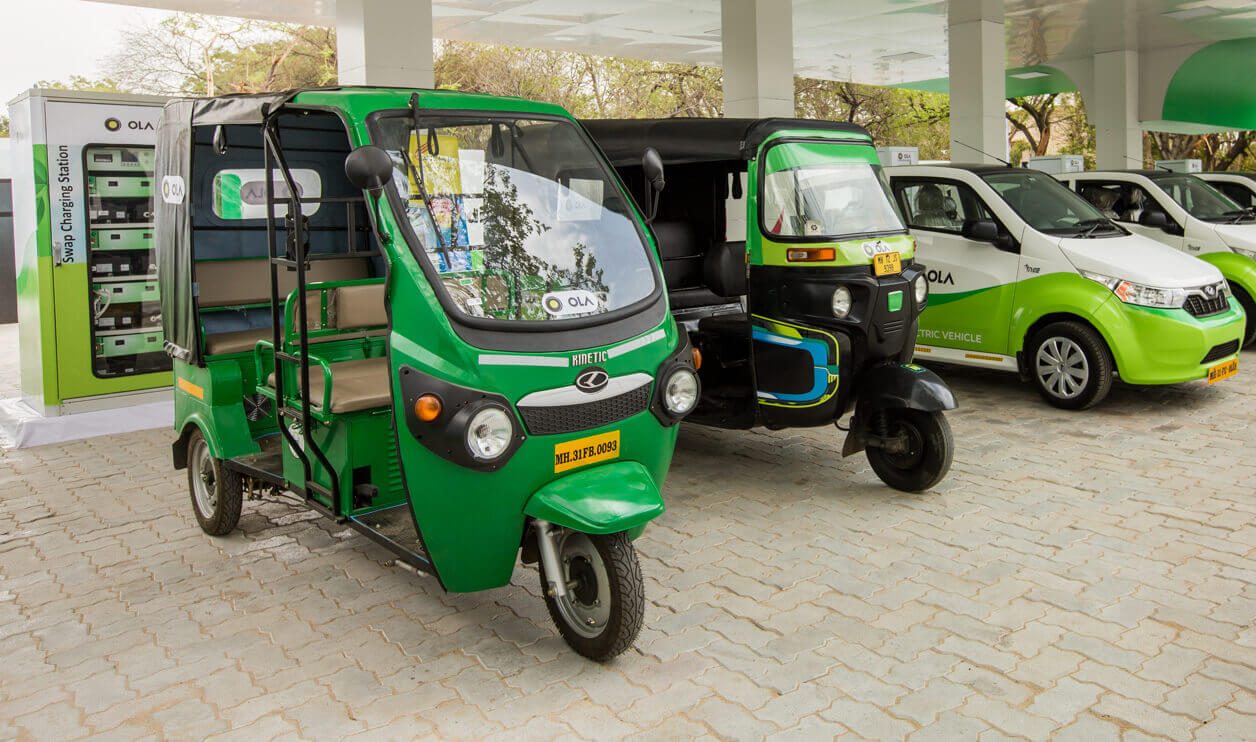
  • Ola Aims To Deploy 10,000 Electric Two And Three-Wheelers In India

    Ola Aims To Deploy 10,000 Electric Two And Three-Wheelers In India

    India’s Ride-hailing service provider Ola is reportedly betting big on two and three-wheelers for its electric mobility drive. In fact, the company is expected on deploying 10,000 electric vehicles (EVs), a mix of two and three-wheelers, in India by March 2020. A PTI report claims that, according to a senior company official, the company believes that mass scale adoption of four-wheeler electric vehicles will take some more time. It was a lesson that the company learned from Ola and Mahindra’s 2017 joint pilot project in Nagpur, for which the former had partnered with the leading SUV maker for a multi-modal electric mass mobility project. It showed Ola that right now “four-wheelers are not yet ready” for such usage in India on a large scale.

    Speaking to PTI, Ola Electric Mobility (OEM) co-founder Anand Shah said, “The biggest lesson (from Nagpur) was that, (electric) four-wheelers, are not yet ready. It is going to take a couple of years for the math on four-wheelers to work.” According to Ola, right now electric three-wheelers / e-Rickshaws are the largest population of EVs by natural adoption. Further, he said, “We think two-wheelers are also emerging very quickly, partially because of policy and also because of the rising interest in the commercial use of two-wheelers, whether that is in deliveries for our own food business or any of our competitors, e-commerce companies or scooter sharing.” In fact, Ola has already started pilots with a fleet of a hundred of three-wheelers in Gurugram. Considering Mahindra has the Treo e-Rickshaw in its fleet now we wouldn’t be surprised if Ola and Mahindra come together for a new project.

    The company expects to deploy the 10,000 electric vehicles by the end of March 2020 in whichever viable cities/states of the country that are willing to work with it. The possible candidate cities include – Delhi, Maharashtra, Kerala, Karnataka, Telangana, AP, and Gujarat. All that said, Ola, hasn’t given up on it, and is confident that electrification is viable in the long run. In fact, Ola is still actively working on electric four-wheelers as well Shah said, and further told PTI “We are testing electric cars. We have tried every electric car that exists in India today, but we think it’s going to take some time for rapid four-wheeler EV adoption at scale.”

    Talking about the learnings from the Nagpur project, Shah said that they noticed a need for more four-wheeler EVs models because when they started there was only one make of electric car available in the market. He also addressed the need for appropriate battery technology for the Indian conditions and usage along with a proper understanding of infrastructure utilization to strike a balance between usage of land, power and time of the day. He also talked about electricity cost being a very significant input while mentioning that now the government is beginning to address this.

    Talking about investments for electric mobility, Shah said, “We have raised Rs 400 crore from some of our early investors — Tiger Global Management, Matrix India. That money will be spent on meeting these milestones, on getting the technology right, getting the business model right and we will keep growing from there.”

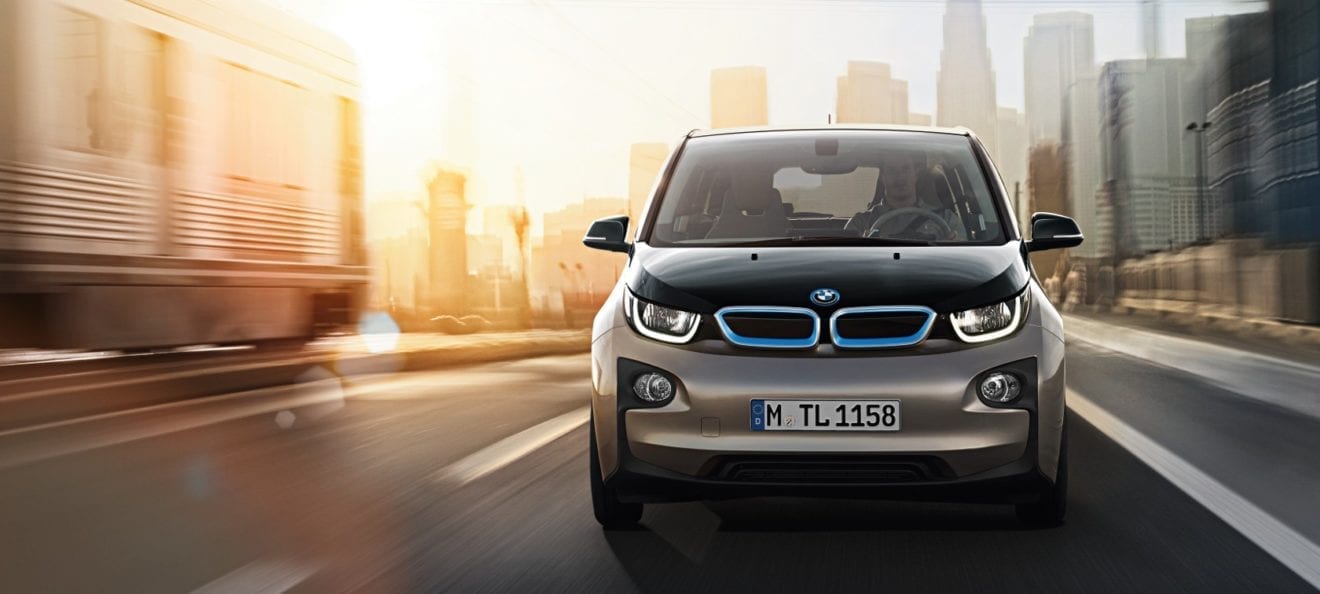
  • BMW Group Plans To Launch 25 Plug-In’s

    BMW Group Plans To Launch 25 Plug-In’s

    Since 2013, BMW has been in the game of electric cars and it was then that the company envisioned the future of electrification in automobiles. The ‘i’ brand has been very successful right from the i3 all-electric car to the i8 plug-in hybrid. And now, BMW is looking to expand that portfolio and bring in a lot more cars for its customers. The company announced at an investor meeting that it is going big on its electrification plan. The company plans to launch 25 Plug-In hybrids and 12 All-Electric cars by 2025. Over the next couple of years, the company will focus on bringing out plug-in hybrid versions of its existing models.

    Back in 2017, deliveries of electrified vehicles for BMW jumped by 65.6 percent to 103,080 units. Considering the strong growth it has seen in this space, the BMW Group announced that it will spend more on research and development in 2018. The company spent 6 billion euros in 2017 and that figure jumped to 7 billion in 2018.

    The company met its target of selling 1,40,000 EVs worldwide and has already sold 4 lakh electrified cars across the globe. The company is eyeing the 5 lakh unit sales milestone in 2019. The surge in sales will be helped by the introduction of new products and these will include all-electric BMW iX3, the new i4, and MINI. The BMW Group already manufactures electrified vehicles at ten production facilities.

    In 2019, Plant Oxford will join this list with the start of production of the fully-electric MINI. The BMW i4 is just one of the 25 electrified models that the BMW Group intends to bring to market by 2025. Half of these models will be fully electric. Powered by the fifth generation of battery and drivetrain technology, from 2021 the BMW Group will of offer all-electric vehicles with a range of up to 700 kilometers and plug-in hybrids with an electrical range of up to 100 kilometers.

  • Asia In Charge Of Electric Car Battery Production

    Asia In Charge Of Electric Car Battery Production

    Global production of batteries for electric cars is concentrated in Asia, with Chinese, Japanese and South Korean firms dominating the sector and building factories in Europe to conserve their supremacy. However, Europe is looking to strike back, with France and Germany saying on Thursday they would form an alliance to develop next-generation batteries in a bid to counteract Asia’s dominance.

    Lithium-ion batteries are a — if not the — crucial component of electric vehicles, but few companies have ventured into actually making them given the huge cost of setting up manufacturing facilities and the still limited demand. Car manufacturers have prefered to have a choice of several specialised suppliers, especially as battery technology is rapidly evolving.

    China, where half of electric cars are currently being sold, requires car manufacturers to use locally-built batteries and is calling the shots in the industry with two-thirds of the world’s production capacity of lithium-ion cells for batteries. Only Asian firms appear in the top 10 of the industry: China’s Contemporary Amperex Technology (CATL) accounted for 23 percent of global production last year, edging out Japan’s Panasonic at 22 percent.

    China’s BYD followed at 13 percent and is the only car manufacturer to have prospered in making batteries. South Korea’s LG Chem came in at 10 percent while Samsung SDI had 5.5 percent, according to the US-based Center for Automotive Research (CAR). Europe accounts for only one percent of global production. The United States also remains marginal on a global scale despite the Gigafactory that Tesla developed with Panasonic.

    Another key factor in China’s supremacy: control over the raw materials needed to manufacture the batteries: lithium and cobalt.

    According to Bloomberg, the Chinese firms Ganfeng and Tianqi control 17 and 12 percent respectively of the world production of lithium thanks to their investments in mines in Australia and South America.

    Tianqi bought a 24 percent stake in Chilean miner SQM for $4.1 billion in December. Together with the US firm Albemarle it also controls the huge Greenbushes mine in Australia.

    Meanwhile, Chinese firms control at least half of the cobalt extracted in the Democratic Republic of Congo, where 70 percent of global output comes from, according to estimates cited by Bloomberg.

    China Molybdenum bought a major site from the US firm Freeport-McMoran for $2.65 billion in 2016. China also has 80 percent of the world’s capacity to produce refined cobalt using chemical processes.

    Concerned over their access to supplies, several carmakers have concluded long-term deals with Chinese firms: Volkswagen announced at the beginning of April a 10-year deal with Ganfeng for lithium that it can provide to battery manufacturers of its choice.

    According to the BCG consultancy, the global auto battery market could reach 45 billion euros in value in 2027, with Europe accounting for 20 to 30 percent, but Asian firms are expected to benefit most.

    CATL is investing some 240 million euros to build a factory in the central German city of Erfurt that will supply BMW from 2022. The luxury carmaker has concluded a contract worth four billion euros with CATL, including 1.5 billion from the Erfurt site.

    LG Chem has been manufacturing batteries for Daimler, Volvo, Audi and Renault from a site in Poland since last year.

    Samsung SDI has a factory in Hungary, where fellow South Korean firm SK Innovation is investing $1.5 billion into two factories that could end up serving Volkswagen.

    One of the rare European specialists in batteries is Swedish firm Northvolt. It is currently building what will be Europe’s largest facility in Sweden together with Germany’s Siemens.

    Expected to cost at least 1.6 billion euros, the facility is to begin turning out batteries in 2020 and when it reaches capacity in 2023, it should be double the volume of CATL’s German factory.

    Founded by two former Tesla employees, Northvolt joined forces with Volkswagen in March to create a “European Battery Union” to promote research. Northvolt also collaborates with BMW.

    Meanwhile the Dutch firm Lithium Werks, which has already built a massive factory in China, has been in talks to build a billion-euro facility in Poland.

  • Hyundai Introduces Smartphone Based EV Performance Control Technology

    Hyundai Introduces Smartphone Based EV Performance Control Technology

    Hyundai Motor Group has announced the development of ‘smartphone-electric vehicle pairing based performance adjustment technology,’ which allows users to customise primary functions through a smartphone app. The company says that it is in fact an industry first innovation. Drivers can use this technology to adjust seven performance features including the maximum torque output of the motor, ignition, acceleration and deceleration abilities, regenerative braking capacity, maximum speed limit, responsiveness, and energy use on climate control.

    As electric vehicles continually expand their market share, especially in rental or car-sharing industries, the new technology will allow drivers to use their custom settings in whichever electric vehicle they drive by downloading their profile from the server. The application provides optimised settings for a designated destination by analysing the remaining distance and electric energy requirement. It can also accommodate sportier driving by recommending tailored performance settings.

    The application provides optimised settings for a designated destination by analysing the remaining distance and electric energy requirement

    Beyond the driver’s seat, users can share their customisation settings online as well as try out other users’ custom settings. Customers can also apply recommended settings by Hyundai based on the condition of roads, from country roads to the city centre or mountain ranges. Hyundai Motor Group will utilise blockchain technology to prevent security issues while users upload and share their custom sittings on the server.

    In the process of uploading and sharing custom settings, the system encrypts major performance parameters in a blockchain network by creating new data blocks and stores them in the distributed data storage system to block unauthorised manipulation.

  • France and Germany To Support Battery Cell Consortium

    France and Germany To Support Battery Cell Consortium

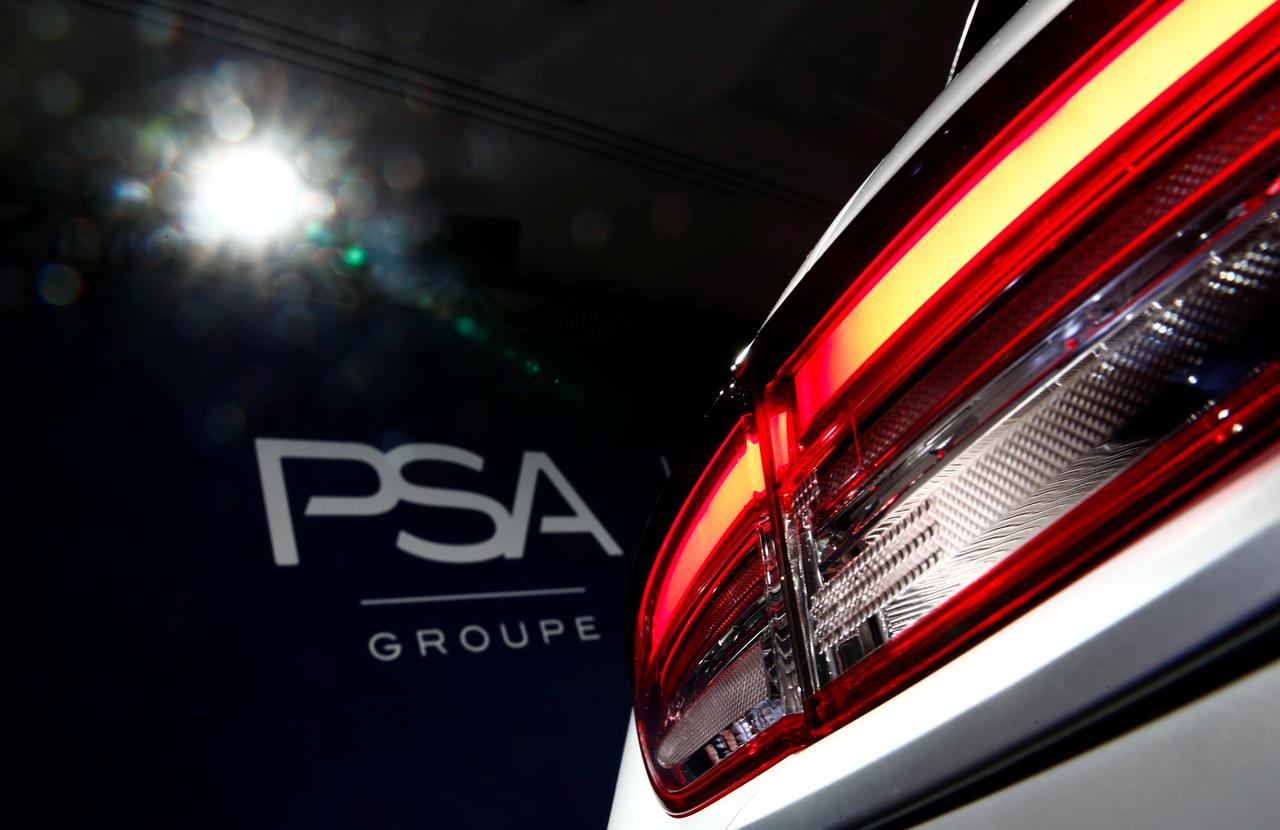
    France and Germany have asked the European Commission to approve state subsidies for a cross-border battery cell consortium including carmaker PSA with its German subsidiary Opel and French battery maker Saft, a German official said on Monday. The two countries have earmarked 1.7 billion euros ($1.9 billion) to support company alliances to help reduce European carmakers’ dependence on Asian suppliers and protect jobs at risk from the shift away from combustion engines.

    The economy ministries of both countries sent a letter of intent to the European Union’s executive body asking it to give a provisional go-ahead, a German economy ministry spokeswoman said, without giving a sum for the planned state funding.

    “We’re now waiting for Brussels to give us the green light,” the spokeswoman said.

    German Economy Minister Peter Altmaier will meet French counterpart Bruno Le Maire in Paris on Thursday to discuss the matter, aiming to make progress with forging further battery alliances. The FAZ report said that the PSA/Saft alliance was planning to convert an Opel factory in the western city of Kaiserslautern close to the French border into a battery cell production site.

    Among the more than 30 companies that applied for state funding at the German Economy Ministry are carmakers Volkswagen and BMW, as well as German battery maker Varta and Swedish battery manufacturing startup Northvolt. Saft, a 100-year old French company owned by energy company Total, produces a range of batteries for industrial applications.

    It has joined forces with German industrial group Siemens, electronic components specialist Manz, Belgian chemicals group Solvay and Belgian material group Umicore to develop a new generation of batteries for electric vehicles.

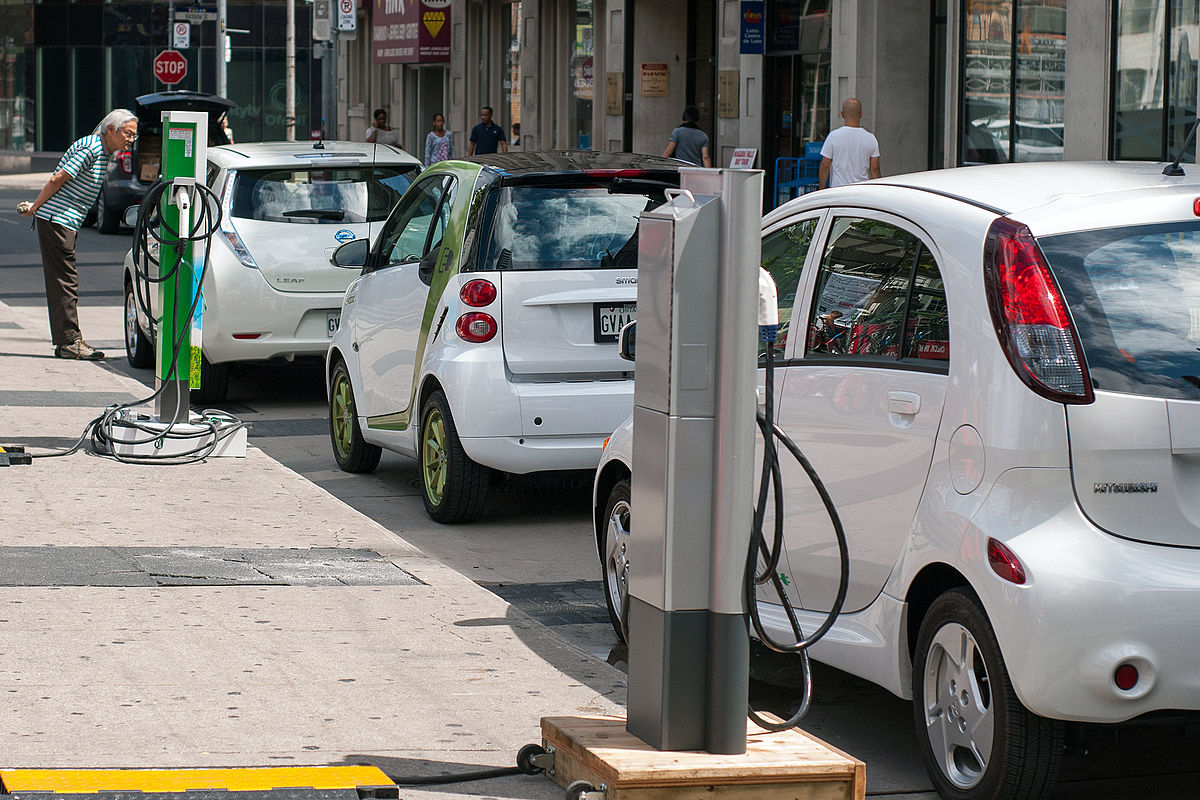
  • Google Maps adds real-time info for EV charging stations

    Google Maps adds real-time info for EV charging stations

    There are so many reasons to love Google Maps right now, some of which have very little to do with the core functionality of the world’s most popular web mapping service or the numerous handy navigation features borrowed from Waze over the past few months.

    One extremely convenient thing you’ve been able to do since last fall with Google Maps is easily find electric vehicle (EV) charging stations around the world, and now the feature is further improved to save you some hassle and avoid wasting your time. In addition to just showing you nearby charging stations and helping you reach them by taking the fastest route, the wildly successful app can also provide real-time information on the availability of actual charging ports.

    No more waiting in line for “anywhere between minutes to hours”… unless, of course, you don’t mind taking your chance or don’t have much of a choice of EV charging stations in your area. But if you do, Google Maps will display exactly how many ports are actually available at any given time in stations from Chargemaster, EVgo, and SemaConnect networks. Keep in mind that the expanded functionality is only supported in the US and UK at the moment, with Chargepoint slated to join the aforementioned list of partners “soon.”

    As you can imagine, it’s incredibly easy to locate the closest electric vehicle charging station. You simply enter “ev charging” or “ev charging stations” in the app’s search box, which will bring up a list of relevant places from where you can access the number of available ports, their types and charging speeds, as well as other driver-provided info about a specific station, like photos, ratings, reviews, and questions.

    Don’t forget to update Google Maps on your Android handset or iPhone to the latest version published to Google’s Play Store or Apple’s App Store. The new feature should already be live for users of both mobile operating systems.

  • Ford Invests $500 Million In Rivian, a Battery Supplier

    Ford Invests $500 Million In Rivian, a Battery Supplier

    Rivian announced an equity investment of $500 million from Ford Motor Company. In addition to the investment, the companies have agreed to work together to develop an all-new, next-generation battery electric vehicle for Ford’s growing EV portfolio using Rivian’s skateboard platform. Rivian already has developed two clean-sheet vehicles with adventurers at the core of every design and engineering decision. The company’s launch products – the five-passenger R1T pickup and seven-passenger R1S SUV – will deliver up to 644 kilometres of range and provide an unmatched combination of performance, off-road capability and utility, starting in late 2020.

    RJ Scaringe, Rivian founder and CEO said, “Ford has a long-standing commitment to sustainability, with Bill Ford being one of the industry’s earliest advocates, and we are excited to use our technology to get more electric vehicles on the road.”

    Ford intends to develop a new vehicle using Rivian’s flexible skateboard platform. This is in addition to Ford’s existing plans to develop a portfolio of battery electric vehicles. As part of its previously announced $11 billion EV investment, Ford already has confirmed two key fully electric vehicles: a Mustang-inspired crossover coming in 2020 and a zero-emissions version of the best-selling F-150 pickup.

    Rivian remains an independent company. The investment is subject to customary regulatory approval. Following Ford’s investment, Joe Hinrichs, Ford’s president of Automotive, will join Rivian’s seven-member board.

    Bill Ford, Ford’s executive chairman said, “We are excited to invest in and partner with Rivian. I have gotten to know and respect RJ, and we share a common goal to create a sustainable future for our industry through innovation.”

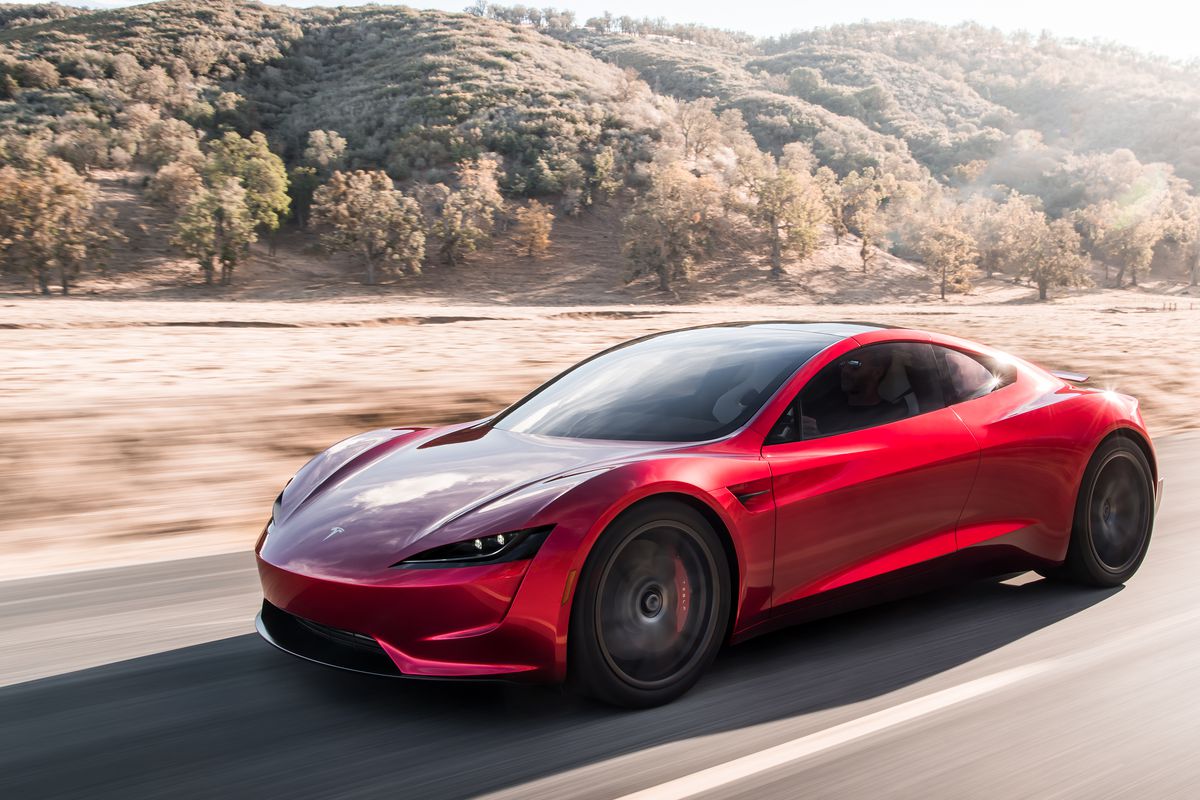
  • Tesla Reports $702 Million Loss In The Last Quarter

    Tesla Reports $702 Million Loss In The Last Quarter

    Tesla said on Wednesday it would return to profit in the third quarter of 2019 after racking up two consecutive losses in the first half of the year, as it struggled to deliver cars to customers and launched a cheaper version of its Model 3 sedan. The company, which Wall Street suspects may soon have to raise more cash, said it ended the quarter with just $2.2 billion in cash, after paying off a $920 million convertible bond obligation in March.

    Tesla affirmed its outlook of delivering 360,000 to 400,000 vehicles in 2019 and said it may produce as many as 500,000 vehicles in the year if its Gigafactory in Shanghai reaches volume production in the fourth quarter. Tesla reported net loss attributable to common shareholders of $702.1 million, or $4.10 per share, in the first quarter ended March 31, compared with $709.6 million, or $4.19 per share, a year earlier.

    “As the impact of higher deliveries and cost reduction take full effect, we expect to return to profitability in Q3 and significantly reduce our loss in Q2,” Chief Executive Officer Elon Musk said in a letter to investors.

    The Silicon Valley company has weathered a challenging few months, marked by a sharp drop in the number of vehicles delivered to global customers during the quarter and a public spat between Musk and financial regulators.

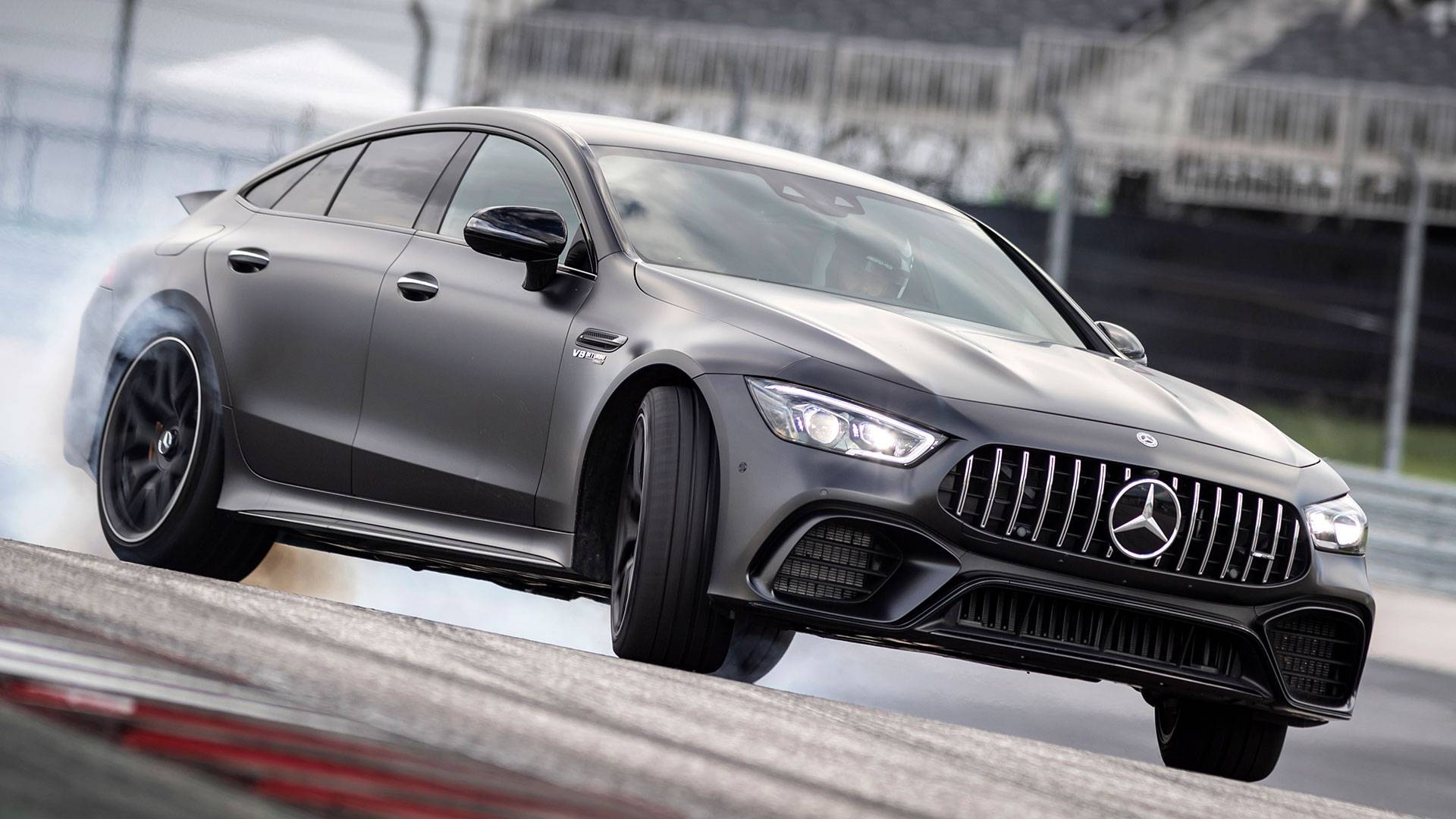
  • Mercedes-AMG Cars Will Be Electrified From 2021

    Mercedes-AMG Cars Will Be Electrified From 2021

    Electric performance car is not an alien concept anymore. In fact, prominent carmakers like Automobili Pininfarina and Rimac are into the business of making only electric supercars. Electric Mobility is also believed to be the future of automobiles and this stands true even when we talk about performance cars. Mercedes is also thinking in this direction and has said that all its AMG cars will be electrified 2021 onwards.

    According to news reports, Tobias Moers, Head – Mercedes-AMG said that Mercedes-AMG models will be using an electrified V8 drivetrain in the future. The 4.0-litre V8 engine which powers a range of Mercedes-AMG cars will be coupled with a 48-volt electric motor which has been developed indigenously by the team. Initially, Mercedes was planning to use the new powertrain in the 63 engine only in the GLE and GLS SUVs. However, it will play a major role in the future as from 2021 all AMG cars will be launched with an electrified powertrain. Mercedes also believes that the share of electrified powertrains will be higher in the performance segments in 2025.

    We already know that AMG is also working on a high-performance hybrid system for its upcoming hypercar. The Mercedes-AMG One hypercar will use an electric motor driving its front wheels just like the AMG GT four-door concept. Moers also said that the setup will be offered in the 65 series AMG models and will replace the 6.0-litre V12 engine. However, the 2.0-litre, four-cylinder, turbocharged AMG engine won’t be converted into a hybrid system.

  • Toyota Sells Electric Vehicle Technology To Chinese Startup Singulato

    Toyota Sells Electric Vehicle Technology To Chinese Startup Singulato

    Toyota Motor Corp has agreed to sell electric car technology to Singulato, its first deal with a Chinese electric vehicle startup, allowing the fledgling firm to speed up development of a planned mini EV.

    In return, Toyota will have preferential rights to purchase green-car credits that Singulato will generate under China’s new quota system for all-electric and plug-in hybrid vehicles.

    It will also gain a bird’s-eye view into how Chinese EV startups operate and the strategies they pursue in a fast-changing marketplace, said Singulato Chief Executive Shen Haiyin and two sources at the Japanese automaker.

    “With electrification, autonomous driving and car-sharing shaking up the industry, old ways need to be re-examined,” one of the Toyota sources said, declining to be identified as he was not authorized to speak on the matter.

    “We have a century’s lead in automotive technology, but we also need to be humble enough to learn from newcomers.”

    Singulato will acquire a license to use the design of Toyota’s eQ – a battery electric microcar. The deal is due to be announced on Tuesday at the Shanghai auto show, where Singulato will unveil a concept car based on the eQ.

    Singulato plans to redesign the car, tailoring it to local tastes to come up with a model by early 2021 that is more affordable and offers a longer driving range.

    “This deal gives us a way to save on time and costs to develop a reliable car and focus on what we excel in,” Shen told Reuters.

    Financial terms are not expected to be disclosed. A Singulato source said the startup agreed to pay “several tens of millions of dollars” for eQ’s design.

    Toyota said it was taking various measures to accelerate its business in China, a key market, but it would not comment on specific steps.

    The agreement is a vote of confidence by Toyota in Singulato’s prospects, said Shen. Founded in 2014 and backed by Intel Corp and Japanese trading house Itochu Corp, Singulato is one of at least 50 Chinese EV startups seeking to survive in a competitive market.

    It plans to sell its first self-developed battery electric car called the iS6 this year, competing with models from rival startups like Nio and WM Motor as well as those from global automakers.

    Singulato’s version of the eQ will be a so-called connected car offering young buyers a host of entertainment, safety and navigation features. The car, which will be called the iC3, will also feature some self-driving technology.

    Toyota sold about 100 eQ cars in 2012 and then discontinued it due to concerns over the limits of EVs, including their high price tags, short driving range and long charge time. But Singulato believes technological advances, especially in batteries, have made the car much more marketable.

    Shen said the iC3 should be able to go as far as 250-300 km (160-190 miles) on a single full charge and will be priced around 100,000 yuan ($15,000). Singulato aims to sell 200,000 units over five years.

    According to the two Toyota sources, the deal is part of efforts to share more technology with China as the Japanese automaker seeks more growth in the world’s largest auto market by beefing up manufacturing capacity and distribution channels.

    The green-car credits will also come in handy.

    Keen to combat smog, jump-start its own auto industry and lower reliance on imported oil, China is aggressively pursuing the adoption of electric cars. Under a production quota system taking effect this year, automakers are required to produce and sell a certain number of new-energy vehicles in proportion to their overall sales volume.

    A carmaker that fails to achieve its quotas will have to acquire NEV points from an automaker with surplus credits or face penalties.

    Toyota has said that initially it won’t be able to meet its quotas without buying credits from others. It has also agreed to produce and help sell a car for GAC Motor, a joint venture partner, to generate credits.

    According to the Toyota sources, the deal with Singulato has already yielded intriguing glimpses into the thinking of Chinese EV startups and their non-traditional approach to engineering.

    One such example was Singulato’s idea to look at linking headlights with satellite, cellular network location data and the driver’s planned trip. That could help turn the headlights along the driver’s route for enhanced visibility and driving safety.

    It might not something Toyota would consider but as an idea, “it was eye-opening,” one of the sources said.
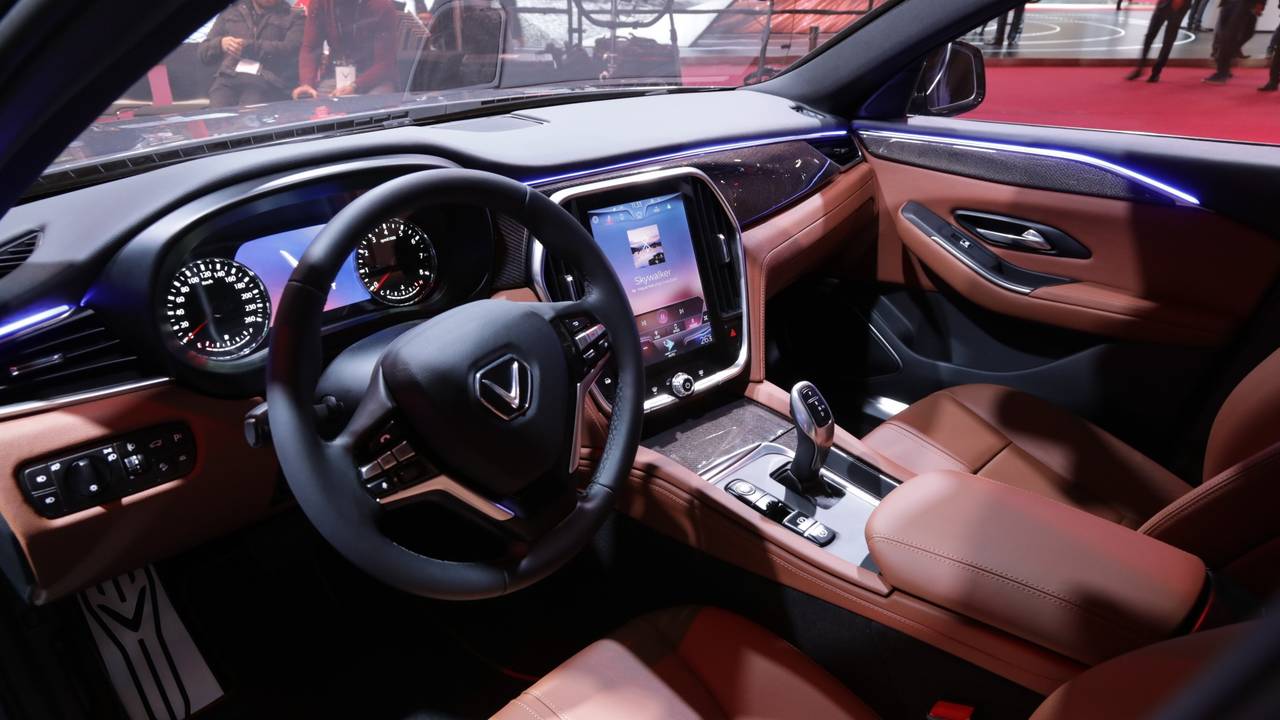
  • VinFast, South Korean firm to make batteries for EVs

    VinFast, South Korean firm to make batteries for EVs

    The joint venture will be located in the automaker’s factory in the southern port city of Hai Phong, where it will manufacture lithium-ion battery packs for VinFast’s electric scooters that are being made now, and for electric cars to be produced in the future, VinFast said in a statement.

    The factory, which will be built on a 2,000 square meter area, will employ Vietnamese workers who will be trained in technology provided by LG Chem.

    The automaker, a unit of Vietnam’s largest conglomerate Vingroup, rolled out its first made-in-Vietnam cars last month, the first steps in a $3.5 billion automaking venture.

    VinFast has recently sent its SUV and sedan to European and Asian countries for quality testing and is set to deliver preordered vehicles in the second and third quarter.

  • Tesla Supplier Agrees To Buy GM’s South Korean Plant

    Tesla Supplier Agrees To Buy GM’s South Korean Plant

    A South Korean supplier of Tesla Inc said on Friday it had agreed to buy a shuttered auto factory from General Motors’ local unit to start contract manufacturing of electric vehicles. The deal comes after GM closed one of its four South Korean plants in late May and let go thousands of workers, as part of a global restructuring drive which culminated in a major financial support package from the South Korean government. GM did not disclose the sales price of the Gunsan factory, but auto parts maker Myongshin said it would buy the land and buildings of the GM facility for 113 billion won ($99.5 million)on June 28.

    Myongshin, also a Hyundai Motor supplier, is part of a consortium which would initially spend a total of 200 billion won on the factory to produce 50,000 EVs starting 2021 and 150,000 EVs in 2025, according to a statement by a provincial government.

    “We aim to close this deal as soon as possible to ensure that there will be ongoing economic activity,” GM Korea said in a statement.

    The consortium was in talks with an unidentified global automaker to manufacture electric vehicles at the facility, a source with direct knowledge of the matter earlier told Reuters, adding that it was not Tesla.The plant could take advantage of South Korea’s free trade deal with the United States and Europe, as well as the country’s electric car supply chain, he said.

    The electric car factory would create 900 jobs and another 2,000 at suppliers and other firms, the North Jeolla Province government said.

    GM’s loss-making South Korean operation used to be a key manufacturing base for the company in Asia but it has been hit hard by the U.S. automaker’s exit from Europe, a major export market. GM executives have also complained about labor costs and disputes.