Tag: Fashion

  • Fashion trends in China renew interest in broad wool types

    Fashion trends in China renew interest in broad wool types

    Once a sideline part of the wool industry, cardings have now become the unsung hero of the wool market. Cardings are made up of the wool from the bellies and other parts of the sheep that don’t make the fleece lines. Demand for heavy jackets and coats in China has led to strong returns for Australian wool growers.

    Robert Herman, managing director of Mercado Market Insights, said the demand for cardings was underpinning the entire wool market. It’s not understated to say that the demand for cardings is underpinning the whole wool market at the moment.

    “In this case the most significant driver is this demand for double-faced woollen fabric, which has come and gone in the past, but it’s really started to find a home on the retail shelves in China,” he said.

    “First of all it started in the high end market and then started to show up in the cheaper lines and it’s just something that people seem to like. This fabric is not only made out of cardings but also crossbred wool, which has also had a terrific run [this year]. So it’s a direct connection between the price that’s being paid and the appetite that exporters have for that type of wool.”

    “While it’s a good market signal, I think with fashion though, fashion comes and goes, we don’t think this is changing in a hurry but it will change over time.” As northern hemisphere fashion houses make their decisions for 2016, the future appears bright for cardings according to Mr Hermann.

    “We thought this run was coming to an end but it’s resurrected back over 1,100 cents at a time when the new fashion decisions are being made in the northern hemisphere” he said.

    “So it looks to us like it’s got another season to run at least.”

    There is potential that the trend could have a broad impact of the way consumers feel about buying wool. “It can make people more aware about the intrinsic value of wool, more people wearing wool for whatever reason is good, if it’s just because they are following fashion, it doesn’t matter,” Mr Hermann said.

    In the past the cardings indicator has tagged along with the fleece lines but this year that trend has reversed. “What we’re seeing now is that this strong resilience of the cardings indicator is really putting a strong floor under the rest of the market,” Mr Hermann said. “Even though we like to see the rest of the market have the same types of rallies, it’s not understated to say that the demand for cardings is underpinning the whole wool market at the moment.”
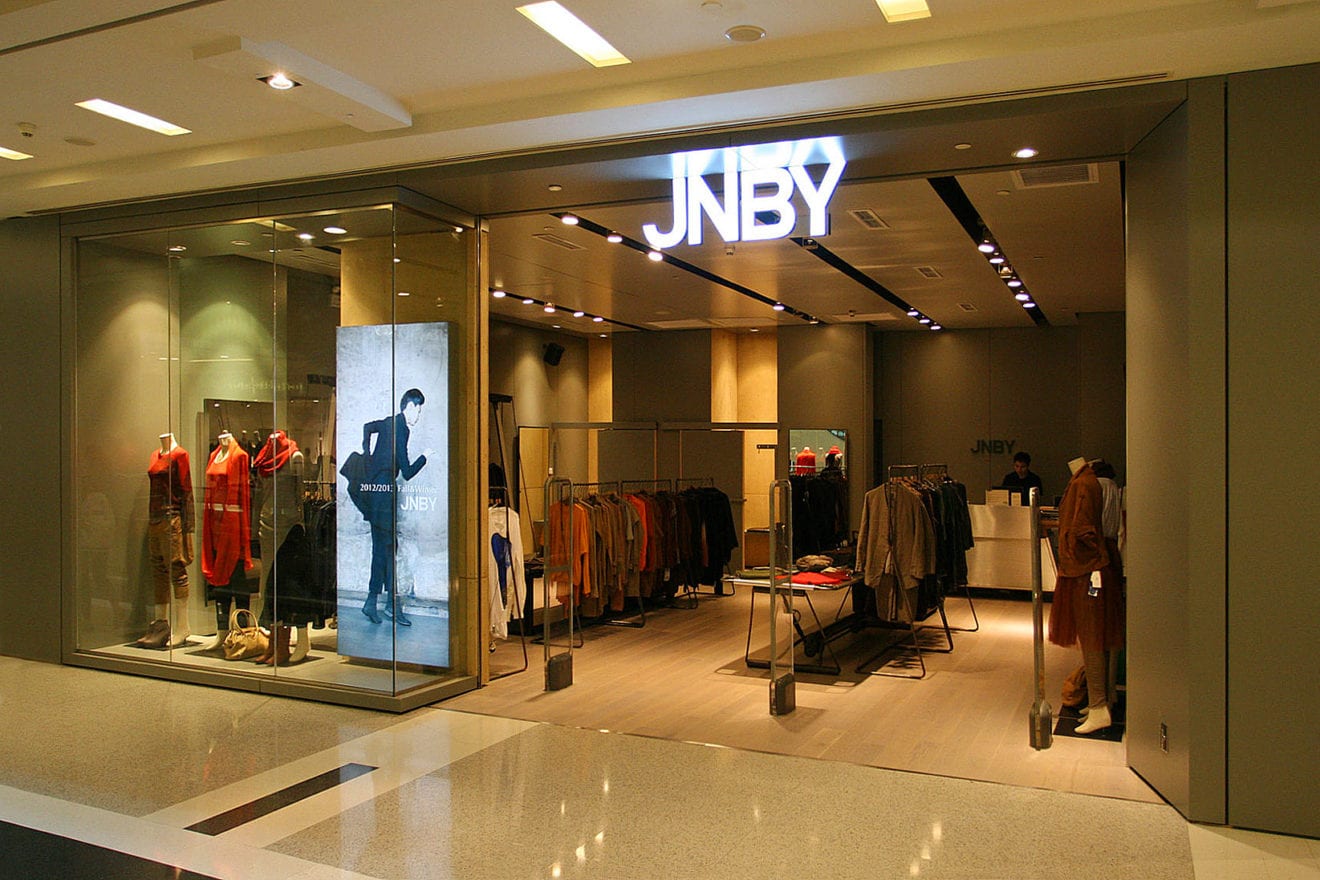

  • China’s JNBY fashion brand debuts store in Pacific Place

    China’s JNBY fashion brand debuts store in Pacific Place

    JNBY, a big Chinese fashion retailer, now has its shingle hanging at Pacific Place mall.

    The brand has more than 700 stores, mostly in China, but some in Europe, Asia and Canada. Its store here is being heralded by SightClassic LLC, the Seattle retailing company that runs the location, as JNBY’s first in the U.S.

    But it’s more complicated than that: The brand had a pop-up store in New York’s SoHo in 2009, which according to media reports, a few months later turned into something more permanent. That experiment failed: It closed after two years, according to retail website Racked.

    Perhaps it’ll fare better in Seattle, where the recent visit of Chinese President Xi Jinping highlighted growing economic ties with the Asian superpower.

    SightClassic says it’s JNBY’s “fully authorized distributor” in the U.S., and that it operates an online JNBY store on Amazon. On Thursday, however, the website featured no products for sale.


  • Madura experiments with first omni-channel retail

    Madura experiments with first omni-channel retail

    Apparel retailer Madura Fashion & Lifestyle, part of Aditya Birla Nuvo Ltd on Saturday launched a new digitally integrated store under its flagship formal wear brand—Van Heusen—indicating the two-decade-old retailer’s push to morph into a more tech-savvy brand at a time when shoppers are switching to shopping on the Internet.

    With sales staff equipped with tablets and virtual fitting rooms, the store is the company’s first attempt to allow shoppers to use touch-enabled screens to shop and pay for garments. The store also allows for shoppers to order unavailable inventory to their homes by linking the company’s in-house web-portal Trendin.com to the store.

    Changing customer expectations couples with technology are influencing consumer choices far more today, said Vinay Bhoptakar, chief operating officer, Van Heusen, at the retailer’s store launch in Bengaluru.

    The store—called Van Heusen Style Studio has been in the works for over a year. It will offer more expensive collections and a wider range. Built at twice the cost of a regular Van Heusen store, Bhoptakar said, five more such stores are underway in Delhi and Mumbai.

    The retailer has partnered with Fitch Retail in Singapore to draw up the concept, with virtual fitting rooms sourced from Experiential Design Lab.

    Diluted version of this store will be planted across the brand’s existing 275 stores, added Bhoptakar, indicating that existing stores will borrow technology elements of the new format in a limited way. Madura’s other ready-to-wear apparel brands including Allen Solly, Louis Philippe could too borrow from this format.

    Taking cues from a surge of sale fashion goods on the Internet, most large traditional retailers in India are making efforts to venture in to online retail even as they try to preserve footfalls at brick and mortar stores. Most have found a midway in the so called “omni-channel” retail format that allows shoppers to seamlessly shop for online and offline inventory both within and outside the store.

    Aditya Birla Group too has been stepping up efforts to catch shoppers online where more Internet focused retailers such as Flipkart and Snapdeal are biting in to consumer’s share of wallet.

    In October this year the group launched its own fashion marketplace—Abof.com—privately held by chairman Kumar Mangalam Birla in his personal capacity. In 2013, Madura Fashion & Lifestyle launched Trendin.com—an in-house online portal—retailing its brands Allen Solly, Peter England, Louis Philippe among others.

    Bopatkar, however added that such evolving retail stores are “not a reaction to e-commerce but a reaction to changing consumer behaviour.” As a result, “the physical store will always be there, but role of the physical store has to evolve,” he added.

  • Burberry offering ‘biggest discounts ever’ in Hong Kong as brands try to pull back shoppers

    Burberry offering ‘biggest discounts ever’ in Hong Kong as brands try to pull back shoppers

    British luxury brand Burberry has joined Prada and Gucci in offering discounts of as much as 50 per cent in its Christmas sales, the steepest reductions since the Individual Visit Scheme for mainland tourists was launched in 2003, underlining the depth of the retail slump in Hong Kong.

    The sales started two days ago, a staff member at Burberry’s Causeway Bay store told the Post. She said only around 10 types of handbag and some clothing items are carrying the discounts.

    “I haven’t seen such a deep discount since I started working here” she said , adding the biggest was 30 per cent in the past.

    Burberry launched its annual Christmas sales in late November with initial discounts of as much as 40 per cent on selected items, rising to 50 per cent this week. Its iconic small Orchard leather bag, which was priced at HK$16,000, is now selling for HK$8,000.

    “A 50 per cent discount is unusual for big luxury brands like Burberry” said Hayman Chiu, associate director at Cinda International, adding that it was the biggest price cut for Burberry that he could remember since the visitor scheme launched.

    “The whole luxury industry is doing the same thing right now,” he said, referring to the similar discounts by Prada and Gucci .

    Three American brands, Marc by Marc Jacobs, Michael Kors and Coach, are currently offering discounts of as much as 50 per cent. European brands such as agnès b, Longchamp and Balenciaga have reductions of 40 per cent.

    The discounts for most of those brands are deeper than last year, according to sales staff at the Sogo department store.

    Brands are also resorting to discounts after falls in the Japanese yen and euro this year prompted mainland shoppers to avoid Hong Kong.

    The strong Hong Kong dollar, which is pegged to the US dollar, has made luxury goods more expensive than in Japan and Europe, said Mariana Kou, retail analyst at brokerage CLSA.

    However, a deeper discount isn’t a always a draw.

    Louisa Cheung, a local shopper in the Burberry store in Causeway Bay yesterday, ended up buying nothing. “Deeper discounts only work for customers who are loyal to the brand,”she said.

  • Lululemon needs “to work harder”

    Lululemon needs “to work harder”

    Lululemon’s third quarter sales performance – measured on a total basis – was solid with total company revenues up by 14 per cent.

    This was mostly driven by the addition of 52 new stores, with the extra 142,000 sqft of selling space making a good contribution to the top line numbers.

    However, more worryingly the growth contribution from existing physical stores was nonexistent, and while the contribution from direct sales looks reasonable the growth rate is somewhat down on previous quarters.

    As with other retailers, the strong dollar is partly to blame for this lacklustre outcome; indeed, on a constant dollar basis total comparable sales were up by six per cent, with same store physical growth also up by six per cent. That noted, even with exchange rate fluctuations removed, growth is noticeably slower which, points to a much wider set of issues.

    Foremost among these is the rise in competition from both specialist and generalist players. While Lululemon has a following of dedicated fans it also relies on more occasional purchases from those who are somewhat less loyal to the brand, and it is here that the company has lost traction over the course of this quarter. Although arguably Lululemon still has a distinct and well positioned brand, there is no doubt that a more crowded playing field has made growth much harder to come by.

    The impact of the more competitive arena is further exacerbated by the company’s own push into direct selling. While this has been a great success, with online now accounting for 18.6 per cent of all revenue, it has also cannibalised some trade from stores and, with higher fulfilment costs, has been slightly margin dilutive.

    The problem with all of these dynamics is evident in the bottom line performance. Notably, Lululemon’s net income for the quarter fell by a fairly sharp 12.1 per cent and operating income was down by a shade under 16 per cent. Understandably, some of this can be attributed to the higher investment costs as new space opens, but most of it is down to the deterioration in the productivity of the existing operation.

    One of the solutions to the current squeeze is arguably greater product innovation which would stimulate customers into buying new product and allow Lululemon to ease up prices. However, while some movement on this front is apparent, Lululemon has lost much of its edge, and in comparison to a player like Under Armour its product development looks positively glacial.

    In light of the relative lack of innovation it is discouraging to see the recent attempt to hike some prices, which is something the market will not likely bear given current competitive conditions. It also had the effect of upsetting loyal customers who saw little justification for the increases and therefore viewed them as being unreasonable. Given the current struggle for growth, alienating core consumers is arguably the last thing that Lululemon should be doing.

    Despite the challenges, the one area of opportunity is the push into more embryonic areas like mens and teens. However, while Lululemon has made some good progress, the brand still has a somewhat limited appeal to many of these constituencies, mainly because it is strongly associated with its heritage of female fitness. Certainly, it is proving much more difficult for Lululemon to move into mens than it is for Under Armour to move into womens.

    Despite the challenges, the tailwinds provided by continued interest in athletics and fitness – which shows no signs of slowing down – will likely to help cushion Lululemon’s problems. However, the company now needs to work much harder if it is to keep in good shape in what is now a much more competitive market.

  • Massive loss puts J Crew on the brink

    Massive loss puts J Crew on the brink

    As its latest set of results attest, J Crew is a mess.

    Not only have sales fallen across the board, but the drops are significant and come off the back of declines in the prior year.

    Even the relatively small Madewell division, which has traditionally performed well in sales terms had a poor quarter, with comparable numbers rising by a slim one per cent.

    Profitability, which was already lacking, has deteriorated further with a net loss of just shy of $760 million racked up over the quarter; this now brings the company’s total losses so far this fiscal year to an eye watering $1.2 billion. This performance comes on top of a balance sheet that is already weak and weighed down by $1.5 billion of long term debt.

    There is now a very serious question mark over the firm’s survival and it is likely that lenders may seek to take control if performance does not improve in the vital fourth quarter and beyond.

    Rebuilding the sales line after a series of fashion missteps is now looking like an insurmountable task. Many customers once loyal to J Crew defected elsewhere following the company’s move away from the classic, preppy basics that were once its heritage, and it is now proving extremely difficult to win them back.

    This is not helped by the still fairly premium price J Crew expects its customers to pay; given the brand has lost so much of its equity, and given that today’s more democratic fashion marketplace abounds with retailers selling on-trend, low-priced basics, this position is simply not tenable.

    In a sense, J Crew and its management are not sufficiently humble about the brand’s current status and are rather divorced from the realities of the retail marketplace. Nowhere is this truer than in the international expansion efforts where, for example, products in its UK stores often cost more in pounds sterling than they do in dollars in the US – a significant uplift over and above that accounted for by the UK’s higher sales tax rate.

    In today’s interconnected, digital world where prices can easily be checked on smartphones while standing on the shop floor, such a policy does nothing but alienate and annoy customers. And even without this comparison, by UK standards prices are highly uncompetitive for the type of product J Crew sells.

    To be fair some efforts have been made to respond to price sensitivity with the launch, for example, of the factory outlet Mercantile stores which the company has put into mainstream malls. However, as sensible as this may be, it does little to address the problem with the core J Crew brand.

    J Crew is now pinning its hopes on a better holiday season; however, this will not mark a turnaround in the company’s fortunes. The earliest possible date for a change is spring of next year when the first collection designed by Creative Director Somsack Sikhmounmuong will hit stores.

    Even if this is a hit, J Crew will still only be in the foothills of the mountain it has to climb to restore the company to financial stability.

  • Diesel unveils retail expansion plans

    Diesel unveils retail expansion plans

    Fashion brand Diesel is ramping up its global expansion, with plans to open an 80sq m standalone store in Haikou Meilan International airport in the Hainan district to complement its recent opening in Panama Tocumen International airport’s retail plaza.

    The retail expansion marks an exciting period for the company, with also another shop in shop opening planned at the end of the year at Tel Aviv Ben Gurion airport with JR Duty Free. The Italian brand is also to undergo a refit of its boutique outlet inside Qatar Duty Free’s Junction store at Hamad International airport.

    Head of Travel Retail Michele Turrin was very enthusiastic about the company’s expansion prospects: “Historically Japan has been our strongest market and in China we have plans of further developing our existing stores network both in domestic and travel-retail. Haikou is one of these projects” he told DFNIonline.

    “Middle East travel-retail is interesting with new developments in the region. We opened last year in Doha with a very successful POS in Qatar Duty Free Junction fashion store. We’re also looking very seriously at the Midfield Terminal in Abu Dhabi. We’re confident we can do well in the GCC [Gulf Cooperation Council] where we have nearly 40 domestic stores, the brand is well positioned and enjoys a good reputation.”

    The company says it is also in discussions with some key airports to deploy pop-up store units, although Diesel did not mention who and in which location when DFNIonline pressed on this issue.

    Diesel has had a successful retail operation in travel-retail. Its innovative product, the JoggJeans, has had superb traction in this space, representing already around 20% of an average turnover at Diesel’s travel-retail stores. Its dominance of the denim market is also profound, with the JoggJeans, in some locations, representing up to 60% of the jeans category turnover – and around 30% of its travel-retail store sales.

    “Usually denim is considered a difficult sell, but because of the strength of the brand, the denim category has achieved unexpected high sales at all of our stores. We initially thought not to dedicate denim as much space to an airport location, but after analysing the results we slightly changed our formats to accommodate enough space in this category. We are “masters of denim” and our JoggJeans represent our USP in the market.”

  • Perfect Shape plans more China stores

    Perfect Shape plans more China stores

    Listed slimming and beauty services chain Perfect Shape plans more stores as demand soars in Greater China.

    Perfect Shape provides slimming and beauty services and sells slimming and beauty products in Hong Kong, the Mainland and Macau. The company provides medical beauty services under the brand name of Dr Face, including injection treatments such as Botox, Restylane and Sculptra, as well as laser treatments for hair removal, skin rejuvenation and depigmentation. The company operates more than 60 stores or service centers.

    In the six months to September 30, the group recorded revenue of HK$457.1 million, up 41 per cent year on year. Profit attributable to shareholders was $75.1 million, up $4.1 million year on year.

    The company says combined Hong Kong and Macau revenue soared 85.9 per cent, with Macau sales up 134 per cent.

    The company attributes its success to tapping into the high technology beauty segment in Hong Kong soon after listing in 2012, which is now bearing fruit.

    “Moving forward, management remains optimistic about the group’s prospects in the principal markets of Hong Kong and the PRC, despite modest economic growth anticipated on both sides of the border,” the company said in its stock exchange filing.

    “While the group’s development in Hong Kong remains promising, its business prospects in the PRC shows even greater potential. With an increasingly large number of people who are obese, and generally more and more individuals who are overweight, the need for slimming services will continue to rise. And given that there is a growing middle class, particularly women who care about their appearance, the demand for high technology beauty and slimming services will grow further.”

    Perfect Shape plans to replicate its high tech model in the Mainland market, and thereby provide one-stop services to local customers.

    “Part of the group’s development road map will involve further expansion of its store and business network in Greater China in the coming period. In addition, we will invest still more in our workforce, including enhancing the service quality delivered by our frontline staff through ongoing training and information sharing.”

  • Hugo Boss’s sales suffer amidst the falling Chinese economy

    Hugo Boss’s sales suffer amidst the falling Chinese economy

    Hugo Boss has recently announced that it is anticipating challenges in the Chinese and US markets, which will have a negative impact on sales next year. While a decline is expected, the brand plans to continue investment in its stores and online platform.

    The German fashion retailer* announced in a presentation for its investor day that 2016 sales growth is likely to be lower than its long term target for a high single-digit increase, adding that it would only reach 2020 targets for a core earnings margin of 25% if the overall market recovered.

    These results come just a year after one of Hugo Boss’ main brands BOSS opened two new flagship stores in Hong Kong.

    Earlier this month, Burberry recorded a 9% increase in pre-tax profits, while still in the midst of a “challenging” trading environment due to China’s suffering economy. The British brand said sales at stores open for a year or longer have been affected by the Chinese climate, especially those in Hong Kong, a major shopping destination for mainland visitors.

    Up until its recent economic downturn, Hong Kong was viewed as China’s shopping centre, housing the world’s luxury and most expensive retailers. However, failing sales have led to cuts in rents and ultimately struggling retail sales, following years of luxury growth in the region.

    Both Boss and Burberry have faced a declining demand in China as well as an overall decrease in luxury retail spending. Burberry is poised to downsize its biggest store in Hong Kong, while it has been suggested that French house Louis Vuitton will also be assessing sales performance in its 8 China stores in second-tier cities.

  • 11street plans monthly ‘Love 11 Day” discounts

    11street plans monthly ‘Love 11 Day” discounts

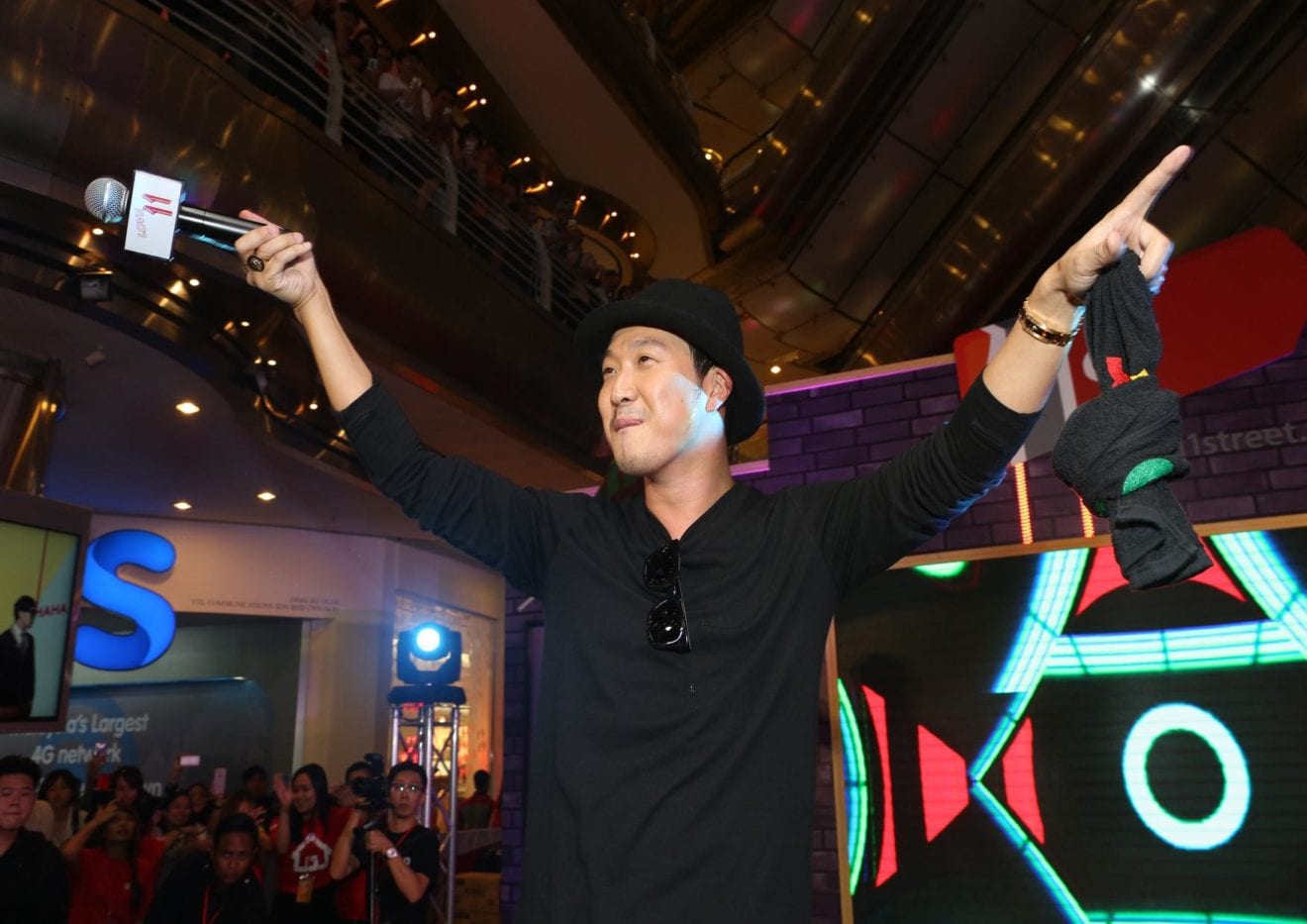
    Malaysian online marketplace 11street plans a new mobile shopping app – and a monthly ‘Love 11 Day’ when it plans to launch surprise, snap deals and giveaways.

    The Korean-headquartered online retailer says it is now ranked a top 40 website in the country and its online marketplace now has more than 7 million products on offer.

    11street CEO Hoseok Kim has unveiled an RM11 million giveaway running until December 31. Shoppers can redeem daily offers of deals and coupons with up to 90 per cent discounts.

    Kim said the 11th day of every month was chosen for the promotion because of its symbolic similarity to the company’s brand name.

    Meanwhile, Kim says almost 50 per cent of traffic to 11street is now from mobile devices.

    According to Nielsen, the growth of connected devices have paved the way for a positive increase in the eCommerce sector with 47 per cent of Malaysians using their smartphones to shop online.

    “Today, the 11street mobile shopping app is already one of the most popular apps in Malaysia. Listed as one of the top three shopping apps on the Malaysian Google Play store, we are pleased by this achievement as we have always placed great importance in offering a convenient mobile shopping experience for all users.”

    11street Malaysia - Love 11 day

    He says in 2016, 11street will strengthen its focus to serve mobile shoppers through a two pronged approach by providing more curated content with an improved user interface and user experience designs, along with additional personalised features for greater customer experience. 11street will also be offering more mobile exclusive value deals and discounts.

  • Virtual wardrobe tech comes to Singapore

    Virtual wardrobe tech comes to Singapore

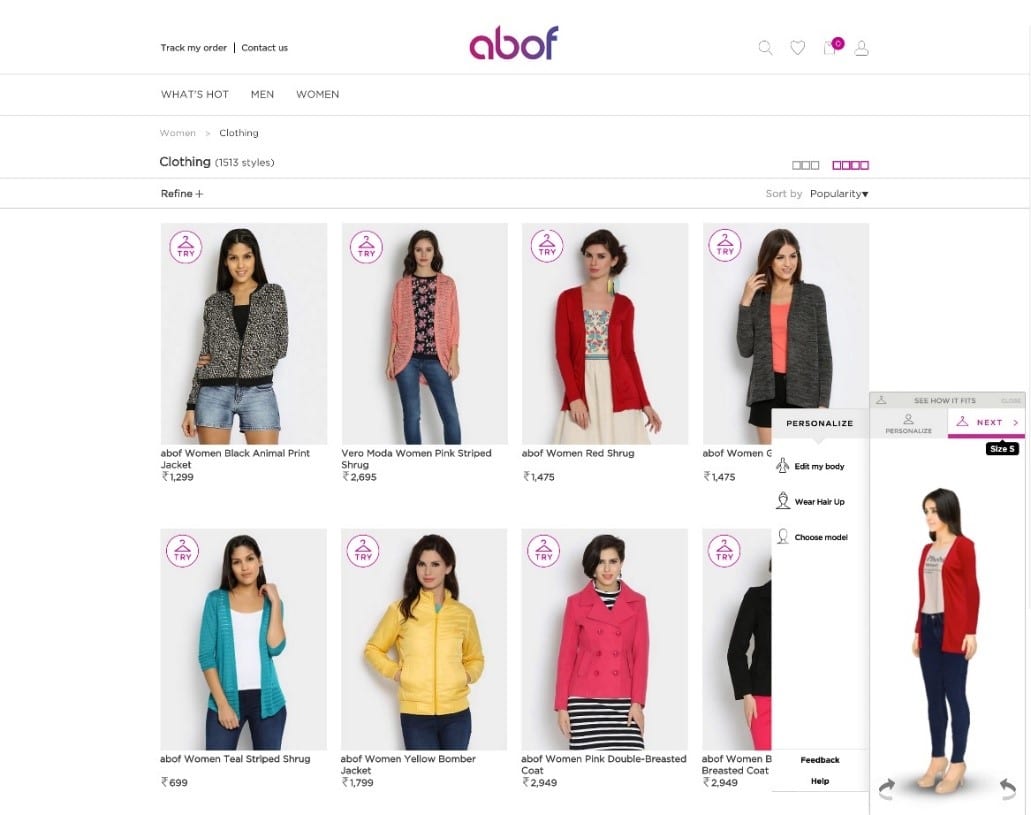
    Technology from Metail, a United Kingdom fashion technology company is set to arrive in Singapore tomorrow as part of the company’s first Asian collaboration with new Indian fashion retailer abof.com. The new launch is understood to be in partnership with Singapore Press Holding’s e-commerce portal Shop.SheShops.

    According to Metail, 25% are put off online shopping because they are confused with sizing, with 44% returning clothes due to sizing issues. As it is, a majority of customers (62%) wish that images online would be more reflective of their own body shape.

    The technology from Metail is an attempt to solve – or at least alleviate – these issues by allowing users to try out their clothes virtually. This is done by generating customized body avatars dubbed as “MeModels” sporting users’ vital statistics. According to Metail, the MeModel avatar is up to 92% accurate of the customer’s own body shape.

    The objective is to allow customers to better visualize an outfit prior to making the purchase. When browsing through clothing options, shoppers can see the avatar donning selected clothes in a small docked window at the side. This only works with clothing items tagged with a “Try it on” sign though.

    CMO Innovation gave the Metail demo a spin, and the site asks shoppers for vital statistics pertaining to their weight, height and bust. This is used to estimate waist and hips measurements, which can be tweaked if desired. A handful of models can be used as the base template for the avatar, while the hair type can also be tweaked slightly. Male MeModels are not available at the moment.

    It will be interesting to see how well the technology fares with fashion brands in the region, especially in costly retail locations such as Singapore and Hong Kong. Is the technology too nascent or too hard to implement on a wide scale for brands here? Or is it arriving at just the right time to address the growing propensity for online shopping by Millennials, or Gen Y customers.

    Inline image: Metail avatar donning a Halloween-themed Poison Ivy Dress

  • Chow Tai Fook in profit plunge

    Chow Tai Fook in profit plunge

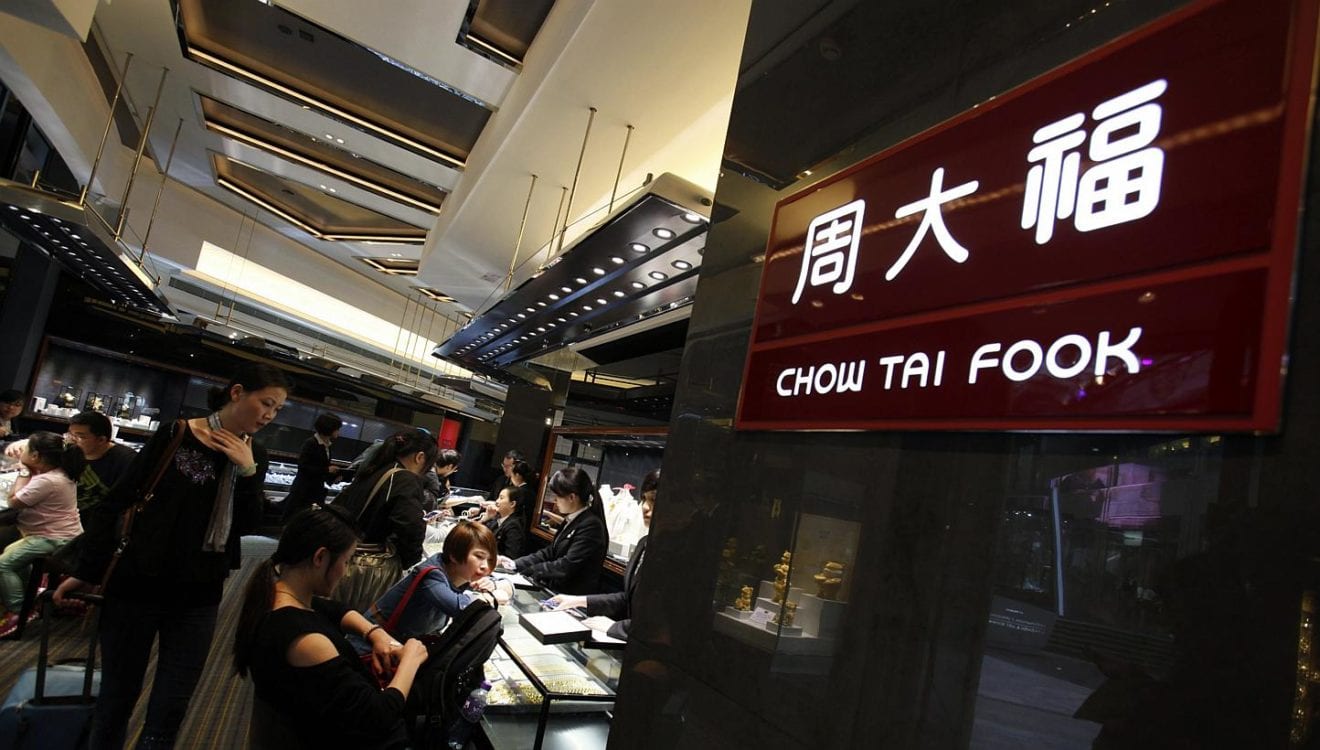
    Listed Hong Kong jeweller Chow Tai Fook has warned shareholders its first half profit is likely to be 50 per cent less than for the same period last year.

    In a statement filed with the stock exchange, the board said the decrease is mainly attributable to the year-on-year decline in revenue brought about by weak consumer sentiment in Hong Kong and Macau and a tighter gross profit margin.

    The margin was impacted by both a change in the product mix with increased sale of gold products and unrealised hedging losses on gold loans for the period contrasting with an unrealised hedging gain in the same period last year.

    “As the company is in the process of preparing the interim results of the group for the six months ended 30 September, the information contained in this announcement is only based on the preliminary review of the company’s management accounts which have not been reviewed or audited by auditors of the company.”

    The size of the decline comes as something of a surprise, given the company revealed a four per cent increase in sales in the quarter to September 30 just four weeks ago.

    Back then Chow Tai Fook described the Hong Kong and Macau retail market as “continuing lacklustre”.

  • Zilingo gains seed funding for mobile-first e-store

    Zilingo gains seed funding for mobile-first e-store

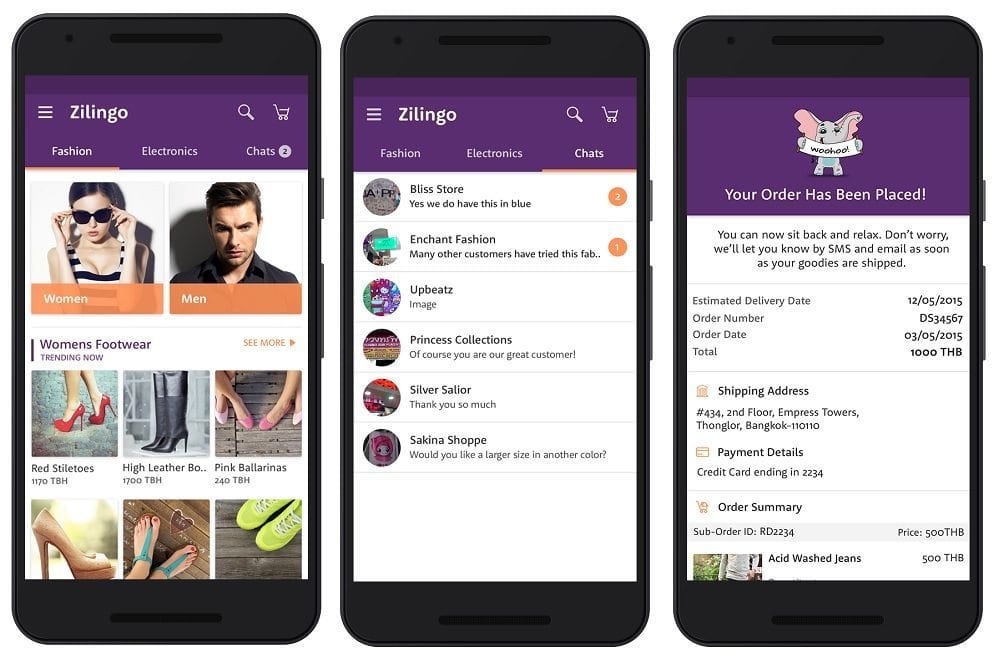
    Thai startup Zilingo gives market traders an international eCommerce gateway.

    Zilingo is a mobile-first online marketplace that allows merchants to list their inventory, set their prices, and fulfill online orders. Users can browse through available stores and products, then order and pay with their credit card, according to a report on TechInAsia.

    Zilingo’s services include shipping, packaging, payment options, an analytics dashboard for mobile, order tracking, refund and cancellation options, and consultation on pricing strategy. The app also provides chat, through which a customer can get directly in touch with a merchant.

    The concept was created by Ankiti Bose and Dhruv Kapoor, who saw an opportunity for themselves when they visited the country on vacation. Bose is an ex-McKinsey consultant from Mumbai, India, who later worked for global venture capital firm Sequoia. Together with IIT (Indian Institute of Technology) graduate Kapoor, they decided to create a way for these retailers to find new customers online.

    The startup doesn’t charge merchants for listing, or any other fees, providing most of its services for free. It only takes a cut out of successful sales, wanting to encourage adoption and to “only charge for things that actually add value to the [merchants’] business.”

    Zilingo has only recently gone live, and is available to buyers and merchants across Thailand. Within November 2015, buyers from Singapore, Indonesia, and Hong Kong will also have access to the platform’s Thai sellers. Other Southeast Asian countries will follow, according to the startup. Bose says there are currently more than 300 sellers on the site, Ankiti says.

    The company has already raised external funding, to the tune of US$1.88 million from Sequoia India, Teru Sato of Beenext, and Freecharge’s Kunal Shah and Sandeep Tandon.

    “We are delighted to back Ankiti and Dhruv, a highly talented and committed founding team, in their efforts to build a mobile-first marketplace for Thailand,” says Shailendra Singh, Sequoia India MD.

    “We liked the team and their mobile-first product so much, that we agreed to invest at the concept stage. It’s early days for the company, but we’re excited about the prospects for Zilingo.”

    Thailand’s retail sector is expected to be worth US$179.2 billion in 2016. Despite growing smartphone and credit card usage in the country, however, a lot of retailers haven’t jumped on the eCommerce bandwagon yet, leaving a lot of opportunity on the table.

  • Giordano Hong Kong sales rise in soft market

    Giordano Hong Kong sales rise in soft market

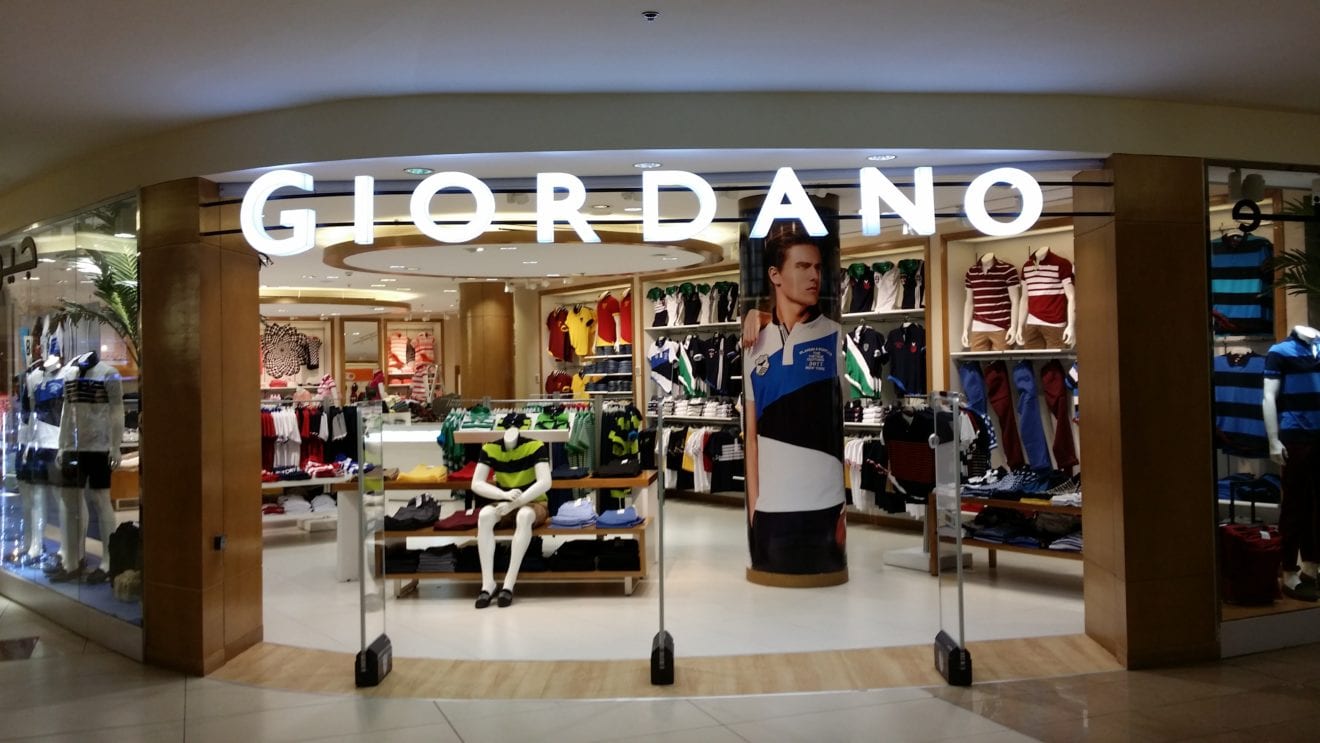
    Giordano Hong Kong sales increased by four per cent in the last quarter, with same store sales up a staggering 12 per cent in a stagnant retail market.

    The company says with the decline in Mainland China visitors to Hong Kong and Macau, the company has repositioned its product range to focus on more basic essential products. “This resulted in strong volume growth compared to the same period last year.”

    Total sales for the quarter to September 30 were HK$1.240 billion, three per cent lower than the same period last year. On a constant currency basis, sales increased by two per cent.

    Despite encouraging results in its home market, Giordano reported the depreciation of local currencies against the US dollar in Southeast Asia, Taiwan and Australia is depressing reported sales growth at the group level, and pushing costs up in those markets.

    In the first half of 2015, the company completed the acquisition of its franchisees’ operations in Kuwait and Qatar. Excluding these transactions, sales would have decreased by four per cent and on a constant currency basis, sales would have increased by one per cent

    Brand sales for the quarter were flat compared to the same period last year. Comparable store sales for the quarter increased by four per cent, mainly due to improving performance in Mainland China, Hong Kong and Singapore.

    The total number of stores in the group declined by 19 to 2359 primarily due to the closure of unprofitable stores in Mainland China.

    Gross margin for the quarter grew by 0.1 percentage point to 58 per cent, despite higher purchase costs due to weak overseas currencies, which reduced gross margin by 1.4 percentage points.

    Gross profit for the quarter was HK$719 million, a decline of three per cent over the same period last year.

    Sales in Southeast Asia declined by seven per cent, reflecting the impact of weak local currencies which on average depreciated by 16 per cent against the Hong Kong dollar in the last 12 months. However, on a constant currency basis, sales grew by nine per cent. Comparative store sales grew by eight per cent in the quarter with strong recovery from last year in Singapore and Thailand in particular.

    Sales in the Middle East have climbed by 11 per cent with strong growth in the UAE.

    Giordano’s new budget brand “Beau Monde” is still under development.

    “At the end of the period we had 14 shops and we expect to increase this to 25 shops by the end of the year. As we improve the merchandise for this new brand, we expect to reach break even profitability in the fourth quarter of 2015 or the first quarter of 2016. This will enable us to develop this brand faster in 2016,” the company said in its stock exchange filing.

    “As we reposition our brands through the exit of non-performing shops and poor quality locations, we are also investing in store upgrades, and by December we expect to have upgraded two thirds of our store portfolio in the past two years. During the third quarter, we upgraded/opened 39 self-managed stores and 51 of our franchisees’ stores. By the end of 2015, we expect to have upgraded/opened 200 shops in the year. This compares with 397 shops renovated in 2014.”

  • Coccinelle Asia Pacific travel retail expansion gathers pace

    Coccinelle Asia Pacific travel retail expansion gathers pace

    Published: 17/11/15

    Source: ©The Moodie Report

    By Helen Pawson, Brands Editor

    Italian accessories brand Coccinelle has opened a pop-up store on Jeju Island in partnership with Bluebell Korea.

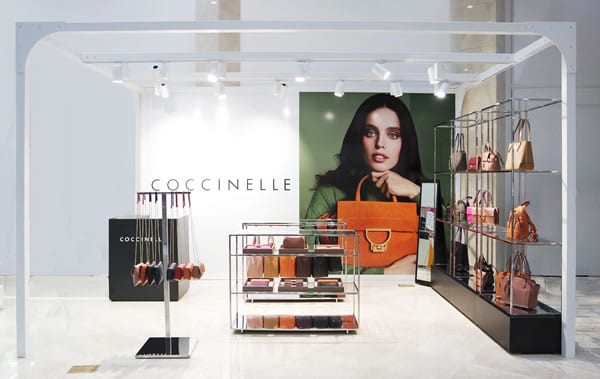
    Located in Jeju Tourism Organization’s duty free shop, the 20sq m space opened on 23 October and features the brand’s new store concept.

    Open displays and bright steel feature heavily in Coccinelle’s minimalist store

    The store features open displays to showcase bags and accessories as well as wall display modules and bag stands made from bright steel, said to give the interior a “timeless elegance”.

    The pop-up highlights Coccinelle’s Autumn/Winter 2015 collection which includes key piece the Arlettis bag.

    A big board with the Autumn/Winter 2015 campaign, which features American-Italian model Emily DiDonato as the face, dominates the back of the pop-up.

    Coccinelle Head of Travel Retail Emanuele Mazziotta commented: “We are honoured to be on Jeju Island at Jeju Tourism Organization Duty Free Shop with Bluebell and we thank them for their support with this opening. Jeju Island is a well known tourist destination in the Asia Pacific region and represents another key location in our expansion plan. Another important opening will happen soon in the region.”