Tag: fruit

  • Vietnam gains approval to export frozen durian

    Vietnam gains approval to export frozen durian

    Vietnam is allowed to export frozen durian and fresh coconuts to China under an official quota, following the signing of protocols between the two countries on Monday.

    These protocols signed by Vietnam’s Ministry of Agriculture and Rural Development and China’s General Administration of Customs in Beijing under the witness of Vietnam’s Communist Party General Secretary and President To Lam and China’s Communist Party General Secretary and President Xi Jinping are expected to increase shipment of the fruits.

    Another protocol that was signed allow the export of Vietnamese crocodiles to China under official quota.

    The protocols, which are key components of the Goods Trade Agreement and took effect immediately upon signing, include specific requirements for animal and plant quarantine as well as food safety.

    The protocols, which integral parts of the Goods Trade Agreement and took effect immediately after signing, consist of specific requirements on animal and plant quarantine and food safety.

    All exporters that have completed necessary procedures and meet the import country’s quarantine requirements can deliver their products across the border.

    Agriculture minister Le Minh Hoan said that the three protocols are the results of negotiations between the two countries, which allows Vietnamese frozen durian and fresh coconuts to reach a market of 1.4 billion people.

    Dang Phuc Nguyen, general secretary of Vietnam Fruits and Vegetables Association, said that the majority of Vietnamese frozen durian has so far been exported to mostly Thailand, the U.S. and Europe with a total value of several hundred million U.S. dollars a year.

    With China opening its door, exports of this fruit will likely surge, he added.

    Last year Vietnam exported 500,000 tons of fresh durian with a total value of $2.3 billion, in which China bought 90%.

    Vietnam now has 154,000 hectares of durian with a total yield of 1.2 million tons, and the latter figure grows around 15% a year.

    The country is also a major exporter of coconuts with 175,000 hectares of the fruit, mostly in the Mekong Delta region.

    With the new protocols signed, frozen durian exports are expected to reach $400-500 million this year, while fresh coconut exports are set to increase by $200-300 million.

    To Lam and his spouse are on a state visit to China from Aug.18-20.
  • Durian exports to top $3B in 2024

    Durian exports to top $3B in 2024

    Durian exports are forecast to surpass US$3 billion this year, according to the Vietnam Vegetable and Fruit Association (Vinafruit).

    Vietnam earned more than $1.3 billion from shipping durian abroad in the first six months of 2024, up 40% year-on-year.

    China has to date licensed over 700 growing area codes and nearly 200 packaging codes for Vietnamese businesses to export the fruit to this market.

    Vinafruit said a protocol on the official export of frozen durian to China is being promoted and likely to be announced soon.

    China spends about $1 billion on importing frozen durian every year. If Vietnam can export this type of product via the official channel to the neighboring market and hold a 30% market share, it can earn some $300 – 500 million in revenue, equivalent to about 10% of this year’s estimated durian export turnover.

    Vietnam harvests durian all year round, which gives the country’s businesses a competitive edge. This year, however, durian prices are likely to surge twice or thrice compared to current prices as traders rush to purchase the fruit for export.

  • Chinese mangoes sell for 20-30% cheaper than local varieties

    Chinese mangoes sell for 20-30% cheaper than local varieties

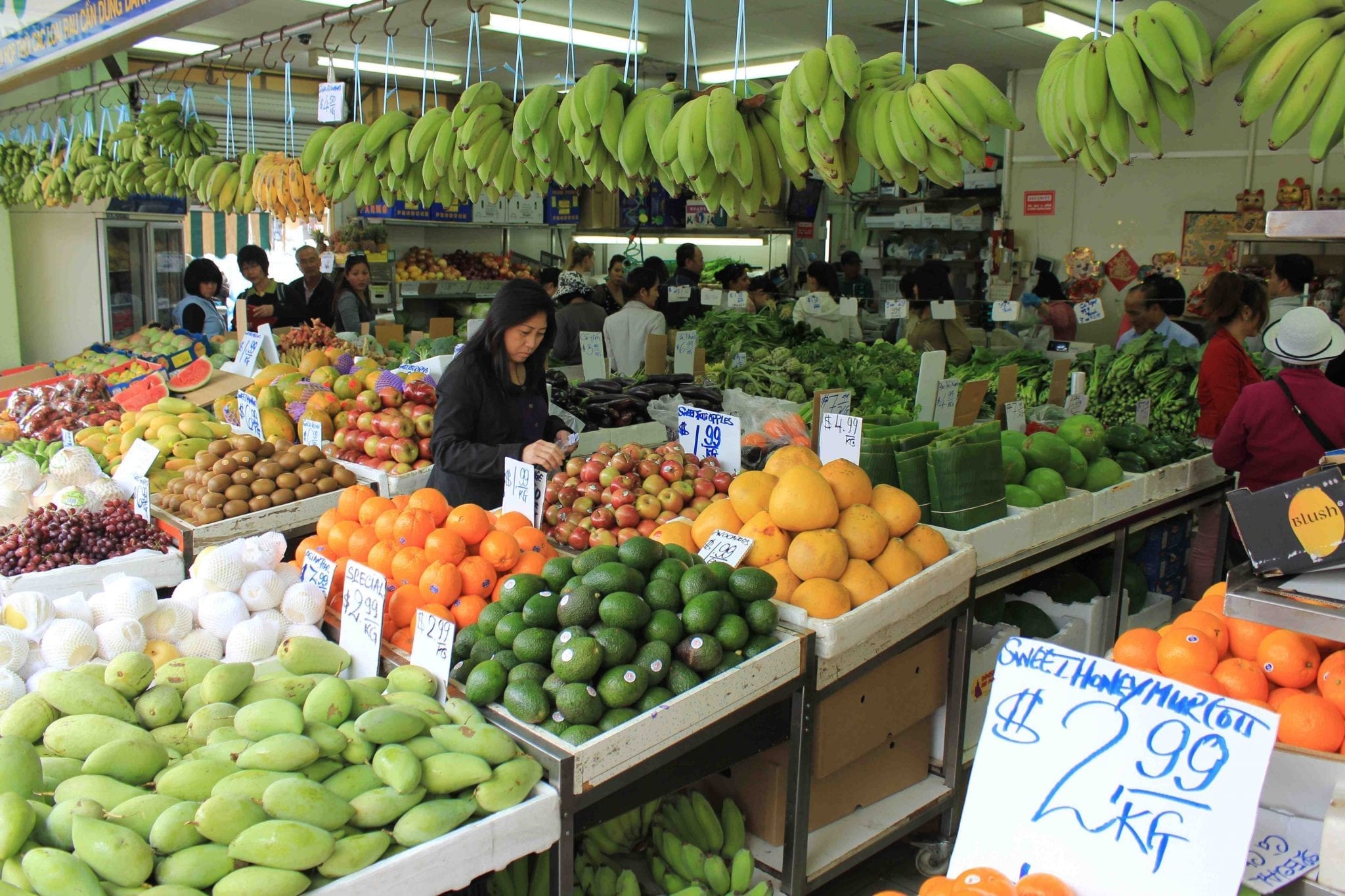
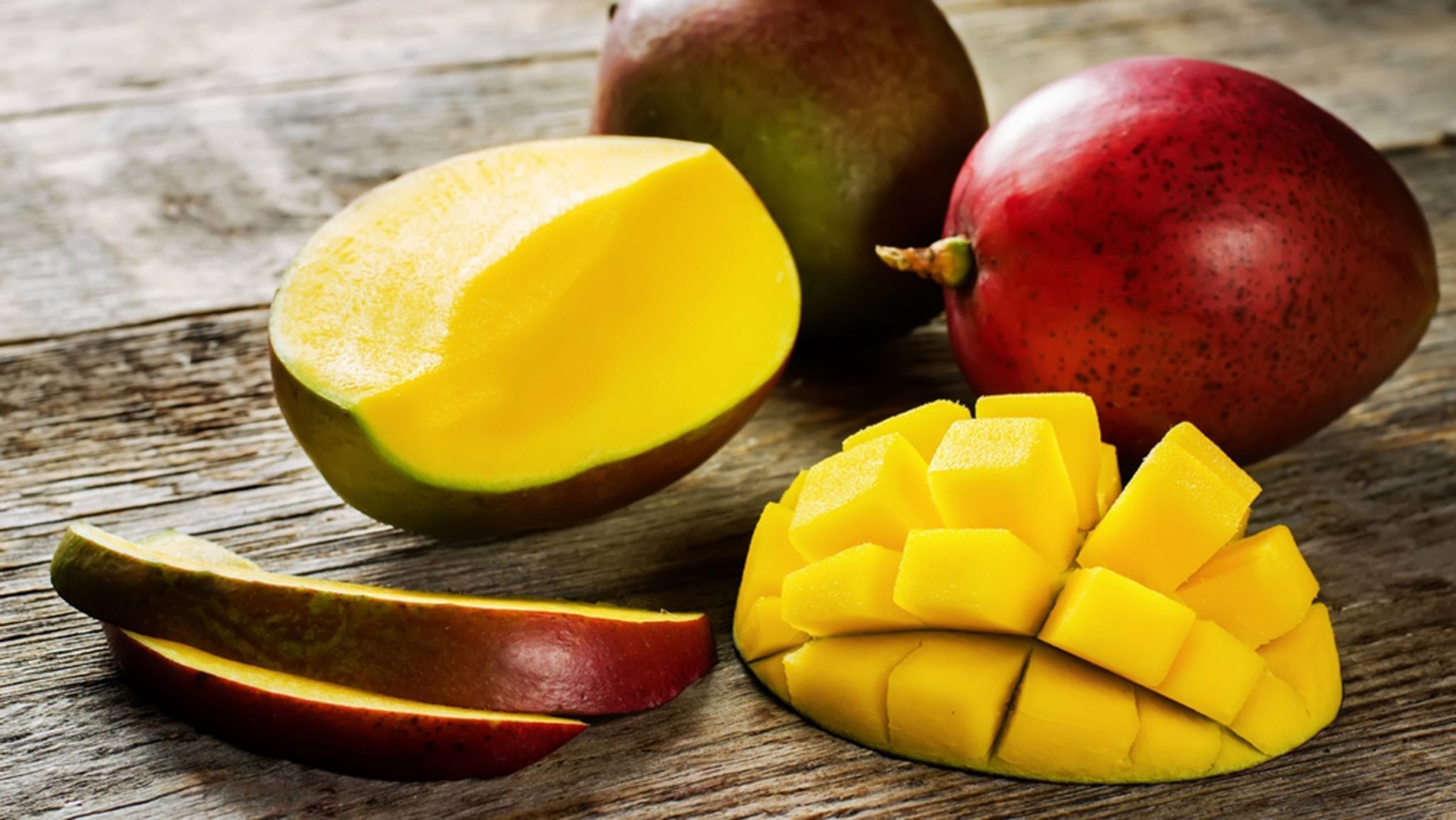
    Mangoes imported from China are selling fast in wet markets in HCMC for VND40,000-50,000 (US$1.58-1.98) per kilogram, 20-30% cheaper than local products.

    This year, traders are importing a new type of mango from China that resembles a crow’s beak, in addition to the usual varieties.

    Thanh, a fruit seller, said she has been selling up to 100 kilograms of the new product per day.

    Hang, who runs a fruit stall on Go Vap District’s Pham Van Chieu Street, noted that she procures about 30 kilograms of various Chinese mangoes daily, often sold out by noon.

    Nguyen Binh Phuong, the company’s sales director that runs the city’s Thu Duc Agricultural Product Market, said the wholesale market has imported 631 tons of Chinese mangoes.

    Thanh, a wholesaler in HCMC’s Thu Duc City, said that imported mangoes are attracting buyers due to their variety and competitive prices.

    “With low prices and good quality, Chinese mangoes are popular due to their eye-catching color and flavor. I wholesale dozens of tons every day,” she said.

    Loan, a mango farmer in Dong Thap Province, explained that Vietnamese varieties are more expensive this year due to lower output.

    Demand in export markets is rising, so businesses are also purchasing more local mangoes, driving up prices, she said. Prices are expected to stabilize in September when the new mango season begins.

    According to the General Department of Customs, Vietnam imported $400 million worth of fruits from China in the first half of 2024, up 28% year-on-year, with mangoes, plums, apples, and pears seeing a huge surge in imports.

  • Durian prices jump 32% as Thai supply dries up

    Durian prices jump 32% as Thai supply dries up

    Monthong durian prices have risen by 32% in southern Vietnam in the last two months to VND103,000 (US$4.05) per kilogram amid growing demand from China and other foreign markets.

    Traders are competing to buy from provinces such as Dak Lak, Binh Phuoc and Tien Giang.

    Hoa An, a trader, said demand in mainland China has been rising and therefore traders are willing to pay high prices to meet its needs.

    Other markets such as Japan, Hong Kong, Taiwan and Australia are also buying more Vietnamese durian, he added.

    Another trader, Manh Khuong, said Thailand has run out of supply for now and therefore Chinese buyers are sourcing more from Vietnam.

    But the Thai durian crop is set to ripen in another two weeks, and Vietnamese prices are likely to drop then, he added.

    Dang Phuc Nguyen, general secretary of the Vietnam Fruits & Vegetables Association, said since May China has doubled its monthly purchases of Vietnamese durian.

    Vietnam’s exports were worth nearly $500 million in May and are estimated to reach $600 million in June, he said.

    This means the country exported around $1.5 billion worth of the fruit in the first half of the year, he said.

    “More stringent quality control is needed to ensure the country meets its full-year export target of $3.5 billion.”

    Vegetable and fruit exports overall are expected to rise by 15-20% this year to around $7 billion.

  • Durian exports soar by 74%

    Durian exports soar by 74%

    According to customs data, Vietnam exported US$919 million worth of durian in the first five months, up 74% year-on-year.

    This made durian its top fruit export at 3.5 times that of dragon fruit in second place.

    Exports of the odoriferous fruit were worth $450 million in May alone, more than double the previous month’s value and an 34% higher than a year ago, the General Department of Customs reported.

    They were estimated at $600 million in June, according to Dang Phuc Nguyen, general secretary of the Vietnam Fruit and Vegetable Association (Vinafruit).

    China has been Vietnam’s largest durian importer this year, he said.

    Vietnam harvests the fruit all year long, helping it avoid direct competition with durian from Thailand as the latter’s harvest is seasonal, he said.

    Being closer to China it also has lower transportation costs and faster shipping times.

    But some of its shipments have recently been flagged in China for containing banned substances, damaging the reputation of Vietnamese durian, Nguyen said.

    He underlined the need to strengthen quality control at both orchards and packaging facilities to ensure no contaminated fruit is shipped.

    In the first five months of 2024 Vietnam exported over $2.65 billion worth of fruits and vegetables, up 30.9% from the same period last year.

  • Lychee prices triple at season end as poor harvest squeezes supply

    Lychee prices triple at season end as poor harvest squeezes supply

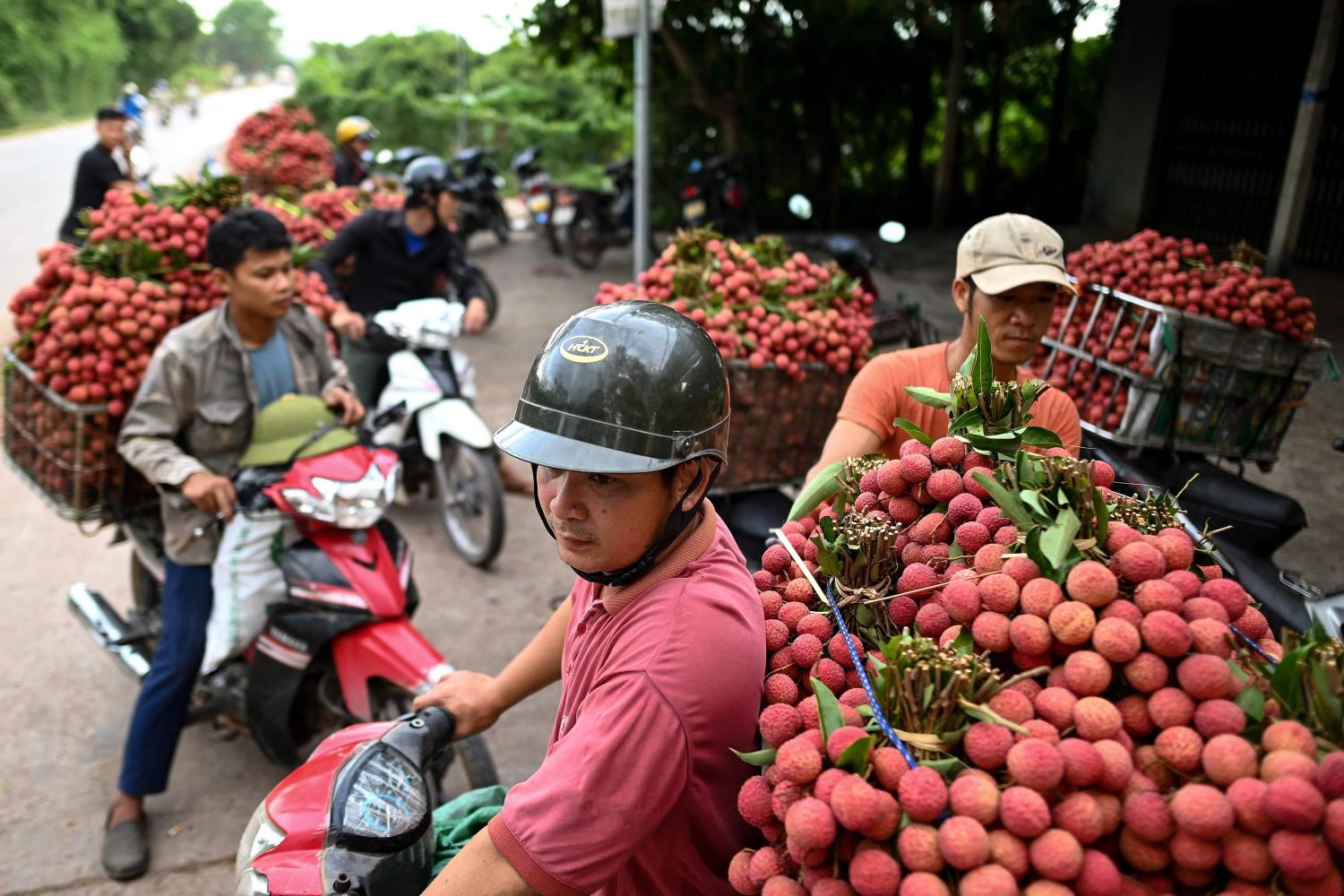
    Retailers are selling end-of-season lychees at up to VND180,000 (US$7.1) per kilogram, thrice the price a year ago, due to a poor harvest.

    They are not as plentifully available as in previous years in HCMC and cost VND165,000-180,000 at premium stores and VND85,000-96,000 at large retail chains like MM Mega Market and Winmart.

    Some supermarkets have run out of stock while others are selling the fruit in very limited quantities at VND120,000-135,000.

    Lychee output took a nosedive this year. In Bac Giang Province’s Luc Ngan District, a major producer of the fruit, lychee farmer Nguyen Thi Hien had expected her output to decrease by 30% this year, but she said it has dropped by 60%.

    She sold her last half a ton at VND80,000 per kilogram, the highest price she has got in her life.

    According to the Luc Ngan People’s Committee, even buyers and processing facilities in the district have been struggling to source lychees. While farmers usually have to transport the fruit to markets, traders are buying right at the farm gate this year, it said.

    Similarly, in Hai Duong Province’s Thanh Ha District, another large lychee grower, farmers have reported significantly lower harvests.

    One of them, Giang, said he has only managed to harvest three tons this year, down from last year’s 11. Despite the unprecedented prices he incurred losses due to the poor harvest, he said.

    Hoang Anh, a lychee merchant in the northern region, said Thanh Ha District is almost out of lychees and she is only able to procure them from Luc Ngan. The fruit is in great demand this year, both domestically and internationally, she said.

    Demand from China, the biggest consumer of Vietnamese lychees, has increased since that country also had poor harvests, while southern Vietnam has consumed a lot more lychees this year, she said.

    She was only able to buy enough to meet 50-70% of the orders she received.

    An MM Mega Market spokesperson said the falling supply has caused prices to increase towards the end of the season unlike in previous years when they would decline.

    MM signed an agreement with Bac Giang farmers at the start of the season to buy 100 tons of the fruit this year, but it now seems difficult given the poor harvest, they added.

    Central Retail, which operates the GO! supermarket chain, also said it might not be able to buy 300 tons of lychee as it had previously planned

    According to statistics from the Bac Giang Department of Industry and Trade, farmers in the province have harvested 67,000 tons so far this year.

    Around 43,000 tons have been consumed domestically, and the rest has been exported, the department said.

    China bought 23,800 tons of the remaining 24,000 tons. Japan, the U.S., the EU, Australia, Dubai, and some Southeast Asian countries also imported Vietnamese lychees.

  • Lychee farmers suffer losses despite 50% price increase

    A poor lychee harvest in Vietnam’s lychee production hub, northern Bac Giang Province, has led to financial losses for farmers, despite a 50% increase in the fruit’s price.

    Last year, the 40 lychee trees of Oanh’s family were full of fruit, earning them revenues of VND150 million ($5,900). But fewer fruit this year dropped earnings to only VND100 million.

    “I’ve been growing lychees for seven years, but I’ve never seen a year with such a poor harvest,” Oanh said. Anh Huy, also from Bac Giang, said all the lychee flowers were ruined following a period of rain. Production declined by over 90%, he added.

    “This lychee season is entirely lost. No matter how high the prices might be, I will still lose money,” he said.

    Giang, from Thanh Son Commune, said his family’s 5 ha of lychee would also see production dropping by 30% from last year. Even with prices increased 1.5 times higher than normal, the revenue would only be at around 80% compared to last year.

    Lychee gardens are faring well in other localities like Hung Yen, Hai Duong and the Central Highlands, with production dropping to 50-60% of the same period last year.

    Dong Thi Thu Huong, director of Minh Tien agriculture cooperative in Hung Yen, said the cooperative’s 400 ha of lychee production declined by half this year. While a kilogram of lychee was sold at VND15,000 last year, this year, it could be VND25,000, she added.

    “The estimated revenue this year of the cooperative would see a 20-30% drop compared to the same period last year, due to low production despite rising prices,” Huong said.

    The Hung Yen Department of Agriculture said lychee production in the province would see a 30% drop from last year, while Bac Giang said it would see a 50% drop.

    According to the Department of Agriculture and Rural Development, unstable weather patterns have contributed to poor harvest. In winter last year, average temperatures were around 1.5 degrees Celsius higher than the previous year, affecting the development of lychee trees. Short cold periods and long-lasting rains in January and February this year also affected production.

    Le Ba Thanh, vice director of the agriculture department of Bac Giang, said due to abundant harvests last year, there is not enough strength to guarantee a similarly strong harvest this year.

    However Nguyen Nhu Cuong, head of the Department of Crop Production, said rising prices may help offset low production, allowing farmers to net profits.

    Export businesses said they are adjusting their plans due to low lychee production and rising prices. Mai Xuan Thin, director of the Red Dragon production, commerce and service company, said the firm is worried about potentially low supply as it plans to export to several countries this year.

    “Besides Australia, we would export products to the U.S., Japan and Canada as well,” he said.

    Businesses said low supply and high demand may make it more difficult for Vietnamese lychees to be exported, as they would have to compete with lychees from other regions, like China or Mexico.

  • Thailand targets $3.5B durian exports in 2024

    Thailand targets $3.5B durian exports in 2024

    Thailand is poised to export approximately one million tonnes of durian, valued at an estimated 130 billion baht ($3.5 billion) this year, according to Thai PBS World.<

    In line with Thai Prime Minister Srettha Thavisin’s directives, the Ministry of Agriculture and Cooperatives is tasked with drafting regulations to prevent the sale of unripe or inferior durians.

    This includes setting dry weight standards for various durian varieties: 32% for Monthong, 30% for Chanee, and 28% for Kra Dum, as detailed by Chai Wacharonke, a spokesperson for Srettha.

    The initiative aims to discourage the premature harvesting and selling of durians, thereby improving the fruit’s quality and export competitiveness, said Chai.

    Furthering its commitment to quality and market stability, Thailand recently signed a memorandum of understanding with China to promote and secure stable prices for tropical fruit exports from Thailand to China, the English platform of the Chinese state news agency China News Service, reports.

    This agreement facilitates the importation of approximately 20,000 tons of durians and mangosteens, worth over 3 billion baht ($82.44 million), by China from Thailand from April to June this year.

    Durian export, generating 120 billion baht in revenue last year, plays an increasingly crucial role in Thailand’s economy.

    Thailand, producing 900,000 tons of durian annually, exports nearly two-thirds of this output primarily to China.

  • Vietnam beats Thailand at durian exports to China

    Vietnam beats Thailand at durian exports to China

    Vietnam has surpassed Thailand as the top durian exporter to China, shipping 32,750 tons in the first two months of 2024.

    This accounted for 57% of China’s imports, up from 32% last year, according to Vietnam Customs.

    Vietnam’s export of the fruit to China rose by 2.4 times year-on-year.

    Thailand saw its exports plunge by half to 19,000 tons.

    At US$4,916 per container, Vietnam’s export price was almost 20% lower than Thailand’s.

    Dang Phuc Nguyen, general secretary of the Vietnam Fruits & Vegetables Association, said Vietnam’s weather allows durian to be grown all year round.

    It shares a border with China, which offers it an advantage in transportation.

    Farmers have been hiking durian prices in recent months thanks to high demand from China.

    In March the prices of the highest quality Monthong variety in the Mekong Delta were up 15% from a year earlier to VND218,000-230,000 ($8.7-9.2) per kilogram.

    Vietnam’s durian exports are expected to top $3.5 billion this year, up 66% from last year.

  • Fruit, vegetable exports rise 38%

    Fruit, vegetable exports rise 38%

    Vietnam’s fruit and vegetable exports surged 38% to about $749.7 million in the first two months and is expected to peak at nearly US$7 billion this year.

    Durian alone would will bring in $3.5 billion after the Vietnamese Ministry of Agriculture and Rural Development and the General Administration of Customs of China signed a protocol on phytosanitary requirements for the Vietnamese fruit exported to the neighboring country last year, said Dang Phuc Nguyen, General Secretary of the Vietnam Fruit and Vegetable Association.

    Although shipments to Europe and the U.S. are forecast to be hindered by the Red Sea tension in the time ahead, exports to China will be boosted, driven by durian, dragon fruit, jackfruit, banana, and mango, he added.

    Deputy Minister of Agriculture and Rural Development Phung Duc Tien said four more Vietnamese products will be shipped to China via the official channel in the time ahead, comprising medicinal herb, coconut, frozen fruit, and watermelon, thus contributing greatly to Vietnam’s agricultural export revenue.

    According to statistics from the General Department of Customs, Vietnam’s fruit and vegetable export turnover hit an estimated $5.6 billion last year, up 66% year-on-year. Surpassing dragon fruit, durian recorded the highest export value.

    The largest importers of Vietnamese fruits and vegetables included China, the U.S., the Republic of Korea, Japan, Thailand, the Netherlands, Australia, the United Arab Emirates, and Russia.

    China remained the biggest buyer, with the import turnover reaching $3.7 billion in the year, up nearly 250% in value and 65% in market share compared to 2022.

  • Fruit, vegetable exports rise by 89%

    Fruit, vegetable exports rise by 89%

    According to the Vietnam Fruit and Vegetable Association, fruit and vegetable exports have risen by 89.2% this year to US$459 million due to a surge in demand from China.

    China has imported large volumes of durian, bananas and dragon fruit.

    Cold snaps in many places in that country have limited domestic banana supply since the fruit turns black when the temperature drops.

    China harvested dragon fruit in abundance last year, but the season is over, and Vietnam is able to export the fruit from January to May.

    Chinese use dragon fruit as an item of worship during the Lunar New Year, and so demand for imports from Vietnamese has skyrocketed.

    During President Xi Jinping’s recent visit to Vietnam, the Chinese side said it would open its market to many Vietnamese agricultural products, including fresh coconuts, frozen fruit products, citrus fruits, avocados, custard apples, and water apples.

    The two sides also signed a protocol for watermelon export.

    In addition to China, the U.S., the EU and some Asian countries are also set to open their doors to more Vietnamese fruits.

    The U.S. and Australia plan to import passion fruit, Japan, South Korea, Australia, and India want to buy grapefruit with India also eyeing durian imports.

  • Durian exports to China soar on insatiable demand

    Durian exports to China soar on insatiable demand

    Approved for official export last year, China imports dozens of containers of durians daily from Vietnam.

    The port in Pingxiang City, which handles much of durian imports, has seen an inflow of the fruit from Vietnam large enough to rival Thailand, China’s main supplier, since last year.

    Nong Liqing, CEO of a fruit importer in the city, told Xinhua his firm has imported more than 1,600 containers of durians in the year to date.

    China has a huge demand for the spiky fruit.

    Last year it imported a total of 825,000 tons of the fruit for US$4.03 billion, the highest of any fruit, according to data from China’s customs.

    After the Regional Comprehensive Economic Partnership, a free-trade agreement between ASEAN and various trade partners including China, allowed Vietnamese durian access to the Chinese market, that country has become Vietnam’s biggest importer of the fruit.

    Wang Zhengbo, president of a fruit company in Guangxi, said that his firm had signed deals last year with 3,000 hectares of Vietnamese orchards.

    In the first 10 months of this year durian accounted for 51% of total vegetable and fruit exports, according to the Vietnam Fruits & Vegetables Association (Vinafruit).

    Dang Phuc Nguyen, general secretary of Vinafruit, said the country has surpassed Malaysia and the Philippines in durian exports to China and is behind only Thailand.

    But Vietnamese durian is expected to be more competitive toward year-end as it has off-season durian ready to ship while Thailand usually struggles with unfavorable weather every year.

    Exporters are eyeing a figure of $2.5 billion this year, and prices might rise to a new peak next month.

    Since 2010 the area under durian in Vietnam has shot up from 92,000 ha to 131,000 ha, and the yield is estimated at one million tons this year, up 15.9% from 2022.

  • King orange prices hit new low as demand slumps

    King orange prices hit new low as demand slumps

    King orange prices have sunk to VND2,000-4,000 (US$0.08-0.16) per kilogram at the farm gate, half it’s previous lowest reached in June, but still, not many merchants are buying the fruit.

    Oanh, who owns an orchard in southern Dong Nai Province, says she recently harvested three tonnes of oranges but could not sell them.

    Since they had already ripened, she had to lower her price to VND2,000-3,000 a kilogram to try and sell them before they rotted, resulting in a marginal loss.

    Similarly, Thanh’s orange orchard in southern Vinh Long Province, too, made a small loss.

    “My family will not have enough money for the next crop,” he sighs.

    At traditional markets and on online stores in HCMC, king orange prices are at an all-time low. Merchants are selling it at VND8,000 or even cheaper, at VND7,000, when bought in bulk.

    But the low prices have not helped improve demand.

    Loan, who runs a fruit store on Pham Van Chieu Street, HCMC, says sales are 30% down.

    Many merchants say the orange also has to compete with better alternatives like the Vinh variety, whose harvest is 10-15% more than last year, and other cheap fruits imported from China.

    “In the last three days I have only sold a few dozen kilograms of king oranges. So I have stopped buying them and switched to tangerine and Vinh orange, both of which are more in demand,” Loan says.

    Nguyen Huong, a merchant in HCMC who usually buys king oranges in Vinh Long, says: “Last year I sold 3-5 tonnes a day, but only 1-1.5 tonnes this year.”

    In HCMC’s Tam Binh District, type 1, the highest quality, is sold at VND4,000, type 2 at VND3,000 and bulk price at VND2,000, according to a report by the Vinh Long Department of Agriculture and Rural Development.

    It explains that demand for the fruit has decreased sharply while stocks have been piling up due to excessive supply.

    According to agriculture departments in the Mekong Delta, stocks have reached millions of tonnes, including one million tonnes in Vinh Long alone.

    Bitterly about last season’s losses, farmers have been growing king oranges perfunctorily, leading to distorted products that drag down prices even further.

    Agriculture departments in the Mekong Delta are working to promote the fruit in HCMC’s industrial zones, Binh Duong and the north, encouraging food processing businesses to use it as an ingredient in making new products.

    Since May, the Ministry of Agriculture and Rural Development’s crop production department has been discussing quality standards with Chinese regulators to export citrus fruits to their country.

  • Japan destroys five tons of durian, chili from Vietnam

    Japan destroys five tons of durian, chili from Vietnam

    In October, over five tons of Vietnamese durian and chili were destroyed in Japan for containing a higher dose of pesticide than the country’s standard.

    The batch of 1.4 tons of durian was exported on Oct. 5 by a company in Vietnam to Japan, where it was found to contain 0.03 parts per million (ppm) of procymidone over the Japanese standard of 0.01 ppm, according to a recent report by the commercial counselor of Vietnam in Japan.

    The batch of 4 tons of chili contained 0.2 ppm of tricyclazole and 0.03 ppm of hexaconazole against the standards of 0.01 ppm for both.

    Japanese quarantine authorities destroyed all the produce.

    Procymidone is used to kill unwanted ferns. Tricyclazole kills fungus, and hexaconazole prevents powdery mildew and other diseases.

    Do Van Dung, head of the community health faculty at Ho Chi Minh City University of Medicine and Pharmacy, said that the three pesticides are approved in many countries, and their harmful effects have only been researched on animals.

    It is, therefore, normal for these pesticides to be present on produce exported to Japan, and the fact that they exceeded Japanese standards does not mean that they would harm Vietnamese consumers.

    Some countries, such as Australia, allow a procymidone level in garlic by up to 5 milligrams per kilogram against Japan’s 0.1 mg/kg.

    Ta Duc Minh, the commercial counselor of Vietnam in Japan, said that he has informed Vietnamese authorities to prevent a similar incident.

    Many other developed countries also fail to meet Japan’s standards from time to time as this is a difficult market that requires high quality.

    Japan was Vietnam’s third biggest export market of agriculture, forestry and seafood in the first 10 months, accounting for 7.4% of the total.

    Vegetables and fruits exports rose 6.6% year-on-year to $150 million.

    Durian exports to Japan fell 12.3% year-on-year to $1.3 million.

  • Vegetable, fruit exports reach $5.2B record

    Vegetable, fruit exports reach $5.2B record

    Vietnam’s vegetable and fruits exports surged 70% year-on-year in the first 11 months to $5.2 billion, a new historic peak.

    Durian accounted for 40% of the value, followed by jackfruit, watermelon, grapefruit and longan, all recording growth between 50% and 200%, according to the Vietnam Fruits & Vegetables Association (VFA).

    This was the first time that vegetables and fruits exceeded the export value of key agricultural produce such as rice, cashew nuts and coffee.

    China was the biggest market in the first 10 months at $3.2 billion, accounting for 66% of the total. Growth was 2.7% year-on-year.

    It was followed by the U.S., down 3% to $212 million, South Korea, up 25% to $187 million and Japan, up 7% to $151 million.

    The surge in demand from China and other countries helped exports to reach new heights, said Dang Phuc Nguyen, VFA general secretary.

    More durian farming areas have been approved for exports to China this year and this helped increase shipment, he said, adding that improved infrastructure and logistics also contributed to the growth.

    China is considering importing fresh coconuts from Vietnam and the fruit if approved, will likely be another one that records billions in exports.

    Vietnam is negotiating with the U.S. and Australia to export passion fruit there. It is also in talks to ship grapefruit to Japan, South Korea, Australia and India.