Tag: Japan

  • Watch inspires Tag Heuer’s Ginza Store

    Watch inspires Tag Heuer’s Ginza Store

    In a world-first concept, every aspect of the store is modular from the digital façade and displays to the decor. It offers customers immersion in the brand universe with its omni-channel buying experience.

    A highlight are the iTags, the brand’s connected displays. With just a few clicks on an iPad built into the display, the customer can browse watch models. When they make a choice, the watches, on a pivoting support, are instantly lit up on the display. Customers can also transfer their selection to a mobile device, allowing them to extend their experience outside of the store through linking into My Tag Heuer.

    Customers have total independence with a host of options, such as online ordeing with instore pick-up or a more comprehensive introduction to the piece in a traditional store on the second floor. The Tag Heuer sales team, connected to the iTag via a watch, know directly if a customer wishes to try on a particular model.

    American model Bella Hadid and Kabuki actor Shido Nakamura together broke open the lid of a sake barrel as part of the traditional opening ceremony for the Tokyo boutique.

  • Docomo trials 5G for remote healthcare

    Docomo trials 5G for remote healthcare

    Japan’s NTT Docomo has completed a trial involving the use of 5G technology to conduct remote medical examinations.

    The trial in the sparsely populated Wakayama Prefecture used base station equipment provided by NEC.

    It was conducted in collaboration with the Wakayama Prefectural Government and Wakayama Medical University and hosted by Japan’s Ministry of Internal Affairs and Communications (MIC).

    The Wakayama Prefecture has previously established  a remote medical support internet based video conferencing system to connect 13 prefectural medical institutions and Wakayama Medical University, allowing doctors to receive advice from specialists, even in towns in mountainous areas.

    But the system has frequently met with problems including unclear images and transmission delays due to the underlying internet infrastructure.

    The trial marks an attempt to overcome these issues. It involves the deployment of a fiber cable to establish a remote medical examination service by using 5G to connect Wakayama Medical University and the Hidakagawa Kokuho Kawakami Clinic about 30 km from the university.

    An NEC base station supporting the 28-GHz band and meeting 5G specifications was deployed to enable real-time sharing of images taken by a 4K close-up camera, as well as HD echocardiographic video and MRI images.

    The trial demonstrated that using HD large-screen monitors and high-capacity data transmission it is possible for remote doctors to view the condition of a patient in minute detail, and to communicate more intimately with patients compared to the use of standard videoconferencing equipment.

    “Ultra-high-speed 5G communications are often associated with the entertainment industry. However, these trials showed us that 5G can play a role in solving social issues, such as reducing regional disparities in the delivery of health care,” NTT Docomo senior research engineer for 5G radio access network research Jun Mashino said.

    “We plan to create new business models and value by continuing to take advantage of 5G technologies in collaboration with ICT vendors, and a wide variety of companies and organizations in the near future.”

  • Sales starts to pickup for China Dongxiang

    Sales starts to pickup for China Dongxiang

    First-quarter growth has been reported by sportswear company China Dongxiang Group, which owns all rights to the Kappa brand in China, Macau and Japan.

    Same-store sales, excluding the Kappa Kids and Japan businesses, achieved “mid-to-high” single-digit growth year on year, while the retail performance saw high single-digit growth.

    “The retail performance of Kappa stores for the overall offline platform is recovering,” says executive director/CEO/president Zhang Zhiyong.

    The group designs, develops, markets and wholesales branded sportswear in China.

  • GTT opens new PoP in Japan

    GTT opens new PoP in Japan

    US-based cloud networking provider GTT Communications has launched a new PoP in Osaka Japan as part of an expansion of its global Tier 1 network.

    The company has also opened four new PoPs in the US – in Charlotte, Kansas City, St. Louis and Reno – and one in Calgary in Canada.

    GTT’s network now includes more than 300 PoPs across six continents. The operator also announced in February that it plans to acquire European fiber network operator Interoute for around €1.9 billion ($2.7 billion), adding an additional 400 PoPs to its network.

    The Interoute network includes over 67,000 km of lit fiber, 25 physical or virtual data centers, 31 colocation centers and connections to 195 additional third party data centers across Europe.

    “GTT will continue to expand our network globally as we deliver on our purpose of connecting people across organizations, around the world and to every application in the cloud,” GTT president and CEO Rick Calder said.

  • Alexachung expands with Tokyo pop-ups

    Alexachung expands with Tokyo pop-ups

    British womenswear label Alexachung has marked its Asian expansion with a series of Tokyo pop-ups, starting earlier this month.

    Alexachung hopes the pop-ups will build brand awareness and boost sales thanks to a “very loyal” Japanese customer base.

    “Our goal is to build a reliable, constant presence and hope to develop retail when [we] are ready to,” said Alexachung CEO Edwin Bodson.

    Hong Kong-based Bluebell Group is the exclusive distribution for Alexachung in Japan.

    Korea and Taiwan are also considered to have strong potential thanks to solid retail and wholesale volumes last season.

    The brand also plans to open a London store by 2020.

  • How Muji can resist in a world of brands

    How Muji can resist in a world of brands

    In an era when branding has never seemed so important, the enduring success of Japan’s Muji might seem perplexing to many retailers.

    Almost every day fashion houses reveal new collaborations – often with unlikely bedfellows, like Louis Vuitton and Supreme or Gucci and a hitherto little-known cassette-tape retailer Waltz in Tokyo.

    But Kei Suzuki, director and executive officer of Muji parent Ryohin Keikaku, has no fears that Muji’s anti-brand format is under threat. He told in an interview on the sides of the MarketingPulse conference in Hong Kong that Muji’s approach will survive the current brand era.

    “I think we can continue what we are doing because the reason why other people enter into brand collaborations is because they want exposure to the customer by helping each other – because maybe they can broaden their customer range.”

    Muji, he says, was born from a concept: producing simple, stylish products that make their customers’ lives easier and are not expensive. “So what we want to do is realise the concept and make our customers more happy.”

    So while other retail brands and fashion labels are pursuing partnerships, Muji would rather work on expanding its categories. That is why it designed a minimalist house in 2015, a Muji campsite and, this year, its first truly fresh grocery concept store.

    “Always we think: what can we do for the people, and how can we make their lives easier?” This is instead, he explains, of focusing purely on the business side.

    “By applying this concept to many different categories, we believe we can broaden our exposure to our customer or potential customer. Eventually, that will help us increase the size of the business, or sales. We will not collaborate with brands, but we believe in collaborating with somebody else with the expertise who shares the Muji concept. An example of that is the new Muji Hotel in Shenzhen.

    Suzuki says investing in and running hotels is not Muji’s speciality, but if it could find a partner to run a hotel it would want to implement its design and functionality skills into the project. “We provide the concept, they provide the hotel.”

    Despite its anti-brand position, it is no urban myth that Muji engages some of the world’s best-known designers to help develop products – it just never tells anyone about them.

    “We collaborate with designers who have sympathy with the Muji concept so they are happy to be involved, but their names are never to be disclosed.”

    Muji’s rationale is that if customers do not know a product is designed by someone they know by name, they will focus on the product.

    “Some designers are already too famous, so if we sold a product with their name, everybody would buy it. But at Muji, there are no names… They can get very nervous, because people judge only from the product.

    “We do not want the consumer to be misled just for the sake of a name.”

    He says some of the designer products have become best-sellers for Muji, while others have been less successful. This, he concedes, can make the exercise more than a little nerve-wracking for the invisible partners.

    Suzuki is in charge of Muji in China, Hong Kong and Korea, the fastest-growing of the company’s markets internationally. In the mainland, Muji now has more than 230 stores, and is opening new ones at the rate of about 40 a year.

    Hong Kong was one of the first markets outside Japan, along with the UK, where Muji ventured.

    “Opening stores in Hong Kong and the UK helped the company, because both cities are very cosmopolitan and many people visit. So they see Muji and some of them understand the concept. Then awareness increases. That helped us when we started opening stores in France and other new markets.”

    Hong Kong is also proving a great testbed for new concepts, like the Muji Travel store, of which there are two in the territory – one at Hong Kong Station, the other at the airport. Both are trading “very well”, selling travel essentials and convenience products. “I think they provide very good solutions for travellers.”

    Online is another area where Muji is treading positively but cautiously.

    “E-commerce is very important because if somebody wants to buy something from Muji we want to make it easy. But at the same time, we think it is important from the customer’s standpoint to have an actual connection or experience. So our stores are not just for retail, but also for the experience, and for engagement with the customers.”

  • KDDI, Nokia trial eMBMS for connected vehicles

    KDDI, Nokia trial eMBMS for connected vehicles

    Japan’s KDDI and Nokia have completed trials of LTE connected vehicle applications including the first vehicle based LTE broadcast trial.

    During a trial on the island of Hokkaido, the companies implemented evolved multimedia broadcast multicast service (eMBMS) technology for two in-vehicle applications.

    These included vehicle-to-network-to-vehicle connectivity, allowing cars to stay in constant contact with a Nokia-based multi-access edge computing (MEC) platform, sending real-time location, direction and speed data to roadside sensors.

    The proof of concept allows drivers to alert the application and allow information to be distributed to other vehicles using eMBMS.

    In addition, eMBMS was applied in a network real-time kinematic (network RTK) trial of LTE for enhance fully automated in-vehicle navigation, demonstrating how eMBMS could more cost-efficiently use existing geo-location systems to communicate to many vehicles in real-time.

    The companies said the trials are a step towards preparing the car industry for the introduction of 5G-based automated vehicles.

    “We are pleased to work with Nokia to demonstrate our leadership in the delivery of mobile networks for IoT and connected car communications,” added Munefumi Tsurusawa, general manager of the connected vehicle technology department and KDDI’s technical planning division.

    “This is an important trial showing how the automotive industry can leverage cellular technology to enhance safety of connect vehicles on the roads.”

  • Bensimon Japan opens its first concept store

    Bensimon Japan opens its first concept store

    Bensimon Japan has opened a concept store in Tokyo, the fourth international outlet for the French label.

    Launched with its two local partners, Itochu and Look, the unconventional store in the Daikanyama district covers about 100sqm on several floors and conceived as a little house dedicated to the French art of living and to the label’s love of colour.

    Bensimon says the same concept may be replicated in other prime Japanese shopping locations, with a second opening already being planned, reports Fashion Network.

    In the longer term, the label is also thinking about China.

    Meanwhile, Bensimon has taken on a new designer, Geraldine Dufour, who debut with the label’s latest autumn/winter collection.

    “I’ve worked with the same designer for 15 years so we didn’t want a comprehensive overhaul,” says co-founder/creative director Serge Bensimon. “However, we needed a fresh take on our ready-to-wear and accessories collections, to try to appeal to a younger clientele.”

    “Currently, our customers are mature, modern women,” says Dufour. “We want to broaden our target market, first with women in their early 40s, then with the next generations. We want to be able to appeal to mothers and their daughters.”

    By recalibrating the womenswear range, Bensimon is seeking to bolster its expansion, notably driven by Rudy Achache, the first GM appointed by the two founder brothers, Serge and Yves Bensimon, nearly two years ago.

    Bensimon has about 50 stores, most of them in France.

  • Nissan, partner eye early 2020s robotaxi rollout

    Nissan, partner eye early 2020s robotaxi rollout

    Nissan is deepening collaboration with a Japanese mobile gaming and communications giant to develop self-driving taxis.

    Nissan wants the partnership to lift it ahead of its rivals in the nascent vehicle mobility services segment. But when it comes to realizing self-driving taxis that can pick up and drop off customers automatically on public roads without a glitch, the automaker acknowledges there is still a long way to go.

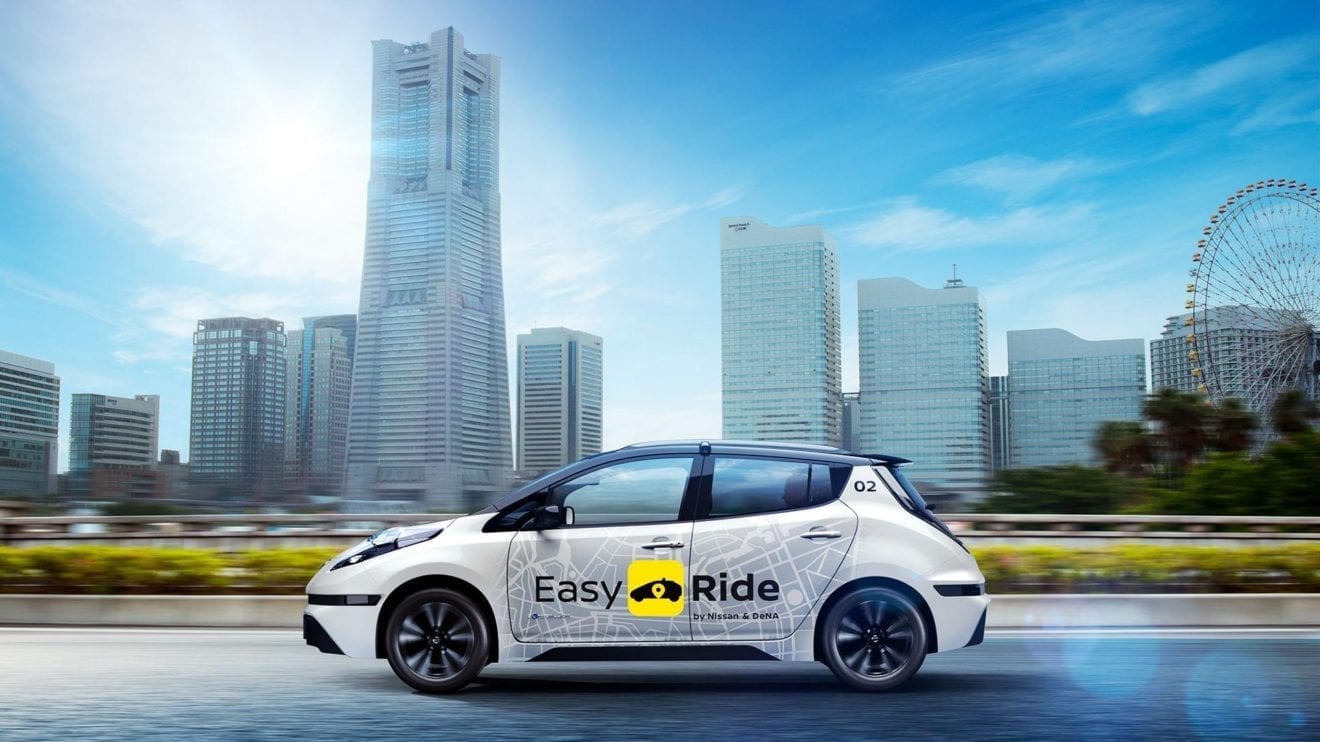
    Last month, Nissan Motor Co. and online tech company DeNA Co. field-tested Easy Ride robotaxis, involving some 300 participants.

    “This represents a big step toward enhancing self-driving cars and the mobility service operation system from the stage of just presenting a conceptual image,” Nissan CEO Hiroto Saikawa said during the launch. “This will help advance our business in offering a new mobility service for many customers in a variety of scenes.”

    The robotaxis are based on a modified Nissan Leaf electric vehicle. For their field testing, they traveled about two miles on a preset city route from Nissan’s headquarters in Yokohama to a nearby commercial facility.

    Collaborative effort

    Using a DeNA-designed smartphone app, users could hail a taxi by selecting a pickup time slot and specifying which of a list of preset destinations they wanted. A tablet computer installed inside the vehicle notified the passenger about recommended events in the area.

    Discount coupons for restaurants affiliated with Easy Ride were sent to the user’s smartphone.

    Such an online user experience could not have been possible without the help of DeNA, Nissan officials said.

    “Efficient and effective collaboration with partners who have expertise in their respective fields are the key to remaining competitive in the future,” Saikawa said. DeNA CEO Isao Moriyasu stressed that his company wants to bring innovation to the transportation system as a mobility service provider.

    The companies plan to introduce their robotaxi service commercially in the early 2020s. But they must resolve technical details before introducing a fully autonomous mobility service in a heavily congested urban environment.

    Easy Ride uses Seamless Autonomous Mobility, developed by Nissan from NASA technology, for its fleet operation system. That system allows vehicles to make decisions in unpredictable situations with the combined support of in-vehicle artificial intelligence and humans, according to Nissan. There will be a control center where people monitor Easy Ride fleets.

    Unexpected situations

    But technology challenges remain. Among them: perfecting the robotaxi’s ability to judge where it is most appropriate for loading and unloading passengers. Unexpected complications, such as road construction or a line of parked cars on the roadside, for example, wouldn’t faze a human driver. But altering behavior to accommodate unusual circumstances doesn’t come easily to an AI-powered, sensor-directed taxi without the aid of remote monitoring by humans at the control center.

    At a media test ride in mid-February, an Easy Ride vehicle unexpectedly stopped its self-driving mode just as it was about to get moving when a pedestrian walked in front of it. As a result, another test vehicle was brought in and the procedures had to be repeated.

    Nissan expected such glitches to occur during the field test, and is looking to incorporate the experiences into its development.

    Kazuhiro Doi, a global director of Nissan’s research division, admitted that the experiment was challenging, even in Yokohama’s waterfront area, with its wide streets and relatively light traffic.

    “Self-driving while trying to avoid so many parked cars is actually difficult,” Doi said of the research. “GPS signals are weak or cut off due to high-rise buildings. I thought it would be easy at first, but it has proven to be more challenging.”

  • KDDI sets up fund to boost 5G capabilities

    KDDI sets up fund to boost 5G capabilities

    Japan’s KDDI has teamed up with venture capital firm Global Brian to establish a new fund to support startups which can boost the operator’s capabilities in 5G and other technologies.

    The Japanese telco plans to invest 20 billion yen ($186 million) over the next five years via KDDI Open Innovation Fund 3 (KOIF3) in startups in areas such as AI, IoT and big data, which KDDI says will grow ever more crucial in the 5G era.

    The new fund will operate for 10 years and be managed by Global Brian, targeting startups “that hold promise for generating synergy with KDDI group companies in the coming 5G era,” KDDI says.

    The formation of the new fund, KDDI adds, is “in anticipation of the changes that will be brought about as 5G technology comes into widespread use”.

    KDDI and its group companies will use their networks, experience and knowledge to seek out promising venture firms in fields such as AI and IoT, the operator said, adding that there are already three programs being launched around AI, IoT and data marketing technologies.

    “The investment programs will also make it possible not just for KDDI but also for its group companies to proactively undertake joint development efforts with venture firms,” KDDI noted.

  • Singapore first overseas restaurant for Unagiya Ichinoji

    Singapore first overseas restaurant for Unagiya Ichinoji

    Japanese restaurant chain Miyagawa Honten has opened its first overseas outlet with Unagiya Ichinoji at Singapore’s Robertson Quay.

    Its Japanese head chef trained for three months in a Miyagawa Honten outlet to master the skills needed for creating unagi. The chain first steams the unagi before grilling it. All cuts are marinated with sansho (the Japanese equivalent of Sichuan peppercorn) and kuro shichimi (a traditional blend of seven black spices) before being basted with tare sauce while being charcoal grilled.

    The signature Hitsumabushi is offered in three sizes, and options are unagi over rice with nori, wasabi, green onion or dashi. Side dishes include unagi chawanmushi, unagi bone cracker, unagi sushi roll, unagi omelette, unagi salad and unagi simmered boiled liver.

    The 34-seater restaurant does not accept reservations.

    Miyagawa Honten launched 125 years ago in the Tsukiji district of Tokyo.

  • Rakuten receives confirmation for MNO launch

    Rakuten receives confirmation for MNO launch

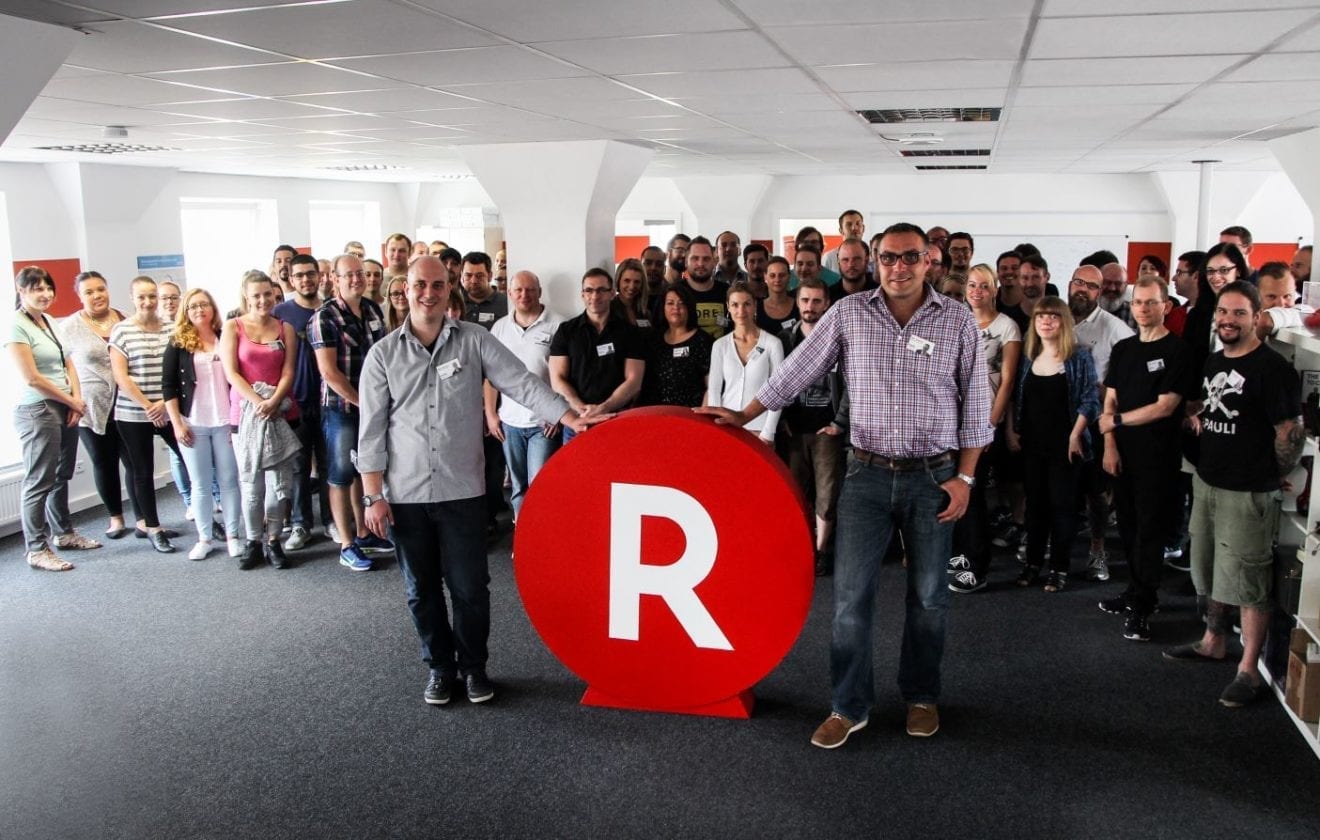
    Japanese e-commerce giant Rakuten has secured government approval to deploy 4G mobile services in the 1.7-GHz frequency band, and now plans to launch as the nation’s fourth mobile operator in October.

    New subsidiary Rakuten Mobile Network plans to raise up to 600 billion yen ($5.6 billion) to pursue its mobile business, including through an up to 200 billion yen investment by its parent company.

    Rakuten announced its intention of entering the mobile market in December last year. Last month, the company signed agreements  with Chubu Electric Power, TEPCO Group and Kansai Electric Power Co to use the utility companies’ telecoms and transmissions towers and other infrastructure for the planned 4G deployment.

    The company is considering similar tie-ups with other electric utilities to support its goal of achieving nationwide service coverage.

    When announcing its intention to enter the mobile market, Rakuten said household spending on telecoms services in Japan is rising every year and reducing telecoms expenses is considered a major social issue.

    The current mobile market – which is dominated by NTT Docomo, KDDI and SoftBank – is also often criticized as a “coordinated oligopoly”, and the government is in the middle of a thorough industry review aimed at ensuring fair competition, the company added.

    Rakuten has been providing MVNO services under the Rakuten Mobile brand since October 2014, using NTT Docomo’s mobile network, and has racked up around 1.5 million customers.

    The company is targeting at least 15 million subscribers with its mobile operations, which compares to 39 million for third-ranked SoftBank. Rakuten’s foray into the mobile market was contingent on it securing 4G spectrum from the ministry of internal affairs and communications (MIC), which has now granted approval for Rakuten’s plan.

  • Kokuyo plans stores for employees working from home

    Kokuyo plans stores for employees working from home

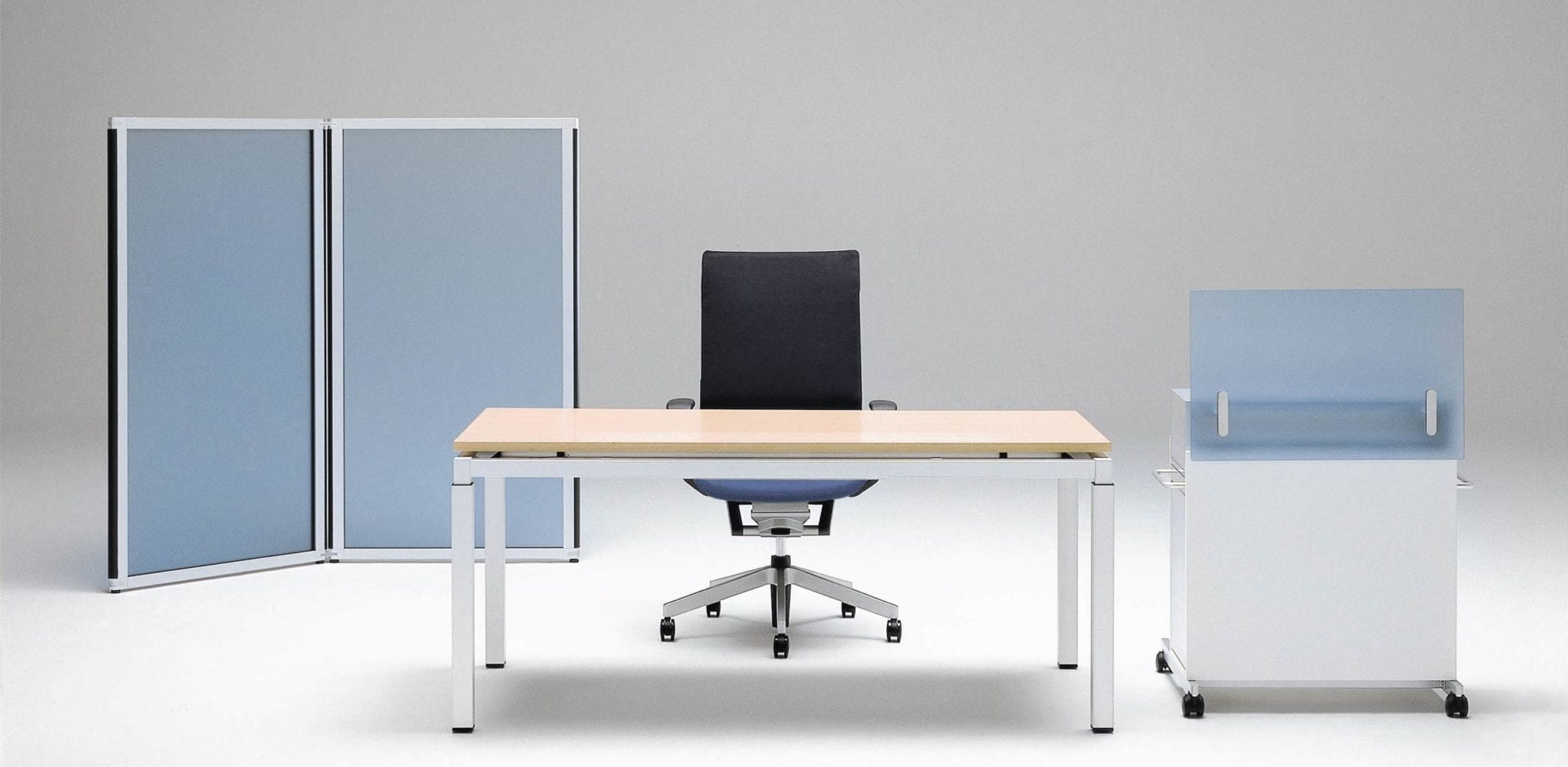
    Japanese office furniture maker Kokuyo is to open retail shops in Thailand targeting the growing ranks of people who work from home.

    Kokuyo Thailand is a joint venture between the Japanese parent (which holds 49 per cent) Central Group and local furniture maker Practicable.

    The company has opened a 250sqm showroom for walk-in customers on the ninth floor of Bangkok’s CentralWorld on Rama 1.

    “We are studying a dealer system as well as opening sales corners or shops in department stores in the next stage,” CEO Tarida Klaipracha told The Nation newspaper.

    A larger, 400sqm showroom is being planned for another shopping mall in 2020.

    Klaipracha said that when the company launched in Thailand in 2004, it focused on supplying office furniture to Japanese companies operating in the kingdom, broadening the target to Thai companies as it gained critical mass.

    “We achieved THB460 million (US$14.7 million) in total sales last year, up from THB430 million in 2016. Japanese clients accounted for 70 per cent of our sales with the balance to non-Japanese firms,” she said.

    “We aim to achieve Bt600 million in sales in 2020, with Japanese companies accounting for half of the total. About 5 per cent of sales is expected to non-Japanese clients who will be end-consumers.”

    MD Sachio Kobayashi said Kokuyo saw huge opportunity in the Thai office furniture market because there is no real major player in the category.

    The Thai office also oversees the Myanmar and Cambodia markets, while its Malaysian subsidiary looks after the Philippines and Vietnam.

  • Construction begins on Japan-Guam-Australia cable

    Construction begins on Japan-Guam-Australia cable

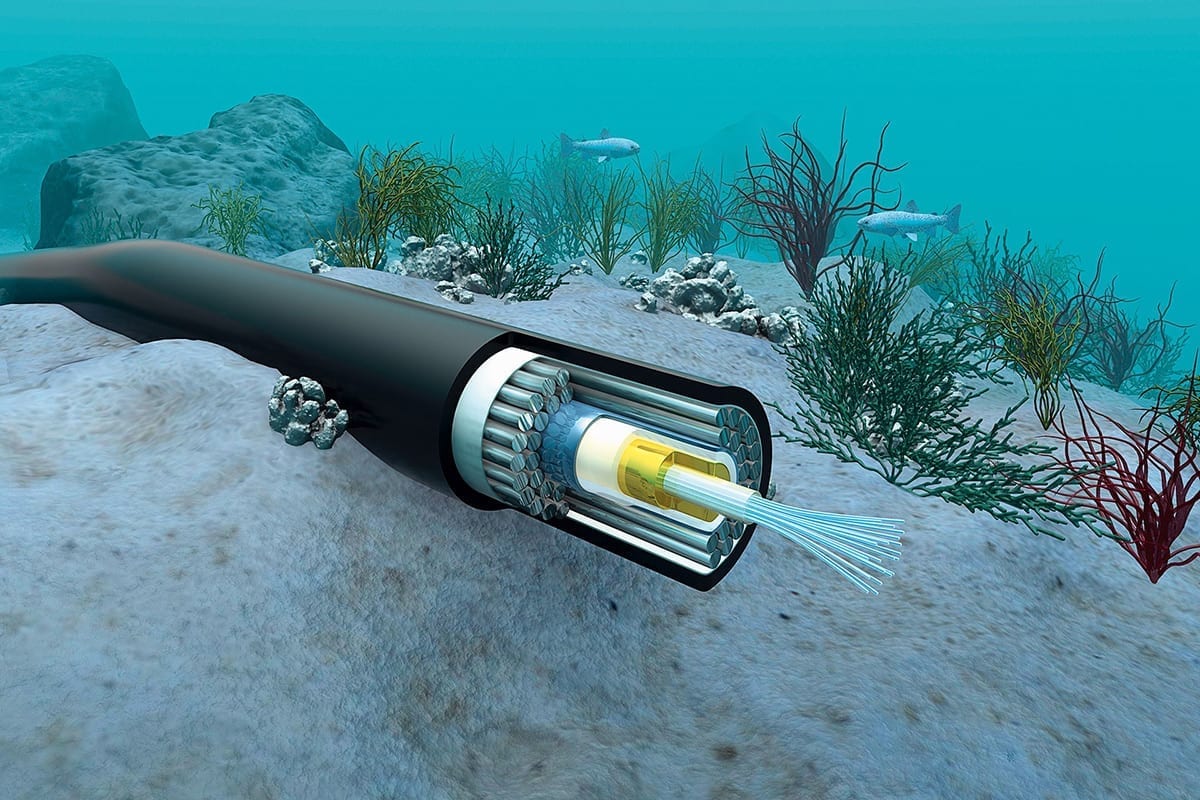
    A consortium led by RTI Connectivity has commenced construction of a new subsea cable linking Japan, Australia and the US territory of Guam.

    The Japan-Guam-Australia Cable System (JGA) is being built by a consortium consisting of RTI Connectivity, Australia’s Academic and Research Network (AARNet) and Google. It is being supplied by Alcatel Submarine Networks and NEC.

    The 9,500km subsea cable system will have a design capacity of over 36Tbps. It is expected to be ready for service in the fourth quarter of next year.

    At Guam, the JGA will interconnect to the SEA-US cable, which is operated by a consortium that includes RTI Connectivity, as well as the upcoming HK-G Hong Kong-Guam.

    The JGA will contribute to the expansion of communications networks from Japan and Australia to Asia and the US and expand onboard connectivity options in Guam.

    The cable is being built in two sections also linking in Guam, with JGA South being funded by AARNet, Google and RTI Connectivity, while JGA North will be wholly-owned by RTI Connectivity.

    “Hyperscale cloud providers and enterprise companies are fuelling exponential data-growth between Asia, Australia, and the United States. These customers require alternative paths, enhanced quality of service, and cost-effective bandwidth solutions,” RTI Connectivity CEO Russ Matulich said.

    “By adding JGA to our existing cable investments, RTI is well positioned to serve these massive data-growth needs. JGA’s unique design will also improve latency between Tokyo-Sydney, while greatly reducing provisioning timeframes.”

  • Japan’s Rakuten teams with electric utilities for MNO business

    Japan’s Rakuten teams with electric utilities for MNO business

    As part of its plan to become the country’s fourth mobile carrier, Japanese e-commerce giant Rakuten is teaming up with a handful of local electric utilities to leverage the latter’s infrastructure and facilities to build its own 4G mobile network in Japan.

    The e-commerce firm signed an agreement last week with Kansai Electric Power Co that enable Rakuten to utilize the utility firm’s transmission towers, utility poles, telecoms towers and other facilities and equipment for its planned 4G network.

    At present, Rakuten operates as a mobile virtual network operator (MVNO) leasing network capacity from market leader NTT Docomo. The company announced last December its intention to enter the mobile network operator (MNO) business and has applied to Japan’s Ministry of Internal Affairs and Communications for a mobile license to build its own 4G network operating on the 1.7-GHz and 3.4-GHz bands.

    If the frequency band allocation is granted, Rakuten said, it plans to make use of Kansai Electric Power’s transmission towers, utility poles, telecoms towers and other infrastructure in and around Japan’s Kansai region for its base station locations.

    As well as Kansai Electric Power, Rakuten also signed similar agreements with Chubu Electric Power Co and TEPCO Group in March, in a bid to build its mobile network in the most efficient way.

    Rakuten, which plan to invest up to ¥600 billion ($5.6 billion) to build the mobile network, said it will also consider similar tie-ups with other electricity utilities to achieve nationwide service coverage, as it prepares for entry into the MNO business.

    Rakuten launched its MVNO business under the Rakuten Mobile brand in October 2014.  As of January 2018, Rakuten Mobile has over 1.5 million MVNO subscribers.