Tag: Japan

  • Japan’s Aube comes to Australia

    Japan’s Aube comes to Australia

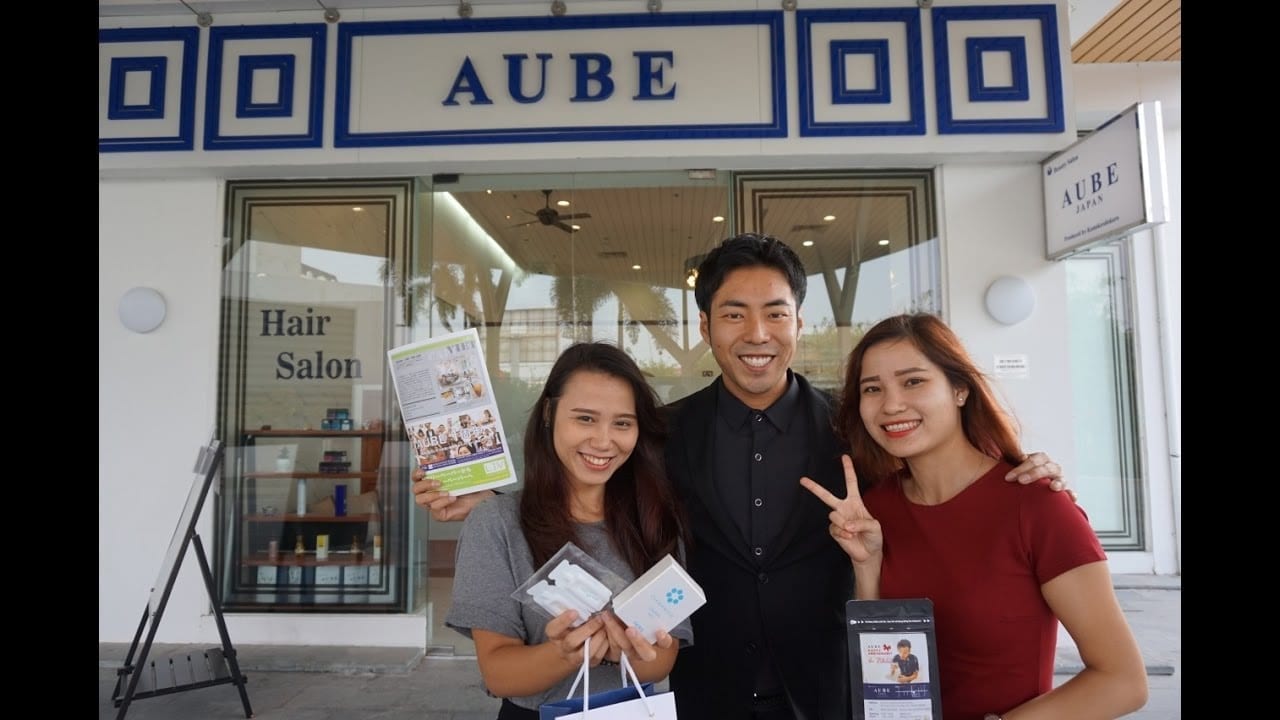
    Japanese beauty and retail group Aube is opening its first Australian store, bringing its unique brand of Japanese style to Sydney.

    Located in Sydney’s CBD, the retail space covers 75 square metres on the ground floor of 28 Market Street, a heritage building between Clarence Street and Kent Street.

    The property was leased by Ray White Commercial South Sydney’s John Skufris on behalf of Samka Pty Limited, with Aube represented by Tamaki Terada from Starts International.

    “The property offers excellent pedestrian traffic between Queen Victoria Building to Cockle Bay where many Sydneysiders have commuted this month for Vivid,” said John Skufris from Ray White Commercial, adding Aube has signed for a five-year term at $100,000 per annum.

    Known for its innovative equipment, treatments and state-of-the-art products,
    Aube Hair group operates 110 beauty hair salons in Japan as well as overseas, including nearby Singapore and Hawaii.

  • Japanese retailer Aeon to launch English version of AeonEshop.com

    Japanese retailer Aeon to launch English version of AeonEshop.com

    Since entering the e-commerce market in January 2017 with the site AeonEshop.com, the Japanese supermarket Aeon has quickly gained the attention of customers thanks to its unique selling point compared to other e-commerce websites – high quality Japanese goods. To better serve customers, the firm is about to release the English version of AeonEshop.com.

    Success thanks to uniqueness

    AeonEshop’s initial success stems from its products’ variety and quality. With a focus on selling high quality Japanese goods to meet customers’ demand, the site has quickly established its foothold and become customers’ favorite shopping destination, while numerous other online sales websites have to be stopped after a short time of operation.

    AeonEshop’s operation has been pretty successful. Its products are always ensured to be updated and diverse to meet Vietnamese consumers’ needs and high standards.

    Recently, the site has made a big step by expanding its reach to the northern provinces of Vietnam like Hanoi, Vinh Phuc, Bac Ninh, Hung Yen and Hai Phong to satisfy customers who enjoy using Japanese goods.

    Hanoi is usually considered a difficult market due to geographic conditions, people’s traditional consuming habits and shopping culture. However, for those who are fond of Japanese goods, this is good news and marks a new beginning in AeonEshop’s attempt to access the northern region, which has a lot of potential for development.

  • Japanese ‘lifestyle retailer’ opens first foreign brand store in North Korea

    Japanese ‘lifestyle retailer’ opens first foreign brand store in North Korea

    A four-year-old retail company which claims to be headquartered in Japan and has branches in South Korea and the United States recently opened the first ever foreign brand chain outlet in North Korea confirm. A branch of Miniso, a Uniqlo-style Japanese-Chinese low-cost retail brand that sells everything from umbrellas and humidifiers to computer mice and neckties recently opened on Pyongyang’s Ryomyong Street, a showcase development featuring over 3,000 new and refurbished apartments which was completed in April this year.

    But the firm’s claims to have stores in the United States and a headquarters in Japan – despite the majority of its factories and distribution network being based in China – could mean its presence breaches tightening unilateral sanctions from Washington and Tokyo against the North.

    North Korean state media is yet to report on the store, but sources in Pyongyang told that news of its existence is quickly spreading throughout the city.“It’s a huge hit with the younger Pyongyang crowd,” one source said, requesting anonymity due to the sensitivity of speaking to media about the issue. “All items are two or three dollars and it’s legit.”

    Observers familiar with the North Korean economy told on Tuesday that the branch’s presence was a significant development in light of Pyongyang’s traditionally sparse range of retail options.“I think the most notable thing is that it appears to be a foreign chain operating a modern, branded store in Pyongyang, there’s nothing else quite like that,” said Andray Abrahamian, an honorary fellow at Macquarie University.

    “As far as I know, their products are quite cheaply sold in most markets – cheap enough to be competitive in the DPRK,” he said. “I think the shop will be seen by Pyongyangites as modern and affordable: I’d bet it does quite well.”Benjamin Katzeff Silberstein, an associate scholar at the Foreign Policy Research Institute, and co-editor of North Korean Economy Watch, described the new store as a “really interesting development both from an economic policy point-of-view, and from a consumer’s perspective.”“In the first realm, it is a telling sign of how much the North Korean economic landscape really has changed, from a time when the opening of a pizza restaurant was considered a radical breakthrough, to a foreign retail chain opening up shop,” he said.“It also says something about the changed character of North Korean consumption, from goods like these being sold only on marketplaces sometimes in a semi-clandestine way, to them being offered front and center in a chain store in the capital of the revolution.”

    While the firm’s Japanese representatives claimed ignorance about the new Pyongyang branch during Tuesday calls, a January 2017 press release issued by the company’s Chinese office specifically confirmed the connection.“On 18 January, 2017, Japanese fast fashion designer brand MINISO took another step forward, signing strategic cooperation agreement with North Korea…” the notification said, describing the deal as having been made with the “North Korea Economic and Trade Department”.

    But while Miniso has come under fire both for appearing to be a Chinese company only feigning Japanese ownership for branding purposes, as well as for a low-level quality of advertising copy often associated with Chinese companies, it nevertheless continues to claim it is a Japanese company in media and press releases.“On the face of it Miniso’s activities in Pyongyang are not a violation of UN Security Council sanctions,” said Tristan Webb.“The more relevant issue here is unilateral sanctions: Miniso’s business operations in the DPRK bring it within the remit of Japanese and U.S. unilateral sanctions because, according to a press release apparently issued by Miniso, it has company headquarters in Japan, produces at least some of its products there, and also has a U.S. presence.

    ”Therefore, if Miniso hasn’t obtained permission for its DPRK operations from Japanese authorities, Webb said, then it may well be breaking the law.“Specifically, since Japan’s Cabinet decision of 7 April 2017 to renew unilateral sanctions which go back at least as far as 2013, Article 48 paragraph 3 of Japan’s Foreign Exchange and Foreign Trade Act prohibits any exports from Japan to the DPRK without METI approval, and Article 25 paragraph 6 prohibits any transactions involving the movement of goods between the DPRK and a third country without METI approval,” he said.“If Miniso does not have permission from METI to trade with the DPRK like this, then its only defense under Japanese law is if the goods are for humanitarian purposes: the claim could be made, but I wonder if METI would be persuaded by it.”

  • Porter Stand opens pop-up store in Osaka

    Porter Stand opens pop-up store in Osaka

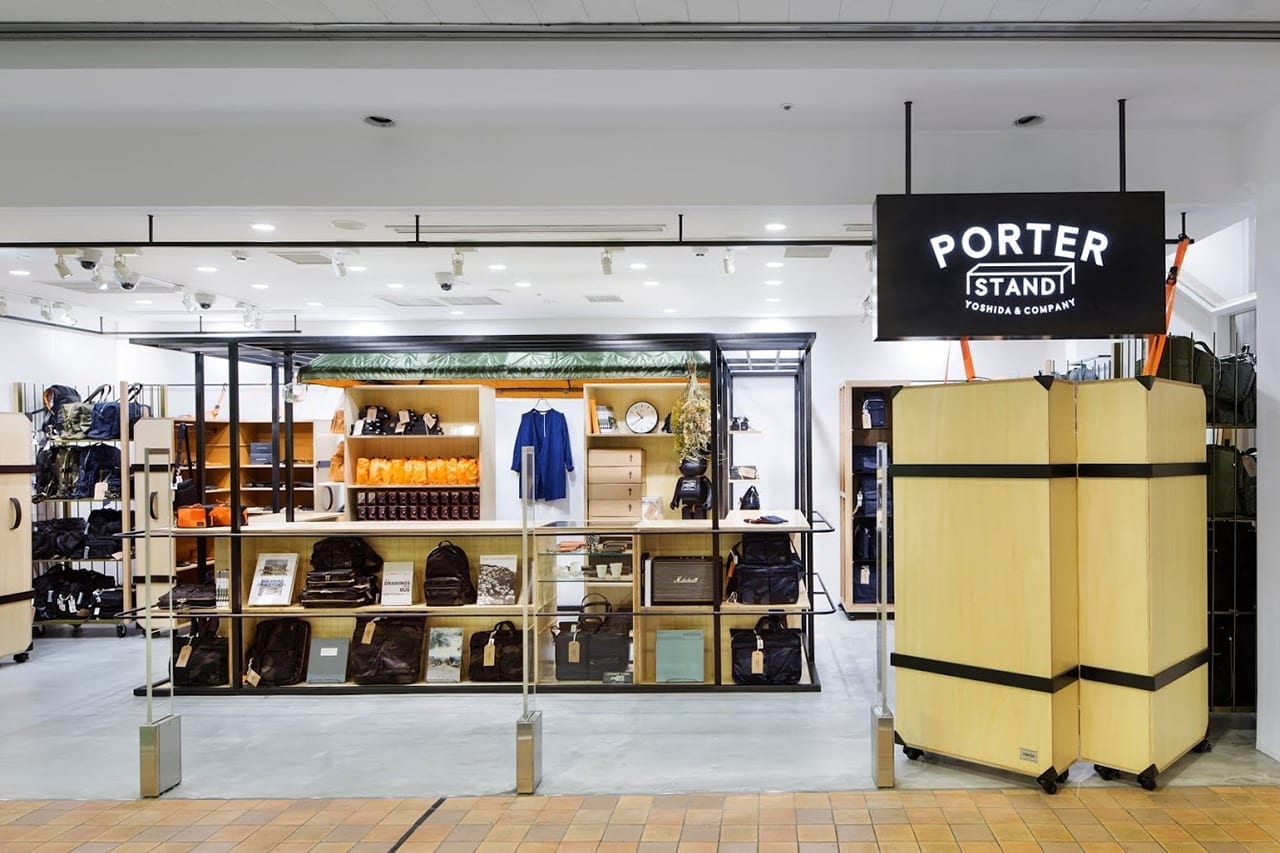
    Japan’s Porter Stand has opened up a temporary store in Osaka. The new Porter Stand pop-up will open for a limited-time at the Hankyu Umeda head office in Osaka. It is the first time the brand will open a store in the western Japan area. 

    Inside the new pop-up shop, customers will find Porter Stand’s classic series, including original items and collaborative pieces including the Orgabits × Porter Tote Bag, co-designed with organic cotton brand Orgabits. 

    The shop also stocks limited-edition items in the form of bags, wallets and pouches. Inside the store, the colourway is minimal and woody. Trunk type fixtures are placed around counters, matching the retailer’s concept of being a porter stand or “a baggage check room where many bags gather,” as per the brand’s website.

    Porter Stand is also located in Tokyo Station and Shinagawa Station, one of the busiest transportation hubs in Tokyo.

    Earlier in the year, the retailer took its concept to Paris in January, opening its ‘Trunk Store’ pop-up inside the Bows & Arrows store in the Marais area of the French capital.

    Owned by Yoshida & Co., a Japanese manufacturer of bags and accessories since 1935, Porter Stand sells the firm’s Made In Japan accessories line Porter and Porter Girl, as well as the Luggage Label line.

    The Porter Stand Osaka store will run from June 14 to 20.

  • SoftBank to trial 5G in Tokyo with ZTE

    SoftBank to trial 5G in Tokyo with ZTE

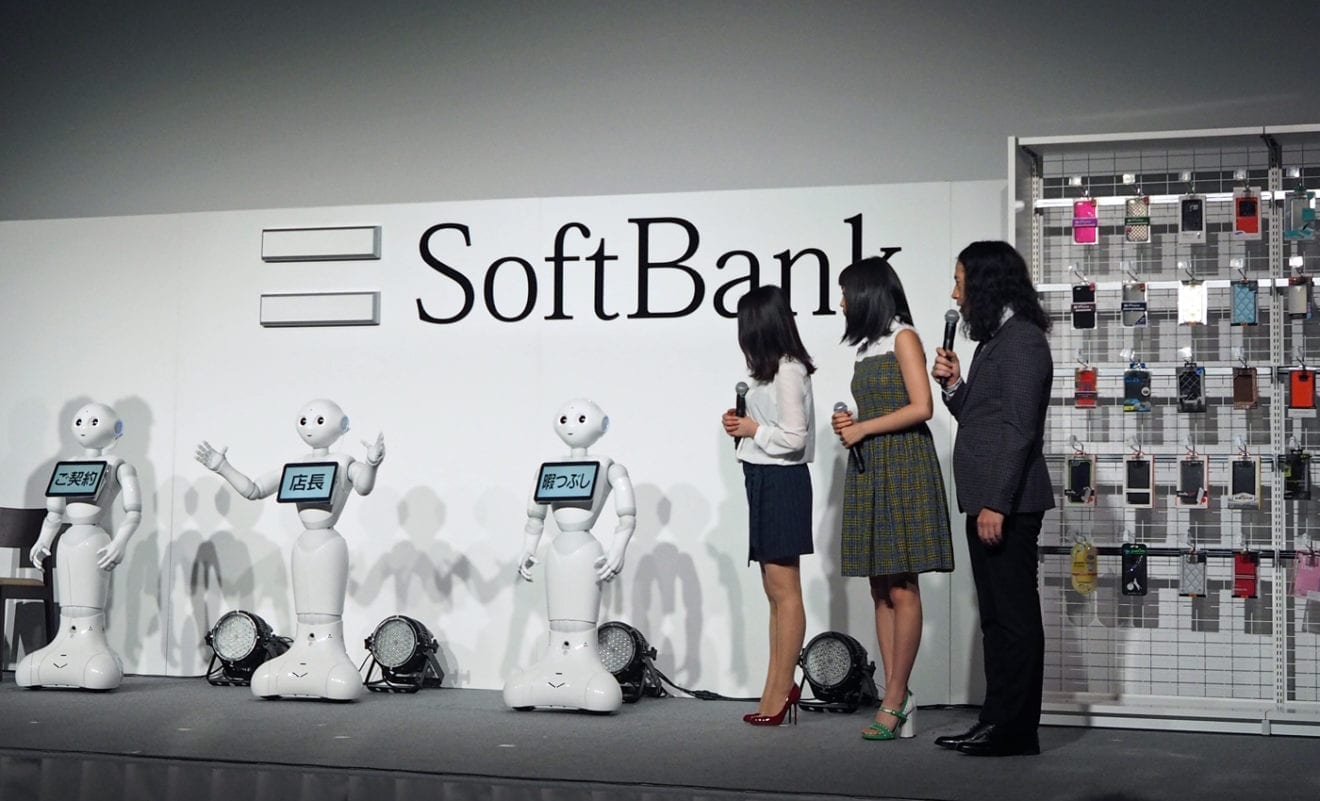
    Japan’s SoftBank and ZTE have teamed up to trial 5G over 4.5-GHz spectrum in metropolitan areas of Tokyo.

    SoftBank and ZTE will work to verify the performance of ZTE 5G end-to-end network equipment in sub 6-GHz spectrum under real-world conditions in a major, densely populated city.

    The two companies have been conducting joint R&D on foundational 5G technologies including massive MIMO (multiple-input multiple-output), and plan to further explore using the technology for 5G.

    “We have a long term partnership with SoftBank in key 5G technologies such as massive MIMO, and we are pleased to expand that work to accelerate 5G new radio readiness,” ZTE chief scientist Dr Xiang Jiying commented.

    “As a global leading provider of M-ICT mobile technologies, ZTE is making substantial investments in 5G and cooperating with industry partners to promote the maturity of the 5G ecosystem. We are confident that ZTE will be one of the first vendors to deliver end-to-end 5G solutions for our customers.”

  • De Beers Inks Japan Retail Grading Deal

    De Beers Inks Japan Retail Grading Deal

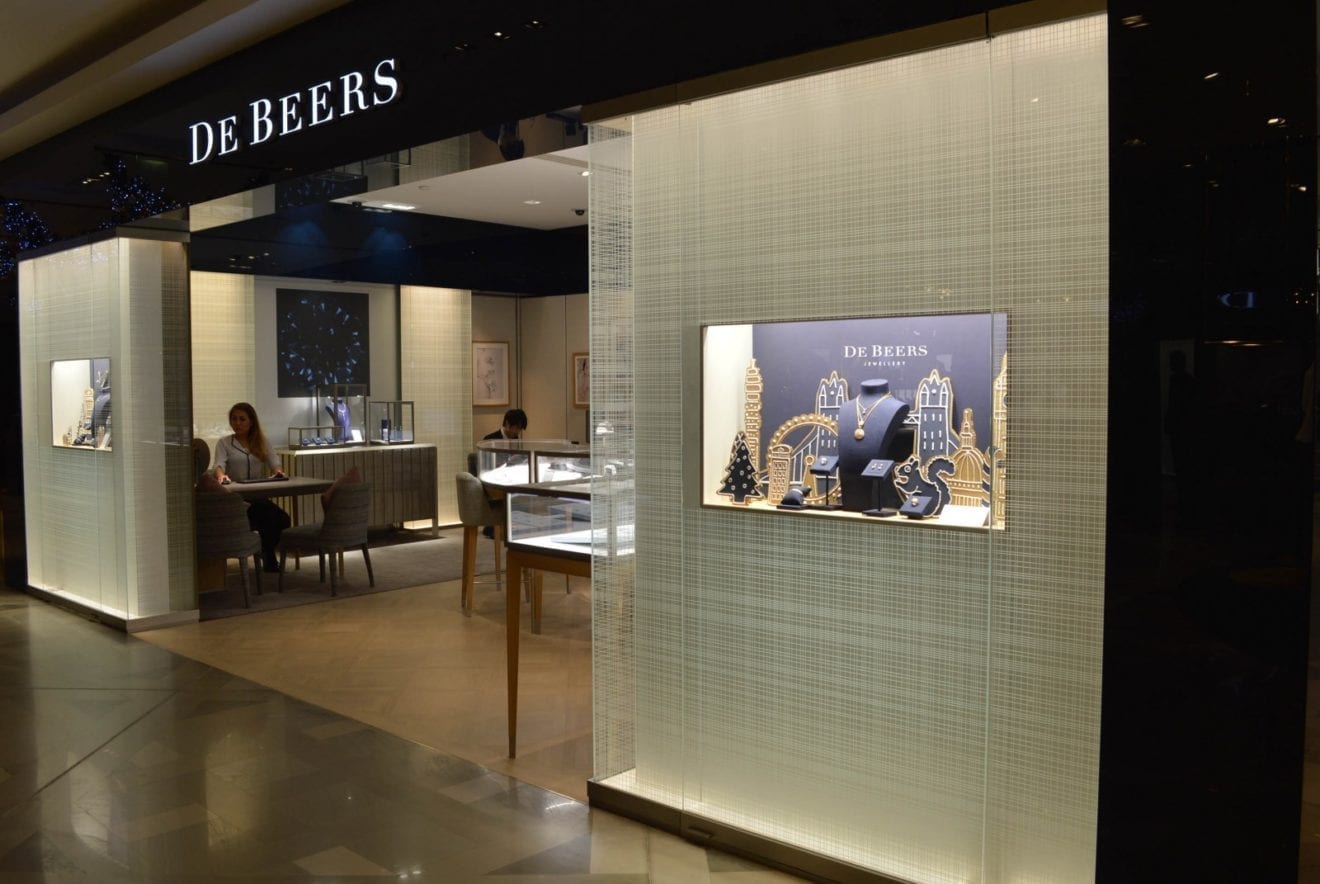
    The International Institute of Diamond Grading & Research (IIDGR) has partnered with Japanese bridal-jewelry retailer I-PRIMO to provide it with polished grading reports.

    The De Beers-owned laboratory will grade diamonds showcased at all 68 I-PRIMO stores in Japan, with the aim of boosting consumer confidence, IIDGR said last week. The reports will use De Beers’ “Ideal Optical Symmetry” technology, which provides a magnified image of a stone’s light performance. The companies plan to extend the program eventually to I-PRIMO’s stores in Taiwan, Hong Kong and Shanghai.

    IIDGR has previously entered partnerships with Singapore’s Soo Keep Group, as well as Hong Kong-based retailer Luk Fook, with which it issues co-branded grading reports.

    “Our ability to tailor bespoke solutions for our customers, backed by our innovative proprietary technologies, has been well-received and is supporting our growth in the region,” said IIDGR president Jonathan Kendall.

  • L&K expanding cosmetics presence in Asia

    L&K expanding cosmetics presence in Asia

    L&K Cosmetic CEO Kwon Yong-soo hopes to turn the company into one of Asia’s leading beauty brands by expanding its private label product lineup.

    Kwon, 50, started his business in 1993 as a Seoul-based cosmetics retailer, going through a series of ups and downs before launching the cosmetics retail and manufacturing brand in 2013.

    “My first online cosmetics site generated more than 15 billion won ($13.33 million) in annual sales back in the early 2000s when the internet shopping industry began to take shape,” he said in an interview at the firm’s Tokyo branch, Friday.

    But he said it was not long before he ended up with mounting debt due to burgeoning rivalry and the lack of private brand products.

    “As a retailer, I could not pile up enough margins by selling products from other companies,” he said. “But I was confident if we develop and manufacture our own products, the quality will be more trustworthy, helping us to generate more revenue.”

    He has experience running some cosmetics retail stores in one of Korea’s largest shopping districts, Myeong-dong in central Seoul.

    “Overseas travelers — mostly from China and Japan — are the major revenue source for most cosmetics stores there. But the Myeong-dong stores always come with risks — such as cross-border political conflict or the spread of infectious diseases,” he said.

    “For example, when the Middle East Respiratory Syndrome (MERS) hit Korea in 2015, we had to suffer deficits for almost half a year when foreign travelers were reluctant to visit the nation.”

    Such unexpected risks were the key reasons for his decision to tap into the Japanese market.

    L&K Japan was established in 2013 when Kwon turned his eyes on manufacturing private label products.

    The decision came as he has sought to create a stable and profitable source of income for the long term, which he thought would prevent the recurrence of his previous downfalls.

    “We launched our private mask sheet pack brand, Mask Diary, in 2014, with our Japanese subsidiary running three retail stores there,” he said. “Mask Diary will also be available in the Chinese market soon.”

    Other private products of the company include wrinkle essence, regenerative skin cream and UV protection BB cream.

    In a bid to seek new revenue areas, L&K Japan also opened an aesthetic skin massage therapy store in Tokyo’s commercial center of Shinjuku last week.

    “Demand for Korean beauty services and products remains strong in Japan,” he said. “That is why I decided to start the new business here.”

    The company also seeks to continue its winning streak in China. In 2015, L&K opened its online mall at the country’s largest online marketplace, Taobao. The Korean firm has since forged partnerships with such local internet titans as Alibaba and Alipay.

    “Our ultimate goal is to diversify our product lineup and enhance our brand image, so we can set foot in other territories such as North America and Europe,” he said. “Toward that end, L&K will continue to spare no efforts in cosmetics R&D.”

  • Digital Realty expands to Japan

    Digital Realty expands to Japan

    Digital Realty has inaugurated Digital Osaka 1, its first data center in Japan, a 93,000 square foot facility providing 7.6 megawatts of IT capacity.

    Digital Realty also announced the acquisition of an adjacent land parcel for the development of a Digital Osaka 2 data center. Upon completion, the Osaka connected campus will support up to 27 megawatts of additional IT capacity.

    “Digital Osaka 1 was fully leased prior to the official opening, a reflection of the strong demand in the Japanese market for Digital Realty’s comprehensive data center solutions,” Digital Realty managing director for Asia Pacific Edward Higase said.

    “The development of our Osaka connected campus will enable us to further expand our world-class data center platform and support our customers’ rapidly growing demand here and around the world.”

    Japan has become one of the most highly sought-after markets for cloud data center locations, according to a Canalys report.

    Strict data sovereignty laws and high customer demand are some of the factors pushing cloud service providers to seek data centers in Japan, where personal data is increasingly required to be stored in facilities that are physically located within the country.

    “With the addition of Osaka to our global connected campus network, customers will soon have new opportunities to connect, extend their reach and find new business opportunities across our global data center platform,” Digital Realty CEO A. William Stein added.

  • NTT may sell African operations

    NTT may sell African operations

    Japan’s NTT Corporation, parent company of NTT Communications, is reportedly considering the sale of its African operations and could seek around $800 million for the assets.

    NTT is evaluating a sale of the African operations it acquired through the takeover of Dimension Data in 2010, three people familiar with the matter.

    According to the sources one potential outcome of the process is an acquisition of NTT’s Johannesburg-based internet solutions business, a Dimension Data subsidiary, by MTN. The African mobile group is planning to expand into the enterprise internet services segment for further growth, and could use the acquisition to facilitate this expansion.

    Dimension Data’s management are also considering an offer to buy back the company and re-list it publicly, the sources added. NTT acquired Johannesburg-based Dimension Data for around $2.7 billion seven years ago.

    But in 2015 NTT put Dimension Data on notice over its poor performance after years of failing to generate a profit, indicating it may seek to divest the acquisition.

    A sale at this stage is far from guaranteed. The report states that no decision has yet been made on a sale, cites NTT’s MEA CEO as denying that NTT is looking to sell the business and adds that representatives from the Tokyo headquarters refrained from commenting.

  • Jimmy Choo Tokyo Omotesando Hills by Christian Lahoude Studio

    Jimmy Choo Tokyo Omotesando Hills by Christian Lahoude Studio

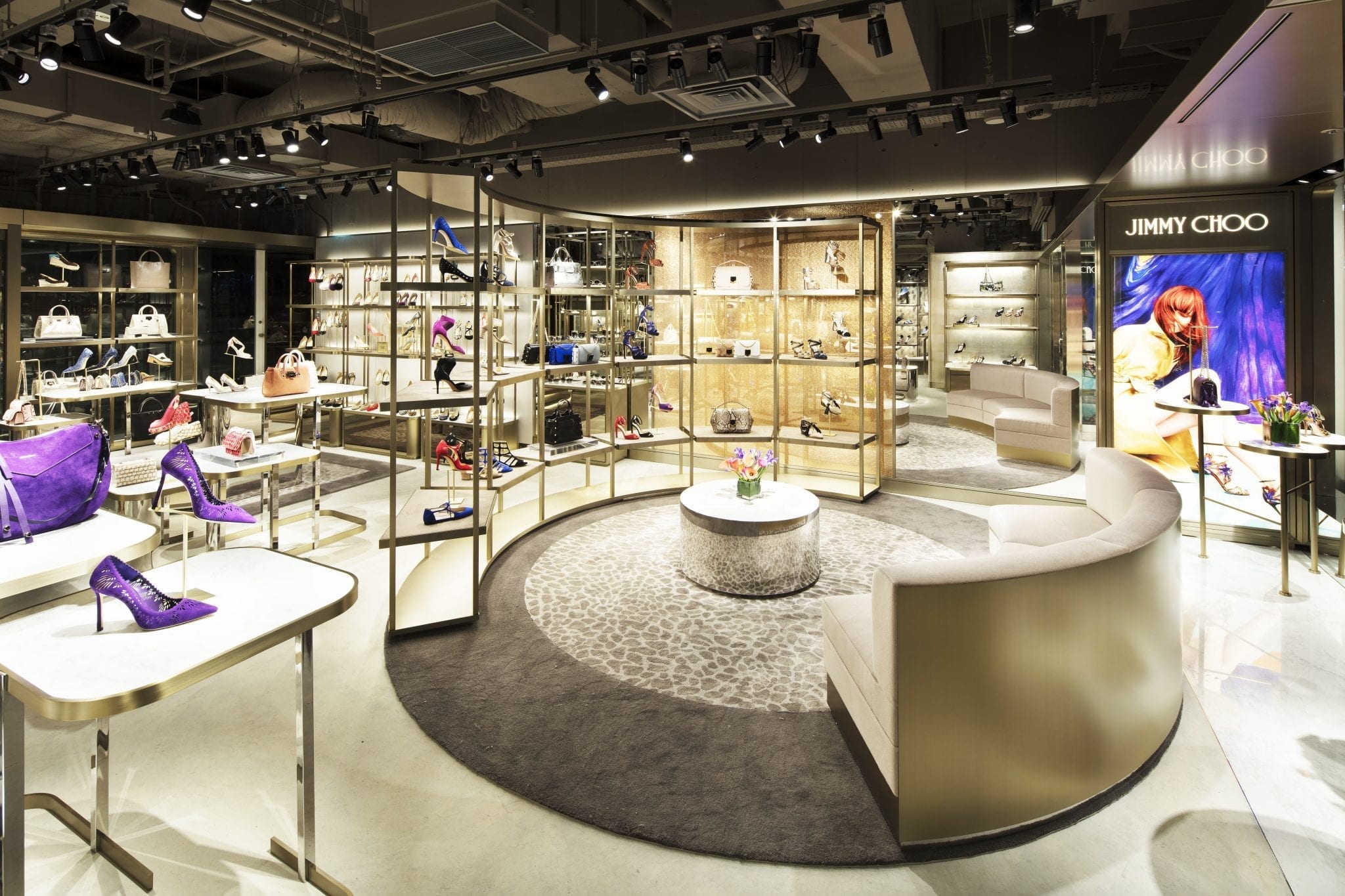
    Jimmy Choo’s 140 square-meter flagship dual gender store in Omotesando Hills Mall, Tokyo, Japan introduces its open floor plan with 2 grand facades. The main façade invites people from the street to enter the luxury store to experience a unique design combining industrial elements with the luxury materials Jimmy Choo is known for. Two entrances – one for men’s and one for women’s – from the mall’s interior are framed in gold metal and invite with lit signage and campaign images.

    Project manager Katharina Hoerath created a continuous flow between the multilevel spaces by designing dynamic curve inspired fixtures. The luxurious environment is warm and welcoming, featuring gold mesh panels on light washed walls juxtaposing the grey painted exposed ductwork ceiling. The marble floors with gold accents and light implemented in the steps are adorned with rich grey carpeting.

  • Bango enables new payment option for Amazon customers in Japan

    Bango enables new payment option for Amazon customers in Japan

    Bango, the leading mobile payments company, announces that it has enabled a new payment method for Amazon customers in Japan. Amazon customers with a KDDI or NTT DOCOMO mobile phone account can now pay for physical goods from Amazon.co.jp, by charging the cost to their mobile phone bill.

    Adding carrier billing as a payment option increases choice for customers in Japan, making it easy to complete purchases. Selecting this payment method enables instant purchase completion, without needing to register card details online. Bango technology ensures reliability, security and customer success when paying with carrier billing.

    Charging online payments to a phone bill is a widely-adopted payment method in Japan, where mobile usage is deeply embedded into business and culture. The Japanese market has pioneered carrier billing, offering it as a simple and secure payment method, enabling more consumers to purchase goods and services, online and in retail stores. It is a highly effective way to engage new customers and is popular with younger consumers.

    The payment method opened-up to purchase goods on Amazon.co.jp at the start of June, greatly increasing the range of products that can be charged to the phone bill by KDDI and NTT DOCOMO customers, who cover around 75% of all mobile subscribers in Japan (Telecommunications Carriers Association, Japan, 2016).

    Internet usage in Japan is mobile-first, with billions of dollars in online purchases charged to Japanese consumers’ phone bills,” said Ray Anderson, Bango CEO. “The Bango Platform ensures global retailers can offer these customers the trust and transparency they want from a payment method, and can deliver this at scale.

    To use this payment option, a KDDI or NTT DOCOMO subscriber simply adds carrier billing as a payment option in their Amazon.co.jp account and then purchases can be made from any device, with the cost charged to their post-paid phone bill.

  • Japan’s cellcos to invest over $45.5b in 5G

    Japan’s cellcos to invest over $45.5b in 5G

    Japan’s three major mobile operators plan to invest a combined 5 trillion yen ($45.5 billion) towards deploying 5G services nationwide, with NTT DoCoMo targeting nationwide coverage by as early as 2023.

    The Nikkei Asian Review reports that DoCoMo, KDDI and Softbank all plan to spend heavily on the commercialization of 5G, and are expected to work together on deployment to expedite the process.

    The report states that DoCoMo parent NTT has proposed to share 5G base stations with Softbank and KDDI to reduce the costs of a rollout. The two rivals are expected to agree, and particularly favor infrastructure sharing in urban areas.

    Meanwhile the three operators have a long-standing target of commercializing 5G in parts of Tokyo in time for the 2020 Tokyo Olympics and Paralympics. The operators also plan to start investing in 5G base station and related equipment as early as the 2019 financial year.

    The report notes that DoCoMo, KDDI and Softbank together spent over 6 trillion yen deploying 4G networks, but that the cost of the 5G migration will be less because some existing 4G base stations can be converted to 5G.

    The aggressive approach to rolling out 5G is reportedly motivated by slowing subscriber growth and growing competition from low-cost carriers.

  • YouAppi Strengthens Presence in Japan

    YouAppi Strengthens Presence in Japan

    YouAppi, a leading mobile growth marketing platform for premium mobile brands, today announced an integration with leading Supply Side Platforms for smartphone applications and web (SSPs) Ad Generation (Supership Inc.) and Geniee SSP (Geniee, Inc.). These leading Southeast Asian solutions serve publishers and digital marketers in Japan, Indonesia, Vietnam, Singapore, Thailand, and Malaysia.

    Initially, these partnerships will focus on Japanese inventory to support the growing needs of YouAppi’s recently announced Japanese office. Ultimately, these partnerships will also provide inventory for YouAppi’s global customers in Indonesia, Vietnam, Singapore, Thailand, and Malaysia.

    “By integrating with premium and respected SSPs including Ad Generation and Geniee SSP, YouAppi Japan will be able to offer our clients, both global and Japanese, better, more accurately targeted Japanese traffic,” said Yoshie Nakabayashi, the Country Manager for YouAppi Japan. “Following last year’s investment from Asian and Japanese investors, this announcement is the first in a series of partnerships from YouAppi Japan, which will establish YouAppi as a leading mobile growth solution in Japan.”

    Ad Generation and Geniee SSP will provide inventory for YouAppi clients interested in targeting Japan and Southeast Asia. These partnerships enable real-time optimization, maximization of fill rates to prevent inventory shortages, and monetization via a broad range of ad units across apps and via the mobile web.

    “We’re excited to be partnering with a pre-eminent mobile marketing solution like YouAppi,” said Mr. Yusuke Ono, Manager at Ad Technology Center/Advertising Business Unit, Supership Inc.

    “By partnering with a company that uses its proprietary technology based on AI and big data analysis, we will be able to maximize the revenue of publishers who are using Ad Generation.”


    Brand marketers seeking to acquire new users for their apps (or re-engage inactive users) will profit from a direct supply of traffic from Japan and other key Southeast Asian countries with global reach supporting a wide range of ad units, including rewarded videos and video interstitials. To ensure marketers acquire the right users at the optimal price, YouAppi’s optimizes performance based on Post-Install Events – the actions deemed valuable by the marketer that are taken after users install an app. This proprietary matching and predictive technology has been the cornerstone of YouAppi’s OneRun platform since the company’s founding.

    “These integrations with Ad Generation and Geniee SSP are the first of several announcements that will strengthen YouAppi’s offering for Southeast Asian clients as well as global marketers interested in targeting Southeast Asian users,” said Moshe Vaknin, CEO & co-founder, YouAppi. ”We announced our commitment to Asia with last year’s funding announcement and we’ll strengthen our presence in Southeast Asia by announcing new offices and more partnerships to support the strong growth YouAppi is experiencing in Asia.”

    By improving the mobile experience for publishers and marketers in Japan and Southeast Asia, YouAppi is experiencing strong global revenue growth driven by the company’s proprietary technology and OneRun platform. Proof of the company’s success can be found in the 16,600 campaigns for 470 leading advertisers via 115 billion monthly impressions served around the world over the last four years. YouAppi’s OneRun Platform offers one single point to streamline mobile media buying, combining the power of machine learning with the company’s proprietary predictive algorithms, which analyze over 250 terabytes of data every day.

  • Toyota working on ‘flying car’, Lexus luxury ‘yacht’

    Toyota working on ‘flying car’, Lexus luxury ‘yacht’

    A startup backed by the Japanese automaker has developed a test model that engineers hope will eventually develop into a tiny car with a driver who’ll be able to light the Olympic torch in the 2020 Tokyo games. For now, however, the project is a concoction of aluminum framing and eight propellers that barely gets off the ground and crashes after several seconds.

    Toyota has invested 42.5 million yen ($386,000) in startup Cartivator Resource Management to work on ” Sky Drive .” At a test flight Saturday in the city where the automaker is based, the gadgetry, about the size of a car and loaded with batteries and sensors, blew up a lot of sand and made a lot of noise.

    It managed to get up as high as eye level for several seconds before tilting and falling to the ground. Basketballs attached to its bottom served as cushions. After several attempts, the endeavor had to be canceled after one of the covers got detached from the frame and broke, damaging the propellers.

    The goal of Cartivator’s is to deliver a seamless transition from driving to flight, like the world of “Back to the Future,” said the project’s leader Tsubasa Nakamura.

    “I always loved planes and cars. And my longtime dream was to have a personal vehicle that can fly and go many places,” he told.

    The group is now working on a better design with the money from Toyota with the plan to have the first manned flight in 2019. No one has ridden on Sky Drive yet, or any drone, as that would be too dangerous.

    Still, dabbling in businesses other than cars is Toyota’s trademark. In recent years, it has been aggressively venturing into robotics and artificial intelligence, investing a billion dollars in a research and development company in Silicon Valley. It’s also working in Japan on using robotics to help the sick walk. It also just announced a five-year $35 million investment in its research center in Ann Arbor, Michigan, for autonomous and connected vehicle technologies.

    The idea that each generation must take up challenges is part of Toyota’s roots, said auto analyst Takaki Nakanishi.

    President Akio Toyoda’s great-grandfather Sakichi Toyoda started out developing the loom and then its automated improvements from the 1890s, before the company became an automaker. More recently, Toyota sees software and services as central to the auto industry, as cars become connected, start driving themselves and turn into lifestyle digital tools, Nakanishi said.

    As Toyota gets into the business of ecological vehicles, such as hybrids, electric cars and fuel cells, it’s turning into an energy company as well.

    “Toyota’s business is centered on mobility, anything that moves, including people, things, money, information, energy,” said Nakanishi.

    Toyota is traveling not only in the skies but also to the waters, although that still remains a tiny part of its sprawling empire.

    Toyota’s boat operations began in 1997. Toyota now offers four models and has sold a cumulative 845 boats. In contrast, Toyota sells about 10 million vehicles a year around the world.

    Reporters recently got a ride in Tokyo Bay of a Lexus luxury concept “yacht,” which runs on two gas engines. With a streamlined curvaceous design, inspired by a dolphin and evocative of a Lexus car, it’s being promised as a commercial product in the next few years.

    Designed for executives zipping through resort waters, it comes with fantasy-evoking features, like an anchor pulled in by a chain into a tiny door in the bow, which opens then closes mechanically.

    The engine, shiny like a chrome sculpture, is visible beneath the sheer floor surface. Shigeki Tomoyama, the executive in charge, said the boat was going for “a liberating effect.” A price was not given. Many Americans have already expressed interest, according to Toyota.

    The project started about two years ago under direct orders from Toyoda, who has with Tomoyama spearheaded Toyota’s Gazoo internet business, another non-auto business for Toyota.

    “He asked us to create a space that can work as a secret hiding place in the middle of the ocean,” Tomoyama said. “We went for the wow factor, which requires no words.”
  • LINE starts to attract luxury brands in Japan

    LINE starts to attract luxury brands in Japan

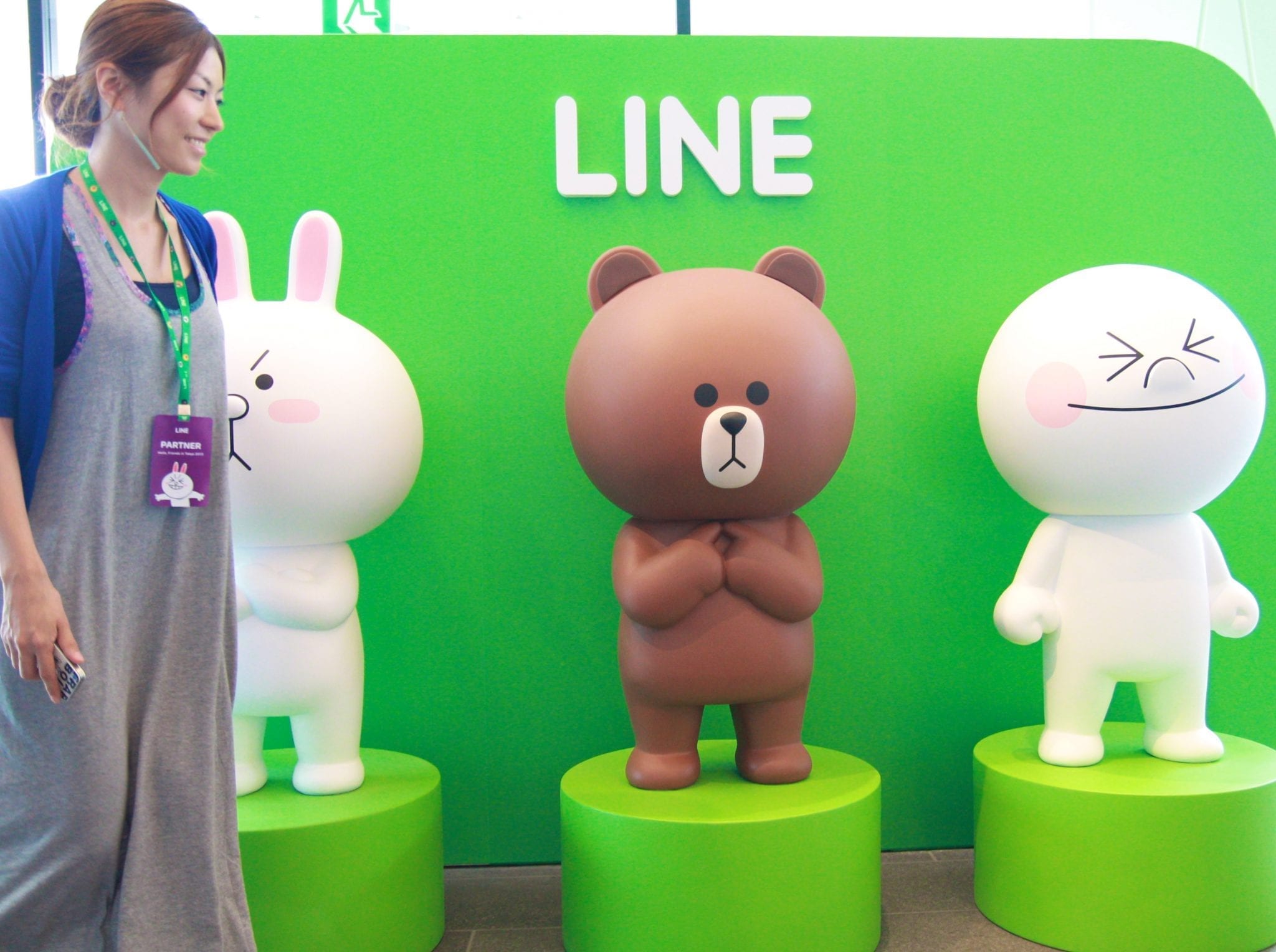
    While Japanese social media consumption patterns are similar to those in the United States with significant popularity of Facebook, Twitter, and YouTube, one local platform dominates all of them: LINE.

    Originally popularized as a phone replacement when telecommunications infrastructure was damaged by the Tōhoku earthquake in 2011, the mobile messaging app is used by 77% of all smartphone users in Japan—making LINE the top social media channel in the Japanese market by a wide margin, with a higher adoption rate by smartphone users than YouTube (55%), Facebook (41%), Twitter (30%), and Instagram (19%).

    In spite of LINE’s popularity, brands have been resistant to launch official accounts on the app due to the high cost of setting one up. The official account allows a brand to launch its own collection of the immensely popular LINE stickers and have larger numbers of followers than a small business LINE@ account, but costs at least $25,000 a month with price increases for a higher fan base and greater frequency of messaging. International fashion brands have been especially reluctant to join, with an adoption rate of only 32% among Index brands in the Luxury Fashion category as of May 2017.

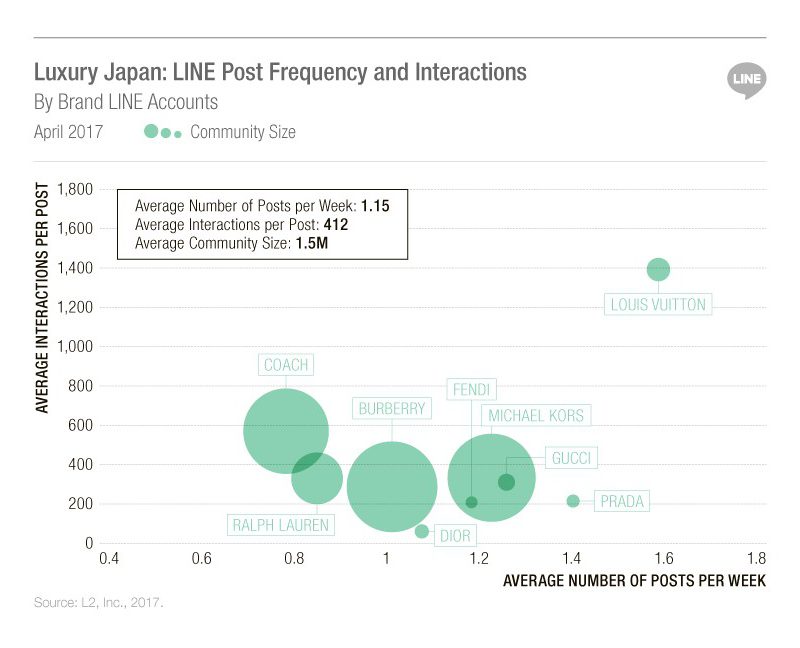
    There are signs that the luxury industry is taking more interest in the platform in 2017, as several major fashion labels have flocked to the app this year. LVMH brands Louis Vuitton, Fendi, and Dior launched official LINE accounts at the beginning of the year, and were joined by Prada in February.

    As these new brands launch on the platform, they’re forcing early adopters including Coach, Michael Kors, and Burberry to step up their game to keep up with luxury marketing innovations. In the months since its January launch, Louis Vuitton has surged ahead of competitors, generating 237% more interactions per post in April than the Index Luxury brand average, despite a lower follower base. Its engagement was boosted by offering exclusive LINE wallpapers, including a set of wallpapers inspired by its Cruise 2018 fashion show in Kyoto as well as a promotion offering a wallpaper download to followers who visited its official message menu eight days in a row.Luxury Japan Line News - Retail in Asia

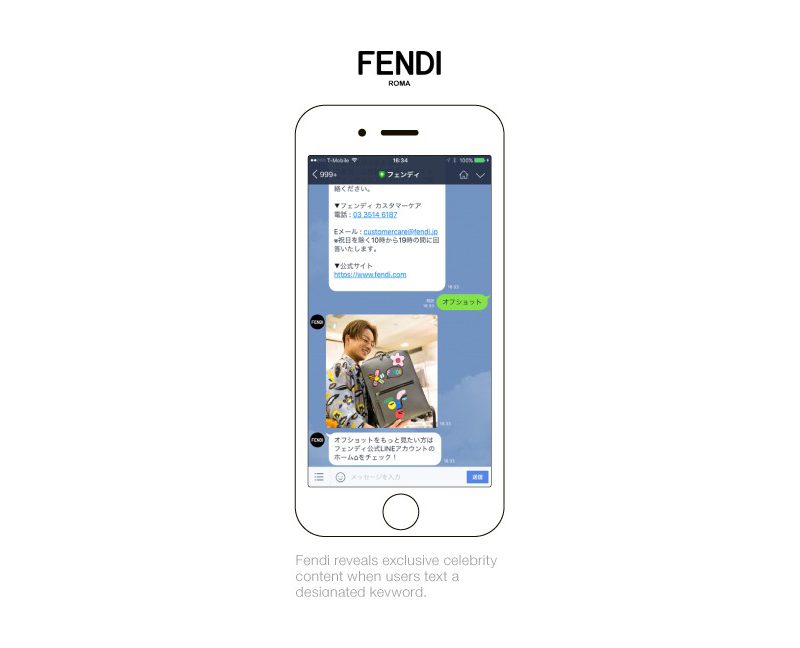
    Fendi is also investing in LINE with a strategy that understands the role of LINE as a closed one-to-one communication tool, where users expect brands to behave more like their friends and less like advertisers. The brand used chatbots to reveal exclusive celebrity content when users message a designated keyword, and utilized gamification for a virtual slot machine that offered the chance to win an original Fendi USB flash memory stick.

    Fendi News - Retail in Asia

    In addition to keeping up with competitors, brands should also monitor LINE’s growing list of services as additional opportunities to differentiate. Like China’s WeChat, LINE is expanding its functions in an attempt to become an operating system within itself. Its payment service LINE Pay now boasts 30 million users, while it also offers features such as livestreaming and social games. LINE launched LINE Business Connect in 2016, which allows brands to sync their customer databases and run one-to-one marketing campaigns.

    LINE also recently announced that early this summer, it will release a Siri-like AI digital assistant called Clova that will be available through its new Wave speaker, which is similar to the Amazon Echo. Unlike the social platforms focused on viral campaigns, LINE offers a wide range of opportunities to brands to implement valuable CRM, payment, and personal communications strategies to resonate with shoppers in Japan.

    source: L2