Tag: Japan

  • Japanese cosmetics brand Do-Best eyes Asian expansion

    Japanese cosmetics brand Do-Best eyes Asian expansion

    Japanese cosmetics brand Do-Best is looking at opportunities in the Philippines and broader Southeast Asian markets, including Indonesia.

    Do-Best CEO Daitaro Sugawara was in the Philippines for a group networking session organised by Security Bank and Japan’s Mitsubishi UFJ Financial Group. He was matched with executives from local retailers including Metro Retail and National Bookstore.

    Do-Best was founded 45 years ago to produce “high-quality, low-priced products” and is already exporting to Singapore, Hong Kong, Thailand and Taiwan.

    Sugawara says the company wants to tap into the fast-growing Asian markets with young consumers seeking low-cost cosmetics and beauty lines. Its products are already popular in Japan’s proliferation of 100 Yen shops and similar stores.

    “That’s why I was interested to have a meeting in the Philippines. My product is like my family, so I want Philippine distributors or retail stores to take care of our products.

    “I want to keep the original price as in Japan,” Sugawara said.

    Tadahiro Miyamoto, GM of BTMU’s Manila branch, says a lot of Japanese companies are now looking at the Philippine domestic market. “You should look at the shopping areas, you see a lot of Japanese products.”

    A large number of participants in the recent business-matching event were from the retail sector, agriculture and real estate.

  • Japanese firm unveils fingerprint payments in Indonesia

    Japanese firm unveils fingerprint payments in Indonesia

    Japanese tech company Liquid has launched a biometric payments service in Indonesia that operates at the point of sale.

    Currently the project is being tested at an enterprise level, with the service offered to the Salim group’s workforce of around 500,000.

    “We are looking forward to developing the next generation payment and business platform in Indonesia, which will contribute to changing people’s lifestyle and have a big business impact in Indonesia,” said Yasuhiro Kuda, CEO of Tokyo-based Liquid.

    Users of the service need to register their fingerprints and deposit money in advance. They can complete payments within three seconds with the system’s fingerprint readers, which have an error rate of one in a trillion, according to Liquid.

    The company will start registering users’ fingerprints this month and start installing fingerprint readers later this year at stores run by Salim, whose businesses range from food and car sales to convenience store operations.

    Liquid is currently providing such fingerprint payment services to tens of thousands users in some cities in Japan.

    The company is aiming to expand the business in Indonesia, counting on the economic growth of the most populous country in Southeast Asia.

  • Infinera to interconnect Yahoo Japan’s Osaka DCs

    Infinera to interconnect Yahoo Japan’s Osaka DCs

    Yahoo Japan has selected Infinera Cloud Xpress to interconnect its data centers in Osaka. The Cloud Xpress enables Yahoo Japan to interconnect data centers with hyper-scale density, operational simplicity and low power consumption.

    Working closely with Infinera partner Itochu Techno-Solutions, Yahoo Japan deployed the Infinera Cloud Xpress to address the need for more capacity. Itochu Techno-Solutions provides Yahoo Japan with IT and data center maintenance services. Yahoo Japan has now deployed the Cloud Xpress and Infinera XTM Series in its metro networks.

    With the Cloud Xpress, Yahoo Japan benefits from Infinera’s photonic integrated circuit technology which delivers a 500 Gbps super-channel over 150 kilometers without additional multiplexers and amplifiers.

    The Cloud Xpress incorporates Infinera’s Instant Bandwidth technology to allow customers to software-activate line-side bandwidth in 100 Gbps increments as and when needed.

    In addition, the Cloud Xpress is designed for plug-and-play installation with simplified provisioning and support for data center automation using open SDN APIs.

    “The compact design, ease of use and scalability of Cloud Xpress and the XTM Series stand out in metro data center interconnect applications where data center operators need to grow capacity rapidly while minimizing the cost of space and power,” Infinera VP of regional sales for APAC Andrew Bond-Webster said.

    The Infinera Cloud Xpress Family is designed to deliver cloud-optimized wavelength division multiplexing solutions to cloud service providers, internet content providers, Internet Exchange service providers, enterprises and other large-scale data center operators.

    The Cloud Xpress Family offers customers the choice of 10 GbE, 40 GbE and 100 GbE client interfaces to meet their specific requirements. Infinera recently introduced the Cloud Xpress 2 based on the Infinite Capacity Engine, scheduled to be available in the first quarter of 2017.

  • Ginza Six mall on track for April launch

    Ginza Six mall on track for April launch

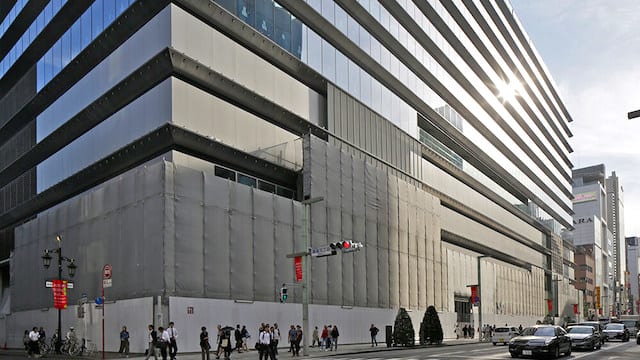
    Tokyo’s Ginza district is gearing up for the opening of its biggest shopping centre, Ginza Six mall.

    It occupies the site of the former Matsuzakaya Ginza department store, which closed in June 2013.

    Ginza Six mall has a total floor area of about 150,000 sqm over 19 floors. Its commercial offering takes up the second of six basement levels through to the sixth level above ground, as well as part of the 13th floor.

    Six high-end fashion brands, including Christian Dior, will fill units facing the main road, while the sixth floor will house Tsutaya Books and a food court.

    Aiming to attract the growing number of tourists visiting Japan, the mall plans to offer a tourist information centre on the ground floor containing an outlet of convenience store Lawson, which will sell souvenirs. There will also be a tourist bus terminal outside.

    From the seventh floor upward will be office space, with about 6000 sqm on each level, the largest floor area of its kind in Tokyo. Already 60 per cent of the office spaces are reserved, and up to 3000 people are expected to work in the offices.

    Ginza Six’s exterior design is inspired by “hisashi” canopies and “noren” store curtains, and the complex is scheduled to open on April 20.

  • Suicoke takes first step into Canada

    Suicoke takes first step into Canada

    Cult Japanese performance sandal brand Suicoke has entered the Canadian market.

    Its styles are being made available through its first-ever eCommerce website, Suicoke.ca, as well as in luxury Canadian retailers including Gravity Pope, Haven Shop, Holt Renfrew, Ssense and TNT. The brand is being distributed by wholesale multi-brand sales and distribution agency, Slavin Raphael.

    Canadian shoppers can now buy Suicoke’s latest collection, characterised by the brand’s signature details such as neoprene panels, adjustable nylon straps and Vibram Morflex soles.

    “Suicoke provides a fresh and innovative take on the sandal,” says Slavin Raphael partner Avi Raphael.

    Suicoke was established in 2006.

  • Ajinomoto becomes SEA Games sponsor as healthy eating promoter

    Ajinomoto becomes SEA Games sponsor as healthy eating promoter

    Japanese food company Ajinomoto has signed an agreement to become a top sponsor for the 29th Southeast Asian Games (SEA Games) and the 9th ASEAN Para Games in Kuala Lumpur this year.

    Ajinomoto Co., the parent company of Ajinomoto Vietnam, will provide support for both events as Platinum Sponsor. This is the first time a Japanese company has become an official sponsor for these regional events.

    Since 2003, Ajinomoto Co. has been working on the Victory Project®, which supports activities including sports nutritional guidance and amino acid conditioning for top-level athletes at international tournaments.

    The project provides top level athletes in Japan with Ajinomoto Group’s products and nutritional support through Kachimeshi® program, Ajinomoto’s sports nutrition meal program for building a winning physique.

    Being an official sponsor for the SEA Games and the ASEAN Para Games gives Ajinomoto Co. the opportunities to provide various supports through its subsidiaries in the Southeast Asian region based on a wealth of knowhow on nutritional support for athletes that the company has accumulated in Japan.

    Under the agreement, Ajinomoto Co. will provide products including seasonings, soups and coffee, depending on the cuisine of each country. It will also supply Amino VITAL®, the amino acid based product which aids in conditioning during extreme workouts, provides substantial muscle-building properties as a typical protein supplement and helps replenish energy during endurance sports.

    Ajinomoto Group representative inks deal making it the Platinum Sponsor of the 29th SEA Games and the 9th ASEAN Para Games.

    Ajinomoto Group representative inks deal making it the Platinum Sponsor of the 29th SEA Games and the 9th ASEAN Para Games.

    Founded in 1909, Ajinomoto is now operating in 28 countries and regions. It earned net sales of $9.87 billion in fiscal 2015.

    As a global manufacturer of high-quality seasonings, processed foods, beverages, amino acids, pharmaceuticals and specialty chemicals, Ajinomoto has for decades contributed to food culture and human health through wide-ranging application of amino acid technologies. Today, the company is becoming increasingly involved in finding solutions for improved food resources, human health and global sustainability.

    The company has established business bases in many Southeast Asian countries including Vietnam, Malaysia, Thailand, Indonesia, the Philippines and Singapore. The company has developed a consumer food business in these countries for many years, and thus has maintained a strong connection with the local food culture.

    Ajinomoto Co. established its Vietnam business in 1991. Ajinomoto Vietnam follows the mission of contributing to the growth of Vietnam, and to the happiness and good health of Vietnamese people through food culture and food resources development. The company specializes in “Delicious No.1” seasoning, food and beverage products.

    With the company’s specialty in food and health, Ajinomoto Vietnam is now taking initiatives in ASV, short for “Ajinomoto Group Creating Shared Value” which represents Ajinomoto Vietnam’s unchanging commitment to the creation of economic value and growth by contributing to the resolution of social issues, to create value together with the society and local communities.

    The company is now helping improve nutrition status for healthy living, develop food resources in agriculture sector and become model citizen in saving energy and natural resources.

    The Victory Meal as part of the Kachimeshi Program includes five dishes which provide nutritional balance with carbohydrates, protein and fiber.

    The Victory Meal as part of the Kachimeshi Program includes five dishes which provide nutritional balance with carbohydrates, protein and fiber.

    Under its School Meal Project, Ajinomoto Vietnam is collaborating with education and nutrition authorities to perform its social responsibility in the education sector. The project aims to improve the state of health among children and enhance their awareness of nutrition through primary school meals, to improve nutrition and health for the country’s next generation.

    The company’s expansion to the sports area aims to further its contribution to advances in food and health for general public as well as athletes in each country.

    The SEA Games and the ASEAN Para Games are held every two years to help forge strong regional cooperation, understanding and unity in the Southeast Asian community. They are the largest sports events in the region, attracting more than 600 million people each time.

    The 29th SEA Games and the 9th ASEAN Para Games are mainly held in Kuala Lumpur, Malaysia and hosted by Malaysia Organising Committee, with the participation of 11 nations: Vietnam, Brunei, Cambodia, East Timor, Indonesia, Laos, Malaysia, Myanmar, Philippines, Singapore, Thailand and Vietnam. The 29th SEA Games will take place between August 19-31, 2017 and the 9th ASEAN Para Games September 17-23.

  • Uniqlo Spain to launch in Barcelona

    Uniqlo Spain to launch in Barcelona

    Japanese casual apparel retailer Uniqlo Spain will open its first store in Barcelona this northern autumn.

    The move takes it into the home market of archrival Inditex, parent of the Zara brand, among others.

    On the Paseo de Gracia shopping streets, the store will have 1730 sqm of space across four levels and offer a full line-up of apparel under the brand’s LifeWear concept.

    “Barcelona is the perfect location to introduce our LifeWear concept – innovative, high-quality clothing that is universal in design and comfort, and made for everyone,” says parent company Fast Retailing chairman/president/CEO Tadashi Yanai.

    Since opening its first store in Japan in 1984, Uniqlo has built a network of more than 1800 outlets across 18 markets. Spain will be its sixth market in Europe following the UK (first store opened in 2001), France (2007), Russia (2010), Germany (2014) and Belgium (2015). It has 45 stores across the five markets.

  • Competition squeezes out Ookbee Mall

    Competition squeezes out Ookbee Mall

    Ookbee Mall Thailand will close its eCommerce business Ookbeemall.com next month, citing heavy competition.

    Launched in November 2015 with an initial investment of 150 million baht (US$4.2 million), Ookbee Mall is a JV between Japanese eCommerce investor Transcosmos and Thai e-book store Ookbee.

    Founder Natavudh Pungcharoenpong says the mall was launched as an experiment to see if the low customer-acquisition cost of digital business could convert to physical business. “It turns out it cannot.”

    He says eCommerce needs to be on a large scale, and global players use subsidised promotion strategies to acquire customers, which Ookbee cannot afford to do. “Our capital can be better used in other areas, mostly digital products.”

    Pungcharoenpong says the closing of the eCommerce business will not hurt Ookbee’s digital business (e-book store). “Many people in Bangkok panicked and called us to cancel their digital subscription, as they confuse eCommerce with our core business. Our core business is e-books, and will remain intact.”

    Ookbee Mall was established as a one-stop portal for books and magazines, beauty and cosmetics, and products sourced directly from Japan. Last month, Ookbee partnered with Chinese internet giant Tencent to build a user-generated digital content company, Ookbee U.

  • Japanese automakers consider leaving Vietnam due to weak supporting industries

    Japanese automakers consider leaving Vietnam due to weak supporting industries

    The companies are looking for bigger profits in nearby countries such as Thailand. Japanese automakers may be shifting their production away from Vietnam in the near future due to its poor supporting industries.

    Vietnam’s supporting industries have stood still for years and that might cause Japanese companies in the country to change their investment approach, said Takimoto Koji from the Japan External Trade Organization (JETRO), a Japanese government-related organization that works to promote trade and investment by Japanese businesses overseas.

    Several automakers intend to stop assembling cars in Vietnam and import whole cars from nearby countries like Indonesia, Malaysia and Thailand instead, Takimoto said.

    Car import tariffs between Southeast Asian neighbors are falling rapidly and the new approach will secure bigger profits, he said.

    Under a new free trade agreement among the 10 members of ASEAN, car import tariffs were cut from 50 percent to 40 percent last year and will go down to 30 percent next year before being scrapped in 2018.

    Japanese companies Toyota, Mazda, Honda and Suzuki are competing in Vietnam’s auto industry, which produces around 250,000 cars a year, a modest number compared to those in nearby countries such as Thailand’s two million cars.

    According to experts, an automobile production line only becomes profitable when it delivers more than 200,000 cars a year.

    Japan registered $2.58 billion in investments in Vietnam last year, accounting for more than 10 percent of the total FDI pledges made in the country and making it the second biggest foreign investor after South Korea, according to figures from the Ministry of Planning and Investment.

    Vietnam’s FDI inflow hit a record high of $15.8 billion in 2016.

  • Rakuten expands in-store payment system

    Rakuten expands in-store payment system

    Japanese e-commerce giant Rakuten is expanding its Rakuten Pay in-store payment system to support 14 major digital money brands and Android Pay.

    Rakuten Pay provides affiliated stores with a single payments service that supports a variety of payment methods, including credit cards, electronic money, and a smartphone app.

    It now accepts payments made through Rakuten Edy, the digital payment service provided by Rakuten Group, nine electronic money brands affiliated to transport organizations, including Suica, PASMO, and nanaco which can be used at Seven & i Holdings retailers across Japan; WAON,  the electronic money brand provided by the AEON Group (planned service launch in 2018), as well as QUICPay+TM  and iD*1.

    As the system supports Rakuten Edy, it is also compatible with Android Pay.

    In the future, Rakuten said it plans to make the service compatible with NFV payment services, such as Visa payWave, Mastercard Contactless, and J/Speedy, making it possible for affiliated stores to process payments made by foreign tourists visiting Japan as well.

    Moreover, the Rakuten Card & NFC Reader Elan will become available for purchase from March 6, 2017. This device is equipped with functions that enable payment through both credit cards and electronic money.

    For participating stores that already carry the older device and stores that wish to accept only major electronic money brands, the Rakuten NFC Reader Piu, an electronic money reader that is equipped with NFC functions, is scheduled to go on sale in the summer of 2017.

    Rakuten launched the Rakuten Pay in-store payment system, originally a settlement service for credit cards, in December 2012 to the Rakuten Ecosystem to brick-and-mortar stores. In October 2016, Rakuten began providing a smartphone app service through Rakuten Pay which utilizes the Rakuten Member ID.

  • Krungsri gears up for return of investors from Japan

    Krungsri gears up for return of investors from Japan

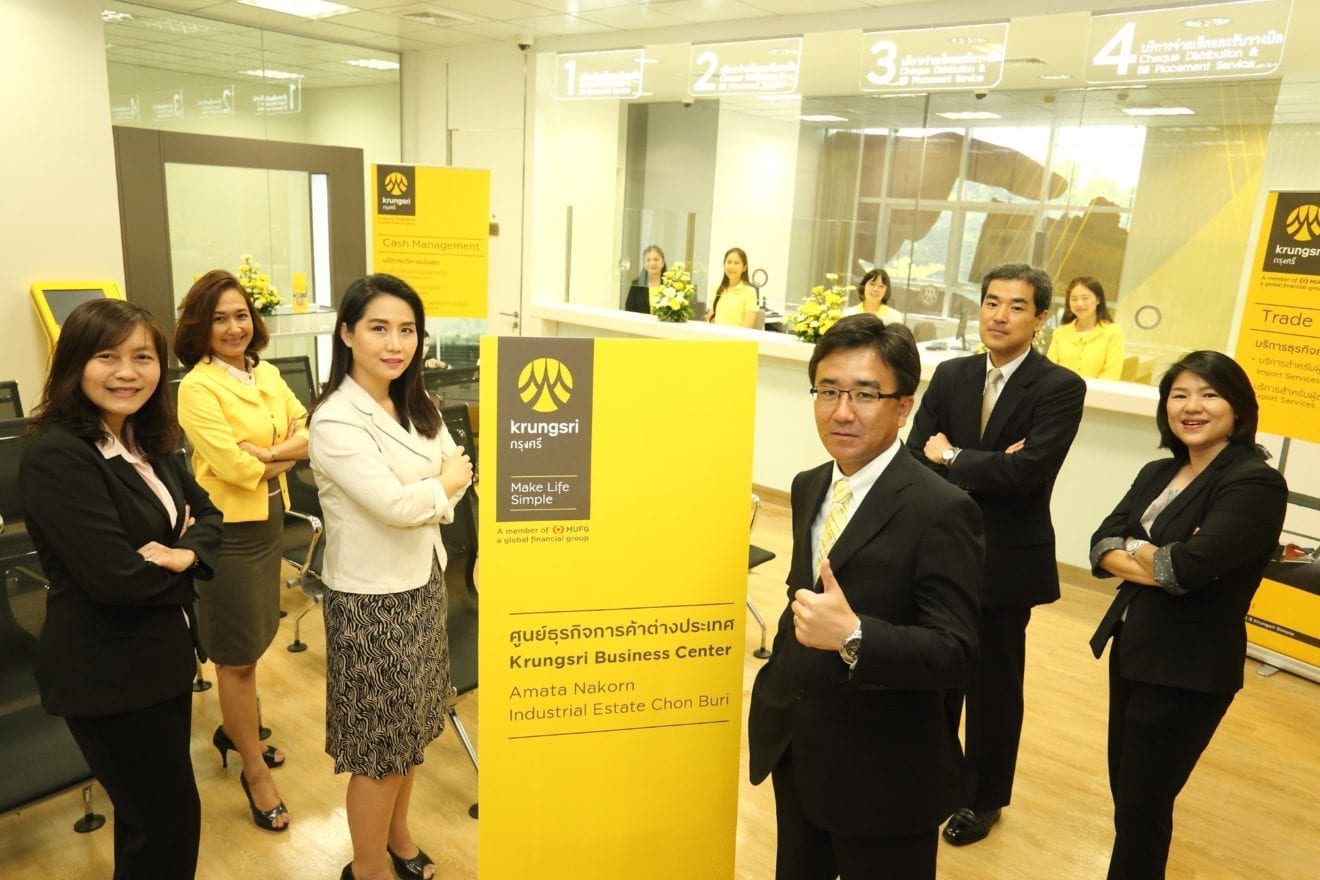
    Bank of Ayudhya, commonly known as Krungsri, is reinforcing its commercial banking after seeing a return by Japanese companies considering investment in the Kingdom in light of the government’s “Thailand 4.0” industrial goals.

    Pornsanong Tuchinda, head of commercial banking, said yesterday that healthcare and wellness and real estate were currently the priority focus of Japanese businesses looking to invest in Thailand again since the government announced the Thailand 4.0 industrial-development policy.

    The actual level of new Japanese investment will be seen when these companies have a clear picture of development plans under the policy, he added.

    Japanese companies invested in Thailand have been a crucial part of the customer base for Krungsri’s commercial-banking operations since 2015, reflecting the successful integration between the Thai bank and BTMU (Bank of Tokyo-Mitsubishi UFJ) Bangkok Branch, which is part of Japan’s MUFG (Mitsubishi UFJ Financial Group), he said.

    Pornsanong said Japanese investors were currently eyeing healthcare and wellness business in Thailand because of this country’s increasingly “greying” population.

    Japan has expertise in healthcare and wellness in light of its own ageing population, while real estate is another business that investors are keen on because of its being tourism-related.

    The bank will offer investors total financial solutions, catering to corporate customers that may not only require financing but also financial advice and business-matching services, he said, adding that Krungsri would therefore focus more on how to deliver a package of solutions to such clients.

    A number of medium-sized Thai hospitals also are interested in expanding their healthcare and wellness business, presenting a further opportunity for the bank’s commercial-banking arm, he said.

    Last year, the unit enjoyed loan growth of 11 per cent, with outstanding lending rising to Bt642 billion thanks to the financing of major deals involving Siam City Cement, which acquired a cement business in Sri Lanka; Central Group, which purchased a retail business in Vietnam; and Thai Union Group, which acquired a business in the European Union, Pornsanong said.

    Excluding those large deals, loan growth was 7-8 per cent.

    This year, while the bank’s commercial-banking arm targets 5-per-cent growth due to fewer big deals on the horizon, it should still outpace its peers thanks to the recovering Thai economy and Thailand 4.0-related business activity, he predicted.

    Moreover, with the unit’s customer base sufficiently large for the provision of improved total solutions, it wants to give more importance to the quality of customers and offer value-added solutions to its current clients, he explained.

    Commercial banking at Krungsri covers corporate customers with annual sales revenue of more than Bt1 billion, and small and medium-sized enterprises with annual revenue below that level.

    Based on the loan-growth target of 5 per cent, most lending this year will be contributed by medium-sized enterprises, a segment in which the bank has witnessed lending demand, he said.

    “These firms [mid-sized enterprises] are more confident in the Thai economy, and many of them are in retail, where there is purchasing power but consumer sentiment |has not yet returned. If sentiment improves, purchasing power will be released and SMEs will benefit.

    “On the other hand, most corporate customers are not requiring new lending at present, as they first want to see how the global trade situation settles,” the commercial-banking head said.


  • Mobile growth marketer expands to Japan

    Mobile growth marketer expands to Japan

    Growth marketer platform YouAppi is expanding into the Japanese market.

    With the official opening of YouAppi Japan, the company will be able to help Japan-based CMOs and those targeting the country to acquire users over online channels and identify fraud better.

    The company, founded in 2012, uses its OneRun platform for a variety of marketing functions for its clients, from discovery to user acquisition on video, social and other channels through app re-engagement.

    The platform features advanced anti-fraud functionality to help CMOs reduce their risks, and offers a single point for streamlining mobile media buying and combining machine learning with the company’s proprietary predictive algorithms that reportedly analyze over 250 terabytes of data every day.

    With Yoshie Nakabayashi at the helm as the country manager of YouAppi Japan, the company aims to help leading brands, agencies and publishers in Japan to improve their mobile experience.

    “A year after closing our B Funding Round which was earmarked for Asia, I’m excited that we delivered nearly 600% growth in the region in 2016, and are now opening a strategically important office in Tokyo,” YouAppi CEO and co-founder Moshe Vaknin said.

    According to the company, it ran 15,000 campaigns for 450 leading advertisers with 100 billion monthly impressions served around the world over the last four years.

  • Hermes sales rise 7 per cent in Asia

    Hermes sales rise 7 per cent in Asia

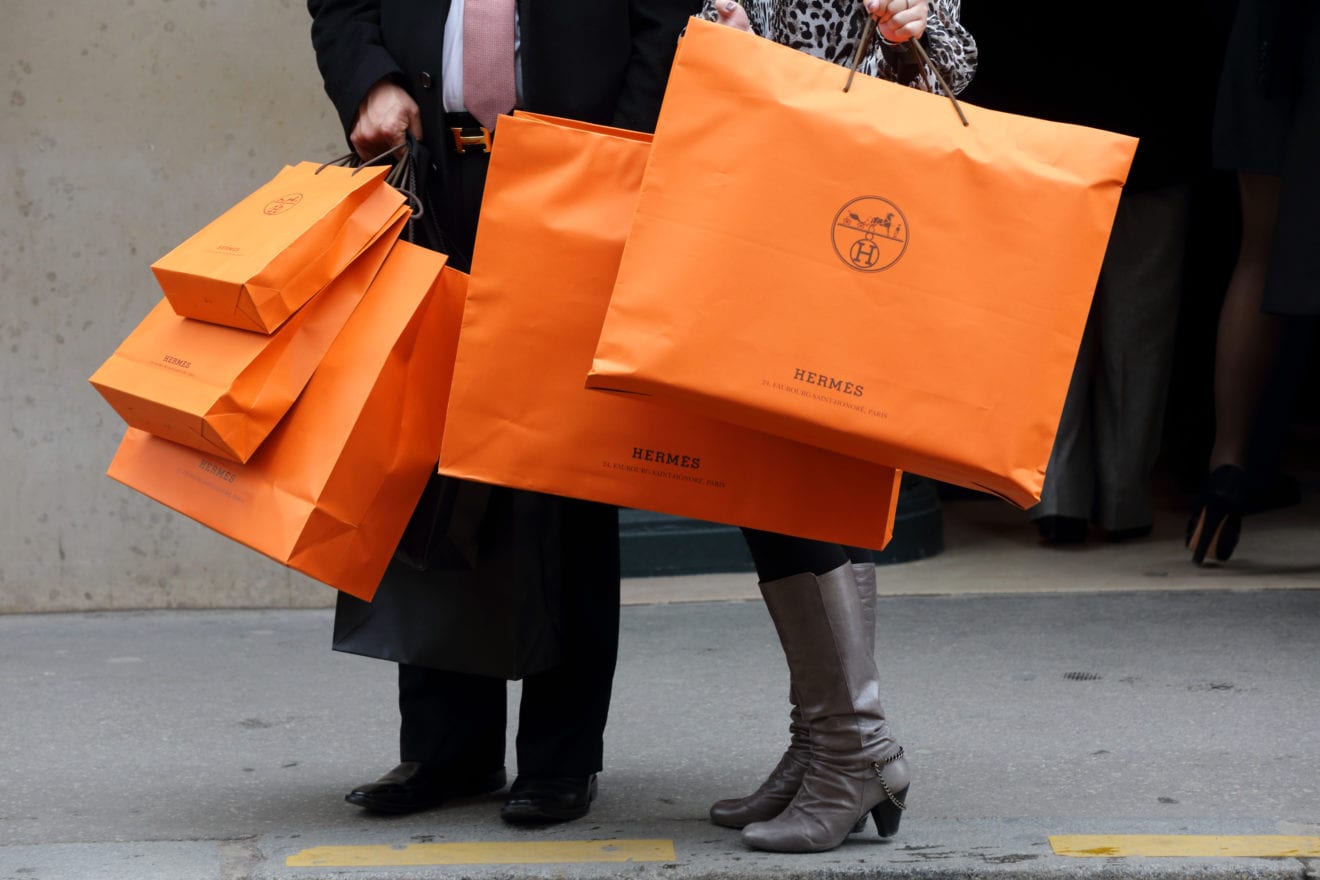
    Hermes sales rose 8 per cent last year for French high-fashion goods manufacturer Hermes International.

    In what it describes as a “difficult context”, the group’s consolidated revenue reached €5202 million (US$5.5 billion).

    Sales growth was sustained in the fourth quarter (up 8 per cent at current exchange rates, and 7 per cent at constant exchange rates), with all geographies progressing.

    Hermes continued to improve the quality of its distribution network, with four store openings and renovation and extension works.

    Japan (up 9 per cent) performed well thanks to its selective distribution network, despite the strengthening of the yen and a high comparison basis.

    Asia excluding Japan (up 7 per cent) pursued growth, particularly with extensions of the Liat Towers and Takashimaya stores in Singapore and store openings in Macau, at Hong Kong Airport and in Chongqing in China.

    In Mainland China, the group says it continued to develop even though the context remains challenging in Hong Kong and Macau.

    Growth over the year was driven by leather goods and saddlery products, which continue to be the mainstay of the group. Otherwise, sales benefitted from a positive momentum at year end in such sectors as silk and the ready-to-wear and accessories division.

    Growth “remarkable”

    Hermes says the 14 per cent growth in leather goods and saddlery was remarkable, thanks to the success of the collections and the diversity of models, particularly the Constance, Halzan and Lindy bags alongside the Birkin and Kelly.

    The ready-to-wear and accessories division was stable over the year, posting a 4 per cent increase in the fourth quarter driven by the latest women’s collections, particularly shoes.

    While sales eased 1 per cent for the silk and textiles business line in the fourth quarter, Hermes says it was a good result in the face of being penalised by events in Europe and slowing sales in Greater China during the first half of the year.

    A 9 per cent growth in sales of perfumes was driven by the success of Terre d’Hermes, the launch of Galop d’Hermes and the latest creations such as colognes Eau de Neroli Dore and Eau de Rhubarbe Ecarlate.

    Down 3 per cent, the watches division was penalised by a still challenging market and a high comparison basis at year end. Sales rose 2 per cent for other Hermes business lines, encompassing jewellery, Art of Living and Hermes Table Arts.

    Meanwhile, Hermes is pursuing its long-term development strategy based on creativity. This year it is celebrating the “Meaning of Objects”.

  • Doutor Coffee arrives in Malaysia

    Doutor Coffee arrives in Malaysia

    Japan’s Doutor Coffee has opened three outlets in Malaysia – in Aeon Tebrau (Johor Baru), Sunway Velocity Mall in Kuala Lumpur and Aeon Bukit Tinggi.

    This follows other international expansion in Singapore, South Korea and Taiwan.

    Doutor Coffee was founded in 1980 by Toriba Hiromichi with a 9 sqm outlet in Tokyo’s Harajuku district. There are now more than 900 outlets in Japan.
    MD Yasuhiro Yamamoto says Doutor decided to open in Malaysia because it had found a good partner in the Texchem Group, which owns 106 Sushi King outlets in Malaysia. More outlets are being planned, with some to open next year.
    All will follow the Doutor Japan formula with a strong focus on coffee and freshly made food.

    “We have good-quality black coffee, espresso and cappuccino, and the food will be a Japanese fusion concept,” says Yamamoto.
    He says the secret to the brand’s success lies in the quality of its beans and the roasting.

    Doutor Coffee master roaster Masahiro Kanno says the beans are sourced from more than 10,000 plantations all over the world, including its own two plantations in Kona, Hawaii.
    Kanno personally goes to select the beans, sometimes buying in bulk and sometimes buying just a few, depending on whether they will be featured as single-origin roasts or blends. The beans are flame-roasted.

  • Japan Airlines to launch NYC-Tokyo Haneda flights

    Japan Airlines to launch NYC-Tokyo Haneda flights

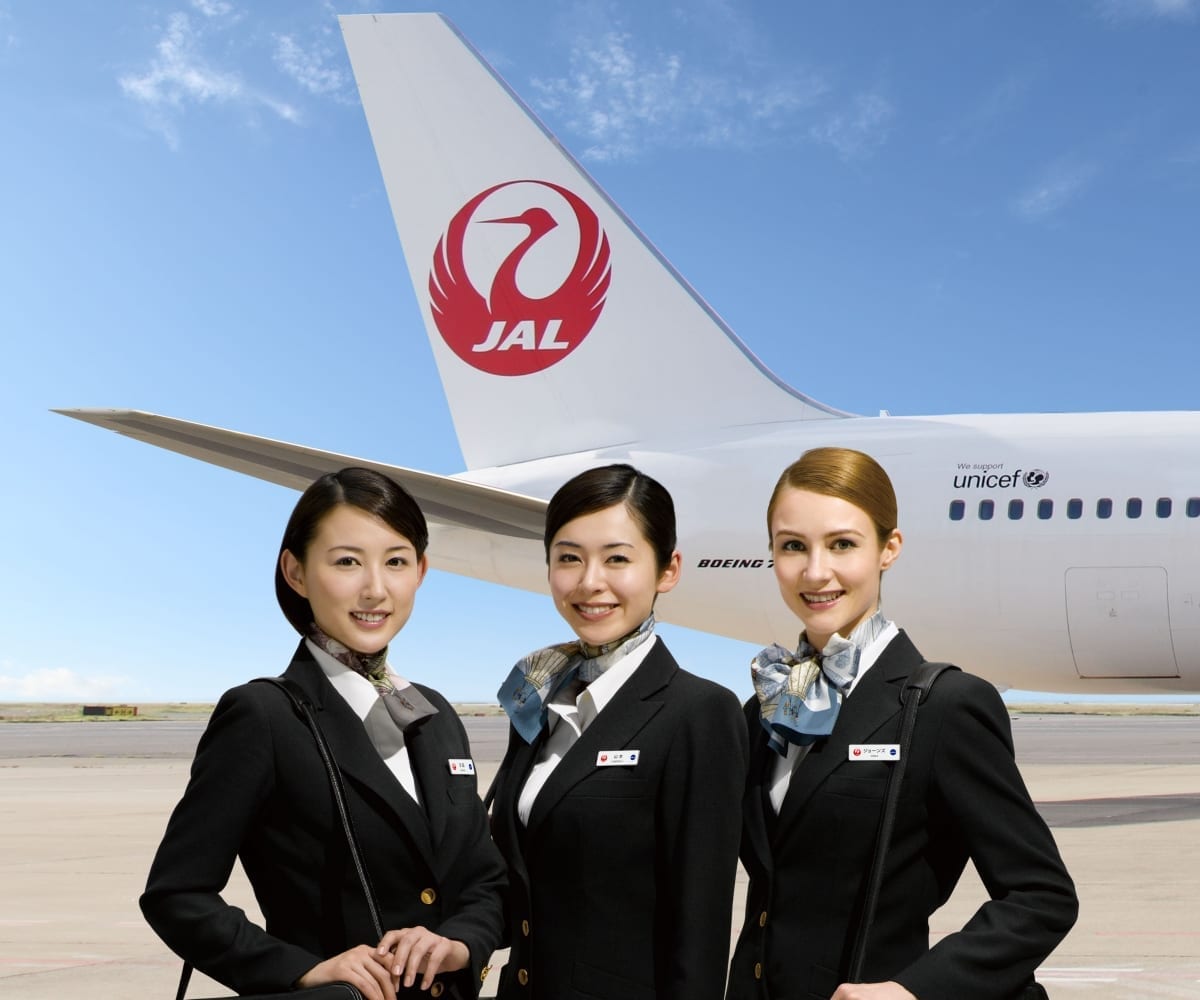
    Japan Airlines will add nonstop service between New York JFK and Tokyo’s close-to-downtown Haneda Airport, the carrier announced Thursday.

    The new route – which will be in addition to JAL’s existing service between JFK and Tokyo’s more-distant Narita airport – will launch April 1. The airline will fly one daily round-trip flight on the route using Boeing 777-300ER aircraft.

    Narita is Tokyo’s primary international gateway while Haneda’s route map is more heavily tilted toward regional flights. For many travelers, Haneda is the preferred Tokyo airport because of its proximity to the city.

    JAL was able to add the route at slot-controlled Haneda airport by freeing up slots from another route. To make that happen, JAL’s Honolulu-Haneda route will be shifted to Narita, according to the airline.

    Meanwhile, JAL also said it would expand capacity on its existing flights between New York JFK and Tokyo Narita. The airline will do that by switching to 244-seat Boeing 777-300ER aircraft, providing an 83-seat boost from the 161-seat Boeing 787-8 “Dreamliner” the carrier currently flies on the route.

    The switch to the 777-300ER also will allow JAL to offer a first-class product between JFK and Narita. The airline’s 777-300ERs seat eight in first class, 49 in business class, 40 in premium economy and 147 in standard coach. JAL’s 787-8s are configured with 38 business class seats, but they do not have a first-class cabin. The 787-8s also seat 35 in premium economy and 88 in standard coach.