Tag: Japan

  • CIR finds growth in Chinese travel to Japan and Thailand

    CIR finds growth in Chinese travel to Japan and Thailand

    Chinese outbound travel tilted in favour of destinations in Japan and Thailand in the 12 months to October 2016, according to CiR Business Lounge – creating more sales opportunities for duty-free and travel retailers in key airport locations in these markets.

    New research on the Chinese passenger by duty-free and travel-retail analyst and researcher, Counter Intelligence Retail, pointed to booming growth at Tokyo Haneda airport (HND) of +140% and +96% at Bangkok’s Don Mueang airport (DMK)) – both secondary airports to the two capital cities’ main hubs.

    Haneda’s triple-digit growth enabled the airport to break the one million barrier for international Chinese arrivals, while Don Mueang reached 1.18 million.

    The main hubs of Tokyo Narita (NRT) and Bangkok Suvarnabhumi (BKK) saw respective growth of +1.6% and +17.9%. While their growth was of a lesser scale, these bigger airports handled more absolute numbers of Chinese passengers than their smaller counterparts.

    Other strong airports for Chinese travel among the top 10 destinations were Japan’s Osaka (KIX) at +18.7%, while traffic to Singapore Changi (+17%) and Seoul Incheon in South Korea at (+16.2%) saw a return to growth. South Korea, traditionally strong market for Chinese visitors, suffered dramatically after the MERS virus outbreak in May 2015 but traffic to Incheon has recovered.

    There was less favourable news for duty-free and travel retailers in Taiwan and Hong Kong. Taipei’s Taoyuan International airport saw its Chinese traffic decline by -0.8% to 2.7 million international passengers in the 12 months to October 2016, while Hong Kong – the biggest hub for Chinese travel – was sluggish at +2.3% to 4.5 million.

    CIR president Garry Stasiulevicuis said: “From our CIR Business Lounge data it is clear that Japan and Thailand are the clear winners in the drive for Chinese passengers. The more settled political situation in Thailand has seen Chinese passengers return to the country in droves while Japan’s relaxation of visa regulations (in January 2015) has benefited Chinese travel to Japan.”

    Tokyo Haneda’s astonishing growth can be specifically attributed to the commencement of flights from three new routes out of China, coupled with huge uplifts in seat capacities by airlines already operating flights on this route.

    “It is worth noting that HND’s Chinese traffic boom has come despite the Japanese yen’s strong gains against the Chinese yuan from August 2015 to October 2016,” adds Stasiulevicuis. “Since November, however, the yen has fallen back somewhat which may open the door to even more Chinese travel to Japan.”

    The report is part of a new series from CiR on Chinese passenger shopper behaviours and traffic trends, including forecasts, which complements the newly available Chinese Shopper Tracker.
  • AirAsia X offers Honolulu-Osaka introductory one-way fare of $99

    AirAsia X offers Honolulu-Osaka introductory one-way fare of $99

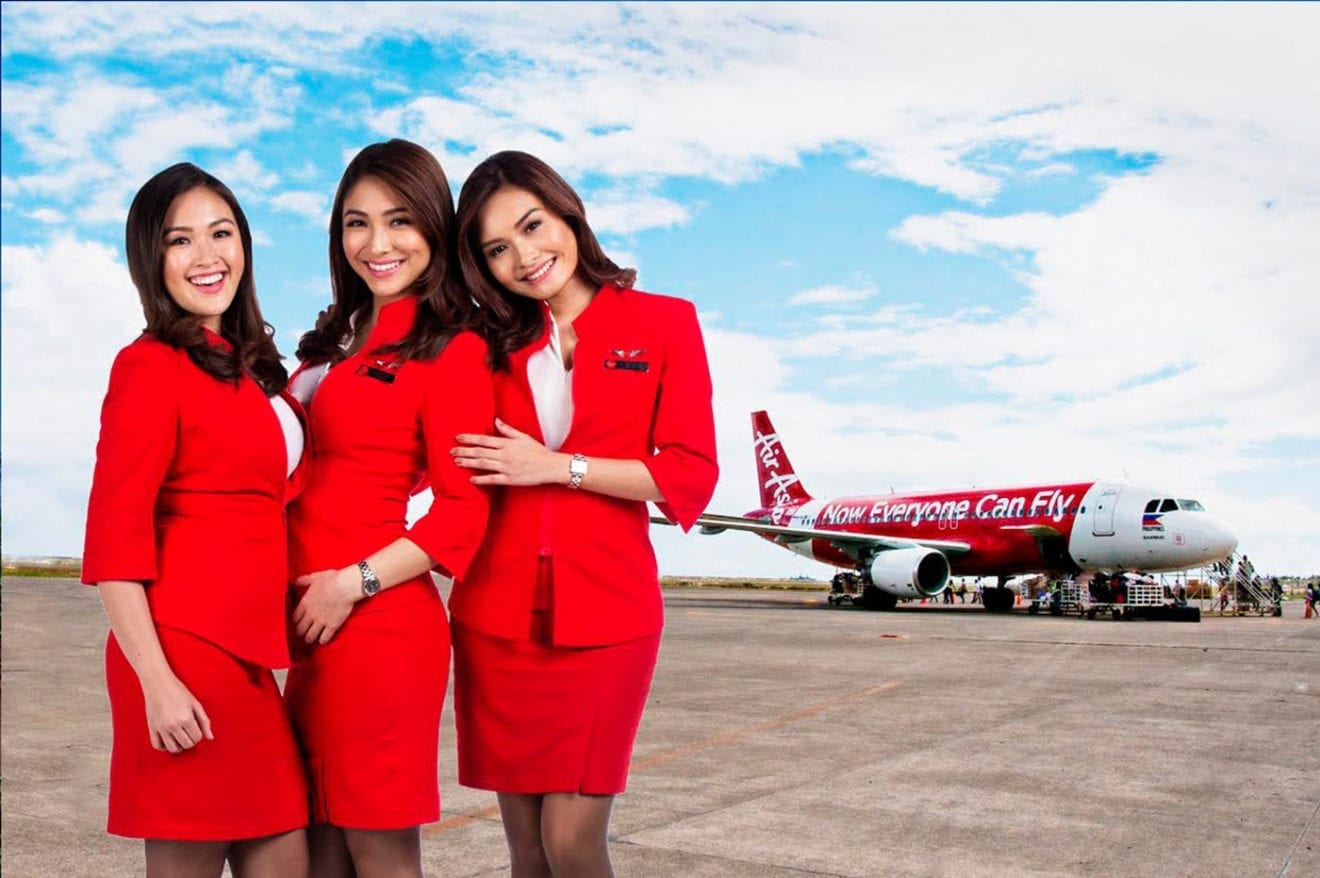
    Low-cost, long-haul Malaysian carrier AirAsia X is beginning its maiden U.S. service with introductory one-way fares starting at $99 from Honolulu to Osaka and $149 for continuing service to Kuala Lumpur.

    The return leg from Osaka to Honolulu is an introductory $162.36 while flying from Kuala Lumper to Honolulu, with a layover in Osaka, is $198.02 one way.

    Round trips would be as low as $261.36 and $347.02, respectively.

    The airline will operate its Kuala Lumpur-Osaka-Honolulu route four times a week beginning June 28.

    Hawaiian, Japan and Delta airlines also fly between Honolulu and Osaka. During the late June time period, their round-trip prices start in the low $600s to the mid-$800s. Prices are more expensive if booked one way.

    “This is the game-changing route we have all been waiting for,” Datuk Kamarudin Meranun, AirAsia X Group CEO, said today in a statement. “By connecting the U.S to North Asia and Asean with our world-class low fares offering, we will make it possible for those in the Pacific to explore Asia through our wide network.”

    This will be the first route linking Honolulu with Malaysia. Guests transiting in Osaka do not require a Japanese visa during the two-hour stopover, and can return to their seats on the flight after clearing security with any carry-on luggage or belongings.

    The introductory fares are available for travel from June 28 to Feb. 6. Flights depart Mondays, Wednesdays, Fridays and Saturdays.

    The Malaysian carrier, which has been operating since 2007, will use 377-seat Airbus A330-300 aircraft on the Malaysia-Osaka-Honolulu route.

    AirAsia X serves 22 cities in Asia, Australia, New Zealand, Africa and the Middle East with a fleet of 30 A330s.

  • Energia Communications to deploy G.fast nationwide

    Energia Communications to deploy G.fast nationwide

    Japan’s Energia Communications has signed a partnership and reseller agreement covering Nokia’s G.fast technology.

    Energia Communications plans to offer G.fast nationwide across Japan as part of an initiative to expand its utility service provider operations.

    G.fast is designed to squeeze fiber-like speeds from copper cable over last-mile connections such as apartment buildings with no fiber wiring. Energia Communications will use G.fast to replace the use of traditional VDSL2 technology.

    Energia Communications last year became Nokia’s first G.fast customer in Japan and one of its first customers for the technology worldwide, according to Energia Communications CEO Satoshi Kumagai.

    “We have been very happy with the service and have complete trust in Nokia’s capability and strengths of its fixed access business, which is why we decided to take the relationship forward as a successful business partnership/reseller model,” he said.

    Nokia’s Bell Labs holds the current world speed record for a single copper pair, having demonstrated speeds of 10Gbps using its XG-FAST technology in 2014.

    “This strategic partnership with EneCom will increase G.fast deployments in Japan, providing real benefits to subscribers who might otherwise be unable to enjoy ultra-broadband speeds. Japan is a very important market to us, and we look forward to a successful venture that will boost local economies,” Nokia Japan head Jae Won added.

  • Mikimoto Ginza set to reopen in June

    Mikimoto Ginza set to reopen in June

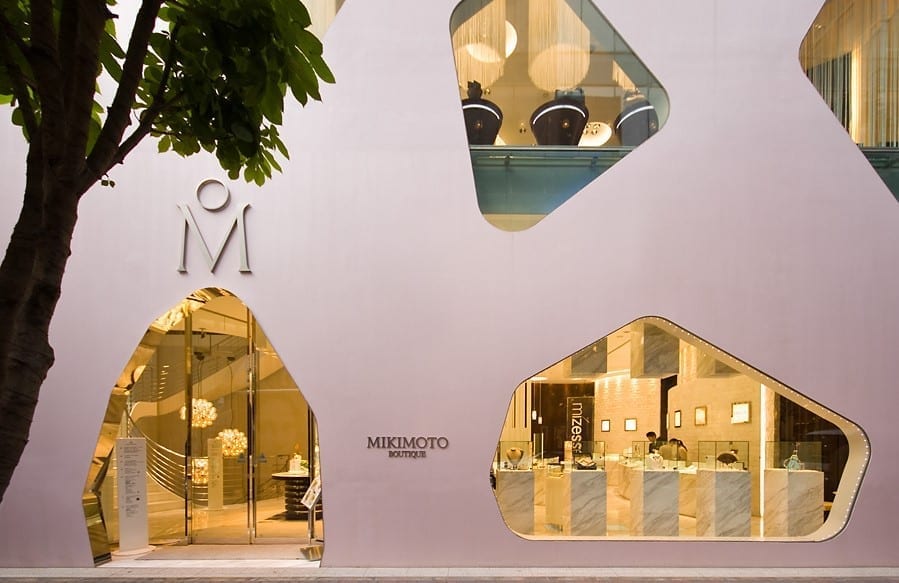
    The Mikimoto Ginza flagship store in Tokyo will reopen in June, the pearl retailer has confirmed.

    The store has taken more than two years to rebuild, fuelling expectation of a unique and outstanding design concept when the building is unveiled. The photo above shows the store before reconstruction commenced.

    Once complete, the shop will be located within a 56-metre-tall building encased in some 40,000 pieces of glass. The sales space will almost double to about 1400 sqm, spanning six floors.

    Construction began in January 2015.

    Mikimoto says the store will open on June 1 and the company hopes to attract more Japanese customers after the investment – as well as its traditional tourist base.

  • New look for Pierre Herme Japan flagship

    New look for Pierre Herme Japan flagship

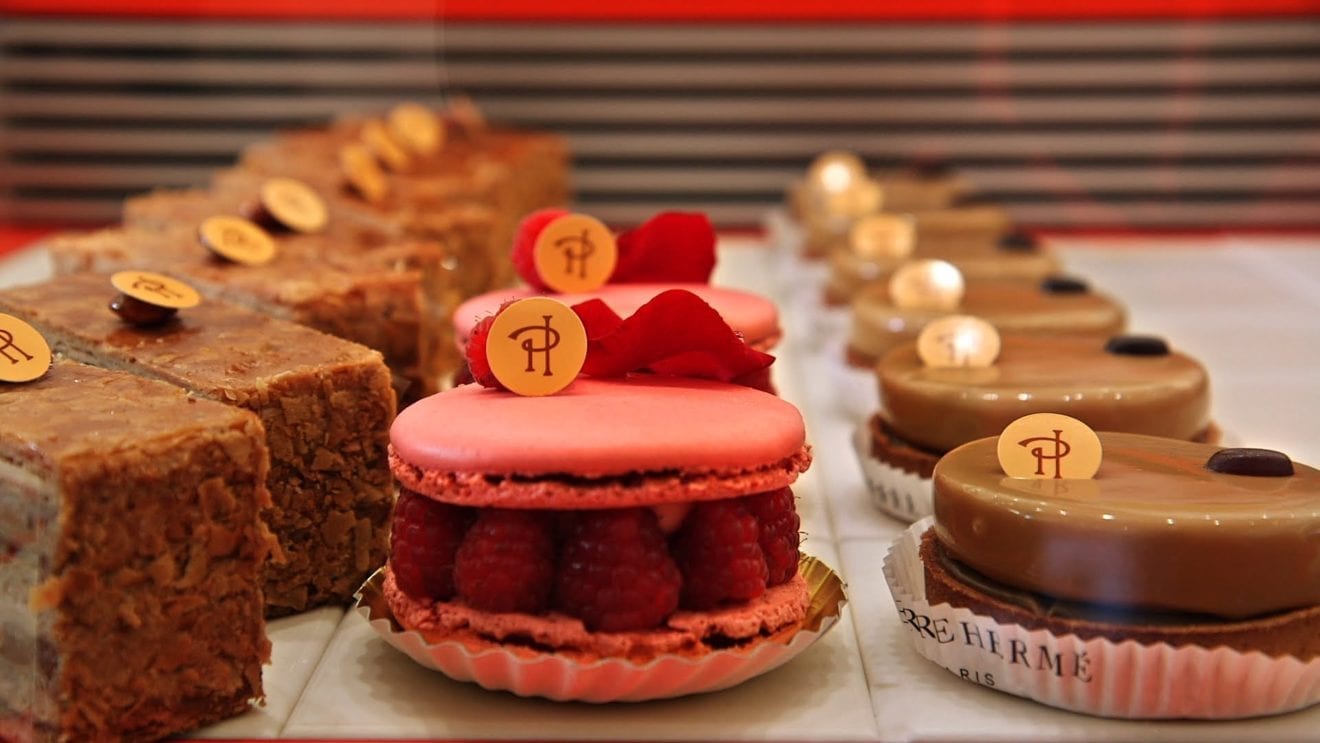
    A decade after opening, French chocolatier Pierre Herme Japan has renovated its flagship store at Aoyama in Tokyo.

    Behind the new look is interior designer Masamichi Katayama, whose Wonderwall firm has worked on projects in Australia, Europe, the US and other parts of Asia. The renewed space reflects on the notion that every day is a whole new day presenting an opportunity to discover new tastes, sensations and pleasures.

    pierre-herme-renovated-flagship-store-tokyo-4

    Right from the store’s entrance, visitors are presented with a spread of products, from macarons to viennoiseries.

    pierre-herme-renovated-flagship-store-tokyo-2

    By the staircase is a new area, the “Crossover”, where original items are displayed including more than 40 recipe books written by Pierre Herme.

    pierre-herme-renovated-flagship-store-tokyo-1

    Called “Heaven”, the upper level features an aerial kitchen where the chefs can be seen at work.
    Throughout, the store features eclectic art such as a neon sign created by artist Makiko Tanaka, as well as a service counter that seamlessly doubles as a DJ booth for private events.

  • Growth for Coach China

    Growth for Coach China

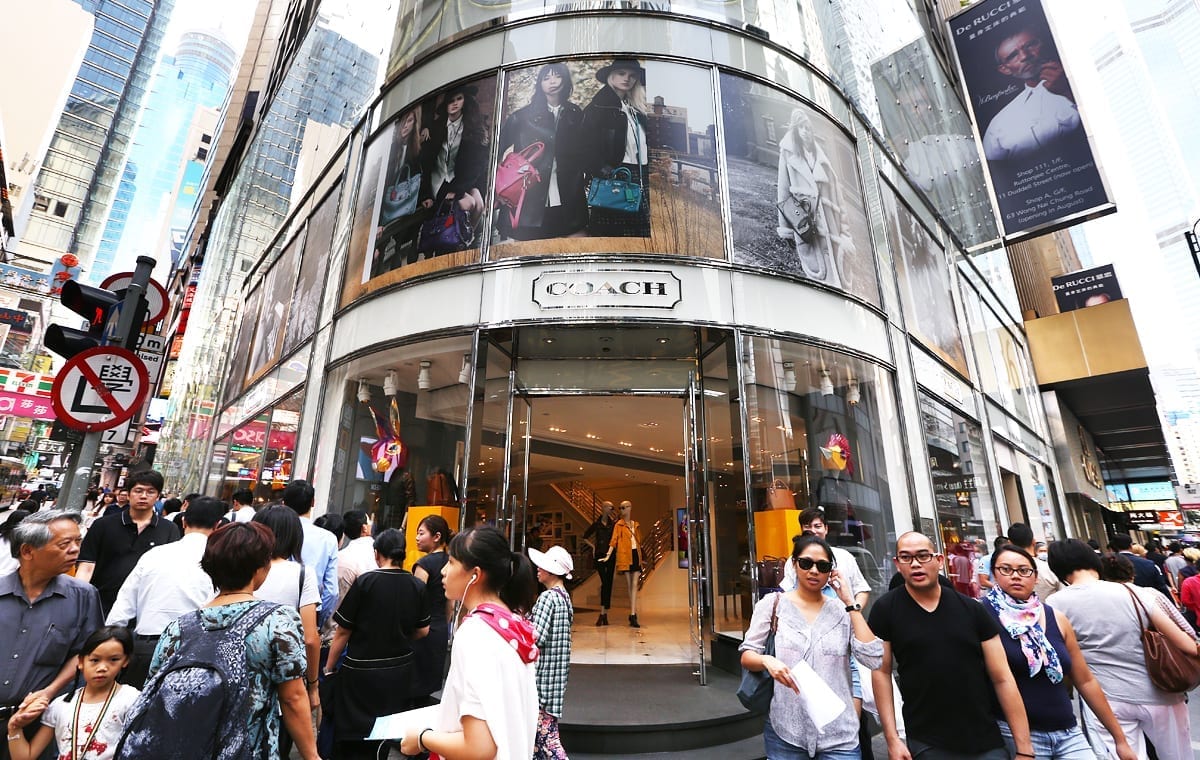
    New York design house Coach reports “notable strength” in Mainland China while reporting its second-quarter results for the quarter ended December 31.

    Coach China sales were roughly even but increased 6 per cent on a constant currency basis when the impact of the strong US dollar was removed. In addition, there was a “significant” improvement in the quarter for Hong Kong and Macau.

    “We are both pleased and proud of our performance this holiday season, particularly in light of the challenging and volatile global retail environment,” says CEO Victor Luis, noting that China represents “significant opportunities” for its brands.

    “And, despite our deliberate pullback in the North America wholesale channel as well as currency headwinds, we delivered double-digit earnings growth in the quarter. ”

    Second-quarter net sales totalled $1.32 billion for the second fiscal quarter, an increase of 4 per cent over the same period the previous year, including a benefit of 40 basis points related to currency translation.

    Gross profit totalled $906 million, up 5 per cent. Gross margin for the quarter was 68.6 per cent compared to 67.4 per cent in the year-ago period, while net income for the quarter was $200 million.

    Net sales for the Coach brand totalled $1.20 billion for the quarter, an increase of about 2 per cent. This included international sales of $440 million, up 3 per cent.

    Continued strength

    This growth was driven in part by positive comparable-store sales overall with continued strength in Mainland China.

    In Japan, sales rose 9 per cent in dollar value, but eased 2 per cent in constant currency, impacted by a lower Chinese tourist spend.

    Sales eased for the group’s other directly-run businesses in Asia.

    Gross profit for the Coach brand rose 4 per cent to $830 million. Gross margin for the quarter was 69 per cent, including about 30 basis points of benefit from currency. This compared to 67.7 per cent for the quarter in the previous year.

    Net sales for the group’s Stuart Weitzman brand reached $118 million for the quarter compared to $94 million in the same period the previous year. This 26 per cent improvement was driven by strong growth in the brand’s direct channels, and was positively impacted by a wholesale shipment timing shift from the first quarter.

    Gross profit for Stuart Weitzman rose 26 per cent to $76 million, while gross margin was even at 64.3 per cent.

  • Hard Rock Japan plan

    Hard Rock Japan plan

    Hard Rock International has launched Hard Rock Japan with former Sands China senior executive Edward Tracy as its CEO.

    His appointment is “a strategic move designed to support the company’s growth plans in the region”, says the company.

    The new division follows Japan’s legislature approving the Integrated Resorts Promotion Bill, marking the first step toward legalising gaming in a market that investment bank CLSA gaming analysts estimate to be worth US$40 billion.

    With 30 years’ experience in the Japanese market, where it has six Hard Rock Cafe locations, the company plans to expand its portfolio by becoming a contender for Japanese resort licences.

    Tracy has held several positions within the gaming and hospitality industry. He joined Sands China, a subsidiary of Las Vegas Sands Corporation, in July 2010 as president and COO. He became its CEO one year later, responsible for the oversight of about 13,000 hotel rooms and 30,000 employees, reports the Macau Daily Times.

    Before Sands, Tracy was president and CEO of Capital Gaming, which runs regional casinos, and held similar positions at the Trump Organization, where he was responsible for managing 12,500 employees, 3000 hotel rooms and 240,000 sqft (22,296 sqm) of casino space.

    In 2014, Harvard Business Review named Tracy as one of the “Best-Performing CEOs in the World” in its annual top-100 ranking in 2014.

  • Japan firms line up for Philippines business after Abe pitch

    Japan firms line up for Philippines business after Abe pitch

    Japanese firms, especially those in the infrastructure business, are scrambling for a slice of prospective new businesses arising from Japan Prime Minister Shinzo Abe’s 1-trillion-yen (P440-billion) financing and investment pledge to the Philippines.

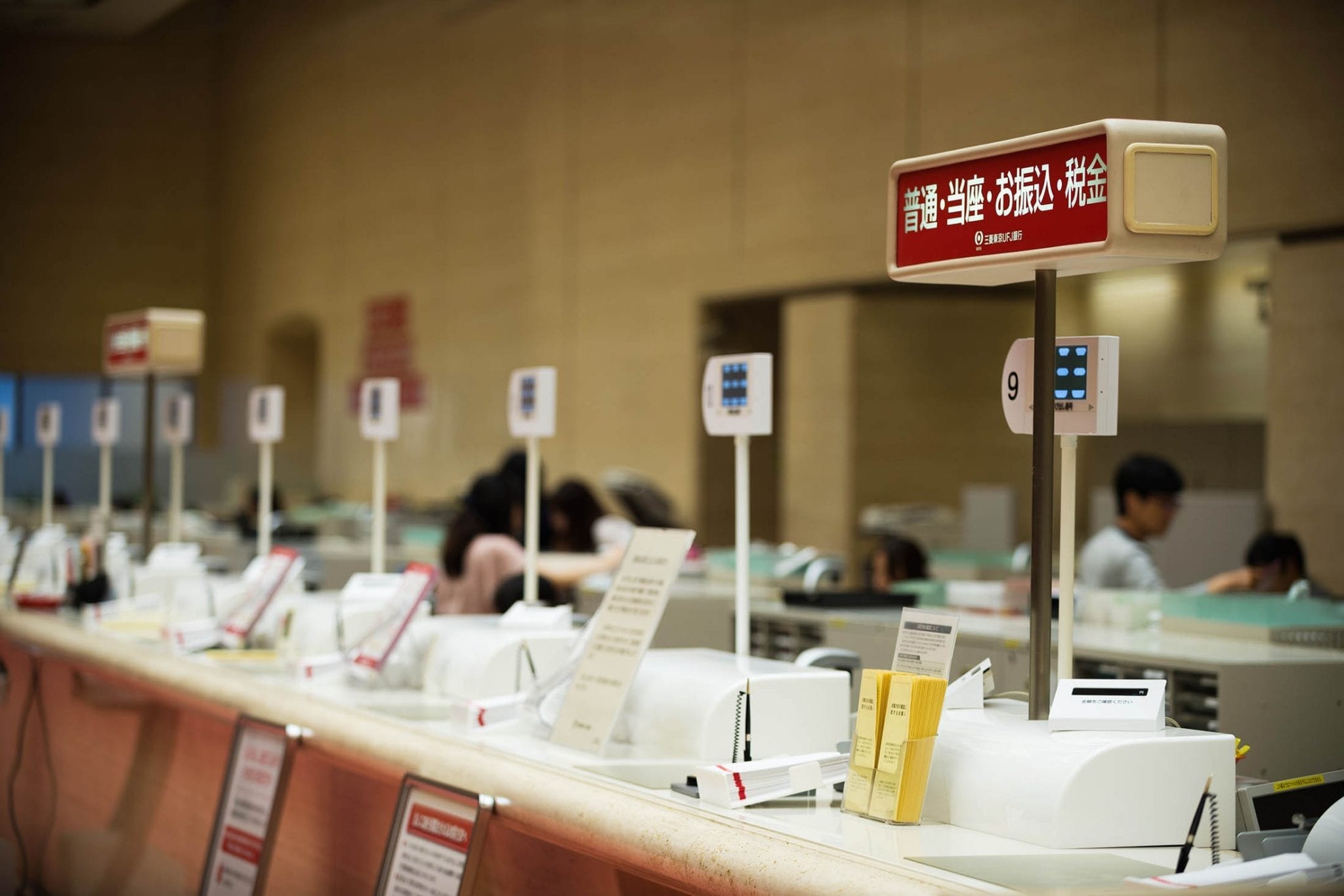
    This was stated by Japanese banking giant Bank of Tokyo-Mitsubishi UFJ, a leading player in project financing globally, which has been matching Japanese firms with potential local partners in support of Mr. Abe’s commitment to the Philippines.

    The Japanese bank is also preparing to fund large-scale projects in the Philippines under the golden age of infrastructure envisioned by President Duterte.

    Takayoshi Futae, BTMU chief executive officer for Asia & Oceania, said in a recent briefing that BTMU and many Japanese firms were upbeat on the

    1-trillion-yen package pledged by Abe to promote economic and infrastructure development in the Philippines within the next five years.

    “This is one of Japan’s largest investment directed at a single country and we really want to be part of this project,” said the Singapore-based Futae, who was in town for a series of meetings with BTMU’s local partner, Security Bank.

    “MUFG (Mitsubishi UFJ Financial Group—of which BTMU is part of) is very committed to supporting Asia’s growth. We not only have the financial capability but also strong network and strategic relationships across the region,” he said.

    Futae is unfazed by China’s bid to do more business in the Philippines—given the recent rekindling of bilateral ties with China—adding that there was enough business in the region for both Japanese and Chinese firms.

    Tadahiro Miyamoto, general manager of BTMU Philippines, said representatives of many Japanese prefectures (local government units) had been visiting the Philippines “trying to find market for their products.”  With its 100-million consumer market, he said many Japanese firms were interested in doing business in the Philippines.

    Miyamoto said Japanese infrastructure-related companies and those targeting domestic markets like retailers were among those most interested in the Philippines. Those involved in the car industry are likewise interested because of the government’s “CARS” program, he said.

    The government’s Comprehensive Automotive Resurgence Strategy (CARS) program seeks to attract new investments, stimulate demand and effectively implement industry regulations that will revitalize the Philippine automotive industry, and develop the country as a regional automotive manufacturing hub.  The program covers not only car assemblers but also manufacturers of vehicle parts.

    Futae said the 6-7 percent growth rate of the country was “amazing” from the perspective of someone who hails from a slow-growing economy like Japan.

    “Philippines and Japan should work more together,” he said.

    To better understand the country and flesh out its commitment, Futae said BTMU was in need of a strong and reliable local partner—now the role of Security Bank. Since acquiring a 20-percent stake in Security Bank in April last year, he said BTMU had been able to expand into retail lending and financing to Philippine companies.

    During recent meetings, Futae said BTMU and Security Bank discussed “further collaboration” and everyone was “bullish on the success of the collaboration.”

    Asked whether BTMU was keen on raising its interest in the local bank, Futae said the group was comfortable with its 20-percent stake but added that if given the opportunity to increase its stake in Security Bank, this would be something that the group would “seriously” consider.

  • Sushi Kit Kats for new Nestle Japan store

    Sushi Kit Kats for new Nestle Japan store

    Nestle Japan will open its first stand-alone Kit Kat Chocolatory store in Tokyo’s Ginza district on February 2 – and marking the occasion with gifts of special sushi Kit Kats.

    Since the first Kit Kat Chocolatory opened in January 2014 as a specialty store offering premium and exclusive Kit Kats, the franchise has expanded to eight outlets across Japan, all within major department stores.

    sushi-kit-kats


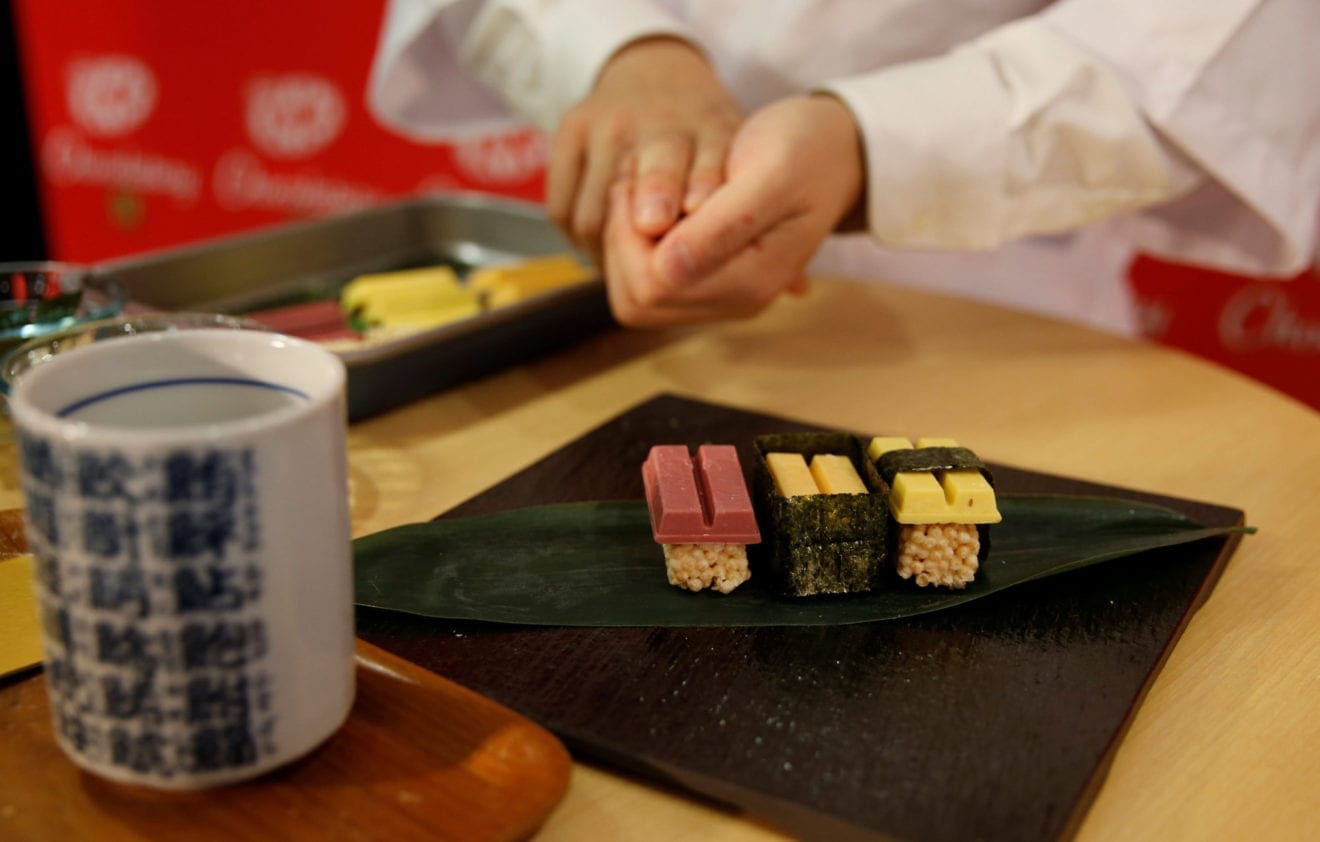
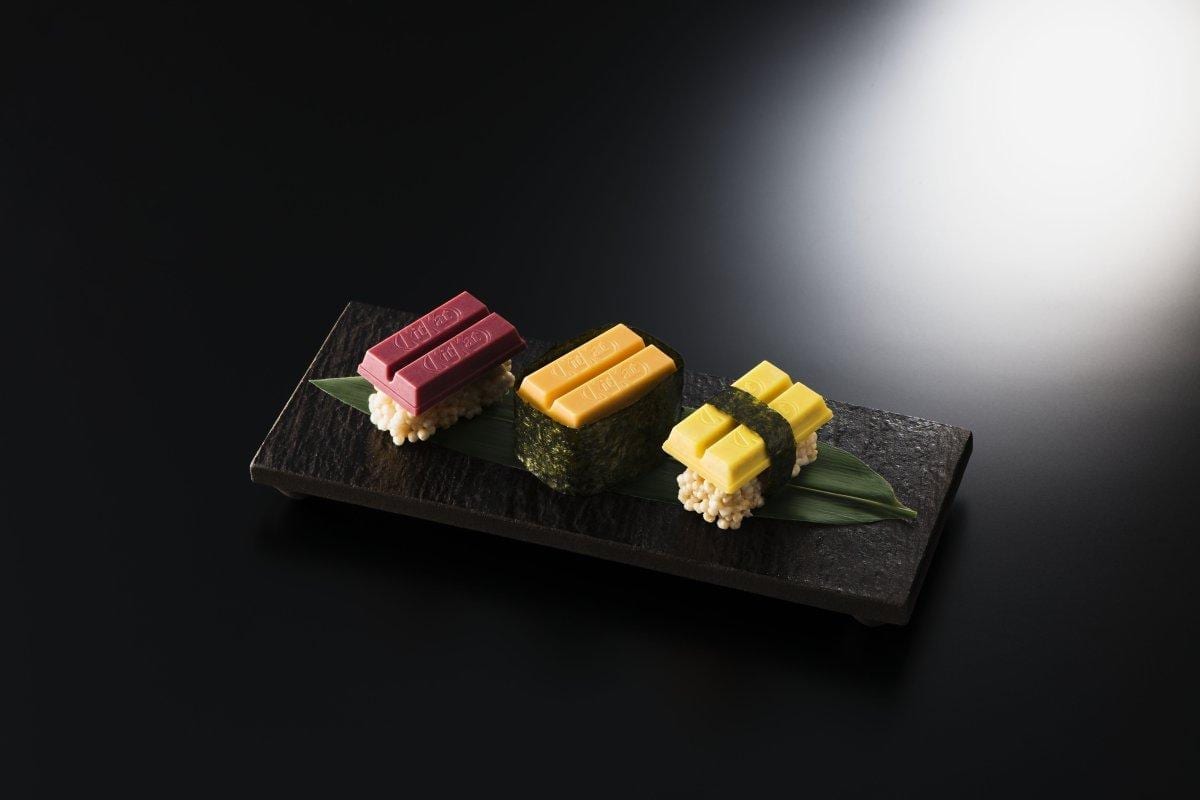
    For the grand opening of its stand-alone store, the company has created a set of three Kit Kats shaped like sushi – a combination of Kit Kats and rice puffs coated with white couverture chocolate. The maguro (tuna) version is topped with a raspberry-flavoured Kit Kat, the uni (sea urchin) version is made with a Kit Kat with the flavour of Hokkaido melon with mascarpone cheese, while the tamago (egg) version features a pumpkin pudding flavoured Kit Kat.

    kit-kats-chocolatory-japan

    Actually, the idea of a sushi Kit Kat was shared on social media by Nestle Japan as an April Fool’s Day joke last year, but the response was so huge the company decided to make it a reality. There will be 500 sets of the three sushi Kit Kats, with a limited number being offered each day to customers spending more than 3000 yen (US$26.50) or more at the new Ginza store.

    There are also plans to open a cafe on the second floor of the store in the next several months where customers will be able to try special items such as baked madeleines made with Kit Kats, or even make their own Kit Kat creations using toppings of their choice.

  • E-commerce in Japan: 20% of retail by 2022

    E-commerce in Japan: 20% of retail by 2022

    While the U.S. and China are already known as global e-commerce markets, it’s Japan that boasts the largest e-commerce potential, especially over the next three to five years, say two separate consultant groups.

    In 2015, Japan generated roughly $80 billion in e-commerce sales. This compares to some $350 billion of e-commerce sales in the U.S. and China’s whopping e-commerce sales result, which exceeded $650 billion in 2015.

    Yet, e-commerce will be Japan’s largest single retail channel by 2022, according to a recent report produced by JapanConsuming.

    Having overtaken convenience stores to become the second biggest already in 2015, the firm has forecast that Japan’s e-commerce share of retailing will reach 20% by 2022.

    “This is a forecast that few would challenge, although there are plenty of traditional retailers who are in deep denial,” said report authors, of the predictions.

    “The only point of contention is just how far ahead e-commerce will be by then. Given the sea-change in consumer preferences and shopping behaviour already visible, the coming change will be profound,” added the group.

    Japan’s demographic is ripe for e-tail. Approximately 93% of the total Japanese population (126 million) is urban, giving it the highest urban population of the top 10 e-commerce markets, according to e-commerce consultancy PFS. Much like JapanConsuming, PFS predicts Japan’s e-commerce sales to increase almost 40% by 2018, for a market total of over $122 billion.

    Japan also has the highest digital buyer percentage in the Asia-Pacific region, with 77 million digital buyers last year, said PFS, in its Global E-Commerce Report.

    As well as computers, mobile shopping is quickly growing, with half of all e-commerce transactions being conducted via mobile devices in 2015, a trend set to continue by 2022.
    In terms of payment, debit and credit cards are the most popular payment methods when shopping online, with over 66% of shoppers conducting transactions utilising this method.

    As for what online stores are attracting the Japanese e-shopper, marketplaces continue to dominate the e-commerce landscape. Japan’s three big sites, in order of market share, are Rakuten, Amazon Japan and Yahoo Japan Shopping. Collectively, these sites accounted for around 50% of total Japanese annual e-commerce revenue in 2015.

  • Give yourself a break with Japan’s limited-edition Kit Kat sushi

    Give yourself a break with Japan’s limited-edition Kit Kat sushi

    Kit Kat, trusty purveyor of cocoa-coated wafer bars, has swooped in with the break you never knew you craved: chocolate sushi.

    The unimaginable “sushi cut kits” debut Thursday at Tokyo’s first-ever street-facing Kit Kat specialty store, according to former Gawker property Kotaku and Japanese media. The treats reportedly come in three flavors: “Maguro” (tuna), “Uni” (sea urchin) and “Tamago” (egg).

    https://www.flickr.com/photos/nestlejapan/sets/72157677570905932

    Maguro consists of raspberry flavor Kit Kat on puffed rice.

    If those sound unpalatable, take heart: There’s no real fish involved. The “tuna” variety is actually raspberry-flavored Kit Kat on top of a white chocolate rice puff; “sea urchin” is Hokkaido melon and mascarpone cheese-flavored Kit Kat encased in seaweed; and “egg” is a pumpkin pudding-flavored delicacy, also wrapped in a thin band of seaweed.

    https://www.flickr.com/photos/nestlejapan/sets/72157677570905932

    Tamago is pumpkin pudding-flavored.

    The sushi kit sets will retail for 3,000 yen (just over $26) at the so-called Japanese “Ginza shop” from Thursday to Saturday.

    Japan, evidently, has a thing for the shareable Nestle-produced confections: The country has sold more than 300 flavor varieties since the brand first went on sale there in 1973, per a 2015 report. And the candy’s name sounds fortuitously similar to the Japanese phrase “kitto katsu” — meaning “you will surely win.”

    https://www.flickr.com/photos/nestlejapan/sets/72157677570905932

    Uni features Hokkaido melon and mascarpone cheese-flavored Kit Kats.

    Chef Yasumasa Takagi, who whips up gourmet delectables for the Kit Kat Chocolatory in Tokyo, says, “The challenge is how to make something handmade out of an industrial brand.”

    “The KitKat has three perimeters: the chocolate, the wafer and the cream. The chocolate and cream are where we can be most creative,” he told the Telegraph. “For me, my goals are the same as in my work as a patissier. I want to surprise people, I want to make them happy and I want to somehow create an emotional reaction.”

  • Foxconn to help Japanese firm sell robots around the world

    Foxconn to help Japanese firm sell robots around the world

    What guise will robots of the future take? Some see as them as faceless automatons, capable of performing basic tasks for us, whilst the Supermatrix predicts a future where they’ll be actively concious but subdued through a dream within a dream. SoftBank Mobile however believes robots can be our friends before they do our bidding, which is why it launched its Pepper robot in Japan last year and is now partnering with Foxconn and Alibaba to help sell it around the world.

    Pepper doesn’t perform any particularly useful tasks around the house or office, but he can read facial expressions and judge emotions based on language and tone of voice and can react accordingly. If you are sad, he might engage you in conversation or play your favourite song to cheer you up. Over time he learns your emotions and different moods and can compliment or help alleviate them depending on your preferences.

    To date he’s mostly been used as a greeter in Softbank stores, but there are other potential uses such as babysitter, party greeter, serving staff or a companion for the elderly. It’s expected that retailers may be some of the most interested in Pepper, but that there are plenty of other applications for him where end users and other organisations may see him as a good fit for the role.

    Projected costs for the robot are expected to be $1,660 (£,1044) up front, followed by monthly payments of £125 to cover ongoing insurance coverage (should it fall over and break) as well as access to the cloud processing facilities required to make many of Pepper’s more complicated analysis and decisions.

  • Japan December retail sales below expectations as BOJ meets

    Japan December retail sales below expectations as BOJ meets

    Japanese retail sales rose less than expected in December, government data showed on Monday, unwelcome news as the Bank of Japan meets to set monetary policy.

    Retail sales rose 0.6 percent in December from a year earlier, below the median market forecast for a 1.3 percent increase.

    The Bank of Japan is expected to announce a steady monetary policy after its two-day meeting Tuesday and seek to allay speculation of an early tapering of its massive stimulus.

    Weak consumer spending has dogged Japan’s economy, which has struggled to achieve steady recovery after decades of deflation and stagnation.

    “I didn’t expect December retail sales to be strong because end-year private consumption wasn’t strong,” said Shuji Tonouchi, senior market economist at Mitsubishi UFJ Morgan Stanely Securities.

    “Prices have been rising but it’s mostly due to the rise in energy prices, and domestic demand hasn’t changed…We are looking carefully at whether this would lead to sustained inflation,” Tonouchi added.

    Japan’s economy expanded for a third straight quarter in July-September as exports recovered, but domestic activity remained weak. Recent data has shown Japan’s core consumer prices fell at the slowest annual pace in nearly a year, a tentative sign that inflation and domestic demand may pick up in the coming months.

  • MUFG to Buy $773 Million Stake in Philippines’ Security Bank

    MUFG to Buy $773 Million Stake in Philippines’ Security Bank

    Mitsubishi UFJ Financial Group, Japan’s biggest bank, agreed to buy a 20 percent stake in Philippine lender Security Bank Corp. for 36.9 billion pesos ($773 million) as it deepens its expansion in Southeast Asia.

    Security Bank accepted MUFG’s offer to buy 150.7 million newly issued common shares at 245 pesos each and 200 million preferred shares at 0.1 peso apiece, the Manila-based bank said in a filing Thursday. That represents an 81 percent premium on Security Bank’s Wednesday closing price of 135 pesos.

    The deal will be the largest equity investment in a Philippine financial institution by a foreign lender, allowing Security Bank to accelerate its growth strategy and expand its branch network, the Manila-based company said. Japan’s biggest lenders have expressed interest in investing in the Philippines after the country loosened its rules on foreign bank ownership in 2014. The nation’s central bank said after the announcement that it welcomes the entry of foreign bank investments.

    “Security Bank will benefit from the deal by having a bigger war chest to execute its strategy,” Charles William Ang, an analyst at COL Financial Group Inc., said by telephone. “The deal is also a sign that foreigners are still very bullish about our banking industry, which remains under-penetrated. There are more opportunities for growth and profit compared with Japan.”

    ‘Right Price’

    Ang said the transaction amount reflects the large size of the stake. MUFG is paying a 78 percent premium to Security Bank’s average price over the past month, the fourth highest among all bank acquisitions in Southeast Asia, according to data compiled by Bloomberg. The price of 245 pesos a share is 2.8 times book value, the data show.

    “People say that it’s expensive, but we believe this is the right price,” Go Watanabe, chief executive officer for Asia-Oceania at MUFG’s main lending unit, said at a briefing in Manila. “We believe this price is fair, calculating the intrinsic or future value of the bank.”

    Shares of Security Bank climbed 6.7 percent, the most since June 2013, to 144 pesos. MUFG dropped 2.4 percent in Tokyo as Asian equities resumed their New Year tumble.

    Second Biggest

    MUFG is comfortable with a 20 percent stake, Watanabe said. The investment will make its Bank of Tokyo-Mitsubishi UFJ Ltd. unit the second-biggest shareholder of Security Bank, behind the Dy family. The deal is expected to close in the middle of the year, and MUFG will appoint two directors to Security Bank’s board, according to the statement.

    Security Bank will target 500 branches by 2020 from the current 262, the company’s President Alfonso Salcedo told reporters. The investment will allow it to tap new markets through MUFG’s relationships with Japanese companies and its global network, according to the statement. Security Bank’s operations range from retail banking to brokerage services and leasing, its website shows.

    Investments by foreign lenders “further reinforce bank capitalization, introduce global best practices and know-how and expand markets,” Bangko Sentral ng Pilpinas Governor Amando Tetangco said in a mobile-phone message. “These also promote more job-creating foreign direct investments.”

    Indonesia and India remain missing parts in MUFG’s expansion in Asia, Watanabe said. The financial group has been expanding in the region as a declining population and near record-low interest rates constrain growth at home.

    Thailand, Vietnam

    It was among 12 firms that expressed interest in buying United Coconut Planters Bank from the Philippine government, people with knowledge of the matter said last June. MUFG owns 77 percent of Thailand’s Bank of Ayudhya and it bought a 20 percent stake in state-owned Vietnamese lender VietinBank in 2013.

    Sumitomo Mitsui Financial Group Inc., Japan’s second-biggest lender by market value, was the first foreign lender to get a license to operate in the Philippines under a 2014 law allowing full entry of overseas banks. Five more lenders have since received approval, President Benigno Aquino said Tuesday at the opening ceremony of Sumitomo Mitsui’s first branch in the Southeast Asian nation.

    Japan’s Mizuho Financial Group Inc. ended talks to buy San Miguel Corp.’s controlling stake in Philippine lender Bank of Commerce, people with knowledge of the matter said in October.

  • Japanese leasing firm expands in Indonesia

    Japanese leasing firm expands in Indonesia

    Mitsubishi UFJ Lease & Finance Company Limited (MUL) has announced its subsidiary in Indonesia, MULI, has opened a branch in Bandung, in a bid to capture new business as the country’s economy improves.

    The Bandung Branch is MULI’s second branch in Indonesia following the opening of its Surabaya Branch in October 2014. Since establishing a subsidiary in Jakarta in 1995, MUL has provided financing services focusing on mechanical equipment leasing and other activities for over 20 years.

    MUL says it aims to tap into growing demand in Indonesia, which is experiencing high economic growth in the ASEAN region, and expand the business opportunities. To this end, MUL is actively working to develop its business through such measures as acquiring an auto lease company, diversifying funding sources with the issuance of Indonesian rupiah-denominated notes, and providing asset management services that attract strong demand in Indonesia.

    Located about 150 km southeast of the capital Jakarta, Bandung, site of the latest branch, is the third largest city in Indonesia where the manufacturing and fiber/sewing industries are thriving. As a growing number of domestic and foreign companies are setting up their business there, growth is expected in the region. Through the establishment of the Bandung Branch, MULI will expand business bases in the West Java area and provide tailor-made services to meet the diverse needs of companies in Bandung and the surrounding areas.