Tag: Korea

  • K-Market to expand network with VinGroup

    K-Market to expand network with VinGroup

    Korean chain K-Market is in talks with VinGroup to expand its network.

    K&K, the owner of K-Market supermarket chain and K-Food, wants to expand by opening inside VinGroup’s commercial centres.

    K-Market currently locates its retail stores inside Lotte Mart and Fivimart outlets.

    The retail operators plans to expand its network to 100 supermarkets by 2020, and eyes a turnover of  more than US$100 million in 2017.

    Ko Sang Goo, chairman of K&K, said the company has been researching the Vietnam retail market carefully.

    The group aims to add more services to its chain such as laundry and eateries and to import more Korean products to serve local needs.

    K-Market currently has four stores in Hanoi and nine in Ho Chi Minh City.

  • B2LiNK eyes global K-beauty market beyond China

    B2LiNK eyes global K-beauty market beyond China

    The Group of Two’s recent protectionists policies followed by Donald Trump’s victory in the U.S. presidential election and China’s economic retaliation against Korea over the deployment of a Terminal High Altitude Area Defense system seem to be serious risks for Korean exporters.

    B2LiNK CEO Lee So-hyung, however, confidently said no government can interfere with macro-trends in the market. The 33-year-old is one of the co-founders of the IT-based business-to-business startup which distributes Korean beauty brands to global retail channels in the most effective way possible.

    “The U.S. will not restrict small areas. It may impose anti-dumping tariffs on steel, but consumer goods ― especially Korean cosmetics ― will not be regulated as they are not in the majority of the market,” Lee said in an interview with The Korea Times on Friday.

    “Most people fear that trade with China will be threatened, but local Chinese firms actually earn more money than Korean businesses through the cosmetics trade. Chinese authorities will be unlikely to regulate the trade, as most Chinese consumers purchase Korean cosmetics via their local online platforms.”

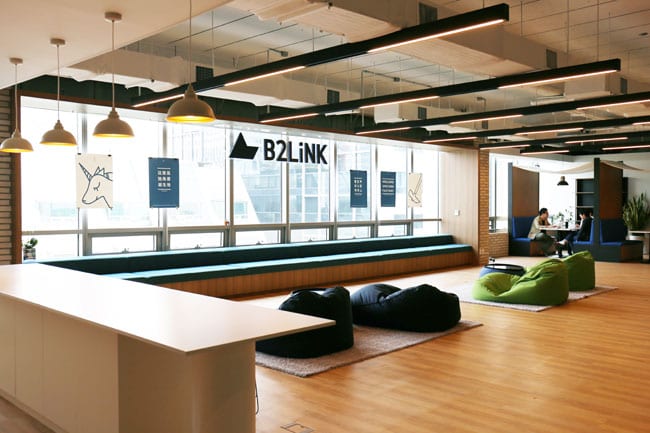
    An inside view of B2LiNK office in Gangnam

    After working in many industries in several countries as a consultant of McKinsey & Company for four years, Lee decided to operate a business that introduces Korean consumer goods to the world. He said, “The industry in which Korea has an advantage over other countries is in consumer goods.”

    His company initially targeted the Chinese market and has expanded its presence there. The Seoul-based company established local offices in Tianjin and Shanghai. It also signed supply contracts with China’s top commerce firms including Watsons China and RuHnn.

    “When I began to run my business in 2014, China’s economy was growing rapidly with its e-commerce market which was growing much faster,” Lee said. “The rate of cosmetics consumption, on the other hand, was still low at that time, so I thought there might be a chance for a success.”

    However, B2LiNK is drawing up a blueprint to globally expand the presence of K-beauty beyond China. Lee said, “Korean consumer goods have depended too much on China so far, and we want to help the firms gain competitiveness in the global market. Demand for Korean consumer goods is rising in the U.S., Europe, Africa and the Middle East.”

    B2LiNK began to supply Korean cosmetics to retail channels in Southeast Asia this May and posts more than 100 million won ($85,000) in monthly sales there. It plans to establish an office in the U.S. next year, which will be the company’s first base camp toward the developed market.

    “We are actively recruiting employees in the U.S. and Southeast Asia,” Lee said. “We will hire local people to lead our subsidiary companies there.”

    Lee said B2LiNK wants employees who can build their careers in the company, rather than those who already have experiences in similar industries. “Our basic concept is to develop less advanced industries. Expertise is an old-fashioned concept in B2LiNK,” he said.

    Among young “B2LiNKers” whose average age is 29, B2LiNK posted more than 11 billion won in sales last year. The company estimates its sales will be over 30 billion won this year.

  • Apple Criticized by Korean Game Developers for its App Store Refund Policy

    Apple Criticized by Korean Game Developers for its App Store Refund Policy

    It took me a while to figure out what the big deal was. It’s not that people buy a $1.99 game, then get a refund and keep playing.It’s that people buy $100 in in-game “currency” using an in-app purchase, then get a refund, and keep the $100 of in-game “currency”. Then do this again. And again. And again.

    Oh, you want to have the best fort in Clash of Clans? $100 in in-game gold, and you can do it quickly! Then get a refund on that in-game gold. Want to get good Pokemon faster? $100 in in-game gold and you can lure more Pokemon to you (for a long time.) Then get a refund on that in-game gold.

    It took me a while to figure out what the big deal was.

    It’s not that people buy a $1.99 game, then get a refund and keep playing.

    It’s that people buy $100 in in-game “currency” using an in-app purchase, then get a refund, and keep the $100 of in-game “currency”. Then do this again. And again. And again.

    Oh, you want to have the best fort in Clash of Clans? $100 in in-game gold, and you can do it quickly! Then get a refund on that in-game gold. Want to get good Pokemon faster? $100 in in-game gold and you can lure more Pokemon to you (for a long time.) Then get a refund on that in-game gold.

    Not quite true. In clash of clans, if you request a refund in $100 worth of gems, the game takes the gems spent from you and you end up with thousands of gems in debt. You can still earn gems the normal way but it goes to offset that negative gem count.

    Don’t know how clash of clans can do this but Koreans can’t figure out what the refund was for…

    So… Commenters, we don’t need to be specifying “Korean developers” or calling them out by their nationality. This is a problem to *ALL* nationality of developers, it just happens that this article was in a Korean newspaper, so the developers they interviewed are Korean. Saying things like “These Korean developers whining about…” or “I wish these Korean companies would…” is unnecessarily adding nationality (and by proxy race) in to a complaint. Would you have made the same comment if the developers had been from California? Or Texas? Would you have specified “These Californian developers…” or “I wish these Texan companies…”?If not, then leave “Korean” off the description you post. Their “Koreanness” has nothing to do with the issue.

    I hate in app purchases. I disable them from my settings.So pretty simple. Get rid of in app purchases. Than they wouldn’t have an issue tracking down people who ask for refund. One time fee payment for full game.

    A non issue really. The developer has access to the receipt for each purchase and can check if it is still valid at any point in time.
    They just need to keep track of the receipts, basic in-app programming ffs.
    To be consistent Apple should have the same policy for their stores – so I can buy an iPhone/MacBook then call to request a refund without returning it. I’m sure there’ll only be a “small” number of people abusing it 😉

    And what exactly are people “stealing” by “returning” 100 gold coins in an app – a couple bytes of database space?

    I operate my own small business, a small hardware device with an online system connected – getting in on the “smart home” craze. Manufacturing is outsourced, so we don’t have to deal with manufacturing shrink, we just pay a per-unit contracted cost. The online service, as with any of these games, is practically zero cost-per-unit. If someone cancels a service, or asks for a refund (which we always offer). Yes, hardware space and bandwidth cost money, but there is no “direct cost” per-user.

    Hardware-wise, in the past month, we’ve had $2388 which I’d classify as shrink at retail price, $912 at cost price. That includes:

    – 1 unit damaged in warehouse
    – 3 units lost by couriers shipping to customer
    – 4 “change of mind” hardware returns that couldn’t be re-sold
    – 1 unit that was bought via PayPal with a stolen credit card (we had to swallow the cost)
    – 3 units that were returned as being faulty, which we determined was fraudulent – 1 had a smashed screen which couldn’t have happened during qa/shipping (impact mark), one which was obviously dropped and cracked but otherwise seemed to work fine, and 1 which was returned because apparently only the accessories were in the box, not the unit itself (even though we could see the unit was online, and connected to our service – not for long though!)

    At cost price, for us that was around 0.9% shrink vs revenue, and around 1.4% vs per-item profit margins (not taking into account operating costs here). That’s something we have to budget for – we *know* it’s going to happen, and we take that into account. 100% of our shrink costs come from hardware, not software. Out of that, only a third of shrink was down to “fraud”.

    Saying shrink can’t happen with a digital product is silly. Of course it’s going to happen. If you’re dealing with people, at some point you’re going to deal with fraud. Fact of life. The only difference is the physical cost behind it doesn’t scale the same way as with physical products.

    Here’s two examples:

    1. Company A sells a video streaming service for $10/month. Someone purchases a subscription uses a stolen credit card, and watches 50 films. The credit card company (rightfully) does a chargeback 14 days later, and the company cancels the service. A movie averages at 1.5GB, using 75GB bandwidth. They pay AWS $0.06/GB for bandwidth, which equates to $4.50. They also have to pay the rights holders $0.10 per viewing as part of their agreement. That’s $5, meaning that the total cost of the fraud is $9.50 – that’s $9.50 worth of shrink.

    2. Company B offers a mobile video game for free on the App Store, and sells packs of “100 gold coins” for $5. When a user buys coins, they can use them to buy items in the store – the transaction is purely in the game, and the only result of buying the coins is a database entry to tell the game “hey, user X bought 100 coins”. Somebody buys 100 packs of coins for $500, buying all sorts of virtual items for their character, again, all database entries. The user claims their child accidentally bought the coins, and Apple refunds the $500. Company B hasn’t lost money, other than perhaps a couple of cent in bandwidth costs. Shrink is effectively 0.

    That’s why I don’t understand them chasing so much – unless there is a physical per-unit cost behind it, it’s really not worth it. So what if someone buys a game or coins and returns them, they’ve lost a sale, sure, but they haven’t lost money.

    you work for company A and i’m another customer. i don’t give a flying f*** if Fred next door can or can’t watch the latest Star Wars movie because of his fraudulent dealings with you. it literally has no material affect on the outside world.

    you work for company B and i’m a customer on the same server as Fred. While you haven’t lost money, what you’ve done is enabled Fred to gain an unfair advantage over me and many others who have not bought the coins and got the stuff for free. of course, we don’t know that he hasn’t paid for them – perhaps he’s just a mr moneybags. but word gets out, the big spenders get upset that people competing with them are doing so by fraud and a ********* goes down on the game’s message boards. shrink isn’t measurable in terms of lost sales – yet – but is high in terms of lost reputation and goodwill. it could well have a material effect an order of magnitude higher than company A’s issues going forward.

    comparing a video streaming service which serves one end user at a time, to a MMO game where the actions of one gamer affect the others is silly.

    But you can’t *not* have a refund policy. I have, myself, gotten a refund for a game, when the game stopped working after upgrading from iOS 6 to iOS 7. The app was still installed and could still run (well, as far as it ever did after upgrading), but couldn’t be updated or re-downloaded.IMO, the amount of money they’re going to spend chasing down and suing the small % of customers who abuse it isn’t worth it. All businesses have to deal with a small % of fraud – how many retail places have had TVs returned as faulty when a new one comes out, or people had “left” their laptop in the trunk of their stolen car, or had their iPhone suddenly develop an intermittent fault just after a small scratch appears on the screen.

    It’s a cost of doing business.

    But you can’t *not* have a refund policy.
    It’s a cost of doing business.

    Very true. I wish these Korean companies would get a life and wake up. They are probably losing far more money from employee theft and laziness than a few app users.

    Every business has shrink built into their monthly costs. Shrink is everything from stuff people return that they cannot get credit for, employee theft, customer theft, stuff that gets broken on the floor, etc. You have to expect these things to occur and build it into your costs.

    I always assumed that Apple was able to remotely delete refunded apps.

  • South Korea’s Cashless Push Will See Coins Removed From Circulation By 2020

    South Korea’s Cashless Push Will See Coins Removed From Circulation By 2020

    South Korea is the next country looking to go cashless. That in itself may not surprise most people, but the way the government is going about things will raise a lot of questions. It appears the current plan is to force people to hand over all of their physical currency to the central bank. This will not happen overnight, but physical coins are expected to be out of circulation by 2020.

    South Korea Will Use An Aggressive Cashless Strategy

    Various countries around the world are looking at different ways to go cashless in the coming years. Using physical cash can be a burden for both consumers and retailers, while only adding more security risks as well.0. But in most cases, the real reason for going cashless is to make people even more dependent on banks for all of their daily expenses.

    The central bank of South Korea is no different in that regard, as the institution unveiled its plan to enforce a cashless society over the next decade. First of all, they will eliminate all coins from circulation, which they intend to achieve by 2020. Quite an optimistic view, but then again, South Korea is a very different culture compared to most other countries in the world.

    One thing to keep in mind is how the removal of coins from circulation will affect retail prices for goods and services. It is doubtful prices will be rounded down anytime soon, and more expensive goods and services are a far more likely scenario. Whether or not the South Korean population will like that change, remains to be seen.

    To facilitate these changes, the Central Bank of Korea wants consumers to deposit loose changes onto the national T-Money cards. These electronic travel passes can be used for all forms of transportation, including taxi rides. Additionally, several thousand convenience stores in the country accept T-Money as a payment option.

    It has to be said; South Korea may be one of the regions where going cashless will not be a significant change. In fact, there are more credit cards in circulation than citizens. Furthermore, only one in five payments made nationwide occurs through paper money and coins. Phasing out coins should not be a big challenge, but the goal of 2020 may be a bit too optimistic.

    But it appears there is another reason to get rid of physical coins. Credit Finance Institute’s Lee Hyo-Chan told CNBC how it costs more than 10 won to create a 10 won coin. All of the costs associated with the mass minting of coins adds up to over US$40m per year. Additionally, collecting, managing, and circulation of coins incurs, even more, costs.

    Getting rid of cash is a cost-cutting effort, which is understandable. At the same time, banks should not be given even more power of the financial ecosystem than they have right now, as they already have a firm grip on people’s money. Centralization of financial power is never the answer, and going cashless will not necessarily be beneficial to the average consumer from a financial perspective.

  • Yogibo bean bags to launch in Korea

    Yogibo bean bags to launch in Korea

    Yogibo bean bags, which started in a Nashua, USA, basement in 2009, is about to launch in Korea.

    The brand has proven a hit in Japan, where 20 of its 50 global stores are located, and now the company has opened a pop-up store in Seoul after appointing a local partner. Yogibo has some 26 stores in the US and others in Jordan and Canada.

    Eyal Levy, founder and CEO of Yogibo, described the response to the pop-up, which opened on November 1, as “incredible”.

    “We are so excited to get into this market and to partner with the founders of Yogibo Korea,” he said.

    Yogibo Korea co-founder David Park is a close friend of Levy. “I knew David prior to this opportunity, and I couldn’t be happier to do this with him. It’s always fun and awesome to create partnerships with people that you know, like, and trust,” said Park.

    The first permanent South Korean store will open at the beginning of 2017. Yogibo is confident South Korea will be a perfect fit due to its overwhelming success in Japan.

    Yogibo stores are known for their bright colors, fun decor, and friendly staff. The stores feature multiple seating areas featuring the company’s line of bean bag chairs and pillows, as well as a variety of the company’s large bean bag furniture, home decor product, and accessories. Each store uses Yogibo’s flagship product, the Yogibo Max, which is a portable, versatile piece of furniture that can be used as a chair, recliner, bed or couch.

    “The word ‘Yogibo’ has meaning in Korean, something we didn’t know when we started the company. It means ‘Look here.’ We think it’ll be a great fit,” said Levy.

    Yogibo opened its first concept store in the Natick Mall in Natick, Massachusetts, in 2010.

  • ​Samsung Pay available at Korean department chain Shinsegae after delay

    ​Samsung Pay available at Korean department chain Shinsegae after delay

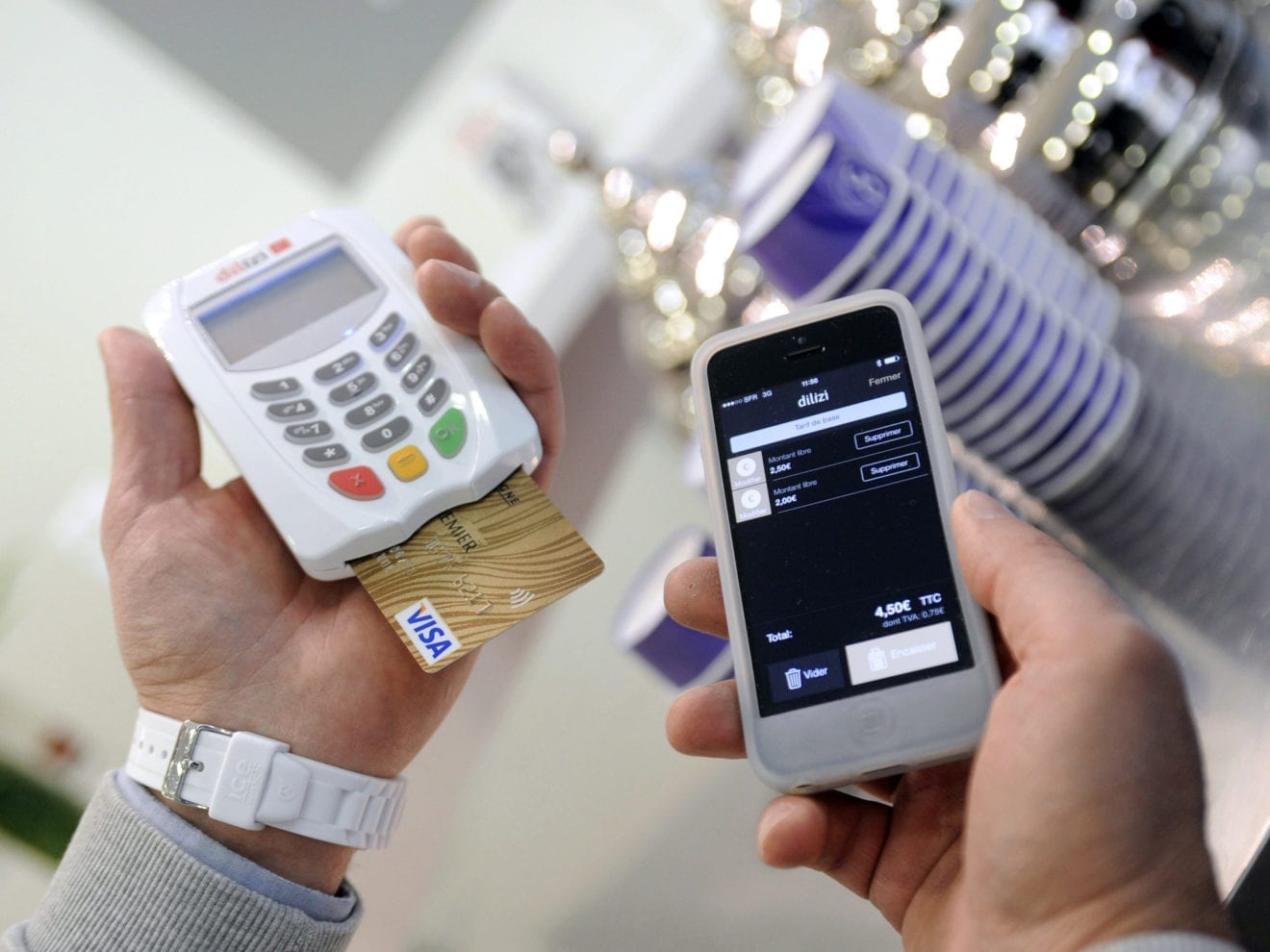
    Samsung Pay will now be available for franchises in South Korea owned or run by Shinsegae, which owns its own brand of department stores, Samsung Electronics has announced.

    The mobile payment service will be available in Starbucks — the coffee chain is run by Shinsegae in South Korea — and famous brands such as E-mart, Shinsegae Food, Shinsegae Dutyfree, and Every Day Retail.

    Samsung said the delay was caused by the difficulty in providing consumers with discounts, points, and membership services.

    Shinsegae has been resisting allowing Samsung Pay in its franchises to promote its own counterpart SSG Pay.

    Samsung Pay hit 2 trillion won transaction as of August and is among the most popular mobile payment services provided by a handset manufacturer. Samsung controls over 70 percent market share in South Korea, its home country.

    It supports all credit cards except Citi’s in South Korea. Support for Citi will begin in the first half of next year, Samsung said.

  • Samsung Galaxy On7 Launched In South Korea

    Samsung Galaxy On7 Launched In South Korea

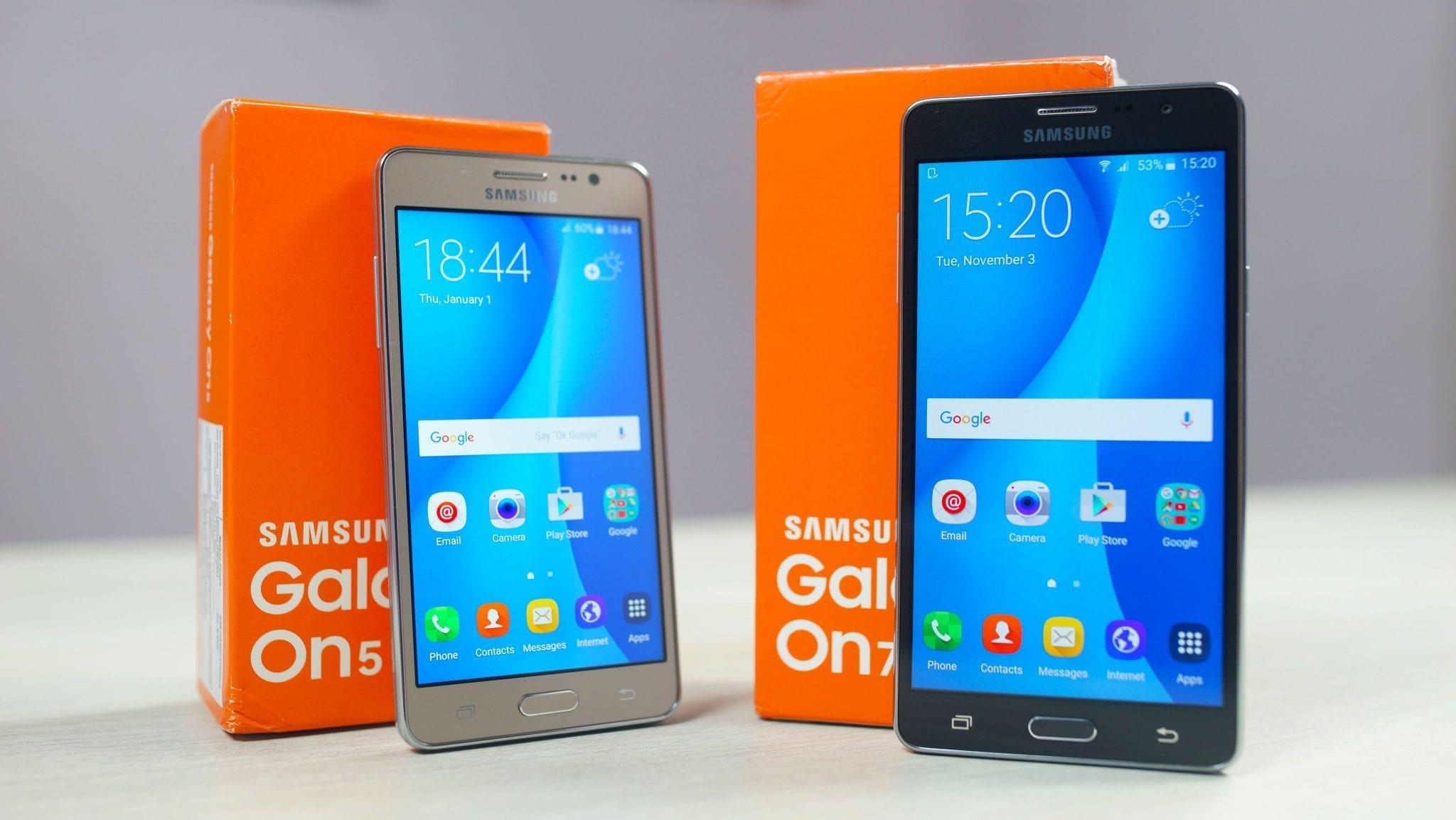
    In order to recover their profit lost due to Galaxy Note 7 issues, Samsung decided to launch the Galaxy On7 in South Korea. The phone is 55-inch and is packed with 3GB Ram and a 16GB memory. It is metal framed and comes with an 8-megapixel front camera and 13-megapixel back camera.

    The Samsung Galaxy On7 is available in two different colors of Black and Gold. It is priced at 399,000 won, which is more or less $399. The phone is available with features similar to its flagship models, like the F1.0 aperture that allows filming even on a low light setting. It is also available with fingerprint recognition and many more.

    It should be remembered that the Galaxy On5and the Galaxy On7 were launched last year in India, but they were restricted in most South Asian countries. On the other hand, the Galaxy On7 is going global after it was launched in China last September and India just last month.

    When it comes to features, the Galaxy On7 does not disappoint. It comes with 5.5-inch touchscreen display and in 1920 x 1080 pixels. The one that was launched in South Korea is available with a 1.6GHz processor, while the Indian and Chinese versions come with Snapdragon 625 chips.

    When it comes to its camera feature, the phone can take impressive selfies as well as video chats. Both front and back cameras come with f/1.9 apertures. The Galaxy On7 runs in Android 6.0.1 Marshmallow and operates with 4G LTE connectivity. It also comes with a metal body that never fails to add a touch of class.

    LG and Apple, the two known rivals of Samsung, were able to experience great sales in South Korea with their models V20 and iPhone 7 respectively. The said boost of sales is blamed to the Note 7 dilemma.But with the coming of the Galaxy On7, Samsung hopes it can make up for the loss profit.

  • Tesla Motors Opens First Showroom In South Korea’s Largest Mall

    Tesla Motors Opens First Showroom In South Korea’s Largest Mall

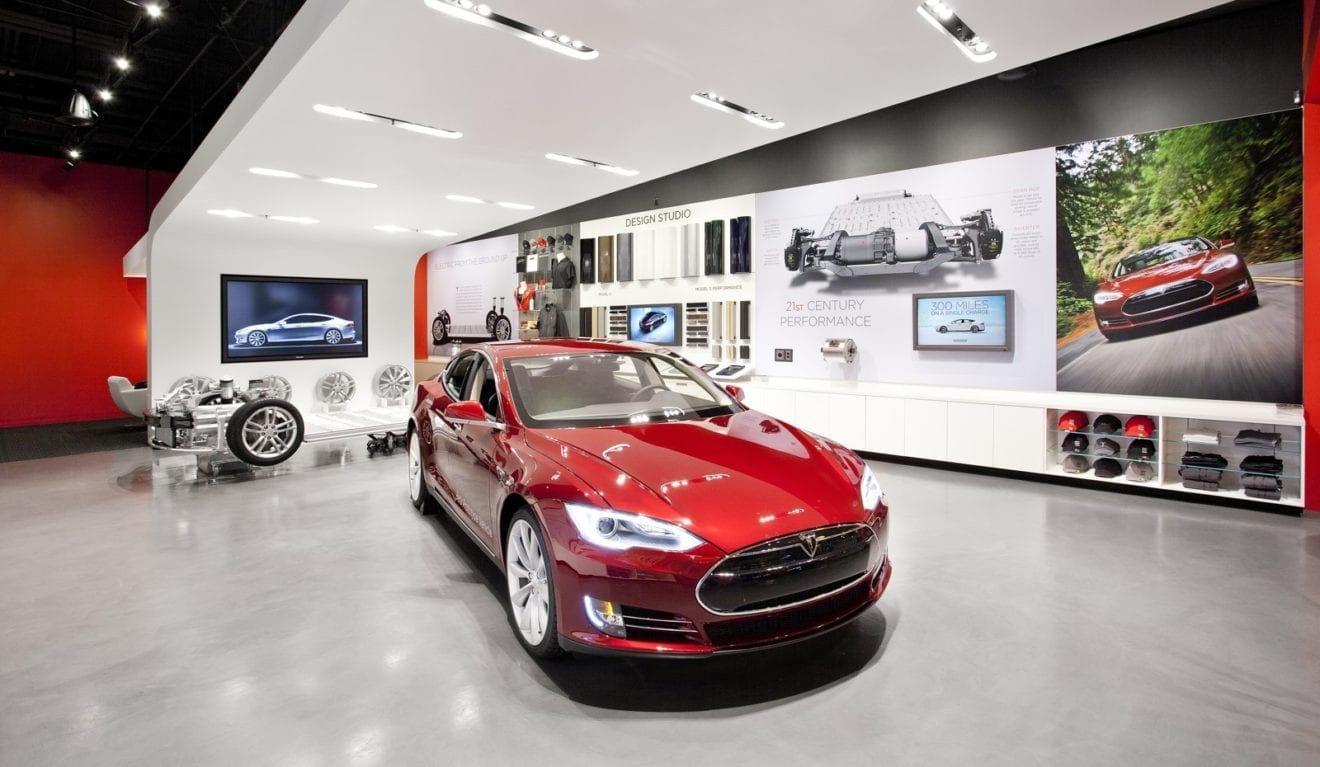
    Teslarati reported on November 28 that Tesla Motors is all-set to open its first showroom inside South Korea’s largest shopping mall, the Starfield Hanam Complex. The store is expected to open today. However, the news didn’t do much to the stock as TSLA declined 0.41% during after-hours trading on Monday.

    The company’s latest store in Gyeonggi Province would be its first retail outlet in South Korea. With its entry, Tesla may provide tough competition to the region’s largest automaker; Hyundai Motor. The latter is also expected to open a store in Starfield. Moreover, the company is expected to launch its competitively priced Electric Vehicle (EV) before the year-end.

    Moreover, executives of Starfield Hanam indicated that they were notified about the store’s opening date. However, they believe that the date may be delayed, depending on the company’s preparations.

    Teslarati reported: “While the Silicon Valley-based automaker takes aim at expanding its retail presence in South Korea, the company is also busy with laying the ground work for the build out of its Supercharger network across the country.” The company is also reportedly viewing its plans of building supercharging stations around Seoul.

    The report further mentioned that TSLA has also invested in constructing another showroom within the country’s high-end Gangnam district. The district is also considered as the Rodeo Drive of South Korea. Earlier in September, the company had signed a $439,059 lease to get its hands on a three-story upscale commercial building in the district. The store is expected to be surrounded by Ferrari, Lamborghini, and Bentley showrooms. Moreover, neighboring stores will also include Cartier, Dior, and Hermes.

    Wall Street analysts have assigned a PT of $225.13 with a 14.8% upside over the last closing price. Analysts’ ratings include 3 Buy, 1 Overweight, 9 Hold, two Underweight, and four Sell.

  • Under Armour Korea flagships planned

    Under Armour Korea flagships planned

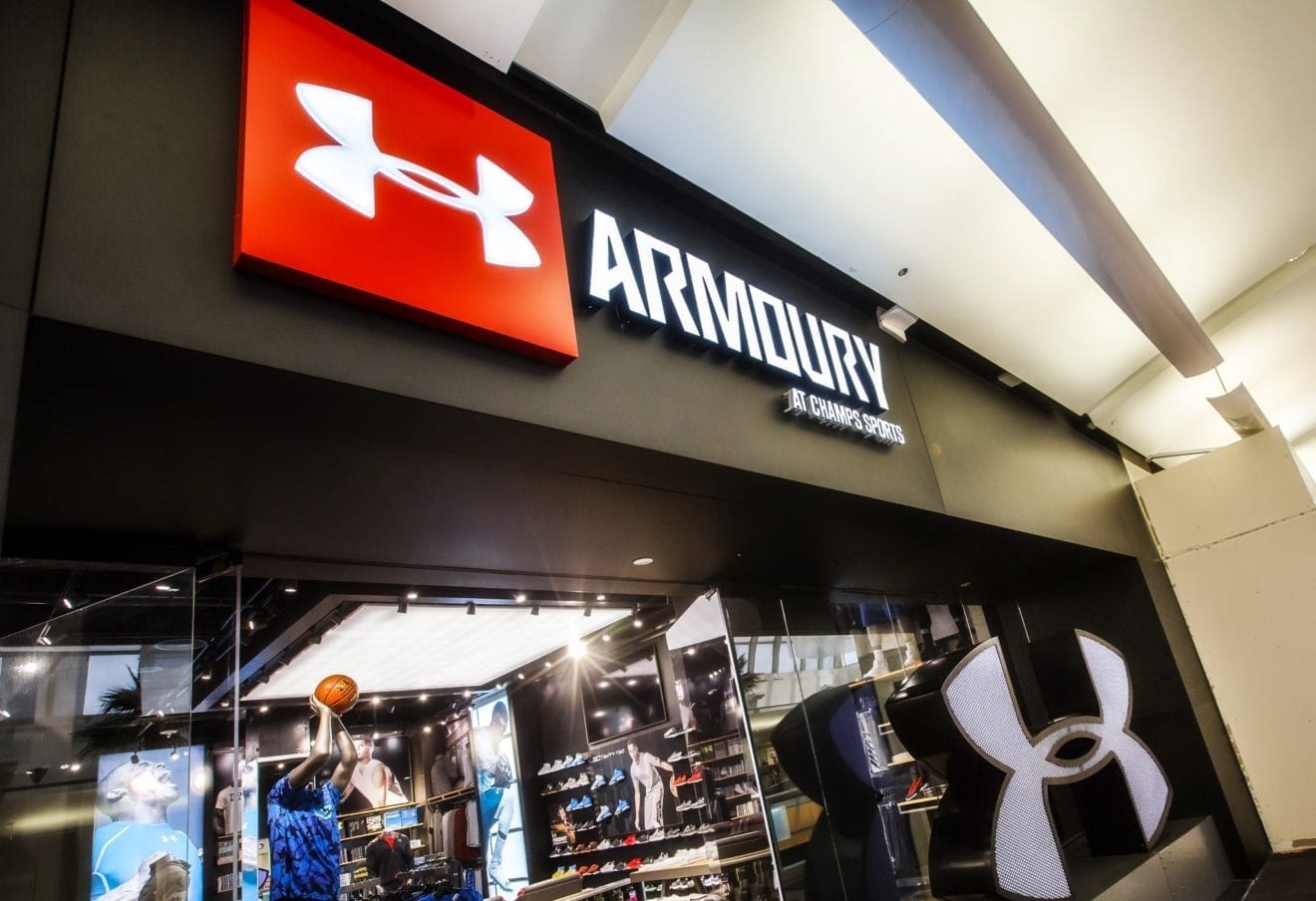
    Under Armour Korea plans to open flagship stores to make the most of its growing popularity in the Asian market.

    The US-headquartered sports brand says it has opened an office in South Korea to operate its business directly from next year, after taking over distribution from local partner Hyosung Galaxia.

    “Under Armour will strengthen its marketing, distribution and retail efforts, providing Korean consumers with the best brand and shopping experience,” said David Song, country manager of Under Armour Korea.

    “We will open our flagship store in southern Seoul in January. The brand will also continue to connect with athletes directly and promote sports, fitness and healthy living through its connected fitness platform, which is the world’s largest digital health and fitness community.”

    Song said Korea is a “pivotal component” in the company’s international growth plan.

    “Through design, innovation and our Under Armour connected fitness platform, we look forward to forging long-term relationships directly with athletes at every level in the country.”

  • Cebu Pacific opens office in Seoul

    Cebu Pacific opens office in Seoul

    Local carrier Cebu Pacific opened Tuesday its regional office in South Korea as part of its regional promotion and expansion.

    In a statement, CEB said its office is located at 7th floor, Section B, Sesomunro 106, Jung-Gu, Seoul, Korea.

    CEB’s Korea branch office will provide tickets sales, reservations services and customer support. It will aid in boosting the airline’s promotion and marketing strategies in Korea.

    “CEB continuously looks for opportunities to expand services and target markets in the most convenient way. With the opening of CEB’s Korea branch office, we make ticket purchase and reservations more accessible to travelers while cultivating Cebu Pacific’s operations in the region. We remain committed to offering the most affordable air fares between the Philippines and Korea, and to contributing to the trade and tourism agendas of the communities we cater to,” said Michael Szucs, CEB Chief Executive Adviser.

    Currently, CEB operates daily to and from Incheon-Manila/Kalibo/Cebu, and twice weekly to and from Busan-Manila utilizing 180-seater Airbus A320 aircraft. The A320 is a proven and reliable aircraft with low operating costs, which means lower fares for our customers.

    CEB flew over 250,000 passengers between the Philippines and Korea from January and September 2016. Passengers from Korea can use CEB’s extensive network to visit the Philippines’ popular domestic destinations such as Boracay, Coron, Davao and Puerto Princesa via easy flight connections through Manila.

    CEB currently offers flights to a total of 36 domestic and 30 international destinations, operating an extensive network across Asia, Australia, the Middle East, and USA. Its 57-strong fleet is comprised of six Airbus A319, 36 Airbus A320, six Airbus A330, eight ATR 72-500, and one ATR 72-600 aircraft. Between 2016 and 2021, CEB expects delivery of 32 Airbus A321neo, two Airbus A330, and 15 ATR 72-600 aircraft

  • South Korean department stores set to smash sales record

    South Korean department stores set to smash sales record

    South Korean department stores are tipped to chalk up sales of more than 30 trillion won (US$25.6 billion) for the first time this year.

    That would make if 86 years since the country’s first department store opened in 1930.

    Industry commentators say the figure reflects the retail category’s emergence from “years of stagnation” to return to growth as they pursue new alliances, an expanded food offer and eCommerce.

    Lotte, Hyundai and Shinsegae account for 80 per cent of the Korean department stores market with Galleria, AK Plaza and smaller brands hold the remainder.

    Just seven years ago, department store sales surpassed the 20 trillion won barrier – this year’s projection is 31 trillion, a remarkable growth rate by any measure, especially considering sales stagnated at 29 trillion won for the last four years.

    “Despite the prolonged economic slowdown and changing consumption trend, the domestic department store market is expected to post growth this year thanks to new concept stores and the expansion of online channels,” a Shinsegae Department Store official said.

  • Hard half-year for Luk Fook Holdings

    Hard half-year for Luk Fook Holdings

    Revenue plunged by 21.5 per cent for jeweller Luk Fook Holdings (International) to reach HK$5.5 billion (US$709 million) for the six months to September 30.

    Its interim results also show a drop of 31.5 per cent in overall same-store sales for the period.

    However, its overall gross margin improved by 5.3 points to 28 per cent as a result of a relatively high gold price and higher gemset jewellery sales mix. Because of this, the gross profit decreased by only 3 per cent to HK$1.5 billion.

    Mainland China accounted for 54.6 per cent of total profits, an increase of 12.8 points.
    With a lacklustre market, retail revenue in Hong Kong plunged by 33.4 per cent to $2.642 billion, while the wholesale business shot up by 51.1 per cent to $361.6 million because of an increase in scrap gold sales as well as wholesale rough diamonds.

    Luk Fook says a relatively high gold price saw gold sales fall more than expected.

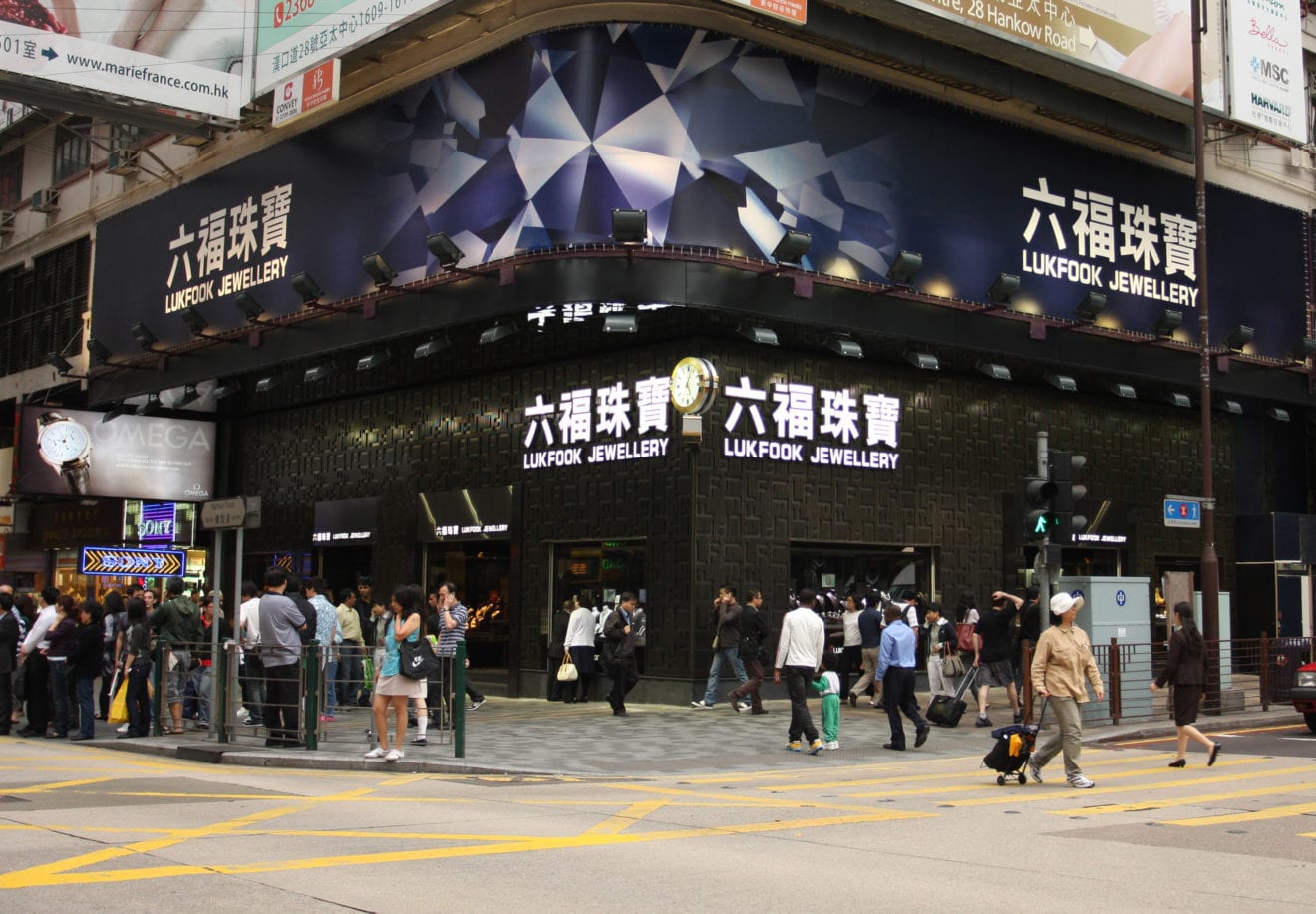
    During the six months, the group added 27 Lukfook shops worldwide, including 24 in China (nine of them licensed shops), a self-run shop in both Macau’s casino district and New York,and  a licensed shop in Seoul. This brought its total to 1455 Lukfook shops (up from 1412 at the same time last year), spanning Australia, Canada, China, Hong Kong, Korea, Macau, Singapore and the US, as well as nine 3D-Gold shops (up from four) on the mainland.

    The group says it has been striving to diversify its product mix, and since 2010 has been trying to expand its mid- to high-end watch business. At the end of September is was the authorised dealer of 34 watch brands including Audemars Piguet, Bulova, Burberry, Bulgari, Emporio Armani, Eterna, Frederique Constant, Longines, Omega, Oris, Rado, Tag Heuer, and Victorinox Swiss Army.

    For the six months, the watch business contributed revenue of HK$104.49 million down from HK$119.39 million for the same period last year, representing 1.9 per cent of the group’s total revenue, a 12.5 per cent decrease.

    Looking ahead, the group aims to continue to develop its eCommerce business and to further strengthen cooperation with eCommerce platforms in China. At the end of September, the group had 15 online sales platforms in China, including JD.com, Suning.com, Tmall.com and VIP.com.

  • Korean food companies move into direct retail

    Korean food companies move into direct retail

    Korean food companies are reaching out to consumers through face-to-face encounters at their own branded cafes and restaurants.

    And they are reaping the rewards: upgrading their company image, testing new products and increasing sales.

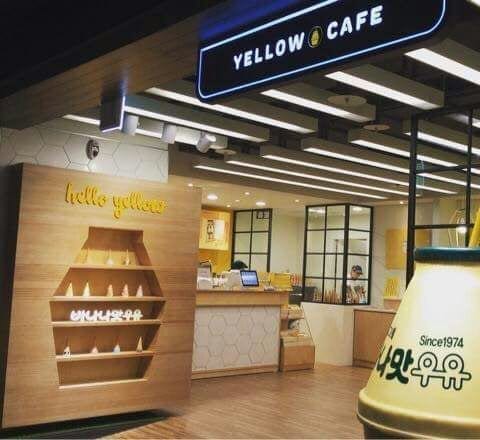
    Binggrae gave its Banana-flavored milk, a product that has survived for 40 years, a new twist in March by opening a cafe in downtown Seoul that sells beverages and ice cream based on the milk. Opened in collaboration with Hyundai Department Store that hosts the cafe at its downtown outlet, Yellow Cafe is making monthly sales of some 100 million won (US$85,178), company officials said.

    yellow-cafe

    Binggrae also worked with Olive Young, a health and beauty store chain, to sell body care products based on its milk brands. Last month, it opened a soft ice cream shop at a Lotte Department Store branch in southern Seoul.

    Company insiders say the moves are market tests for Binggrae, which is interested in starting a restaurant business.

    Orion, synonymous with its most popular snack Choco Pie, is operating a dessert cafe, Lab O, in southern Seoul. As its name suggests, the store serves as the company’s research center for dessert products, getting consumer reactions to different flavors and foods tweaked from its mainstream brands.

    Haitai Confectionery & Foods, which recently landed a smash hit with its honey-flavored potato chips, Honey Butter Chips, runs cafe Haitai Ro at two locations in Seoul. The stores sell desserts, as well as character figurines and stuffed animals that enjoy the company’s snacks. Officials at the firm say the cafes are more like “antennae shops” that catch consumers’ preferences.

    Lotte Confectionery has Guylian Cafe at the Lotte Department Store’s Lotte World branch that sells desserts made with the Belgian chocolate. Lotte took over the brand in 2008. Lotte separately operates exhibition booths for its own products in southern Seoul.

    Food companies likewise are working their way directly to consumers through restaurant-style shops.

    SPC Samlip has adopted “grocerant” as its concept store, mixing a grocery store with a restaurant. Its Glucks Schwein, which sells premium processed meats, has German sausages and beer on its menu. The company’s noodle line Hi-myon, launched in 1974, is being marketed at its noodle specialty restaurant Hi-myon Udon. Company officials say they are planning to open 20 Glucks Schwein franchises by 2018 on top of 10 noodle restaurants by the end of next year.

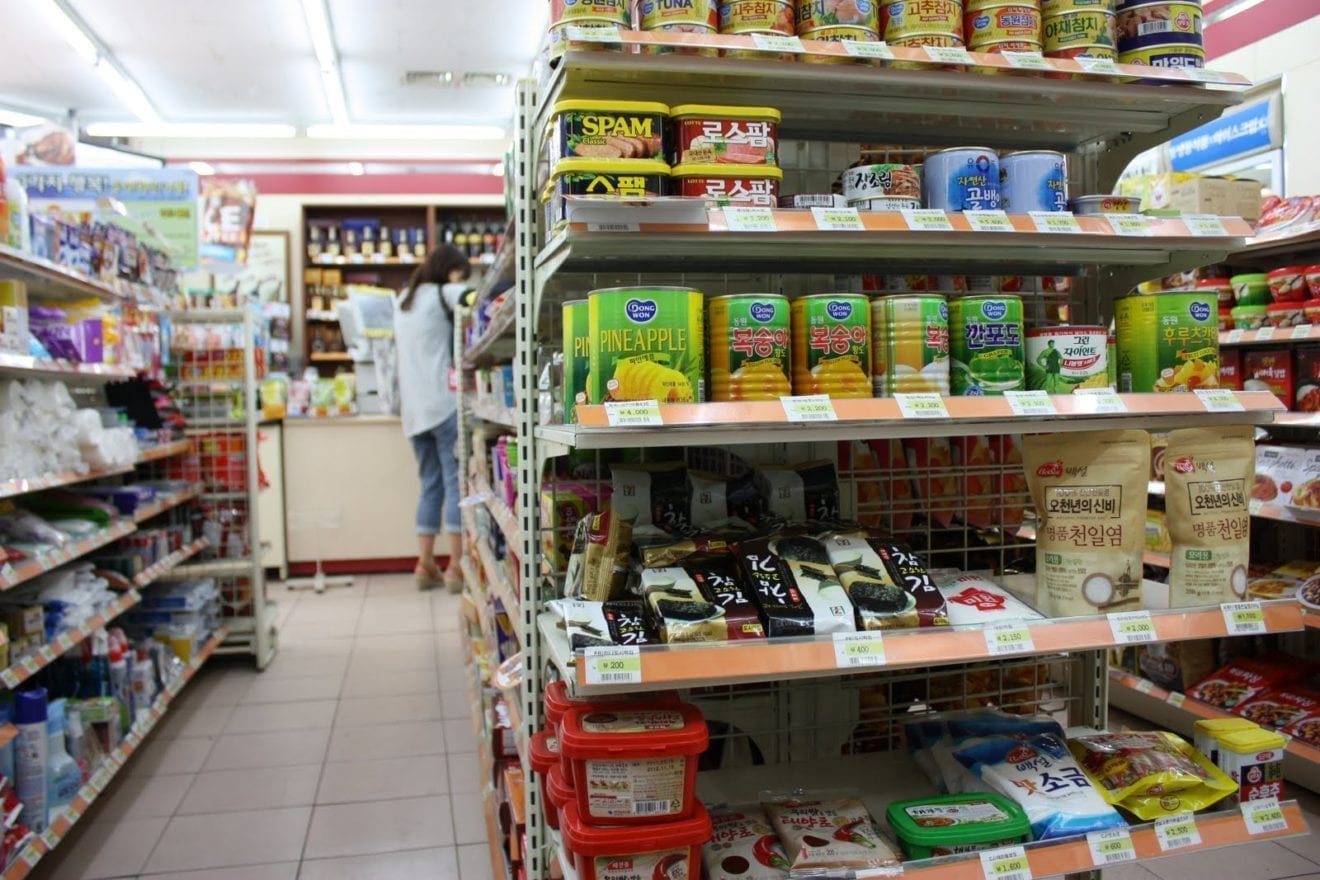
  • Boom time for Korean convenience store sector

    Boom time for Korean convenience store sector

    The Korean convenience store sector is experiencing rapid growth as heavyweights battle for market share.

    The number of convenience stores in South Korea surpassed 33,000 as of the end of October this year, marking a rapid growth since the opening of the first store 27 years ago, according to industry data.

    That’s a significant increase from the 28,994 counted at the end of last year.

    CU had the most with 10,634, followed by GS25 with 10,486 and 7-Eleven with 8486. Japan-affiliated brand Mini Stop had 2326, and With Me, a chain operated by Shinsegae Group, had 1615. There are some 100 others that are not part of franchises, according to the Korea Association of Convenience Store Industry.

    South Korea’s first convenience store opened in southern Seoul in May 1989.

    The rising number of single-person households and aging society are funneling consumers to convenience stores that are near their homes and sell small portions, industry watchers say. Convenience stores have been quick to adapt to such a customer base, expanding from conventional shelf goods, such as snacks and beverages, to lunch boxes and other kinds of meals for singles who don’t want to cook, as well as services, including delivery and financial transactions.

    The sector grew 11.4 per cent last year, visibly comparable with 1.2 per cent growth in 2013 and 4.7 per cent in 2014. Sales increased from 12.8 trillion won (US$10.96 billion) in 2013 to 13.8 trillion won in 2014 and to 17.2 trillion won last year.

    Industry watchers expect sales this year to exceed 20 trillion won, with room for more growth until 2030, considering that South Korea’s per-store sales is only about one-fourth of that in Japan. Japan currently has about 55,600 convenience stores.

  • Smith & Wollensky restaurants going global

    Smith & Wollensky restaurants going global

    US steakhouse Smith & Wollensky, famously described by the New York Times as “the steakhouse to end all arguments”, is expanding its global presence, setting its sights initially on such cities as Bangkok, Hong Kong, Seoul, Singapore, Taipei and Tokyo, as well as Dubai and Mexico City.

    This follows Irish investment company Danu Partners acquiring Smith & Wollensky Restaurant Group (SWRG) from Bunker Hill Capital this year. Its first overseas restaurant was opened in London.

    “Our teams in the US and London have worked closely together to build a robust infrastructure, and this is a perfect platform on which to build a global business,” says Leonard Ryan of Danu Partners. Joining the team will be international development executive Oliver Munday, who in the past 20 years has worked at growing US restaurant brands internationally.

    “Having completed transactions in more than 30 countries with multiple restaurant brands including Hard Rock, Margaritaville and Planet Hollywood, Oliver brings the contacts and expertise needed to allow us to reach our full potential on the international stage,” says SWRG president/CEO Michael Feighery .

    “Smith & Wollensky occupies a special place among the great US fine-dining restaurant brands, and there is global demand for such a classic American steakhouse experience,” says Munday. “We will be entertaining only a handful of select markets … but interest is already strong.”

    Since Danu Partners bought Smith & Wollensky it has embarked upon a program of reinvestment, which as well as expansion includes upgrades of its restaurants in the US.

    Established in 1977 with its headquarters in Boston, Smith & Wollensky Restaurant Group has seven locations in the US. The restaurant has received such accolades as the Grand Award of Excellence from Wine Spectator and an Award of Excellence from Distinguished Restaurants of North America.

    An investment holding company based in Dublin, Danu Investment Partners was founded in 2009 and covers a range of business sectors, with a focus on the hospitality sector.