Tag: Korea

  • iPhone7 hits Korean stores in Note 7’s absence

    iPhone7 hits Korean stores in Note 7’s absence

    The Apple iPhone 7 went on sale in South Korea on Friday, seeking to fill a void left by arch-rival Samsung on its home turf following a damaging recall fiasco over the Note 7 smartphone.

    The South Korean electronics giant discontinued the Note 7 — one of its key iPhone challengers — on October 11 following reports that replacements for combustible models were also catching fire.

    The decision is set to cost Samsung billions in lost profits, and there are already signs that Apple is reaping some of the benefits.

    An official at mobile carrier Korea Telecom (KT) said the first batch of 50,000 iPhone 7s they put up for pre-order a week ago sold out in 15 minutes.

    “I would attribute part of that to the Note 7 effect,” said the official, who declined to be identified because he was not authorised to talk to the media.

    Customer defection is one of Samsung’s biggest concerns, especially as the Note 7 was specifically aimed at taking on the iPhone in the premium handset market.

    In the hope of retaining customer loyalty, Samsung had offered Note 7 users a 70,000 won ($60) phone bill credit if they swapped their faulty phones with another Samsung handset.

    The half-dozen customers buying the new iPhone at a KT store in central Seoul on Friday were all long-time Apple users who had pre-ordered their handsets.

    Office worker Lee Kyung-Hee, 34, said she had moved fast when the pre-order service opened, fearing a surge of interest from unhappy Note 7 owners.

    “I set an alarm and was very quick,” Lee said.

    In South Korea, retail prices for the iPhone 7 and 7 Plus start from 869,000 won and 1.02 million won respectively, for their basic 32GB models.

  • First Tous les Jours Mongolia store opens

    First Tous les Jours Mongolia store opens

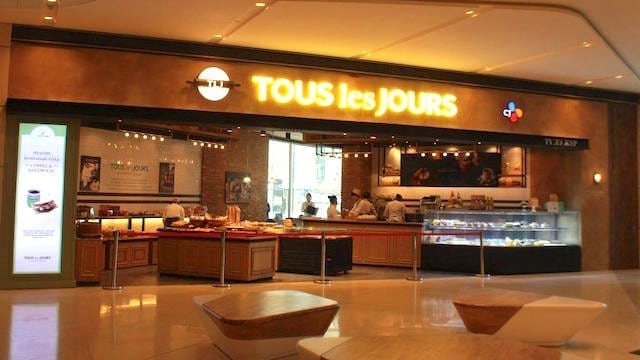
    Korean bakery Tous les Jours has opened its first stores in Mongolia as it broadens its Asian footprint.

    Two Tous les Jours Mongolia shops have opened in Ulaanbaatar in what the company sees as another step in its plan to become a global bakery brand.

    Tous Les Jours Mongolia 2

    Besides Mongolia, the brand’s parent CJ Foodville has 270 Tous les Jours stores in seven countries: Cambodia, China, Indonesia, Malaysia, the Philippines, the US and Vietnam.

    It is the first international bakery to open in Mongolia, where K-pop has amassed a considerable following, raising the profile and acceptance of Korean brands in general – especially music, food and fashion.

    Tous Les Jours Mongolia 3

    A local master franchise has been appointed to lead the brand’s roll-out

    The Korea Times reports that the company’s first Mongolian store in downtown Ulaanbaatar opened on October 31, drawing more than 2000 customers and generating over US$8600 in sales.

    A CJ Foodville spokesman said Tous les Jours opened its second shop at the Shangri-La Mall this week, attracting twice the number of customers it expected.

    tous-les-jours-mongolia

  • South Korean, Chinese cinema giants line up to enter Indonesian market

    South Korean, Chinese cinema giants line up to enter Indonesian market

    The government’s recent decision to allow full foreign ownership in local movie businesses has attracted the interest of South Korean and Chinese cinema giants to invest in Southeast Asia’s largest market, a government official said.

    Creative Economy Agency (Bekraf) head Triawan Munaf said a number of foreign investors were currently conducting feasibility studies for expanding their operations in Indonesia, home to more than 250 million people. Among the big names on the list are South Korean’s Lotte Cinema and Megabox, as well as China’s Dalian Wanda, which is also the world’s largest cinema chain operator.

    “Hopefully they can come by the middle of 2017,” he said on Thursday on the sidelines of the DBS Asian Insights Conference 2016 in Jakarta.

    Despite being the largest economy in Southeast Asia, Indonesia has one of the least penetrated cinema markets in the world. Data gathered from various commercial cinemas shows that there are only about 1,100 film screens available in the whole of Indonesia, with 35 percent of all theaters being in Jakarta.

    With its population size, Indonesia, Triawan said, ideally should have 15,000 screens.

    BKPM estimates that the recent removal of certain sectors from the nation’s negative investment list, signed by President Joko “Jokowi” Widodo earlier this year, will help efforts to hit the investment target of Rp 594.8 trillion (US$43.6 billion) by the end of this year.

    Under new regulations, foreign investors can now fully own local cinemas, film production houses and distribution firms.

  • Military minimall for US troops in Korea

    Military minimall for US troops in Korea

    A $6.2 million US military minimall has been officially opened for troops relocating to an expandedCamp Humphreys in South Korea.

    The Army and Air Force Exchange Service (AAFES) centre includes fast-food restaurants, a barber shop and a retail store, across the street from a new barracks at the US Army garrison 88km south of Seoul. This means soldiers will no longer need to take a bus to the central food court and commissary that previously served the whole post.

    Soldiers at the opening ceremony were told the minimall will save them time and help alleviate queues and crowding. The complex also is near a chapel, theatre and gym.

    Its 124-seat dining room has a Starbucks, Subway and Taco Bell. There is also a dry cleaner, an eight-chair barber shop and a grocery store that also sells other items.

    Construction of the almost 24,000 sqft (2229 sqm) building three years ago, with the South Korean government paying $4.4 million and the AAFES $1.8 million. The South Korean government is funding most of the $10.7 billion overall expansion project.

    AAFES regional senior VP Karin Duncan says four more amenities will open late next year, including a 300,000 sqft post exchange.

    The US has about 28,500 serving military in South Korea, which remains technically at war with the North after the 1950-53 conflict ended in an armistice instead of a peace treaty.

  • Korean anti-corruption law impacts on retail sales

    Korean anti-corruption law impacts on retail sales

    The Korean anti-corruption law may be showing its desired extra effect of creating more time for family and home cooking if sales record at a leading retailer is any indication.

    October sales figures from E-mart released show an 11.5 per cent increase for the month to 1.14 trillion won (US$987.3 billion) compared to a year ago. Discount chain E-mart marked a 7.6 per cent jump while the retailer’s warehouse outlet Traders made a 43.7 percent leap. The online store E-mart Mall showed a 28.3 percent increase.

    The retailer had recorded a 6.1 per cent sales increase for the third quarter.

    Company officials said the Korean anti-corruption law that took effect on September 28 likely boosted the sales. The law sets limit to the price of gifts and paid meals that can be provided to public employees, school teachers and journalists. People who may serve one’s interests are also restricted by the price limit.

    Advocates of the law, still under controversy for restricting even gifts of good will and intent, had argued that the law will free individuals from business-related dinners and engagements, giving them personal evening time.

    “People leaving office on time and shopping for groceries, all due to the anti-corruption law, appear to have contributed largely to the double-digit growth in E-mart’s sales,” Lee Joon-ki of Mirae Asset Daewoo said.

    Food sales at E-mart rose 13.1 per cent in the month from a year ago, outdoing the average sales increase. In a breakdown, sales of fresh foods jumped 14.1 per cent while ready-made meals increased 14.5 per cent. Sales of processed foods were up 11.2 per cent.

    The number of customers coming in from 6pm had also increased, according to E-mart. The retailer had 3.5 per cent more shoppers since the day of the law’s enactment to November 8. The number of customers in the 6-9 pm period was up 5.3 percent.

    “We are focusing our marketing on foods section for our 23rd anniversary event since food sales are improving,” Choi Hoon-hak, marketing team chief at E-mart, said. “We intend to continue to introduce a variety of products that fit into the lifestyle changes of the customers.”

  • Lotte Shopping profit soars 203 per cent

    Lotte Shopping profit soars 203 per cent

    While revenue for its third quarter rose 2 per cent year-on-year, South Korea’s Lotte Shopping Companysaw its net profit soar 203.9 per cent to KRW78.2 billion (US$68 million).

    The retail giant says these are preliminary figures yet to be independently audited.

    Third-quarter revenue rose 2 per cent to KRW7.9 trillion. Domestic department stores maintained solid same-store sales growth (SSSG) of 2.2 per cent, while hypermarket SSSG faded 2.4 per cent in the face of a sluggish industry and the impact of renewal construction.

    Internationally the company had strong sales growth, apart from weakness for its China hypermarkets because of competition. Department store SSSG rose 9.2 per cent while hypermarkets declined 5.1 per cent.

    Lotte’s third-quarter operating profit dipped 10.1 per cent to KRW176 billion, both for department stores and hypermarkets domestically.

    On the international market there was an improvement in operating loss thanks to enhanced efficiency in all stores, plus there was an increased profit contribution from its cinema and electronics businesses.

    There was an increase in labour costs because of a one-off special incentive paid to all Lotte employees.

  • Skechers in Korea joint venture

    Skechers in Korea joint venture

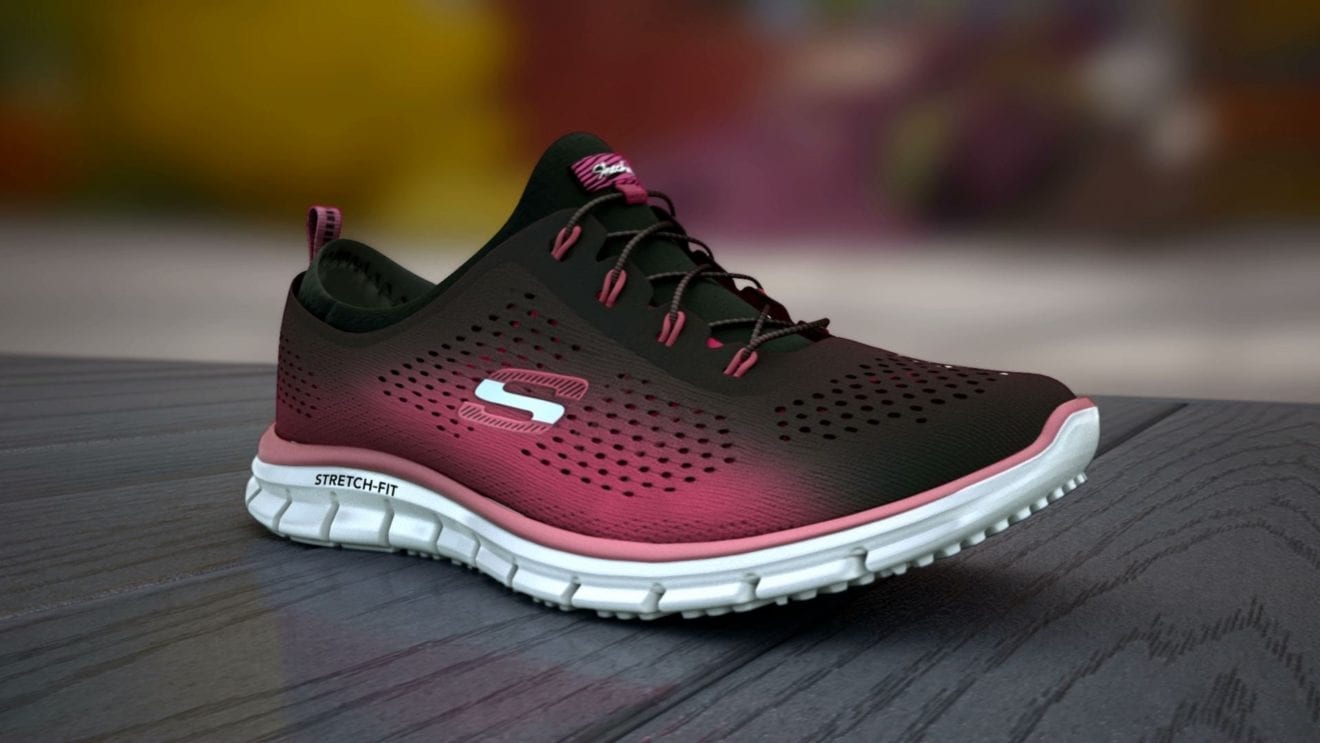
    Skechers in Korea will now be managed by a joint venture with the parent company.

    Previously imported and distributed by a third-party company, Skechers head office in the US has confirmed it has partnered with Luen Thai Enterprises in a new business called Skechers Korea Co.

    “This will enable Skechers to use its proven sales and marketing strategies to further expand the brand in one of our key international markets,” the company said in a statement released in the US.

    “With a dedicated team from our previous distributor, LS Networks, and the knowledge and acumen of our Skechers China team, we believe we can profitably grow our business in South Korea and truly penetrate the region with a strong presentation from our vast collection of men’s, women’s and kids’ footwear.”

    Skechers footwear has been available in South Korea for more than 15 years.

    “ In that time, we have developed a great footprint with a network of more than 55 Skechers stores and built the brand through strong marketing campaigns, including using the talents of exceptionally popular endorsees like K-Pop stars Sistar and EXO in Skechers marketing campaigns,” said David Weinberg, COO and CFO of Skechers.”

    LS Networks distributed Skechers in South Korea from 2009 to 2016.

    “We’ve been very pleased with the consumer response to the Skechers product in South Korea,” added Sung Hun “Scott” Lee, previous senior GM of Skechers’ Korean distribution partner and now president of Skechers Korea Co. “Through my time with LS Networks, I’ve seen firsthand how Skechers has grown in Korea, most recently through the Skechers D’Lites craze that started here in 2015 and spread through Asia and then around the globe.

    “Now as part of the Skechers global team and with key members of my previous team transitioning with me, we’ll have the direct resources, support and insight to really take the business to the next level.”

    Willie Tan, CEO of Skechers Asia joint ventures, said forming a JV with Skechers that combines its global expertise with the local partner’s unique insight in this market “we’ll be able to more efficiently build the brand and more effectively directly target merchandising to the unique tastes of consumers across South Korea”.

    “We expect this will strengthen our business not only in South Korea but further synergise the business across Asia.”

  • Nokia to deploy first LTE-R network in Korea

    Nokia to deploy first LTE-R network in Korea

    Nokia has secured a contract to deploy the world’s first LTE-R (LTE-railway) LTE network in South Korea.

    The vendor will deploy the network on a railway line between Wonju and Gangneung as part of a line extension to prepare for next year’s Winter Olympics in PyeongChang.

    The network will support both operational and maintenance services on a high-speed commercial railway line operating at speeds of up to 250 km/h, providing high-speed connectivity between trains, stations and other railway facilities.

    Nokia said the project is intended to serve as a model for future deployments of LTE-R technology and help further define LTE-R standardization efforts.

    “South Korea has been a world leader in the use of mobile broadband technology to make public services of all kinds safer, more efficient and reliable,” Nokia head of Korea Andrew Cope said.

    “With a thirty-year history in the delivery of GSM-R mobile networking technology for railways, and as a pioneer in the development of LTE-R solutions, we are pleased to partner with KRNA to bring these cutting edge capabilities to the country as they prepare to host one of the world’s premier sporting events.”

  • Rimowa wins lawsuit against Korean copycat

    Rimowa wins lawsuit against Korean copycat

    Luggage manufacturer Rimowa has won a lawsuit against the owner of the Holly brand in South Korea.

    A Seoul court has acknowledged that the grooved design is a defining characteristic of Rimowa products so deserves to be protected from imitation.

    Saying the Holly suitcase has a similar grooved design and could be mistaken for a Rimowa product, the court slapped a ban on further distribution or sale of the Holly suitcase to protect consumers from confusion.

    “We couldn’t be happier that the court acknowledged the brand character of our grooved design,” says Rimowa president/CEO Dieter Morszeck.

    Rimowa’s first aluminum suitcase with the signature grooves was produced in Germany in 1950.

  • Korean cafe boom drives desserts market

    Korean cafe boom drives desserts market

    The booming networks of Korean cafes has driven a huge rise in the country’s dessert market.

    According to data issued by the government, the sector expanded sales by 13.9 per cent in 2014 from a year earlier – the last year for which figures are available – on rising demand for sweets and non-alcoholic drinks.

    The combined value of the local confectionery and non-alcoholic beverages markets stood at 8.9 trillion won (US$7.9 billion) in 2014, up 13.9 per cent from a year earlier, according to the available data compiled by the Ministry of Agriculture, Food and Rural Affairs.

    The dessert market accounted for 10.7 per cent of the country’s entire food service market worth 83.8 trillion won in 2014.

    The ministry said demand for high-end bakeries and cafes led the sharp growth in the dessert market as people tend to spend their time and money more on their health and well-being.

    The confectionery industry posted sales of 4.6 trillion won in 2014, up 10.5 per cent on-year, while sales of the beverage market jumped 16.8 per cent on-year to 4.3 trillion won.

    In particular, coffee shops saw their sales rise 25 per cent on-year to 2.5 trillion won in 2014, taking up 47 per cent of the country’s coffee market including instant coffee packets and drinks.


  • Rhenus opens its first office in South Korea

    Rhenus opens its first office in South Korea

    The Rhenus Group is opening its own business operations in South Korea at the beginning of November. The logistics specialist also founded the national company known as Rhenus Logistics Korea at the same time. The office in the South Korean capital Seoul will organise sea and air freight operations, third-party logistics and domestic transport services in future.

    “The primary motive for opening the business site in South Korea is to continue consolidating our Asian network; we’ve been continually expanding this during the past few years. Seoul forms the centre of South Korea and is the focal point of the Sudogwon metropolitan district.

    “More than 25 million people live there and this accounts for half of the population of the country; it therefore provides an excellent starting point for our range of logistics solutions,” says Tobias Bartz, who is responsible for the logistics specialist’s Asian business on the Rhenus Management Board, citing the reasons for the latest developments.

    The Rhenus Group is particularly aiming to establish itself as a partner for transporting, handling and storing raw materials, semi-finished products and industrial and consumer goods in the South Korean market with its complete range of services. Rhenus Logistics Korea then plans to develop the individual solutions for specific sectors, combined with local expertise.

    Much of the country’s trade takes place with Europe – but the new company will also focus on transport between different Asian countries. In terms of its infrastructure, South Korea provides excellent conditions for sea and air freight services for the new national company with Incheon International Airport, one of the largest in Asia, and the port of Busan, which is one of the top 10 in the world according to the number of containers handled. “We also envisage further growth in this market in future after completing the starting phase in Seoul,” says Bartz.

  • Korean wealthy individuals to jointly buy a Homeplus store

    Korean wealthy individuals to jointly buy a Homeplus store

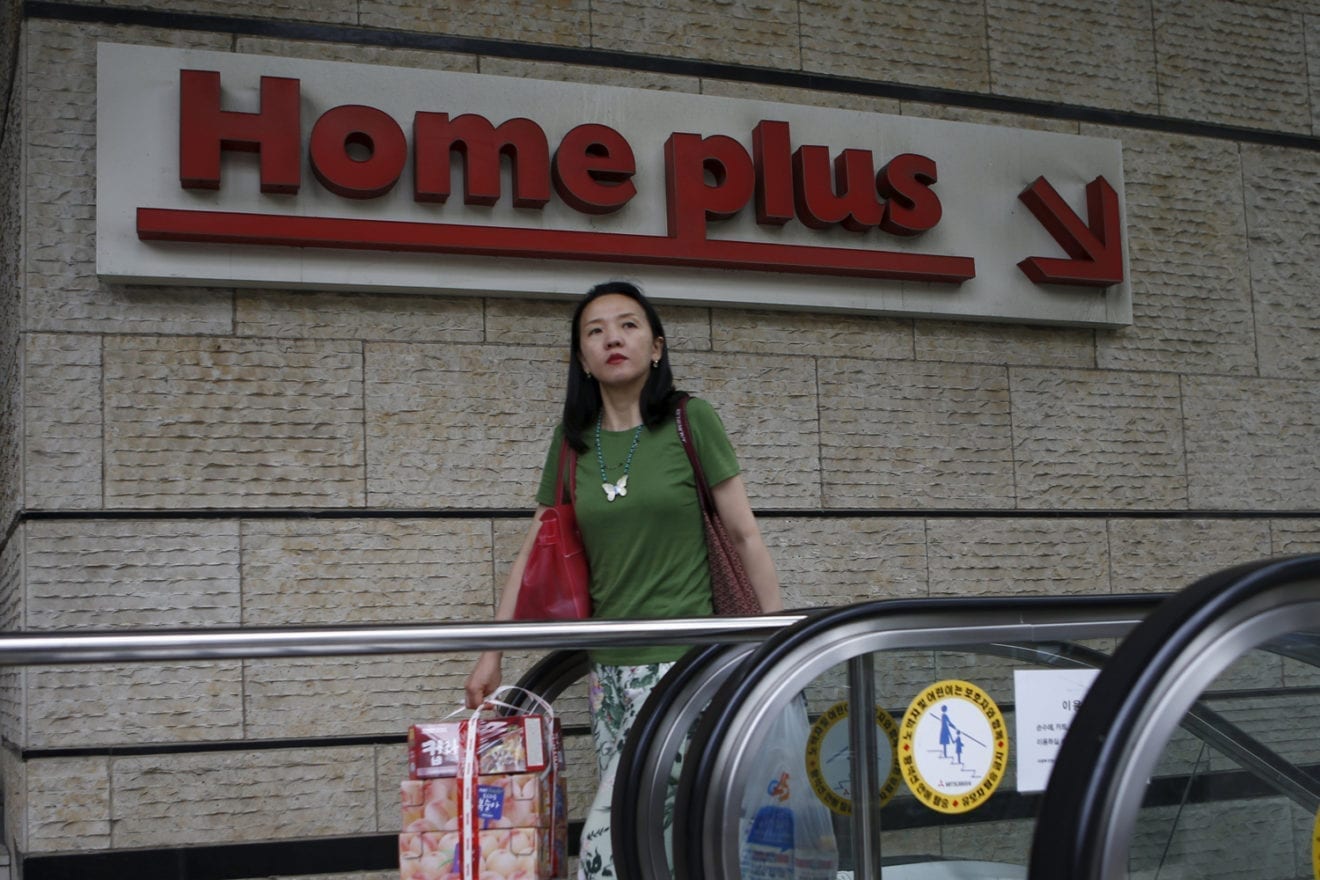
    A group of affluent individuals would come up with 90 billion won ($75.5 million) to jointly own a Homeplus Co. superstore outlet in the suburban city of Pyeongchon, Gyeonggi Province, evidence that retail investors are joining their institutional counterparts in search for alternative investment options amid prolonged low-interest rate environment.

    According to investment industry on Tuesday, Vestas Investment Management Co. was named as a preferred bidder to buy Homeplus’s Pyeongchon branch from Alpha Asset Management Co. The purchase price is expected to reach about 90 billion won.

    homeplus

    Vestas, a Seoul-based investment manager that specializes in real estate investment, will be creating a private equity fund in hands with wealthy retail investors for the takeover deal, raising 30 billion won through the individual investors and borrowing the remainder from financial institutions.

    The investment manager tapped demand from retail investors through preferred client service centers of banks and brokerage houses in affluent neighborhoods in Seoul last week. There are many clients who are seeking medium-risk and medium-return private equity investment products amid low-interest rate environment and they are willing to invest up to billions of wons, said a preferred client service center officer who asked to be unnamed.

    The elite client banking and brokerage service centers are planning to offer the real estate private equity fund from mid-November until the end of this year. The fund limits the number of retail investors to 49, requiring each individual to invest roughly 600 million won in average. Vestas Investment Management expects its real estate private equity fund to become popular among well-to-do retail investors as it carries lower risk compared to securities and delivers higher profits than bonds. This would be one of very few cases in Korea that a small group of rich individuals taking over a large-sized hypermarket by creating a real estate fund, market experts said.

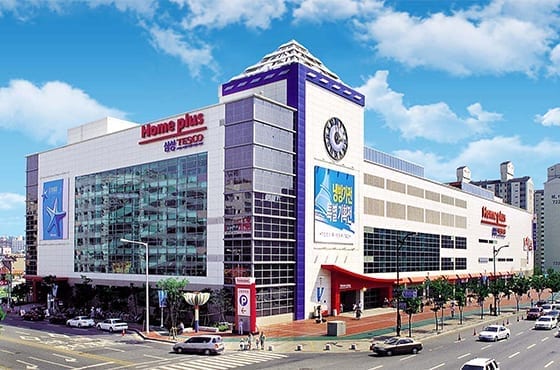
    The Homeplus Pyeongchon branch is in Pyeongchon, a new town located on the southern outskirt of Seoul. The superstore with a total area of 28,582 square meters is four floors high above ground and two floors below. Sitting near a large-sized residential district with easy access to public transportations, the hypermarket outlet has steadily generated profits since it opened in 2008. The retail outlet is attached to a 12-year lease contract with household name Homeplus and it expects to deliver profits with annual return rate of between 5 and 6 percent.

  • Vietnam & South Korean businesses signed 10 contracts

    Vietnam & South Korean businesses signed 10 contracts

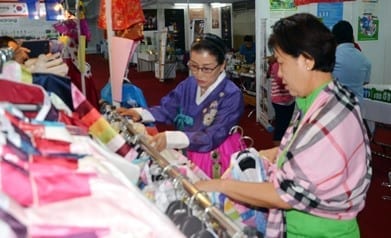
    The five-day fair themed “Viet Nam-South Korea Cooperation for Mutual Development” was held in the southern province of Ba Ria-Vung Tau.

    Truong Van Thoi, director of the provincial Trade Promotion Centre, said the event attracted some 40,000 visitors who spent over VNĐ6.5 billion.

    Wooden furniture businesses earned the highest revenue totalling VNĐ1.7 billion, followed by firms in textile, garments and the retail sector.

    Meanwhile, South Korean companies posted total revenue of some VNĐ1.1 billion.

    The fair facilitated local enterprises and businesses of both sides to foster their trade promotion activities, share market information and exchange experiences, helping them find suitable partners.

    The event featured 348 booths showcasing products of 194 firms, including 84 from Ba Ria-Vung Tau and 35 from outh Korea.

    Participants brought to the fair various items, including wooden products, handicrafts, interior décor and garments, as well as seafood, plant varieties, cosmetics and other consumer goods.

  • Samsung offices in South Korea raided over corruption scandal

    Samsung offices in South Korea raided over corruption scandal

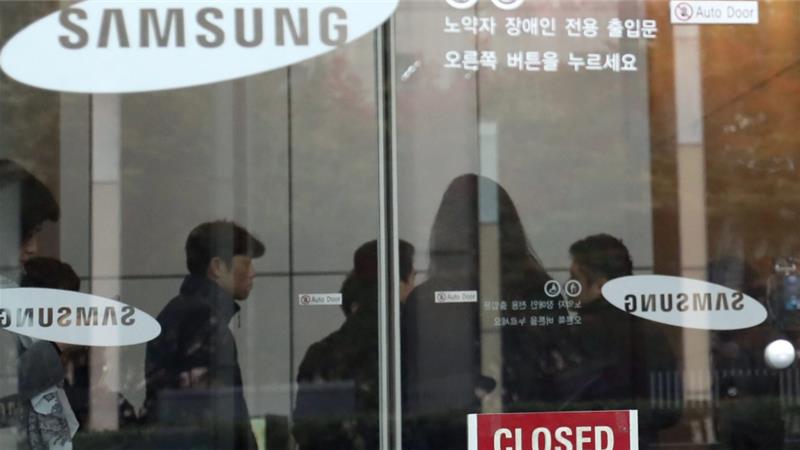
    South Korean prosecutors investigating a confidante of President Park Geun-hye for corruption have searched the offices of Samsung, according to local media.

    Samsung, the world’s largest manufacturer of smartphones, televisions and memory chips, is suspected of having secretly funded the sporting activities of the daughter of Choi Soon-sil, Park’s friend, it was reported on Tuesday.

    Samsung, which is already reeling from the disaster surrounding its Galaxy Note 7 smartphone, confirmed that its offices had been raided but gave no further details.

    The company is suspected of having transferred $3.1m to a company owned by Choi in Germany.

    The money was allegedly used to pay for daughter’s training as a dressage rider.

    Growing scandal

    Tuesday’s raid also came just as Park agreed to cede some control of state affairs as the result of the damaging corruption scandal that has engulfed her administration.

    In what is being considered a major political concession, Park told the speaker of the National Assembly that she would accept a prime minister chosen by the opposition-controlled legislature “and let him control the cabinet”.

    The prime minister is normally a largely symbolic post in South Korea, where power is firmly concentrated in the executive.

    It was a double surrender by Park – effectively jettisoning her own nominee for prime minister and relinquishing some of her extensive powers to whoever parliament chooses.

    It was reported from Seoul, said that Park’s concession “doesn’t go perhaps as far as some opposition members were demanding – that all affairs should be handled by the prime minister and that the president should simply step back altogether – but it does allow some ground for work to start on some agreement”.

    Park is facing a growing scandal over Choi’s alleged influence on state affairs despite her having no official position in the government, with tens of thousands of protesters in Seoul demanding Park’s resignation over the weekend.

    Choi has been arrested on charges of fraud and abuse of power.

    The charges relate to allegations that Choi used her personal relationship with Park to coerce donations from large companies like Samsung to non-profit foundations she set up and used for personal gain.

    She is also accused of interfering with government affairs, including the nomination of senior officials.

    Unhealthy influence

    Reports of the unhealthy influence Choi wielded over Park have sent the president’s approval ratings plunging to record lows and led to mass street protests calling on her to resign.

    In a bid to restore public trust, Park reshuffled her advisers and senior cabinet members, and nominated a liberal candidate for prime minister from outside her conservative Saenuri Party.

    But opposition parties had pledged to block her nominee on the grounds that they were not properly consulted.

    During their meeting, Chung Sye-kyun, the parliamentary speaker, told Park that her biggest priority should be to alleviate widespread public concern and anxiety.

  • Retailers need to embrace changing Chinese tourist demographics

    Retailers need to embrace changing Chinese tourist demographics

    Increasing numbers of Chinese tourists are travelling alone – and retailers in Asia seeking to cash in on their growing spawning power need to find ways to embrace the trend.

    Traditionally, Mainland Chinese tourists have travelled in groups – sold packages before they leave home and effectively herded into shopping destinations, often with commissions paid to tour organisers or guides.

    But that is set to change soon with the Beijing-based government tightening the rules on cheap package tours.

    South Korea is a case in point where the trend has been identified early and active work is underway to appeal to the new demographic.

    Duty-free operators and department stores have stepped up customised marketing targeted at shoppers in their 20s and 30s and deep-pocketed travelers from China, as they have become the main customers over the past few years.

    The shifting focus took on a new urgency as the Chinese government has been moving to tighten regulations on cheap tour packages, raising concerns among South Korean businesses relying on them as the biggest source of travel income.

    Out of 5.98 million Chinese nationals who visited South Korea last year, nearly 60 per cent were independent travelers, according to the state-run Korea Tourism Organization.

    Lotte Duty Free, which is operated by Hotel Lotte, offers a “personal shopper service” for VIP customers to pair them up with stylists who give advice and suggest products that may suit their needs.

    The nation’s largest duty-free operator has about 600,000 customers registered for VIP programs and also provides airport pick-up services for those who spend a certain amount of money.

    Shilla Duty Free, which is operated by Hotel Shilla, said it regularly holds “beauty classes” to advise on the best cosmetic products and offer makeup services to attract Chinese customers in their 20s and 30s.

    Tourism officials stress efforts to develop a wider array of options for Chinese travellers to encourage them to revisit in the future.

    “We have focused on attracting more independent travelers over the past years not only from China and Japan but also Southeast Asian nations and the Middle East to meet their diversifying needs and upgrade the tourism industry’s competitiveness,” Hwang Myung-seon, a senior official at the Ministry of Culture, Sports and Tourism, said.