Tag: Korea

  • E-Land to stop selling Coffee Bean & Tea Leaf in China

    E-Land to stop selling Coffee Bean & Tea Leaf in China

    South Korean fashion and retail group E-Land is surrendering its Coffee Bean & Tea Leaf China franchise licence.

    The move is expected to improve the conglomerate’s reportedly strained cash-flow situation and mark a more focused approach to retail. It comes after expanding the franchise to 17 locations in China over the past two years. It had originally pledged to expand the Chinese business to 1000 stores.

    The group’s liquidity has been under significant pressure in recent years, forcing it to relinquish its resorts and cruise businesses as well as other holdings. It currently runs around 250 brands spanning retail, fashion and restaurants.

  • YSL Beauty Hotel event by Lotte

    YSL Beauty Hotel event by Lotte

    Following a new customer service strategy, South Korean travel retailer Lotte Duty Free exited part of its duty-free concession at Incheon International Airport Terminal 1 this Tuesday, 31st of July. Its tactical shift aims at providing greater focus to its downtown retail business through the organization of a growing number of diverse and various unique events.

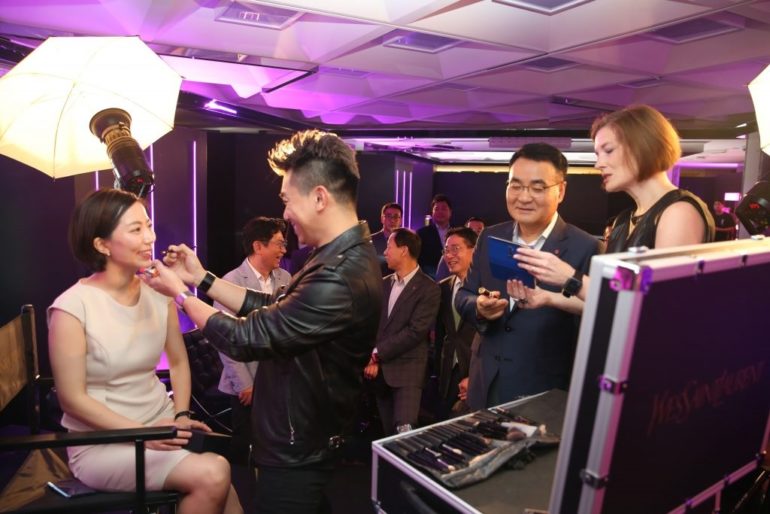
    In line with its new strategy, Lotte has partnered with L’Oreal Travel Retail Asia Pacific to host a promotional event for YSL at its VIP Star lounge in Myeongdong, Seoul.

    From the 1st to the 3rd of August, invited clients have the opportunity to observe YSL’s beauty products coming to life. In a world where technology is booming and penetrating every aspect of our lives, Lotte has put together a digital-heavy event with a VR Experience Space, a Concert Room and an Arcade Zone for fervent gamers. Visitors are also equipped with digital wristband giving them access to all the information they might need along with photos and videos from the event. L’Oréal’s beauty touch cannot be forgotten as visitors can feel like models getting ready for a fashion show by enjoying beauty classes to then head towards the photoshoot zone.

    To retain customers which were previously shopping in its late Incheon Airport physical stores, Lotte aims at bringing its clients an elevated shopping experience. From personal shopping service, a high-end Café and two restaurants, visitors will feel like stepping in a luxurious palace hotel.

    Lotte Duty Free expects the YSL Beauty Hotel event to attract over 3,000 customers, two-thirds being international travelers from countries such as China and Japan.

    Special guests Junho, Nichkhun and Hwang Chiyeul, Lotte’s brand ambassadors, will hold a mini concert on the closure of the event.

  • Gentle Monster makes debut in London

    Gentle Monster makes debut in London

    South Korean luxury eyewear brand Gentle Monster has opened an eye-catching new store in London.

    The 450sqm store was launched in the city’s West End, representing the initial step in a broad-ranging plan to expand the firm’s business in Europe.

    The new London flagship is enhanced by robotic installations and an “active volcano” described by one fashion scribe as “spectacular”. The firm has previously invested in a South Korean robotics factory.

    Gentle Monster MD Garry Bott said, “We are very much focused on creating a sensory experience for the customer, even down to the individual fragrance for each of our flagship stores.”

    Future stores are expected to open in Paris and Dubai.

  • Ralph Lauren sales decline, and Asia saves it

    Ralph Lauren sales decline, and Asia saves it

    Fashion label Ralph Lauren sales reached US$1.4 billion for the first quarter of this fiscal year, driven by sales in Asia and Europe.

    Ralph Lauren sales in Asia increased 19 per cent to US$248 million on a reported basis and by 16 per cent in constant currency, driven by strength in both retail and wholesale channels. Samee-store sales in Asia increased 6 per cent in constant currency, reflecting growth in both the brick-and-mortar and digital-commerce operations.

    By comparison, European revenue in the first quarter increased 8 per cent, while North America declined by 2 per cent.

    Ralph Lauren, executive chairman and chief creative officer for the company said, “I continue to be inspired and energised by the passion our teams have for our brand and our company. This passion, along with Patrice’s [Louvet, president and CEO] partnership over the last year, the clear plan he and the team laid out in June, and the initial progress in this quarter, gives me confidence in our future as we celebrate 50 years in business.”

    Louvet added: “We are off to an encouraging start to the new fiscal year on both the top and the bottom line… we are on track to return the company to long-term, sustainable growth and value creation.”

  • Lotte Duty Free exits Incheon Airport Terminal 1 contracts, sets its sights on Vietnam

    Lotte Duty Free exits Incheon Airport Terminal 1 contracts, sets its sights on Vietnam

    Lotte Duty Free exits its contentious Incheon International Airport Terminal 1 cosmetics, fashion and leathergoods contracts, to be replaced by Shinsegae Duty Free.

    As reported, South Korea’s duty free giant served notice on 13 February of its intention to quit three contracts – DF1 (P&C), DF5 (leathergoods & fashion) and DF8 (miscellaneous categories).

    The company cited “the burden of rent increases” following the sharp downturn in Chinese tourists in 2017 amid the THAAD dispute with China.

    The three concessions, later consolidated into two by Incheon International Airport Corporation, were subsequently awarded to Shinsegae Duty Free, which commences business on 1 August. Lotte Duty Free will continue to operate its DF3 liquor, tobacco and foods business at T1 until 2020.

    Lotte Duty Free said that it expects to save about 1.4 trillion won (US$1.25 billion) in rent by 2020 through its premature exit. “Based on improved profitability through the withdrawal from Incheon Airport, the company intends to strengthen its competitiveness in downtown duty free shops and to expand online duty free shop marketing,” it said.

    “In addition, in order to revitalise sales of our [T1] liquor and cigarettes stores, we plan to analyse outbound passengers and target enhanced marketing through improved linkage with city and online duty free shops.”

    Lotte said that it also aims to boost downtown and online sales of cosmetics and fashion to avoid losing custom to its Incheon successor. A customer prepaid card for Lotte’s vacated T1 business can now be used downtown.

    Lotte Duty Free plans to concentrate its efforts on expanding business overseas, with Vietnam the key focus. As reported, the company celebrated the grand opening of its Da Nang International Airport concession on 1 November last year, after a soft opening in May. The business, registered as Phu Khanh Duty Free, is a 60/40 joint venture between Lotte Duty Free and a local partner.

    In June this year Lotte Duty Free opened arrivals and departures stores at Cam Ranh International Airport in Nha Trang, after being awarded an exclusive ten-year duty free concession.

    Lotte said that it also plans to invest heavily in additional downtown stores in Hanoi, Ho Chi Minh City and Da Nang.

  • A Land Korea starts expansion in USA by store opening

    A Land Korea starts expansion in USA by store opening

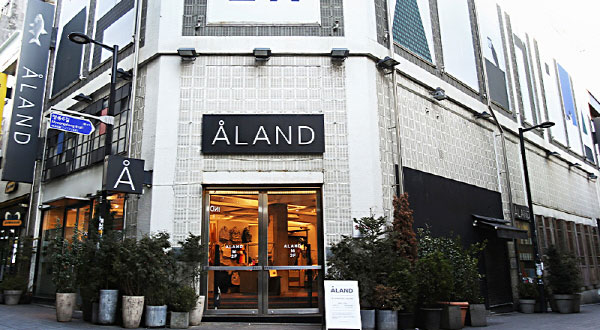
    South Korean fashion retailer A Land, known as a department store format for millennial shoppers, has opened in Brooklyn, New York.

    The store’s first Western Hemisphere location plays host to many of the same brands it features in its Asian stores, marking a point of difference from US fashion retailers. The majority of products on sale are South Korean, with high-quality low-cost items the norm.

    The firm’s US president Nam Cho said, “It’s very unique, it’s different from what mainstream US fashion retailers are doing. We want Americans who are interested in fashion to come here and find something unique.”

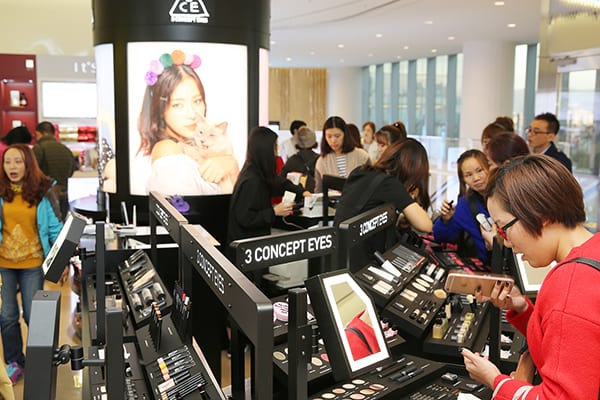
    A Land is a leading fashion and beauty retailer in South Korea, and is targeting expansion in Japan and Mainland China, as well as high-potential Southeast Asian markets where Korean pop culture influence is strong. It already runs stores in Hong Kong and Bangkok.

    The company has no immediate plans to expand in the US, apparently seeing the Brooklyn store as a test bed in the market, although it is seeking to replicate its successful online business there.

  • Givenchy Beauty opens first shop in Korea

    Givenchy Beauty opens first shop in Korea

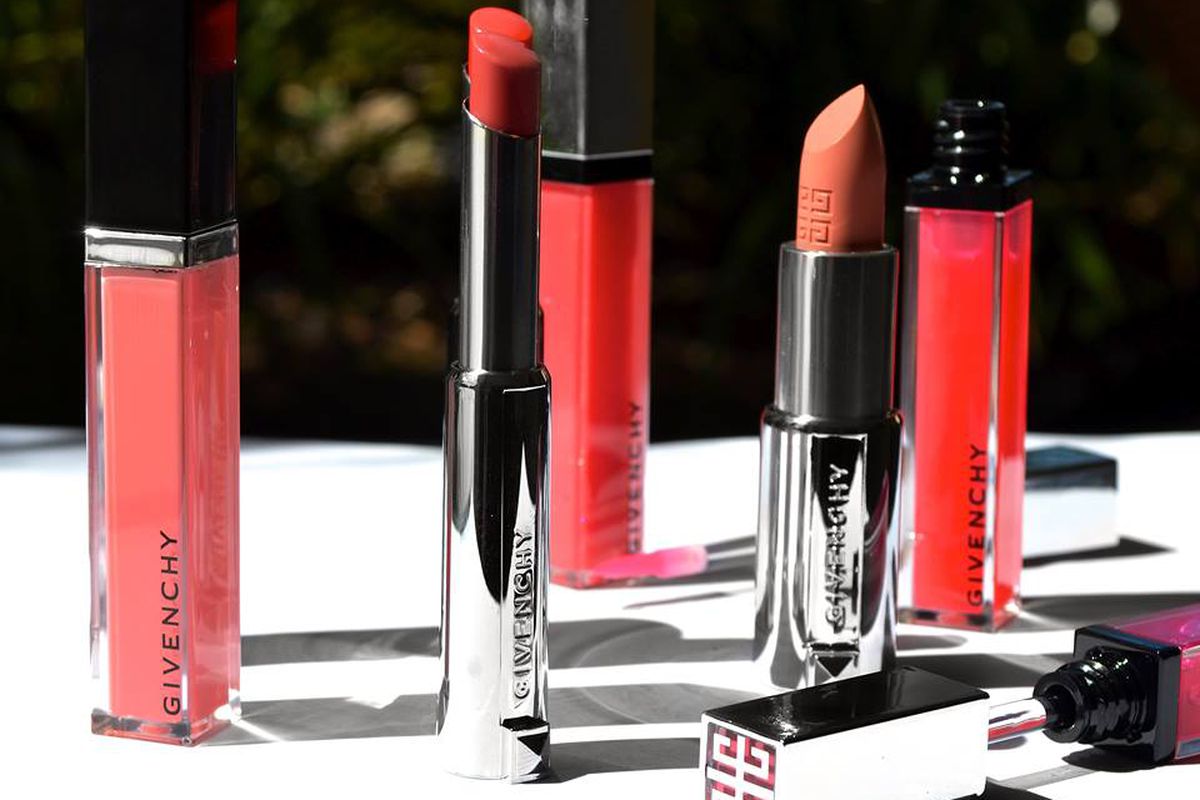
    International luxury fashion and perfume house Givenchy has just launched in Korea.

    Its first Givenchy Beauty outlet opened on 31 July at the Hyundai Department Apgujeong store in the posh neighborhood in Southern Seoul.

    A Hyundai Department Store official said “Hyundai Department Store in Apgujeong has very trendy customers who have a big purchasing power. We will focus more on enhancing the competitiveness among luxury cosmetics.”

    Hyundai Department Store in Apgujeong decided to strengthen imported cosmetics division by establishing exclusive perfume zone on the second basement floor in the second half of the year.

    Givenchy Beauty is the French luxury brand cosmetics line launched in 1989 by Givenchy. It has outlets in the world’s top upmarket department stores including Galeries Lafayette and Le Bon Marche in France and Isetan in Japan.

    It has named Shinchon, university district in Western Seoul as the site for its second outpost.

    Givenchy Beauty will offer nearly 200 types of products, including makeup and skin care, as well as perfumes.

    Givenchy Beauty Korea plans to offer various products from makeup products to skin care goods and perfume to engage glamorous Korean women, according to a company official.

    Following the opening of Givenchy Beauty stores, Hyundai Department Store will become the first Korean retailer to offer global top five premium beauty brands including Chanel, Dior, YSL and Tom Ford. It aims to transform its Apgujeong outlet into a luxury beauty house.

  • Vietnamese brands look plain as foreigners wear the beauty industry crown

    Vietnamese brands look plain as foreigners wear the beauty industry crown

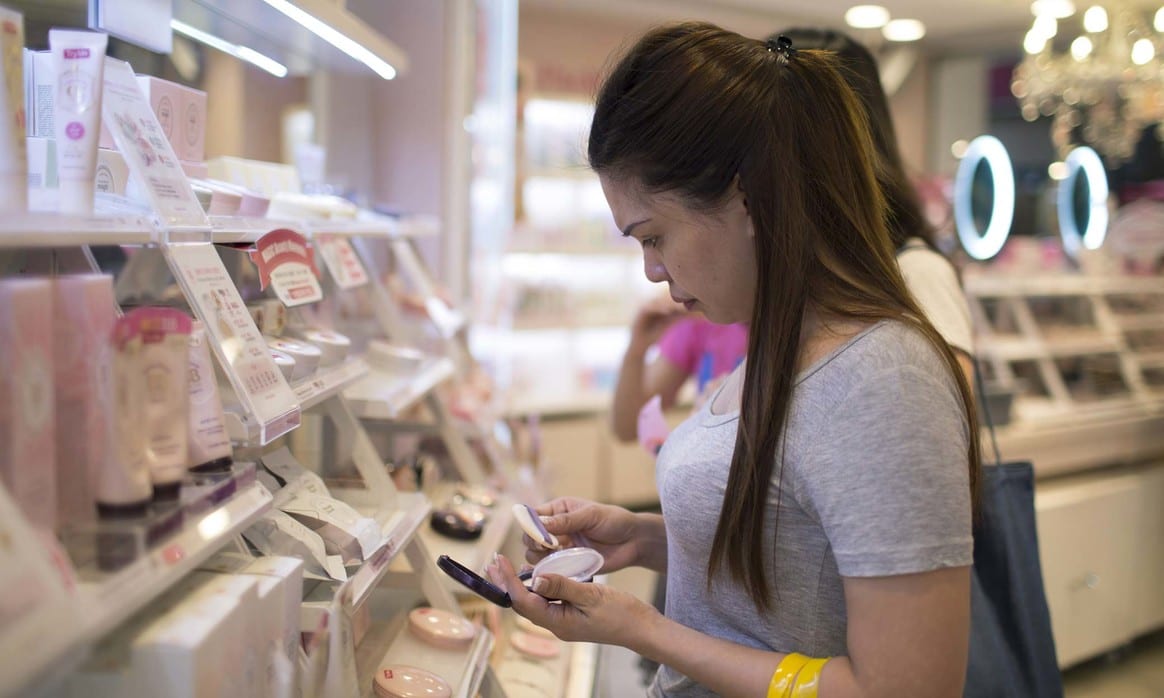
    The beauty care industry is doing better than expected in Vietnam, but foreign brands are the ones sitting pretty.

    Nguyen Van Minh, chairman of the Vietnam Essential Oils Aromas and Cosmetics Association (VOCA), said companies in the beauty and personal care industry have seen stronger growth than they’d forecast.

    “Vietnam is an emerging market for the beauty care industry, with annual growth rate averaging 30 percent in recent years,” he said.

    In 2016 alone, the industry generated $1.2 billion in revenue, a figure that the association had previously predicted for 2020.

    The import value of beauty care products surged almost twofold from around $3 billion in 2016 to $5.5 billion last year, but exports stayed insignificant at just VND500 million ($21,520) last year, it said.

    These figures match findings by British research firm Euromonitor International, which said last year that up to 90 percent of beauty products in Vietnam are imported.

    It also said the market value of this industry had crossed $1 billion since 2015 and repeatedly recorded double digit growth in recent years.

    A representative of Medicare, a drug and beauty care retailer based in Ho Chi Minh City, said that imported products or those produced in Vietnam by foreign companies make up most of its sales, and that imported brands will have more opportunities to expand their market shares than domestic rivals in the future.

    At the Mekong Beauty Show 2018, an international beauty and cosmetics expo that was held in the city in June, 110 of more than 300 international exhibitors were South Korean companies who came to find potential importers and business opportunities in Vietnam.

    Dominic Oh, general director of Korea International Exhibition and Convention Center (Kintex), the event’s organizer, said that Vietnam was considered one of the key markets for South Korea’s beauty care sector.

    In 2016, Singapore was the biggest exporter to Vietnam’s beauty care sector, accounting for 34 percent of its total imports. The EU followed with 19 percent, Thailand, 9 percent, and South Korea, 8 percent, according to Euromonitor International.

    In its report on beauty and personal care in Vietnam, the research firm said the market was dominated by global brands, thanks to innovative products, strong distribution network and dynamic marketing.

    Three foreign companies, Unilever Vietnam International Co Ltd, Procter & Gamble Vietnam Ltd and Colgate-Palmolive Co Ltd were in the top three positions in 2017, it added.

    Local firms held back

    According to VOCA, as their incomes improve, Vietnamese people are paying more attention to beauty and personal care, creating a lot of opportunities for businesses.

    In a report released early April, the World Bank said 70 percent of Vietnam’s population are now classified as economically secure, including the 13 percent who are now part of the global middle-class.

    These income classes are growing rapidly, rising by over 20 percentage points between 2010 and 2017.

    An average of 1.5 million Vietnamese have joined the global middle class each year since 2014, confirming that households continue to climb the economic ladder after escaping poverty.

    The WB also predicted that as many as 33 million Vietnamese will be in the middle class by 2022.

    Despite this fertile ground for beauty care products, Vietnamese brands have struggled to do well.

    Even top companies with decades in the market, like Saigon Cosmetics Corporation and Lan Hao Cosmetics Co Ltd, have stopped at making low and mid-range products.

    Minh, chairman of VOCA, said local firms were held back by a lack of serious investment in packaging, design and advertisement.

    Medicare, an HCMC-based drug and beauty care retailer, said it looked for Vietnamese partners to produce Medicare-branded beauty and personal care products, but local firms did not have the capacity to make products that could compete with foreign rivals.

    As organic beauty products is the new trend, VOCA chairman Minh said local firms should make good use of natural ingredients that are plentiful in Vietnam to create high quality products so that they can start competing with foreign firms.

    However, doing this will require bigger investments in more advanced technologies; and given the current state and scale of domestic firms, the upgrade is easier said than done, Minh said.
  • S. Korean retail sales rise in first half on increased online sales

    S. Korean retail sales rise in first half on increased online sales

    South Korean retail sales rose 7.4 per cent in the first half of this year based on solid performance in e-commerce.

    Data from the Ministry of Trade, Industry and Energy showed online sales running 16.3 per cent higher than during the same time last year, while offline sales rose just 2.7 per cent.

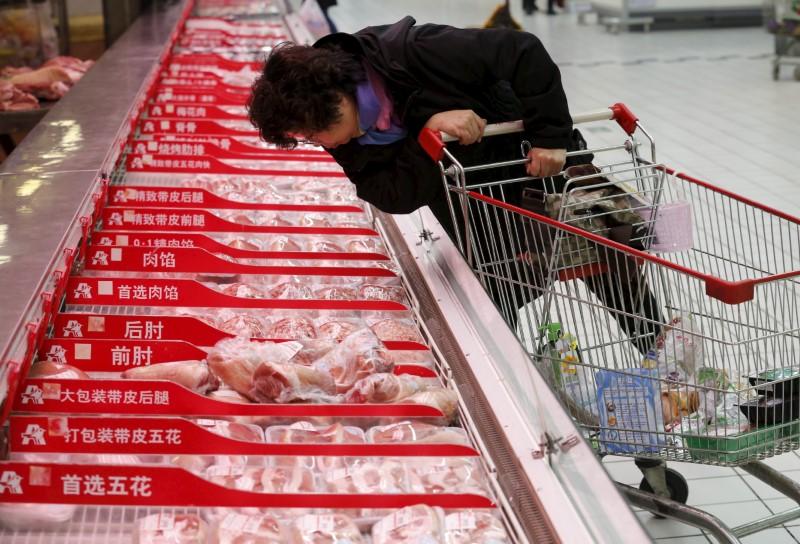
    Grocery shopping via online malls with home delivery saw a major rise this year, with a 20.8 per cent increase in sales over last year.

    Similar rises were reported for convenience stores, department stores and online marketplaces, although a 1.8 per cent drop hit large discount store chains.

  • Morphy Richards starts selling in South Korea

    Morphy Richards starts selling in South Korea

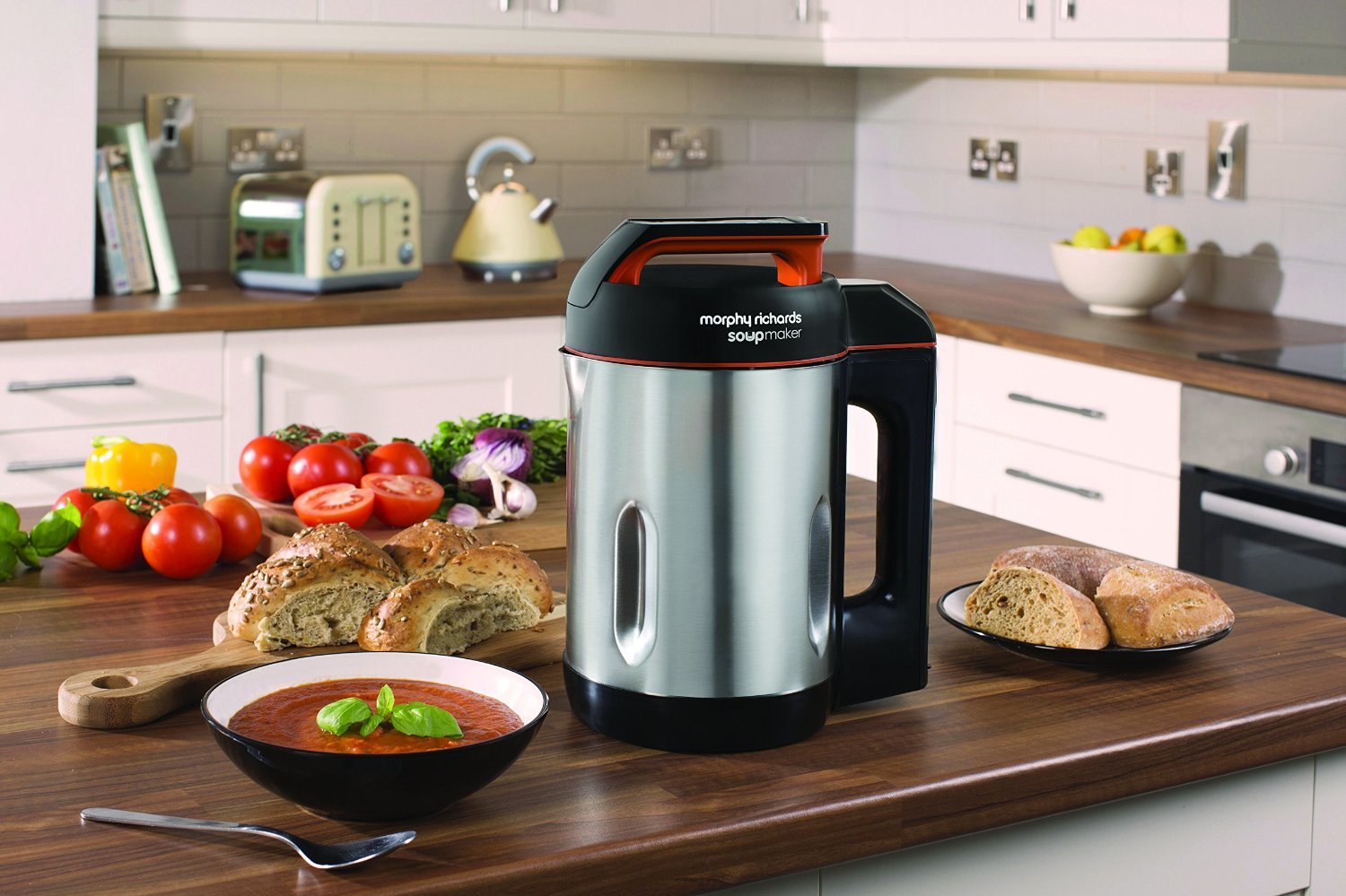
    London-based household appliance maker Morphy Richards has launched in the South Korean market.

    The heritage brand hopes to find a niche in a country dominated by global electronics giants via its local distributor M&S Solution, which already hosts an appliances e-commerce platform. It will expand the distribution channel to Korean department stores, electronics stores and TV home shopping.

    An official from Morphy Richards said the British appliance maker will work hard to win the hearts of South Korean consumers with its “outstanding technology and brand popularity built over more than 80 years”.

  • Asia’s large format retailers prepare for steady growth

    Asia’s large format retailers prepare for steady growth

    Global research organisation IGD has reported that Asia’s large format retailers are set to grow 3.3 per cent a year to 2022, with Vietnam, India and the Philippines forecast to see double-digit growth from large format players over the next five years.

    Most of this growth is predicted to be driven by domestic retailers, except for Vietnam where foreign retailers have been investing to gain a foothold in this fast-growing market. Indonesia will see steady growth, also driven mainly by domestic players; with China coming through as another market with significant growth opportunities due to its vast geography.

    Many large format retailers in Asia are still enjoying steady growth through expansion although they are facing pressures from increased competition in more developed markets.

    Besides expansion to new regions, retailers are also digitising physical stores to create a seamless shopping experience in more matured markets.

  • Korean beauty brands finally out of Thaad’s shadow

    Korean beauty brands finally out of Thaad’s shadow

    The top two domestic beauty companies have posted strong second quarter earnings, indicating that they are finally recovering from the loss of Chinese customers following the Thaad deployment last year.

    Both Amorepacific and LG Household & Health Care announced their earnings this week, with LG taking the lead with record-high second quarter earnings.

    Amorepacific Group’s second-quarter earnings released on July 26 showed that the beauty giant finally made a turnaround for quarterly results. It raised 170.3 billion won (US$152 million) in operating profits, a jump of 30.6 percent from the same period last year, and 1.55 trillion won in revenue, a 10 percent increase year on year.

    The company has recorded minus growth in both revenue and operating profit for the last four quarters.

    Amorepacific was hit hard by the installment of the U.S.-led Terminal High Altitude Area Defense (Thaad) antimissile system here that caused Chinese consumers to boycott Korean brands and a suspension of group tourists entering the country. Prior to the Thaad deployment, China made up 70 percent of Amorepacific’s overseas revenue.

    The incident spurred the company to diversify its global business portfolio. Second quarter results showed that efforts made last year are slowly starting to bear fruit: Operating profit from overseas businesses rose 129.3 percent on-year and revenue was up 16.7 percent.

    “The Asian market saw two-digit growth thanks to more luxury brand stores and localized products,” said Amorepacific in a statement. “The advancement of Innisfree and Laneige in the United States expanded our customer base.”

    Despite improved second quarter earnings, the company’s performance in the year’s first half retreated from last year. Revenue for the first six months was slightly down by 1.5 percent on-year to 3.22 trillion won and operating profit reduced 11.9 percent to 448.4 billion won.

    The general consensus among analysts was that Amorepacific’s earnings will improve thanks to a base effect from last year and relations with China having improved. The question is when. Some experts remarked that the speed of recovery so far has been slower than expected, partly because the number of Chinese tourists has not returned to pre-Thaad levels.

    LG Household & Health Care, announced a record result for the first half thanks to its strong luxury brands that helped maintain sales among Chinese consumers. Its revenue rose 8.7 percent year on year to 3.31 trillion won and 12 percent in operating profit at 550.9 billion won.

    It also broke a record in the second quarter with revenue of 1.65 trillion won, an 11.1 percent rise from last year, and operating profit of 267.3 billion won to represent a 15.1 percent increase.

    LG said The History of Whoo, a best seller in China, reached 1 trillion won in revenue as of July thanks to high duty-free sales. Its SU:UM and O HUI also successfully appealed to Chinese consumers as luxury brands, contributing to a 36 percent increase year on year in the company’s cosmetics sales overseas during the second quarter.

    Analysts generally had a positive outlook on the company’s strong luxury line as consumption of premium beauty brands in China is rapidly rising.

    “Luxury brands are expected to lead [LG’s] revenue growth in the second half,” said Yoo Min-sun, an analyst at Kyobo Securities. “The company’s annual growth rate for duty-free revenue in 2018 is likely to reach 40 percent year on year.”

  • Lotte prepare e-commerce department launching this week

    Lotte prepare e-commerce department launching this week

    South Korean retailer Lotte will launch a new department in charge of the business group’s online businesses this week.

    The move is part of a plan to speed up efforts to cope with the rapid expansion of the country’s online market.

    Earlier in May, Lotte unveiled the plan to inject 3 trillion won (US$2.69 billion) into its e-commerce business over the next five years, integrating online malls that have been separately operated by its affiliates into one with an aim to generate 20 trillion won in sales by 2022.

    The new e-commerce department, set to launch Wednesday, August 1, will be responsible for a new platform that encompasses seven of the business group’s retail subsidiaries, including the department store business and discount store chain.

    With some 1400 employees, the new branch aims to roll out a mobile app in 2020 and plans to hire 400 additional workers by next year.

    “The new app will become a platform that provides optimised services based on our massive customer data,” Kim Kyoung-ho, who will lead the new organisation, said, noting that nearly 22 million customers are using Lotte online every month.

    Sales of 13 major online stores and marketplaces jumped 17.2 per cent on-year in May, according to government data.

    Online malls reported a 21.3 per cent spike in sales as more people opted to do their grocery shopping online. Online marketplaces, where product or service information is provided by multiple third parties, reported a 12.4 per cent surge in sales.

    Meanwhile, Lotte Duty Free, the conglomerate’s duty-free unit, said it will ramp up marketing efforts for its online, downtown and overseas businesses, as part of its operations at Incheon International Airport, west of Seoul, will be shut down at 8pm tomorrow night.

    The duty-free operator decided to return three of its four money-losing concessions at the country’s main gateway in February. The zones were reorganised into two and went to Shinsegae DF in the follow-up bidding last month.

    Lotte said it expects to save up to 1.4 trillion won of rent by 2020 following the closure of the airport duty-free business.

  • IKEA to open third outlet in Korea

    IKEA to open third outlet in Korea

    Swedish furniture giant IKEA will open its third store in South Korea in Giheung-gu, Yongin to make its products more accessible to customers in the Southern metropolitan area.

    IKEA Korea held the groundbreaking ceremony for the new outlet on 25 July in Giheung-gu, Yongin, 34 kilometers Southeast of Seoul. The retail space  of 91,000 square meters includes parking space, with different floors. It is expected to be completed in late 2019.

    IKEA opened its first Korean store in Gwangmyeong, Gyeonggi Province in 2014 and its second store in Goyang three years later. The Gwangmyeong branch is situated west of Seoul while the Goyang branch is located in the north.

    “We are looking forward to meeting customers in the Southern area through our Giheung branch,” said an official from IKEA Korea. “As a multi-channel retailer, we will continue to expand our reach and improve the shopping experience for our customers so that more people can furnish their homes with IKEA products.”

    IKEA Korea employed 700 new staff last year and was named one of the top hiring companies in 2018 by the Ministry of Employment and Labor.

    In the fiscal year ended August 2017, the retailer raked in sales of 365 billion won (US$326.1 million), up 6 percent from a year earlier, and drew more than 6.5 million visitors. When including the sales of its second store which opened last October, its sales and visitor tally are expected to double in 2018.

    The Swedish furniture giant runs 355 stores in 29 countries. Its total sales last year in the global market rose 3.5 percent from the previous year to 34.1 billion euros.

  • Off-White to open more stores in Seoul

    Off-White to open more stores in Seoul

    Fashion retailer Off-White has opened two more retail locations in Seoul.

    The standalone Off-White South Korea store in Cheondong is made with light brick with glass inlays, giving pedestrians a view into the store’s floor and displays of sneakers, accessories and other apparel. The second Miles Davis-inspired store in Hyundai Coex is blue-toned with wireframe furniture at its centre.

    Both of the new Off-White South Korea stores feature similar marbled interiors as seen in the brand’s recently opened Macau store.