Tag: Korea

  • Kia Motors says strong won hit its bottom line in Q2

    Kia Motors says strong won hit its bottom line in Q2

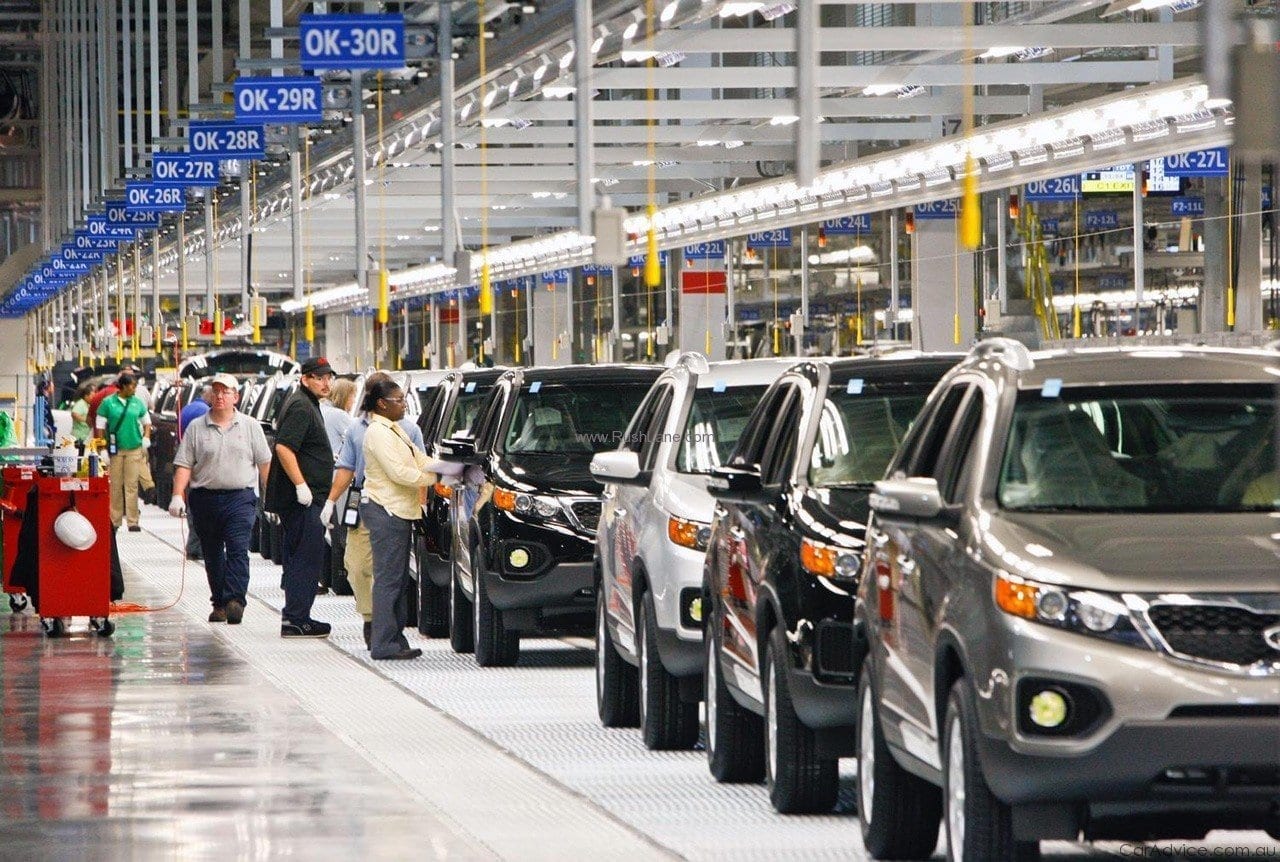
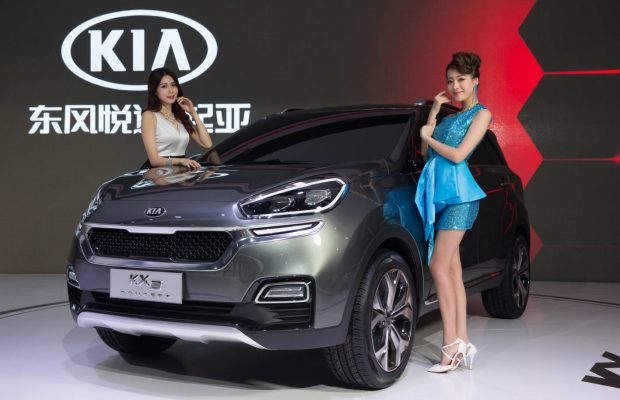
    Kia Motors said Friday that its second-quarter net profit fell 15 percent from a year earlier on a strong won and increased incentives to cut inventories.

    Net profit for the three months that ended on June 30 fell to 331.8 billion won from 389.6 billion won a year earlier, the company said in a statement.

    “The won rose sharply against the dollar. And the company spent more incentives in the U.S. market to reduce local inventories [of sedans],” the statement said.

    The dollar fell to an average of 1,078.57 won in the second quarter from 1,129.43 won a year earlier, according to the Bank of Korea.

    Operating profit declined 13 percent to 352.6 billion won in the June quarter from 404 billion won a year ago. Sales rose 3.5 percent to 14.06 trillion won from 13.58 trillion won during the same period.

  • Half of smartphones sold in 2018 will have AI assistant

    Half of smartphones sold in 2018 will have AI assistant

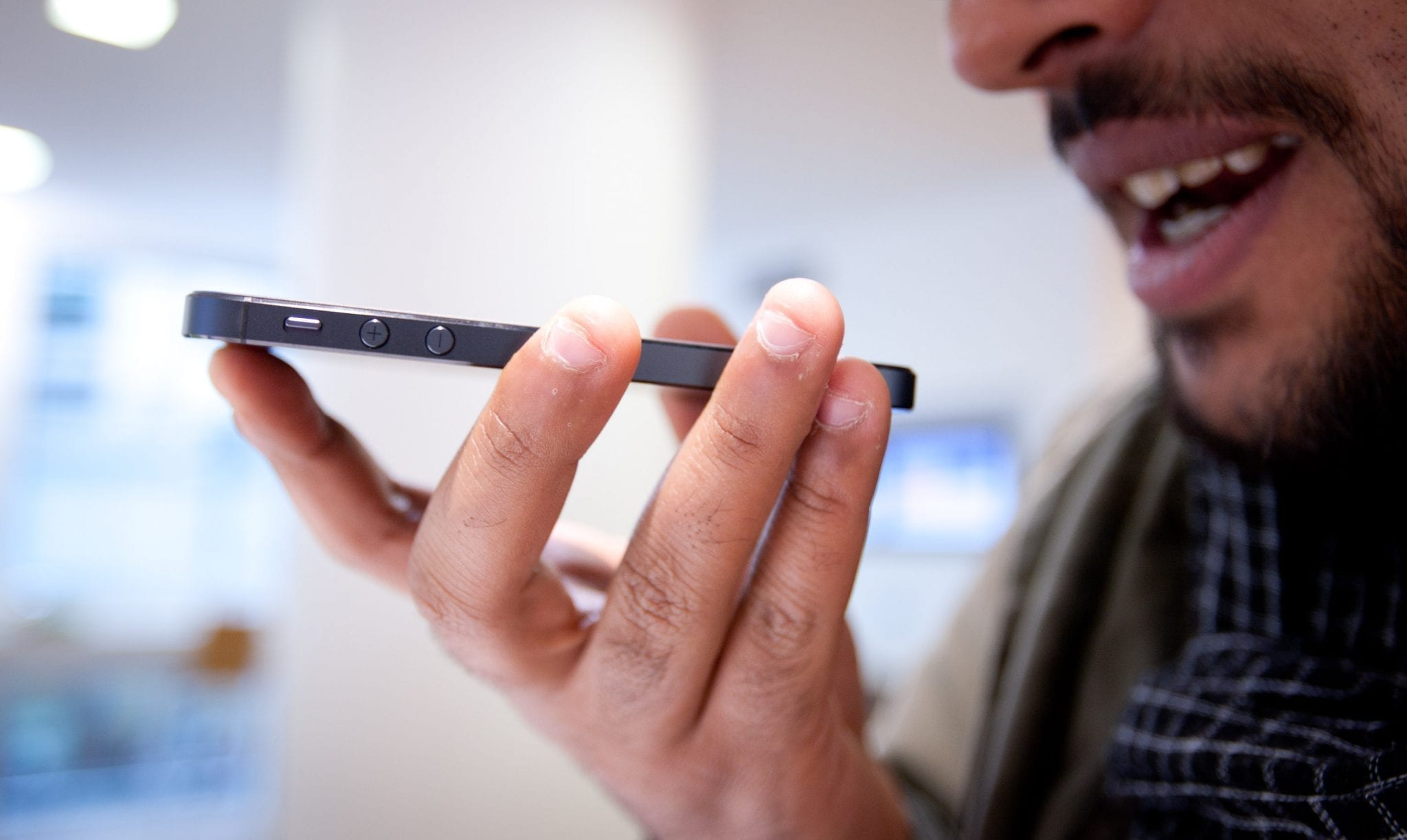
    Half of smartphones sold globally this year will have an artificial intelligence (AI) assistant, a report by an industry consulting firm showed Sunday.

    According to Strategy Analytics (SA), 47.7 percent of smartphones sold on the global market in 2018 will be equipped with some kind of on-device AI assistant, up from 36.6 percent last year.

    The report further finds that on-device AI is growing fast among smartphone vendors and by 2023, 89.9 percent of smartphones will have a built-in AI assistant.

    In 2017, Google Assistant rose to be the top AI assistant with a 46.7 percent market share, followed by Apple’s Siri with 40.1 percent, it said.

    The report said the market share of Google’s AI assistant is expected to climb to 51.3 percent this year and 60.6 percent by 2023.

  • LG gets fancy with new Signature smartphone

    LG gets fancy with new Signature smartphone

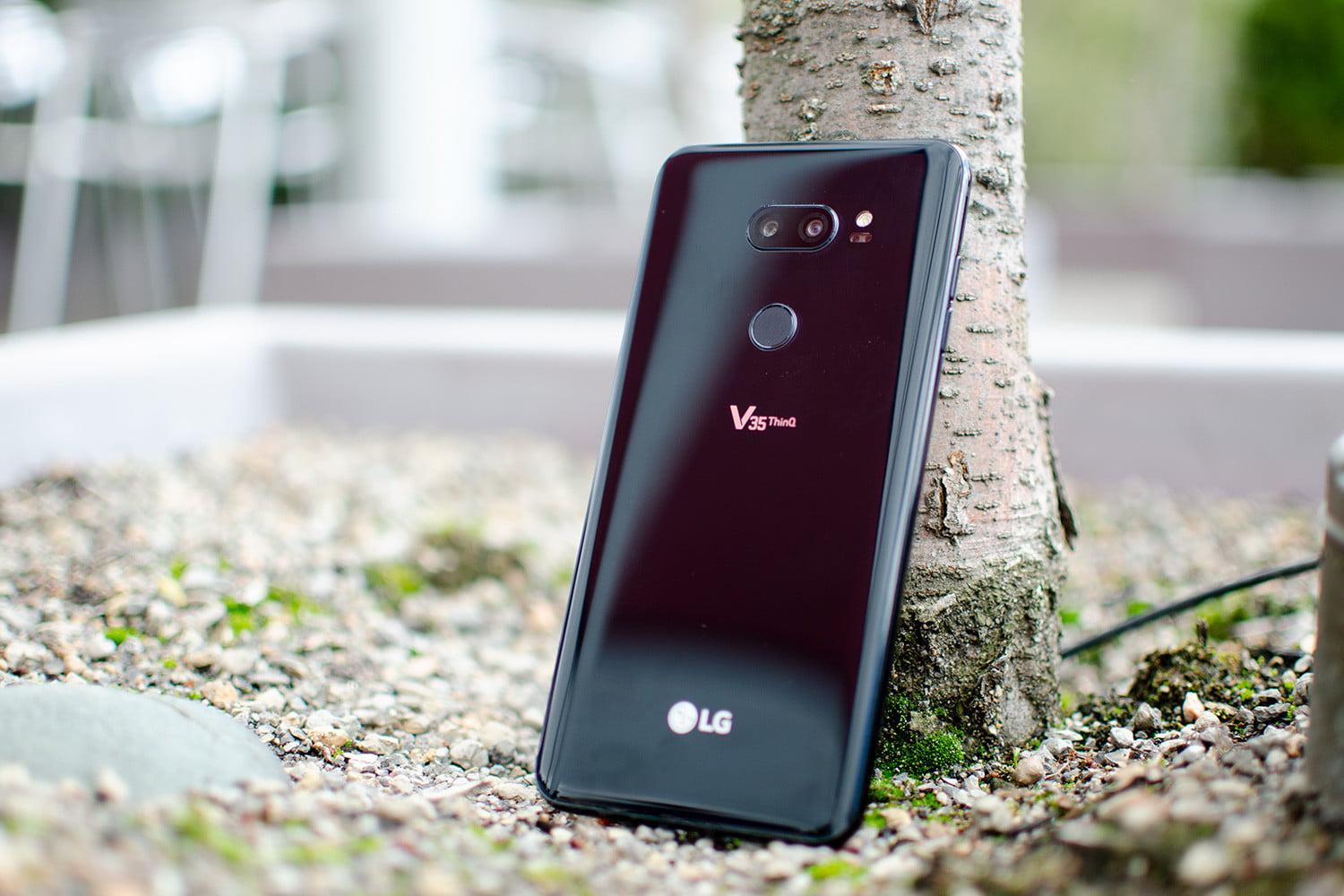
    LG Electronics is rolling out a limited-edition luxury smartphone that costs nearly 2 million won ($1,790).

    The smartphone under the Signature brand name – a second edition after an earlier model released last December – will be available for preorder for two weeks starting today and begin offline sales in Korea on Aug. 13. It will carry a price tag of 1,999,800 won and only 300 units will be available. Signature is LG’s brand of top-notch home appliances including refrigerators and washing machines.

    The pricey phone, based on the form factor of their V35 flagship smartphone, is wrapped in Zirconium Ceramic, a special material that cannot be scratched. The highly sophisticated material is difficult to manufacture and is typically used for luxury watches. The device, with 256 gigabytes of storage and 6 gigabytes RAM, runs on the Android Oreo operating system.

    “We will provide extraordinary value not only in terms of functions but also design and after-sales services,” said Choi Sang-gyu, head of domestic sales at LG Electronics.

    Prospective users will have to buy the phone first – either online or at offline stores run by LG – and then find a mobile operator to subscribe to, as the device won’t sell directly through any of Korea’s three carriers.

    Customers can have their name engraved on the back of the device or on a leather case. Beoplay H9i wireless over-ear headphones, worth as much as 700,000 won, come with the phone.

    The first generation sold out at the end of last year and LG says it found potential in the hyper-premium market.

  • Hyundai Motor union approves pay deal early

    Hyundai Motor union approves pay deal early

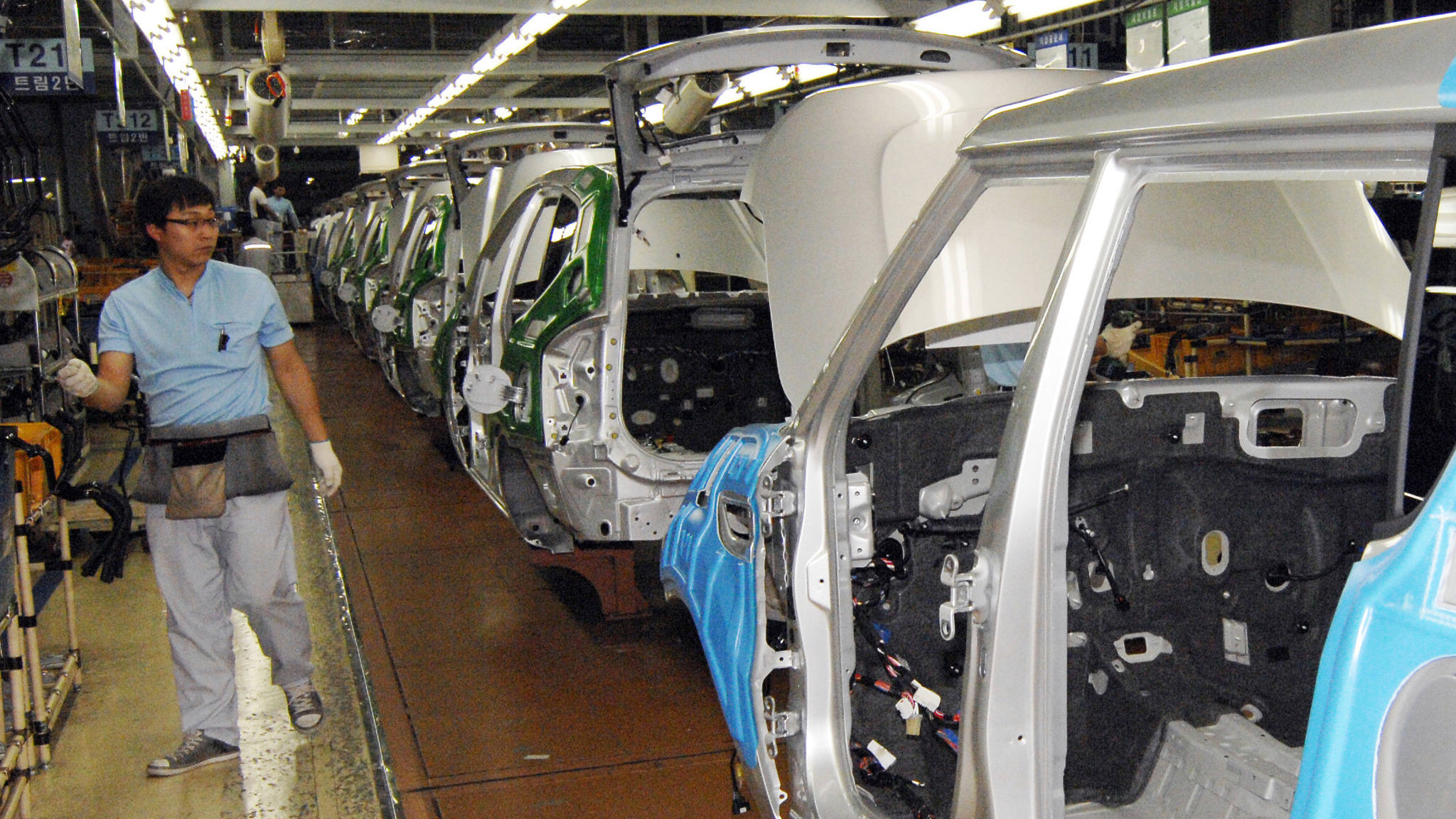
    Hyundai Motor’s labor union voted in favor of a modest wage increase late on Thursday, settling pay negotiations before their summer vacation in August for the first time in eight years.

    The speedy deal stands in stark contrast to last year, when a series of strikes and negotiations dragged on into early 2018.

    The challenging business environment for Hyundai Motor, including threat of auto tariffs from the United States and slow global sales, is expected to have influenced the result.

    Of the 42,046 union members, 63 percent voted in favor of the new wage plan on Thursday. The plan includes a monthly base pay raise of 45,000 won ($40.26), an incentive payment worth 250 percent of their ordinary monthly wage and a bonus of 2.8 million won.

    Last year, the union had asked for 154,000 won more a month in base pay, but workers received a 58,000 won raise. It had asked for a 300 percent incentive rate as well.

    The union on Thursday also approved a renewed two-shift working system, where day and night workers will work exactly eight hours without additional time. Previously, night-shift workers had to work about 20 minutes more than those on the day shift.

    Starting Jan. 7, 2019, each assembly line will be adjusted to produce 0.5 more cars per hour in order to compensate for the reduced working hours.

    Hyundai Motor’s labor union, which is affiliated with the umbrella Korea Metal Workers’ Union, is seen as one of the country’s most hard-line unions. Their fierce conflict with company management has faced criticism for not taking into account Hyundai’s business situations.

    Fellow workers gave the Hyundai union a cold shoulder because of the steep discrepancy in wage rates. Unionized workers at the Hyundai Motor labor union receive an average of 90 million won. Average office workers at small and medium-size companies receive an average of 30 million won per year and conglomerate office workers receive around 60 million won. Last year, the union staged 24 strikes, which disrupted the production of 76,900 cars and caused losses worth 1.62 trillion won to Hyundai Motor. In 2016, their strikes caused the company to lose 3.1 trillion won.

    This year, the union staged only 2 strikes, which disrupted the production of 11,487 cars, causing losses of just 250.2 billion won. These are the smallest losses since 2011, when there were no strikes at all.

    “This will be a stepping stone [for the union] to break through its social isolation and perception that it is the ‘royal union,’” said Ha Bu-young, the leader of Hyundai Motor’s union, in a statement on Thursday.

  • Korea SME pessimistic about future of economy

    Korea SME pessimistic about future of economy

    Lee Jung-min, who runs a small business in Seoul, has been trying to figure out how to cope with the rise in labor costs expected for next year.

    “We take home whatever we have left after paying all the expenses,” said the businessman in his 30s. “Every penny counts for people like us and it looks like things will get difficult next year.”

    Lee isn’t the only self-employed person in Korea with serious concerns about making ends meet in the future.

    According to data from the Bank of Korea, the consumer sentiment index in terms of expectations on domestic economic conditions stood at 79 for self-employed people for the month of July, whereas the index for people who earn a regular salary was 91.

    The disparity between the two groups is the worst the central bank has seen since records began in 2008.

    The index shows how positively or negatively people forecast the economic situation in Korea will be in six months time.

    A figure below 100 indicates a pessimistic outlook that the economic situation will deteriorate.

    The index plummeted for both groups – self-employed people from 90 and salaried employees from 100 in June.

    Such figures show that while both self-employed people and wage earners are becoming more pessimistic about the economy, the former feels much less hopeful than the latter.

    One reason why the self-employed have a gloomier outlook about their future is because of the rise in the minimum wage they must pay if they want to hire workers.

    On July 14, the Minimum Wage Commission determined that next year’s base salary will go up by 10.9 percent to 8,350 won ($7.49).

    A recent study by the Korea Federation of SMEs, which represents the country’s self-employed and small business owners, showed that 43 percent of the 300 small business owners surveyed responded that conditions will get very difficult when the minimum wage goes up, while 14 percent said they will be able to handle the hike.

    “53.1 percent of the respondents said they will decrease their hiring,” the federation said in the study.nbb

  • 2,000 planes flew over Korea per day in first half of 2018

    2,000 planes flew over Korea per day in first half of 2018

    About 2,000 planes flew over Korea per day on average during the first half of this year, according to the Ministry of Land, Infrastructure and Transport.

    The transport ministry’s data, released on Monday, showed that a total of 394,000 planes travelled over the country, including those that landed on Korean soil and those that were just passing by, up 5.4 percent compared to a year ago.

    Monthly traffic for the first half reached its peak in May, when 68,000 planes flew over Korea.

    The transport ministry’s data also showed that a total of 27,100 airplanes flew in and out of Korea during that period, up 8.6 percent from the same period last year. On a daily basis, 1,499 planes flew in and out of the country.

    An official from the transport ministry said that international airplane traffic is likely to increase in the second half and is expected to reach a historic high.

  • Hyundai Mobis finds a job for AI

    Hyundai Mobis finds a job for AI

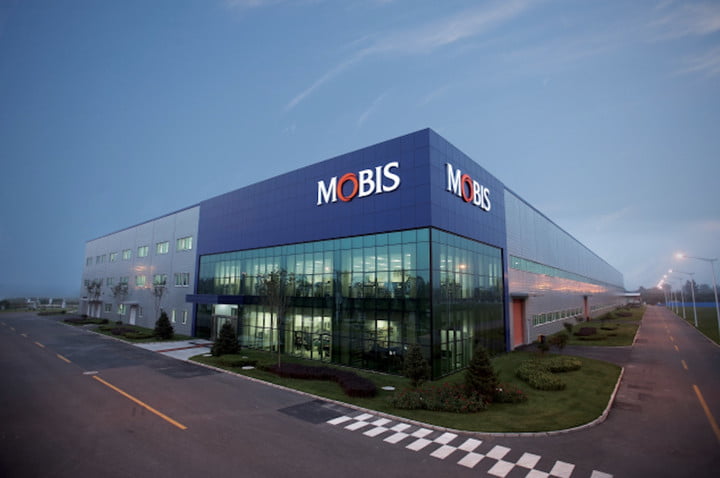
    Auto parts maker Hyundai Mobis announced Sunday that it has developed artificial intelligence-based software and a chatbot equipped with a deep learning algorithm to speed up its research in smart car technology.

    The artificial intelligence-based software is called Maist, short for Mobis Artificial Intelligence Software Testing, and has been co-developed by a research team at the Korea Advanced Institute of Science & Technology led by Professor Kim Moon-zoo.

    Maist is designed to test different software that is to be installed in cars. According to Hyundai Mobis, installing Maist will double the efficiency of the software development process.

    “About 50-70 percent of the testing process will be done by Maist from now on, allowing researchers to engage in more creative works,” an official at Hyundai Mobis said.

    The chatbot is called Maibot, short for Mobis AI Robot, and is able to search through the lab’s cloud, home to more than 200,000 research cases, to find material that a user is looking for. The algorithm will allow Maibot to become more advanced, Hyundai Mobis said.

  • Korea rush to lobby against U.S. auto tariffs

    Korea rush to lobby against U.S. auto tariffs

    Government officials and representatives from the local auto industry rushed to the United States last week to request that Korea be exempted from higher tariffs on imported cars.

    The Korean delegation, headed by Trade Minister Kim Hyun-chong, met with officials from the White House, Congress and think tanks during their U.S. trip from Wednesday to Friday, arguing that imported cars from Korea should be excluded from the tariff renewal based on Section 232 of the Trade Expansion Act.

    Finance Minister Kim Dong-yeon on Saturday also raised the issue at the G20 meeting held in Buenos Aires, Argentina.

    Kim Hyun-chong’s delegation included Hyundai Motor President Chung Jin-haeng and Korea Automobile Manufacturers Association President (KAMA) Kim Yong-geun, among others.

    The trade minister met with Larry Kudlow, the National Economic Council director, and Mick Mulvaney, the White House Office of Management and Budget director.

    “Kim explained that the revised Korea-U.S. FTA already reflects the concerns that the U.S. has about its automobile industry and security,” said an official from the Ministry of Trade, Industry and Energy on Sunday.

    In March, Korea agreed to extend a 25 percent tariff on Korean pickup trucks in the U.S. to 2041, instead of 2021, ensuring the unfavorable export conditions for Korea’s pickup truck manufacturers continues.

    “He also emphasized the fact that Korea and the United States impose zero tariffs on cars imported from each other’s country based on mutual benefits,” the official added.

    According to the ministry, the U.S. officials agreed with the Korean delegation and showed concern that the new tariffs might have a negative effect on America’s labor market and the economy considering the industry’s complex global supply chain.

    Hyundai Motor President Chung met with lawmakers based in Georgia and Alabama, two states where the automaker runs assembly lines. Korea International Trade Association Vice Chairman Han Jin-hyun mostly met with officials from the U.S. government and think tanks such as the Center for Trade and Economics and the Center for Strategic and International Studies.

    Finance Minister Kim Dong-yeon was also determined to prevent renewed tariffs.

    “Finance Minister Kim Dong-yeon explained to his U.S. counterpart that the two countries have been carrying out fair trade with the renewed Korea-U.S. FTA until now, and expressed his strong opposition to imposing higher tariffs on imported cars from Korea,” the Finance Ministry said in a release. “Kim also emphasized the positive effect that Korea’s auto industry has had in the U.S., such as hefty investment and employment,” the release added.

    U.S. President Donald Trump has been pushing for higher 25 percent tariffs on imported cars on national security grounds. The plan sent jitters through Korea’s auto industry, which relies heavily on exports to the U.S. According to industry statistics, 30 percent of exports to the U.S. last year came from the auto industry.

    Trade Minister Kim will continue to lobby U.S. officials. He will visit the United States from July 25 to July 27.

  • Hyundai, Kia hope to hit targets with SUVs

    Hyundai, Kia hope to hit targets with SUVs

    Hyundai Motor and affiliate Kia Motors said on Friday that they would achieve their sales target for the year by launching new sport utility vehicles in two major auto markets, the United States and Europe, in the second half.

    In separate biannual meetings with overseas sales executives, Hyundai and Kia discussed measures to achieve their sales target of a combined 7.55 million vehicles, up 4.1 percent from the 7.25 million they sold last year, Hyundai Motor Group said in a statement.

    In terms of major challenges in the second half, the company named interest rate increases in the United States, rising oil prices and an unfriendly business environment due to U.S. tariffs on imported vehicles.

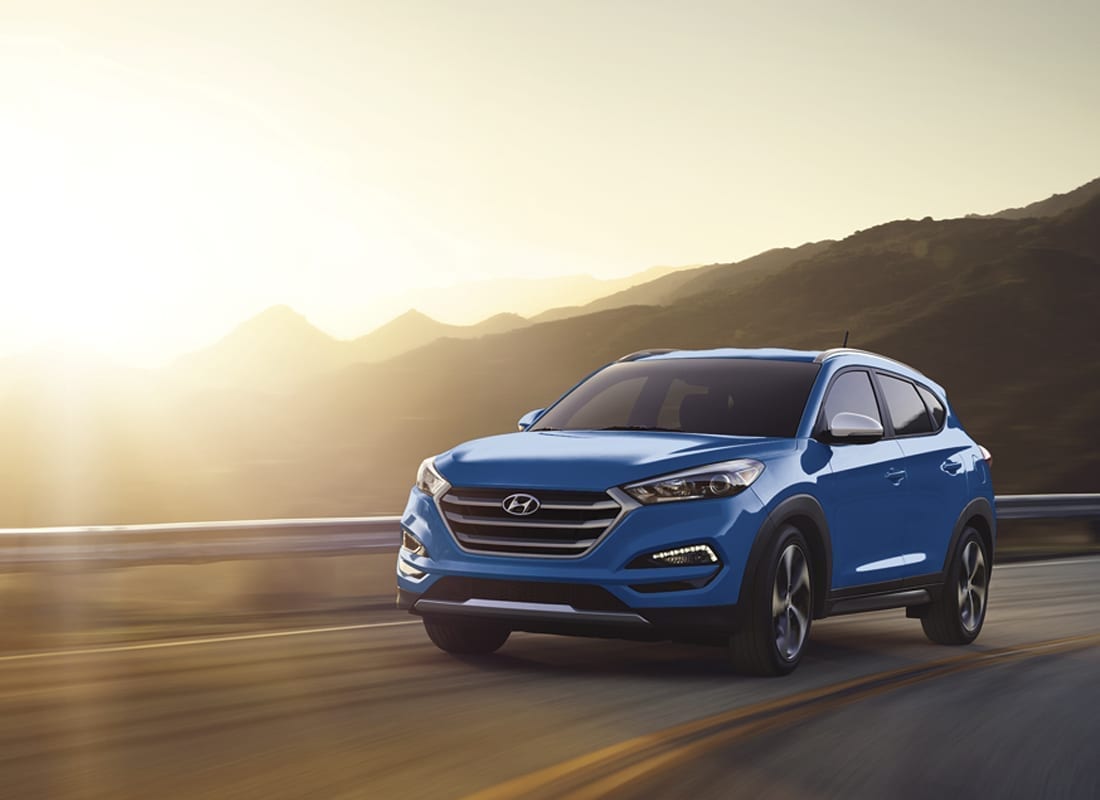
    To boost sales in the second half, Hyundai plans to launch a new Santa Fe and upgraded Tucson in the U.S. market in July and November. Kia will launch a Sorento facelift in June.

    The new Santa Fe is the most essential model in determining Hyundai’s annual earnings results this year. If it is well accepted in the United States, Hyundai will come up with strong financial figures at the end of the year, the company said.

    In Europe, Hyundai will gradually the Santa Fe, Tucson and Kona, and Kia will roll out the Sportage SUV. The company has recently set up a task force to attract female customers in Saudi Arabia after the country permitted women to drive cars.

  • BTS and Converse team up for BT21 sneakers

    BTS and Converse team up for BT21 sneakers

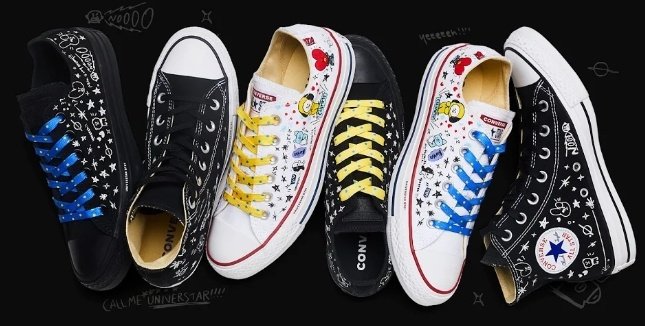
    American footwear brand Converse has collaborated with South Korean character brand Line Friends’ for Converse x BT21 sneaker collection.

    The Converse x BT21 sneakers will be available for purchase this Friday at Converse and Line Friends stores only in China, Hong Kong, South Korea, and Taiwan.

    The collaboration offers a limited-edition line of Chuck Taylor All Star Low Black/White, and Chuck Taylor All Star Black, both with BT21 designs on them. The sneakers will come in a BT21 design shoebox with eight customised badges, shoelaces and a BT21 labelled tote bag.

    Prices are set at US$84 for low-cut sneakers and $87 for high-cut sneakers.

    BT21 are characters created by South Korean boy-band BTS in collaboration with Line Friends. The characters have appeared on products from several brands, including Dunkin’ Donuts and Paris Baguette.

  • SsangYong expands to Australia

    SsangYong expands to Australia

    SsangYong Motor will establish its first overseas sales unit in Australia in November to take advantage of rising demand for SUVs there, the carmaker said Monday.

    The establishment of its first overseas sales unit will serve as a stepping stone for SsangYong Motor to further fortify its global sales, the carmaker said.

    SsangYong Motor, the Korean unit of Indian auto giant Mahindra & Mahindra, sold its cars in other countries before through partnerships with local dealerships. It has never operated its own sales unit outside of Korea before.

    “The Australian sales unit will be SsangYong Motor’s first overseas sales unit to be directly managed by the carmaker,” said CEO Choi Johng-sik in a written statement released on Monday. “It will help us to be more flexible in handling the local market, such as the marketing strategy.”

    SsangYong Motor currently exports cars to Europe, South America and the Middle East.

    Chile was the biggest export market for SsangYong Motor last year.

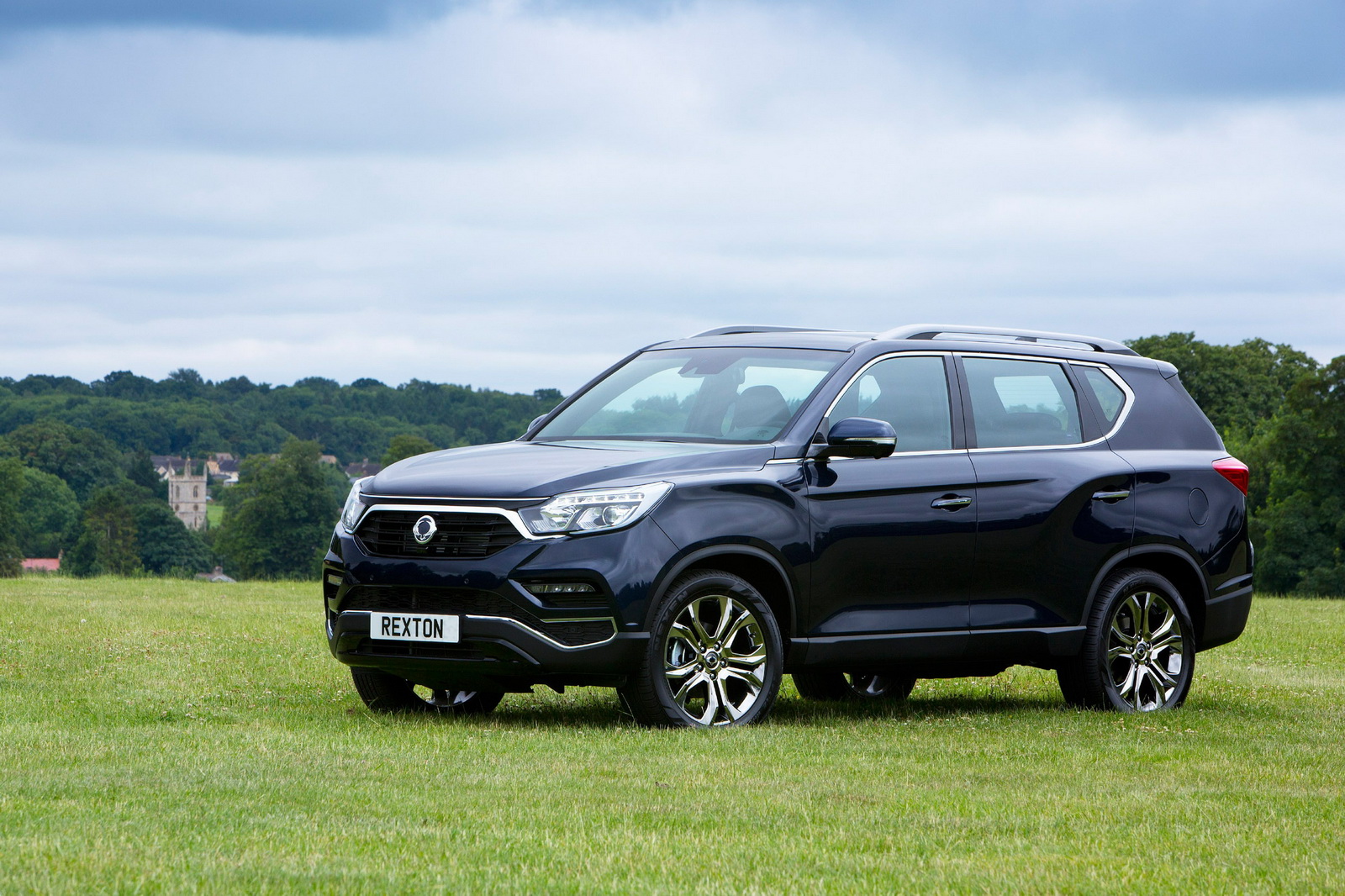
    When the Australian unit opens in November, SsangYong Motor is expected to launch a full range of models, including the Tivoli, G4 Rexton and Rexton Sports. SsangYong Motor said it hopes to eventually run 60 directly managed dealerships in Australia.

    SsangYong Motor stopped selling its cars in Australia in 2016. It had previously been selling vehicles to local dealerships.

    Its decision to resume sales is due to the sharp growth in Australian SUV sales. According to the carmaker, sales of SUVs accounted for 18 percent of vehicle sales in Australia in 2006, but they expanded to 39 percent last year. Sales of pick-up trucks, which SsangYong Motor also sells, rose by 70,000 vehicles during the same period.

    The unique Australian automobile market, which is completely reliant on imported vehicles, also factored into SsangYong’s decision to launch an overseas sales subsidiary.

    “While countries that have a homegrown brand tend to be hard to penetrate, Australia doesn’t have their own marque, which is why we thought the brand would have a better chance,” a SsangYong Motor official said.

    After launching its existing models, SsangYong Motor said it will continue to launch new models in Australia to secure its position in the market.

  • Samsung may launch foldable Galaxy in 2019

    Samsung may launch foldable Galaxy in 2019

    Samsung Electronics may launch a foldable smartphone called the Galaxy X next year as global phone producers struggle to find innovative features to boost their slowing sales.

    Multiple leaks indicate that Samsung will launch the phone soon.

    The Wall Street Journal reported Wednesday that Samsung will introduce the bendable phone “early next year,” while Phone Arena, a media outlet specializing in phone industry leaks, reported that Samsung may unveil its first foldable smartphone at the Consumer Electronics Show 2019 next January in Las Vegas.

    According to the Wall Street Journal, the code name for the prototype phone is Winner.

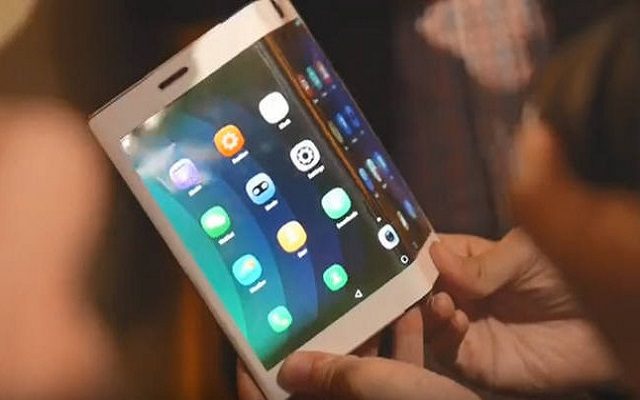
    Its display is reported to be seven inches diagonally when opened, which is similar to a small tablet. It will bend towards the inside of the device like a wallet. This would allow users to watch videos on a large screen and also carry the phone around more conveniently by folding it. The phone’s diagonal size is expected to shrink to 4.5 inches when folded.

    The U.S. smartphone giant Apple is also working on a foldable phone. It applied for a foldable phone-related patent to the United States Patent and Trademark Office at the end of 2016. Its foldable phone is reportedly 9.7 inches diagonally when unfolded and 5.5 inches when folded.

    Samsung’s local rival, LG Electronics, is also joining the competition. It is waiting for the U.S. patent office to approve its patent application for foldable phones by the end of this month. In August last year, it also applied for a design patent for a foldable phone to the World Intellectual Property Organization. Motorola recently received a design patent for a foldable phone from the World Intellectual Property Organization. The design reportedly includes a long rectangular screen that can be folded to function as a smartphone and unfolded to act like a tablet. China’s Huawei Technologies originally planned to unveil its first foldable phone in November, but the company has likely pushed back its launch date to 2019.

    The global focus on foldable phones is largely due to consumer expectations for changes to smartphone designs, which have been stagnant for some time.

    As today’s premium smartphones now have similar specs, consumers have grown tired of their similar designs and features, and sales growth for many brands has slumped.

    The high expectation for the foldable phones, however, is making electronics companies cautious as they prepare to launch them.

    “Their biggest struggle is to come up with content and a user interface that is specific to a foldable display,” said a source in the display industry.

    The marketability of these products is also another concern. Market tracker Strategy Analytics projects that global foldable phone sales will start at 3.2 million units next year and grow to 50.1 million units by 2022. According to this prediction, even if the foldable phone market expands by roughly 15 times over the course of three years, their sales will only account for 2.5 percent of total smartphone sales in 2022. Industry insiders speculate Samsung’s foldable phone will carry the hefty price tag of $1,500.

    The Wall Street Journal noted that the launch date may change and added that Samsung may not put the phone on sale immediately after unveiling it.

  • Duty-free shops enjoy turnaround in 2018

    Duty-free shops enjoy turnaround in 2018

    Korean duty-free shops are reviving their once-stagnant sales, with Lotte, Shilla and Shinsegae leading the turnaround.

    According to the Korea Customs Service on Saturday, duty-free sales in the first half of the year reached 9.94 trillion won ($8.79 billion), up 38 percent from the same period last year.

    If the trend continues in the second half of this year, sales at duty-free shops will likely rise by 30 percent from last year’s 14.47 trillion won.

    Shinsegae Duty Free said on Tuesday that its daily average sales reached 1.7 billion won after the opening of its Gangnam branch in southern Seoul on July 18, far exceeding the company’s sales expectations of 1 billion won a day.

    “Our goal is to reach 180 billion won by the end of this year, and 500 billion during our first year of operation,” said Ahn Joo-yeon, a public relations manager for Shinsegae Duty Free. “We have a good start.”

    If sales at the company’s Gangnam branch continue at this pace, they will reach about 250 billion won this year.

    Chinese consumers made up about 90 percent of the foreign shoppers at Shinsegae Duty Free’s Gangnam branch.

    Group tourists accounted for 36 percent of overall foreign customers, while 64 percent were individual tourists.

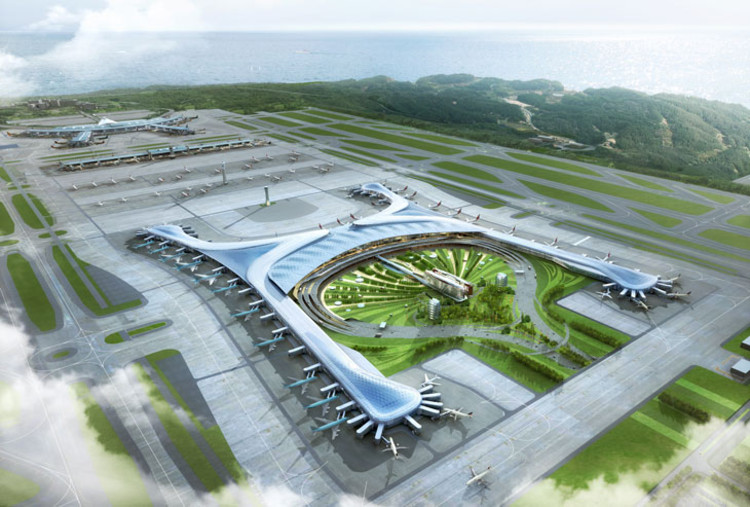
    Starting early next month, Shinsegae will also begin operating in duty-free sections 1 and 5 of Incheon International Airport Terminal 1, which Lotte Duty Free withdrew from.

    Shinsegae estimates it will take in about 300 billion won in sales between this August and December.

    Shinsegae’s Terminal 2 Duty Free Shop, which opened early this year, is expected to bring in about 200 billion won in sales this year.

    “Total sales are expected to increase from 1.8 trillion won last year to around 3 trillion won this year,” a Shinsegae Duty Free official said.

    Shinsegae, once at the bottom of the Korean duty-free trinity, increased its market share this year.

    Industry experts predict that Shinsegae will take about 20 percent of the Korean duty-free market this year, up from 13 percent last year.

    Shilla Duty Free was behind Shinsegae in its bid for the Incheon Airport duty-free slots last month, but Shilla’s operating profit hasn’t taken any hits.

    Shilla’s duty-free shops in the Hong Kong, Singapore and Incheon airports continue draw in sales, and 42.6 percent of the company’s sales in the first quarter came from the airport shops.

    Shilla Duty Free saw a 29-percent rise in first quarter sales from 782.7 billion won last year to 1.37 trillion won this year, while operating profit rose 181 percent to 476 billion won.

    Shilla Duty Free brought in about 4 trillion won in sales last year, accounting for 27 percent of the market. It’s expected to have a similar market share this year.

    Lotte handed over two out of its three duty-free locations at Incheon International Airport Terminal 1 to Shinsegae this year and didn’t open any new locations.

    If Lotte Duty Free had operated all of its Terminal 1 locations until the end of its contract in 2020, it likely would have suffered losses. Lotte’s most valuable Terminal 1 duty-free section, the liquor and tobacco area, is still open.

    According to an official at Lotte Duty Free, sales at the duty-free store’s location in Sogong-dong, central Seoul, are expected to reach 4 trillion won this year, up 30 percent from 3.169 trillion won last year.

    Lotte, the world’s second-largest duty-free company after Dufry in Switzerland, has expanded its overseas duty-free shops, opening its seventh location in Nha Trang Airport in Vietnam at the end of last month.

    It also plans to bid on space in Taiwan’s Taoyuan Airport this month. Lotte is also in the process of acquiring JR Duty Free, an Australian company.

    Last year, Lotte Duty Free raked in 6.2 trillion won in sales, 150 billion of which were made overseas.

    “We will record 7 trillion won in sales at the Sogong location and 1 trillion won in the World Tower [southern Seoul] location within this year,” said a Lotte Duty Free official. “We expect to see a massive increase in operating profit from 2.5 billion last year, as well.”
  • Cabin crew for Jeju Air can ditch the high heels

    Cabin crew for Jeju Air can ditch the high heels

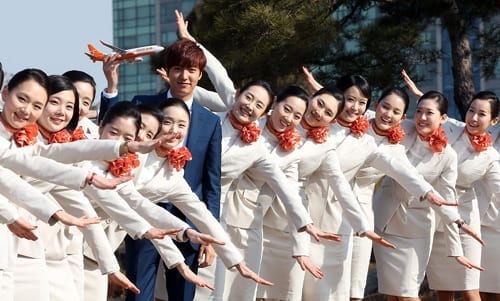
    Korea’s largest budget airline, Jeju Air, will now allow female flight attendants to wear shoes with lower heels when in uniform, the company announced on Thursday.

    Female attendants had to wear shoes with five to seven centimeter (1.9 to 2.7 inch) heels when they were working in uniform outside of planes.

    Once they boarded a plane, attendants wore shoes with low, three-centimeter heels for safety reasons.

    Jeju Air has now decided to let attendants choose between shoes with high heels or lower heels when wearing their uniforms outside of planes.

    The airline has been changing its service guidelines from earlier this year to reduce stress on flight attendants.

    From April, the airline has let flight attendants wear glasses and have painted nails while serving on board.

    While Jeju Air didn’t have official guidelines that prohibited attendants from wearing glasses, the industry norm was to wear contact lenses, so the airline decided to officially allow glasses.

    The airline previously only allowed nails to be painted with one color, but now flight attendants can decorate their nails with a variety of colors. However, additional textured nail decorations are still prohibited as they could scratch customers, the airline said.

    The uniform guidelines for flight attendants in Korea became a hot topic after employees of Korean Air’s budget airline Jin Air complained about their skinny jeans-based uniform.

    The idea of wearing jeans as uniform was reportedly introduced by Korean Air heiress Cho Hyun-min, who stepped down from all her positions at both Korean Air and Jin Air after throwing drinks at employees out of anger earlier this year. Jin Air is currently redesigning its uniforms.

  • BMW under pressure as cars keep catching on fire

    BMW under pressure as cars keep catching on fire

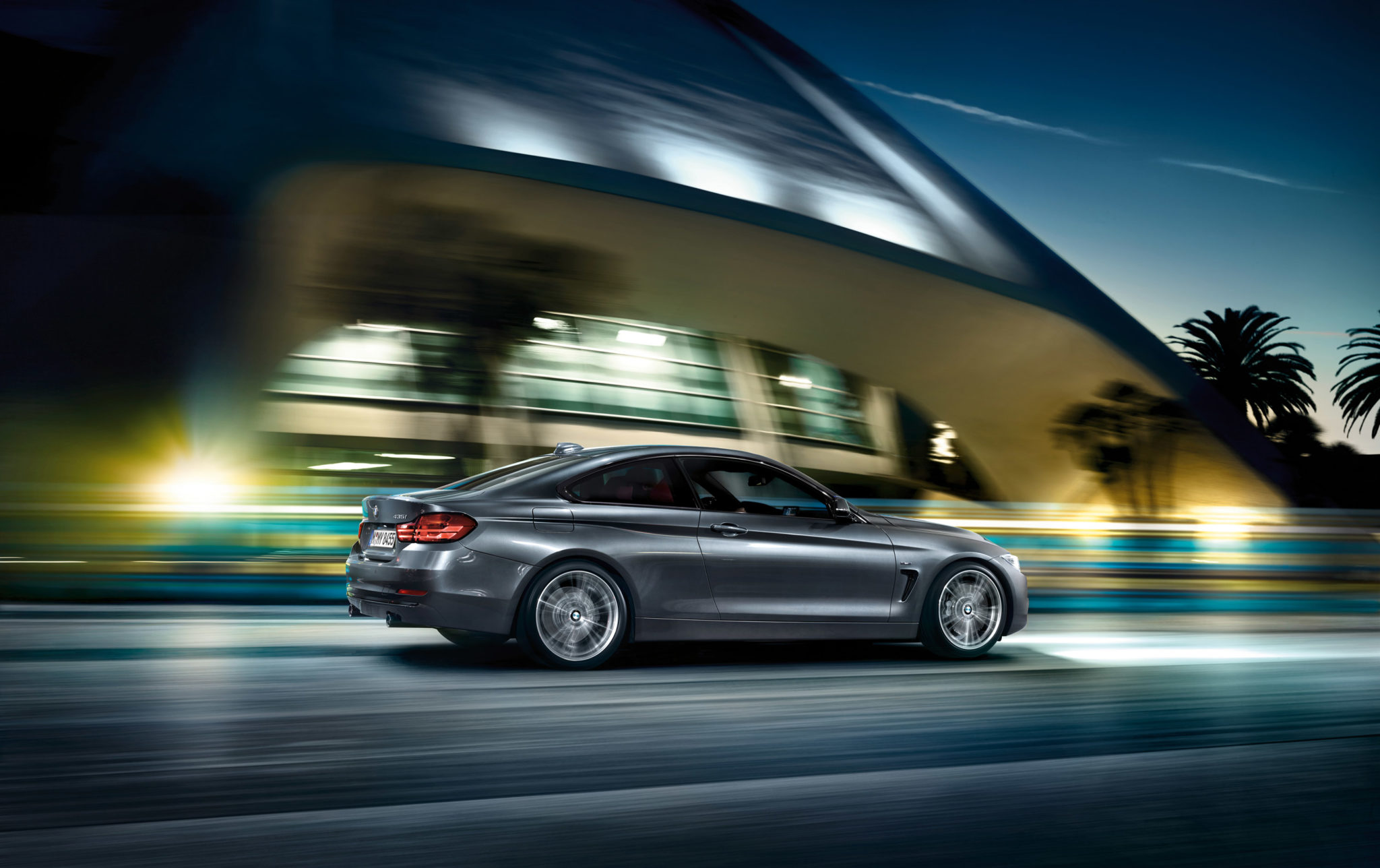
    Reports of BMW 520ds catching on fire are on the rise in Korea, posing a serious threat to the carmaker’s credibility.

    An official recall of the vehicles has still not been announced, making owners of the country’s second most popular import brand anxious about their own cars.

    The latest fire broke out on Monday in Incheon on a highway in Incheon headed toward Ilsan, Gyeonggi. The engine of the 520d sedan reportedly caught fire while the vehicle was moving, resulting in damages worth 37.5 million won ($33,000) according to the local fire station. The driver was not injured.

    Monday’s incident was the latest in a slew of fires. A total of 15 fires in BMW 520ds have been reported to Korea’s Ministry of Land, Infrastructure and Transport this year as of Monday, according to the ministry.

    In the month of July alone, four fires have been reported; some while driving and some while the car was parked.

    “It seems the manifold -part of the emissions system – has defects,” said an official from the Transport Ministry Monday.

    “But since all but one of the vehicles were completely burnt out, it will take more time to come up with an exact reason as to why these 520ds caught fire,” the official added.

    BMW Korea said it will carry out a recall “soon,” but the range of affected cars and when the recall will take place has not been decided.

    The ministry launched its own investigation into the problematic car on July 16 and is waiting for the carmaker to submit a detailed recall plan.

    BMW Korea said it needs more time to come up with a plan.

    If the recall plan is finalized, it would be the first time that BMW Korea has ever had to carry out a recall due to the risk of fire.

    “The fact that we will carry out a voluntary recall has been decided but more time is needed to decide when and what models will be recalled since it is a sensitive matter,” a BMW Korea spokesman said Monday.

    “We are considering expanding the recall beyond just the 520d model to ones that use the same parts,” the official added.

    This is not the first time a safety issue has been raised with BMW vehicles due to fire hazards.

    In 2015, four fires were reported in less than a month in BMW vehicles including the 5-Series and 7-Series, resulting in then-BMW Korea CEO Kim Hyo-joon issuing an official apology. The vehicles were not recalled.

    The 520d model is the most popular vehicle within the BMW Korea lineup. In the first half of this year, sales of the 520d accounted for nearly 30 percent of the company’s entire sales.