Tag: Korea

  • IMF applauds Korea’s currency transparency

    IMF applauds Korea’s currency transparency

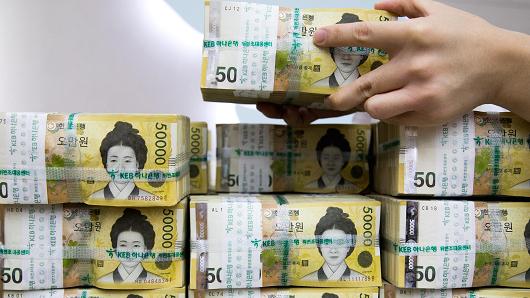
    The International Monetary Fund on Thursday welcomed Korea’s decision to regularly reveal its currency market intervention records.

    Korea’s Finance Ministry said it would disclose the records starting in March 2019 to help remove unnecessary misunderstandings about the country’s currency market operations.

    “I welcome the Korean government’s decision to publish data on foreign exchange intervention,” Christine Lagarde, managing director of the IMF, said in a statement. “It delivers a strong message about commitment to a flexible exchange rate regime. This will enhance Korea’s inflation targeting regime by strengthening the credibility of the announced monetary policy objective and the anchoring of inflation expectations. A credible commitment to a flexible exchange rate also facilitates external and internal adjustment.”

    The disclosures of the net amount of U.S. dollars used for selling and buying by Korea’s currency authorities will be made within three months after a reporting period. Quarterly releases will begin following the third quarter of 2019.

    Seoul said earlier that the country is considering the detailed disclosure of its interventions in the foreign exchange market as part of a broader move to boost transparency and clear itself of suspicion of exercising undue influence on exchange rates.

    Korea’s financial authorities have persistently claimed they do not interfere in the foreign exchange market but engage in “smoothing operations” against extreme one-sided movements.

    In April, the United States kept Korea on its “monitoring list” but did not designate the country as a currency manipulator.

    Washington has vowed to aggressively keep tabs on and combat unfair currency practices, saying it cannot and will not bear the burden of an international trading system that, it claims, unfairly disadvantages American exports and gives an edge to its trading partners.

  • Korea’s minimum wage divides Moon’s top economists

    Korea’s minimum wage divides Moon’s top economists

    Two of the Moon Jae-in administration’s top economic officials are at odds over the minimum wage increase’s impact on hiring, raising concerns among experts about the government’s future policy direction.

    “I think the minimum wage increase must have had an impact on hiring and salary,” said Kim Dong-yeon, the country’s minister of strategy and finance, in a committee meeting at the National Assembly on Wednesday. This was an about-face from his stance a month ago, when he said it was difficult to attribute stagnant new hiring to the minimum wage hike.

    “[The past few months] has not been enough time for research institutes to find any meaningful evidence on the impact of the minimum wage increase, but based on my experience and intuition, [I think] it has had an impact,” Kim said.

    Kim earlier argued that it was the ongoing restructuring of Korea’s automotive and shipbuilding sectors that slowed down employment growth.

    Kim’s remark on Wednesday came after a report released on the same day that showed a decrease in the number of new jobs created.

    According to data from Statistics Korea, the number of people who got new jobs in the wholesale, retail, accommodations and food category of the service sector, which is highly sensitive to changes in the minimum wage, fell by 88,000 compared to a year before, which is a drop of about 1.5 percent. New hires in the category have been on the decline since December last year, a month before the minimum wage increase went into effect. Total number of jobs lost in the category since then is about 447,000.

    “Kim is an applied economics expert and is well aware of the relations between the rise in minimum wage and the fall in employment, which is why he finally acknowledged its impact,” said Pyo Hak-gil, an economics professor at Seoul National University.

    But the Blue House’s top economic official doesn’t agree with the finance minister.

    “There was no fall in employment due to the minimum wage increase,” said economist Jang Ha-sung, President Moon’s chief of staff for policy, in a high-level meeting in Seoul on Tuesday. “There has been some controversy about the fall in employment, but based on the analysis by several research institutes using the statistics from March, there was no notable fall in hiring, excluding some food and beverage businesses.”

    Jang added that policy support for companies that could suffer from the new minimum wage was received well, and requests for government funding far exceeded initial projections.

    The differences in opinion between Kim and Jang, the country’s top two economic policymakers, have market watchers worried about the government’s future economic policy direction.

    “The perspectives and diagnosis of current economic conditions diverge within the government, which raises questions about its ability to come up with proper solutions,” said Yun Chang-hyun, a professor of economics at the University of Seoul.

    “The unemployment issue is not entirely the fault of the current administration, but it is true that some of its policies intended to expand jobs had the opposite effect,” said Nam Sung-il, professor of economics at Sogang University. “The government has to approach this issue with a more forward-looking perspective.”

  • Fast Retailing’s Gu to enter South Korea

    Fast Retailing’s Gu to enter South Korea

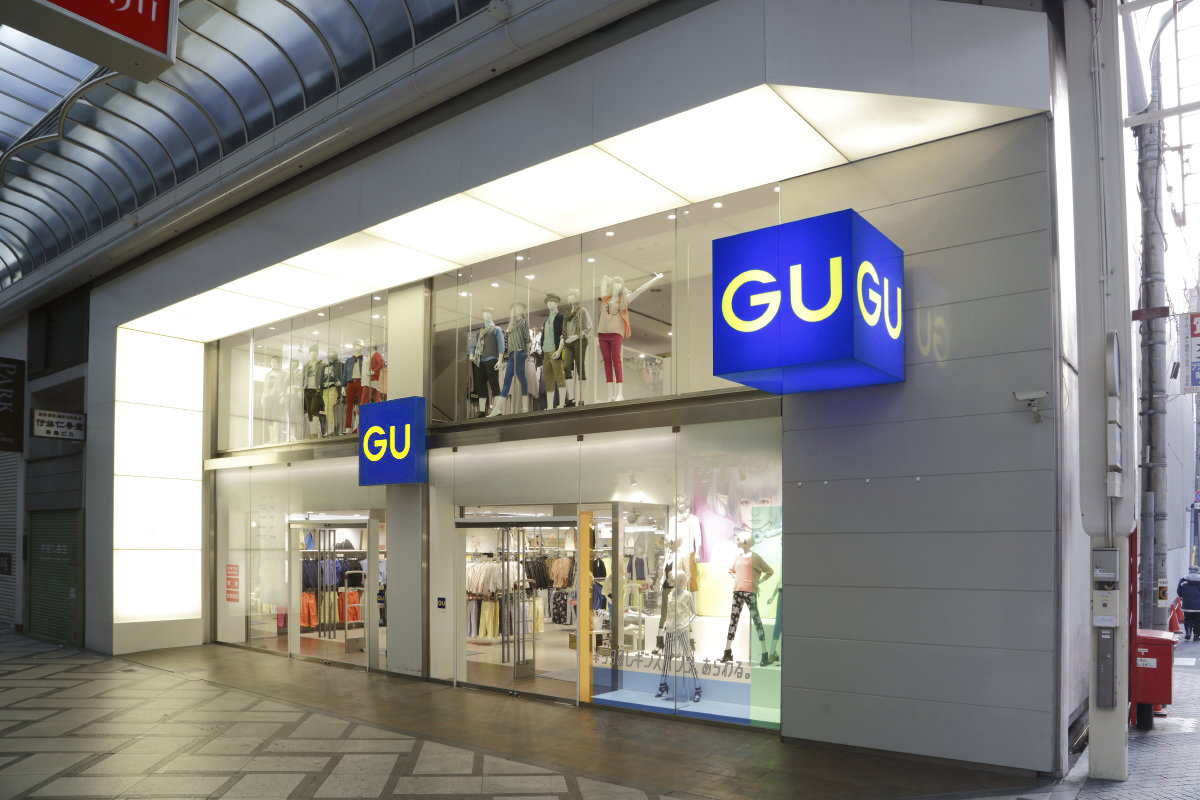
    Fast Retailing Group brand Gu plans to launch in South Korea this year with a store in Lotte World Mall in Jamsil, Seoul.

    With the brand message “Your freedom”, the Japanese clothing store will have a sales floor area of 1400sqm and offer items for women, men and children.

    “Launching in such a fashion-conscious country as Korea is a big step,” says Gu CEO Yunoki Osam.”

  • Korean’s overseas card spending hits record high in first quarter

    Korean’s overseas card spending hits record high in first quarter

    Overseas card spending by Koreans hit a fresh record high in the first quarter on rising outbound tourists, central bank data showed Thursday.

    In the January-March period, a record $5.07 billion worth of purchases were made abroad, up 11.4 percent from three months earlier, according to the data by the Bank of Korea. From a year earlier, the Q1 tally marked a 26 percent increase.

  • Korean-German Chamber of Commerce to hold job fairs

    Korean-German Chamber of Commerce to hold job fairs

    The Korean-German Chamber of Commerce and Industry is holding job fairs at Korean universities over the next couple of weeks.

    According to the German commerce of chamber, leading German companies will be participating in the job fairs including Audi Volkswagen Korea; pharmaceutical company Bayer Korea; a high-tech company that leads in industrial automation, ISRA Vision Korea; defense contractor TAURUS Systems Korea and Carl Zeiss Korea.

    The first visits that the companies will be making will be on May 23 at Konkuk University and May 24 at Hanyang University. The company will be meeting students at Chung-Ang University on May 29.

  • Shilla Duty Free outperforms in Q1 with record-high sales

    Shilla Duty Free outperforms in Q1 with record-high sales

    Hotel Shilla’s airport retailer Shilla Duty Free has posted record-high first-quarter sales of KRW1.14 trillion (US$1 billion).

    Korean-headquartered Shilla Duty Free earned KRW47.6 billion in operating profit in the quarter, mainly because of increased sales at its overseas duty-free shops.

    Sales last year hit KRW600 billion, and the company expects sales to hit KRW1 trillion this year.

    Shilla Duty Free opened its first overseas duty-free shop at Singapore’s Changi Airport in 2013, and in December opened its fifth overseas outlet at Hong Kong International Airport to become the first company to manage duty-free stores in the three largest airports in Asia – Incheon, Singapore and Hong Kong. It also has outlets at airports in Macau, Phuket and Tokyo.

  • Hyundai Department Store offers high-tech make-up

    Hyundai Department Store offers high-tech make-up

    Hyundai Department Store’s online mall has launched an augmented reality (AR) service so its customers can virtually try on make-up products.

    It covers more than 20 products from eight beauty brands, including Benefit, Estee Lauder and Shu Uemura. Using an AR image of their face, customers can try on different colour variations. Hyundai says it plans to expand the number of brands to 20.

    “With the virtual make-up service, customers can simply choose items through our app,” says the retailer.

    On its website or app, cosmetics products offering the virtual service appear with a camera sticker on the product page. One click leads the user to the Makeup Plus app, which uses a live video feed to enable customers to see how the product would look on their face from different angles.

    The Makeup Plus virtual make-up app has been downloaded more than 200 million times since its launch in 2015. In Korea alone, the app is used by 500,000 people each month. It was developed by Chinese tech company Meitu.

    “Customers of online shopping malls want fun services and products rather than making a purchase 100 to 200 won cheaper,” says Hyundai Department Store’s e-commerce executive Lee Hee-jun. “We plan to use thehyundai.com to create new shopping experiences that combine offline retail and IT.”

  • Overseas spending by Korean travellers sets new record in Q1

    Overseas spending by Korean travellers sets new record in Q1

    South Korean travelers’ spending overseas hit a record high in the first quarter this year as people went on trips during winter school breaks and extended holidays, statistics from the central bank showed on 6 May.

    Some 7.43 million South Koreans went abroad in the first three months, up 14.1 percent from the same period last year, setting a new record, according to the Bank of Korea. The period coincided with winter vacation and the extra-long lunar New Year holiday that combined with two weekends and a bridge off-day.

    The travelers spent US$8.5 billion, US$1.12 billion more than in the first quarter of last year. The latest number beats the previous record of US$8.21 billion in the fourth quarter last year. A monthly record was set in January with US$3.24 billion in spending.

    A strong local currency apparently encouraged overseas trips, especially to relatively close destinations such as Japan, Taiwan and Vietnam.

    The travel sector deficit in the first quarter increased from US$1.13 billion in the same quarter last year to US$4.87 billion this year. The level or deficit this year, however, is US$50 million less than the previous quarter, marking the first contraction in five quarters.

    Spending by foreign visitors to Korea contributed to the contraction. They spent US$3.63 billion while in the country in the first quarter this year, an increase of US$340 million from the previous quarter. In March, the incoming visitors spent US$1.4 billion, the biggest amount since December 2016.

    A total of 3.36 million foreigners came to Korea in the first three months, down 9.1 percent from the same period the previous year. The number of Chinese travelers dropped 30.5 percent, but people from Japan increased 2.5 percent.

  • Trump intervening to get ZTE back in business

    Trump intervening to get ZTE back in business

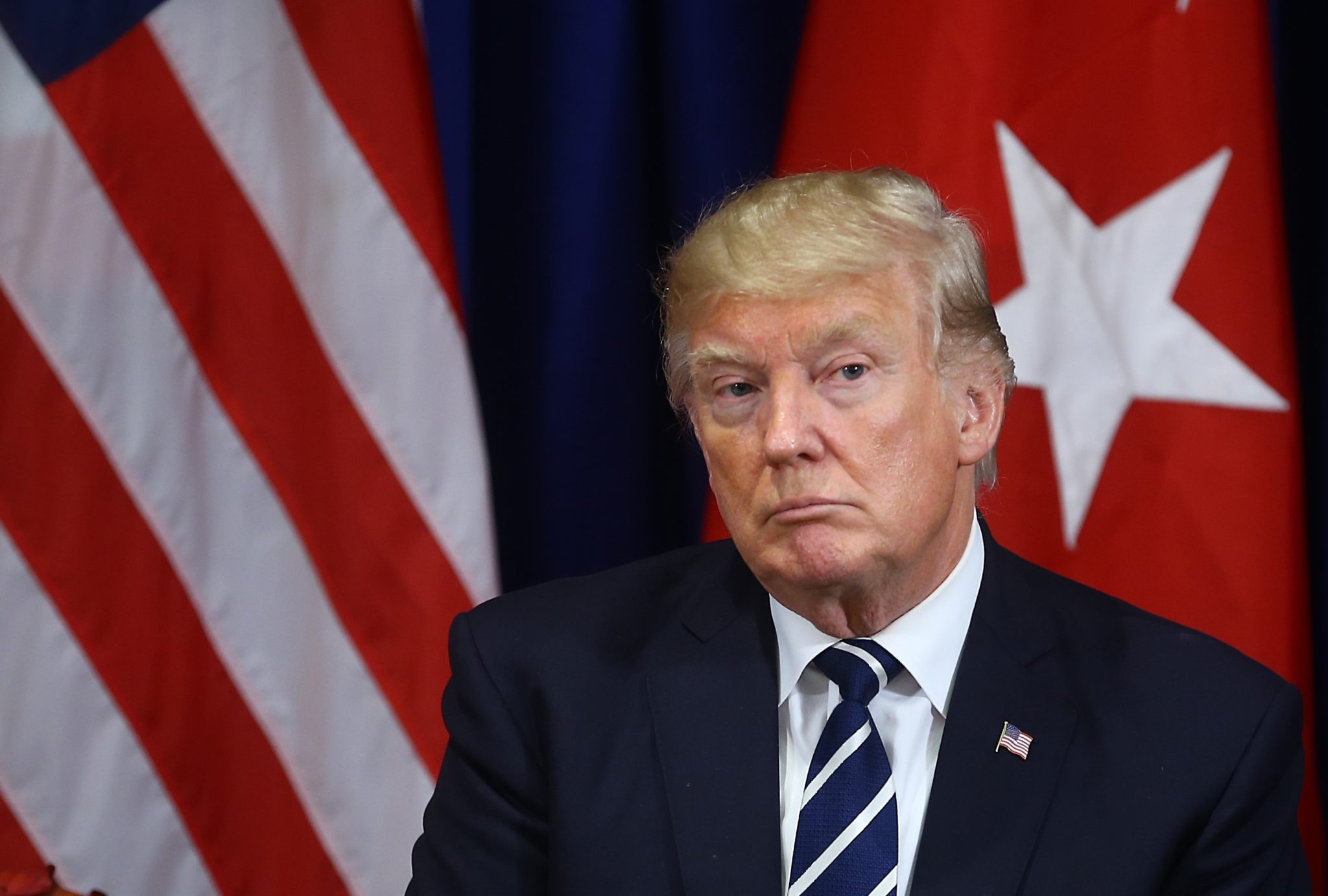
    n an unexpected twist in the ongoing saga over the ban on ZTE importing US components, president Donald Trump has indicated he may throw a lifeline to the Chinese vendor.

    On Sunday, Trump tweeted on his official account that he is working with Chinese president Xi Jinping on a resolution that will allow ZTE to resume operations.

    “President Xi of China, and I, are working together to give massive Chinese phone company, ZTE, a way to get back into business, fast. Too many jobs in China lost. Commerce Department has been instructed to get it done!,” he wrote.

    ZTE was forced to cease major operations last week as a result of the import ban imposed on the vendor by the US Department of Commerce’s Bureau of Industry (BIS) in April.

    The ban was originally imposed last year but automatically suspended on the condition that ZTE comply with its settlement agreement over the investigation into the vendor’s sale of telecoms equipment including US components to Iran, in violation of US sanctions.

    Trump’s announcement comes as the US and China are conducting trade talks aimed at resolving the disputes between the world’s two largest economies. Chinese vice premier Liu He reportedly met with officials in Washington on Friday, while Xi’s top-ranking economic adviser plans to visit this week to continue the

  • E-Mart rolling out robot concierge

    E-Mart rolling out robot concierge

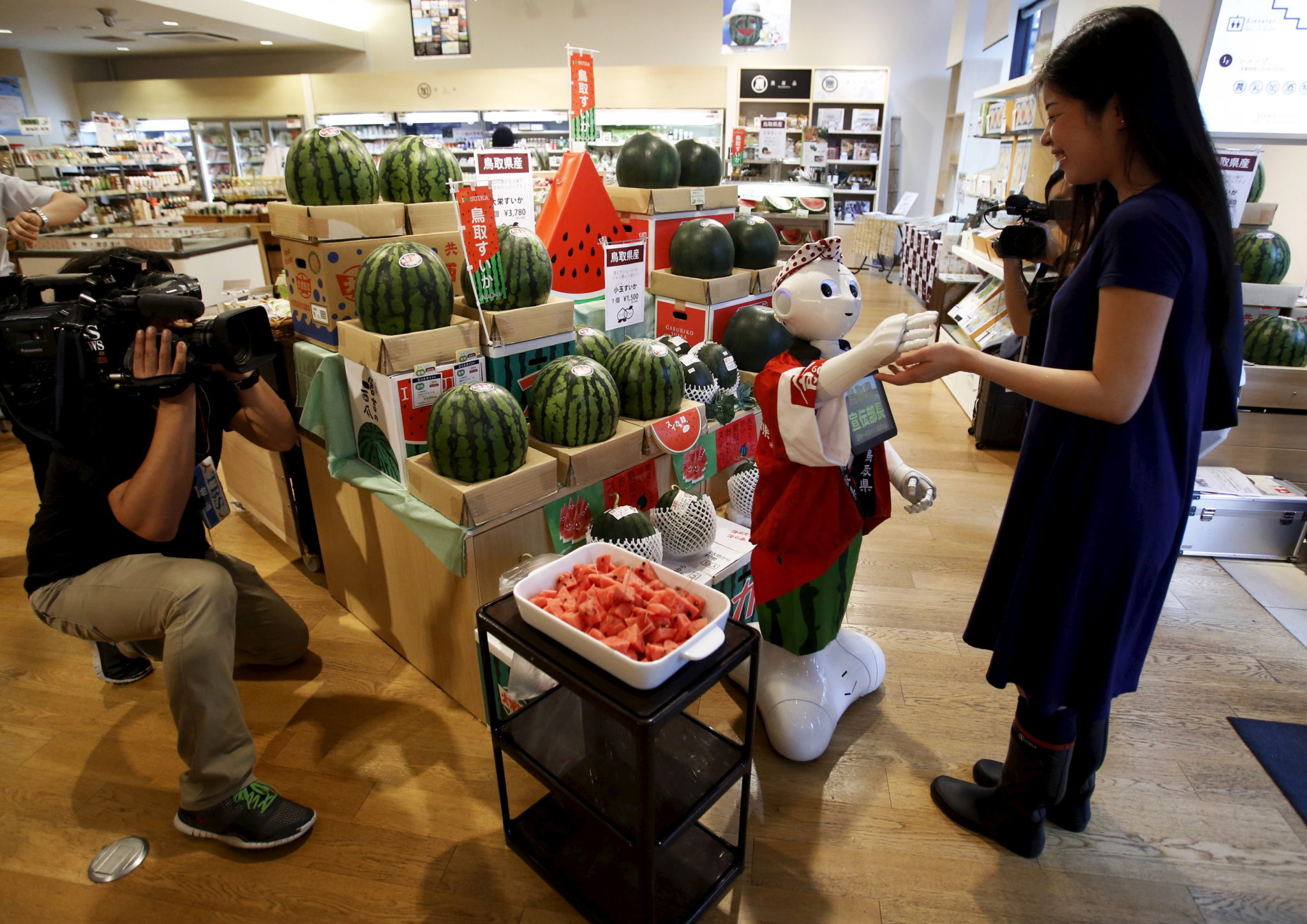
    South Korean discount store chain owner E-Mart Inc says it has started testing a robot to provide an automated concierge service to shoppers.

    Dubbed “Pepper”, the robot concierge will be stationed at an E-Mart outlet in Seoul for about three weeks, the company says.

    Developed by Japan’s Softbank Robotics Corp., the 1.2m-tall robot provides product information, introduces sale items and answers frequently asked questions, E-Mart says.

    This follows E-Mart unveiling an autonomous shopping cart, Eli, for a test run at its warehouse-style supermarket Traders in Hanam, just southeast of Seoul.

    This week, the company signed a memorandum of understanding with Seoul National University to carry out joint research on the implementation of auto-driving robots in the retail sector.

  • SK Telecom, Macquarie to buy security firm ADT Caps for $1.2b

    SK Telecom, Macquarie to buy security firm ADT Caps for $1.2b

    SK Telecom has partnered with Macquarie to fully acquire domestic security service firm ADT Caps for 1.276 trillion won ($1.18 billion), the South Korean mobile giant announced.

    SK Telecom will buy 55% stake in Siren Holdings Korea, the company that holds 100% stake in ADT Caps, for 702 billion won ($650.7 million), while Macquarie will buy 45% stake for 574 billion won ($532 million).

    The pair plans to sign a deal with seller Carlyle Group and complete the transaction as early as in the third quarter of this year, SK Telecom said in a statement.

    Through the acquisition, SK Telecom aims to build new business models by introducing technologies such as AI, IoT and big data to the country’s fast-growing security services industry and turns ADT Caps into “a next-generation security services provider” with these technologies.

    ADT Caps is the country’s second-largest security services provider with 570,000 subscribers. The company mainly provides physical security services, including access control and facilities management, and accounts for roughly 30% of the local physical security services market.

    In 2017, ADT Caps recorded revenue of 721.7 billion won and operating income of 143.5 billion won.

  • South Korea to hold 5G auction June 15

    South Korea to hold 5G auction June 15

    The South Korean government has announced plans to hold an auction for 3.5-GHz and 28-GHz 5G spectrum on June 15.

    The government has also decided to go with its first proposed option of distributing the spectrum evenly among the nation’s three operators – SK Telecom, KT and LG U+ – rather than allocating the largest portion of spectrum to the highest bidder.

    Likewise, the government plans to limit bid amounts to stop the auction from being overly competitive and burdening the winners with high spectrum costs.

    With the move, the ICT ministry hopes to set the stage for the commercialization of 5G technology in South Korea.

    South Korean operators are expected to be among the earliest adopters of 5G technology. Currently KT has announced plans to launch commercial 5G services in March, and is expected to be the first South Korean operator to go live with the technology. But both KT and LG U+ have significant 5G rollout plans of their own. The operators already trialed 5G during the recent PyeongChang Winter Olympics.

  • Korean telcos object to universal fare plan

    Korean telcos object to universal fare plan

    South Korean operators are protesting the government’s proposed introduction of a “universal fare plan” that would require the market’s top operator to provide a low-cost plan to help households reduce mobile costs.

    The government is planning to revise the Telecommunications Business Act to require the top ranked operator to offer a plan including 200 minutes of voice calls and 1GB of data for around 20,000 won ($19).

    While the regulation would technically only impact incumbent SK Telecom, rivals KT and LG U+ have complained they would have no choice but to release similar plans to remain competitive.

    The three operators are protesting the government’s plans on the basis that it could be devastating to their profitability – SK Telecom estimates that operating profits for the three companies could be reduced by up to 60% as a result of the move – and that it imposes too much state intervention into their businesses.

    This would be coming at a time when operators will need to make huge investments in 5G infrastructure to support their goals of launching 5G services in early 2019.

    Government and SK Telecom officials failed to reach a consensus during a meeting to discuss the proposed change by the Regulatory Reform Committee late last month, the report states. The committee plans to hold a new meeting next week to continue the discussion.

    Under the proposal, the universal fare plan would be revised every two years. But SK Telecom has argued that the plan would effectively force operators not to conduct marketing activities and eliminate the incentive to compete with each other.

  • Lotte Shopping closing down

    Lotte Shopping closing down

    Lotte Shopping is trying to offload its department store annexed to Anyang train station, 20km from Seoul.

    It is said to be in the final stage of closing a deal with shopping mall group Enter Six to either sell or transfer its lease rights on the store, reports Pulse.

    With nine floors above ground and one below, Lotte Department Store Anyang is connected to the Anyang station and is within walking distance of an intercity bus terminal.

    After opening in 2002, the branch was the only major shopping mall in the area, but sales nosedived after Lotte Department Store’s Pyeongchon branch opened in March 2012. The two Lotte department stores are only 2.8km apart. The retailer still has nearly half of its 30-year lease term left on the Anyang building.

    Lotte Shopping is shutting down its poor-performing stores. Meanwhile, E-mart, the big-box store chain of Shinsegae, also has been scaling back.

  • Sulbing dessert about to open new shops in Canada

    Sulbing dessert about to open new shops in Canada

    Korean dessert chain Sulbing will expand into Canada via franchising.

    The chain has signed a deal with a Canadian firm to open the first store in Vancouver by the first half of this year, followed by more stores in major Canadian cities.

    The chain is also planning expansion into Australia, Cambodia and the Philippines.

    Founded in 2013, Sulbing started franchising in China in 2015, followed by Japan and Thailand.