Tag: Korea

  • Celine Korea opens store in Seoul

    Celine Korea opens store in Seoul

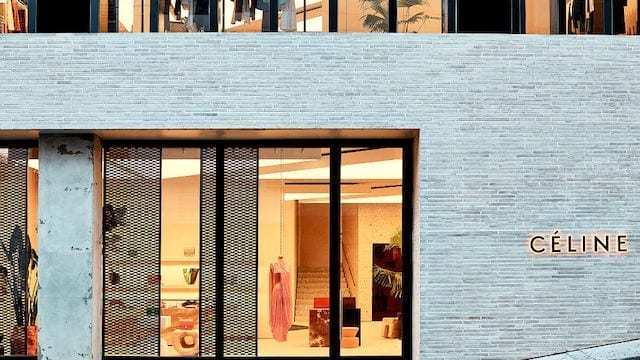
    French luxury fashion house Celine Korea has opened a store in Seoul’s fashionable Cheongdam district.

    CELINE-new-store-Seoul-Cheongdam-district-3

    In a double-storey building with a perforated brick facade, the shop has an interior furnished with bespoke ware designed by Danish artist Fos (Thomas Poulsen).

    CELINE-new-store-Seoul-Cheongdam-district-4

    CELINE-new-store-Seoul-Cheongdam-district-1


    Celine’s small leather goods and bags are featured on the first floor, while the second floor is devoted to the brand’s shoes and ready-to-wear collection.

    CELINE-new-store-Seoul-Cheongdam-district-2

  • Korea to launch virtual reality shopping mall

    Korea to launch virtual reality shopping mall

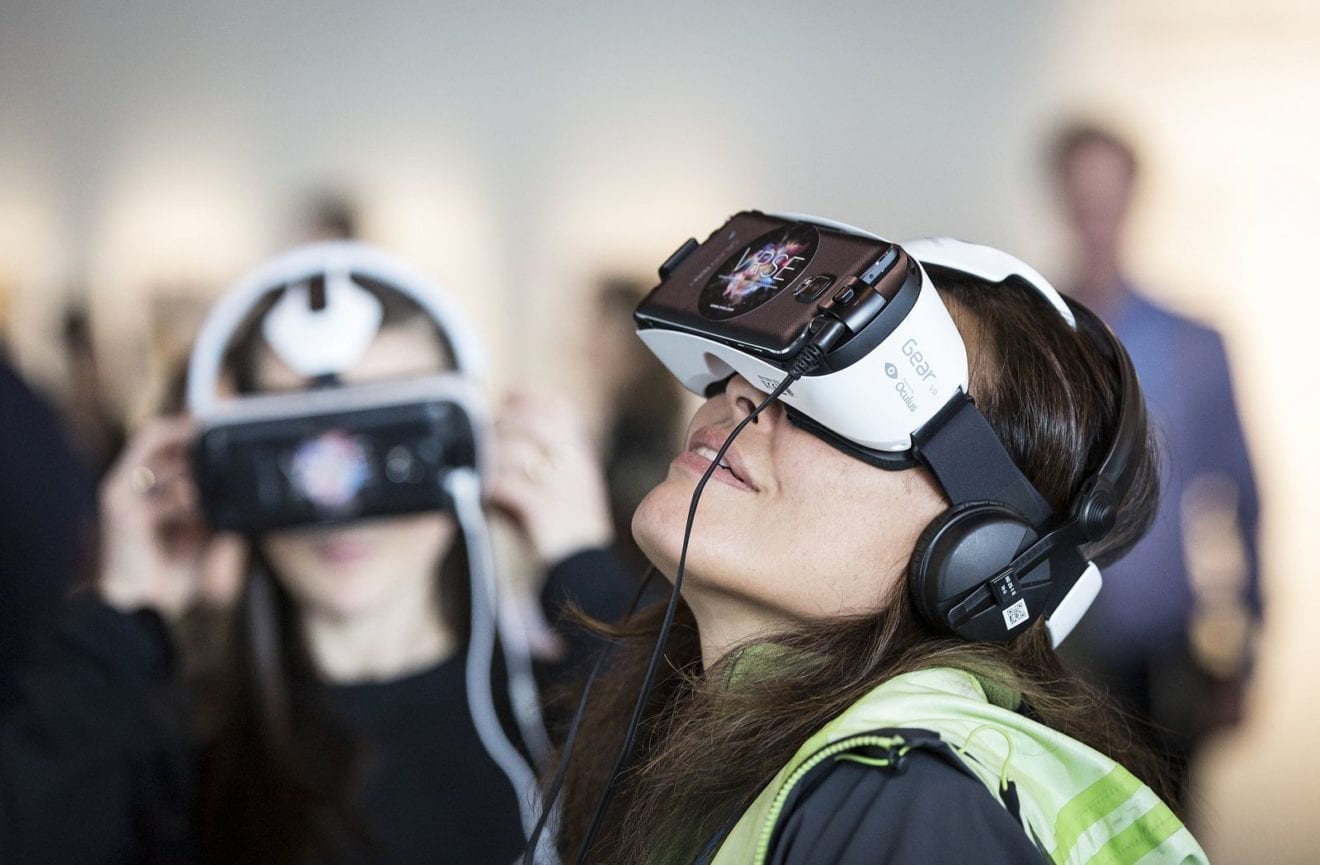
    A virtual reality shopping mall is set to be launched in Korea, backed by the government.

    The Ministry of Trade, Industry & Energy says it will be rolling out the mall during this year’s Korea Sale Festa – Korean Black Friday – in October.

    The ministry hopes that consumers will be able to use to shop and place orders and have the goods delivered to their doorstep.

    This video gives an idea of what shoppers can expect when the design is complete.

    According to the ministry, although the global retail industry recognises VR or AR shopping as the industry’s future, key players such as eBay and Alibaba are still in the testing phase.

    Korean VR technology 2

    The ministry is inviting retailers to join its initiative starting this week to establish virtual outlets on the upcoming platform. The deadline for applications is April 10.

    “We’re hoping for our project to provide new business opportunities and create a whole new market,” a ministry official said.

  • South Korean group in advanced talks to buy into AirAsia leasing unit

    South Korean group in advanced talks to buy into AirAsia leasing unit

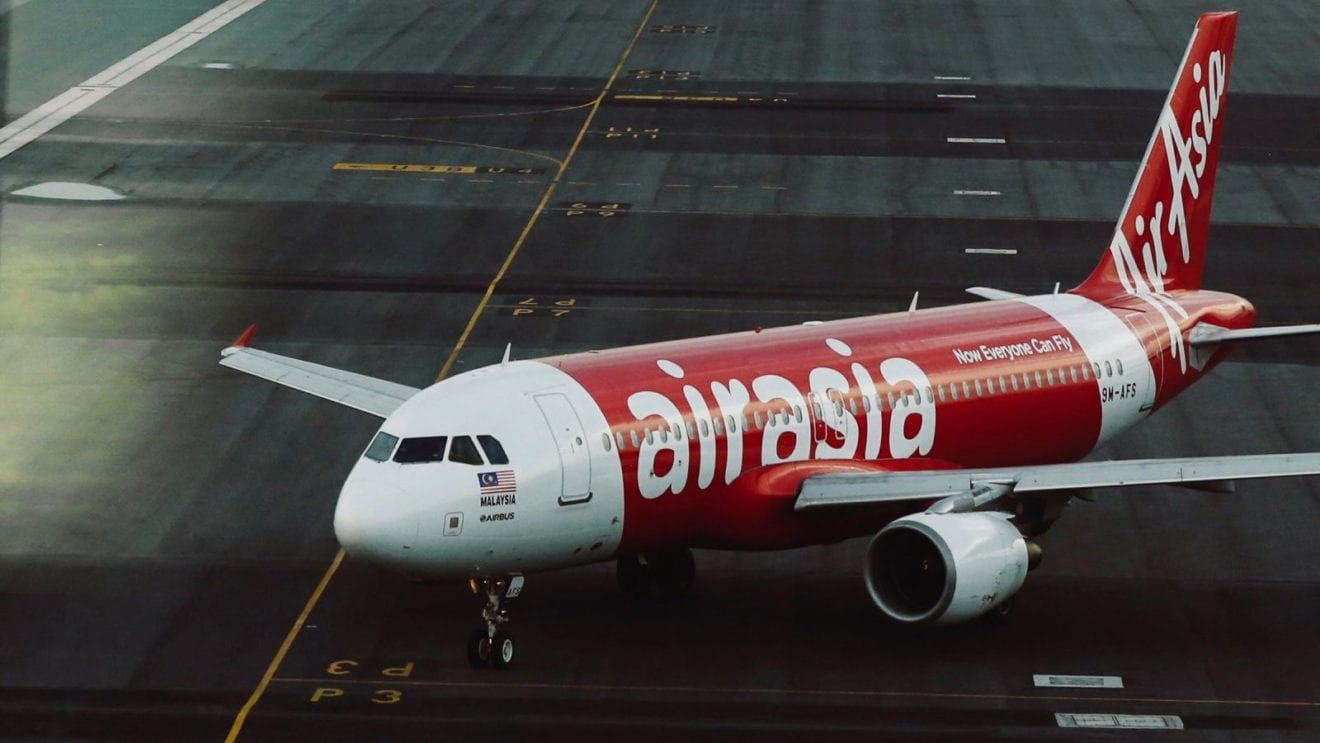
    A little-known South Korean group is in advanced talks to acquire a stake in AirAsia Bhd’s aircraft leasing unit, according to three people familiar with the matter.

    Two of the people said a deal would value AirAsia’s fully-owned unit, Asia Aviation Capital, at roughly $900 million.

    Privately-owned KOTAM, or Korea Transportation Asset Management, has been picked as the preferred bidder, the people said, with one adding that state lender Korea Development Bank (KDB) was tapped to provide funding, though it was not clear whether the bank had agreed to back the deal.

    Philippines AirAsia CEO Dexter Comendador (3rd from left), Clark International Airport Corporation (CIAC) President-CEO Alexander Cauguiran (4th from left), and Central Luzon Regional Tourism Director Ronaldo Tiotuico (2nd from right) are flanked by flight attendants during the send-off ceremony for the inaugural flight of AirAsia from the Clark International Airport (CRK) to Kalibo in Aklan, one of the routes to the world-famous Boracay. A total of 146 passengers took the inaugural flight going to Kalibo. The Kalibo flight arrives at 1:10 p.m. and departs from the Clark airport at 1:35 p.m. every Mondays, Tuesdays, and Wednesdays.

    Philippines AirAsia CEO Dexter Comendador (3rd from left), Clark International Airport Corporation (CIAC) President-CEO Alexander Cauguiran (4th from left), and Central Luzon Regional Tourism Director Ronaldo Tiotuico (2nd from right) are flanked by flight attendants during the send-off ceremony for the inaugural flight of AirAsia from the Clark International Airport (CRK) to Kalibo in Aklan, one of the routes to the world-famous Boracay. A total of 146 passengers took the inaugural flight going to Kalibo. The Kalibo flight arrives at 1:10 p.m. and departs from the Clark airport at 1:35 p.m. every Mondays, Tuesdays, and Wednesdays.

    KOTAM is part of Kukje Maritime Investment Corp., known as KMarin, which was founded in 2005 and has a fleet of 46 ships, according to its website.

    KOTAM, KDB and AirAsia did not have immediate comment.

    A successful deal would mark South Korea’s biggest move into the $256-billion global aircraft leasing sector, which has attracted others in Asia, including Industrial and Commercial Bank of China, BOC Aviation, China’s acquisitive HNA Group, and Japanese banks.

    KOTAM and AirAsia are negotiating final terms of the purchase of a majority stake in the leasing unit, one of the sources said. Asia’s biggest budget airline has sought buyers for its subsidiary since last year, and has said it aimed to close a sale early this year.

    A deal with KOTAM could still fall through, and two sources said that Air -Asia has not closed the door to a deal with a Chinese bidder.

    The sources declined to be identified as the negotiations are ongoing and confidential.

    South Korean insurers, asset managers and securities firms are attracted to aviation finance as aircraft leases offer fixed returns and are often seen as relatively safe transactions.

    Paid for in US dollars, aircraft are comparatively easy to release to various airline operators across the world.

    Reuters reported in December that AirAsia had received strong interest from North Asian firms, besides many Chinese companies.

    One of the sources said AirAsia was becoming concerned about Chinese buyers’ ability to close a deal due to China’s recent measures to tighten controls on money moving out of the country.

  • Film festival in Beijing shuns Korean movies

    China blocked the screening of Korean films at the upcoming 7th Beijing International Film Festival, the latest retaliatory measure against Seoul for the deployment of a U.S.-led antimissile system.

    Film industry sources confirmed Tuesday that Korean films were invited to partake in the annual film festival in Beijing, which runs from April 16 to 23, but they are not going to be screened because of Chinese authorities’ orders.

    Since the announcement last July of Seoul and Washington’s decision to deploy the Terminal High Altitude Area Defense, or Thaad, system to Korea, China has taken various retaliatory measures against the Korean entertainment industry, including unofficial bans on Hallyu, or Korean wave, content, as well as restricting tour packages to Korea and a crackdown on Korean retail stores in China.

    “The Beijing International Film Festival has invited Koreans but have suspended this because of Chinese authorities’ orders,” one film industry insider said. “Thus, it appears Korean films will not be screened at the film festival.”

    Last year, top young Hallyu stars including Lee Min-ho and Kim Woo-bin were in the spotlight at the film festival in Beijing, which launched in 2011. Lee, who starred in the 2016 comedic action film “Bounty Hunters,” a co-production project among Korea, China and Hong Kong, took part in the opening ceremony of the festival last April, which was broadcast on state television.

    There were several Korean films that were screened and made shortlists for awards last year. This year, no Korean films are reported to be on the preliminary screenings list.

    The eight-day Beijing International Film Festival is held by the General Administration of Press, Publication, Radio, Film and Television of the People’s Republic of China and the People’s Government of Beijing Municipality.

    China’s Administration of Press, Publication, Radio, Film and Television, which is responsible for broadcast policy, has been reported as being behind the order to production companies to stop making programs with Hallyu content as well as joint projects with Korea.

    Earlier this month, a Korean-Chinese co-production starring Korean actor Ha Jung-woo with Chinese actress Zhang Ziyi fell through after Ha faced trouble with getting a visa from China and other problems.

    News about Hallyu entertainers and Korean films is rare on Chinese television and in newspapers these days, and no Korean movie was released in China last year though about four films are usually released in theaters in China annually.

    The Chinese government became even more aggressive in its retaliation following the finalization of the government swapped land with Lotte Group at the end of last month to find a home for the Thaad battery. Lotte’s businesses in China were particularly targeted.

    When asked by a reporter for Seoul’s response to China’s blocking of Korean films and the continued retaliations for the Thaad deployment, Cho June-hyuck, spokesman for the Ministry of Foreign Affairs, replied that the Korean government is “paying close attention to the series of measures taking place within China.”

    Cho continued in a briefing Tuesday, “Our government holds the consistent position that under no circumstance should civilian exchanges between two countries, which form the foundation of bilateral relations, face artificial handicaps, and will actively respond to China’s unfair measures in order to minimize the damage against Korean companies.”

    The Foreign Ministry also spoke up against the destruction of South Korean flags in China following the Thaad fallout, saying it has lodged a strong protest with Beijing.

    Several Taegeukgi, or Korean national flags, were found torn in pieces in health clubs in Tianjin earlier this month in a sign of anti-Korea sentiment.

    “The national flag symbolizes the dignity of the country and our government takes the destruction of our flag in some regions in China seriously and gravely,” said Cho. He said that the Chinese government responded it recognizes the gravity of the destruction of the flags and will take necessary measures including retrieving destroyed flags.

  • ‘Korean Chaos’ Worries the Fashion Industry

    ‘Korean Chaos’ Worries the Fashion Industry

    SE“The last four or five months have been complete chaos,” admits Jung Kuho, executive director of Seoul Fashion Week. “Everyone is so concerned with politics and the economy that they don’t want to spend their money. You don’t buy luxury goods when there’s this much uncertainty.”

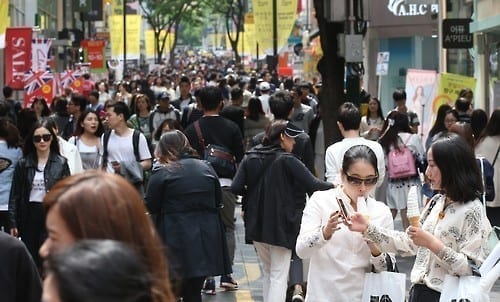
    Seoul is home to one of the most important luxury goods markets in the world, an entertainment industry that dominates Asian culture, beauty brands with global reach and a fashion week that sits firmly on the international calendar. But as editors, buyers and street style stars gather for Seoul Fashion Week, the collections this season will be overshadowed by serious political and economic upheaval.

    In October, a major corruption scandal in South Korea led to public outcry and widespread street protests which resulted in the recent impeachment of the country’s president Park Geun-hye. Now, in the wake of counter-protests and other domestic instability, a diplomatic crisis with China has emerged. One result of these crises is that related security concerns are deterring both local and foreign shoppers.

    According to Bain & Company, sales of luxury goods in Seoul reached $7.6 billion last year. To put that into perspective, it means that luxury sales in the South Korean capital alone are not far off those for the entire Middle East region (at $8.7 billion). Clearly there is a lot at stake.

    But last month, Global Blue reported that in January alone, travel retail sales in Seoul declined by an alarming 19 percent year-on-year and by 15 percent year-on-year for January and February combined. Earlier this month, shares of companies trading in cosmetics and travel dropped sharply in Seoul and, in January, the Baidu Index reported a 25 percent decline in growth for Korean beauty brands in China.

    Between a rock and a hard place

    At the beginning of March, the first pieces of a US-built missile defence system designed to ward off a threat from North Korea arrived at the Osan Air Base in South Korea. It is called the Terminal High Altitude Area Defense system (Thaad) and China has been particularly vocal in its opposition to it. The reason for this appears to be related to Thaad’s tracking devices, which have the potential to follow China’s missile systems and would give the United States an advantage in any potential conflict.

    Since the official launch of the programme, the Chinese government has retaliated to what it sees as a military threat by putting economic pressure on Korean firms. Dozens of supermarkets owned by the Lotte luxury department store group have been shuttered across China on the pretext of fire safety; Chinese visitors have been stopped from visiting South Korea in groups; K-Pop bands have been restricted from airing on Chinese television; licences for South Korean video games have been frozen; and even imports of 19 Korean cosmetics products have been refused on ambiguous-sounding quality-control issues.

    “The temperature that is felt within China can only be measured by those within the region,” says Inhae Yeo, the director of Oikonomos Fashion Consulting, “But here on the Korean side, there are constant media reports about it and on the Chinese government banning large groups of tourists travelling to Korea.”

    China has used these tactics to turn the popularity of Korean products into a method to spark anti-Korea sentiment. The Hallyu wave of Korean culture has been flooding China since 2010, helping to make everything from Korean shoes and lipstick to musicians and actors popular. But now, because of the restrictions on Korean imports in China, the media and ordinary Chinese citizens are being compelled to take a stand against Korean products in the name of patriotism.

    Luxury sales in the South Korean capital alone are not far off those for the entire Middle East region.

    This is proving problematic for Seoul as China is South Korea’s largest trading partner, with exports to the country worth $142 billion in 2014, and cultural products hitting a record $5.3 billion in sales the same year. So understandably, the Korean fashion and beauty industries have become increasingly reliant on both sales in China and the constant influx of Chinese tourists who fly to Seoul primarily to shop for Korean products and international luxury brands.

    “At the present, a wide range of Korean industries — not just beauty and fashion — have started to suffer from this strong Chinese national action,” says Julia Juyeon Kang, the editor-in-chief of Elle Korea. “Experts are saying that whether it continues or not depends on our new next government, which can negotiate between China and US.”

    Seoul Fashion Week’s Jung agrees: “I don’t think the numbers will pick up until May when we have an election and hopefully then we will get back on the right track,” he says.

    Domestic instability upsets retail

    Compounding upon the dramatic drop in their largest customer-base, fashion brands in South Korea have also been dealing with a major political fallout. On March 10, Park Geun-hye became the first president of South Korea to be forcibly removed from office. Park was accused of colluding with controversial figure Choi Soon-sil, the founder of the Church of Eternal Life, to extort millions of dollars in bribes from major South Korean firms and allowing Choi to interfere in government matters.

    The impeachment was preceded by months of protests both for and against President Park, which led to the closure of businesses, shopping malls and restaurants around Seoul as the public took to the streets. This unrest was undoubtedly another factor in China’s reluctance to allow its citizens to travel to Korea, partly for their safety but also because it is an example of the kind of public demonstration that Beijing both fears and detests.

    Meanwhile China is showing no sign of backing down its call for protests against South Korea, which are apparently erupting around the country with videos of bloggers destroying Korean goods going viral and the state-run Global Times running anti-Korea editorials. “We will not sacrifice the national interest for Korean cosmetics,” says one. “We should start increasing sanctions toward Seoul in an orderly way, comprehensively lower the level of Sino-South Korean exchanges [and] roll back all privileges that Seoul has gained from China,” says another.

    But can this newfound Chinese antipathy for Korean brands really last? And how widespread is it? There have been suggestions in the Korean press that some of these protests have been staged or at least exaggerated by the Chinese media.

    But if they are real and indeed grow, will loyal consumers remain undeterred in the long run?  Korean beauty brands saw an 84 percent year-on-year Baidu Index growth in December 2016, a rate more than double that of Western, Chinese, or Japanese rivals. That growth did sharply decline as the crisis took hold in January, falling below Japanese brands, but nonetheless it has managed to stay ahead of other competitors.

    China is showing no sign of backing down its call for protests against South Korea.

    “Chinese consumers have continued to show a high interest in Korean brands throughout the dispute,” says Liz Flora, the editor of Asia-Pacific research for business intelligence centre L2.

    “But of course, boycotts in the name of nationalism can have a significant impact on brands’ sales — we saw this in the case of China’s anti-Japan boycotts in 2012, and Korean sales are certainly taking a hit. But Japan was able to bounce back after about a year, and saw a massive influx of Chinese tourists in 2015 thanks to the declining value of the yen. This shows Chinese consumers will be nationalist in their consumption habits to a point, but price advantages and higher quality will ultimately win them over.”

    However, it is important to remember that Korean beauty brands are in a significantly more powerful position than their fashion counterparts. “Sure, Korean fashion is not yet as popular as Korean beauty [but] within the fashion industry, the delicate designer brands which are hard to find and more difficult for the Chinese to copy, are still highly valued,” says Park Yeon-joo from the Council of Fashion Designers of Korea.

    “But due to the restriction order, numerous events related to Korean fashion have been cancelled. So, yes, the chances of Korean fashion brands expanding into the Chinese market have now decreased. Therefore, we’re decreasing the dependency on the Chinese market, and focusing on the so-called ‘Post-China market’ of Vietnam, Indonesia, Thailand, and so on.”

    According to Yeo of Oikonomos, the continued professionalisation of South Korea’s fashion market and the role of the government will be key to its resilience in the face of recent challenges.

    “Fashion is a very complicated industry and there are layers and layers of strategies as well as key points that need to be addressed and developed. This is only possible when experts with experience can come together,” she says, referring to the need to build “network infrastructure” between the public and private sectors.

    The sting of anti-corruption legislation

    In addition to the current political and diplomatic crises, fashion brands in South Korea have other reasons to be worried. The country’s new anti-graft law, popularly known as the Kim Young-ran Act, took effect at the end of September 2016 and has had a marked effect on the luxury goods market.

    In an effort to stamp out corruption, this new law bars public servants, government officials and others from accepting gifts worth more than $45 and is being seriously enforced. Members of the fashion community are becoming increasingly concerned because some brands — both local and international — have become reliant on luxury gift-giving for a significant proportion of their profits.

    “I do think that the decrease of Chinese tourists is the main reason for the decline in sales we are seeing, but the anti-graft law has also had a huge impact on Korean society, which conventionally gives and takes gifts,” says Kang of Elle. “I’ve heard a PR person from one of the big French luxury house saying that some of the low-priced products like ties and scarves are still selling well but high-priced bags are selling very little.”

    Bom Lee, the editor-in-chief of Dazed Digital Korea goes one step further, insisting that this new law bears the most responsibility for the recent drop in sales in Seoul. “The Kim Young-ran law has caused at least 50 percent of the problem,” he says. “Thaad, the presidential impeachment and tension with North Korea are responsible for the other 50 percent. But I hope that the sensitive issue with Thaad will fade as soon as possible.”

    The anti-corruption law has certainly come at a sensitive time, while the presidential scandal makes the likelihood of it being repealed very slim. Members of the fashion industry are still pinning their hopes for a return to normalcy on the upcoming election that will lead to a recovery in sales.  But this relies on the assumption that the political and diplomatic events that provoked the crisis are temporary in nature and can be solved with the arrival of a new president in May. And that the underlying economy is in good shape — as assertion which some economists dispute.

    “Well, we have a lot Chinese buyers coming to Seoul Fashion Week now and they are confident that their customers will continue buying Korean fashion because a new president will solve the Thaad dispute,” says Jung. “But maybe this incident has taught us an important lesson that in future years we need to be more prepared for these types of event, and not be so reliant on China ever again.”


  • Market readies for a year of record IPOs

    Market readies for a year of record IPOs

    Last week, Korea’s largest mobile game developer, Netmarble, applied for its highly anticipated public listing on the Korea Exchange.

    The IPO has generated buzz not only because of the promising investment it’s set to raise but also because it will be the first major mobile game developer to list on the Korean market’s main index, the Kospi. Investors are already speculating that Netmarble could raise as much as 2.7 trillion won ($2.4 billion) by the time it debuts, likely in early May. The company is selling 17 million shares at a price band of 121,000 won to 157,000 won per share, and if it succeeds, Netmarble’s value is expected to be 13.3 trillion won.

    This would make the IPO the most lucrative so far on the Korean market since 2010 when Samsung Life Insurance raised 4.9 trillion won. Netmarble has the potential to even exceed rival NCsoft, which currently holds the largest market capitalization among Korean game companies with 6.4 trillion won as of Friday.

    Netmarble is certainly not the first company to go public this year, but its listing is sending positive vibes in the local market for other major companies that are also planning IPOs this year. The Korea Exchange is expecting 2017 to have the highest number of IPOs and biggest amount of investment raised in seven years.

    Last year, 13 newly-listed companies, including major industry players like drug maker Samsung Biologics and construction equipment supplier Doosan Bobcat, were able to collectively raise 4.3 trillion won. This year, the market expects more than 20 companies to raise between 10 and 13 trillion won. Whether the value hits its peak depends on whether Lotte successfully lists its hotel business, the de facto holding company of Korea’s fifth-largest conglomerate.

    The last time such a large number of companies went public was 2010, when 22 companies listed on the Kospi and raised 8.7 trillion won. But since peaking seven years ago, the number of IPOs has largely been falling, as weak economic growth has also limited upward momentum on the stock market.

    Expectations are high for a rebound this year. Starting with Netmarble, major companies including ING Life Insurance, E-Land Retail and two major state-run energy companies are lining up for a public debut on Seoul’s main bourse.

    Year of the IPO

    While last year’s IPOs were mostly concentrated on biopharmaceutical and health care companies, Park Jong-seon, an analyst at Eugene Investment & Securities, believes 2017 will be the year of energy and IT.

    So far this year, two companies have already succeeded in listing on the Kospi. Hojeon, a supplier of sportswear and outdoor outfits for global brands like Nike and The North Face, was the first to list on the index this year. It went public on Feb. 2, raising 41.6 billion won. A medical device manufacturer, Dentium, went public on March 15 and raised 81.4 billion won.

    But the big ones like Netmarble are expected to be concentrated in May, including ING Life Insurance, Korea South-East Power, Korea East-West Power and shoe retailer ABC Mart.

    ING Life Insurance is in a unique position considering that if it succeeds, it will be the first case of a company entirely owned by a private equity fund listing on the Korean stock exchange. In June 2014, the government relaxed regulations to allow private equity funds to recollect their investment through IPOs in hopes of boosting the merger and acquisition market.

    In 2013, the Dutch life insurer sold its 100 percent stake in the Korean branch that was first founded in 1991 to MBK Partners. The IPO is expected to raise 1 trillion won.

    Also debuting in May are Korea South-East Power and Korea East-West Power. This will be the first listing of a state-run energy company in seven years since Korea District Heating Corporation. They will mark the beginning of a government plan to list eight state-run energy companies by 2020. The country’s deputy finance minister, Jo Kyu-hong, said in January that the IPO of the energy companies was necessary to secure investment for long-term projects that will reduce carbon emission by 25 percent.

    Each of the two energy companies is hoping to raise roughly 1 trillion won.

    Korea’s largest shoe retailer, ABC Mart, is expected to try for an IPO by May. The company received a preliminary evaluation approval in November that is only effective for six months. The market estimates ABC Mart Korea will raise between 200 and 300 billion won.

    This isn’t the first time the shoe retailer has shot for an IPO. Its first attempt was in 2008, but the company walked back from it as the global crisis unfolded with the bankruptcy of Lehman Brothers. The retailer then tried again in 2011 but had to back out due to a scuffle between the then-Korean CEO and management of Japan’s ABC Mart.

    Last year, ABC Mart Korea made their latest attempt. The company was hoping to go public within the last three months of 2016 but had to again push that back because of unfavorable market conditions, including a bearish stock market and weak consumption that affected sales.

    Public offerings on the Kospi’s little cousin, the tech-heavy Kosdaq, are also improving this year.

    The market expects the Kosdaq to raise the largest amount of investment from IPOs, between 3 and 4 trillion won. Last year, 70 companies succeeded in listing on the secondary index. This year, that figure is expected to increase to 100 or so, including several attractive companies that investors have been anticipating.

    One of them is CJ E&M’s entertainment production affiliate Studio Dragon, which was responsible for several hit shows, including the recent television drama “Guardian: The Lonely and Great God,” which saw high ratings both here and abroad including in China.

    The production company, in which CJ E&M holds a dominating stake of 91 percent, has been preparing for its IPO since the third quarter of last year. Although the exact date of the launch hasn’t been set, once it goes public, the valuation of the company is estimated to be 600 billion won.

    “Until the end of the first half, there will be abundant IPO choices, while in the second half, the market will be more stabilized,” said Choi Jong-kyeong, an analyst at BNK Securities. “Many of the companies are those that have postponed past attempts and are taking another shot.”

    Choi said IPO activity is higher on the Kosdaq because large companies trying to list on the Kospi usually pull back when they are face situations that lead to a lower offering price. They especially have reservations because they usually have larger cash holdings than smaller companies.

    In just the first three months, 11 companies have been listed on the stock market.

    Debut from abroad

    Even foreign companies are gearing up to list on the Korean stock market, a trend that started to gain momentum last year.

    Chinese companies, especially, are making moves despite tension between China and Korea over deployment of a controversial American missile shield in Korea. Korean brokerage firms have increased their marketing efforts in China as managing IPOs for Chinese clients has proven more lucrative than working for local companies. Underwriters usually get 1 to 2 percent commission from a successful IPO, but in the case of Chinese clients, the average rate goes up to 5 percent.

    Last year, 6 out of 10 foreign companies that were listed on the stock market were Chinese. This year, more than 10 to 13 foreign companies are said to be preparing for a Korean IPO. Of that, 60 percent is said to be Chinese.

    But it’s not all about China. Last year, American cosmetics company Englewood Lab listed on the Kosdaq in October. It was the second company from the United States to be listed on the Korean stock market after Access Bio in 2015.

    Among the Korean underwriters, Shinhan Investment is said to be the most aggressive, leading the IPO of five foreign companies and trying to get them listed by the first half. Most of the companies Shinhan Investment is managing are Chinese, including health care companies Triplex International Biosciences and Hong Kong-based Kang Fu International Medical.

    Yuanta Securities Korea is another brokerage firm aggressively pursuing the underwriting of Chinese IPOs, marketing its strength as a Taipei-based company. This year, the brokerage firm is working with two Chinese companies, one of which is a major oolong tea manufacturer. The Taipei-based company entered the Korean market by acquiring Tongyang Securities in 2014.

    The nation’s first underwriter of a Chinese company, Shinyoung Securities, is planning to apply for preliminary evaluation of a Chinese company.

    Daishin Securities has recently made changes within its organization to expand its portfolio of foreign IPOs. Although it has no past experience underwriting Chinese companies, it has created teams that will be in charge of foreign IPOs and hire Chinese experts.

    “The biggest obstacle for Chinese companies getting listed on the Korean stock market has been the low perception of Chinese companies or the ‘China discount,’” Choi of BNK Securities said.

    The China discount refers to Chinese companies being traded on the Korean stock market at a lower value despite strong performances because of mistrust from Korean investors.

    “In fact, some of the companies being traded on the local stock market have shown strong profitability,” Choi said.

    Rothwell International, which was listed last year, had an operating profit rate of 22.3 percent last year and Heng Sheng Holding Group had 19.6 percent.

    Riding a wave of good feelings

    This year’s rising excitement in IPOs is largely contributed by improvements in market conditions and eased regulations from the government. The Korean government has been encouraging more companies to secure investment by going public.

    The positive sentiment surrounding IPOs boosted the Kospi to its highest in nearly six years. When compared to the beginning of the year, the index has risen 7 percent as of Friday. The Kosdaq, on the other hand, has fallen over the same period by 3.8 percent.

    This is a stark contrast to the past couple of years when movement on the Kospi was limited, and investors have been less aggressive in pursuing IPO shares.

    Lee Eun-tae, president of the Kospi market, cited IPO activity as the reason behind Seoul’s main bourse breaking free from its up-and-down fluctuation during a press conference in February.

    “Last year, despite uncertainty in the local economy, low growth and the global IPO market shrinking, IPOs on the Kospi continued to expand,” Lee said. “IPOs raised the largest amount since 2010.”

    Additionally, the government last year changed regulations to allow even small companies with deficits to apply for an IPO when it meets so-called Tesla requirements of high potential and exceptional technology, in reference to the California-based electric car company.

    “Tesla, which is now the world’s major electric vehicle maker, was able to grow based on an IPO on the Nasdaq even when it suffered losses,” said Yim Jong-yong, chairman of the Financial Services Commission, during a press conference last October. “In order to foster future growth industries through the capital market, we need to allow these companies to be listed if the companies’ deficits have been created in the process of building up growth potential, such as expanding production bases or investing in R&D.”

    But not every IPO is expected to go through smooth sailing. One such company is Lotte. The market has been waiting for the public listing of Hotel Lotte since October 2015, when the conglomerate’s chairman, Shin Dong-bin, publicly announced it would try to improve transparency by offering up the hotel unit, the de facto holding company of Lotte.

    However, the retail giant has faced numerous controversies that have forced Lotte to repeatedly push back its IPO attempts. Last October, Shin again announced the group’s intention of listing the hotel business. But it was one of the Korean companies swept up in the bribery scandal that brought down President Park Geun-hye.

    The market expects Lotte’s latest IPO attempt in the second half might raise more than 3 trillion won. But at this stage, with the retail giant under investigation for bribery, it is unclear if that will be possible.

    E-Land Retail, which owns two major retailers, NewCore Outlets and NC Department Store, submitted a preliminary evaluation on Dec. 28, but the Korea Exchange has yet to approve it. One of the biggest issues the company faces is controversy over unpaid payments to its part-time employees in the retail group’s food business division. The company is estimated to owe nearly 8.4 billion won in unpaid wages including overtime pay. On top of that, E-Land has been selling off its assets, including 180 billion won worth of real estate in the first two months of this year, in hopes of improving its balance sheet.

    But with the company at risk of having its credit score downgraded, it is unclear if E-Land Retail will reach its goal of listing within the first half of this year.

    On the Kosdaq, the biopharmaceutical company Celltrion Healthcare is expected to be the biggest IPO on the index this year. The company was planning to apply for an IPO next month but is being audited by the Korean Institute of Certified Public Accountants on suspicion that the company overstated 10 billion won profit of its Rituximab biosimilar Truximain 2015.

    The market estimates that if the company goes public, the IPO will raise maximum 1 trillion won.

     

  • Bad record for Bonjour Holdings

    Bad record for Bonjour Holdings

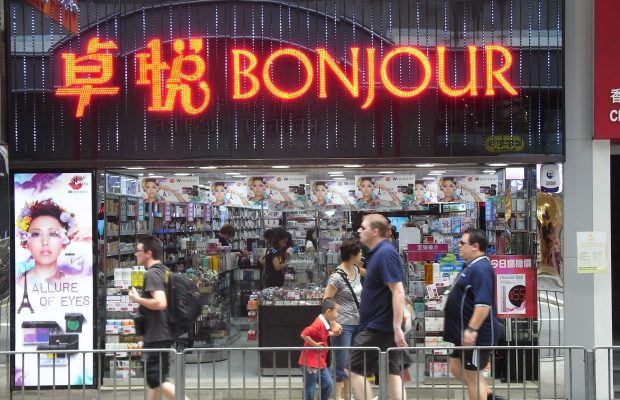
    Tumbling turnover and gross profit margin have flipped an operating profit to a loss for beauty and healthcare retailer Bonjour Holdings.

    Its turnover for last year fell 12.8 per cent to HK$1.995 billion (US$256.8 million), while its gross profit margin dropped from 41.8 to 38.1 per cent. This gave the group a loss of HK$77.9 million compared to a profit of HK$50.7 million in 2015.

    During the year, the group rationalised its retail network from 47 to 42 outlets.

    Hong Kong and Macau retail sales fell for the second straight year, the company’s audited results show.

    Same-store sales fell 10.1 per cent despite the average sales value per transaction for mainland tourists rising by 7 per cent. However, the total number of mainland customers dropped by double digits last year. The company says the drop in its total number of customers contributed about 9 per cent of the overall retail decline during the year.

    Bonjour says an enormous demand continued for Korean beauty and skincare products in Hong Kong’s retail market. Because of this, the group has formed dedicated procurement team to explore this trend.

    During the year, Bonjour continued to introduce a variety of mass Korean beauty products to keep the market competitive and to offset the negative impacts of the falling sales of Western and Japanese premium brands.

    Meanwhile, the group has been increasing awareness of its brand through online platforms. It partnered with Tmall and WeChat during the year to broaden its touch points with target consumers.

    “Additionally, with the rapid rise of live-streaming and photo-sharing apps, video and photo content and key opinion leaders (KOL), partnerships has taken up a significant role in our marketing campaigns,” says Bonjour. “Online image sharing has become a critical element for us to communicate with our target consumers.”

    Delivery service

    The group partnered with Alipay in two one-day events during the year, “2016 Carnival All the Way” and “Double Eleven”. The group also cooperated with China Post Cross-border eCommerce (CPCBE) to launch the cross-border shopping platform www.bonjourO2O.com (BonjourO2O). With its direct delivery service, customers can buy overseas items not available in Bonjour’s mainland stores.

    Online retail sales last year reached HK$40.1 million, up 7.4 per cent from 2015.

    At the end of the year, the group had 42 stores in Hong Kong, Macau and Guangzhou. During the year, sales continued to decline in the face of “sky-high” rents. While rents have been adjusting over the past two years, the reduction has not been fully reflected in the company’s income statements as it is usually locked into leases with a three-year term. The company is able to renew only about a third of its agreements each year.

    “We believe that stabilising sales along with falling rents should help improve our profitability gradually,” says the group.

    Bonjour currently distributes 180 international cosmetic, skincare and healthcare products including Dr Schafter, Suisse Reborn, WowWow and Yumei. During the year the company adjusted the product mix, increasing international parallel-import products and mid-to-lower-priced trendy products while cutting back on higher-priced exclusive products.

  • Sesco introduces payment kiosks

    Sesco introduces payment kiosks

    Sarawak Energy’s operation and retail arm Syarikat Sesco Bhd (Sesco) introduced payment kiosks to members of public on Wednesday.

    According to a press release, the latest initiative from the state utility company is part of its continuous innovation and to further enhance customer services for the better.

    The introduction of payment kiosk machines will be an additional payment channel, allowing for real-time payment updates and it will be available at Sesco counters for added customer convenience.

    Through the kiosks, customers can make single or multiple payments (up to five bills) per transaction and also pay for collateral deposits. Payments can be made either by cash, cheque or any credit card issued by banks in Malaysia. Customers can also perform bill enquiries and print e-bills.

    This will provide an additional option for customers who can also choose from channels such as the “SEBCares” mobile app where customers can view and pay their electricity bills via online banking, credit or debit card or auto pay.

    Sarawak Energy Group chief executive officer (CEO) Sharbini Suhaili who officiated at theevent  at Wisma Sesco here on Wednesday congratulated the Retail team for applying technological advancement and innovation to enhance customer experience.

    “Please continue to innovate to improve on customers’ touch points especially through new technology,” he said.

    “This is an example of how we can simplify processes to deliver with speed and precision. Sometimes the simplest idea can bring meaningful change. Let us walk the extra mile to delight the customers and surpass expectations.”

    Adding on, Sesco chief executive officer Lau Kim Swee explained that the kiosk was part of the Retail team’s long-term vision for counter-less transactions.

    “Our customer service principle has evolved from merely providing services to delivering a truly outstanding customer experience. In doing so, we are always finding ways to implement initiatives that make it easier for our customer to do business with us. We constantly seek customers’ feedback and this payment kiosk is one of the requests made by our customers,” he said.

    In a briefing before the launch, vice-president for retail Yusri Safri gave an update on the company’s various customer service initiatives.

    “By introducing the kiosk, we will be able to reduce customers’ queuing time at the counters and enable the front-liners to focus more on handling other complex transactions and enquiries. We hope to extend this facility to the smaller counters in rural areas so customers can enjoy similar convenience as experienced in urban areas.

    “We are also looking into the idea of having the kiosks placed at strategic locations such as shopping malls for better customer convenience,” Yusri said, adding that this would extend the time customers could use the kiosks past traditional office hours.

    Also in attendance were Sarawak Energy Group chief operating officer Lu Yew Hung, executive vice-president for corporate services Aisah Eden and other members of the executive committee, senior management and staff.

    So far, four kiosks have been installed at Wisma Sesco and Pending in Kuching and another two at the Sibu office. Ten more kiosks will be installed in stages at Sri Aman, Sarikei, Sibu Civic Centre, Bintulu, and Miri counters as well as at UTC Kuching, UTC Sibu and UTC Miri.

    Apart from the services mentioned, the company is also looking at accepting payment through the kiosk for non-energy bills, electricity bill instalments, arrears bills and arrears instalments as well as payments for third-party bills in the next phase.

  • Metail signs partnership with South Korean tech giant

    Metail signs partnership with South Korean tech giant

    British fashion technology start-up Metail has signed a partnership agreement with Benit, the technology arm of South Korea’s fourth largest conglomerate Kolon.

    The deal means Metail’s technology, which allows consumers discover, shop and “try on” clothes online, will significantly increase its reach in the Asian market.

    The Kolon conglomerate has a presence throughout Asia and interests spanning multiple sectors, ranging from manufacturing to construction, trade, life sciences research, environment, retail and fashion. It is now setting its sights on the fast growing South-Korean fashion e-commerce market through its technology arm Benit.

    South Korea is the world’s 7th largest fashion market and APAC’s 3rd largest e-commerce market with 77% of all Koreans purchasing clothing items online in 2016. The South Korean fashion industry is expected to exceed $6.9bn this year and by 2021 it is predicted to hit $32bn. Benit’s clients alone account for $2.5bn of the market.

    Tom Adeyoola who founded London and Cambridge-based Metail said the deal would help the business achieve its mission “to digitise all of the world’s garments and people“. The Metail technology allows shoppers to create a bespoke 3D model of themselves, a Memodel, which they can use while shopping online to try on garments virtually. It rose to prominence in 2014 when it teamed up with Henry Holland’s House of Holland label to allow consumers to shop direct from the catwalk.

    “Following going viral in Korea with our mobile House of Holland offering for London Fashion Week in 2014 we’ve been looking for the right strategic partner to take advantage of what is clearly the most mobile-focused, tech-savvy and fashion-conscious market in the world,” Adeyoola said.

    “The Kolon group with their scale, fantastic stable of brands and market leading fashion focused IT services arm, Benit, quickly became the obvious choice. We’ve already placed a customer director on the ground and have built a strong working relationship with the consummate partner to help us perfect our offering for the Korean market and rapidly scale,” he said.

    Deputy general manager of Benit’s mobile convergence team Jaehoon Kang said it has been looking for “innovative and useful solutions to develop the South Korean market “and Metail’s solutions is the most valuable. We cannot try on clothes when buying clothes online. So often there are difficulties in sizing and styling; limitations which Metail help to overcome,” he said.

    “Through this agreement, fashion and distribution companies in the Korean market will be able to provide a useful and wonderful experience to customers. Benit is very excited to be adding such a great solution to its fashion-specific business portfolio,” he added.

    Metail was founded in 2008 and has gone on to develop an international customer base including House of Holland and Little Mistress in the UK as well as Abof in India and Princess Polly in Australia to name a few

    Yesterday luxury fashion etailer Mytheresa.com revealed a dedicated Korean language site for the South Korean market.

  • Shinsegae department store opens Tesla charging stations

    Shinsegae department store opens Tesla charging stations

    Tesla has completed the installation of three Destination Chargers at Shinsegae department store in the Gangnam, Seoul.

    The move follows the opening of two showrooms in the city last month as the brand picks up momentum with its South Korean operations.

    It was the second set of Tesla chargers introduced at a Shinsegae outlet after another batch was installed at the Yeoju Premium Outlets.

    Tesla charging stations 3

    The Korean giant Shinsegae Group signed a partnership with the American automaker last year, planning to equip 25 of its locations with Tesla’s charging stations this year.

    One of the two Tesla stores that opened last week is located in Starfield Hanam, the largest shopping complex in Korea, which opened last year under a Shinsegae-Taubman partnership.

  • Lotte founder’s 50-year reign comes to an end

    Shin Kyuk-ho, founder and general chairman of the Korean retailer Lotte, has been removed from his company by shareholders, solidifying the succession of his second son, Shin Dong-bin, and coming closer to ending a family feud that started in 2015.

    Lotte is the country’s fifth-largest family controlled conglomerate, with 90 affiliates here and abroad.

    The shareholders voted in favor of denying the 95 year-old patriarch the position of board director of Lotte Shopping on Friday, which he has held since the affiliate was founded in 1970.

    The elder Shin’s term was terminated on March 20.

    Kang Hee-tae, CEO of Lotte Department Store, and Yoon Jong-min, Lotte Group’s human resource director, were newly appointed to the directors’ post at Lotte Shopping. Friday’s decision has completed the full control of the younger son, Dong-bin, who took his current role in 2011.

    “Lotte Group was able to grow with Shin Kyuk-ho’s leadership until now, but it is time for a new era under the new leadership of Shin Dong-bin,” said Lotte Group spokesman.

    Despite taking the role of chairman, Dong-bin was not allowed to make independent business decisions without the final call coming from his father, who held the board director position at most of Lotte’s affiliates.

    The father has been losing his board director position starting with Lotte International in 2015, followed by Lotte Confectionery and Hotel Lotte in March 2016.

    Lotte Confectionery is the founding company and the foundation of Lotte Group, while Hotel Lotte is the de facto holding company.

    Shin Kyuk-ho has been losing his title since he sided with his older son, Shin Dong-joo, who was trying to take full ownership of the group, and fired Dong-bin and six other executives at Lotte’s key operation in Japan.

    The founder still has several director positions, but his tenure is coming to an end and is unlikely to be extended. His role at Lotte Engineering & Construction is poised to be terminated on Sunday, followed by Lotte Aluminum and the Lotte Giants in coming month.

    Unlike his father, Dong-bin on Friday was appointed as the new director of Lotte Chilsung Beverage during the shareholders’ meeting, which industry insiders say is a necessary step to realigning the organization under his new leadership.

    Hwang Kak-gyu, who has worked with Shin Dong-bin for 27 years, was newly appointed as the CEO of Lotte Confectionery, a position that he will share with Dong-bin and Kim Yong-soo. The company said the decision was made to strengthen the company’s overseas business.

    Meanwhile, Dong-bin has been increasing his efforts to appease China, which has been bombarding Lotte’s business there as a retaliation against the Korean retail conglomerate’s decision to offer its golf course for the deployment of the U.S. antimissile defense system known as Thaad.

    In an interview he had with the Wall Street Journal on Thursday, Dong-bin said, “We definitely want to continue our business in China.”

    He added that he “loves” China and believe there has been a “misunderstanding.

    “If the government asks a private corporation like ours to give up land, then I don’t think we have the luxury of rejecting the government,” Dong-bin was quoted as saying in the Wall Street Journal.

    Lotte Mart, which runs 99 local branches in China, shut down 90 of them in the past couple weeks, partly forced by the Chinese government, which cited safety concerns, and also because of fierce protests in front of its stores.

    Lotte Shopping on Friday announced it will issue new shares worth 230 billion won and borrow 130 billion won in order to maintain its Chinese Lotte Mart branches.

    “Due to the suspension of Lotte Mart operations in China, there is no revenue generated, which we plan to compensate through capital increase,” Lotte Mart explained. “We need to pay local staff and purchase products.”

    Shares of Lotte Shopping jumped 2.61 percent on Friday, closing at 216,500 won.


  • China, South Korea Meet in World Cup Qualifier Amid Tensions

    China, South Korea Meet in World Cup Qualifier Amid Tensions

    Thousands of riot police were deployed for a soccer showdown Thursday night that was more than the average grudge match.

    The World Cup qualifying game in Changsha pitted hosts China against South Korea. It also whipped up Chinese nationalist sentiment at a time of high political tension over the rollout of a U.S.-made missile defense system in Asia.

    Officials were so worried about clashes that the Hunan provincial sports administration urged fans to show “rational patriotism” to avoid trouble.

    To ensure that, a 10,000-strong security force was deployed to watch over the capacity crowd of 55,000.

    Dozens of trucks carrying paramilitary and riot police were stationed around the stadium.

    Chinese fans were given free red T-shirts with the slogan “Changsha War” in Chinese characters.

    In the sea of red, only around 150 South Korean supporters were in the 250 seats designated and guarded for them.

    Image: Police and South Korea fans during World Cup qualifier on March 23, 2017
    Police (seen top) sit behind South Korean fans during the World Cup qualifer against China on Thursday. 

    The event illustrated the extent to which China’s relationship with South Korea has deteriorated since the first components of the Terminal High Altitude Area Defence, or THAAD, anti-missile system arrived to the region earlier this month.

    THAAD is designed to protect U.S.-ally South Korea and American bases there from the growing threat of North Korea’s weapons programs.

    Kim Jong Un’s regime has stepped up testing of its missiles as a protest of the U.S. joint military drills with South Korea, and there is concern preparations for a sixth nuclear test are underway.

    China is fiercely opposed to THAAD, arguing a system to intercept short-and-intermediate range ballistic missiles installed so close to North Korea’s launch sites will only serve to undercut China’s strategic defenses.

    The longer term concern for China’s military: If THAAD expands to Japan, it creates a common operating picture for U.S. allies in Asia.

    “Even if North Korea collapses, missile defencs would not go away,” a former U.S. national security adviser said. “The worry [for China] is that THAAD is a basis for a collective security system… that does not include China.”

    THAAD was among the issues on the agenda during Secretary of State Rex Tillerson’s recent visit to Asia.

    Experts stress that THAAD is a major concern for China’s government.

    The issue has stoked nationalist fervor in China, and triggered an anti-South Korean backlash with state media urging a boycott.

    “Some critics in the West have said that China, as a country under the rule of law, has no reason to punish South Korean enterprises that are doing businesses in the Chinese market,” a Global Times op-ed published earlier this month read. “However, all states have the right to sanction those that have posed a threat to their national sovereignty and strategic security interests.”

    Some Chinese travel companies have already stopped booking tours there, causing a drop in crucial tourism business.

    China has also blocked streaming of popular South Korean television shows and soap operas, and K-pop stars have cancelled concerts on the mainland because of problems getting travel visas.

    Across China, there have been protests at outlets of Lotte Group, the South Korean retail giant that gave up its golf course as a THAAD deployment site.

    A few days after it agreed to the deal, a cyberattack took down its online shopping sites. Other Lotte stores have been mysteriously closed by Chinese authorities for various municipal infractions.

    Officially, China hopes it can pressure Seoul to reconsider.

    The snap election in May could bring the country’s opposition Democratic Party to power. Its leader Moon Jae-in has expressed reservations about hosting an anti-missile system that might reinforce South Korea as a North Korean target.

    The regional rivalry came to a head on the soccer field, in the city where Mao Zedong, the late Communist leader and founder of modern China, started his political career.

    The sheer size of the security force showed that authorities had no tolerance for violence, even if nationalist protests had been allowed in the past.

    In the end, China won the game, 1-0. The only commotion: cheering by surprised Chinese fans who became more distracted by the World Cup qualifier than global affairs.

    -NBC

  • Emilio Pucci launches into Korea

    Emilio Pucci launches into Korea

    Italian fashion label Emilio Pucci has opened in Seoul its first store in South Korea, in Seoul.

    On the third floor of Galleria Luxury Hall East, the store carries the brand’s ready-to-wear range, silk accessories, handbags, shoes, small leather goods and beachwear collections.

    Emilio Pucci has stores in Bangkok, Hong Kong, Kuala Lumpur and Tokyo.

    The brand was founded by Don Emilio Pucci, the Marchese di Barsento, a Florentine Italian fashion designer and politician.

  • South Korea becomes Vietnam’s biggest foreign investor in Q1

    South Korea becomes Vietnam’s biggest foreign investor in Q1

    South Korea has taken over Singapore to become Vietnam’s biggest foreign investor in the first quarter, with investment totaling $3.74 billion, or 48.6 percent of the total foreign direct investment (FDI) pledged for the period, the Vietnamese government said Friday.

    Singapore, which held the top position in January and February, came second with $911 million, followed by China with $823.6 million, the Foreign Investment Agency under the Planning and Investment Ministry said in a monthly report.

    Actual FDI inflow in the first three months rose 3.4 percent from a year ago to $3.62 billion, while new pledges rose 6.5 percent to $2.92 billion, the report said.

    FDI is a major source of foreign exchange, which along with overseas remittances, helps Vietnam improve its trade balance.

    During the period, foreign firms from 71 countries and territories have new pledges and additional funds in 18 sectors, with the manufacturing and processing industry attracting $6.54 billion, or 84.9 percent of the total.

    The real estate sector comes second, while the wholesale and retail sector has the third position.

    Foreign investments have been poured into 52 cities and provinces in the three-month period, with the northern province of Bac Ninh, 30 kilometers (18 miles) northeast of Hanoi, attracting $2.61 billion, or 33.86 percent of the total.

    Binh Duong Province, about 40 km north of Ho Chi Minh City, ranks second with 18 percent and Ho Chi Minh City comes third with 7.78 percent.

    As of March 20, Vietnam has had more than 23,000 FDI projects in operation, with a combined registered capital of $300.7 billion.

    Most of them are in the manufacturing and processing industry, making up 59.3 percent of the total investment.

    Overall, South Korea also led the foreign investor list, with investment totaling $54 billion, followed by Japan with $42.49 billion.

    Large-scale FDI projects in the first quarter include a $2.5 billion expansion project of Samsung Display Vietnam, a subsidiary of Samsung Display South Korea, in Bac Ninh Province.

    Taiwan’s Polytex Far Eastern Ltd, which manufactures polyester fiber and cotton spinning in Binh Duong Province, got the green-light to increase its registered capital by $485.8 million to $760 million.

  • Lotte affiliate to raise 360 bln won to cope with THAAD fallout

    Lotte affiliate to raise 360 bln won to cope with THAAD fallout

    A unit of Lotte Group, a South Korean retail giant currently receiving the brunt of China’s apparent economic retaliation in protest over Seoul’s deployment of a U.S. missile defense scheme, said Friday that it plans to raise a total of 360 billion won (US$320 million) via stock sales and loans.

    In a regulatory filing, Lotte Mart, the operator of the group’s hypermarket chain, said its board of directors has decided on the proposal to sell stocks and borrow money.

    The proceeds from the stock offering and loans will be used to cover the costs of buying products and giving wages to its employees in China, according to company officials.

    The China-based retail outlet unit has been teetering on the brink of collapse as protracted business suspension by Chinese authorities is leaving the firm with snowballing losses.

    China has ratcheted up pressure against Lotte, South Korea’s fifth-largest family-controlled firm, since it handed over one of its properties to the Korean military so it can be used as a site for a U.S. Terminal High Altitude Area Defense (THAAD) battery.

    Seoul’s deployment of the THAAD on its soil has angered Beijing, who claims that it will be used to monitor its own military.

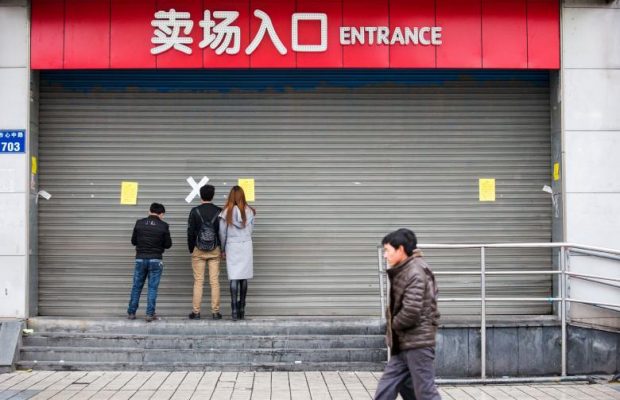
    According to Lotte, 90 Lotte Mart stores operating in China, Lotte’s hypermarket chain, have been placed under suspension or on voluntary suspension as some Chinese consumers continued to stage anti-Korea protests near the stores.

    That represents nearly 90 percent of 99 Lotte Mart outlets in China that have been forced to close down temporarily. Lotte has some 120 retail outlets operating in the neighboring country, including five department stores.

    Lotte is predicted to suffer some 116.1 billion in losses in its Lotte Mart revenue if the shutdown continues for a month. Last year, sales from China-based Lotte Marts reached 1.13 trillion won, or 94 billion won on a monthly basis, according to the firm.

    The profitability of Lotte’s retail outlet business has been expected to further worsen since it is required to pay full wages to local employees for the first month of the suspension.

    The suspension means a serious blow to Lotte, since its China-based business has long been running a deficit even though it has been in the world’s second-largest economy for some 10 years.

    In 2016, Lotte recorded a combined 207 billion won deficit in its department store and outlet divisions, of which about 80-90 percent came from its Chinese units.

    Industry watchers voiced concerns that Lotte may have to consider a pullout given that losses from the shutdowns are growing too fast for the firm to withstand.

    But, in an interview with foreign news media, Shin Dong-bin, chairman of Lotte Group, flatly denied such speculation saying that the company has no intention of pulling out of China.