Tag: Malaysia

  • Asia boosts growth for L’Oreal

    Asia boosts growth for L’Oreal

    French cosmetics giant L’Oreal reports “spectacular” growth for last year, particularly in Asia.

    It had growth acceleration of 5.5 per cent in the fourth quarter with sales exceeding €10 billion (US$12.2 billion) in the ‘new markets’, which include Asia Pacific.

    Operating margin reached a record 18 per cent.

    Sales were €26 billion, up 4.8 per cent like-for-like, 2 per cent at constant exchange rates and 0.7 per cent on reported figures.

    Representing a record 18 per cent of sales, the operating profit was €4.68 billion.

    “L’Oreal had a good year with sustained sales growth momentum and robust profits,” says chairman/CEO Jean-Paul Agon.

    The second half accelerated compared with the first, particularly in the fourth quarter.

    Sales grew in all divisions, especially L’Oreal Luxe in Asia. The Active Cosmetics Division achieved more than €2 billion of sales for the first time.

    The new markets exceeded more than €10 billion in sales for the first time ever. The Asia Pacific zone had growth of 12.3 per cent like-for-like and 9.2 per cent reported. In Northern Asia, Chinese consumers are driving growth, particularly for the L’Oreal Luxe Division in China and Hong Kong. China’s growth was fuelled by strong e-commerce results. In Southern Asia, India is proving dynamic, while Malaysia and Thailand are also growing strongly.

    Overall, operating profit, at €4.6 billion, has grown by 3 per cent and amounts to 18 per cent of sales, representing an increase of 40 basis points. Excluding exchange rates, operating profit grew by 4.4 per cent.

  • Malaysian economic growth slowed in Q4

    Malaysian economic growth slowed in Q4

    Malaysia’s economy grew more slowly in the last quarter of 2017 than the blistering pace set in July-September, a Reuters poll showed, as exports increased at a slower rate.

    The median forecast in the poll of 12 economists was for annual growth of 5.7% in October-December, compared with the previous period’s 6.2% – the fastest rate since the second quarter of 2014.

    Forecasts for the fourth quarter ranged from 5.2% to 6.1%.

    “The best is behind us,” ING said in a note today about Malaysia’s growth pace, noting that a high base effect has been impacting growth rates in several Asian economies.

    Whatever Malaysia’s fourth quarter number, 2017 have brought Malaysia its fastest full-year growth since 2014’s 6%.

    Growth in each of 2017’s first three quarters topped 5.5%.

    Brian Tan, a Singapore-based economist with Nomura, said the fourth quarter brought a “slowdown in exports which looked quite sharp, but we suspect it was due to the ringgit appreciation during the period”.

    In October-December, exports rose 12.4% from a year earlier, down from increases of more than 20% in each of the first three quarters. The peak increase, in July-September, was 22.1%.

    Malaysia reports its trade figures in ringgit.

    During 2017, the currency strengthened more than 10% against the dollar.

    Industrial production rose 2.9% annually in December, down from 5% a month earlier.

    Growth in Southeast Asia’s third-largest economy beat expectations in the third quarter, helped by private sector spending.

    In October, the government revised up its 2017 full-year growth projection to 5.2-5.7%, up from 4.3% to 4.8%.

    Malaysia’s economy grew 4.2% in 2016.

    Robust private consumption is expected to have propped up fourth quarter growth, with higher motor vehicle and retail sales and strong consumer sentiment, HSBC said in a note.

    The volume index of wholesale and retail trade rose 6.8% in the fourth quarter, according to data released last week by Malaysia’s statistics department.

    Strong growth figures over the past three quarters and rising inflation rates prompted Bank Negara Malaysia in January to raise its key interest rate by 25 basis points to 3.25%. It was the first hike in three and a half years.

    ING, which forecasts 5.5% annual growth for 2017’s fourth quarter, has pencilled in one more 25 basis point rate hike, for the third quarter of this year.

  • Cold Stone Creamery Malaysia Opened In Kuala Lumpur

    Cold Stone Creamery Malaysia Opened In Kuala Lumpur

    American ice-cream parlour chain Cold Stone Creamery Malaysia has opened its first store in Kuala Lumpur.

    After tracking through Bangkok, Manila and Singapore, the American ice-cream parlour chain has launched a flagship outlet at Pavilion Kuala Lumpur.

    From Arizona, the brand plans to open 10 outlets in Malaysia within the next five years.

    Founded in 1988, Cold Stone Creamery is best known for its design-your-own desserts that lets customers choose mix-ins, all theatrically combined on a frozen granite slab.

    The store offers 36 ice-cream flavours and will be adding some local tastes.

    Cold Stone Creamery senior international VP Eddy Jimenez says Malaysia’s opening was delayed as the company took years to find a suitable franchisee.

    “Local flavours are important and we are very sensitive to the local culture ‒ they’re going to be a big part of the brand,” says Jimenez.

  • Malaysia property market expected to be flattish in 2018

    Malaysia property market expected to be flattish in 2018

    Property transactions are expected to be flattish in 2018, marking yet another challenging year for the Malaysian property market, according to real estate consultancy firm Rahim & Co International Sdn Bhd.

    However, it said many are hoping that the results of the forthcoming general election would give a firmer direction for the nation, hence re-igniting the momentum in the property sector.

    Although it may be too soon to say that the market has bottomed out, Rahim & Co does not expect the market in 2018 to be much worse off than in 2017.

    The property market is expected to be flat and stable, while waiting for the consumers’ wait-and-see attitude to warm up.

  • Malaysia continues to attract expats from Europe and Eastern Asia region

    Malaysia continues to attract expats from Europe and Eastern Asia region

    HSBC Bank Malaysia said Malaysia continues to attract expats particularly from Europe and Eastern Asia regions.

    Country head, retail banking and wealth management, Lim Eng Seong said one of the reasons why expats love settling down here are the friendly nature of the Malaysians.

    “Looking for accommodation, organising healthcare and schooling are all easy to do in Malaysia, hence the plus points for expats to move here,” he said in a statement.

    Based on HSBC’s Expat Explorer survey conducted last year, he said Asia continues to provide promising economic prospects and improved quality of life that appeal to professionals and entrepreneurs both from within the region and across the globe.

    Now in its 10th year, the HSBC Expat Explorer survey is the world’s largest and longest running study of expats life, involving over 27,500 expats about their experience abroad.

    61 per cent expat experience in Malaysia found it was easier to make friends. In terms of active social life, 44 per cent noted they have better social lives now than they did at home compared to 31 per cent of all expats around the world and 40 per cent regionally.

    The survey revealed that Malaysia offers simplicity and smooth transition for expats in finding accommodation (61 per cent), organising healthcare (54 per cent) and arranging childcare and schooling (52 per cent).

    “In fact, once expats settle down, life continues to be positive for most of them where more than half (55 per cent) live in a better property than they would have had in their home country.”

    The survey also found that life abroad typically increases expats’ income by 25 per cent, with expats earning just under US$100,000 a year on average.

    “Far from compromising their wellbeing, expats seem to find the right balance. 41 per cent expats adopt a more positive outlook on life after moving abroad, with 44 per cent becoming more physically active.”

    The surveyed highlighted that expats in Asia said they have experienced an uplift in income of at least 10 per cent, including Australia, China, Hong Kong, India, Indonesia, Malaysia and New Zealand.

    Lim said Asia continues to draw expats from all over the globe for its buoyant economic prospects.

    “We still see a significant proportion of expats coming from Europe and North America but also a robust pool of Asian expats working in Singapore, Malaysia, Indonesia and Greater China – all trying to capture opportunities from the region’s fast-growing consumer services sector, increased tech and digital focus and infrastructure push,” he added.

    He pointed out the continued growth in China and Asean would require a diverse mix of talent from people who are internationally mobile.

    Lim said expats’ financial needs are more complex, citing that managing accounts in multiple markets and currencies, health and protection cover, as well as saving and investing for education, retirement and property aspirations are key aspects of their holistic financial plan.

    “Wherever they live, expats should seek financial advice from a trusted provider who can help them manage their more complex financial affairs,” he said.

  • Max Fashion opens flagship store in Malaysia

    Max Fashion opens flagship store in Malaysia

    Value fashion brand Max Malaysia has launched its fourth store, a flagship in 1 Utama Shopping Centre in Petaling Jaya, Selangor.

    A red-carpet opening ceremony was hosted by Max CEO and Landmark Group director Ramanathan Hariharan. The store covers more than 10,000sqft (930sqm) and will offer men’s, women’s and children’s fashion as well as sportswear, bags, footwear, lingerie and accessories.

    Malaysia’s first Max store opened in IOI Mall Putrajaya last year, followed by outlets in Sunway Putra Mall and Avenue K Mall.

    The brand plans to have 10 stores in Malaysia by the end of the year.

  • ZALORA announces partnership with American brand J.Crew

    ZALORA announces partnership with American brand J.Crew

    Asian online fashion destination Zalora and J.Crew have announced they are forming a partnership to expand the US brand’s reach.

    From next month, a curated range of J.Crew’s women’s ready-to-wear and shoes as well as men’s apparel and accessories will be available at Zalora.

    It is J.Crew’s first online venture with a partner into Indonesia, Malaysia, Singapore, Taiwan and the Philippines, and will strengthen its store presence in Hong Kong.

    “Through our innovative platform and expansive logistics network, J.Crew will reach shoppers well beyond capital cities reaching a far wider network of potential customers than ever before,” says Zalora Group CEO Parker Gundersen.

  • Felcra Malaysia wants to export palm oil to Middle East, Africa

    Felcra Malaysia wants to export palm oil to Middle East, Africa

    Felcra Bhd is planning to forge collaborations with international companies for the purpose of exporting palm oil to countries in the Middle East and Africa, said its CEO, Datuk Zulkarnain Md Eusope.

    To increase the agency’s revenue, he said, it must not focus on specific countries only in exporting the commodity.

    “The Chinese government through its ambassador has stated the country’s commitment to import palm oil even if the European Union (EU) countries do not want to buy palm oil from Malaysia.

    “We must diversify our efforts (to increase revenue) following the palm oil issue with the EU,” Zulkarnain said.

    He was speaking to reporters after attending the Perak Region Felcra Employees Aspiration 2018 ceremony with Perak government leaders, which was officiated by State Rural Development, Agriculture, Plantation, Information and Human Capital Development Committee chairman, Datuk Saarani Mohamad, here today.

    Further information on the plan would be announced later after the negotiation process with the companies were concluded, said Zulkarnain.

    In another development, he said Felcra would establish a research and development centre in plantation, agricultural and food sectors, to be located in Felcra Nasaruddin Belia near Parit here.

  • Bursa Malaysia expects 2018 to have more IPOs than 2017

    Bursa Malaysia expects 2018 to have more IPOs than 2017

    Bursa Malaysia Bhd, which attracted 13 new listings in 2017, expects to see more companies listed on the Main and ACE Markets this year.

    “The IPO (initial public offering) pipeline seems to be tracking quite well. So we expect that it will probably be slightly higher than last year,” its CEO Datuk Seri Tajuddin Atan said at a media briefing today.

    “And we think some of the big ones is coming,” he added, noting currently there are four registered companies that are still waiting for approval to be listed on the stock exchange.

    Last month, Binasat Communications Bhd, which is involved in the provision of telecommunication supporting services for satellite as well as mobile and fibre optic telecommunications networks, became the first listing for the year.

    Meanwhile, Tajuddin said the stock exchange operator has no plans to increase or reduce the listing fee at the moment, as it looks to introduce incentive or rebate schemes.

    Additionally, he said, the local exchange plans to introduce more products and services this year to create a conducive capital market ecosystem for all market participants.

    “We are still in a process of getting approval and putting things in place. Not only in terms of product, we are also trying to have more players as well as selling agents,” Tajuddin said.

    Going forward, he said the securities market segment is expected to remain resilient, given recent encouraging economic data, the strengthening ringgit and expected positive corporate earnings.

    Trading, however, may be influenced by local and external factors, such as geopolitical developments and the tightening of monetary policies in major economies in 2018, he added.

    On the derivatives market, Tajuddin said volatility in commodity prices and the underlying equity market will continue to affect hedging and trading activities of the crude palm oil futures and FTSE Bursa Malaysia KLCI Futures contracts.

    The local bourse’s net profit rose 10.2% to RM55.27 million for the fourth quarter ended Dec 31, 2017 against RM50.17 million in the previous corresponding period, driven by higher contribution from the securities market.

    Revenue expanded 14.1% from RM123.74 million to RM141.2 million.
    Its full-year net profit rose 15.2% from RM193.62 million to RM223.04 million, with revenue rising 9.9% from RM506.78 million to RM556.83 million.

    For the year under review, securities market trading revenue increased 21.9% to RM259.6 million on the back of higher average daily trading value for securities market on-market trades which grew 27.7% to RM2.3 billion.

    It has declared a second interim dividend of 18.5 sen per share amounting to RM99.4 million for the quarter under review, which will be paid on March 5, 2018.With that, the total dividend (including special dividend) declared for the year amounts to 53.5 sen per share.

  • AirAsia bullish on India market

    AirAsia bullish on India market

    Low-cost, long-haul carrier AirAsia X Bhd, which has started operating its Kuala Lumpur-Jaipur route, is hoping toincrease its services in and out of India, a market in which it sees potential.

    “We would love to put a lot more flights if regulators allow us to. Right now we are having trouble getting slots into India, with a lot of Malaysian carriers going into India as opposed to Indian carriers coming into Malaysia. That is the challenge,” said AirAsia Bhd executive chairman and AirAsia X group CEO Datuk Kamarudin Meranun.

    On top of that, he said, AirAsia X is looking to increase the frequency of the Kuala Lumpur-Jaipur route to daily from the current four times a week.

    With a potential annual seat capacity of over 156,800 seats, it is eyeing a load factor of 75-80% for the route this year.

    AirAsia X chairman Tan Sri Rafidah Aziz (fourth from left), Kamarudin (second from left), airline executives and other dignitaries, flanked by cabin crew, celebrating the successful inaugural flight to Jaipur from Kuala Lumpur.

    Kamarudin was speaking at the inaugural flight celebration ceremony. The Kuala Lumpur-Jaipur route is the second direct flight service connecting India and Malaysia offered by AirAsia X after the launch of the Kuala Lumpur-New Delhi direct service in February 2016.

    The Jaipur-Kuala Lumpur service brings the total weekly flights connecting India to Malaysia under AirAsia group to 110 times with a total capacity of 22,755 seats.

    AirAsia X Malaysia has carried over 184,000 passengers in and out of India since the introduction of the Kuala Lumpur-New Delhi route.

    AirAsia group, which comprises AirAsia X and short-haul arm AirAsia, currently serves a total of 19 cities.

    Recently, AirAsia Bhd group CEO Tan Sri Tony Fernandes was quoted as saying that the group is looking to buy Boeing 787s to expand the fleet of its long-haul unit.

    On this, Kamarudin said it is “still under discussion”.

    “At this stage I think it’s premature to talk about it. We are evaluating from a technical aspect and pricing and all those. To confirm it is premature.”

  • JD Sports Malaysia expansion plans

    JD Sports Malaysia expansion plans

    JD Sports Malaysia has ventured into the provinces with its first Penang and Malacca stores.

    The Penang outlet is at Sunway Carnival, and the Malacca store at Mahkota Parade.

    This follows six other stores for the British sneaker and sportswear retailer in Malaysia, the latest opening in Putrajay’s IOI City Mall in November.

    Meanwhile, a JD Sports Singapore Instagram account has surfaced, indicating the retailer may open a store there.

  • Latest telco Yoodo targets niche online shoppers segment

    Latest telco Yoodo targets niche online shoppers segment

    Yoodo, a new telco which made its debut in the Malaysian market today, is offering customised mobile plans via an online platform especially targeted at the digitally savvy population.

    The telco allows customers to customise their plans by choosing their preferred voice, data, messaging and content offerings–all of which can be done online via its mobile application which is currently available on Google Play Store and Apple App Store. It offers up to 100GB of data, 2,000 mins of voice and 2000 SMSes—from which customers can customise their plans according to their needs.

    A package with data, voice and sms ranges from between RM28 and RM182.

    “Traditional mobile operators design plans based on what they want to sell the customers, developing various plans and features that don’t fit most customer’s individual needs. We’ve flipped that on it’s head and enabled users to customise their own mobile plans, with everything done online to give our customers full control, because frankly, they would do it better,” said the telco’s head, Farid Yunus on Yoodo’s concept.

    With no brick and mortar outlets in place, customers will have to sign up, activate and authenticate their SIM cards via the mobile app, and the SIM will then be delivered to them for free in between one to three days.

    Meanwhile, customers who opt for premium delivery which costs RM15, will receive their SIM cards within two hours. The premium delivery is only available within the Klang Valley, at this juncture.

    As for payment options, bill payments will be auto deducted from customer’s registered credit and debit card.

    For its roaming services, Yoodo offers the Roam Like Home service which enables users to use their domestic data plan while roaming. The service is currently available in 12 countries which includes Bangladesh, India, Myanmar, Singapore, Brunei, Indonesia, Nepal, Sri Lanka, Cambodia, Laos, the Philippines and Thailand.

    Yoodo is owned and operated by Celcom Axiata Bhd and leverages on Celcom’s network.

    “There is a distinction between Yoodo and Celcom. Yes, we are owned and operated by Celcom, but we really operate independently. Essentially we are like a start-up and they funded us… in a way we are a guinea pig to try something new… to try something different not just with a different technology, a different mindset, different rules, different governance even,” Farid explained on the connection between Yoodo and the country’s oldest mobile telecommunications provider.

    Yoodo will also be leveraging on fellow overseas telco subsidiaries of Axiata such as Dialog, Ideas and others, for its roaming services.

    The telco is targeting the digital savvy segment, particularly online shoppers.

    “Well we did our initial research, there are about five million Malaysians who regularly shop online and this is our target market,” explained Farid.

    He said for starters, he “will be happy” if the telco could hit 200,000 subscribers by year end.

  • QSR Brands to open 30 more KFC outlets nationwide this year

    QSR Brands to open 30 more KFC outlets nationwide this year

    QSR Brands Malaysia Holdings is investing more than RM100 million (US$25.6 million) into opening at least 35 KFC outlets this year.

    MD Datuk Mohamed Azahari Mohamed Kamil says the company will spend between RM3 million and RM4 million for each outlet, and also plans to enhance 200 restaurants.

    “We see the economic fundamentals growing well this year,” he said at the launch of the KFC Golden Egg Crunch product in Kuala Lumpur.

    “We believe there is a lot of potential in KFC and Pizza Hut, and that this will be a good year for us to capitalise on our growth for both chains.”

    QSR Brands restaurant division CEO Merrill Pereyra says that over the past five years the company has invested nearly RM1 billion for both KFC and Pizza Hut, with a focus on the Malaysian market. The company is the franchisee of more than 750 KFC restaurants in Brunei, Cambodia, Malaysia and Singapore, and also runs Pizza Hut in Malaysia (370 restaurants) and Singapore (75).

  • COCA Restaurant returns to Malaysia after years of absence

    COCA Restaurant returns to Malaysia after years of absence

    Thai dining chain Coca Restaurant is returning to Malaysia with plans to open four outlets in the next three years.

    First up will be an outlet in the Bangsar Shopping Centre in Kuala Lumpur seating about 100 diners and serving an à la carte menu of Thai/Cantonese cuisine along with Coca’s signature hot pot, creative stock broths (including one being created exclusively for Malaysia) and suki sauce.

    Chefs will focus on freshness, including live seafood and premium beef.

    Absent from Malaysia for seven years after a 20-year stretch, Coca returns with a change of partnership and a new strategy to open in upmarket malls as well as introduce freestanding restaurants – a strategy it has used over the past seven years in Thailand, Singapore, Japan, Vietnam and Indonesia.

  • SK-II Boutique Spa Malaysia Opens

    SK-II Boutique Spa Malaysia Opens

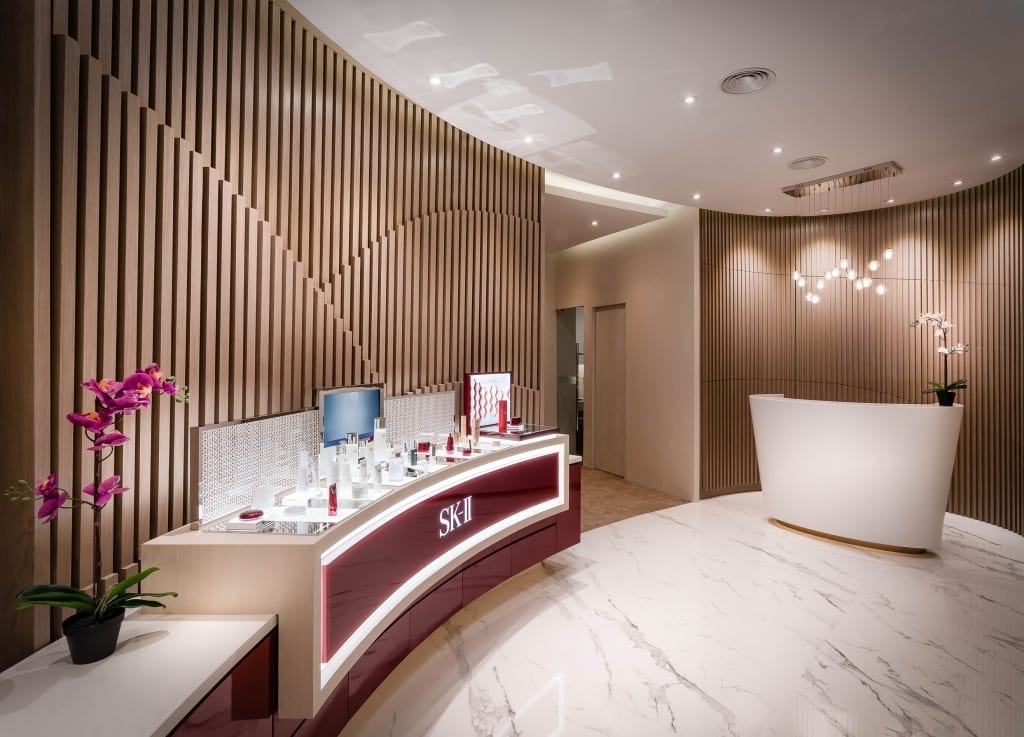
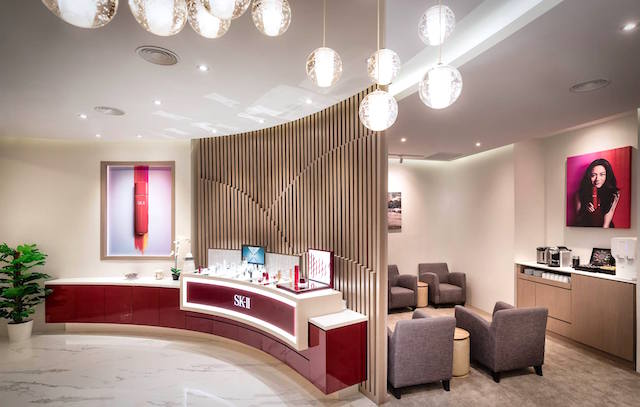
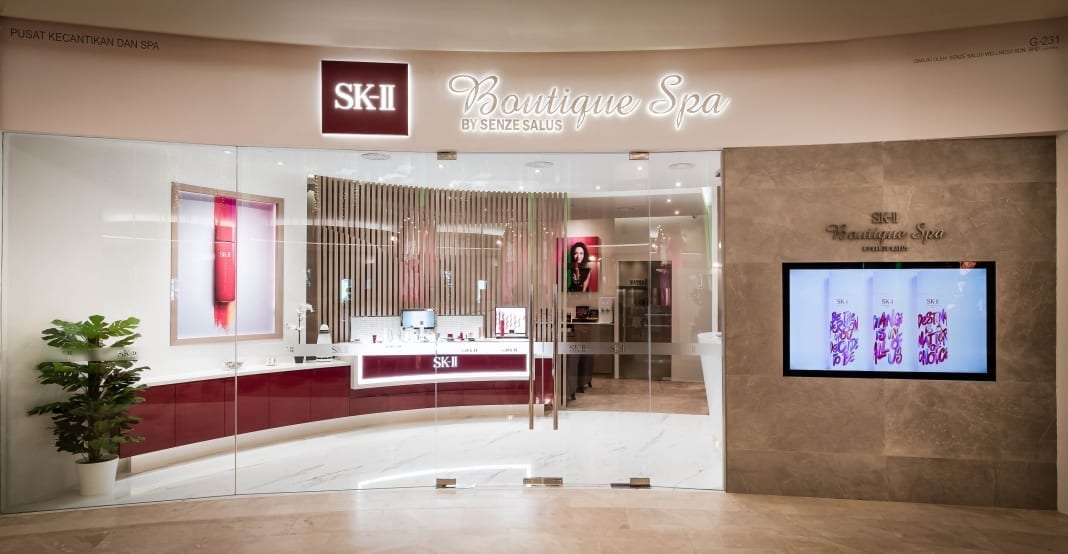
    The SK-II Boutique Spa has opened at The Gardens mall in Kuala Lumpur – its second location after Singapore.

    A Singapore-based Malaysian, Calvin Ng worked for more than 20 years with Procter & Gamble (P&G), the brand owner of SK-II. He then founded Senze Salus, which introduced the SK-II Boutique Spa in 2004. The spa offers facial treatments using only SK-II products.

    Its Kuala Lumpur offshoot covers 213sqm and offers 12 soundproof treatment suites as well as a waiting lounge with refreshments, an SK-II beauty bar and a retail section.

    Signature treatments include the SK-II Senzational Facial that tackles multiple skin concerns and incorporates a 55-step facial massage technique. The Senze Oxygenated Facial features a stream of pressurised oxygen infused with SK-II Facial Treatment Essence being applied to the face.

    The SK-II Boutique Spa takes its name from the Japanese skincare brand.