Tag: Malaysia

  • Sunway Malls wins Gold Awards for Best Experiential Marketing Awards Malaysia

    Sunway Malls wins Gold Awards for Best Experiential Marketing Awards Malaysia

    Sunway Malls picked up two Gold Awards in front of 700 malls professionals, retailers and affiliated industries players at the inaugural Malaysia Shopping Malls Association’s (PPK) Best Experiential Marketing Awards 2016.

    Sunway Malls emerged as winners in two out of the three categories that saw 37 entries from 21 malls. The group beat competition from Mid Valley Megamall, Pavilion KL, Gurney Plaza and Gurney Paragon to clinch top spots.

    Sunway Pyramid picked up gold in Category C (malls above 1 million sq ft nett lettable area) for its marketing campaign “Captain America: Civil War” while Sunway Putra Mall’s “Kung Fu Panda Pawsome March” top Category B (malls with 500,001 to 999,999 sq ft nett lettable area).

    Both malls had teamed up with Disney’s Marvel and 20th Century Fox respectively to create various themed attractions that included out-of-mall activation, character appearances, life-size characters display, movie set inspired decorations and interactive sessions in their experiential marketing campaigns.

    “As malls become increasingly a focal place for the public, it’s imperative that they resonate and connect with shoppers at emotive and experiential levels,” said H.C Chan, CEO of Sunway Malls and Theme Parks.

    Malaysia mall industry is already facing intense competition as additional 27.28 mil sq ft retail space is being built to the existing 148.85 mil sq ft, bringing up the total retail space of 178.13 mil sq ft. in the country, according to National Property Information Center (NAPIC) data. This has resulted malls to adopt experiential marketing to stay competitive.

    For Sunway Pyramid, the campaign saw a 9.7% increase in traffic with 1.2 million shoppers interaction over the 24-day campaign period. Social engagement metrics scored 27.6 million reach with RM250,000 worth of publicity generated.

    Sunway Putra Mall’s footfall reached 800,000 during the campaign with RM200,000 worth of publicity generated while social media reach stood at 2 million.

    COO Kevin Tan said the Gold awards are a testament of the team’s hard work in the last few years. “The awards give us confidence that we are on the right path and doing the right things and we will forge forward with more confidence,” he added.

    The panel of judges included professionals from Branding Association from Malaysia, Tourism Malaysia, Focus Malaysia, Malaysia Institute of Architects and Lion & Lion.

    Judge Meredith Wallace, the Social Media Head of Lion & Lion commented “The entries were creative, inspired and showed a true understanding of today’s modern shoppers.”

    Malaysian malls over the years had gained recognition for their grand decorations and creative marketing campaigns that enhance shoppers’ shopping experience. PPK Malaysia’s inaugural AWARDS 2016 for BEST EXPERIENTIAL MARKETING were to honour these efforts for the best marketing programmes held in the past year.

    Qualified entries based on the malls’ marketing programmes held from 1 July 2015 to 30 June 2016 comprising experiential festival celebrations, themed events, sales promotions, public relations, advertising, new and social media, community etc. Judging were based on objectives and strategies, creativity, action plan, results, budget and cost effectiveness.

  • JD Sports Malaysia opens first flagship

    JD Sports Malaysia opens first flagship

    JD Sports Malaysia has opened its first flagship store – on level 5 of Pavilion shopping centre in Kuala Lumpur.

    It is the British sportswear retailer’s largest store in Southeast Asia with a floor area of 13,590 sqft and opens following the success of the company’s Sunway Pyramid store.

    The biggest pure for customers is expected to be the extensive range of sneakers from multiple brands, including special editions.

    jd-sports-pavilion-kl-inside


    “Sneaker culture is growing across the world, and JD Sports has been at the forefront of providing customers with exclusive, hard-to-get and desirable trainers in all of the markets we service,” said Peter Cowgill, chairman of JD Sports Fashion.

    “JD Sports carries large number of brands, which means we have something for everyone, from Nike to Adidas to Reebok, to our own in-house brands such Pink Soda, Supply and Demand and Sonnetti,” added Jaclyn Tan, senior manager brand marketing with JD Sports Malaysia.

    jd-sports-pavilion-kl

    The company says it plans to add more stores in the country and has this month organised recruiting days for prospective staff to join the team.

  • Expansion plan for FamilyMart Malaysia

    Expansion plan for FamilyMart Malaysia

    Convenience store chain FamilyMart Malaysia is aiming to open up to 1000 stores by 2020.

    Out of Japan, the group is using a franchise business model in its newest market in partnership with agro-food company QL Resources, with which it has signed a 20-year agreement. As master franchisee, QL plans to have four stores open by year-end.

    “The offer of fresh food is our main differentiation,” says QL executive director Chia Li Khai. Its first FamilyMart launched in Wisma Lim Foo Yong in Kuala Lumpur through its wholly owned subsidiary Maxincome Resources, with a second just opened in the Mid Valley Megamall south of Kuala Lumpur.

    These will be followed this month by stores at the Taman Tun Dr Ismail (TTDI) station of the Sungai Buloh-Kajang MRT line and KLIA2.

    It is setting itself apart from competitors with its “konbini” convenience-store concept from Japan. Of the nearly 2000 items on sale in each store, about 5 per cent are developed by the company using ingredients sourced by QL.
    Health, beauty and personal-care products are part of konbini offerings.

    Malaysia’s stores will have a counter offering oden steamed fishcakes served on a stick in broth. Other hot snacks available include fried karaage chicken, frankfurters and bento lunchboxes, as well as onigiri rice balls in seaweed plus puddings, mousses and ice cream.

    Its ready-to-eat food range also includes Malay favourites such as nasi biryani and mee siam, plus salads and sandwiches and fresh coffee.

    “Partnering with QL in developing halal products will be our biggest advantage,” says FamilyMart president Takashi Sawada.

    He says the group is constantly studying emerging markets in the region, including Cambodia and Myanmar. The chain also has a presence in China, Indonesia, the Philippines, Taiwan, Thailand and Vietnam.

    “We want to learn from Japan by offering amenities such as recycle bins and toilets equipped with bidet,” says Chia, who is the son of QL founder and group MD Chia Song Kun.

    Malaysia’s outlets will also offer courier services and bill-payment services, says Chia, noting the group has earmarked up to 20 million ringgit (US$4.5 million) annually for store expansion.

    Competitor 7-Eleven has about 2000 outlets in Malaysia, adding 113 this year.

  • McDonald’s sells Singapore, Malaysian franchise to Saudi group

    McDonald’s sells Singapore, Malaysian franchise to Saudi group

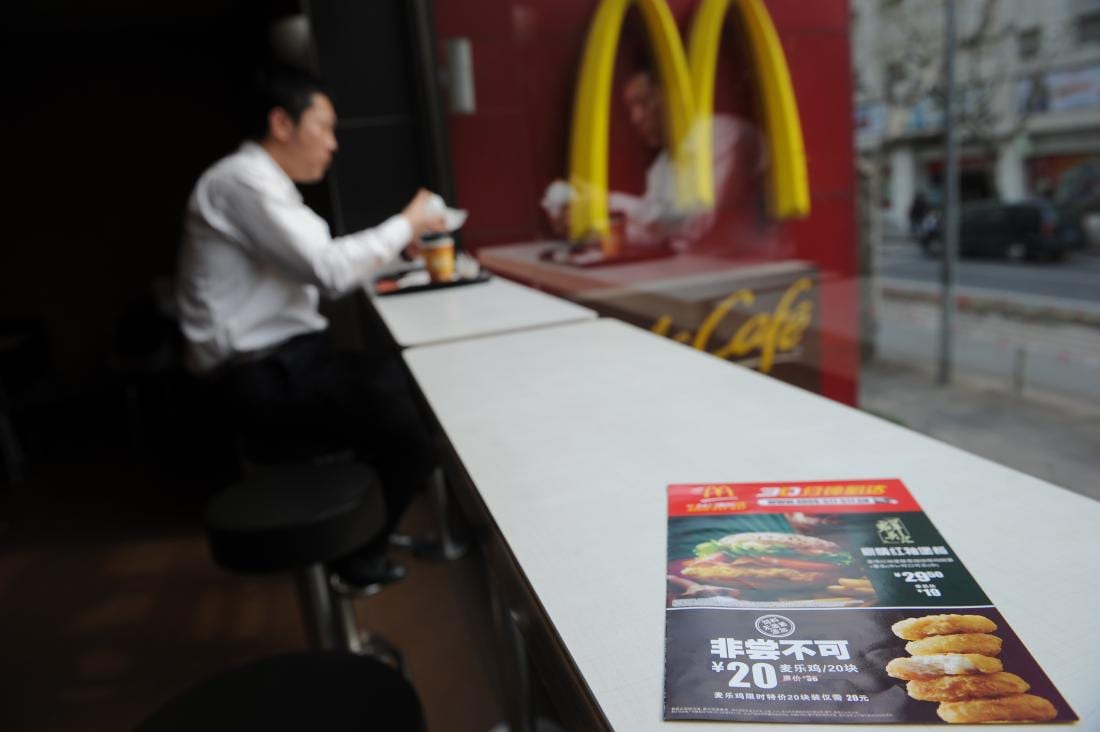
    McDonald’s said on Friday it had sold the franchise rights for its restaurants in Singapore and Malaysia to Saudi Arabia’s Lionhorn Pte Ltd as part of a plan to move away from direct ownership in Asia.

    The fast-food chain said it transferred its ownership interest in 390 restaurants, more than 80 per cent of which were company-owned, on Dec. 1 to Lionhorn.

    Lionhorn is led by Sheik Fahd and Abdulrahman Alireza, who are franchisees for nearly 100 McDonald’s restaurants in the western and southern regions of Saudi Arabia.

    McDonald’s did not disclose the financial terms of the deal.

    Reuters reported in October that McDonald’s was nearing a deal worth up to $400 million to franchise the outlets to Reza group, which also owns and operates McDonald’s outlets in the western and southern regions of Saudi Arabia.

    The Lionhorn deal is in line with McDonald’s plans to bring in partners in Asia as it switches to a less capital-intensive franchise model.

    The company said it has now franchised about 1,300 outlets as a part of its target to become 95 per cent franchised by the end of 2018.

  • AirAsia founders’ MYR1bn cash injection inches forward

    AirAsia founders’ MYR1bn cash injection inches forward

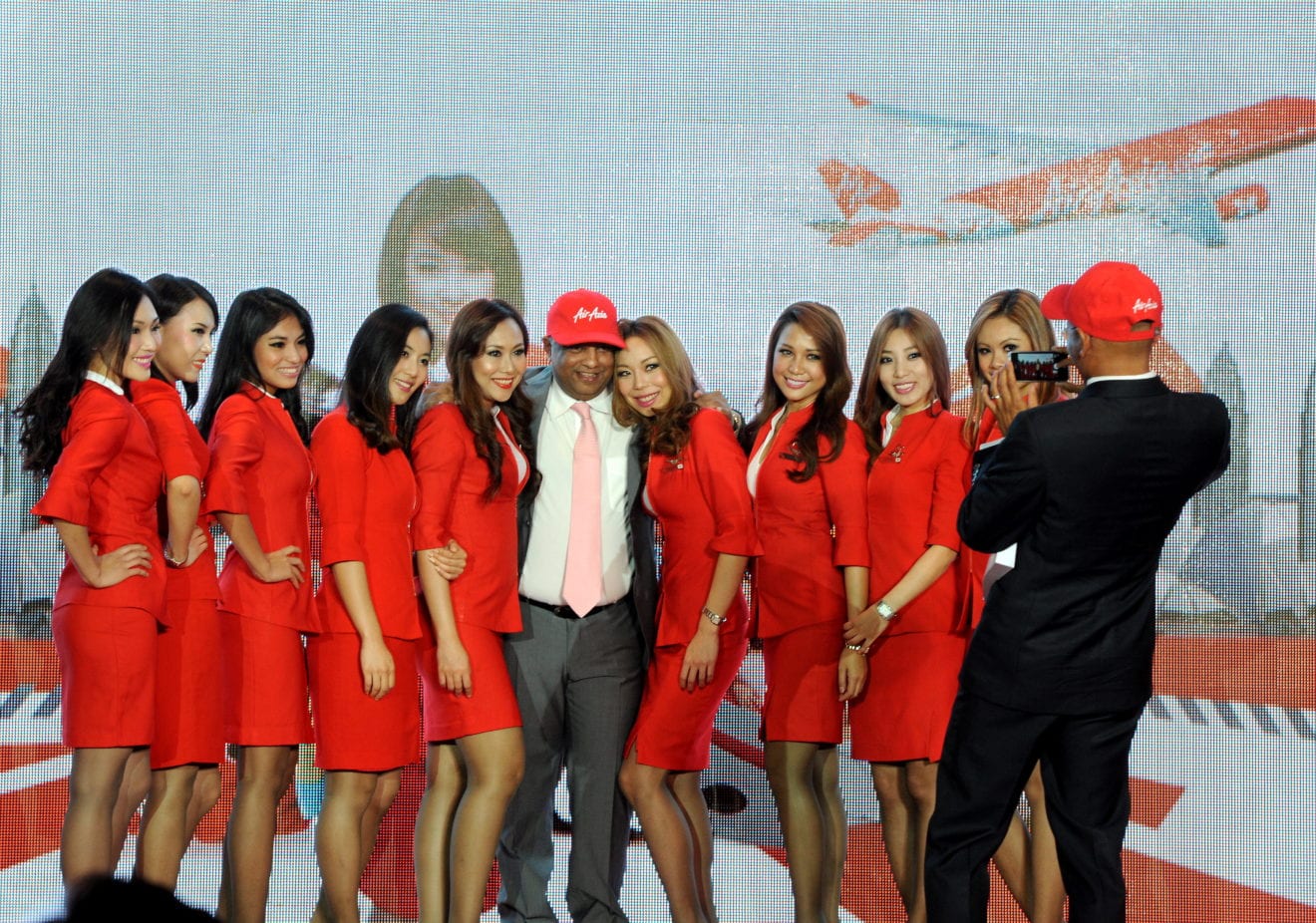
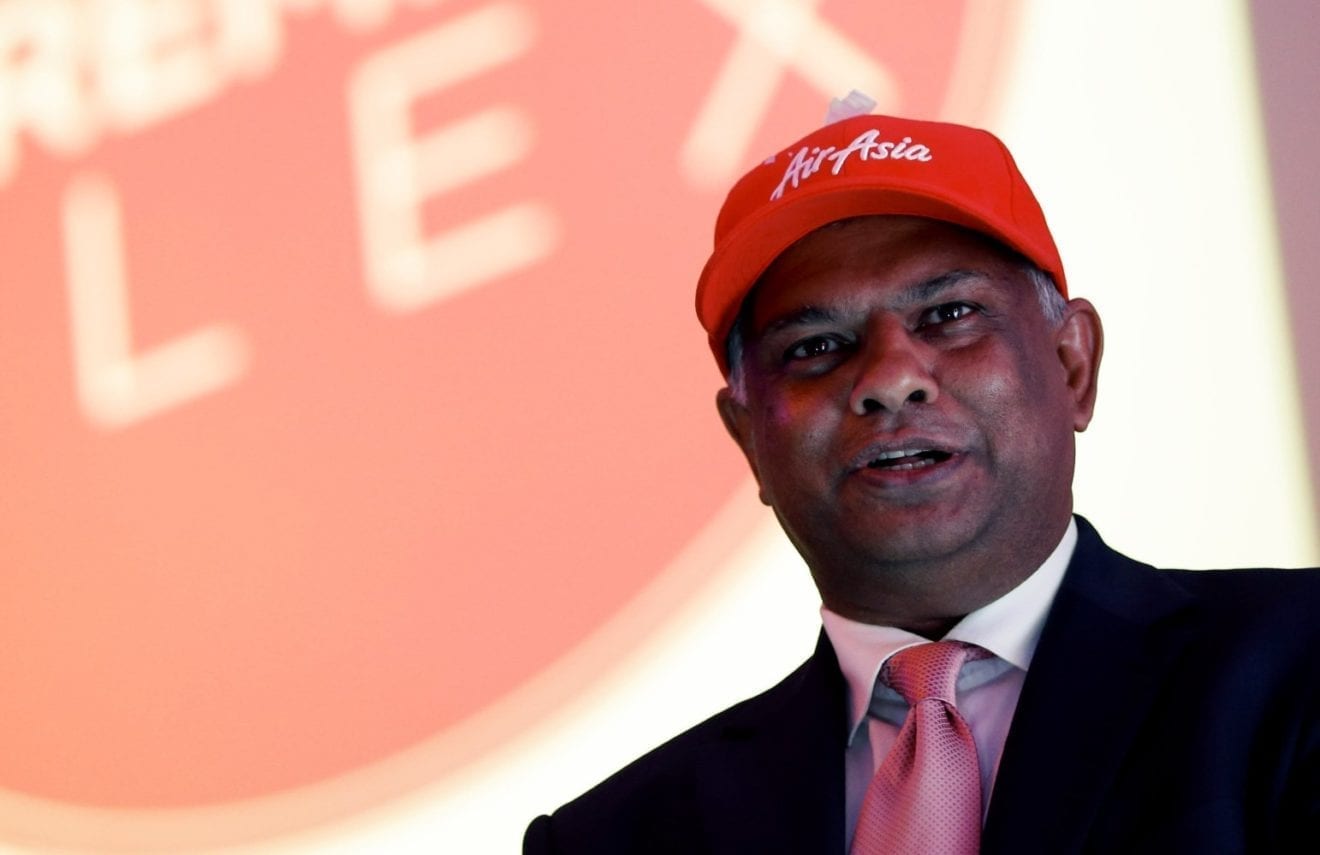
    Malaysia’s central bank, Bank Negara Malaysia, has approved the offshore loans that AirAsia‘s founders Tony Fernandes and Kamarudin Meranun will use to inject over MYR1 billion ($247 million) of new equity into the airline.

    As a result of the approval, the agreement to purchase 559 million new AirAsia shares at a price of MYR1.84 per share became unconditional on 30 Novemeber. This now gives the two directors 60 days to pay for the shares, which will be issued eight days after payment.

     The announcement was made in a Bursa Malaysia statement by joint principal advisors CIMB Investment Bank and RHB Investment Bank.

    Approval for the offshore borrowing has been holding up the deal, and forced the founders to delay it by several months.

    Following completion of the deal, Fernandes and Meranun’s stakes in the company will each be lifted from 18.9% to 32.4%.

  • Viu reaches 4m unique users in 1 year

    Viu reaches 4m unique users in 1 year

    PCCW has announced that its Viu OTT video service has reached 4 million unique users one year after launch.

    Viu is now available in Hong Kong, Singapore, Malaysia, India, Indonesia and the Philippines, offering a range of premium Asian video content.

    Viu’s content library includes Korean content from the top four broadcasters, as well as Japanese, Malaysian, Indonesian, Taiwanese, Hollywood and now Thai content in some markets. The company differentiates with fast local subtitling, and by producing its own entertainment news in collaboration with Korea’s K1 Headlines.

    During the third quarter of 2016, Viu recorded over 218 million views, with users consuming an average of 1.2 hours of content per day or 12 videos per week.

    “As OTT takes root and continues to develop rapidly in Asia, Viu continues to stride forward with the launch of its service in the Philippines, a vibrant market with over 30 million viewers who regularly watch videos online,” PCCW Media Group MD Janice Lee said.

    “We are confident that our Philippine launch will replicate the growth and success we have experienced in the region.”

  • Idris Jala to become Heineken Malaysia chairman

    Idris Jala to become Heineken Malaysia chairman

    Performance Management and Delivery Unit (Pemandu) chief executive officer Datuk Seri Idris Jala will join Heineken Malaysia Bhd (formerly Guinness Malaysia Bhd) as chairman starting Jan 1, 2017.

    In a filing with Bursa Malaysia, the Selangor-based brewer said Idris would succeed Tan Sri Saw Choo Boon who had decided to retire as chairman on Dec 31.

    At the request of management, Saw has agreed to continue to support the group as advisor of Heineken Malaysia starting Jan 1, 2017.

    Idris, who served as Minister in the Prime Minister’s Department for six years, is the managing director of the Big Fast Results Institute in addition to helming Pemandu.

    “Datuk Seri Idris Jala is a renowned transformation guru in turning around companies’ performance through his big fast results methodology and transformational strategies that are innovative, rigorous and relevant to today’s demands. He has continuously delivered sustainable socio economic reforms which, in 2014, saw Bloomberg place him among the top 10 most influential policy makers in the world,” Heineken Malaysia said.

    Prior to his Government stint, Idris was managing director/CEO at Malaysia Airlines (MAS) for three years. He was brought on board to turn around the airline which was in crisis brought about by a prolonged bout of losses from operational inefficiencies.

    Before that, he spent 23 years at Shell, rising up the ranks to hold senior positions including vice president (Shell Retail International) and vice president (business development consultancy) based in the UK.

  • Tory Burch Malaysia opens second KL store

    Tory Burch Malaysia opens second KL store

    Fashion brand Tory Burch Malaysia has opened its second store following the success of its inaugural boutique at Pavilion Kuala Lumpur.

    On the ground floor of The Gardens Mall Kuala Lumpur, the store has a facade distinguished by a green awning and brass accents, signature design elements for the American brand. Inside there is a mix of furnishings in a vibrant palette including seafoam silk drapes, blue embroidered pillows and a teal mohair banquette.

    tory-burch-pavilion-kuala-lumpur

    Oak-panelled walls, travertine basketweave floors and white gesso chandeliers set the tone for the boutique. The brand’s signature Reva ballet shoes and high-end handbags are displayed on brass étagères, and there are dedicated spaces for scarves and eyewear.

    The Tory Burch collection includes ready-to-wear, watches, accessories and shoes.
    To mark the opening, a round, navy-blue python bag made from authentic snakeskin is available exclusively from the boutique.

  • Malaysia’s Online Hiring Activity Declines By 12%

    Malaysia’s Online Hiring Activity Declines By 12%

    Online hiring activity across various industries in Malaysia declined by 12% in October when compared to the same month of last year.

    However, the production and manufacturing, automotive and ancillary industries were the only ones to not register a decline with flat growth between October 2015 and 2016.

    According to the Monster Employment Index (MEI) by Monster.com, the retail sector continued to record slower growth for online hiring.

    It chalked up a 23% year-on-year decline in online hiring activity in October.

    Monster.com Asia Pacific and Middle East managing director Sanjay Modi said hiring activity remained sluggish as companies were still very wary of possible economic headwinds brought about by external factors.

    “Other companies are watchful of their budget, laying off workers, cutting salaries and reducing costs all around. But, the government is making great efforts to get more foreign direct investments, which will create better job opportunities,” he said in a statement.

    The MEI also revealed that the retail sector’s online hiring improved by 3% from a decline of 26% recorded between September 2015 and 2016.

    The sector is followed closely by the hospitality industry, which posted a 21% year-on-year decline.

    When looking at specific jobs in Malaysia, sales and business development talent continued to witness the strongest year-on-year demand at 20%.

    Customer service professionals, on the other hand, fared the worst in online hiring in October, exhibiting a 55% annual decline from the 49% recorded in September.

  • Groupon Malaysia sold to local startup

    Groupon Malaysia sold to local startup

    Ever-shrinking deal site Groupon has exited another market – this time selling its Malaysia business to KFit Group.

    KFit, in which Groupon is an investor, had already acquired the Groupon Indonesia business.

    “With our Indonesian business achieving nearly double growth since our acquisition, we are confident that the same growth principles will bring an exciting new local commerce offering to Malaysia,” said Joel Neoh, founder of KFit Group, announcing the deal.

    The almost terminally flawed Groupon business model was founded in the US and was floated in late 2011 in one of the dot com industry’s most over-valued business IPOs in history. Since its float, Groupon has reported a loss almost every quarter. Last year, it attempted to streamline its business model across its various international markets, another strategy which failed to recuse the brand tainted by dodgy deals, dissatisfied customers and retail partners who lost small fortunes supplying unsustainable promotions sold online. Last month it was even caught selling counterfeit products in the UK.

    As reported in September last year, the business closed its doors in Thailand, the Philippines and Taiwan. Outside Asia it had already exited Greece, Turkey, Panama, Morocco, Puerto Rico and Uruguay. Indonesia followed.

    Last year, Groupon lost US$27.6 million on revenues which continued to fall.

    In Indonesia, KFit retained the Groupon branding, but in Malaysia it will be rolled into its similar local concept Fave early next year, expanding that service into new categories such as restaurants, beauty, wellness, gyms, studios, hotels, holidays, leisure, entertainment and professional services.

    One of the underlying failures of the Groupon model is to convert consumers buying deals into long-term loyal customers for the retailers which use the platform. Ellia Pikri says Fave seems to have learned from Groupon’s failure.

    “Coded into Fave’s system are loyalty solutions and flexible offer structures utilising the tried-and-true model of offering deals to loyal customers that Groupon seemingly lacked before.

    “Fave is also a mobile-first platform. It aims to provide a seamless experience for customers to find, share and enjoy a wide variety of special offers from local businesses, all while customers are able to easily experience what the app has to offer straight from their handheld devices.”

    Pikri argues the mobile-first approach helps offer a clean and streamlined layout for users to browse on their handhelds. “Plus, reservations are made directly on the app, which cuts out the additional step of having to call a vendor (like via Groupon).”

    Face has more than 3200 businesses on its customer database across three countries.

    “While they do have some stiff competition, the combined expertise of Joel’s experience and Malaysia’s growth of online purchasing might just be the push Fave needs to see success where Groupon didn’t,” says Pikri.

    Michel Piestun, president of APAC for Groupon, said it expected KFit Group would steer Groupon Malaysia “to even greater heights”.

    “With Joel’s experience in leading Groupon Asia Pacific in the past, we are confident that KFit Group will be able to grow the business. As a strategic partner in KFit Group, we look forward to seeing the company take big strides in the coming months,” said Piestun.

  • 7-Eleven Malaysia Continues to Expand Store Network

    7-Eleven Malaysia Continues to Expand Store Network

    The Group’s revenue for the current quarter of RM547.8 million grew by RM28.5 million or 5.5% against the corresponding quarter’s revenue in the previous year of RM519.2 million. The growth in revenue continued to be driven by the growth in new stores, improved merchandise mix and consumer promotion activity. This growth was achieved despite prolonged on-going retail market softness caused by weak consumer confidence/spending.

    Gross profit of RM169.0 million improved by RM9.2 million or 5.8% compared to the corresponding quarter in the previous year and this was mainly attributed to the revenue growth of 5.5%.

    Selling and distribution expenses for the quarter increased by RM14.8 million or 10.4%, mainly caused by new store expansion resulting in higher staff cost, rental cost, store depreciation expense and utility cost. In addition, the increase in the minimum wage effective 1st July 2016 has caused the store staff costs to rise by approximately 10% in the current quarter.

    Administrative and other operating expenses for the quarter increased by RM0.7 million or 3.3% due to higher staff cost, head office IT depreciation expense and amortization of intangible assets.

    The profit before tax of RM15.5 million decreased by RM7.0 million or 31.2% compared to the corresponding quarter in 2015 despite positive sales growth due to higher selling and distribution expenses caused by new store expansion and the impact of minimum wage increase effective 1st July 2016.

    For the 9 months ended 30 September 2016

    For the 9 months ended 30 September 2016, the Group’s revenue of RM1.58 billion grew RM73.2 million or 4.9% against the corresponding 9 months’ revenue in the previous year of RM1.51 billion. The growth in revenue was driven by the growth in new stores (total stores as at 30 September 2016: 2,057 stores), improved merchandise mix and consumer promotion activity.

    Gross profit improved by RM28.1 mil or 6.1% compared to the corresponding 9 months in the previous year and this was mainly attributed to the revenue growth of 4.9% and gross profit margin expansion of 0.4% points.

    Selling and distribution expenses for the 9 months period in 2016 increased by RM23.7 million or 5.7%, mainly caused by higher staff cost, rental cost, store depreciation expense and utility cost which is in tandem with new store expansion coupled with impact of minimum wage increase on the staff cost.

    Administrative and other operating expenses decreased by RM5.5 million or 8.5% vis-à-vis the corresponding 9 months in the previous year due to higher staff cost, head office IT depreciation expense and amortization of intangible assets.

    The profit before tax of RM58.8 million increased by 1.3% or RM0.8 million despite revenue growth of 4.9% and gross margin expansion by 0.4% points due to higher selling and distribution expenses from new store expansion and also the impact of minimum wage increase effective 1 July 2016 on the salary cost.

    Future Prospects

    The Board of Directors is of the view that the trading conditions for the remaining period of the current financial year is expected to remain challenging due to continued weak consumer confidence/spending and current macro-economic conditions. Despite this latest development, we remain positive of holding onto our market leading position.

  • Malaysia’s AirAsia and AirAsia X fly back into profit in third quarter

    Malaysia’s AirAsia and AirAsia X fly back into profit in third quarter

    Malaysia’s AirAsia swung to a profit in the third quarter from a net loss a year earlier, mainly driven by an increase in aircraft operating lease income that boosted revenue during the quarter.

    A 22 per cent tumble in the average fuel price to Us$62 per barrel from $79 per barrel a year earlier also contributed, the airline said.

    Net profit for the three months ended September 30 was 353.9 million ringgit (Dh292.4m), versus a net loss of 405.7m ringgit a year earlier. Revenue rose 11.2 per cent to 1.69m ringgit, the company said.

    The results were underpinned by a seat load factor of 89 per cent, a measure of how full planes are, up 7 percentage points from the same period last year.

    The number of passengers carried rose 5 per cent, although capacity fell 3 per cent year-on-year, AirAsia said.

    AirAsia X Berhad, AirAsia’s long-haul budget sister carrier, also recorded a net profit in the third quarter versus a year-ago loss as more capacity on flight routes led to a higher number of passengers for the airline.

    AirAsia X, which is expected to report a profit for this year after two straight annual losses, embarked on a business and organisational restructuring in 2015. It has been adding capacity in Australia and increasing frequency on selected existing routes where demand is high to shore up its results.

    For the third quarter ended September, it reported net profit of 11.03m ringgit, versus a net loss of 288.2m ringgit a year ago.

    Revenue climbed 23.9 percent to 982.4 million ringgit, driven by increases in seat capacity, ancillary revenue, aircraft operating lease income and freight and cargo revenue, the company said in a statement.

    Operations are benefiting from a weaker ringgit that has prompted customers to look at Malaysia “as a value-for-money holiday destination”, said the chief executive Benyamin Ismail.

    The company recorded a passenger load factor of 78 per cent in the third quarter, 3 percentage points higher year on year, AirAsia X earlier said.

    The airline increased its passenger carrying capacity by 34 per cent year on year over July to September.

    “Strong demand from North Asia prompted AirAsia X to add frequencies to Beijing, Shanghai and Osaka while the Australian sector continued to improve with additions warranted for Gold Coast and Sydney,” MIDF Research said.

    The company’s capacity expansion primes the airline for the peak travel season at the end of the year, it added.

    “Based on the current forward booking trend, the expected number of passengers to be carried in the fourth quarter remains promising. Forward loads and average fares are trending better than the previous year,” AirAsia X said.

    Parent AirAsia Group’s chief executive, Tony Fernandes, has said he wants AirAsia X to expand into new destinations in Europe, the United States and Africa.

  • FedEx Trade Networks expands Into Malaysia with Penang office

    FedEx Trade Networks expands Into Malaysia with Penang office

    FedEx Trade Networks, a subsidiary of FedEx Corp. and a premier international freight forwarder, today announced the opening of a new office in Malaysia. Based in Penang, the additional facility highlights the continued expansion of FedEx Trade Networks to meet the growing market demand.

    “With our network stretching into Malaysia, we are well positioned to proactively respond to customer needs and support them in simplifying the complexities of international shipping,” said Udo Lange, executive vice president and COO, FedEx Trade Networks.

    The new FedEx Trade Networks office is strategically located in Penang’s central business district, with close proximity to the airport and the seaport as well as the city’s key infrastructure facilities. FedEx Trade Networks offers a comprehensive portfolio of services, covering e-commerce, international air and ocean freight forwarding, surface transportation (domestic and cross-border), customs brokerage, trade and customs advisory services as well as other value-added services, including My Global Trade Data, the company’s online suite of information management tools.

    “The world requires a new type of freight forwarder that understands how to turn global logistics into strategic advantages,” said Lange. “FedEx Trade Networks makes the complexities of global shipping simple, striving to provide customers with unparalleled supply chain visibility and logistics transparency to help move their businesses forward.”

    Penang is one of the most urbanised and industrialised states in Malaysia with a high concentration of key industries and sectors, including high tech, electronics and electrical products, industrial goods as

  • 7-Eleven Malaysia committed to store expansion

    7-Eleven Malaysia committed to store expansion

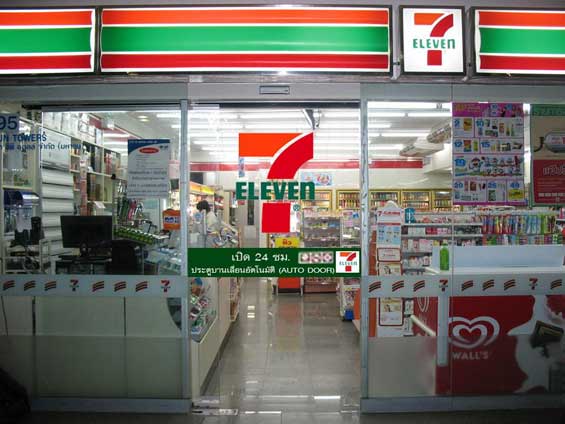
    7-Eleven Malaysia is committed to further store network expansion despite the economic headwinds in the nation.

    Releasing the company’s third quarter results, CEO Gary Brown said the network now numbering 2057 stores achieved sales growth of 5.5 per cent in the three months to September 30, despite a sluggish retail market.

    However there was a “significant negative impact” from the increase in the minimum wage from July 1 on third-quarter profit.

    “The third quarter of 2016 highlights the tough retail market in which we have operated since the introduction of GST coupled with low consumer sentiment and spending.

    “[However] we remain confident that continuous store expansion, refurbishment, promotional activity, improved merchandise mix and expanded in-store services will continue to deliver positive results despite the challenging headwinds.”

    Brown noted that average spend per customer increased by about 4 per cent during the third quarter, compared with the same period last year.

    Group revenue for the quarter totalled RM547.8 million (US$23.31 million) driven by new stores, improved merchandise mix and consumer promotion activity.

    Gross profit of RM169 million improved by 5.8 per cent, mainly attributed to the 5.5 per cent revenue growth.

    Selling and distribution expenses for the quarter increased by RM14.8 million or 10.4 per cent, mainly caused by new store expansion resulting in higher staff cost, rental cost, store depreciation expense and utility costs. The increase in the minimum wage caused store staff costs to rise by approximately 10 per cent in the current quarter.

    The pre-tax profit of RM15.5 million decreased by RM7.0 million or 31.2 per cent, despite positive sales growth – and due to higher selling and distribution expenses caused by new store expansion and the impact of minimum wage increase.

    For the nine months to September 30, the group’s revenue grew by 4.9 per cent against the corresponding nine months’ revenue.

  • Axiata Group 9M16 revenue grows 8.6%

    Axiata Group 9M16 revenue grows 8.6%

    Malaysia-based Axiata Group has reported an 8.6% growth in revenue for the first nine months of the year, due in part to strong growth from the South Asia region.

    Total revenue reached 15.8 billion ringgit ($3.55 billion), with ebitda up 13.4% to 6 billion ringgit. But net profit slumped 55.7% to 929 million ringgit due to one-off gains in the previous year, higher financing costs and increased forex losses from the weaker ringgit.

    For the third quarter, total revenue grew 2.8% quarter-on-quarter and 8.6% year-on-year to a record 5.5 billion ringgit, due largely to the performance of its newest acquisition, Nepal’s Ncell. Q3 represented the first full quarter of contribution from Ncell.

    Net profit reached 296 million ringgit, up 27.3% quarter-on-quarter but down significantly from 955 million a year earlier.

    Across Axiata’s operation, improvements were seen at domestic mobile unit Celcom and Indonesia’s XL for the third quarter, with service revenue at Celcom returning to growth after three consecutive quarters of declines.

    XL revenue grew 1.6% quarter-on-quarter and year-to-date net profit grew by over 100% mainly due to forex gains associated with the refinancing of XL’s US dollar debt to Indonesian rupiah.

    In South Asian markets, Ncell reported a 16.9% year-to-date profit growth, Sri Lanka’s Dialog posted a profit growth of 18.7% over the same nine-month period, but Bangladesh’s Robi reported a 1% decrease in normalized profit.

    “We are pleased with the improvements in revenue and EBITDA, although the Group performance continues to be affected by the weaker operating environment and increased competitive pressures across our markets,” Axiata chairman Tan Sri Azman Hj Mokhtar said.

    “We remain especially focused on management’s plans for recovery and turnaround strategies at XL and Celcom.”

    Axiata group CEO Tan Sri Jamaludin Ibrahim added that 2016 “2016 remains challenging for the group across most of our markets – particularly in Malaysia, Indonesia, Singapore and India where fiercer competition and rising capex have weighed in on overall performance and profitability.”