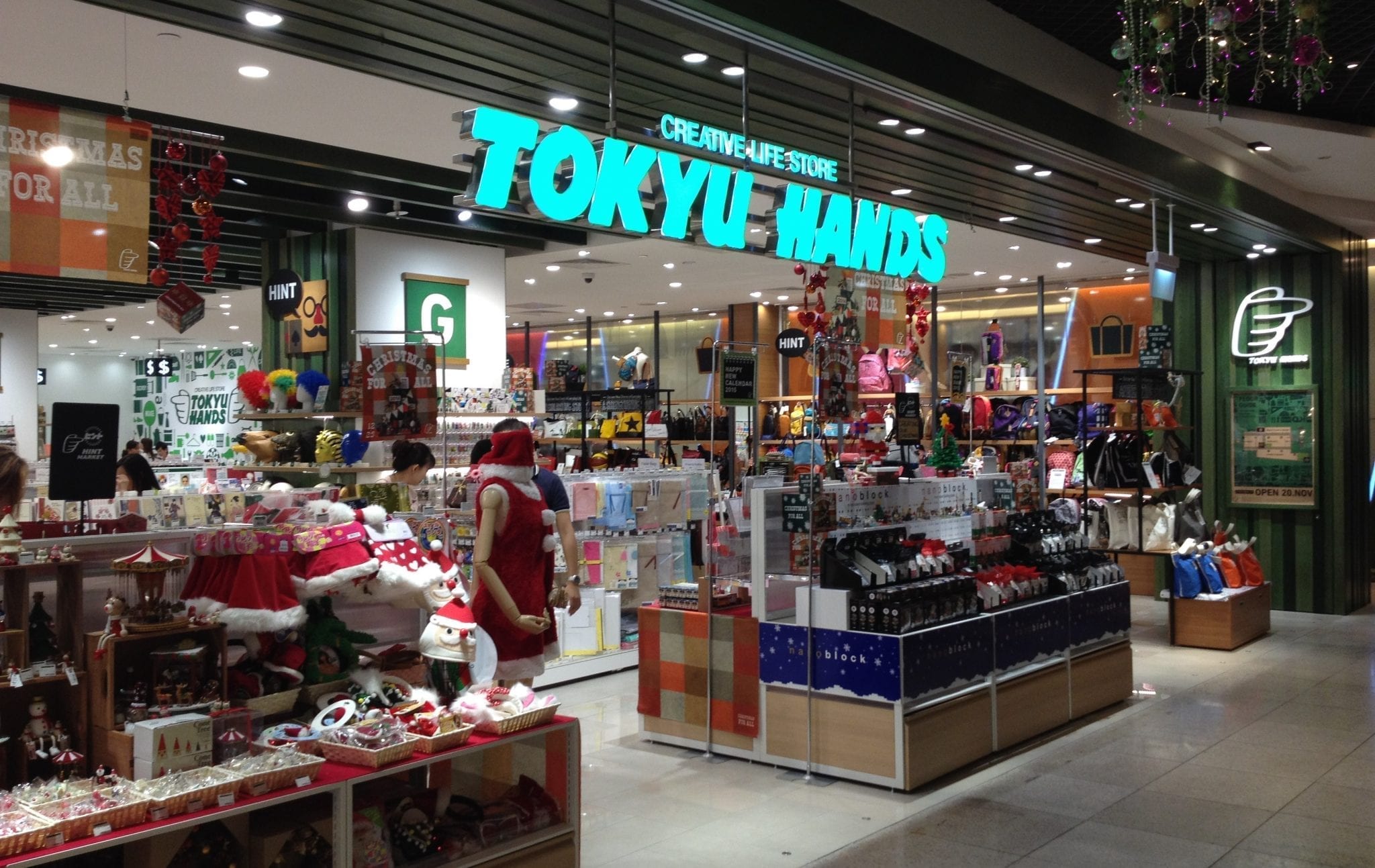
Japanese department store Tokyu Hands plans to boost its overseas sales, which now contribute 1 per cent of overall sales.
Overseas income for its latest year totalled about 800 million yen (US$7.69 million).
A third store is opening next month in Singapore, where Tokyo Hands has had managed stores for two years, and next year the group plans to start trading in Malaysia.
Tokyu Hands opened its first overseas branch in Taiwan in 2000 and now has 15 franchised stores on the island.
Takenori Tsuji, who heads Tokyu Hands’ international business, says the Taiwan stores are mainly in Taipei with management entrusted to the franchisees, “but we consult on the selection of merchandise and store layout”.
He says trends in Japan, such as aging consumers, have made it hard for the store to grow domestically.
Tokyu Hands’ first directly managed store overseas opened in China in 2012, but closed it in January this year. Tsuji says this was a result of management difficulties.
“It took more time and effort than expected to clear customs when we brought in products from Japan, making it hard for us to sell new products quickly.
“Some sales people quit soon after being hired, and it was hard to train Japanese employees in the local area.”
Six months after launching, the store had a temporary sharp drop in sales when relations between China and Japan worsened over the disputed Senkaku Islands. However, full-year sales were “reasonably good”.
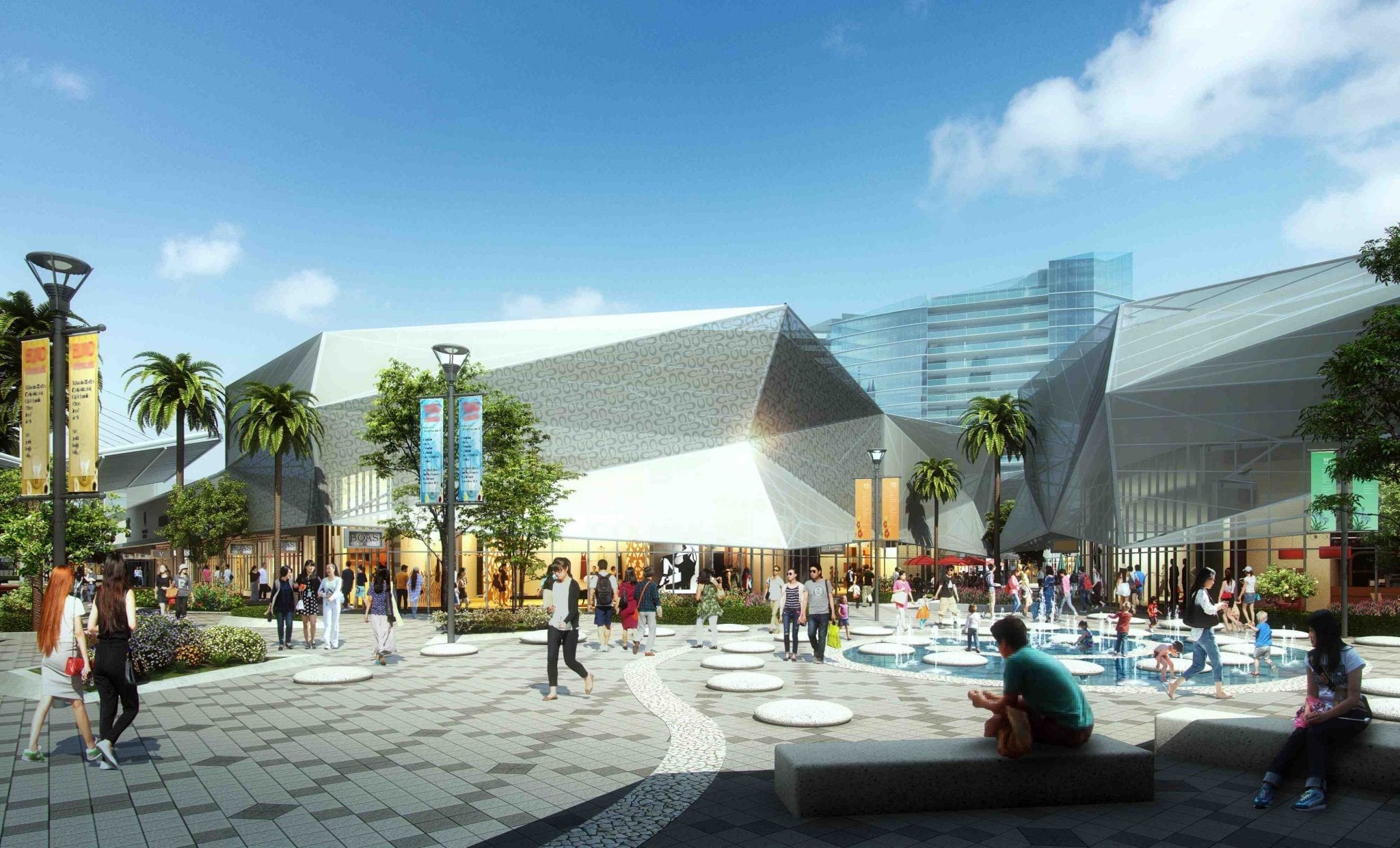
Penang will gain its first premium outlet mall, Design Village, next month.
In Batu Kawan in mainland Penang, it will be the biggest outlet mall in Malaysia. It was developed by PE Land, which owns and runs The Spring shopping mall in Kuching.
The outlet mall is on a mixed-use site that will include a hotel and high-end condominiums. The single-storey mall has a net leasable space of 400,000 sqft (37,161 sqm) for 150 stores.
There are more than 80 brands already committed to the mall, which is aiming for up to 100, says Savills Malaysia MD Allan Soo. The company is the international leasing and retail development adviser for Design Village.
The mall’s retail mix will be 20 per cent large-format stores, 15 per cent F&B, 7 per cent sports outlets and 5 per cent children’s stores, with 25 per cent new tenants and 28 per cent others.
It will include the biggest Adidas outlet in Malaysia, plus the first outlet stores for Aldo and Bata. Other retailers include Banana Republic, Guess, Padini Concept Store, Sacoor Brothers, Samsonite and Starbucks.
The mall will provide daily shuttle services to and from hotels and the airport.
Design Village GM Aileen Tay says the mall is also working with tour companies to bring in tourists who will be offered rebates through tax-free shopping network Global Blue.
PE Land is the retail and property development arm of Borneo-based conglomerate Pan Sarawak Holdings.
Using a traditional recipe involving three cheeses from Japan’s dairy heartland of Hokkaido, the tarts have already been introduced in Brunei, Indonesia, Malaysia, Shanghai and Singapore. Six outlets are planned for Australia, three in Melbourne to be followed by three in Sydney next year.
The first Hokkaido Baked Cheese Tart stores launched in Malaysia this year, selling up to 20,000 units a day.
Designed by Eat Architects, Hokkaido Baked Cheese Tart kiosks are compact with a luxury aesthetic, featuring marble benchtop displays and low-slung designer lighting. The tarts are displayed like precious gems.
ST Group MD Tatt Ghee Saw says Australia’s multicultural society is continually evolving, along with its palate and cuisine preferences. “At ST Group we are passionate about sharing the foods we love in Southeast Asia. ”
He established the group in 2011, recognising the need for comforting cultural eateries, much like the hawker’s markets and corner laksa stores of his native Kuala Lumpur.
His first venture was PappaRich in Melbourne, which attracted long queues. It is now a major franchise enterprise with 26 stores throughout Australia and New Zealand. The group’s other brands are NeNe Chicken, Gong Cha (New Zealand only) and iDarts Australia.
Overwhelmed by response to its first 50 stores across India, local brand Laziz Pizza plans to double its outlets in the short term.
Owned by Laziz Food and Beverages, the chain is primarily targeting tier-one, -two and -three cities.
Founder/CEO Keirron Patil says the company started franchising in 2013, and as well as India now has its expansion sights set on Malaysia (it already has one store in Johor Bahru), Singapore, Sri Lanka, Bangladesh and Nepal.
Laziz allows its franchisees to team its outlets with other brands so they can offer customers multiple products under one roof, including a vegetarian outlet. An unusual aspect of the Laziz business is that franchisees are not charged a royalty fee nor have to share profits with the franchisor.
An e-commerce marketplace specialising in halal goods and services was launched here yesterday, giving small and medium-sized enterprises (SMEs) a leg up in an increasingly competitive environment.
With nearly 60 merchants on board, including 55 SMEs, the launch of Aladdin Street gels with the Government’s push for retail firms to use e-commerce to reach out to more customers.
The platform, which will eventually have offices in 30 countries, aims to promote halal products as a healthy, premium option even for non-Muslims.
Aladdin Group, the company behind the e-marketplace, is headquartered in Kuala Lumpur, Malaysia.
The businesses were screened for quality and compliance with halal standards by an in-house team, and operate in industries that range from food and beverage to cosmetics to fashion.
Aladdin Group co-founder Sheikh Muszaphar Shukor cited a “growing acceptance” of the health benefits of halal products even in non-Muslim countries.
But a lack of reliable marketing platforms means only a fraction of the demand can be met, he said.
Noting that Singapore is one of the largest importers of halal products, he said: “Given the country’s good track record in governance and high standards of halal compliance, Aladdinstreet.com.sg will help these SMEs access this market to its fullest potential.”
Ms Jacinta Ong, 40, who founded tea retailer Tea Ideas, sells her products through a blogshop and at roadshows in malls.
She has not set up a permanent stall because of the high rental and manpower costs.
“I think the right way forward is going online and collaborating with other retailers to harness demand in the halal market,” she said.
Vielkaline founder Gavyn Lim, 38, said the platform would help him target big halal markets such as the Middle East.
The firm sells alkaline ionised mineral water.
“The entry barrier to putting my products up for sale at supermarkets is too high,” he said. “It is a lot cheaper to put them online.”
The Singapore Chinese Chamber of Commerce and Industry (SCCCI) said yesterday that it is stepping up efforts to help local SMEs innovate and digitise their businesses.
Last year, it took SMEs to Beijing and Shenzhen to learn about e-commerce business models in these Chinese cities and how they could penetrate the China market.
This month, SCCCI organised a trip to Silicon Valley in the United States so SMEs could engage with businesses there to explore potential collaborations.
It said it would continue to work with government agencies to help SMEs identify suitable partners to support innovation efforts.
German automaker, Volkswagen Group has announced the relocation of its regional after sales center for the Asia-Pacific region. Previously, Singapore supplies for the regional retail outlets in the Asia-Pacific Region. The Volkswagen Group, however, decided to relocate it to Malaysia expanding their logistics capacity to almost 50,000 square meters.
“The expansion and the relocation of our regional genuine parts center from Singapore to Malaysia reflect the significance and potential of these growing markets and will lay the foundation for further growth. Malaysia will be the new hub for after sales logistics in the region,” said Imelda Labbé, Head of Volkswagen Group After Sales.
“Our new regional logistics center in South-East Asia will allow us to supply parts throughout the region even faster than before. From 2018, directly connected dealerships in Singapore and Malaysia will receive two deliveries per day. This will significantly improve our customer service in the region at the same time as laying the foundation for further growth,” added Marcus Edelmann, Director After Sales for the Volkswagen Group Regional Office in South-East Asia.
Starting on 2018, the company says it will be able provide faster supply of genuine parts to 28 markets in the Asia-Pacific region through their new supplier, Malaysia. Meanwhile, the regional retail outlets will then receive of up to 2 deliveries per day. Work will start on the logistics center on January 2017. There are also plans for the later integration of the after sales activities of other Group brands and the regional pooling of the delivery chain for genuine parts.
These parts will be built in the Port of Tanjung Pelepas (PTP) free trade area in Johor Bahru, at the southern tip of the Malay Peninsula. The automaker says that the direct connection to the port eliminates the need for intermediate handling. As a result, Volkswagen says the logistics processes will become more efficient and environmentally compatible.
Footwear and apparel brand Timberland Asia has partnered SP eCommerce, a Singapore Post company, to launch its official eCommerce store for the Southeast Asian region.
The Singapore-based online store uses SP eCommerce’s security, management, digital marketing, store operations and customer-care technology. Order fulfillment is being handled across Singapore through SingPost’s last-mile distribution network.
This gives Timberland the ability to deliver a seamless shopping experience, with exclusive online promotions as well as its full retail catalog.
“This is a natural next step for Timberland,” says Malaysia/Singapore GM Daisy Tan of Timberland owner VF Corporation. “Working with one partner for the entire shop-to-ship process lets us focus our attention on serving our customers and growing our business.”
It is a new concept for Saint Laurent, featuring the collection of its newly appointed creative director Anthony Vaccarello, as well as an exclusive envelope chain bag collection available in seven colours and finishes.
Mirrors and marble will be a feature of the interior finish of the store.
Later this year, Saint Laurent plans to open a second store in Kuala Lumpur, in Pavilion KL.
Asia is home to more than half the world’s most dynamic retail hubs, according to new research that reinforces images of the region’s mall-strewn megacities.
The research, by professional services and investment management company JLL, says 12 of the fastest-growing retail cities are in Asia, with eight in China alone — another indication that global economic growth is increasingly driven by the Asia-Pacific region.
JLL lists Dubai as the world’s fastest-growing retail destination, with Shanghai second and Beijing third. Places 9 to 13 are occupied by Bangkok, Chengdu, Kuala Lumpur, Jakarta and Manila, respectively. Only two European cities make the top 20 — Moscow and Istanbul — with none from Africa. Mexico City is the sole city from the western hemisphere, sitting at number 19.
Overall, JLL lists London as the “most attractive” city for retailers, with Hong Kong second and Paris third. Dubai, Singapore, Shanghai, Tokyo and Beijing all make the top 10, with Bangkok, Taipei, Seoul and Osaka in the top 20.
Shanghai at night. The Chinese megacity is projected to be one of the world’s retail hubs in the coming years (Photo: Simon Roughneen)
The study looks at the presence of 240 international retail brands in 140 cities — which altogether make up 36% of the world’s gross domestic product, 13% of the global population and a third of total worldwide consumer spending.
“The search for growth is escalating the penetration of international brands across the world’s most attractive retail cities, especially in Asia,” said David Zoba, chairman of JLL’s Global Retail Leasing Board.
Asia catching up
Many Western economies continue to suffer from slow growth — in stark contrast with Asia, where the International Monetary Fund predicts overall growth of more than 5% in 2016-17 and describes the region as “the engine of the global economy.”
Asia is urbanizing rapidly as economies develop and incomes rise, meaning that big global brands will increasingly look to Asia as a source of consumers. World Bank research shows that nearly 200 million people in the East Asia and Pacific region –excluding India and its heavily populated neighbors such as Pakistan — moved from the countryside to cities during the decade after 2000.
In 1800, only 3% of the world’s population lived in cities, a figure that rose to 13% by 1900. Now more than half the world’s population is urbanized, with projections that 70% or more of the world will live in urban areas by 2050. And while in the 19th and 20th centuries urbanization was mainly a Western and Japanese phenomenon, developing countries are catching up fast, particularly in Asia.
Despite the steady rural-urban shift, only 36% of East Asia’s population had moved to urban areas by 2010, with only Japan, Malaysia, South Korea and Taiwan having larger urban than rural populations.
While China had by far the largest absolute numbers of people moving to cities, smaller countries such as Cambodia, Laos and Vietnam showed higher rates of urbanization. Laos more than doubled its small urban population, while high-growth economies such Cambodia and Vietnam both had between 4% and 4.5% annual urban population growth rates. Retail investors are noticing opportunities even in smaller cities such as Phnom Penh, where Japanese mall operator Aeon opened the city’s first large shopping mall in 2014.
Asia’s cities will continue to grow over the coming decades as the region becomes wealthier. McKinsey Global Institute expects that in the next 15 years, “the center of gravity of the urban world will move south and, even more decisively, east.” According to MGI, half of global GDP in 2007 came from 380 developed world cities, with the 22 biggest cities in developing countries contributing a mere 10%.
However, MGI predicted that by 2025 half of the cities in its 2007 rankings will not make the list, with 136 developing world cities entering its ranking of the 600 biggest urban economies — including 100 from China alone.
“By 2025, developing-region cities of the City 600 will be home to an estimated 235 million middle-class households earning more than $20,000 a year at purchasing power parity (PPP),” MGI reported. The figure is larger than the 210 million such households expected in the cities of developed regions.
Thinktank Oxford Economics said that cities such as Chengdu, Hangzhou and Wuhan “will become as prominent in 2030, in economic terms, as cities like Dallas and Seoul are today.”
Shift east
The thinktank predicted that by 2030 eight European cities will drop out of the global top 50 cities ranking, measured by GDP, while nine Chinese cities will join that group, taking the Chinese total to 17, which will be more than North America and four times more than Europe.
In turn, the thinktank said, this will mean more Asian consumers with money to spend. “Starting from a comparatively low base today, China will boast some 45 million high-income urban households (exceeding $70,000 per annum at 2012 prices and exchange rates) by 2030, putting it well ahead of Europe and hot on the heels of North America. Shanghai will jump from a rank of 69th today to 8th for its number of high-income households in 2030,” Oxford Economics said.
Otherwise, however, the seven megacities with the most high income residents will remain the same as today, with Tokyo leading New York, London, Osaka, Los Angeles, Paris and Chicago.
But Asian cities are set to add tens of millions of middle-income households (incomes between $10,000 and $70,000) to their ranks by 2030. Jakarta will be home to 9.4 million, with 7 million to 9 million more in each of Chongqing, Shanghai, Tokyo and Beijing, the projected top five cities ranked by population of middle-income households, according to the thinktank.
JLL said that for retailers, vying for market share in emerging economies is sometimes risky, but the potential prize — market access to vast populations and rapidly expanding middle classes — outweighs any perils.
For example, China’s anti-corruption crackdown has had “a knock-on effect” on the luxury goods market in the world’s second-biggest economy, said James Hawkey, JLL’s head of retail for China. But retailers are nonetheless “increasingly comfortable dealing with these risks, and generally have their eyes on the long-term prize of establishing a strong position in major world markets.”
Although incomes and spending power remain lower in many Asian countries and cities than in the West, part of the attraction of smaller, less-developed markets is relatively low rental costs.
“Places like Ho Chi Minh City, Jakarta and Bangalore present an opportunity for retailers to establish their brands at rents of less than $2,000 per square meter per year with projected in-store sales increasing by 8% to 10% until 2019,” JLL reported.
Wealthy mid-sized cities or trade-oriented city-states such as Singapore and Hong Kong also benefit from high numbers of visitors such as tourists or business travelers.
But Asia’s urbanization will not mean that rural dwellers will be ignored by retailers, particularly in China.
“Retail potential in Asian hubs is strongly influenced by what is happening in their hinterlands — what is happening in nearby provinces and/or countries,” Steven McCord, JLL’s head of research for northern China, told the Nikkei Asian Review.
“Shanghai exerts a ‘gravity effect’ over its surrounding cities and provinces due to its size and the wealth of its retail offer. Therefore, close to 80 million people within day-trip distance to Shanghai will regularly travel to that city for large shopping sprees,” McCord added.
Malaysia Milk has fully recalled its Marigold HL milk products from Malaysia retail outlets following customer complaints, the company said on Monday (Oct 17).
The quality of the milk had been compromised due to bacterial contamination, but this has since been rectified, Malaysia Milk added. “Side effects of consuming the compromised quality of milk may include mild stomach discomfort. There are no long-term side effects,” it said in a statement.
New batches of milk have been delivered to retailers, the company said.
Malaysia Milk announced on Saturday that all Marigold HL milk products expiring before Nov 7 for Peninsular Malaysia and before Nov 11 for the Sabah, Sarawak and Labuan markets are being recalled, in response to customer feedback that the viscosity of its Marigold HL chocolate milk was higher than usual. Viscosity refers to the “thickness” of a liquid.
“While customer feedback is specifically on the Marigold HL chocolate milk, nevertheless Malaysia Milk is taking proactive measures to recall other products which include Marigold HL plain milk (200ml and 1L), Marigold HL strawberry milk (200ml and 1L) and Marigold HL with plant sterols (1L),” it said over the weekend.
Malaysia Milk stressed that customers’ health and safety is its top priority. “We have taken proactive measures and have successfully recalled all our products from retail outlets. An additional and more stringent Quality Control is now in place on finished products to keep a daily check on products to ensure conformity with the highest international standards,” said Malaysia Milk general manager Poh Eng Lip.
Customers who have purchased the affected products should return them to Malaysia Milk for a replacement or contact its customer service team at 1800-885587 or [email protected].
The recall does not affect the company’s products in Singapore, local manufacturer Malaysia Dairy Industries said.
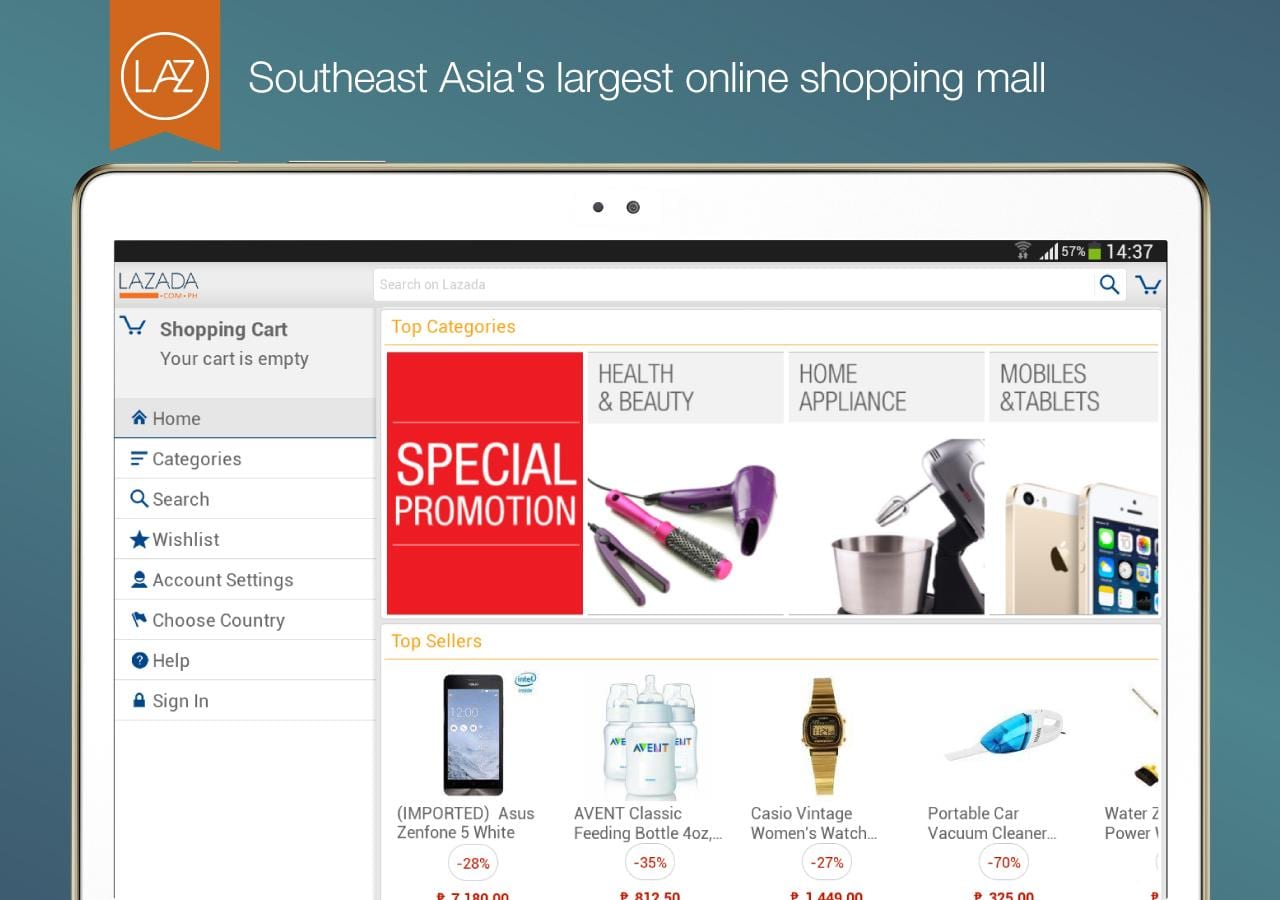
While some global e-commerce giants, including Amazon Inc, are planning to build brick-and-mortar convenience stores, Lazada Malaysia will focus on things it does best — selling inventory to customers from its warehouses through its online platform.
Its chief executive officer (CEO) Hans-Peter Ressel said Lazada Malaysia will concentrate on strengthening its online shopping business, rather than building physical stores to complement its online services.
“We can’t comment on their (Amazon’s) strategy because we focus only on our products,” Ressel said in an interview last week. “We have decided to go this way, and if other players are doing other things, I’m happy to learn and observe how this works for them, but it doesn’t change our strategy.”
Citing unnamed sources, The Wall Street Journal last week reported that Amazon stores will sell perishable goods, including milk and meats. The Seattle-based retail giant will also build drive-in locations for consumers in a rush where online grocery orders will be brought to the car, the newspaper said.
Lazada Malaysia, which has achieved more than five million app downloads, is part of the Lazada Group which operates online shopping platforms in Indonesia, the Philippines, Singapore, Thailand and Vietnam. Its product offering covers diverse categories, including electronics, fashion, health & beauty, sports & travel, and groceries.
Vienna-born Ressel, who is of Austrian and Filipino descent, had served as Lazada Malaysia chief commercial officer and chief operations officer since August 2012, before he became its CEO in March 2015.
Lazada Malaysia, he said, would continue to collaborate with brand retailers, hypermarkets and offline flagship stores to sell their products.
“If you want [to operate your own] store, how many stores do you need? What do you want to put on these stores? We don’t believe in doing everything by ourselves. We have partners; we have brands, and it is crucial to have their collaboration, that’s our focus,” he said.
Notably, Lazada Malaysia this year brought in top brands such as L’oreal, Levi’s and Samsung. It also formed partnerships with giant retailers such as Tesco, Watsons and Senheng.
Ressel believes e-commerce is the way forward, considering that two-thirds of Malaysians have Internet access, with most of them spending more than four hours a day online.
“If we didn’t believe in the future growth of e-commerce, we won’t be here. Today, 20 million out of 30 million Malaysians are online. The [Malaysian] e-commerce market will definitely grow towards a size that is similar to Western countries, China and Korea. It’s just a matter of time,” he said.
According to an estimate by statistics portal Statista, total revenue for the Malaysian e-commerce market this year will hit US$894 million (RM3.75 billion) and revenue is expected to see an annual growth rate of 23.7% in the next five years, to reach US$2.58 billion by 2021.
Currently, the market’s largest segment is electronics and media, with a market volume of US$380 million. User penetration is at 61.7% this year and is expected to hit 76.8% in 2021.
Nokia has deployed a mission-critical advanced communications network for Kuala Lumpur’s new railway line.
The Kelana Jaya light rail transit (LRT) line extension is now supported by an advanced communications network supporting high-speed voice, data and video traffic.
The network the railway operations and passenger services for the line’s 13 new stations, which see a combined 350,000 passengers daily.
Nokia also provided systems integration services to enhance safety and security through remote diagnostics and automated functions; constant situation awareness with video surveillance; Supervisory Control and Data Acquisition (SCADA); monitoring systems; telephone and radio communications services; automated fare collection (AFC); and public address and passenger information systems.
The project was completed in conjunction with CMC Engineering Sdn Bhd.
“As one of the National Key Results Areas (NKRA) under the Malaysian government transformation program (GTP), the Kelana Jaya LRT Line Extension project is another important government initiative to deliver an effective and seamless public transportation system for the Greater Kuala Lumpur area,” CMC Engineering CEO.Hazwan Alif Abdul Rahman said.
Stuart Hendry, head of global enterprise and public sector for Asia Pacific at Nokia, said railway operations can benefit enormously from modern communications networks.
Asian cities dominate the latest retail destination rankings, with the Middle East taking most of the remaining spots.
According to the latest edition of JLL’s Destination Retail report, which ranks markets for retailer expansion around the world, Asia is fuelling global growth, taking 12 of the top 20 spots. Six of those cities are in China – but Singapore, Hong Kong and Macau are not among them. Six months ago Hong Kong was second only to London – neither city makes the list now.
This time around, the top two cities are Dubai and Shanghai, with Beijing ranking third. The other Asian cities in the top 20 are Bangkok, Chengdu, Kuala Lumpur, Jakarta, Manila, Tianjin, Shenyang, Shenzhen, Chongqing and Hangzhou. (The full list is below).
Besides Dubai, Abu Dhabi, Kuwait, Jeddah and Riyadh make the list, meaning 85 per cent of the top 20 destinations are in just two regions.
“The global retail landscape is expected to change significantly over the next 10 years, as a fast-growing middle class in emerging markets attracts retailers hungry for growth,” says David Zoba, chairman of JLL’s Global Retail Leasing Board.
JLL says Shanghai has become a favourite of international brands looking to test the Chinese market and gain exposure. While established prime markets include West Nanjing Rd and Huaihai Rd, new submarkets targeting local residents are popping up along the many new metro lines leading out of the city, and the city’s retail network is growing and shifting.
Beijing follows as the third-fastest-growing retail market with its swelling middle class and strong concentration of high-net-worth individuals. Properties such as China World Mall and the landmark project Taikoo Li continue to draw high-end shoppers, while malls like Beijing APM and Oriental Plaza dominate tourist-friendly shopping strip Wangfujing. The Chinese capital’s suburbs are also experiencing rapid growth as people choose to shop more locally rather than brave the traffic into the city centre.
“Emerging markets can expose international retailers to greater levels of economic and geopolitical risks. One pertinent example is China’s anti-corruption campaign and the knock-on effects on the luxury market,” says James Hawkey, head of retail for China, JLL. “However, international retailers are increasingly comfortable dealing with these risks, and generally have their eyes on the long term prize of establishing a strong position in major world markets.”
Added Zoba: “The search for growth is escalating the penetration of international brands across the world’s most attractive retail cities, especially in Asia. Retailers who succeed in acquiring the right space in the right place at the right time will benefit from successful, profitable growth, but they should be mindful that potential rewards go hand in hand with risk,” continues Mr Zoba.
Retail rents in these emerging markets reflect legislation, market transparency, reputational risk, maturity, as well as growth potential, meaning that their levels are relatively low compared to more mature markets. Places like Ho Chi Minh City, Jakarta and Bangalore present an opportunity for retailers to establish their brands at rents of less than US$2000 per square metre per year with projected in-store sales increasing by 8 to10 per cent until 2019, based on Oxford Economics forecasts. However, as cities mature and the pace of new construction of retail centres slows, rents will gradually increase.
JLL’s Destination Retail report 2016 examines the presence of 240 international retail brands across 140 retail cities, giving insights for international retail expansion. The 140 cities make up 36 percent of the world’s GDP, 13 per cent of the global population and 33 per cent of total consumer spending.
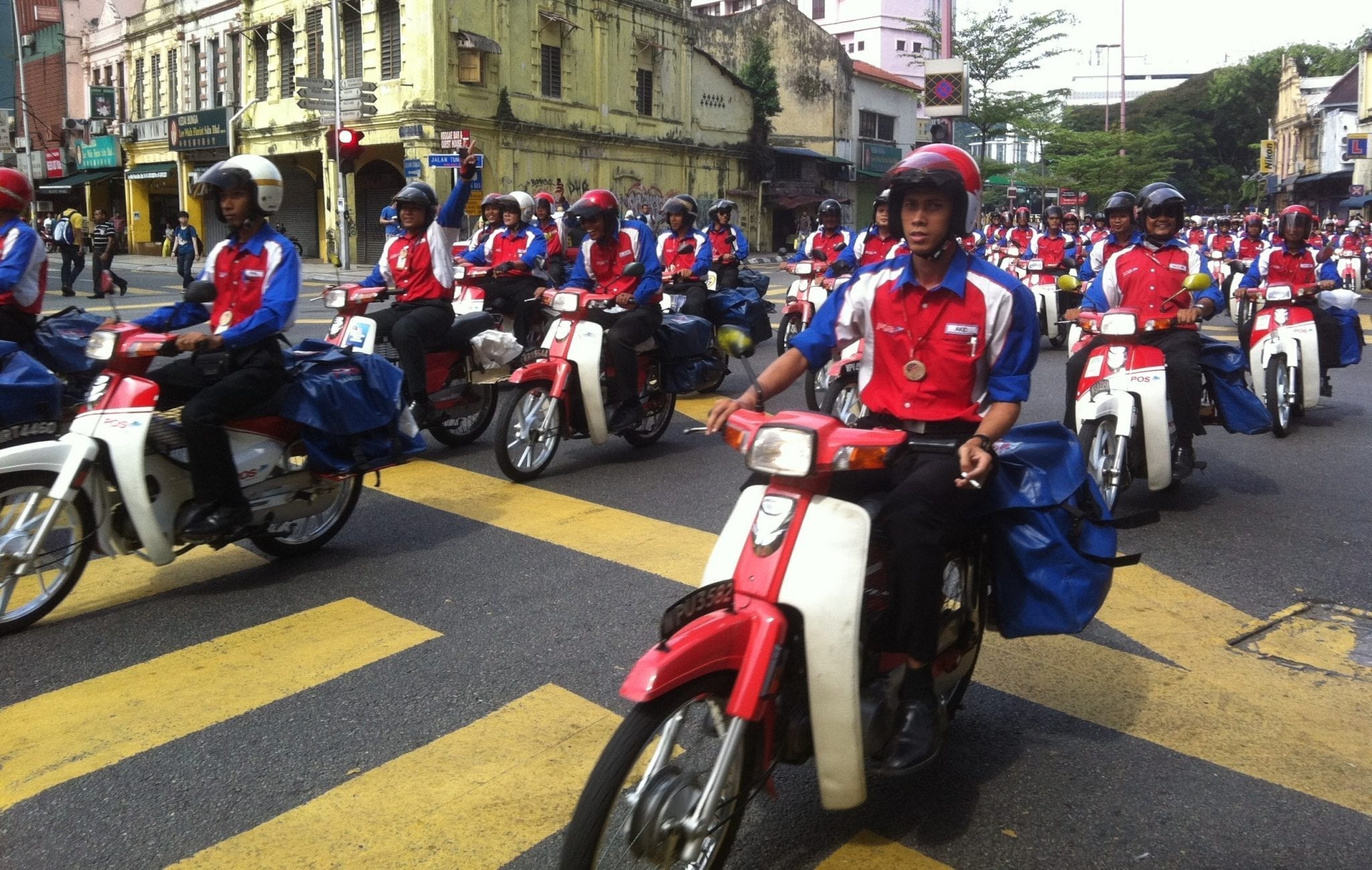
Malaysia’s biggest postal company is seeking a more direct role in providing logistics services to Chinese e-commerce giant Alibaba Group Holding Ltd, tapping a boom in online retailing.
Pos Malaysia Bhd plans talks with Alibaba this month on bypassing the middlemen when shipping goods sold on its platforms, Mohd Shukrie Mohd Salleh, its chief executive officer, said. Surging parcel deliveries for online shopping drove a 40% jump in profit in the fiscal first quarter and full-year earnings will be higher than a year earlier, he said.
“My focus is still e-commerce, and it is driving the logistics business. When e-commerce is booming, somebody needs to deliver these items,” Mohd Shukrie, 42, said in an interview at the company’s headquarters in Kuala Lumpur on Sept 27. “Marketplace owners wants to deal with logistic players directly. I’m going to China to meet up with Alibaba and other market players” in October, he said.
Postal companies in Asia are remodeling themselves by expanding overseas to meet rising demand spurred by a global retail e-commerce market valued at about US$1.2 trillion by the Universal Postal Union. Pos Malaysia, which started work in the early 1800s delivering mail by bicycle, is the top performer this year among 14 global courier stocks with a market value of at least US$500 million, recording a total return of 49%, beating United Parcel Service Inc and FedEx Corp.
Pos Malaysia stock has soared 88% from a February low as record earnings from its courier business and a potential increase in tariffs for the first time in six years buoyed the shares. The government is examining its proposal for higher postal rates, said Mohd Shukrie. The company is valued at 25 times its 12-month projected earnings, versus 18 for UPS, the world’s most valuable courier company.
Alibaba said its delivery affiliate Cainiao Smart Logistics Network Ltd “works collaboratively with logistics participants to enhance customer experience and operation efficiency. “It is natural we talk to industry participants,” it said in an e-mailed statement in response to queries by Bloomberg News.
While Pos Malaysia handles parcel deliveries for Alibaba through freight forwarders, or so-called consolidators such as Japan’s Sankyu Inc, the Kuala Lumpur-based company wants to deal directly with these marketplace owners, said Mohd Shukrie.
Eliminating Middlemen
“The future is about cutting the middleman, and the existence of consolidators will be under threat,” he said. “Right now, we deal more with consolidators for parcels from China to the world, but understandably marketplace owners want to deal with logistic players directly.”
Consolidators collect and group outward-bound cross-border mail to specific destinations and negotiate special rates with the public postal operators to distribute the bulk mail in the designated countries.
Singapore Post Ltd, which counts Alibaba as its second-biggest shareholder, said a year ago it plans to expand freight services and warehouses in the US and Europe as Asia’s emerging middle class drives online purchases from overseas.
“The potential is quite huge for e-commerce,” Lim Sin Kiat, an analyst at Hong Leong Investment Bank Bhd in Kuala Lumpur, said by phone. “Clients are looking for fully integrated services, and it’s still a work in progress for Pos Malaysia to be fully integrated.” Lim has a buy call on the company with a target price of RM3.87. The stock climbed 1.3% to RM3.90 as of 9:58am in Kuala Lumpur, near the highest level in more than a year.
Logistics Acquisition
In September, Pos Malaysia completed the purchase of KL Airport Services Sdn Bhd from parent DRB-Hicom Bhd, controlled by businessman Tan Sri Syed Mokhtar Al-Bukhary. The move will boost revenue to RM2 billion (US$482 million) in the year ending March 2018 and allow the company to offer more logistics services overseas, said Mohd Shukrie.
KL Airport now has two aircraft and the capability to pick up cargoes from the region including Hong Kong, he said. It can expand the fleet by one plane annually in the next five years in tandem with business growth, said Mohd Shukrie, who mentioned Ingvar Kamprad, Ikea’s billionaire founder as an inspiration for building a steady and sustainable business.
“The pie is growing very fast, we do not want to settle with growing with the market, we want to grow more than the market,” he said.
Standard Chartered Bank and Uber announced a partnership that offers all Standard Chartered credit cardholders in six markets (Singapore, Indonesia, Malaysia, Vietnam, India and the United Arab Emirates) across two continents up to 25% cashback for all global Uber rides. This is the first ever multimarket partnership for both Standard Chartered Bank and Uber, the world’s most popular transport app.
Collaborating with Uber is part of Standard Chartered’s digital agenda to deliver simple and convenient banking through digital channels for increasingly tech-savvy clients. To meet clients’ needs in the new digital ecosystem, the Bank believes that collaboration between the financial and technology sectors will lead the way forward. Ride hailing service providers such as Uber are fast becoming a mainstream feature of transportation globally, and continue to gain popularity exponentially. This collaboration between Standard Chartered and Uber capitalises on key areas of synergies, which are mainly an extensive geographical network, highly-mobile client base and the desire to provide innovative offerings to clients.
Sebastian Arcuri, Regional Head, Retail Banking, ASEAN and South Asia, Standard Chartered Bank said:
“There has been a dramatic shift towards digital and cashless payments across the region and we are seeing success in the seamless integration of the Bank’s services in our clients’ everyday life. As a global bank with a focus on Asia, Africa and Middle East, we are pleased to partner Uber, a transport network operating in more than 425 cities, to engage our clients for both their local and overseas transport needs.”
Commenting on the partnership, Chan Park, Uber’s Regional General Manager for Southeast Asia, said:
“We are thrilled to partner with Standard Chartered Bank, one of the region’s longstanding and illustrious banks. Together, we will bring to life our shared passion for delighting customers and bring even more value to riders. We also look forward to welcoming cardholders as first-time Uber riders to join over 50 million riders globally to experience the ridesharing revolution.”
VisaNet data reveals that in Singapore, in-app payments account for around one third of total card spend under the transportation category. The overall consumer spend in transportation witnessed a healthy growth of 35% year-on-year, driven primarily by a growth in spend for in-app merchants. On the average, third party transportation booking apps account for more than 1.5 million transactions every month.
Andrew Chia, Head of Retail Banking, Standard Chartered Bank Singapore, said:
“We constantly seek new ways to delight our clients and are excited to partner Uber in delivering greater value and a more seamless travel experience for our cardholders. Given the shift towards a cashless society in Singapore, there is strong demand for more accessible digital payment options. With this partnership, our cardholders are rewarded with convenience and cashback when they go cashless with Uber.”