Tag: Malaysia

  • Malaysia Milk recalls Marigold HL products

    Malaysia Milk recalls Marigold HL products

    Malaysia Milk has fully recalled its Marigold HL milk products from Malaysia retail outlets following customer complaints, the company said on Monday (Oct 17).

    The quality of the milk had been compromised due to bacterial contamination, but this has since been rectified, Malaysia Milk added. “Side effects of consuming the compromised quality of milk may include mild stomach discomfort. There are no long-term side effects,” it said in a statement.

    New batches of milk have been delivered to retailers, the company said.

    Malaysia Milk announced on Saturday that all Marigold HL milk products expiring before Nov 7 for Peninsular Malaysia and before Nov 11 for the Sabah, Sarawak and Labuan markets are being recalled, in response to customer feedback that the viscosity of its Marigold HL chocolate milk was higher than usual. Viscosity refers to the “thickness” of a liquid.

    “While customer feedback is specifically on the Marigold HL chocolate milk, nevertheless Malaysia Milk is taking proactive measures to recall other products which include Marigold HL plain milk (200ml and 1L), Marigold HL strawberry milk (200ml and 1L) and Marigold HL with plant sterols (1L),” it said over the weekend.

    Malaysia Milk stressed that customers’ health and safety is its top priority. “We have taken proactive measures and have successfully recalled all our products from retail outlets. An additional and more stringent Quality Control is now in place on finished products to keep a daily check on products to ensure conformity with the highest international standards,” said Malaysia Milk general manager Poh Eng Lip.

    Customers who have purchased the affected products should return them to Malaysia Milk for a replacement or contact its customer service team at 1800-885587 or feedback@mmsb.com.my.

    The recall does not affect the company’s products in Singapore, local manufacturer Malaysia Dairy Industries said.

  • Lazada stays online

    Lazada stays online

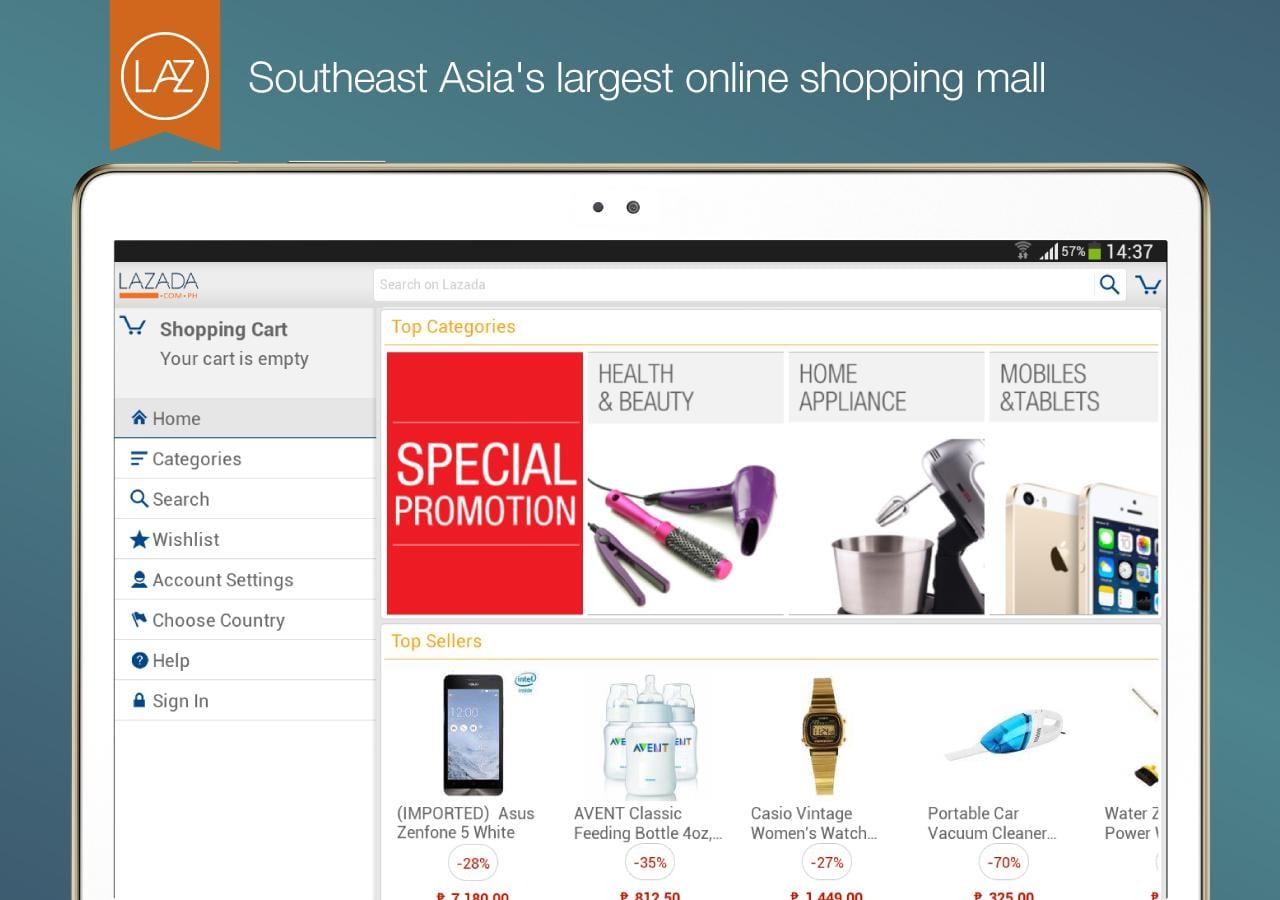
    While some global e-commerce giants, including Amazon Inc, are planning to build brick-and-mortar convenience stores, Lazada Malaysia will focus on things it does best — selling inventory to customers from its warehouses through its online platform.

    Its chief executive officer (CEO) Hans-Peter Ressel said Lazada Malaysia will concentrate on strengthening its online shopping business, rather than building physical stores to complement its online services.

    “We can’t comment on their (Amazon’s) strategy because we focus only on our products,” Ressel said in an interview last week. “We have decided to go this way, and if other players are doing other things, I’m happy to learn and observe how this works for them, but it doesn’t change our strategy.”

    Citing unnamed sources, The Wall Street Journal last week reported that Amazon stores will sell perishable goods, including milk and meats. The Seattle-based retail giant will also build drive-in locations for consumers in a rush where online grocery orders will be brought to the car, the newspaper said.

    Lazada Malaysia, which has achieved more than five million app downloads, is part of the Lazada Group which operates online shopping platforms in Indonesia, the Philippines, Singapore, Thailand and Vietnam. Its product offering covers diverse categories, including electronics, fashion, health & beauty, sports & travel, and groceries.

    Vienna-born Ressel, who is of Austrian and Filipino descent, had served as Lazada Malaysia chief commercial officer and chief operations officer since August 2012, before he became its CEO in March 2015.

    Lazada Malaysia, he said, would continue to collaborate with brand retailers, hypermarkets and offline flagship stores to sell their products.

    “If you want [to operate your own] store, how many stores do you need? What do you want to put on these stores? We don’t believe in doing everything by ourselves. We have partners; we have brands, and it is crucial to have their collaboration, that’s our focus,” he said.

    Notably, Lazada Malaysia this year brought in top brands such as L’oreal, Levi’s and Samsung. It also formed partnerships with giant retailers such as Tesco, Watsons and Senheng.

    Ressel believes e-commerce is the way forward, considering that two-thirds of Malaysians have Internet access, with most of them spending more than four hours a day online.

    “If we didn’t believe in the future growth of e-commerce, we won’t be here. Today, 20 million out of 30 million Malaysians are online. The [Malaysian] e-commerce market will definitely grow towards a size that is similar to Western countries, China and Korea. It’s just a matter of time,” he said.

    According to an estimate by statistics portal Statista, total revenue for the Malaysian e-commerce market this year will hit US$894 million (RM3.75 billion) and revenue is expected to see an annual growth rate of 23.7% in the next five years, to reach US$2.58 billion by 2021.

    Currently, the market’s largest segment is electronics and media, with a market volume of US$380 million. User penetration is at 61.7% this year and is expected to hit 76.8% in 2021.

  • Nokia deploys network for Kuala Lumpur rail line

    Nokia deploys network for Kuala Lumpur rail line

    Nokia has deployed a mission-critical advanced communications network for Kuala Lumpur’s new railway line.

    The Kelana Jaya light rail transit (LRT) line extension is now supported by an advanced communications network  supporting high-speed voice, data and video traffic.

    The network the railway operations and passenger services for the line’s 13 new stations, which see a combined 350,000 passengers daily.

    Nokia also provided systems integration services to enhance safety and security through remote diagnostics and automated functions; constant situation awareness with video surveillance; Supervisory Control and Data Acquisition (SCADA); monitoring systems; telephone and radio communications services; automated fare collection (AFC); and public address and passenger information systems.

    The project was completed in conjunction with CMC Engineering Sdn Bhd.

    “As one of the National Key Results Areas (NKRA) under the Malaysian government transformation program (GTP), the Kelana Jaya LRT Line Extension project is another important government initiative to deliver an effective and seamless public transportation system for the Greater Kuala Lumpur area,” CMC Engineering CEO.Hazwan Alif Abdul Rahman said.

    Stuart Hendry, head of global enterprise and public sector for Asia Pacific at Nokia, said railway operations can benefit enormously from modern communications networks.

  • Asia dominates retail destination rankings

    Asia dominates retail destination rankings

    Asian cities dominate the latest retail destination rankings, with the Middle East taking most of the remaining spots.

    According to the latest edition of JLL’s Destination Retail report, which ranks markets for retailer expansion around the world, Asia is fuelling global growth, taking 12 of the top 20 spots. Six of those cities are in China – but Singapore, Hong Kong and Macau are not among them. Six months ago Hong Kong was second only to London – neither city makes the list now.

    This time around, the top two cities are Dubai and Shanghai, with Beijing ranking third. The other Asian cities in the top 20 are Bangkok, Chengdu, Kuala Lumpur, Jakarta, Manila, Tianjin, Shenyang, Shenzhen, Chongqing and Hangzhou. (The full list is below).

    Besides Dubai, Abu Dhabi, Kuwait, Jeddah and Riyadh make the list, meaning 85 per cent of the top 20 destinations are in just two regions.

    “The global retail landscape is expected to change significantly over the next 10 years, as a fast-growing middle class in emerging markets attracts retailers hungry for growth,” says David Zoba, chairman of JLL’s Global Retail Leasing Board.

    JLL says Shanghai has become a favourite of international brands looking to test the Chinese market and gain exposure. While established prime markets include West Nanjing Rd and Huaihai Rd, new submarkets targeting local residents are popping up along the many new metro lines leading out of the city, and the city’s retail network is growing and shifting.

    Beijing follows as the third-fastest-growing retail market with its swelling middle class and strong concentration of high-net-worth individuals. Properties such as China World Mall and the landmark project Taikoo Li continue to draw high-end shoppers, while malls like Beijing APM and Oriental Plaza dominate tourist-friendly shopping strip Wangfujing. The Chinese capital’s suburbs are also experiencing rapid growth as people choose to shop more locally rather than brave the traffic into the city centre.

    “Emerging markets can expose international retailers to greater levels of economic and geopolitical risks. One pertinent example is China’s anti-corruption campaign and the knock-on effects on the luxury market,” says James Hawkey, head of retail for China, JLL. “However, international retailers are increasingly comfortable dealing with these risks, and generally have their eyes on the long term prize of establishing a strong position in major world markets.”

    Added Zoba: “The search for growth is escalating the penetration of international brands across the world’s most attractive retail cities, especially in Asia. Retailers who succeed in acquiring the right space in the right place at the right time will benefit from successful, profitable growth, but they should be mindful that potential rewards go hand in hand with risk,” continues Mr Zoba.

    Retail rents in these emerging markets reflect legislation, market transparency, reputational risk, maturity, as well as growth potential, meaning that their levels are relatively low compared to more mature markets. Places like Ho Chi Minh City, Jakarta and Bangalore present an opportunity for retailers to establish their brands at rents of less than US$2000 per square metre per year with projected in-store sales increasing by 8 to10 per cent until 2019, based on Oxford Economics forecasts. However, as cities mature and the pace of new construction of retail centres slows, rents will gradually increase.

    JLL’s Destination Retail report 2016 examines the presence of 240 international retail brands across 140 retail cities, giving insights for international retail expansion. The 140 cities make up 36 percent of the world’s GDP, 13 per cent of the global population and 33 per cent of total consumer spending.

    Top 20 Global Growth Cities for Retail

    1              Dubai

    2              Shanghai

    3              Beijing

    4              Kuwait City

    5              Abu Dhabi

    6              Jeddah

    7              Riyadh

    8              Moscow

    9              Bangkok

    10           Chengdu

    11           Kuala Lumpur

    12           Jakarta

    13           Manila

    14           Istanbul

    15           Tianjin

    16           Shenyang

    17           Shenzhen

    18           Chongqing

    19           Mexico City

    20           Hangzhou

  • Pos Malaysia taps Alibaba Group for growth

    Pos Malaysia taps Alibaba Group for growth

    Malaysia’s biggest postal company is seeking a more direct role in providing logistics services to Chinese e-commerce giant Alibaba Group Holding Ltd, tapping a boom in online retailing.

    Pos Malaysia Bhd plans talks with Alibaba this month on bypassing the middlemen when shipping goods sold on its platforms, Mohd Shukrie Mohd Salleh, its chief executive officer, said. Surging parcel deliveries for online shopping drove a 40% jump in profit in the fiscal first quarter and full-year earnings will be higher than a year earlier, he said.

    “My focus is still e-commerce, and it is driving the logistics business. When e-commerce is booming, somebody needs to deliver these items,” Mohd Shukrie, 42, said in an interview at the company’s headquarters in Kuala Lumpur on Sept 27. “Marketplace owners wants to deal with logistic players directly. I’m going to China to meet up with Alibaba and other market players” in October, he said.

    Postal companies in Asia are remodeling themselves by expanding overseas to meet rising demand spurred by a global retail e-commerce market valued at about US$1.2 trillion by the Universal Postal Union. Pos Malaysia, which started work in the early 1800s delivering mail by bicycle, is the top performer this year among 14 global courier stocks with a market value of at least US$500 million, recording a total return of 49%, beating United Parcel Service Inc and FedEx Corp.

    Pos Malaysia stock has soared 88% from a February low as record earnings from its courier business and a potential increase in tariffs for the first time in six years buoyed the shares. The government is examining its proposal for higher postal rates, said Mohd Shukrie. The company is valued at 25 times its 12-month projected earnings, versus 18 for UPS, the world’s most valuable courier company.

    Alibaba said its delivery affiliate Cainiao Smart Logistics Network Ltd “works collaboratively with logistics participants to enhance customer experience and operation efficiency. “It is natural we talk to industry participants,” it said in an e-mailed statement in response to queries by Bloomberg News.

    While Pos Malaysia handles parcel deliveries for Alibaba through freight forwarders, or so-called consolidators such as Japan’s Sankyu Inc, the Kuala Lumpur-based company wants to deal directly with these marketplace owners, said Mohd Shukrie.

    Eliminating Middlemen

    “The future is about cutting the middleman, and the existence of consolidators will be under threat,” he said. “Right now, we deal more with consolidators for parcels from China to the world, but understandably marketplace owners want to deal with logistic players directly.”

    Consolidators collect and group outward-bound cross-border mail to specific destinations and negotiate special rates with the public postal operators to distribute the bulk mail in the designated countries.

    Singapore Post Ltd, which counts Alibaba as its second-biggest shareholder, said a year ago it plans to expand freight services and warehouses in the US and Europe as Asia’s emerging middle class drives online purchases from overseas.

    “The potential is quite huge for e-commerce,” Lim Sin Kiat, an analyst at Hong Leong Investment Bank Bhd in Kuala Lumpur, said by phone. “Clients are looking for fully integrated services, and it’s still a work in progress for Pos Malaysia to be fully integrated.” Lim has a buy call on the company with a target price of RM3.87. The stock climbed 1.3% to RM3.90 as of 9:58am in Kuala Lumpur, near the highest level in more than a year.

    Logistics Acquisition

    In September, Pos Malaysia completed the purchase of KL Airport Services Sdn Bhd from parent DRB-Hicom Bhd, controlled by businessman Tan Sri Syed Mokhtar Al-Bukhary. The move will boost revenue to RM2 billion (US$482 million) in the year ending March 2018 and allow the company to offer more logistics services overseas, said Mohd Shukrie.

    KL Airport now has two aircraft and the capability to pick up cargoes from the region including Hong Kong, he said. It can expand the fleet by one plane annually in the next five years in tandem with business growth, said Mohd Shukrie, who mentioned Ingvar Kamprad, Ikea’s billionaire founder as an inspiration for building a steady and sustainable business.

    “The pie is growing very fast, we do not want to settle with growing with the market, we want to grow more than the market,” he said.

  • StanChart, Uber launch multi-market partnership

    StanChart, Uber launch multi-market partnership

    Standard Chartered Bank and Uber announced a partnership that offers all Standard Chartered credit cardholders in six markets (Singapore, Indonesia, Malaysia, Vietnam, India and the United Arab Emirates) across two continents up to 25% cashback for all global Uber rides. This is the first ever multimarket partnership for both Standard Chartered Bank and Uber, the world’s most popular transport app.

    Collaborating with Uber is part of Standard Chartered’s digital agenda to deliver simple and convenient banking through digital channels for increasingly tech-savvy clients. To meet clients’ needs in the new digital ecosystem, the Bank believes that collaboration between the financial and technology sectors will lead the way forward. Ride hailing service providers such as Uber are fast becoming a mainstream feature of transportation globally, and continue to gain popularity exponentially. This collaboration between Standard Chartered and Uber capitalises on key areas of synergies, which are mainly an extensive geographical network, highly-mobile client base and the desire to provide innovative offerings to clients.

    Sebastian Arcuri, Regional Head, Retail Banking, ASEAN and South Asia, Standard Chartered Bank said:

    “There has been a dramatic shift towards digital and cashless payments across the region and we are seeing success in the seamless integration of the Bank’s services in our clients’ everyday life. As a global bank with a focus on Asia, Africa and Middle East, we are pleased to partner Uber, a transport network operating in more than 425 cities, to engage our clients for both their local and overseas transport needs.”

    Commenting on the partnership, Chan Park, Uber’s Regional General Manager for Southeast Asia, said:
    “We are thrilled to partner with Standard Chartered Bank, one of the region’s longstanding and illustrious banks. Together, we will bring to life our shared passion for delighting customers and bring even more value to riders. We also look forward to welcoming cardholders as first-time Uber riders to join over 50 million riders globally to experience the ridesharing revolution.”

    VisaNet data reveals that in Singapore, in-app payments account for around one third of total card spend under the transportation category. The overall consumer spend in transportation witnessed a healthy growth of 35% year-on-year, driven primarily by a growth in spend for in-app merchants. On the average, third party transportation booking apps account for more than 1.5 million transactions every month.

    Andrew Chia, Head of Retail Banking, Standard Chartered Bank Singapore, said:

    “We constantly seek new ways to delight our clients and are excited to partner Uber in delivering greater value and a more seamless travel experience for our cardholders. Given the shift towards a cashless society in Singapore, there is strong demand for more accessible digital payment options. With this partnership, our cardholders are rewarded with convenience and cashback when they go cashless with Uber.”

  • Damiani Malaysia opens in Pavilion

    Damiani Malaysia opens in Pavilion

    Italian luxury jewellery group Damiani Malaysia has opened a boutique store in the Pavilion shopping mall in Kuala Lumpur.

    Damiani Pavilion Malaysia

    Precious materials are used in the store’s interior to create a sophisticated environment to enhance the tradition and modernity of Damiani’s jewellery. The interior features taupe satin wallpaper and bronzed brass details.

    Founded in 1924, Damiani designs, manufactures, distributes and sells jewellery and luxury watches. The company manages 55 direct and 20 franchised points of sale internationally.

  • Mastercard Appoints President for Indonesia, Malaysia and Brunei

    Mastercard Appoints President for Indonesia, Malaysia and Brunei

    Now he will also be in charge of encouraging the implementation of digital payment technology.

    Previously based in Kuala Lumpur, Khan and his division will now be headquartered in Jakarta. Mastercard considers this a move towards recognition of Southeast Asia’s developing countries, whose economy has been predicted to be worth billions of dollars.

    The move was also triggered by the formation of ASEAN Economic Community (AEC), where the ongoing economic integration gives a potential for Mastercard to gain influence.

    “AEC stands as a landmark to integrate the region’s economy. Safdar Khan’s appointment would serve as evidence of Mastercard’s focus in building a strong, relevant and influential business in Southeast Asia. This appointment shows our continuing commitment to empower the great leaders who can encourage innovations and inclusion in a meaningful and interconnected way,” Mastercard Asia Pacific co-president Ari Sarker said.

    Sarker also appreciated Khan’s profound knowledge about the customers, regulators and government bodies.

  • McDonald’s Malaysia, Singapore ‘buyer found’

    McDonald’s Malaysia, Singapore ‘buyer found’

    Twenty-year franchise rights for McDonald’s Malaysia and Singapore outlets have been conditionally sold to a Saudi Arabian group for up to US$400 million.

    Reza Food Services, which owns McDonald’s restaurants in Saudi Arabia, is seeking finance from Malaysian bank CIMB to finance the transaction, insiders say.

    McDonald’s is moving to bring in partners as it switches to a less capital-intensive franchise model in Asia, and has said it wants regional family-owned groups and local tycoons as long-term partners.

    Insiders say the basic terms of the agreement with Reza have been finalised, with the deal expected to be completed by the end of the year.

    McDonald’s, which has about 260 restaurants in Malaysia and about 120 in Singapore, is also selling its China and Hong Kong outlets, and has received final bids from at least three groups.

  • McDonald’s Malaysia ‘not in hurry’ to sell

    McDonald’s Malaysia ‘not in hurry’ to sell

    Despite shortlisting several bidders for the McDonald’s Singapore and McDonald’s Malaysia franchise rights, Malaysian subsidiary Golden Arches Restaurants says it is not in a hurry to sell.

    MD Azmir Jaafar says the deal is being discussed with the shortlisted bidders, but no time frame has been set to complete the transaction.

    “We want to find the right partner who understands the local market and can ensure continuity of McDonald’s value and tradition, as well as be backed by strong capital.”

    He says it has always been the group’s idea to sell the franchise rights to a local partner, which would be more efficient than management by a corporate entity.

    McDonald’s Corp announced a revamp of its ownership models throughout Asia in July, including plans to offload its China, Hong Kong, Malaysia, Singapore and South Korea master franchises.

    CEO Steve Easterbrook’s plan covers about 4000 restaurants with an ultimate goal of having at least 95 per cent of the group’s restaurants franchised.

    Meanwhile, Azmir says that as the Malaysian deal is a business transaction “we will ensure the valuation is done properly”.

    “Still potential”

    There are 260 McDonald’s restaurants in Malaysia, with Golden Arches managing 200 and the rest in the hands of a third party. Though Malaysia has a population of only about 30 million people, which is relatively smaller than China and Indonesia, Azmir still sees huge potential in the market.

    “There are still many underserved areas,” he says. “As the government is improving the infrastructure in Sabah and Sarawak, I think we can expand our footprint into Kota Kinabalu and Kuching and other cities.”

    Azmir says the company intends to open 30 stores in the Klang Valley, Johor, Melaka and Penang as well as Sabah and Sarawak in the next three years. Five to seven new stores are targeted for this year, with one in Presint 2, Putrajaya, and another in Chukai, Terengganu, already open.

    “Our expansion plan is focussed on stand-alone stores as this model works very well, especially in terms of accessibility and convenience. Our ultimate goal is to have 500 stores in the country.”

    Azmir says the company also intends to renovate and remodel up to 30 outlets, each to cost about RM1 million (US$241,700). They have been open for nearly 30 years and will also have their technology upgraded.

    Combined, McDonald’s Singapore and McDonald’s Malaysia have enjoyed record sales in the past few months and is still targeting higher double-digit growth this year.

    Even following the introduction of the goods and services tax in Malaysia in April last year, Azmir says the company raised its selling prices by only about 1 per cent to offset the higher raw-material cost.
    He believes McDonald’s has captured up to 42 per cent market share in the Malaysian fast-food market.

  • Shoopen Malaysia wows locals

    Shoopen Malaysia wows locals

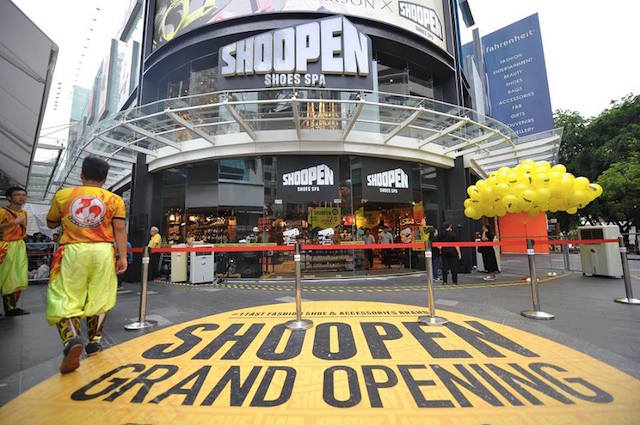
    The official opening of Shoopen Malaysia attracted well over 1000 locals – lured by the chance to meet a celebrity.

    Shoopen Malaysia 3

    The store, which has actually been trading since June this year, is located in Fahrenheit 88 shopping centre in downtown Kuala Lumpur.  It has a prominent corner location facing one of downtown’s busiest streets, leading to the Pavilion shopping centre.


    Shoopen Malaysia 5

    Saturday’s grand opening event was attended by Korean variety show cast member Song Ji Hyo, who posed for selfies surrounded by hundreds of shoppers lining the mall’s balconies, overlooking the central atrium event.

    Shoopen Malaysia 1

    Shoopen Malaysia 2


    Shoopen is Korea’s largest shoe retailer and the Kuala Lumpur store is described as a flagship for the brand.

    Taking up some 11,800 sqft (1096 sqm)of space over two floors, it showcases footwear for men, women and children.

  • Jimmy Choo Asia sales rises

    Jimmy Choo Asia sales rises

    Jimmy Choo Asia sales are soaring, despite the downturn in the luxury market.

    While the company does not break down its Asian sales figures by market, analysts are reporting “record growth” in Hong Kong and China, in part aided by the opening of a new store in Macau.

    Total revenues from Asia (excluding Japan) rose 22.1 per cent on a reported currency basis in the six months to June 30, reaching £27.1 million. Jimmy Choo opened two new stores of its own in Asia during the six months and six franchised stores.

    Next year the company plans new flagships in Tokyo, Shanghai and Beijing.

    Sales in Japan increased by 18.2 per cent on reported currency basis with men’s footwear sales and the strong yen driving growth.

    The company plans 200 stores Asia-wide to take advantage of the region’s “untapped growth potential”.

    The UK-based company recently marked 20 years since it was founded by Malaysian cobbler of the same name, who was later forced out of the business in controversial circumstances and now runs his own exclusive, unrelated Jimmy Choo Couture boutique in London.

    One of the reasons for the brand’s success in Asia is its unconventional marketing activities.

    Last September, brides in the Philippines were able to order customised shoes from its stores, selecting texture, style and colour and adding a personal monogram. This year, the concept was expanded to include handbags.

    In Malaysia, customers can customise the color, texture and finishes of their heels and add names, initials or even dates to their handbags.

  • FJ Benjamin posts third loss in row

    FJ Benjamin posts third loss in row

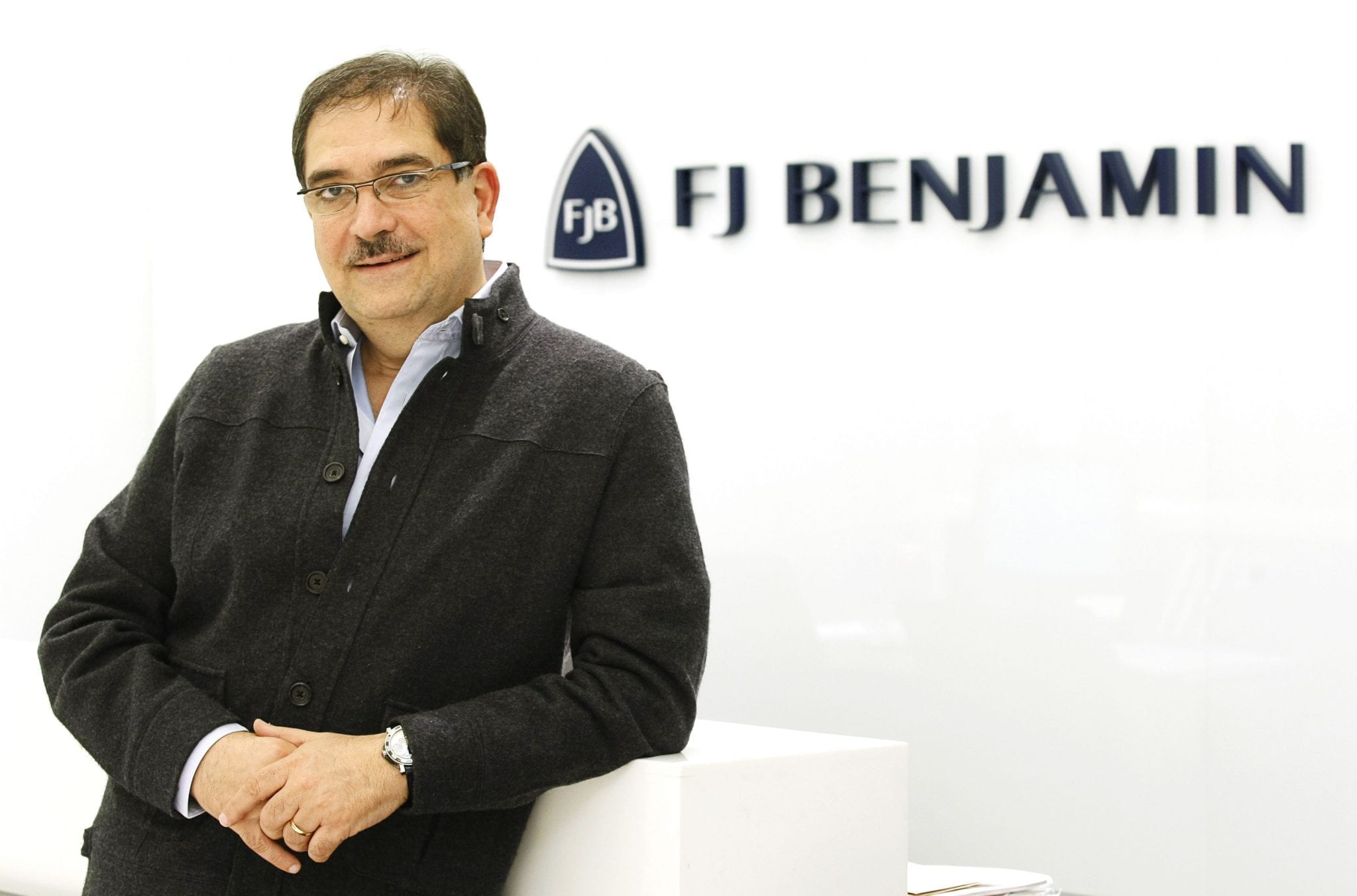
    Singapore-listed lifestyle brand FJ Benjamin has posted notice of its third consecutive year of losses.

    The listed company made its announcement after Tuesday’s market closing, saying its latest six-month average daily market capitalisation was S$38.8 million (US$28.5 million).

    FJ Benjamin says it will make an immediate announcement should it be placed on the Singapore Exchange watch list.

    Companies are placed on the list if they record pre-tax losses for the three most recently completed consecutive financial years, and an average daily market capitalisation of less than S$40 million over the previous six months.

    Dating back to 1959, FJ Benjamin Holdings specialises in brand building and management through distribution and retail. With offices in Indonesia, Malaysia and Singapore, it manages more than 20 brands and has 226 stores. In August it announced it had secured the Singapore and Malaysian rights to Marc Jacobs.

  • LeEco India ready to roll out 1000 stores

    LeEco India ready to roll out 1000 stores

    Chinese tech firm LeEco India plans to open 1000 outlets across the subcontinent by the end of this year.

    Expecting half of its revenue in India to come from physical stores, LeEco filed an application five months ago with the Foreign Investment Promotion Board (FIPB) to open single-brand retail stores.

    These will be a mix of company-owned stores as well as franchise outlets, says LeEco India COO for smart electronics business Atul Jain. “This is in line with our aim to be among top three brands in the country by 2018.”

    LeEco, which also has an offline presence in China, has not revealed the cost of setting up the stores. However, it will be spending nearly US$10 million on marketing in the three months starting October.

    Already the company has tied up with multiple distributors across organised and unorganised channels in India and is already available in about 3000 outlets in cities including Bengaluru, Chennai, Delhi, Mumbai, Pune and Varanasi. It expects to reach 65 cities and have a presence in 6000 to 8000 outlets by December.

    No longer exclusive

    Launched exclusively on Flipkart, LeEco’s products will now be available on other eCommerce marketplaces such as Amazon India and Snapdeal. Flipkart has contributed nearly 75 per cent of LeEco’s sales in India.

    LeEco has invested Rs.50 crore (US$500 million) in setting up a smartphone assembly plant in the Greater Noida area, in partnership with Compal Electronics. The factory has an initial capacity of 60,000 units a month but this will be ramped up to 200,000 by the end of December.

    By the second half of next year, the company plans to start exporting products to Hong Kong, Indonesia, Malaysia, Russia and Singapore, says Jain. LeEco sold more than 70,000 phones and 2000 televisions last month alone.

    Other plans include a partnership with Hungama to offer music services from next month.
    Founded by billionaire Jia Yueting in 2004, LeEco positions itself as the Apple, Netflix and Tesla of China. Apart from smartphones and online content, the company sells TVs, electric vehicles and virtual-reality headsets.

  • Owndays Europe marks first foray outside Asia-Pacific

    Owndays Europe marks first foray outside Asia-Pacific

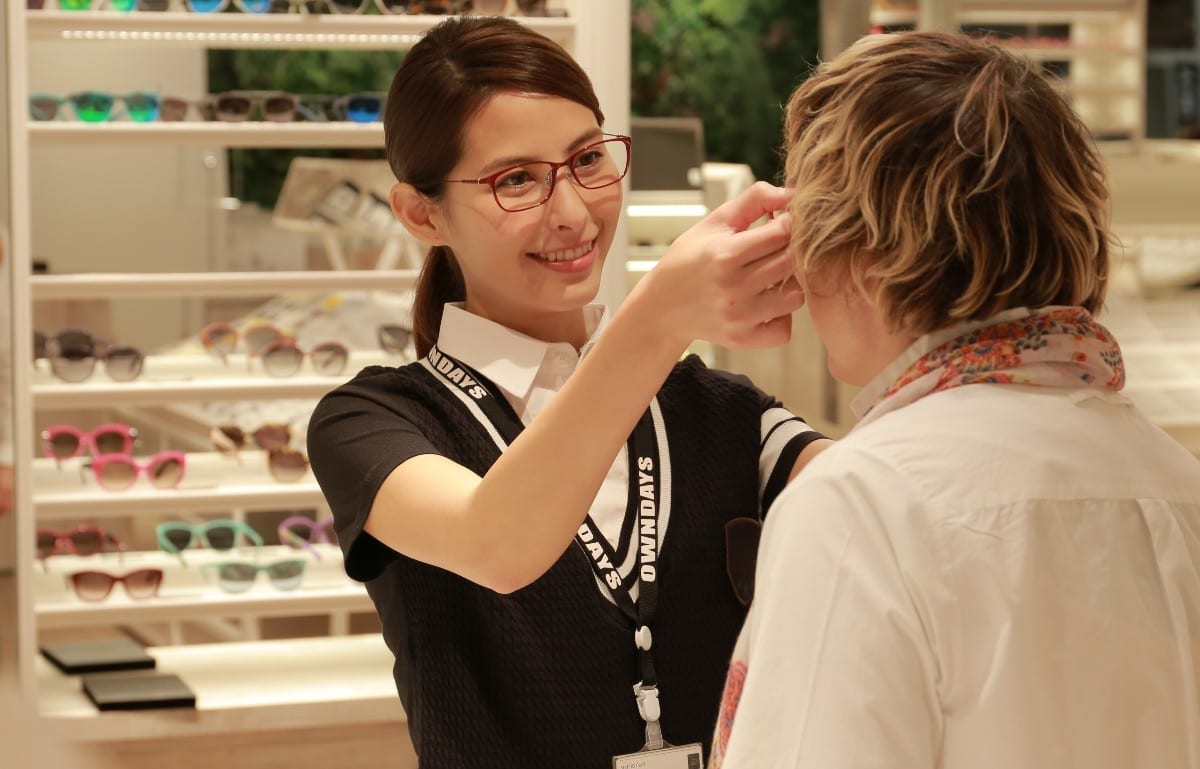
    After rapidly building a network of stores across Asia, Japanese eyewear retailer Owndays has made its European debut.

    Owndays Europe has opened its first store in the Netherlands, the design largely true to its Asian format and its simple pricing model seamlessly converted into local currency with frames and lenses paired at between 98 euros and 198 euros.  A 20-minute “quick processing” promise is also included in its in-store marketing, two two promises being the eyewear chain’s unique selling points.

    Owndays Netherlands 1


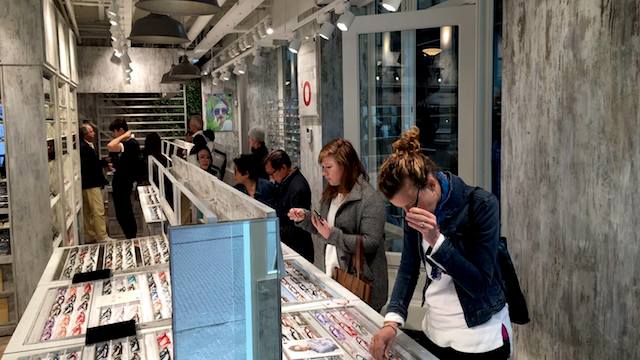
    The 80 sqm Dutch store opened last week in a traditional street-front location, rather than a shopping mall, where most of its stores are located in Asia; at Passage in The Hague, a trendy area bustling with retail and food & beverages establishments.

    Owndays Europe plans to open 30 stores in the Netherlands in the next three years.

    The brand began its international expansion just three years ago and is already trading in Singapore, the Philippines, Australia, Vietnam, Taiwan, Thailand, Cambodia and Malaysia, making the Netherlands its 10th market.

    owndays-netherlands

    Owndays Europe stores carry more than 1500 designs of frames ranging from basic and functional to stylish and fashion-forward so customers can pick the right pairs of glasses to suit their lifestyles or to match occasions and functions. With a team of in-house designers based in Japan, the brand regularly adds new designs to its existing collections so customers always see something new each time they visit the shop.

    Owndays already has more than 170 shops in Asia-Pacific and sells more than 1.5 million pairs of glasses a year. It is one of the few optical retailers internationally which has adopted an entirely private label system, managing the entire process from design and manufacturing to inventory management and retail.