Tag: Malaysia

  • Two Malaysian firms plan agarwood venture in Laos

    Two Malaysian firms plan agarwood venture in Laos

    Two Malaysian companies plan to invest US$18 million (RM79 million) for the inoculation of agarwood in Laos that is expected to generate US$200 million in three years.

    Agriculture transaction company Aseagate (M) Sdn Bhd, forestry management company Richwood Capital Sdn Bhd (RWC), together with non-governmental organisation Global Outstanding Chinese 100 Organisation of Singapore (GOC100) yesterday inked a memorandum of understanding (MoU) for the project.

    GOC100 inked an MoU with Aseagate that gave the latter sole rights to plantation management for over 2,000ha of land in Bolikhamsai province, Laos, while Aseagate inked an MoU with RWC to spell out their roles in the management, inoculation and supply of agarwood in the Indochinese state.

    The formalisation of the two MoU will be implemented in March.

    RWC CEO Kendrick Ho Qing Tyat said the parties are in the process of raising funds for the project and plan to get institutional investors from China.

    “Given the platform that we have, with GOC100 backing and the Lao government’s support, there’s no reason why people won’t believe and invest with us. This is a good opportunity for them to earn money as well. This market may be new to them but it’s not new in this world,” he told a press conference after signing the MoU yesterday.

    Agarwood is a dark resinous heartwood and is the most expensive wood in the world. Agarwood is pricier than gold with a retail price of between US$5,600 and US$10,000 per kilogramme. A litre of agarwood oil can be sold at US$10,000 to US$14,000. It is valued in many cultures for its distinctive fragrance, and thus is used for incense and perfume. One of the main reasons for the relative rarity and high cost of agarwood is the depletion of the wild resource.

    GOC100 was awarded the exclusive concession by the Lao central government’s Ministry of Agriculture and Forestry to manage the country’s agarwood plantation. GOC100 had in August 2015 signed an exclusive agreement with the Lao Ministry of Agriculture and Forestry for concession to these trees that are planted within the Lao military base and guarded by military.

    The Aseagate-RWC partnership will see the inoculation of agarwood trees aged from 15-22 years to produce resin on behalf of the government of Laos.

    GOC100 Singapore secretary-general Peter Lee said the Lao venture is significant to tap into the growing demand for agarwood, especially in the Middle East and China markets.

    He said the agarwood project is a safe investment, as it is more resilient to economic fluctuations as compared to stocks and bonds, with insurance purchased for its proven inoculation technique and against natural calamities.

    The parties are confident of the venture as the management and technical team has accumulated over seven years of experience in forestry management and agriculture technology, having provided solutions to plantation owners in Malaysia.

    Ho said it utilises technology from Singapore to artificially induce trees to produce resin.

  • Mercedes-Benz Malaysia hits highest ever record sales for 2015

    Mercedes-Benz Malaysia hits highest ever record sales for 2015

    The Mercedes-Benz brand recorded an all-time high of 10,845 units sold for 2015, which also represents a year-on-year growth of a massive 56 per cent growth over 2014 sales units of 6,932.

    Locally-assembled models, namely the C Class, E Class and the S Class made up the bulk of the total sales, accounting for 7,989 units, while the remaining 2,856 were made up of imported units. Of the imported (CBU) units, 2,811 units were made up of the A Class, CLA and the GLA models, which helped to pump up the total to make Mercedes-Benz the leading Premium brand in Malaysia. The latter three models represent Mercedes-Benz Malaysia’s (MBM) very successful foray into the compact size passenger car segment.

    Locally assembled Mercedes-Benz models accounted for 74 per cent of total sales for 2015. — Picture by YS Khong

    Locally assembled Mercedes-Benz models accounted for 74 per cent of total sales for 2015. — Picture by YS KhongThe highest volume, surprisingly, came from the E-Class, which maintains its tradition for being the most popular “Towkay” (meaning ‘boss’ in the Chinese Hokkien dialect) sedan, with 3,383 units sold. Following closely behind was the C Class, also a highly desired aspiration of newly-successful businessmen and corporate executives, which accounted for 2,697 units sold. The highest growth segment was in the flagship model, the S400L hybrid, which grew 201 percent in 2015 compared to the same period in 2014, accounting for 1,909 units.

    The timely introduction of the new compact vehicles series, which includes the A Class, CLA, and GLA models, and these models, together with MBM’s EEV strategy that actually saw a reduction in retail prices across certain key models, helped Mercedes-Benz Malaysia to achieve its record-breaking sales numbers. With a recent announcement that it will continue to pass on the benefits derived from certain tax exemptions back to its customers, MBM looks forward to continued leadership for 2016.

  • BlackRock sells luxury Kuala Lumpur mall

    BlackRock sells luxury Kuala Lumpur mall

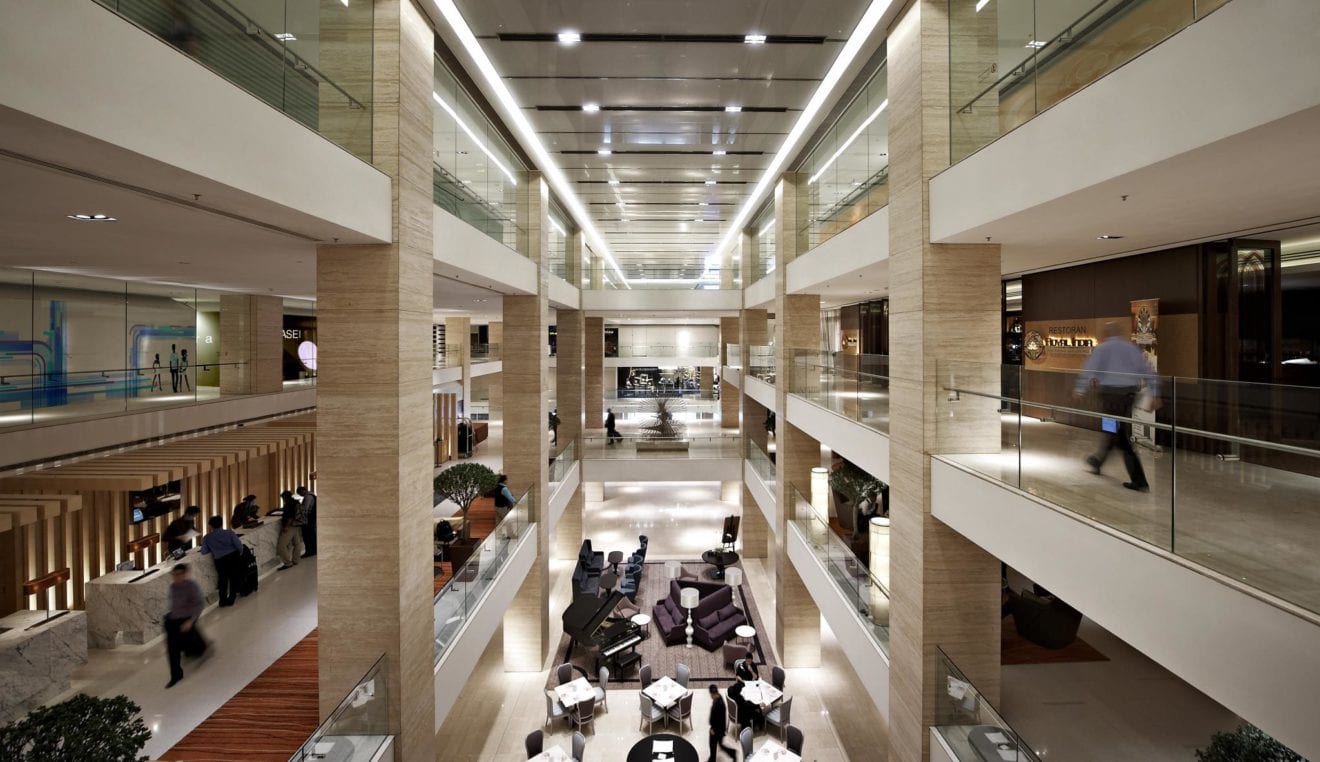
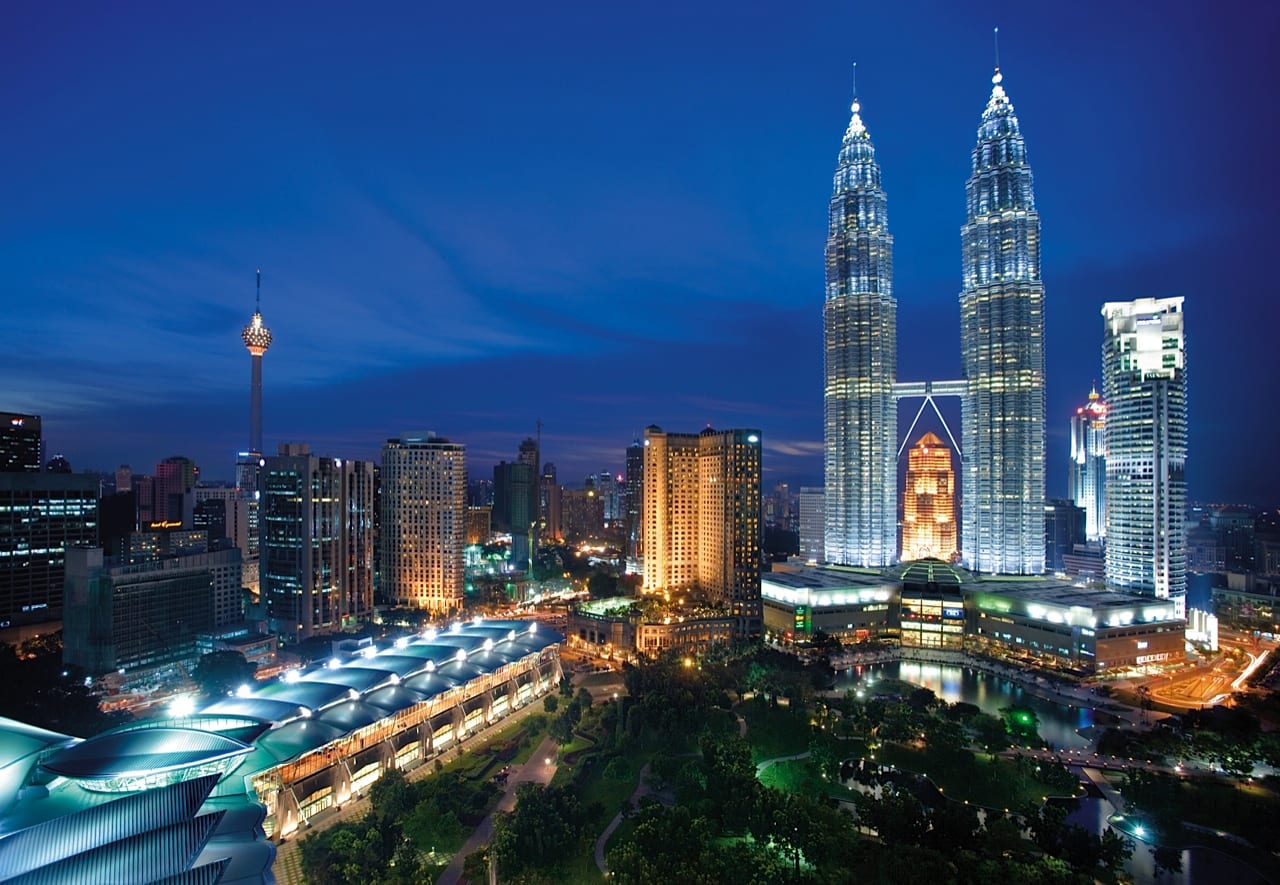
    In a MYR160 million ($37.33 million) deal, asset manager BlackRock has sold a luxury shopping mall in central Kuala Lumpur to Malaysia’s Pavilion Real Estate Investment Trust.

    Reputed to be the world’s largest asset manager, BlackRock, registered on the New York Stock Exchange, bought Intermark Mall in 2007, along with two corporate office towers and a hotel, for $600 million through a private real estate fund. One of the office towers and the hotel have since been sold, reports Deal Street Asia.

    In a filing with the Malaysian Stock Exchange, Pavilion REIT said it had entered into a sale and purchase agreement with The Intermark Sdn Bhd for the acquisition of the six-storey retail building, which has a strata floor area of about 337,427sqft (31,350 sqm) together with basement parking for 367 cars.

    With a 74 per cent occupancy rate, the Intermark will return guaranteed rentals of MYR15 million for three years, to be held by a trustee for Pavilion REIT. The company expects the purchase to be completed this first quarter.

  • GST, ringgit decline hit retailers causing 40% drop in sales, says employers group

    GST, ringgit decline hit retailers causing 40% drop in sales, says employers group

    Retailers have experienced a major drop in sales with some registering a more than 40% decline over festive periods in the second half of the year, the Malaysian Employers’ Federation (MEF) said today.

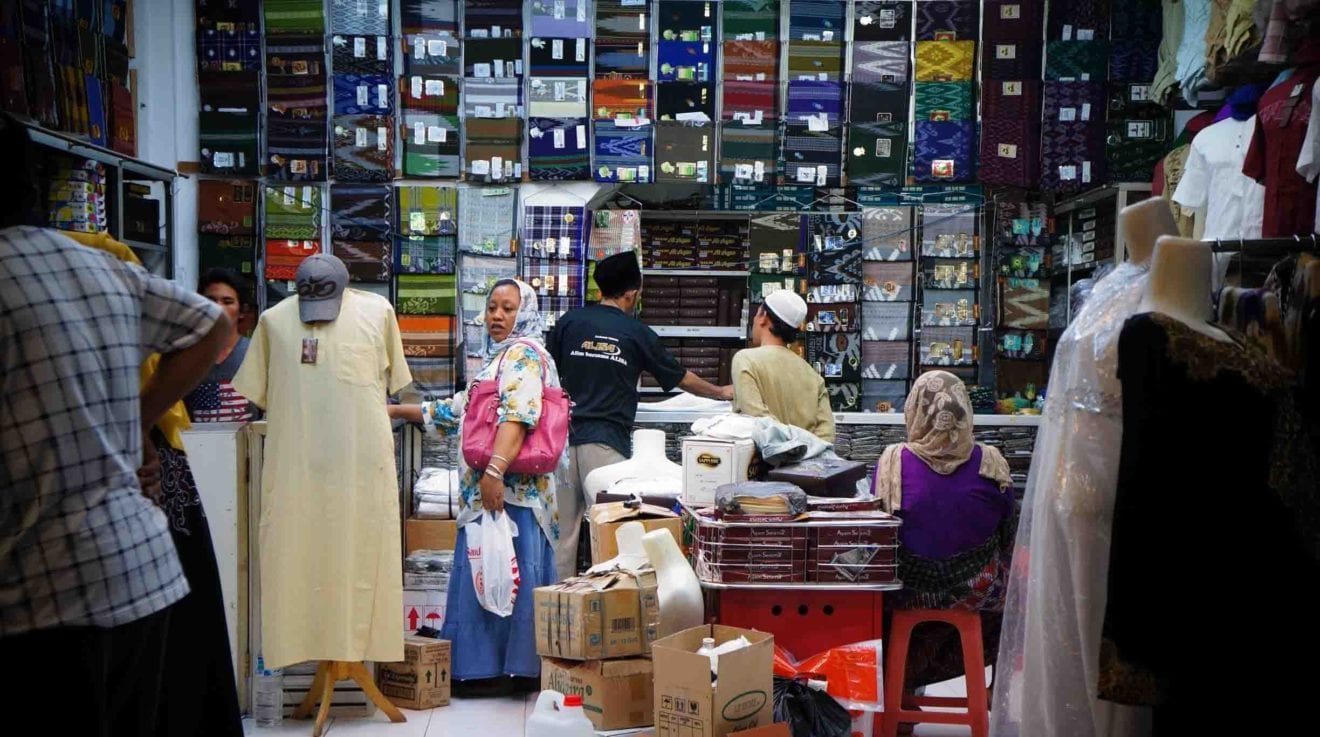
    MEF executive director Datuk Shamsuddin Bardan said retailers attribute the decline to the combined impact from the implementation of the goods and services tax (GST) in April and the ringgit’s depreciation against the US dollar. He added that consumers became more prudent in their spending after the GST came into effect and this was reflected in Hari Raya and Deepavali shopping in the second half of the year.

    The cost of goods were “seemingly” higher because the tax and the exchange rate had also affected all players in the retail sector, both big and small companies, he added. “The challenges are very high for the retail sector. The sector has very much to do with domestic market outlook, especially when the rakyat is very careful with their spending and choosy with their purchases.

    As such, the retail sector will be affected very much,” he told The Malaysian Insider. Poor consumer sentiment saw retailers grapple with a drop of more the 40% than the usual spending during the last two festive seasons in July and November.

    “You look at Hari Raya and Deepavali. Many retailers are saying that their sales were affected, some by more than 40%. “In this kind of revenue outlook, this sector has no choice but to actually restructure their manpower and, unfortunately, when they talk about restructuring, they are talking about retrenchment.”

    Shamsuddin said many retailers were struggling although MEF had yet to receive any reports on closures or retrenchments. The Edge Financial Daily last week reported that independent retail research firm, Retail Group Malaysia (RGM) has cut its forecast for retail sales this year for the fifth time, attributing it to poor figures in the second and third quarters of the year.

    The firm said the decision to revise its forecast downward was due to the weakening ringgit in the past few months, which led to higher import costs. RGM, however, forecasted that the Q4 (October to December) growth to 3.8% year-on-year is higher than Malaysia Retailers Association’s (MRA) forecast of 1.3% growth for the same period.

    This was because RGM believed that the higher cost of overseas travel would encourage domestic spending. MRA also said it did not expect its businesses to recover strongly for the period as they expected a 2.6% contraction in sales.

  • AirAsia X promotes KL-Jeddah route to Indonesians via charter contract

    AirAsia X promotes KL-Jeddah route to Indonesians via charter contract

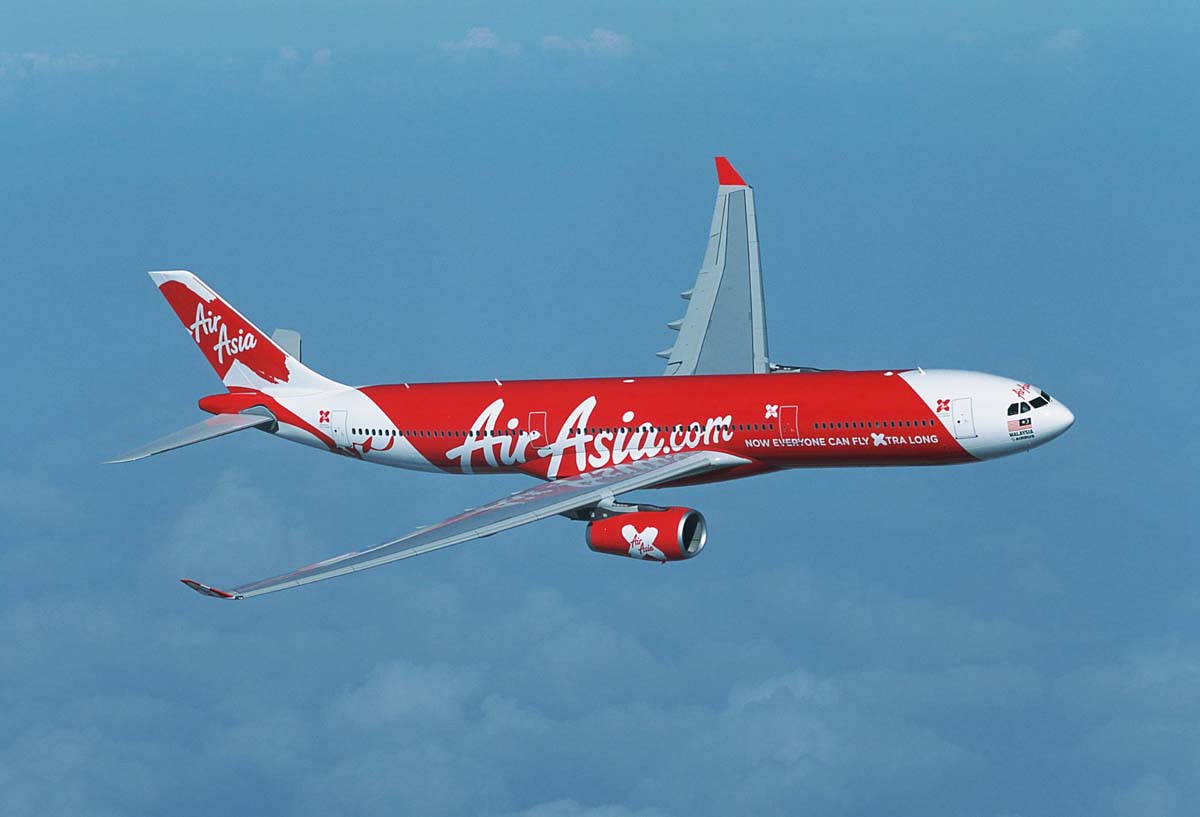
    AirAsia X Bhd (AAX) has signed an agreement to charter aircraft from sister company PT Indonesia AirAsia (IAA) for 24 return flights between Jakarta and Kuala Lumpur for US$648,000 (RM2.82mil).

    The long-haul, low-cost airline told Bursa Malaysia that the two companies had on Jan 4 signed the charter agreement which summed up to 8,640 seats as a dedicated fly-through connectivity with its current Kuala Lumpur – Jeddah – Kuala Lumpur operations.

    It said the transaction was aimed at promoting the Kuala Lumpur – Jeddah route to Indonesian passengers via the charter and to generate positive returns for AAX.

    “The charter between AAX and IAA shall commence on the date of the agreement and will expire on Feb 29, 2016 or at the end of the extension period as may be agreed by AAX and IAA,” the airline said.

    AirAsia Investment Ltd, a wholly owned subsidiary of AirAsia Bhd, and PT Fersindo each hold 49% and 51% equity interest respectively in IAA. IAA is deemed to be a related party to AAX as AirAsia Bhd’s directors and major shareholders, Datuk Kamarudin Meranun and Tan Sri Tony Fernandes, are also the directors and major shareholders in AirAsia X.

    Last month Indonesia AirAsia launched the inaugural Jakarta-Jeddah flight, which is scheduled to depart twice a week.

    AAX shares closed unchanged at 18 sen on Monday with 6.75 million shares being transacted.

  • After Indonesia, dating app Spotted eyes Malaysia and Thailand

    After Indonesia, dating app Spotted eyes Malaysia and Thailand

    The German dating app Spotted is out to woo Southeast Asian users. Dating apps have become relatively widespread in Indonesia, with Germany’s Spotted merely the latest aiming to carve out a piece of the pie.

    Having entered Indonesia in October 2015, Spotted is now eyeing Malaysia and Thailand as its next two Southeast Asian markets, its optimistic outlook fuelled by its US$14.5-million (RM62.6 million) Series A round in August 2015.

    That investment round, which involved Media Ventures, Wolfman Holdings, and a Deutsche Balaton affiliate based in Heidelberg, Germany, brought Spotted’s total funding to US$15.3 million to date.

    “Once we get the funds from our investors, we want to expand to Asia and other parts of the world,” its business development head Andre Sierek told via email.

    “However, at this moment our focus is first on Southeast Asia, especially Indonesia, as well as Malaysia and Thailand in 2016,” he added.

    After its founding in 2013, Spotted initially targeted German-speaking countries such as Austria, Switzerland and North Africa, describing its product not so much as a dating app but a “social discovery” app.

    The hyper-local app helps users meet again with others they have met before. For instance, if you met someone in a café and are interested in them, Spotted will help you meet up with them again.

    According to Sierek, Spotted currently has one million users across the world, with its app being downloaded 10,000 times daily.

    To increase its user base, it realised it could not depend on just the European market – which explains its Southeast Asian foray, and Indonesia being established as its launchpad.

    Sierek said Spotted’s internal research found that people in Southeast Asia were enthusiastic users of social and dating apps.

    Two months after launching in Indonesia, the app had been downloaded by 15,000 users.

    “Our users in Indonesia really like our app, and they mostly like our ‘anonymous love notes’ feature,” said Sierek.

    Content localisation

    Moving from a German-only market to the diverse Southeast Asian region has not been easy, Sierek admitted. It had to tweak its content to cater to the local market and local language.

    “Our main challenge would be building the local user base, as well addressing the different needs of each market in the region,” he said.

    Although it has not established an office in Indonesia yet, Spotted has formed a partnership with a local company, mainly to localise its content and conduct online promotions.

    “We will use the same approach for the Malaysian and Thai markets — that is, cooperating with local companies,” said Sierek.

    He said the company does intend to open an office in Southeast Asia, as well as one in San Francisco, sometime this year, although he did not elaborate on which Southeast Asian country would house this office.

    Not a ‘booty call’ app

    Spotted was founded by Nik Myftari, Nicolas Amann, Christian Kapp, Alexander Pelz, and Tung Nguyen, who met as students at the University of Heidelberg in Germany.

    Its goal is “revolutionise” the way people connect to others, by giving them a second chance to form a relationship.

    “Spotted is not a dating app that brings random people together,” said Sierek.

    “The concept is more like a time machine – it brings together people who have actually met before, but did not have the time or opportunity then to follow up on a relationship.

    “Our approach is unique, and focuses on establishing serious relationships and finding true love,” he declared.

    The app’s main function, called “Deja-Vu,” allows the user to “see” people who once crossed his or path – say, at a restaurant or while travelling. The user can use the “Wink” function to hail that other person, and if that person is interested, he or she can send a “Wink” back in response.

    From there, they can go on to private online chatting or messaging.

    Users can also send anonymous love letters or notes if they are looking for potential partners – but only with people they have met before and not random partners, Sierek emphasised.

    Users must turn on the location-based feature on their smartphones so that Spotted can accurately record the location and date where users might have met their potential partners.

    “The more users, the more opportunities to record people who have crossed our paths,” he added.


  • Malaysia eCommerce poised for boom

    Malaysia eCommerce poised for boom

    There are 252.4 million internet users located around Southeast Asia – and Malaysia has already emerged as the country with the third highest percentage of Internet users (67 per cent) after Singapore and Brunei.

    The promising internet penetration result indicates Malaysia’s enormous potential for eCommerce market growth. Leveraging on the rise of internet usage, 2015 has been a fruitful year for all online businesses and eCommerce as Malaysia recorded one of the highest online transactions per capita in Southeast Asia.

    Nevertheless, this only represents the tip of an iceberg – Malaysia’s eCommerce market accounts for just two per cent of the total retail market and countless opportunities still remain untouched if we look at what has been accomplished in other advanced eCommerce markets such as Korea, where online now accounts for about 15 per cent of total retail sales.

    Over the past five years (2010-2014), Malaysia’s eCommerce market size has increased by 31 per cent on CAGR basis. Viewed from a logical standpoint, it should follow a similar growth rate and achieve US$3.1 billion by 2018. As for 2016, expect to see mobility, better internet connectivity and logistics and security to be the three key drivers to drive the local eCommerce development.

    The ‘mobility’ trend will continue to grow

    Mobile penetration in Malaysia reached 136 per cent in 2015, and the growth of connected devices has paved the way for a positive increase in the eCommerce sector with 47 per cent of Malaysians using their smartphones to shop online.

    Furthermore, Malaysia ranks third in the rate of growth of mobile shopping in Asia (over 20 per cent; from 25.4 per cent in 2012 to 45.6 per cent in 2014)  according to a Mobile Shopping Survey. Given these results, it is not surprising to learn that more than 50 per cent of traffic to 11street is generated on mobile devices.

    Internet penetration and improved logistics will further enhance local eCommerce activities

    The Malaysian government has allocated RM1.2 billion to the Malaysian Communications and Multimedia Commission (MCMC) to offer high-speed broadband to rural areas starting next year. This marks a crucial element to boost the eCommerce development in Malaysia.

    Driven by the progressive eCommerce landscape, the logistics industry, especially the courier segment, has experienced exponential growth over the past year. For instance, courier services contributed 60 per cent of POS Malaysia’s total earnings in 2015, compared with 41 per cent in 2014.

    These supportive initiatives will help sellers meet future demands by providing shoppers with a seamless online buying experience with more timely delivery service.

    User confidence, especially safe and secure online shopping is a priority for shoppers

    Security issues are still a barrier to many shoppers heading online. Malaysia Computer Emergency Response Team (MyCERT), a department within CyberSecurity Malaysia, has reported that the number of online scams in the country is on the rise. A total of 743 fraud cases were received in the first quarter of 2015.

    Shoppers are always urged to make transactions with only trusted platforms that offer product return policies, customer reviews on products, seller’s rate or scoreboard, as well as a trustworthy payment system. Online sellers and marketplaces have to bear this in mind and update their security measures from time to time in order to establish shoppers’ confidence.

    A budget-conscious year ahead

    Malaysians will remain budget-conscious next year, in view of the rising cost of living caused by the implementation of GST and the ringgit’s devaluation.

    Cross-border trading growth can be observed from the increasing searches for popular international products on the Internet in Malaysia. However, with the higher exchange rates and international shipping fees, today local shoppers might find it challenging to get their favorite overseas brands or items.

    Undeniably, the overall eCommerce market in Malaysia is poised to flourish positively. The next step will be to sustain the market potential and all industry players need to work together to ensure this. Sellers should stay alert to evolving mobile and purchasing trends in the market to give shoppers a satisfactory experience, as this will build upon Malaysia’s vibrancy as a profitable market for eCommerce.

    • Hoseok Kim is CEO of 11street, Malaysia. 11street launched in Malaysia in April 2015, and within eight months has expanded its product range to more than 7 million units and achieved top 29 rank at Alexa.

    Hoseok Kim, CEOof 11street (light)

  • Ice-Watch expands into east Malaysia

    Ice-Watch expands into east Malaysia

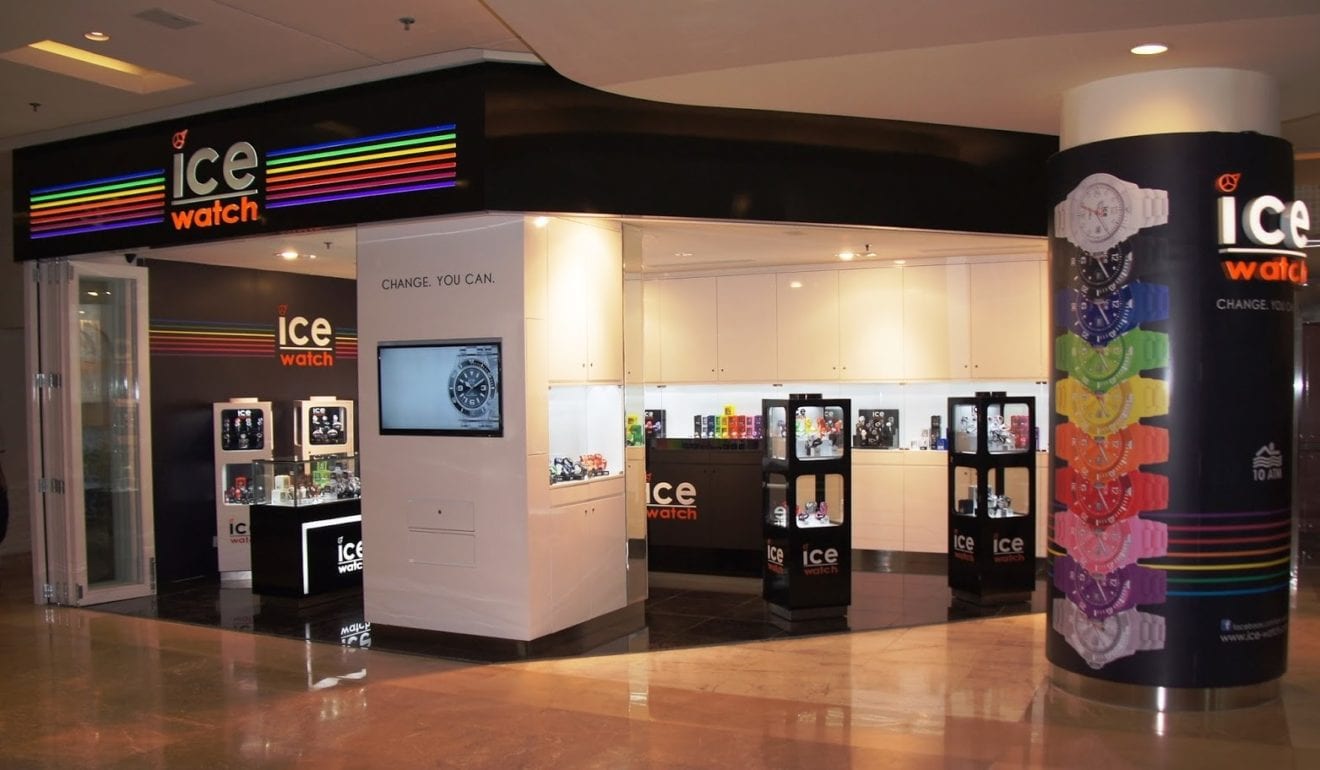
    Belgian watch brand Ice-Watch has opened its first store in east Malaysia, at Vivacity Megamall in Sarawak.

    It marks the retailer’s 15th gallery in the Malaysian market, showcasing the brand’s wide range of collections and its novelty timepiece line Ice City, which combines a modern design with an ultra-slim steel case and a pared-down dial.

    Ice-Watch Malaysia chairman Datuk Seri Meer Sadik Habib said the brand has grown rapidly since it launched in the country just last year.

    “This is our first shop in east Malaysia, so it’s something very exciting for us,” he said at the opening ceremony.

    He said Ice-Watch is “a strong, young brand” which cuts across age, style and background, appealing to a broad customer base.

    “With its accessible price, multiple colours and design combinations, our highly versatile brand allows you to switch watches based on your outfit or mood.”

    He believes the company’s moderate price points had helped it ride out Malaysia’s tumultuous retail market post April 1’s introduction of GST.

    “People still want to buy, so instead of buying something very expensive and exclusive, you get something with a brand but reasonable in price,” he said.

  • Pavilion Real Estate Investment Trust is buying The Intermark Mall

    Pavilion Real Estate Investment Trust is buying The Intermark Mall

    Pavilion Real Estate Investment Trust (Pavilion REIT) is buying The Intermark Mall, which forms part of The Intermark mixed-use development located at the crossroads of Jalan Ampang and Jalan Tun Razak here, for RM160 million cash, which will be fully funded through debt.

    In a filing with Bursa Malaysia today, Pavilion REIT said its manager Pavilion REIT Management Sdn Bhd has signed a sale and purchase agreement with The Intermark Sdn Bhd for the acquisition of the six-storey retail building, together with 367 car par bays.

    The deal also entails The Intermark providing Pavilion REIT with a rental guarantee of RM15 million for three years to be held by a trustee, which will be jointly appointed by Pavilion REIT and The Intermark.

    With the rental guarantee, Pavilion REIT said the estimated net yield for The Intermark Mall comes to 6.1% per year, and 3% when discounting the rental guarantee.

    Occupancy rate at the three-year retail building with a net lettable area of 225,014 sq ft, stood at 74%, based on committed and/or commenced tenancies as at the valuation date of Sept 30, 2015.

    Pavilion REIT Management said the proposed acquisition is consistent with the investment objective and strategy of Pavilion REIT and is expected to be accretive to the trust’s distributable income, as the property is located on the fringe of the Golden Triangle of Kuala Lumpur.

    “The area that the property is located at, consists of prime office buildings, prime retail centres and prestigious international class hotels, with the Kuala Lumpur City Centre development within its vicinity.

    “The property is easily accessible from various parts of the city, via various major highways interconnecting the enclave,” it added.

    Upon completion, the proposed acquisition will enlarge Pavilion REIT’s portfolio of investment properties from RM4.6 billion as at Sept 30, 2015 to RM4.8 billion.

    The trust expects for the purchase to be completed by the end of the first quarter of 2016.

    Pavilion REIT said the RM160 million price tag was derived from the market value appraised by independent registered valuer, Knight Frank Malaysia Sdn Bhd.

    “In view that the manager (Pavilion REIT Management) intends to fully fund the proposed acquisition through debt, the proposed acquisition is expected to increase the gearing of Pavilion REIT from 16% as at Sept 30, 2015 to 19%,” said Pavilion REIT.

    This is still below the gearing limit of 50%, as prescribed under Clause 8.37 of the Guidelines on Real Estate Investment Trusts issued by the Securities Commission Malaysia, it added.

    The Intermark mixed development is owned by Blackrock Inc. There have been reports that the investment fund was looking to hive off its investment in the upscale development, and it sold one of The Intermark’s office towers, Integra Tower, in April this year, to Kumpulan Wang Persaraan (Diperbadankan) (KWAP) for RM1.07 billion.

    The Intermark also houses DoubleTree by Hilton Hotel.

    “The Intermark Mall caters to the daily needs and convenience of corporate tenants and hotel guests within the integrated mixed-use development, as well as those working and/or staying in the immediate locality,” said Pavilion REIT.

    “The manager believes that with good and improving occupancy levels of its two corporate office towers and hotel, there will be opportunities for the Intermark Mall to improve its occupancy levels by offering a wider trade mix to cater to the needs of its corporate tenants, hotel guests and nearby residents.”

    Pavilion REIT shares shed one sen to close at RM1.53 per unit today, bringing its market value to RM4.65 billion.

  • Parkson Retail loses appeal, to pay RM93m in arbitral award

    Parkson Retail loses appeal, to pay RM93m in arbitral award

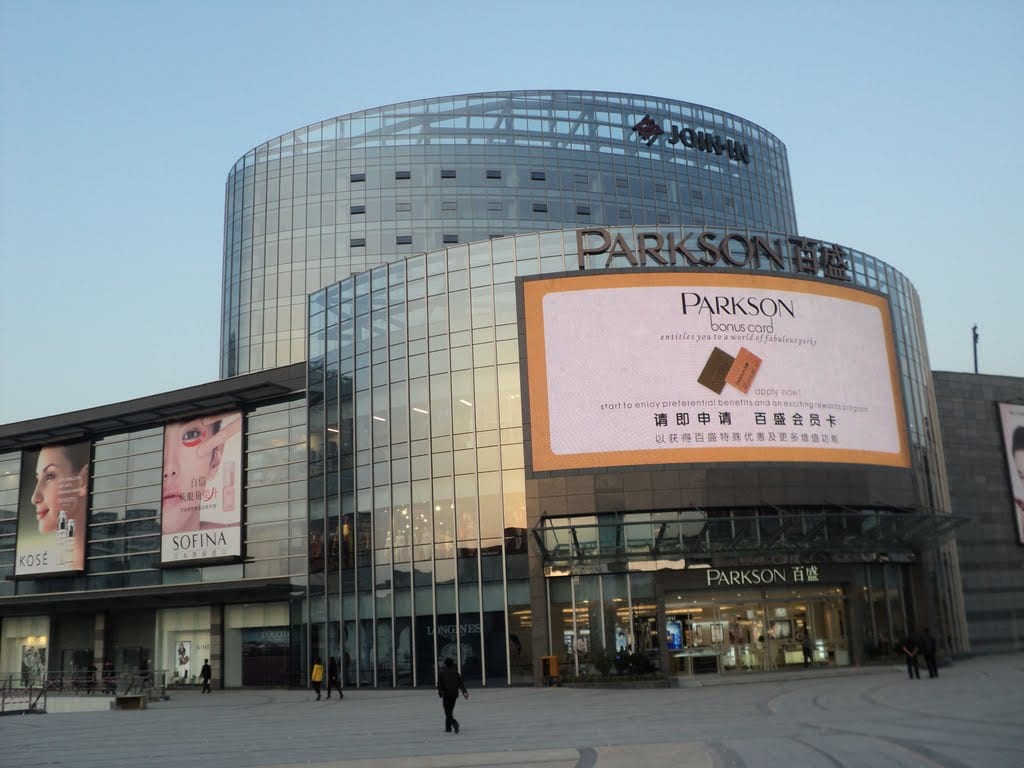
    Parkson Holdings Bhd’s retail subsidiary in China has lost its final appeal to revoke an arbitral award made in favour of its former landlord and must pay about 141 million yuan (RM93.2mil).

    The department store operator told Bursa Malaysia on Monday that a Beijing court on Dec 25 rejected the application by Hong Kong-listed Parkson Retail Group Ltd (PRGL), a 53.07% owned subsidiary, to revoke the award issued by China International Economic and Trade Arbitration Commission in March.

    “The ruling given by the court is final and no further appeal can be made by either the landlord or the tenant under China law,” it said.

    The company’s board feels the ruling does not have a material impact on the earnings of the Parkson Holdings group for this financial year ending June 30, 2016 or the group’s net assets based on the audited consolidated statement of financial position as at June 30, 2015.

    However, in a statement on April 1 regarding the profit warning issued by its Hong Kong subsidiary, Parkson Holdings said the earnings of the group for the financial year ended June 30, 2015, would be lower by about RM45mil or 4 sen per share.

    To recap, PRGL, which was a tenant at 25,140 sq m in Metro City Shopping Plaza, Beijing, had been asked by its landlord in April 2012 and repeatedly afterwards to reduce the total area of the premises under their tenancy agreement or alternatively end the agreement in return for compensation from the landlord equalling to three months’ rental payments.

    In December 2012, the landlord issued a notice of breach of contract to PRGL, asking it to vacate the premises within 30 days.

    On March 25 this year, the China International Economic and Trade Arbitration Commission made an award in favour of the landlord, saying that the 20-year tenancy agreement had been terminated on Dec 6, 2012.

    Among others, PRGL, the tenant, must pay the landlord 36.758 million yuan (RM24.36mil) in lump sum and a daily fee calculated at 3.46 yuan (RM2.29) per sq m for the period from Nov 1, 2014 up to the date on which the premises was surrendered to the landlord (March 26, 2015), totalling 12.613 million yuan (RM8.36mil).

    In addition, it must pay rental of 89.923 million yuan (RM59.57mil) and an arbitration fee of 1.102 million yuan (RM729,890) to the landlord.

    Based on the arbitral award, which represented about 57% of the PRGL group’s audited net profit for the year ended Dec 31, 2014, PRGL issued a profit warning that initially said its profit for the first quarter ended March 31, 2015, would “decline significantly” but was later revised to saying the group would record a loss for the quarter.

    However, on April 22, PRGL submitted an application for revocation of the award to the Second Intermediate Court of Beijing, which led to the enforcement of the arbotral award being suspended.

    Parkson Holdings shares closed unchanged at RM1.02 on Monday.

  • Alibaba and UBM to create O2O trade buying experience

    Alibaba and UBM to create O2O trade buying experience

    Alibaba’s B2B business unit, including Alibaba.com and 1688.com, has teamed with trade exhibition organiser UBM Plc to “unite the online and offline trade buying experience” initially in Asia.

    The two companies have begun exploring opportunities to link the B2B online and face-to-face trading worlds by leveraging their combined strengths, technologies and relationships. The alliance will begin with pilot programs introducing Alibaba B2B business unit’s online secure transactional platforms and business portals for companies participating in select UBM Asia trade fairs.

    Cross promotional marketing, match-making services and audience development of the two company’s brands and networks will be another key aspect in working towards the longer term goal of creating the next generation of on and offline trade experiences.

    Sophie Wu, president of the Alibaba B2B business unit, says collaborating with UBM will offer small and medium-sized enterprises a multichannel B2B trading experience.

    “They can also tap into the abundant and combined expertise of the two industry pioneers for more worldwide trading opportunities.”

    Tim Cobbold, CEO of UBM  says a fundamental element of his company’s ‘Events First’ strategy is its commitment to innovate and to deliver value for customers.

    “We are excited at the opportunity to partner with Alibaba.com, to create the next generation of trade buying experience.”

    Pilot programs for the joint collaboration will begin with UBM Asia’s Malaysia International Furniture Fair (MIFF) to be held on 1-5 March 2016 in Kuala Lumpur, Malaysia, Finefood Shanghai – part of Hotelex Shanghai – to be held 29 March to 1 April 2016 in Shanghai, China; and the co-located Materials Manufacturing & Technology (MM&T) and Fashion Access (FA) fairs to be held 30 March to 1 April 2016 in Hong Kong.

    The collaboration will commence with promotions of the UBM fairs to both parties’ respective trade audiences and Alibaba will begin offering their Trade Assurance service onsite to select exhibitors.

    Alibaba’s Trade Assurance service allows participating suppliers to offer guarantees on order quality standards and on-time shipment.

    Further pilots in the second half of 2016 will include additional business match-making components for other UBM Asia events such as Shanghai International Children Baby Maternity Industry Expo (CBME China) and Sign & LED China fairs.

    James Dong, head of B2B strategy, investment, business development and business intelligence of Alibaba.com, says the eCommerce giant sees great added values for global business traders through the collaboration.

    “Alibaba’s online trading resources and technology complements with the interaction and dialogues in the offline UBM trade shows. Such an alliance not only makes trading more cost-effective but enables higher level of trust between global buyers and sellers,” he said.

    James Dong of Alibaba, left, and Jime Essink of UBM Asia announcing the new partnership.

    Jime Essink, president and CEO of UBM Asia Ltd, says one of the challenges of the trade exhibition industry is continuing the buyer and seller dialogue and experience throughout the year.

    “Meanwhile, the limitation of a pure online trading world is the absence of the physical interaction and development of the personal relationship. With Alibaba and UBM Asia – both prominent players in our respective fields of B2B trade – working together, we see opportunities to change how online and offline trade takes place, providing improved returns and efficiencies for our customers.”

  • KL office rental rates under pressure

    KL office rental rates under pressure

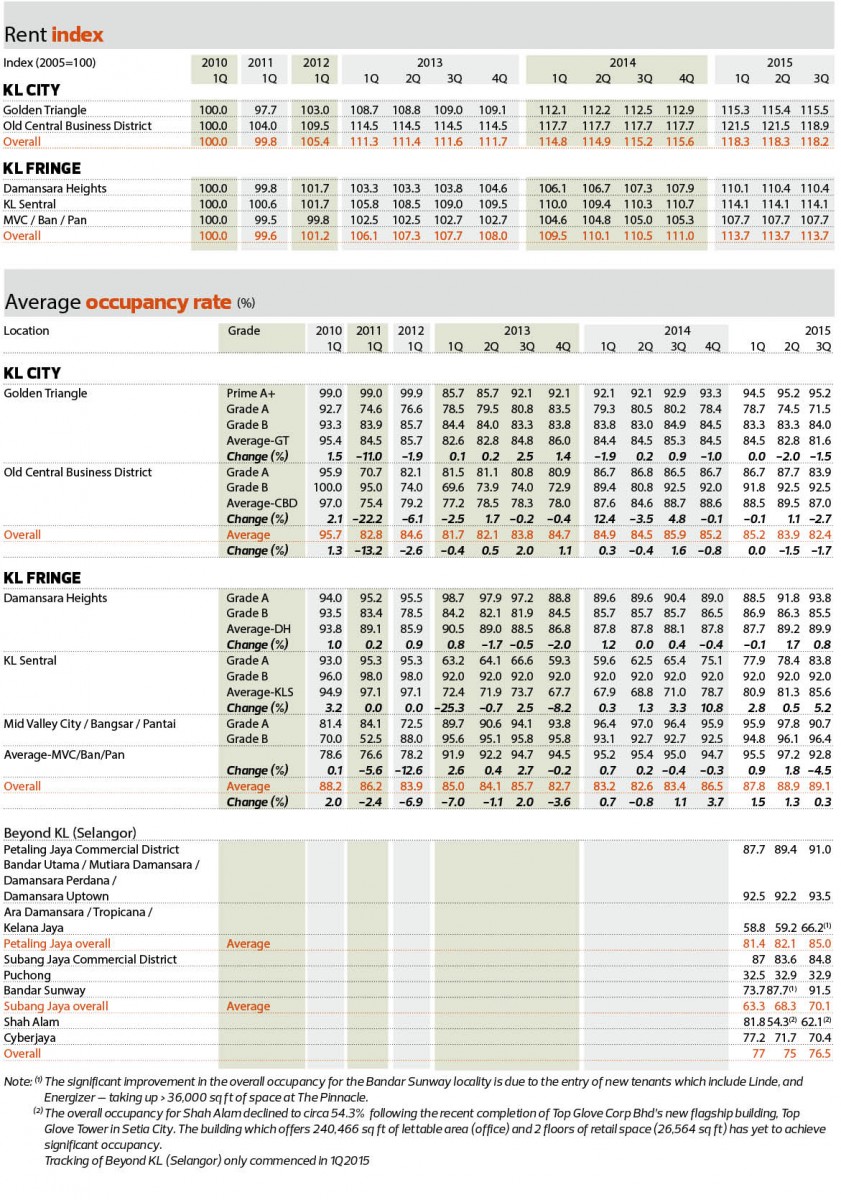
    A large supply of office space continued to weigh on rental rates in Kuala Lumpur, KL Fringe and Beyond KL (Selangor) in 3Q2015, while the overall market is expected to remain gloomy until year end.

    This quarter, the cumulative supply of office space for KL City and Beyond KL stood at 91.97 million sq ft, following the completion of Ilham Tower with 394,000 sq ft of net lettable area (NLA), Menara Bangkok Bank (475,000 sq ft NLA) in KL City and Q Sentral (one million sq ft NLA) and The Vertical 1 & 11 (830,000 sq ft NLA), based on The Edge/Knight Frank Klang Valley Office Monitor 3Q2015.

    The total cumulative office space under construction in KL City, KL Fringe and Beyond KL stood at 9.88 million sq ft. The supply of office space is expected to grow about 10.7% from 4Q2015 to 4Q2017.

    “Overall, rental rates may dip due to heightened competition in a tenant’s market. Coupled with a further slowdown in the country’s economy and low business confidence, many businesses are freezing recruitment, reducing investment in staff and consolidating their positions. This will inevitably impact take-up rates and overall occupancy levels,” says Knight Frank Malaysia managing director Sarkunan Subramaniam (pictured, right). “Nonetheless, rental rates of well-located, dual-compliant, good grade office space are expected to remain resilient.”

    In 3Q2015, demand for office space remained subdued, in line with a further slowdown in the country’s economic activities (lower gross domestic product growth of 4.7% in 3Q2015 versus 4.9% in 2Q).

    “The depreciation of the local currency and weaker commodity prices, coupled with domestic and external headwinds, do not bode well for the office market, which traditionally has been driven by the services and oil and gas (O&G) sectors. The contraction of the O&G sector is the significant trend from the fall of oil prices. The main lifeline of one of the leading sectors has dried up,” says Sarkunan.

    Overall, occupancy and rental rates are expected to decline in the coming quarter due to high levels of impending supply and competition among building owners.

    “The high level of existing and new supply, coupled with a weaker leasing market (fewer enquiries), which is seeing more consolidation/mergers and acquisitions amid an increasingly challenging business environment, will increase downward pressure on occupancy and rental rates moving forward,” he says.

    “It remains a tenant’s market with landlords embarking on aggressive marketing plans to achieve significant occupancy and to improve their occupancy levels. Tenants continue to be spoilt for choice, as there are many offering attractive rents, incentives and tenancy terms such as a longer free-rent period.

    “During construction, landlords and developers of office projects need to market their developments in newspapers, showcase their projects at property expositions, provide special incentives to agents to secure anchor or big tenants within the stipulated time period et cetera — these marketing plans and strategies will help to ensure that, upon completion, these office projects would have achieved significant occupancy levels.”

    Moreover, says Sarkunan, tenants will feel the pinch of the current economic situation. “It is best for landlords to embrace the situation by being flexible with tenants who need to contract, thereby retaining them and being the long-term space provider.”

    Sliding occupancy, stagnant rents

    The overall occupancy rate in KL City dipped 1.7% to 82.4% in the previous quarter. “[Since] the completion of Ilham Tower in 3Q2015, it has yet to achieve significant occupancy,” says Sarkunan.

    Occupancy in the central business district (CBD) has dropped 2.7% to 87%. The Golden Triangle also recorded a decline of 1.5% to 81.6%.

    On a more positive note, there has been an increase in almost all areas in the KL Fringe.

    Overall, KL Fringe occupancy rose 0.3% to 89.1%, propped up by higher occupancy in Damansara Heights (up 0.8%) and KL Sentral (up 5.2%).

    “In Damansara Heights, the ongoing rejuvenation of Damansara Heights with the mixed-use project Damansara City and the upcoming Pavilion Damansara Heights, is expected to revive demand for office space in the area. This will be supported by improved mobility via the MRT Line 1 with two stations nearby (Samantan and Pusat Bandar Damansara),” says Sarkunan.

    “Another reason for the rise of KL Fringe is KL Eco City. This ongoing integrated urban city development on about 25 acres in Bangsar may be seen as an extension to the established Mid Valley City (MVC) locality. Two office towers in Damansara City and several office components (strata office suites and The Pillars) in KL Eco City are expected to be completed next year.”

    Meanwhile, occupancy at MVC/Bangsar/Pantai dropped by 4.5% to 92.8%.

    The overall occupancy rate Beyond KL has increased to 76.5% from 75%. Petaling Jaya and Subang Jaya saw the rate rise to 66.2% and 91.5%, respectively, while Shah Alam has experienced a tremendous recovery to 62.1% from 54.3%. “The overall occupancy for Shah Alam has improved significantly, by 14.4%, following further take-ups at Top Glove Tower, which includes two floors by the landlord Top Glove Corp Bhd (34,800 sq ft) and Level 10 by Fitness Centre (17,400 sq ft),” says Sarkunan.

    Improved occupancy in several office buildings, which include The Ascent @ Paradigm, Oasis Square Block H and Wisma AmFirst in Damansara/Tropicana/Kelana Jaya, led to a 11.8% quarterly increase.

    Rental rates, meanwhile, remained steady in 3Q2015 despite downward pressure.

    Grade A rental rates in KL City — Golden Triangle Prime A+ (RM11.33 psf) — remained unchanged from the previous quarter. However, Golden Triangle Grade A and CBD Grade A experienced a decrease of 0.3%  (RM7.19 psf) and 3.6% (RM5.41 psf), respectively.

    Over at KL Fringe, overall rental rates remained unchanged from the previous quarter — Damansara Heights Grade A (RM5.43 psf), KL Sentral Grade A (RM6.78 psf) and MVC/Bangsar/Pantai Grade A (RM5.90 psf).

    Likewise for average rental rates for Beyond KL, with the overall rental rate at RM4.19 psf. Rental rates in Petaling Jaya (RM4.41 psf), Subang Jaya (RM3.91 psf), Shah Alam (RM3.50 psf) and Cyberjaya (RM4.17 psf) remained the same.
    Notable transactions and movements

    On Aug 10, Affin Bank Bhd announced that it will develop its own head office building on a 54,266 sq ft parcel at Tun Razak Exchange acquired for RM255 million, or about RM4,699 psf (plot ratio of 15.2 times).

    The proposed international class, Grade A, 35-storey office building development will have a gross floor area (GFA) of 823,439 sq ft and 830 parking bays.

    On July 3, Hong Leong Bank Bhd entered into a conditional share sale agreement with Hong Leong Real Estate Holdings Sdn Bhd (a unit of Guocoland [Malaysia] Bhd) to acquire the entire issued and paid-up share capital of DC Tower Sdn Bhd (DCT) for RM189.33 million cash.

    DCT is principally a property investment company, holding the development and ownership rights for a 33-storey purpose-built stratified office building (Office Tower A — 506,069 sq ft NLA) located within the ongoing integrated development project known as Damansara City Kuala Lumpur. The appraised value of Office Tower A is RM1,150 psf over its aggregate NLA.

    The review period also witnessed a few notable movements. In KL City, BAE Systems Detica (M) Sdn Bhd acquired a further 11,200 sq ft of Menara Binjai.

    Minat Megah Sdn Bhd moved into Etiqa Twins, taking up 14,400 sq ft. In KL Fringe, 1 Sentrum welcomed two new tenants (Novo Nordisk Pharma Malaysia Sdn Bhd and AmMetLife Insurance Bhd) while Google Malaysia expanded, taking up 103,000 sq ft and 51,000 sq ft, respectively.

    Meanwhile, Tricor Services Malaysia Sdn Bhd moved out of The Gardens North Tower, leaving 36,000 sq ft.

    PA Group, a US-based international insurance group, will establish its regional operations in Kuala Lumpur. Meanwhile, UK firm Needle Partners has opened a new marketing office in Kuala Lumpur that aims to promote its English law and white label service called Needle Network.

    CTBC Bank Co Ltd, the banking subsidiary of CTBC Financial Holding Co, has received permission from Malaysia’s financial supervisory institution to establish a representative office in Kuala Lumpur. CTBC Bank will be the first Taiwanese bank to set up an operational base in Malaysia in 17 years.

    Notable announcements

    KLCC Holdings Sdn Bhd and its partner Qatari Diar Real Estate Investment Co are understood to have invited interested parties for a pre-screening process for its RM5 billion project in the city centre called Cititower.

    Slated to come up in 1Q2016 on a 1.6ha plot between Suria KLCC and the Asy-Syakirin Mosque, Cititower’s proposed components are a 9-storey retail podium, a 59-storey hotel, an 80-storey office tower, a link way between Suria KLCC and the project, a ramp in Jalan Ampang and landscaping works.

    Pelaburan Hartanah Bhd is reportedly planning to develop a 6.8-acre site that used to house the office of the Kuala Lumpur Regional Centre for Arbitration in Jalan Conlay.

    Located directly opposite Kompleks Kraftangan, the proposed development will comprise a 50-storey serviced apartment building and two blocks of 37-storey office suites that will sit atop an 8-storey retail podium and a 3-storey basement car park.

    Meanwhile, IJM Corp Bhd’s unit IJM Construction Sdn Bhd has received a letter of award from GDP Architects Sdn Bhd on behalf of Hotel Equatorial (M) Sdn Bhd and Fenghuang Development Sdn Bhd to undertake stage two works for the redevelopment of the former Hotel Equatorial in Jalan Sultan Ismail into a 52-storey mixed-use development for RM455.5 million.

    At KL Fringe, Hong Leong Group will occupy Office Tower A (appraised based on RM1,150 per sq ft over its aggregate NLA) as its global headquarters.

    Concurrently, GuocoLand is finalising agreements with tenants for its Office Tower B — a 19-storey office tower with 240,000 sq ft NLA. It has reportedly secured 70% occupancy, with two global multinational corporations to date. The rental rate for Office Tower B is around RM7 psf. GuocoLand, which currently occupies three floors of Menara HP, will also move into this office block. Damansara City has a gross development value (GDV) of RM2.5 billion, and is expected to be fully operational by mid-2016.

    There were a few notable announcements for Beyond Kuala Lumpur. Mercu Mustapha Kamal at Damansara Perdana consists of a 27-storey Tower 1 and a 14-storey Tower 2 with net floor areas (NFA) of 285,091 sq ft and 213,719 sq ft, respectively.

    Tower 2 (183,000 sq ft NLA) is available for lease and en bloc sale and is scheduled to be completed by December. Tower 1 will be completed in October 2016 and will also be available for lease.

    Mercu Mustapha Kamal has a GDV of RM385 million. The MSC-status development is pre-certified Green Building Index (GBI) Gold with features such as automatic control of lighting and zoning, energy-efficient lights, waste management and sky gardens on multiple floors. Its developer, Emkay, has plans for three more office projects in Damansara Perdana, Cyberjaya and Kuala Lumpur city centre.

    In Kota Damansara, Menara Mitraland, the corporate tower that houses the headquarters of Mitraland Group, has officially opened. The 30-storey building — the tallest structure in the locality — is part of the new Cascades mixed-use development which includes residential, retail and office components. The retail and residential units have mostly been taken up while the office building is over 50% occupied.

    In Shah Alam, meanwhile, Naza TTDI Sdn Bhd recently opened its new head office, Menara Naza TTDI. Located in Section 13, the 20-storey office tower with 250 parking bays has a GFA of 306,000 sq ft and facilities such as a gymnasium, swimming pool and café.

    The Selangor State Development Corporation (PKNS) is spending about RM170 million on Laman PKNS, its new headquarters in Shah Alam. The building will sit on a 1.6ha plot in Section 14. Due to be completed by end-2015, the building is rated GBI Platinum.

    Electrical home appliance maker Khind Holdings Bhd is planning a mixed-use project on a 65,340 sq ft tract in Setia Alam, Shah Alam, as part of its diversification exercise.

    The RM150 million project will include an office building (to be partly occupied by Khind), a retail component and serviced apartments. Construction is targeted to start in 1Q2016 and is expected to be completed within 36 months.


  • Mövenpick Signs Hotel in Kota Bharuand and Cam Ranh Bay

    Mövenpick Signs Hotel in Kota Bharuand and Cam Ranh Bay

    Mövenpick Hotels & Resorts is consolidating its expansion campaign in South-East Asia with two new properties announced for Malaysia and Vietnam, both of which will open in 2018.
    Strengthening its development plans in Malaysia, the Swiss hospitality firm has signed a deal to manage the 30-storey Mövenpick Hotel Kota Bharu, a 453-key five-star resort in Kelantan, a state on the country’s east coast undergoing a rapid transformation. This takes the group’s portfolio in Malaysia to three properties strong, with an upcoming hotel in Kuala Lumpur and a beachfront resort in Terengganu.

    In the same year, Mövenpick Hotels & Resorts will open Mövenpick Resort Cam Ranh Bay, an integrated beachfront resort located in Khanh Hoa Province, Vietnam, spanning some 20 hectares and featuring 250 rooms, 100 residences and 100 villas. This will be the fourth Mövenpick hotel in Vietnam. The brand currently has a presence in Hanoi and new openings are scheduled for Phu Quoc and Quy Nhon in the next two years.

    The two new management deals come as Mövenpick Hotels & Resorts prepares to unveil its fifth property in Thailand, with Mövenpick Siam Hotel Pattaya’s opening next month (January).

    Debuts in the Philippines and Indonesia will follow hot off their heels, as Mövenpick Resort Boracay and Mövenpick Resort & Spa Jimbaran in the south of Bali are both on track for a 2016 opening.

    “We are rapidly cementing a solid presence in South-East Asia, where we have identified strong growth opportunities for the upscale hospitality concepts Mövenpick Hotels & Resorts delivers,” said Andrew Langdon, Senior Vice President Asia, Mövenpick Hotels & Resorts.

    “With the new properties signed for Vietnam and Malaysia, we see our cluster strategies for these exciting markets start to be realised, while our debuts in new countries mark another milestone in our strategy to be a major player in a region where we plan to open at least 15 new properties by 2020.”

    Mövenpick Hotel Kota Bharu in Malaysia is a certified ‘green building’, featuring the latest environment-friendly technology to save energy and reduce wastage. Highlights of the hotel will include the 815-sqm Emperor Suite, which will occupy the top three floors of the hotel, a helipad, an expansive banquet hall for 1,000 guests, a restaurant and café, stylish boutiques and retail outlets, male and female swimming pools, spa and gym, club lounge and business centre.

    Stand-out features of Mövenpick Resort Cam Ranh Bay, a mixed-use resort situated along the pristine white beaches of Vietnam’s Cam Ranh Bay, will include an amphitheatre, a cookery school, themed retail village, water park, spa, adventure zone for family activities and team-building retreats, and an exclusive kids’ zone featuring miniature landmarks from around the world.

  • MyNews parent plans 150 new stores

    MyNews parent plans 150 new stores

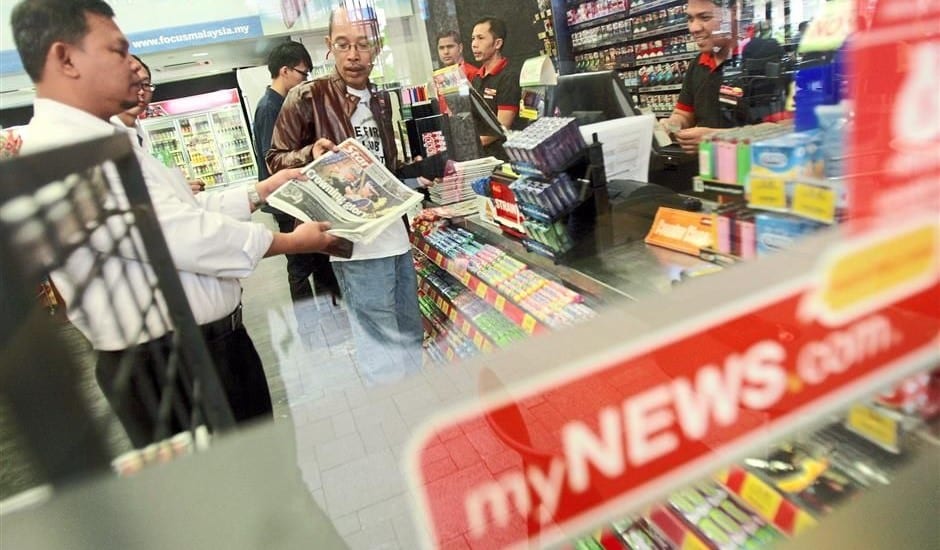
    Malaysian convenience store operator Bison Consolidated plans to use the proceeds of an IPO to fund 150 new store openings by 2017.

    Bison currently has 237 newsstands and convenience stores under its brands, which include myNews, Newsplus, MagBit and The Front Page. It also runs WHSmith outlets in Malaysia, in a joint venture with UK’s WH Smith Plc.

    “It has always been our plan to expand our network of stores. With the proceeds raised from the initial public offering (IPO), certainly we will make use of it to expedite our expansion plan,” Bison founder and MD Dang Tai Luk told The Edge Financial Daily.

    Bison recorded a 15.5 per cent revenue increase last financial year to RM182.41 million (US$42.17 million) as its store network continued to grow. It currently claims 8.6 per cent of the convenience store market by network numbers and 8.3 per cent by revenue. 7-Eleven is the dominant convenience store brand in Malaysia with 1900 franchised stores.

    In the company’s draft prospectus, Bison says it will invest 45 per cent of the proceeds of the float in network expansion, but has not yet put a price on its shares.

    The company owns all its own stores – it does not franchise.

  • Malaysia is Poised for E-commerce Growth through Better Mobility

    Malaysia is Poised for E-commerce Growth through Better Mobility

    Today, there are a total of 252.4 million Internet users around Southeast Asia, with Malaysia emerging as the third country that recorded the highest percentage of Internet users (67%) after Singapore and Brunei.

    The promising Internet penetration result indicates Malaysia’s enormous potential for e-commerce market growth. Leveraging on the rise of Internet usage, indeed 2015 have been a fruitful year for all online businesses and e-commerce as Malaysia recorded one of the highest online transactions per capita in Southeast Asia.

    Nevertheless, this only represents the tip of an iceberg – Malaysia’s e-commerce market owns approximately 2% of the total retail market and countless opportunities still remain untouched if we look at what has been accomplished by other advanced e-commerce markets such as Korea, which accounts for approximately 15% of the total retail market.

    Over the past five years (2010-2014), Malaysia’s e-commerce market size has seen 31% increase in CAGR. Viewing from a logical standpoint, we anticipate it will follow a similar growth rate and achieve USD 3.1 billion by 2018. As for 2016, we foresee mobility, better Internet and logistics, and security will be the three key drivers to push for the local e-commerce development.

    1) The ‘mobility’ trend will continue to grow

    The mobile penetration in Malaysia has reached 136% this year, and the growth of connected devices have paved the way for a positive increase in the e-commerce sector with 47% of Malaysians using their smartphones to shop online.

    Furthermore, Malaysia ranks third in the rate of growth of mobile shopping in Asia (over 20%; from 25.4% in 2012 to 45.6% in 2014) according to a Mobile Shopping Survey and with these results, it is not surprising to know that more than 50% of traffic to 11street is generated on mobile devices.

    What shoppers can expect next year

    This promising result has encouraged us to make a bigger commitment for mobile users. We believe the ‘mobility’ trend will continue to grow and next year, 11street will put a stronger focus to serve mobile shoppers through a two-pronged approach.

    Mobile shoppers can expect more curated content from 11street’s app, with an improved user interface and user experience designs (UI/UX). Additionally, we will lift it with additional personalized features, and introduce more mobile exclusive deals for an exciting mobile shopping experience.

    2) Internet penetration and improved logistics will further enhance local e-commerce activities

    While the government has allocated RM1.2 billion for Malaysian Communications and Multimedia Commission (MCMC) to offer High-Speed Broadband to rural areas starting next year, we are also pleased with the government’s initiative to improve the logistics – a crucial element to boost the e-commerce development in Malaysia.

    Driven by the progressive e-commerce landscape, the logistic industry, especially the courier segment has seen exponential growth over the past one year. For instance, courier service contributed 60% of POS Malaysia’s total earnings in FY15, as compared to 41% in FY14.

    In preparation to serve shoppers better in 2016, we believe these supportive initiatives suggested by the government will aid sellers to meet future demands, by providing shoppers a seamless online buying experience with more timely delivery service.

    What shoppers can expect next year

    Online marketplaces like 11street place high importance on offering pleasant shopping experiences from the moment a consumer start shopping online, all the way through to the delivery of purchased items. Several measures that the company has been implementing since its establishment include (i) Thoroughly brief and train sellers on product delivery management (ii) Provide shoppers with a tracking system to keep them informed on location, time of arrival, and delivery status of their purchased products.

    With a solid Internet and logistics infrastructure, 11street trusts that Malaysians will enjoy online shopping even more in the coming years.

    3) User confidence, especially safe and secure online shopping is a priority for shoppers

    Security issues discourage shoppers from heading online. Malaysia Computer Emergency Response Team (MyCERT), a department within CyberSecurity Malaysia, reported that the number of online scams in the country is on the rise. A total of 743 fraud cases were received in Q1 2015, of which is the second most reported incidents (25.54%) in total reports.

    Shoppers are always urged to make transactions with only trusted platform that offers product return policies, customer reviews on products, seller’s rate or scoreboard, as well as a trustworthy payment system. Online sellers and marketplaces have to bear this in mind and update their security measures from time to time in order to establish shoppers’ confidence.

    What shoppers can expect next year

    11street implemented the ESCROW system, which is a financial instrument of placing a buyer’s money on hold and releasing it to the seller only when the delivery of the purchased item is fulfilled, thus protecting buyers from frauds. The ESCROW system has helped to prevent many fraud cases and it will continue to be invested by 11street in the future.

    Our website is also strengthened with abilities to monitor all products, transactions from buyers and sellers to detect suspicious activities such as counterfeit product listing. Moreover, a number of other efforts include a stringent application process and regular product quality inspections will be enhanced to provide shoppers a safe & secure shopping experience.

    A budget-conscious year ahead

    2016 will be another budget-conscious year for Malaysians in view of the rising cost of living caused by GST implementation and the ringgit devaluation. To assist consumers to ‘shop smart’, we are gearing up to double our variety of product listings for ‘Shocking Deals’ with the lowest price guarantee by early 2016.

    It is also worth noting that cross-border trading (CBT) trends can be observed from the increasing searches for popular international products on the Internet in Malaysia. However, with the higher exchange rates and international shipping fees, today local shoppers might find it challenging to get their favorite overseas brands or items. In view of this, 11street is committed to bring in more popular overseas product, including cosmetic, fashion, and food items, especially from Korea in 2016. These products will be imported and affordably priced at the online marketplace in order to satisfy Malaysian shoppers’ needs.

    Undeniably, the overall e-commerce market in Malaysia is poised to flourish positively. The next step would be to sustain the market potential and all industry players need to work together to ensure this. As a market expert, 11street is delighted to work with close partners such as Multimedia Development Corporation (MDeC) and Google. We look forward to collaborating with even more industry leaders in the coming year. In closing, we would like to urge sellers to stay alert on the evolving mobile & purchasing trends in the market to give shoppers a satisfactory experience, as this will build upon Malaysia’s vibrancy as a profitable market for e-commerce.