Tag: retail sales

  • Boom time for Thailand internet shopping

    Boom time for Thailand internet shopping

    As consumers become more tech savvy, Thailand internet shopping has boomed.

    Online retail sales in Thailand are more than doubling annually, whereas traditional stores are seeing only about 10 per cent growth.

    This is attributed to a combination of stronger and faster internet speeds in Thailand plus the success of online merchants such as Lazada.

    Thailand mobile-phone company Total Access Communication estimates Thais spend up to six hours a day on social media websites like Facebook and Youtube.

    Corporate financial services company Maybank Kim Eng Holdings says Thailand is the only Southeast Asian country that includes an online category for retail sales data.

    While online sales in Southeast Asia have been growing strongly, they still account for less than 4 per cent of overall retail purchases, according to a Maybank report by economists Chua Hak Bin and Lee Ju Ye.

    Larger markets, like China and South Korea, already have higher penetration rates of online retailing at 16 and 18 per cent respectively. They say this shows the potential for Southeast Asia, where e-commerce sales could reach 5 to 10 per cent of overall retail purchases over the next five years.

    Meanwhile, Alibaba Group Holding founder Jack Ma has joined a government panel in Indonesia that has the task of steering the e-commerce industry in Southeast Asia’s most-populous nation. Macquarie Research estimates online retailing in the country could reach $65 billion by 2020.

  • Retail industry gets boost from Hari Raya festival

    Retail industry gets boost from Hari Raya festival

    The retail industry has shown slight improvement in the months of April to June, as compared to the first three months of the year, with the Hari Raya festival in May boosting retail sales.

    The Retail Group Malaysia reports in its latest Malaysia Retail Industry Report that in the second quarter of 2017, Malaysia’s national economy recorded another sustainable growth rate of 5.6% as compared to 4.9% for retail sales, supported by domestic demand.

    “From the supply side, the improvement was driven by broad-based expansion across all major sectors,” said the report.

    The average inflation rate during the period under review slowed slightly to 4% with the two largest increases seen in the transport and food and non-alcoholic beverages sectors. This was mainly owing to a falling fuel prices.

    Private consumption climbed even higher by 7.1% with consumers spending more on dining out, services and Internet shopping.

    “During the latest quarter, the Consumer Sentiment Index (by MIER) improved slightly to 80.7. However, it was still below the threshold level of confidence. Malaysian consumers were still concerned on their rising cost of living and remained cautious in their monthly spending,” said the report.

    The unemployment rate improved marginally to 3.4%.

    Among the retail sub-sectors, the department store sub-sector was the strongest performer in the second quarter with a strong growth rate of 15.1%. The department store-cum-supermarket sub-sector also rebounded with a growth of 4.1% after a poor performance in the earlier quarter.

    The supermarket and hypermarket sub-sector improved slightly by 0.8% with heavy price discounts by grocery retailers depleting profit margins.

    The fashion and fashion accessories sub-sector returned to profitability with a growth rate of 2.5% as compared to the previous corresponding period.

    The pharmacy and personal care sub-sector also improved on-year with a growth rate of 7.9%.

    The Other specialty stores sub-sector reported a better growth rate of 6.3% during the second quarter of 2017 as compared to the same quarter last year. This sector includes photo shops, children-related stores, second-hand goods’ stores, TV shopping channels, toys’ stores as well as restaurants.

    The Retail Group Malaysia reports that the retailers’ association are not optimistic on their businesses over the next three months. They estimate an average growth rate of 2.9% in the third quarter of 2017.

    The department store-cum-supermarket operators and department store operators are expecting declines in their growth rates of 2.5% and 1.5% respectively.

    Supermarket and hypermarket operators are expecting to maintain a 0.8% growth rate for the quarter, while retailer in the fashion and fashion accessories sector expects a growth rate of 6.1%.

    Retailers in the pharmacy and personal care sub-sector expect to maintain growth at 7.2% while retailers in other speciality stores sector expect its business to expand by 5.6% over the same period last year.

    Based on these results, Retail Group Malaysia is revising its annual growth forecast downwards from 3.9% to 3.7% with the total sales turnover estimated at RM101.4bil.

    The third quarter growth rate estimate has also been revised from 5% to 4%.

    Retail Group Malaysia is maintaining its fourth quarter growth rate estimate at 5.5%, taking into consideration the 0.3% growth achieved in the same period last year.

    “For the rest of this year, the rise of our purchasing power will continue to fall behind the increase in prices of retail goods. More retail goods are expected to raise prices because of higher fuel prices in recent months.

    “The full recovery of the Malaysian retail market is highly dependent on external economic demand and ringgit performance for the rest of the year,” it said in its report.

     

  • Low Production Hurting South Korea Economy

    Low Production Hurting South Korea Economy

    The recovery pace of the South Korean economy has remained feeble for months as an upturn in exports and private consumption was offset by weak industrial output, a government report said Tuesday.

    “The South Korean economy saw its exports and investment continue to rise and private consumption make a slight rebound, but its recovery pace remained lackluster due to a slowdown in the production of mining and manufacturing,” the finance ministry said in its monthly economy assessment report called the “Green Book”, Yonhap reported. The report is based on the latest economic indicators of such key factors as output, exports, consumption and corporate investment, which could provide clues as to how the economy has been fairing in recent months.

    Exports extended its winning streak to nine months, which started in November last year, thanks to stellar overseas sales of chips and petrochemical products. Facility investment rose 5.3% in June from a month earlier on increased demand for semiconductor equipment and machinery, spearheading the recent economic recovery along with exports. Retail sales moved up 1.1% on-month in June on rising demand for clothes and cosmetics, turning around from a 1.1% drop from the previous month.

    However, such gains were offset by the 0.2% on-month fall in industrial output and a 2.4% drop in construction-related investment. The finance ministry said that external downside pressures, including geopolitical risks centered on North Korea and trade issues, will weigh on the South Korean economy in the coming months.

  • Petron posts 56% jump in income

    Petron posts 56% jump in income

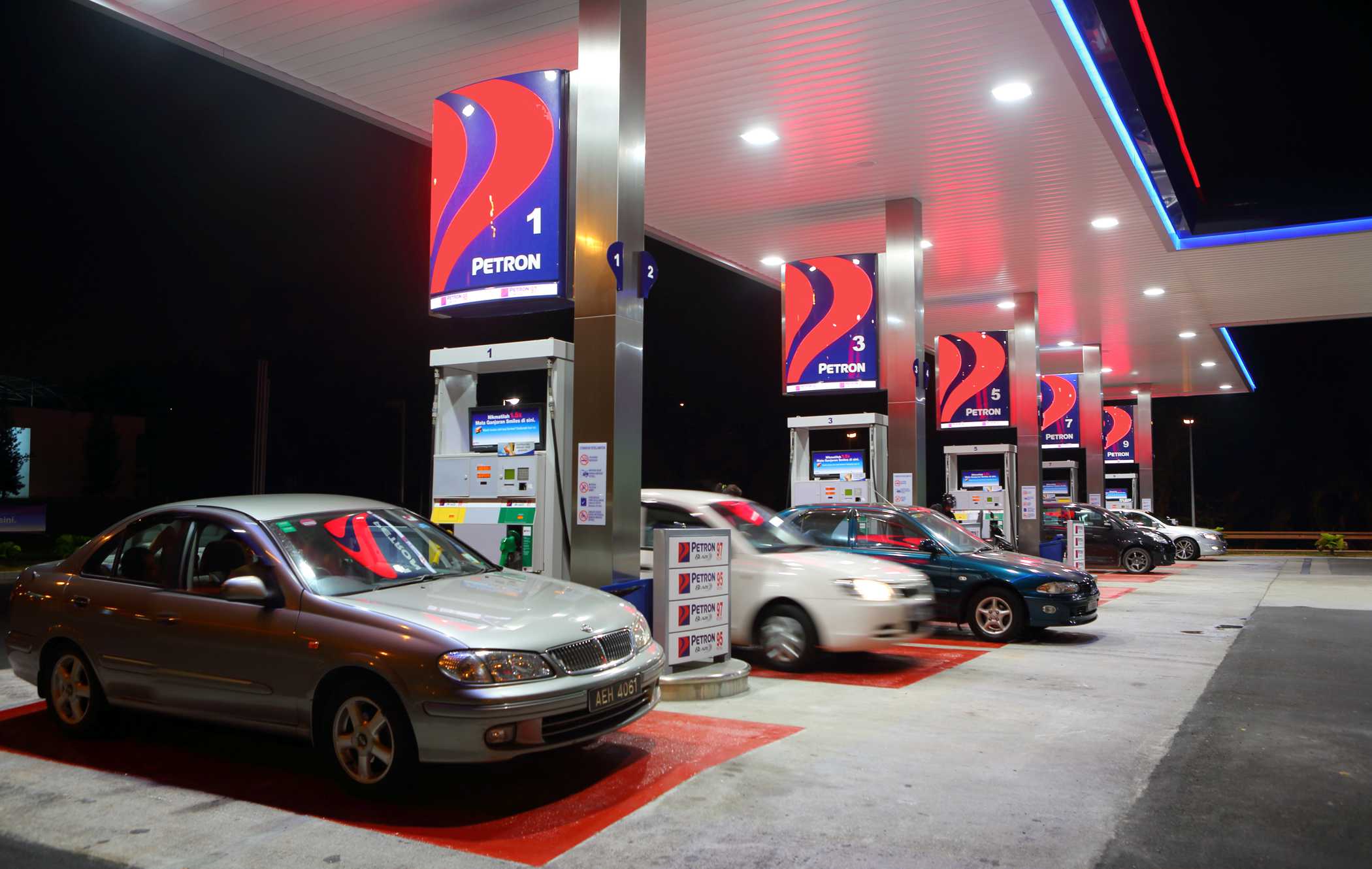
    Petron Corp. saw its consolidated net income in the first semester surge 56 percent year-on-year to P8.2 billion this year from P5.3 billion last year, despite supply issues brought about by refinery maintenance.

    The oil refiner and retailer said in the first half of 2017, it saw its crude oil inventory go down while its Bataan refinery went through a 45-day maintenance shutdown, scheduled as part of a 10-year inspection program.

    “With our upgraded refining capabilities, we derived more value and produced more profitable products,” Petron president and chief executive Ramon S. Ang said in a statement.

    “This is strongly complemented by our extensive expansion efforts in both our logistics and retail businesses,” Ang said.

    He said the strong showing during the first semester of the year was driven by a deliberate focus on more profitable segments and improved refinery production yields, while sustaining sales volumes.

    With volumes reaching record levels in 2016, Petron sold a total of 52.9 million barrels of products in the Philippines and Malaysia or just about the same as the level in the same period last year of 52.6 million barrels.

    Petron has a combined retail network of about 2,900 service stations, of which more than a fifth or about 600 are in Malaysia.

    With petrochemical sales revving up by 78 percent year-on-year, Petron saw consolidated sales revenue jump 28 percent to P207 billion in the six months to June.

    Also, operating income leaped 27 percent year-on-year to P14.6 billion from P11.5 billion.

    In both the Philippines and Malaysia, Petron is building “dozens” of service stations.

    “With the country’s economy growing at a rapid pace, we are expanding our facilities not just for the needs of today but also to ensure a reliable and continuous supply of quality fuels for tomorrow,” Ang said.

    “Our expansion projects mean more employment opportunities and economic activity, which help in nation-building,” he added.

  • China retail sales rise with a 10.9 per cent in March

    China retail sales rise with a 10.9 per cent in March

    China’s retail sales rose 10.9 per cent in March – the best month of the year to date.

    However the quarterly rise was just shy of 10 per cent – the first time the official figure has dropped below 10 per cent in 11 years according to the National Bureau of Statistics. IN January and February, China retail sales rose 9.5 per cent each month.

    Retail sales of consumer goods totalled 8.5823 trillion yuan (US$1.25 trillion) from January to March.

    There was strong consumption potential in rural areas, the data shows, with retail sales climbing 11.9 per cent during the quarter, outpacing urban areas where sales rose 9.7 per cent year-on-year.

    Online sales continued their run of strong growth, surging 32.1 per cent in the first two months to 1.405 trillion yuan.

    As a main driver of economic growth, consumption contributed to 64.6 per cent of China’s GDP growth last year. The nation is aiming for a steady increase in consumer spending this year.

  • Chow Tai Fook sales recovering in Hong Kong, Macau

    Chow Tai Fook sales recovering in Hong Kong, Macau

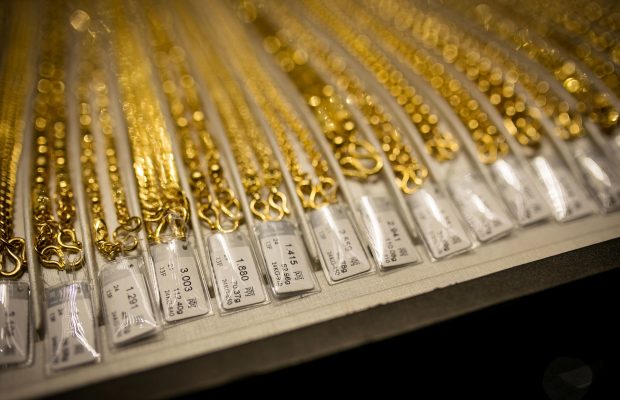
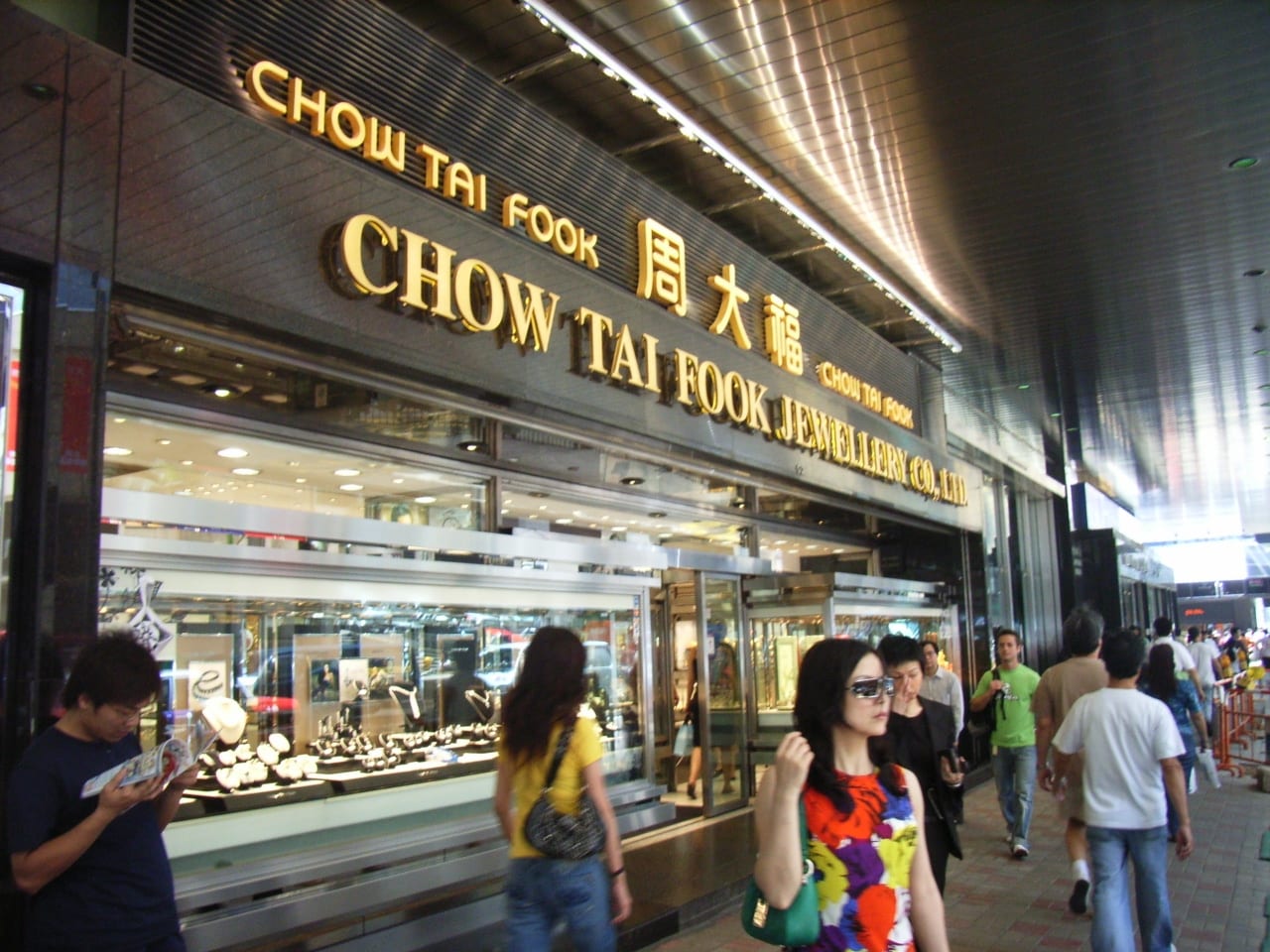
    Same store Chow Tai Fook sales in Hong Kong and Macau “continued to show a sequential improvement” during the first quarter of the year.

    The trend reverses 12 consecutive quarters of decline by the Hong Kong-listed jeweller, the first increase since last last three months of 2014.

    Chow Tai Fook says Mainland China same-store sales rose 12 per cent year-on-year and in the two SARs by 4 per cent. However, sales volume declined by 2 per cent in the mainland and 1 per cent in Macau and Hong Kong.

    Performance of gold products in both Mainland China, Hong Kong and Macau benefitted from an increase in Average Selling Price, rising 19 per cent. But sales of gem-set jewellery fell 17 per cent year-on-year during the quarter in the two SARs.

    “The percentage of RSV (retail sales value) settled by China UnionPay or RMB to the total RSV of Hong Kong and Macau market, a proxy for sales contribution from Mainland tourists, declined to 45 per cent in the quarter as compared to 49 per cent of the same period last year,” Chow Tai Fook said in its stock exchange filing, adding that “such contribution was similar to that in the first half of FY2017”.

    The company had 2381 points of sale as of end-March, with 102 located in Macau and Hong Kong.

  • Tourists dent February Hong Kong retail sales

    Tourists dent February Hong Kong retail sales

    Hong Kong retail sales fell by 5.7 per cent in February.

    But when the sales data for January and February are combined – eliminating the distortion caused by the timing of Lunar New Year – the decline is a more modest 3.6 per cent over the two months.

    The Census and Statistics Department provisionally estimated the value of retail sales in February at HK$34.8 billion. It revised its estimate for January to a decline of 1 per cent year-on-year.

    For the first two months of 2017 taken together, the value of retail sales decreased by 3.2 per cent compared with the same period in 2016, a figure similar to that for the fourth quarter of last year.

    A government spokesman said the retail sector’s performance was still constrained by the lack of growth in tourist spending despite the modest recovery of visitor arrivals in recent months.

    “Looking ahead, the performance of retail sales will depend on the recovery pace of inbound tourism as well as whether consumer sentiment will be affected by the various external uncertainties,” the spokesperson said.

    “At present, local consumer sentiment remains well underpinned by the prevailing favourable job and income conditions.”

    After netting out the effect of price changes over the same period, the provisional estimate of the volume of total retail sales in February 2017 decreased by 6.1 per cent year-on-year.

    Luxury relief

    Supporting comments from several watch and jewellery retailers in recent weeks, it appears the long-running decline for that sector has tapered off. The category recorded a mere 1.2 per cent decline in sales in January-February combined, the smallest decline of any category in negative territory.

    Electrical goods and photographic equipment plunged 23.6 per cent, while supermarket sales fell 3.5 per cent and department store sales by 1.6 per cent.

    Apparel sales fell 6.9 per cent, footwear and accessories by 6.5 per cent and furniture by 5.4 per cent.

    Cosmetics was the major improver by category, rising 2.7 per cent. Optical goods sales rose 1.4 per cent and food, alcohol and tobacco by 1.4 per cent.

    The C&SD used combined figures for the two months rather than February figures on their own, to provide a fair year-on-year comparison.

    “Retail sales tend to show greater volatility in the first two months of a year due to the timing of the Lunar New Year. Consumer spending in the local market normally attains a seasonal high before the festival. As the Lunar New Year fell on January 28 this year but on February 8 last year, it is more appropriate to analyse the retail sales figures for January and February taken together in making year-on-year comparison.”

  • S. Korea’s retail sales edge up 0.1 pct in Feb.

    S. Korea’s retail sales edge up 0.1 pct in Feb.

    Sales of major South Korean retailers rose slightly last month as a sharp gain in online sales was offset by a drop in those of discount chains and department stores, government data showed Thursday.

    The combined sales of department stores, large outlets and online malls edged up 0.1 percent in February from a year earlier, backtracking from a 9.3 percent rise in the previous month, according to the data by the Ministry of Trade, Industry and Energy.

    Thirteen Internet shopping malls and e-commerce sites including eBay Korea Co. saw their February sales soar 16.3 percent from a year ago, while sales of 13 offline stores such as Lotte Department Store and E-Mart fell 6.6 percent on-year.

    The ministry said the decline in offline malls came as the number of business days dropped to 26 days in February this year from last year’s 27 a year earlier and the Lunar New Year’s holiday, one of the biggest shopping seasons in the country, fell on January.

    Sales by convenience stores continued on an upbeat mode to grow 9.3 percent on-year last month amid a growing single life trend in South Korea.

  • Hong Kong Feb retail sales fall 5.7% y-o-y

    Hong Kong Feb retail sales fall 5.7% y-o-y

    A government spokesman indicated that the performance of retail sales was still constrained by a lack of growth in tourist spending despite a modest recovery in visitor arrivals in recent months.

    Taking the first two months of 2017 together to neutralise the distortions by the timing of the Lunar New Year, the volume of retail sales declined by 3.6 per cent year-on-year, similar to that in the fourth quarter of 2016.

    Looking ahead, the performance of retail sales will depend on the recovery pace of inbound tourism as well as whether consumer sentiment will be affected by the various external uncertainties.

    At present, local consumer sentiment remains well underpinned by the prevailing favourable job and income conditions. The government will continue to monitor the situation closely.


  • Signs abound that the worst may be over for Hong Kong retailers

    Signs abound that the worst may be over for Hong Kong retailers

    Hong Kong’s retailers and mall operators are crossing their fingers in the hope that the signs of recovery in tourist arrivals and the return of spending aren’t flashes in the pan.

    Jewellers like Chow Tai Fook and retailers are reporting that the pace of their sales declines have slowed, indicating that the struggling industry may have finally found a bottom.

    Hong Kong used to be the favourite shopping destination for mainland Chinese tourists, lured to the city by its wide selection of tax-free brands and cheaper currency.

    Retail sales dwindled since 2014 amid Beijing’s anti-corruption campaign started a year earlier, local backlash against the hordes of mainland tourists thronging Hong Kong malls and the strength of the Hong Kong dollar.

    As tourist numbers started to recover in the past few months, mall developers and clothes vendors are becoming more optimistic towards their profit prospects.

    SEE ALSO: Red Valentino opens new Hong Kong store, debuts Walky Land collab

    “The signs of bottoming out are visible, as same-store gross profit has stopped declining, after a period of negative growth for more than one year,” said Tsin Man-kuen, chairman of fashion brand Bossini, whose same-store gross profit declines slow to 6 per cent in the second half of 2016 from the 14 per cent the same period a year ago.

    Wharf Holdings, the city’s biggest mall operator, said tenants’ 2016 sales decline at Harbour City slowed to 10 per cent at HK$27.7 billion, compared with the 15 per cent first-half slump. At Times Square in Causeway Bay, the sales drop narrowed to 11 per cent, from 16 per cent over the same period.

    The Sogo department store in Causeway Bay, which contributes to 87 per cent of the revenue of Hong Kong-listed Lifestyle International, said its sales decline slowed in the second half.

    Samsonite International, the world’s largest luggage maker, said its Hong Kong sales drop narrowed to 7 per cent in the second half of 2016 from the 16 per cent decline in the first half, adding the market has shown “early signs of stabilising”.

    Analysts largely agree with the cautiously optimistic view, citing a recovery in inbound tourism and improving consumer sentiment in the mainland.

    Mainland visitor numbers grew 6.1 per cent in December and 7.7 per cent in January, compared with a 6.7 per cent drop in the entire year of 2016.

    The city’s retailers can also benefit from a wealth effect caused by rising property price in the mainland – meaning consumers spend more because of a strong sense of financial security, analysts said. However, some warned that mainland tourists who opt for Hong Kong are no longer the wealthiest batch, and a weaker yuan means they are not able to buy as much as they used to.

    “The spending power per head for mainland Chinese tourists is decreasing,” Walter Woo, an analyst with China Merchant Bank, said. “But I’m still quite positive on the Hong Kong retail segment because the traffic has been rising.”

  • Malaysians’ appetite for spending remains poor

    Malaysians’ appetite for spending remains poor

    Malaysian consumers continue to tighten their belts as reflected by the 0.3% year-on-year growth of retail sales in the fourth quarter of 2016 (4Q16), according to Retail Group Malaysia (RGM).

    The quarterly growth of retail sales decelerated for the third quarter after it hit a high of 7.5 per cent in 2Q16, based on data compiled by RGM from members of Malaysia Retailers Association (MRA).

    Retailers are pessimistic about the sales performance for 1Q17. “As consumer confidence remains low, they estimate an average growth rate of only 0.9 per cent during 1Q17,” said the report.

    “The year-end school holiday and festive celebration did not motivate Malaysian consumers to spend more. The weak economic environment and bleak job prospect discouraged shoppers to buy more than usual.

    “4Q16’s growth rate was a let-down taking into consideration the low growth rate of 1.3 per cent during the same period in 2015,” said RGM in its latest quarterly report that was released over the weekend.

    For 2016, domestic retail sales expanded by 1.7 per cent, which was not much stronger compared with 1.4 per cent growth in 2015 — the year when goods and services tax was introduced in April that year.

    “After almost two years, the retail industry has yet to recover. Economic condition remains tough for retailers,” said RGM.

    In view of the lacklustre growth pace in 4Q16, RGM has slashed its forecast annual retail sales growth to 3.9 per cent to RM101.6 billion (US$22,921,609,224) for 2017 from RM97.8 billion (US$22,064,304,942) in 2016, compared with its initial forecast of 5 per cent.

    RGM pointed out that the latest quarterly result was way below market expectations. “It was 95 per cent below the estimate made by members of MRA in November 2016 [at 5.5 per cent],” RGM wrote in the report.

    The weak retail sales are quite a sharp contrast to the growth of private consumption, which had been above 6 per cent for three consecutive quarters since April last year.

    Among the sub-sectors, the other specialty stores, which include photo shops, optical shops, children-related stores, second-hand goods stores, toy stores, TV shopping as well as restaurants, were the worst-performing retail category in 4Q16. This sub-sector suffered a contraction of 7.7 per cent — the second consecutive quarter of declining sales. For the whole year, this sub-sector suffered a decline of 2.2 per cent in its business.

    In contrast, the fashion & fashion accessories sub-sector was the bright spot among all. The sub-sector continued to fare well in 4Q16.

    “It managed to sustain its business with a growth rate of 6.9 per cent compared with the same period a year ago. This retail sub-sector was the best-performing retail sub-sector in 2016 with a growth rate of 5.8per cent,” said RGM.

    Moving forward, for the first-quarter growth rate, RGM predicts a 1.5 per cent improvement in overall retail business.

    “The weak ringgit has affected the costs of a large number of retail goods sold locally. Many retailers have begun to raise prices, including prices of food and beverages, household goods as well as other daily necessities.

    “Malaysian consumers are expecting to be cautious about their spending on retail goods during the first half of this year. Their cost of living has risen and their purchasing power has reduced during the last one year,” said the quarterly report.

  • Samsonite sales grow despite Asia slow sales

    Samsonite sales grow despite Asia slow sales

    A soft Asian market failed to take the gloss off a stellar performance for Hong Kong-listed luggage giant Samsonite International.

    Buoyed by the addition of the Tumi business it acquired last August, Samsonite sales grew 17.3 per cent to US$2.81 billion in the year to December 31. Excluding Tumi, sales rose by a more modest 6 per cent.

    Gross profit for year increased by $242 million, or 18.9 per cent, to US$1.52 billion. Gross profit margin increased from 52.6 per cent to 54.1 per cent, partly due to the addition of the Tumi brand which enjoys higher margins. Excluding Tumi, gross profit margin increased to 53 per cent.

    In Asia, Samsonite sales rose 9.9 per cent year-on-year, including Tumi, but by just 4 per cent excluding Tumi.

    Globally, sales rose 26.8 per cent in North America (4 per cent excluding Tumi), 16.1 per cent in Europe (10.3per cent); and 17.4 per cent in Latin America (17.4 per cent).

    CEO Ramesh Tainwala described 2016 as Samsonite’s most momentous year since its IPO in 2011.

    “The acquisition of Tumi fulfilled a long-held ambition for Samsonite, and establishes a strong multi-brand platform to drive long-term growth across a broad range of price points and product categories. All of our regions delivered solid constant currency net sales growth in 2016, and looking ahead, we will continue to focus on implementing our multi-brand, multi-category and multi-channel strategy,” said Tainwala.

    “We continue to focus on growing e-commerce as a channel, and net sales in the group’s total e-commerce business increased by 19.7 per cent year-on-year in 2016, excluding Tumi. We believe that the group has the potential to become a significant player in the bags and luggage e-commerce channel.”

  • Lowest growth in decade for China retail sales

    Lowest growth in decade for China retail sales

    For the first time in 11 years, China retail sales growth has slipped below 10 per cent.

    With market expectations of a 10.6 per cent rise, official data shows sales for the first two months this year increased by only 9.5 per cent.

    The National Bureau of Statistics (NBS) attributes the slower growth to cooling auto sales, which fell 1 per cent from a year earlier after purchase tax for small cars was increased from 5 to 7.5 per cent this year. With the auto sales factor deducted, China’s retail sales expanded 10.2 per cent during the period, flat compared with the increase in the same two months last year.

    Consumer goods retail sales totalled 5.8 trillion yuan (US$840 billion) during the period, NBS data shows.
    There was strong consumption potential in rural areas, with retail sales expanding 11.8 per cent during the period, outpacing urban regions where sales were 9.2 per cent up.

    However, online sales continued growing strongly, surging 31.9 per cent in the two months to 858 billion yuan.
    As a main driver of economic growth, consumption contributed to 64.6 per cent of China’s GDP growth last year.

  • Chinese online sales reported to grow

    Chinese online sales reported to grow

    Chinese online sales are tipped to reach US$1.17 trillion by 2020, according to new research by  Goldman Sachs.

    That compares with $750 billion in 2016.

    “While there have been concerns of a slowdown following the deceleration in growth to mid-20 per cent in 2016, we expect online retail growth to sail on at 23 per cent CAGR over 2016-2020, continuing to grow at nearly triple the pace of offline retail,” the financier said in a research paper.

    And it says the internet’s share of total retail sales will climb from 16 per cent in 2016 to 25 per cent in 2020 – representing an increase in its protection of just a year ago.

    Augmented reality and virtual reality will help fuel a rise in apparel sales online from 31 per cent of the total market last year to 49 per cent by 2020.

    Goldman Sachs also predicts that the average spend will grow at a combined annual growth rate of 10 per cent from 2016 through 2020 as incomes grow and as consumers buy a wider range of products and more branded goods through the internet.

  • Singapore retail sales rise

    Singapore retail sales rise

    The early timing of Lunar New Year has given Singapore retail sales a boost.

    Including or excluding motor vehicles, total Singapore retail sales rose 2 per cent in January. However, month-on-month they declined 1.3 per cent on December (excluding cars), reflecting the absence of Christmas trading.

    SG retail

    Data from Statistics Singapore shows total retail sales in January were estimated at $4.1 billion, $100 million higher than in January 2016.

    After seasonal adjustment, month-on-month retail sales of food & beverages declined 21.5 per cent in January and sales through mini-marts & convenience stores, furniture & household equipment, wearing apparel & footwear, recreational goods, medical goods & toiletries and department stores fell between 0.9 per cent and 9.2 per cent.

    On the other hand, retail sales of computer & telecommunications equipment, optical goods & books, supermarkets and watches & jewellery rose between 0.6 per cent and 8 per cent in January.

    Compared to January 2016, retail sales of supermarkets and food & beverages rose 13 per cent and 12 per cent respectively in January. Likewise, retail sales of petrol service stations, medical goods & toiletries, watches & jewellery, wearing apparel & footwear, department stores and computer & telecommunications equipment increased by between 1.2 per cent and 7.1 per cent.

    Conversely, retail sales of furniture & household equipment, optical goods & books, mini-marts & convenience stores and recreational goods decreased between 2.5 per cent and 9.7 per cent.

    Sales of food & beverage services

     SG F&B sales Jan.

    Sales of food & beverage services (seasonally adjusted) increased 5.2 per cent in January 2017 over the previous month.

    Compared to the same period last year, sales of food & beverage services rose 3.5 per cent in January 2017.

    The total sales value of food & beverage services in January 2017 was estimated at $739 million, higher than the $714 million in January 2016.