Tag: Sales

  • Esprit Q1 turnover slips 15 per cent to HK $4.7 billion

    Esprit Q1 turnover slips 15 per cent to HK $4.7 billion

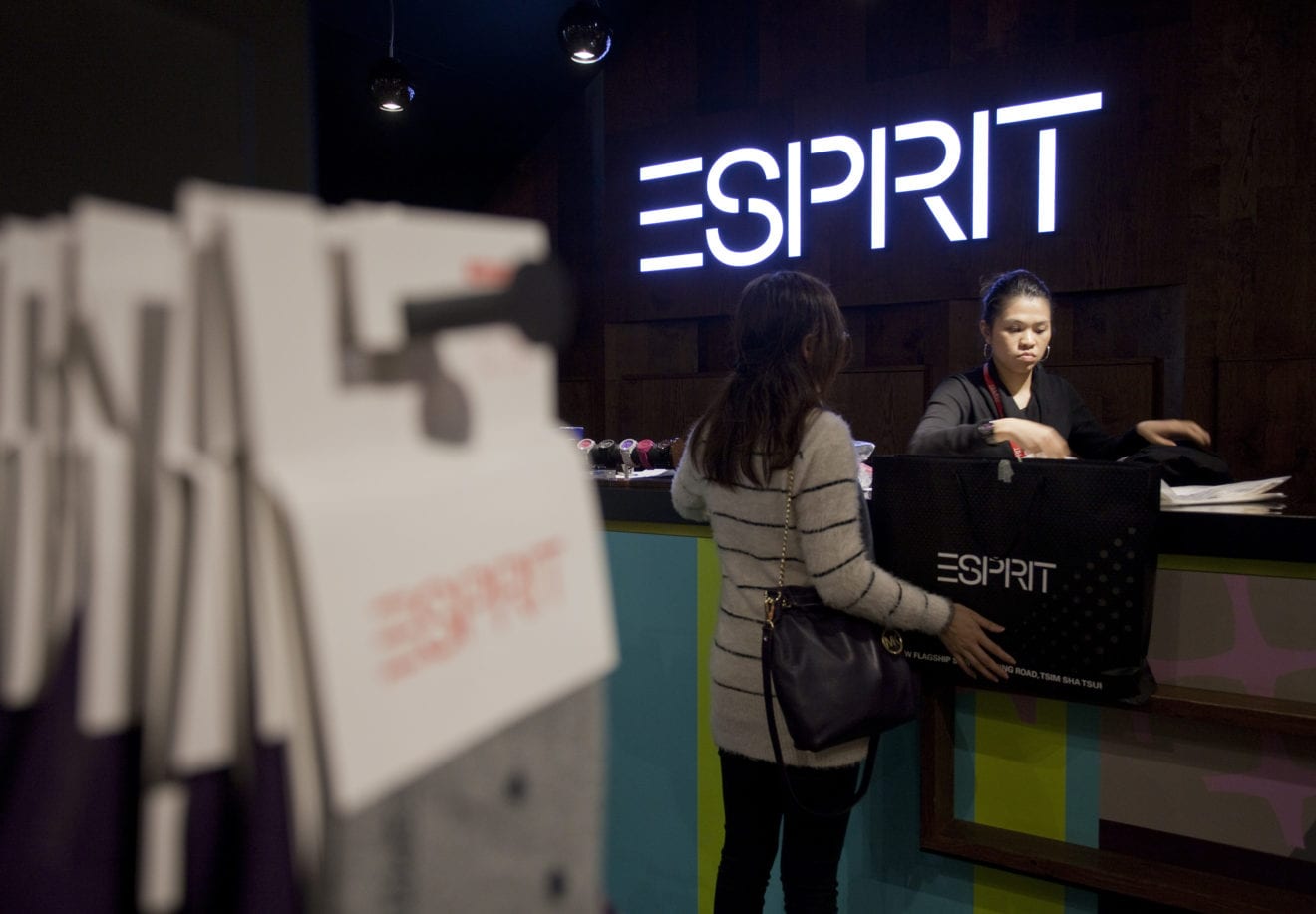
    Clothing retailer Esprit Holdings Ltd reported a 14.9 percent slide in first-quarter turnover on Monday as sales in Europe lagged and it cut its store footprint.

    Turnover in Hong Kong dollar terms fell to HK$4.7 billion in the three months ended Sept. 30, while the company cut its total controlled floor space by 7.6 percent.

    Turnover in Germany, which is the company’s biggest market and accounts for nearly half of its business, fell 15.5 percent. Turnover in the rest Europe – its second biggest market – fell 15.4 percent.

    In local currency terms, turnover fell 0.4 percent.

    The majority of the floor space reduction was in Esprit’s wholesale business. Retail floor space was reduced by just 1.3 percent and comp store sales growth was 10.8 percent.

    Esprit shares closed up 3.54 percent at HK$6.72 on the Hong Kong Stock Exchange earlier in the day.

  • Condom sales slump as China announces end to one child policy

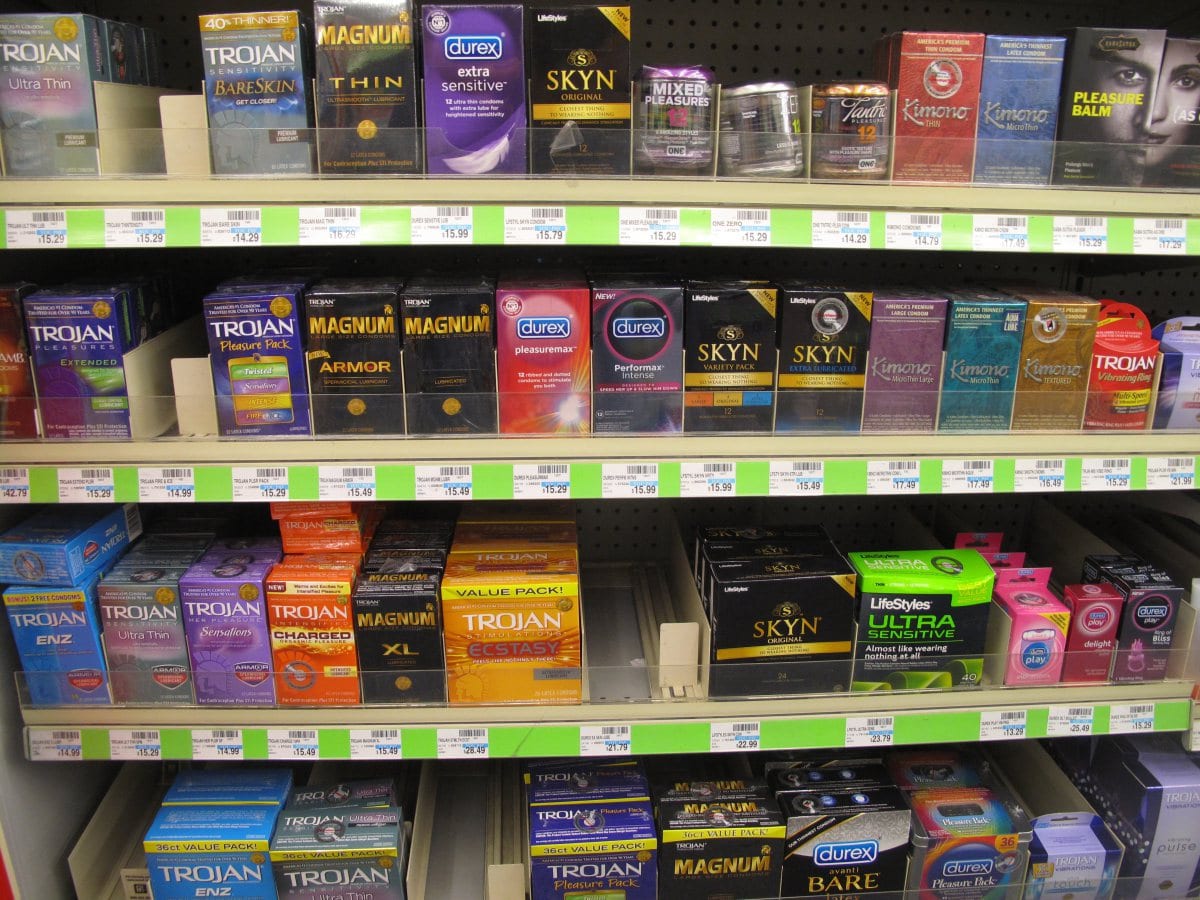
    Condom sales slump as China announces end to one child policy

    Shares of companies that make nappies, prams and infant formula got a boost on Friday from China’s decision to scrap its one-child policy. But for the maker of a popular brand of condoms, it was not the brightest of days.

    Investors are betting on a bump in sales for companies with baby or child-related businesses after China’s ruling Communist Party announced that all married couples would be allowed to have two children. The economic repercussions travelled as far afield as New Zealand, where the currency of the dairy-exporting country surged.

    Analysts at investment bank Credit Suisse estimated that the relaxed controls would result in an extra 3-6 million babies born annually in the five-year period starting in 2017. China, the world’s most populous country with nearly 1.4 billion people, has about 16.5 million births each year.

    The one-child policy began in 1979 to curb a surging population at a time when extreme poverty was widespread in China.

    The Credit Suisse report said that with the annual cost of raising a child estimated at 40,000 yuan ($6,330), the extra births would translate into an extra 120-240 billion yuan ($19-38 billion) in consumer spending a year, or 4-6 per cent of China’s total retail sales.

    A nurse takes care of newborn infants at a hospital in Huai'an, Jiangsu provinceA nurse takes care of newborn infants at a hospital in Huai’an, Jiangsu province  Photo: Patty Chen/Reuters

    One of the biggest winners in the financial markets was China Child Care Corp., which makes hair and skin care products for kids. Its shares ended 40 per cent higher on Hong Kong’s stock exchange.

    On the losing side, Japanese condom maker Okamoto Industries Inc., a favorite of Chinese visitors to Japan, slumped 10 per cent in Tokyo.

    Formula makers in Hong Kong and mainland China rose strongly, led by Beingmate Baby & Child Food Co., which jumped 10 per cent on China’s smaller Shenzhen stock exchange.

    Japanese and other foreign brands are popular with Chinese buyers because they’re seen as being authentic and better quality. Those characteristics are prized in China following food and other product safety scandals involving domestic brands.

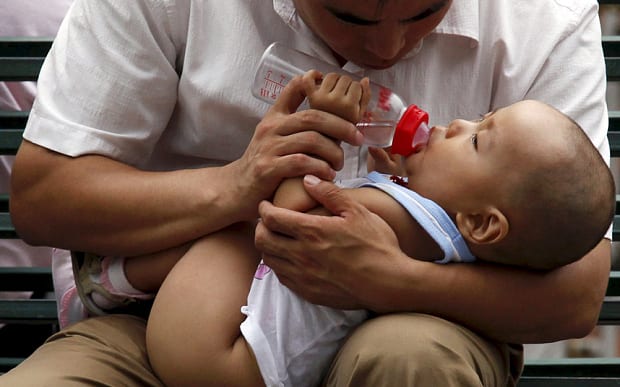
    A Chinese man feeds his baby in central Beijing

    Some cautioned the increase in births may not be as big as predicted because of the expense of raising a second child and other factors.

    “The rush for baby-related stocks may not necessarily bear fruit,” said IG analyst Bernard Aw in a report.

    In New Zealand, the local dollar jumped as high as $0.6772, gaining nearly 1 percent from $0.6699 the day before. The country is a major dairy exporter and its milk powder and formula industry would likely benefit from a baby boomlet in China.

    Some baby stocks started rising Thursday ahead of the official announcement on Chinese state media.

    Goodbaby International, which makes strollers, car seats and cribs, rocketed 7.4 percent on Thursday and followed that up with a 2.3 per cent gain on Friday. Rumours had already been swirling in China that the policy would be adjusted at a meeting on China’s next five year plan that was held this week.

  • Japan duty free sales boom

    Japan duty free sales boom

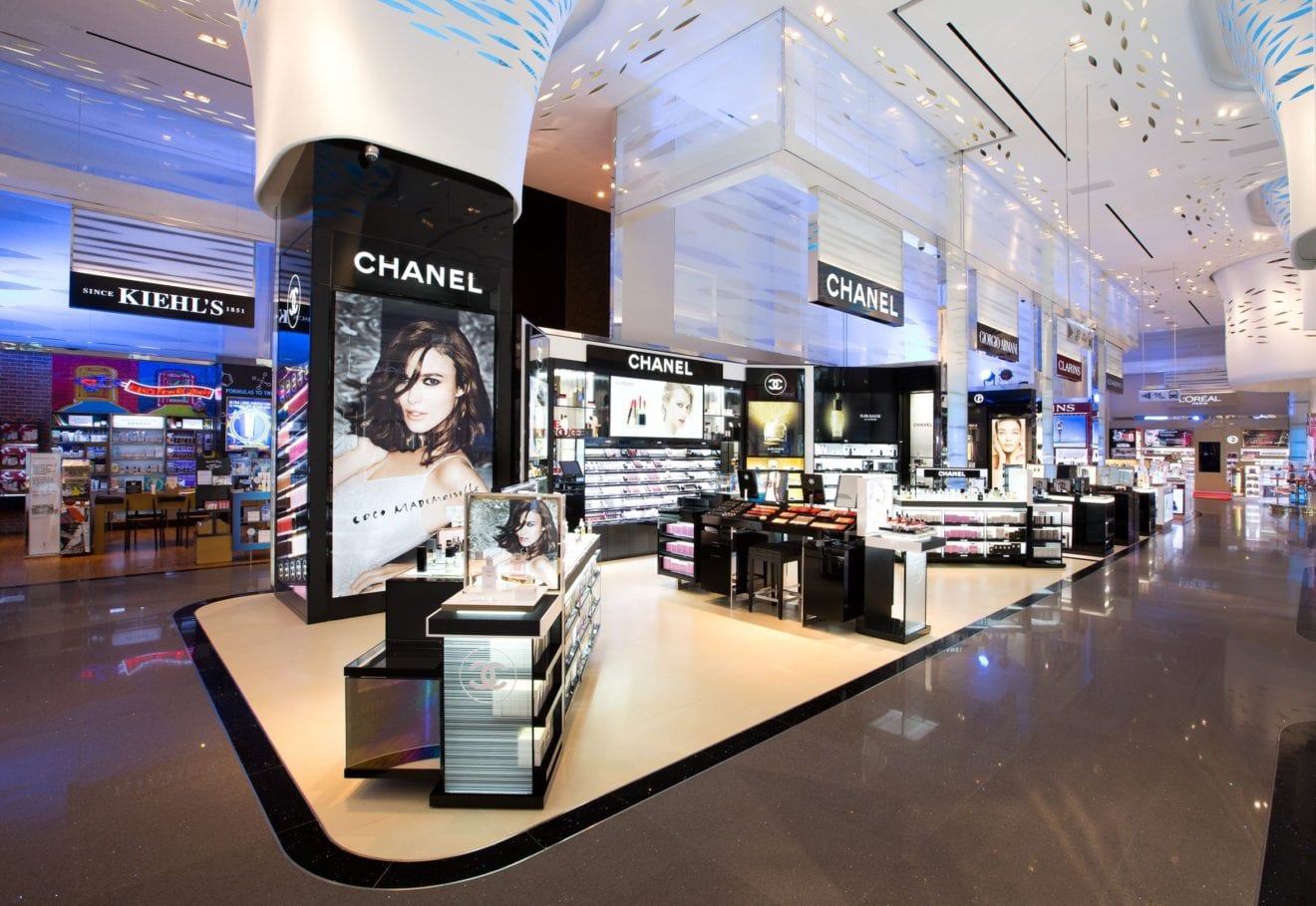
    Japan duty free sales soared in the first quarter of the current financial year as Chinese tourist ranks swelled.

    Major duty free retailers have reported sales on the mainland soared 20 per cent or more year on year, with brands preferred by Chinese shoppers performing the best.

    Japanese government figures show inbound tourists into the nation soared 47 per cent in the first six months of the 2015 calendar year – to 11 million. In the whole of 2014, inbound visitors totalled just 13.4 million.

    Sales of jewellery – especially gold jewellery – and watches lead the growth in a virtual mirror image of the experience of Hong Kong retailers, demonstrating clearly how the cashed up Chinese have changed their preferred duty free shopping destination.

    Leather goods are reportedly selling well and airport boutiques are experiencing healthy turnover increases.

    Japan’s government scrapped visas for Chinese mainlanders early this year, which has definitely helped fuel the boom.

  • Asos China braces for losses

    Asos China braces for losses

    Online fashion retailer Asos is budgeting for losses as it breaks into the China market.

    Announcing a pretax profit of £47.5 million for the year to August 31, the company offered an overview of its future plans geographically, including a lessened focus on the Australian market.

    New CEO Nick Beighton said China was a “key market” for Asos moving forward but the company was still in startup mode there.

    “It’s all about planting the seeds for future growth.”

    He said Asos expects losses of £5 to £7 million over the next 12 months in China as it builds its offer.

    In the year ahead, Asos will be focusing more on the UK – which remains its biggest market, Europe, the US and China.

    Last year, global sales rose 17 per cent to £1.12 billion. UK sales rose 27 per cent while international sales were up 11 per cent.

    Beighton said the online retailer’s mission to be the number one fashion destination for twenty-somethings, remains the same. The new CEO won’t be changing the Asos culture or the way the business does things, but he acknowledged the world Asos plays in is changing fast.

    “It’s more about mobile, it’s more about social, it’s more about content,” he said.

    The online retailer’s strategy is made up of four key pillars: great fashion at a great price, be awesome on mobile and, deliver engaging content and experience, supported by best in class service (ie. a friction-free experience from logistics through to customer care).

    “This really has been another year of mobile,” Beighton said.

    “In the last 12 months mobile penetration has increased throughout our business. In August 60 per cent of our global traffic came from mobile devices alone.” He added, just in the UK in August, 50 per cent of orders – not traffic – came from mobile devices.

  • Asia Pacific Breweries ends exclusive beer sales practice in Singapore

    Asia Pacific Breweries ends exclusive beer sales practice in Singapore

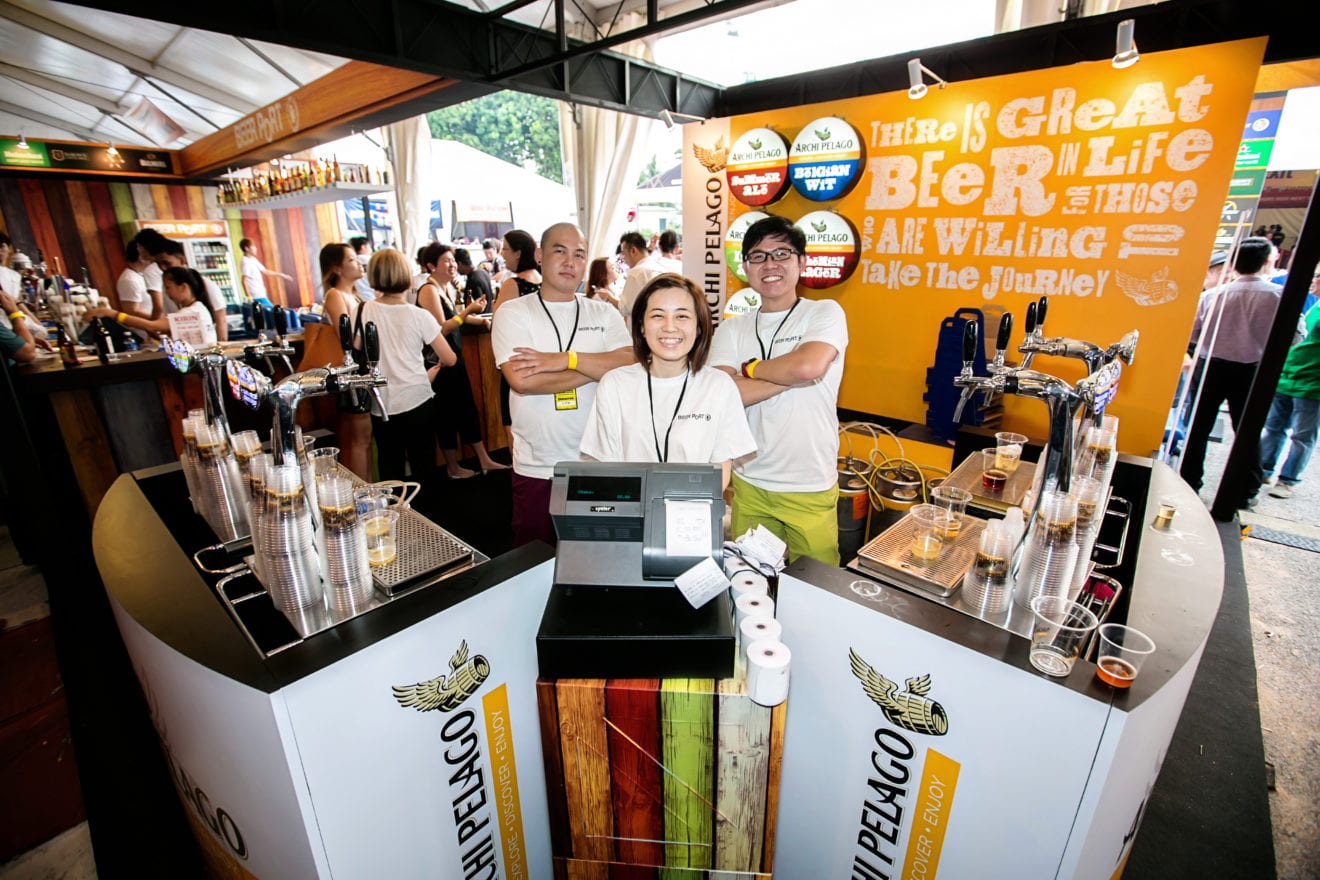
    The company has given CCS a voluntary commitment to cease its outlet exclusivity practice.

    Going forward, APBS will not impose outlet-exclusivity conditions in its supply of draught beer contracts to retailers.

    The change in APBS’s business practices will be applicable to all draught beer contracts entered into with retailers on and after December 28, including new and renewal contracts. APBS will also be required to provide CCS with documents to show that these changes have taken effect.

    “The removal of these exclusive business practices will allow beer suppliers to compete on merit in offering their draught beers to retail outlets,” CCA chief executive Toh Han Li said.

    “This will allow retailers to stock a greater variety of draught beers, leading to a more vibrant market with more choices for consumers, as well as opportunities for existing suppliers and new entrants including microbreweries and craft beer suppliers.”

    Acting on complaints, CCS had investigated APBS in relation to its practice of supplying draught beer to retail outlets solely on an exclusive basis.

    Under the competition law in Singapore, a dominant firm is prohibited from preventing or impeding its competitors from competing effectively through exclusive business practices.

    CCS says APBS’s outlet-exclusivity practice had prevented retail outlets from selling draught beers from competing suppliers and restricted the choices of draught beers available to retailers and consumers.

    Under the probe, CCS obtained information on the beer market in Singapore from retailers and beer suppliers. CCS also commissioned a market survey to gather information on market practices.

    CCS has ceased its investigation but will continue to monitor market practices.

  • Hong Kong wine vendors look to beat the retail slump at festival

    Hong Kong wine vendors look to beat the retail slump at festival

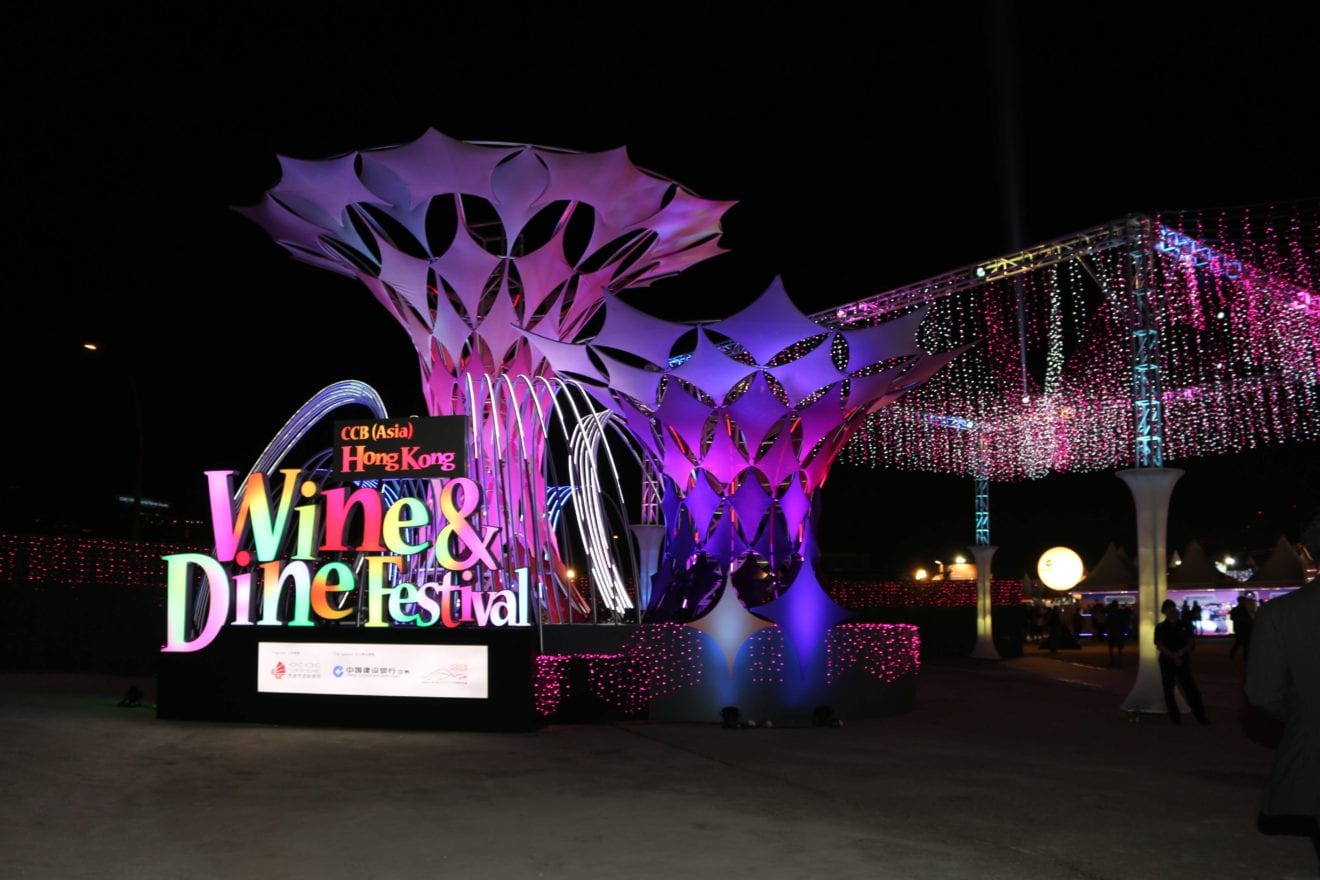
    Vendors of wines and liquors appeared to be undaunted by a retail and tourism slump in Hong Kong as they welcomed the annual Wine and Dine Festival in the Central harbourfront.

    One of the biggest in recent years, the festival this year features 340 stalls and offers a free flow of samples in return for the HK$30 cost of an admission ticket for the event.

    Henry Lum Kai-cheung, 41, general manager of Cheers, a boutique wine and cocktail store that operates both in Hong Kong and on the mainland, said the lacklustre retail performance and slowdown of tourism in the city had not deterred him from setting up a stall this year.

    “Actually 90 per cent of my business in the festival in the past years has been from local residents,” Lum said.

    “Tourists don’t usually buy many bottles here because they would have to carry them back home.”

    Jamie Lo Ching-man, marketing manager of Kiwa, a company that imports spirits from Japan, had similar views.

    “Most of our customers are Hong Kong locals. In fact, this year, we doubled the number of booths in the festival from five to 10 because I think there is huge demand for our wine in the community,” said Lo.

    He was expecting an 80 per cent increase in sales from last year.

    According to Lo, the impact of the economic slowdown is not easily evident from the festival itself because many wine companies in Hong Kong thrive by supplying their products to restaurants in the city.

    “We now have fewer orders from restaurants and business has dropped 20 per cent in that area starting from the middle of this year,” Lo said.

    The festival, which runs for four days till 10pm on Sunday, attracted over 140,000 visitors last year when it was relocated to Kai Tak due to the Occupy protests in nearby Admiralty.

    Despite the withdrawal of 40 exhibitors last year, Lum still had fond memories of his stall’s performance, which greatly surprised him.

    “There was an initial worry, but it ended up becoming a huge success because the organiser waived the admission fee and this attracted many people,” Lum said.

    “If I can reach the same sales volume this year, I’ll be happy.”

    This article appeared in the South China Morning Post print edition as Wine vendors look to beat the retail slump at festival

  • Daphne International sales slump

    Daphne International sales slump

    Hong Kong-listed shoe retailer Daphne International has reported a third quarter same store sales slump of 19.7 per cent as it continues to cull its store network.

    As earlier reported, Daphne issued a profit warning in July after reporting a fall in same store sales of 16.9 per cent in the first half of 2015, and by 17.7 per cent in the second quarter.

    In the first six months of the year, Daphne closed 181 stores – 117 directly-managed and 64 franchised stores, the majority in the second quarter. But it still has 6221 points of sale.

    Daphne operates the Daphne and Shoebox retail brands in Mainland China.

    During the third quarter, same-store sales of the group’s core brands business recorded a decline of 19.7 per cent year on year, but the company explained that was from a high base effect of 6.3 per cent growth during the same period last year.

    Overall, the same store sales decline of its core brands for the first three quarters of 2015 was 17.9 per cent.

    “The same-store sales decline was more driven by the lower average selling price, although both ASP and sales volume recorded a decrease,” the company disclosed.

    “The group continued the consolidation of the sales network, with a net closure of 219 points of sale during the third quarter (a reduction of 191 directly-managed stores and 28 franchised stores), and therefore had a total of 6002 POS under its core brands business as at September 30.”

    The one bright spot was an undefined growth in sales in its eCommerce sales during the third quarter.

  • Competition cramps Country Style

    Competition cramps Country Style

    Country Style Cooking Restaurant Chain, a quick service restaurant operator in China, says sales fell in the third quarter, despite the opening of 10 new outlets.

    In the three months to September 30, the company expanded its network to 355 restaurants,a net 23 more than a year ago. The new openings included six under the brand name Mr Rice.

    Country Style Cooking said it currently anticipates its revenue for the third quarter of 2015 to be about RMB388 million (US$61 million), compared to RMB409.1 million (US$64 million) in the same quarter of 2014.

    “The lower-than-expected revenue was mainly due to the intensified competition, which also negatively impacted the company’s quarterly same store sales,” it said in a statement.

    It plans to report its third quarter 2015 results in mid-November.

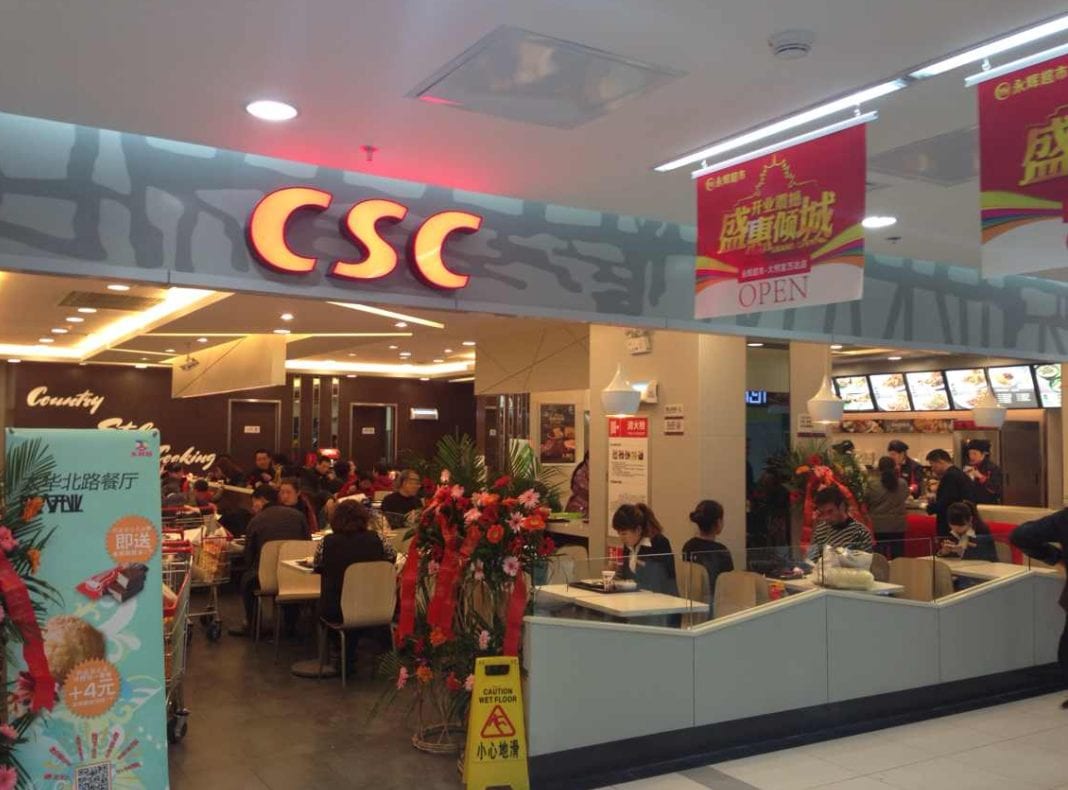
    Country Style directly operates all of its restaurants under brands of CSC and Mr. Rice and is the largest quick service restaurant chain in Chongqing municipality, the home of Sichuan cuisine.

  • US, Asia weigh down Hugo Boss

    US, Asia weigh down Hugo Boss

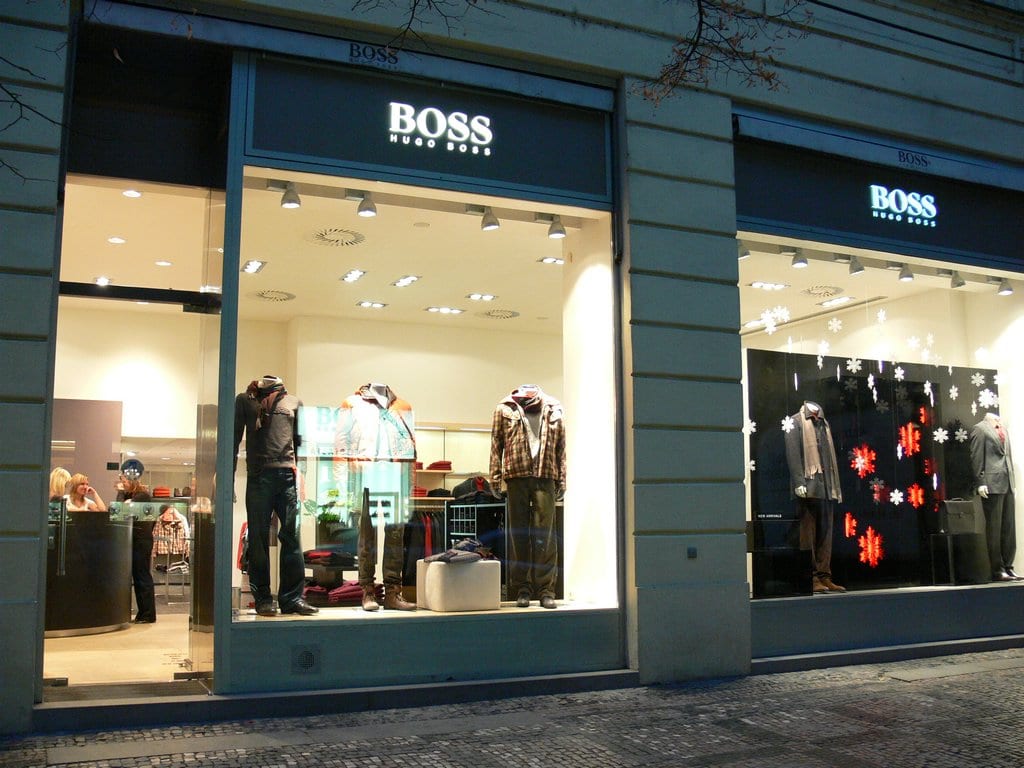
    Deterioration of the market environment in Asia and a slowdown in the Americas weighed on sales and earnings performance of German fashion brand Hugo Boss in the third quarter of 2015

    The company said its sales were marked by “high levels of volatility” in the third quarter to September 30. The group’s own retail business in particular developed unevenly over the period.

    “While performance in Europe remained strong and in line with original expectations, momentum in Asia and the Americas deteriorated considerably towards the end of the period. This was due to sales declines in China as well as a negative development in the Group’s US own retail and wholesale businesses,” the company said in a statement.

    “Weaker demand from tourists contributed to the slowdown in the US.”

    Third quarter group sales declined one per cent, excluding currency effects. Expressed in euros, they increased by four per cent to euro 744 million. Own retail same store sales remained stable year on year in local currencies.

    “Due to particularly challenging sales trends in the group’s directly operated stores as well as continued investments in the medium- and long-term growth potential of Hugo Boss, EBITDA before special items declined by eight per cent to euro 168 million in the third quarter, on a preliminary basis,” the company reported.

    “In addition, the group’s financial result was impacted by a negative charge of around euro 16 million related to adverse exchange rate movements of the Brazilian Real and the Swiss Franc in particular.”

    In light of weaker than expected trading in the third quarter, the group now forecasts sales and EBITDA to both increase between three and five per cent on a currency-adjusted basis in the full year.

    “This outlook is based on the assumption that fourth quarter retail comp store sales will remain stable or develop positively compared to the prior year quarter.”

  • Burberry shares down 12% following China slowdown

    Burberry shares tumbled 12 per cent, the largest drop in three years, as theluxury group warned that its sales had been hit by a slowdown in China.

    In an example of how the global luxury market is struggling, Burberry said that retail sales were affected by “an increasingly challenging environment for luxury, particularly Chinese customers”.

    Total retail sales grew just 2 per cent to £774 million in the six months to the end of September, while like-for-like sales slowed to 1 per cent. Crucially, in the Asia Pacific area, sales experienced a “mid-single digit percentage decline” while “Hong Kong

  • Car sales drive Singapore’s retail sales up by 6.1%

    Car sales drive Singapore’s retail sales up by 6.1%

    Ironically, petrol service station sales dropped the most.

    Motor vehicle sales almost single-handedly towed Singapore’s retail sales as it grew by 5% compared to last month. Excluding motor sales, retail sales would only grow by a measly 1.3% from last year.

    According to data from the Department of Statistics, car sales almost doubled (43.9%) since last year, illustrating the gravity of the pull.

    Meanwhile, total retail sales value is at an estimated $3.5b, higher than $3.3b from August 2014.

    The massive scale of motor sales growth picked up the slack for ailing sectors such as the petrol service station sales, optical goods and books, and food and beverages, whose retail sales fell by 20%, 11.8%, and 6.4% yoy respectively.

    Medical goods and services trailed car sales in growth, elevating by 10.9%, while watches and jewellery followed with an 8.7% growth.

  • Bauhaus sales slide

    Bauhaus sales slide

    Denim retailer Bauhaus International says its same-store sales in Hong Kong and Macau fell seven per cent in its second half year to September 30.

    The Hong Kong-listed street fashion retailer had 211 self-managed stores at the end of the first half year – 96 in Taiwan, 86 in Hong Kong and Macau and 29 in the mainland.

    Bauhaus International told the told the Hong Kong Stock Exchange that its same-store sales generally had slipped eight per cent overall.

    It has not released same store sales data.

    The company sells a range of imported denim and t-shirt brands including Desigual, Evisu, Superdry, True Religion and Red Pepper.

  • China ‘no catastrophe’ says Bulgari CEO

    China ‘no catastrophe’ says Bulgari CEO

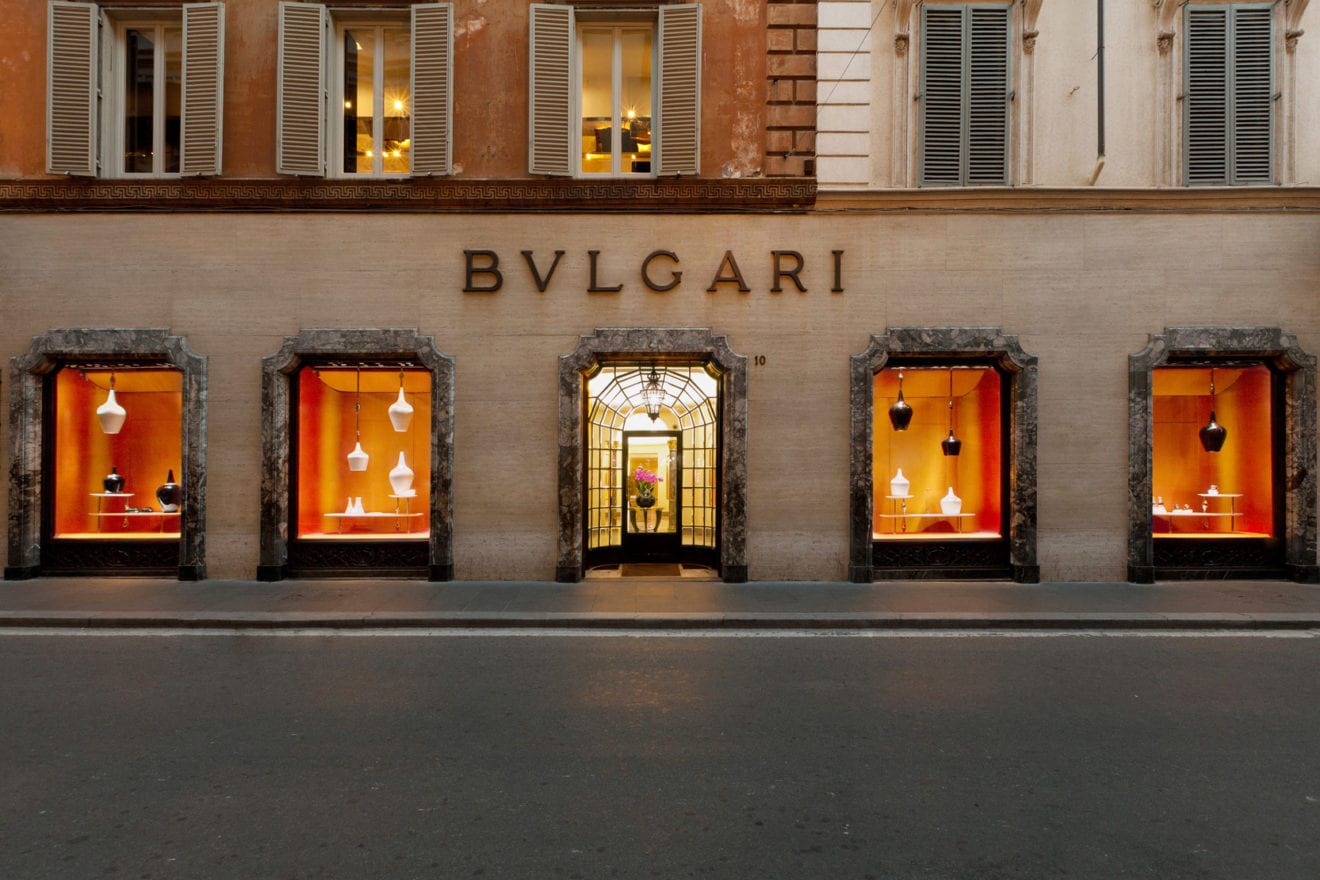
    Slowing luxury sales growth in China is “not a catastrophe, it’s a correction” says Bulgari CEO Jean-Christophe Babin.

    In an interview with international business news organisation Bloomberg, during the World Retail Congress in Rome, Babin warns of overstating China’s current slowdown

    A decline in the luxury sector began last year when the Chinese central government announced a clampdown on graft and gift giving and was later exacerbated by a sharp devaluation of the Chinese currency which triggered a slump in share prices.

    But in the interview – watch it here online – Babin points out that the share price declines have only brought world markets back “to what we all considered a good level last year”.

    He said China’s economy is still growing at about 6.8 per cent which produced enough customers to buy Bulgari’s luxury jewellery.

    While not disclosing figures, Babin said Bulgari’s July and August figures were “exactly in line with the first semester”despite the currency and stock market realignments.

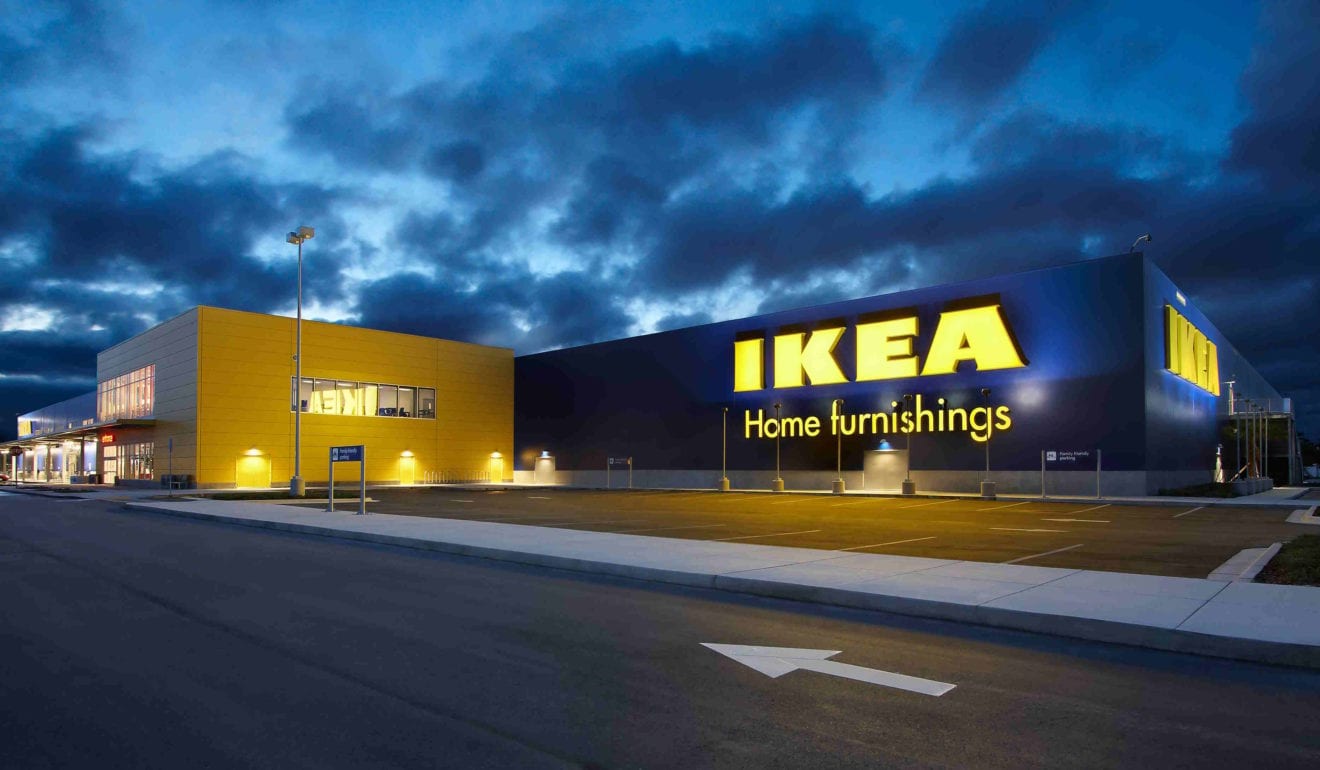
  • Ikea sets new records

    Ikea sets new records

    Ikea has set new records in sales and store visits in its latest financial year, to August 31.

    The Swedish furniture and homewares chain now has 328 stores in 28 countries and says it served 771 million customers in the last year.

    Total sales reached US$35.5 billion.

    “We are growing in almost all our markets and we are happy about last year’s sales development,” said president and CEO Pete Agnefjall.

    The chain’s two fastest growing markets are China and Russia.

    “The Chinese middle class continues developing and in pace with its growth an interest for our product rises too,” said Agnefjall.

    “We have more visitors in our department stores now and we have opened three new stores in China during the year. We are going to open three new stores the next year too…”

    Sales were also strong in Germany, North America and Southern Europe.

  • Alibaba feels China pain as it trims sales forecasts

    Alibaba feels China pain as it trims sales forecasts

    E-commerce giant Alibaba has succumbed to the crisis gripping the Chinese economy a year after the company became the world’s biggest float.

    Founder and former English teacher Jack Ma became an overnight billionaire when Alibaba launched on the New York Stock Exchange in September 2014, as the firm raised a record-breaking $25 billion (£16.3 billion) in a float valuing the company at $186 billion.

    Alibaba is the biggest player in the Chinese e-commerce market — where spending is set to hit $1 trillion by 2019 — accounting for 80% of online sales in China.

    The firm is also among the top picks of UK retail investors, according to fund manager Hargreaves Lansdown.

    But the company admitted today that a weakening Chinese economy has taken its toll on business, as it slashed forecasts for the total value of transactions it expects to take place in the current quarter.

    This will now be “mid-single digits lower” than the giant’s initial estimates for the quarter.

    Alibaba’s head of investor relations, Jane Penner, said consumers were still willing and able to spend but that the company had been seeing a “negative impact of the magnitude of the spending”. Average order values are also lower, Penner added.

    What is Alibaba?

    The latest fears over the e-commerce giant come a month after it reported its slowest growth in transactions for more than three years.

    Shares in the company are now below their $68 float price after a near-5% slump overnight to $60.91. The stock has halved since the end of May, when Alibaba’s shares hit $119 — valuing the company at a staggering $300 billion.

    The latest bad news out of China comes hard on the heels of a dramatic slump in imports — fuelling fears of a hard landing for the world’s second biggest economy — and a month of turmoil in global stock markets following Beijing’s sudden devaluation of the yuan.

    China also cut its official growth estimates for 2015 this week. China has also cut interest rates five times since November and intervened directly to stem plunging stock markets.

    Rathbones investment director Jane Sydenham said: “Investors are beginning to adjust to what was initially quite a shock in terms of the renminbi devaluation, share repurchases — normally those kind of activities on the part of central banks signal something really quite serious.

    “It’s taken some time for investors to adjust to the fact that clearly, growth is slowing, perhaps more than we’d thought.”

    Despite the gloom from Alibaba, shares rallied in China for the second day running on hopes of more government stimulus.

    Asian markets rose on Wednesday

    Shanghai’s main market gained 2.3% after the finance ministry set out plans to boost infrastructure spending and speed up reform of its tax system to support the economy.

    Japan’s Nikkei also saw its biggest single gain in seven years — rising 7.7% — as markers rallied on comments from prime minister Shinzo Abe raising hopes of a corporate tax cut and a new trans-Pacific trade deal.