Tag: Vietnam

  • Thailand’s 2nd largest bank set for Vietnam entry

    Thailand’s 2nd largest bank set for Vietnam entry

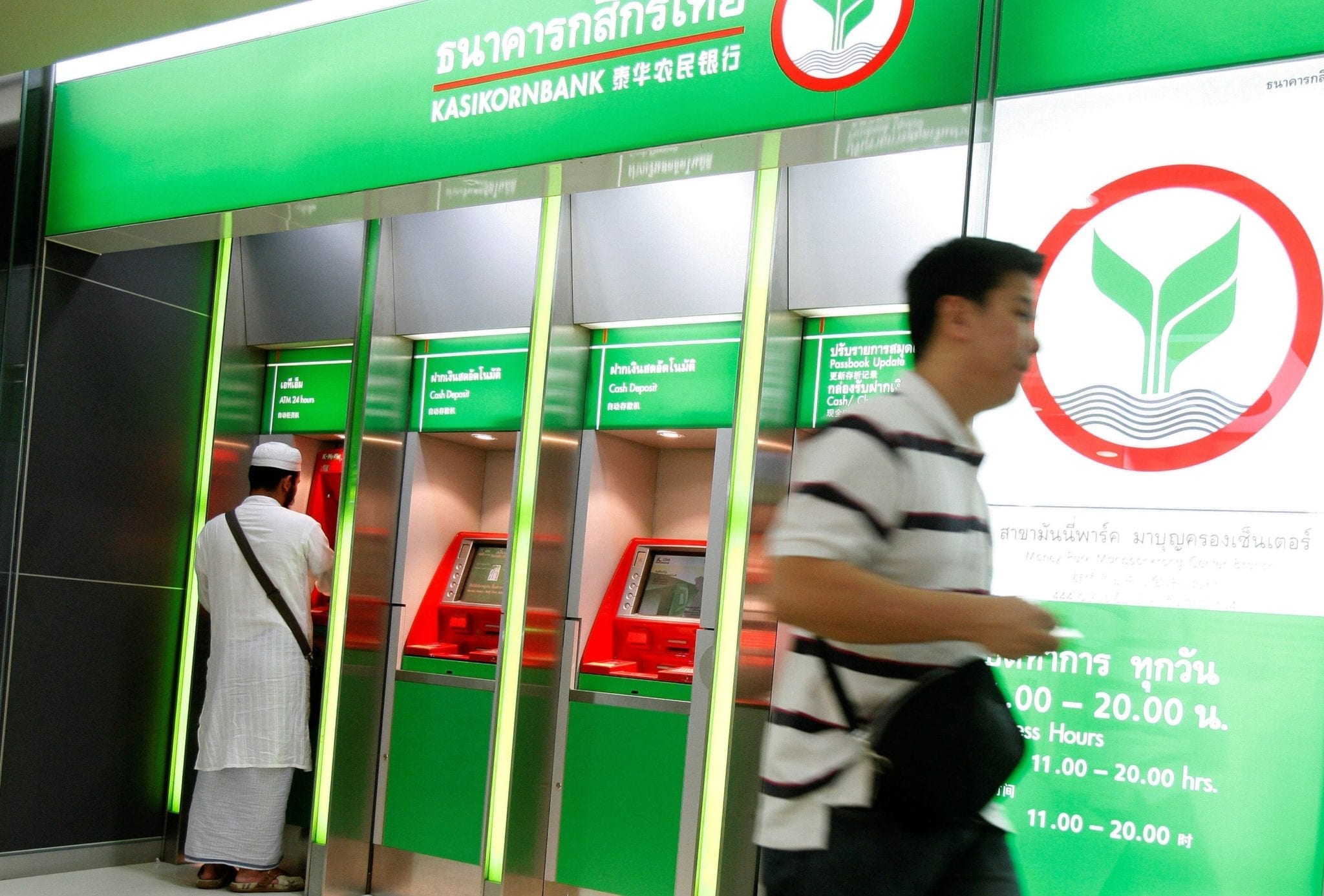
    Thailand’s second-largest lender by assets, Kasikornbank, plans to open a branch in Ho Chi Minh City in the third quarter this year.

    “Attention is now focused on Vietnam as a regional investment hub that has attracted the world’s leading companies, including from Thailand, thanks to its strong economy,” the bank’s executive vice-president, Pattarapong Kanhasuwan, said in a statement, adding its recovery should be helped by its success in containing Covid-19.

    The new branch gained regulatory approval in January and plans to lend THB10 billion ($333 million) in its first year of operation.

    The bank will focus on Thai and foreign businesses investing in Vietnam and startups in digital technologies.

    Thailand was the seventh-largest foreign investor in Vietnam last year with $292 million, according to the Ministry of Planning and Investment.

  • Vietnam slaps anti-dumping duty on Thai sugar

    Vietnam slaps anti-dumping duty on Thai sugar

    Vietnam has applied an anti-dumping and anti-subsidy duty of 33.88 percent on raw sugar from Thailand to protect domestic producers.

    The Ministry of Industry and Trade said that although its preliminary investigation found Thai sugar exporters have a dumping margin of 48.88 percent, it decided to collect 15 percentage points less after taking into account the socio-economic impacts of the duty and the benefits of farmers, manufacturers, and consumers.

    The ministry began its investigation in September last year upon requests by Vietnamese sugar producers who claimed they were being hurt by the low-priced Thai product.

    Its data showed that Vietnam’s sugar imports from Thailand rose 330 percent from 2019 to 1.3 million tonnes last year.

    This resulted in 3,300 people losing their jobs as many factories had to close and more than 93,200 farmers were affected.

    The final decision on the duties will be determined in the second quarter this year.

  • Apparel retailers cut orders while Asian factories fight to survive

    Apparel retailers cut orders while Asian factories fight to survive

    Clothes retailers in Europe and America sit on excess inventory and cut back on spring orders. Sourcing agents face late payments. Garment factories in Bangladesh are on the rack.

    The global apparel industry, reeling from a punishing 2020, is seeing its hopes of recovery punctured by a new wave of COVID-19 lockdowns and patchy national vaccine rollouts.

    Some major retailers are still nursing last year’s clothes, which would have been sold off in clearance sales in normal times. British chain Primark, for example, said it was housing around 150 million pounds ($205 million) worth of 2020 spring/summer stock and 200 million pounds from autumn/winter.

    In an indication of the scale of the backlog, consultancy McKinsey says the value of unsold clothing worldwide, in stores and warehouses, ranges from 140-160 billion euros ($168-192 billion) – more than double normal levels.

    Britain’s Marks & Spencer and Germany’s Hugo Boss  said they had placed smaller orders than usual for this year’s spring collection.

    Retailers are keeping volumes small and lead times tight, according to Ron Frasch, former president at Saks Fifth Avenue who is now operating partner at private equity firm Castanea Partners, which works with a number of apparel brands.

    “Most of the brands now are pretty tight on shipping and the factors are very tight. I think everyone was very conservative with their purchasing,” he said. “I know many have been slow-paying. That is for sure.”

    Indeed, Hong Kong-based sourcing agent Li & Fung, which manages more than 10,000 factories in 50 countries for retailers including global players, said that some retailers had requested later payment terms, but declined to provide specifics.

    The pain is consequently flowing to  major garment manufacturing centres like Bangladesh, whose economies rely on textile exports. Factories are struggling to stay open.

    Fifty factories surveyed by the Bangladesh Garment Manufacturers and Exporters  Association said they had received 30% fewer orders than usual this season, as pre-Christmas lockdowns in much of Europe followed by another clampdown in January hit their businesses hard.

    “Orders usually arrive three months in advance. But there are no orders for March,” said Dhaka-based factory owner Shahidullah Azim, whose clients include North American and European retailers.

    “We are operating at 25% of capacity. I have some orders to run the factory till February. After that, I don’t know what future holds for us. It’s difficult to say how we will survive.”

    Miran Ali, who represents the Star Network, an alliance of manufacturers in six Asian countries, and himself owns four factories in Bangladesh, faces similar problems.

    “At this point in time, I should have been entirely full until March at least, and looking at a healthy quantity for autumn/winter coming in already. Across the board, that is coming slow,” he told Reuters from the capital Dhaka.

    “Brands are buying less from fewer people.”

    Asif Ashraf, another factory owner in Dhaka who makes clothes for global retailers, said it was tough to adjust. “We’ve produced the fabric and we’re ready to stitch the garments, but then they say the order is on hold.”

    With store closures threatening to carry into summer, some retailers are attempting to sell off as much of their excess stock as possible before placing new orders, textile recycling firm Parker Lane Group told Reuters.

    CEO Raffy Kassardjian said his business went from processing an average of 1.5 million items of excess apparel per month to over 4 million in January, its busiest month ever.

    Last year was dire for the clothing industry, which saw sales slide by about 17% versus 2019, according to Euromonitor. And the future is uncertain.

    Estimates for 2021 range from pessimistic forecasts of a 15% sales drop from McKinsey, to an 11% recovery from Euromonitor.

    So are there bright spots? Well, a lockdown pyjama boom is offering some minor relief.

    “If you want to know what the Great British public is doing – it’s wearing pyjamas again,” Marks & Spencer CEO Steve Rowe said last month, while Hugo Boss alluded to the same phenomenon, saying it had “streamlined our range of classic business clothing and expanded the range of casual wear”.

    But that’s cold comfort for some factory owners.

    “Demand for pyjamas is at a life-time high,” Ali in Dhaka acknowledged. “But not everyone can make pyjamas!”


  • Pork imports surge 382 percent

    Pork imports surge 382 percent

    Vietnam has imported 141,140 tons of pork and related products in 2020, up 382 percent year-on-year, the General Department of Vietnam Customs has reported.

    The import value in 2020 increased 503 percent to $334.44 million, it said.

    The rising pork imports are attributed to the low domestic supply caused by the Covid-19 pandemic, African swine fever, and the central Vietnam floods, according to the Ministry of Industry and Trade.

    Brazil is the largest pork supplier with 24.5 percent of the total pork import value, followed by Russia with 24.1 percent and the U.S. with 13.7 percent.

    Over 800 enterprises from 19 markets have been allowed to export pork to Vietnam, according to the Ministry of Agriculture and Rural Development.

  • Apple returns to 4th place in Vietnam smartphone market

    Apple returns to 4th place in Vietnam smartphone market

    Apple surpassed VinSmart to become the fourth-largest smartphone brand in Q4 of 2020 as sales of iPhone 12 surged.

    With a market share of 11 percent, it was behind China’s Vivo (13 percent), which climbed two places from the previous quarter, Singaporean technology market analysis firm Canalys said in a recent note.

    South Korea’s Samsung stayed on top with a 24 percent market share followed by China’s Oppo (16 percent), but their sales plummeted by 19 percent and 28 percent year-on-year.

    Hundreds of people queued up in front of Apple stores to become the earliest owners of iPhone 12 late last year.

    Almost 10 smartphone brands have been vying for third place in recent years, with Apple, Xiaomi, and Vivo the most notable names. None has remained in that position for more than six months.

    Around 75 million people, or almost 80 percent of the population, use smartphones, according to We Are Social, a social media marketing and advertising agency.

  • KBank to open a Ho Chi Minh City branch

    KBank to open a Ho Chi Minh City branch

    KASIKORNBANK (KBank) is gearing up to become The Bank of AEC+3 after the State Bank of Vietnam granted approval for the opening of a branch in Ho Chi Minh City, Vietnam. The Bank aims to serve Thai business customers, including large corporate and SME clients who have invested in Vietnam, as well as local retail customers. It targets lending of 10,000 million Baht in its first year of operation while also investing in start-up firms with the aim of scouting advanced digital technologies for increased business opportunities.

    Mr. Pattarapong Kanhasuwan, KBank Executive Vice President, said that KBank was granted a license to open a branch in Ho Chi Minh City on January 19, 2021, and the Bank is now preparing for its inauguration. The branch is scheduled to open its doors within the third quarter of this year in order to provide services to local customers, including Thai and foreign businesses investing in Vietnam. Attention is now focused on Vietnam as a regional investment hub that has attracted the world’s leading companies – including those from Thailand – thanks to its strong economy. As evidenced, Vietnam is the only ASEAN country that is presently enjoying positive growth. In spite of the COVID-19 pandemic, it is among the world’s top four countries in terms of GDP growth. The International Monetary Fund (IMF) has assessed that the Vietnamese economy will recover at a fast rate in 2021, with growth projected at 6.5 percent. This will likely attract international investors, both in Asia and the West, to steadily invest in Vietnam going forward.

    With these factors in mind, KBank has used the knowledge gained from services offered at its two representative offices in Hanoi and Ho Chi Minh City in order to upgrade the representative office in Ho Chi Minh City to a Bank branch. It will focus on offering services to Thai, Chinese, Japanese and South Korean companies wishing to expand their businesses in Vietnam for international trade and investment, as well as local entrepreneurs, especially those conducting business with Thai corporate customers of KBank.

    KBank has set operational targets for the Bank branch in Ho Chi Minh City once it

    is fully established in 3Q21. These include services primarily for business sectors related to Thai customers of KBank, in particular SMEs, trading, service, infrastructure and industrial businesses. Its services will then be expanded to retail banking, including deposit and personal loan, based on KBank’s digital banking expertise in collaboration with local tech start-ups through investment by KVision to ensure that such services meet the needs of local retail customers. In 2020, the number of internet users in Vietnam had reached up to 70 percent of the total 90 million population, and Vietnam’smarket was valued at USD13 billion. KBank’s investment in Vietnam differs from that in other AEC+3 nations, where the priority is on international business. KBank’s 4Q21 operational targets for the AEC+3 include deposits of 1.2 billion Baht and loans of 10 billion Baht.

    KBank will continue to operate through the Hanoi representative office to provide service and act as an intermediary between the KASIKORNBANK Head Office and Thai customers who are expanding their businesses to northern Vietnam. At the same time, the Hanoi representative office supervises investment projects that have received financial support from KBank, compiles market data to support customers’ business plans, and promotes trading activity and investment between Thailand and Vietnam. Thai exporters who ship goods to Vietnam will also be given more access to the ASEAN market through this international network.

    KBank’s approval from the State Bank of Vietnam to set up operations in Vietnam is a highlight of the Bank’s strategy in becoming The Bank of AEC+3 that will connect all of its services via an extensive banking network in various forms including locally incorporated institutions (LIIs), branches, representative offices and partner banks. At present, KBank has an overseas service network across the AEC+3 countries and several others, in 16 countries and with more than 84 partners worldwide.

  • Samsung Electronics appoints new president for Samsung Vina

    Samsung Electronics appoints new president for Samsung Vina

    Kevin Lee, a veteran in the mobile telephony industry with over 30 years’ leadership experience, has been named the new president of Samsung Vina Electronics.

    He was senior vice president, Verizon Account, at Samsung Electronics America and president of Samsung Electronics Benelux and Greece before coming to Vietnam. Under his leadership, Samsung Vina aims to sustain its commercial success in Vietnam, expand its sustainable business practices, build stronger and more impactful strategic partnerships, nurture innovation and become Vietnam’s top-of-mind, premium consumer electronics brand.

    Kevin Lee said: “Vietnam is going to be in the spotlight in 2021. I want to be a part of Vietnam’s success stories by capturing opportunities for growth: recovered economy, IoT technology, open business environment, and a young, captivated generation of new consumers. I envision Samsung to be the brand that places itself into the right opportunities and at the appropriate channels where we provide the most value for consumers. Then and only then can we become the most beloved brand and stand out in a competitive landscape.”

    Samsung’s ultimate goal in the coming years is becoming a brand that has widespread recognition across business units, winning consumers’ hearts and support, and maintaining leadership positions in product categories where the company has a presence.

    To achieve these goals, Samsung’s strategic growth roadmap under Kevin Lee’s leadership will revolve around two main driving forces.

    The first is to focus more on people. For consumers, Samsung Vina will maintain a consistent brand voice which allows consumers to recognize and remember the brand with ease. The company aims to conduct more market research programs to further understand and communicate with consumers.

    It will also strengthen strategic partnerships with business partners and influencers on a “win-win” basis, while reinforcing its workforce with rigorous training programs and competitive, best-in-class benefits.

    In many places, Samsung Vina runs corporate social responsibility programs, including specialized training programs in line with the government’s directive to improve Vietnam’s digital literacy and other initiatives that improve people’s quality of life.

    The second is utilizing impactful innovations with on-demand flexibility. Samsung Vina is committed to delivering meaningful products and at the same time reimagining operations in this new age.

    Samsung Vina will utilize its technology base to drive digital transformation and new innovations with on-demand flexibility.

    Samsung is well-known for transformative ideas and technologies like TVs, smartphones, wearable devices, tablets, digital appliances, network systems, system LSI, foundry, and LED solutions.

  • Phones continue to lead exports

    Phones continue to lead exports

    Exports of phones and phone parts were worth $51.18 billion last year, a whopping 18 percent of Vietnam’s total exports, according to the General Statistics Office.

    The phones were exported to over 50 countries and territories, with China being the largest market, accounting for almost a quarter.

    The second-largest market was the EU with 19 percent, followed by the U.S., South Korea, and the UAE.

    But for the first time in 10 years, phone and component exports fell, by 0.4 percent.

    Samsung was the biggest contributor to the exports. Its smartphone manufacturing factories in the northern provinces of Bac Ninh and Thai Nguyen are its two largest in the world and are also its largest home electronics factory in Southeast Asia.

    About 60 percent of all Samsung smartphones are produced in Vietnam.

  • Vietnam Airlines suffers $483 mln loss

    Vietnam Airlines suffers $483 mln loss

    Vietnam Airlines reported a loss of over VND11.1 trillion ($483 million) last year as the Covid-19 pandemic grounded all its international flights.

    The figure was lower than its projection in December of over VND12 trillion.

    Revenues were down nearly 59 percent to VND40.83 trillion as its total number of flights fell by over 27 percent to 86,978.

    The government recently approved a bailout for the carrier, with the State Bank of Vietnam (SBV) allowed to provide a refinanced loan of up to VND4 trillion at zero interest.

    Vietnam Airlines also received permission to issue more shares to existing shareholders to increase its capital.

    The country’s aviation industry suffered badly last year due to flight restrictions to curb the spread of the novel coronavirus, and the number of air passengers plunged by 41 percent to 32.3 million, according to the General Statistics Office.

  • Yeah1 suffers another year of loss

    Yeah1 suffers another year of loss

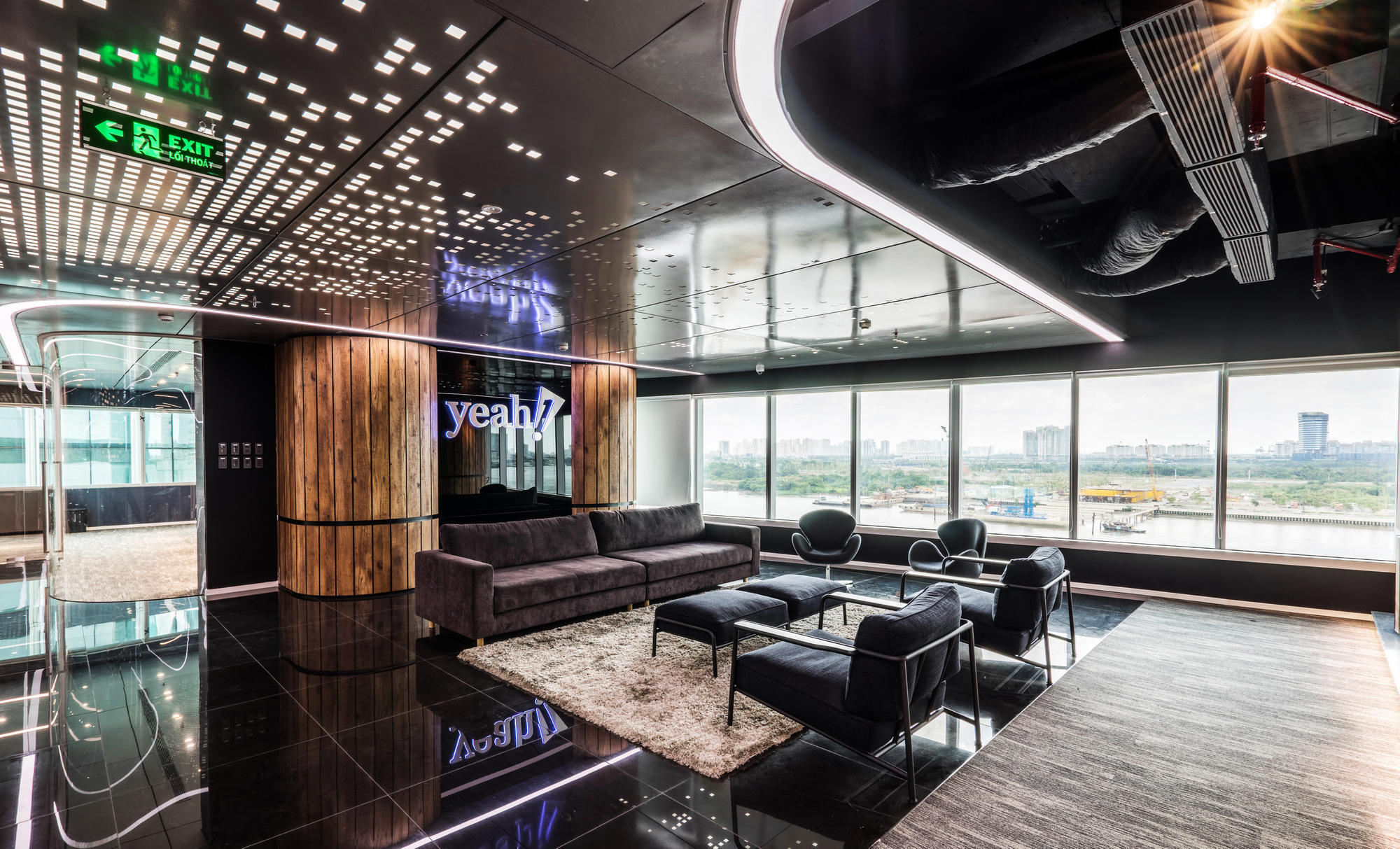
    Media company Yeah1 reported a post-tax loss of VND151 billion ($6.55 million) last year, its second straight year of losses, as it developed a new business.

    Amid the Covid-19 pandemic the company, one of the largest digital media ecosystems in Vietnam, decided to set up a new multi-channel trading platform, Giga1, which seeks to cut out intermediaries and deliver goods directly from manufacturers to customers.

    “In 2020, we spent a lot of resources on this ecosystem of consumption and retail, which led to higher spending and affected the company’s profits,” Nguyen Dang Quynh Anh, deputy director of Yeah1, said.

    Revenues fell by 16 percent last year to VND1.22 trillion. In March, its contract with YouTube was terminated due to a violation of policies.

    It began as an operational error but later “turned into a real crisis for the company,” chairman Nguyen Anh Nhuong Tong said.

  • Vietnam retail sales surge ahead of Lunar New Year

    Vietnam retail sales surge ahead of Lunar New Year

    Total retail sales of goods and revenue from consumer services in January are estimated at 479.9 trillion VND (nearly 20.77 billion USD), up 3.7 percent month-on-month and 6.4 percent year-on-year, according to the General Statistics Office (GSO).

    Goods-retail sales totaled 378.9 trillion VND, accounting for 79 percent of the total and up 4.1 percent month-on-month and 8.7 percent year-on-year.

    Revenue from accommodation and food service stood at around 48.7 trillion VND, representing 10.1 percent of the total. It increased 2.7 percent against December but was down 4.1 percent against January 2020.

    Tourism revenue was around 1.6 trillion VND, or 0.3 percent of the total, up 0.7 percent compared to December but down 62.2 percent year-on-year.

    Earnings from other services were estimated at 50.7 trillion VND, accounting for 10.6 percent of the total and up 1.1 percent month-on-month and 7.3 percent year-on-year.

    The GSO said retail sales and consumer services have become more vibrant as the Lunar New Year (Tet) holiday nears.

    Most enterprises, shopping centers, supermarkets, and business establishments have readied an abundant supply of goods and offered various promotional programs to stimulate consumption ahead of the lunar new year, the office noted.

  • Cars, phones deliver one-fifth of Vingroup revenues

    Cars, phones deliver one-fifth of Vingroup revenues

    Automobiles and smartphones accounted for 19 percent of private conglomerate Vingroup’s revenues in the last quarter of 2020.

    This marked a 40 percent year-on-year increase to VND6.9 trillion ($299.45 million).

    The largest private conglomerate in Vietnam sold 31,500 cars last year, with its VinFast sedan and SUV models among the bestsellers in their respective segments.

    The group’s VinSmart phones were also among the bestsellers in Q4, 2020.

    The company saw revenues from real estate in the quarter rising 47 percent year-on-year to over VND22.2 trillion after handing over three major Vinhomes projects.

    Revenue from tourism and entertainment, however, fell 40 percent to VND1 trillion because of the Covid-19 pandemic.

    For the whole year, Vingroup’s pre-tax profit fell 11 percent to VND13.96 trillion, while revenue fell 15 percent to VND110.46 trillion.

  • Vietjet earns $3 million profit despite pandemic

    Vietjet earns $3 million profit despite pandemic

    Budget airline Vietjet recorded a consolidated after-tax profit of VND70 billion ($3 million) in 2020 despite headwinds caused by the Covid-19 pandemic.

    This makes Vietjet one of the few airlines in the world that did not reduce its workforce, the carrier said in its latest financial statement.

    The second-largest airline in Vietnam in terms of market share reported consolidated revenues of VND18.2 trillion last year, down 64 percent year-on-year.

    According to its financial statement, ancillary revenue accounted for nearly 50 percent of Vietjet’s total revenue in 2020. The airline promoted ancillary services to offset decreasing air travel revenue, the statement noted.

    For instance, it increased the number of cargo flights to make up for dwindling revenues from passenger flights and increased the application of the self-service system at the Noi Bai International Airport in Hanoi to lower costs.

    Vietjet said it conducted 78,462 flights in 2020, down from 139,000 in 2019. The airline’s total assets were valued at over VND47 trillion as of last year.

  • January exports up 50 pct

    January exports up 50 pct

    Exports rose by 50.5 percent year-on-year in January to $27.7 billion with triple-digit increases in shipments of smartphones and machinery.

    The U.S. was the largest market, followed by China, the E.U., ASEAN, Japan, and South Korea, according to the General Statistics Office.

    Six products saw exports exceed $1 billion, including smartphones (up nearly 115 percent), electronics and computers (up 50 percent), and machinery and equipment (up 115 percent).

    Some agricultural products also achieved strong increases, including rubber (nearly 120 percent), cashew (52 percent) and pepper (42 percent).

    Imports rose 41 percent to $26.4 billion, giving Vietnam a trade surplus of $1.3 billion, with China remaining the largest seller, followed by South Korea, ASEAN and Japan.

    Last year exports had risen by 6.5 percent to $281.5 billion.

  • Vietnam eyes 500 hi-tech manufacturers

    Vietnam eyes 500 hi-tech manufacturers

    Vietnam eyes to have 500 manufacturers of hi-tech products and 200 agriculture companies using hi-tech applications as of 2030.

    The government also targets to increase the export value of hi-tech products to about 60 percent of the total export value in the manufacturing and processing industry, according to National High-Tech Development Program 2030 recently issued by Prime Minister Nguyen Xuan Phuc.

    It also seeks to develop and master 20 high technologies as part of a tech list prioritized for investment and development in the region.

    Funding for the program comes from state coffers, organizations, and private companies.