Tag: Vietnam

  • Techcombank profits sharply up

    Techcombank profits sharply up

    Vietnam’s largest private lender, Techcombank, reported a 23 percent rise in pre-tax profit last year to VND15.8 trillion ($683.62 million).

    It remained the third most profitable bank in the country behind state-owned Vietcombank and VietinBank.

    Its revenues rose 28 percent to VND27 trillion, nearly 70 percent of its interest income. The rest mostly comprised income from fees and securities investment.

    Provisions were up 2.8 times to over VND2.6 trillion as businesses, hit hard by the Covid-19 pandemic, struggled to repay loans.

    Credit grew at a whopping 23 percent against the country’s average of 10.14 percent.

  • Another gloomy year forecast for tuna exports

    Another gloomy year forecast for tuna exports

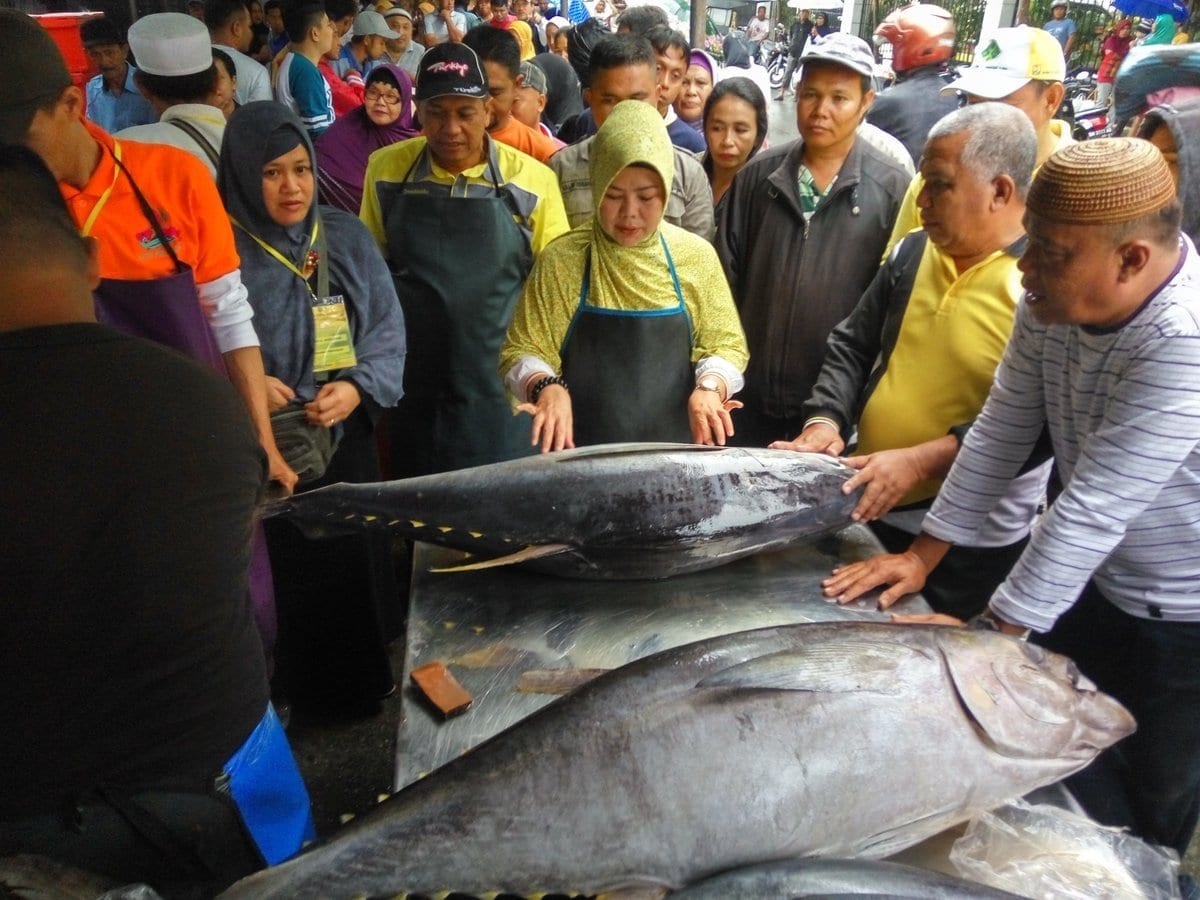
    Vietnam’s tuna exports declined by 9.8 percent in 2020 due to the impact of the Covid-19 pandemic, and are showing no signs of recovery.

    Analysts point to two reasons for the continuing slump: the unpredictability surrounding the pandemic and intense competition from low-priced Chinese canned tuna in its largest market, the U.S.

    Besides, consumers prefer tuna with the blue MSC label representing certification of the sustainable fishery by the Marine Stewardship Council.

    Tuna exports were worth $649 million last year, according to the Vietnam Association of Seafood Exporters and Producers. Vietnam exports the fish to 108 markets.

    Vietnam’s largest markets after the U.S. are the E.U., Canada, Southeast Asia, and Israel.

  • Vietnam beat China to become Asia’s top-performing economy

    Vietnam beat China to become Asia’s top-performing economy

    Vietnam outperformed its regional peers, including China, to become the top-performing economy in Asia in 2020.

    Though some economies have not yet reported fourth-quarter numbers, estimates compiled by the U.S. broadcaster from official sources and multilateral institutions like the International Monetary Fund found Vietnam was one of only three economies in Asia to achieve growth last year along with Taiwan and mainland China.

    The Vietnamese government estimates the economy grew at 2.9 percent last year compared to China’s 2.3 percent growth.

    All other major economies such as South Korea, Japan, Singapore, Hong Kong, and India contracted.

    Vietnam’s impressive economic growth was thanks to its competent handling of the Covid-19 pandemic.

    Despite sharing a long border with China where Covid-19 was first detected in December 2019, Vietnam has reported just over 1,500 infections and 35 deaths.

    The manufacturing sector is widely credited for the economy’s outperformance last year, with production growing on the back of steady export demand.

    Many economists expect economic growth to accelerate this year, it said.

    Vietnam’s economy will quintuple by 2035 and become the 19th largest in the world, U.K. consultancy Centre for Economics and Business Research has forecast.

  • E-commerce market grows in Vietnam

    E-commerce market grows in Vietnam

    Vietnam’s e-commerce market expanded by 18 percent last year to $11.8 billion, the only country in Southeast Asia to record double-digit growth amid the Covid-19 pandemic.

    Besides, payment services were strengthened and the largest companies in the manufacturing sector incorporated e-commerce into their long-term strategies, according to a recent report by the Vietnam e-Commerce and Digital Economy Agency.

    The country’s Online Friday e-commerce event in early December last year saw the number of transactions rise by 267 percent from the previous year to 3.7 million, it said.

    However, though the number of transactions rose last year, revenues fell because most Covid-19 related items were of low value and people’s incomes were hit, it said.

    A report last month by market research company GlobalData’s E-Commerce Analytics said Vietnam’s e-commerce is set to see compounded annual growth of 18.8 percent between 2020 and 2024 to reach $26.1 billion.

  • Intel pumps additional $475 mln into Vietnam facility

    Intel pumps additional $475 mln into Vietnam facility

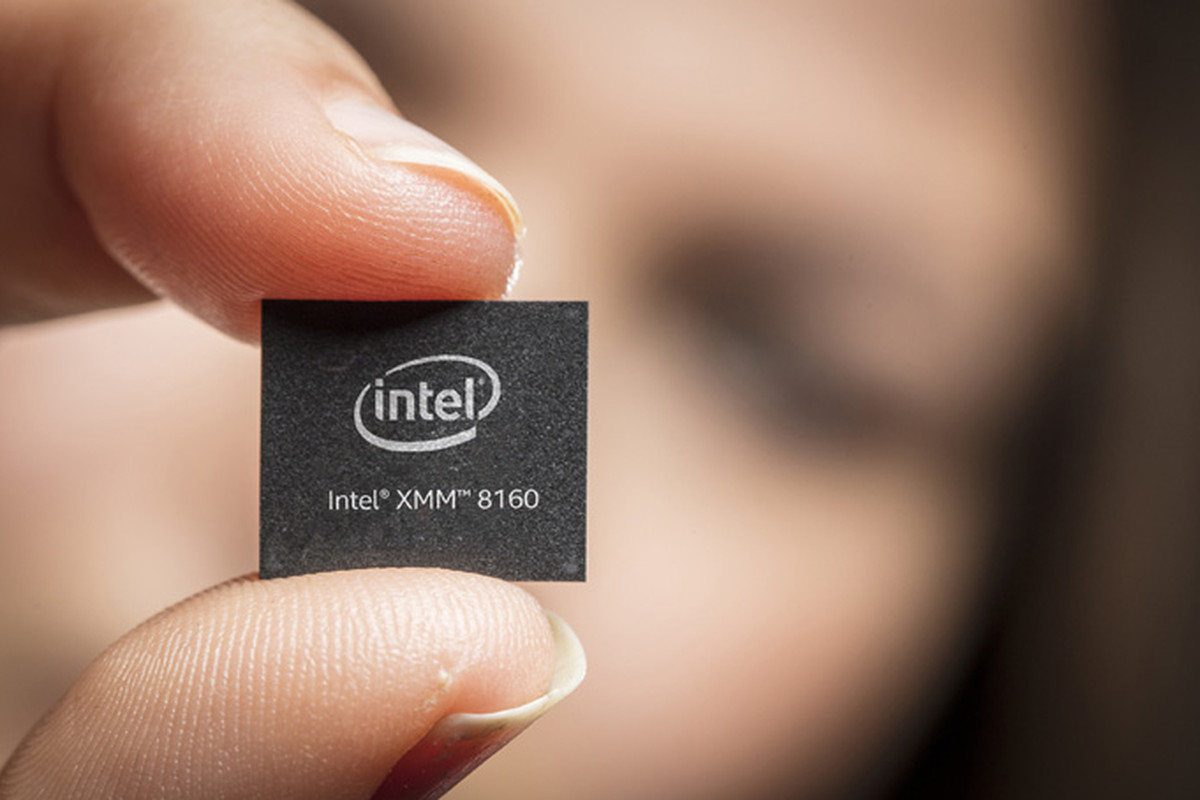
    Intel Corporation has invested $475 million in its Ho Chi Minh City facility to develop more complex technologies and tap new market opportunities.

    The latest investment takes its total in Vietnam to $1.5 billion, the U.S. chipmaker said in a statement.

    “As of the end of 2020, Intel Products Vietnam has shipped more than two billion units to customers worldwide,” Kim Huat Ooi, its general manager, said.

    “We are very proud of this milestone, which shows both how important IPV is to helping Intel meet the needs of its customers all around the world, and why we continue to invest in our facilities and team here in Vietnam.”

    The money will go into manufacturing 5G products and the 10th-generation Intel Core processors.

    One of Intel’s 10 manufacturing sites globally, IPV is the company’s largest assembly and test manufacturing facility with more than 2,700 employees.

    Nguyen Anh Thi, president of the Saigon Hi-Tech Park, where the plant is located, said Intel’s decision to increase its investment indicates its confidence in the workforce and Vietnam’s reliable investment environment.

    The new investment comes amid the expansion by a number of electronics giants in Vietnam as they seek to diversify their supply chains.

    Foxconn this month got the license to build a $270-million plant in the north capable of producing eight million laptops and tablets annually. It has so far invested $1.5 billion in Vietnam.

    Japan’s Panasonic decided to end the production of washing machines and refrigerators in Thailand and move it to a consolidated appliance assembly facility in Vietnam.

  • Covid hits coworking office space rents in HCMC

    Covid hits coworking office space rents in HCMC

    Rents for coworking office space in HCMC decreased 12 percent year-on-year last year due to the impacts of the Covid-19 pandemic, a report says.

    The occupancy rates of coworking office space in Grade A and B buildings last year plunged by 7 percentage points as its supply experienced the lowest growth since 2017 to 6 percent, according to a report by Savills Vietnam, the leading global property services provider.

    The gloomy outlook for the coworking space market, which boomed in the country between 2017 and 2019, has prompted investors to cancel expansion plans.

    The New York-based co-working startup, WeWork, the third-largest startup in the U.S. and the sixth-largest in the world, stopped leasing an office in HCMC’s District 1 while UP Co-working Space, headquartered in Hanoi, also postponed its plan to open two new offices in District 7, the report says.

    The number of newly registered coworking companies in the country also dropped by 6 percent.

    “2020 was a challenging year for both traditional and shared office segments. The market has been seeing a number of tenants turn to lower-priced office buildings and shophouses to cut down on rental costs in order to maintain their business,” said Vo Thi Khanh Trang, head of Savills Vietnam’s market research department.

    While the traditional office space has shown signs of a slight recovery in late 2020 thanks to better containment of the Covid-19 outbreaks in Vietnam, the shared workspace business has yet to see similar positive signs, Trang said.

    Before the Covid-19 pandemic broke out in Vietnam in January last year, co-working spaces had expanded in HCMC’s central districts since the limited traditional office space there was unable to meet burgeoning demand.

  • Apple ups Vietnam production of smart devices

    Apple ups Vietnam production of smart devices

    U.S. tech giant Apple Inc. is increasing its production of smart devices in Vietnam as it diversifies its supply chain outside of China.

    It will begin to produce the iPad tablet in Vietnam as early as the middle of this year, a Nikkei report says, citing sources.

    The company is also mobilizing suppliers to expand production capacity for the latest model of its smart speaker, the HomePod mini, which has been produced in Vietnam since it was introduced last year.

    The company is also set to move a part of its Macbook production from China to Vietnam this year, the report adds.

    Apple suppliers have also been expanding operations in Vietnam. Taiwanese tech giant Foxconn this month received its license to set up a $270 million plant in northern Vietnam.

    Luxshare Precision Industry (Luxshare-ICT) is increasing its capacity in northern Vietnam to make the HomePod mini.

  • Seafood processor Vinh Hoan buys 51 pct stake in snack company

    Seafood processor Vinh Hoan buys 51 pct stake in snack company

    Seafood processing company Vinh Hoan Corporation has bought a 51.29 percent stake in the Sa Giang Import-Export Corporation.

    It bought 3.56 million shares from the State Capital Investment Corporation (SCIC) at VND97,500 per share in a deal worth almost VND350 billion.

    SCIC had planned to auction the shares in July 2020 at a starting price of VND111,700 ($4.80), but failed to attract investor interest.

    Sa Giang makes ready-to-eat foods such as prawn crackers and instant noodles and newer products such as crackers made from crab, fish and squid.

    It mainly exports its products to Europe, especially Germany and the Netherlands, and some Asian countries.

    Last year it reported revenues of VND310 billion and a net profit of VND31 billion.

    The company has convened an extraordinary general meeting at the beginning of February to dismiss some members.

  • The Vitamin Shoppe to launches stores in Vietnam

    The Vitamin Shoppe to launches stores in Vietnam

    The Vitamin Shoppe, an omnichannel specialty retailer of nutritional products, today announced a partnership agreement with Kim Lien Group for the
    Vietnam market. Under the country license agreement, Hanoi-based Kim Lien Group will open and operate The Vitamin Shoppe stores in Vietnam, as well as launch wholesale distribution of The Vitamin Shoppe family of proprietary brands in Vietnam.

    The first store under the partnership agreement opened this month in Hanoi. The bi-level, 140 square-meter (1,500 square feet) store is located at 58B Ba Trieu Street in the Hoan Kiem district. The store offers a wide assortment of vitamins, supplements, sports nutrition, and other health and wellness products under The Vitamin Shoppe’s proprietary brands, which include The Vitamin Shoppe, Vthrive The Vitamin Shoppe, BodyTech, BodyTech Elite, fitfactor Weight Management System, fitfactor KETO, plnt, ProBioCare, and True Athlete.

    Kim Lien Group will open a second Hanoi location of The Vitamin Shoppe later this month at 49 Phuong Mai Street in the Dong Da district, with additional stores to be announced. A wholesale distribution strategy for the various The Vitamin Shoppe brands will launch in the coming months, with a focus on pharmacies, gyms, and spas throughout Vietnam.

    This agreement marks the first country license agreement in Asia for The Vitamin Shoppe. The company currently operates country license agreements in Panama (8 stores), Guatemala (10 stores), and Paraguay (3 stores).

    Sharon Leite, CEO of The Vitamin Shoppe, commented: “We are excited to bring our industry-leading expertise and innovation to the Vietnam market, where we see strong interest in our products and increasing demand for high-quality health and wellness brands. Our partners at Kim Lien Group have an exceptional understanding of the Vietnam market and the knowledge and experience to make The Vitamin Shoppe a trusted destination for wellness solutions in Vietnam, as it is throughout the United States. We continue to see additional opportunities with international partners and plan to expand The Vitamin Shoppe into new growth markets.”

    Founded in 1994, Kim Lien Group operates a group of automotive, restaurant, and hotel businesses in Vietnam, including 16 auto dealerships across the Honda, Nissan, Mitsubishi, and MG brands.

    Mr. Anh Hoang, Vice Chairman of Kim Lien Group, will manage The Vitamin Shoppe business in Vietnam. He commented: “This partnership journey started when I visited one of The Vitamin Shoppe stores in Boston to find health solutions for my mother, Madame Lien, Chairwoman of Kim Lien Group. I was impressed with the customer experience, the knowledge of the Health Enthusiasts, and the product assortment in the store.

    Since then, Kim Lien Group realized that the Vietnam market could benefit tremendously from the products and services of The Vitamin Shoppe. During this time, Vietnam was having serious issues with fake supplements from unknown sources distributed here. We wanted to end that fear and bring a trusted, high-quality brand from the United States to Vietnam so that consumers can confidently shop for health and wellness supplements here.”

    Kim Lien Group expects key product categories in Vietnam to include vitamins, probiotics and digestion, healthy aging, herbs, omegas, antioxidants, collagen, bone, and children’s health. Each of The Vitamin Shoppe’s proprietary brands is put through 320 rigorous quality assurance steps, and ingredient purity and potency are verified by independent, third-party labs. Consumers can feel confident that all products from The Vitamin Shoppe family of brands meet or exceed industry quality standards.

  • Indian investment in Vietnam yet to match potential

    Indian investment in Vietnam yet to match potential

    Indian foreign direct investment in Vietnam is relatively modest because of the lack of trade promotion activities, says a deputy minister of planning and investment.

    “Bilateral trade and investment relationship has seen many positive results in recent times but is still not commensurate with the potentials of both countries,” said Tran Duy Dong said at a recent forum.

    India ranked 26th in foreign direct investment in Vietnam with 296 projects and a combined registered capital of around $900 million last year, compared to Thailand (9th) and Malaysia (8th), according to official figures.

    One of the reasons for this is the lack of information sharing via trade promotion activities between the two countries, Dong said, adding that more offline and online trade activities should be organized.

    Pranay Verma, Indian Ambassador to Vietnam, said his country, with a population of 1.4 billion, is a large and potential market for Vietnamese companies to invest in.

    In recent years, direct flights between the largest cities of the two countries have been opened and this will serve to boost trade, he said.

    Don Lam, deputy head of Vietnam’s Private Economic Development Research Board, said that the two countries are seeing positive figures in trade relations with Vietnam’s imports from India rising 65 percent between 2017 and 2020 to reach $4.5 billion.

    Vietnam’s exports to India in the period surged nearly three times to $6.7 billion, he said.

    Many Indian companies are looking at Vietnam as an attractive investment destination and a hub for transferring goods to Southeast Asian countries, he added.

  • VinFast introduces self-driving car models

    VinFast introduces self-driving car models

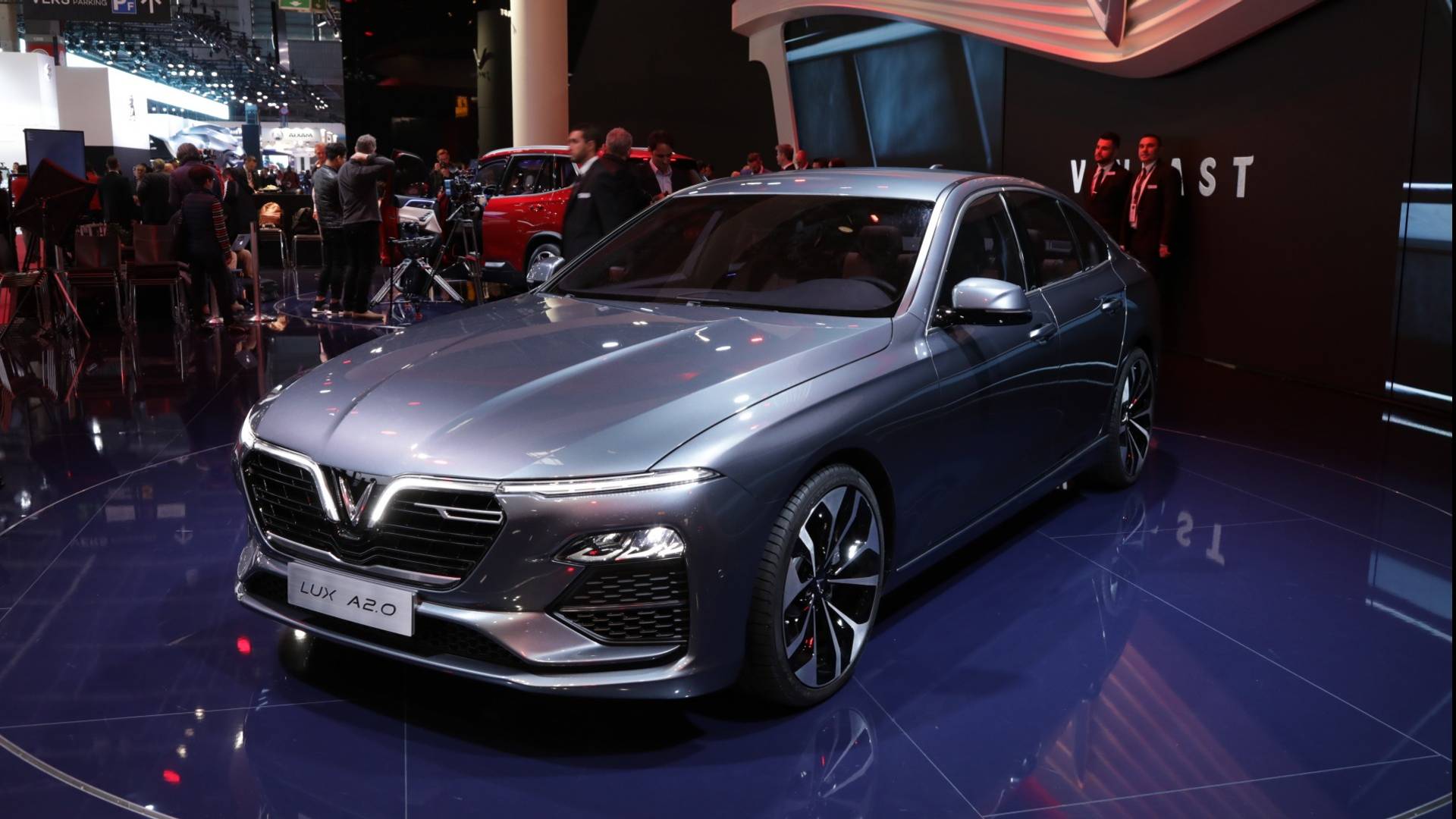
    Vietnamese automaker VinFast introduced Friday three new electric self-driving car models that will hit the market this year.

    The rollout of the new models is part of its plan to become a global major in electric car manufacturing.

    Two of the three models, all SUVs, also have a fuel version, the company said in a release.

    The cars, named VF31, VF32, and VF33, have several self-driving systems including steering assistance, adaptive lane control, and automatic parking.

    Depending on the model, the electric cars can go 300-500 kilometers per full charge.

    The premium versions of these cars have 14 cameras capable of detecting objects nearly 690 meters away, and the company claims its self-driving system is eight times faster than that of existing self-driving car models.

    The cars can find their own parking spots and can be summoned by drivers when needed.

    VinFast said the cars meet the highest safety standards in the world including a five-star rating of the U.S. National Highway Traffic Safety Administration and a five-star rating of the European New Car Assessment Programme.

    The standard version of the VF31 can be ordered in Vietnam starting this May and will be delivered in November.

    For the VF32 and VF33 models, customers can order starting September and delivery will begin in February 2022.

    The company will also sell these cars in the U.S., Canada, and the E.U. with orders opening in November and delivery in June next year.

    VinFast, a unit of Vietnam’s biggest private conglomerate Vingroup, entered the auto industry three years ago. It has an auto plant in the northern province of Hai Phong and research and development centers in Australia, Germany, and the U.S.

    The company said the manufacturing of electric bikes, buses, and cars is part of its strategy to become a favorable hi-tech auto manufacturer in the global market and to help develop green transportation by reducing emissions.

  • Vietnam power utility unit to go public

    Vietnam power utility unit to go public

    A $2-billion power generation unit of state-owned utility Vietnam Electricity (EVN) will have an initial public offering on the country’s main bourse next month.

    The Power Generation Corporation 2 (EVNGENCO 2), based in the southern city of Can Tho, will issue nearly 580 million shares on the Ho Chi Minh City Stock Exchange, or nearly 49 percent of its charter capital, on February 8.

    The offering will have a reference price of VND24,520 ($1.05) per share.

    Tran Phu Thai, chairman of EVNGENCO 2, said at a forum Thursday that the company, wholly-owned by EVN, was valued at around VND46.1 trillion ($2 billion) as of January 1, 2019. No updated valuation was available at the time of publishing.

    The company, which has been operating for seven years, had an installed capacity of 4,421 megawatts by the end of last year, accounting for 15.1 percent of EVN’s output.

    It is also developing 59 megawatts of renewable energy.

    Over half of its non-renewable energy capacity comes from coal-fired plants, 30 percent from hydropower plants, and the rest from oil-fired plants.

    Last year, its profits exceeded the annual target by 59 percent at nearly VND3.93 trillion.

    The IPO is part of EVN’s effort to equitize its subsidiaries. It had earlier completed the equitization of EVNGENCO 3 and is in the process of equitizing EVNGENCO.

  • HCMC hotel occupancy hits record low

    HCMC hotel occupancy hits record low

    HCMC’s average hotel occupancy rates dropped 54 percentage points year-on-year to 20 percent last year as Covid-19 travel restrictions hit foreign arrivals, a report says.

    Over 3,600 hotel rooms were closed last year as the number of foreign tourist arrivals plunged 85 percent year-on-year to 1.3 million, according to real estate consultancy Savills.

    Average room rates fell 29 percent year-on-year to $61 per night, the report said. Total supply fell 5 percent year-on-year to 15,200 rooms in 111 hotels.

    The development of Covid-19 vaccines will help the industry improve over the next two years and it is expected to make a full recovery by 2024, the report said.

    Vietnam halted all international flights from March 25 in an unprecedented move to stem the spread of the novel coronavirus.

  • E-payment startup Gpay bags funding from South Korean investor

    E-payment startup Gpay bags funding from South Korean investor

    Vietnamese e-wallet provider Gpay has received an undisclosed amount in Series A funding from South Korean listed bank KB Financial Group.

    The Series A round values the digital payment business at VND425 billion ($18.46 million), and the fresh funds will be used to expand its team and user base, as also upgrade its technology, Gpay said in a statement.

    G-Group Technology Corporation, Gpay’s parent, has also joined hands with KB Financial to launch a VND300 billion fintech joint venture, called KB Fina, which will provide financial services to unbanked or underbanked consumers, Gpay said.

    G-Group general director Phung Anh Tu said they expect the fintech platform, which incorporates financial and investment advisory products already provided by KB Financial Group in its home country, to come online in the second quarter this year.

    Established in 2018, Gpay obtained its e-payment license in April 2020. However, it faces fierce competition in the Vietnamese digital payment market, where there are currently 39 other licensed e-wallet service providers.

    Gpay said it will not be “burning cash” to fight for a higher market share, but will serve G-Group’s 30 million users currently using various services on its digital ecosystem, which includes peer-to-peer lending firm Tima, digital media firm Beat.vn, and social networking app Gapo.

    Last week, Momo, another payments app in Vietnam, raised an undisclosed amount in Series D financing from U.S.-based investment funds Warburg Princus and Goodwater Capital.

  • Vietnam a global bright spot in electronics production

    Vietnam a global bright spot in electronics production

    Vietnam stands to benefit from its emergence as a global bright spot in electronics production with some index scores exceeding China and India.

    Experts attribute this to lower labor costs and better policy incentives.

    Jason Yek, Asia country risk senior analyst at market research company Fitch Solutions, said that the increased presence of large electronic manufacturers in Vietnam would generate jobs, support exports and improve the country’s electronics supply chain,

    The country started 2021 off by awarding a license to a unit of Taiwan’s Foxconn on January 18 to build a $270 million plant capable of producing eight million laptops and tablets annually in the northern province of Bac Giang.

    Foxconn, a key supplier for Apple, has so far invested $1.5 billion in Vietnam and plans to raise its investment by $700 million and recruit 10,000 more local workers this year, the government said.

    The company, which is said to be moving some iPad and MacBook assembly to Vietnam from China at the request of Apple, is also looking into investing $1.3 billion in the central province of Thanh Hoa.

    This was followed by a recent decision of Japanese electronics giant Panasonic to end the production of washing machines and refrigerators in Thailand to consolidate appliance assembly in Vietnam.

    Data from U.K. research company Euromonitor International shows 2.8 million refrigerators and 2.27 million washing machines were sold in Vietnam during 2019, compared with 1.92 million and 1.75 million, respectively, in Thailand.

    “As urbanization has advanced everywhere in Asia, regional product preferences have grown similar. The Thai market has little room for growth, but labor costs are high, so it was natural to consolidate production,” Akio Ota, former president of Panasonic Appliances Vietnam.

    Higher scores.

    In a recent report, the Economist Intelligence Unit (EIU), a division of the U.K.-based Economist Group, gave Vietnam higher index scores than China and India in some categories, highlighting the country as a potential manufacturing hub.

    On a scale of 10, Vietnam scored 6 in FDI policy, while both India and China scored 5.5 each.

    Vietnam also exceeded both countries in the score of foreign trade and exchange controls and surpassed India in the labor market.

    EIU explained that Vietnam’s incentives for international firms for setting up units to manufacture hi-tech products, its pool of low-cost workers and the spate of free trade agreements it has signed place it in an enviable position among Asian peers.

    Vietnam’s membership of free trade agreements represents a strong point in its trade relations, reducing export costs, and the country’s low-skilled manufacturing wages will remain competitive for years to come, it added.

    Yek of Fitch Solutions also said that favorable labor demographics, relatively low labour costs, and a strong business environment will continue to aid Vietnam’s bid to attract FDI over the medium term.

    “Vietnam, not being embroiled in trade disputes with major economies such as the U.S. or Europe, also positions it favorably for exporters seeking to use it as an exports manufacturing hub or in some cases, another manufacturing hub in addition to their Chinese operations so as to diversify their supply chains.”

    Nguyen Mai, chairman of Vietnam’s Association of Foreign Invested Enterprises, said the expansion of Foxconn in Vietnam is similar to what South Korean giant Samsung has been doing for nearly 15 years.

    Government data shows that Samsung had poured over $17 billion into Vietnam as of mid-2020 to become the largest FDI company in the country. It has two smartphone factories in the northern region and a TV screen production facility in Ho Chi Minh City.

    The company is also building its largest mobile research and development center in Southeast Asia in Hanoi.

    The expansion of Foxconn in Vietnam increases the possibility that a wave of hi-tech projects will find its way to the country in upcoming years, Mai said.

    However, experts have also listed several disadvantages that are slowing down the country’s efforts to attract investment.

    Yek said that to achieve the government’s goal of moving up the manufacturing value chain, further improvements are needed in the education and skill levels of the labor force, which is a long-term task.

    And while there are ongoing projects to develop the country’s transport and logistics infrastructure, progress has been slow, Yek said. In fact, bottlenecks can appear as the country’s infrastructure capacity fails to keep pace with trade volumes, he added.