Tag: Vietnam

  • Foreign firms intent on stronger foothold in Vietnam’s pharma industry

    Foreign firms intent on stronger foothold in Vietnam’s pharma industry

    Foreign firms are pouring increasing sums of money into acquiring stakes in Vietnamese pharmaceutical firms, targeting larger market shares in a thriving industry. Dutch firm Stada Service Holding B.V. last month obtained permission from Vietnam’s Pymepharco to increase its ownership in the Phu Yen Province-based company to 100 percent.

    Stada had increased its stake in Pymepharco by six percent to nearly 76 percent last week. The deal is estimated at around VND380 billion ($16.4 million), based on closing stock price on December 11. In September, Hanoi-based Hataphar issued an additional 5.28 million shares, or 20 percent of its charter capital, to Japan’s ASKA Pharmaceutical Co., Ltd. The deal was valued at VND370 billion.

    Earlier last year, Japan’s Taisho Pharmaceutical took a controlling share of over 51 percent in the DHG Pharmaceutical Joint Stock Company, the biggest pharmaceutical firm in the Mekong Delta region.

    In December 2017, CFR International SpA, a subsidiary of U.S.-based medical corporation Abbott Laboratories, transferred all of its 51.69 percent stake in Domesco Medical Import Export JS Corp, based in the southern province of Dong Thap, to another Abbott subsidiary in a transaction valued at around VND2.3 trillion ($99.5 million).

    Vietnam’s rapidly growing pharmaceutical industry has been a magnet for foreign firms. The industry is set to record double-digit growth in the 2020-2025 period and is set to reach a value of $7.7 billion next year, according to a report by brokerage Yuanta Vietnam.

    There is a rising demand for healthcare products and services, and with domestic production unable to meet it, Vietnam imported $3 billion worth of medicines last year. This figure is set to reach $4.35 billion this year, the report said.

    Foreign firms are therefore keen on pouring cash into companies with growth potential, like DHG, which ranks fourth in market share behind three multinational pharma giants.

    Analysts of RongViet Securities Corporation said that their strategy is to help Vietnamese companies increase their manufacturing standards and eventually take over instead of establishing its own business and build a factory.

    CFR International SpA, a leading pharmaceutical firm in Chile, was the first strategic partner in local firm Domesco and was assisting the Vietnamese company in research and development, technology transfer, businesses consultancy and supply chain management before securing a controlling stake in it.

    Ly Thi Hien, lead analyst at Yuanta Vietnam, said the pharmaceutical industry is one that requires years of investment to build up a brand and acquire a decent market share. Domestic firms with relatively shallow pockets find it difficult to spend money on researching and developing new medicines, creating an opening for foreign firms.

    To develop further, domestic firms need to take advantage of the exclusive formulas and scientific achievements of foreign pharma giants, she added.

    Industry insiders say that partnerships with foreign companies has brought both short-term and long-term benefits.

    Le Xuan Thang, CEO of Hataphar, said that establishing a partnership with ASKA meant that the company has VND370 billion to build a new factory. It also receives consultancy services from the Japanese company on building that factory with advanced technology.

    Meanwhile, DHG, thanks to its partnership with Japan’s Taisho, was able to acquire international certification in less than two years for its effervescent tablet production chain and another Japanese certificate for its antibiotics chain.
  • Headwinds buffet Vietnamese carriers through 2020

    Headwinds buffet Vietnamese carriers through 2020

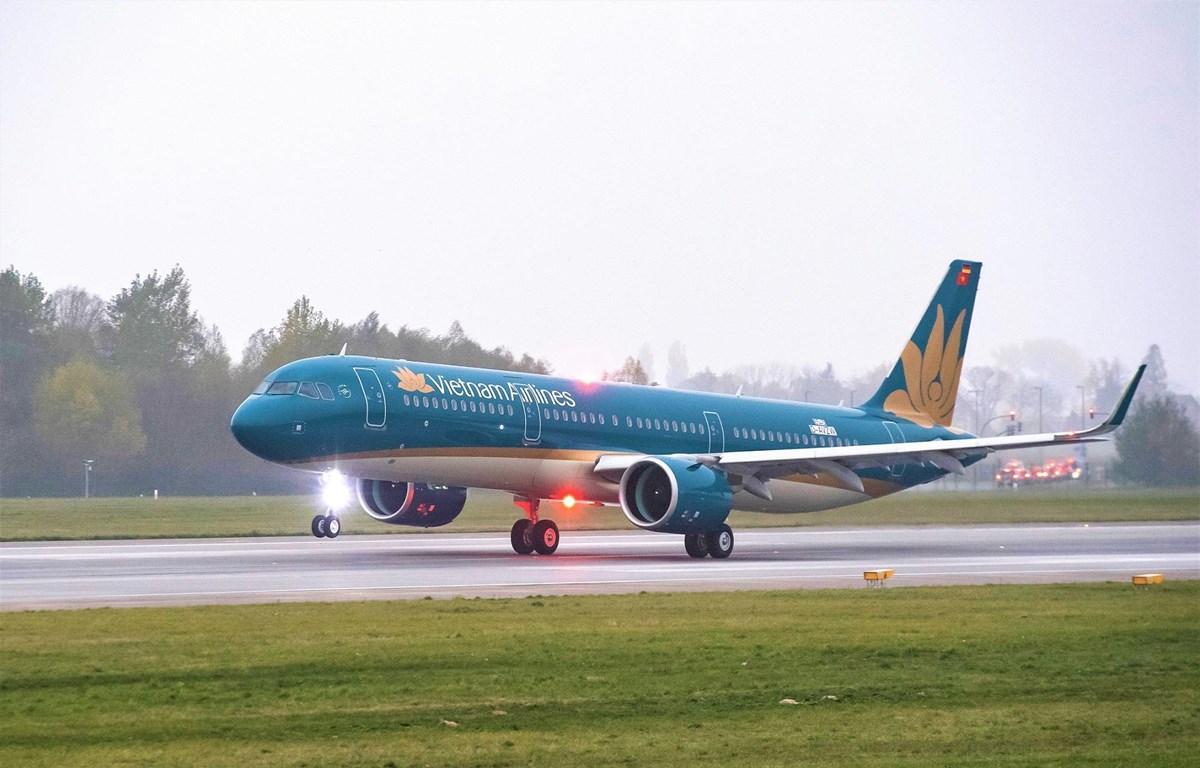
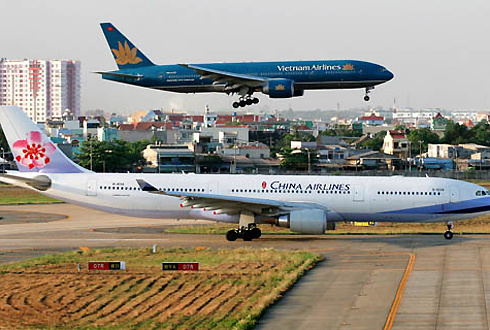
    The Vietnamese aviation industry has gone through one of its most challenging years ever as the Covid-19 pandemic restricted flights and caused airlines huge losses. The number of flights the country’s five commercial airlines operated fell 36 percent year-on-year in the first 11 months to 196,600, according to the Civil Aviation Authority of Vietnam (CAAV).

    They carried 29.4 million passengers, down 41.7 percent, according to the General Statistics Office.

    Vietnam Airlines was the worst hit. Duong Tri Thanh, its CEO, said that the pandemic has set back the aviation industry by three or four years, and has brought down his company’s cash holdings to near zero.

    Vietnam Airlines Group, consisting of the carrier and its subsidiaries Pacific Airlines and Vietnam Air Services Company (VASCO), posted a loss of VND10.75 trillion ($464 million) for January-September.

    The number of passengers it served in the period fell by 41 percent to 10.2 million.

    It has cut sales and management expenses and reduced the salaries of pilots and cabin crew. It has increased the number of repatriation flights bringing Vietnamese nationals home from other countries.

    But these efforts cannot save the company from suffering one of its worst years in nearly three decades as a commercial airline, with its losses this year forecast to rise to VND15.2 trillion. Budget carrier Vietjet is in a similar situation, with losses of nearly VND925 billion in the first nine months and the number of flights falling by 43 percent to 58,300.

    The airline was forced to cut managers’ salaries by half as revenues plunged, and it would take three years for the industry to recover to pre-pandemic levels, a Vietjet spokesperson said in November.

    In contrast, 2019 saw new carrier Bamboo Airways enter the Vietnamese skies, Vietnam Airlines achieve all-time high profits and the number of air passengers continues to grow in double digits.

    The tough times began in March when the government ordered the suspension of all international flights to curb the spread of the novel coronavirus and domestic travel demand slumped amid fears of the pandemic.

    “The impact of Covid-19 has been unprecedented for the aviation industry,” Dinh Viet Thang, head of the CAAV, told the media in June, pointing out there were times when only 1-2 percent of Vietnam’s 250 aircraft were operating.

    The second and third quarters were the most challenging period for the industry as a three-week nationwide social distancing campaign in April caused airlines’ revenues to plummet and the second outbreak in July halted their attempts to boost domestic travel and achieve recovery.

    Aviation expert Nguyen Thien Tong said it would take at least until 2022 for the industry to recover to pre-pandemic levels because the fear of contagion remains globally.

    Air travel demand would rise slowly even after Covid-19 is contained globally because many business people have learned to conduct meetings online to keep their companies running during the pandemic and people’s incomes have shrunk, he said.

    One major factor in any possible recovery will be government support. The National Assembly in November approved a plan for the central bank to refinance Vietnam Airlines and rollover loans. The airline had earlier asked for a relief package of VND12 trillion.

    Lawmakers also cut environmental tax on jet fuel by 30 percent from August this year until the end of next year.

    Tong said: “More low-interest loans should be given to airlines based on how much tax they have contributed in recent years, not how much ownership the government has in them.”

    The tourism industry needs to offer more promotions to foster domestic aviation since it is unclear when regular international flights would resume, he said.

    The newly licensed Vietravel Airlines should wait until the market recovers in 2022 before it begins flying since its entry would only worsen things for existing airlines, he added.

  • Manulife to become VietinBank’s exclusive insurance partner with Aviva purchase

    Manulife to become VietinBank’s exclusive insurance partner with Aviva purchase

    Canadian insurer Manulife will acquire the Vietnamese business of British company Aviva and its 16-year bancassurance deal with VietinBank.

    It will take over the exclusive partnership with VietinBank when the deal is completed, Manulife and the lender agreed on Monday.

    The state-owned lender chose Manulife as its bancassurance partner because of its long-term commitment to Vietnam, deputy director of VietinBank, Nguyen Duc Thanh, said at the agreement-signing ceremony.

    He said his bank’s board expects the bancassurance business to grow by 30 percent annually and contribute 6-8 percent of the income from services.

    Manulife expects the partnership to increase its market share in the country from 20 percent to 30 percent in the coming years. It is currently the exclusive insurance partner of the country’s largest private lender, Techcombank.

    Aviva did not reveal the value of the sale but said in a statement that it expects the transaction to increase its net asset value and solvency surplus by around GBP100 million ($133.67 million).

    The company is looking to sell its operations in continental Europe and Asia to focus on Britain, Ireland and Canada.

    Vietnam had 18 life insurance companies with combined premium revenues of VND106.6 trillion ($4.6 billion) last year, up 24 percent year-on-year. In terms of new contracts, Manulife led the market for the first time last year with 17.7 percent followed by Bao Viet Holdings with 16.49 percent and Prudential Vietnam with 15.78 percent, according to the Ministry of Finance.

  • Gojek Vietnam raises fares after tax regime change

    Gojek Vietnam raises fares after tax regime change

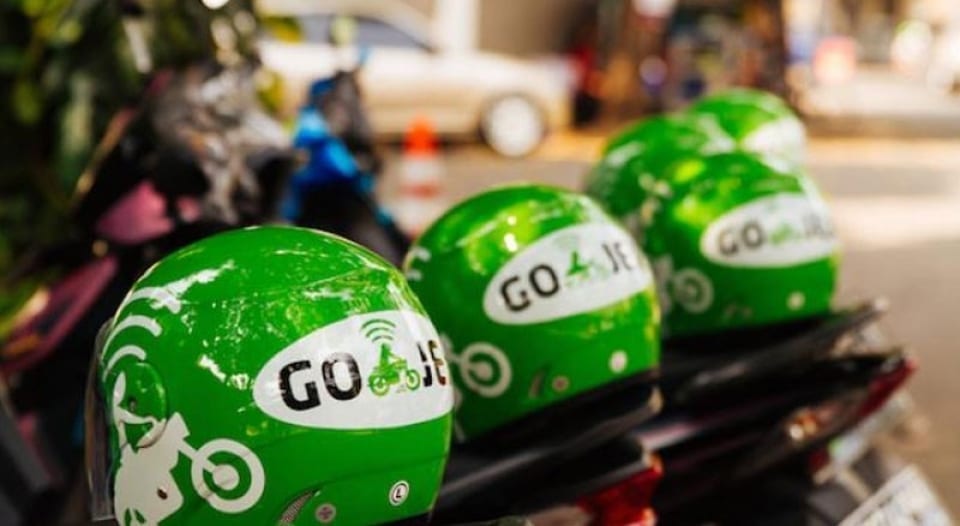
    Ride-hailing company Gojek has raised fares by 8.3-10 percent following the recent revamp of the value-added tax regime, which requires it to pay more.

    The hike applies to all three services it offers in Vietnam, motorbike taxi, food delivery and goods delivery, and takes effect on Saturday, the Indonesian company said in a statement.

    In Hanoi, a two-kilometer GoRide trip now costs 8.3 percent more at VND13,000, while in HCMC, it costs 10 percent more at VND11,000.

    From December 5 the government mandated that ride-hailing companies should pay the VAT of 10 percent on the full fare passengers pay instead of just their share of it.

    Gojek also increased the commission it gets from drivers from 20 percent to 27.2 percent like its competitor Grab did recently.

    But it assured that the increase would not affect drivers’ incomes.

    A trip that cost a passenger VND51,000 before would now cost VND56,000, but the driver’s income would remain unchanged at VND40,000, it said.

    Grab last week raised its fares by 5-6 percent and increased its commission by over 7 percentage points, causing hundreds of drivers in Hanoi and Ho Chi Minh City to strike.

  • Vietnam jet fuel tax cut to continue through 2021

    Vietnam jet fuel tax cut to continue through 2021

    Lawmakers have decided to continue the 30-percent cut in environment tax on jet fuel through next year to support the aviation industry.

    It will remain at VND2,100 (9.1 U.S. cents) per liter until the end of next year before returning to VND3,000 in 2022, the National Assembly Standing Committee decided on Thursday.

    Deputies had originally approved the cut from August until the end of this year.

    The government’s loss of revenues is estimated at VND360-400 billion this year, but it expects the tax break to reduce airlines’ costs and help them recover from the crisis caused by the Covid-19 pandemic.

    Airlines have gone through major difficulties due to travel restrictions and limited international flights.

    Vietnam Airlines forecasts a loss of VND14.8 trillion this year, while for budget carrier Vietjet it is likely to be VND3 trillion.

    The aviation industry served 29.4 million passengers in the first 11 months, down 41.7 percent year-on-year, according to the General Statistics Office.

  • Korea’s Emart set to scale back in Vietnam

    Korea’s Emart set to scale back in Vietnam

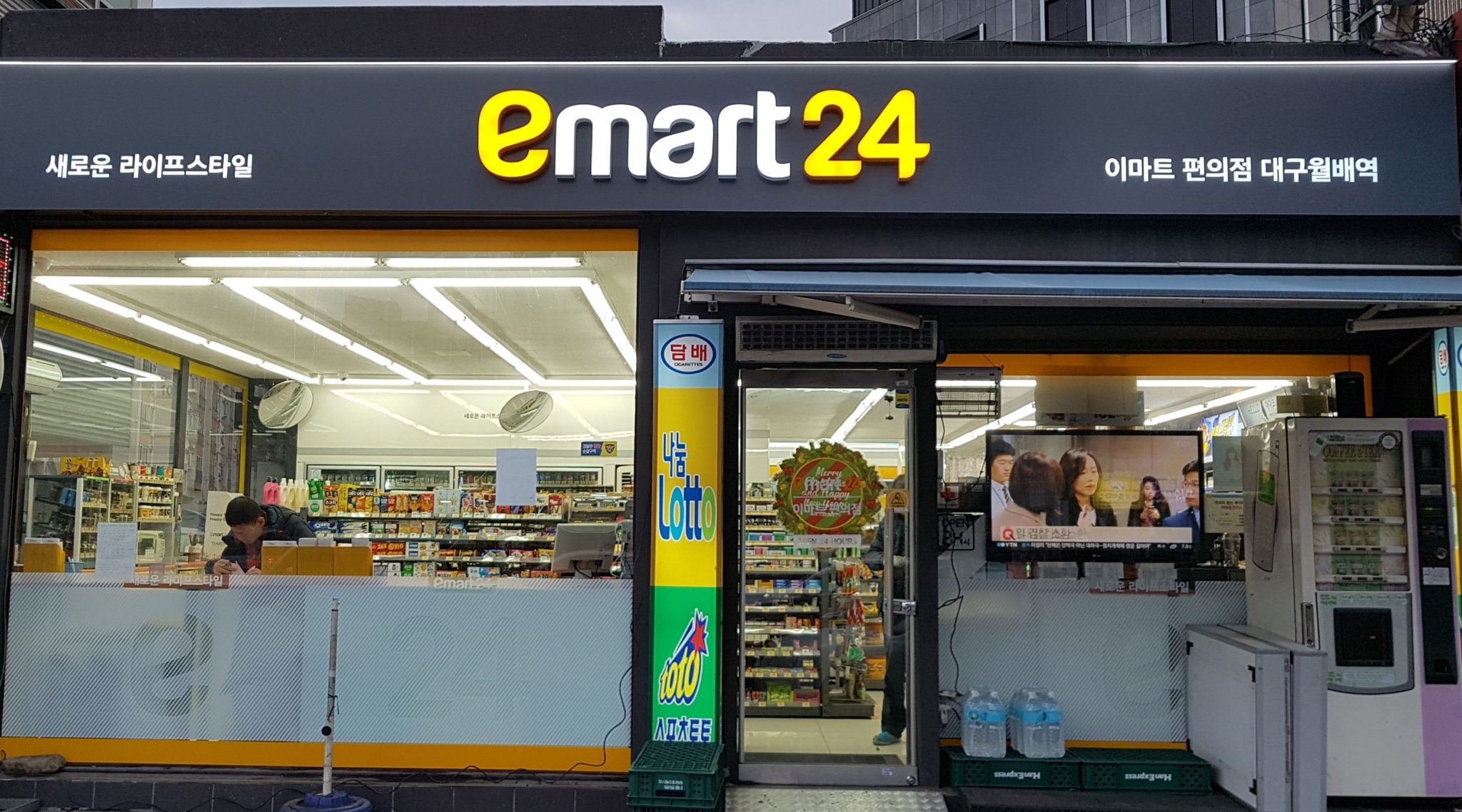
    South Korea’s largest supermarket chain operator Emart Inc. is pulling out of Vietnam, the second major Asian market after China, in the face of regulatory hurdles.

    The retailer opened its first outlet in Vietnam’s Go Vap district in 2015 and had procured a site at Ho Chi Minh City for a second opening last year. But the project has been delayed due to licensing setbacks, disrupting its plans to open five to six more outposts.

    Emart’s direct foray has proven difficult as Vietnam, like China, prioritizes joint ventures in permitting a foreign business. Emart started operation in Vietnam in 2014 after setting up a wholly-owned local entity.

    A retail industry source said a hypermarket needs at least 10 outlets to have bargaining power with vendors and maintain logistics efficiency. Unable to meet this number, Emart may have concluded it was better to fold the business, the source added.

    The retailer has been rolling back investments in the country. In its 2019 semiannual report, it had vowed to invest 460 billion won ($424.3 million) in its Vietnamese entity through 2022. But it had slashed that amount to 247.8 billion won in the third-quarter report.

    An Emart representative, however, denied the exit rumors and said it was studying other options such as strategic alliance or business partnership.

    Industry observers believe Emart is wary of making the same mistake as in its Chinese operation.

    Emart entered China in 1997 and aggressively expanded its operations, running at one point 26 outlets across the country. But it failed to overcome Beijing’s stiff regulations and saw losses snowball to 150 billion won over four years from 2013.

    In 2016, it found itself caught in the crosshairs of a diplomatic feud over Korea’s decision to build an anti-missile system, a move China vehemently opposed on national security grounds. Emart, along with many other Korean brands, suffered the brunt of Beijing’s retaliatory nationwide boycott on all things Korean. After suffering steep losses, the retail chain in 2017 sold off its remaining five outlets in China to a Thai company and pulled out of the country altogether.

    After scaling back its Asian operations, Emart is expected to focus more on the U.S. market, where Korean brands have been making rapid grounds. According to its regulatory filings, Emart generated 1.28 trillion won in the first three quarters of this year from overseas, up 122 percent from the same period last year and topping last year’s full annual sales of 778.5 billion won.

    Emarts’ robust overseas performance owes largely to its U.S. subsidiary Good Food Holdings, which the Korean retail conglomerate acquired for $275 million in 2018. The Los Angeles-based company owns five upscale food retailing brands, including Bristol Farms, Lazy Acres Natural Market, Metropolitan Market, New Seasons Market, and New Leaf Community Markets, operating mostly in the West Coast.

    Good Food Holdings raked in sales of 1.2 trillion won in the January-September period, up 136 percent from a year ago, on explosive demand for food products among people sheltering at home during the coronavirus outbreak. The company alone was responsible for nearly 93 percent of Emart’s total global sales in the period.

    Emart plans to invest 83.7 billion won through 2022 to expand its U.S. footprint. It is scheduled to launch PK Market, a shop specializing in Asian goods including Korean food, as early as next year in downtown Los Angeles.

  • Venture funds commit $815 mln to Vietnamese startups

    Venture funds commit $815 mln to Vietnamese startups

    Vietnamese startups earned pledges of $815 million over the next five years from 33 foreign and domestic venture funds.

    The pledges, announced at the recent Vietnam Venture Summit, came from several foreign funds who’ve been active in Vietnam in recent years, like CyberAgent Capital, AlphaJWC, Monk’s Hill Ventures, as well as several domestic funds like VinaCapital Ventures, Do Ventures, and Viet Capital Ventures.

    At the same event last year, 18 funds had committed $415 million to Vietnamese startups for three years, and $220 million of this was disbursed in the first half of this year.

    Investment in Vietnamese tech startups in the first six months fell 22 percent year-on-year to $222 million due to the Covid-19 pandemic, according to a report by Ho Chi Minh City-based venture capital firm Do Ventures.

    Among six major economies in Southeast Asia, Vietnam accounted for 16 percent of the latest investment pledges, ranking third behind Singapore (37 percent) and Indonesia (30 percent), it added.

    A recent report by U.S.-based consulting firm McKinsey & Company says 12 large digital ecosystems (companies providing services across sectors) will be established across retail and services in Vietnam by 2025, creating a revenue pool of about $100 billion.

  • Amazon has over 100,000 Vietnamese sellers

    Amazon has over 100,000 Vietnamese sellers

    Over 100,000 Vietnamese sellers have successfully debuted on Amazon, with fashion and household goods being some of their best-selling products.

    Gijae Seong, head of Amazon Global Selling Vietnam, said amid the Covid-19 pandemic, sellers have been focusing on products with high demand such as kitchenware, sports gear and house decoration items.

    The world’s largest e-commerce company has also been working with Vietnamese exporters to sell medical masks to the U.S., and would continue this partnership to sell masks, gloves and protective clothing, he said.

    Before demand surged for pandemic-related products, the most popular items sold by Vietnamese sellers had been women and children’s fashion, 3D cards and paper flowers, he added.

    Tran Van Tuoi, CEO of Sea Grapes Vietnam, which sells sea grapes on Amazon, said this year his company participated in the Black Friday and Cyber Monday promotions for the first time and saw sales rise by 300 percent. They rose by 500 percent on Thanksgiving, he added.

    Amazon has in recent years been recruiting Vietnamese sellers by organizing workshops to teach them how to reach out to global customers.

    Eric Broussard, Amazon’s vice president of international marketplaces and retail, said Vietnam is a country with strengths in manufacturing and a large number of good sellers, which is why his company has been investing and expanding there in recent years.

    Amazon Global Selling on Tuesday unveiled a task force in Hanoi to support Vietnamese sellers and launched a Vietnamese version of its sellers’ information center.

    But their initial success notwithstanding, Vietnamese sellers need to make improvements to reach more customers.

    Lai Viet Anh, deputy head of the Ministry of Industry and Trade’s Vietnam e-Commerce and Digital Economy Agency, said local firms need to educate themselves on e-commerce, study foreign customers’ preferences and overcome language barriers as cross-border sales require direct interaction with buyers.

  • Acecook to open instant-noodle buffet restaurant in Vietnam

    Acecook to open instant-noodle buffet restaurant in Vietnam

    Called ‘Acecook Noodles Cup Buffet’, the store allows customers to create and mix instant noodles to their own preference. Customers can also customize their noodles cup design with stickers and pencil crayon provided.

    Besides providing the buffet service, the store also has a dedicated display area for Acecook’s new noodles range as part of its marketing plan. The store is scheduled to launch on December 19.

    “This is also a tribute to the companionship and support of customers for Acecook Vietnam over the past 25 years,” said Kajiwara Junichi, general director at Acecook Vietnam. “I hope the restaurant will be an attractive destination for our customers, who love instant cup noodles and want to experience new things.”

    The launch is part of Acecook’s strategy to increase the cup noodles sales in the country. According to Nikkei, the Japanese instant-noodle maker aims to achieve about 350 million servings by 2022. Acecook estimates cup noodles will account for 9 percent of its sales in the country by then.

    Prior to creating the instant-noodle buffet concept, Acecook Vietnam entered the retail market with its Japanese restaurant chain Ringer Hut.

  • Vietnam to purchase more power from Laos

    Vietnam to purchase more power from Laos

    National utility Vietnam Electricity (EVN) has signed three memoranda to purchase power from Laotian companies amid expected energy shortages.

    EVN will buy power from two hydropower plants and one coal-fired power plant in neighboring country Laos starting 2024, according to the memorandums of understanding signed Sunday.

    The 84-megawatt Nam Yeuang hydropower plant and 300-megawatt Nam Phan coal-fired thermal power plant developed by Phongsubthavy Group are set to transmit electricity to Vietnam starting 2024 and 2025.

    Another hydropower plant, Nam Neun 1, with a capacity of 124-megawatt and developed by Kong Sup Hydro Development of Nam Neun 1 and Nam Neun 3, will also start delivering power to Vietnam in those two years.

    EVN in January signed five deals with two Laotian companies to purchase 1.5 billion kilowatt-hours of power each year in 2021 and 2022.

    The Ministry of Industry and Trade had earlier warned of power shortages of 3.7 billion kWh in 2021 and nearly 10 billion kWh the following year, as the construction of new thermal and gas-fired plants fall behind schedule.

    2023 will be the most stressful with the shortage expected to be around 15 billion kWh. From then on, it will decrease, with shortages expected to drop to 7 billion kWh and 3.5 billion kWh in 2024 and 2025 respectively.

    The ministry stated the only way out is to import more from Laos and China, although this is only a band-aid solution. In the long run, it would be necessary to speed up work on large power generation projects, it added.

  • Vietcombank set for lower profit as lending slows

    Vietcombank set for lower profit as lending slows

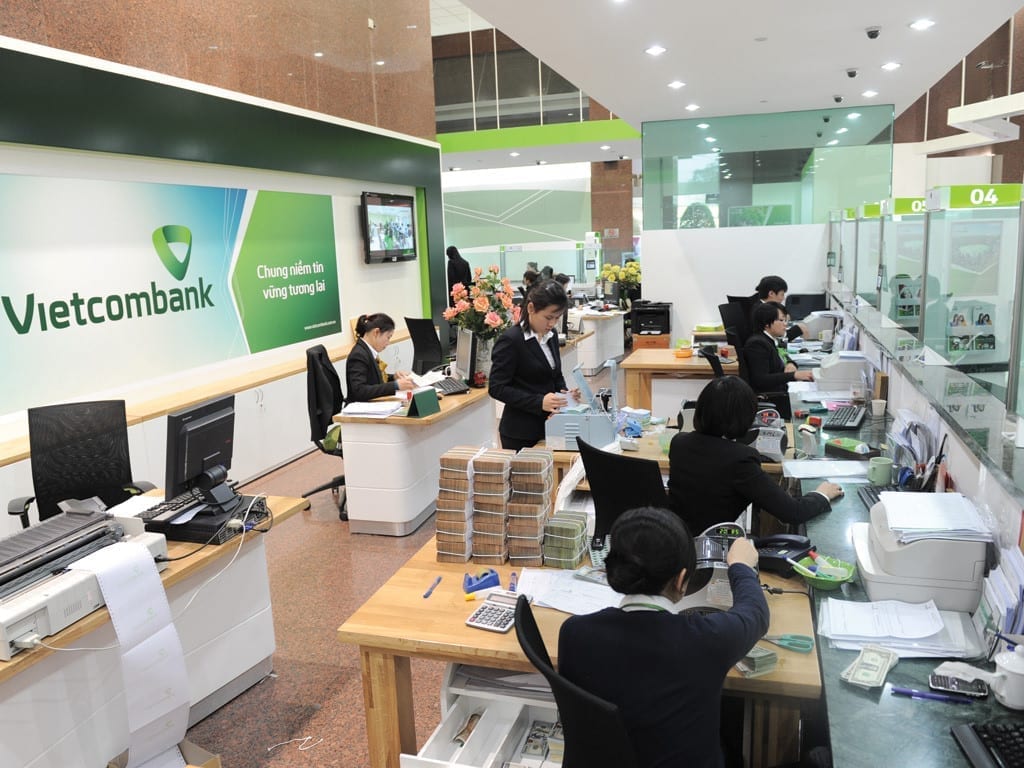
    Vietcombank’s profits are set to decline for the first time since 2013 due to slower credit growth amid the Covid-19 pandemic, a brokerage forecast.

    The country’s most profitable lender’s pre-tax profit could fall by 1.6 percent to VND22.75 trillion ($984 billion) this year after credit growth in the first nine months virtually halved year-on-year to 6.5 percent, RongViet Securities Corporation (VDSC) in Ho Chi Minh City said in a note.

    Provision for bad debts in the period rose 25 percent to VND6 trillion as companies suspended business.

    Its investment in securities resulted in a loss of VND14.5 billion as against a profit of VND116.5 billion last year.

    RongViet forecast 16 percent growth in pre-tax profit next year at VND26.37 trillion if the pandemic is under control by then.

    The bank signed an exclusive bancassurance deal with insurance firm FWD, which will give it $400 million in prepaid fees for the next five years.

    That will help increase the bank’s top line this quarter by 23 percent year-on-year, the brokerage said.

  • Vietnam rationalizes tax regime for ride-hailing companies, to treat them as transporters

    Vietnam rationalizes tax regime for ride-hailing companies, to treat them as transporters

    Vietnam has imposed a 10-percent value-added tax for each trip by a ride-hailing company vehicle as it seeks to create a level playing field for traditional taxi firms.

    According to a new decree, with effect from December 5, the tax will have to be paid on the full fare unlike earlier when companies paid the 10 percent rate only on their share of the fare after paying off the driver.

    Thus, as Grab drivers get to keep 80 percent of the fare, the company only pays 10 percent tax on its 20 percent income. The driver pays 3 percent VAT on his 80 percent.

    The new tax rate is thus more than double the old one of around 4.4 percent, and according to Grab’s calculation, drivers’ income would have been reduced by around 7.3 percent.

    It has hiked its fares by 5-6 percent to reduce drivers’ loss of income to around 1 percent, a spokesperson said.

    Vietnamese officials have long been pondering whether ride-hailing companies are technology service providers or transport companies, but the new decree makes it clear they are the latter.

    Ta Thi Phuong Lan, deputy head of the department of tax administration for small and medium enterprises and individuals, said VAT rates for companies like Grab and Gojek have hitherto been too low and tax authorities need to raise it to the correct level.

    Luong Huy Ha, CEO of legal consulting firm Lawkey Vietnam, said the 10 percent rate is appropriate for ride-hailing firms since they operate like transport companies.

  • Vietnamese telcos begin testing 5G services in earnest

    Vietnamese telcos begin testing 5G services in earnest

    Vietnam’s three major telecom companies are racing to test 5G services to achieve the government’s goal of making the country one of the earliest to adopt the technology.

    State-owned Vinaphone last week became the first to conduct 5G commercial tests in both Ho Chi Minh City and Hanoi.

    In Hanoi, VnExpress reporters using 5G devices were able to reach download speeds of 721 megabit per second (Mbps), or 10 times higher than 4G speeds. In HCMC, it reached 1,000 Mbps, with downloading a 1.16 gigabyte (GB) app taking around 34 seconds.

    Vinaphone also unveiled its 5G routers developed in partnership with Finland’s Nokia.

    The device collects 5G waves and broadcasts it as wifi signals, enabling Internet use in households without the need for fiber-optic cables.

    Military-run Viettel commercially tested its 5G broadcast in Hanoi on November 30, achieving 10 times the download speeds of 4G when the user is in one place and five times when traveling in a vehicle.

    Viettel has put up 100 base stations in the city’s three downtown districts, and users with 5G devices can start experiencing the technology without the need to change their sim cards.

    Of the 100 stations, it produced 15 in-house and bought the rest from Sweden’s Ericsson.

    The company plans to expand to Da Nang and HCMC soon.

    Le Dang Dung, the chairman of the company, said when 5G transmission is stable it could help doctors perform surgeries through the Internet and factories could be completely automated.

    Another state-owned telecom firm, MobiFone, began commercially testing 5G services in HCMC on November 27, achieving average speeds of 600-800 Mbps, going up to 1,500 Mbps.

    The company plans to install 50 stations in the city this month.

    But it will take time for smartphone makers and networks to perfect 5G operations.

    Some Huawei, Xiaomi, Asus, Nokia, and Oppo devices can use 5G, but Samsung devices have to wait until the end of the year at least, and it is unclear when iPhone devices will be able to connect in Vietnam.

    The subscription rate is a concern among users. Currently, operators are providing free data to promote the new technology, but it is unclear what the tariffs will be.

    During the commercial test period, the Ministry of Information and Communications has limited the rates to the same level as for 4G, but operators can later change them.

    Pham Ngoc Tu, head of Vinaphone’s services research and development department, said it is still too early to determine 5G rates, and the company needs to establish around 50,000 stations to calculate prices.

    Communications minister Nguyen Manh Hung said in 2018 that Vietnam would be one of the first countries in the world to launch 5G services.

    It was seven or eight years behind in adopting 3G and 4G technologies, but not with 5G, he promised last month, adding that it would be widely available in the country from next year.

  • Banks continue to cut deposit interest rates

    Banks continue to cut deposit interest rates

    With the Covid-19 pandemic acting as a drag on credit growth, banks are continuing to cut deposit interest rates.

    State-owned lenders BIDV, Agribank and VietinBank this week reduced their 12-month rates by 0.2 percentage points to 5.6 percent.

    The other “Big 4” state-owned lender, Vietcombank, kept its 12-month rate unchanged at 5.8 percent but cut the 24-month and 36-month rates by 0.2 percentage points to 5.7 percent and 5.4 percent.

    The largest private lender, Techcombank, reduced its 12-month rate by 0.4 percentage points to 4.5-5 percent depending on the deposit amount.

    The rates have thus dropped by 0.4 percentage points within two months.

    Banks have reported high liquidity but difficulty lending as the pandemic hits businesses.

    Banking credit growth in the first nine months of this year was just 5.12 percent, far below the double-digit figures recorded of the last three years, according to the General Statistics Office.

    In August the State Bank of Vietnam revised its credit growth target for this year from 14 to 10.1 percent. It has also cut its policy rates four times so far this year to pump-prime the economy.

  • Sugar producers accuse Thai firms of dumping

    Sugar producers accuse Thai firms of dumping

    Thai companies are allegedly dumping sugar in Vietnam and hurting farmers, according to Vietnamese producers.

    Nguyen Van Loc, general secretary of the Vietnam Sugarcane and Sugar Association, said citing figures from Thailand’s Office of Cane and Sugar Board the average export price of Thai raw and refined sugar is $334 per ton though the cost of sugarcane alone to produce a ton is $410.

    The Thai government in April unveiled a support package of $325 million to sugarcane farmers hit by drought though Brazil had earlier filed a complaint to the World Trade Organization that Thailand had given support to cane growers that was inconsistent with international trade agreements, Loc said at a forum on Monday.

    A decree issued by the Thai government in March showed signs that it was limiting imports to protect domestic producers, he said.

    The influx of cheap Thai sugar is hurting Vietnamese companies and farmers.

    Tran Ngoc Hieu, CEO of Soc Trang Sugar Jsc in the southern province of the same name, said the area under sugarcane in his province has dropped by over 71 percent since 2017 to 2,400 hectares, and is set to fall to 2,000 hectares next year.

    Annual production has fallen 64 percent to 170,000 tons this year, he said. The competition from Thai sugar is the main reason for the declining figures, he added.

    Thai sugar is also smuggled into Vietnam, and whenever smuggled goods are seized, domestic sugar sales rise.

    Tran Thi Yen, a sugarcane farmer in the central province of Phu Yen, said: “Many sugarcane farmers have reduced their farming area or abandoned the farming due to losses.”

    The Trade Remedies Authority of Vietnam is conducting anti-dumping and anti-subsidy investigations into Thai sugar.

    Under ASEAN commitments, Vietnam has to allow unlimited sugar imports from member countries at 5 percent tariff.

    Imports of sugarcane in the first nine months surged five fold year-on-year to 1.06 million tons, with nearly 90 percent of it from Thailand, according to the Trade Remedies Authority.