Tag: Vietnam

  • Digital payment firm Vietnam’s second startup unicorn

    Digital payment firm Vietnam’s second startup unicorn

    VNPay has become the second unicorn startup in Vietnam and one of 12 companies in Southeast Asia with a valuation of $1 billion.

    The payment company was listed as a unicorn in the recent “e-Conomy SEA 2020” report by Google and its partners, alongside well known firms like Indonesia’s ride-hailing firm Gojek and Singapore’s e-commerce platform Lazada.

    VNPay, which manages a network of payment systems using QR codes in major cities, is currently partnering with over 40 banks and 20,000 companies. The company has over 15 million monthly users who access its app to transfer money, pay utility bills and buy bus tickets.

    The company was one of the startups that attracted the highest investments in the Southeast Asian fintech industry last year, with a total of $1.7 billion being poured into this industry, up 40 percent from 2018, the Google report said.

    VNPay reportedly received $300 million from Japan’s Softbank Vision Fund and Singapore’s sovereign wealth fund GIC last year.

    The first Vietnamese startup with a valuation of over $1 billion was tech firm VNG in 2014. Its valuation has now increased by over 50 percent to $1.5-1.7 billion.

    Vietnam targets having five unicorn tech firms by 2025 and 10 by 2030 as part of its Industry 4.0 advancement plans, the Ministry of Planning and Investment said in a report last year.

  • Thai company buys Vietnam solar farm

    Thai company buys Vietnam solar farm

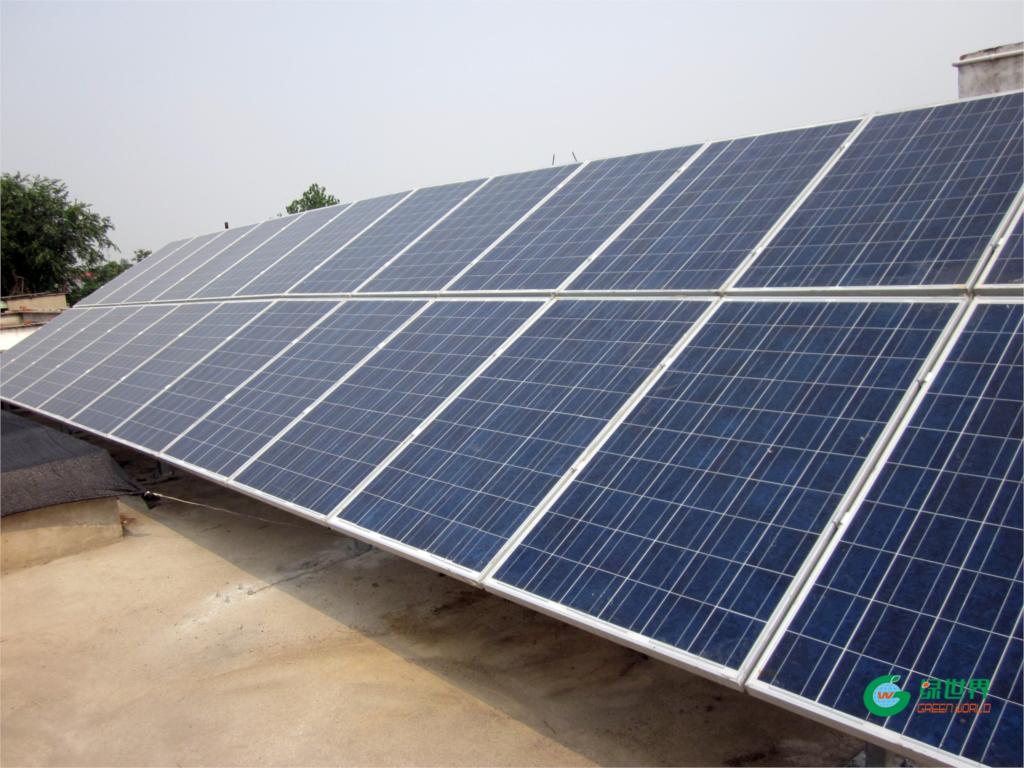
    Thai energy firm Gunkul Engineering Plc has acquired the 50-megawatt Phong Dien II solar power plant in the central Thua Thien Hue Province for $39.9 million.

    The plant is set to begin commercial power generation on December 15 with a feed-in tariff of 7.09 U.S. cents per kilowatt-hour for 20 years.

    The acquisition is part of the company’s plan to expand in Southeast Asia in the renewable energy sector, which it says has low risk and high growth potential

    Other Thai investors have also made moves to buy solar power plants in Vietnam, taking advantage of the country’s incentive feed-in tariffs to promote solar energy amid growing demand for electricity.

    Other Thai energy firms have also been busy in Vietnam.

    Gulf Group increased its ownership of two solar farms in the southern province of Tay Ninh from 49 percent to 90 percent during the second quarter of this year.

    Super Energy Corporation has invested $457 million in four solar power plants in southern Vietnam.

    Power production by Vietnam’s 100 odd solar plants surged 2.3 times year-on-year in the first 10 months to 7.95 billion kilowatt-hours, according to Vietnam Electricity.

  • Startups need partnerships to participate in bigger ecosystems

    Startups need partnerships to participate in bigger ecosystems

    Vietnamese startups need to expand their partnership network with domestic and regional firms for functioning deeper in big firms’ ecosystems, industry insiders say.

    Nguyen Anh Duc, CEO of retail chain Saigon Co.op, said among its 2,500 partners and suppliers in ASEAN, nearly 60 percent are young entrepreneurs in Vietnam who contribute about 28 percent of Saigon Co.op’s annual revenues.

    However, the contribution of young entrepreneurs to the company has been falling in recent years, he said Monday at the ASEAN Young Entrepreneur Carnival held in Hanoi.

    Saigon Co.op is constantly looking to improve it ecosystem and expand its market size, and for this, it needs more contributions from young entrepreneurs, Duc said.

    “There are gaps in the business environment among ASEAN countries, and young entrepreneurs need to fill those,” he said, adding that this process will lead to the creation of more unicorns in Vietnam and other ASEAN countries.

    Other forum participants said Vietnamese startups need to implement their ideas faster in the modern market to improve their ecosystems.

    Nguyen Dang Quynh Anh, chief operating officer of media giant Yeah1 Group, said a key factor in improving a company’s ecosystem is digital transformation, which requires young entrepreneurs to make quick decisions to make their services and products match the demand of modern customers.

    The pandemic will create new shopping habits among consumers who now are more familiar with sitting at home and ordering products to be delivered to their doorstep, and startups need to take advantage of this new trend to expand their market, she added.

    Although one of the biggest challenges startups face in expanding their network is mobilizing funds, experts say that there are many funding sources available now for young entrepreneurs with potential.

    Nguyen Phi Van, chairwoman of startup support organization Vietnam Angel Network, said that a group of angel investors in ASEAN this year has established a financial company to support startups with the biggest potentials in the region. So, if a Vietnamese and a Malaysian investor decide to fund a startup, it will be able sell its products to both markets.

    “Vietnam is currently one of the markets receiving great attention from investors in ASEAN thanks to its growth potential,” Van said.

    Investment in Vietnamese tech startups in the first six months fell 22 percent year-on-year to $222 millionfrom 40 dealsdue to the Covid-19 pandemic, according to a report by Ho Chi Minh City-based venture capital firm Do Ventures.

    Among six major economies in Southeast Asia, Vietnam accounted for 16 percent of the total investment, ranking third behind Singapore (37 percent) and Indonesia (30 percent), it added.

  • Vietnam wants to cut logistics cost to improve goods competitiveness

    Vietnam wants to cut logistics cost to improve goods competitiveness

    The government wants its agencies and businesses to reduce logistics cost to enhance the competitiveness of the country’s goods, Deputy Prime Minister Trinh Dinh Dung has said.

    Speaking on Thursday at the Vietnam Logistics Forum, he said the cost for logistics remains high, leading to higher product costs and lower competitive advantages for Vietnamese goods and its economy.

    Heightened costs stem from reliance on land-based transport and inefficient delivery systems. Take the Hai Phong – Bac Ninh waterway for example. The waterway allows ships with a capacity of 120 TEU (20-foot equivalent units), and they can cover the distance in 8 to 11 hours, three times longer than by road, but at 20 percent lower cost, said Dao Trong Khoa, vice president of the Vietnam Logistics Business Association.

    Dung said the goal is to double logistics services’ share of GDP to 8-10 percent and total logistics costs to 16-20 percent of GDP. To achieve the targets, unnecessary procedures need to be immediately eliminated, he added.

    Khoa said it is necessary to promote the use of digital transformation in logistics via integrating blockchain and artificial intelligence technologies to existing digital platforms for transport and port and warehouse management.

    He underlined the importance of developing international rail links and waterways in the northern Red River Delta and southern Mekong River Delta. These would help reduce costs for logistics service providers, manufacturers and import-export companies.

    The cost of logistics services in Vietnam in early 2019 accounted for 25 percent of the country’s GDP, while the rate was just 9.5 percent in the U.S, 11 percent in Japan, 16 percent in South Korea, and 21.6 percent in China, according to the Vietnam Chamber of Commerce and Industry.

    According to the Vietnam Logistics Business Association’s latest survey, there are around 30,000 logistics companies in the country, including 4,000 international ones.

    The industry has been growing at 12-14 percent annually and is now worth $40-42 billion.

  • Vietnam leads in number of accounts removed by Facebook

    Vietnam leads in number of accounts removed by Facebook

    Facebook has removed 290 fake accounts in Vietnam so far this year, making the country top in number of account cancellations.

    Of those fake accounts, some had forged that of the Health Ministry to post fake news about the Covid-19 pandemic.

    The removals were made via coordination between Facebook and the authorities of Vietnam, Le Quang Tu Do, deputy head of the Authority of Broadcasting and Electronic Information under the Ministry of Information and Communications, told a conference in HCMC on Friday.

    Aside from the fake accounts, Facebook also removed 330 pages advertising online games and gambling as well as 2,200 links that promote trading of illegal products and services.

    In the past year, Vietnam has led the world in terms of the number of fake accounts being removed and violating posts being deleted by Facebook, Do said.

    Aside from Facebook, the authority had also worked with YouTube to either remove channels with toxic, offending and anti-government contents or block advertisements for them.

    In the year to date, more than 29,000 YouTube videos and 24 accounts have been removed.

    Previously, YouTube only removed or blocked ads for channels whose owners had been prosecuted in Vietnam but now, it will do the same for all videos deemed to have toxic contents by authorities, he said.

    Vietnam has so far licensed 800 social media platforms and the number of social media accounts has risen from 47 million in 2018 to 96 million this year, Minister Nguyen Manh Hung told legislators earlier this month.

    Facebook and YouTube account for the biggest amount of users in the country.

    In 2018, there were about 54.7 million internet users in Vietnam.

    The figure rose to 59.2 million last year and is estimated at 63.6 million this year. By 2023, it was forecasted to be 75.7 million, according to German data portal Statista.

    Statista also said Facebook had removed almost 1.5 billion fake accounts in the second quarter this year, down from 1.7 billion fake accounts in the preceding quarter.

  • Hanoi-HCMC world’s second busiest domestic air route

    Hanoi-HCMC world’s second busiest domestic air route

    The Hanoi-HCMC route is the world’s second-busiest in November after South Korea’s Jeju-Seoul, according to British aviation analysis company OAG.

    The flight route connecting Vietnam’s two largest cities, which takes around two hours, has nearly 893,000 seats scheduled for November, while the route between South Korean capital Seoul and Jeju Island has 1.3 million.

    The route between Chinese capital Beijing and Shanghai’s Hongqiao Airport is third with 768,184 seats, followed by the two routes in Japan –Sapporo-Tokyo Hanenda and Fukuoka-Tokyo Hanenda.

    Of the top 10 busiest domestic routes in November, China and Japan have four each.

    “International flights have felt the impact most acutely due to border controls and mandatory quarantine requirements, domestic routes are starting to recover as people are generally able to move more freely within their countries,” OAG said.

    Asia is a standout, home to all 10 of the world’s busiest domestic routes this month, the company added.

    Vietnam has reopened six international flights to mainland China, Japan, South Korea and Taiwan from September 15, followed by Laos, Cambodia from September 22. It had suspended all international routes in March to contain the Covid-19 outbreak in the country.

  • Vietnam allows taxman greater scrutiny of bank accounts

    Vietnam allows taxman greater scrutiny of bank accounts

    The decree requires banks to provide the account balance and transaction details to tax authorities upon request.

    While the current law does state that the banks are required to provide authorities with information, the nature of such information was not specified.

    Under the decree, banks will also need to provide monthly details on the newly opened or closed accounts of taxpayers.

    The stated purpose of the decree is to allow authorities supervise and examine the tax responsibilities of citizens as e-commerce develops rapidly in Vietnam.

    The decree also requires banks to pay tax dues on behalf of foreign organizations doing e-commerce and digitized business in Vietnam with local organizations and individuals.

    The banks are also required to submit to tax authorities every month a list of transfers from customers to foreign organizations.

    The decree had earlier received mixed responses from lawmakers. Pham Thi Thu Trang, a National Assembly deputy from the central province of Quang Ngai said that the decree contradicts regulations on personal information security and should not be imposed.

    Another lawmaker, Bui Thi Quy Tho, supported the new decree but proposed that transaction fees be reduced to boost cashless spending and better tax management.

    Vietnam is trying to tighten its tax policies as e-commerce booms as foreign service providers like Netflix expand their reach in the country.

    An official of the General Department of Taxation said last month that, in Hanoi alone, there were over 18,300 organizations and individuals making a total of VND1.46 trillion ($62.9 million) from online sales via Google, Facebook, and YouTube in Hanoi alone, according to data from 45 commercial banks.

    The department had collected nearly VND14 billion from them, the official said but did not mention the time frame for the figures.

  • Vietnam has most adult gamers globally

    Vietnam has most adult gamers globally

    Vietnam has the highest number of adult gamers in the world in 2020, according to a recently released global consumer survey by German data portal Statista.

    Ninety four percent of Vietnamese said they gamed at least occasionally while nearly 20 percent said they were frequent gamers, according to the Statista Global Consumer Survey.

    Eighty five percent said they gamed on smartphones.

    Besides Vietnam, other developing countries like Nigeria, Thailand and the Philippines also reported high numbers of adult gamers, aided by their younger demographics.

    Smartphone gaming has won over people not previously invested in the activity by giving them easy access at low or no initial cost.

    The Statista Global Consumer Survey polled 1,000-4,000 respondents between 18 and 64 years of age in 55 countries and territories.

    Vietnam is a growing market for e-sport and online games. An earlier Statista report said online game revenues in the country this year are expected to top $10.1 million, up 16 percent from 2019.

    Another study by market research company Niko Partners and Google earlier this year forecast Vietnam’s e-sport market to achieve the highest five-year compounded annual growth rate in Southeast Asia, from 2018, of 28 percent.

  • Satellite to track rising seas as climate warms

    Satellite to track rising seas as climate warms

    An Earth-observation satellite developed by European and U.S. space agencies will measure sea level rise, tracking changes threatening to disrupt tens of millions of lives within a generation.

    If all goes according to plan, the payload will be hoisted into a low-Earth 1,300-kilometer (800-mile) orbit by a Space X Falcon 9 rocket, with lift-off from Vandenberg Air Force Base in California at 17:17 GMT Saturday.

    Sentinel-6a will be the first of two identical satellites – the second to be launched in five years – that will provide measurements of unprecedented precision until at least 2030.

    Each Sentinel-6 probe carries a radar altimeter, which measures the time it takes for radar pulses to travel to Earth’s surface and back again.

    The satellites will circle the planet in the same orbit as earlier missions that supplied sea-surface height data over the last three decades, mapping 95 percent of Earth’s ice-free ocean every 10 days.

    Accelerating sea level rise is arguably the climate change impact that will affect the largest number of people over the next three decades.

    Nearly 800 million people live within five meters of sea level, and even an increase in sea level of a few centimeters can translate into vastly more damage from high tides and storm surges.
    An Earth-observation satellite developed by European and U.S. space agencies will measure sea level rise, tracking changes threatening to disrupt tens of millions of lives within a generation.

    If all goes according to plan, the payload will be hoisted into a low-Earth 1,300-kilometer (800-mile) orbit by a Space X Falcon 9 rocket, with lift-off from Vandenberg Air Force Base in California at 17:17 GMT Saturday.

    Sentinel-6a will be the first of two identical satellites – the second to be launched in five years – that will provide measurements of unprecedented precision until at least 2030.

    Each Sentinel-6 probe carries a radar altimeter, which measures the time it takes for radar pulses to travel to Earth’s surface and back again.

    The satellites will circle the planet in the same orbit as earlier missions that supplied sea-surface height data over the last three decades, mapping 95 percent of Earth’s ice-free ocean every 10 days.

    Accelerating sea level rise is arguably the climate change impact that will affect the largest number of people over the next three decades.

    Nearly 800 million people live within five meters of sea level, and even an increase in sea level of a few centimeters can translate into vastly more damage from high tides and storm surges.

    China, Bangladesh, India, Vietnam, Indonesia and Thailand are home to the greatest number of people who today live on land that could be threatened by permanent inundation by 2100.

    Already today, there are more than 100 million people living below high tide levels.

    “Extreme sea level events that are historically rare – once per century in the recent past – are projected to occur frequently, at least once per year, at many locations by 2050,” especially in the tropics, the UN climate science advisory panel, the IPCC, concluded in a major report last year.

    Satellites tracking the world’s oceans since 1993 show that global mean sea level has risen, on average, by over three millimeters (more than a tenth of an inch) annually.

    More recently, that rate has increased to 5 mm per year.

    “It is crucial that we are able to see these accelerations,” said Alain Ratier, outgoing Director-General of Europe’s meteorological satellite agency, EUMETSAT.

    The IPCC forecasts an increase in global sea level rise of up to 1.1 meters (43 inches) by the end of the century.

    The Copernicus Sentinel-6 mission is a collaboration of the European Commission, the European Space Agency (ESA), EUMETSAT, NASA and the U.S. National Oceanic and Atmospheric Administration (NOAA).

    The Sentinel satellites are each about the size and shape of a large minivan topped with slanted solar panels, and weigh nearly 1,200 kilos (2,600 pounds), including rocket fuel.

    They are designed to last for five-and-a-half years, but could provide data for far longer. China, Bangladesh, India, Vietnam, Indonesia and Thailand are home to the greatest number of people who today live on land that could be threatened by permanent inundation by 2100.

    Already today, there are more than 100 million people living below high tide levels.

    “Extreme sea level events that are historically rare – once per century in the recent past – are projected to occur frequently, at least once per year, at many locations by 2050,” especially in the tropics, the UN climate science advisory panel, the IPCC, concluded in a major report last year.

    Satellites tracking the world’s oceans since 1993 show that global mean sea level has risen, on average, by over three millimeters (more than a tenth of an inch) annually.

    More recently, that rate has increased to 5 mm per year.

    “It is crucial that we are able to see these accelerations,” said Alain Ratier, outgoing Director-General of Europe’s meteorological satellite agency, EUMETSAT.

    The IPCC forecasts an increase in global sea level rise of up to 1.1 meters (43 inches) by the end of the century.

    The Copernicus Sentinel-6 mission is a collaboration of the European Commission, the European Space Agency (ESA), EUMETSAT, NASA and the U.S. National Oceanic and Atmospheric Administration (NOAA).

    The Sentinel satellites are each about the size and shape of a large minivan topped with slanted solar panels, and weigh nearly 1,200 kilos (2,600 pounds), including rocket fuel.

    They are designed to last for five-and-a-half years, but could provide data for far longer.
  • Apartment prices continue to rise in major cities

    Apartment prices continue to rise in major cities

    Apartment prices in Hanoi and Ho Chi Minh City continued to rise in the third quarter, going up by 0.24 percent and 0.35 percent from the previous quarter. According to the Ministry of Construction, lower-end apartments in Hanoi, often built in developing suburban areas like Dong Anh, Gia Lam, and Ha Dong, have a high absorption rate of around 70 percent.

    Mid- and high- priced projects, especially luxury apartments, sell much slower, and since the onset of Covid-19 many projects have seen little or no demand.

    Hanoi’s Q3 new apartment supply fell 60 percent year-on-year to a five-year low of 3,100 units as Covid-19 hampered new launches, according to real estate consultancy firm Savills Hanoi.

    The ministry said in HCMC a shortage of apartments led to rising prices along with high absorption rates, and developers, therefore, had to turn to suburban districts, leading to surging land prices in Binh Chanh, Go Vap, and Cu Chi Districts.

    Supply is down around 60 percent due to the impact of the pandemic and slows licensing by the city authorities.

    Figures from the ministry show apartment prices were VND24.8-37.7 million ($1,068-1,626) per square meter in Hanoi; VND30-50 million in HCMC, VND23-27 million in the northern province of Quang Ninh, VND30 million in northern Hai Phong City, VND30-38 million in southern Binh Duong Province, and VND19-60 million in southern Can Tho City.

    Vietnam’s Q2 real estate loans grew 10.2 percent over the first to VND580.17 trillion ($25 billion), showcasing a recovery in demand.

    Compared to the quarter-on-quarter growth of just 0.88 percent in the first quarter, showcasing a sluggish real estate market, the Q2 figure is a marked improvement, reflecting a resurgence after the nationwide social distancing campaign ended in late April, the construction ministry said.

    Of the total, 25.9 percent of the real estate loans were for construction and maintenance of existing housing units or to acquire property deeds, it said.

    The report also said that most real estate companies have resumed operations after two Covid-19 outbreaks were contained.

    Foreign direct investment in real estate was $2.35 billion in the third quarter, four times that of the second, which is a good sign for the industry, the ministry said.

  • Vietnam Airlines to get bailout funds after pandemic impacts

    Vietnam Airlines to get bailout funds after pandemic impacts

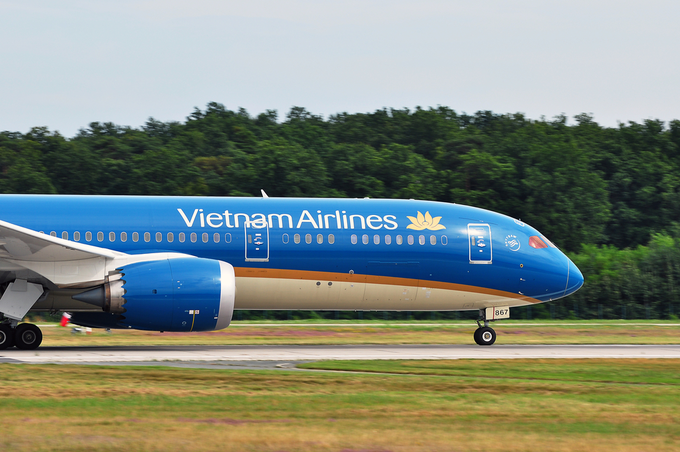
    The National Assembly has approved several measures to help national flag carrier Vietnam Airlines overcome the financial impacts of Covid-19.

    A parliamentary resolution passed Tuesday allows the State Bank of Vietnam to refinance and offer loan extensions no more than two times to banks that would lend Vietnam Airlines additional capital for the company to continue its operations.

    The carrier will also be allowed to sell more shares to existing shareholders to increase its charter capital in accordance with the Law on Securities, but is exempt from the condition that its business being profitable in the year prior to the offering.

    The State Capital Investment Corporation (SCIC), a state-owned holding company, will act on behalf of the government to purchase Vietnam Airlines shares.

    The NA has asked for strict inspection and auditing of the measures when they are carried out. It has also asked Vietnam Airlines to continue building its own solutions for reducing losses and taking care of its employees in the context of the pandemic continuing to develop in complicated ways.

    Vietnam Airlines has sent 14 reports to relevant state agencies and met with government representatives several times, seeking assistance in tackling financial problems posed by the pandemic.

    The carrier has suggested the government grants it a relief package of VND12 trillion ($518.53 million), including options for refinancing and raising its charter capital.

    It reported a loss of VND10.75 trillion ($464 million) for January-September, during which its revenues fell 58.3 percent year on year to VND23.9 trillion.

    It transported 10.2 million passengers during the nine months, down 41.2 percent year-on-year.

    The airline has blamed its plight on the pandemic’s impacts. It has cut sales, financial and management expenses, reduced salaries of pilots and flight attendants. It has also increased operations of repatriation flights.

    The carrier’s third-quarter revenues fell 68 percent year-on-year after the second Covid-19 outbreak hit the country late July. The third quarter is usually the highest revenue earner of the year as schools close and summer travel peaks. The second outbreak forced the carrier to cancel 22 new domestic routes during the peak period.

    Vietnam Airlines currently operates more than 60 domestic routes with an average of 300 flights per day. It has resumed one-way flights to Japan and plans to reopen routes soon to mainland China, Taiwan, Laos and Cambodia.

    The airline has estimated this year’s total loss at around VND15.2 trillion on revenues of VND55.7 trillion.

  • Auto industry seeks to develop components segment

    Auto industry seeks to develop components segment

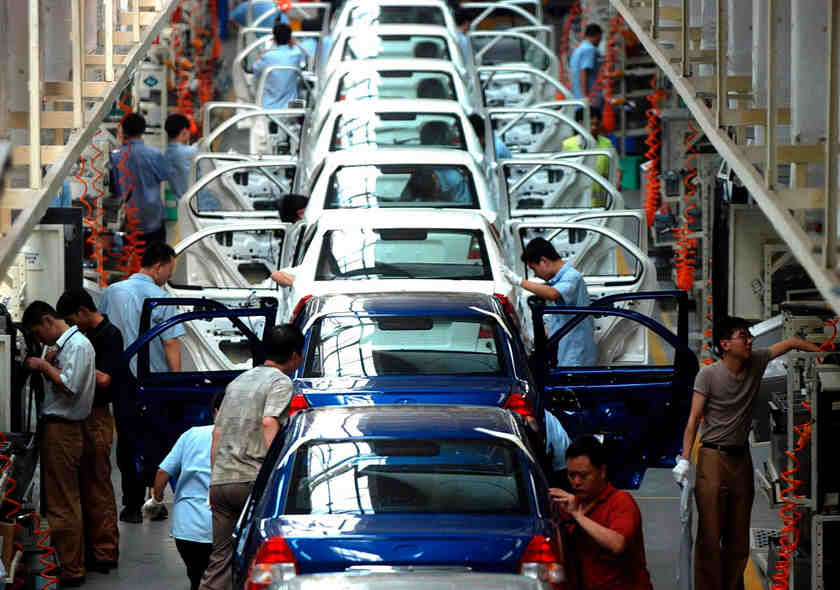
    While the automotive industry’s target of using 35-45 percent locally made parts remains elusive, auto companies are increasing investments in supporting industries.

    On September 22 TC Motor began construction of the 340 ha Thanh Cong Viet Hung Complex for Automotive Supporting Industries in northern Quang Ninh Province.

    A spokesperson for the Ninh Binh-based auto firm believed that the complex would attract many companies in the auto ecosystem.

    TC Motor is also clearly interested in making parts for Hyundai cars produced in Vietnam. The South Korean brand, which it assembles and distributes, topped the market in the last 10 months.

    Next to Quang Ninh is the VinFast plant that makes cars, motorbikes and electric bikes in the Dinh Vu-Cat Hai industrial zone in Hai Phong City. A third of the 335-ha plant is used to produce auto and motorbike parts.

    The last of the big three local auto companies, Truong Hai (Thaco), is no exception to this trend, making large investments in supporting industries.

    Thaco says that it currently has 12 plants in the 1,200 ha Chu Lai-Quang Nam industrial zone making both internal and exterior parts for buses, trucks and cars; composite parts; automotive glass; air conditioners for trucks, buses and passenger cars; bumpers for passenger cars; seats and seat covers; wires; springs; car body parts and more.

    This producer of Kia and Mazda vehicles is the second largest in the Vietnamese market after TC Motor. Its ambition is to become an original equipment manufacturer (OEM) for not only the domestic market but also exports.

    Where is Vietnam on the automotive map?

    While the Vietnamese car market ranks fourth in Southeast Asia in terms of scale, sales and production, the country’s supporting industry ranked considerably lower.

    In a report in 2018 the Ministry of Industry and Trade said the use of locally produced parts in the Vietnamese auto industry was just 7-10 percent on average, miles away from the 40 percent goal set in 2004.

    While Vietnam is still struggling to develop its supporting industries, an important requirement for auto manufacturing, other Southeast Asian nations like Thailand and Indonesia have already surpassed the 70-80 percent mark.

    To bolster production, it is necessary to have strong supporting industries and steady market growth, said, experts. Vietnam is behind only Myanmar in Southeast Asia in terms of sales growth, but weak supporting industries and a small number of parts suppliers limit production to mere assembly of imported parts.

    The high costs of imported parts have also led to a paradoxical situation of locally made cars being more expensive than imported ones.

    Statistics from the Vietnam Automobile Manufacturers Association (VAMA) show that its members source around 15 percent of tier 1, or low-technology, parts like chairs and wires domestically, and import the rest.

    Thailand and Indonesia only import 10 percent of tier 4 parts, which include the most important like gearboxes and engines.

    In 2018 there were around 2,100 part suppliers in Thailand and only 276 in Vietnam.

    Auto manufacturing costs in Vietnam are around 15-20 percent higher than elsewhere. A steel filler cap costs around $1.5 in Thailand, but $3.8 in Vietnam.

    With even lower-tier parts being expensive in Vietnam, reducing the costs of higher-tier parts like car body, electronics, engines, and gearboxes seems infeasible, said some experts.

    The inability of suppliers in Vietnam to make parts more complicated than tires, seats, and wires require the domestic industry to import about $2 billion worth of car parts each year, mostly components like the braking and steering system, from countries like Japan, China, and South Korea, according to a report by the Ministry of Industry and Trade.

    Car sales in Vietnam reached 385,600 units last year, but the size of the Indonesia and Thailand market was 2.6 times bigger and that of Malaysia, 1.6 times.

  • VN-Index sees biggest losing session in two weeks

    VN-Index sees biggest losing session in two weeks

    The VN-Index plunged 1.60 percent to 950.79 points Monday, its biggest single-session loss since October 28. The Ho Chi Minh Stock Exchange (HoSE), on which the VN-Index is based, saw 305 tickers lose and 146 gain. Total trading volume was at this year’s highest point at VND10.23 trillion ($442.39 million), compared to last month’s average of VND8-9 trillion.

    The VN30-Index for the stock market’s 30 largest caps slumped 1.64 percent, with all but one ticker losing. HPG of steelmaker Hoa Phat Group was the only ticker in the group to close in the green by 0.9 percent.

    Topping losses were MSN of food conglomerate Masan Group, down 6.9 percent, VIC of private conglomerate Vingroup, down 5 percent, and TCH of truck dealer Hoang Huy Group, down 2.9 percent.

    Other major losers included PNJ of jewelry retailer Phu Nhuan Jewelry, down 2.3 percent, VHM of real estate developer Vinhomes, 2.2 percent, SBT of agricultural firm TTC-Sugar, 2.2 percent, and POW of electricity generator, 2 percent.

    Private banks were also among the loss-makers. HDB of HDBank dropped 2.5 percent, STB of Sacombank 1.8 percent, VPB of VPBank 1.4 percent, TCB of Techcombank 0.4 percent, and EIB of Eximbank 0.3 percent.

    State-owned banks fared slightly better with losses of lesser magnitude. VCB of Vietcombank was down 1.3 percent, BID of BIDV 1 percent, CTG of VietinBank 0.2 percent, and MBB of mid-sized Military Bank, 1.3 percent.

    The HNX-Index for the Hanoi Stock Exchange, home to mid- and small-caps, was down 0.95 percent, but the UPCoM-Index for the Unlisted Companies Market gained 0.23 percent.

    Foreign investors were net sellers again to the tune of VND400 billion on all three bourses, with selling pressure mostly on HDB of HDBank and CTG of VietinBank.

  • Masan injects $215.7 mln into VinMart controlling unit

    Masan injects $215.7 mln into VinMart controlling unit

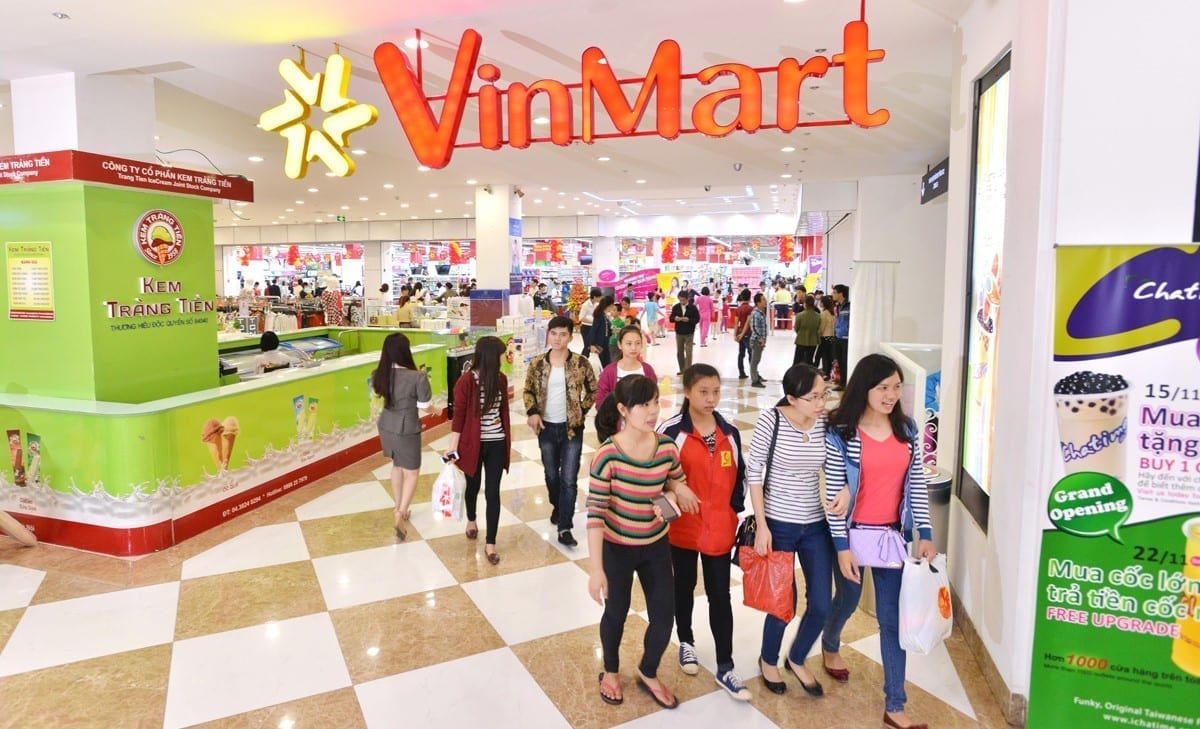
    Conglomerate Masan Group will invest VND5 trillion ($215.7 million) in the subsidiary that controls its VinMart retail chain to help expand it.

    The investment would quadruple the charter capital of The Sherpa to VND6.5 trillion, it said in a statement.

    Through the company, Masan indirectly owns 71 percent of VinCommerce, which operates VinMart+ convenience stores and VinMart supermarkets.

    Masan acquired VinCommerce from Vietnam’s largest private company, Vingroup, in January this year.

    Masan earlier announced it plans to have over 300 VinMart supermarkets and nearly 10,000 VinMart+ convenience stores by 2025, up from 122 and 2,524 at the end of September.

    Masan closed 433 VinMart and VinMart+ stores in the first nine months of this year to cut losses and forecast VinCommerce to break even this quarter.

  • Government greenlights Long Thanh International Airport

    Government greenlights Long Thanh International Airport

    The first phase of the Long Thanh International Airport project, costing over $4.6 billion, has been approved by the government. The decision approving the airport, designed to become an important regional international air transit hub, was signed Wednesday by Deputy Prime Minister Trinh Dinh Dung.

    The first phase will have one 4km long runway with a width of 75 meters and a system of taxiways and apron, and a 373,000 sq.m passenger terminal designed to serve 25 million passengers and 1.2 million tons of cargo per year. The work is expected to be completed in 2025.

    The work will be divided into four sub-projects: the headquarters of state management agencies, flight management services, essential airport facilities, and other items.

    Essential airport facilities will include buildings, airport apron, passenger terminals, and cargo terminals. This task has been assigned to the Airport Corporation of Vietnam (ACV), which operates 21 airports in the country. ACV will raise its own capital for the construction, the decision says.

    The Long Thanh International Airport will apply modern and open technologies so that they can be easily updated with the most advanced construction, management and operational technologies in accordance with international standards.

    The project’s investment plan was approved by the National Assembly in mid-2017. The parliament also issued a resolution on compensation, support and resettlement for land clearance to build the airport.

    Early last month, the government had directed Dong Nai Province to urgently hand over building sites so that construction can begin early next year.

    The airport will have three phases that are expected to be completed in 2040. By then, it will have four runways, four-passenger terminals and auxiliaries to accommodate 100 million passengers and 5 million tons of cargo every year.

    Lying 40 kilometers east of HCMC, the airport is expected to take up the overflow from the largest existing airport in the country, the Tan Son Nhat International Airport.