Tag: Vietnam

  • Foreign streaming firms earn $43 mln in Vietnam, pay no tax

    Foreign streaming firms earn $43 mln in Vietnam, pay no tax

    Foreign streaming companies like Netflix and Apple TV have earned combined revenues of nearly VND1 trillion ($43 million) so far but have not paid any tax on them.

    Minister of Information and Communications Nguyen Manh Hung said the figure was arrived at from the fact they have one million subscribers.

    “Vietnamese companies have to abide by tax and content regulations while foreign firms do not pay tax and do not follow the laws, which is unfair competition,” he said at a National Assembly Q&A session Tuesday.

    There are 35 local TV and Internet streaming companies with 14 million subscribers.

    Some foreign companies have flouted regulations related to the history and sovereignty of the country, violence, drug use, and sex, Hung said.

    U.S.-owned Netflix said in a statement last month it was working with Vietnamese authorities to set up a mechanism for tax collection.

    The Cybersecurity Law requires all foreign businesses which earn an income from online activities in Vietnam to store their data in the country, but Netflix is unwilling to place its servers locally or open an office in Vietnam.

    Other Southeast Asian countries have also been making moves to tax Netflix and other Internet giants. Indonesia imposed a 10 percent value-added tax on sales on technology firms including Amazon, Netflix, Spotify, and Google in July, while Singapore has since January required subscribers to Netflix and other overseas digital services to pay a 7 percent goods and services tax.

  • Hanoi short of premium office space

    Hanoi short of premium office space

    Companies in Hanoi are struggling to find Grade A office space in the downtown area because of limited supply.

    Major Grade A office buildings in the downtown district of Hoan Kiem are recording 95-100 percent absorption rates due to high demand in the capital city, according to a recent report by real estate consultancy Savills.

    These buildings include the BIDV Tower with an occupancy rate of 100 percent, ConerStone Building, 99 percent, Hanoi Towers, 97 percent and Pacific Place, 96 percent.

    The Covid-19 pandemic has not caused major impacts on office demand in the capital city, with the absorption rate in the third quarter falling just 1 percentage point to 90 percent, the report said.

    Demand for office from foreign direct investment companies is set to rise in the future, Savills expects. Hanoi posted the highest GDP growth in the country in the first nine months at 3.3 percent, said Le Tuan Binh, head of Hanoi commercial leasing at Savills.

    The real estate consultancy said it has received many requests for new office space in the city, especially from foreign companies with deep pockets that are expanding or establishing their factories in the country.

    Hanoi’s overall office supply rose 4 percent year-on-year to 1.9 million square meters in the third quarter, and Savills forecasts that addition of over 60,000 square meters will enter the market in the last quarter.

  • Bamboo Airways licensed to fly directly to the US

    Bamboo Airways licensed to fly directly to the US

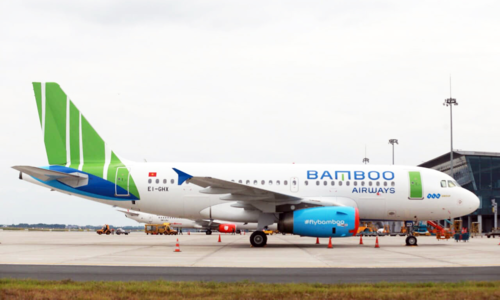
    Bamboo Airways has received a permit from the U.S. Department of Transportation to carry passengers and cargo to that country.

    It has been allowed to use the wide-body Boeing 787-9 Dreamliner to fly directly from Hanoi and Ho Chi Minh City to places like Los Angeles and San Francisco.

    Bamboo Airways is the second airline to get permission after Vietnam Airlines.

    It is set to begin direct service to the U.S. at the end of 2021 or early 2022, and will next seek licenses from the Federal Aviation Administration (FAA), the Transportation Security Administration and other relevant agencies in the U.S.

    The FAA granted a Category 1 rating to the Civil Aviation Authority of Vietnam under its International Aviation Safety Assessment program last February, which meant the latter met safety standards to operate flights to the U.S.

    There are currently no non-stop routes between the two countries, and passengers have to transit through East Asia, taking 18-21 hours in all. A direct flight would bring the travel time down to 14-16 hours.

    Americans are among the top foreign visitors to Vietnam, with 687,226 arrivals last year, while an ethnic Vietnamese population of over 2.1 million in the U.S. is also expected to be a steady source of travel demand.

  • US claims Vietnamese tires subsidized by weak currency

    US claims Vietnamese tires subsidized by weak currency

    The U.S. has slapped preliminary countervailing duties of 6.23-10.08 percent on Vietnamese tires, alleging they are subsidized by an undervalued currency. The duties, which apply to imported passenger vehicle and light truck tires, were announced by the Commerce Department on Thursday, after United Steelworkers, a trade union with members across North America, filed a petition in May claiming domestic production was hurt by Vietnamese products.

    There will be a final determination on the case in March next year.

    This is the first time that the U.S. has imposed countervailing duties based on currency value.

    The U.S., under President Donald Trump, has in recent years been accusing Vietnam of manipulating its currency to gain an unfair trade advantage and a large trade surplus.

    Vietnamese authorities have repeatedly said their exchange rate policies are not aimed at helping exports to the U.S.

    Deputy Foreign Ministry Spokesman Duong Hoai Nam said at a press briefing Thursday that Vietnam has been following this investigation since it was launched.

    “Vietnam will continue to coordinate with U.S. authorities to clarify and better understand the situation and protect the legitimate interests of Vietnamese businesses in accordance with World Trade Organization regulations.”

    Central bank governor Le Minh Hung said last month that the country “has not intended and will not intend to use monetary policies in general and exchange rates, in particular, to create unfair competitive advantages in international trade.”

    The U.S. is also conducting anti-dumping duty investigations related to light vehicle tires imported from Vietnam, South Korea, Taiwan, and Thailand, and will announce the preliminary results next month.

    Vietnam’s passenger tire exports to the U.S rose by 14 percent last year to $469.6 million, according to the U.S. Census Bureau.

    “The Trump Administration remains vigilant against foreign actors that take advantage of American workers and businesses, and we will continue addressing this issue to ensure American industry competes on a level playing field,” Secretary of Commerce Wilbur Ross said in a statement.

    Experts have expressed concern that more countervailing and anti-dumping duties will be imposed on Vietnamese goods based on allegations of currency manipulation should Trump win the ongoing presidential election.

    The Trump administration has initiated 297 anti-dumping and countervailing investigations, a 271 percent increase from the comparable period during the previous one.

  • Pandemic cuts demand for overseas jobs

    Pandemic cuts demand for overseas jobs

    Vietnam’s labor export has plunged this year due to pandemic imposed travel restrictions and fear of contracting the virus abroad. The number of Vietnamese leaving abroad for work in the first nine months fell 59 percent year-on-year to just over 42,800, according to the overseas labor department.

    Japan and Taiwan, the largest and second-largest foreign markets for Vietnamese labor, saw the number of new workers go down nearly 49 percent and over 56 percent, respectively. The plummeting figures reflect the difficulties labor export companies in Vietnam have faced this year.

    Nguyen Viet Xuan, chairman of the Hanoi-based Viet Thang Corp, said his company has successfully sent just a few dozen workers to Japan, Taiwan, and Romania since September, down 90 percent year-on-year.

    Most of them were supposed to leave earlier, but unable to do so due to the pandemic, and the company was having trouble recruiting new candidates because people were reluctant to leave Vietnam with the Covid-19 situation remaining intense in many countries, he told local media.

    The Laco Labour Cooperation Company Ltd in Hanoi has only sent 40 workers to Japan since September after a mostly inactive period from February to August. Vietnam recorded its first Covid-19 case at the end of January and the situation was contained by the end of August.

    Although the Japanese market still has a high demand for imported labor, the long process of acquiring health certificates in the pandemic context could be one of the reasons preventing candidates from going, said Laco CEO Nguyen Xuan Hung.

    Before the pandemic, Japanese employers often traveled to Vietnam and conducted face-to-face interviews, but now the recruitment process has become more challenging as interviews have to be conducted online, he added.

    Other recruiters have pointed out to the high costs of air travel as a factor that discourages workers from going.

    The government’s labor programs are also facing difficulties in recruiting workers. The Department of Overseas Labor had recently extended its deadline for a nurse recruitment program to Japan by one month after failing to recruit the 240 candidates it needed.

    The pandemic has forced companies to cut recruitment costs due to falling revenues. These companies traditionally need to pay a local agent VND20-30 million ($865-1300) per worker, but now they focus more on running ads on social media to approach workers directly.

    Industry insiders do not expect a full recovery in the market anytime soon. Doan Mau Dien, chairman of the Vietnam Association of Manpower Supply (VAMAS), said that as the rising number of Covid-19 cases are being recorded in Europe and some countries have reimposed social distancing measures, it would take until at least the middle of next year for labor export activities to resume to pre-pandemic levels.

    Last year, 147,387 Vietnamese left to work abroad, up 3.2 percent year-on-year, according to the overseas labor department.

  • Fabric origin a problem for textile firms seeking to benefit from EU trade deal

    Fabric origin a problem for textile firms seeking to benefit from EU trade deal

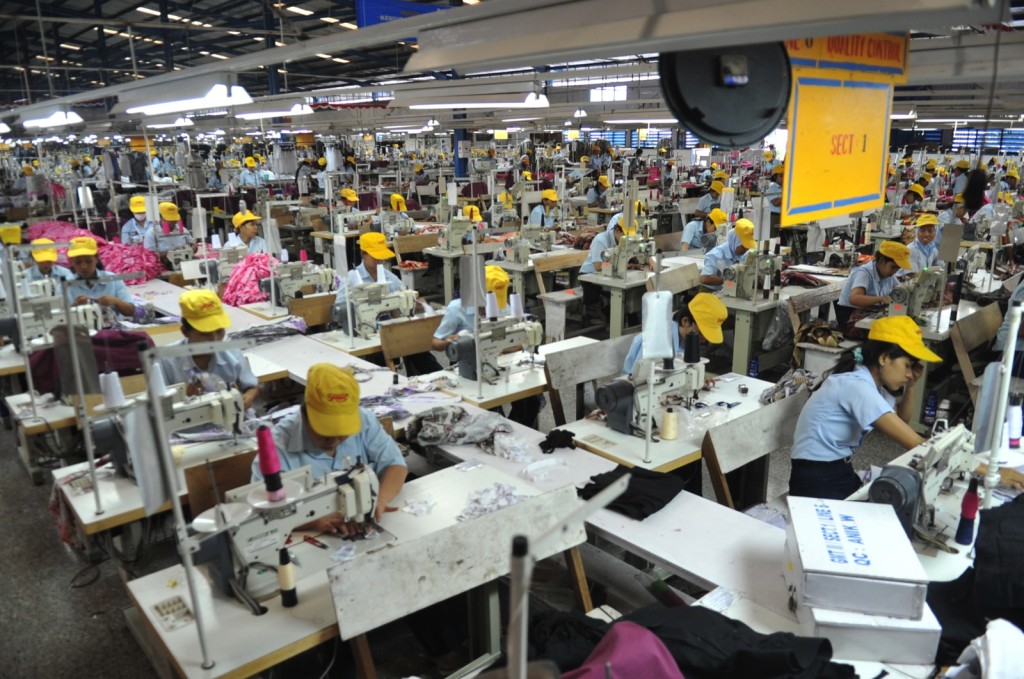
    With Vietnam not producing enough or competitively priced raw materials for the textile industry, its companies are struggling to fully benefit from the EVFTA. The lack of fabric production in the country means businesses are unable to meet origin requirements to enjoy tax incentives, SSI Securities Corporation said. To do so, they need to use domestically produced fabrics or imports from countries that have free trade deals with the E.U., it added.

    But Vietnam depends on China for 60-70 percent of its textile feedstock, and fabrics imported from South Korea account for only 15 percent of the total requirement.

    The E.U.-Vietnam Free Trade Agreement, which took effect on August 1, has strict rules of origin for goods exported to the bloc.

    Under its provisions, 77.3 percent of Vietnam’s textile exports it will enjoy zero percent tax within the first five years while the rest follow a seven-year roadmap.

    The EVFTA is the E.U.’s second trade deal with an ASEAN member country after one with Singapore, and one of the few with a developing country.

    It will see Vietnam eliminate 99 percent of its import duties over 10 years and the E.U. doing the same over seven.

    Before the deal was signed, Vietnam’s garment and footwear exports to Europe were given preferential treatment under the Generalized System of Preferences (GSP) program, with a 9.6 percent tariff on the former.

    For the first two years enterprises can choose to continue to be taxed under the GSP program or EVFTA. From the third year, if a company does not meet the rules of origin as stipulated in the deal, the tariff rate will increase to 12 percent.

    The Vietnam National Textile and Garment Group (Vinatex) said the tax incentives under EVFTA are not attractive enough for businesses to switch from Chinese to Vietnamese fabrics since the former are 10-40 percent cheaper and delivered faster due to the scale of production.

    China’s textile and dyeing industry has a capacity of 80 billion meters of fabric a year while Vietnam’s is 2.5 billion meters against a demand of eight billion meters.

    But SSI believed that in the long run Vietnam needs to develop its own industry and ensure sufficient scale to compete on cost with China.

    There are around 6,800 textile and garment businesses in the country and their exports were worth $32.85 billion last year.

  • Indonesian beauty retailer Sociolla lands in Vietnam

    Indonesian beauty retailer Sociolla lands in Vietnam

    Beauty technology company Social Bella announced its first overseas expansion with the launch of the beauty e-commerce platform Sociolla in Vietnam.

    Demand from beauty enthusiasts in Vietnam was one of the company’s considerations, following a US$58 million funding from investors, such as Singaporean state investment fund Temasek and its private equity subsidiary Pavilion, alongside Singaporean venture capital firm Jungle Ventures.

    The beauty and self-care market in Vietnam has stayed robust and adaptive amid the COVID-19 pandemic, a website on cosmetics and the personal care industry. The beauty sector in Vietnam has seen rapid growth in online sales.

    Christopher Madiam, cofounder and president of Social Bella, said the company was excited to expand its market internationally. “As one of the fastest-growing beauty and self-care markets in Southeast Asia with a population of a digitally literate young generation, Vietnam bears a resemblance to Indonesia,” Christopher said in a statement. “We’re certain that Vietnam is the right country for our first international expansion.”

    John Rasjid, cofounder and CEO of Social Bella, said the company intended to provide access for Indonesian beauty brands to consumers abroad through the expansion. “We’ve witnessed how local beauty brands are getting innovative in releasing quality yet affordable products that can compete with international products,” John said. “With the expansion, we’re not only opening distribution access, but we’re also giving comprehensive support to ensure that their products receive a warm welcome in Vietnam. We are collaborating with a number of our local partners to support a holistic business growth plan in Vietnam.”

    ESQA is among the Indonesian brands Sociolla brings to Vietnam. Cindy Angelina, the cofounder of ESQA Cosmetics, said the firm was proud to be part of the expansion. “We’ve experienced significant growth since joining Sociolla in April 2017. Hopefully, this success will continue in Vietnam,” Cindy said.

    Established in 2015, Social Bella has several business units, including offline stores under the Sociolla brand, Beauty Journal, and Lilla by Sociolla. In July, the company appointed renowned Indonesian make-up artist Archangela Chelsea as the makeup director of Sociolla.

  • Hai An bookstore opens its doors in Ho Chi Minh City

    Hai An bookstore opens its doors in Ho Chi Minh City

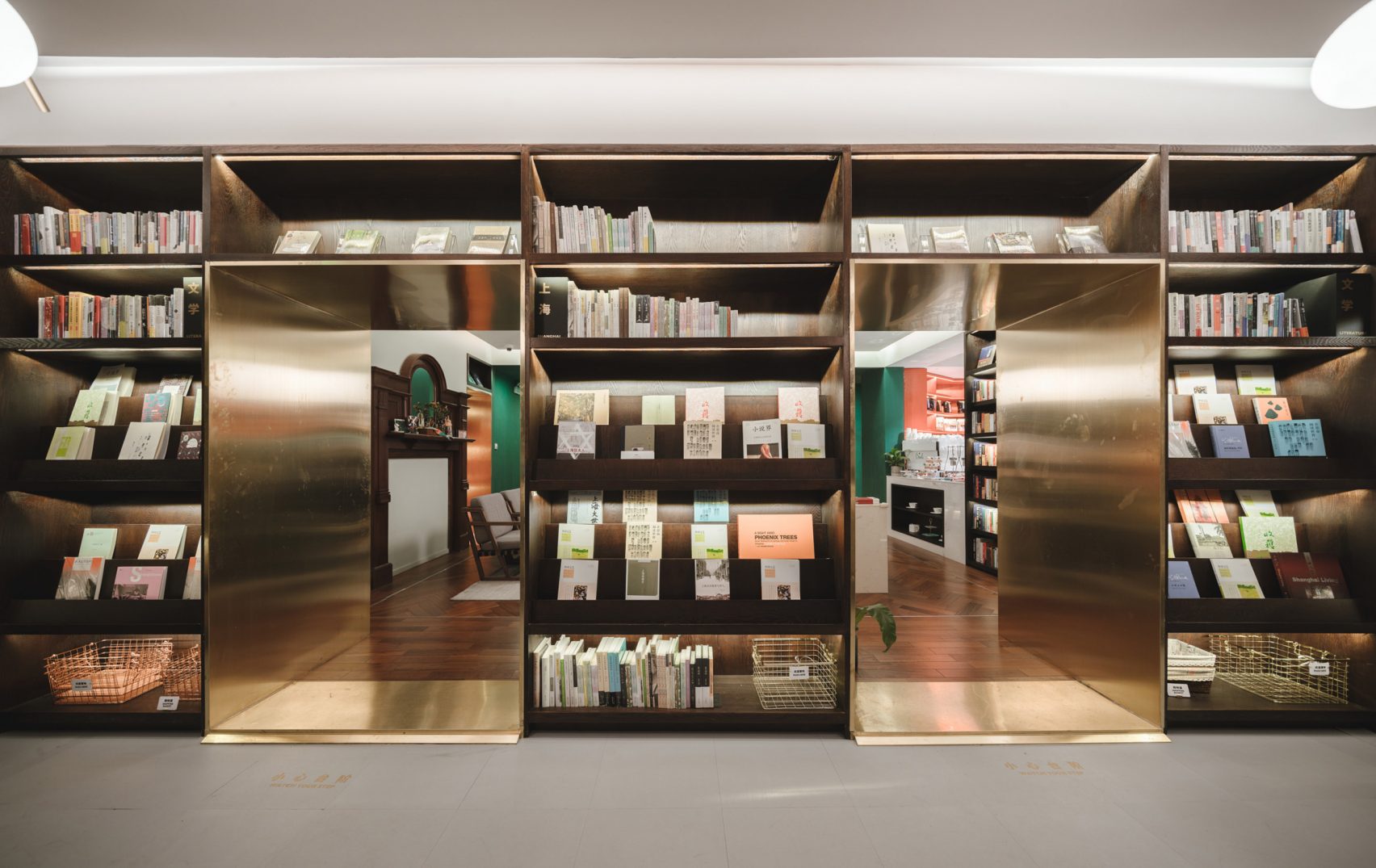
    In downtown Ho Chi Minh City, Vietnam’s largest bookstore yet, Hai An, has opened its doors. Spanning five stories, the store features a contemporary design with an ocean-inspired concept including an art installation in an atrium.

  • Tax evasion remains rife among online sellers

    Tax evasion remains rife among online sellers

    Many people earning huge incomes from online commercial activities do not pay tax until discovered by tax authorities. There were more than 1,100 individuals working as a software and online game developers in the capital, a study done by the Hanoi Department of Taxation in June found. They earned a combined VND4.8 trillion ($206 million) between 2017 and 2019, with one person earning VND140 billion ($6 million). No one paid any taxes until authorities discovered the extent of their earnings.

    Sellers on Facebook and e-commerce platforms are also doing well thanks to a growing trend of online shopping. Recently authorities found a warehouse selling smuggled goods via Livestream with a turnover of VND650 billion ($27.8 million) in the last two years. The owner had not paid a single dong in taxes prior.

    Tax officials said many businesses selling online have huge revenues but do not declare them or pay taxes. They include artists and celebrities, who, some claim have revenues of billions of dong.

    According to the Ministry of Finance’s regulation, businesses or individuals with an annual income of VND100 million ($4,300) or more must pay value-added tax (VAT) and income tax.

    But officials said assessing their incomes and collecting taxes from them is not easy. But things might be changing. New tax regulations that took effect in July gives the tax department the authority to ask banks for financial information about people who have income from online commercial activities.

    Vu Manh Cuong, director of the General Department of Taxation’s inspection agency, said 45 commercial banks have been asked to provide information. “Tax evaders cannot escape forever and must pay up sooner or later once we obtain data from the banks.”

    Those who do not declare and pay taxes also have to pay a fine of 0.03 percent per day for late payment.

    According to the data provided by banks, in Hanoi alone, there are more than 18,300 organizations and individuals engaged in online sales with a total income of more than VND1.46 trillion ($62.66 million) from Google, Facebook, YouTube, and other platforms.

    The tax agency has asked them to pay nearly VND14 billion in taxes. It was also able to identify many businesses offering rental services like Booking, Agoda and Airbnb with revenues of more than VND5 trillion in the first eight months of this year and collected taxes of VND93 billion.

    Cuong added that the State Bank of Vietnam’s banking supervision and inspection agency has identified 23 cases with suspicious transactions, including those where account holders receive money for advertising online or from Google, Facebook, and YouTube on behalf of others.

    On September 28 the inspection agency reported to the tax department about these suspicious bank transactions, and an investigation is ongoing.

    The census, which is due to be completed next July, will also help take a step toward making it easier for tax authorities to identify individuals who evade taxes.

    But experts remain apprehensive it would be difficult to collect tax from online sellers, especially since many consumers prefer to pay cash.

  • Vietnam retail sales up despite absence of tourists due to Covid

    Vietnam retail sales up despite absence of tourists due to Covid

    Asia is currently going through widespread economic and business disruptions caused by the outbreak of the coronavirus (COVID-19), which originated in Wuhan, Hubei province in China, and the stringent government measures to contain it, threatening to stall the economic growth of major markets in Asia. Reason enough for Fung Business Intelligence, the knowledge bank and think tank for Hong Kong-based multinational Fung Group, to analyze the impact of the coronavirus disease on Asia’s retail markets, with a focus on department stores and the duty-free sectors. The resulting report “Impact of Coronavirus Disease on Asia’s Retail and travel-related Sectors” also looks at the coronavirus’s impact on the tourism industry in Asia.

    Fung Retail Intelligence believes that the current COVID-19 outbreak could have a deeper impact on Asian economies and their respective retail and travel-related markets compared to the SARS epidemic in 2002-03 given that there are now more Asian countries with increased economic ties to China – for instance, China is now the largest export country for Vietnam, Singapore, Japan, South Korea, Malaysia and others. “As these countries become more reliant on Chinese demand as a source of growth, dampened consumer demand from China, along with supply chain disruptions on the production side, will have a significant impact on their economies,” cautions the report.

    Add to that the fact that Chinese tourists remain the biggest spenders of all international travelers, thus their absence, following the Chinese government’s ban on all outbound group travel after the Chinese New Year (from 27th January 2020) to contain the spread of the disease, comes as a tough blow to the retail and travel-related sectors in many Asian countries, of which the fashion and luxury industries are a part. “The outbreak also reveals how dependent retail businesses – especially department stores and travel retailers – are on visitors from China,” finds the report.

    However, Fung Business Intelligence remains positive and points to four important reasons why Asia is now better geared to handle the current crisis than almost two decades ago when SARS 2002-03 struck: “The difference for Asia, now, is that its economic fundamentals are more robust, its technology more advanced, its services more diverse, and its consumers more resilient. For these and other reasons including a raft of initiatives launched by local governments and relevant parties to support businesses, we believe the COVID-19 outbreak is not likely to cause long-term effects on Asia’s retail and travel-related markets.

    As of 18th February 2020, there are now more than 73,000 confirmed coronavirus cases, with a majority (more than 72,600) in China, followed by Japan (more than 500 including cases on the Diamond Princess cruise ship) and Singapore (more than 80). Other cases have been confirmed in Hong Kong, Thailand, South Korea, Malaysia, Taiwan, Vietnam, Australia, India and the Philippines. Thus, many people are calling off travel plans over coronavirus fears and hassles over the currently imposed travel bans and quarantine requirements.

    According to the Economist Intelligence Unit (EIU), this means that Chinese outbound tourism is unlikely to recover to pre-coronavirus levels until the second quarter of 2021 and the coronavirus outbreak is expected to cost the global tourism industry about 80 billion US dollars (about 60 billion pounds) in lost revenue, with key players in the market probably taking more than a year to recover.

    ASEAN countries will suffer the most as they are all among the top 20 destinations for Chinese outbound tourists, continues the EIU, estimating that visitors from China will decrease sharply by 30 – 40 percent this year, resulting in a loss in tourism revenue of 7 billion US dollars (about 5.4 billion pounds) in the region. Especially Japan has felt the pinch, where Chinese tourists represent 30 percent of all foreign visitors, and spent 16.2 billion US dollars (12.55 billion pounds) in Japan last year.

    According to the Singapore Tourism Board, China is the city’s largest tourist source and Singapore is thus expected to see a drop in tourism arrivals of up to 30 percent compared to last year, representing a daily loss of 18,000- 20,000 foreign tourist arrivals. In Thailand, this number even dropped by 86.5 percent in the first week of February and is expected to plummet to 50 percent in the first half of 2020 according to the Tourism Authority of Thailand, costing the Thai economy 3.05 billion US dollars (2.36 billion pounds) in the first four months of the year alone.

    Though the impact on the tourism sector in Europe and the United States is comparatively milder, with Chinese tourists only making up 4 percent of total foreign visitors, “some European economies are likely to see weakened consumption if there is a sharp decline in Chinese tourists throughout 2020,” states the report. In the first half of 2019, Chinese nationals made 3 million visits to European countries, up by 7.4 percent year-on-year, according to the Chinese Tourism Academy.

    In Japan, department stores like Isetan Mitsukoshi, Takashimaya, Sogo & Seibu, and Daimaru Matsuzakaya all have seen a decrease in foreign visitors starting from the Chinese New Year holidays, resulting in a drop in sales. In South Korea, department stores like Lotte, Shinsegae and Hyundai and Lotte and Shilla duty-free stores were temporarily closed due to sterilization efforts. Sales dropped between 11 and 30 percent during the first weekend in February.

    In Singapore, department stores like Honestbee, OG, and BHG Holdings either adjusted their timings or shut their stores temporarily, with the latter seeing sales of its six outlets drop between 40 and 50 percent since the first case was confirmed in the city on 23th January. Luxury travel retailer DFS announced the closures of its locations T Galleria by DFS in Tsim Sha Tsui East and Hong Kong T Galleria Beauty by DFS from 8th to 29th February.

    While the Japanese government announced a limited 96 million US dollar (about 74 million pounds) package of emergency funds on 14th February, the Taiwanese Ministry of Economic Affairs plans to provide financial assistance to domestic retailers and foodservice providers by offering loans, loan extensions and subsidies on interest. The government also considers providing coupons worth 66.1 million US dollars (around 51 million pounds) to be used at night markets, shops and restaurants as a means to boost local consumption once the spread of the virus subsides. In Singapore, the government announced that it has set aside 4.02 billion US dollars (about 3.11 billion pounds) in the coming year to help businesses and households.

    The Restaurant Association of Singapore has also asked shopping mall landlords for a rental rebate of 50 percent from February to April to help the food and beverage industry, which has seen a significant drop in business. Singapore’s largest property developer, CapitaLand, has launched a 10- million-Singapore-dollar (7.14 million US dollars or close to 6 million pounds) marketing assistance program to help its retail partners cope. Jewel Changi Airport announced a rental rebate of 50 percent for its tenants during February and March.

    “It is hard to predict when COVID-19 is going to end. Considering the sharp drop in the number of Chinese tourists and the subsequent adverse impact on domestic consumption, we expect major retail markets in Asia to remain under pressure in the first half of 2020. That said, the sound economic fundamentals of these markets, along with a raft of initiatives launched by local governments and relevant parties to support the retail and travel-related sectors during the COVID-19 outbreak, are likely to guide businesses through the tough times and pave the way for recovery,” ends the report.

  • Most citizens cannot afford ‘affordable housing’

    Most citizens cannot afford ‘affordable housing’

    Affordable housing in Hanoi and HCMC is out of reach for most citizens, mainly because of dwindling supply and rising prices. When he moved to Hanoi 13 years ago, Tran Thanh Ha nursed a common enough dream that he would one day own an apartment in the capital city.

    Today, he realizes this is next to impossible. The 33-year old graphic designer with a monthly income of around VND25 million ($1,080) has been able to save about VND700 million since his early twenties but is still 50 percent away from the cheapest apartment in his favorite project, which is in the eastern district of Long Bien.

    “With one child and another on the way, it is unlikely that my wife and I will be able to acquire the apartment for at least another 10 years. By that time the price will have surged to another absurd level.”

    Ha is one of many people in Vietnam’s major cities who are seeing their dream of homeownership slip away as prices increase every year and the supply of affordable housing has almost disappeared from the market. Affordable apartments are those that are priced under VND20 million per square meter, according to the Ministry of Construction.

    A recent report of the ministry says the demand for houses and apartments in the mid and high range only accounts for 20-30 percent, while the remaining 70-80 percent is for affordable housing.

    The ministry report says residential property prices are “bloated, volatile and out of reach of most people” due to the lack of funding for social housing programs. It also says there is no channel for mobilizing long-term investment for these programs.

    Data from real estate consultancy Savills shows that Hanoi apartment prices rose 10 percent year-on-year to $1,500 per square meter in the third quarter as new apartment supply fell to a five-year low.

    Do Thu Hang, director of advisory services at real estate consultancy firm Savills Hanoi, said that the capital city is witnessing high residential pricing that far exceeds the income of most people, especially the young.

    Data from the Ho Chi Minh City Real Estate Association (HoREA) shows that with a mid-priced apartment in Ho Chi Minh City costing around VND2.5 billion, it would take a family that can save VND100 million a year over two decades to acquire the unit.

    Le Hoang Chau, chairman of the association, said that a sharp decline in supply in the 2018-2020 period has made it more challenging for low-income people to afford a house.

    Other industry insiders say that most small apartments of 45-50 square meters are being sold for VND1.5-1.7 billion, 50-70 percent higher than five years ago.

    This means that an apartment under VND1 billion has now become a thing of the past.

    Nguyen Van Dinh, deputy chairman of VNREA, said that in the last two years, very few new apartment projects have been approved in Ho Chi Minh City, this has meant that the affordable segment barely exists in the market despite large demand.

    Obstacles in acquiring permits have been the main roadblock for real estate developers. From 106 housing projects approved in 2016, the figure fell to 16 last year and 12 in the first six months of this year, according to HoREA.

    There is a lack of transparency in the approval of projects that has left hundreds of projects struggling to acquire permits, it added.
    It also said that only 21.81 percent of new supply between 2016 and H1 2020 was in the affordable segment.

    At an October 30 meeting, Deputy Construction Minister Le Quang Hung said his ministry was working on policies to ensure that the majority of the nation’s workforce, in the middle-income group, have the opportunity to buy an apartment.
    The ministry has already proposed several measures to boost the supply of affordable apartments in Hanoi and HCMC. These include a 50 percent discount on land fees and preferential interest rates of 7-8 percent per annum for social housing projects.

    While apartments are currently required to have a minimum area of 45 square meters, the ministry is considering scrapping this requirement so smaller, cheaper apartments can be built.

    The HoREA, meanwhile, has proposed that the government provides credit support to first-time homebuyers as well as incentive tax policies for the development of affordable housing.

    As authorities try to find solutions to the housing problem, Ha and his wife are looking for another rented apartment in Hanoi to welcome a new baby, the only residential option for them in the increasingly crowded city.

    “Without an inheritance from parents, homeownership in Vietnam is near impossible for people like me.”

  • Viettel, MobiFone licensed to commercially test 5G

    Viettel, MobiFone licensed to commercially test 5G

    Telecom giants Viettel and Mobifone have received licenses to commercially test 5G broadcast in Vietnam’s two largest cities.

    Military-owned Viettel has been allowed to test in Hanoi with a maximum of 140 base transceiver stations while state company MobiFone can do so in Ho Chi Minh City with 50 stations.

    The tests will help the companies evaluate their technology and market size before beginning commercial operations.

    The companies need to follow cybersecurity safety and privacy regulations while running the tests, the ministry said.

    The first 5G phone call in the country was made on January 17 using equipment manufactured by Viettel, which has been conducting non-commercial tests and installing equipment since last year.

    The number of 5G subscriptions could hit 6.3 million by 2025 or 6 percent of total mobile subscriptions, technology conglomerate Cisco has forecast.

    5G is said to offer speeds 100 times faster than 4G and support new applications like remote medical procedures and autonomous driving.

  • Vietnam to close 2G services by 2022

    Vietnam to close 2G services by 2022

    Vietnam plans to bring the number of 2G subscribers to under 5 percent by 2022 so that it can stop this service and push the development of higher-technology cellular networks.

    There are 24 million 2G subscribers in the country or 18.5 percent of the total, and the Ministry of Information and Communications aims to bring the figure down to 5-7 million, or around 5 percent by early 2022 towards stopping the 2G service by then.

    Closing 2G will leave more bandwidth for 3G, 4G, and the upcoming 5G network and help accelerate the establishment of a digital economy, the ministry said.

    It is working to boost the sales of low-cost smartphones so more people will be familiar with 3G and higher networks, it added.

    Among 24 million 2G subscribers, 12.4 million are using feature phones. Hoang Minh Cuong, head of the telecommunications department under the ministry, said these are the users that telecom operators need to help transition to smartphones.

    The number of 2G subscribers has dropped by 6 million since last year, showing that the goal to bring the ratio to under 5 percent is possible, he added.

    The telecommunications department plans to lower the rates of regular phone calls, which will reduce their revenues to telecom operators and urge them to rely more on data calls.

    It also plans to require all smartphones produced or imported into Vietnam to support 3G network or higher.

    There are 630,000 2G subscribers age 70 or more, and some say this group of people lack the tech-savvy needed to use smartphones.

    However, Cuong said Vietnamese companies were capable of making 4G feature phones for around VND600,000, and these would serve this user group.

  • Vietjet posts $39.8 mln loss

    Vietjet posts $39.8 mln loss

    Budget airline Vietjet has recorded a loss of nearly VND925 billion ($39.83 million) in the first nine months due to pandemic-imposed flight restrictions. The second-largest airline in Vietnam in terms of market share saw Jan-Sept revenues fall 64 percent year-on-year to VND13.78 trillion, according to its Q3 financial statement.

    Vietjet served over three million passengers in the third quarter and opened eight new domestic routes, bringing the total number of routes to 52.

    However, the second Covid-19 outbreak in the last week of July and throughout August brought down travel demand again, resulted in Q3 revenues falling nearly 80 percent year-on-year to VND2.8 trillion. The total number of domestic flights plunged 35 percent to just over 15,000 in this period.

    The budget carrier has been increasing the number of cargo flights to make up for dwindling revenues from passenger flights and increase the application of the self-service system at the Noi Bai International Airport in Hanoi to lower costs.

    Last year Vietjet posted a pre-tax profit of VND5.01 trillion, down 14 percent from 2018.

  • HCMC serviced apartment rents hit five-year-low

    HCMC serviced apartment rents hit five-year-low

    The average rent for serviced apartments in HCMC has fallen to a five-year low as the Covid-19 pandemic stifles demand. The $23 per square meter per month price tag in the third quarter marks a 10 percent year-on-year fall, according to data compiled by real estate consultancy Savills.

    Occupancy fell 19 percentage points to 65 percent as there were few international flights entering the country. Foreign businesspeople and experts are the main tenants of serviced apartments.

    In the first nine months, registered foreign direct investment capital in HCMC dropped 28 percent year-on-year to over $3 billion.

    Owners of over 20 percent of Grade B projects are offering discounts of up to 30 percent for long-term tenants or other perks like free utilities.

    The supply of serviced apartments fell 7 percent year-on-year to 6,200 units, with one Grade B project withdrawing 164 units for renovation and a 31-unit Grade C project being converted into office space.

    Eleven projects are expected to boost supply by another 1,300 units in the next four years.