Tag: Vietnam

  • More domestic firms enter list of best workplaces

    More domestic firms enter list of best workplaces

    Though foreign firms continue to dominate the best workplace list, things are changing with more and more Vietnamese companies making the cut.

    The latter accounted for half of this year’s top 20 in the 100 Best Places to Work survey released on Thursday by career network service Anphabe and market researcher Intage Vietnam.

    Vietnamese dairy giant Vinamilk remained the best company for the third year in a row, followed by lender Vietcombank, Swiss-based food giant Nestle, telecom giant Viettel, and American multinational medical devices and health care company Abbott Laboratories.

    Last year there had been only eight Vietnamese firms in the top 20.

    The survey polled 71,450 employees at 559 international and domestic companies and ranked the latter based on employees’ salaries and bonuses, welfare, and work-life balance.

    Many Vietnamese firms made leaps up the list, including private conglomerate Vingroup (23rd to 11th), food giant Masan Group (32nd to 17th), dairy producer Nutifood (31st to 25th), and technology company FPT (35th to 15th).

    Real estate firms Hung Thinh Group and Nam Long Group and telecom operator Vietnam Posts and Telecommunications Group made the list for the first time.

    Overall, there were 35 local firms in the top 100. Once again multinational Unilever failed to make it.


  • Suzuki mulls assembling passenger cars in Vietnam

    Suzuki mulls assembling passenger cars in Vietnam

    Japanese automaker Suzuki is possible to assemble passenger cars in Vietnam in the coming time, a leader of the company says.

    Toshiyuki Takahara, general director of Suzuki Vietnam, told local media that the country is a key market for the company and it is considering assembling certain models there.

    When selecting a country for establishing a car assembly plant, Suzuki needs to take into consideration the possible sales volume, he said, but did not mention a specific target, saying it was a trade secret.

    With its current market share, it is more reason for it to import completely built unit (CBU) cars for local distribution, he added.

    Suzuki now assembles light trucks and vans in Vietnam. But all passenger cars, including four- and seven-seater, are imported from Indonesia and Thailand.

    Takahara said assembling passenger cars in the country requires huge capital investments in the production line. If the assembling depends on imported components, it would be ineffective because of increasing costs, resulting in higher car prices.

    Suzuki’s market share in Vietnam has been increasing over the past three years. It sold more than 6,800 vehicles in 2018, accounting for 2.5 percent of the market share. Last year, these numbers increased to 11,780 and 3.9 percent, correspondingly.

    The market share of Suzuki brand cars increased to 5.1 percent in the first 9 months of this year.

  • German firm hopes to build $1.5 bln offshore wind farm in Vietnam

    German firm hopes to build $1.5 bln offshore wind farm in Vietnam

    Binh Dinh Province has given approval to a German company to study the possibility of building the country’s second offshore wind power plant. PNG AG will carry out a year-long study for a $1.5-billion wind power plant in the districts of Phu Cat and Phu My.

    The company, which has over 20 years of experience in renewable energy, had earlier proposed building a 500-700-MW power plant in the province, its first project in the country.

    The first offshore wind power plant, the 99MW Bac Lieu Wind Power Project in the southern province of the same name, went on stream in 2016.

    It is expected that in 2021-30, for which period the national plan is being drafted, the country will need 30 GW of wind and solar power.

    There are 11 wind farms in the country with a total capacity of 429 MW, according to Vietnam Electricity (EVN).

  • No plans for Netflix office, servers in Vietnam at this time

    No plans for Netflix office, servers in Vietnam at this time

    Netflix does not have plans to open a representative office or place servers in Vietnam, but said it is working with authorities to meet tax obligations.

    The U.S. streaming giant said in a statement Friday that it is for governments to decide the rules on tax, and Netflix complies with applicable laws, but these do not require the company to open a local office, nor to place servers locally.

    It is “supportive of the implementation of a mechanism that will make it possible for foreign service providers like Netflix to collect and remit taxes in Vietnam,” it said.

    A mechanism for this does not currently exist but should be set up in the near future, and it is discussing best practices with the authorities to make it practical for all, it added.

    In other markets where it does not have a local office, it is still able to contribute to growth, remit taxes and protect consumers through simple offshore registration, it claimed.

    This contradicts what a Vietnamese tax official recently said. Vu Manh Cuong, director of the General Department of Taxation’s inspection agency, said on Tuesday that Netflix had been working with the Ministry of Finance and the tax department to set up a representative office and servers in Vietnam to declare tax.

    The department is working to assess Netflix’s revenues in Vietnam since its entry in 2016 for tax collection, he added.

    The Cybersecurity Law requires all foreign businesses which earn an income from online activities in Vietnam to store their data in the country and file tax returns.

    Authorities had earlier said that Netflix, which has around 300,000 subscribers in Vietnam and collects a monthly subscription of VND180,000-260,000 ($7.75-11.19), has never paid tax in the country.

    Other Southeast Asian countries have also been making moves to tax Netflix and other Internet giants. Indonesia imposed a 10 percent value-added tax on sales on technology firms including Amazon, Netflix, Spotify, and Google in July, while Singapore has since January required subscribers to Netflix and other overseas digital services to pay a 7 percent goods and tax.

  • Banks maintain profit growth but bad debts rise

    Banks maintain profit growth but bad debts rise

    Most banks reported profit growth in the first nine months, but bad debts posted a double-digit rise due to the impacts of the Covid-19 pandemic. VPBank saw its pre-tax profits surge by nearly 30 percent year-on-year to VND9.4 trillion ($402.75 million) as it managed to cut operating costs by nearly 6 percent. But its bad and doubtful debts rose by 15 percent to over VND10 trillion.

    Military Bank’s profits rose by nearly 7 percent to VND8.13 trillion while its bad and doubtful debts rose by 39 percent.

    ACB’s profits were up nearly 15 percent at VND6.41 trillion while bad and doubtful debts rose by 71 percent.

    But some banks also reported declines in profits.

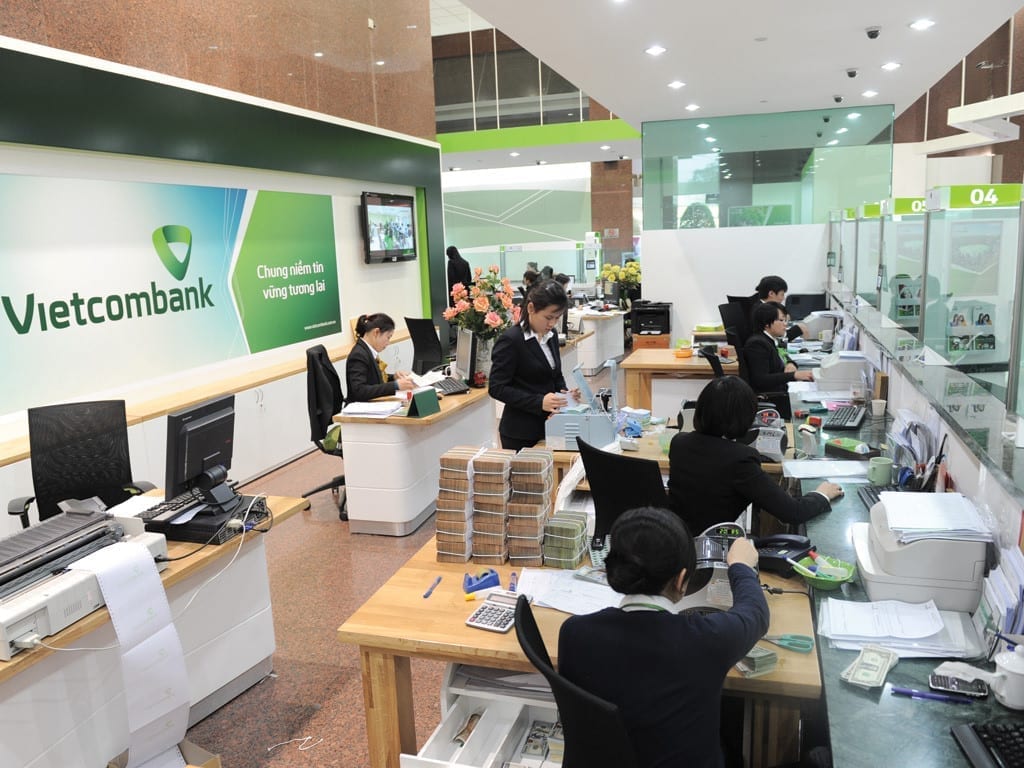
    Vietcombank continued to be the most profitable, but its pre-tax profit fell by over 17 percent to VND15.96 trillion as revenues remained flat or declined but it had to hike provisions for bad debt by 25 percent.

    Bad and doubtful debts were up 15 percent to nearly VND7.9 trillion.

    Sacombank’s profits fell by nearly 7 percent to VND2.33 trillion as provisions for bad debts rose by nearly 70 percent.

    Financial data provider FiinGroup had said in a report in July that the financial health of businesses and their ability to repay debts have declined and people’s incomes have dropped, and these factors could affect the quality of credit in the near future.

    As lenders gradually have to increase provisions for doubtful debts, their profits in the coming quarters could slump, it added.

  • Most Vietnamese expect increased incomes

    Most Vietnamese expect increased incomes

    A recent survey by French market research firm Ipsos has found 61 percent of respondents expecting their earnings to improve in the next six months.

    However, the survey also found 15 percent fearing a further decline in their incomes during the same period.

    The impact of the second Covid-19 outbreak that started July 25 has been less severe than the first, the firm says in its report titled “Rebounding from Covid-19 in Vietnam” published Thursday.

    The survey found 79 percent of Vietnamese respondents reporting a decrease in income, down 11 percentage points compared to data collected by the company in May 2020. The rate of respondents seeing their incomes drop by half also dropped to 6 percent from the earlier 12 percent.

    The survey, conducted September 18-22, used online interviews to collect the opinions of 500 people. Participants were divided into three groups – low income: below VND7.5 million ($323.6) per month; average income: from VND7.5-23.5 million; and high income: above this level.

    Ngan Ly, Ipsos Country Manager in Vietnam, said with a margin of error of about 4 percent, the survey results could be representative of the general trend in the country. She said that Vietnamese were more optimistic than citizens of other countries in the region in terms of economic prospects and personal incomes.

    In the latest survey, only 1 percent said their income had increased, but when asked about the next six months, 61 percent expected improvements, with the high-income group reporting the best recoveries.

    Most of the 15 percent who worried that their income might slip further were unskilled labor.

    Many Vietnamese seem to remain optimistic about the future, but they were still concerned about the stability of their jobs. This prompted them to cut down their savings and investments in real estate, stocks, gold, loan and insurance schemes.

    Their spending on entertainment and similar activities reduced by 45 percent.

    Over 80 percent of respondents said they would be more careful when shopping, giving priority to essential needs like food and healthcare.

    The new lifestyle that have emerged from the social distancing period has been sustained, with consumers more willing to stay at home and maintain a healthy lifestyle. Over 60 percent confirmed that they were using more healthy foods, nutritional supplements and have reduced the frequency of alcohol and tobacco consumption.

    Shopping habits have also changed as people limit direct visits to markets and supermarkets and increased online shopping, the report said.

  • HCMC real estate business group wants Airbnb-like services legalized

    HCMC real estate business group wants Airbnb-like services legalized

    The Ho Chi Minh City Real Estate Association has called for regulating accommodation-sharing services like Airbnb for better management and taxation.

    Such services have become popular in Vietnam in recent years as they help meet the large demand for low-cost accommodation from tourists and fetch homeowners an income from spare apartments and rooms, it said in a report

    HoREA pointed out that since this kind of business is still not regulated authorities are losing an opportunity to collect taxes and having difficulty managing it.

    There have even been cases of people using accommodation provided by such websites for criminal activities, it said.

    It called for modifying the law to allow homeowners to rent them as long as they register the business and pay taxes.

    There were 40,000 Airbnb listings in the country in January this year compared to 1,000 in 2015, according to tourism development consulting firm Outbox Consulting.

    HoREA also wanted restrictions on the number of days homeowners could rent out in a year and apartment management fees to be increased since it increases management work.

    The number of Airbnb units in Ho Chi Minh City as of the last quarter was 13,200, down 37 percent year-on-year due to the Covid-19 pandemic, according to data from market research firm AirDNA.

    In Hanoi, the figure was down 27 percent to 10,600.

  • Vietnam to tax Netflix’s local revenues

    Vietnam to tax Netflix’s local revenues

    The General Department of Taxation has asked streaming giant Netflix to furnish details about its revenues in Vietnam since its entry in 2016 to assess its taxes.

    The country’s Cybersecurity Law requires all foreign businesses which have income from online activities in Vietnam to store its data in the country and submit their business figures to tax authorities for collection, Vu Manh Cuong, director of the inspection agency under the department of taxation, said at a press briefing Tuesday.

    “Netflix has been working with the Ministry of Finance and the General Department of Taxation to set up a representative office and servers in Vietnam to declare tax,” he added.

    Netflix was not immediately available to comment.

    Vietnamese authorities had earlier said that U.S.-based Netflix, which has around 300,000 subscribers in Vietnam and demand a monthly subscription of VND180,000-260,000 ($7.75-11.19), has never fulfilled any tax duty in the country.

    The country in recent years has been making efforts to collect taxes from internet giants such as Facebook, Google and Netflix.

    Its cybersecurity law, which came into effect this year, also requires foreign businesses to provide users’ data to the Ministry of Public Security if it asks in writing to facilitate investigation of any infringement of the new law.

    The law bans internet users from organizing, encouraging or training other people for anti-government purposes.

    Taxing Vietnamese for their online revenues is another priority of authorities.

    Cuong of the taxation department said that in Hanoi alone there are over 18,300 organizations and individuals making a total of VND1.46 trillion from online sales via Google, Facebook and YouTube, according to data from 45 commercial banks, Tax authorities have so far collected nearly VND14 billion from them, he said.

    He added that in the first eight months they also collected over VND93 billion from organizations and individuals making a total revenue of over VND5 trillion from online booking services such as Booking, Agoda and Airbnb.

    Other Southeast Asian countries have also been making moves to tax Netflix and other internet giants. Indonesia in July imposed a 10 percent value-added tax on sales by technology firms including Amazon, Netflix, Spotify and Google, while Singapore since January has required subscribers of Netflix and other overseas digital services to pay a 7 percent goods and services tax.

  • Vietcombank profit plunges

    Vietcombank profit plunges

    The pretax profit of state-owned lender Vietcombank in the third quarter fell over 20 percent to VND4.9 trillion ($210.9 million) over pandemic impacts.

    The bank said that provision for bad debt, which rose 35 percent year-on-year to VND2.02 trillion, and lower net interest income were the main reasons for the profit slump.

    Although the bank remains the most profitable lender in the country, its bad debt increased 15 percent in the first nine months to nearly VND7.9 trillion.

    Rising bad debt has become a major concern for Vietnamese lenders this year as the Covid-19 pandemic crippled key industries. With businesses finding it very difficult or impossible to repay loans, banks are forced to increase their bad debt provisions.

    Banks have lowered deposit interest rates from 7 percent earlier this year to 5.8 percent after the State Bank of Vietnam cut policy rates four times, seeking to boost lending to revive the economy, which has posted decade-low growth in the second and third quarters.

    Vietcombank, the fourth-largest lender in Vietnam in terms of assets, also reported that its Q3 revenue fell to near 4 percent year-on-year to VND11.6 trillion.

    The research unit of top brokerage SSI Securities Corporation has recently forecast that the bank’s pretax profit is set to fall by over 13 percent year-on-year to VND20 trillion due to Covid-19 impacts.

    The State Bank of Vietnam in April ordered state-owned lenders to cut profits by 30-40 percent this year to lower lending rates and support economic recovery.

  • Vietnam’s e-commerce market tipped to grow second half of the year

    Vietnam’s e-commerce market tipped to grow second half of the year

    In case the Covid-19 pandemic continues to pose major risks to the economy in the final quarter of 2020, Vietnam’s e-commerce market could be severely impacted, seeing a revenue loss of US$2.6 billion from the previous estimate to US$11 billion this year, according to a report from the Ministry of Industry and Trade (MoIT).

    Such a figure would indicate a revenue growth rate of 13% year-on-year, stated the MoIT.

    In a more positive scenario, the MoIT expected revenue from e-commerce activities to expand by 20% year-on-year in the fourth quarter, resulting in a combined revenue of US$12 billion for 2020.

    In 2019, revenue from online sales of business-to-consumer e-commerce, known as B2C e-commerce, stood at US$10.08 billion, accounting for 4.9% of total goods retail sales and services revenue, while the rate of the population shopping online reached 42%.

    This led to the e-commerce revenue projection of US$13.6 billion in 2020. However, the Covid-19 pandemic has dealt a major blow to the forecast. During the first four months of 2020, 57% of firms operating in the e-commerce market saw their revenue grow less than 30% year-on-year while 24% reported an increase of at least 51% in revenue.

    Revenue growth in e-commerce in the January – June period was estimated to decrease by 6 percentage points year-on-year, despite a 25% surge in the number of transactions.

    In May, the government released a national plan for the development of e-commerce by 2025, which targets revenue from B2C e-commerce to reach US$35 billion, or a growth rate of 25% per annum and to account for 10% of total goods retail sales and service revenue.

    Meanwhile, the government expects the rate of the population using related services, including non-cash payment services, at 50%, and through intermediary payment services at 80%, along with 55% of the population to shop online with average spending of US$600 annually by that time.

    Notably, Hanoi and Ho Chi Minh City would make up half of e-commerce revenues in the next five years.

  • Taxi giant lays off 1,300 employees

    Taxi giant lays off 1,300 employees

    Vinasun has cut its staff by 1,300 in the first nine months as it restructures to reduce costs amid the Covid-19 pandemic. The staff cut has lowered the company’s salary costs by 35.5 percent year-on-year to VND80 billion ($3.4 million), saving it VND4.9 billion each month. It now has 4,480 employees.

    However, lower salary costs have not been enough to offset Covid-19 impacts. The firm’s revenue in the first nine months plunged 52 percent year-on-year to VND734.7 billion, with business mostly frozen in April during the nationwide social distancing campaign.

    It has posted a loss of VND185 billion so far this year, compared to a post-tax profit of VND94 billion in the same period last year.

    It forecasts a post-tax loss of VND115 billion this year.

    Company leaders have said they expect the recovery process to be slow due to a lack of foreign visitors. After Vietnam closed its borders and stopped international flights in March, only a few routes have resumed operations

  • Vietnam PM tells Samsung to set up chip plant

    Vietnam PM tells Samsung to set up chip plant

    Prime Minister Nguyen Xuan Phuc has called on Samsung Electronics to build a semiconductor plant in Vietnam. He made the suggestion at a meeting on Tuesday with the South Korean company’s vice chairman, Lee Jae-yong, who is on a three-day business trip to Vietnam to explore business opportunities, the Government news site reported.

    He said a semiconductor plant would enable the company to have a closed production chain in Vietnam where it already has smartphone and consumer electronics plants.

    Samsung has two factories making smartphones in the north and a consumer electronics manufacturing plant in Ho Chi Minh City.

    Phuc promised Vietnam would create the best possible conditions for Samsung to invest, including in R&D and hi-tech projects.

    He said Vietnam has managed to contain the Covid-19 pandemic and would be the only country in Southeast Asia to achieve positive growth this year, possibly emerging as the fourth-largest economy in the region this year.

    Lee said Samsung’s $220 million research and development center in Hanoi, the first of its kind outside South Korea, would begin functioning in 2022. Construction began in March this year.

    With more than 3,000 engineers it would become the company’s key R&D center globally, he said.

    He thanked the Vietnamese government for allowing more than 3,000 Samsung personnel to enter the country to work since March through the Covid-19 pandemic.

    If Samsung’s production units in Vietnam did not function normally, it would disrupt its global production and supply chain, he said.

    He plans to visit TV screen producer Samsung Electronics HCMC CE Complex (SEHC) at the Saigon Hi-Tech Park in HCMC’s District 9 and consider expanding it.

    The PM told him the government had agreed with HCMC’s proposal to allow SEHC to become an export processing company to enable it to expand and strengthen its global competitiveness.

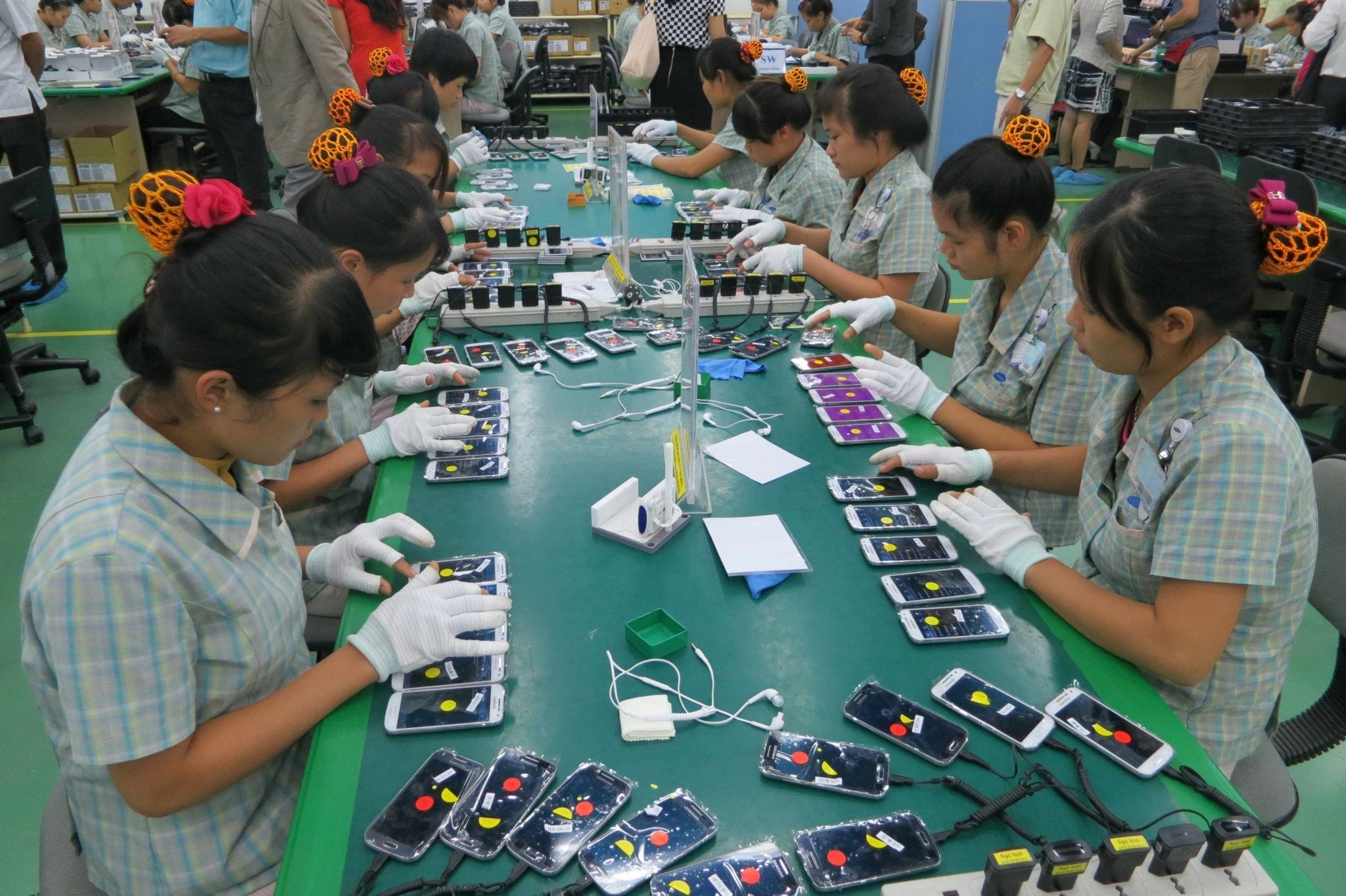
    Vietnam is Samsung’s largest smartphone production base, with half of all its phones being made in the country. It has invested over $17 billion in Vietnam so far.

  • Samsung heir visits Vietnam to discuss possible investments plan

    Samsung heir visits Vietnam to discuss possible investments plan

    Samsung Electronics vice-chairman Lee Jae-yong departed for Vietnam for a three-day visit to explore business opportunities. He is scheduled to meet Prime Minister Nguyen Xuan Phuc on Tuesday to discuss possible investment plans and visit Samsung’s plants in Hanoi.

    The focus will be on whether Lee announces new investment plans including the construction of a factory for electronic-car batteries in Vietnam.

    Lee is also expected to inspect the progress of a Samsung Electronics research center that is currently under construction in Hanoi.

    Construction of the $220 million research and development center, the first of its kind outside South Korea, began last March.

    It is Lee’s first visit to Vietnam since October 2018. He is exempt from mandatory quarantine after the government scrapped the quarantine requirement for foreign managers, investors, and diplomats visiting the country for less than 14 days.

    Vietnam is Samsung’s largest smartphone production base, with half of all its phones being made in the country at plants in Bac Ninh and Thai Nguyen provinces in the north. It has invested over $17 billion in Vietnam so far.

  • Hanoi new apartment supply hits 5-year low

    Hanoi new apartment supply hits 5-year low

    Hanoi’s Q3 new apartment supply fell 60 percent year-on-year to a five-year low of 3,100 units as Covid-19 hampered new launches. Of the new supply, only 700 units, or 23 percent, came from four new projects, while the rest were from nine existing ones, Do Thu Hang, director of advisory services at real estate consultancy firm Savills Hanoi, said at a press briefing Thursday.

    “Major developers have been delaying launching new units this year due to Covid-19 impacts,” Hang said.

    The supply shortage has caused prices to rise 10 percent year-on-year to $1,500 per square meter, Savills data shows.

    However, these factors have also caused sales to fall 44 percent year-on-year to 5,200 units, with Grade B and Grade C accounting for 99 percent, while the absorption rate dropped 12 percentage points year-on-year to 20 percent.

    In the best-case scenario, apartment sales in the capital city is estimated at 20,000 units this year, nearly half of last year, Hang said.

    In the last quarter, nearly 10,000 apartments, mostly Grade B, are set to enter the market from 12 projects.

    Whether there will be a surge in new supply in the last months of the year depends on Vietnam’s ability to contain the pandemic, said Nguyen Duc Them, project sales manager of Savills Hanoi.