Tag: Vietnam

  • Vietjet Announces Five New Routes to Japan and Commences Two New International Routes from Can Tho

    Vietjet Announces Five New Routes to Japan and Commences Two New International Routes from Can Tho

    Vietjet has unveiled a total of seven new routes, further expanding its international flight network. This includes the announcement of five new routes linking Hanoi, Da Nang and Ho Chi Minh City to multiple destinations in Japan, and the commencement of two new routes connecting Can Tho with Seoul and Taipei.

    The announcement of the launch of five new routes between Vietnam and Japan took place at Furama Resort’s International Convention Palace in Central Vietnam on 13 January 2020, where Vietjet took part as a member of the Keidanren (Federation of Economic Organisations in Japan). The announcement ceremony during the Japan – Vietnam Bilateral Tourism Promotion Conference, which welcomed more than 1,000 delegates from Japan, including officials from Japan’s National Assembly, the Japanese government and leaders from major Japanese corporations. Vietnam’s Deputy Prime Minister, Vuong Dinh Hue, and the Secretary-General of the Liberal Democratic Party of Japan cum President of the Japanese-Vietnamese Parliamentary Alliance, Nikai Toshihiro, were among those that attended the ceremony.

    The five new routes, Hanoi – Nagoya, Ho Chi Minh City – Nagoya, Da Nang – Nagoya, Hanoi – Fukuoka and Hanoi – Kagoshima, are expected to commence operations in 2020. With a total of ten direct routes now connecting Hanoi, Ho Chi Minh City and Da Nang to Tokyo, Osaka, Nagoya, Fukuoka and Kagoshima, the new flights will continue to facilitate positive bilateral relations between Vietnam and Japan culturally and economically while contributing to Vietnam’s goal of attracting one million Japanese tourists in 2020.

    Vietjet has also inaugurated its first two international services connecting Can Tho, the hub city of the Mekong Delta region, with Taipei and Seoul. Attending the launch ceremony on the morning of 12 January 2020 at Can Tho International Airport were President of the Vietnam Fatherland Front Central Committee Tran Thanh Man, Chairman of People’s Committee of Can Tho City Le Quang Manh, Vietjet Managing Director Luu Duc Khanh, Vietjet Vice President Do Xuan Quang and other leaders from related Ministries, Departments and Authorities. During the event, Vietjet also donated to the Fund for the less fortunate of Can Tho City to usher in the Tet season for the less privileged.

    The Can Tho – Taipei route operates four return flights per week starting from 10 January 2020. The flight departs from Can Tho at 12.40 pm and arrives in Taipei at 5.10 pm. The return flight takes off from Taipei at 6.10 pm and lands in Can Tho at 8.55 pm. All in local times.

    The Can Tho – Seoul (Incheon) route will operate three return flights per week starting from 16 January 2020. The flight departs from Can Tho at 4.50 pm and arrives in Seoul (Incheon) at 11.55 pm. The return flight takes off from Seoul (Incheon) at 2.30 am and lands in Can Tho at 6.20 am. All in local times.

    Vietjet currently operates the greatest number of routes and flights to Can Tho International Airport, with seven domestic routes and two international routes. Since the first flight that commenced in 2014, Vietjet has contributed significantly to the transformation of Can Tho’s tourism industry with an average growth rate of 30 percent of the total number of tourists in the city each year.

  • Starbucks Vietnam opens new concept outlet at Ecopark

    Starbucks Vietnam opens new concept outlet at Ecopark

    Starbucks Vietnam has opened a concept store at a new urban development called Ecopark in Hung Yen, near Hanoi, its 63rd store in the country.

    Located at the heart of Summer Park, Starbucks Ecopark features a mixture of rural and modern aesthetics, creating “a space that seeks a sense of harmony with its natural surroundings and the buildings bold structure,” the company said in a statement

    “Starbucks Ecopark is our first store opening for 2020, when we set our seventh anniversary of Starbucks Vietnam,” said Patricia Marques, GM of Starbucks Vietnam. “I believe it will be a great gathering place for family and friends.”

    Designed by local company Vietnambuilding and built by Ecotech, the new Starbucks cafe’s exterior features wooden louvers across the entire ceiling. Inside, further linear forms can be found in a low island serving counter which gives unobstructed views to an angled bar behind.

    Nguyen Duc Hiep, chief architect at Vietnambuilding, said the designers incorporated the exterior brick into space and used natural materials such as wood finishes to amplify the atmospheric mood.

    “Respecting the present landscape and green trees is our first thought when visiting the site,” he said.

    “It is also a challenge for us when we want to propose an impressive construction without interfering with the landscape or removing any tree in the garden.”

    Starbucks did not explain why it defines the new outlet as a concept store. however, it does appear to take the third-place concept into a more natural, landscaped garden environment not possible in a mall or high-street location.

  • HCMC Lottery Company profits soar

    HCMC Lottery Company profits soar

    The HCMC Lottery Company Ltd. made pretax profits of over VND1.3 trillion ($56.29 million) last year, up 13.7 percent from 2018.

    Its revenues were up 15.2 percent to VND8.9 trillion ($385.4 million), it said in a release. Three percent of its revenues came from printing and rents.

    While traditional lottery tickets accounted most of the revenues, nearly VND500 billion ($21.65 million), or over 5.6 percent, came from a new scratch card that allows customers to know the results immediately.

    Scratch tickets are growing well, exceeding management expectations, but are limited by our printing capacity,” a company spokesperson said.

    The firm targets revenues of VND10.29 trillion ($445.6 million) and pre-tax profit of VND1.2 trillion ($51.9 million) this year. It is researching a new product recently approved by the Ministry of Finance, which will allow customers to choose their own numbers.

    It is expected to help regain market share from its main competitor, American-style computerized lottery firm Vietlott, HCMC Lottery said.

    The traditional lottery involves tickets with numbers printed on them and a top prize of VND2 billion ($86,500) after it was increased by 33 percent in 2018.

  • Car prices fall as supply rises

    Car prices fall as supply rises

    An abundant supply of imports, the introduction of new models and stiffer competition have pulled car prices down, industry insiders say.

    Toyota Innova, among the most popular multi-purpose vehicles (MPVs) in Vietnam, saw its price go down 13 percent year-on-year last month to VND771 million ($33,360).

    Industry insiders said the drop of VND100 million ($4,330) was unprecedented for this model. Innova only reflected a general trend, they added.

    Prices of the Toyota Vios sedan and the hatchback Kia Morning fell 13 percent and 12 percent, respectively. In the high-end segment, the prices of BMW cars fell 18.5 percent.

    Abundant supply is said to be one of the main factors behind the falling prices.

    Car imports in the first 11 months of last year doubled year-on-year to almost 133,700 units, most of them from Thailand and Indonesia. Models with the biggest sales, MPV Mitsubishi Xpander and SUV Toyota Fortuner, were all imported.

    Tightening credit from banks last year had made it more difficult for buyers, leading to an increase in inventory that had to be reduced by lowering prices. The introduction of new models was another factor.

    Vietnam’s newest car manufacturer VinFast also intensified competition in the market with its SUVs, sedans and hatchbacks.

    Auto sales in Vietnam last year rose 11.6 percent from 2018 to 322,322 units, with 58.8 percent of them locally-assembled, according to the Vietnam Automobile Manufacturers Association.

  • Live streaming becomes a growing livelihood in Vietnam

    Live streaming becomes a growing livelihood in Vietnam

    Broadcasting video games and selling goods using live-streaming is now a real profession in Vietnam, where a tech-savvy population lives and breathes social media. Pham Thanh Nam has been “shooting” people for a living for the last five years, not in real life, but in a game, he broadcasts to thousands of viewers every day.

    Nam, or Nam Blue, one of the most popular Vietnamese streamers of the first-person shooting game PUBG, broadcast his games on Facebook for six hours a day, and now has 1.5 million followers.

    The 29-year-old who has given up his business to focus entirely on streaming says: “A decade ago most Vietnamese would have said gaming has no future, but game streaming is now a job. Many people and I take seriously.”

    Industry insiders say top streamers in Vietnam earn thousands of dollars a month from followers’ donations and ads. Many companies, seeing the rising popularity of game streaming, are now paying streamers to promote their products to young consumers.

    This makes Nam one of an increasing number of Vietnamese choosing streaming as their profession amid the country’s increasing Internet penetration and e-commerce growth.

    Broadcasting games and selling products are currently the two most popular streaming jobs. Bre Miller, a product design manager at Facebook, said in June 2019 that Vietnam has among the largest number of people in the world watching live game streams.

    Last year Vietnam had 15 million esports players and 5.2 million people who regularly watched esports streams, according to digital platform developer Appota.

    Industry insiders estimate there are thousands of Vietnamese streaming games on Facebook, thanks to the rising interest in competitive gaming.

    Each of Nam’s streaming sessions gets around 500,000 views and a peak of two million. Nam’s followers surged 2.5-fold in just over a year.

    He also manages a group of 12 other streamers. His audience comprises mostly of males aged 24-35. They could become a supporter of his page by paying VND47,000 ($2) a month in return for exclusive content.

    This rising popularity of game streaming in Vietnam is aligned with the global trend. On Facebook Gaming, the streaming time grew by 210 percent last year to 356 million hours, according to live-stream production tool provider StreamElements.

    Dang Thai Son, marketing director of Appota, said the increasing popularity of live streaming and esports among young Vietnamese means they could gradually replace traditional forms of entertainment.

    Live shopping

    Commercial streaming is also gaining traction among Vietnamese shoppers.

    Hong Quan visits a fashion store in Hanoi’s Thanh Xuan District every day, not to shop for clothes, but to film them with a phone camera and stream the images to thousands of viewers.

    Since he constantly appears in the shop’s live videos and even offers discounts, the 20-year-old university student could be mistaken for the shop owner thought he is only hired to host live Facebook videos to market the goods.

    Quan, who has been doing this job for almost a year, says: “Streaming is not a usual job for most people, but I take it seriously. It offers good pay with short working time for a student like me.”

    On the Facebook news feed, a user can find dozens of live videos in which a variety of products like clothes, footwear, sunglasses, watches, and skin care products are presented, often by a host wearing an attractive outfit and with an enthusiastic and fun attitude.

    Sellers could appear on the stream themselves, or hire someone like Quan to sell the products for two or three sessions a day, each last 90-120 minutes.

    Quan is paid VND300,000 ($13) per session, but he is usually hired for the whole month for VND10 million ($434), which includes a commission on orders, the same amount an office employee might earn.

    “I could get shop owners 20-30 orders per session, adding to their revenues from the brick-and-mortar store.”

    Since Facebook introduced its live streaming feature in 2016 small businesses in Vietnam have been taking advantage of it to promote their products just like in China and Thailand.

    Vietnam ranks seventh in the world in the number of Facebook users, 58 million, according to U.K. advertising agency We Are Social.

    It accounted for 30.9 percent of e-commerce web traffic in Southeast Asia in the third quarter of 2019, second only to Indonesia, according to Malaysian market researcher iPrice Group.

    All this means small businesses can use live streams to reach new buyers and even as their main selling channel since it saves them the cost of listing on large e-commerce websites or buying expensive target ads.

    A streamer only needs a smartphone and a good Internet connection to do the job. Advanced streamers could buy a lighting kit to better showcase products. Once the streamer has ended the session, sales staff start making phone calls to customers to confirm orders.

    While setting up a stream is simple, doing it well takes great skill and effort. Thao Sang, a senior college student in Ho Chi Minh City who sells clothes, often has to talk non-stop for three hours to keep her audience interested.

    “There were times when I lost my voice or got sick after sessions.”

    Besides, there is pressure to achieve sales targets while women streamers say they have to suffer sexual and abusive comments to earn a salary of VND200,000-300,000 ($9-13) for a 90-minute session.

    But all the effort is worth it when customers place orders. Mai Hoa of Hanoi, an avid Facebook user, has in recent months been watching four or five live streams a day from her favorite shops to find clothes and accessories.

    Last month the 25-year-old received a 30 percent discount on a skin lotion and lipsticks for just sharing the stream with three public groups.

    “It took me less than a minute to place the order, and I received exactly what I wanted three days later. The physical shop was in Saigon, but it was also beneath my fingertips.”

    Buyers say real-time interaction is what they like most about live streams, as they can ask questions or make suggestions by just typing a comment instead of having to wait for hours or days after sending a message to an inbox.

    The engagement also benefits sellers since they can ask their audience to share the stream with friends and groups to increase their reach. Streamers often reward sharers with discounts or limited products, and can thus attract 250,000 views and 20,000 comments in a session.

    Communications expert Nguyen Ngoc Long says streaming has become trendy because Facebook prioritizes live streams more than texts and regular videos, and sellers love this because they can reach more people.

    Some companies have been using celebrities and social media influencers to promote their products on live streams.

    Even Singapore-based shopping giant Lazada has been using the live streaming feature since 2017. Its app has a LazLive section for Vietnamese sellers to promote their products.

    Long says, “Live streaming will continue to be popular in Vietnam for the next five to 10 years.”

  • Malware costs Vietnam $900 mln

    Malware costs Vietnam $900 mln

    Malware caused Vietnamese users damage worth VND20.89 trillion ($900.8 million) last year, up 40 percent year-on-year.

    The surge came with the rising number of computers contaminated with malware from advanced persistent threats (APT), according to a report released Thursday by Vietnam’s cybersecurity firm BKAV.

    The number of computers infected with malware rose 3.5 percent year-on-year to 85.2 million in 2019. This means 57.7 percent of computers nationwide were infected.

    Increasing virus infections occurred via email, from 4 percent of the 2018 total to 20 percent last year.

    Another reason for the high contamination is Vietnamese users’ habit of downloading files without checking the authenticity. Eight out of 10 computers were infected with malware because of this behavior, the report stated.

    Rising threats resulted in 1.8 million computers losing data last year, up 12 percent from 2018.

    A large-scale foreign attack last year saw the hack of devices via manipulation of weak passwords.

    The attack caused 420,000 computers to be infected with dangerous W32. Fileless malware, which BKAV experts say have “invisibility” as it does not leave behind traces on hardware like other malware.

    BKAV forecast malware would become increasingly dangerous this year as hackers use them for financial benefits, like accessing bank accounts.

  • VietinBank profits surge 83 pct

    VietinBank profits surge 83 pct

    VietinBank, Vietnam’s third largest bank by asset, has reported an 83 percent increase in pre-tax profits to almost VND11.5 trillion ($495 million) in 2019.

    Its chairman, Le Duc Tho, said at a forum on Tuesday that assets rose 6.5 percent to VND1,240 trillion ($53.29 billion). Its bad debts ratio was under 1.2 percent, down from 1.59 percent in 2018.

    Credit growth during the year was 7.2 percent.

    The bank targets 6-8 percent growth in assets this year, 8-10 percent credit growth and an increase in pre-tax profits of 10 percent. It seeks to keep bad debts under 2 percent.

    Le Minh Hung, Governor of State Bank of Vietnam, said the government has approved capitalizing of VietinBank’s 2017 and 2018 profits.

    The lender has been seeking to increase its charter capital in the last few years, but Tho said profits would only meet a third of the increase it plans and needs government approval to hike its capital through other means.

    Vietinbank, in which the government owns 65 percent, has not increased its capital of VND37.23 trillion ($1.62 billion) since 2014.

  • Bamboo Airways soars to $13 million profit

    Bamboo Airways soars to $13 million profit

    Bamboo Airways reported pre-tax profit of VND303 billion ($13 million) in 2019 after one year of flying.

    The private airline expects profits to increase by VND1 trillion ($44.4 million) in 2020, three times higher than last year, CEO Dang Tat Thang said. It is expected the carrier will list on the Ho Chi Minh City bourse in the second quarter this year.

    Earlier, Bamboo Airways had planned an initial public offering (IPO) on a Vietnamese stock exchange at VND60,000 ($2.6) per share to raise $100 million. It is now looking to U.S., Japanese and European investors with experience and resources to buy its shares at VND160,000 ($6.9) a pop as part of its 2020 IPO.

    Launched in January 2019, the airline is now operating 34 domestic and international routes. It has conducted nearly 20,000 flights to date, recording almost 3 million passengers.

    The entry of Bamboo Airways earlier this year has eaten into the market share of national flag carrier Vietnam Airlines and budget carrier Vietjet.

    Bamboo Airways hopes to acquire 30 percent of the domestic aviation market next year as it flies 85 routes, 25 of them international. It also plans to operate 100 aircraft by 2025, carrying 50 million passengers annually.

  • Vietnam Railways struggles to compete with budget carriers

    Vietnam Railways struggles to compete with budget carriers

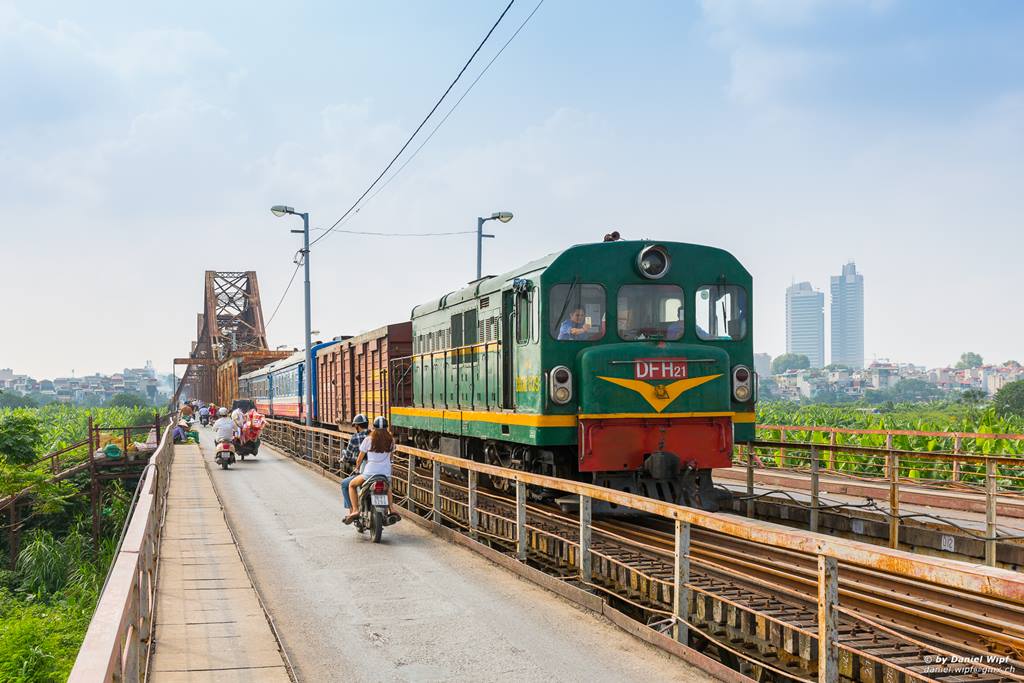
    The Vietnam Railways Corporation (VNR) has admitted its inability to meet performance targets because of competition from low-cost airlines.

    VNR transported VND8.4 trillion ($362 million) worth of cargo in 2018, up 5 percent year-on-year, but 1.9 percent off the annual target, chairman Vu Anh Minh said at a recent industry conference. Revenue was VND8.19 trillion ($353 million), the same as in 2018, but only 97.2 percent of the target.

    Railway sector employees earned an average of VND9.12 million ($393) a month, Minh said.

    The railway sector continues to face rising competition on freight transport from the road and marine sectors, and its passenger section has to contend with low-cost carriers and highways, Minh said, but did not provide comparative statistics.

    Furthermore, investment in railway infrastructure has been limited because of bottlenecks in policies and investment mechanisms, including land management regulations. The railway sector has only received 40 percent of state capital earmarked for its business and production activities, and among other things, this has undermined railway traffic safety, Minh added.

    Because the railway infrastructure and stations belong to the state, VNR cannot use its own money to conduct repairs, he noted.

    For instance, VNR needed to spend VND30 billion ($1.29 million) to repair and upgrade infrastructure at the Song Luy station in the southern province of Binh Thuan, but it could not do so because of regulatory constraints, Minh said.

    Vietnam currently has over 3,000 kilometers of railway tracks, none of them high-speed.

  • Muji launching in Vietnam

    Muji launching in Vietnam

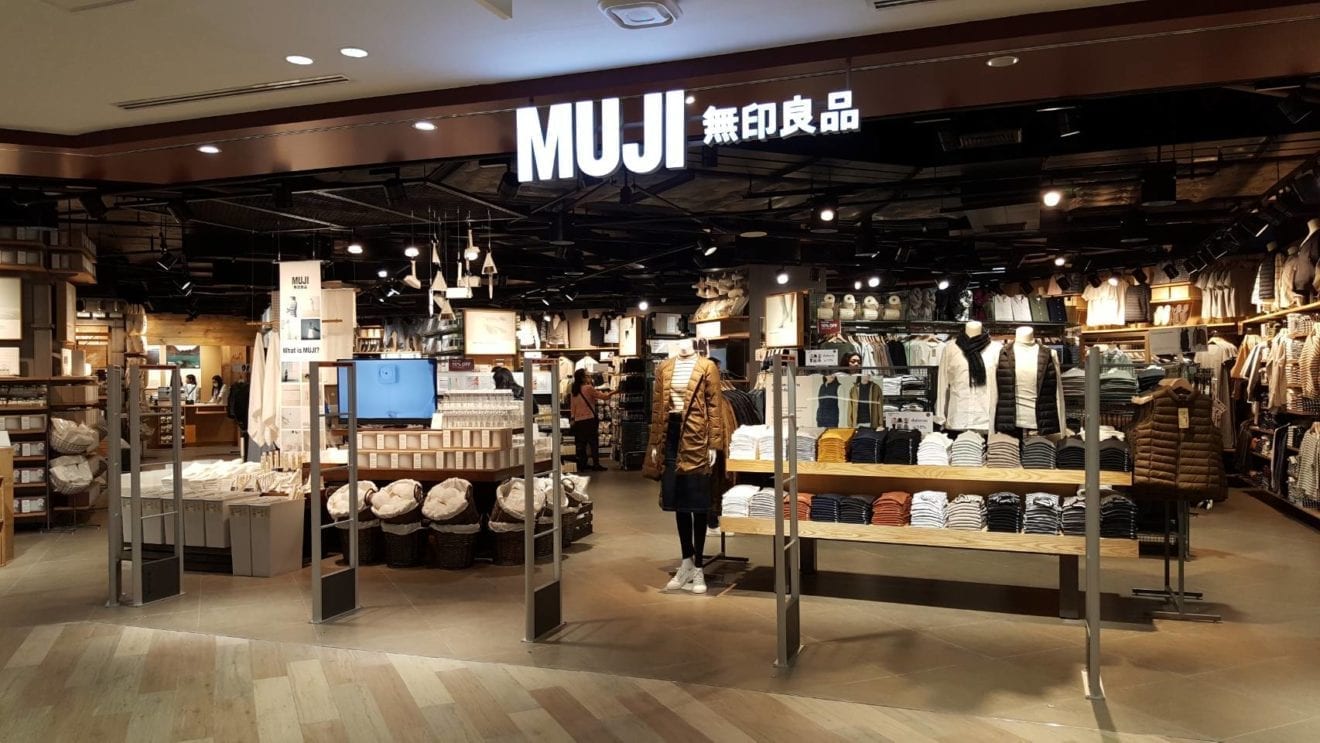
    The first Muji Vietnam store is set to open within three months, a year after the Japanese household goods and apparel chain established an office in the country.

    As we reported last February, Muji Vietnam Ltd was registered and headquartered in Ho Chi Minh City.

    According to a source from property company Savills, the new Muji store will open in the city’s commercial center, occupying a 3900sqm space. Muji Vietnam will feature clothing, stationery, homewares, skincare products and other goods.

    The store’s location and exact opening date have yet to be disclosed.

    Besides Muji, other international brands including sports-goods retailer JD, fashion label Champion, cosmetics chain Sephora, food chains Hawker Chan and Din Tai Fung and K-pop merchandise retailer SM Entertainment are also expected to enter Vietnam this year.

  • Half of Vietnamese buyers favor used cars assembled locally

    Half of Vietnamese buyers favor used cars assembled locally

    55 percent of buyers prefer used cars assembled in Vietnam to those imported from South Korea and Japan, a 2019 survey found.

    This figure is several times higher than the 16 percent who favor South Korea and the 11 percent stuck on Japan, according to Cho Tot Xe, a popular car listing website in Vietnam.

    Ho Chi Minh City residents prefer newer, more expensive vehicles compared to those in Hanoi, the website’s data shows.

    HCMC buyers favor used models released in the previous three years at a cost of VND300-700 million ($12,900-30,200). The top three models are Hyundai Grand i10 2016, Mazda CX 5 2017 and Honda City 2016.

    But buyers in Hanoi are more interested in vehicles priced less at VND300-400 million ($12,900-17,200), which date back to 2015, such as the Toyota Vios 2015, Hyundai Grand i10 2015 and Kia Morning 2015.

    The demand for used cars is on the up, listings on Cho Tot Xe rising 22 percent from 2018 to 200,000 last year, with the most popular brands Toyota, Kia and Hyundai.

    Sedans were the most popular used car types in 2019, with Honda City 2016, Toyota Vios 2017 and Mazda 3 2018 the top three.

    Toyota Innova maintained the best used price in 2019 at VND678-740 million ($29,220-31,890), followed by Chevrolet Spark and Ford Ranger.

    Vietnam has been striving to develop its car industry for decades, but experts say the small market size has constrained local producers. The localization rate of passenger cars in Vietnam is at 7-10 percent, compared to 55-60 percent across ASEAN.

    The country imported 133,696 vehicles in the first 11 months last year, up 95.6 percent year-on-year, mostly from Thailand and Indonesia, according to Vietnam Customs.

    289,128 cars were sold throughout Vietnam in the same period, up 14 percent year-on-year, according to Vietnam Automobile Manufacturers Association (VAMA).

  • Vietnam gold price hits 6-year high

    Vietnam gold price hits 6-year high

    Gold prices in Vietnam soared to a six-year high on Monday amid rising military tension between the U.S. and Iran. The country’s largest jewelry company DOJI sold its SJC gold at VND44.44 million ($1,924) per tael (1.2 ounces) on Monday morning, up 3.78 percent from Friday.

    Another giant Phu Nhuan Jewelry also raised its selling price to VND44.3 million ($1,918), up 4.7 percent.

    It is the first time Vietnam’s gold price passed the VND44.4 million ($1,922) mark in the last six years.

    The surge came as global gold prices increased by up to 1.8 percent to $1,579 per ounce at a point on Monday morning, the highest in seven years.

    The sudden rush for safe-haven assets came after U.S. President Donald Trump ordered a strike that killed Iran’s General Qasem Soleimani, head of the Iranian Revolutionary Guard’s elite Quds Force, on Friday. Iran has vowed to retaliate.

    Gold prices had been surging throughout last year as trade tensions between the U.S. and China persisted.

  • Japanese bank seeks 9.9 pct stake in Vietnam’s OCB

    Japanese bank seeks 9.9 pct stake in Vietnam’s OCB

    Japan’s Aozora Bank Ltd could acquire 9.91 percent of Vietnam’s Orient Commercial Joint Stock Bank in a VND1.22 trillion ($52.8 million) deal.

    OCB is seeking shareholders’ approval to issue the private placement to the Japanese bank, with an offered price not lower than the book value per share at the end of the latest quarter.

    As OCB’s over-the-counter (OCT) shares are being traded from VND14,100-15,900 each (61-69 cents), Aozora will need to spend at least VND1.22 trillion ($52.8 million) on the deal, at VND14,100 apiece.

    Aozora was established in 1957. It has a total asset value of $48 billion and is listed on the Tokyo Stock Exchange at a market cap of $3.16 billion.

    OCB’s charter capital is currently around VND7.9 trillion ($341.9 million). Its January-September pre-tax profit last year was almost VND1.94 trillion ($83.96 million), up 15.3 percent year-on-year.

    Last year saw several foreign investors acquiring stakes or expressing interest in owning shares of Vietnamese banks.

    Vietnam’s largest bank by asset, BIDV, sold a 15 percent stake to South Korea’s KEB Hana Bank in November, while Vietcombank had in early 2019 sold a 3 percent stake to Japanese and Singaporean investors.

  • Vietnamese automaker ships buses to Philippines

    Vietnamese automaker ships buses to Philippines

    Vietnam’s leading automaker and assembler Thaco shipped the first 15 buses to the Philippines on Saturday.

    Tran Ba Duong, chairman of Truong Hai Auto (Thaco), said the exported buses were redesigned after seven months of testing in the Philippines. They had a localization rate of 45 percent and complied with Euro 5 emission standards.

    All the buses were assembled in the Chu Lai open economic zone in Quang Nam Province, central Vietnam.

    Duong said a major challenge in exporting vehicles made or assembled in Vietnam was the complicated assessment process in foreign countries. For example, the process takes six months in Thailand, four to five months in the Philippines and a year in the U.S.

    Thaco expected to ship 200 buses to the Philippines in 2020.

    The firm exported 186 automobiles of various types to ASEAN countries and plans to export over 1,020 units next year. Thaco also exported auto parts and accessories worth $14.5 million to South Korea and Japan in 2019, and this is expected to rise to $21 million in 2020.

    Thaco has been researching, manufacturing and assembling buses and continuously promoting investment in the field since 2004. To date, the company has supplied over 17,000 buses to the domestic market, holding a 65 percent market share.

  • Number of new businesses, registered capital highest ever

    Number of new businesses, registered capital highest ever

    138,100 businesses were established in Vietnam this year, the highest ever, with the government’s initiative to increase the quantity and quality of enterprises bearing fruit.

    In terms of volume, the figure was up 5.2 percent year-on-year, while their registered capital also climbed a new high at over VND1,730 trillion ($75.1 billion), up 17.1 percent year-on-year, according to the General Statistics Office.

    This meant the average registered capital was VND12.5 billion ($542,000) per business.

    An additional 39,400 businesses resumed operations this year, up 15.9 percent from last year. But the year also saw 43,700 businesses filing for dissolution, up 41.7 percent year-on-year.

    The surge in the business numbers and registered capital is happening as the government seeks to improve its administrative policies to support enterprises as part of a plan to have the private sector spearhead economic growth.

    Prime Minister Nguyen Xuan Phuc said at a meeting with business leaders on December 23 that the large number of businesses dissolving each year, including big ones, was a matter of concern.

    Government agencies have been making proposals in this regard. In July, the Ministry of Finance proposed to the National Assembly that it considers scrapping corporate income tax on micro and small enterprises.

    There are about 760,000 businesses operating in the country. Vietnam targets taking this up to 1 million next year.

    Vietnam’s GDP growth of 7.02 percent in 2019 exceeded the parliament’s target of 6.6-6.8 percent as well as forecasts by several international organizations like the WB and the ADB. It had slowed from a record 7.08 percent in 2018, but remained the second highest growth figure in the last decade.