Tag: Vietnam

  • Sabeco to charter aircraft to transport outstanding workers home for New Year

    Sabeco to charter aircraft to transport outstanding workers home for New Year

    Vietnam’s biggest brewer Sabeco is set to charter four aircraft and a number of buses to ferry 2,000 outstanding workers home for Tet. It will cost Sabeco over VND5 billion ($217,000), and the company will identify the workers together with the management of industrial parks in HCMC and the neighboring provinces of Binh Duong and Dong Nai.

    A charter flight each will fly from HCMC to Hanoi and the central towns of Vinh, Dong Hoi and Quy Nhon.

    The 1,000 people going by bus will go to the central provinces of Quang Ngai, Binh Dinh, Phu Yen, and Khanh Hoa, the Central Highlands provinces of Dak Lak and Lam Dong and the southern provinces of Kien Giang and Ca Mau.

    Hoang Dao Hiep, deputy general director of Sabeco, said this would be the second year the company and the Youth Union provide transportation for the best-performing workers for Lunar New Year.

    This year it is on a larger scale, and the process to select the workers too started earlier — at the beginning of December.

    Tet (The Lunar New Year) falls in late January 2020. Last year too the company had chartered four aircraft.

    Sabeco is owned 53.59 percent by Vietnam Beverage, a subsidiary of Thai beverage company ThaiBev. The Vietnamese government, represented by the Ministry of Industry and Trade, owns a 36 percent stake in the company.

    In its latest financial report, Sabeco reported revenues of over VND28.3 trillion ($1.22 billion) in nine months, up 10 percent year-on-year. Revenue from beer in the period accounted for 86 percent of total, or VND24.3 trillion ($1.05 billion).

    In the third quarter alone, post-tax profit was highest among all brewers in Vietnam at almost VND1.46 trillion ($63 million), up over 40 percent year-on-year.

  • Fruits exports to China plunge

    Fruits exports to China plunge

    Vietnam’s fruits exports to China in the first 11 months fell 13.7 percent year-on-year on the latter imposing more stringent conditions.

    Among total fruit exports to China worth $2.08 billion, coconut export value fell 34.9 percent year-on-year, while that of watermelon dropped 24.6 percent, according to the Agricultural Products Processing and Development Department (Agrotrade).

    The export value of other fruits like durian, dragon fruit and mangosteen also fell, the department said.

    Tighter import restrictions by China, the largest buyer of Vietnamese fruits, took effect on May 1, and this has led to a drop in prices, Agrotrade said.

    But thanks to rising exports to the U.S., South Korea and Japan, fruits exports in the first 11 months fell only 0.6 percent year-on-year to $3.5 billion, it added.

    The Ministry of Agriculture and Rural Development estimates Vietnam’s exports of agriculture, forestry and seafood products this year at $41.3 billion this year, short of the $43 billion target.

  • Traditional match producer to shift focus

    Traditional match producer to shift focus

    Vietnamese matchmaker Thong Nhat Match JSC plans to modernize operations due to dwindling sales. The company’s board said it would halt match production next year and delist its DTN shares from the unlisted public companies bourse (UPCoM).

    Annual match sales hit near 100 million boxes last year, down 45 percent from 10 years earlier, and set to plummet further this year, a business report shows.

    The domination of lighters is largely to blame for falling demand, along with the rising cost of wood, it added.

    The company plans to focus on lighter production, though it sold only 80 percent of a targeted 18 million units last year.

    Thong Nhat Match was established in 1956 as a state-owned company, operating the first factory in northern Vietnam. It was equitized in 2002, and now has charter capital of VND22 trillion ($950 million).

    Its after-tax profit was VND2.27 billion ($98,000) in 2018, up 10 percent year-on-year.

    The Thong Nhat matchbox, featuring a printed flying dove, boasts decades of popularity.

    Alongside other traditional companies like Thuy Ta Ice-cream and Thuong Dinh Footwear, all operating over 60 years, Thong Nhat Match has been struggling to grow in the modern competitive market.

  • Vietnam textile industry orders hit by African competition

    Vietnam textile industry orders hit by African competition

    Vietnamese textile manufacturers are seeing orders decline with buyers moving to others, cheaper developing countries.

    Normally, by the end of a year they would have enough orders for the whole of the following year, Nguyen Van Thoi, chairman of TNG Investment and Trading JSC, which makes garments, said.

    But this year many businesses have said they do not have enough orders for 2020, with some reporting a 20 percent drop in orders from last year. Besides, many have not signed long-term contracts for products, only monthly or quarterly, he said.

    A Vietnam Textile and Apparel Association (VITAS) official, who wished not to be named, said many orders have shifted to emerging countries in Africa, while competition with textiles superpowers like China, India and Bangladesh is becoming increasingly fierce.

    “Even China’s orders are being transferred to countries with preferential tariff rates such as Bangladesh and Cambodia.”

    Not only Vietnamese textile and garment producers, but also its fiber industry is facing increasing competition from foreign businesses and rivals in countries such as India, Thailand and Indonesia, he added.

    Experts had forecast at the beginning of the year that the U.S.-China Trade war and new free trade agreements (FTAs) signed by Vietnam would help it increase textile exports, but had done a U-turn by mid-year to say there would be a lack of orders, VITAS said.

    This is due to a slowdown in the global economy, affecting consumer demand, and failure by Vietnamese enterprises to adopt radical solutions to comply with FTAs’ rules of origin, VITAS explained.

    In June Vietnam signed the Vietnam-EU Trade Agreement (EVFTA), which has strict rules of origin like requiring domestic value to account for at least 42.5 percent of the ex-works price of a final textile product.

    If this condition is met, goods exported from Vietnam to the EU would be tax-free once the EVFTA comes into effect whereas the average tariff levied by the bloc now is 9.6 percent.

    Some 70 percent of the fabric used to produce garments in Vietnam is imported from mainland China or Taiwan, VITAS chairman Vu Duc Giang said.

    Other difficulties being faced by Vietnam’s textile industry include rising costs of raw materials from China and lower prices demanded by foreign buyers.

    Vietnam is losing its low labor cost edge over other countries even as its use of technology in production remains limited, leading to reduced competitiveness, VITAS said.

    Garment exports in the first 11 months of this year were up nearly 8 percent year-on-year to $30 billion, according to figures from the Ministry of Industry and Trade.

  • New carrier KiteAir plans June takeoff

    New carrier KiteAir plans June takeoff

    KiteAir, an airline established by hospitality group Thien Minh, hopes to launch its first flight next June after getting the Prime Minister’s nod.

    The delay of three months over the original schedule was required as Thien Minh Group awaited investment approval from Prime Minister Nguyen Xuan Phuc, its Chairman Tran Trong Kien said.

    The Ministry of Transport had in September voiced support for the establishment of KiteAir, but required that it be more specific in its plans to make profits, as the airline had envisaged a loss of VND350 billion ($15 million) in the first three years of its operations.

    KiteAir is set to be headquartered in the central province of Quang Nam with a charter capital of VND1 trillion ($43 million), entirely invested in by Thien Minh Group.

    It plans to operate six short-haul ATR-72 aircraft with a capacity of 78 seats in the first year of operation, and expand the fleet to 30 jets by the fifth year, including 15 narrow-body Airbus A320/321 aircraft.

    The transport ministry has also supported the establishment of two other airlines, Vinpearl Air, a unit of private conglomerate Vingroup, and Vietravel Airlines, promoted by leading travel agency Vietravel.

    All three airlines have to get approval from the PM, and later the air operator certificate (AOC) from the Civil Aviation Authority of Vietnam before they can launch operations.

    Vietnam now has six licensed airlines: Vietnam Airlines, Vietnam Air Services Company (VASCO), Jetstar Pacific, Vietjet, Bamboo Airways, and military-run Vietstar Airlines, the last two making their debut this year.

    Last year, Vietnam’s 21 state-run airports served 103.5 million passengers, up 11 percent year-on-year, and the figure is set to rise to 112 million this year, according to the Airports Corporation of Vietnam.

  • Vietnam textile industry orders hit by African competition

    Vietnam textile industry orders hit by African competition

    Vietnamese textile manufacturers are seeing orders decline with buyers moving to others, cheaper developing countries.

    Normally, by the end of a year they would have enough orders for the whole of the following year, Nguyen Van Thoi, chairman of TNG Investment and Trading JSC, which makes garments, said. But this year many businesses have said they do not have enough orders for 2020, with some reporting a 20 percent drop in orders from last year.

    Besides, many have not signed long-term contracts for products, only monthly or quarterly, Thoi said.

    A Vietnam Textile and Apparel Association (VITAS) official, who did not wish to be named, said many orders have shifted to emerging countries in Africa, while competition with textiles superpowers like China, India and Bangladesh is becoming increasingly fierce.

    “Even China’s orders are being transferred to countries with preferential tariff rates such as Bangladesh and Cambodia.”

    Not only Vietnamese textile and garment producers, but also its fiber industry is facing increasing competition from foreign businesses and rivals in countries such as India, Thailand and Indonesia, he added.

    Experts had forecast at the beginning of the year that the U.S.-China Trade war and new free trade agreements (FTAs) signed by Vietnam would help it increase textile exports, but had done a U-turn by mid-year to say there would be a lack of orders, VITAS said.

    This is due to a slowdown in the global economy, affecting consumer demand, and failure by Vietnamese enterprises to adopt radical solutions to comply with FTAs’ rules of origin, VITAS explained.

    In June Vietnam signed the Vietnam-EU Trade Agreement (EVFTA), which has strict rules of origin like requiring domestic value to account for at least 42.5 percent of the ex-works price of a final textile product.

    If this condition is met, goods exported from Vietnam to the EU would be tax-free once the EVFTA comes into effect whereas the average tariff levied by the bloc now is 9.6 percent.

    Some 70 percent of the fabric used to produce garments in Vietnam is imported from mainland China or Taiwan, VITAS chairman Vu Duc Giang said.

    Other difficulties being faced by Vietnam’s textile industry include rising costs of raw materials from China and lower prices demanded by foreign buyers.

    Vietnam is losing its low labor cost edge over other countries even as its use of technology in production remains limited, leading to reduced competitiveness, VITAS said.

    Garment exports in the first 11 months of this year were up nearly 8 percent year-on-year to $30 billion, according to figures from the Ministry of Industry and Trade.

  • Vietnam Airlines wants caps removed on domestic ticket prices

    Vietnam Airlines wants caps removed on domestic ticket prices

    National flag carrier Vietnam Airlines has proposed that price caps on domestic air tickets be removed to allow carriers more pricing flexibility.

    The current price ceiling makes it difficult for airlines to diversify their prices, increase profits during certain periods of time like peak seasons, and in turn, lower prices on some routes, Le Hong Ha, Deputy General Director of Vietnam Airlines, said at a tourism forum on Monday.

    Vietnam should abolish the domestic price ceiling, and allow market forces to decide prices. “The aviation market is already operating like a free market, so airlines should be allowed to freely adjust prices based on supply and demand,” Ha said.

    The Civil Aviation Authority of Vietnam (CAAV) supports the proposal, as Vietnam is one of the few countries in the world still have a price cap, said Vo Huy Cuong, deputy head of the authority.

    The CAAV has proposed the removal of the price cap every time amendments or supplements are made to the Civil Aviation Law, but these were not approved because the National Assembly felt it was necessary to protect the interest of many classes of civilians traveling by air, he said.

    If this regulation is not amended, airlines will focus on operating and developing international routes rather than domestic ones, he added.

    In mid-2018, many airlines requested the government to raise domestic price caps because they were losing money on many routes after cost of fuel and labor increased, but this was not approved either.

    Currently, air tickets on routes under 500 km operated to promote socio-economic development have a maximum price of VND1.6 million ($69), ordinary routes under 500 km VND2.2 million ($95), while the highest ceiling is VND3.75 million ($162) for routes of 1,280 km or above.

    According to the government portal, the air distance between the northernmost point of Vietnam to the southernmost point is 1,650 km.

    Local airlines served 50.3 million passengers from January to November, up 10.7 percent year-on-year, according to the General Statistics Office.

  • Aeon opens second mall in Hanoi, Vietnam

    Aeon opens second mall in Hanoi, Vietnam

    Located in Hanoi’s southwestern district of Ha Dong, the three-story mall occupies a 22,700sqm area, featuring 221 retail tenants covering food, fashion, household goods and entertainment. The new mall brings more than 40 brands new to the city including Koi tea, The, Dune London, Idoome, Jack & Jones, Kipling and Typo.

    Before the opening ceremony, the general director of Aeon Vietnam, Nishitohge Yasuo, said the Vietnam retail market is changing and becoming increasingly competitive. He said Aeon Mall wants to bring new experiences to customers, not only for shopping but also for fun, entertainment and family connection.

    A spokesperson for the Japanese Embassy in Vietnam said he hoped Ha Dong Aeon Mall will become a place to provide information about Japanese culture. “And I hope more people in Hanoi come to Aeon Mall Ha Dong to be able to feel a very ‘Japanese’ atmosphere in Hanoi’s heart”.

    The first Aeon mall in Hanoi was opened in 2015. The Japanese group has expanded its network with three others in Binh Duong province and Ho Chi Minh City. Another Aeon shopping mall is under construction in the port city of Hai Phong.

  • American diner chain Chili’s makes Vietnam debut

    American diner chain Chili’s makes Vietnam debut

    American diner chain Chili’s Grill & Bar has opened its first Vietnam store in Saigon, looking to tap the country’s growing middle-class market.

    The restaurant, located in SV VivoCity mall in District 7, was launched in Vietnam as a part of the Golden Gate Restaurant Group, an operator of over 20 restaurant chains in the country.

    David Weston, a representative of Chili’s, said that Vietnam was an important part of its business in Asia, where over 60 Chili’s outlets have been opened in eight countries.

    Ha Thuc Tu, CEO of Golden Gate Red Hots, a unit of Golden Gate Restaurant Group, said that the chain targets middle-income customers, especially office workers and families.

    These customers have high standard demands in food and entertainment and prefer a multi-functional location that suits the needs of all family members, he added.

    Chili’s, operated by Texas-based hospitality company Brinker International, was founded in 1975, and specializes in Texas and Mexican food, with steaks, ribs and burgers among its signature dish.

    It has over 1,670 restaurants and serves over one million customers a day in 29 countries and territories.

    Market research firm Euromonitor said an increasing number of international chains are entering Vietnam, seeing it as a lucrative market.

    Popular American brands such as McDonald’s, KFC and Starbucks have already established their presence in the country.

    Vietnam had around 540,000 food and beverage businesses as of last year, 80 percent of the street vendors, according to Dcorp R- Keeper, a global company that provides technological solutions to food and beverage businesses.

  • Vietnam second among ASEAN members in attracting fintech funding

    Vietnam second among ASEAN members in attracting fintech funding

    Vietnam’s fintech firms secured $410 million, or 36 percent of the global capital pouring into Southeast Asia between January and September, behind Singapore.

    The country’s share of regional venture capital funding devoted to fintech soared from just 0.4 percent in 2018, according to a report prepared by the United Overseas Bank (UOB), PwC and the Singapore Fintech Association (SFA).

    Singapore remained the top destination for regional fintech investment, with 51 percent, down from 53 percent in 2018, with Indonesia in third place with 12 percent, down from 37 percent last year.

    ASEAN Fintech Funding 2019PercentageSingaporeVietnamIndonesiaOthersSource: Tracxn

    By the end of the third quarter this year, ASEAN had received $1.14 billion in funding for fintech firms, up sharply from $35 million in 2014, the report said.

    The surge in investments in Vietnam this year is attributable to two large deals, both in digital payments. In July, digital payment firm VNpay received $300 million in investment from Japanese multinational conglomerate SoftBank and Singaporean sovereign wealth fund GIC.

    And in January, e-payment app MOMO Pay landed $100 million from investors led by American private equity firm Warburg Pincus in its Series C funding round. The two deals accounted for 98 percent of Vietnam’s total fintech funding in the first nine months.

    In terms of the number of funding deals in 2019, Vietnam came third in ASEAN at 8 percent of total deals, up from 2 percent in 2018, behind Singapore and Indonesia with 51 percent and 28 percent respectively.

  • A third of Southeast Asian e-commerce traffic happens in Vietnam

    A third of Southeast Asian e-commerce traffic happens in Vietnam

    Vietnam accounted for 30.9 percent of e-commerce web traffic in Southeast Asia in Q3, second only to Indonesia, a report says.

    Compared to the second quarter, e-commerce web traffic in Vietnam has risen by 5.2 percentage points, the highest growth in the six countries studied, while that of top market Indonesia fell 10.6 percentage points, according to Malaysia-based iPrice Group.

    Both foreign and local companies are seeking to expand in Vietnam, but domestic firms account for 72 percent of the traffic, while that of international players, mostly Singapore-based Shopee and Lazada, make up the remaining 28 percent, according to “The Map of Southeast Asian E-Commerce Q3 2019” report.

    This makes Vietnam second only to Singapore in the share of local players in web traffic, far exceeding Thailand, Malaysia and the Philippines, where foreign companies dominate, accounting for at least 78 percent.

    Although Shopee still topped the chart in Q3 with 34.6 million visits in Vietnam, home-grown player Sendo for the first time climbed to the second place with 30.9 million visits, up 10 percent from Q2.

    Mobile World climbed two places to third place with 29.3 million visits, while both Tiki and Lazada fell to the fourth and fifth place respectively.

    Vietnam’s internet economy will reach a value of $12 billion this year, with an annual growth rate of 38 percent since 2015 and is expected to surge to $43 billion by 2025, according to the “e-Conomy Southeast Asia report 2019” by Google, Temasek – a holding company owned by Singapore’s government, and U.S.-based global management consultancy Bain.   A

  • Maiden Uniqlo store opens in Ho Chi Minh City

    Maiden Uniqlo store opens in Ho Chi Minh City

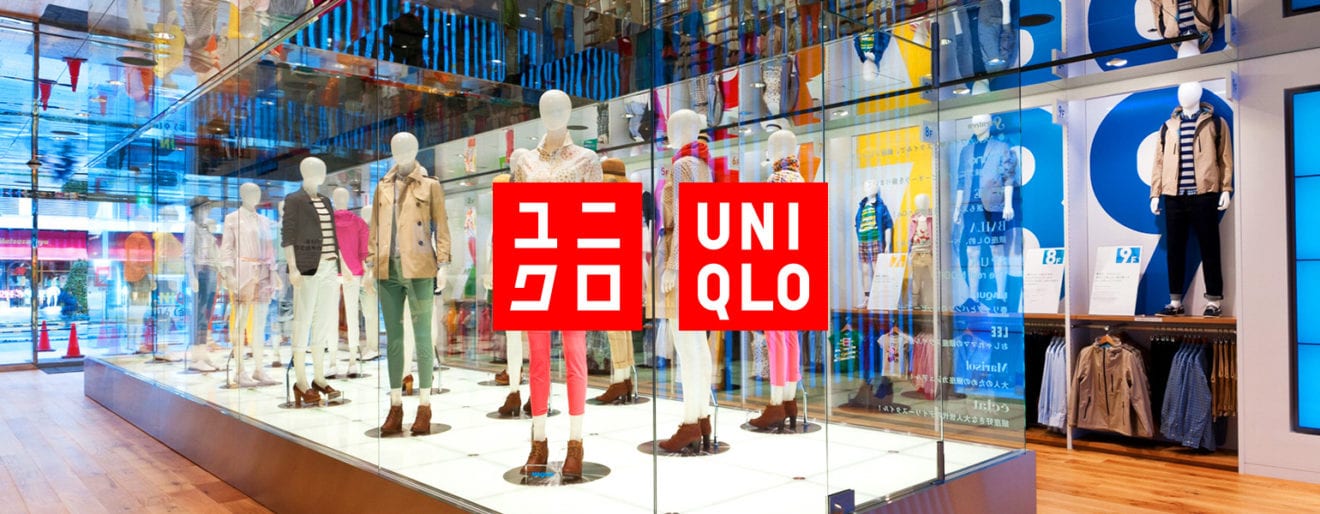
    The first Uniqlo Vietnam store opened its doors today, marking the Japanese fast-fashion brand’s sixth market in Southeast Asia.

    Setting its foot in one of the fastest-growing economies in the region, parent Fast Retailing hopes to strengthen its presence in both the country and the region at the same time as Vietnam becomes a manufacturing hub in the face of the ongoing US-China trade war.

    “I think Vietnam has massive potential and will be one of the biggest consumer markets in the world,” said Tadashi Yanai, chairman and CEO of Fast Retailing prior to the opening.

    Yanai described Vietnam as the key market in the region and an important part of the group’s development strategy.

    He said Uniqlo is now producing US$3 billion worth of products in Vietnam annually and plans to increase that even further. However, this does not mean that Vietnamese consumers will experience lower prices for Uniqlo products.

    “We implement a medium- and long-term pricing strategy to ensure revenue and profit for each store… We want to compete with high quality, sustainable products at reasonable prices, not [by] discounting,” said Osamu Ikezoe, Co-CEO of Uniqlo Vietnam.

    Uniqlo is already planning its second store in the country, which will be located in the capital city of Hanoi.

    “We are not talking about 100 stores in Vietnam,” said Yanai. “Much more.”

    The company says it is focusing on physical stores, with no plans to deploy an e-commerce sales channel as yet.

    Located opposite stores of rival fast-fashion chains H&M and Zara, Uniqlo Vietnam’s first store in Ho Chi Minh City is also its largest outlet in Southeast Asia to date, with a gross floor area of 3107sqm across three storeys.

  • Viec.Co scoops Vietnam Startup 2019 title

    Viec.Co scoops Vietnam Startup 2019 title

    Viec.Co, a platform connecting employers and freelancers, scored the highest in a startup competition organized by VnExpress, Vietnam’s most-read online newspaper.

    Viec.Co surpassed other contestants in the top 5 to be named the winner of the Vietnam Startup 2019, which concluded in the final Gala on December 2 in Ho Chi Minh City.

    Themed “Unicorn to be”, the final gathered the top 5, including Viec.Co, TripHunter, Liberzy, Tez and Sphacy for a debate in front of judges. Viec.Co was chosen as winner, based on criteria including leadership ability, uniqueness, new technology, product feasibility, global reach and community contribution

    Specialized in helping freelance workers access employment opportunities, Viec.Co provides a one-touch experience via a human resources platform. It is also a tool for employers to evaluate and recruit candidates at the lowest cost and simple procedure.

    Viec.Co has further applied the API (Application Programming Interface) to the Momo ecosystem, Vietnam’s mobile, e-wallet and payment application, to provide simple and convenient payment solutions.

    After one year of operation, the startup grew 30 percent per month, now boasting over 40,000 registered users, 10,000 employable freelancers, and 30 customers.

    Tez, the online library startup, is an educational platform that provides a comprehensive system of online lectures and materials for teachers and learners at all levels. It aims to create a “social network” that connects students, teachers, and the community to share knowledge more easily, conveniently and broadly. Of the top 5 in Vietnam Startup 2019, TripHunter is a tool to automatically build travel schedules, based on web and application platforms. The tool enables users to manually adjust their own schedules, and compare prices between online travel agents (OTAs), booking and managing all services such as airline ticketing and hotel reservations all via one application.

    Tez’s business model consists of two channels, which include selling user accounts and advertising revenue. Accordingly, 85 percent of Tez’s revenue comes from users and the rest from advertising services for English schools, institutes, and organizations.

    Tez has collated 83,000 lectures, 115,000 documents, 175,000 registered members over 10 months of operation. It has a turnover of VND8.3 billion ($358,000) and more than 18 million website and app visits.

    Operating similarly to the Grab ride-hailing platform and food ordering apps, Sphacy developed a pharmaceutical ordering application. It allows users to buy drugs anytime, anywhere via ordering – delivery using a mobile app.

    Sphacy directly connects customers with pharmaceutical suppliers, including wholesalers and retailers, along with quality control regulations. “It provides a solution to modern pharmaceutical problems, such as unknown origin, incorrect dosage, high level of antibiotic resistance,” said Sphacy’s CEO and founder Vu Van Thanh.

    With Liberzy, users can design trips according to their needs, with itineraries and notes visually displayed on the map. Each user has a personal page to share destinations, experiences and connect with others. Libezy also connects with suppliers to recommend suitable services such as airline tickets, hotels and restaurants based on a user’s schedule. Also specialized in tourism, Liberzy is a platform that helps create schedules and provides useful information about a specific trip, gathering together people with similar travel interests. “Liberzy stands for Liberty and Easy, denoting traveling with freedom and ease. In addition, the ‘S’ of ‘Easy’ has been changed to ‘Z’ to represent a travel platform for Generation Z, who love self-sufficient travel using modern technology,” Truong Duc Thang, Liberzy’s CEO and founder explained.

    At Vietnam Startup Gala 2019, Thinsulin, a startup that provides blood sugar lowering and weight loss methods, was named as the startup with the most audience votes. As a part of the Gala, a series of “Speed Dating” activities opened opportunities for Vietnamese startups to meet and present their ideas and projects to investors.

    Vietnam Startup 2019 is a voting event, annually organized by VnExpress. It underwent eight months of registration, online submissions, training and voting to find the top 25 and top 15 best startups in 2019.

    The five judges are well-known investors or mentors with great experience of the local start-up community, including Truong Gia Binh, chairman of FPT Corporation; Pham Phu Ngoc Trai, founder and chairman of Global Integration Business Consultants (GIBC); Tran Ngoc Thai Son, founder and chairman of e-commerce firm Tiki; Nguyen Lan Anh, CEO of Endeavor Vietnam; and Bui Kim Thuy, country representative of the US-ASEAN Business Council in Vietnam (USABC).

    The event is sponsored by Tiki (diamond sponsor), Grab (gold sponsor), IMAP (silver sponsor), Sun*Startup and LG (copper sponsors). AIM and Zone Startups Vietnam also act as partners.

  • Bamboo Airways expects profits to take off in 2020

    Bamboo Airways expects profits to take off in 2020

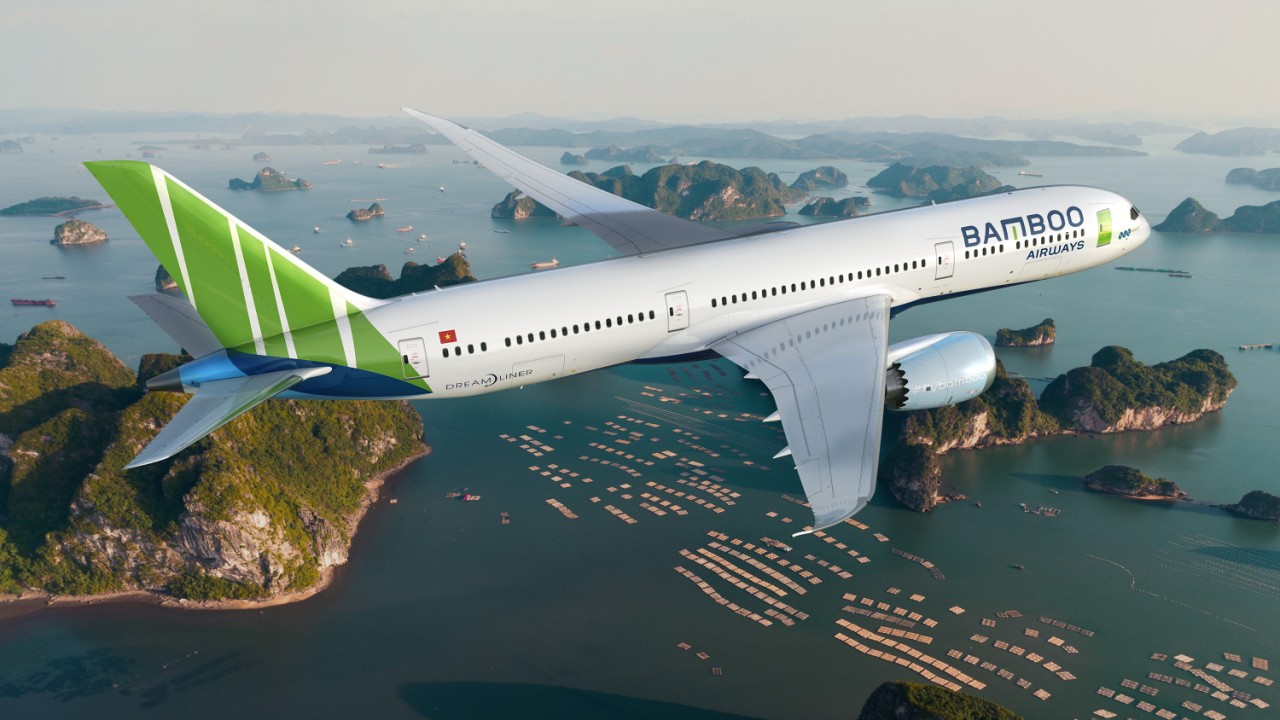
    Private budget airline Bamboo Airways says it expects profits in the first quarter next year as its fleet expands to 30 aircraft.

    The carrier’s deputy chairman Dang Tat Thang said at a press conference Tuesday that it was operating 20 aircraft with over 100 trips a day, but an airline typically needs to operate at least 25-30 jets.

    “We hope that by having 30 aircraft in the first quarter next year we will record profits. By expanding our fleet to 30, we can stabilize operations and launch more routes.”

    The airline had recorded cumulative losses of VND329 billion ($14.2 million) at the end of April, three months after its first flight, according to the Ministry of Finance.

    Bamboo Airways chairman Trinh Van Quyet explained the losses at a shareholders’ meeting in June, saying the airline had to pay salaries for a team big enough to operate 30 aircraft, while the fleet was just 10 then.

    Quyet also expects profit from its direct U.S. flights. The airline is set to receive its first wide-body Boeing 787-9 Dreamliner this month, which will be used for direct flights to the U.S. in late 2020 or early 2021.

    Bamboo Airways is in the process of selecting an U.S. airline partner for its direct route, Thang said Tuesday. It is also mulling direct routes to Germany and the Czech Republic.

    The airline plans to launch an initial public offering next year to raise around $100 million. It is eyeing investors from Japan, the U.S., and Europe, he added.

    Foreign investors can own up to 34 percent of a Vietnamese airline, according to a government decree set to take effect January 1, 2020.

    The entrance of Bamboo Airways earlier this year has eaten into the market share of national flag carrier Vietnam Airlines and budget carrier Vietjet.