Tag: Vietnam

  • Central bank cuts compulsory reserve interest rates

    Central bank cuts compulsory reserve interest rates

    The State Bank of Vietnam (SBV) announced Monday it has lowered the interest rates on compulsory reserves at banks by 0.4 percentage points.

    The new compulsory reserve interest rate has been reduced to 0.8 percent per annum for dong deposits, down from 1.2 percent prior. This change came into effect on Sunday.

    A compulsory reserve is a minimum amount calculated on the ratio of total deposits that credit institutions must deposit with the SBV to ensure solvency and reduce risks in savings activities. In Vietnam, this ratio is 3 percent.

    The SBV will continue not paying any interest on dong deposits from banks that exceed the minimum 3 percent requirement.

    But all deposits by the Vietnam Development Bank (VDB) and Vietnam Bank for Social Policies (VBSP), both state-owned banks; People’s Credit Funds and microfinance institutions will receive the 0.8 percent interest.

    Conversely, for foreign currency deposits with the SBV, no interest is paid on minimum reserves, but anything in excess is now subject to 0.05 percent interest per annum, which has been slashed from 0.5 percent, according to the central bank statement.

    The reduction of compulsory reserve interest rates to 0.8 per year will not have a significant impact on the profits of banks by the end of the year because the required reserve ratio is currently at a low 3 percent, Dr. Can Van Luc, chief economist at BIDV, Vietnam’s biggest state-owned bank, told the local press.

    Banks also do not maintain reserves at the SBV higher than the minimum requirement, as it would be a waste of resources because investing or lending this money would bring more returns, he added.

    The reduction in compulsory reserve interest rates is most likely a move by the SBV to reduce the burden on the state budget because interest payments are taken from there. “But like the impact on profits of commercial banks, the savings will not amount to much,” Dr. Luc said.

    Last month, the SBV also lowered the interest rate cap on 6-month dong deposits from 5.5 percent to 5 percent, prompting many banks in the sector to cut deposit rates across various terms.
  • Vietnam Airlines asked to spell out details of plan to buy 50 jets

    Vietnam Airlines asked to spell out details of plan to buy 50 jets

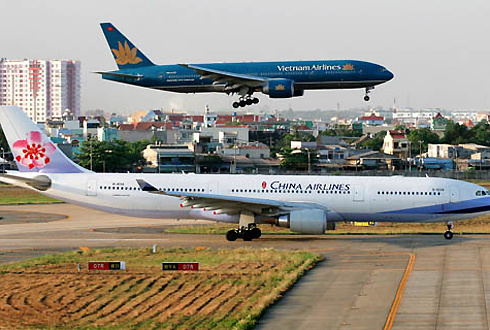
    The Ministry of Transport has asked Vietnam Airlines for details about its plan to acquire 50 narrow-body aircraft by 2025.

    The national flag wants to buy 50 Airbus A3210/321 or Boeing 737 MAX 8/9/10 aircraft in 2021-2025 at a cost of VND88.13 trillion ($3.83 billion).

    It seeks to replace its 26 existing aircraft and expand the fleet by 24, with four or five airplanes delivered every year.

    But the ministry said the airline needs to furnish information about the routes it plans to use the new aircraft on and detailed plans about hiring more staff to operate them.

    It warned against the purchase of Boeing 737 MAX 8 saying it is still unclear whether the grounding of the model would be reversed.

    The carrier also needs to consider that technical issues have been reported in some Pratt Whitney engines used in Airbus A320/321 NEO by some airlines, the ministry said.

    Vietnam’s surging travel demand has caused airlines to expand their fleets. Bamboo Airways has inked a deal with Airbus to buy 50 aircraft, while Vietjet last month signed a $140 million loan with foreign banks to finance its Airbus order for 20 aircraft.

    Last year the country’s 21 state-run airports handled 103.5 million passengers, according to the Airports Corporation of Vietnam, and the number is set to rise to 112 million this year.

  • Vietnam needs more qualified workers

    Vietnam needs more qualified workers

    Vietnam should improve its workforce quality and create better jobs if it’s to escape the middle-income trap, experts say.

    As of 2018, only 12 percent of jobs in Vietnam were high-skilled, while 54 percent were medium-skilled jobs and the remaining 34 percent were low skilled ones, Valentina Barcucci, an economist with the International Labour Organization (ILO), said at the Vietnam Labour Forum 2019 on Wednesday.

    The percentage of high-skilled jobs was low compared to the global average for upper-middle-income countries, who have 20 percent of their jobs in this category, she said.

    “Vietnam does not need more jobs but needs better jobs. Although its unemployment rate is very low, job quality is still a challenge,” Barcucci said.

    The unemployment rate stood at 1.99 percent in the first nine months of the year, according to the General Statistics Office.

    With the rise of Industry 4.0, a large amount of low-quality, low-cost labor in Vietnam would stop being an advantage. As such, developing high-quality labor is an inevitable requirement to ensure Vietnam can develop strongly, said Vo Tan Thanh, Vice President of the Vietnam Chamber of Commerce and Industry (VCCI).

    “To become a high-middle-income country by 2030, Vietnam needs social improvements in parallel with economic development. Fortunately, Vietnam is taking the right steps such as improving the skills for the workforce, expanding social security coverage, and modernizing labor institutions,” said Chang-Hee Lee, ILO Vietnam Director.

    The Ministry of Labour, Invalids and Social Affairs estimates Vietnam’s current workforce at 56 million people.

  • Making cars costs more in Vietnam than other ASEAN countries

    Making cars costs more in Vietnam than other ASEAN countries

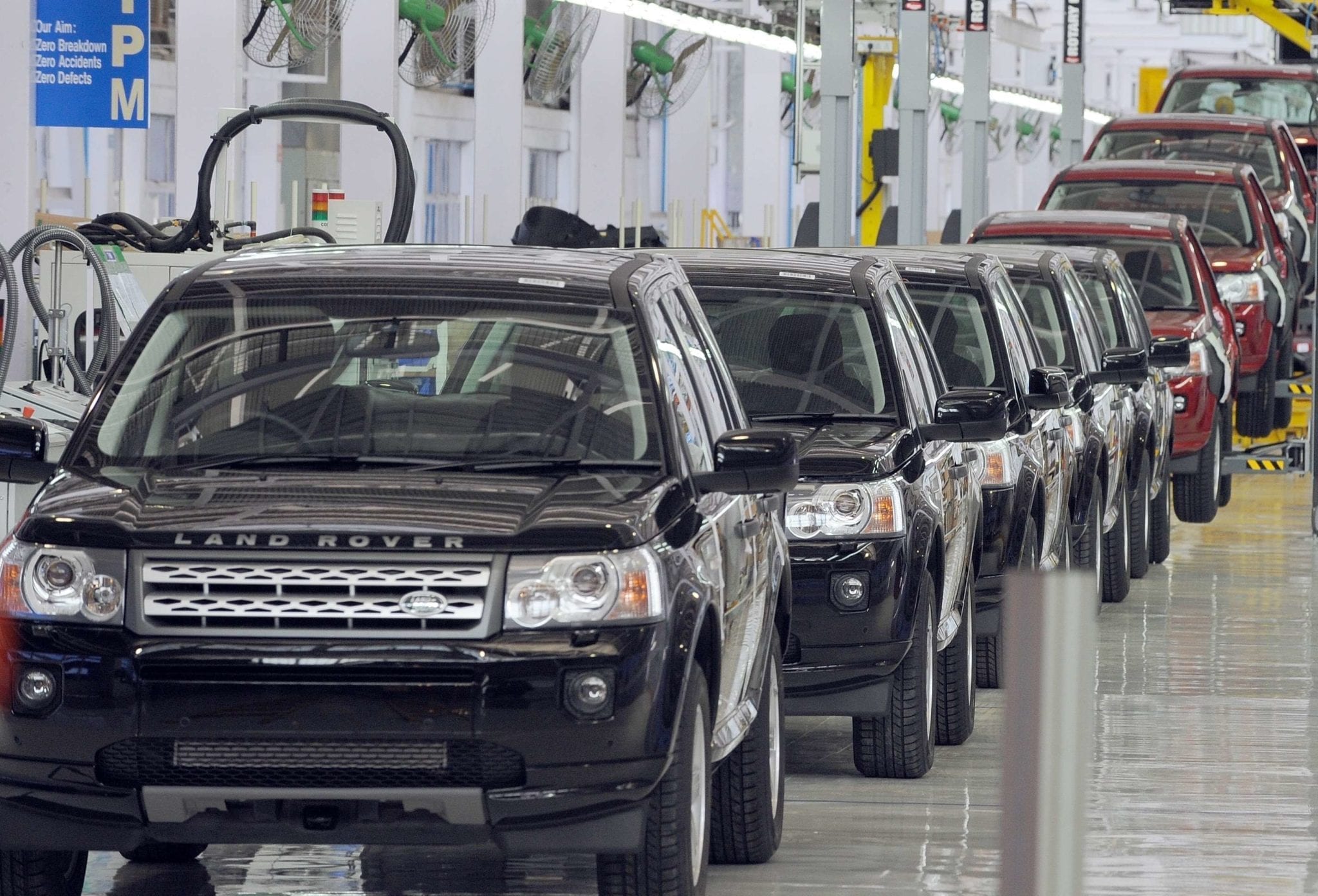
    Cars assembled and produced in Vietnam cost 20 percent more than in Thailand and Indonesia because a large number of parts have to be imported.

    Do Thu Hoang, Vice President of Toyota Vietnam, said at a forum Thursday that suppliers in the country are capable of making simple parts such as seats and wires, but for other parts like fuel caps, costs in Vietnam are 2-3 times higher than in Thailand and Indonesia.

    The country has to import about $2 billion worth of car parts each year, mostly components like the breaking and steering system, from countries like Japan, China and South Korea, according to a report submitted at the forum by the Ministry of Industry and Trade.

    Pham Tuan Anh, deputy head of the ministry’s industry department, said that the large portion of imports puts the localization rate of cars with nine seats or less at 7-10 percent, even though the country had targeted a 60 percent rate by 2010.

    Anh said that the reason for the imports is the country’s small market size, making suppliers unable to produce large volumes to lower prices.

    Hoang proposed that the government provides financial support for suppliers to upgrade their machinery and equipment to produce more advanced parts.

    “Without support, local car producers will continue to rely on imports, and local suppliers will struggle to grow.”

    Pham Van Tai, CEO of Truong Hai Auto (THACO), suggested that the country should scrap imports tax on car parts that local producers are not capable of producing.

    Vietnam began developing its car industry in 1991, 30 years later than other countries in the region.

    The sales of imported cars in the first 10 months surged 2.2 times to 106,100 units, while that of locally-assembled ones fell 12 percent to 153,100, according to the Vietnam Automobile Manufacturers Association (VAMA).

  • Pork prices push November inflation to 9-year high

    Pork prices push November inflation to 9-year high

    Rising prices of pork and processed meat raised the November consumer price index (CPI) a record 0.96 percent over the previous month.

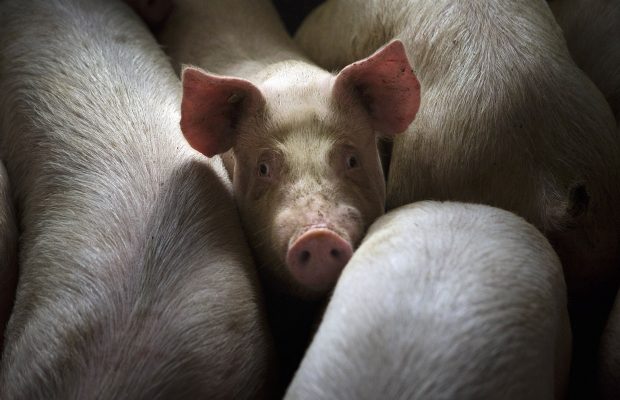
    Dwindling supply of pork following the African swine flu outbreak in Vietnam saw prices of pork and other processed meat products to soar in November, leading to the biggest CPI increase in 9 years, according to the latest report by the General Statistics Office (GSO).

    However, over the last 11 months, the CPI had only risen by 2.57 year-on-year, the lowest increase in the last three years. The CPI in November, compared to December-end 2018, had increased by 3.78 percent.

    Speaking to VnExpress, merchants in Ho Chi Minh City said that prices of pork substitutes such as beef and seafood rose as customers made the switch, coupled with heightened demand as the New Year approaches.

    Vietnam has had to cull 5.9 million pigs infected with African swine fever since the beginning of the year, equivalent to 337,000 tons of pork, according to Phung Duc Tien, Deputy Minister of Agriculture and Rural Development.

    This has resulted in pork prices rising by 19 percent since last November and could rise by a further 10-15 percent by the end of this year with an expected shortage of 200,000 tons, according to the GSO.

  • Ministry proposes major upgrade to airport in central Vietnam

    Ministry proposes major upgrade to airport in central Vietnam

    The Dong Hoi Airport’s capacity should be increased four-fold to 2 million passengers a year, the Transport Ministry says. Le Dinh Tho, Deputy Minister of Transport, said at a meeting Thursday, adding that the airport’s current capacity of 500,000 was too low, given Quang Binh Province’s strong tourism potentials.

    The domestic Dong Hoi Airport, rebuilt in 2008, is located on a 173-hectare plot. Last year, it exceeded its capacity by 200,000 passengers, according to official figures.

    The Airports Corporation of Vietnam (ACV) had proposed to Quang Binh authorities in July that the airport be upgraded at a cost of VND2 trillion ($86.3 million), making it capable of receiving international flights and up to 3 million passengers a year.

    Quang Binh is home to Son Doong Cave, the world’s largest, and other spectacular cave systems. The province welcomed over 4 million visitors in the first nine months, up 28 percent year-on-year.

    ACV last year proposed a VND56.7 trillion ($2.4 billion) upgrade to 16 of the 21 state-owned airports in the country to meet rising air travel demand.

  • Vietjet Announces New Routes to Seoul to Celebrate 30th Anniversary of ASIAN – South Korea Relations

    Vietjet Announces New Routes to Seoul to Celebrate 30th Anniversary of ASIAN – South Korea Relations

    To celebrate the 30th anniversary of the relations between the Association of Southeast Asian Nations (ASEAN) and South Korea, as well as the recent Mekong – South Korea summit, new-age carrier Vietjet has announced plans for new routes that will connect some of Vietnam’s largest and fast-growing tourist destinations, such as Da Lat, Can Tho, Nha Trang and Phu Quoc with Seoul.

    The announcement ceremony took place during the Vietnam – South Korea Business Forum on 28 November 2019 in Seoul, South Korea, and was attended by Prime Minister of Vietnam Nguyen Xuan Phuc, Deputy Prime Minister of South Korea Hong Nam-Ki and senior leaders from both the South Korean and Vietnamese governments.

    Connecting Seoul, the dynamic capital of South Korea, with Dalat in Vietnam’s Central Highlands, Can Tho in Southwest Vietnam’s Mekong Delta, Nha Trang on the south-central coast of Vietnam and Phu Quoc, also known as Vietnam’s “Pearl Island”, means that Vietjet’s new routes will boost tourism and trade in the two regions. It will also boost cultural exchanges between the two countries while forging closer ties between South Korea and ASEAN, one of the world’s fastest-growing economic blocks.

    Starting from January 2020, the new Seoul (Incheon) – Can Tho route is planned to operate three return flights per week, while the new Seoul (Incheon) – Da Lat route will fly four return flights per week, each with a flight time of more than five hours per leg. The two current routes linking Seoul (Incheon) to Nha Trang and Phu Quoc will also increase frequencies to meet the increasing passenger demands.

    Speaking at the ceremony announcing the launch of the new routes, Vice Chairman of Vietjet Nguyen Thanh Hung thanked the governments of Vietnam and South Korea for creating opportunities for business investment and cooperation between the countries. He also pledged that the airline will continue its mission to offer more flights with new upcoming routes with Vietjet’s modern fleet. He added that all Vietjet passengers can look forward to being served by a team of dedicated and friendly cabin crew, pointing out Vietjet’s stellar standards for safety and technical reliability.

    Mr. Nguyen Thanh Hung also expects that the close relations between Vietnam, the rest of ASEAN and South Korea will contribute to the expansion of the regional aviation sector around the globe.

    With the two new routes, Vietjet operates the most number flights connecting Vietnam and South Korea with a total of 11 routes and up to 480 flights per month. The airline’s growing network has helped to boost bilateral ties and improve strategic cooperation between the two nations, creating a positive impact on the relations between ASEAN and South Korea.

  • Swedish brand H&M opens first Da Nang store

    Swedish brand H&M opens first Da Nang store

    Swedish fashion brand Hennes & Mauritz (H&M) opened its first store in Da Nang and eighth in the country on Thursday.

    The 1,600 square meter outlet is located in the Vincom Ngo Quyen mall in downtown Da Nang. Starting from VND99,000 ($4.27), the story aims to offer reasonably priced products for men, women, and children.

    Fredrik Famm, the brand’s Southeast Asia manager, said popular travel hotspot Da Nang was a market with good potential and they could open even more outlets in the central city.

    H&M was keeping its prices reasonable in order to develop sustainably in Vietnam, Famm said.

    With three outlets in Hanoi and four in Ho Chi Minh City, H&M is now established in all three regions of the country, while its Spanish competitor Zara has only two in Hanoi and HCMC.

    The expansion of H&M comes as major international brands set up shop in Vietnam to tap a rapidly growing fashion market.

    Australian brand Cotton On opened its first store in HCMC earlier this month, while Japanese casual wear retailer Uniqlo announced it would open its first store in the country on December 6, also in HCMC.

    The fashion garments industry, estimated at $5 billion in 2018, is expected to reach $7 billion by 2023.

  • Viettel, VinSmart get approval for factories in Hanoi

    Viettel, VinSmart get approval for factories in Hanoi

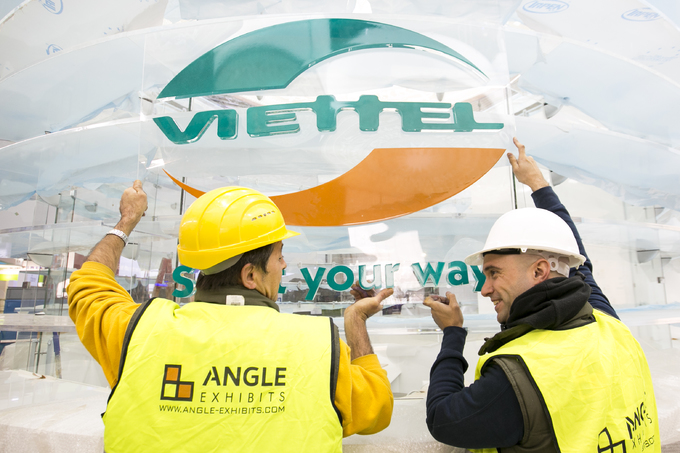
    The government has approved the construction of two new factories in Hanoi by state telecom giant Viettel and private smartphone producer VinSmart.

    Viettel will build a 9.1-hectare plant at the Hoa Lac High-Tech Park on the city’s outskirts to test and manufacture high-tech equipment and a 13.2-hectare research center for defense products, electronic and telecom equipment, network infrastructure, and 5G and Internet of Things (IoT) technologies.

    Viettel will also coordinate with the park’s management board to trial applications for smart cities related to issues like environmental management, urban lighting and smart parking.

    VinSmart, the electronics arm of Vietnam’s biggest private conglomerate, Vingroup, will build a 4.8-ha smart electronics plant which is likely to have a capacity of 125 million devices a year in its first phase.

    Their completion dates are not known.

    Viettel and VinSmart’s plants are two of four new projects worth VND7.46 trillion ($320.42 million) that have been approved at the park, according to the Ministry of Science and Technology.

    The others are by two private companies to produce drugs and radiation-resistant plastics.

    Military-run Viettel in January became the first company in the country to receive permission to trial 5G services followed by MobiFone. It plans to launch in 2020, installed the first 5G station in Hanoi early this year and made the first 5G phone call in May.

    VinSmart was established by Vingroup in June, and produced its first smartphones within just six months. It has produced a total of eight models so far.

  • Vietnam tightens consumer loans

    Vietnam tightens consumer loans

    Vietnam has tightened rules on consumer loans, requiring a progressive decline in their ratio in the coming years.

    Cash loans cannot exceed 70 percent of a finance company’s total loans for consumer durables starting 2021, according to a decree issued recently by the State Bank of Vietnam (SBV).

    The ratio will drop to 60 percent in 2022, 50 percent in 2023 and 30 percent in 2024.

    Finance companies can only disburse cash loans for customers without bad debt records with the National Credit Information Center under the central bank. The decree is set to take effect on January 1, 2020.

    Competition has intensified in the consumer loans division as new players enter the market. Vietnam had very few finance companies in 2015, but as of June this year 16 firms had received permission to operate, not counting alternate lending and pay-day loan platforms, SBV data shows.

    FE Credit, the biggest player so far, accounts for 47.3 percent of the market, followed by Home Credit with 16.9 percent and HD Saison with 10.1 percent, according to financial data provider FiinGroup.

    However, finance companies’ revenue growth has been slowing down, from 87.4 percent in 2015 to 15.3 percent last year, it said.

    Outstanding consumer loans amounted to 19.7 percent of Vietnam’s total outstanding last year, up 3 percentage points from 2017, FiinGroup added.

  • Netflix wants to produce Vietnamese content

    Netflix wants to produce Vietnamese content

    U.S. streaming service provider Netflix wants to produce content in Vietnam as it seeks to expand in Asia, its CEO has said.

    Speaking at a meeting with Mai Tien Dung, Chairman of the Government Office on Monday, Reed Hastings added that the company, which has set up offices in other Asian countries like India, Singapore, South Korea, and Japan, wants to set up one in Vietnam too.

    Netflix has been available in Vietnam since 2016 at VND180,000 ($7.8) a month for a basic subscription.

    It has been seeking to produce and acquire rights for more Asian content to increase the number of global subscribers.

    In September “Hau Due Mat Troi” (Descendants of the Sun Vietnam) became the first Vietnamese series to be screened on Netflix following the screening of movies like “Trung So” (Jackpot) and “Hai Phuong” (Furie).

    Netflix has 151 million subscribers in 190 countries.

  • Vietnamese carmaking startup VinFast gets $950 million credit line

    Vietnamese carmaking startup VinFast gets $950 million credit line

    VinFast, which aims to become Vietnam’s first domestic car manufacturer, said it has secured a 12-year credit facility for as much as $950 million to help buy machinery and equipment from German suppliers.

    The company, a unit of Vietnam’s largest conglomerate Vingroup JSC, plans to have its first production models built under its own badge hit the streets next August. Vingroup has earmarked about $3.5 billion for the project.

    VinFast, led by former General Motors executive Jim DeLuca, showed off its BMW-based LUX A2.0 sedan and LUX SA2.0 crossover at the Paris auto show last week. Assembly is scheduled to begin next week year.

    Credit Suisse AG and HSBC were the lead arrangers and the financing agreement was guaranteed by German export credit agency Euler Hermes, Vingroup and Vinfast said in a statement.

    The statement also said that in August Vinfast completed syndication of a $400 million term loan facility led by four international banks.

  • Vietjet Launches Black Friday Ticket Promotions from S$0

    Vietjet Launches Black Friday Ticket Promotions from S$0

    Vietjet launches Black Friday promotions with millions of tickets from only S$0 (*). All promotional tickets are available for the whole day on 29 November 2019 (GMT +7), with the fastest fingers winning more tickets.

    Explore domestic destinations within Vietnam and fly between Vietnam and Japan, South Korea, Taiwan, Hong Kong, India, Indonesia, Thailand, Singapore, Malaysia, Myanmar, and Cambodia, including all other routes operated by Vietjet Thailand. Tickets for this promotion is applicable for travel between 1 December 2019 to 24 October 2020 (**).

    Promotional tickets are available on Vietjet’s website, the “Vietjet Air” mobile app and on Facebook. Tickets can also be booked via Vietjet’s hotline +8419001886 or from official Vietjet agents and ticket offices. Payment can be easily made with Visa/ MasterCard/ AMEX/ JCB/ KCP/UnionPay cards.

    Vietjet’s biggest promotional campaign in 2019 is also ongoing, titled “Fly around Asia and hunt for the 1kg golden aircraft” with hundreds of attractive prizes. Customers joining the program will have opportunities to win prizes daily and weekly with a grand prize, the 1kg golden aircraft.

  • Pork price hikes drive up related food costs

    Pork price hikes drive up related food costs

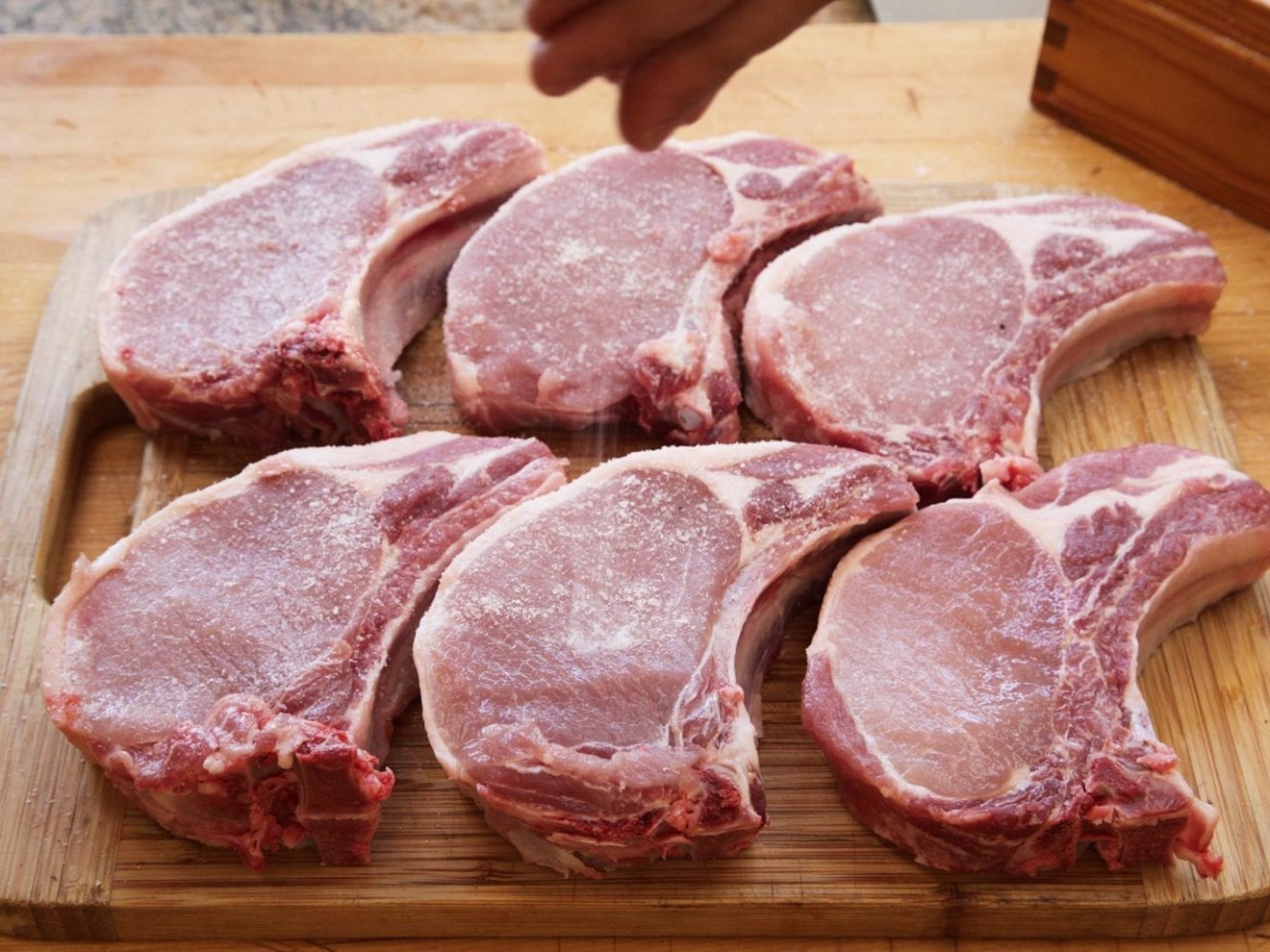
    Pork prices have surged following the African swine flu outbreak in Vietnam, driving up prices of related food in supermarkets and restaurants.

    Over the last two months, the prices of pork products at many supermarkets and food stores in Ho Chi Minh City rose 5-25 percent.

    For instance, the price of pork sausages has risen from around VND120,000 ($5.2) to VND150,000 ($6.5) per kilogram, and that of higher-end sausages from VND150,000 ($6.5) to VND210,000 ($9.1).

    Hoa, the owner of a food store in HCMC, said that over the past week, all suppliers have announced price increases of VND3,000-20,000 (13-86 cents) on each kilogram of pork, forcing her to adjust prices accordingly.

    “Many merchants have advised me to buy in bulk now and store the pork because prices will rise even further as demand rises and supply dries up,” Hoa said.

    Similarly, restaurant owners in HCMC have raised the prices of rice and noodles dishes with pork as an ingredient, which on average cost around VND30,000 ($1.3), by VND2,000-5,000 (9-22 cents) each.

    “I can’t raise prices too much or it will shock my guests, so I have to do a balancing act of cutting smaller portions of pork, finding cheaper suppliers,” said Hue, a restaurant owner in Go Vap District, HCMC.

    Vietnam has had to cull 5.9 million pigs infected with African swine fever since the beginning of the year, equivalent to 337,000 tons of pork, according to Phung Duc Tien, Deputy Minister of Agriculture and Rural Development.

    This has resulted in pork prices rising by 19 percent since last November, and could rise by a further 10-15 percent by the end of this year with an expected shortage of 200,000 tons, according to the General Statistics Office (GSO).

    While the consumer price index in November is forecast to reach 0.8-1 percent, pork alone is expected to contribute 0.75 percentage points to this increase, GSO officials said at a government meeting urgently called Monday to find ways to limit the surge in pork prices.

    At the meeting, the government assigned the Ministry of Industry and Trade to monitor and forecast upcoming pork shortages every month, so that the government could import enough quantities to ensure balance in demand and supply and control prices.

  • Vietjet Air signs $140 million loans for fleet expansion

    Vietjet Air signs $140 million loans for fleet expansion

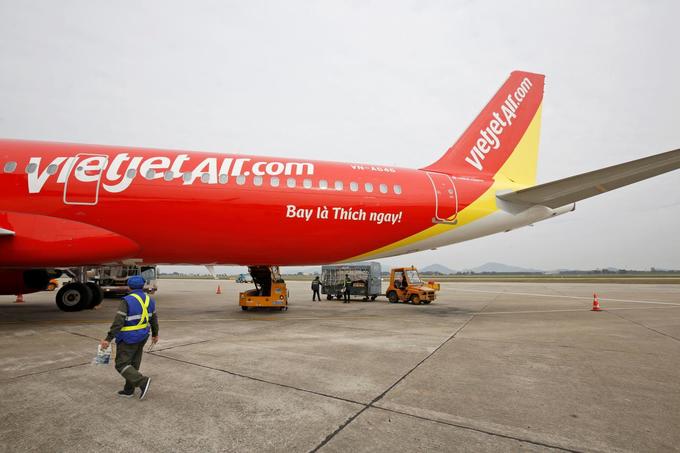
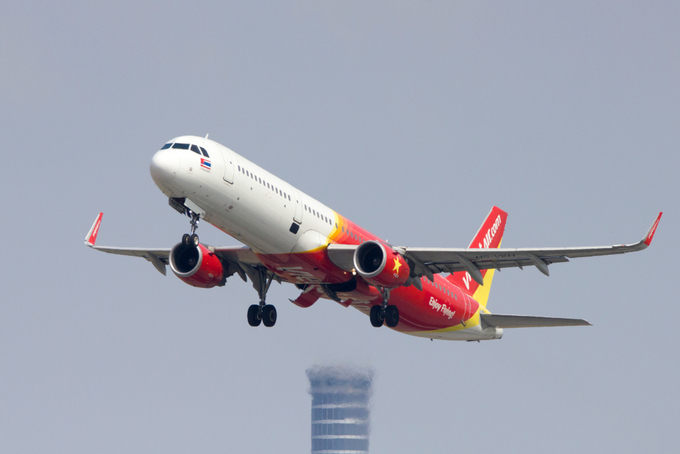
    Vietjet Air has signed a syndicated loan agreement worth $140 million with three foreign banks to fund its aircraft purchase plans.

    The lenders were South Korea’s Woori Bank and KEB Hana Bank; and the Industrial and Commercial Bank of China, the airline said in a statement Tuesday.

    The low-cost airline is eyeing new routes to the Middle East, Eastern Europe and Australia using the 20 Airbus A321XLR aircraft it ordered last month.

    The A321XLRs are scheduled to be delivered from 2023 and the carrier plans to add 10 international routes every year, Thao said.

    Vietjet currently flies 40 domestic and 66 international routes. It operates 385 flights daily within Vietnam and to places such as Japan, Hong Kong, South Korea, Taiwan, Singapore, mainland China, Thailand, Myanmar, Malaysia and India.