Tag: Vietnam

  • Vietnam reduces penalties for illegal currency exchange

    Vietnam reduces penalties for illegal currency exchange

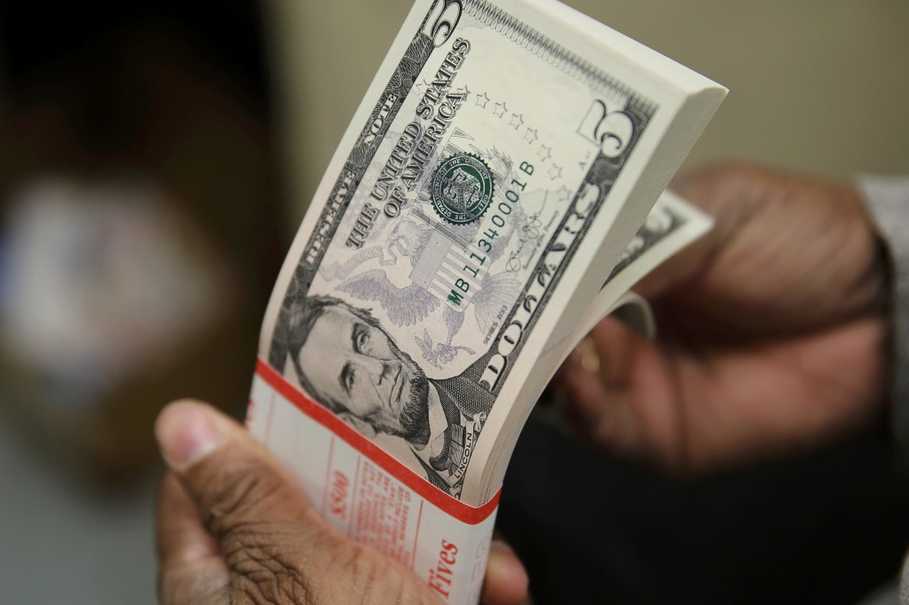
    Vietnam has significantly lowered penalties for illegal currency exchanges following outrage over a man being fined VND90 million ($3,900) for exchanging $100 last year.

    The fine was revoked after a public outcry erupted over disproportionate punishment.

    An individual or a shop illegally exchanging up to $1,000 will receive a warning instead of a fine of up to VND100 million ($4,300), according to a new government decree set to take effect December 31.

    The fine will increase progressively, with a maximum penalty of VND100 million levied for illegally exchanging more than $100,000, the decree says.

    Illegal exports and imports of currency will be fined up to VND250 million ($10,800).

    The legal amendments come after a resident of the southern city of Can Tho was fined VND90 million ($3,900) in October 2018 for exchanging a $100 note at a gold shop.

    It is a common practice for Vietnamese citizens to exchange currencies at local gold shops that offer better prices than banks, even though very few of the shops are licensed exchangers.

    Can Tho authorities revoked the punishment after Deputy Prime Minister Truong Hoa Binh said such a heavy fine should be reviewed, and lawyers and lawmakers also said it was unreasonable?

    However, the province confiscated the $100 note from the man, an electrician who makes VND4 million ($171) a month.

  • Australian fashion brand Cotton On comes to Vietnam

    Australian fashion brand Cotton On comes to Vietnam

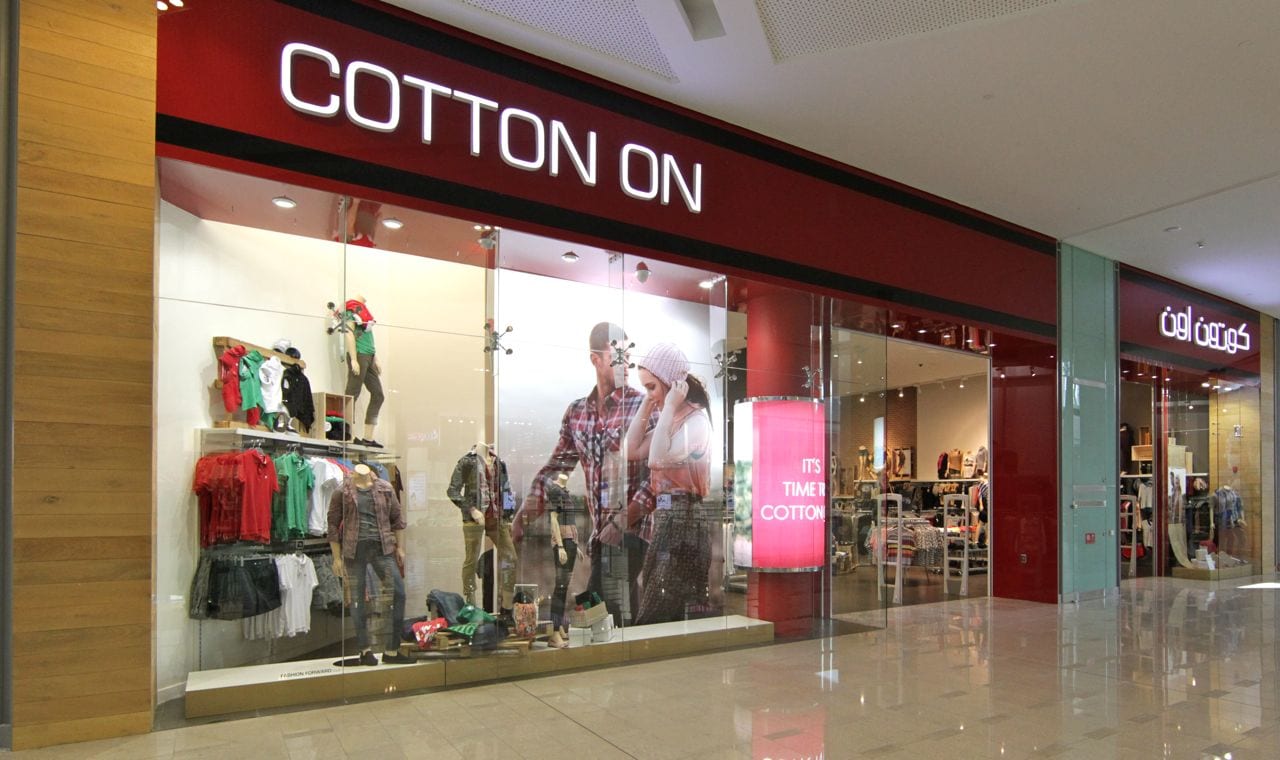
    Australian fashion brand Cotton On is the latest foreign player to come looking for a piece of the action in the growing Vietnamese market.

    It opened its first store in the country at Vincom Thao Dien in Ho Chi Minh City’s District 2 on November 15. It plans to open two more stores before December, including one at Aeon Mall Ha Dong in Hanoi, it said in a statement.

    “We know there is a growing demand for street/casual wear fashion in Vietnam, so we’re confident our distinctive product offering will resonate with customers who want access to the most effortless, on-trend products,” James Lavdas, Cotton On’s general manager of license, said.

    The group has come to Vietnam through a partnership with Imex Pan Pacific Group (IPPG), which also brought other fashion brands such as Nike and Mango to the country. It is the first Australian apparel retailer in the Vietnamese market.

    Cotton On, among the largest fashion brands in Australia, was established in 1991 and now has a presence in 19 countries. Before Vietnam, it had entered India in January.

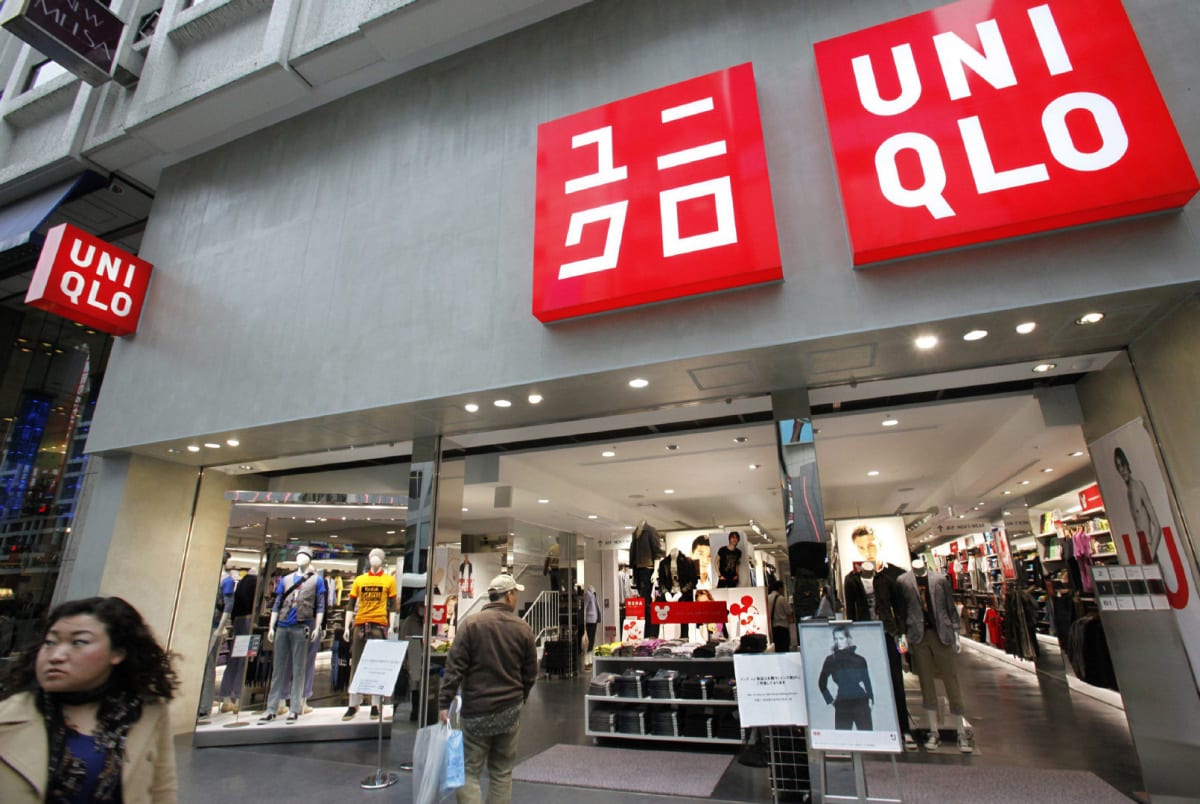
    Earlier this month Japanese casual wear retailer Uniqlo announced it would open its first store in the country in Ho Chi Minh City’s District 1 on December 6, adding to the list of around 200 foreign fashion brands that have entered Vietnam, including Zara, H&M, Giordano, Topshop, Gap, and Old Navy.

    Industry insiders say that Vietnam, with its young demographic, growing incomes and 96 million population, is a hugely promising market.

    The industry was estimated to be worth $5 billion in 2018 and is expected to reach $7 billion by 2023.

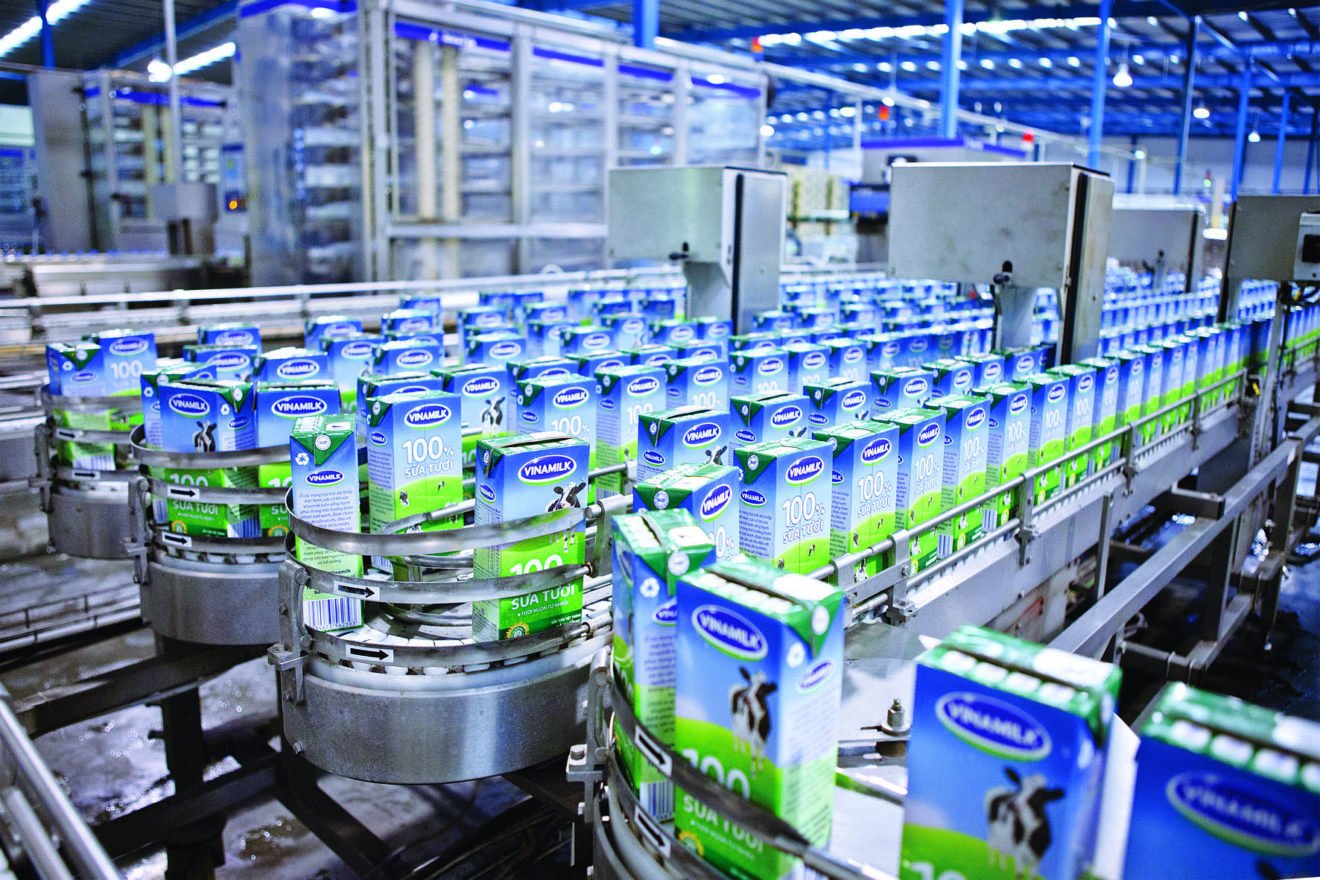
  • One percent Vinamilk stake out of reach for Singaporean investors

    One percent Vinamilk stake out of reach for Singaporean investors

    Two Singaporean investors in Vinamilk have failed repeatedly to increase their stake in the dairy giant by one percent.

    In the latest instance, investment firm Platinum Victory has once again failed to increase its stake, Vinamilk said Monday.

    The Singapore-based company has been unable to increase its stake from 10.62 percent to 11.62 percent as of November 15 “due to unfavorable market conditions,” the Vinamilk statement said.

    Platinum Victory, a unit of Singapore’s leading diversified conglomerate Jardine Cycle & Carriage, has immediately registered again to buy the 1 percent stake between November 21 and December 20, Vinamilk added.

    Since early last year, another Singapore-based company, F&N Dairy Investments, which is the largest foreign investor in Vinamilk at 17.31 percent, has also been unsuccessful in repeated attempts to raise its stake by one percent.

    Vinamilk is among the largest listed companies in the country with a market cap of VND208.96 trillion ($9 billion). From January to September, the company’s after-tax profit rose 5.8 percent year-on-year to VND7.92 trillion ($341.5 million). The state is its largest stakeholder at 36 percent.

    Platinum Victory had last month proposed to spend $60 million on increasing its stake in Vietnam’s industrial appliance maker REE from 24.9 percent to 35.01 percent.

  • Sendo wins funding, overtakes Tiki in Vietnam

    Sendo wins funding, overtakes Tiki in Vietnam

    In this financing round, its largest to date, Sendo has been backed by its existing investors including SBI Group, Beenos, SoftBank Ventures Asia, Daiwa PI Partners, and Digital Garage together with new investors such as EV Growth from Indonesia, and Kasikornbank from Thailand.

    According to a statement, the funds will be used to expand the breadth of its existing integrated platform offering to both sellers and consumers, as well as to “further deepen its technology moat with AI and machine learning to enhance the overall consumer journey experience”.

    “While we have hit our annualized gross merchandise volume (GMV) target of US$1 billion earlier than expected, we care much more about meaningful and sustainable GMV growth, which we believe has to come from consumer stickiness owing to a great shopping experience,” said Hai Linh Tran, co-founder and CEO of Sendo, pictured above.

    “Sendo’s integrated ecosystem spanning marketplace, advertising, logistics and financial services is designed to ensure that, and that goes well with our monetisation strategy into multiple revenue streams and ultimately, our path to profitability.”

    Senior partner and MD of Softbank Ventures Asia, Daniel Kang, said Sendo’s strength in using the capabilities of its partners within the ecosystem has essentially created a win-win for merchants, advertising companies and financial institutions. “The company’s marketplace model is well-aligned to address the needs of typical Vietnamese sellers and consumers, and more importantly, to empower them,” he said.

    According to a recent report from iPrice, Sendo has become the second-most downloaded app and the second-most visited e-commerce website in Vietnam, overtaking its domestic rival Tiki which is 25.65 percent owned by Chinese e-commerce giant JD. Both Sendo and Tiki are concentrating solely on the Vietnam market,rather than expanding into other countries as its rivals are. Regional player Shopee remains number one.

    Sendo now boasts more than 500,000 sellers, with an estimated 17 million SKUs listed on its platform. The company serves more than 12 million customers across across the country.

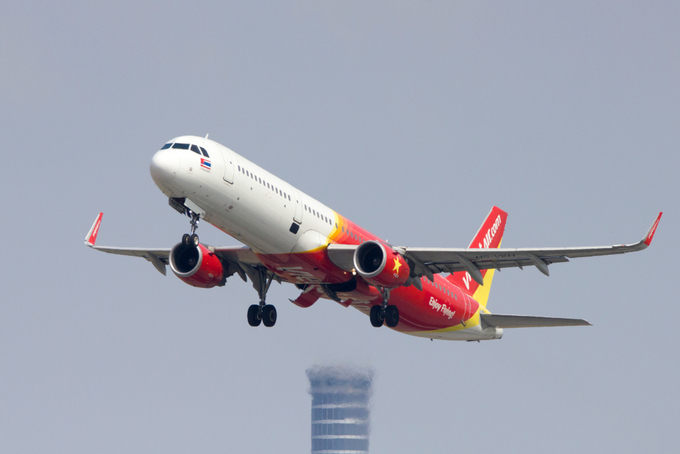
  • Vietjet targets Middle East, Australia with new long-range jets

    Vietjet targets Middle East, Australia with new long-range jets

    Vietjet Air plans to start flying to the Middle East, Eastern Europe and Australia using the 20 Airbus A321XLR aircraft it has ordered.

    “When we receive the airplanes with the longer range, then we can serve up to 60 percent of the global population,” Nguyen Thi Phuong Thao, CEO of the budget carrier, told Reuters on the sidelines of the CAPA Asia Aviation Summit.

    The A321XLRs are scheduled to be delivered from 2023. Thao was quoted by the Centre for Asia Pacific Aviation, which named Vietjet the “Asia Pacific Low-Cost Airline of the Year” at the summit, as saying the carrier plans to add 10 international routes every year.

    Vietjet currently flies on 40 domestic and 66 international routes. It operates 385 flights daily within Vietnam and to places such as Japan, Hong Kong, South Korea, Taiwan, Singapore, mainland China, Thailand, Myanmar, and Malaysia.

    Vietnam’s fleet of over 200 aircraft last year could quadruple by 2038, U.S. aircraft maker Boeing said.

    Its 21 state-run airports served 106 million passengers in 2018, up 13 percent from a year earlier.

  • Toyota subsidiary to set up another airbag plant in northern Vietnam

    Toyota subsidiary to set up another airbag plant in northern Vietnam

    Japanese auto parts maker Toyoda Gosei plans to build another airbag plant in Thai Binh Province at a cost of $16.8 million next year.

    Work on the plant will begin in May 2020. When completed in October 2021 it will help increase the company’s capacity in Vietnam to 25 million airbags annually, Toyoda Gosei said in a statement on Wednesday. It will employ 700 workers initially, increasing to 2,000 by the end of 2023.

    Toyoda Gosei, a subsidiary of Toyota Motor Corp., built its first plant in Vietnam in Hai Phong City in 2004. Last July it opened a $24.6-million second plant at the Tien Hai Industrial Park in Thai Binh Province.

    It plans to increase the capacity of the Hai Phong factory to meet increasing orders. Airbags produced in Vietnam are exported mainly to Japan but also to other markets such as ASEAN and North America.

    Established in 1949, Toyoda Gosei has 67 facilities and factories in 17 countries around the world.

  • Cars to enter airports fee free for 10-15 minutes

    Cars to enter airports fee free for 10-15 minutes

    From 2020, Vietnam’s airports will allow cars to wait 10-15 minutes while dropping or picking up passengers. Each airport will have its specific no-toll timeframe, which will be decided by the government, said Vu The Phiet, General Director of the Airports Corporation of Vietnam (ACV), which manages 21 civilian airports in the country.

    ACV is currently upgrading systems to collect fees digitally, including the function to record the time cars enter and leave the airports.

    For instance, cars entering and leaving Tan Son Nhat or Noi Bai airports will have their license plates photographed while entering. When leaving, if the cars are still within their allowed timeframe, the barrier at the fee collection point will lift on its own, otherwise the cars will have to pay to exit, Phiet said.

    Currently, cars are charged VND15,000 ($0.65) for the first 60 minutes after they enter the airports, and VND5,000 ($0.22) for every 30 minutes thereafter.

  • Foreign brands eager to enter booming fashion market

    Foreign brands eager to enter booming fashion market

    Major international brands are setting up shop in Vietnam and expanding quickly to tap a rapidly growing fashion market.  Last week Japanese casual wear retailer Uniqlo announced it would open its first store in the country in Ho Chi Minh City’s District 1 on December 6. The 3,000-square-meter store would be one of its biggest in Southeast Asia, the firm said.

    Opening stores in Vietnam is critical to Uniqlo’s expansion plans in Southeast Asia. As of last year it had 213 stores in the region, and plans to have 400 by 2022, Tadashi Yanai, CEO of Fast Retailing Group, which owns a 75 percent stake in Uniqlo, said.

    It is the latest in an expanding list of around 200 foreign fashion brands that have entered Vietnam, including Zara, H&M, Giordano, Mango, Topshop, Gap, and Old Navy.

    Vietnam, with its young demographic, growing incomes and 95 million population, is considered a hugely promising market. Foreign brands are attracted to its 15-20 percent annual growth, according to the chairman of the Vietnam Retailers Association, Dinh Thi My Loan.

    Vietnamese consumers are also shifting towards prioritizing items like clothes and fashion. In a report released last year market research firm Nielsen said clothes were Vietnamese consumers’ third spending priority after food and saving.

    The survey also found that Vietnam ranked third globally in the number of people fond of branded goods after only China and India.

    Laura McCullough, a senior Nielsen executive, said: “The change in the level of wealth of Vietnamese people enables them to buy international standard products and services. More and more Vietnamese are choosing to buy luxury goods or exclusive products.”

    Thanks to the Vietnamese fondness for fast fashion, Zara’s revenues in Vietnam doubled to VND1.7 trillion ($73.27 million) last year, four times its Thailand sales, the company said in its latest financial report.

    In 2018, H&M announced revenues of over VND763 billion ($32.89 million), nearly four times higher than what it had collected in 2017 when it opened its first store in Vietnam. While British brand Topshop has filed for bankruptcy and closed all of its stores in the U.S., the former maintains four stores in Vietnam.

    Vietnamese retail group Seedcom estimates the fashion industry to be worth $5 billion in 2018 and to reach $7 billion by 2023.

    German market analysis firm Statistics Portal expects 22.5 percent annual growth in 2017-22 while Nielsen forecasts 15-20 percent growth.

    Foreigners buying up local units

    Foreign investors have also been trying to enter with a series of acquisitions in the last few years. In September Japanese fashion company Stripe International acquired Global Fashion, which owns women’s footwear brand Vascara, for an undisclosed sum.

    Vascara, launched in 2007, has 134 stores nationwide. Stripe first came to Vietnam in 2017, and earlier acquired another fashion brand, NEM, which has 90 stores.

    In February Japanese buyout firm Advantage Partners acquired Elise Fashion, one of Vietnam’s major women’s fashion chains, again for an undisclosed sum.

    Elise, founded in 2011, targets women in the 20-45 age range and has 95 stores across Vietnam, with operations vertically integrated from design and manufacturing to customer-facing sales and retail.

    With financing from Stripe, Elise hopes to double the number of outlets and quadruple revenues in the next four years.

    According to Le Tien Truong, general director of the Vietnam National Textile and Garment Group (Vinatex), foreign players have bigger strengths in finance and human resources, and modern management methods.However, industry insiders are worried that the rapid expansion of major global fashion brands could overpower local brands such as Viettien, Canifa, Ninomaxx, and YaMe.

    Besides, many local businesses still do subcontracting work for foreign brands, the lowest level in the value scale in the fashion industry, he told the media.

    Robert Tran, CEO of U.S.-based RBNC Consulting, said: “The textile and apparel industry is too focused on outsourcing, big orders, competing for exports, and collecting wages, and is not investing in fashion design. So the term ‘fashion technology’ seems to have been forgotten in Vietnam.”

    “Asian countries like Japan, South Korea, Singapore, and Thailand all have domestic fashion brands, while it is difficult for international visitors to come to Vietnam to find a true Vietnamese fashion brand other than in traditional products such as “ao dai”, which can be purchased at medium prices.”

    Truong warned that if Vietnamese fashion houses do not change their mindset, consolidate their brands and create their own designs, they would forever be outsourcers for other countries.

    Seedcom founder and CEO Dinh Anh Huan said to remain competitive, Vietnamese retailers should use technology to understand consumer behavior, focus on digital marketing and develop online shopping channels to bring a better shopping experience to customers.

    The Vietnam Retailers Association (VRA) estimates there were 200 foreign brands in Vietnam by 2017-end, accounting for roughly 60 percent of the market.

    Zara, H&M and Mango are the three most recognised brands in Vietnam, followed by Gap, Forever 21 and Giordano, according to a survey done by market research firm Q&Me in September.
  • Feature phones remain popular in Vietnam

    Feature phones remain popular in Vietnam

    Feature phones still account for nearly four out of every 10 mobile phones sold in Vietnam. Around 1.7 million phones were sold in September, of which over 600,000, or 37 percent, were feature phones, according to market research institute GfK.

    While there have been predictions that feature phones will lose popularity with the advent of cheap smartphones, their sales remain steady at 620,000-700,000 a month, the institute said.

    In terms of market share, feature phones even saw a slight increase from 34 percent in July to 36 percent in August.

    Nokia remains the leading brand in this segment with a market share of 55-57 percent in recent months, with the Finnish brand accounting for over half of the 20 top selling feature phones in September.

    The second most popular feature phone was local brand Masstel with a market share of 14-15 percent. Other brands sold include Itel, Mobell, Fmobile and Coolpad each with a market share of below 10 percent.

    Nguyen Duy, an employee at a mobile phone supermarket in Hanoi’s Gia Lam District, said: “The main buyers [of feature phones] are usually ordinary workers, students, older people, and businesses buying phones for internal communication needs.”

    “A significant portion of them are first-time users who want a device that could make and receive phone calls so they could keep in touch, especially one that’s easy to use.”

    Besides, many people buy Nokia’s new products such as the 3310, 230 and 105 to use as backup for their smartphones, he said.

    Nguyen Tuan Anh, an experienced mobile phone seller, is confident that feature phones would perform well for at least a few more years.

    Since their customers often prioritize low price over brand, phones from China and nameless brands would continue to sell well if they meet buyers’ needs, he said.

    But revenues from feature phone sales remain low. According to GfK, 70 percent of them cost below VND500,000 ($21.5).

    The best-selling device in this segment is the Nokia 105 with a price tag of VND350,000 ($15). Itel, the third largest brand, has products costing below VND200,000 ($8.6) such as Value 100 and IT2161.

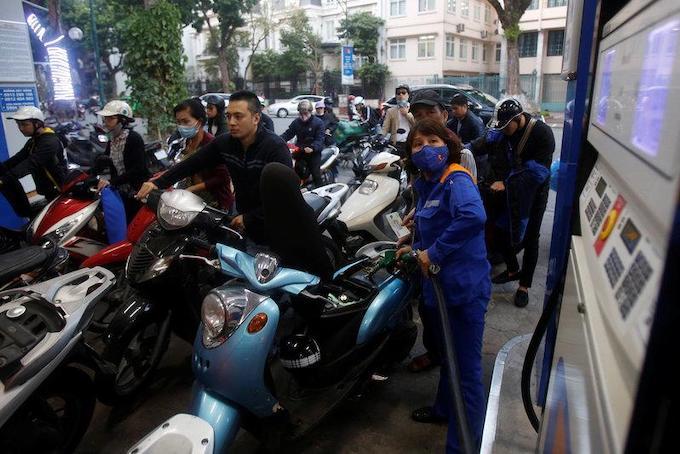
  • Saigon to pilot public electric motorbike service

    Saigon to pilot public electric motorbike service

    The HCMC Transport Department will launch a public transport service using electric motorbikes at the end of this year. The service is part of a memorandum of understanding (MoU) signed last week between the department and Grab Vietnam, the local unit of Singapore-based ride-hailing firm.

    Under the agreement, the two parties will jointly roll out the electric motorbike service to support the city’s public transportation system in downtown areas, then consider expanding it throughout the city by the end of next year.

    They are also considering an electric bike rental service in the near future.

    Grab Vietnam will also share its data with the department, including the journeys of all vehicles registered with its ride-hailing technology, in order that the latter can create a traffic database.

    This database will allow the department to analyze, simulate and predict traffic on each route, and in turn, coordinate with Grab’s fleet to come up with solutions addressing the city’s current traffic constraints, the MoU said.

    Providing this additional mode of public transport aims to limit the use of personal vehicles, reduce congestion, and limit environmental pollution, department director Tran Quang Lam said.

    HCMC, the country’s largest metropolis with 13 million people, has around 7.8 million motorbikes and about 750,000 cars, according to the city’s police department. Car registrations in the city increased 15 percent in the first six months, while motorbikes 6 percent, according to the transport department.

  • E-commerce competition flares up as holiday shopping season begins

    E-commerce competition flares up as holiday shopping season begins

    Vietnam’s e-commerce platforms are going all out with promotions and other marketing campaigns to woo customers for the year-end shopping season. Immediately after Apple’s latest iPhone 11 was released in Vietnam on November 1 at midnight, CEO of Singapore-owned Lazada Vietnam James Dong was seen riding a bicycle delivering the first phones to promote his company’s two-hour delivery service.

    Lazada’s latest PR stunt, along with discounts on the newest iPhones, kicked off a series of promotions, many of which will begin deployment from November 11 as the company gears up for the year-end shopping season, generally a peak time for the retail sector.

    Vietnam’s e-commerce players have now latched onto promotional trends that have been ignited by major regional players like Chinese e-commerce giant Alibaba, which launched the first Singles’ Day shopping event on November 11, 2009, offering heavy discounts on its platform.

    In addition to Singles’ Day, Vietnam’s e-commerce sites have been offering heavy promotions on October 10 and December 12, both spin-offs, as well as Black Friday and Cyber Friday events that originated in the U.S.

    “The fourth quarter is always the most exciting time for the retail sector. There will be peak days when the whole market spills out to shop,” said Steven Tuan Nguyen, Senior Regional Manager for Southeast Asia of Paris-headquartered internet advertising company Criteo.

    Lazada has also followed up the night of discounts for the iPhone 11 with a strategy it calls “Shoppertainment”, hosting live game shows in which competitors guess prices, and inviting famous artists who give out nearly 10,000 discount codes worth a total VND300 million ($12,900).

    The retailer has also hosted promotional concerts in Ho Chi Minh City. Instead of hiring artists, Singapore-based Shopee has enlisted international football superstar Christiano Ronaldo. Ronaldo’s brand ambassador contract for Shopee in Southeast Asia was announced in mid-August.

    “Together with Cristiano Ronaldo, we look forward to making a positive and lasting impact on Shopee’s development in the region,” said CEO Chris Feng.

    Shoppers not only in Vietnam but also Malaysia, Singapore and Indonesia have seen CR7’s ads pop up everywhere through various online media channels. The player is also currently associated with Shopee’s November 11 “Super Sale, free nationwide shipping” campaign in Vietnam.

    Home-grown e-commerce platform Sendo, which saw a traffic surge last quarter, is also investing heavily in year-end promotions, prioritizing Black Friday (November 29). After diva My Tam, Sendo has just added actor Ninh Duong Lan Ngoc to its roster of celebrities.

    “This year, we’ve decided to invest a great deal in the Black Friday campaign, not just on the day but for the whole week. We will advertise on all channels, from mass media to social media, so that 90 percent of customers nationwide aged between 18 and 35 years will be reached by Sendo’s ads,” said Vo Dang Minh Tuan, Brand Communication and Social Media Manager of Sendo.

    Similarly, Vietnam’s Tiki announced it will also engage in year-end promotion peaks, having invested heavily in October 10 promotions.

    The company said it has primarily been focusing on promotions related to its two strengths: a two-hour express delivery service that applies to 70 percent of items in its shop; and sales of genuine branded items with a return policy.

    According to a recent report by Criteo, Black Friday last year saw online sales traffic in Vietnam spiking 64 percent, and online sales revenue 149 percent over the average day of the month.

    Traffic and sales revenue rose 23 and 64 percent respectively for Singles’ Day, and 34 and 97 percent for December 12, a trend that is expected to continue this year, the report said.

    “The year-end shopping season usually commences with October 10 sales. Singles Day remains the key shopping festival and post-Singles Day sales ride on the festivity’s traction,” said Steven Tuan Nguyen. “As we approach the year-end holidays, there is also a spike in online retail as part of the celebration. This sustained sales season presents retailers with more opportunities to engage their audiences.”

    However, they are also faced with a real challenge to differentiate themselves. This could be achieved with the power of data – by being able to identify top-selling categories amidst millions of products, predict shopping behavior and integrate online and offline shopping data, he added.

    Vietnam’s e-commerce market is estimated at $5 billion this year and is set to reach $23 billion in 2025, according to a recent report by Google, Singapore-based investment firm Temasek, and U.S.-based consultancy Bain.

  • Masan struggles to grow in Vietnam’s competitive beer market

    Masan struggles to grow in Vietnam’s competitive beer market

    Vietnamese food giant Masan is struggling to grow its beer business, which is suffering losses and could drop out of the domestic market.

    Masan expects a loss of $15 million this year from its White Lion beer brand, Danny Le, board member of Masan Consumer Holdings, said at an investors’ meeting last month.

    If the company cannot create a new and competitive product, it will have to withdraw from the market, he added.

    “The beer business costs a lot of advertising money, and we do not want to spend tens of millions of dollars a year for a brand that cannot be in the top 3,” he said.

    Masan’s beer brand, White Lion, launched five years ago, is becoming less significant in the group’s financial reports as longer-established players retain a firm hold in the market.

    When it was first launched, a crate of White Lion cost VND40,000 ($1.7) less than the cheapest domestic brand at the time, resulting in large sales in the southern region.

    Orders were so high that Masan’s beer factory, which it acquired from another beer producer in 2014, was operating at maximum capacity of at 50 million liters a year in the first year, but still failing to keep up with demand.

    The company then built a second plant with four times the capacity in the southern province of Hau Giang.

    Helped by regular promotions featuring celebrities and gifts, sales reached VND1 trillion ($43 million) after two years, and industry observers at the time considered White Lion a threat to major brewers such Sabeco and Heineken.

    “Consumers welcoming the product is the foundation for Masan Consumer Holdings to expand its market nationwide and to enter the high-end beer segment,” the company said in a report in 2017.

    But the company’s expansion strategy has hurt sales badly.

    In order to reduce inventory to launch new products, Masan increased the commission for distributors, making its 2017 H1 beer revenue falling 15 times year-on-year.

    Although the company targeted revenue of VND1-1.2 trillion ($43-51.6 million) in 2018 with new products, its leaders admitted that expanding the business could take 12-18 months as they had to restructure a distribution system and employ experienced salespeople.

    At the end of last year, White Lion revenue was VND388 billion ($16.7 million), just 39 percent of its annual target.

    The company had planned to employ about 150-200 salespeople this year to focus on marketing in street eateries, targeting double last year’s revenues. But by September, its revenue had fallen 7 percent year-on-year.

    Meanwhile, top brewer Sabeco’s nine-month revenues rose 10 percent year-on-year to VND28.3 trillion ($1.22 billion), while that of the Hanoi Beer Company (Habeco) also posted a 10 percent increase to VND2.7 trillion ($114.89 million).

    Vietnam consumed 4.1 billion liters of beer in 2017, making it the biggest alcohol market in Southeast Asia and the third biggest in Asia after Japan and China, according to the Ministry of Health.

  • Vingroup begins making smart televisions

    Vingroup begins making smart televisions

    VinSmart, the smartphone producing unit of Vietnam’s biggest private conglomerate Vingroup, has revealed its first 55-inch smart TV.

    The smart TVs are currently being manufactured in a factory in Hanoi’s Hoa Lac Industrial Park, and are set to be released around December this year, according to a Vingroup source who wished to remain anonymous.

    They will run on the Android TV operating system, which is currently being used by smart TVs produced by Japanese electronics-maker Sony, according to information leaked on tech forums on Wednesday.

    Users will be able to install applications from the Google Play Store, as well as issue voice commands in Vietnamese.

    The new smart TV has garnered thousands of comments on internet forums, many of which said it should be affordable so that it can compete with existing products of Sony and South Korean electronics-maker LG.

    VinSmart was established by Vingroup in June 2018, and produced its first smartphones just six months after. It has produced a total of eight models thus far. Last month, the company began selling four of its Vsmart models in Russia.

  • WeWork to open 2 coworking offices in HCMC

    WeWork to open 2 coworking offices in HCMC

    Coworking startup WeWork plans to open two more offices in Ho Chi Minh City’s District 1 this month. One of them will be at Lim Tower 3, and rents will start at VND6.9 million ($297) per month for a single-seat, according to the company’s website. Another will be on Sonatus Building, with prices starting at VND7.8 million ($336).

    The New York-based startup opened its first working space in the city in District 4 in March. WeWork’s move comes in a market that has some serious players with a lot of locations.

    Vietnam’s Toong, backed by private-equity firm Indochina Capital, has 12 locations besides one each in Laos and Cambodia.

    Hanoi company UPGen, with funding from Singapore PE firm Northstar Group last year, has 13 offices in Hanoi and HCMC.

    Coworking spaces are becoming popular in HCMC’s central districts since the limited traditional office space there is unable to meet the burgeoning demand.

    As of the end of September, coworking companies had rented 52 percent of all office space in the central area, including in under-construction buildings, according to a report by real estate firm Savills Vietnam.

    HCMC has been ranked the 41st fastest-growing coworking markets in the world this year by consultancy Co-working Resources, which said a new coworking space opens in the city every 47.5 days.

    WeWork has added 114 new sites in the past four months, according to its website, and is planning to open another 208 in the next few months, bringing its total number to 850.

    The announcement came in the backdrop of the company’s failed IPO amid investor concerns that its valuation was inflated.

    WeWork owed $18 billion in a long-term lease at the end of June and is expected to lay off 4,000 of its more than 12,500 employees

  • Uniqlo Vietnam annouced launch date

    Uniqlo Vietnam annouced launch date

    Uniqlo has signed up a raft of Vietnamese celebrities to launch its much-awaited first store in the country.

    Uniqlo Vietnam will make its debut on December 6, opening in a three-level, 3097sqm space previously occupied by a Parkson department store. It is located opposite the local flagship stores of rival chains H&M and Zara.

    The new store, to be called Uniqlo Dong Khoi after the street it is located on, will be the Japanese apparel brand’s largest in Southeast Asia.

    To support the opening, Uniqlo has launched a campaign video ‘Elevate Everyday’ to introduce LifeWear to Vietnamese consumers, emphasizing how the label is suited to local climate conditions and lifestyle.

    The video features a cast including artist Ngo Thanh Van, footballer Tien Dung, model, actress and entrepreneur Helly Tong, model and activewear enthusiast Tran Hien, writer and interior designer Qui Duc, photographer and skater Pixself, and model and actress Thu Anh.

    While the cast are from different backgrounds, the video shows how LifeWear suits their own unique lifestyles.

    The Elevate Everyday campaign video can be viewed at Uniqlo Vietnam Facebook page.

    “The store will offer both Saigonese people and international visitors a unique shopping experience, with a full line up of LifeWear on three levels,” said Osamu Ikezoe, co-COO at Uniqlo Vietnam. “We look forward to welcoming our first customers on December 6.”