Tag: Vietnam

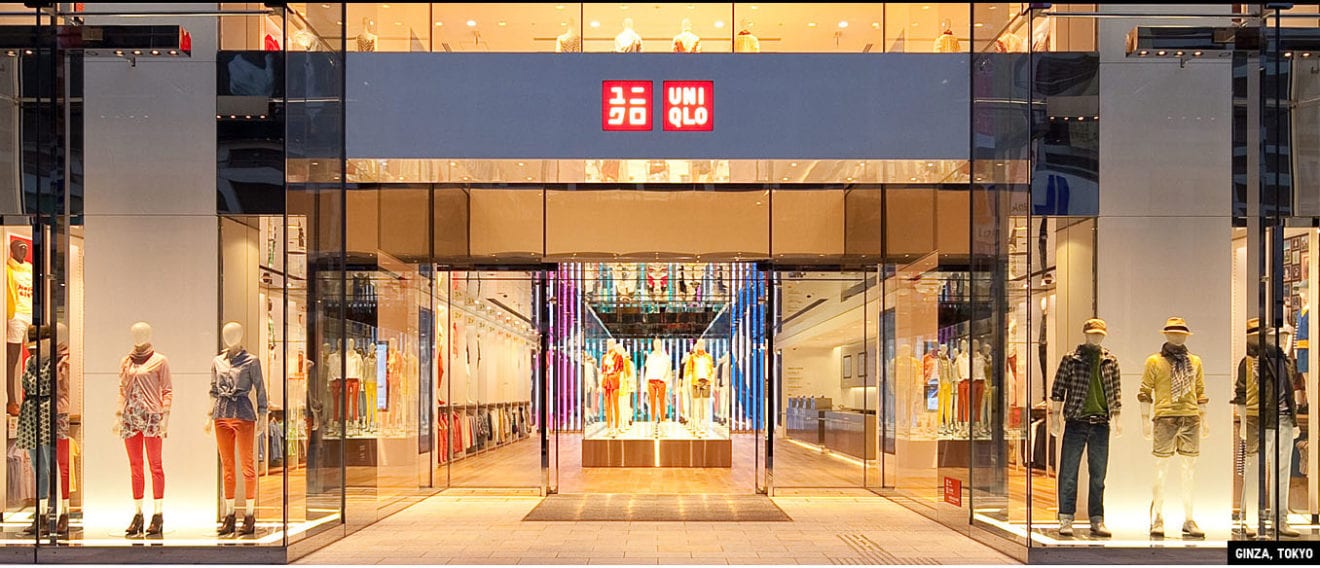
  • Uniqlo hunts personnel for first Vietnam store

    Uniqlo hunts personnel for first Vietnam store

    According to advertisements on Jobstreet.com, a recruitment website, the Japanese corporation is looking for managerial and store level candidates urgently for its first store in Ho Chi Minh City.

    The plan to open its first outlet this fall had also been mentioned in the annual report of Fast Retailing, Uniqlo’s parent company.

    Accordingly, Uniqlo registered a domestic company, under the form of a two-member limited company, in Vietnam last October. Fast Retailing owns 75 percent of the joint venture, while diversified conglomerate Mitsubishi holds the remaining stake.

    The company has a charter capital of $8.8 million, with all of its registered legal representatives: chairman, general director and chief executives being Japanese individuals.

    This is part of Uniqlo’s plan to expand its brand globally. Apart from Vietnam, Uniqlo also expects to open its first stores in Denmark, Italy and India this year. Uniqlo’s arrival will intensify competition between foreign brands like Zara and H&M in Vietnam.

    According to German research firm Statista, Vietnam’s fashion revenue will grow 22.5 percent a year in the 2017-2022 period, reaching $988 million yearly by 2022.

    Vietnam’s revenue from the fashion segment amounted to $486 million in 2017 and $557 million in 2018, and is projected to reach $661 million this year.

    Uniqlo aims to have around 400 outlets in Southeast Asia and Oceania by 2022, generating $2.71 billion in revenue. The brand currently has 827 stores in Japan and 1,241 international stores.

  • Industries Senior exec resignations show eLogistics Challenges

    Industries Senior exec resignations show eLogistics Challenges

    Ride hailing firm Go-Viet confirmed last week that general director Nguyen Vu Duc and deputy general director Nguyen Bao Linh have quit their positions. Two days after Go-Viet’s announcement, Nguyen Xuan Truong, CEO of local delivery service Ahamove, resigned from the position he had held for 3.5 years. His departure came after Tran Duc Huy, marketing director of the company, quit in March.

    Industry insiders say that senior leaders of eLogistics firms have to leave if they are not able to satisfy drivers, customers and investors happy at the same time, which means maintaining growth in a highly competitive market.

    A senior official of an eLogistic company who asked not to be named said that Vietnamese managers face difficulties in this industry because it is new to most of them.

    These leaders need to overcome challenges in technology application, the country’s transport infrastructure and the legal framework. Besides, it becomes increasingly difficult to maintain growth when the number of partner drivers increases.

    “Drivers are called partners because they do not technically work for the company, that’s why the company needs to make both partners and customers happy while making the company grow at the same time,” the official told.

    The leaders who resigned might have done so because of the internal challenges they faced when their startups’ scale expanded, experts say. Nguyen Phuong Mai, managing director of online recruitment firm Navigos Search, said that some leaders want to have the same freedom they had when they founded the company with a group of friends, which is difficult in the later stages when they have to compromise with investors’ demands.

    Strong competitors in the market are another possible reason for the executives quitting, although they do not publicly admit this.

    eLogistics companies have to compete with each other in “burning” money to attract drivers and customers. When asked the biggest challenge an eLogistics company CEO faces, Nguyen Huu Tuat, CEO of FastGo, answered: “Money.”

    At Go-Viet, Duc and Linh’s resignations came at a time when the company was stagnating in all its services – ride-sharing, food delivery and package delivery. Since the start of this month, the company has cut its drivers’ revenue to 20 percent, prompting many drivers to consider switching to another ride-sharing service.

    Meanwhile, its main competitor, Grab, has been expanding its food delivery service and its cashless payment service GrabPay by Moca, which now has new features allowing users to pay their electricity, water and phone bills.

    Tuat said: “An eLogistic startup might have glory today and die tomorrow because the larger the company is, the more money you have to burn.”

    A report by Google and Singaporean investment firm Temasek valued Vietnam’s online and food delivery market at $500 million last year; and forecast that it would reach $2 billion in 2025.

  • Vietnam cracks down on drugstores selling without prescriptions

    Vietnam cracks down on drugstores selling without prescriptions

    The Ministry of Health has ordered that all drugstores should be connected to the national medicine database via the Internet by Monday, a move aimed at preventing the sales of drugs without prescription.

    But in Ho Chi Minh City, which has the highest number of pharmacies in the country at over 6,000, only 61 percent have linked up, according to the city Department of Health. In Hanoi, 90 percent of its over 4,600 drugstores have done so.

    Many pharmacy owners said they do not have a computer or Internet. Tran Thi Nhi Ha, deputy director of the Hanoi Department of Health, said the regulation requires pharmacies to invest in infrastructure and this takes time.

    Tang Chi Thuong, her HCMC counterpart, said inspectors would soon carry out checks to ensure compliance. “Licenses will be taken away from pharmacies that continue to disobey.”

    Most pharmacies in Vietnam sell drugs without prescriptions. In fact, around 88 percent of all antibiotics sold in urban areas are without prescriptions while the rate is 91 percent in the countryside, the health ministry said.

    The World Health Organization has listed Vietnam among the list of countries with the highest rate of antibiotic-resistant infections, with 33 percent of all patients suffering from them.

  • Viettel deploys Vietnam’s first 5G base stations

    Viettel deploys Vietnam’s first 5G base stations

    Vietnamese military-run operator Viettel has installed Vietnam’s first 5G base stations in Hanoi ahead of planned 5G trials.

    The operator has deployed three test 5G base stations at various offices, and expects to switch them on for trials in early May.

    Viettel plans to test 70 5G base stations in Hanoi and Ho Chi Minh City in June in preparation for a large-scale deployment, the report states.

    Viettel plans to be one of the early adopters of 5G, targeting a commercial launch in 2020. Viettel is taking the lead in the deployment of the technology in the market.

    At the recent ASEAN Conference on 5G in Vietnam, minister of information and communications Nguyen Manh Hung said 5G represents an opportunity for Vietnam to change its global rankings by stimulating growth in the digital economy.

  • Economy Vietnam Q1 inflation lowest in 3 years

    Economy Vietnam Q1 inflation lowest in 3 years

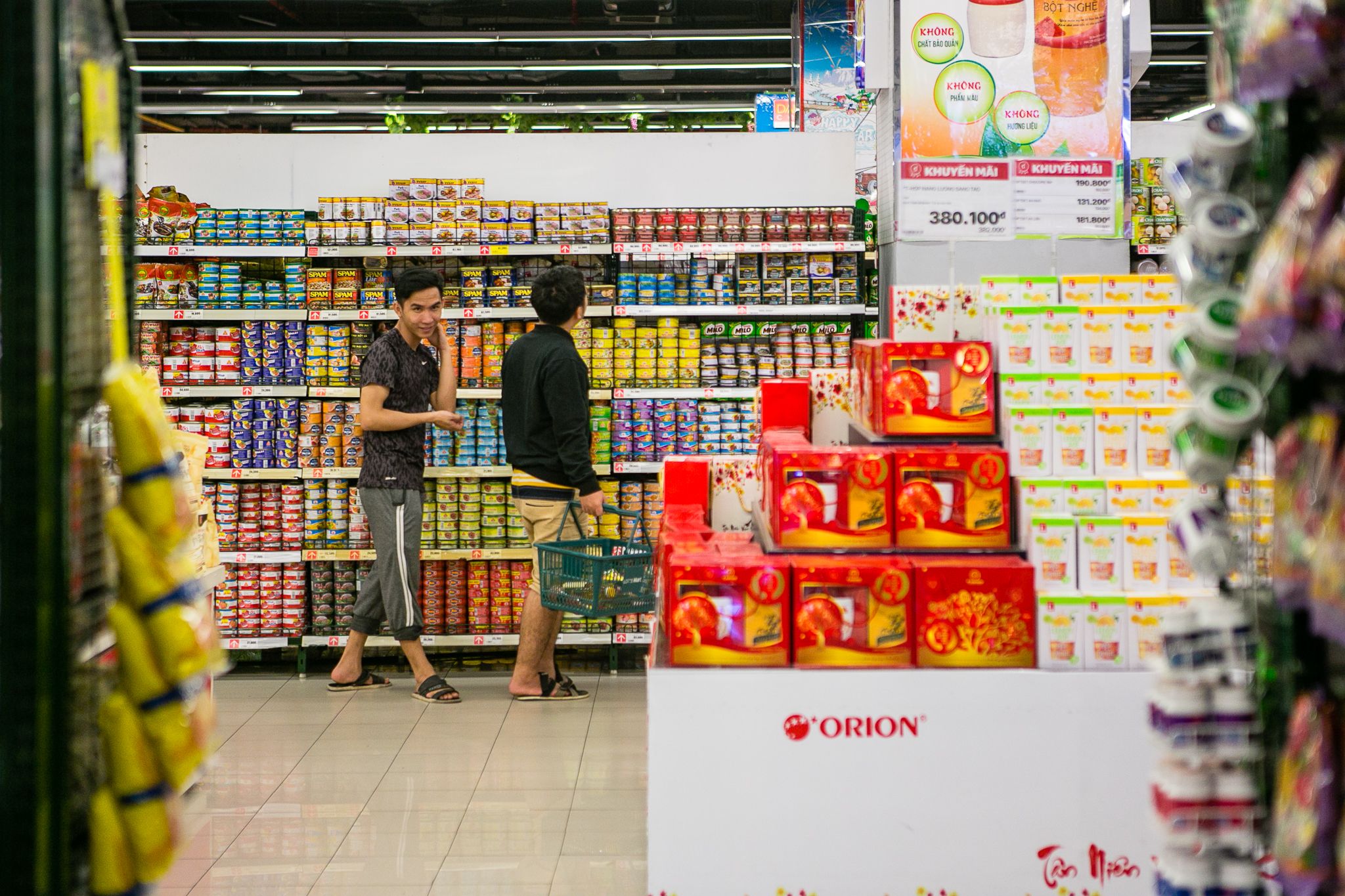
    March prices fell 0.21 percent over February, according to the General Statistics Office (GSO). There was a fall in the prices of seven of 11 items in the basket of consumer goods and services that make up the index.

    According to Do Thi Ngoc, director of the GSO, the reasons for the low inflation rate were the African swine fever outbreak and lower petrol and gas prices during the period. A 1.42 percent fall in the prices of essential foods, including eating out, was the biggest drag on the CPI.

    The African swine fever epidemic has meant that in some places pork prices have fallen by 40 percent since the beginning of February.

    Other notable decreases were of the prices of clothing and telecommunications, which were down by 0.17 percent and 0.07 percent.

    At a recent meeting of the Steering Committee on Price Management Thursday, Deputy Prime Minister Vuong Dinh Hue said in the current scenario the target of keeping this year’s inflation at 3.3-3.9 percent is within reach.

    CPI in 2018 increased by 3.54 percent, well below the 4 percent target set by the National Assembly.

  • Vietnamese agriculture giant enjoys fruitful year

    Vietnamese agriculture giant enjoys fruitful year

    The fruit sales of VND2.9 trillion ($125.05 million) accounted for 54 percent of the corporation’s revenue, according to Hoang Anh Gia Lai JSC’s (stock code: HAG) consolidated financial statements for 2018.

    Other agricultural products like chilli and pepper also contributed VND550 billion ($23.71 million) in revenues.

    Meanwhile, revenues from cattle raising fell 83 percent to VND126 billion ($5.43 million); and that from rubber plantations fell 24 percent to VND345 billion ($14.87 million).

    The corporation recorded VND5.4 trillion ($232.83 million) in total sales last year, an increase of 11 percent over the previous year.

    Last year, HAG’s subsidiary Hoang Anh Gia Lai Agriculture JSC (HAGL Agrico) invested VND976 billion ($42 million) in 5,300 hectares of land in Cambodia to grow bananas for export to China in response to rapidly rising demand.

    HAGL used to be a leading property developer in Vietnam, but restructured itself in 2010 to focus on agriculture, rubber and livestock farming.

  • Bubble tea, the next gold mine

    Bubble tea, the next gold mine

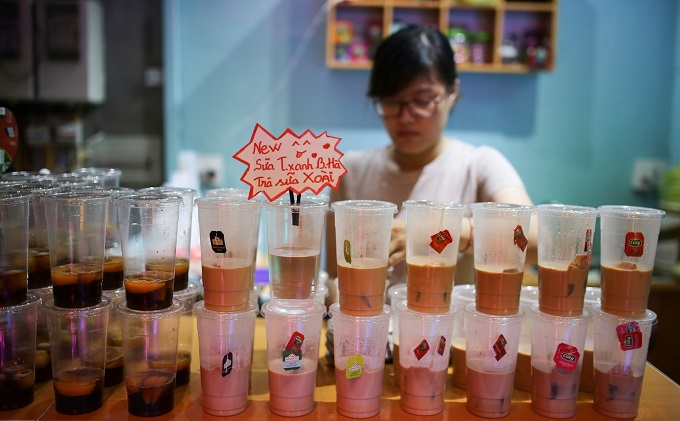
    Investors are flocking into the bubble tea market since demand is booming across the country. Market researchers have found the market is growing at 20 per cent a year and reached US$300 million two years ago. There are over 100 brands already and many more famous names are flocking in.

    In large cities like HCM City and Hà Nội, it is easy to find bubble tea stores belonging to major brands like Alley, Gongcha, Phúc Long, Ten Ren, and Royaltea.

    There are also smaller stores with cheaper prices run by small business people.

    Seeing the demand, many coffee chains like Highlands and The Coffee House and restaurants have added bubble tea to their menu.

    Besides bubble tea simply being a popular drink for various age groups, the shops selling it have become a haunt for youngsters because of their facilities and decor.

    A spokesperson for a famous brand name, Gong Cha, said: “Competition in bubble tea market in Việt Nam is a marathon.

    “Bubble tea has established itself on the Vietnamese food and drink scene. Bubble tea shops are no longer just places selling beverages. They are places featuring a speciality totally different from traditional places like coffee stores and restaurants.”

    Brand expert Võ Văn Quang was quoted as saying by Người Lao Động (The Labourer) newspaper that the popular drink in Hong Kong and Taiwan has undergone many changes in the Vietnamese market with many toppings to match Vietnamese tastes.

    “Milk tea is now a popular drink among Vietnamese youth.”

    Most of the milk tea brands have come to Việt Nam as franchises, he said.

    “At prices of VNĐ30,000 to over VNĐ80,000, bubble tea is brining huge profits. That is why foreign brands are keen on franchising in Việt Nam.”

    A bubble tea shop is much cheaper to set up than a coffee shop while the profits are huge, he said.

    Dr Đào Duy Khương, a retail expert, said milk tea, unlike coffee and tea, targets youths in big cities, and this demographic’s consumption behaviour is trendy meaning investors should change their offerings frequently.

    It is not surprising several brands closed in recent times, he added.

  • VinFast, South Korean firm to make batteries for EVs

    VinFast, South Korean firm to make batteries for EVs

    The joint venture will be located in the automaker’s factory in the southern port city of Hai Phong, where it will manufacture lithium-ion battery packs for VinFast’s electric scooters that are being made now, and for electric cars to be produced in the future, VinFast said in a statement.

    The factory, which will be built on a 2,000 square meter area, will employ Vietnamese workers who will be trained in technology provided by LG Chem.

    The automaker, a unit of Vietnam’s largest conglomerate Vingroup, rolled out its first made-in-Vietnam cars last month, the first steps in a $3.5 billion automaking venture.

    VinFast has recently sent its SUV and sedan to European and Asian countries for quality testing and is set to deliver preordered vehicles in the second and third quarter.

  • Japan revokes Vietnamese chili sauce for Safety Reasons

    Japan revokes Vietnamese chili sauce for Safety Reasons

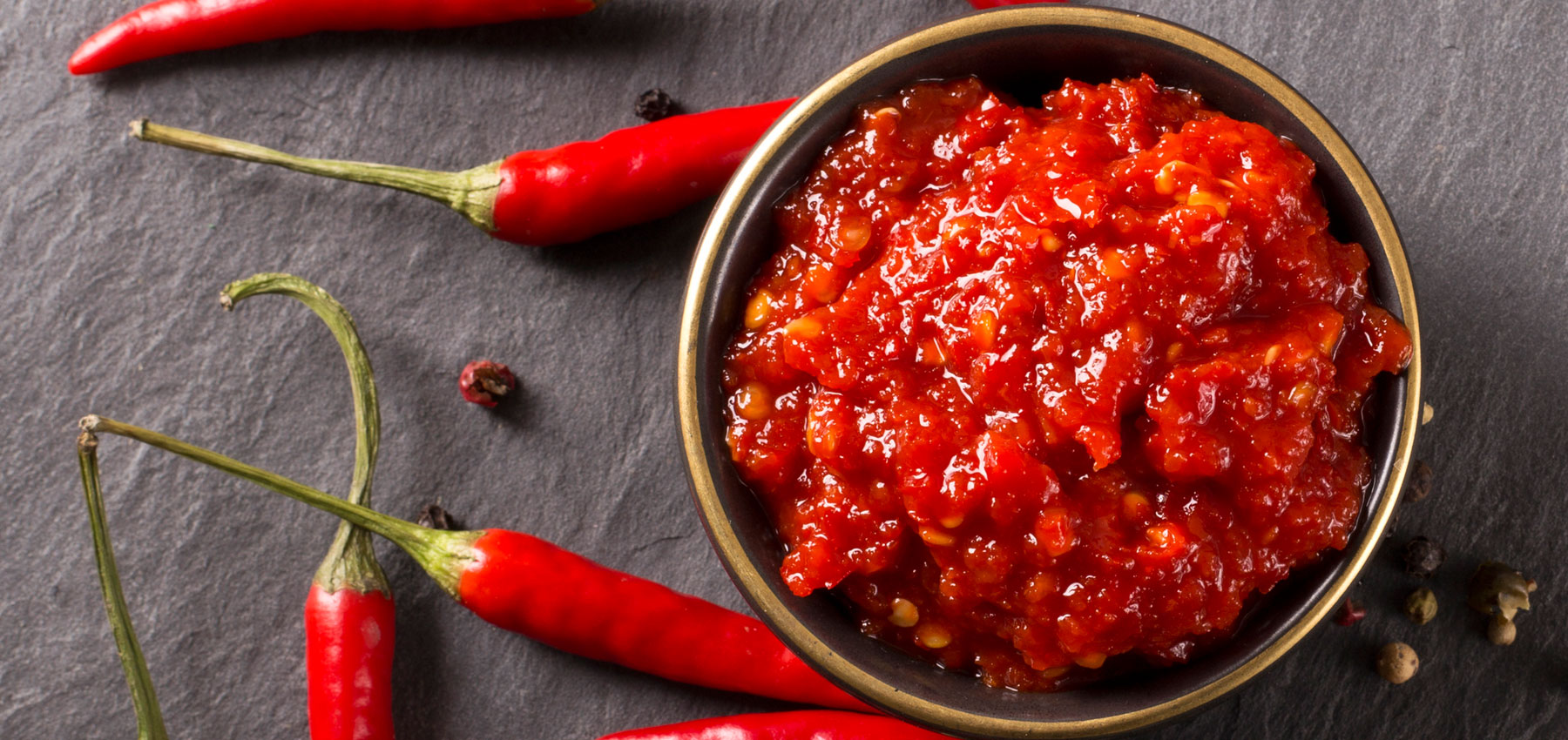
    The Osaka Information Portal reported Tuesday that the bottles were imported from Vietnam to Japan by the Osaka-based Javis Co., Ltd last December, and sold to the Kobe-based ISC Industrial Co., Ltd. Javis Co., Ltd never mentioned that the imported chili sauce contained benzoic acid, which is banned from all chili sauce in Japan, before selling it to ISC Industrial Co., Ltd, the portal said.

    Japanese authorities determined that the bottles contained between 0.41 to 0.45 grams of benzoic acid per kilogram of chilli sauce, after suspicions arose that ISC Industrial Co., Ltd was violating the country’s laws on food safety and food labeling.

    The Masan Group, which produced the chili sauce under the brand name of Chin-su, said it never exported the chili sauce to either Javis Co,. Ltd or ISC Industrial Co. Ltd. It said it only exported the product to the United States, Australia, Russia, the Czech Republic, China and Taiwan.

    “As we have no chili sauce sample in hand right now, we have no official conclusion on the origins of the bottles. However, it is likely that they are either exclusive for the Vietnamese market, or their origins are unknown,” the group stated in a press release.

    Vietnam’s Ministry of Health has yet to receive any official statements from Japan about the Chin-su case, Tran Viet Nga, deputy head of the Food Safety Department, said Saturday. But it is taking steps to clarify the matter, she added.

    “Benzoic acid is allowed as a food preservative according to the Codex Alimentarius Commission (CAC), in which both Vietnam and Japan are members. In accordance to standards from the CAC, the levels of benzoic acid found in the chili sauce revoked by Japan were still within international standards,” she said.

    “Maybe Japan just has tougher requirements.”

    Japan bans benzoic acid in its chili sauce, but allows its presence in certain food products like syrup, margarine or soft drinks. Vietnam allows a maximum amount of one gram of benzoic acid per kilogram of chili sauce.

    The World Health Organization says a person can consume five milligrams of benzoic acid per kilogram of body weight daily without adverse health effects.

  • Parkson Vietnam Restyles Its Ho Chi Minh City flagship

    Parkson Vietnam Restyles Its Ho Chi Minh City flagship

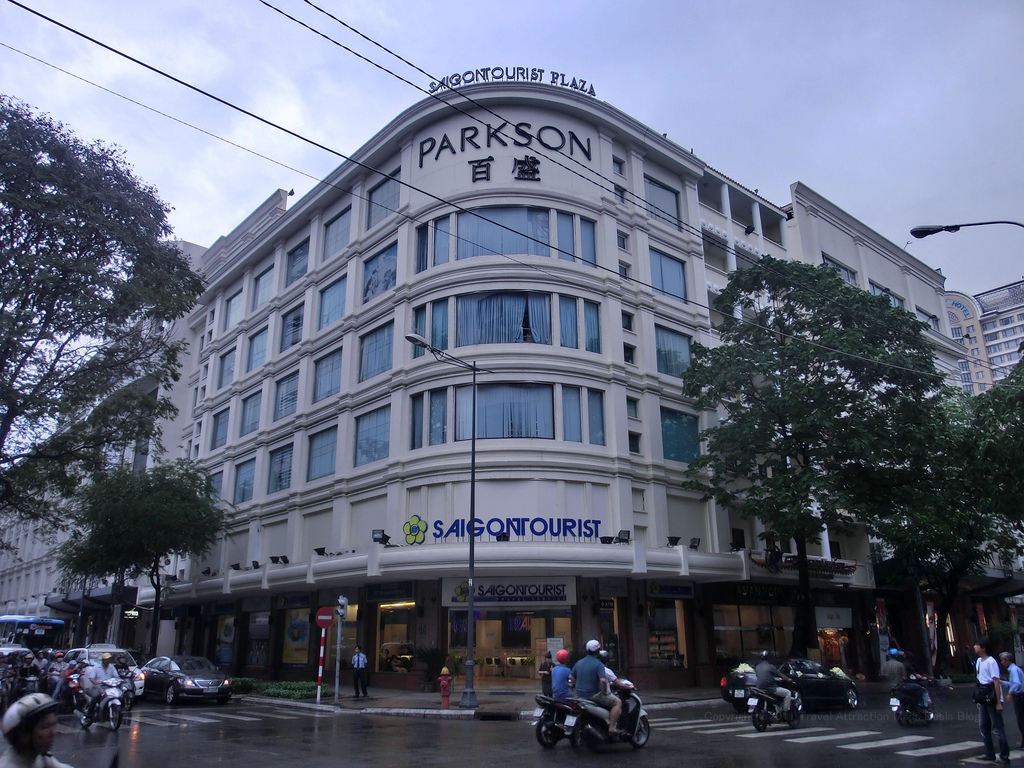
    Parkson Vietnam has kicked off the renovation of its six-story Saigon Tourist Plaza flagship in downtown Ho Chi Minh City.

    Located on Le Thanh Ton, refurbishment of the first Parkson Vietnam store will be implemented progressively, floor by floor.

    During the project, the Parkson store will remain partially open for business.

    The company says the renovation will deliver a new look, new shopping experience featuring modern facilities, and a higher standard of service for shoppers.

    It says the new store design concept will turn the store into an all-in-one destination that offers a combination of shopping, food & beverage, and entertainment.

    New brands in fashion, beauty and lifestyle will be added.

    Ready to welcome Uniqlo?

    The first flagship store of Uniqlo Vietnam will be located in the revamped store.

    The Japanese fast-fashion retailer is reportedly set to occupy three levels of the building, facing the H&M store at Vincom on Dong Khoi Street.

    Uniqlo Vietnam will open doors sometime between September and November this year.

    The renovation of the Parkson Saigon Tourist store is understandable as the building is old and has been poorly managed for a long time.

    If the Japanese fast-fashion brand is really opening its first store there, it should rapidly increase traffic to the building.

    After 14 years of operation, Parkson Vietnam has closed five stores, including the last one in Hanoi.

    It now manages five stores, with three in Ho Chi Minh City, and one each in Hai Phong and Danang.

  • Shop&Go chain showcases brutal retail practice with 1$ Price Tags

    Shop&Go chain showcases brutal retail practice with 1$ Price Tags

    Shop&Go became the newest loser in Vietnam’s retail market Monday when it was bought out by conglomerate Vingroup for $1.

    The company reported an aggregated loss of almost VND205 billion ($8.81 million) by 2016, the latest year for which figures are available. VinCommerce, the retail arm of Vingroup, took over its 87 stores and its debts in the latest deal.

    Vietnam’s retail market has become increasingly crowded with both local and international players over the last five years. Although experts have said that the market has a lot of growth potential, many businesses have quit or scaling back expansion plans.

    Coffee giant Trung Nguyen has twice attempted and failed with its G7 Mart and G7-Ministop.

    Super market chain Saigon Co.op established its first retail store Co.op Smiles in 2016 with the hope of opening 500 such outlets a year, but two years later, the number is around 100.

    Japanese convenience store chain FamilyMart previously said it wanted to have 1,000 stores by 2020, but it announced last year that it won’t invest in new stores. The number of its stores stay at 151.

    Vietnamese food company Vissan said early last year that it has closed nearly 60 of 100 convenience stores. Nguyen Ngoc An, CEO of Vissan, said that the stores had failed to attract a large number of customers.

    A senior manager of the Family Mart said that they “could no longer pour more resources into the chain.”

    Industry insiders say that retail chains fail to compete because they don’t have deep pockets to bear the losses. Pham Viet Anh, a strategic business expert, said that cash flow is among the most important factors in the retail business. If a company cannot collect enough revenue before it has to pay suppliers, its working capital gets eroded.

    “A retail company can rely on its debts with providers in the short term, but in the longer term, it needs to find a way to be profitable. If not, growing losses will eventually bankrupt it,” Anh said.

    Vietnam’s revenue from selling goods last year rose by 11.7 percent from 2017 to $142 billion, up 12.4 percent from 2017.

  • Cuckoo clock inspires Vietnam cafe

    Cuckoo clock inspires Vietnam cafe

    Design firm Tropical Space has built a coffee shop inspired by a cuckoo clock in Vietnamese seaside city Da Nang.

    The design, featured by Dezeen, features a brick structure with a house perched on top, with the coffee shop forming a single-storey base and the house extending out over the garden area. The local clay brick base is inset with vaulting arches surrounding a large courtyard and the glass-walled shop area.

    “Habits mean most people’s daily lives usually take place in functional spaces,” said the firm’s architects. “We have detached the walls that define these spaces to offer buffer space, urging people to leave their rooms and join together.”

    The house area, divided into three distinct blocks, feature spaces that can be closed off by small cuckoo clock-style wooden doors.

    The shells of perforated brickwork create cool, shaded spaces that admit natural light, and reflect other designs by the firm built in the region.

  • Vietnam state steel company close to bankruptcy

    Vietnam state steel company close to bankruptcy

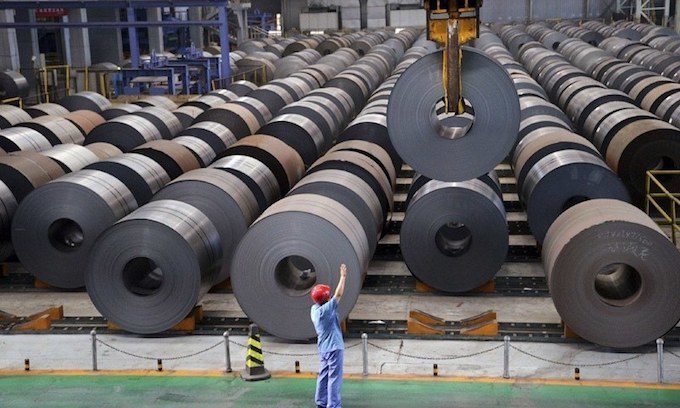
    In a recent letter to shareholders, Thai Nguyen Iron and Steel Jsc (TISCO) said it is facing “a financial crisis which could lead to bankruptcy if it is not saved by the government, banks and other authorities.” The charter capital of the company, one of the largest steel producers in Vietnam, was VND1.94 trillion ($83.6 million) last year but owner’s equity accounted for only 18 percent, which the company regards as a low ratio.

    With liabilities 4.65 times owner’s equity, TISCO said its capital structure is unstable.

    The company added it needs to increase owner’s equity and recover bad debts. The bad debts climbed to almost VND852 billion ($36.7 million) last year, of which the company said 46 percent could be recovered.

    One of the problems the company has been facing is the delay in a stop-start expansion project. The Government Inspectorate has listed it among 12 state-owned projects suffering major losses and with many violations of the law.

    The project first began in 2007 but stalled soon afterwards due to the global economic crisis. The original cost of expansion of VND3.84 trillion ($165.5 million) was increased to over VND8.1 trillion ($349 million) on the suggestion of Chinese contractors when it was restarted in 2009.

    But in 2012 it stalled again when TISCO faced a resources crunch, causing the China Metallurgical Group Corporation (MCC) to withdraw from the project.

    TISCO had paid MCC 92 percent of the contract value at the time, but much of the work was left incomplete, according to the Government Inspectorate.

    Machinery and equipment MCC delivered had rusted and become damaged after lying unused for long, the inspectors said.

    The government prohibited further investment of public funds in the company in 2016. Following this, sovereign wealth fund State Capital Investment Corporation (SCIC) pulled out its capital of VND1 trillion ($43.1 million) from the company.

    Following the long expansion delay, banks have slashed TISCO’s credit ratings and increased interest rates to 8 percent a year, worsening the situation.

    The company board said despite its petitions to authorities for a solution no progress has been made.

  • Businesses face conundrum image when placing ads on Youtube

    Businesses face conundrum image when placing ads on Youtube

    After the streaming website blocked the accounts of online gangster Kha Banh for violating its terms of service on April 3, YouTube also terminated the account of the god of profanity Duong Minh Tuyen, another self-proclaimed gangster, due to repeated violations of YouTube’s policies on violence.

    Kha and Tuyen are two YouTubers who were recently condemned by the general public for uploading videos promoting gang culture, gambling and crudeness, but are adored and given superstar status by many Vietnamese youths.

    The public outcry in the country against YouTube channels promoting violence, profanity, and repulsive material is worrying businesses who advertise on the platform.

    Only recently Vietnam Maritime Bank (MSB) announced it was pulling out all its ads from YouTube. It would conduct a review with YouTube so that its ads would only appear on content compatible with “regulations, ethics and positivity,” it said.

    The private bank’s ads have appeared in clips of internet gangster phenomenon Ngo Ba Kha (Kha Banh). Last week he was arrested and charged with gambling and organising gambling.

    In 2017 many major companies such as Vinamilk and Ford Vietnam also demanded that YouTube should pull out their ads, voicing concern over its lack of content control causing their ads to be associated with dubious channels.

    “Responsibility first lies with the content managers, or multi-channel networks authorised by YouTube if dubious channels register with them to make money,” Vo Do Thang, a cyber-security expert, said.

    “Let’s also not rule out the possibility these content managers overlooked or even promoted negative content on purpose to make money off views.

    “Some advertising agencies working with YouTube guarantee they will use tracking and filtering programmes using keywords and search terms to prevent enterprises’ ads appearing along with negative content.

    “However, this cannot be 100 percent guaranteed by anyone, the risk to the brand image is still there.”

    Viet Phuong, who works for an advertising agency, said: “When uploading ads, there is an option not to post on specific channels. However, this job is tedious, and it is difficult for an advertising agency to cover everything unless the client hands their own list of channels. Sometimes this step is skipped, because it is more effective to run ads everywhere.”

    He revealed however that his company had been working vigorously on channel filters since Kha Banh’s arrest.

    YouTube’s mechanism prioritizes ads for videos with more views. Most agencies in Vietnam have successfully filtered political videos well, but entertainment channels are difficult to control because they garner much more viewership and are traditionally considered harmless.

    However, agencies say their job is getting harder as videos with violent content are being uploaded in response to the general public finding them popular.

    “Brands should cooperate closely with agencies or choose only to run ads in the mid-range of popularity, videos which do not fall into the ‘top/hot’ categories on YouTube,” Phuong said.

    But despite these risks, it is hard for businesses to abandon the website and lose a large audience.

    In 2017 the Authority of Broadcasting and Electronic Information estimated that Google and Facebook accounted for 80 percent of the online advertising market share in Vietnam.

    The director of a major online business, who asked not to be named, said this ratio had probably not changed by much.

    In other countries too, major businesses have withdrawn their ads from YouTube. In March 2017 Walmart and PepsiCo terminated their advertising contracts with it after their commercials were featured on videos featuring racist content.
  • Vietnam Airlines, Jetstar to sell million tickets during month-end holidays

    Vietnam Airlines, Jetstar to sell million tickets during month-end holidays

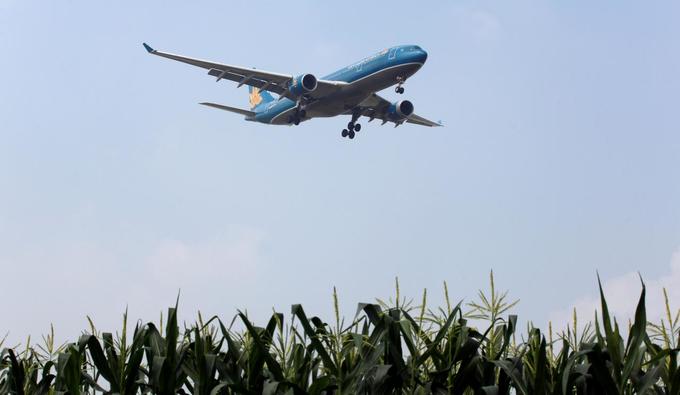
    Vietnam Airlines and Jetstar Pacific will sell nearly one million seats on 4,700 domestic and international flights during the Reunification Day (April 30) and Labour Day (May 1) holidays from April 26 to May 5.

    Vietnam Airlines will sell nearly 800,000 of them, 78,000 more than last year.

    The State-owned carrier will focus on services from Hà Nội, HCM City, Đà Nẵng, Phú Quốc, and Nha Trang domestically and the Japan, South Korea, Thailand, and Cambodia sectors.

    It owns a 70 per cent stake in Jetstar.

    The two airlines have urged passengers to plan their travel early, use online check-in services and kiosks at airports to save time.

    They should buy their tickets at www.vietnamairlines.com and www.jetstar.com/vn or from their offices and official agents, and request invoices to ensure they are not deceived by fake tickets or high fares.