Tag: Vietnam

  • Unitel introduces eSIMs to Laos market

    Unitel introduces eSIMs to Laos market

    Vietnamese military-owned operator Viettel has announced that its subsidiary in Laos Unitel has become the first mobile operator in the market to launch eSIM technology.

    The Unitel eSIM service was introduced at the beginning of March, and Unitel is aiming to encourage at least 10,000 customers to exchange their physical SIMs for eSIMs by the end of 2020.

    With the launch, Laos became the seventh of the 10 ASEAN member states to introduce eSIM technology.

    It is also the fourth market in Southeast Asia that Viettel has introduced eSIMs to. The company and its subsidiaries were the first mobile operators to offer the technology in Myanmar, Vietnam and Cambodia.

    Meanwhile another Viettel mobile brand in Laos, Metfone, has become the first operator in the market to launch mobile credit top ups using QR code scanning rather than scratch cards.

    Viettel deputy general director Tao Duc Thang said the introduction of eSIM technology marks the beginning stages of Viettel’s goal of digitally transforming the global telecommunications landscape, and becoming a pioneer in IoT technologies.

    “Viettel has well-prepared platforms and infrastructure and has made digital transformations in its fields such as telecommunications and information technology,” he said.

    “This includes application of the latest technologies in the world for a more convenient life.”

  • Vietnamese Coffee farmers can reduce carbon emissions by diversifyingproduction

    Vietnamese Coffee farmers can reduce carbon emissions by diversifyingproduction

    Coffee farmers in Vietnam, the second biggest producer of coffee in the world, can reduce their carbon (CO2) footprint by growing different plant species alongside coffee. These are the findings of a new report titled Source or sink? The carbon footprint of Vietnam robusta coffee from the Initiative for Sustainable Landscapes (ISLA) program by IDH, The Sustainable Trade Initiative, compiled by Agri-Logic, and based on the work of coffee traders JDE Coffee, Lavazza, Olam and Acom.

    Together with improved fertilizer and water use, this diversification could significantly reduce the impact of coffee production on climate change. Farmers can also broaden the range of income sources available to them, increasing their climate resilience.

    The findings come amidst reports that severe droughts in Vietnam could considerably reduce this year’s coffee output.

    Daan Wensing, Director of Global Landscapes at IDH, said:

    “Climate change is a threat that requires urgently rethinking the farming systems in which coffee is produced. This research brings hope that communities and coffee farmers can become more climate-resilient, and our coffee more sustainable. Together with more efficient fertilizer and water use, diversification can be at the forefront of efforts to make coffee production carbon positive.”

    Coffee production has a huge economic benefit for the Central Highlands region of Vietnam, where 95% of its coffee is produced. At the same time, it is a source of carbon emissions through significant use of fertilizer, water and energy.

    The report found that monocrop coffee farms are net sources of carbon, releasing 0.37 metric tons of CO2 from the atmosphere per year per metric ton of coffee produced.

    Conversely, diversified coffee farms are carbon sinks, removing 0.16 metric tons of CO2 from the atmosphere per year per metric ton of coffee produced. Growing pepper, durian, avocado and other crops alongside coffee creates more biomass, sequestering more CO2 than is generated through production.

    Of the small number of monocrop farms that did sequester CO2, more efficient use of fertilizer (the leading driver of carbon emissions in coffee farming) was found to be the reason.

    The research spanned two years and analysed the carbon footprint of robusta coffee production on 300 farms in the Central Highlands provinces of Lam Dong and Dak Lak.

    Through the Initiative Sustainable Landscapes (ISLA) in Vietnam, IDH works with local and national governments, private companies and smallholder farmers to support coffee producers in the Central Highlands in reducing their carbon footprint, maximize water and fertilizer use and to adapt to climate change. Daan Wensing concluded:

    “Diversification is a growing concept in Vietnam. As more farmers adopt this and other agroforestry methods, the number of farms that serve as carbon sinks will grow, becoming crucial drivers of both climate mitigation and resilience.”

  • Gido launches cross-border express delivery services

    Gido launches cross-border express delivery services

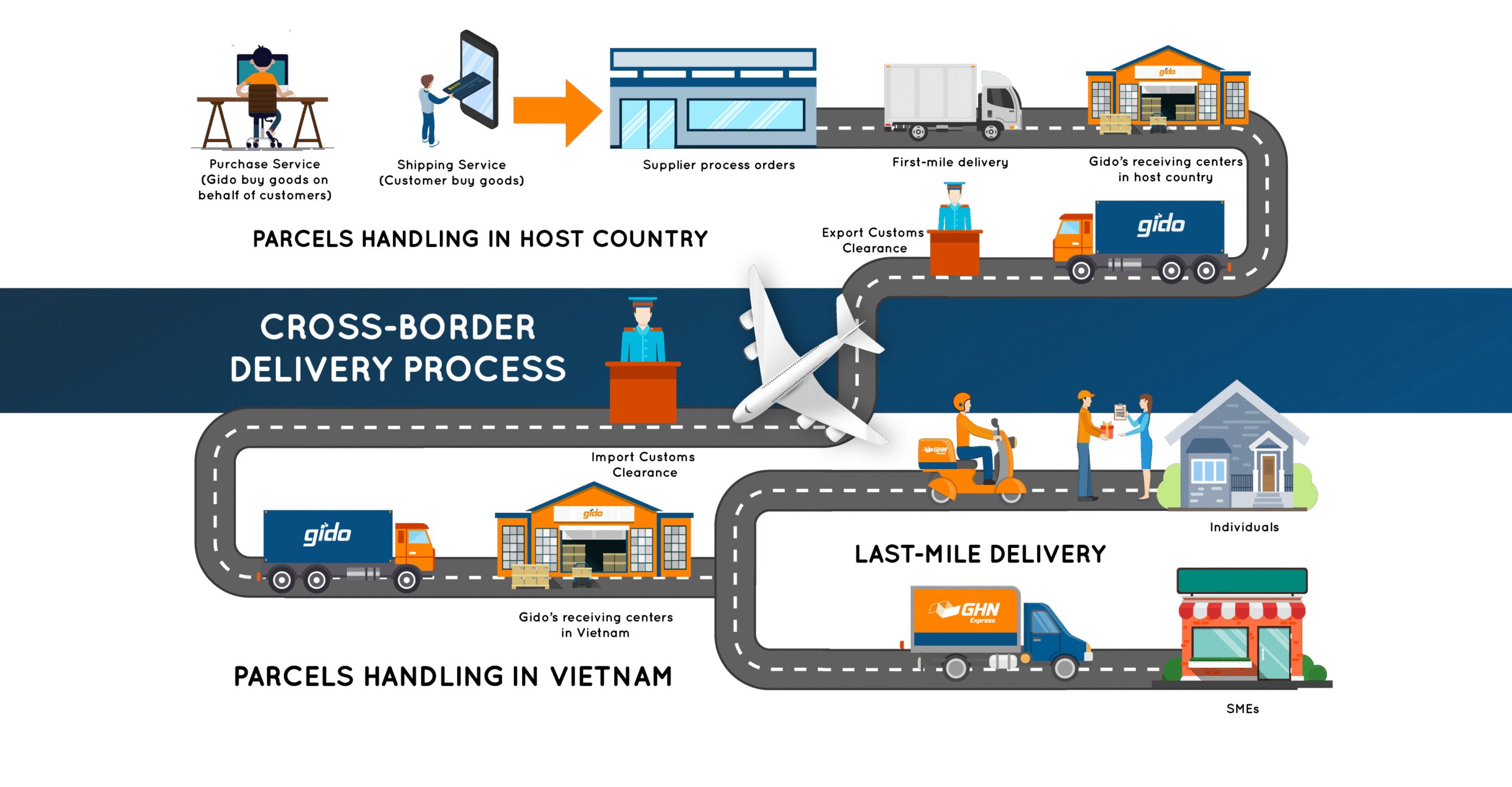
    Gido has launched an express cross-border delivery service from China to Vietnam, promising three working day turnaround.

    All parcels shipped by Gido are offered at the price US$1.95, including customs clearance.

    Customers can submit information about the parcels and recipients via an Excel file or integrate their API with Gido system.

    Parcels will be delivered from Gido’s hub in Shenzhen to end recipients in Hanoi and Ho Chi Minh City within three days, and a maximum of five days for other provinces.

    As a branch of Vietnamese e-commerce delivery service GHN, Gido has a modern IT system connecting multiple delivery partners in different countries along cross-border routes on a single platform to increase handling capacity, reduce transit time, tracking transparently in order to scale things up with the lowest cost.

    “We are inspired by asset-light business model of Cainiao, 4PX, Janio to connect multiple delivery partners along cross-border routes on one single platform,” said Hai Vo, Gido CEO.

    “This enables us to combine partners’ operation capacity with our own infrastructure more than 1000 stations, 30,000 drivers nationwide to provide a comprehensive cross-border e-commerce delivery solution with minimal setup time and cost in comparison to other asset-heavy companies.”

    Gido’s consolidation center boasts a capacity of more than 100,000 parcels per month.

  • 5G crucial to Vietnam’s development

    5G crucial to Vietnam’s development

    Vietnam’s deputy prime minister Vu Duc Dam has thrown his support behind the adoption of 5G in the nation, stating that 5G will be crucial to Vietnam’s development.

    During the recent ASEAN Conference on 5G, the deputy prime minister acknowledged that the government will need to proactively support businesses to ensure they are more confident in investing in 5G, the official newsletter of the Communist Party of Vietnam.

    During the conference, Dam said the technology will not only provide major speeds improvements but involve changes in global production methods. He suggested that participants use the Vietnam-organized conference to discuss the pathway to 5G development in the ASEAN region.

    Vietnam aims to become one of the world’s early adopters of 5G. Several Vietnamese operators have been allocated licenses to trial the technology in Hanoi and Ho Chi Minh City ahead of a commercial launch.

    Also at the event, Vietnam’s ICT minister Nguyen Manh Hung also stated that 5G will be the most vital part of the infrastructure required for the future digital economy.

  • 200 Mr Bean stores Set To Open for Vietnam

    200 Mr Bean stores Set To Open for Vietnam

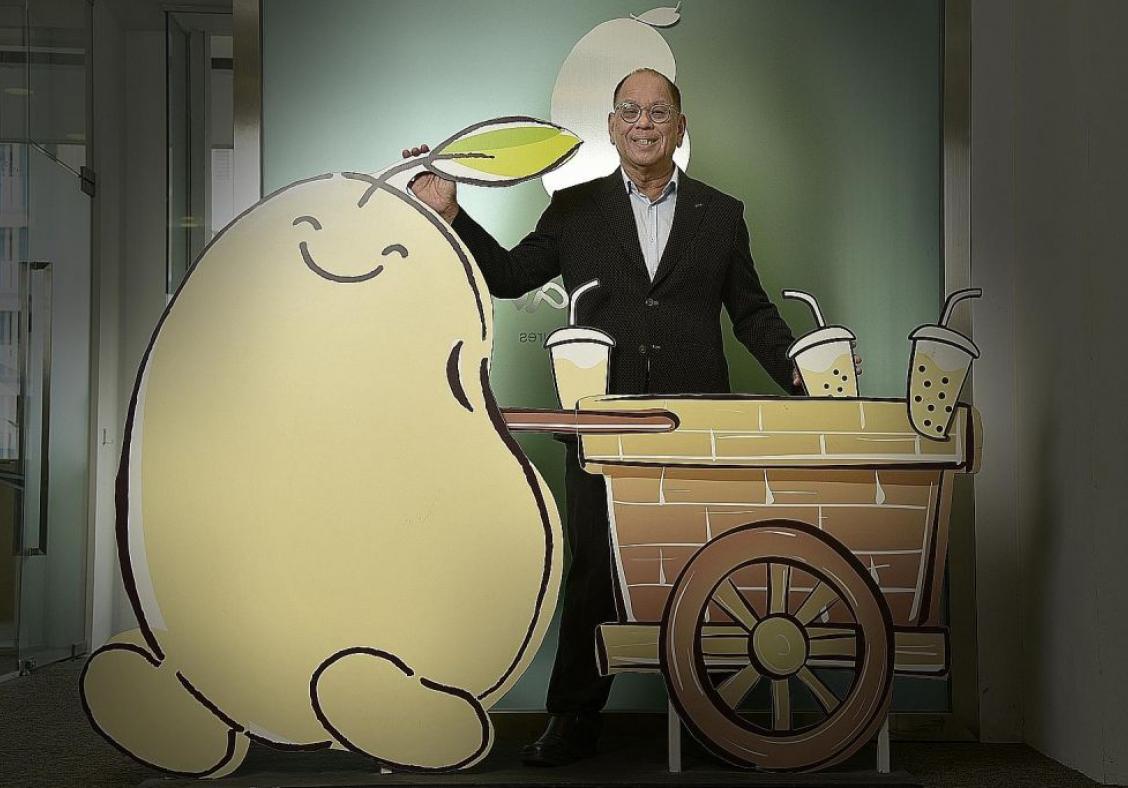
    Soy-milk retailer Mr Bean has entered into a franchise agreement with EGroup to launch 200 stores in Vietnam.

    Mr Bean VN

    The stores will be rolled out gradually over the next decade, following the first five locations in Hanoi and Ho Chi Minh City, which opened yesterday.

    Mr Bean VN 1

    “Markets overseas are bigger than Singapore and chuan zong jie dai (carrying on the family line) has always been my dream,” said founder and CEO Loh Jwee Poh.

    Mr Bean VN 2

    “What sets [Mr Bean] apart is the fact that [Loh] works with contract farmers in North America to ensure a consistent supply of non-genetically modified soybeans used for their products,” said EGroup’s president and founder Nguyen Ngoc Thuy.

    Poh has taken the brand to several overseas locations. Only Japan, South Korea and Singapore have met with success. He launched Mr Bean as a hawker stall in Singapore’s Chinatown in 1995.

  • Vietnam ride-hailing app FastGo to hit Singapore streets

    Vietnam ride-hailing app FastGo to hit Singapore streets

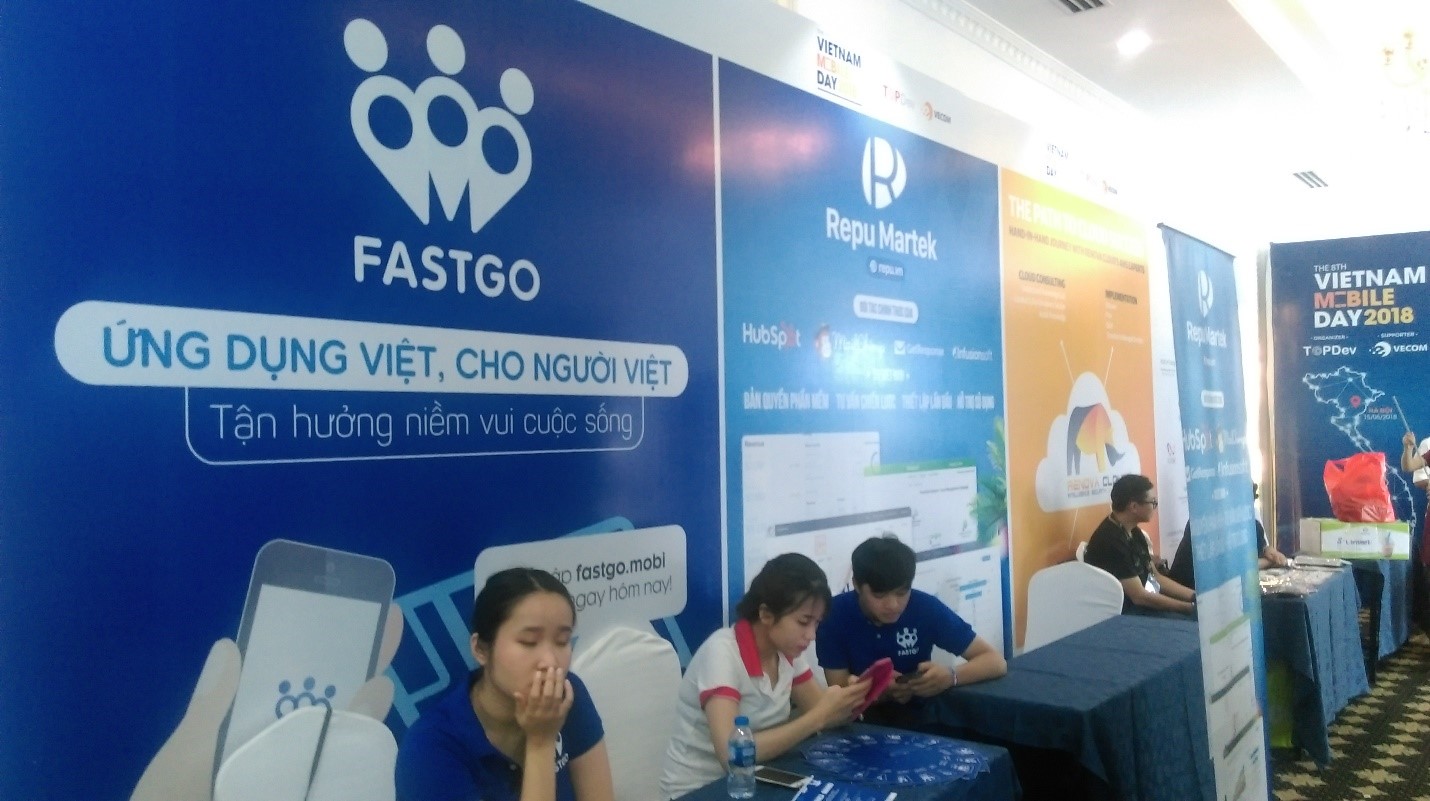
    Vietnamese ride-hailing firm FastGo is set to launch Singapore operations in April as part of its regional expansion plans. The nine-month old Vietnamese start-up has announced that drivers will be able to register on its ride hailing application from April 1, and customers can use the service from April 30. Diep Nguyen, country manager for FastGo Singapore, said the company’s fleet size will be at least 3,000 cars.

    Singapore is the third country in which FastGo will operate, after Vietnam and Myanmar. The firm is expected to face fierce competition from market incumbents including  Singapore’s Grab, Indonesia’s Go-Jek, as well as local startups Ryde and TADA.

    FastGo, which is part of Vietnamese technology startup NextTech Group, has plans to launch in five other countries in the region, including Indonesia and the Philippines, by the end of 2019.

    While FastGo has not yet publicised fares, but the ride-hailing app will not charge peak period surcharges, and customers can tip drivers. FastGo aims to undercut competitors like Grab and Go-Jek, who collect 20 percent of ride fares from drivers, by charging them a fixed daily subscription fee of $5 if a driver’s income exceeds $30 a day.

    However, an associate professor at the Singapore University of Social Sciences, as saying “another small entrant” will not make a difference to the local ride-hailing market, unless the new player is financially backed by a strong sponsor or a well-known Singaporean firm.

    “Other than GoJek and Grab, the other (existing) players have very small market share and have difficulty making much impact locally. The market is easy to enter but it’s very hard to get a substantial market share,” he said.

    Founded in April 2018, FastGo Vietnam JSC launched its service after Uber’s exit from Southeast Asia last June. With almost 60,000 drivers onboard, the company claims to be the second most popular ride-hailing firm in Vietnam, following Grab. After receiving an undisclosed sum in a Series A investment from venture capital platform VinaCapital Ventures in August last year, FastGo is aiming to raise another $50 million in its Series B investment round over the next few months.

    According to the company’s statements, FastGo will diversify its services to include food delivery and financial services.

  • Nearly half of Vietnamese shoppers buy premium products online

    Nearly half of Vietnamese shoppers buy premium products online

    Forty-eight percent of Vietnamese consumers buy premium products online from local retailers, with cosmetics the top category, a report says. Although the majority of survey respondents, 69 percent, said that they still purchase their premium products at local physical stores, the online ratio was higher than the global rate of 45 percent, says a global report by market research firm Nielsen.

    Nielsen’s Changing Consumer Prosperity study also found over a quarter of Vietnamese respondents, 27 percent, were inclined to buy online from overseas e-retailers, and 23 percent even travel overseas for these premium goods.

    Cosmetics are the top premium products that Vietnamese consumers spend their money on, according to 46 percent of respondents, following by clothing/shoes (44 percent), electronics (43 percent), body care (41 percent) and meat or seafood (38 percent).

    What Vietnamese people care most about a premium product is its high quality, according to 65 percent of respondents, and superior performance, 58 percent. Over half the respondents also seek premium products that contain environmentally friendly materials or natural/organic ingredients.

    When it comes to trying new premium products, Vietnamese rated peer recommendations as the most influential factor.Half of the respondents said that recommendations and encouragement by friends and family influenced their decision, followed by product research (46 percent), online advertising (42 percent), television advertising (39 percent) and in-store advertising (39 percent).

    In another survey released recently, Nielsen said that Vietnamese people remain among the most optimistic consumers even as global confidence fell in Q4 2018. Despite considerable increase in savings, Vietnamese consumers are still willing to fork out just as much or possibly even more money on big-ticket items such as new clothes, holidays or out-of-home entertainment, it said.

    Vietnam’s e-commerce sector has been booming in recent years. E-commerce revenue reached $2.26 billion last year, a growth of 30 percent over 2017, according to Germany-based data portal Statista. It estimated that this figure will reach $2.7 billion this year.

  • Grab now has more rivals than ever before in Vietnam

    Grab now has more rivals than ever before in Vietnam

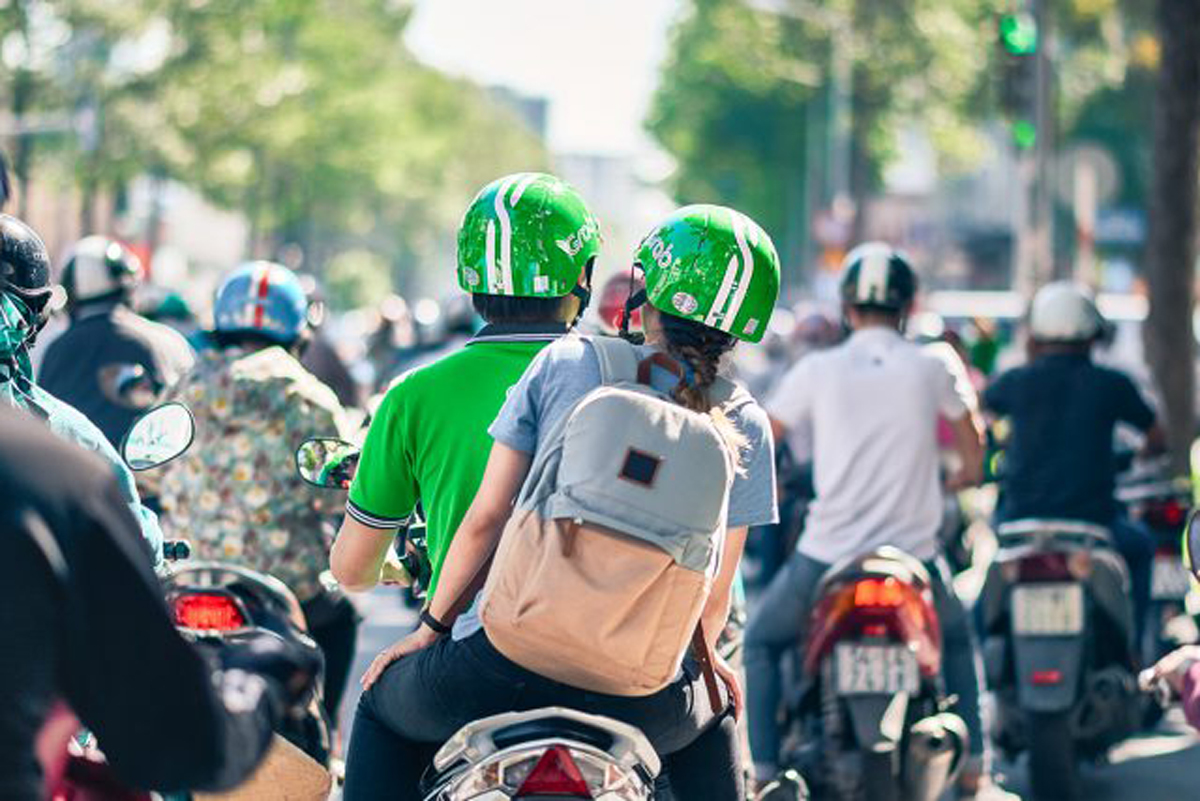
    From an e-hailing app, Grab has made great steps forward, providing many different services. Most recently, it started the payment service GrabPay and lending service Grab Financial. The consumer lending market in South East Asia is very large. As estimated by the World Bank, about 2 billion people in the world cannot access bank services, and most of them are in Asia Pacific.

    The non-cash payment market, according to Grab, is worth $500 billion in South East Asia. An analyst commented that Grab is wise taking a ‘roundabout’ approach to consumer lending (it conquered the transport market first before aiming for the consumer credit market).

    Consumer lending is a fertile business field for Chinese e-commerce firms. The firms offer online payment apps to users to ‘learn’ about their financial capability.

    Grab, as an app, quickly attracted users, especially investors. Just within six years, Grab became an unicorn company, i.e. an unlisted technology firm with valuation of $1 billion and higher, in South East Asia. Analysts estimate that Grab is valued at $6 billion.

    The challenges

    The total number of Grab downloads has reached 95 million all over South East Asia. This could serve as the launch pad for it to conquer the consumer lending market.

    “GrabPay e-wallet will be used for both transport and food delivery services, two of the most used services in South East Asia,” said Jerry Lim, director of Grab Vietnam.

    However, the analyst said, by expanding its business, Grab would have to compete with more rivals who are ‘powers’ in their fields. In online payment, for example, it will have to compete not only with AirPay (Sea) and Alipay (Alibaba Group), but also with local firms such as ZaloPay (VNG) and MoMo.

    In Indonesia, Grab bought an e-commerce platform, Kudo, in April 2017. Grab believes that this is the factor which can help expand GrabPay. However, in Vietnam, Grab’s two big rivals – Sea and Alibaba — both have strong support from two popular e-commerce floors – Shopee Vietnam and Lazada Vietnam.

    Similarly, GrabFood has rivals in the food delivery sector, where Sea’s Now, which inherited the large custom from Foody, is the leader.

  • Former ANZ employee to stand trial in million dollar fraud case

    Former ANZ employee to stand trial in million dollar fraud case

    A former ANZ Bank employee will be tried for allegedly falsifying customers’ signatures and misappropriating over VND91.3 billion ($4 million). Ho Chi Minh prosecutors have submitted to the court an indictment against Nguyen Pham Gia Tho, a former employee of ANZ, and his sister-in-law Nguyen Tuong Vi, director of an agricultural product export/import company, for appropriating property through fraud.

    According to the indictment, in 2015, Tho was head of customer relations at ANZ’s South Saigon branch in District 7 and was tasked with mobilizing savings deposits, providing insurance sales advice and proposing mortgages.

    During his time, he allegedly falsified signatures of customers with saving accounts to register for internet banking service and then transferred their money into his or his relatives’ accounts. Specifically, in early 2016, Tho was asked by a customer named Mai to help manage her bonds worth VND3 billion ($130,000) with securities firm VPBS. Abusing her trust, he falsified six contracts to mortgage the bonds and secure loans from VPBS.

    Tho asked his mother to impersonate Mai and register for internet banking service, then transferred the VND3 billion to her account so that he could withdraw from it. In July 2017, to have money for a fruit trading business with his sister-in-law Vi, Tho falsified signatures of several ANZ customers to open joint bank accounts in their names and one of his relatives.

    He then falsified documents to secure loans from the bank for the joint accounts before appropriating the money by transferring them into Vi’s and his own accounts. In total, Tho was determined to have misappropriated a total of VND91.3 billion (nearly $4 million), with Vi an accomplice in the misappropriation of over VND80 billion of this money. The relatives of Tho and Vi, whose identities were used to open the joint accounts, will not be prosecuted as investigators concluded they were unaware of the fraud and did not benefit from it.

  • Vietnam electricity prices go up again after two years

    Vietnam electricity prices go up again after two years

    Vietnam’s power prices went up 8.36 percent Wednesday after remaining unchanged for two years. A senior official of the Ministry of Industry and Trade told that prices have gone up from VND1,720 (7.4 cents) per kWh to VND1,864 (8 cents), exclusive of VAT.

    The ministry had said earlier this month that the Prime Minister had approved an increase in power prices. Vietnam’s power consumption has been increasing by about 10 percent each year, but generation has not kept pace.

    The hike could lower Vietnam’s GDP this year by 0.22 percent and increase its consumer price index (CPI) by 0.29 percent, the ministry said. Vietnam’s CPI increased 3.54 percent in 2018. Vietnam’s electricity prices have almost doubled in the last decade, but the last time they were raised was in 2017.According to Vietnam Electricity (EVN), its overall production costs rose by VND5.48 trillion ($235.46 million) year-on-year in 2018 mainly due to exchange rate differences in electricity purchase contracts and gas price increases.

    The utility expects costs to rise by VND15.25 trillion ($655.34 million) in 2019. This is not to mention other expected increases in costs of production, as well as coal and electricity imports, EVN said. Hoang Quoc Vuong, Deputy Minister of Industry and Trade, had noted earlier that Vietnam’s electricity prices were 8.1 percent lower than that of China and India, 18 percent lower than Laos and 26.5 percent lower than Indonesia. Even with the latest increase, the prices would only be on par with China and India, he said.

    “The fact that Vietnam’s electricity prices are lower than other countries is also why foreign investors are not interested in investing in electricity projects here,” he said. Vietnam, one of Asia’s fastest-growing economies, has been struggling to develop its energy industry. World Bank country director for Vietnam Ousmane Dione said at a recent forum that Vietnam would need to raise up to $150 billion by 2030 to develop its energy sector. Dione added that electricity demand in the country is set to grow by about 8 percent a year for the next decade.

  • Vietnam tops world in growth of mobile payments

    Vietnam tops world in growth of mobile payments

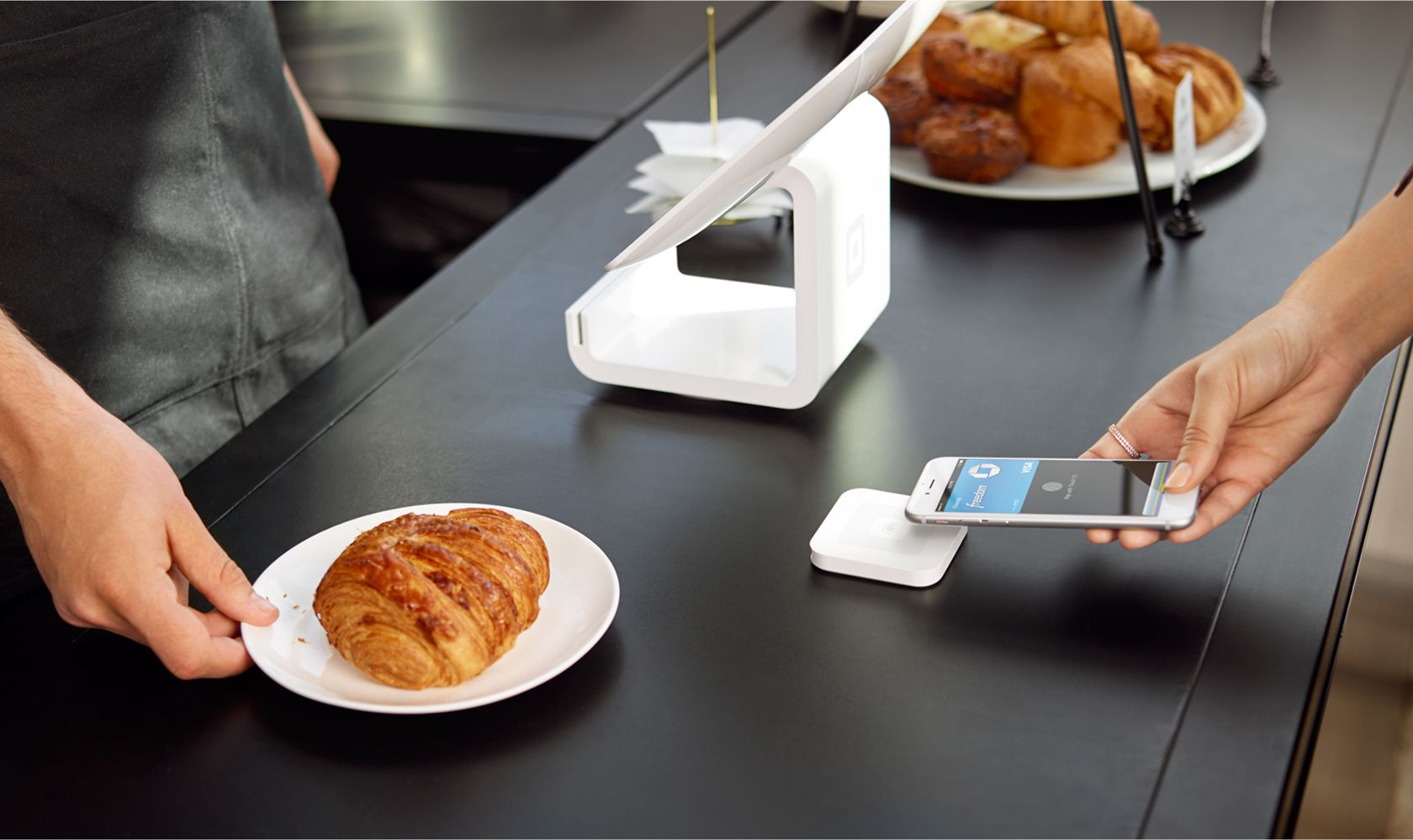
    The number of Vietnamese people making mobile payments in stores this year has grown fastest globally by 24 percent. A survey by the audit, tax and consulting services provider PwC found 37 percent of the respondents making mobile payments in 2018, but it went to 61 percent this year, placing Vietnam fourth below China at 86 percent, Thailand at 67 percent and Hong Kong at 64 percent.

    In terms of growth, the Middle East ranked second at 20 percent, said the Global Consumer Insights Survey 2019, which polled 21,000 online consumers in 27 territories.

    “Mobile payment is becoming a new trend with the rise of technologies such as QR codes, contactless payments, and the tokenization of card information,” Nghiem Thanh Son, deputy director of the Department of Payments at the State Bank of Vietnam (SBV), had said earlier.

    The Vietnamese government is working to accelerate the use of cashless transactions. In a resolution released January, it tasked the central bank to come up with solutions that would promote the use of e-wallets, which allow users to deposit cash into their e-wallets without the need for a bank account.

    However, Vietnam is still far away from becoming a cashless society, given low financial literacy and the lack of an ecosystem, experts say.

    The use of cash in Vietnam remains high. World Bank’s statistics released last year showed that Vietnam had the lowest percentage of cashless transactions in the region with only 4.9 percent, while this value for China and Thailand were 26.1 percent and 59.7 percent respectively.

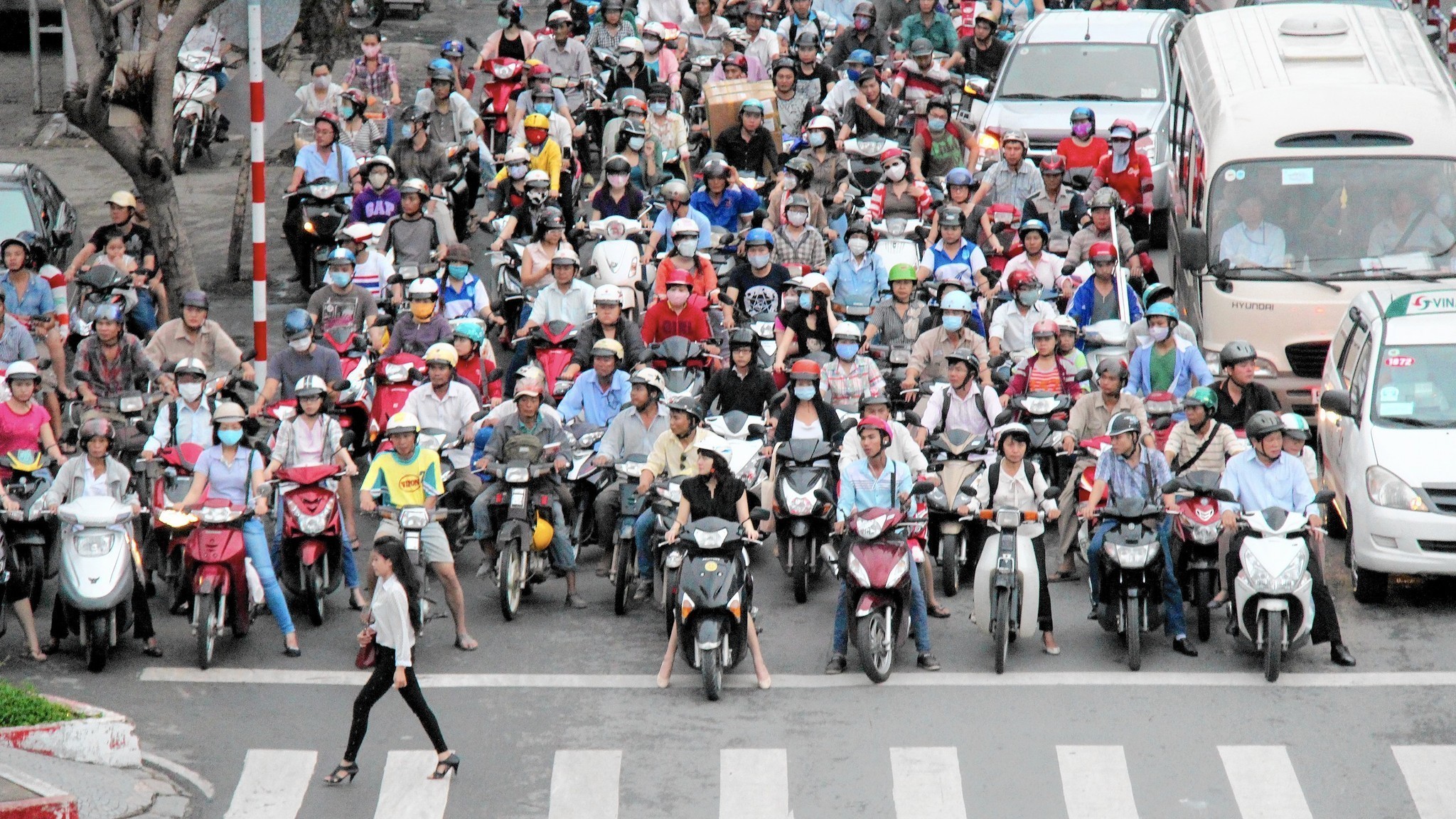
  • Hanoi to limit new motorbike registration from 2020

    Hanoi to limit new motorbike registration from 2020

    Hanoi is considering limiting the registration of new motorbikes in the downtown area from next year to reduce traffic jams. It will start with the districts of Hoan Kiem, Hai Ba Trung, Ba Dinh, Dong Da, and Tay Ho, and will expand to the districts of Cau Giay, Hoang Mai, Long Bien, Thanh Xuan, Gia Lam, and Dong Anh in 2025.

    The city said that a motorbike ban during rush hour would be trialed on a stretch of Nguyen Trai Street in Thanh Xuan District this year or next year. The stretch runs about 2.2 kilometers from the Nguyen Trai – Third Ring Road intersection to the Nguyen Trai – Lang intersection. A similar ban will take effect on Xuan Thuy Street in Cau Giay District when the metro starts operating after 2020. Other roads the city is considering are Giai Phong, Nguyen Van Cu, Le Van Luong, Tran Duy Hung, and Nguyen Chi Thanh Streets.

    In 2021-2025 Hanoi plans to ban motorbikes on Friday nights and during weekends on six streets near Hoan Kiem Lake: Hang Dau, Tran Nhat Duat, Tran Quang Khai, Tran Hung Dao, Le Duan, and Phung Hung. In the 2026-2030 the city will limit motorbikes in the area enclosed by the first ring road, an area of 26 square kilometers with a population of 700,000.

    From 2030 it will ban motorbikes in most districts and has promised public transport will meet 70 percent of the public’s needs. There will be 180 bus routes with 2,700 buses, nine metro lines, 30,000 taxis, 30,000 contracted vehicles and 10,000 public bicycles available at that time, it has added.

    The city will offer to buy used motorbikes less than 10 years old, said the plan, which was issued at a recent meeting. Vu Van Vien, director of the city Department of Transport, said Hanoi has been dealing with traffic jams by limiting cars in some areas since 2013, and the city has recently restricted taxis and technology taxis (such as Grab) on certain streets.

    “Motorbikes are just one of the vehicles that will be restricted. Our plan limits and manages all vehicles. We do not want to cause trouble to residents and seek to discuss before implementing.”

    The city is still studying the proposal and would consult other authorities, and wherever the ban applies, public transport should be available to meet the public’s needs, he said, adding that the city will seek public opinion on the plan.

    In 2017 the city People’s Committee approved a plan to ban motorbikes in downtown districts by 2030 and restrict the use of all private vehicles in areas well served by public transport. The city said it polled 15,000 respondents in 30 districts at that time and 90 percent supported the ban.

    The city tried in 2003 to stop the registration of new motorbikes in the districts of Ba Dinh, Hoan Kiem, Dong Da, and Hai Ba Trung, and expanded it to Thanh Xuan, Tay Ho and Cau Giay in 2005. However, it later scrapped the ban since it was not effective.

    Hanoi’s plan to ban motorbike has met with opposition from transport experts, who said public transport is inadequate. The capital, with a population of 7.5 million, has 5.6 million motorbikes and around 550,000 cars, besides some 1.2 million bikes brought in from elsewhere, according to police figures.


  • Vietnam’ E-commerce revenue forecast to hit $15 bn in 2020

    Vietnam’ E-commerce revenue forecast to hit $15 bn in 2020

    With 53 per cent of its population using the internet and nearly 50 million smartphone subscribers, Vietnam’s e-commerce market is expected to beat the previous revenue forecast of $10 billion in 2020 and may reach $15 billion, according to experts. The country’s e-commerce sector records annual average growth of 35 per cent; 2.5 times higher than the figure in Japan, making it one of the countries with the fastest e-commerce growth in the world.

    Mr. Dang Hoang Hai, Director of the E-Commerce and Information Technology Agency under the Ministry of Industry and Trade,  as saying that retail sales from e-commerce earned $8 billion in 2018, much higher than the forecasted figure of $7 billion.

    Therefore, revenue from e-commerce in 2020 could surpass the projected $10 billion, he said.

    A report on online shopping in 2018 conducted by market researchers Q&Me shows that Shopee accounts for the lion’s share of the domestic e-commerce market, at 35 per cent, with over 700 active brands and sellers, according to the news agency.

    It quoted Mr. Le Anh Huy, Deputy General Director of the Sen Do Technology JSC, the operator of the Sendo online commerce platform, as reporting that it recorded a threefold surge in 2018 over the previous year, serving more than 10 million consumers around the country.

    Experts have said, however, that e-commerce in Vietnam still faces various obstacles, including legal issues, skills for e-commerce development, security rights for concerned parties, and infrastructure for the sector.

    Support for e-commerce development in Vietnam’s remote and mountainous regions also remains modest.

    According to experts, Vietnam should consider the establishment of a State management agency to tackle those challenges and bolster the development of logistics in line with the digital economy, or assign such tasks to a ministry.

    Vietnam should also regularly update its legal system as well as develop synchronous infrastructure and a national payment system for e-commerce development, the experts suggested.

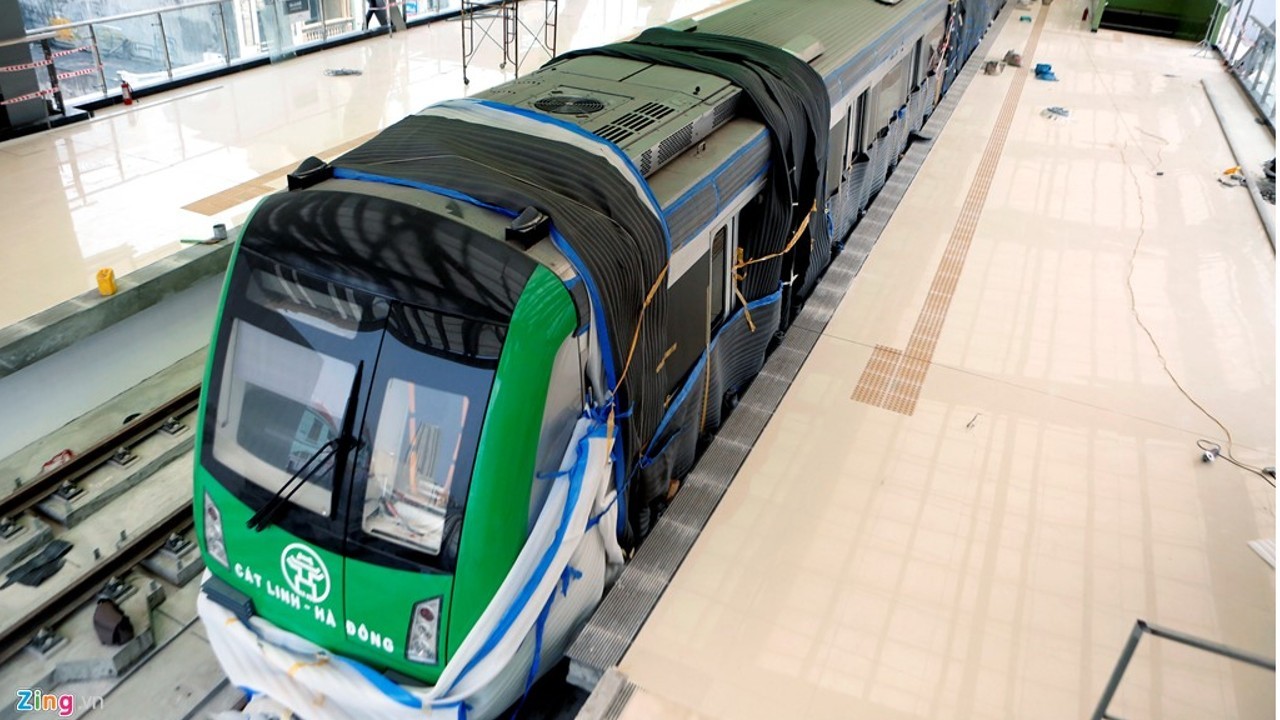
  • Hanoi plans to offer 15-day free travel on first metro line

    Hanoi plans to offer 15-day free travel on first metro line

    The Hanoi People’s Council has proposed 15 days of free travel after the first metro line opens. The proposal, released for public comment Friday, will apply once the Line 2A: Cat Linh-Ha Dong elevated railway starts operating commercially.

    The city also plans to subsidize 50 percent of the monthly fare for students, workers from industrial parks, and senior citizens. Officials and employees working outside industrial zones would get a discount of 30 percent if they buy group monthly tickets.

    Individual passengers can buy monthly season tickets for VND200,000 ($8.61) or daily tickets for VND30,000 ($1.29), both allowing unlimited trips. Single trips will cost from VND7,000-15,000 ($0.3-0.65) per person depending on the distance travelled.

    Tickets can be paid for with cards or cash. Card payments will get discount of VND500 (2.2 cents) per single trip. Although the price is higher than a bus ticket, the train runs twice as fast. From one end of the 13km Cat Linh – Ha Dong route to the other, the journey takes just 22 minutes, he said.

    The route runs from Cat Linh Station in downtown Dong Da District to the Yen Nghia Station in the south-west Ha Dong District. The Chinese contractor of the metro, China Railway Sixth Group Co., Ltd, plans to finish trial runs this month, and begin commercial operations in April.

    However, according to a recent inspection by the Ministry of Transport, installation of devices and machinery on the metro line is only 90 percent complete.

    Vu Hong Phuong, deputy director of the metro project, said several parts of the project, including sanitation, air conditioning, water supply system and drainage system in stations along the line have not been completed.

    Hanoi, a city of more than 7.5 million people, has 5.2 million motorbikes and around 550,000 cars, besides some 1.2 million vehicles brought by non-residents, according to police figures.

  • Vietnamese consumers embrace digital payments as a new way

    Vietnamese consumers embrace digital payments as a new way

    Vietnamese consumers are embracing digital payments as a faster and more convenient way to pay, with consumers using their credit and debit cards more often for in store and online purchases, according to figures released by Visa, the world’s leader in digital payments. The figures, which show year-on-year growth in consumer use of Visa products over the 2017 to 2018 calendar years, indicate a number of positive trends in the growth of digital payments.

    The total value of purchases made by Vietnamese consumers on their Visa credit and debit cards was up 37 per cent, while the number of transactions was up by 25 per cent. eCommerce in particular saw strong growth with the total value of purchases up by 40 per cent.

    “As the Vietnamese economy grows and becomes increasingly internationalised, commerce here will require ever faster, more efficient ways of paying.

    These recent figures from our network demonstrate clearly the fact that digital payments are now truly a part of day-to-day life for many Vietnamese consumers – regardless of whether they’re buying from an online retailer on the other side of the world, or simply paying for their groceries,” Dang Tuyet Dung, country manager for Visa Vietnam and Laos.

    This data is supported by findings from the 2018 Visa Consumer Payment Attitudes Study, which further reveals the extent to which digital payments are becoming a part of everyday life for Vietnamese consumers.

    The report, which specifically looked into consumer sentiment towards different forms of payment, found that Vietnamese consumers are carrying less cash, and half are using card and mobile payments at least two-to-three times a week.

    Seventy-three per cent of respondents are using credit and debit cards, up on 59 per cent from the year prior, while 82 per cent have tried making transactions on mobile phones.

    The research also found that the use of new payment technologies is picking up traction, with 44 per cent of the respondents indicating that they are now making payments in apps, while 32 per cent are using “contactless” payment technologies that allow to simply tap your card on the terminal to pay.

    Additionally, 19 per cent have used QR payments, where you use your phone to scan a unique merchant code that will transact money to the merchant’s account.

    “While digital payments are still in their relative youth in Vietnam, it’s been incredibly positive to see how consumers are embracing new payment technologies – it augurs well for these technologies in particular, and for digital payments more broadly,” Dung added.