Tag: Vietnam

  • Why does the Vietnam Economy lags behind?

    Why does the Vietnam Economy lags behind?

    The core of the doi moi (renovation) in Vietnam is the shift from single-ownership into a multi-ownership economy, where the central planned regime no longer exists. The 1987 Law on Foreign Investment, the 1990 Corporate Law & the Law on Private Enterprises, and the 1999 Enterprise Law have encouraged the development of Vietnam’s private economic sector.

    One of the revolutionary viewpoints of the 1999 Enterprise Law was that ‘people can do anything that are not prohibited by the laws’, rather than ‘people can only do the things allowed by the laws’, which was one of the major reasons hindering economic development in many decades before.

    Khai then set a goal that Vietnam would have 1 million businesses by 2010.Soon after the Enterprise Law took effect, the then PM Phan Van Khai set up a task force in charge of implementing the Enterprise Law, which deserved credit for removing half of sub-licenses, considered obstacles on businesses’ development way.

    However, the business environment did not improve as expected to pave the way for the development of private enterprises. The ask-and-grant scheme still existed and businesses still had to ‘ask for grant’ from state management agencies.

    News vendors also had to obtain licenses valid for 3 months and scrap dealers needed to have licenses for six months.

    Old sub-licenses were removed, and new licenses have come out. One chocolate bar must obtain 13 kinds of licenses to be able to hit the market, while farmers complain that it takes longer to obtain a license to sell chicken than to raise chicken.

    As a result, the private enterprise network is shrinking and their competitiveness is getting weaker, while Vietnam is more deeply integrating into the global economy.

    The 2017 master economic survey conducted by the General Statistics Office (GSO) found that as of January 1, 2017, Vietnam had 517,924 operating enterprises. Vietnam had 800,000 enterprises already in 2008.

    The GSO’s report on the socio-economic situation in the first 11 months of 2018 showed that the number of businesses suspending operation or awaiting to get dissolved increased sharply by 64 percent, while the number of newly established businesses increased by 4.5 percent only, compared with the same period 2017.

    The report pointed out that the number of small & medium enterprises (SMEs) increased sharply, now accounting for 98 percent of total enterprises. Of SMEs, 74-75 percent are micro businesses.

    The Communist Party Politburo Resolution No 39 released on April 17, 2015 said that the number of state officers must be cut by 70,000 a year, or 140,000 after two years, to streamline the civil service However, in reality, the number of officers has increased by 96,000.

    As a result, the ratio of civil servants per 1,000 people in Vietnam is 43, not including policemen and military officers, much higher than other countries. In the Philippines, there are only 13 civil servants, including policemen and military officers for every 1,000 people.

    Vietnam has 30 ministries and ministerial-level agencies, while Japan has 11, Singapore 15 and China 20.

    Vietnam has more than enough deputy heads of divisions. A report shows that there are 81,492 ‘deputy heads’, from deputy head of divisions to Deputy Minister, accounting for 21.7 percent of total civil servants from the central to district levels.

    The cumbersome apparatus requires a huge budget to feed it. In 2011-2015, regular spending accounted for 65 percent of total spending, increasing by 2.2 times compared with five years before.


  • MSIG Insurance celebrates 10 years of growth in Vietnam

    MSIG Insurance celebrates 10 years of growth in Vietnam

    General insurer MSIG Vietnam celebrated its 10th anniversary recently at the Sheraton Hanoi Hotel and Hotel Nikko Saigon (Ho Chi Minh City) on 11th and 12th March 2019 respectively. More than 500 partners, customers and staff attended the celebrations which mark the success of MSIG Vietnam that could only have been achieved with the strong support of its partners and customers over the years.

    It was an honour to also have guests-of-honour, Mr. Phung Ngoc Khanh, Director General of Insurance Supervisory and Authority, Ministry of Finance, Mr. Kunio Umeda, Ambassador of Japan in Vietnam, and Mr. Junichi Kawaue, Consulate General of Japan, grace the occasions.

    Celebrating the occasion with kagami-biraki or traditional Japanese sake barrel-breaking ceremony – an auspicious ceremony that represents good harmony and fortune. From L to R: Mr. Alan J. Wilson, CEO, MSIG Asia; Mr. Hideyuki Tanaka, Chairman, MSIG Asia; Mr. Yujiro Sobajima, General Director, MSIG Insurance (Vietnam) Co., Ltd.; Mr. Noriyuki Hara, President and CEO, Mitsui Sumitomo Insurance Co., Ltd.; Mr. Kunio Umeda, Ambassador of Japan in Vietnam; Mr. Phung Ngoc Khanh, Director General of Insurance Supervisory and Authority, Ministry of Finance.

    MSIG has been doing business in Vietnam for over 25 years, beginning with a representative office of the Tokyo-based Mitsui Sumitomo Insurance in Hanoi in 1994. In 2009, a subsidiary office was established and that marked the beginning of MSIG Insurance (Vietnam). The company started out by supporting Japanese corporate clients, and within 10 years, laid the foundation to also expand its business to offer insurance solutions to non-Japanese clients and develop its bancassurance channels.

    “Since its establishment, MSIG Insurance (Vietnam) has been contributing to the development of the Vietnamese economy by supporting the expansion of Japanese corporate businesses through 2

    general insurance solutions. Today, we also support Vietnamese corporate businesses and the portfolio of non-Japanese clients have increased to 20%”, said Mr. Noriyuki Hara, President and Chief Executive Officer (CEO) of Mitsui Sumitomo Insurance Co., Ltd.

    Mr. Noriyuki Hara, President and CEO, Mitsui Sumitomo Insurance Co., Ltd.

    “Among our global activities, our main focus is on Asia. We are the largest non-life insurance company in the region to operate in all 10 ASEAN countries. Among these countries, Vietnam is one of the most noteworthy. We will continue to push ourselves to achieve more and provide the highest level of service quality to our clients to contribute to the further development of Vietnam. We truly appreciate the continuous guidance and encouragement from all our clients and partners”, Mr. Hara continued.

    During the celebrations, the Minister of Finance also presented MSIG Vietnam with a “Certificate of Merit” to recognise the company’s efforts in contributing to the development of Vietnam’s insurance industry from 2009 to 2018. The recognition is testimony of the strong relations that MSIG has in the country and encourages its staff to continue to go above and beyond to serve the needs of their customers in Vietnam.

  • Vietnam Retail Steap Climb in Retail Growth

    Vietnam Retail Steap Climb in Retail Growth

    The Vietnam retail sector is forecast to record double-digit growth from 2019 to 2024, according to a report by ResearchAndMarkets.

    While a number of Vietnamese consumers still choose to shop in traditional markets as they can buy ingredients in smaller portions, supermarkets are offering ready-to-cook packages better suited to the daily needs of the average consumer, says the report. Thus, supermarkets and convenience stores are taking an increasing share of the overall food and grocery market.

    Food products, non-food products, and home appliances are also sold in larger supermarkets, offering more range and convenience for local customers under one roof.

    Modern retail outlets also offer private brands/products that can be exclusively purchased in their stores.

    Some newer stores have in-house bakeries and cafes where consumers can hang out and enjoy with family or friends.

    Growth of convenience

    The growing Vietnamese middle and affluent classes and the younger population increasingly value convenience and comfort. That is driving growth in the convenience store market, met by the expansion of companies such as Circle K, which is now expanding across Hanoi after establishing a strong presence in Ho Chi Minh City, FamilyMart, 7-Eleven and GS25, among others.

    The increasing presence of local players, such as Vinmart+, which has nearly 900 stores nationwide, and test stores trading as Bach Hoa Xanh, operated by Mobile World, are helping expand the Vietnam retail market.

    Traditional food-and-beverage retailers still dominate the sector.

    As of last year, traditional retailers accounted for 94 per cent of the retail grocery sales, and the remaining 6 per cent sales were attributed to modern retail.

    According to industry experts, modern retail sales are expected to reach 18 per cent of total food retail sales by 2024.

  • 1.4 million super saving Vietjet tickets priced from MYR0 up for grabs for three days!

    1.4 million super saving Vietjet tickets priced from MYR0 up for grabs for three days!

    With the arrival of the vibrant summer season, Vietjet has opened ticket sales on three new domestic routes, including Can Tho – Hai Phong, Can Tho – Vinh and Can Tho – Thanh Hoa which will operate from April 26, 2019.

    Celebrating this special occasion, Vietjet is offering 1.4 million super saving tickets priced only from MYR0 (*) on three golden days from March 20 to March 22, 2019 via the airline’s website. The promotional tickets are available during the golden hours from 1.00pm to 3.00pm, and applicable for all domestic routes in Vietnam. Travel time is from May 21, 2019 to December 31, 2019?

    The Can Tho – Hai Phong route will operate daily return flights; flying time is around 1 hour and 55 minutes per leg. The Can Tho – Vinh route will operate return flights on Monday, Wednesday, Friday, Sunday; flying time is around 1 hour and 50 minutes per leg. Meanwhile the Can Tho – Thanh Hoa route will operate return flights on Tuesday, Thursday, Saturday; flying time is around 1 hour and 55 minutes per leg.

    Subsequently in May 2019, Vietjet will introduce two more new routes from Can Tho to Nha Trang (Khanh Hoa province) and Dalat (Lam Dong province). With the addition of these new routes, Vietjet will have the distinction of being the only airline with the most routes and flights from and to Can Tho – the capital city of the Mekong Delta area.

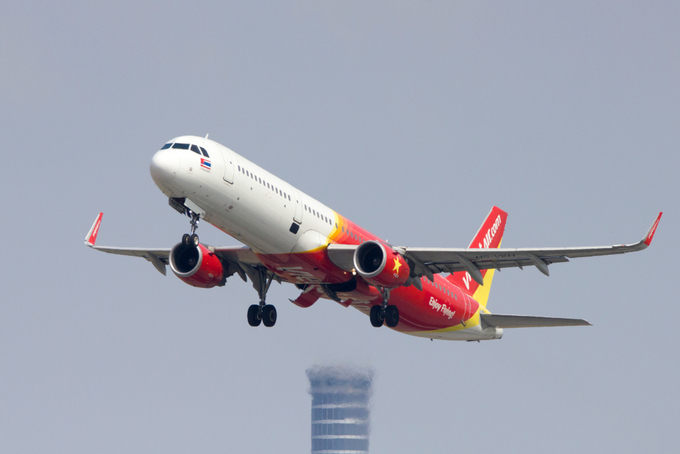
    With a network comprising 39 domestic routes and 69 international routes, Vietjet operates safe flights with a technical reliability rate of 99.64% — the highest rate in the Asia Pacific region. As a fully-fledged member of International Air Transport Association (IATA), Vietjet has obtained the IATA Operational Safety Audit (IOSA) certificate and has been awarded a 7-star ranking, the world’s highest rate for safety, by AirlineRatings.

  • Vietjet not operating any flights with Boeing 737 MAX aircrafts

    Vietjet not operating any flights with Boeing 737 MAX aircrafts

    Vietjet does not operate any flights with Boeing 737 MAX aircraft. We are currently operating with a fleet entirely composed of new Airbus aircraft from the A320 family aircraft. The average age of our fleet is 2.82 years. We are also using latest generation of Airbus aircraft, A320-A321 neo.

    Furthermore, Vietjet’s operations meet the highest international standards with regard to safety and maintenance. In particular, we have complied with all of the regulations and met the latest standards which have been set out by the European Aviation Safety Agency (EASA), the Federal Aviation Administration of the United States (FAA) and the Civil Aviation Authority of Vietnam (CAAV), including the approval of aircraft type for our operation.

    The safety for passengers is always Vietjet’s highest priority. Now we are closely monitoring the Boeing 737 MAX case and our decisions related to these aircraft will be made after the official conclusions and guidelines of the world’s aviation authorities and the CAAV. We are doing this to ensure the development of our modern fleet and to meet the highest quality and safety standards. Vietjet has well managed our fleet so far and our transport business plans are unchanged.

  • VinaPhone launches eSIM technology in Vietnam

    VinaPhone launches eSIM technology in Vietnam

    Vietnam has today officially become the 25th nation in the world to launch eSIM technology.

    VinaPhone, the mobile subsidiary of state-owned operator VNPT, has held the official mass market launch of eSIM technology, Vietnamese state news agency SGGP reported.

    VinaPhone has already distributed nearly 5,000 eSIM preorders to customers.

    The company is also offering customers the ability to change to an eSIM by entering their EMEI and a one-time password, and then scanning a QR code sent from the system, and has revealed it received more than 7,000 eSIM registration requests in less than a month.

    VinaPhone deputy general director Nguyen Truong Giang told the publication the operator is now developing applications designed specifically to be integrated into eSIMs and introduce more features and utilities for users.

  • Hanoi office rental yield highest globally

    Hanoi office rental yield highest globally

    Hanoi offered the highest grade A office rental yield in the world last year — 8.57 percent, a Savills report said. This was the third straight year the Vietnamese capital ranked top, according to the British property consultancy, which used data from the second half of 2018.

    Hanoi recorded a 3 percent year-on-year increase in average gross rent in the last quarter of 2018 and a steady occupancy rate of 95 percent.

    Philippine capital Manila, Australia’s Adelaide, Vietnam’s Ho Chi Minh City, and Australia’s Perth round out the global top five.

    HCMC, the previous runner-up, dropped to fourth place with a yield of 7.36 percent.

    HCMC has been performing outstandingly in the last five years, with average rents growing at 8 percent a year and a very high occupancy rate of 97 percent.

    “The fact that Hanoi and HCMC are among markets that offer the highest yields globally shows healthy rent and occupancy prospects for the two cities,” Hoang Nguyet Minh, investment manager at Savills Hanoi, said.

    The two Vietnamese cities have been enormous interest from international investors, particularly Singaporeans, Japanese and Koreans, Minh said.

    In the 12 months since the second half of 2017, office space attracted the largest global investment — $340 billion, according to Savills.

  • VinFast rolls out its first made-in-Vietnam car

    VinFast rolls out its first made-in-Vietnam car

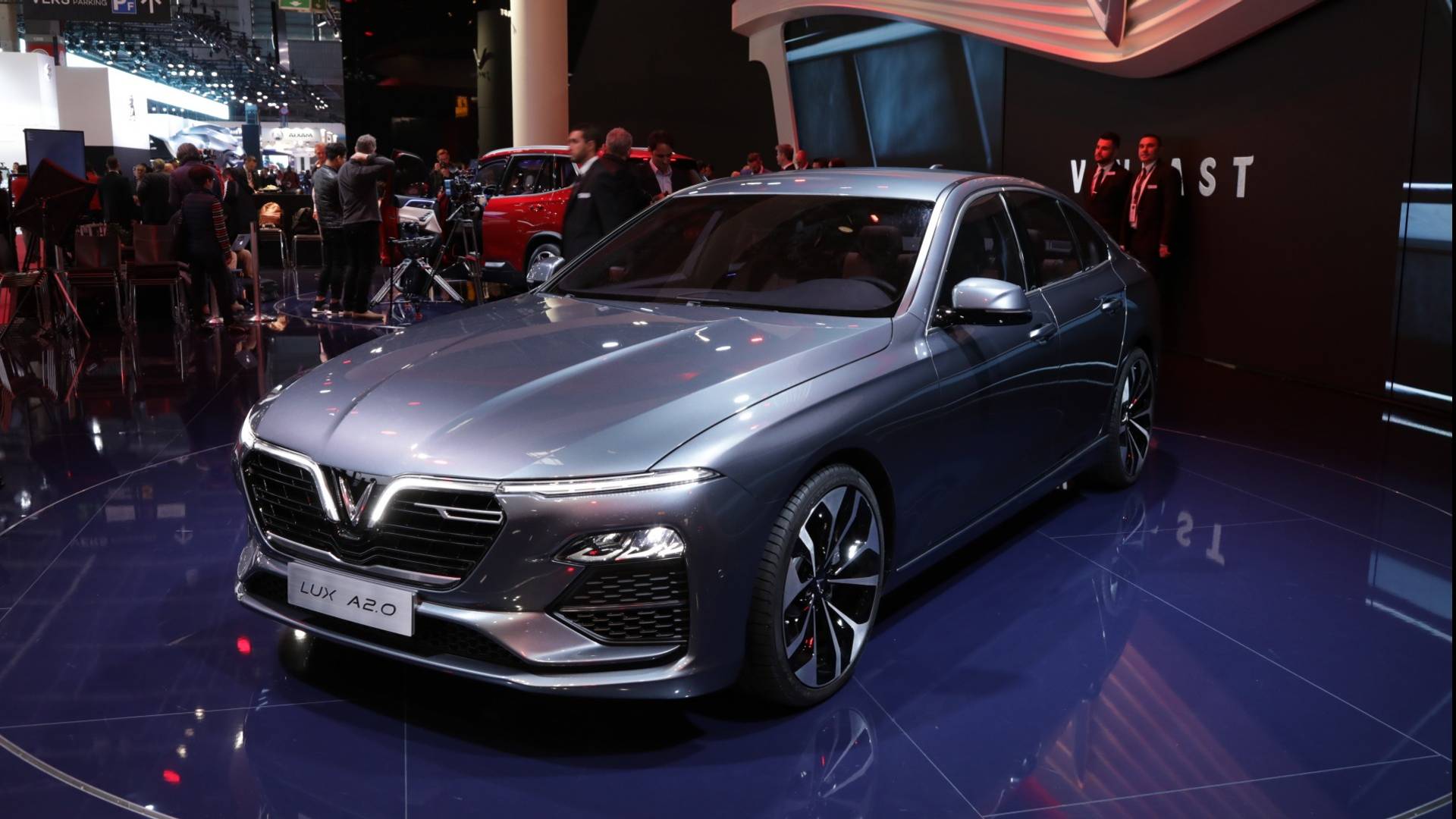
    Vietnam’s first full-fledged carmaker has started trial runs in its Hai Phong factory, preparing to deliver preordered vehicles later this year. The Lux SA 2.0 SUV, which has a 228 horsepower engine and an 8-gear automatic transmission, started its first run Wednesday at VinFast’s factory in the northern port city of Hai Phong.

    Commercial versions of both the SUV and a sedan will be delivered in the second and third quarter this year to customers who have pre-ordered.

    VinFast, a unit of Vietnam’s largest private conglomerate Vingroup, claims to be the first auto manufacturer in Vietnam with a closed, synchronous and complete cycle of production.

    The first cars will be tested in several countries including Australia, Austria and South Korea to make them European standards. They will also be tested in Vietnam for endurance in various climates and conditions.

    VinFast showed off prototypes of its first two car models at the Paris Motor Show in France last October, just a year after the company’s incorporation.

    A limited edition of its Lux SA 2.0, called the Lux V8 with a 455 horsepower V8 engine, is being displayed at the Geneva Motor Show 2019 this week.

  • All Vietnamese commercial banks to be listed before 2020

    All Vietnamese commercial banks to be listed before 2020

    A Prime Minister approved plan requires all commercial joint stock banks to be listed before 2020 towards increased transparency and diversity. This is one of a series of solutions set out in the scheme to “Restructure the stock market and insurance market by 2020 with orientation towards 2025” approved by the Prime Minister late last month.

    Accordingly, commercial banks are required to list on any of Vietnam’s three official stock exchanges – the Ho Chi Minh Stock exchange (HOSE), Vietnam’s main exchange which accounts for over 90 percent of total market capitalization; the Hanoi Stock Exchange (HNX), which houses remaining listed companies; and the Unlisted Public Company Market (UPCoM), which is set up to encourage unlisted public firms to participate in the securities market so that they can later transfer to one of the two main stock markets.

    Currently, only 17 of 31 banks are registered for trading on all three floors.

    The Prime Minister has assigned the Ministry of Finance and the State Bank of Vietnam (SBV) to supervise and direct banks on listing, securitizing debts, provision of required services for derivatives trading, as well as monitor domestic and capital sources on the market.

    Last year, PM lauded Vietnam’s stock market for outperforming other Southeast Asian nations in capital mobilization, with a market cap of 72 percent of GDP at the end of 2-10.

  • Select Vietnamese sellers to get Amazon training support

    Select Vietnamese sellers to get Amazon training support

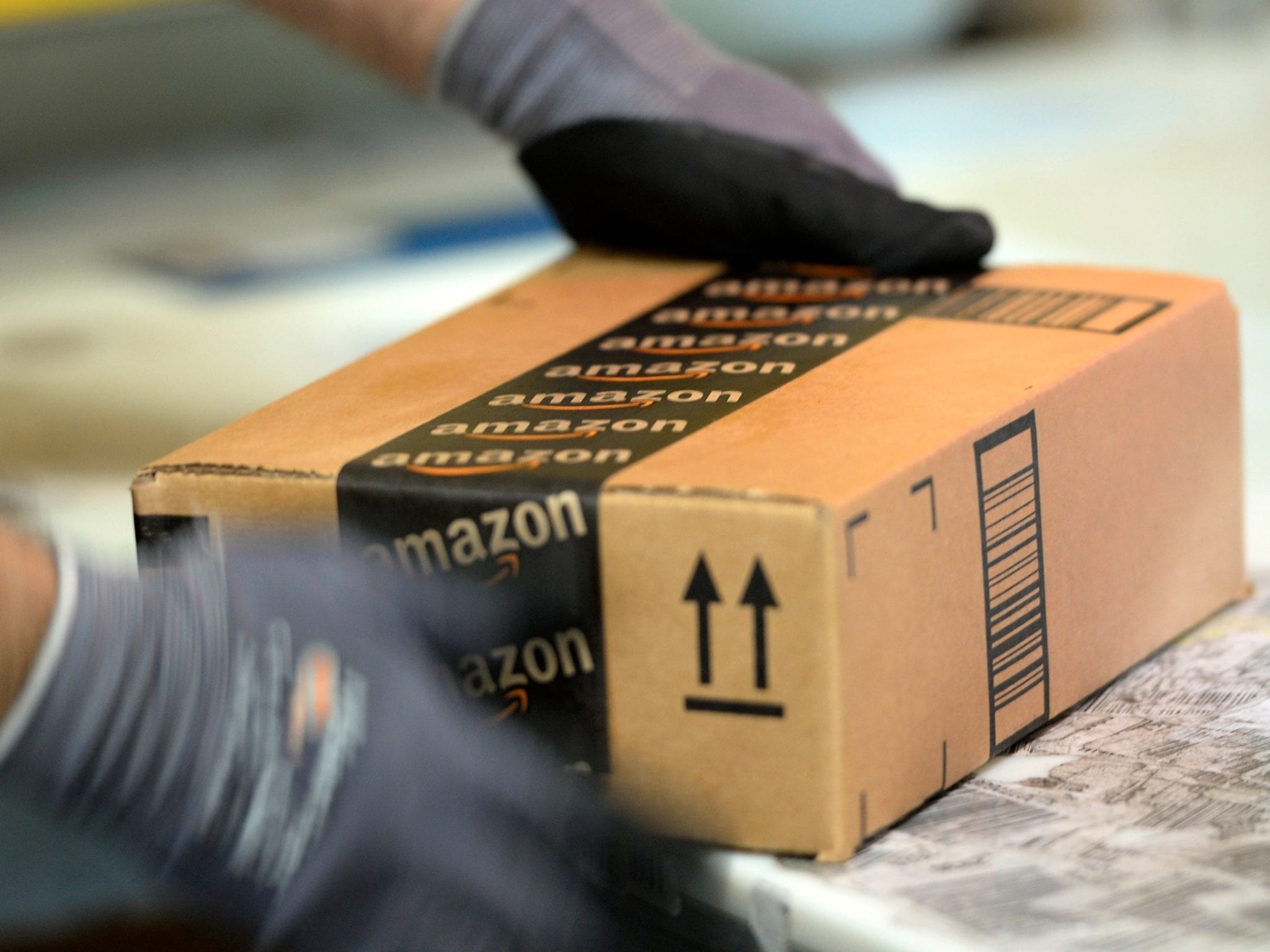
    100 selected Vietnamese businesses will participate in a support program to help them reach more customers on Amazon. These businesses will receive offline or online training, with in-depth support from Amazon and discounts from local service providers, according to a statement jointly released Wednesday by the Vietnam Trade Promotion Agency (Vietrade) under the Ministry of Finance and Amazon Global Selling.

    The program aims to help local businesses, especially in handicraft, textile, footwear and consumer goods, improve their export capabilities through selling on Amazon.

    They will also have the opportunity to participate in the second stage of the program, which will help them develop their brands.

    Other sellers who are interested can also join an online training program starting next month to get equipped with the basic knowledge of selling on Amazon.

    Bernard Tay, Amazon’s regional director for Southeast Asia, said that the young, tech savvy population in Vietnam and strong development of the manufacturing sector generate great e-commerce potential in the country.

    However, a lack of knowledge and experience prevents them from reaching out to the global market, he said.

    Vu Ba Phu, director of Vietrade, said that the support program will open up new potentials for local companies in expanding their businesses internationally.

    There are 300 million Amazon accounts in 185 countries and territories at present. Amazon also has 175 fulfillment centers worldwide.

    Vietnam has more than 700,000 businesses, of which 98 percent are small and medium enterprises, according to Vietrade.

    The country’s e-commerce market grew by 25 percent in 2017 and is expected to maintain this growth momentum over the next three years, according to the Vietnam E-commerce Association (Vecom).

    It also estimates online retail revenues to hit $10 billion by 2020, accounting for five percent of the country’s retail market.

  • Vietnamese women’s presence in senior management ranks second in Asia

    Vietnamese women’s presence in senior management ranks second in Asia

    With 36 percent of senior management teams in Vietnam including women, the country ranks second in Asia in female representation. In Asia, Vietnam’s proportion of women in senior management positions is only below Philippines at 37.46 percent. It is higher than countries like Singapore at 33.04 percent, Indonesia 31.85 percent and South Korea 29.89 percent, according to a report released Thursday by Grant Thornton International.

    Vietnam’s ration in this regard is also higher than the global average of 28 percent.

    The top four roles of Vietnamese women in business are Chief Finance Officer (36 percent), Chief Executive Officer or Managing Director (30 percent), Human Resources Director and Chief Marketing Officer (25 percent).

    “In Vietnam, women in business always play significant parts,” said Nguyen Thi Vinh Ha, national head of Advisory Services and deputy general director, Grant Thornton Vietnam.

    “We are proud of having many influential and inspirational female in general and look forward to a generation of successors.”

    However, Vietnamese women in senior positions still face many challenges, the report said.

    It said 40 percent of Vietnamese women lack access to “developmental” work opportunities, higher than the global proportion at 27 percent.

    Thirty-five percent lack access to networking opportunities, while the global rate is 26 percent.

    They also have caring responsibilities outside of work, at 39 percent in Vietnam versus 25 percent in the world.

    “If we want to continue seeing female representation trend upwards in senior positions, more deliberate action needs to be taken and leaders will play a critical role,” said Kenneth Atkinson, executive chairman of Grant Thornton Vietnam.

    “Policies that address equal opportunity in career development, bias in recruitment and flexible working can’t just be a nice to have. To achieve meaningful progress, they must be adhered to, enforced and regularly revisited to assess their effectiveness.”

  • Vietnam media giant could lose $20 mln as YouTube pulls plug on deal

    Vietnam media giant could lose $20 mln as YouTube pulls plug on deal

    Digital media conglomerate Yeah1 is set to lose 28 percent of future revenues after YouTube unilaterally terminated its content hosting agreement with it. The company’s financial statements for 2018 showed that activities connected to YouTube generated around VND462 billion ($19.93 million) for Yeah1, or nearly 28 percent of its revenues.

    Profit after tax from these activities were worth VND92 billion ($3.9 million), accounting for more than half of its total profits.

    The termination came after YouTube claimed SPRINGme Pte. Ltd, a Thai multichannel network (MCN) in which Yeah1 owns 16.93 percent had violated its policies with some of its channel management activities.

    Yeah1 Group shares plummeted on Monday following Youtube’s announcement, losing 7 percent. The share fell by 7 percent each in the next two trading sessions too.

    Yeah1 started offering entertainment services combined with advertising after becoming YouTube’s MCN partner in 2015.

    An MCN acts as an intermediary connecting creators of video content and YouTube for a cut. Content creators in return receive benefits such as copyright protection, income tax support, access to IP licensed contents to develop new products, and optimized advertising.

    For Yeah1, views from Vietnam account for nearly 73 percent of total views but only contribute about 18 percent of revenues. The rest comes from ad revenues generated in 150 other countries, with the U.S., Germany and Canada being the main contributors.

    Founded in 2006, Yeah1 is Vietnam’s largest MCN ecosystem, operating TV channels, movie studios, YouTube networks, and digital news.

    It was also the first media company to go public, listing on the Ho Chi Minh Stock Exchange (HOSE) last June.

  • Lazada Excels cross-border business across Southeast Asia

    Lazada Excels cross-border business across Southeast Asia

    Lazada is boosting its cross-border operations for international brands and merchants to after its cross-border sales quadrupled over the last three years The Alibaba-owned company says it plans to bring onboard more quality international brands and will identify and nurture the top 300 brands in each of the six. countries that Lazada operates in: Indonesia, Malaysia, the Philippines, Singapore, Thailand and Vietnam. This will allow those brands to grow their business and enjoy benefits such as higher visibility of their products when users search and browse the site.

    “We want to serve as that bridge between our quality cross-border merchants and some 560 million consumers in Southeast Asia,” said Lazada Group’s co-president Jing Yin, speaking in Shenzhen at the company’s first cross-border seller conference for this year.

    “Backed by the best expertise and infrastructure from Alibaba, as well as our in-depth understanding of Southeast Asia, we are able to equip our cross-border sellers and brands with the knowledge and tools to ride this massive growth in the region,” Yin told more than 1000 merchants at the event.

    What Lazada describes as “a meteoric rise in e-commerce spending in Southeast Asia” reflects the increasing demand for cross-border products as the GMV from Lazada’s cross-border category grew by 4.6 times between 2016 and 2018. According to industry estimates, Southeast Asia’s e-commerce market is on track to hit US$240 billion by 2025, surpassing earlier estimates by $40 billion.

    Among the key initiatives announced at this week’s conference was a revamped Global Collection: a dedicated channel showcasing an assortment of Lazada’s cross-border merchants from all around the world. Global Collection 2.0 taps on algorithm-based search functions to filter the wide cross-border assortment to spotlight sellers offering popular and good quality products so customers can find them easily.

    “With the new Global Collection, customers will get their parcels much faster,” said a Lazada spokesperson. “They can get their parcels within seven working days from the day they place their orders if they choose the standard shipping option.”

    First launched in 2013, Lazada’s cross-border business has grown to become one of the most diverse marketplaces featuring brands and merchants from all over the world. The top five markets which cross-border sellers come from are Mainland China, Hong Kong, Korea, the US and Europe, with women’s fashion, home and living and kids’ fashion ranking among the most popular cross-border items. Lazada is now looking at launching new categories, offering bulky products like furniture and home appliances.

    Last year, Lazada set a new record, with its last-mile delivery fleet across Southeast Asia delivering more than 1 million parcels in a day.

  • Vietnam to establish National Innovation Centre

    Vietnam to establish National Innovation Centre

    The Vietnamese government will tomorrow formally launch a project to establish a National Innovation Centre in Hanoi to help lay the groundwork for Vietnam to capitalize on the Industry 4.0 era.

    The project is set to break ground later this year and could be ready for operation by next year. It will be developed over a three year period.

    The NIC aims to lure 40 large technology companies, as well as 150 startups and SMEs and 15 venture investment funds, the Ministry of Information and Communication announced.

    It will initially focus on priority areas including network security, digital content and smart manufacturing and smart city technologies.

    The draft plan for the project stipulates the construction on a 23 hectare area of Hoa Lac Hi-Tech park, and calls for total investment of 1.9 trillion dong ($81.7 million). The project forms part of the

    The NIC is a part of the Ministry of Planning and Investment’s Vietnam Innovation Network initiative, and if the project is successful, the government plans to establish more such centers across Vietnam.

  • Vietjet Prepares for Take-off with Super Promotional Tickets  in Conjunction with International Women’s Day

    Vietjet Prepares for Take-off with Super Promotional Tickets in Conjunction with International Women’s Day

    Jetsetters certainly have something exciting to look forward to. With just a few days left till International Women’s Day, Vietjet is offering a whopping 2.4 million super-saving tickets priced from MYR0. Tickets can be purchased at https://www.vietjetair.com/ from 6 to 8 March, 2019.

    The promotional tickets are applicable during golden hours from 1.00pm – 3.00pm on all of Vietjet and Thai Vietjet’s domestic routes, as well as international routes connecting Vietnam to Malaysia (Kuala Lumpur), South Korea (Busan and Daegu), Taiwan (Kaohsiung, Taipei, Taichung and Tainan), Singapore, Thailand (Bangkok, Phuket and Chiang Mai), Myanmar (Yangon) and Cambodia (Siem Reap).

    To top it off, for flights linking Hanoi / Ho Chi Minh City – Osaka (Japan); Hanoi – Tokyo; and Ho Chi Minh City / Phu Quoc – Hong Kong (China), the special promotional tickets will be available at all times during the three golden day sale period. The flight period is from 7 May – 31 December 2019 (**).

    With a network comprising 39 domestic routes and 66 international routes, Vietjet operates safe flights with a technical reliability rate of 99.64% — the highest rate in the Asia Pacific region. As a fully-fledged member of International Air Transport Association (IATA), Vietjet has obtained the IATA Operational Safety Audit (IOSA) certificate and has been awarded a 7-star ranking, the world’s highest rate for safety, by AirlineRatings.