Tag: Vietnam

  • New product helps Vietnam’s canned coffee market

    New product helps Vietnam’s canned coffee market

    One of the largest beverage makers in the world is hoping to ‘capture’ Vietnamese taste with its new canned coffee product. Coca-Cola, one of the two biggest players in the Vietnamese carbonated beverages market, has entered the canned coffee market with Georgia Coffee Max.

    Though Vietnam is the second largest exporter of coffee in the world, its ready-to-drink coffee market has not attracted much attention from major players.

    Coca-Cola’s move could breathe life into it, but the challenge is not a small one, industry insiders said.

    For instance, at a supermarket on Quan Hoa Street in Hanoi’s Cau Giay District, canned coffee products do not have their own section, but are placed among other carbonated and energy drinks.

    Four brands of this rarely-seen product — Birdy, Nescafe, Highlands Coffee, and My Café — sit inconspicuously among dozens of other beverages.

    According to the shop assistants, canned coffee is hardly purchased, and sometimes is not bought for weeks at a time.

    The market for canned coffee came to existence 10 years ago with the entry of Birdy Coffee from Japan’s Ajinomoto.

    A year later Nestlé, which wanted a piece of the action, established a canned coffee production line at its plant in the southern Dong Nai Province.

    Other early birds included local dairy giant Vinamilk, which started putting up ready-to-drink coffee production facilities, followed by two then-emerging brands, Tan Hiep Phat and Highlands.

    Though initially many of the brands ran aggressive marketing campaigns, the market gradually fizzled out. Many products disappeared completely within a short time.

    In 2013 local coffee giant Trung Nguyen launched a range of fresh coffee products in bottles and cartons in sizes ranging from 500 ml to a liter. Within two years these too disappeared from grocery store and supermarket shelves.

    Today only a few names are left in the market, like PepsiCo, Highlands Coffee, Nestlé, Ajinomoto, and the new entrant, Coca-Cola.

    The real challenge for producers is no longer getting market share but changing consumer habits.

    Industry insiders quoted customer feedback as saying canned coffee is like fast food, sweet and lacking the authentic coffee taste.

    Speaking at the launch of the new product, a Coca-cola executive said though there are other brands in the market, their research showed the pie is large enough for new players to enter.

    Le Trung Tin, director of the Georgia Coffee Max line, said the secret to success is capturing the Vietnamese taste in the canned coffee.

  • Exchange rates, tax worry Vietnam’s most profitable firms

    Exchange rates, tax worry Vietnam’s most profitable firms

    Exchange rate fluctuations and high taxes are the main concerns of Vietnam’s most profitable businesses, a recent report has found. The survey of the 500 most profitable companies this year, which include 41 foreign invested ones, by consultancy and market research firm Vietnam Report, said 51.4 percent of businesses considered exchange rate volatility as the biggest challenge this year.

    For 42.9 percent of respondents the tax burden was the biggest concern.

    Other factors that affect their profitability are red tape (37.1 percent), global economic instability (31.4 percent) and environmental disasters (25.7 percent).

    However, 90 percent expected their revenues to rise this year.

    Eighty percent said their profit had already exceeded last year’s, with another 8.6 percent saying it had drawn level.

    Almost all (97.1 percent) said the government has stewarded the economy well by curbing inflation and managing the exchange rate adroitly.

    But they wanted improvements to administrative procedures, infrastructure and access to land.

    The survey found the telecommunications-information technology sector having the highest return on equity, 30 percent, followed by transportation with 24 percent and pharmaceuticals with 21 percent.

    The Vietnam Oil and Gas Group or PetroVietnam is the most profitable company this year followed by telecomunications firm Viettel and Samsung Electronics Vietnam Co. Ltd.

  • For Vietnamese exporters, ASEAN market remains bridge too far

    For Vietnamese exporters, ASEAN market remains bridge too far

    Vietnamese companies are struggling to sell their products to ASEAN member countries despite the abolition of tariffs within the bloc. Analysts blame this on their lack of market information and poor understanding of consumer needs among other factors.

    With the formation of the ASEAN Economic Community (AEC) three years ago, members had to reduce over 90 percent of their tariff lines to zero percent, though Vietnam, Laos, Cambodia, and Myanmar were allowed until 2018 to do so.

    Yet Vietnam’s intra-ASEAN exports accounted for only 11 percent last year while this number for other members averaged 24 percent even in 2016, Nguyen Thi Tue Anh, deputy head of the Central Institute of Economic Management (CIEM), said at a recent conference.

    Anh said besides Vietnamese enterprises’ lack of market information, they have also failed to adequately differentiate their products from those of competitors within the bloc.

    A spokesperson for a business based in southern Soc Trang Province said his company, which produces dried fish and other fisheries products, wants to take its products to the ASEAN market but does not know how.

    He said that there are many factors such as package design, marketing and market research, and it does not know where to begin since all are equally important.

    Ha Xuan Anh, chairman of HCMC-based textile maker Son Viet, said his company’s products – undergarments – are sold at many modern retail outlets. But for the last 10 years it has sought to sell to Singapore, Thailand and Malaysia, and has been unable to do so.

    He explained that though the quality of his company’s products is competitive, Vietnamese brands remain unknown in these markets.

    It only sells in markets with less competitive products such as Laos, Cambodia and Myanmar.

    Pham Thiet Hoa, director of the HCMC Investment and Trade Promotion Centre (ITPC), also blamed the weaknesses of Vietnamese enterprises for their inability to export, listing lack of product diversification, failure to closely liaise with authorities responsible for foreign affairs, and poor marketing.

    ITPC said small companies entering a new market alone would find it very difficult to identify foreign business partners and distribution chains.

    Hoa said it is therefore necessary for trade envoys to work with their counterparts in foreign markets to bridge this gap.

    Participating in fairs, exhibitions and trade promotion programmes in target markets enables companies to assess the competitiveness of local rivals, he said.

    Despite the free trade environment, each country in the bloc has differences in culture, religion and consumer preferences, and businesses need to understand them before venturing into those countries, he said. “Enterprises should also carefully study the technical barriers and legal regulations to avoid losses.”

  • Vietnamese entrepreneur makes glasses with wooden frames

    Vietnamese entrepreneur makes glasses with wooden frames

    Long, 23, was frustrated that he was not able to get a pair of glasses that were comfortable, of good quality, long lasting and somewhat unique. These are qualities people generally want in personal wear, especially one that adorns their face for most of the day, but Long was finding that such expectations were not easy to meet.

    No readymade glass in the market fit him.

    Then, as luck would have it, Long happened to meet Tran Hien, a man with an unusual business and passion.

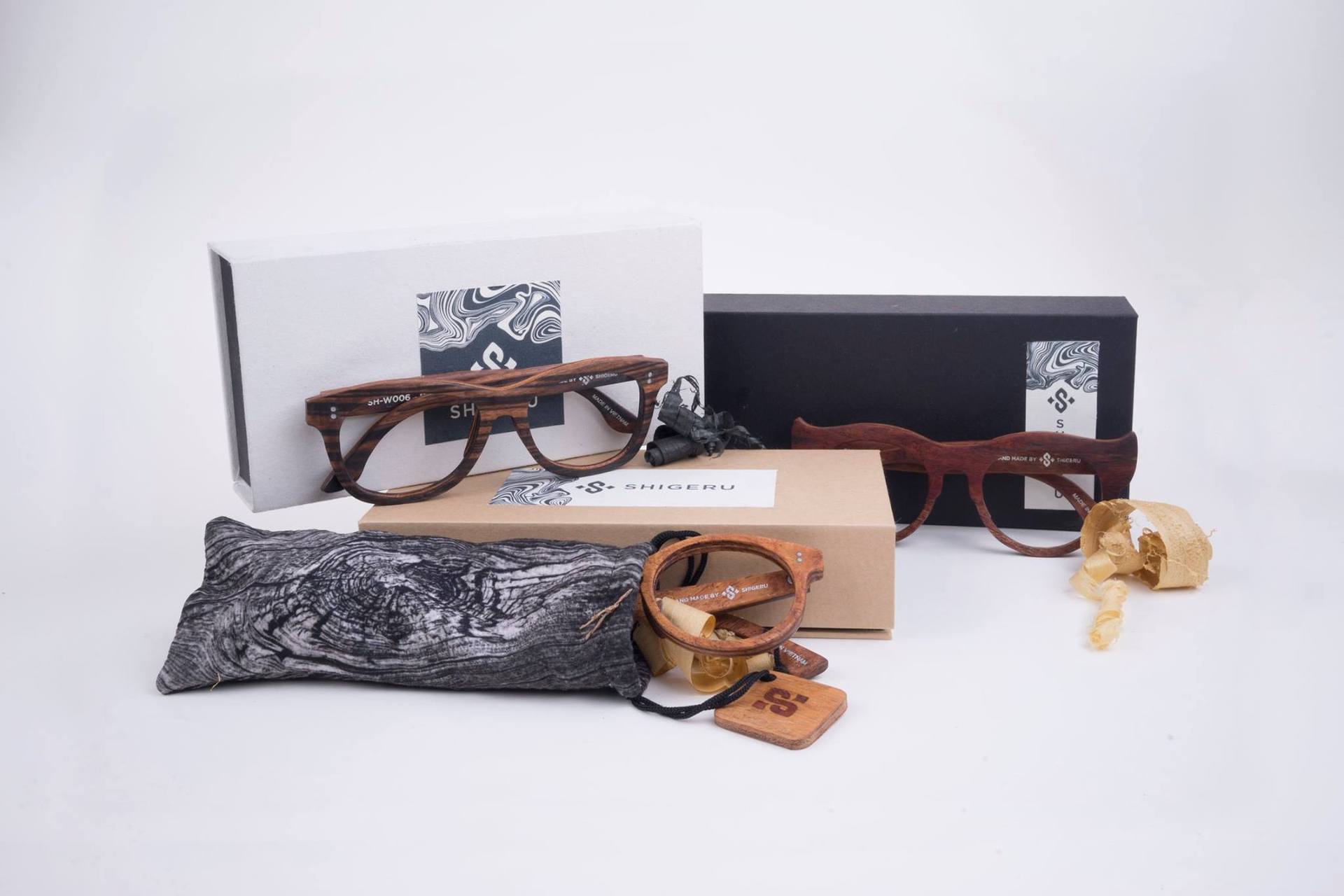
    Hien, whose business is called Shigeru Eyewear, makes spectacles with wooden frames, something that people might assume has gone completely out of fashion.

    Very soon after the meeting, the young customer happily accepted to pay VND1 million ($43) and wait 7-10 days for a pair of custom-made glasses.

    Long, like many other customers who go to Hien, wanted to get involved in the design process and was prepared to wait for the desired outcome.

    Every detail on the frame is carefully custom-made by Hien. On average, the process takes him around 4 hours.

    “Most of my products are handmade. Sometimes, I’m a bit shy shaking hands with people because of my calluses,” said Hien.

    The Japanese connection

    In 2012, Tran Hien graduated with a Graphic Design degree from the HCMC-based Van Lang University, specializing in branding. Through a friend’s introduction, he started working as a designer for a Japanese glasses maker called Shigeru.

    Hien was the first man in Vietnam to get this job, Shigeru told him.

    At first, Hien refused to accept a job where he had to actually make things himself. But Shigeru told him: “If you don’t try your hand at the job, you won’t be able to design something others can make.”

    After working at the production house under the guidance of the Japanese teacher and mentor, Hien not only gained more knowledge about glass-making, but also learned a lot more about an ideal attitude to life.

    “One time after lunch, the staff scraped off the burnt rice at the bottom of the cooker and threw it away. Shigeru saw it and told us, next time, don’t waste food like that, just break the pieces and share them with everyone,” Hien recalled.

    Shigeru’s company made glass frames, mostly in plastic, but also wood and bamboo sometimes, for export to Japan. He also wanted to open a store in Vietnam. But fate had other plans.

    Hien had been with Shigeru – someone who was more of a teacher than a boss – for around one year when tragedy struck. The production house got burned down, Shigeru went bankrupt and had to return to Japan.

    After his mentor left, Hien moved to Hanoi to find new opportunities.

    With zero business experience, he accepted a desk job with a real estate company in Hanoi. After several months of working as a graphic designer in the marketing department, he gained new insights into sales and marketing – something that not many designers care about.

    However, the sophisticated, carefully crafted glasses that Shigeru’s company used to make had left a deep impression on Hien, so after a while, he started to tinker with making glasses again.

    This time, his ambition was to create unique, wooden frames. It would be his niche product.

    Hien liked wood, its texture, colours and the natural patterns it carried. And even better, the longer it was used, the shinier it would get, something that cannot be said of other materials. His main focus was to create something unique, Hien said.

    It was very difficult to get this project off the ground, though.

    “I tried everywhere but no one wanted to cut wood as thin as I wanted, because it requires a lot of effort with little pay,” Hien said.

    After many attempts, one person who shared Hien’s determination to create made-in-Vietnam glasses (instead of Chinese ones dominating the market) accepted to work with him.

    It was still not easy. Many of his first customers had to wait for a long time because Hien was occupied with office work. On top of that, some of the products were not durable. Once, he was very embarrassed when a newly delivered pair of glasses broke as soon as the customer tried it on.

    Some people advised him that brand name, Shigeru, was difficult to market since it was not easy enough to read and remember. However, Hien wanted to commemorate the spirit of his teacher, who’d gladly consented to the student using his name.

    For the whole of 2017, when Shigeru Eyewear was founded, just 20 pairs of glasses were sold.

    The big plunge

    This year, Hien decided to quit his office job, which paid him VND15 million ($640) per month, and devote all his time and effort for his company.

    He studied days and nights, trying to find a way to increase the durability of his wooden frames, but that knowledge was nowhere to be found in Vietnam. Despite being “scientifically illiterate,” after months of perseverance, he finally discovered secrets to creating products that could survive even after  being thrown against the wall or dropped from up high.

    Hien’s current schedule involves meeting up with his clients to get their measurements and discuss their wants. After that, he works on the design, the production process, as well as building company’s image and increasing brand recognition.

    Each pair of glasses is customized to fit its owner

    His company sells dozens of customized pairs of glasses per month now.

    “Sometimes, design inspirations come from the customers themselves. For example, there was one customer who sells traditional clothes and wanted the glasses’ arms to be modeled like a tree branch, I found the idea very interesting and asked to keep the concept as a model for my catalog,” Hien said.

    So far he has been taking wood pieces from furniture companies, aiming particularly at ebony, Siamese rosewood, and Asian rosewood.

    But he’s very keen on being eco-friendly. He said that he was looking for an NGO or other organisations involved in reforestation that he can contribute to. He said that for every glass frame that he sells, he will use part of the proceeds to help reforestation efforts. He is also considering buying seeds and planting trees on his own, Hien said.

    Hien believes the ” For each tree you’ve taken, you have to give back as much to the forest.”

    Expansion plans

    Hien said that he is also looking for someone who can share his passion and can work on the business side of the company.

    Apart from keeping the core as an artistic line, Shigeru Eyewear aims to produce standard glasses that are of high-quality and made with local materials – something that is still missing in the Vietnamese market.

    He is also looking to start making and selling frames with other materials like palm wood and bamboo.

    Currently, glass frames made from wood are still something very new to customers, so he wants more people to have rare pairs of glasses with “Made in Vietnam” etched on them.

    Furthermore, like his beloved Japanese teacher, he hopes to find more people with whom he can share the knowledge he’s accumulated through the years.

    For now, from a time when the company only had a few hundred thousand dong (a dozen of US dollars) to buy materials, and all of the earnings were invested in buying better quality wood and tools, Hien can confidently say he can make a living with the brand.

    “I will spend the rest of my life for my “Made in Vietnam” glasses.”

  • Vietnam footwear industry to be benefited from trade war

    Vietnam footwear industry to be benefited from trade war

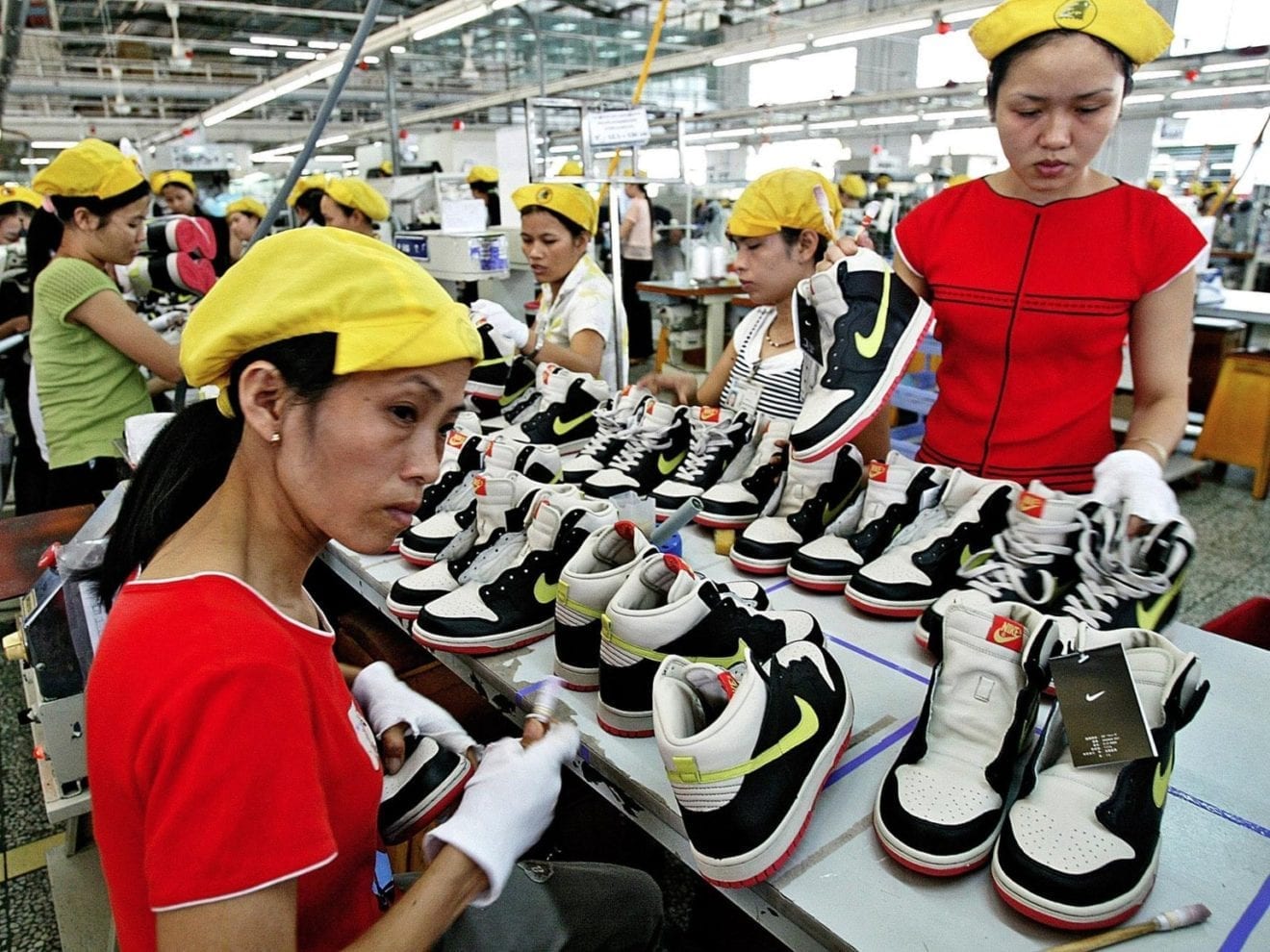
    Vietnamese footwear exporters seem to be benefiting from the ongoing trade war between the U.S. and China. According to customs statistics, Vietnam’s footwear exports in the first nine months of this year were worth $11.74 billion, a 10.2 percent year-on-year increase. Its exports to China in the period have risen by 28.5 percent, to Japan by 14.7 percent, and to the U.S. by 13.5 percent.

    Vietnam is the second biggest exporter of footwear to the U.S. behind China, shipping 404 million pairs of shoes last year.

    The upward trend is likely to continue, too, as rising wages in China increase the cost of goods produced there and the country is thus directing more of its manufacturing resources toward higher-priced goods like electronics, according to the global footwear news outlet Footwearnews.

    Foreign companies are moving to other countries like Vietnam to cut cost.

    Adidas CEO Kasper Rorsted said last May that his company is shifting sourcing of footwear from China to Vietnam.

    Vietnam has in fact overtaken China as its top supplier, with Vietnamese factories producing 44 percent of its shoes by volume last year and Chinese manufacturers supplying 19 percent, according to Adidas.

    This would help shield the company from potential tariffs or supply chain disruptions if President Donald Trump’s trade war with China continues to escalate, a fact its competitors also seem to be taking notice of.

    Vietnam may see export orders surging as footwear importers shun China to avoid high U.S. tariffs and choose the Southeast Asian nation instead, local media quoted Diep Thanh Kiet, vice chairman of the Vietnam Leather, Footwear and Handbag Association (Lefaso), as saying.

    “Vietnam’s leather and footwear export can reach $19.5 billion or slightly higher this year depending on the situation,” he said. Vietnam’s footwear exports were worth $14.65 billion last year.

  • Vietnam to cut dependancy on crude oil

    Vietnam to cut dependancy on crude oil

    A prime ministerial advisory body has said the state budget is overly dependent on crude oil, an unsustainable income source. The National Financial Supervisory Commission (NFSC) recently said crude oil is not a sustainable income source, both in the short and long term.

    In the short term, crude oil revenue can be affected by global oil prices and mining output; and the state budget has been significantly impacted by such fluctuations over the years, the NFSC noted.

    In the long run, this source of income is also unsustainable as national reserves are limited, it added.

    Earlier, Deputy Prime Minister Vuong Dinh Hue had said at a meeting of the legislative National Assembly that Vietnam needs to stop relying on crude oil and focus on tourism to ensure its economic growth.

    “It is better to welcome one million tourists than trying to find one million tons of crude oil because tourism is more eco-friendly and safe for the economy,” he’d said.

    Vietnam’s September crude oil exports totaled 375,000 tons, down 21.1 percent year-on-year, according to the General Statistics Office. This brought crude oil exports in the first nine months of this year to 2.97 million tons, down 45.2 percent from a year earlier.

    From early this year to September 15, accumulated budget revenue is estimated to be at VND898.3 trillion ($39.06 billion), of which VND43.5 trillion ($1.89 billion) or about 5 percent comes from crude oil, according to the General Statistics Office.

    Vietnam’s domestic crude oil production reached its peak in 2004 with an output of more than 20 million tons, but has declined to an estimated 14.2 million tons in 2017.

    It is forecast that around 11 million tons will be produced in 2018. Crude oil exports have contributed 0.25 percent to the country’s GDP in recent years.

  • Vietnam’s authority no longer certain about 2020 GDP target

    Vietnam’s authority no longer certain about 2020 GDP target

    Vietnam’s GDP per capita is set to increase this year, but its 2020 target of $3,200-3,500 looks distant. Minister of Planning and Investment Nguyen Chi Dung said at a National Assembly meeting Monday that if Vietnam’s GDP increases by 6.7 percent this year, per capita GDP will reach $2,540, up $155, or 6.1 percent year-on-year, and 1.21 times that of 2015.

    However, the number is still far away from the country’s target of $3,200-3,500 by 2020, he conceded.

    According to World Bank Group statistics, Vietnam’s GDP per capita in 2017 is $2,343. The figure for Singapore is $57,714, Malaysia ($9,945), Thailand ($6,594), the Philippines ($2,989) and Myanmar ($1,298).

    Minister Dung estimated that Vietnam’s GDP would grow by 6.57 percent on average in the 2016-2018 period, meeting the National’s Assembly target of 6.5-6.7 percent growth.

    However, he expressed concerns about the increasing number of businesses that stopped operations in the first nine months of this year.

    While 96,610 new businesses opened, 73,100 closed, up 48 percent year-on-year.

    These figures worried government officials at the meeting. Vu Hong Thanh, Chairman of the National Assembly’s Economic Committee, said that the goal of having one million businesses by 2020 will be “difficult to achieve.”

    Last year Vietnam had over 560,000 active businesses, up 11 percent year-on-year, according to the General Statistics Office.

    But in another meeting last week, Deputy Prime Minster Vuong Dinh Hue said that the goal “is full of challenges, but achievable.”

    Hue said that how strong these businesses are and how much they can contribute to the economy is more important.

    “The government aims to practically improve the business environment by not imposing more conditions,” he said.

    In the first nine months this year, Vietnam’s GDP grew by 6.98 percent, the highest nine-month growth rate since 2011. The economy grew by 6.81 percent last year, the highest rate in a decade.

  • Shopee becomes top e-commerce in Vietnam in Q3

    Shopee becomes top e-commerce in Vietnam in Q3

    Shopee has become the leading Vietnam e-commerce market player, followed by Lazada and Tiki. The report published by Iprice Insight, ranks the top 50 Vietnam e-commerce market players based on their average quarterly traffic, mobile application ranking, social media followers and number of staff, using data collected in July.

    The report shows that during the quarter, Shopee had a monthly average traffic of 34.5 million visitors while Lazada, which had topped the list since the second quarter of last year, achieved 30.2 million.

    Other players in the Top 5 included local company Tiki, with 29.4 million visitors a month, Sendo with 20.7 million, and Adayroi with 5.3 million.

    All of the top four platforms have foreign investment.

    Iprice predicts significant changes during the next quarter when the platforms offer more promotions to stimulate shopping as year-end approaches.

    The Vietnam e-commerce market has been growing fiercely, with revenue forecast to reach US$10 billion by 2022.

  • Vietnam retains current price ceilings on domestic flights

    Vietnam retains current price ceilings on domestic flights

    While several carriers want the price ceilings for domestic flights raised, inflation concerns have prevailed, for now. The current price ceiling, fixed by the Transport Ministry in August 2015, is set to remain unchanged for the time being as a new draft circular on air transportation rates.

    Under the draft circular on air transportation prices, prices for five different classifications range from VND1.6 million ($68) to VND3.75 million ($160) per one-way ticket.

    The lowest ceiling applies to flights for distances of 500 kilometers and less to remote rural areas, islands and mountainous areas that require a socioeconomic development boost.

    The highest price ceiling of VND3.75 million ($160) applies for flights of more than 1,280 kilometers.

    The maximum service charges listed above are for economy seats, not including value added tax and other charges like baggage, service and security fees.

    In July, several carriers had suggested that the price ceilings be raised since fuel prices were higher than when the current ceilings were introduced in 2015.

    But the Civil Aviation Administration of Vietnam (CAAV) advised that current price levels be maintained to follow the government’s directive on curbing inflation.

    As of now, the ticket prices listed by carriers are 76-79 percent of the ceiling.

    The CAAV acknowledged that the ceiling prices need to be adjusted, especially for long flights, adding that it will re-assess the situation next year and propose new price brackets if needed.

    Vietnam’s aviation industry has been booming in recent years. The country served more than 94 million air passengers in 2017, up 16 percent from the previous year, including 13 million foreigners.

  • Bankrupt US retail giant Sears owes Vietnamese firm $4 million

    Bankrupt US retail giant Sears owes Vietnamese firm $4 million

    Sears, a U.S. retail titan that has filed for bankruptcy, owes a Vietnamese textile company upwards of $4 million. Sears Holdings filed for bankruptcy on October 15 after failing to make a $134 million debt payment tranche. Its subsidiaries, Sears, Roebuck and Kmart are partners of Vietnamese textile firm Thanh Cong, contributing about 7 percent to the textile firm’s revenue every year.

    Last year, Sears contributed VND220 billion ($9.38 million) to Thanh Cong’s revenues of VND3.2 trillion ($136.5 million). Sears remaining debt to Thanh Cong is VND95 billion ($4 million), or 3 percent of the textile firm’s total assets, according to Vietnamese company’s  third quarter report.

    Thanh Cong CEO Lee Eun Hong said that his company was seeking to participate in the process and retrieve its money.

    The hearing is scheduled for November 15.

    Thanh Cong Textiles, established in 1967, has reported accumulated revenues of VND2.82 trillion ($120.3 million) in the first nine months of this year, up 15 percent year-on-year.

    Exports account for 88 percent of the firm’s revenue.

    The bankruptcy filing by Sears follows a decade of revenue declines, hundreds of store closures, and years of deals by billionaire Eddie Lampert in an attempt to turn around the company he acquired in 2005 for $11 billion.

  • FastGo drives into provincial markets in Vietnam

    Vietnamese ride-hailing app FastGo has expanded its services to provinces in Vietnam like Dong Nai and Binh Duong, provinces neighboring HCMC. FastGo aims to cater to high travel demand within the southern provinces and for commutes between the provinces and Ho Chi Minh City

    Nguyen Huu Tuat, general director of FastGo Vietnam, said that Bien Hoa City in Dong Nai and Binh Duong were two municipalities next to HCM City with large traffic flows and number of commuters.

    The introduction of the app in these localities will make it more convenient for customers to travel, as well as reduce wasteful ‘empty miles’ for local cabs, he added.

    Currently, FastGo has about 1,000 drivers operating in these two cities.

    The company plans to expand its presence into Ha Long City in the north and Nha Trang City in the center early next month. By the end of the year, it will also introduce food delivery and “On Demand Shopping” services.

    Launched in June 2018, FastGo now operates in Hanoi, Ho Chi Minh City and Da Nang with more than 30,000 drivers. It has already completed “over one million kilometres of service.”

    At the end of August, the company received funding from VinaCapital, and is planning to mobilize up to $50 million for a second expansion phase that will target Indonesia and Myanmar.

    FastGo has three core services: Fast Car – a four-wheel drive app for private contractors wanting to make additional income; Fast Taxi – a service linked with existing taxi companies who can receive orders on the app; and Fast Luxury – a semi-luxury car service.

    FastGo last month said it has 15,000 taxi and motorbike partner drivers in Hanoi and Ho Chi Minh City, but they are still not a common sight on the streets, unlike the ubiquitous red and green uniforms of Go-Viet and Grab drivers.

    Tuat said he wants FastGo to become one of Southeast Asia’s top 3 ride-hailing apps in the future.

    A report quoted the company as saying it hopes to make its service available in 20 cities in Vietnam and five other Southeast Asian markets, including the Philippines, Cambodia and Thailand, by the end of next year.

    FastGo Vietnam Joint Stock Company was established in April 2018 with its headquarters in Hanoi. The company belongs to a wide network of services provided by Nexttech – a leading tech firm in Vietnam.

  • Aber ride-hailing service hits the road in Hanoi

    Aber ride-hailing service hits the road in Hanoi

    Aber, the second Vietnamese ride-hailing service, launched its Hanoi operations Friday, four months after making its HCMC debut. The ride-hailing market has seen new entrants after Uber’s departure, including Vietnamese firm FastGo, GoViet – a subsidiary of Indonesia’s Go-Jek, and the latest Aber. Aber estimates it will attract 5,000 taxi drivers and 5,000-10,000 motorbike drivers in Hanoi this year.

    In HCMC, the company is working with 7,000 drivers serving  more than 60,000 customers. Aber general director Huynh Le Phu Phong said the company was not afraid of major competitors such as Grab because it offers a wide variety of transport services.

    The firm will offer similar rates as other competitors, but give better benefits to its drivers, he said.

    “We do not force drivers to only work for Aber. They can also work for other companies to increase their income and improve their lives,” Phong said.

    In its latest update, Aber has added new features including a navigation system and accurate positioning to each alley, village, district and province in Vietnam.

    Vietnamese engineers designed the software.

    Next year, the company will focus on expanding its services, including Aber Express for delivery services, Aber Track for freight services, Aber Business for companies and Aber Travel for travel services, Phong said.

    Aber focuses on serving individual customers to help them save money, as well as drivers, when their vehicles are vacant, he added

    Instead of having to drop off items at the post office or delivery centers, drivers will come and pick things up right at the customer’s house.

    Current market dominator Grab has expanded its service to include GrabFood and GrabCar Business, the latter targeting the corporate sector. These moves pose further challenges for local long-standing taxi firms like Mai Linh, Taxi Group and Vinasun.

  • PetroVietnam says Tokyo Gas may help with power plant project in Vietnam

    PetroVietnam says Tokyo Gas may help with power plant project in Vietnam

    Tokyo Gas is interested in cooperating with Vietnam’s PetroVietnam Power Corp (PV Power) to develop a natural gas-fired power project in the Southeast Asian country. On Friday, PV Power’s parent said that Tokyo Gas wants to help secure long-term liquefied natural gas supplies and funds for the construction of the Nhon Trach 3 & 4 power plants in the southern province of Dong Nai, state-run Vietnam Oil and Gas Group said in a statement on its website.

    Tokyo Gas did not immediately respond to a request for comment made via its website.

    The statement follows a meeting between senior executives from PV Power and Tokyo Gas in Hanoi this week, PV Power said.

    The two plants, with a combined capacity of 1,500 megawatts, would be operational from 2020, according to PV Power.

  • Vietjet and Japan Airlines to Commence Code share Ticket Sales

    Vietjet and Japan Airlines to Commence Code share Ticket Sales

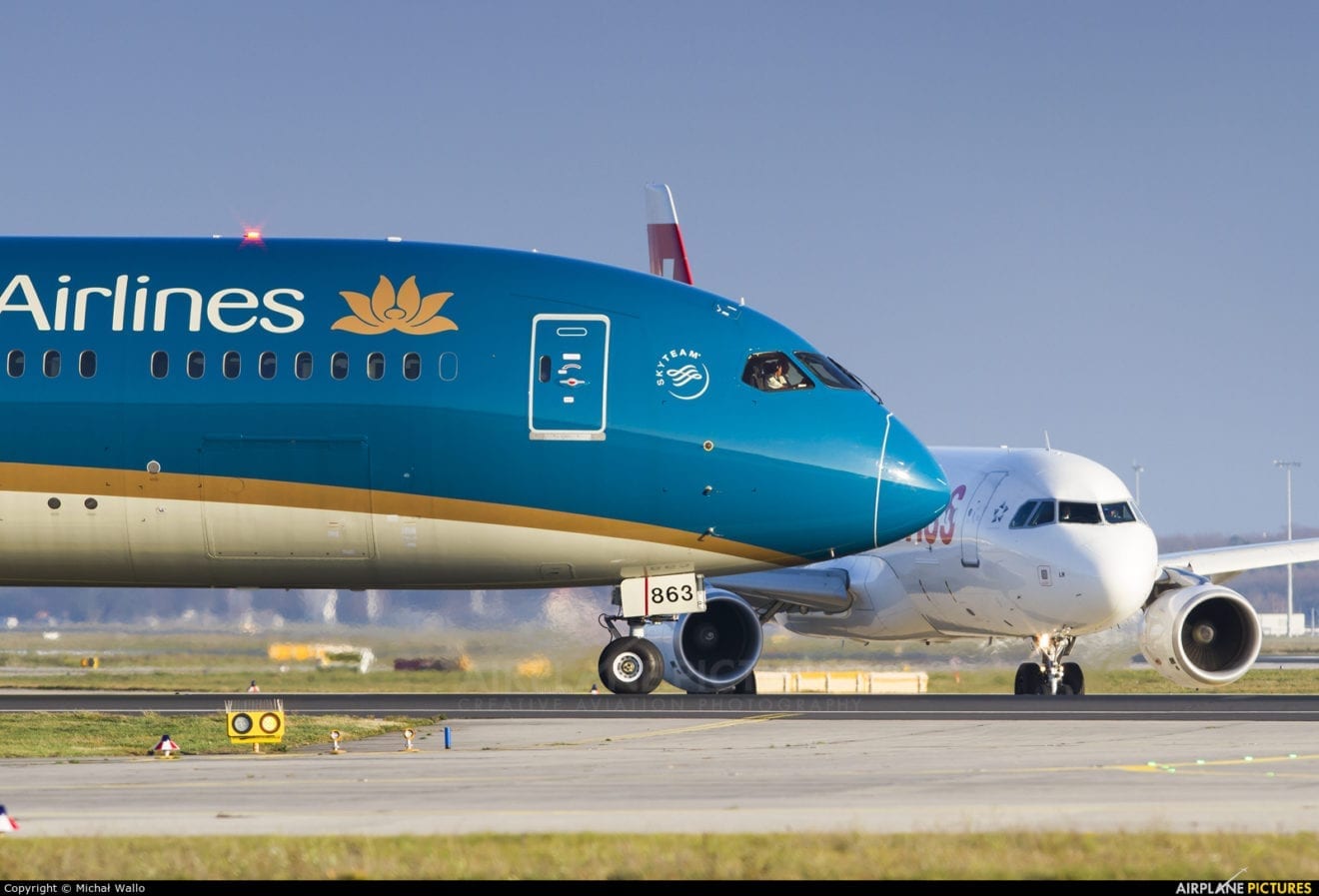
    New-age airline Vietjet and Japan Airlines (JAL) has announced that both carriers` will begin sales of their codeshare flights starting Tuesday, 23 October 2018.

    This follows a formal partnership agreement between both parties in 2017, in which Vietjet and JAL signed a Memorandum of Understanding for commercial cooperation. The two airlines now offer codeshare flights on domestic destinations in Vietnam and on international flights between Vietnam and Japan.

    Applicable routes operated by Vietjet include domestic flights connecting Ho Chi Minh City and Hanoi; Ho Chi Minh City and Da Nang; Hanoi and Da Nang; and international flights linking Kansai with Hanoi. The codeshare flights will be available for travel from 28 October 2018, while the Kansai to Hanoi route specifically commences operation on 8 November 2018.

    According to the agreement, Vietjet and JAL aims to continue expanding their codeshare routes in the near future, including other flight services between Japan and Vietnam as well as JAL’s domestic flights, and Vietjet’s domestic flights.

    Vietjet, the largest domestic airline in Vietnam, started its flight services in 2011 and now operates an expanding network all over Vietnam and Asia. Offering convenient and friendly services with reasonable fares and many other attractive add-on services, Vietjet has succeeded in creating new demands in Vietnam. As a new-age carrier, it also offers top-class service called “SkyBoss”, which has been very well received among passengers expecting quality service.


  • Taxi or not? Vietnam debate rages over Grab status

    Taxi or not? Vietnam debate rages over Grab status

    Transport authorities and taxi associations have reiterated that ride-hailing firm Grab should be treated as a taxi service, but experts disagree. Nguyen Cong Hung, vice chairman of the Vietnam Automobile Transportation Association (VATA), said at a recent meeting that it was incorrect to identify Grab as an electronic contract service firm.

    Hung said that legal experts have affirmed that Grab and other ride-hailing services are taxi services, and ordering a car service via a phone call or a phone app are only superficially different modalities.

    While some people believe that calling Grab a taxi service will hinder the development of technology, Hung disagreed.

    “Identifying a car service as traditional taxi or technology taxi will guarantee authorities management power and fairness in terms of their responsibilities. Whichever service applies technology will have higher profits,” he added.

    Echoing Hung, chairman of the Ho Chi Minh City Taxi Association, Ta Long Hy, said that any service which sets transport fees collects money and spends a large amount of money on discounts is a transportation service, and not merely a software company.

    Hy said that all car services that are 9-seaters or lower are taxi services in nature. “The Ministry of Transport should not create an exclusive playing field for a service that is basically a taxi service.”

    He proposed that 9-seater or lower car services, whether Grab or traditional taxis, be identified by a mark on their license plates or a larger registration label on the car’s windshield.

    Earlier this month, the Transport Ministry released the latest draft of a transportation management decree under which under 9-seater car services be registered as taxi firms before they can apply ride-hailing technologies.

    This means that Grab and other ride-hailing firms would have to register their services again as a taxi business and comply with corresponding legal responsibilities regarding their operating licenses, drivers’ profiles and tax duties.

    Should the decree be passed, Grab and other ride-hailing cars will have to put a sticker labeled “taxi” on their windshields and carry a taxi legend on the top.

    The draft goes against many experts’ requests to treat ride-healing services as a new business model that is different from traditional taxi service.

    Nguyen Dinh Cung, director of the Central Institute of Economic Management (CIEM), had said earlier that firms that primarily used software cannot be called a transportation business.

    Cung said that the government should encourage new investment forms or business models with an open and fair environment in keeping with Industry 4.0 trends.

    Lawyer Truong Thanh Duc said that the Ministry of Transport has been making changes with recent drafts without having a consistent viewpoint.

    The fact the ministry wants to identify ride-hailing services as taxi firms is against the government’s policy of prioritizing technology development in the Fourth Industrial Revolution, he said.

    Marketing expert Do Hoa said that Grab and other ride-hailing services should be managed under a new law specifically written for technological services.

    Traditional regulations related to taxi firms are not appropriate for Grab, as it is not a transport company, he said.

    The heated debates and struggles between ride-hailing cars and traditional taxis have not cooled after the exit of Uber from the Southeast Asian market in March. Taxi firms have continued to complain about the unfair competition they are facing.

    They have also joined hands to fight the market onslaught of ride-hailing firms.

    Grab has consistently been denying that it is a taxi firm, saying it only provides technological solutions to transport services.

    The debate over Grab’s status as transport company is hardly new in Vietnam. Vietnam’s top taxi company Vinasun sued Grab for $1.84 million in losses, citing “unhealthy competition”.

    In Vietnam, local cab firms like Mai Linh and Vinasun have to pay value added tax (VAT) of 10 percent and corporate income tax of 20 percent, while Grab only have to pay some 3 percent.

    The ride-hailing market in Vietnam has seen new entrants after Uber’s departure, including Fastgo and GoViet, which is an affiliate of Indonesia’s Gojek.

    Current market dominator Grab has expanded its services to include GrabFood, a food delivery service, and GrabCar Business, targeting the corporate sector.

    These moves pose further challenges for long-standing taxi firms like Mai Linh, Taxi Group and Vinasun.