Tag: Vietnam

  • Vietnam fruits, vegetables struggle to enter overseas market

    Vietnam fruits, vegetables struggle to enter overseas market

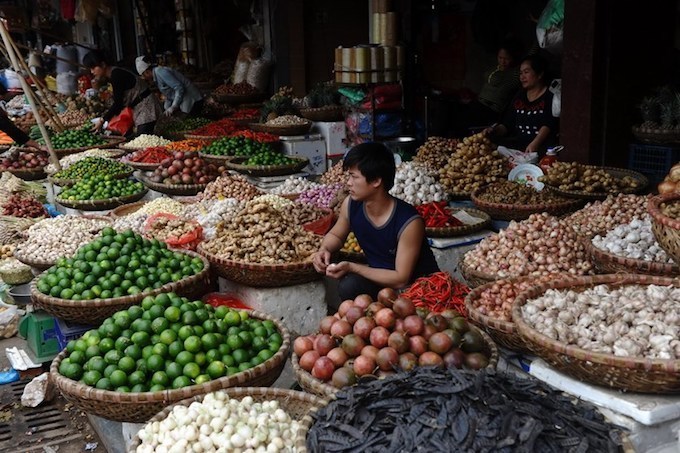
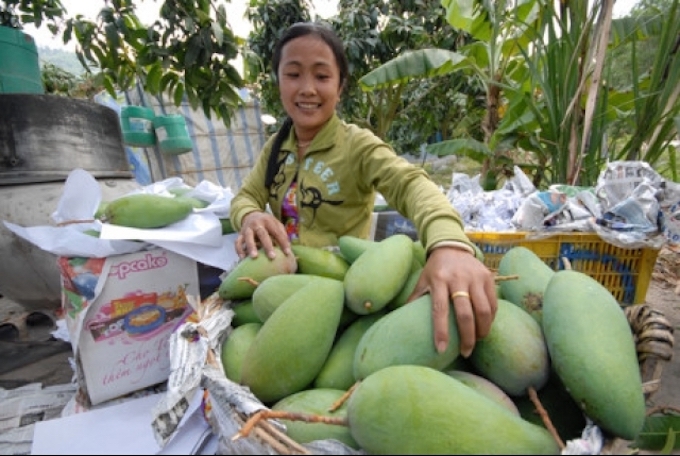
    Vietnamese fruit and vegetable exporters are struggling with many countries increasing quality standards for them. Dragon fruit, which accounts for 40 percent of Vietnam’s fruit and vegetable exports in value, is facing the biggest challenge as China, which used to buy 80-90 percent of Vietnam’s dragon fruit mainly through border gates, has tightened the import through the channel.

    The importer has also improved standards on quarantine and food safety and origin tracking to Vietnamese fruits, including dragon fruits.

    Facing the difficulties, many traders have recently stopped buying the fruit in some major growing regions.

    As a result, prices of the fruit have plummeted. Recently farmers in Binh Thuan Province said that prices are down 90 percent to VND1,500-2,000 ($0.06-0.08) per kilogram.

    Vietnam’s dragon fruit exports might see more pain since China may reduce purchases after expanding its own cultivation, warned by industry insiders.

    Vietnam’s Plant Protection Department said China has planted dragon fruit on 20,000 hectares in places such as Guangxi and Hainan.

    The department said this area would increase to 30,000 hectares next year.

    Chili, which accounts for a third of Vietnam’s total vegetable export value, is struggling in the Malaysian market.

    Malaysia is among the three largest buyers of chili from Vietnam along with South Korea and China.

    But it announced to cease licensing the import of chili from Vietnam from September 14 after detecting excessive residues of plant protection products in chili shipments.

    Together with dragon fruits and chilli, papaya has struggled to enter overseas market.

    The South Korean Ministry of Food and Drug Safety has informed Vietnam’s Plant Protection Department that it discovered genetically modified papaya in shipments from Vietnam.

    South Korea does not allow entry of genetically modified organism (GMO) products.

    A spokesperson for a large papaya exporter in southern Long An Province said that farmers knew about this policy, and some GMO fruits went into the consignments despite their efforts to prevent it.

    It is working with farmers to grow non-GMO fruits, the spokesperson added.

    Nguyen Quoc Vong, a researcher in the GMO fruit industry, said the trend in developed countries is to consume non-GMO products.

    He warned that Vietnam would be shut out of high-end markets if it exports GMO products since food safety standards around the world are rising.

    “Our competitors like Thailand do not grow GMO produce, so they will have an advantage in high-end markets where we cannot compete,” he said.

    Vietnam earned $3 billion from fruit and vegetable exports in the first nine months of this year, up 15.2 percent over the same period last year, according to the General Statistics Office.

  • An Overview of E-commerce in South East Asian Countries

    An Overview of E-commerce in South East Asian Countries

    Electric commerce or e-commerce is the activity of buying and selling online. Typical e-commerce transaction includes purchase of online books, music purchase and purchase and sales of many other items.  Three known major areas of e-commerce include online retailing, electric market and online auction. Technologies such as mobile commerce, internet market, electronic funds transfer, and electronic data interchange (EDI), online transaction process and many others.

    The practice of e-commerce in Southeast Asia started during the dot.com era in the 90’s just like in many parts of the world. The dot.com era refers to the period where companies started using doing for most of their businesses on the internet, usually through a website that uses the popular domain “.com”. During the dot com era southeastern Asia mainly purchased items from American and European companies that would be delivered in their countries. During this era companies with electronic commerce had shown great prospect with their fast growth and promising profits. Companies’ stock prices skyrocketed and Asia was pretty happy because the rise had resulted to a bubbling economy through electronic commerce.

    Asia then began to attract nearly half of the total capital inflow from developing countries appealing them with high interest rates. Countries like Malaysia, Singapore, Thailand and Indonesia experienced an increase in their GDP rates. Around the year 2000, the e-commerce market was mainly involved in a business to business (B2B) transaction due to customers mistrust after going through the 1997’s financial crises and the bubble burst in southeast Asia – bubble burst is often identified only in retrospect once a sudden drop in price has occurred – The burst is usually profitable for buyers and not sellers. In the 90’s a lot came up as hindrances to the upspring of electronic commerce

    – In those days, aside mistrust e-companies had other issues of which Southeast Asian countries were also affected. As a result of its structural shortcomings, a much more diverse range of payment solutions have become common in the region. The average internet penetration around southeastern Asia with the exception of Singapore was 38% while leading countries have an internet penetration of 70-80%, this made cash on delivery offered by 80% of the players in both Vietnam and Philippines, though bank transfer is another very popular payment method across the SEA. With each of the countries having 94%, 86% and 79% of merchants in Indonesia, Vietnam and Thailand respectively offering it.

    – In addition to a lack of uniformity in payment methods, there is also significant market fragmentation the Southeast Asian consumers have so many platforms to choose for their daily need.

    – Culture also was an inhibiting factor –the influence of Traditions in the Asian region overtime had made people have low trust in bank system and electronic payment, for example; credit card owners and other means used in payment other than in cash is small – government in those times pushed for a cashless policy in their society by trying to implement laws to suit online transactions.

    – Fraud and high level of corruption was another setback to the growth of electronic commerce in the region.

    The prospects and thrive; the battle for supremacy

    The gold rush in the online ecommerce of the as left traditional offline retailers in the Asia region like Thailand and Indonesia scramble for an online business move.

    Over the years until this day the massive growth in e-commerce around southeastern Asian has attracted big name investors into the region. In 2016 the release of the Google Temasek SEA Economy spotlight highlighted Southeast Asia as the world’s fastest growing internet region.  With an existing internet user of 260M which was projected to grow to 480m users by 2020. In the research they predicted that southeast Asia’s internet economy will grow to 200B by 2025 and that $40 – 50bn in investment will be required over a decade to achieve that goal, fast tracking to 2017 they observed that the southeast Asia’s internet user base continues to grow rapidly. there will be 330m monthly active internet users by end of 2017 adding over 70m new users since 2015 13% CAGR.  They estimate that Southeast Asia’s internet economy will reach $50b in 2017, meaning it will Grow at a rate of 27% CAGR outpacing their 20% 10year CAGR projection.

    Asia as a continent had an increase in of around 4.5  billion in the GMV ( gross  merchandise value ) of first hand goods and has had a 41% compound annual growth rate ( CAGR ) in the past couple of years- 2015 to 2017- as given by Google –Temasek’s economy southeastern spotlight 2017 report. The Temasek report went further to predict that CAGR will rise from $5.5bn of 2015 to $88bn by 2026. 2017 witnessed events which proved high results are expected from the e-market in southeastern Asia.  The explosive growth in E commerce as lured china’s two e-commerce giants Alibaba and sd.com to the southeast online market. Amazon much awaited  recent entrance into the E-market of a southeastern nation ( Singapore to be specific) to fast track its online market expansion in southeast Asia also proved there was an attractive raw material in the cyber space of the region.

    The record breaking 1billion dollar sales of shares of Lazadas to Alibaba with alibaba also putting its grip on Tokopedia; arguably a future competitor in Indonesia. The resilience of another China based heavy weight company; Tencent. Tencent has also kicked start investments in companies like SEA (previously Garena) predominantly a gaming powerhouse that runs Shopee, Go-jek, Traveloka, Tiki.nn and Pomelo. The US based KKR  in a bid not to be left out of this massive growth phase through emerald media put US$65million into e-commerce arms dealer Acommerce. This trends of acquiring more shares and grabbing more local companies across the Asian borders by these online giants  is expected in coming years as all stated above points to the fact that the riches in online space of these Asian nations is worth risking for.

    Currently, predictions have given that the home based Asian companies will have to pick sides with either of or stand their ground against the foreign forces from both the western and eastern part of the world.  Predictions went further  to specify that  foreign based companies like Alibaba, Amazon and Tencent is  likely to have a bloodbath battle for the monopoly of the regions  electronic commerce  or share the  Asian online customers, some term this head to head of the western state and eastern state as the clash of the online titans.  It is hope that this clash will result to a much needed gold-shed To Help in the growth of the developing region

    Joe Tsai, Alibaba vice chairman, in speaking with Retail News was quoted as saying “is there a land grab right now for these kind of assets? I think in the land grab they [Tencent] are following us. They are seeing that we have positioned ourselves very well, and they are sort of playing a catch up game. So what we want to do is to work with local entrepreneurs. ”

    Experienced, grown and growing

    Marc woo, Google head of ecommerce , travel and financial services was quoted to have said “Asia pacific (APAC) accounted for 40% of global ecommerce sales in the 1st quarter in 2017, but vast majority of those sales went to larger or more mature markets in the region, particularly china, but also japan, Australia, South Korea, and India. That leaves Southeast Asia as the next frontier for ecommerce in the region.  “

    A steady increase in the advantages of electronic commerce in the region resulted to a 50% growth last year and now totals 200 million individuals across southeastern Asian’s top six economies. The southeastern Asian nation Singapore takes a top spot in Asia with an average of 14.04 sessions per person per year visiting amazon.com. It is rumored and expected that by the end of the year the ecommerce companies should erect physical stores in their resident southeastern nations. This will make a great boost in the economy of this regions.  This huge development in ecommerce have led southeast Asian governments to launch a bid to introduce taxes on ecommerce sales as they look to claim their dollar-and-cents take from one of their most promising engine towards  economic and  financial buoyancy.

    This though might increase the cost price of goods and services offered by the online companies but cannot override nor underestimate its advantage as compared to import and shipping processes. Taxing online sales will align practice with those of world leading countries. It puts online retailers on a leveled playing ground with brick-and-mortar counterpart. This growing market has also initiated an online network process between the Chinese and the Asian region as Alibaba is working to set up a digital free-trade zone in Malaysia and has signed a memorandum of understanding with the government of the Asian country and the authorities of china to simplify cross-border trade between the two regions.

    If this deal falls through under the current government of china a long term mutual profit making relationship is expected to last for a very long time between the Asian nations and the Chinese government  giving that  the china parliament are rumored to have kick started plans in keeping their president more longer in office than usual.  The critical factors responsible or observed to needed for the spontaneous growth of ecommerce in the southeastern region of the continent are

    • A growing middle class – knowing that the middle class contains the highest number of mobile phone users and also the highest number of common goods purchasing.
    • Rapidly expanding internet access are positive indicators for fast paced e commerce growth in coming years. Internet access needs to be at its best for the effective running of electric commerce in a state

    The middle class population of the Asian region is expected to reach a 400million in 2020 from its 190 million of 2012, according to Nielsen project.

    Internet access in the region as not only being expanding at a high pace but has also improved strongly over the years like stated in the research of Google Temasek SEA economy spotlight report stated above.

    The electric commerce has also shown to be of disadvantage though not significant as compared to the many fruit yielded by the online market.

    • The desire for local business owners and the nation’s mobile phone user population to switch online results to more cases of fraud because this system isn’t used to them.
    • Competition between locals and foreigners which should encourage an healthy business environment is not observed as the big guns will slowly silently phase out the local brands
    • The preference of foreign products to locally made products by locals isn’t favorable for the country’s economy.
    • Owing to the creation of a good relationship with certain world leading countries, good tides with others could be altered.
    • If not properly monitored, foreign companies might have a full grip of the southeastern nation economy.

    One major benefit that has been observed to have taken the front line in the advantage of electronic commerce in the southeastern Asian region is the quest for each nation to outperform each other. Especially between Thailand, Vietnam and Indonesia, this healthy beef has led to varying developments in these nations as none wants to be left behind in the development and modernization of their country. These alongside the introduction of big time investors, the rise in economy growth, job creation in nations, strengthening diplomatic tides and many other advantages.

    Stakeholders and experts have advised to government of these Asian nations to support the region to grow by fixing reasonable tax levies in other not to discourage foreign and local investors, encourage a competitive market, improve online network and provide adequate education to ease communication with foreign partners. With the huge wealth emanating from the electric commerce sector, if properly managed these nations can get a massive boost in their nations wealth and reputation. The potentials possessed to build a nations revenue by employing electric commerce cannot and should not be undermined.

     

  • Minor takes The Coffee Club to Vietnam

    Minor takes The Coffee Club to Vietnam

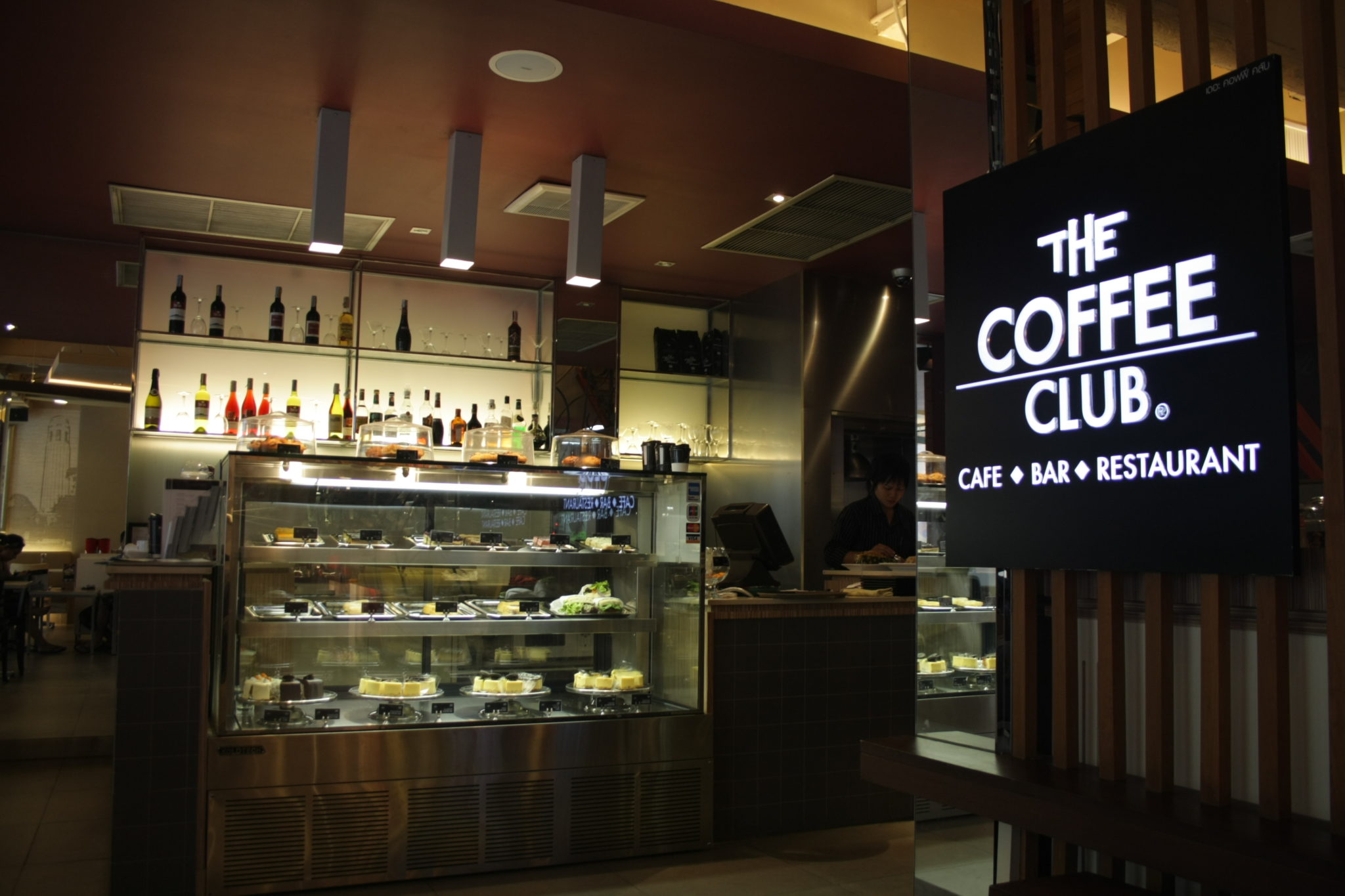
    Vietnam Investment Group (VI Group) has signed a master franchise agreement with Minor International’s subsidiary Minor Food to bring The Coffee Club to Vietnam. Under the joint venture, VI and Minor plan to open 100 The Coffee Club outlets over the next five years.

    “With the flourishing coffee market and favourable macro trend, we are very optimistic about the opportunity to strengthen our presence in the country and grow The Coffee Club brand nationwide,” said Paul Kenny, CEO at Minor Food.

    According to Chaiyapat Paitoon, deputy chief financial officer and strategic planning for Minor International, restaurant businesses show strong potential in Vietnam because people “want a wider variety of cuisines, paving the way for foreign players to come in and offer different choices in addition to traditional, local and street food”.

    “The Coffee Club offers a distinctive restaurant experience with great selections of food and beverages menus, excellent coffee and a welcoming relaxed atmosphere enriching the contemporary lifestyles of the Vietnamese consumers,” said David Do, VI Group MD.

    The joint venture plans to open 20 The Coffee Club restaurants next year.

    Minor is no stranger to Vietnam’s F&B market. It first established its restaurant footprint there  in 2009 launching three casual-dining restaurant brands, including The Pizza Company, Swensen’s and Thai Express. It now has 83 outlets nationwide across those brands, 60 of them under the Pizza Company banner.

    Apart from The Coffee Club, Minor is also looking for opportunities to launch other restaurant brands into Vietnam at a later stage.

    Opening its first store in Brisbane in 1989, The Coffee Club claims to have become Australia’s largest home-grown cafe group with more than 400 outlets throughout Australia, New Zealand, the Maldives, Seychelles, Thailand, Indonesia and the UAE. Thai-headquartered Minor International owns 50 per cent of The Coffee Club.

    Analysis: Fit for Vietnam?

    Entering Vietnam market means The Coffee Club is competing with fast-growing coffee chains like local operators The Coffee House and Highlands, and international chains such as Starbucks and The Coffee Bean and Tea Leaf, the latter of which has struggled to gain critical mass in the market and several months ago closed its flagship in downtown Ho Chi Minh City. Fellow Australian restaurant chain The Hog’s Breath Cafe also gave up last year after about seven years in the market.

    If The Coffee Club’s Vietnam outlets follow the Australian format, they will focus more on lunches, brunches and dinners than coffee as their name might suggest, although it does serve coffee on site and for takeaway.

    The company faces challenges in sourcing ingredients, many of which will come from offshore, and finding real estate at an affordable price. Those two factors combined will create price pressure for the brand, despite the affordability of labour in Vietnam.

  • Vietnam remains among 50 most valuable national brands

    Vietnam remains among 50 most valuable national brands

    Brand Finance has released its annual report on the world’s 100 leading nation brands, and Vietnam is in 43rd place. Its brand value is estimated at $235 billion, up $32 billion from the previous year. It has risen two places in the list this year.

    The global brand valuation consultancy firm evaluates a country’s national brand on the brands based there and the economy as a whole by weighing up various socio-economic factors.

    A “strong” national brand denotes a highly attractive environment for investment, encouraging inward investment, adding value to exports, and attracting tourists and skilled migrants, it explained.

    Vietnam’s continuing rise in the list is primarily due to “Vietnam Value”, a national program to endorse products and services that meet minimum standards set out by the government, and concentrated efforts to promote economic growth by the government, it said.

    In Southeast Asia, Vietnam is only in sixth place in terms of value, below Indonesia, Singapore, the Philippines, Malaysia, and Thailand.

    The Top 10 in the world did not see much change with the U.S., China and Germany continuing to lead in terms of value.

    The U.S.’ value has shot up by 23 percent to $25.9 trillion this year as a result of falling tax rates and a more business-friendly environment despite the negative public image that President Trump may have cultivated, the report said.

    Founded in 1996, Brand Finance is the world’s leading independent branded business valuation and strategy consultancy. Headquartered in London, the firm is present in over 20 countries.

  • Vietnam footwear exports benefit from US-China trade spat

    Vietnam footwear exports benefit from US-China trade spat

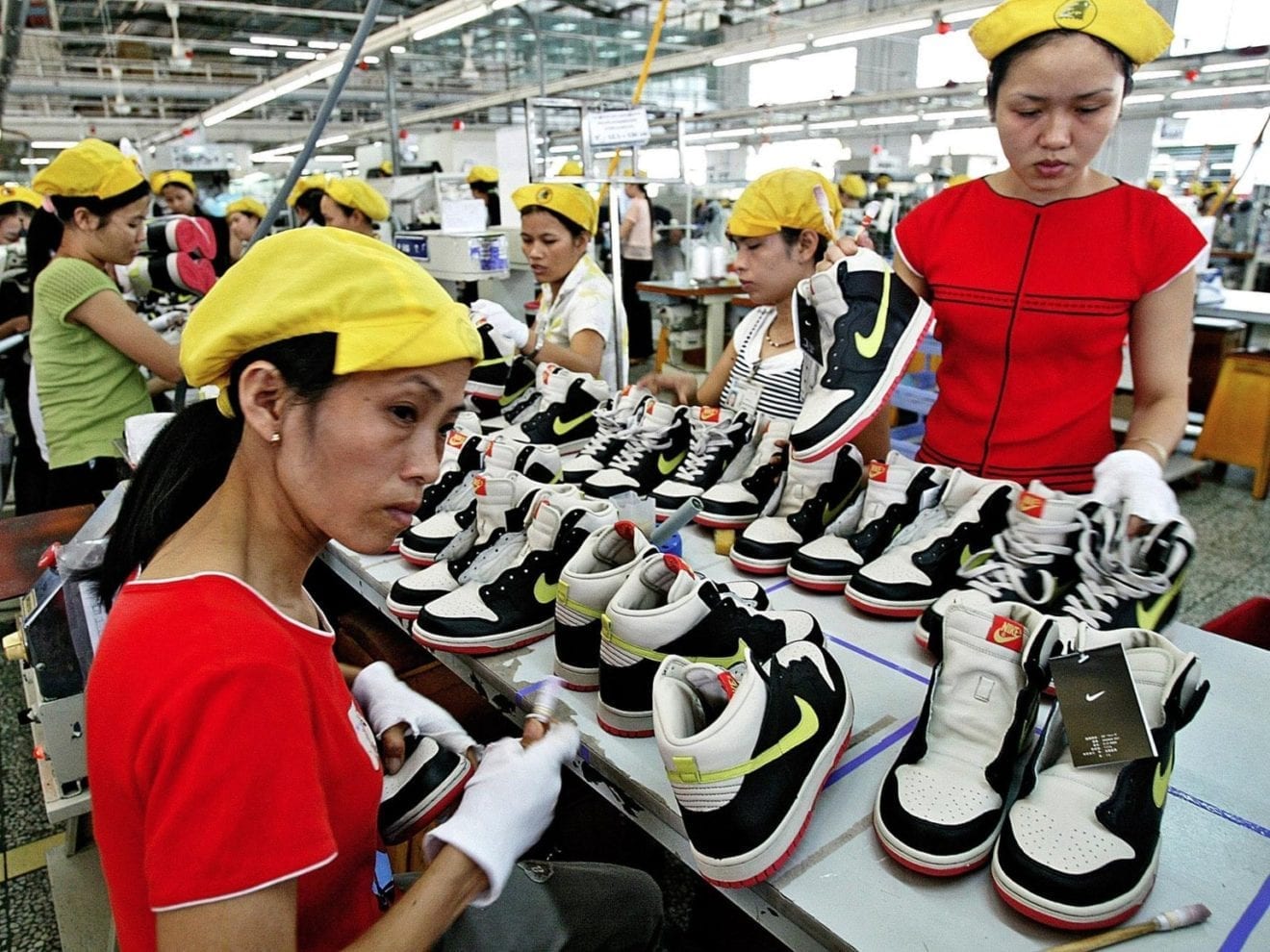
    Vietnamese footwear exporters seem to be benefiting from the ongoing trade war between the U.S. and China. According to customs statistics, Vietnam’s footwear exports in the first nine months of this year were worth $11.74 billion, a 10.2 percent year-on-year increase. Its exports to China in the period have risen by 28.5 percent, to Japan by 14.7 percent, and to the U.S. by 13.5 percent.

    Vietnam is the second biggest exporter of footwear to the U.S. behind China, shipping 404 million pairs of shoes last year.

    The upward trend is likely to continue, too, as rising wages in China increase the cost of goods produced there and the country is thus directing more of its manufacturing resources toward higher-priced goods like electronics, according to the global footwear news outlet Footwearnews.

    Foreign companies are moving to other countries like Vietnam to cut cost.

    Adidas CEO Kasper Rorsted said last May that his company is shifting sourcing of footwear from China to Vietnam.

    Vietnam has in fact overtaken China as its top supplier, with Vietnamese factories producing 44 percent of its shoes by volume last year and Chinese manufacturers supplying 19 percent, according to Adidas.

    This would help shield the company from potential tariffs or supply chain disruptions if President Donald Trump’s trade war with China continues to escalate, a fact its competitors also seem to be taking notice of.

    Vietnam may see export orders surging as footwear importers shun China to avoid high U.S. tariffs and choose the Southeast Asian nation instead, local media quoted Diep Thanh Kiet, vice chairman of the Vietnam Leather, Footwear and Handbag Association (Lefaso), as saying.

    “Vietnam’s leather and footwear export can reach $19.5 billion or slightly higher this year depending on the situation,” he said. Vietnam’s footwear exports were worth $14.65 billion last year.

  • Vietcombank files for private issue of 360 million shares

    Vietcombank files for private issue of 360 million shares

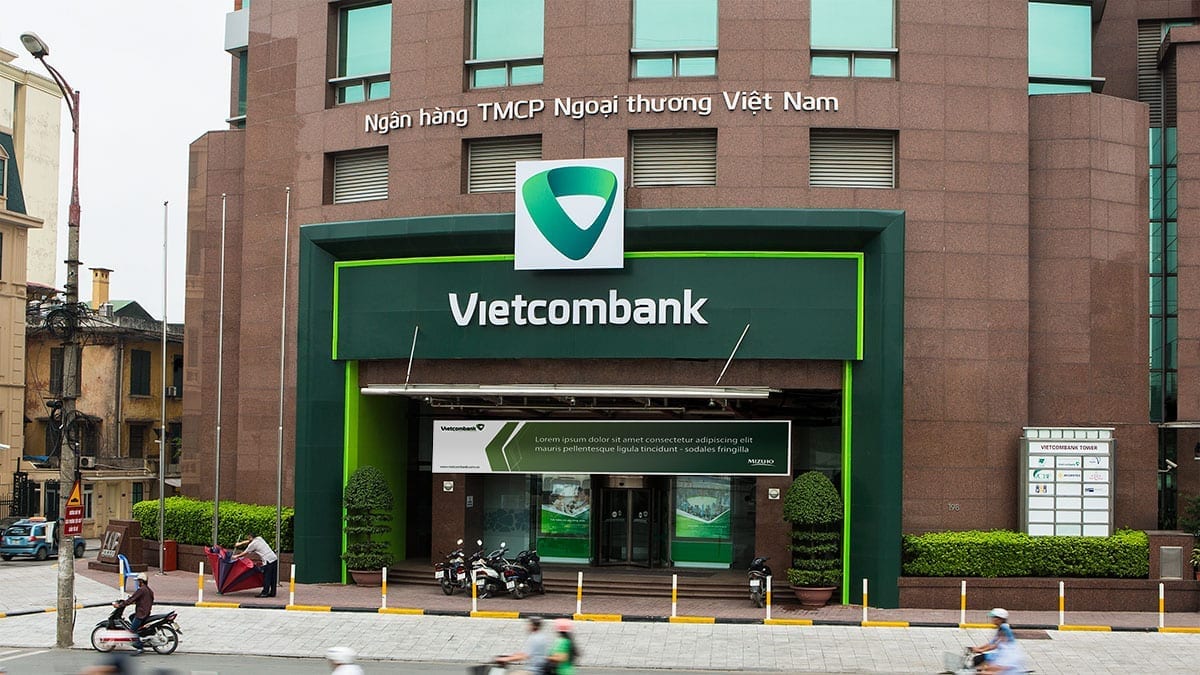
    Vietnam’s State Securities Commission has received an application from Vietcombank for a private placement of shares worth over $156.5 million. The commission (SSC) said the country’s third largest bank by assets proposes to make a private issue of 360 million shares, equivalent to 10 percent of its charter capital.

    The lender plans to sell nearly 54 million shares to its strategic partner, Japan’s Mizuho Bank, to ensure it retains its 15 percent stake post dilution.

    It will sell the remaining 306 million shares, or 7.73 percent of its charter capital, to other undisclosed investors.

    The bank has not disclosed the issue price either. Its shares closed at VND58,000 ($2.5) Friday on the HCMC market.

    The State Bank of Vietnam recently gave Vietcombank approval to increase its charter capital by 10 percent to VND39.58 trillion ($1.69 billion).

    The lender has also received approval from its shareholders to make the private placement.

    Vietcombank and other top lenders, including BIDV and Vietinbank, have been struggling to increase their capital to meet international capital adequacy norms.

    The second Basel Accords, or Basel II, prescribe minimum capital adequacy of 8 percent of risk-weighted assets for all financial institutions to cover operational risks.

    In 2016 Vietcombank signed a deal with Singapore sovereign wealth fund GIC Private Limited to sell a 7.73 percent stake. The deal has yet to be consummated, with the bank’s chairman, Nghiem Xuan Thanh, saying they have been unable to agree on a price.

    As a state-owned bank, Vietcombank’s issue of new shares must not be at a price lower than their current market price or a minimum value set by the government.

    However, the price offered by GIC did not meet this requirement.

    If the private issuance of VND3.6 trillion ($156.5 million) is successful, Vietcombank will have the highest chartered capital in the industry of nearly VND40 trillion ($1.74 billion).

  • Vietnam urged to cut dependence on crude oil

    Vietnam urged to cut dependence on crude oil

    A prime ministerial advisory body has said the state budget is overly dependent on crude oil, an unsustainable income source. The National Financial Supervisory Commission (NFSC) recently said crude oil is not a sustainable income source, both in the short and long term.

    In the short term, crude oil revenue can be affected by global oil prices and mining output; and the state budget has been significantly impacted by such fluctuations over the years, the NFSC noted.

    In the long run, this source of income is also unsustainable as national reserves are limited, it added.

    Earlier, Deputy Prime Minister Vuong Dinh Hue had said at a meeting of the legislative National Assembly that Vietnam needs to stop relying on crude oil and focus on tourism to ensure its economic growth.

    “It is better to welcome one million tourists than trying to find one million tons of crude oil because tourism is more eco-friendly and safe for the economy,” he’d said.

    Vietnam’s September crude oil exports totaled 375,000 tons, down 21.1 percent year-on-year, according to the General Statistics Office. This brought crude oil exports in the first nine months of this year to 2.97 million tons, down 45.2 percent from a year earlier.

    From early this year to September 15, accumulated budget revenue is estimated to be at VND898.3 trillion ($39.06 billion), of which VND43.5 trillion ($1.89 billion) or about 5 percent comes from crude oil, according to the General Statistics Office.

    Vietnam’s domestic crude oil production reached its peak in 2004 with an output of more than 20 million tons, but has declined to an estimated 14.2 million tons in 2017.

    It is forecast that around 11 million tons will be produced in 2018. Crude oil exports have contributed 0.25 percent to the country’s GDP in recent years.

  • EU pushes for approval of trade agreement with Vietnam

    EU pushes for approval of trade agreement with Vietnam

    The European Commission submitted for approval on Wednesday a free trade agreement with Vietnam. The E.U.-Vietnam trade and investment agreements will need approval from the E.U.’s 28 members and from the European Parliament.

    The parties have agreed a related accord to promote democracy and human rights, including commitments, dialogue and possible sanctions. E.U. Trade Commissioner Cecilia Malmstrom said no one denied there were human rights problems in Vietnam.

    “We are talking openly about this with our Vietnamese counterparts and the trade agreement will not make Vietnam a fully fledged democracy overnight. It is one tool in the toolbox that we have in relations with Vietnam and other countries,” she said.

    The European Union will sign a trade deal on Friday with Singapore, another member of the Association of Southeast Asian Nations (ASEAN), and is in talks with Indonesia.

    It is unclear whether the European Parliament, which is expected to debate and vote on the Singapore agreement as well as the E.U.-Japan free trade deal, will have time to pass the Vietnam accord before E.U. elections in May.

    The trade deal would eliminate 99 percent of all tariffs, although some staged over a time period and some, notably agricultural products, limited by quotas.

    Vietnam, for example, would cut its duty on E.U. car imports from 78 percent to zero over 10 years and for wines and spirits, from around 50 percent, over seven years. E.U. companies would also be able to bid for Vietnamese public contracts.

    In return, the European Union would take seven years to eliminate its duties on certain Vietnamese products, such as its major textiles, clothing and footwear exports.

    Vietnam has pledged to protect 169 European food and drinks products, such as champagne or Parmigiano Reggiano cheese, meaning such names could only be used for E.U. imports.

    The agreement includes a chapter on sustainable development, such as implementing international standards on labour rights and the Paris climate accord.

  • ‘Inevitable’ growth of Vietnam’s consumer lending market attracts newcomers

    ‘Inevitable’ growth of Vietnam’s consumer lending market attracts newcomers

    Early this month, EVN Finance, a subsidiary of national power utility, Vietnam Electricity, launched a consumer lending program called Easy Credit in Ho Chi Minh City. Customers with a monthly minimum income of VND4.5 million ($194) in five southern localities – Ho Chi Minh City, Dong Nai, Binh Duong, Long An and Vung Tau – are eligible to borrow cash from the program.

    Eligible customers can take loans of VND10-90 million ($432-3,882) with payback periods of 6-60 months.

    EVN Finance is one of many finance institutions looking to cash in on the growth in consumer lending, which had a value of over $5 billion at the end of last year, according to the National Financial Supervisory Commission (NFSC).

    SHB Finance and VietCredit Finance Company have also introduced similar credit schemes.

    Some banks and foreign investors have announced plans to set up consumer finance divisions to increase their market shares in the sector.

    Orient Commercial Bank (OCB) is planning to set up a subsidiary with a capital of around VND500 billion ($21.7 million) or acquire an existing finance company in the market.

    In June, SeABank acquired the subsidiary of Vietnam Posts and Telecommunications Group (VNPT), Posts and Telecommunications Finance Company, for VND710 billion ($30.87 million).

    In addition to the Vietnamese banks, foreign investors are also eyeing this market. Early this year, Korea’s Shinhan Financial Group bought Prudential’s consumer finance unit for $151 million.

    Industry insiders say more companies are coming in because of increasing demand in Vietnam for consumer lending services. NFSC statistics show consumer lending surged 50.2 percent and 65 percent in 2016 and 2017, respectively.

    The commission attributed the surge to a high demand for housing, arising from a young population and increasing urbanization.

    Kalidas Ghose, CEO of financial firm FE Credit, said that while consumer lending has developed rapidly in recent years, the market has vast room to grow.

    He said the potential for exploiting the market is still large since consumer lending is an inevitable trend across the globe.

    The share of consumer lending in Vietnam’s total outstanding loans is only about 11.4 percent, while the figure in developed countries is between 40-50 percent, Ghose added.

  • Vietnam’s per capita GDP long way away from 2020 target

    Vietnam’s per capita GDP long way away from 2020 target

    Vietnam’s GDP per capita is set to increase this year, but its 2020 target of $3,200-3,500 looks distant. Minister of Planning and Investment Nguyen Chi Dung said at a National Assembly meeting Monday that if Vietnam’s GDP increases by 6.7 percent this year, per capita GDP will reach $2,540, up $155, or 6.1 percent year-on-year, and 1.21 times that of 2015.

    However, the number is still far away from the country’s target of $3,200-3,500 by 2020, he conceded.

    According to World Bank Group statistics, Vietnam’s GDP per capita in 2017 is $2,343. The figure for Singapore is $57,714, Malaysia ($9,945), Thailand ($6,594), the Philippines ($2,989) and Myanmar ($1,298).

    Minister Dung estimated that Vietnam’s GDP would grow by 6.57 percent on average in the 2016-2018 period, meeting the National’s Assembly target of 6.5-6.7 percent growth.

    However, he expressed concerns about the increasing number of businesses that stopped operations in the first nine months of this year.

    While 96,610 new businesses opened, 73,100 closed, up 48 percent year-on-year.

    These figures worried government officials at the meeting. Vu Hong Thanh, Chairman of the National Assembly’s Economic Committee, said that the goal of having one million businesses by 2020 will be “difficult to achieve.”

    Last year Vietnam had over 560,000 active businesses, up 11 percent year-on-year, according to the General Statistics Office.

    But in another meeting last week, Deputy Prime Minster Vuong Dinh Hue said that the goal “is full of challenges, but achievable.”

    Hue said that how strong these businesses are and how much they can contribute to the economy is more important.

    “The government aims to practically improve the business environment by not imposing more conditions,” he said.

    In the first nine months this year, Vietnam’s GDP grew by 6.98 percent, the highest nine-month growth rate since 2011. The economy grew by 6.81 percent last year, the highest rate in a decade.

  • Vietnam becomes less competitive on global index

    Vietnam becomes less competitive on global index

    Vietnam has fallen three places on the competitiveness index from last year, a new World Economic Forum report says. The country was ranked 74th in last year’s global competitiveness index, but fell three places to 77th this year, according to a WEF report released Wednesday.

    The 2018 Global Competitiveness Index 4.0 report said that Vietnam’s overall competitiveness score of 58.1 was lower than the world average of 60.

    The report defines competitiveness as the set of institutions, policies and factors that determine the level of productivity.

    It added that Vietnam scored highest in the factors of health (81 points, ranked 68th), macro-economic stability (75 points, 64th) and market size (71 points, 29th).

    The report ranked Vietnam 102nd among 140 countries in terms of product market and 101st in business dynamism.

    The product market index components include the extent of market dominance, competition in services and trade tariffs.

    Vietnam’s innovation capability was the weakest among twelve factors used in determining the competitiveness index, at just 33 points, ranked 82nd.

    The country’s adoption of information and communication technology (ICT) had the second-lowest score of 43 points, ranked 43.

    The report added that globalization has contributed to reducing global poverty and inequality between countries. It cited Vietnam as an example, saying the U.S.-Vietnam bilateral trade has helped reduce poverty by increasing wage premiums in export sectors.

    The trade pact also reallocated Vietnamese labor from agriculture to manufacturing, stimulating enterprise job growth, it said.

    The report also cited Vietnam as an example of one of the fastest growing economies in the East Asia and Pacific (EAP), which is the fastest-growing region in the world, accounting for one-third of global growth last year.

    Vietnam, along with Cambodia, China, Laos and the Philippines, had a growth of over 6 percent last year, it added.

    The EAP also contributed three countries/territories to the world’s most competitive economies: Singapore (scored 83.5, ranked 2nd), Japan (82.5, 5th) and Hong Kong (82.3, 7th).

    The U.S. topped the ranking with a score of 85.6 thanks to vibrant entrepreneurial culture and high scores in the labor market and the financial system.

  • Why Vietnam’s auto industry never stepped on the gas

    Why Vietnam’s auto industry never stepped on the gas

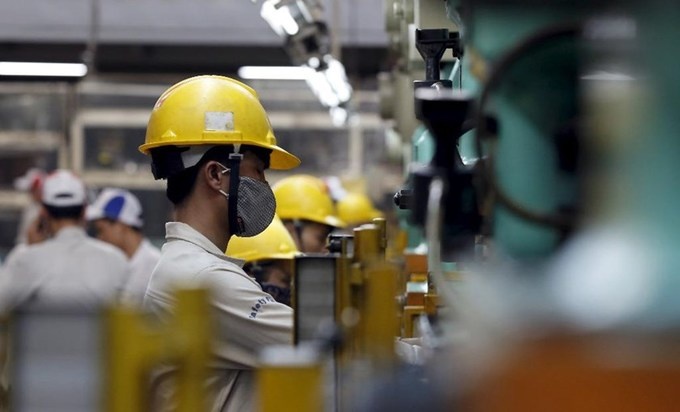
    Vietnam’s auto industry has suffered from rewards not being connected to production and the neglect of domestic suppliers.

    It is evident that while joint ventures have continually received financial support and incentives without developing production, domestic suppliers have been ignored.

    In this context, the emergence of VinFast – the year-old auto-making subsidiary of Vietnamese realty and retail giant Vingroup – is being seen as a keystone element in the development of the Vietnamese auto industry.

    Standing alongside Vingroup are major incumbents, like Truong Hai Auto Corp and Hyundai Thanh Cong. Although it seems the right time has come for Vietnam’s car industry to move to a new level, the industry has failed to take shape for the last 20 years.

    Car making projects in Vietnam have been around since the 90s. Production was first undertaken by the Hoa Binh (Vietnam Motors Corporation-VMC) and Mekong Auto Corporation in the form of business cooperation contracts (BCC) with other automobile manufacturers.

    VMC assembled and manufactured different product lines for BMW, Mazda and Kia, while Mekong produced for Fiat and Ssangyong.

    Subsequently, foreign companies began to invest in Vietnam in the form of joint ventures, like Toyota, Honda, Daihatsu, Ford and Mercedes.

    The developmental strategy for the first stage of the industry was clear: attract FDI, create jobs, and create a favorable environment to nurture local producers of materials needed to produce cars.

    The social rationale for this strategy was also to use the projects to provide growth opportunities for low-income provinces such as Vinh Phuc and Hai Duong.

    At that time, even though consumption was primarily in the south of Vietnam, most manufacturers were located up north. To protect the fledgling joint ventures, which primarily manufactured CKDs (completely knocked down cars, to be assembled by the buyer), the government enforced a protectionist policy, closing the market for imported CBUs (completely built up cars).

    In the early 2000s, tariffs on imported CBUs were very high, at 120 percent. This rate was reduced to around 60-80 percent after Vietnam joined the WTO in 2007; and it was to be further lowered pursuant to the ATIGA trade agreement’s reduction schedule.

    2018 is the first year in the schedule where imported cars of ASEAN origin (C/O form D) are subject to zero percent tariffs.

    Since the Common Effective Preferential Tariff (CEPT) agreement was signed between ASEAN countries in 1992, car manufacturers have been forced to reconsider the strategy of producing and consuming cars within this region.

    With Vietnam’s accession to ASEAN, a country with a large population and unrealized market potential, car makers revised their long-term business strategy, reducing CKD production and moving towards 100 percent importing of CBUs from other countries in the region.

    The only manufacturing hope lay with Korean firms Kia and Hyundai, both of whom had just begun to establish production and consumption in the Vietnamese market.

    The emergence of Vietnam’s first home-made brand, VinFast, is a notable step forward, but it is still far too early for this to mean anything.

    A strategy that failed

    The strategy of using FDI to foster growth of the auto industry and increase localization has not been successful. Why?

    A new car must go through a rigorous testing process by the manufacturer and the relevant independent accreditation bodies. Therefore, manufacturers are very careful when choosing components for their car models. Original Equipment Manufacturing Suppliers (OEM), otherwise known as parts suppliers, are selected at the development stage of the model, long before the car is introduced to the market.

    Each vehicle has a Homologation Document that contains a complete set of vehicle assembly information. This kit must be approved by an independent body after testing, prior to the issuance of a Vehicle Type Approval. Compliance with technical documentation is compulsory to ensure quality and safety of the car.

    Because Vietnam’s auto market is small and production is predominantly in CKD form, models are usually introduced to the markets one to two years late. This makes it impossible to change component suppliers. There have been many cases of joint ventures in Vietnam suggesting replacement of components with those sourced from inside the country, but not getting the parent company’s approval.

    The Kia models sold in Vietnam are a good example. They run on Continental tires from Germany instead of Kumho, a Korean brand produced locally.

    In 2006, import taxes on CKD cars were restructured. Instead of being taxed per whole kit, the tax was levied on individual components to make it more favorable for manufacturers who source components locally. Despite this, the localization ratio has not increased as desired by policy makers.

    According to statistics compiled by McKinsey & Company, components sourced overseas make up 55 percent of the total cost of a car. Manufacturers cannot achieve the 40 percent localization rate required by the ATIGA trade agreement if the supply source is not available.

    Because of the failed developmental strategy for domestic manufacturers, Vietnam is instead becoming a market for major production centers based in Thailand and Indonesia.

    Over a long time, policies and resources have been poured into automotive joint ventures, but OEM Suppliers are key players in shaping the game. Most companies in the list of the 100 largest OEM suppliers are from Japan, Germany or the United States.

    While China is the largest market for automobile production and consumption, accounting for 30 percent of the world market, only two companies make the above list, mainly producing aluminium chassis components.

    So how can any real change happen?

    If local OEMs, not joint ventures, receive these huge resources and are facilitated to build factories in Vietnam, then the production and business strategies of automakers in the ASEAN region might not be what they are now. -Bui Sinh-

  • Aber ride-hailing service hits the road in Hanoi

    Aber ride-hailing service hits the road in Hanoi

    The ride-hailing market has seen new entrants after Uber’s departure, including Vietnamese firm FastGo, GoViet – a subsidiary of Indonesia’s Go-Jek, and the latest Aber. Aber estimates it will attract 5,000 taxi drivers and 5,000-10,000 motorbike drivers in Hanoi this year. In HCMC, the company is working with 7,000 drivers serving  more than 60,000 customers. Aber general director Huynh Le Phu Phong said the company was not afraid of major competitors such as Grab because it offers a wide variety of transport services.

    The firm will offer similar rates as other competitors, but give better benefits to its drivers, he said.

    “We do not force drivers to only work for Aber. They can also work for other companies to increase their income and improve their lives,” Phong said.

    In its latest update, Aber has added new features including a navigation system and accurate positioning to each alley, village, district and province in Vietnam.

    Vietnamese engineers designed the software.

    Next year, the company will focus on expanding its services, including Aber Express for delivery services, Aber Track for freight services, Aber Business for companies and Aber Travel for travel services, Phong said.

    Aber focuses on serving individual customers to help them save money, as well as drivers, when their vehicles are vacant, he added

    Instead of having to drop off items at the post office or delivery centers, drivers will come and pick things up right at the customer’s house.

    Current market dominator Grab has expanded its service to include GrabFood and GrabCar Business, the latter targeting the corporate sector. These moves pose further challenges for local long-standing taxi firms like Mai Linh, Taxi Group and Vinasun.

  • Vietnam remains among 50 most valuable brands

    Vietnam remains among 50 most valuable brands

    Its brand value is estimated at $235 billion, up $32 billion from the previous year. It has risen two places in the list this year. The global brand valuation consultancy firm evaluates a country’s national brand on the brands based there and the economy as a whole by weighing up various socio-economic factors.

    A “strong” national brand denotes a highly attractive environment for investment, encouraging inward investment, adding value to exports, and attracting tourists and skilled migrants, it explained.

    Vietnam’s continuing rise in the list is primarily due to “Vietnam Value”, a national program to endorse products and services that meet minimum standards set out by the government, and concentrated efforts to promote economic growth by the government, it said.

    In Southeast Asia, Vietnam is only in sixth place in terms of value, below Indonesia, Singapore, the Philippines, Malaysia, and Thailand.

    The Top 10 in the world did not see much change with the U.S., China and Germany continuing to lead in terms of value.

    The U.S.’ value has shot up by 23 percent to $25.9 trillion this year as a result of falling tax rates and a more business-friendly environment despite the negative public image that President Trump may have cultivated, the report said.

    Founded in 1996, Brand Finance is the world’s leading independent branded business valuation and strategy consultancy. Headquartered in London, the firm is present in over 20 countries.

  • Vietnam fruits, vegetables struggle to enter overseas market

    Vietnam fruits, vegetables struggle to enter overseas market

    Dragon fruit, which accounts for 40 percent of Vietnam’s fruit and vegetable exports in value, is facing the biggest challenge as China, which used to buy 80-90 percent of Vietnam’s dragon fruit mainly through border gates, has tightened the import through the channel. The importer has also improved standards on quarantine and food safety and origin tracking to Vietnamese fruits, including dragon fruits.

    Facing the difficulties, many traders have recently stopped buying the fruit in some major growing regions.

    As a result, prices of the fruit have plummeted. Recently farmers in Binh Thuan Province told VnExpress that prices are down 90 percent to VND1,500-2,000 ($0.06-0.08) per kilogram.

    Vietnam’s dragon fruit exports might see more pain since China may reduce purchases after expanding its own cultivation, warned by industry insiders. Saigon Giai Phong Online quoted Vietnam’s Plant Protection Department as saying China has planted dragon fruit on 20,000 hectares in places such as Guangxi and Hainan. The department said this area would increase to 30,000 hectares next year. Chili, which accounts for a third of Vietnam’s total vegetable export value, is struggling in the Malaysian market. Malaysia is among the three largest buyers of chili from Vietnam along with South Korea and China.

    But it announced to cease licensing the import of chili from Vietnam from September 14 after detecting excessive residues of plant protection products in chili shipments.

    Together with dragon fruits and chilli, papaya has struggled to enter overseas market.

    The South Korean Ministry of Food and Drug Safety has informed Vietnam’s Plant Protection Department that it discovered genetically modified papaya in shipments from Vietnam.

    South Korea does not allow entry of genetically modified organism (GMO) products.

    A spokesperson for a large papaya exporter in southern Long An Province said that farmers knew about this policy, and some GMO fruits went into the consignments despite their efforts to prevent it.

    It is working with farmers to grow non-GMO fruits, the spokesperson added.

    Nguyen Quoc Vong, a researcher in the GMO fruit industry, said the trend in developed countries is to consume non-GMO products.

    He warned that Vietnam would be shut out of high-end markets if it exports GMO products since food safety standards around the world are rising.

    “Our competitors like Thailand do not grow GMO produce, so they will have an advantage in high-end markets where we cannot compete,” local newspaper Thanh Nien reported him as saying.

    Vietnam earned $3 billion from fruit and vegetable exports in the first nine months of this year, up 15.2 percent over the same period last year, according to the General Statistics Office.