Tag: Vietnam

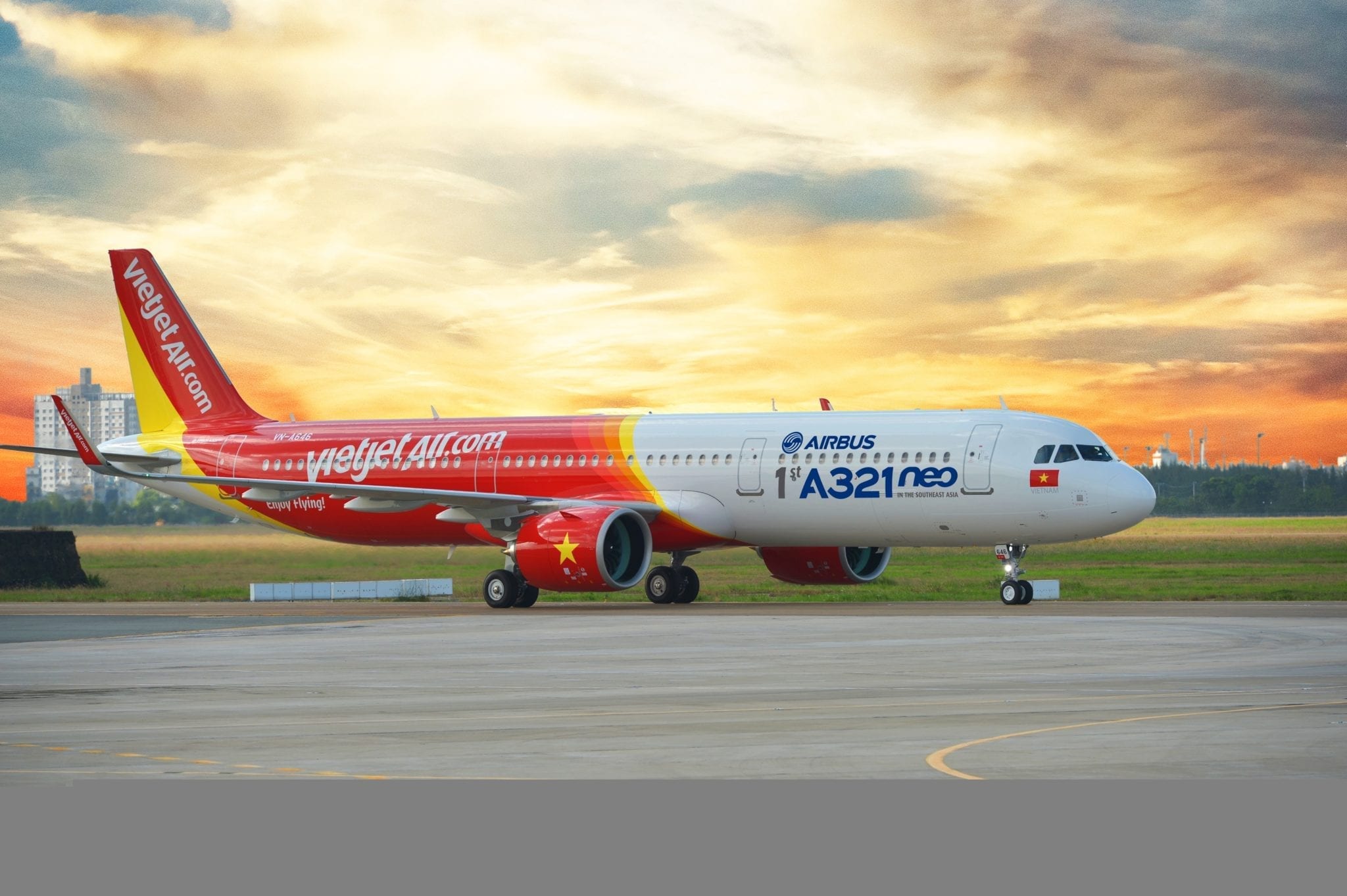
  • Vietjet signs $1.24 bln financing deal for new Airbus planes

    Vietjet signs $1.24 bln financing deal for new Airbus planes

    Vietjet signed a financing agreement with Mitsubishi UFJ Lease & Finance Company Ltd and France-based BNP Paribas Bank to finance the carrier’s acquisition of up to five new aircraft worth $614 million at list price, it said in a statement.

    Vietjet also signed a memorandum of understanding valued at $625 million for financing and future ownership of five other aircraft at list prices with France-based banking group Natixis and some Japanese equity underwriters, it said.

    The acquisition of the aircraft is part of a contract signed earlier with Airbus and includes A321neo aircraft, Vietjet said, adding all aircraft financed on Wednesday will be delivered in the last quarter of 2018 or early next year.

    “These deals will greatly contribute to Vietjet’s plan for fleet expansion and network growth in the coming time,” said Vietjet Vice President Dinh Viet Phuong.

    In July, Vietjet placed provisional order to buy 50 A321neo Airbus aircraft worth $6.5 billion at list prices while it also struck a deal for 100 Boeing passenger jets worth almost $13 billion at list prices.

    Vietjet, Vietnam’s biggest private airline, currently operates 60 Airbus aircraft with more than 385 flights daily within Vietnam and to countries such as Japan, Hong Kong, South Korea, Taiwan, Singapore, China, Thailand, Myanmar and Malaysia.

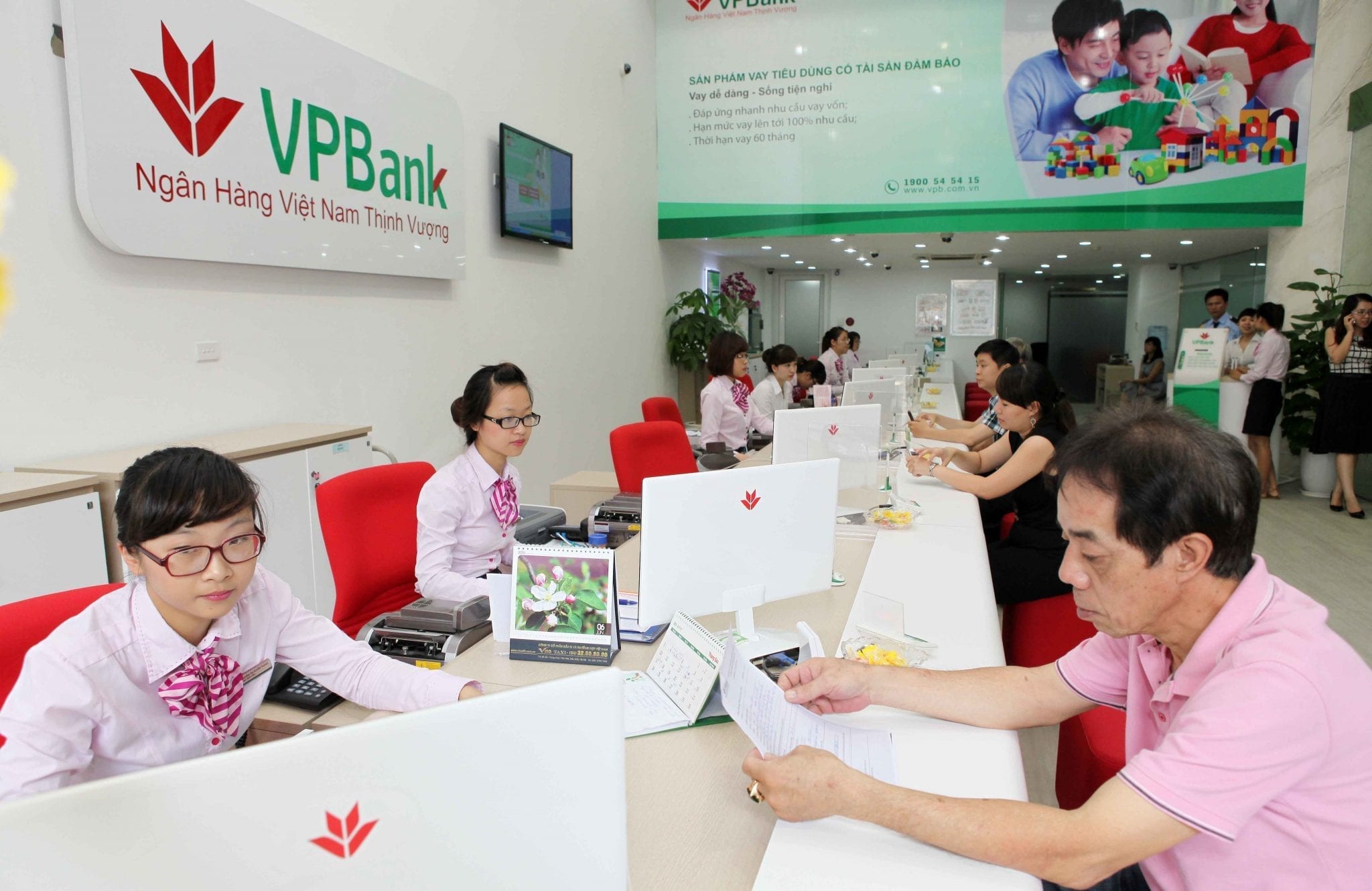
  • Vietnamese banks expect profits to rise

    Vietnamese banks expect profits to rise

    A newly-released central bank survey on business trends among Vietnamese banks found 72.6 percent saying their business situation had improved from the second quarter, with 15.8 percent reporting significant improvement.

    The survey, which was conducted in September, showed that over half, 56.8 percent, of the banks surveyed said that they have hired more staff in the third quarter, higher than the 46 percent in the second quarter.

    But 26.6 percent of them said they still need more staff and 61.5 percent planned to hire more people in the last quarter.

    The banks project lending to grow the most, followed by payments and deposits.

    Over 88 percent expect profits before tax to grow 18.6 percent on average from last year, higher than last year’s expectations of 13.6 percent.

    They expect capital mobilization on average will grow by 5.8 percent in the last quarter and 15.3 percent for the whole year, higher than last year’s 14.9 percent.

    The banks also forecast their outstanding loans to grow by 4.5 percent in the last quarter this year and by 15.2 percent for the whole year thanks to a stable mobilization interest rate.

    Vietnam has nine wholly-owned foreign banks, four state-owned banks and 31 joint-stock banks.

    The country’s credit growth in the first nine months of this year was 9.52 percent, lower than the 11.02 percent of the same period last year.

  • 3rd generation of Vietnam’s Bphone unveiled

    3rd generation of Vietnam’s Bphone unveiled

    Vietnam’s cyber security firm BKAV unveiled the third generation of its Bphone on Wednesday without a home button, pricing it from $300. It requires users to navigate to the home screen and apps by using hand gestures just like in Apple’s iPhone X.

    It comes in two versions, Bphone 3 and Bphone 3 Pro, and they have a six-inch 18:9 HD screen, Android 8.1 and a Snapdragon Qualcomm 636 chip, giving them twice the performance of the previous version, Bphone 2, according to BKAV. Company staff demonstrated this by playing the mobile game PUBG on the phones at the release event in Hanoi.

    The battery lasts 1.5 days and can be charged to 80 percent in 35 minutes with Quick Charge 3.0 technology at three times the average charging speed, the firm claimed.

    It is the first phone in the price range with IP68 waterproof rating, meaning it could be immersed in 1.5 meters of water for half an hour without a problem, BKAV stated. Vu Thanh Thang, Bphone vice chairman, said the phone would survive coffee spills and can even be washed with soap.

    Ninety percent of the phones’ parts are sourced from U.S. and Japanese suppliers, he added.

    It filters out all spam messages and phone calls, the company said. Bphone 3 comes with 3GB ram, 32GB storage and a microSD slot, while Bphone 3 Pro has 4GB and 64GB.Bphone 3 also has a new feature that allows people losing it to find it even when it is factory reset, not connected to the Internet or lacks a sim card.

    Bphone 3 is priced at VND6.99 million ($300), and the Pro version at 9.99 million ($430).

    Customers can start pre-ordering today, and shipping will begin October 19.

    Bphone 3 will be the only Vietnamese competitor in the Vietnamese mid-range phone market which is dominated with Korea’s Samsung, China’s Oppo and Huawei. Other popular phones in the same price range are the Huawei Nova 3i ($300), Galaxy A7 2018 ($330) and Oppo F9 ($330).

    BKAV produces antivirus software and provides cybersecurity solutions. Last year, the firm demonstrated in a Youtube video that it was able to fool Apple’s Face ID with a mask made with a 3D printer.

    The firm debuted the Bphone in May 2015. While initially warmly welcomed, the phone’s launch was disappointing to many buyers as it was only available online and the company had to delay delivery four times.

    The phone also caused controversy because despite being Vietnamese-made, 30 percent of the phone was manufactured by a Chinese firm.

    Bphone 2 was introduced last year, and 12,000 units have been sold, according to BKAV.

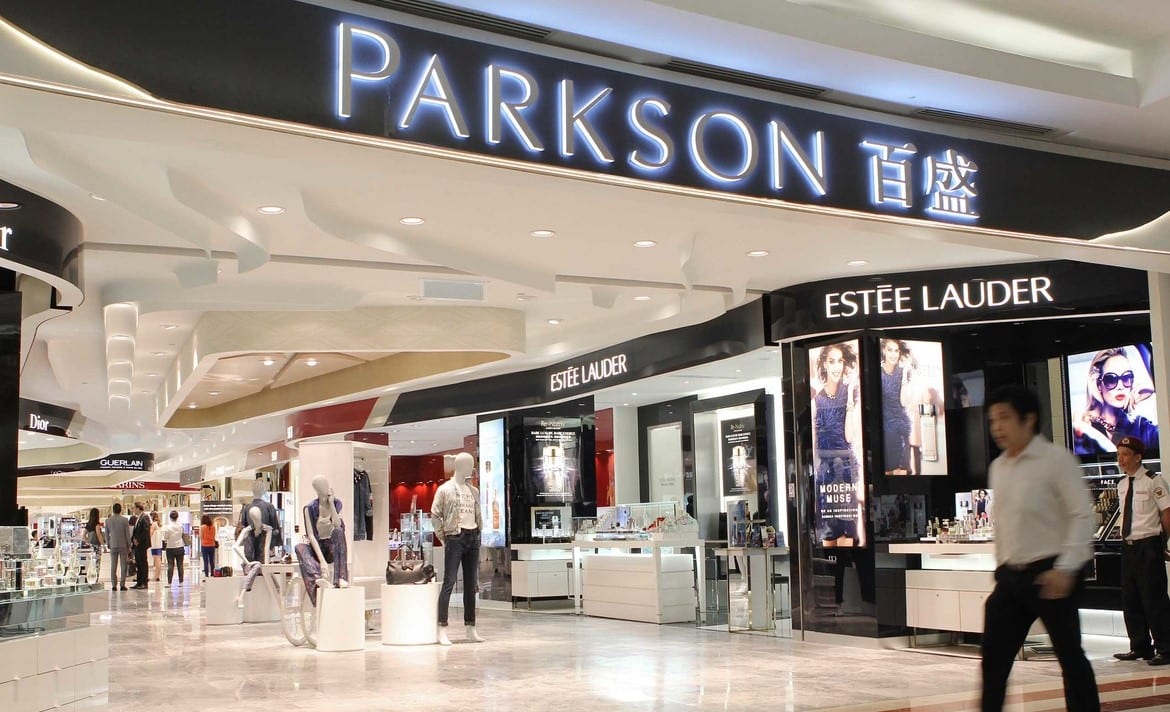
  • Malaysia’s Parkson may close fifth Vietnam mall

    Malaysia’s Parkson may close fifth Vietnam mall

    Malaysia’s Parkson is apparently shutting down its fifth mall in Vietnam after suffering serious losses in recent years. Although the company has not made any official announcement, its name-board has been taken down from the Cantavil An Phu builing in Ho Chi Minh City’s District 2.

    If it shuts down, it would be the second outlet in HCMC that the company is downing the shutters on this year, following Parkson Flemington in District 11, and would bring the number of Parkson stores in Vietnam down to five, of which three are in HCMC, one in northern Hai Phong City and one in central Da Nang City.

    Previously, the firm had shut down its two outlets in Hanoi.

    Parkson, the first international mall to open in HCMC, has been reporting losses in recent years. Among its four markets – Malaysia, Indonesia, Myanmar and Vietnam, the last mentioned has been the worst performer in the fourth quarter of the fiscal year ending June 30, according to a report by Parkson Retail Asia.

    Vietnam had a negative growth of -14.6 percent in the fourth quarter and -8.3 percent in the fiscal year ending June 30 this year, it said.

    “The operating environment in Vietnam remains challenging amidst a crowded retail scene, wherein intensive promotional activities had to be carried out to capture sales,” the report said.

    Vu Vinh Phu, former chairman of the Hanoi Supermarket Association, said that Parkson was able to operate well when it first came to Vietnam more than 10 years ago as the number of competing malls then in the country was low.

    But market has become much more competitive now, with many new malls offering more than just a shopping experience, making them a place for entertainment and food, Phu told local media.

    Even though Parkson is one of the earliest comers, without a change in strategy, it will have to leave Vietnam sooner or later, he added.

    Parkson, a premium retail group from Malaysia, entered Vietnam in 2005 and developed a premium shopping mall chain in the big cities of HCMC, Hanoi, Hai Phong and Da Nang.

    It was touted as one of the highest-potential players in the retail market, planning to open 2-3 malls a year in Vietnam’s big cities.

    The entrance of other foreign companies like Thailand’s Central Group, South Korea’s Lotte and Japan’s Aeon as well as Vietnamese firms like Vingroup, Bitexco and Sun Group has changed things.

    Japanese retailer Aeon owns a mall in Hanoi’s Long Bien District and has another one in Ha Dong District under construction. It is planning other malls in Hai Phong and HCMC.

    Vietnam’s Sun Group opened the Sun Plaza mall in April and is building another one in Hanoi.

    Vietnam was one of 30 countries with the most vibrant retail market in the world, with retail sales of $129 billion last year, an 11 percent growth over the previous year, according to the Ministry of Industry and Trade.

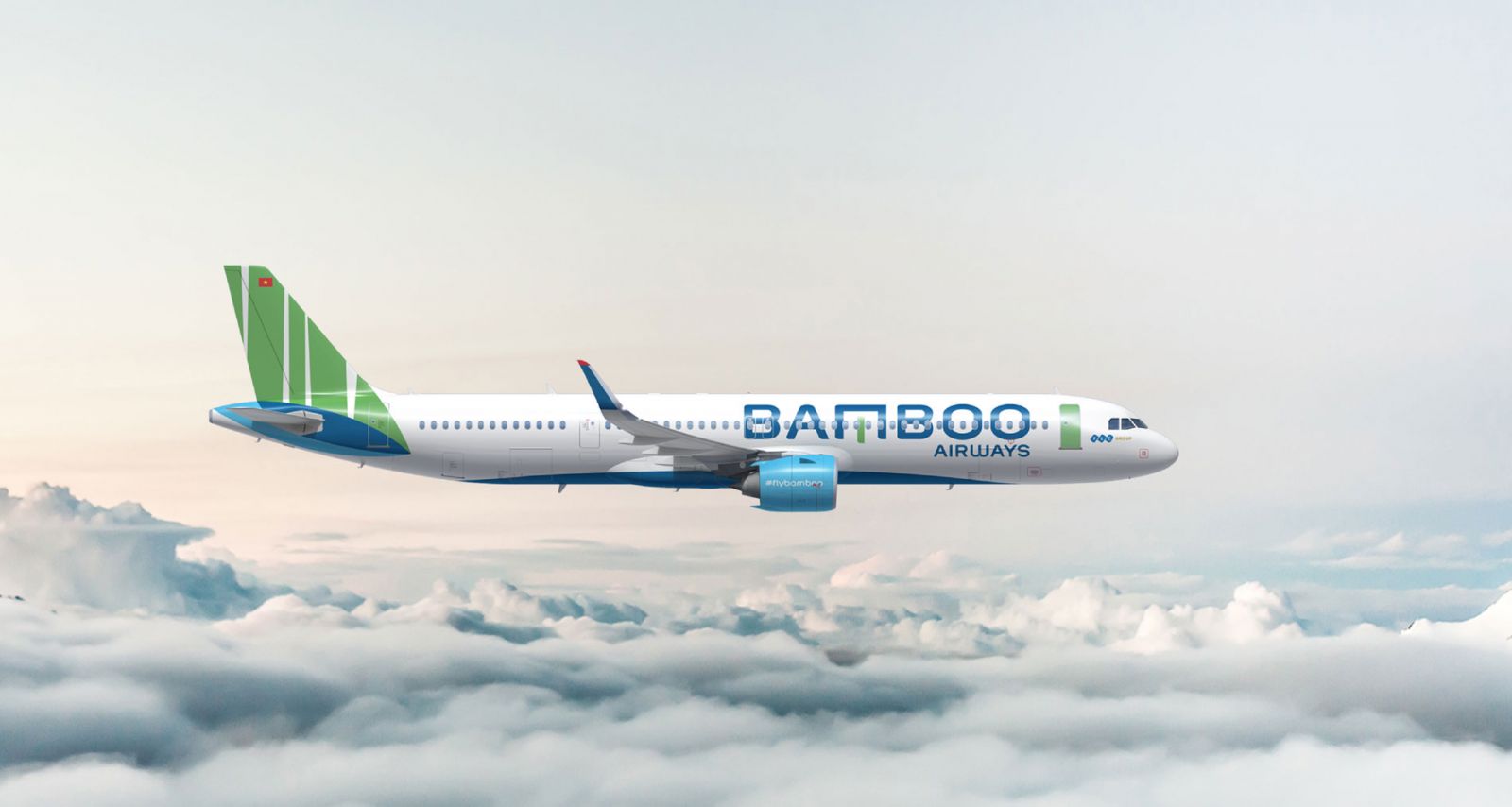
  • Bamboo Airways postpones maiden flight

    Bamboo Airways postpones maiden flight

    The carrier, owned by Vietnamese private firm FLC Group, is yet to receive its license. The delay in getting its license meant that the airline also missed out on its plans to start selling tickets from September 2.

    A Ministry of Transport official, who declined to be named, told Monday that the licensing procedures for the airline have not been completed. An official of Vietnam Aviation Authority also confirmed that the flight permit could not be granted on time to the airline.

    The transport ministry had asked the Prime Minister to allow it to issue an air transportation business license to Bamboo Airways in late August. However, the ministry is yet to receive an official reply.

    No one elaborated on the reason for the delay. An FLC Group spokesperson told that the airline’s first flight will be moved to the end of the fourth quarter of this year.

    “We have to rearrange the original plan. However, Bamboo Airways’ business strategy and pre-designated flight network will not be affected by this adjustment,” the spokesperson said.

    Bamboo Airways’ general director Dang Tat Thang said the airline is currently in the process of finalizing its airfreight business license.

    This is the final legal basis for the company to officially enter the market.

    Thang said that all preparations for the first scheduled flight for the fourth quarter had been completed.

    Bamboo Airlines will become Vietnam’s fifth airline when it becomes operational.

    The other four airlines are flag carrier Vietnam Airlines; budget operator Jetstar Pacific Airlines, which is partly owned by Vietnam Airlines; budget carrier Vietjet Aviation and Vietnam Air Services Co.

    Hanoi-based FLC, whose main businesses include housing, resorts and golfing, had said it planned to operate international and domestic flights to tourist spots in Vietnam, including where FLC has major properties.

  • Vinfast, set to be Vietnam’s first domestic carmaker, gains credit line

    Vinfast, set to be Vietnam’s first domestic carmaker, gains credit line

    VinFast aims to become Vietnam’s first domestic car manufacturer.

    The company, a unit of Vietnam’s largest conglomerate Vingroup JSC, plans to have its first production models built under its own badge hit the streets next August. Vingroup has earmarked about $3.5 billion for the project.

    Credit Suisse AG and HSBC were the lead arrangers and the financing agreement was guaranteed by German export credit agency Euler Hermes, Vingroup and Vinfast said in a statement.

    The statement also said that in August Vinfast completed syndication of a $400 million term loan facility led by four international banks.

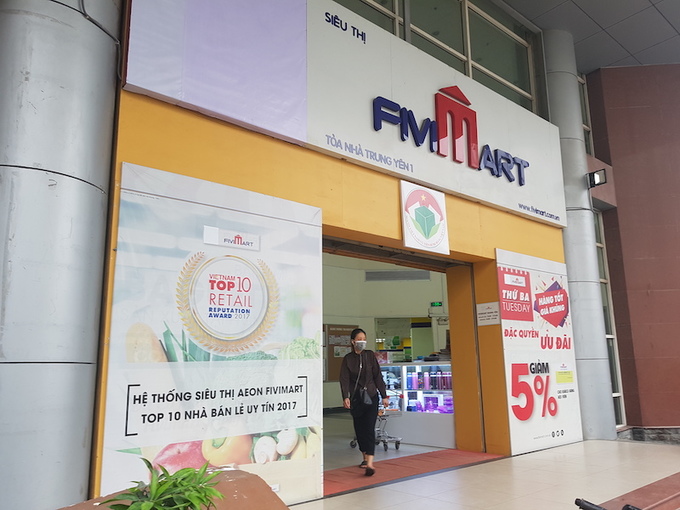
  • Vingroup retail arm acquires Vietnamese supermarket chain

    Vingroup retail arm acquires Vietnamese supermarket chain

    VinCommerce, owner of the largest Vietnamese retail outlet chain, has bought out competitor supermarket chain Fivimart.

    The deal, whose value has not been revealed, delivers 23 Fivimart outlets to VinMart.

    VinCommerce, a member of the Vingroup business conglomerate, bought Fivimart from domestic company Nhat Nam JSC and Japanese retailer AEON, which held 70 percent and 30 percent stakes, respectively.

    VinCommerce CEO Thai Thi Thanh Hai said that her company’ vision is to have VinMart and VinMart+ (a chain of convenience stores) outlets not just in Vingroup’s apartment buildings and malls, but also in other neighborhoods.

    “The acquisition of Fivimart is part of how we make that vision a reality,” she added.

    The acquisition raises the number of VinMart stores to 100 and that of VinMart+ to 1,400.

    Hai said that VinCommerce plans to have 200 VinMart and 4,000 VinMart+ stores by 2020.

    Nhat Nam JSC sold a 30 percent stake of Fivimart, founded in 2007, to AEON in 2015.

    It had increased its number of outlets from 10 then to 23 now.

    The deal saw Fivimart’s revenue increase, by as much as 20 percent a year for some time.

    But the company has been reporting losses for the last three years, attributing them to high costs. Its losses amounted to VND60 billion ($2.58 million) in 2015, VND96 billion ($4.13 million) in 2016 and VND23 billion ($989,600) last year.

    At the end of last year, Fivimart reported an accumulated loss of almost VND200 billion ($8.6 million), with a debt of VND823 billion ($35.41 million), which was equal to the company’s total asset value.

  • Vietnam to grow 7 percent in 2018: report

    Vietnam to grow 7 percent in 2018: report

    A report by the Standard Chartered Bank says Vietnam will top ASEAN economic growth this year.

    The report, released Friday, attributed this to manufacturing and agriculture sectors.

    Titled Vietnam: fast, not furious, growth,” it said the economy will grow by 7 percent this year.

    Other factors contributing to the high growth is the robust growth of electronics, with high foreign direct investment inflow and increasing consumption, the report said.

    It estimated next year’s growth at 6.9 percent.

    Standard Chartered economist Chidu Narayanan said that Vietnam has strong growth prospects, and an average FDI inflow of about $17 billion a year can be expected from now until 2020.

    Manufacturing is set to have a double-digit growth for the second year in a row, and agriculture will recover in the second half of this year, the report said.

    It also saw stable growth in the service sector, led by strong consumption in the country, the report said.

    The service sector, accounting for 40 percent of the economy in the first half this year, saw a 7 percent growth year-on-year growth in the same period.

    The report also said young, well-trained and low-cost human resources will play a part in boosting service growth, it said.

    Standard Chartered also forecast that the USD/VND exchange rate would reach VND23,400 by the end of this year.

    The central bank rate on Sunday was VND22,720 and VND23,310-23,390 at local banks.

    On Thursday, the World Bank upped its forecast for Vietnam’s growth by 0.3 percent to 6.8 percent.

    However, the Asian Development Bank last month lowered the growth rate from 7.1 percent to 6.8 percent, saying that the ongoing trade war between the U.S. and China could have spillover impacts on Vietnam’s export and FDI inflows.

    In the first nine months this year, Vietnam’s GDP grew by 6.98 percent, the highest nine-month growth rate since 2011.

    The economy grew by 6.81 percent last year, the highest rate in a decade.

  • Foreign investors snap up prime office space in downtown Saigon

    Foreign investors snap up prime office space in downtown Saigon

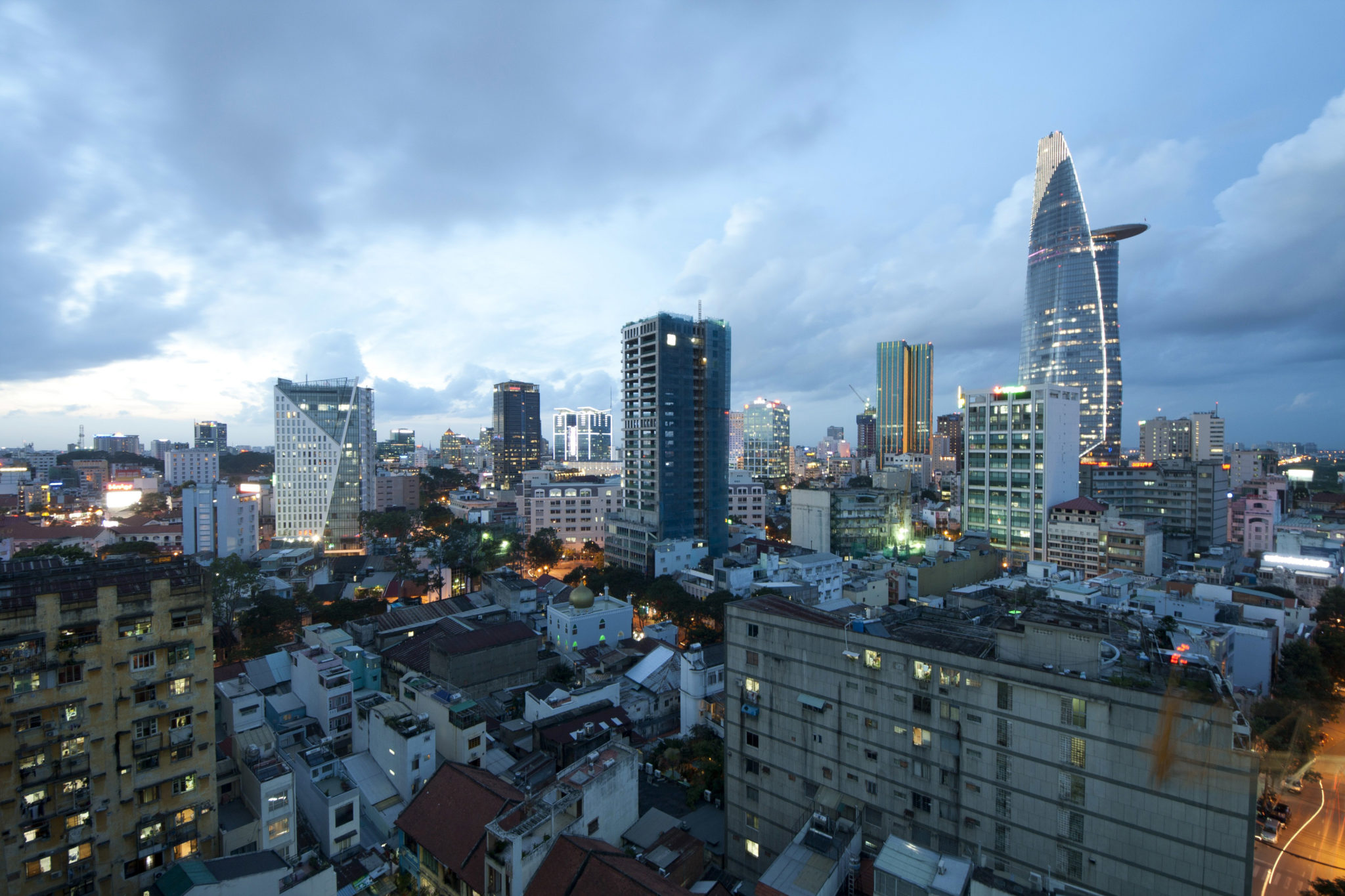
    Foreign investors currently own majority stakes in about 50 percent of high-end office buildings in downtown Saigon.

    A newly-released Savills Vietnam report said investors from Singapore, Hong Kong, Japan, South Korea, Germany and Slovakia own stakes in nine Grade A office complexes in prime Saigon locations. Asian investors hold a bigger market share than that of European companies.

    Given the scarce supply of Grade A office space in the nation’s commercial hub, current occupancy rates in this segment are above 95 percent, and monthly rents have reached their highest in nearly half a decade at $50-70 per square meter.

    This has spawned many M&A deals in this property segment. Notable among these is the purchase of a 24 percent stake in Sun Wah Tower by Japan’s Nomura Real Estate Company earlier this year. The tower is located on the Nguyen Hue walking street in District 1.

    With demand remaining high, many new real estate companies have entered the market.

    Alpha King, a Hong Kong based real estate company, announced its plan to construct a 35 storied Grade A office building on Tran Hung Dao Street in District 1, close to the Ben Thanh Market. Work on this building is expected to completed by 2020.

    Slovakian investors plan to build the Friendship Tower on Le Duan Street, also in District 1. Construction of the 21-story building began this May and is expected to finish by 2020.

    When complete, both Alpha King and Friendship Tower will respectively contribute 72,000 and 19,000 square meters of Grade A office space.

    Su Ngoc Khuong, investment director at Savills Vietnam, said there are many foreign investors in Group A projects because they are cash-rich while such projects require big investment capital.

    The limited amount land available in prime Saigon locations has also led to great interest among foreign investors looking to make profits from renting space to both foreign and local companies.

    Explaining why international corporations are boldly investing in grade A office buildings in Saigon in recent years and are likely to do so in the years to come, Khuong said that global economic integration will continue to increase demand for office space in the city, thus creating a sustainable and profitable cash flow for Group A office leasing projects.

  • Vietnam’s latest fuel price hike spikes inflation concerns

    Vietnam’s latest fuel price hike spikes inflation concerns

    Last weekend’s increase in fuel prices has stoked fears that Vietnam might not meet its 2018 inflation target.

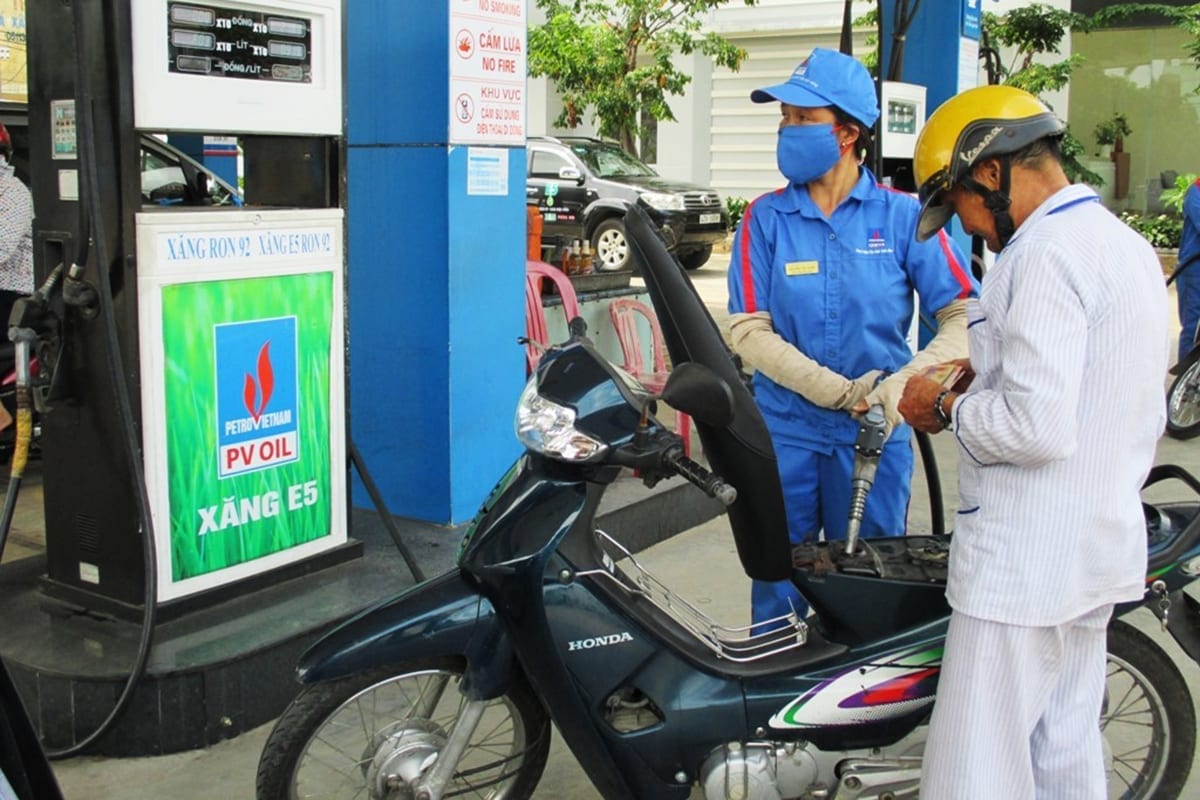
    The ministries of Industry and Trade and Finance upped fuel price last Friday, and prices of biofuel E5 RON 92 went by VND675 per liter to VND20,906 (90 cents) and that of RON 95 by VND577 to VND22,347 (96 cents).

    Kerosene prices went up by VND485 to VND17,086 (73 cents) per liter and that of mazut oil by VND752 to VND15,694 (67 cents) per kilogram.

    The ministries said that the increase in domestic prices followed a rise in world fuel prices of 3-5 percent over the last 15 days.

    They said that a RON 92 barrel costs $90.36, RON 95, $92.40 and diesel, $96.89.

    This was the third fuel price hike since early September. In this period, the per liter price of E5 RON 92 went up by VND1,296 (5.6 cents) in total, while that of RON 95 rose by VND1,170 (5 cents).

    While the latest increase has raised concerns among economists that Vietnam will not be able to meet its inflation target for the year, transportation businesses are worried about immediate impacts.

    Lam Dai Vinh, director of a cargo business said that he had to raise his service prices as fuel price accounts for 40 percent of his costs.

    Although his customers were not happy, Vinh said that he had no other choice.

    Economist Nguyen Tri Hieu said that the fuel price hike is one of the contributing factors to higher consumer price index (CPI).

    Costs will increase for businesses, which in turn, will lead to higher goods prices and therefore affect inflation, he said.

    “It is unlikely that Vietnam will be able to keep inflation below its target of 4 percent this year,” Hieu added.

    Echoing Hieu, Ngo Tri Long, former director of the Market Research Institute under the Ministry of Finance, said that there are “variables” in the market that could negatively affect inflation this year.

    Inflation was at 3.57 percent from January to September this year, according to the General Statistic Office.

    Experts are concerned about other factors that could lead to higher inflation, including the Vietnamese currency, dong, falling against the US dollar as a result of the U.S.-China trade war and natural disasters that often occur in the second half of the year, making business target more difficult to meet.

    Oil firms grow

    However, local oil firms are seeing robust growth because of higher oil and petrol prices.

    PetroVietnam Drilling (PVD) saw the price of its stock on the HCMC Stock Exchange (HOSE) increase by 65 percent in the last 30 days because of increasing world prices.

    From September 21 to October 6, crude oil prices went up from $78.9 to $88.81 per barrel, while that of RON 95 rose from $84.16 to $92.4 per barrel.

    PVD board chair Do Van Khanh said that when crude oil prices go above $60 per barrel, the company’s oil rigs will not have to be put on hold, and when it reaches over $70, business will become stable.

    PetroVietnam Gas also saw revenues up by 41.5 percent in the first half of this year, because oil prices rose 36 percent year-on-year in the same period.

    The price of its stock on HOSE has gone up by over 40 percent to VND120,000 ($5.15) since early July.

    Vietnam’s fuel price is set to increase even more next year when the new environmental tax approved by the National Assembly’s Standing Committee takes effect.

    Starting January 1 the tax on petrol will increase from VND3,000 (13 cents) per liter to VND4,000 (17 cents), and on diesel from VND1,500 to VND2,000.

    The hike was scheduled for next year so that the government could keep inflation under 4 percent this year.

    Although the plan met strong public opposition during its draft phase, authorities defended it, saying it would bring VND15.7 trillion ($676.8 million) each year to the government’s coffers, and help to deal with environmental issues.

    In the first half of this year, Vietnam imported 7.07 million tonnes of fuel worth $4.66 billion, up 40.4 percent in value from the same time last year, according to Vietnam Customs.

    The country exported 1.6 million tonnes of fuel, worth over $1 billion, up 41.7 percent in value.

  • Hanoi plans second sports complex for SEA Games 2021

    Hanoi plans second sports complex for SEA Games 2021

    Capital city authorities have outlined this plan in a recent report to Prime Minister Nguyen Xuan Phuc, saying the upgrade is required because the condition of Hang Day stadium on Trinh Hoai Duc Street has severely deteriorated in recent years.

    The new complex would cost over VND6.3 trillion ($270.4 million), with funds raised from investors who operate the stadium for 50 years, the report said.

    The sports complex will be built on an area of 32,000 square meters, expanding the current area of 22,000 square meters.

    A deal for the upgrade was signed in March by domestic private firm T&T Group which manages the stadium, and French firm Bouygues Construction.

    The headquarters of the city’s Department of Planning and Investment nearby will be moved to another location to make space for the new complex.

    It will be the second international sports complex in Hanoi, after the My Dinh stadium in Nam Tu Liem District.The new stadium will have a capacity of 20,000 people, with several additional facilities including cinemas, event centers, parking basements and convenience stores.

    The Hang Day stadium is a multi-purpose facility which was first established for Hanoi’s École d’Education Physique (Hanoi’s School of Physical Education) in 1934. It was later expanded in 1958.

    In 2017, it was placed under the management of T&T Group, a corporation involved in finance, real estate and agriculture sectors.

    Hanoi will host the 31st edition of the Southeast Asian Games (SEA Games), which is scheduled to last 17 days, as well as the Para Games, for 11 days, from October to December in 2021.

    A total of 16,000 people are estimated to participate in the event, 11,000 of them athletes.

    This is the second time that Vietnam will be hosting the SEA Games after the first instance in 2003.

  • Nokia demonstrates smart city solution for Viettel

    Nokia demonstrates smart city solution for Viettel

    Nokia has completed a demonstration of its smart city management solution IOC for Vietnamese military-run operator Viettel in support of the government’s smart city ambitions.

    Nokia demonstrated its Integrated Operations Center to the operator during a trial in Hanoi.

    The IOC solution is designed to orchestrate smart city operations providing a unified real-time management of all smart city assets and services. Using a combination of automation and analytics, the solution aims to help cities improve productivity and identify new revenue and efficiency opportunities.

    Viettel will be able to use the solution to more effectively manage traffic in Hanoi by leveraging video analytics and video management solutions.

    The Vietnamese government plans to leverage Nokia smart city technologies to address a number of common city problems such as waste management, energy management and traffic management, while enabling better utilization of resources.

    “We are honored to help Viettel conduct this important demonstration. Nokia’s IOC is a proven solution to manage smart city infrastructure efficiently. This end-to-end solution provides a real-time view of the different applications, devices and systems used in the smart city. Its integrated analytics capability further opens up new revenue opportunities for the service providers,” Nokia Global Services head of public sector practice Alexander Van Overveld said.

    “Smart cities promise to provide sustainable living, and we are committed to enabling Viettel to deliver world-class use cases and solutions to its customers.”

  • An overview of the Vietnam’s startup scene

    An overview of the Vietnam’s startup scene

    When you think of the startup scene in Southeast Asia, places like Singapore and Indonesia may come to mind, but Vietnam is another tech ecosystem on the rise. With a domestic market of over 95 million people and an economy that has grown 6% on average in the past 10 years, the population is becoming increasingly wealthy. In addition, the talent pool in Vietnam is young and increasingly educated with a growth mentality. Costs of operating are relatively low and there is a high rate of internet penetration—approximately 50 million users in 2017.

    It will come as no surprise then that Vietnam’s startups grew 14% in the first quarter of 2017 alone, with 39,580 startups entering the market. A Topica Founder Institute report stated that startup investments in Vietnam were $291 million USD in 2017, a 42% increase from 2016. However, there are still significant hurdles to foreign investment, such as the need for a stronger legal framework to protect venture capitalists and a more streamlined licensing and tax structure. Moreover, although Vietnam has significant technological expertise as an outsourcing hub, the startup scene could benefit from greater business acumen.

    In response, Viet Kieu, or Vietnamese people who have studied or worked overseas, have taken on leadership roles, accounting for more than half of the founders out of the 26 firms that 500 Startups Vietnam has funded. Their experience with multinational corporations, understanding of cultural differences, and English proficiency have been instrumental to the success of the Vietnamese startup scene. Still, the country itself is finding ways to support its startups.

    The Government and Accelerators Are Fueling Growth

    The Vietnamese government is aggressively promoting small enterprises. In 2017, deputy prime minister Vuong Dinh Hue announced the goal of doubling the number of businesses in Vietnam from half a million to one million by 2020. Vietnam Silicon Valley is a government-sponsored initiative to provide legal and financial support to 2,600 startups over the next 10 years. Lastly, the government has relaxed visa programmes for Viet Kieu, allowed them to regain citizenship under specific conditions, and exempted them from certain foreign investment requirements.

    Tech accelerators are also pushing the growth in startups. Topica Founder Institute is a 14-week programme with an impressive track record of 60 graduate startups, $20 million USD in funds raised, and $100 million USD in valuation since 2011. VIISA, the Vietnam Innovative Startup Accelerator, is an accelerator programme and seed stage fund of $6 million USD. Launched in 2013, Vietnam Silicon Valley is a government-sponsored bootcamp that includes a $20,000 USD investment and access to 60 mentors and 52 startup alumni. Lastly, TechFest is an annual event showcase of over 200 startups, hosted by the Ministry of Science and Technology and broadcast over live television.

    With major resources behind them and a positive climate for tech businesses, here are four Vietnamese startups showing immense promise.

    Logivan

    Based out of Hanoi, Logivan is a web-based platform that connects businesses with a fleet of over 5,000 trucks, which are constantly tracked and optimised. The logistics industry makes up approximately one quarter of Vietnam’s GDP, and in 2016 logistics firms earned approximately $8.5 billion USD in revenue, owing in part to the country’s underdeveloped transport infrastructure which causes prices to rise. Logivan plans to disrupt and digitise this industry, centralise and automate logistics, increase capacity, and improve supply chain efficiency.

    In November 2017, the up-and-comer won “Best Startup” at RISE Pitch Battle, the largest technology conference in Asia, and earned a sponsorship from Uber Chief Technology Officer, Thuan Pham. In August 2018, Ethos Partners, Insignia Ventures Partners, and VinaCapital Ventures funded a $1.75 million USD Series A round to expand Logivan’s logistics services in four major economic hubs across Vietnam. The startup previously received a $600,000 investment in March 2018 from Insignia, which the company matched during its time at the Topica Founder Institute accelerator programme.

    The company was founded by Linh Pham, a former Goldman Sachs technology analyst and Cambridge University graduate who previously founded Snappetite, a time-dependent platform for deals. Pham’s vision is to reduce prices, offer transparency, and provide real-time tracking for shippers and cargo owners.

    Foody

    Founded in 2012 in Ho Chi Minh City, Foody is a gourmet media company and user-submitted review platform for any location food-related, including restaurants, bars, cafes, bars, bakeries, and resorts. The company boasts hundreds of thousands of locations, images, and comments.

    One of Vietnam’s most successful startups, Foody has received numerous rounds of funding by an array of investors. Seed and Series A funding was provided by Japanese VC firm, Cyberagent Ventures, and Pix Vine Capital. In 2017, Singapore-based consumer internet group, Sea Limited, acquired an 82% controlling interest in the company for approximately $64 million USD, the largest investment of the year. Sea, one of Southeast Asia’s first unicorns, is valued at about $3.75 billion USD and previously funded a Series B round in 2015, which was followed by a Series C investment by Tiger Global Management less than a month later.

    Like many other startup leaders in Vietnam, Foody’s founder and CEO, Dang Hoang Minh, spent time abroad. Born in Vietnam, he went to Australia for university and studied Software Engineering and Information Systems before returning to his home country. Foody has expansion plans in Indonesia and Thailand.

    Ami

    Based in Ho Chi Minh City, Ami is capitalising on Vietnam’s booming real estate market by developing a suite of software and hardware products that will help owners and property managers connect with residents and digitise their information. Based upon blockchain, internet of things, and artificial intelligence technologies, the company’s products include:

    • Ami A Biz, a supply chain logistics to verify authenticity in goods and ownership
    • Ami Citizen, a digital record of individuals used by landlords and businesses
    • Ami University, a data management tool for universities to track students and professors
    • Ami Building, a condominium management platform
    • Ami Electricity, a web-based metre tool
    • Ami Fingerprint, an online storage space for fingerprints

    In the past couple of years, the startup has had an incredible growth trajectory. It won the top prize at the 2017 TechFest competition, and subsequently received $9 million in funding from the Vietnamese real estate corporation, Binh Minh Group. Between October 2017 and April 2018, the number of tenants in its property management product tripled. With approximately 1,500 rooms in its marketplace, the company’s target for 2019 is 100,000 rooms across the entire country. Looking forward, Ami plans to create a digital community between Vietnam’s citizens and their residences, schools, and businesses.

    Tiki

    Established in March 2010 as an online book dealer, Tiki is a business-to-consumer e-commerce company and the fastest-growing retail company in Vietnam. With more than 300,000 products in 12 categories, the company posted 2016 revenue of approximately $2.7 million USD and a loss of about $7.8 million USD after high operational expenditures needed to entrench itself in the consumer marketplace.

    Despite its losses, Tiki has been an attractive investment, especially as the e-commerce sector grew by more than 25 percent in 2017. The startup received initial funding in 2013 from Seedcom, CyberAgent Venture, and Sumitomo Corporation. In 2016, the startup was valued at $45 million and subsequently received $17 million USD for a 38% stake by VNG Corporation, which specialises in digital content, online entertainment, social networking, and e-commerce. Most recently, Chinese megaretailer JD.com Inc. and South Korea’s STIC Investment funded a Series C round of $54 million USD to help consolidate Tiki’s market presence.

    As one of the top four general e-commerce retailers in Vietnam, Tiki is well-positioned to leverage the influx of foreign investments that are flooding the sector.
  • DHL brings “Cash on Delivery” to Malaysia, Thailand, & Vietnam

    DHL brings “Cash on Delivery” to Malaysia, Thailand, & Vietnam

    E-commerce exporters in China and Australia, consumers in Malaysia, Thailand and Vietnam, and DHL eCommerce are all expecting benefits from the introduction of a Cross Border Cash-on-Delivery (COD) system by Deutsche Post DHL Group.

    The DHL e-Commerce Cash on Delivery (COD) service will allow consumers in the three Asean countries to pay in cash when they receive their online purchases.

    With more than 73 per cent of Southeast Asia’s population unable to access credit cards or internet banking services, DHL is realising that reverting to low-tech cash has the potential to see significant increases in volume (and revenue), as the regions burgeoning middle-class looks further afield for their purchases.

    “The low level of credit card penetration has forced e-commerce retailers to offer alternative modes of payment methods, such as cash on delivery, digital payments, and in some cases paying in-store”, said Charles Brewer, CEO of DHL eCommerce.

    “This opens up a huge potential by reaching out to a new group of unbanked consumers, and also meeting the needs of consumers who prefer to pay in cash.

    “With our fully-owned domestic delivery network in Malaysia, Thailand and Vietnam, we are able to deliver on-time with secure features like cash-on-delivery”, Mr Brewer added.

    The DHL eCommerce COD service allows sellers, specifically in China and Australia, to collect cash on delivery in the three Asean member states, with payment status tracking available on the DHL portal. Vendors receive their money every 14 days.

    Comprising a total solution, DHL eCommerce offers parcel pick-up, easy IT integration of the seller’s inventory into the DHL shipping process, end-to-end tracking, dynamic routing and distribution, returns management, and more.

    DHL Vietnam to truck Sendo’s local sales

    Meanwhile in Vietnam, DHL recently announced a partnership with Sendo, Vietnam’s leading local e-commerce platform.

    The deal will see the German logistics giant provide delivery to Sendo customers in Ho Chi Minh City (HCMC), Hanoi, and other primary markets in the country.

    Describing the deal as delivering benefits to everyone, Tran Hai Linh, CEO of Sendo said the international standard delivery service will boost the confidence of the country’s eCommerce shoppers, and deliver increased business to the 300,000  vendors, micro-entrepreneurs, and small businesses who sell their products online.

    To kick-start the arrangement DHL eCommerce has placed more than 300 ServicePoints in locations that provide easy access to Sendo’s sellers.

    Vendors can either drop off their parcels and receive discounts of up to 20 per cent, or arrange for a pickup by DHL for direct door-to-door delivery.
  • HCMC office rents soar to five-year high

    HCMC office rents soar to five-year high

    High-rise buildings in downtown HCMC have seen monthly rents rocket to $70 per square meter, the highest in five years.

    A report on the Ho Chi Minh City office market in the third quarter of 2018 said the main reason for rising prices is that office supply is not able to meet current demand.

    The report, prepared by real estate service firm Jones Lang LaSalle (JLL) Vietnam, noted that in the past three months, the average gross rent of Grade A office towers rose to about $50/sq.m per month, up by nearly 7 percent over the same period last year.

    However, the highest gross rents of towers in prime locations in HCMC soared even higher to $70/sq.m per month. This marks a record high for nearly half a decade.

    Similarly, rents for Grade B rental properties located in Districts 1 and 3 of the city have surged over the $30/sq.m per month threshold.

    Rental office space occupancy rates for Grade A properties are now over 95 percent while Grade B offices have been filled up 96.5 percent.

    Office occupancy has accelerated as a result of the boom in information technology, e-commerce and co-working space industries. The demand for HCMC office space could increase by 10 percent every year for the next 10 years, according to JLL Vietnam.

    As of the third quarter of 2018, the total office space for lease in HCMC was approximately two million square meters: Grade A buildings totaled 250,000 square meters; Grade B, 900,000 square meters; and Grade C, about 810,000 square meters.

    The JLL report also forecasts that in the next three months, office rents in HCMC will continue to rise quickly due to the lack of new premises to meet the huge demand.

    Grade A and B office space will continue to be in short supply in the fourth quarter of 2018, as the next 11 buildings planned are only to be completed by 2019-2020 at the earliest, it said.