Tag: Vietnam

  • SK buys 9.5% stake in Vietnam’s Masan Group

    SK buys 9.5% stake in Vietnam’s Masan Group

    SK Group will acquire a 9.5 percent stake in Vietnamese food and beverage company Masan Group to become its largest foreign shareholder.

    The Korean conglomerate announced Wednesday that it has agreed to acquire the stake at $470 million. The two companies will jointly look for business opportunities in Vietnam through strategic investments.

    Masan Group is at the top of the Vietnamese food and beverage market. Its business portfolio expands into finance, animal breeding and mineral mining. Its yearly revenue posted 1.9 trillion won ($1.7 billion) last year.

    “The latest investment is meaningful in a way that it is part of the group’s effort to secure new business opportunity in the global markets just like Chairman Chey Tae-won emphasized in his New Year speech early this year,” said Lee Hang-soo, head of the group’s PR team in a statement Wednesday.

    “SK Group and Masan Group will cooperate to develop new businesses in Vietnam as well as elsewhere in the Southeast Asia region,” he added.

    SK Group has been showing keen interest in fortifying its global business over the past few years.

    SK has been looking for business opportunities in the United States, China and Southeast Asia. The group had established a new investment arm in Singapore based on joint investment from its five subsidiaries.

  • VN-Index claws back to four figures after two months

    VN-Index claws back to four figures after two months

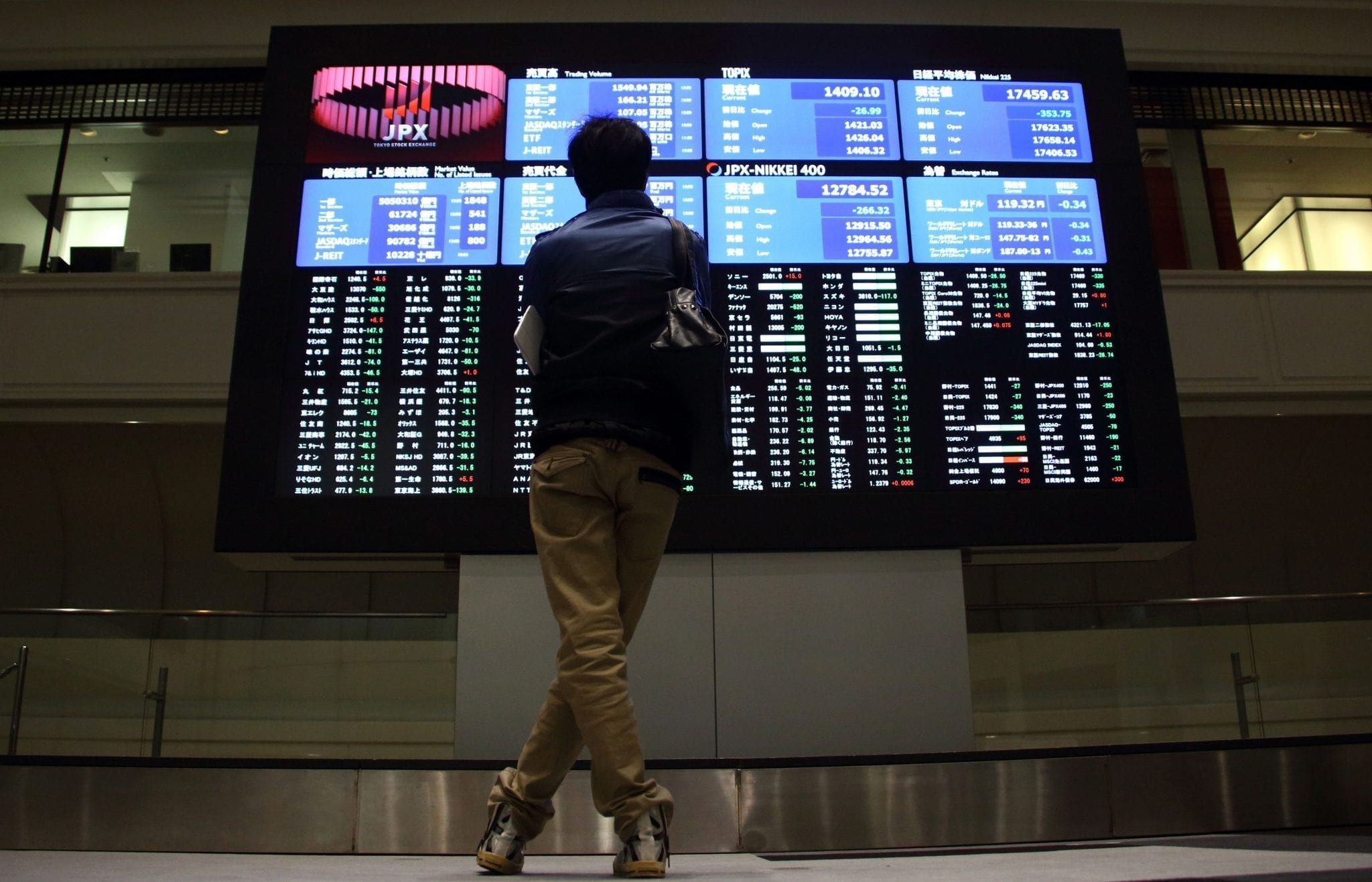
    Vietnam’s benchmark VN-Index closed at 1,004.74 points Thursday, reaching four figures for the first time in two months.

    It gained 9.2 points.

    The HNX-Index on the Hanoi Stock Exchange and the UPCoM-Index for unlisted companies rose by 0.75 percent and 1.01 percent respectively.

    The VN30-Index, representing the 30 largest stocks in terms of capitalization, gained almost 8.5 points to finish the day at 971.

    Twenty one of the 30 stocks rose, including FPT by almost 1 percent. Hoa Phat steel company (HPG) gained VND1,250 (5.4 cents) and food producer Masan (MSN) by VND1,300 (5.6 cents).

    PetroVietnam Gas (GAS), PetroVietnam Oil (OIL) and Binh Son Refinery (BSR) were other prominent gainers.

    Fifteen of 17 bank stocks closed in the green. Techcombank (TCB) stock rose by VND1,400 (6 cents) and VPBank (VPB) VND850 (3.7 cents).

    Nguyen The Minh, director of analysis at Yuanta Brokerage said the market would continue to rise in the short-term despite fluctuations on the international market.

    He expected the VN-Index to touch 1,100 points in the near future.

    It started recovering on September 12 after plunging by 18.19 percent in the second quarter to become the worst-performing market in the world.

  • US coworking space to set up shop in HCMC

    US coworking space to set up shop in HCMC

    WeWork, the third largest startup in the U.S., and the sixth largest in the world, is set to open a new office in HCMC late this year.

    In its latest report on the co-working space market in Vietnam, real estate firm Jones Lang LaSalle (JLL) said WeWork is looking to open an office on Doan Van Bo Street in District 4.

    The company recently did market research and customer surveys, JLL said.

    The office, to open in December, will be the largest co-working space in Vietnam at 5,000 square meters.

    JLL said the entry of global real estate startups is a positive sign.

    WeWork, valued at $20 billion last year, was one of the largest startups in the U.S., behind only Uber and Airbnb, and the sixth largest in the world. Founded in 2010 it has 250,000 employees.

    It had acquired Chinese coworking space firm Naked Hub for $400 million last April, expanding its reach into the Asian market.

    WeWork reported a rise in losses in the first half of this year to $723 million from $154 million a year earlier.

    But JLL estimates it would continue to expand.

    It said in its report: “We think Wework is likely to have a presence in most of the six Southeast Asia cities within the next 12 months. In addition, the company is likely to grow in terms of number of locations within each city as well.”

    Vietnam has seen the coworking space market expand in recent years.

    Major local operators like Toong, UP, Circo and Dreamplex are all expanding at an accelerated rate, and the number of smaller operators with just one venue is also increasing.

    The Hive, a coworking space maker from Hong Kong, is planning to open a new facility by the end of this year in Ho Chi Minh City. The company already has one office on Xuan Thuy road in District 2 in the same city.

    Real estate consultancy CBRE said the number of coworking offices in the country has grown by an average of 55 percent in the last five years.

    Most operators reported a very healthy 75-80 percent average occupancy rate as of last April.

  • India rice prices recover; low Thai rates dampen Vietnamese offers

    India rice prices recover; low Thai rates dampen Vietnamese offers

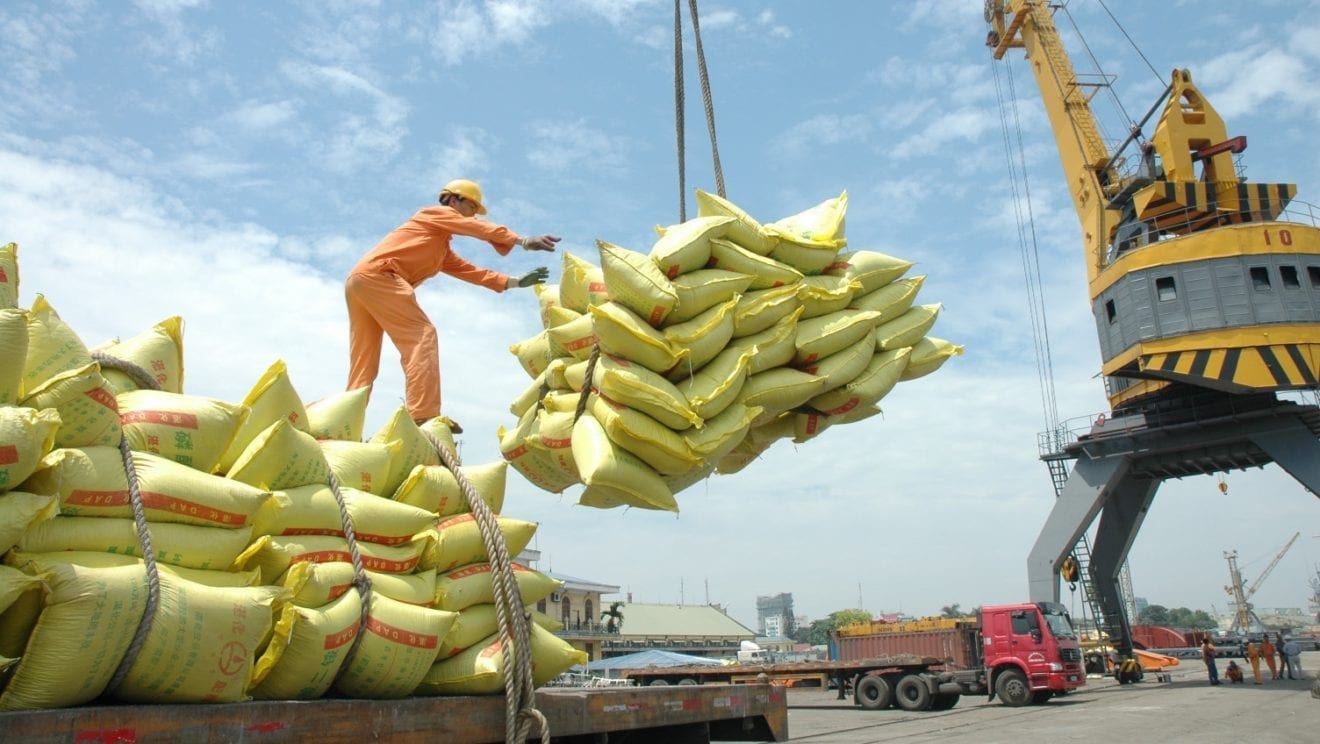
    Rice export prices in India recovered this week after demand improved, while rates for the Vietnamese variety eased.

    Rates for top exporter India’s 5 percent broken parboiled variety edged up by $2 per ton to $373-$377 per ton this week, from their lowest in 17 months last week.

    “Enquiries from African buyers have risen in the last few days,” said an exporter based at Kakinada in the southern state of Andhra Pradesh.

    Another exporter, based in Mumbai, said Indian rice was currently competitive due to rupee depreciation.

    The Indian rupee has lost more than 13 percent of its value so far in 2018, and plunged to a record low earlier this week, increasing exporters margins.

    Meanwhile, in neighbouring Bangladesh, rice output from the summer-sown crop ‘Boro’ hit 19.5 million tonnes, exceeding the target of 19 million tonnes, as farmers raised acreage to cash in on higher prices, data from the Bangladesh Bureau of Statistics showed.

    Last year, the country’s Boro rice crop, which accounts for more than half of the country’s typical annual rice production, fell to its lowest in seven years after floods destroyed crops.

    In Vietnam, traders offered benchmark 5 percent broken rice at $395-$405 a ton, slightly lower than last week’s $400-$405 range.

    Despite potential demand from the Philippines in the aftermath of Typhoon Mangkhut, which damaged paddy in the country, prices for the Vietnamese variety did not go up since Thai rates were lower.

    “If we increase prices further, people will just go and buy Thai rice,” a Ho Chi Minh City-based trader said.

    The south-Asian country, which has already completed the harvest of its two major crops, exported 4.5 million tons of rice in the first eight months, meeting around 70 percent of the whole-year projection of 6.5 million tons set out by the government.

    A trader estimated Vietnam’s current autumn-winter mini crop could yield around 1.8 million tons, half the volume of a major crop, with most of the rice likely to be kept for domestic consumption given the next harvest will not be until March 2019.

    In Thailand, benchmark 5 percent broken rice prices were quoted at $390-$393 per ton, free on board (FOB) Bangkok, unchanged from last week.

    While demand was flat, it would pick up in the near future due to natural disasters in the region, especially in the Philippines and Indonesia, traders said.

  • ANZ Vietnam reports 75 pct fall in profit in H1

    ANZ Vietnam reports 75 pct fall in profit in H1

    ANZ Vietnam’s profits fell 75 percent in the first half of this year following the sale of its retail arm to Shinhan Bank.

    The bank’s financial report shows its after-tax profits were VND41 billion ($1.76 million), down from VND171 billion ($7.33 million) in the same period last year.

    Net interest income and net income from its foreign exchange business saw the biggest declines: 40 percent and 15 percent.

    ANZ Vietnam was one of the few lenders in the country to report negative credit growth, with loans outstanding edging down to VND12.6 trillion ($540 million) at the end of the second quarter.

    In the first half return on equity was only 25 percent of the rate a year earlier.

    But the poor performance notwithstanding, at the end of the first half its assets increased by 16 percent against the beginning of the year as deposits with the State Bank of Vietnam went up by VND320 billion ($13.72 million) and deposits with and loans to other credit institutions increased by VND4.15 trillion ($178 million).

    South Korea’s Shinhan Bank last year acquired ANZ’s retail business in Vietnam. The latter had around 125,000 individual customers, more than $231 million in loans outstanding and more than $578 million in deposits.

    According to the General Department of Taxation, the bank was the 156th biggest taxpayer in the country last year.

  • E-payment continues to go mainstream in globalizing Vietnam

    E-payment continues to go mainstream in globalizing Vietnam

    Electronic payments are becoming more and more common in Vietnam, according to Visa.

    Its data for the 12-month period until June 30 this year shows that the number of transactions on the Visa network increased by 45 percent from the previous year, the company said in a statement.

    E-payment is rising thanks to strong e-commerce spending. Between September 1 last year and August 30 this year, e-commerce spending rose 44 percent in terms of transactions, it said.

    The country is going through a period of “incredible economic change” and becoming more involved in the global economy, Sean Preston, Visa’s country manager for Vietnam and Laos said in the statement. “Electronic payments would play in a major part in this evolution.”

    E-payments in Vietnam grew 22 percent in 2017 from the previous year to $6.14 billion, as quoted data from Statista, a local market research firm, as saying. The figure is projected to double to $12.33 billion in 2022.

    According to economists, the potential for the e-payment sector is huge due to the expanding middle class and improved communications infrastructure.

    More than half of Vietnam’s population of nearly 92 million people are online.

  • Make or break time for Vietnamese e-wallets

    Make or break time for Vietnamese e-wallets

    Big moves by some players are exerting severe pressure on many e-wallet service providers in Vietnam.

    Twenty seven payment service providers had been licensed in Vietnam as of last March, with 20 of them offering digital wallets, according to the State Bank of Vietnam. Others provide services such as financial switching, electronic clearing and payment gateway.

    There are many reasons why banks, tech companies and fintech companies are venturing into the world of electronic wallets, including the growing global trends of digital banking and setting up financial startups.

    Besides, Vietnam has a large population of young people who are compulsive smart phone users and fond of technology but lack interest in traditional banking services.

    “Consumers are increasingly living a modern lifestyle that is accompanied by digital services,” Tran Thanh Nam, founder and director of mobile payment player Moca Technology and Services Corporation, said.

    “In addition to free social networks, they have begun to pay attention to incorporating electronic services for their daily needs. From ride hailing to food delivery, it comes with safe and convenient non-cash payments.”

    Who are offering e-wallets?

    Moca’s popular rivals included MoMo, Bankplus, Vi Viet, VTC Pay, WePay, Mobivi, and Vimo.

    As of December 2017 MoMo had more than five million users and expects to see a two- to three-fold increase this year. Vi Viet has more than two million users and hopes to increase the number to 3.5 million this year.

    Late last year Pham Tien Dung, head of the State Bank of Vietnam’s Payment Department, said only about five payment intermediaries earned profits. The rest of the market has been labeled “unstable”.

    Nguyen Dinh Thang, chairman of LienVietPostBank, which owns Vi Viet, said: “E-wallets need more time to develop to meet customer needs and market potential, and using cash cannot be changed in the blink of an eye. The market needs time to experience the utility and convenience of e-wallets.”

    Industry insiders said each e-wallet has its own development strategies and target customer segments.

    But they admitted that the failure by many e-wallets to adapt to the financial ecosystem in Vietnam and the lack of widely accepted payment gateways are holding the industry back.

    In 2017 MoMo garnered more customers by offering discounts and promotions and spending on advertising. Then, this year it decided to exploit the power of the ecosystem by signing a deal with ride hailing company Uber Vietnam. Unfortunately, Uber withdrew from Southeast Asia a few months later.

    Zalo Pay was a latecomer but achieved great success at the beginning of this year by running a “lucky money” campaign during the Lunar New Year that enabled users to gift lucky money to their loved ones using the digital wallet.

    This campaign was a huge hit also in China when WeChat and AliPay ran it.

    Zalo has an advantage over other e-wallet rivals since it already has an enormous user database from its messaging application.

    The competition is fierce

    The most recent tie-up, and one that could be a game changer, is between Moca and Grab. The CEOs of both companies are ambitious about developing their electronic wallets. Their strategy is “if we grow, we grow together”.

    More specifically, the deal indicates that those who partner with Moca e-wallets will benefit from the large number of Grab population of millions of drivers and passengers across the country.

    Grab users will soon be able to choose from all payment services offered by Moca, including bill payments, phone credit recharging, and non-cash payment at retail stores and fast food chains like 7-Eleven and McDonalds.

    A combination of Momo popularity, rising Zalo Pay and the Moca-Grab marriage are exerting great pressure on dozens of other e-wallet providers.

    Traditional mobile payment services of Vietnamese banks are also intimidated by the competitors.

    Responding to this challenge, TPBank has updated the flight ticket support service on its mobile application.

    UOB Bank Vietnam now allows in-app opening of new accounts in 10 minutes, reducing the time spent opening one at the bank by 80 percent.

    “In big cities like HCM City, four out of every five people have smart phones which can assist them in completing everyday tasks in a much faster and convenient way. We always want to develop and leverage technology so that banking services are much simpler, safer and smarter for our customers from the very first transaction,” said Harry Loh, CEO of UOB Vietnam.

  • Morrisons seals supply deal with Big C

    Morrisons seals supply deal with Big C

    UK supermarkets group Morrisons has secured a supply partnership with Thai grocery chain Big C.

    The firm will be sending 100 branded products to feature on Big C shelves in what represents a major international partner for Morrison’s, which otherwise has a minor presence in Gibraltar and the Channel Islands. The company also previously supplied its own-label products to a Hong Kong e-commerce platform British Essentials.

    Morrison’s CEO David Potts has stated the company is not currently pursuing an international strategy – the partnership with Big C is the result of unexpectedly fast growth in the company’s wholesale business.

    Morrison’s revenues increased 4.5 per cent over the past half year compared to the same period last year. While same-store retail figures grew 2.1 per cent, its wholesale business grew 2.8 per cent.

  • Vietnamese banks sound alarm over cybercrime

    Vietnamese banks sound alarm over cybercrime

    Many banks in Vietnam have reported about customers losing information about their accounts to criminals through phishing attacks and other methods.

    In a recent statement Techcombank said it had detected many cases of fraud and misappropriation of money by faking Western Union transactions.

    The criminals would send victims fake Techcombank messages claiming they had received money through Western Union, and tell them to go to a fake Techcombank website and log in to confirm the transaction, resulting in their account information being stolen.

    Maritime Bank has issued a statement cautioning customers about frauds in which criminals contact them through phone calls, text messages, social networks, and emails pretending to be the bank’s employees. They then ask the victims to provide their account information in return for money, promotions or prizes.

    Other major banks such as VPBank and Vietcombank have also issued similar statements cautioning customers against revealing their OTP codes to anyone, including the banks themselves, under any circumstances.

    They are also told to closely monitor their accounts to detect any abnormal activity, and report immediately to the bank if they receive suspicious calls or text messages.

    According to global statistics recently released by cybersecurity firm Kaspersky Lab, nearly 36 percent of cyberattacks in the second quarter of 2018 were targeted at financial services, including over 21 percent targeting banks and 8.17 percent targeting online shops.

    Financial experts have warned that Vietnam has become a hotbed of cybercrime, with criminals becoming increasingly sophisticated while banks still using old, insecure technologies and their customers lacking awareness of how or why to protect account information.

    To counter the increase in cybercrime, the government has issued a decree requiring banks to secure their customers’ information and not to provide such information to any third party without written consent from customers.

  • InterContinental Danang wins top World Travel Awards

    InterContinental Danang wins top World Travel Awards

    InterContinental Danang Sun Peninsula Resort has reaped a bumper harvest of prestigious awards at the World Travel Awards 2018.

    The resort, developed by the Sun Group, won Asia’s Leading Green Resort, Asia’s Leading Luxury Hotel Villa, Asia’s Leading Luxury Resort, Asia’s Leading Luxury Wedding Resort and Vietnam’s Leading Luxury Resort awards for this year.

    It also surpassed numerous other heavyweight competitors to retain the Asia’s Leading Luxury Resort title for the fifth consecutive year since 2014.The high-end property beat the winner of the previous four consecutive years, Mission Hills Shenzhen (China) and seven other competitors to become Asia’s Leading Green Resort 2018.

    In the framework of the event, the Bai Bac Bay Villa, the latest addition to the resort’s luxury collection of penthouses and villas designed by famed architect Bill Bensley, received the Asia’s Leading Luxury Hotel Villa Award for the first time.

    Combining the beauty of tropical landscapes, unique architectural space and international-standard service, InterContinental Danang Sun Peninsula Resort has been one of the ideal choices for couples to host breathtakingly luxurious weddings.Speaking at the awards ceremony held in Hong Kong earlier this month, Juan Losada, general manager of the resort, said: “Being named as Asia’s Leading Green Resort 2018 is a recognition of our efforts to maintain the sustainable development of the resort and protect the ecosystem of Son Tra Peninsula. This year’s award is a result of the world-class service and great experiences we deliver to our guests every day,” he said.

    This is a one-of-a-kind resort that redefines luxury by combining Vietnamese aesthetics with international standards. Set on 37 hectares of stepped gardens leading down to a private beach, each of the 200 rooms and villas guarantees a magnificent view of the crystal clear water of the East Sea.

    It has welcomed a veritable host of high-profile guests, including politicians and celebrities throughout the years. In October, 2017, it was selected to host the APEC Economic Leaders’ Week held in Danang.Decorated with wooden furniture and handmade silk and craft art pieces procured from many Vietnamese localities, this luxury resort was designed by star architect Bill Bensley.

    The World Travel Awards was launched in 1993 to acknowledge excellence in the travel and tourism industry and is now in its 24th year. Heralded as the “travel industry’s equivalent to the Oscar’s” by The Wall Street Journal, the awards are handed out based on votes by the public and travel professionals across the globe.

  • Vietnam sees high-speed train finally coming

    Vietnam sees high-speed train finally coming

    The trans-Vietnam high-speed rail is back on the agenda, with officials saying it can compete with aeroplanes for business.

    Government officials are also confident that the current pace of economic development will make it practical to source funding for the multi-billion dollar project in phases.

    The Ministry of Transport is working on a feasibility study for the high-speed railway project what would span 1,545 kilometers (960 miles) to connect Hanoi and Ho Chi Minh City.

    The project is estimated to cost more than $58 billion, which was the reason lawmakers had shot it down several years ago, saying the nation could not afford it then.

    It is currently envisaged that two sections of the route – from Hanoi to the north-central city of Vinh and from the south-central city of Nha Trang to HCMC – will be built first in 2020-2030 at a cost of $24 billion, and commercial operations are likely to begin in 2032.

    Questions have been asked about the advisability of pursuing the high-speed rail project in the context of Vietnam still needing a lot of capital for infrastructure projects like expressways, the Long Thanh International Airport, which is set to become the country’s largest, as also expansion of the Tan Son Nhat Airport in HCMC.

    This is countered with the argument that the high-speed railway has great advantages in a country with narrow and long terrain like Vietnam.

    Nguyen Van Thanh, chairman of Vietnam Automobile Transportation Association (VATA), said that in the next 10-15 years when Vietnam’s population rises to more than 100 million, the demand for travel would be huge.

    By then, the country will need more means of transportation, Thanh said, adding that he guessed many people would prefer the rail rather than roads on safety considerations.

    Going further, Thanh compared the high-speed rail with flying.

    “Many will choose the high-speed rail because the time for traveling would be almost the same, but unlike airports that mostly lie in suburban areas, rail stations are in the inner city, which makes it more convenient for passengers. Moreover, the procedures for flying are much more complicated.”

    Transport expert Than Van Thanh had similar thoughts.

    “Railways have been left behind for 70 years in Vietnam and the country has paid a lot of attention to developing roads; but it’s not safe to let bus drivers drive for more than 300 kilometers at a time.

    “Road transport has high logistical costs and frequent accidents. A high-speed rail will ease the overload on the roads and thus reduce traffic accidents and environmental pollution. If we let too many long distance buses operate on the road, like we are doing now, we are going in the opposite direction from the world,” he said.

    Tran Dinh Thien, a member of the Prime Minister’s advisory group, said the National Assembly used to turn down proposals on the high-speed rail because the investment was too high, but with the current speed of economic development, it was possible to raise fund for each phase of the project.

    “The demand for travel between Hanoi and Vinh is high and with a designed traveling time of 1.5 hours, high-speed trains can compete with buses and airlines. It is not right to give priority to any specific sector,” he said.

    According to a consultancy consortium comprising Vietnamese firms Transport Engineering Design Inc (TEDI), Transport Investment and Construction Consultant Joint Stock Company (TRICC) and Transport Engineering Design Incorporation in the South (TEDIS) that is hired by the government to do the feasibility study, the trans-Vietnam high-speed rail would adopt the distributed traction technology used by Japanese high-speed trains.

    Sixty percent of the tracks will be on viaducts, 10 percent underground and 30 percent on the surface, completely protected by fencing and without a single crossing.

    The entire project could be completed and operational by 2040-2045. The train ride from Hanoi to HCMC then would take eight hours, while the current one takes 24 hours.

    Vietnam’s existing 3,000-kilometer railroad network has not received any major investment since it was built 140 years ago, and does not have the capacity for high speeds.

    Investment in the railways currently accounts for just one percent of the transportation sector’s total budget.

  • Half of Vietnamese youths think technology will create more jobs: survey

    Half of Vietnamese youths think technology will create more jobs: survey

    A majority of Vietnamese youths believe that technology will increase the number of jobs in future, a survey by the World Economic Forum has found.

    The “ASEAN Youth and the Future of Work” survey done by the WEF together with internet company Sea recently released said while 51.5 percent said technology would increase the number of jobs, 35.3 percent said it would decrease the number.

    These figures vary significantly in the six countries surveyed, the survey said.

    Vietnamamese youths perception of technology impact on jobsin percentageJobs will increaseJobs will decreaseNo impactWEF (2018)

    Singapore and Thailand are the most pessimistic with 53 percent in the former country and 43.6 percent in the latter saying technology would take away jobs.

    But on average, 52 percent of Southeast Asian youths were optimistic.

    Justin Wood, head of Asia Pacific, and member of the executive committee of the WEF, said: “Globally there is concern that technological change may bring rising inequality and joblessness. But in ASEAN, the sentiment seems to be much more positive.”

    The survey also showed that Vietnamese youths are most confident about the impact of technology on their future income, with 72.8 percent saying technology would increase their income, the highest of the countries surveyed.

    In terms of preference for work, the survey found that 26.5 percent of ASEAN youths are currently working for themselves.

    Most countries surveyed have a rising interest in self-employment. In Vietnam, this figure is currently 19.3 percent, but 24.8 percent want to be self-employed in future.

    Over 10 percent of ASEAN youths work for a multinational company and 17 percent would like to work for one in the future, the survey said.

    Though 16.5 percent work for a small and medium-sized enterprise (SME), only 7.4 percent want to continue their career at these companies.

    “The findings suggest that small and medium-sized enterprises (SMEs) may struggle for talent in future,” Sea Group chief economist Santitarn Sathirathai said, adding it is important to continue to enhance adoption of digital technologies by SMEs to ensure young entrepreneurs have the resources they need to succeed.

    The survey also found that Vietnamese youths spend the least time on the internet — five hours and 10 minutes a day. In Thailand, this figure is more than seven hours.

    The survey polled 64,000 respondents aged 35 or less from Vietnam, Thailand, Malaysia, Indonesia, Singapore, and the Philippines.

  • Sunnies Studios to expand into Vietnam

    Sunnies Studios to expand into Vietnam

    Filipino eyewear brand Sunnies Studios has announced plans to expand into Vietnam.

    The fashionable brand, specialising in affordable frames for women, has enjoyed a successful run in the Philippines with more than 40 branches. The Vietnam store, expected to open before the end of the year, will be its first international outlet.

    Sunnies’ creative director Martine said: “Now that the brand has been really established here, we can finally start looking global because that’s the original vision of Sunnies was always to be a truly global brand for the world – not just for the Philippines, but showing the world what the Philippines can produce also.

    “We’ve always wanted to expand in Asia. And Vietnam is so similar to the Philippines I think the market will be equally receptive to the brand.”

  • Artificial intelligence to hit Vietnam hard

    Artificial intelligence to hit Vietnam hard

    Vietnam’s among top 3 ASEAN countries that will face AI-related employment problems, a new study has found.

    The study was carried out Cisco, a multinational technology conglomeratem and Oxford Economics, a firm that specializes in global forecasting and qualitative analysis.

    Results of the study were revealed at the World Economic Forum on ASEAN 2018 in Hanoi on Wednesday.

    Cisco ASEAN regional director Naveen Menon said the study looked into 430 jobs in 21 different industries across six different countries (Vietnam, Singapore, Indonesia, Malaysia, Thailand and the Philippines) to project potential impacts over the next decade.

    It found that 28 million workers out of a 630 million workforce in the six countries would be affected by AI.

    Singapore would be the worst hit with 21 percent, followed by Vietnam (13.8 percent), the Philippines (10 percent), Indonesia (8 percent), Malaysia (7.4 percent), and Thailand (2 percent).

    Around 6.6 million out of the 28 million workers are likely to become “redundant” in the next 10 years, Menon said, adding that these people would have to switch jobs, learn new skills, or look for jobs in a different country.

    “For instance, manpower in the Philippines would have to relocate to Vietnam since some particular jobs are no longer needed there,” Menon said.

    Luong Thi Le Thuy, CEO of Cisco Vietnam, acknowledged the potential impacts and said that industries are looking to apply technology to overcome the challenges and grab new opportunities.

    Vietnam has been an attractive destination for foreign investors because of its low labor costs, but this advantage could change in the coming five to 10 years since the majority of Vietnamese workers are still unskilled, she said.

    Cisco recommends that countries and businesses provide opportunities for employees to be re-trained and prepare for “change-ready skills”, she added.

  • Vietnam relatively safer than ASEAN peers in trade war storm

    Vietnam relatively safer than ASEAN peers in trade war storm

    Unlike most other ASEAN countries, who have been buffeted by the China-U.S. trade war, Vietnam could actually benefit from it.

    The threat of an escalating global trade conflict is weighing on prospects for export-dependent economies like Singapore and Malaysia, while Indonesia and the Philippines face challenges funding their high levels of external debt as their currencies come under pressure from a rising U.S. dollar.

    On the contrary, Vietnam’s geographical proximity to China and economic links with Beijing are paying dividends.

    Facing cost pressures created by U.S. trade tariffs, Chinese manufacturers are starting to shift production away from the mainland into cheaper Asian locations such as Vietnam and Bangladesh.

    “A lot of companies are relocating,” said Robert Subbaraman, head of emerging markets economics at Nomura.

    Angelo Cheung, a Hong Kong-based executive for Aoyagi, a Japanese electronics group that manufactures in China said that some orders from the U.S. had already been halted because of the increasing uncertainty. Cheung said his company is considering various options including moving part of its supply chain to Vietnam.

    The Southeast Asian nation could be a “winner” if a lot of foreign direct investment shifts into Vietnam due to rising cost pressures from the U.S.-China tariffs, Bill Stoops, the chief investment officer of Dragon Capital, said.

    Now with tariffs on made-in-China products set to rise, nations like Cambodia and Vietnam turn out to be more attractive than ever for U.S.-based consumer-goods makers that have factories in China. Some of the names on the list are now Steven Madden Ltd., Tapestry Inc.’s Coach and Vera Bradley.

    The U.S. and China have imposed tariffs on $50 billion of each other’s goods since July as trade frictions between the world’s two biggest economies worsened, despite several rounds of negotiations.

    President Donald Trump has criticized China’s record trade surplus with the U.S. and has demanded that Beijing cut it immediately, threatening further tariffs on an additional $200 billion worth of goods – and possibly more.