Tag: Vietnam

  • Low apartment prices, high returns make HCMC a magnet for foreign investors

    Low apartment prices, high returns make HCMC a magnet for foreign investors

    High-end properties in HCMC, where prices are much lower than in major cities in neighboring countries, are attracting plenty of foreign interest.

    A high-end apartment in the city costs around $5,000 per square meter, but the same one in Hong Kong could cost four times, Nguyen Khanh Duy, director of residential sales at real estate service provider Savills HCMC, said.

    Buyers from China, Taiwan and Hong Kong last year accounted for 25 percent of transactions by foreign buyers, up from 21 percent in 2016, according to data from real estate consultancy CBRE Vietnam.

    “Chinese buyer demand for Vietnam properties in the first quarter of 2018 was more than 300 percent higher than the first quarter of 2017,” said Carrie Law, chief executive of the online Chinese real estate agency Juwai.com.

    The country is still lower on the preference list than Thailand or Malaysia, but demand is growing, Law said.

    According to Duy, what attracts many of these buyers to the country, and HCMC in particular, is the high return on property.

    It is currently 5-6.5 percent in Thao Dien ward and Thu Thiem Peninsula in District 2. This is higher than in other Asian countries, where returns are only 3.7-5.2 percent, he noted.

    Duy said the high returns and competitive prices of high-end properties are drawing high-income Vietnamese and international buyers to the city.

    The demand for high-end properties has been increasing and surpassed supply, and so there is potential more of this type of development in the next three to five years, he added.

    A CBRE report said the high-end segment accounts for the highest proportion of new launches in the second quarter — 54 percent.

    In the last three years 35,000 luxury apartments have come into the market. This is a major increase on 2012-14 when fewer than 10,000 units were on offer, CBRE said.

  • Dip in Indian rates on rupee weakness dulls Vietnam offers

    Dip in Indian rates on rupee weakness dulls Vietnam offers

    Rice export prices in India fell this week as the rupee weakened, weighing on demand for the Vietnamese variety.

    Rates for India’s 5 percent broken parboiled rice fell by $3 per tonne to $389-$393 per tonne this week.

    “Rupee depreciation is allowing us to lower prices, but at the same time competitors are also lowering their quotes,” said an exporter based at Kakinada in the southern state of Andhra Pradesh.

    The Indian currency fell to a record low against the dollar on Thursday.

    Farmers in India had planted summer-sown paddy rice on 30.78 million hectares as of Aug 10, down 2.9 percent from a year ago due to scant rainfall.

    Monsoon rains in India are likely to be below-normal levels in 2018, a private weather forecaster said earlier this month, raising concerns over farm output and economic growth in Asia’s third-biggest economy, where half the farmland lacks irrigation.

    The falling rice prices in India also weighed on the market in Vietnam, the third largest exporter, but rates for the country’s 5 percent broken variety were unchanged at $395-$400 a tonne.

    “Trade is slow as Vietnamese prices are comparatively higher, especially compared with Indian prices … Exporters have lost their African customers to Indian rivals due to that,” a Ho chi Minh City-based trader said.

    Vietnam exported 444,235 tonnes of rice in July, down 17.4 percent from June, government customs data released late last week showed. That was slightly lower than a government forecast of 450,000 tonnes.

    In Thailand, the world’s second biggest rice exporter, demand also remained soft, traders said.

    Thailand’s benchmark 5 percent broken rice price was quoted at $390-$393, free on board (FOB) Bangkok, little changed from last week’s $390-$395.

    The commerce ministry on Wednesday said Thailand had exported 6.99 million tonnes of rice worth 3.52 billion baht this year by August 15, a 2 percent increase from a year ago.

    Meanwhile, Bangladesh, which had emerged as a major importer of rice since 2017 after floods damaged its crops, continued to procure rice domestically.

    In the 2017-18 financial year that ended in June, Bangladesh imported a record 5.7 million tonnes of rice. However, imports dropped sharply after the government imposed a 28 percent tax on shipments to support its farmers following a revival in local output.

    Rice at government warehouses stood at nearly 1.3 million tonnes, data from the country’s food ministry showed.

  • Vietnam e-commerce site Sendo secures $51 million for expansion plans

    Vietnam e-commerce site Sendo secures $51 million for expansion plans

    Vietnam’s growing potential has helped nation’s leading C2C platform attract more venture capital funds.

    In the Series B funding round, the SBI Group and Daiwa PI Partners from Japan, Softbank Ventures Korea and the U.S.-based SKS Ventures were the new investors.

    Series B in venture capital financing refers to funding sourced to take a firm to the next level, past its development stage.

    All existing investors – FPT Group, eContext Asia, BEENEXT, and BEENOS – also participated in the Series B funding.

    Nguyen Dac Viet Dung, executive chairman and co-founder of Sendo, said: “The funding will help the company expand the C2C (customer to customer) platform Sendo, launch the B2C (Business to Customer) marketplace SenMall, and make SenPay the leading fintech platform in Vietnam.

    In a fast-growing e-commerce market, Sendo has differentiated itself by focusing on not only Hanoi and Ho Chi Minh City but also the hitherto untapped Tier 2 cities’ population, where 70 million Vietnamese people live.

    Sendo, which was established in 2012, currently has more than 300,000 sellers serving around 10 million customers nationwide.

    A report last April cited Bain, a U.S.-based global management consulting firm as saying online businesses were booming in Southeast Asia.

    Bain estimated that the region had 200 million digital consumers, or people who bought goods or services online, out of an adult population of 405 million. Vietnam, with a population of 93.7 million, accounted for 35 million of these consumers.

  • Vietnam to expand banana farming for China export

    Vietnam to expand banana farming for China export

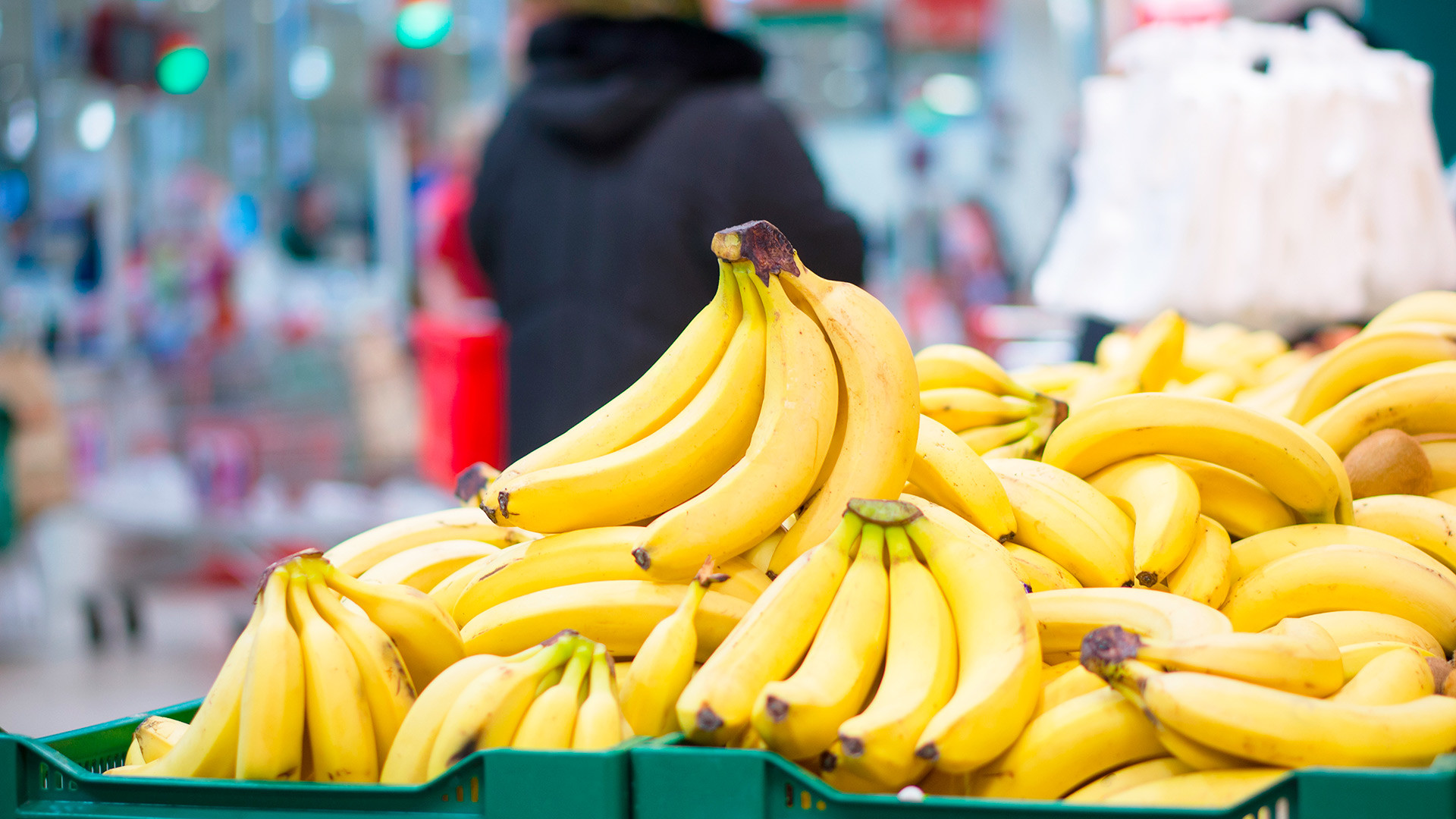
    A Vietnamese agriculture company, Hoang Anh Gia Lai Agriculture Jsc, is set to invest in another 5,000 hectares of land in Cambodia to grow bananas for export to China.

    It will invest VND976 billion ($42 million) in the project, the company said in a recent statement.

    Most of the bananas will be exported to China by ship or road. They will fetch VND22,000-23,000 (95-99 cents) per kilogram from September to March and VND13,000-14,000 (56-60 cents) at other times.

    While China has a demand for 15 million tons of bananas a year, the company has only been supplying 240,000 tons, Doan Nguyen Duc, CEO of Hoang Anh Gia Lai (HAGL) Agrico, said.

    But to reduce its excessive reliance on the Chinese market, Duc is also hoping to shift 20 percent of the company’s banana exports to South Korea and Japan.

    It expects to harvest over 106,000 tons of bananas and earn revenues of around VND1.7 trillion ($73 million) and VND983 billion ($42 million) in gross profit this year.

    The company already possesses 13,500 ha of farmlands in Vietnam, Laos and Cambodia. It is also a major producer and exporter of dragon fruit and chili.

    HAGL used to be a leading property developer in Vietnam, but restructured in 2010 to focus on rubber and livestock farming.

    HAGL Agrico has been growing fruits since 2016, and last year its passion fruit, banana, chili, and dragon fruit crops fetched revenues of VND1.6 trillion ($71 million), accounting for around 49 percent of HAGL’s total revenues.

    This year, the firm expects sales of VND3.7 trillion ($164.4 million) and gross profits of VND1.67 trillion ($74.2 million).

  • Global chains suffer as Vietnamese coffee lovers vote with their feet

    Global chains suffer as Vietnamese coffee lovers vote with their feet

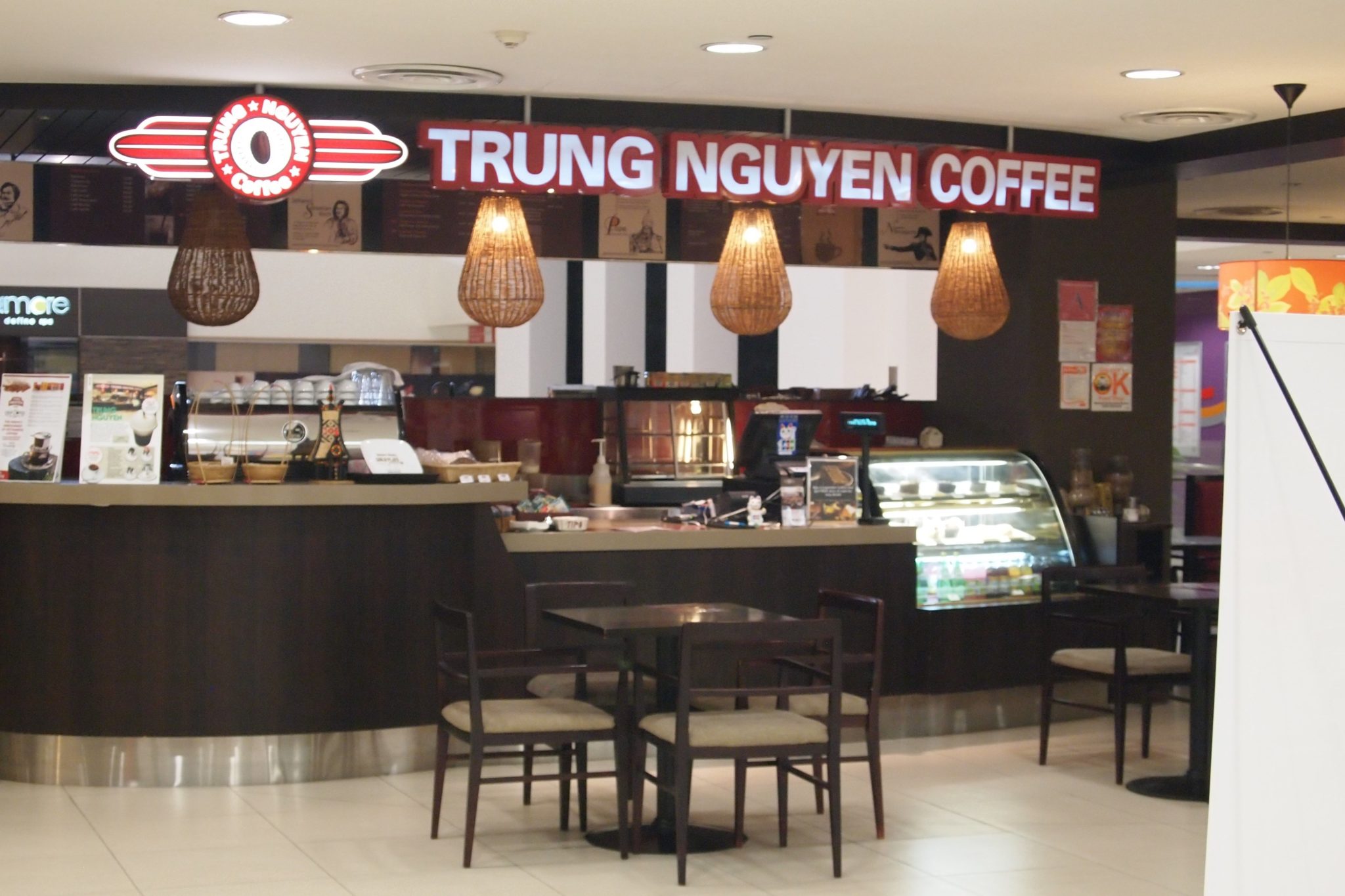
    Local coffee shop chains are outmaneuvering international brands like Starbucks by catering to customers’ demands.

    Young customers are now choosing smaller brands like The Coffee House, Cong Ca Phe and Phuc Long as their to-go spot for affordable brews.

    Local brands not only offer many beverage options but also sophisticated interiors and unlimited and fast internet access to ensure they retain customers, Nikkei Asia Review quoted market researcher Nguyen Phuong as saying.

    All this has helped these brands become very popular among students and young working professionals, who can spend hours there yet feel welcome.

    Phuong said having knowledge of Vietnamese culture and consumers has helped the local brands attract customers.

    By changing their business models to fit customers’ tastes, local brands report growing and some are even looking to expand.

    Nguyen Hai Ninh, CEO of what is thought to be the fastest growing chain, The Coffee House, told Nikkei that he plans to open 700 outlets around Vietnam in the next five years, or around 10 a month.

    Just one month after the brand opened its first shop in Seoul last month, Cong Ca Phe plans to add two more stores in the South Korean capital.

    The chain, which debuted in 2007, has more than 50 stores around Vietnam, and intends to add one or two every month until 2020.

    Thuc Coffee, Urban Coffee Station and Phuc Long report 7 percent annual revenue growth.

    In contrast, international names like Starbucks have grown slower than expected in the Vietnamese market.

    Starbucks only has 38 stores after entering the market five years ago despite boasting huge numbers in neighboring countries such as Thailand (330 stores), Indonesia (320) and Malaysia (190).

    Meanwhile, NYDC, Gloria Jean’s Coffees, and Caffe Bene of Korea have all wound up or are close to doing so.

    Singapore-based NYDC closed its last store in July 2017, Australian brand Gloria Jean’s Coffee also closed its last store in April 2017 after a decade of slow growth.

    Caffe Bene now has only three outlets remaining, according to InsideRetail Asia.

    Talking about the reason for the failure of international brands in the domestic market, industry insiders said that high rents on premium land have raised the cost of retail prices, making their coffee less competitive than local ones.

    A local coffee shop owner told Nikkei that opening a 200-square-meter Starbucks store in Saigon requires an initial investment of $215,000, while Coffee House only needs $86,000.

    Sean T Ngo, CEO of VF Franchise Consulting, said Vietnam, a major exporter of Robusta coffee, imposes high import tariffs on coffee beans, and international coffee chains often use imported Arabica beans that raise costs significantly. Higher costs have driven many customers to domestic brands.

    Phuong said that another reason for the downfall is that old brands are slow to adjust their business models to match customers’ taste.

  • Chinese brands grab 39 percent of Vietnam smartphone market

    Chinese brands grab 39 percent of Vietnam smartphone market

    Xiaomi and Huawei were the two fastest growing mobile phone brands in Vietnam in the second quarter, technology industry analyst Counterpoint reports.

    They grew respectively by 363 percent and 193 percent, according to the HongKong-based company’s recent release.

    “Further, amid the US-China trade war, the RMB (renminbi) is weakening, resulting in cheaper Chinese products in Vietnam. This will favor the Chinese brands, which now hold around 39 percent of the market in Vietnam,” said Tarun Pathak, Counterpoint associate director.

    Vietnamese smartphone brands face stiff competition from not only Chinese but also other international brands, he said.

    The report noted that Xiaomi had only 1 percent of the market share in the second quarter of 2017, but it surged to 5 percent a year later.

    Overall, Chinese brands have a market share of around 39 percent in the form of Oppo (22 percent), Xiaomi (5), Huawei (5), and other smaller names.

    Besides, the report said Huawei has tied up with local gaming firm VNG to enter the industry.

    Varun Mishra, a research analyst, added that Chinese companies such as Alibaba, JD.com and Tencent have invested heavily in the Vietnamese e-commerce market, which would give a “further boost to the Chinese players who have leveraged both offline and online platforms to sustain growth in similar markets.”

    “While the Chinese players are actively targeting mid-tier segments, local players are being pushed toward the entry level segment.”

    South Korean giant Samsung still dominates the smartphone market with a 37 percent share.

    Vietnamese conglomerate Vingroup has also entered the market. Vingroup hopes to launch its phones next year.

    By the end of March 2018, Vietnam has 118.7 million mobile subscriptions, according to official data.

  • Plastic industry hit hard by abrupt scrap import ban

    Plastic industry hit hard by abrupt scrap import ban

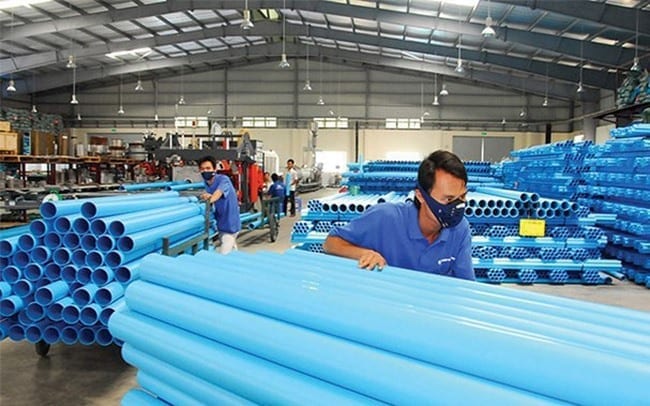
    Vietnamese plastic firms are unable to import scrap following a ban by the government, and said costs are becoming unaffordable as a result.

    “We’ll lose $10 million this year if we cannot import plastic scrap for manufacturing,” Tran Vu Le, director of Le Tran Plastic, told a conference organized Tuesday by the Vietnam Plastic Association (VPA).

    Other businesses attending the event said the inadequate plastic recycling in the country means they cannot source scrap locally.

    “HCMC produces 900 tons of plastic waste daily, but only 90 tons are recycled,” Hoang Phi Vu, director of Minh Tam Tin Nghia Plastic Company, said.

    Most of the plastic waste is mixed with regular trash and not sorted, and so does not meet export standard, he said.

    metric tonsVietnam’s 2016-2017 plastic waste import20162017PEPETPVC05101520253035404550Resource Recycling Inc.

    The problem began recently after Vietnamese authorities banned scrap imports just like China, which banned imports of certain wastes last January.

    As of August 13, there were over 6,600 containers of scrap remaining unclaimed at Cat Lai Port in HCMC and Hai Phong Port, according to the two ports.

    They have been there for over 30 days, 90 days in the case of a majority of them.

    Scrap importers have been reluctant to claim the containers because of “unsuitable” regulations related to their import, VPA chairman Ho Duc Lam told the conference.

    One such regulation requires import of plastic scrap with less than 2 percent impurities.

    “It is very difficult to extract the scrap from the containers to measure if it is below 2 percent,” Dinh Xuan Thang, director of the Hoa Lu Environmental Research and Application Center, pointed out.

    Vietnamese regulations allow empty plastic water bottles to be imported, but not bottles that contained sweetened drinks.

    “Who will sort these bottles to sell to Vietnam?” Hoang Duc Vuong, a spokesperson for recycling businesses in the VPA, asked.

    Plastic exporters to Vietnam H1 2018by percentageJapanU.S.KoreaThailandOther countriesVietnam Customs

    The VPA said in a release: “Vietnamese customs on July 7 slapped without prior warning an abrupt ban on scrap imports which did not give businesses time to react.”

    This ban has imposed a “burden” on plastic scrap importers, it said.

    Lam said he has written to Prime Minister Nguyen Xuan Phuc and the Ministry of Natural Resources and Environment about the problem.

    In the first six months of this year Vietnam imported 277,000 tons of plastic scrap mostly from Japan, the U.S. and Korea.

  • Vietnam set to increase minimum wages in 2019

    Vietnam set to increase minimum wages in 2019

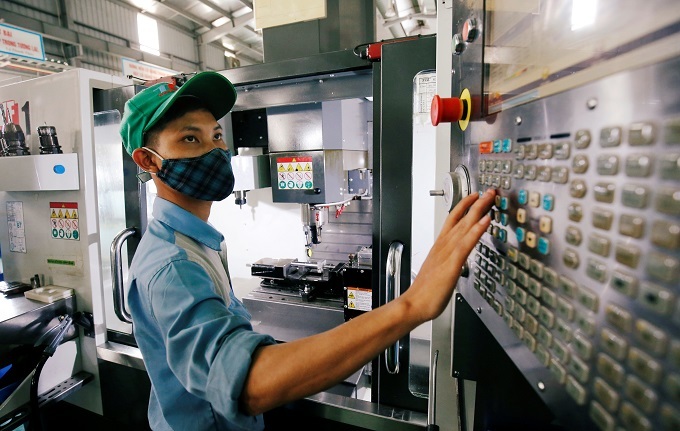
    Vietnam’s National Wage Council has proposed a minimum wage increase of nearly $7-9 per month across all four levels in 2019.

    Overall, the average increase across the four levels will be 5.3 percent.

    All members of the National Wage Council (NWC) on Monday voted on the proposal to be submitted to the government.

    Under the proposal, the minimum monthly wage across four levels will be raised, depending on the area, from $171 to $180 (region 1); $152 to $159 (region 2); $133 to $140 (region 3); and $118 to $125 (region 4).

    At the same meeting, the Vietnam General Confederation of Labor (VGCL), proposed a minimum increase of 6.1 percent, while the Vietnam Chamber of Commerce and Industry, representing the business owners, proposed a 5.1 percent increase.

    All sides came to an agreement of a 5.3 percent increase as the final rate so the meeting could move to the voting round.

    Doan Mau Diep, deputy labor minister and chairman of NWC, said a 5.3 percent increase was reasonable and acceptable.

    “As the inflation rate is not too high, labor productivity is rising and businesses are facing exchange rate risks, we think it is reasonable to increase the minimum wage between 5 and 5.5 percent.”

    VGCL recently published a study on minimum wage and cost of living after surveying over 3,000 laborers in 150 different businesses in the country.

    26.5 percent said they were “barely getting by,” while 12.5 percent said their incomes were not enough to support their families, and have to work overtime or extra jobs to make ends meet.

    The study found that an average worker’s minimum spending is VND6.5 million ($290) each month, while the average base salary is just VND4.6 million.

    Thus laborers need to work on average an extra 28 hours a month just to make ends meet, the study found.

  • Go-Viet perks up competition in Vietnam’s ride-sharing market

    Go-Viet perks up competition in Vietnam’s ride-sharing market

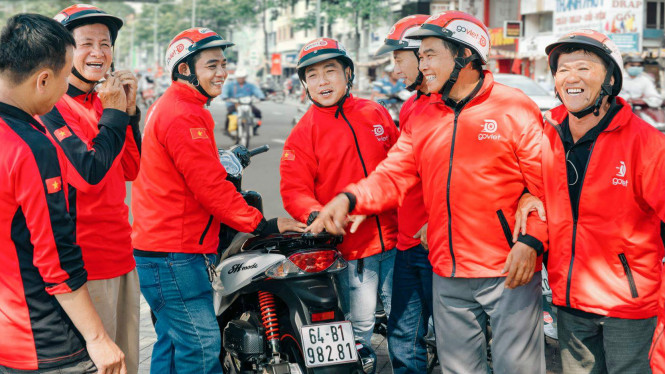
    Go-Viet’s attractive perks for drivers are motivating many to shift from Grab, and the market leader is responding.

    He’s one of the first drivers to sign up with ride-sharing service Go-Viet, but Thanh Hung is still wearing the well-recognized green GrabBike uniform.

    “Too many drivers have just signed up for Go-Viet so there are not enough jackets,” Hung said.

    The 40-year-old motorbike driver said he was able to make VND800,000 ($34) in a day and a half since he began driving for Go-Viet, much higher than the VND500,000 ($21) he would get from GrabBike for the same work duration.

    Hung said he is also attracted by the tax exemption Go-Viet promises for the first six months and the bonus he’ll get if he finishes nine trips a day.

    Go-Viet, a Vietnamese version of Indonesian service Go-Jek, entered the Vietnamese market early this month, seeking its slice of the market pie that Grab has been dominating after the departure of Uber.

    Aiming to tailor its service to Vietnam with a different name and local teams, one of the first goals of Go-Jek in the country is to recruit drivers.

    “The company hopes to bring a stable income to tens of thousands of drivers through technology,” Nguyen Vu Duc, CEO of Go-Viet said in June.

    The company had contacted potential drivers months before the launch, either by meeting face to face or talking to them online, its communication representative Huong Cung said.

    Grab did not comment on the ploys Go-Viet is using to attract drivers, but it’s also deploying its own strategies.

    The company has just launched a campaign to reward drivers with five percent of the total revenue they make in a week, said Nguyen Thu An, communication director of Grab Vietnam.

    In early June, Grab also announced a plan to have over 100 stops for Grab drivers with free wifi, coffee and even vehicle washing service in Ho Chi Minh City and Hanoi.

    “There is a large number of drivers who don’t like Grab and want to work for Go-Viet,” said Vu Hoang Tam, a mobile app expert and one of the founding members of GrabBike in Vietnam.

    This creates a good supply of drivers for Go-Viet, which has learned a lot from the “previous battle,” Tam said, referring to the competition between Grab and Uber earlier this year.

  • Vietnam most vulnerable in ASEAN to US-China trade war

    Vietnam most vulnerable in ASEAN to US-China trade war

    Vietnam will be the most vulnerable country in Southeast Asia should the U.S.-China trade war persist, according to recent research.

    This is because Vietnam is the most export-dependent of the ASEAN big five, which also includes Indonesia, Malaysia, the Philippines, and Thailand, quoted from Financial Times Confidential Research report.

    Vietnam’s exports were worth $214 billion last year, 21 percent up from 2016, according to Vietnam’s Customs. The U.S. was the largest importer of Vietnamese goods last year, buying goods worth over $41.6 billion.

    “Vietnam’s exports to the U.S. rank first among the ASEAN five, making the country sensitive to softening U.S. consumer demand,” the report said.

    Another reason that Vietnam and other ASEAN member countries would be impacted by the escalating trade tension is the strengthening of the U.S. dollar, it said.

    The dong has been devalued by 1.5 percent this year, and the government could take more aggressive action if exports slow significantly, it said.

    But Vietnam, Thailand and Malaysia might still benefit from the currency weakness “if foreign direct investment shifts away from China as more companies hedge against the risk of trade action,” it added.

    Trade tension between the U.S. and China continues to escalate. A Reuters report cited Beijing as saying last week that it would slap additional tariffs of 25 percent on $16 billion worth of U.S. imports.

    The announcement came after Washington said it would impose 25 percent tariffs on another $16 billion in Chinese goods after imposing tariffs on $34 billion last month.

    So far, China has now either imposed or proposed tariffs on $110 billion of U.S. goods, representing the vast majority of its annual imports of American products.

    Vietnamese experts too have cautioned that the country would suffer collateral damage because of this trade war.

    A report released last week by the Ministry of Planning and Investment’s National Centre for Socio-Economic Information and Forecast said Vietnam’s GDP growth would take a hit from the trade tension.

    The report predicts a drop of 0.03 percent this year, 0.09 percent next year and 0.12 percent in 2020 and 2021.

    In money terms, it translates into VND8 trillion ($344 million) in 2021.

  • Macau’s Suncity again defers Hoiana casino-resort stake purchase

    Macau’s Suncity again defers Hoiana casino-resort stake purchase

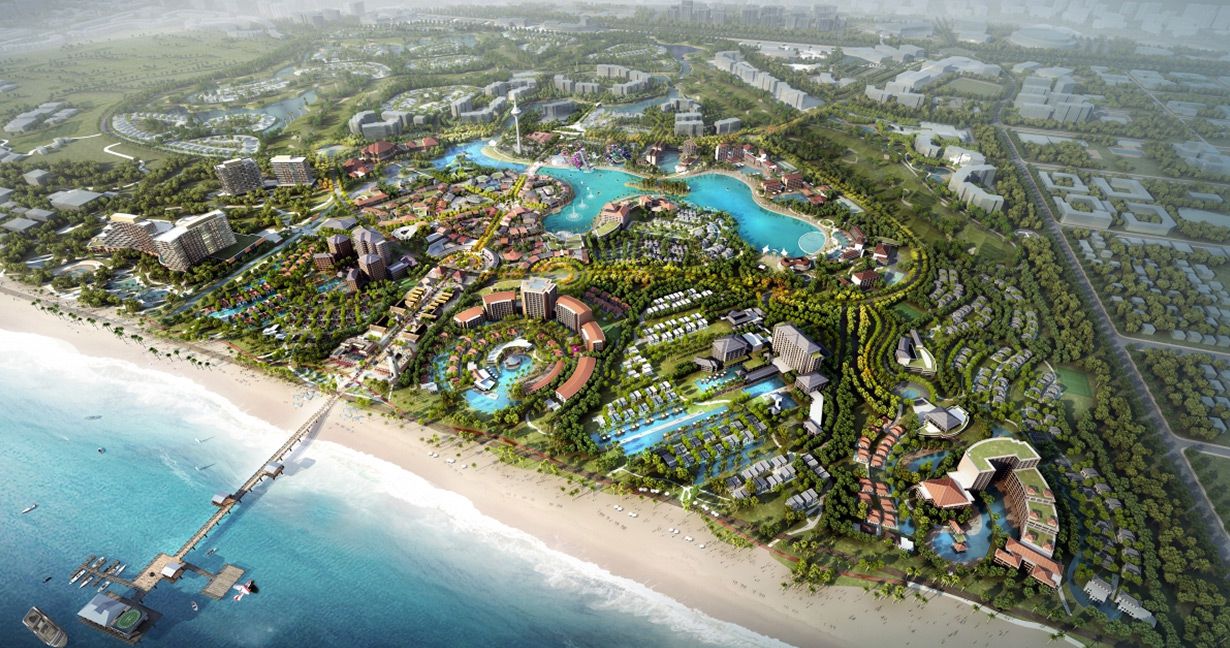
    Hong Kong’s Suncity Group Holdings has twice delayed a deal in the last two months to acquire 34 percent of a casino-resort in Quang Nam Province.

    In a statement to the Hong Kong Stock Exchange, the Macau casino operator and investor said it is waiting for the joint venture between VinaCapital and Hong Kong’s Chow Tai Fook to obtain approval from a Vietnamese bank, which has given a loan to the developers of Hoiana.

    So it is postponing completion of the deal, worth $76.8 million, until August 31 this year, the firm said.

    “It is expected that the bank consent will be obtained on or before August 31, 2018. Save for the condition relating to the bank consent, all other conditions have been fulfilled.”

    In June Suncity had said difficulties in acquiring land for the project caused it to put off the deal until July 31.

    VinaCapital and Chow Tai Fook have since acquired the 163 hectares required for phase 1 of the development.

    Suncity announced plans to acquire the stake in the casino and resort in July last year.

    The $4 billion project was initially planned by VinaCapital and Malaysia’s Genting Group, but in 2012 the latter pulled out, and in 2015 Chow Tai Fook came on board.

    Hoiana is one of eight casinos to be licensed in Vietnam now.

    To be built in seven phases it will have a casino with 140 tables and around 1,000 slot machines, guest rooms and a golf course.

  • Vietnam’s VinFast in deal with Siemens for technology to make electric buses

    Vietnam’s VinFast in deal with Siemens for technology to make electric buses

    VinFast Trading and Production LLC has signed two contracts with Siemens Vietnam, a unit of Siemens AG.

    The contracts involve the supply of technology and components to manufacture electric buses in the Southeast Asian country.

    VinFast, a unit of Vietnam’s biggest private conglomerate, Vingroup JSC, said on Monday the deals will enable it to launch the first electric bus by the end of 2019.

    “Electric buses are an essential element of sustainable urban public transportation systems,” Siemens Vietnam President and CEO Pham Thai Lai said in the statement.

    VinFast will also produce electric motorcycles, electric cars and gasoline cars from its $1.5-billion factory being built in Haiphong City, it said.

    In June, General Motors Co agreed to transfer its Vietnamese operation to VinFast, which will also exclusively distribute GM’s Chevrolet cars in Vietnam.

  • Consumer goods, property most attractive sectors for acquisition in Vietnam

    Consumer goods, property most attractive sectors for acquisition in Vietnam

    The most promising sectors for mergers and acquisitions in Vietnam are consumer goods and real estate, says a global advisory firm.

    Food and beverage (F&B) tops the list followed by pharmaceuticals and real estate in joint second position and fast moving consumer goods, KPMG said in its latest outlook report for M&A released at the Vietnam M&A Forum (MAF) 2019 in HCMC last week.

    The firm came up with the report following a survey of more than 300 professionals working for private equity firms, securities companies and M&A advisory firms besides company owners.

    F&B takes the lead thanks to a booming young middle class, stable economic growth of 6.5 percent and increasing exposure to new concepts and cultures especially influenced by globalization.

    As for pharmaceuticals and life sciences, the survey found that while some foreign companies in this industry could see M&A as a faster means of obtaining the necessary licenses in Vietnam, several other arguments were also made in support of this trend: such as the government’s plan to simplify licensing policies and reforming regulatory frameworks, and the increasing demand for healthcare.

    Besides, the country’s rapid urbanization rate means the real estate sector will continue to remain a magnet for investment, especially the residential and hospitality segments.

    A report of the MAF 2019 stated that foreign investors in the consumer goods sector do not just have an eye for local brands but also their distribution networks.

    “Thai and South Korean investors have expressed interest in Vietnam’s consumer goods sector since M&A deals will help them access established channels to distribute Thai and Korean goods in the Vietnamese market,” said the report.

    As for the real estate sector, it noted foreign investors are interested in M&A because it often takes long to complete procedures for new real estate projects in Vietnam, and acquiring local firms would be a shortcut.

    Besides, the availability of land for new projects is limited, with local firms already buying up most of them, making it difficult for foreign investors to strike out on their own.

    MAF 2019 data showed that the total M&A value in Vietnam last year was $10.2 billion, the highest ever and 175 percent up from 2016.

    In the first six months of this year the figure was $3.55 billion, up 55 percent.

    Consumer goods and real estate accounted for the biggest slices of the M&A pie last year, with 57 percent and 27 percent, respectively.

    In H1 this year real estate surged to the top, accounting for 66.75 percent, followed by finance-banking with 19.06 percent.

    Experts at the forum said this year the M&A value could be lower at $6.5-6.9 billion.

    Last year it had been boosted by the biggest ever divestment deal in the country when Thai Beverage paid nearly $5 billion for a 54 percent stake in Vietnam’s top brewer Sabeco.

    KPMG’s survey found that Japan, South Korea and China would continue to be the top sources of M&A deals in the next three years.

    Warrick Cleine, chairman and CEO of KPMG in Vietnam and Cambodia, said the wave of investments from Asia into Vietnam would be huge and the Comprehensive and Progressive Agreement for Trans-Pacific Partnership (CPTPP) that Vietnam signed in March with 10 other Asia-Pacific countries would make Vietnam’s market even more attractive to investors from Japan and South Korea.

    Deputy Prime Minister Vuong Dinh Hue told the forum the government is amending and finalizing policies related to management of state-owned equity.

    The government will continue to push with its equitization of state-owned firms and tighten up rules to ensure those that have already launched IPOs list on the stock market, he said.

    The government is seeking to make things easier for investors. “The target is to cut 30-50 percent of business procedures within this year. Now 15 percent of such procedures has been axed. We will do the same with specialized inspection procedures to improve the investment environment in Vietnam to make it easier for the establishment of new firms as well as M&A activities,” the deputy PM added.

    Pham Van Thinh, CEO of advisory firm Deloitte Vietnam, said as the government continues to facilitate foreign investment and make the economy more open, Vietnam would remain an attractive market for the next five to 10 years.

    However, as most companies in Vietnam are small or medium-sized, which means many of them do not have strategic policies for long-term development, there is not much scope for strong growth in M&A in future, he said.

    Dominic Scriven, executive chairman of Dragon Capital, one of the top investment funds in Vietnam, said he is optimistic about the M&A prospects in Vietnam.

    But he noticed three factors that should be sorted out to bolster the M&A landscape: the government’s policy to attract foreign investment, a change in attitude of local firms many of whom still want to handle everything themselves and do not look at M&A as a solution to become stronger and how effectively Vietnam can handle possible disputes between partners in M&A deals.
  • No cheers from World Cup for Vietnam’s top local brewers

    No cheers from World Cup for Vietnam’s top local brewers

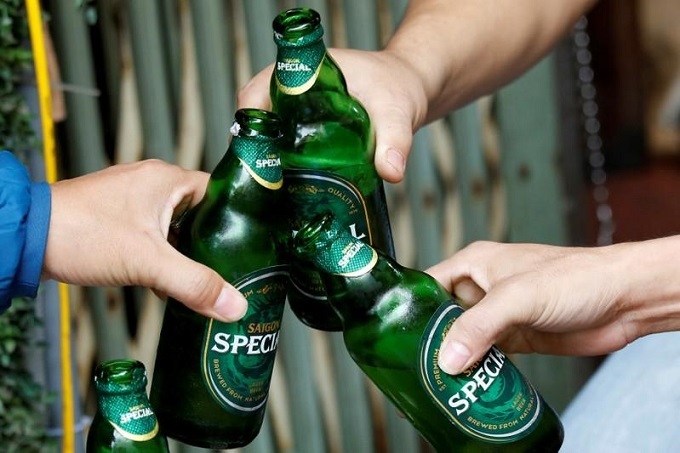
    Sabeco and Habeco, Vietnam’s two largest brewers, reported dismal results in H1 despite some highly favorable factors.

    Generally, for fast-moving consumer goods, the first half of the year is usually good because demand skyrockets during Tet, the Lunar Year national holiday.

    This year the beer industry would have hoped to make a killing since the World Cup football tournament began on June 14.

    Yet the two brewers saw profits actually decline.

    Sabeco, as Saigon Beer Alcohol Beverage Corp. is called, saw pre-tax profit fall 4 percent year-on-year to VND3 trillion ($127 million) on sales of over VND17 trillion ($722 million), up over 8 percent. This was the first time its profits had declined since 2013.

    Its gross margin ratio, which compares gross profit to sales, fell to 23.8 percent from 27.4 percent in the same period last year.

    In July Sabeco’s new chairman, Koh Poh Tiong, told shareholders at its annual general meeting that net profits might fall by 19 percent this year due to increased costs, tax hikes and higher branding expenses.

    Habeco, or Hanoi Beer Alcohol and Beverage Joint Stock Corp., reported revenues of VND4.3 trillion ($183 million) and VND413 billion ($17.5 million) in pre-tax profit, almost unchanged from a year earlier and only 40 percent of its full-year target.

    But, unlike Sabeco, its marketing and advertising spending increased by 15.5 percent in the second quarter to VND167 billion ($7.1 million).

    The slowdown for the biggest brewer in the northern market started three years ago. Even as its rivals were growing steadily, Habeco saw annual sales stagnate at around VND10 trillion ($425 million).

    Its market share is showing signs of shrinking amid expansion by foreign rivals in the high-end segment, according to securities analysts.

    The stocks of both brewers are suffering due to their modest showing.

    On Friday 19 morning, Sabeco traded at VND208,000 ($8.8), 40 percent down from its peak late last year. Habeco has fallen by half to below than 83,000 dong ($3.5 each).

    According to a study on the Asia-Pacific beer market by Euromonitor, Vietnamese consumption is forecast to rise in the coming years despite the stagnation and even decline in China and some European countries.

    Last year Vietnam consumed over 4 billion liters, or 45 liters per capita, the local Beer, Alcohol and Beverage Association estimated.

    The country targets production of 4.1 billion liters in 2020 and 5.5 billion liters in 2035.

  • Vietnam eyes power imports from China, Laos

    Vietnam eyes power imports from China, Laos

    Vietnam might have to import power from China and Laos after 2020, says a senior official.

    “There is a real risk of power shortages in 2021-2023, and the risk will get higher if consumption surpasses forecasts in the coming years,” Hoang Quoc Vuong, Deputy Minister of Industry and Trade, told the Vietnam Energy Forum in Hanoi on Thursday.

    Although the sole power distributor Vietnam Electricity (EVN) is currently able to meet the country’s demand, there is a strong likelihood that the increasing needs of a 95-million population outstrip the capacity.

    This can happen as early as 2020 if the generators don’t operate well or there is not enough coal and liquefied natural gas (LNG) to produce power, EVN Deputy Director Ngo Son Hai said at the forum.

    While more coal power projects are being built in the south, shortages can happen if these constructions run behind schedule, he noted.

    Power shortage will increase by 7.2-7.5 billion kilowatts hours a year in the southern region for each delayed project, Hai said, adding that there were seven underway at present.

    Southern provinces need more coal power projects be built to provide over 18,000 megawatts needed in the next five years, but none of them have opened yet, he said.

    Power production plans in southern Vietnam in megawattsby 2022Projects under constructionProjects yet to be builtEVN

    Deputy Minister Vuong proposed that Vietnam starts importing electricity from Laos and China, to meet rising demand in the country.

    Vietnam should also create favorable conditions for renewable power projects, like solar and wind power, be developed near high consumption areas, he said.

    Vuong noted encouraging the installation of rooftop solar power systems could be one solution to address the looming power shortage.

    To meet the high demand for power, Vietnam needs to produce 278 billion kilowatt hours in 2020, and this number needs to double by 2030, according to EVN.

    The country’s installed power capacity is estimated to reach 47,800 megawatts by the end of 2018, 5.4 times that of 2003, making the country second in ASEAN and 25th in the world, EVN said.