Tag: Vietnam

  • Vietnam retail sales rises in seven months straight

    Vietnam retail sales rises in seven months straight

    Vietnam retail sales and services rose 11.1 per cent in the first seven months, according to the General Statistics Office (GSO).

    The revenue reached VND2.49 quadrillion (US$108.3 billion) thanks to a strong increase in purchasing power during prolonged hot weather, the GSO said.

    Sales in July reached the highest level during the past three months, with May and June each seeing 8.3 per cent growth.

    The retail sector gained a year-on-year surge of 11.7 per cent in revenue to VND1.88 quadrillion, accounting for 75 per cent of the total revenue from retail sales and services.

    Products recording strong increases included food (up 12.6 per cent), apparel (up 12.4 per cent), home appliances (up 12.3 per cent), cultural and education services (up 10.3 per cent) and transport (up 10.4 per cent).

    GSO said demand for food rose during the FIFA World Cup in June and July.

    Tourism revenue grew 17.7 per cent, followed by accommodation and restaurant and catering services, up 9.1 per cent.

    The GSO expects Vietnam retail sales to grow by 10.5 per cent over the full year.

  • Vietnamese startup EzQ wins two prizes at APEC meet

    Vietnamese startup EzQ wins two prizes at APEC meet

    A Vietnamese startup has won the top prize at a regional contest with a win-win business model for vendors and customers.

    EzQ won the Best Startup award at the IDEAS Show APEC 2018 held in Taiwan last week.

    Demonstrating a good understanding of user’s needs and applying technological advances for community development, the EqZ model impressed 14 judges from Creative HQ (New Zealand), Samsung Ventures, TechGrind Thailand, Plug and Play (United States), Born2Global (Korea) and Vietnam Silicon Valley to win two prizes: “Best Startup” (Jury Gold) and another reward from TechGrind.

    “For us, the trust, appreciation and comments from the judges are of utmost importance. Earlier, we were not fully confident in our business model. Now we are inspired and motivated to pursue the solution that our company provides,” said Nguyen Hoang Giang, EzQ founder.

    Starting with the needs and potential of the Vietnamese market, EzQ developed the idea of an ecosystem that links all market constituents. EzQ’s model aimed to cut back on middlemen, increasing profitability for the vendors but reducing costs for consumers.

    Using the forthcoming trend of blockchain technology, EzQ seeks to provide a secure, safe and transparent ecosystem, Giang said. In particular, it will increase income generation opportunities to students, office workers, housewives and people with idle time.

    Raphael Uranguai, Assistant Secretary/ Ministry of Commerce and Industry Trade Development and Promotion from New Guinea, commented that the business model of the Vietnamese startup showed that the digital economy was a leading area of interest in the Asia Pacific region.

    IDEAS Show APEC is an annual startup technology conference. IDEAS Show APEC 2018 was attended by 40 representatives from Taiwan, South Korea, Papua New Guinea, Peru, Philippines, Singapore and Vietnam. All the teams participating in the conference had the opportunity to visit some big and innovative startup hubs in Taoyuan, Taiwan.

    There were also exhibition booths for introducing products, and meetings held to discuss and host concept presentations from startups.

  • Ford Vietnam recalls over 2,500 Thai-made vehicles for gearshift problem

    Ford Vietnam recalls over 2,500 Thai-made vehicles for gearshift problem

    Ford has recalled all 2015 Thai-made Ranger pick-up trucks sold in Vietnam because of a gearshift problem.

    The US company, which has sold more than 2,500 of these vehicles, said faulty gearshift cables could make the gear shift hard, leading to the driver losing control.

    It has advised customers to take their vehicles to the nearest dealership to fix the problem for free, saying it would only take about two hours.

    It is reported that Ford will introduce the Ranger 2.0 by the end of this year, but in limited numbers.

    Ford is one of many car brands that have suffered a drop in sales after a new government decree this year set tough conditions for imports.

    However, June auto imports saw a 45.6 percent surge, dominated by Thailand, after Vietnam’s quality control regulations were met.

    Ford, which also assembles vehicles in this country, had a 6 percent share of the market as of June 2018.

  • Ralph Lauren sales decline, and Asia saves it

    Ralph Lauren sales decline, and Asia saves it

    Fashion label Ralph Lauren sales reached US$1.4 billion for the first quarter of this fiscal year, driven by sales in Asia and Europe.

    Ralph Lauren sales in Asia increased 19 per cent to US$248 million on a reported basis and by 16 per cent in constant currency, driven by strength in both retail and wholesale channels. Samee-store sales in Asia increased 6 per cent in constant currency, reflecting growth in both the brick-and-mortar and digital-commerce operations.

    By comparison, European revenue in the first quarter increased 8 per cent, while North America declined by 2 per cent.

    Ralph Lauren, executive chairman and chief creative officer for the company said, “I continue to be inspired and energised by the passion our teams have for our brand and our company. This passion, along with Patrice’s [Louvet, president and CEO] partnership over the last year, the clear plan he and the team laid out in June, and the initial progress in this quarter, gives me confidence in our future as we celebrate 50 years in business.”

    Louvet added: “We are off to an encouraging start to the new fiscal year on both the top and the bottom line… we are on track to return the company to long-term, sustainable growth and value creation.”

  • Bangkok Bank seeks nod to grant more loans in Vietnam

    Bangkok Bank seeks nod to grant more loans in Vietnam

    The Vietnamese branch of Bangkok Bank has sought permission to lend more as it nears the 15 percent annual growth limit.

    Tharabodee Serng-Adichaiwit, senior vice-president and general manager of the Vietnamese branch, said the bank has adjusted its lending growth target to 30 percent by the end of this year, after it already reached 13 percent in the first six months.

    The report stated, rapid, steady economic growth of neighboring countries has made the Thai bank’s loan outlook for the upcoming months promising.

    The 15 percent loan growth cap by Vietnam’s central bank applies to both local and foreign banks. The credit growth limit was introduced last year to better regulate inflation, exchange rate, and interest rates.

    However, institutions can submit a request form to exceed this threshold and the regulator will determine this on a case-by-case basis.

    Other banks have also sent their requests to boost credit growth by more than 15 percent, Tharabodee said.

    Vietnam’s economy has sustained and built on last year’s gains with an impressive 7.08 percent growth in the first half of 2018, the highest rate since 2011.

    The World Bank had forecast in a recent report that Vietnam’s economy could expand by 6.8 percent in 2018, revising upwards its previous estimate of 6.5 percent. It has estimated the nation’s GDP growth at 6.6 percent in 2019 and 6.5 percent in 2020.

  • Lotte Duty Free exits Incheon Airport Terminal 1 contracts, sets its sights on Vietnam

    Lotte Duty Free exits Incheon Airport Terminal 1 contracts, sets its sights on Vietnam

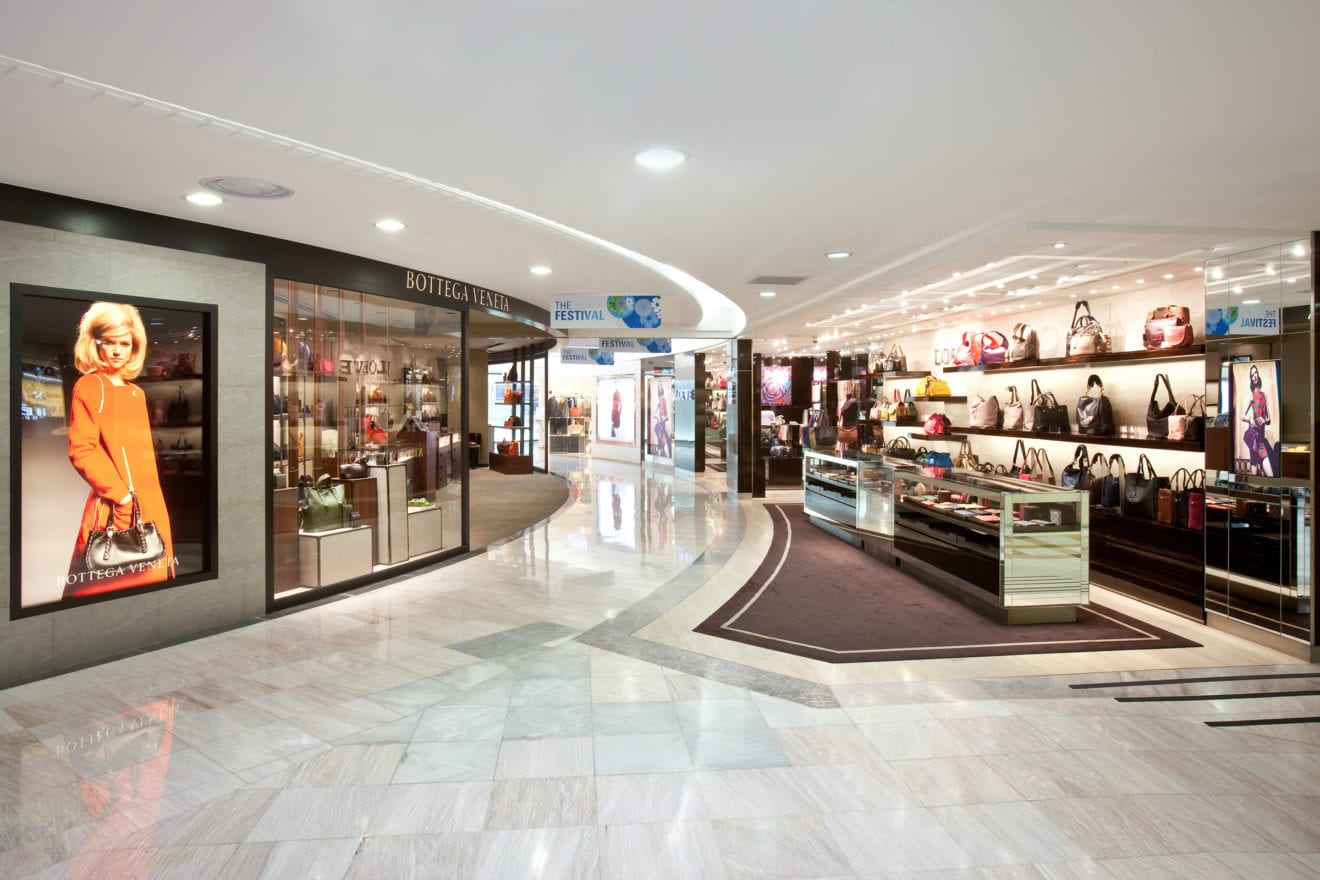
    Lotte Duty Free exits its contentious Incheon International Airport Terminal 1 cosmetics, fashion and leathergoods contracts, to be replaced by Shinsegae Duty Free.

    As reported, South Korea’s duty free giant served notice on 13 February of its intention to quit three contracts – DF1 (P&C), DF5 (leathergoods & fashion) and DF8 (miscellaneous categories).

    The company cited “the burden of rent increases” following the sharp downturn in Chinese tourists in 2017 amid the THAAD dispute with China.

    The three concessions, later consolidated into two by Incheon International Airport Corporation, were subsequently awarded to Shinsegae Duty Free, which commences business on 1 August. Lotte Duty Free will continue to operate its DF3 liquor, tobacco and foods business at T1 until 2020.

    Lotte Duty Free said that it expects to save about 1.4 trillion won (US$1.25 billion) in rent by 2020 through its premature exit. “Based on improved profitability through the withdrawal from Incheon Airport, the company intends to strengthen its competitiveness in downtown duty free shops and to expand online duty free shop marketing,” it said.

    “In addition, in order to revitalise sales of our [T1] liquor and cigarettes stores, we plan to analyse outbound passengers and target enhanced marketing through improved linkage with city and online duty free shops.”

    Lotte said that it also aims to boost downtown and online sales of cosmetics and fashion to avoid losing custom to its Incheon successor. A customer prepaid card for Lotte’s vacated T1 business can now be used downtown.

    Lotte Duty Free plans to concentrate its efforts on expanding business overseas, with Vietnam the key focus. As reported, the company celebrated the grand opening of its Da Nang International Airport concession on 1 November last year, after a soft opening in May. The business, registered as Phu Khanh Duty Free, is a 60/40 joint venture between Lotte Duty Free and a local partner.

    In June this year Lotte Duty Free opened arrivals and departures stores at Cam Ranh International Airport in Nha Trang, after being awarded an exclusive ten-year duty free concession.

    Lotte said that it also plans to invest heavily in additional downtown stores in Hanoi, Ho Chi Minh City and Da Nang.

  • Vietnamese brands look plain as foreigners wear the beauty industry crown

    Vietnamese brands look plain as foreigners wear the beauty industry crown

    The beauty care industry is doing better than expected in Vietnam, but foreign brands are the ones sitting pretty.

    Nguyen Van Minh, chairman of the Vietnam Essential Oils Aromas and Cosmetics Association (VOCA), said companies in the beauty and personal care industry have seen stronger growth than they’d forecast.

    “Vietnam is an emerging market for the beauty care industry, with annual growth rate averaging 30 percent in recent years,” he said.

    In 2016 alone, the industry generated $1.2 billion in revenue, a figure that the association had previously predicted for 2020.

    The import value of beauty care products surged almost twofold from around $3 billion in 2016 to $5.5 billion last year, but exports stayed insignificant at just VND500 million ($21,520) last year, it said.

    These figures match findings by British research firm Euromonitor International, which said last year that up to 90 percent of beauty products in Vietnam are imported.

    It also said the market value of this industry had crossed $1 billion since 2015 and repeatedly recorded double digit growth in recent years.

    A representative of Medicare, a drug and beauty care retailer based in Ho Chi Minh City, said that imported products or those produced in Vietnam by foreign companies make up most of its sales, and that imported brands will have more opportunities to expand their market shares than domestic rivals in the future.

    At the Mekong Beauty Show 2018, an international beauty and cosmetics expo that was held in the city in June, 110 of more than 300 international exhibitors were South Korean companies who came to find potential importers and business opportunities in Vietnam.

    Dominic Oh, general director of Korea International Exhibition and Convention Center (Kintex), the event’s organizer, said that Vietnam was considered one of the key markets for South Korea’s beauty care sector.

    In 2016, Singapore was the biggest exporter to Vietnam’s beauty care sector, accounting for 34 percent of its total imports. The EU followed with 19 percent, Thailand, 9 percent, and South Korea, 8 percent, according to Euromonitor International.

    In its report on beauty and personal care in Vietnam, the research firm said the market was dominated by global brands, thanks to innovative products, strong distribution network and dynamic marketing.

    Three foreign companies, Unilever Vietnam International Co Ltd, Procter & Gamble Vietnam Ltd and Colgate-Palmolive Co Ltd were in the top three positions in 2017, it added.

    Local firms held back

    According to VOCA, as their incomes improve, Vietnamese people are paying more attention to beauty and personal care, creating a lot of opportunities for businesses.

    In a report released early April, the World Bank said 70 percent of Vietnam’s population are now classified as economically secure, including the 13 percent who are now part of the global middle-class.

    These income classes are growing rapidly, rising by over 20 percentage points between 2010 and 2017.

    An average of 1.5 million Vietnamese have joined the global middle class each year since 2014, confirming that households continue to climb the economic ladder after escaping poverty.

    The WB also predicted that as many as 33 million Vietnamese will be in the middle class by 2022.

    Despite this fertile ground for beauty care products, Vietnamese brands have struggled to do well.

    Even top companies with decades in the market, like Saigon Cosmetics Corporation and Lan Hao Cosmetics Co Ltd, have stopped at making low and mid-range products.

    Minh, chairman of VOCA, said local firms were held back by a lack of serious investment in packaging, design and advertisement.

    Medicare, an HCMC-based drug and beauty care retailer, said it looked for Vietnamese partners to produce Medicare-branded beauty and personal care products, but local firms did not have the capacity to make products that could compete with foreign rivals.

    As organic beauty products is the new trend, VOCA chairman Minh said local firms should make good use of natural ingredients that are plentiful in Vietnam to create high quality products so that they can start competing with foreign firms.

    However, doing this will require bigger investments in more advanced technologies; and given the current state and scale of domestic firms, the upgrade is easier said than done, Minh said.

  • Hanoi seeks approval for Vingroup’s $300 million IT park

    Hanoi seeks approval for Vingroup’s $300 million IT park

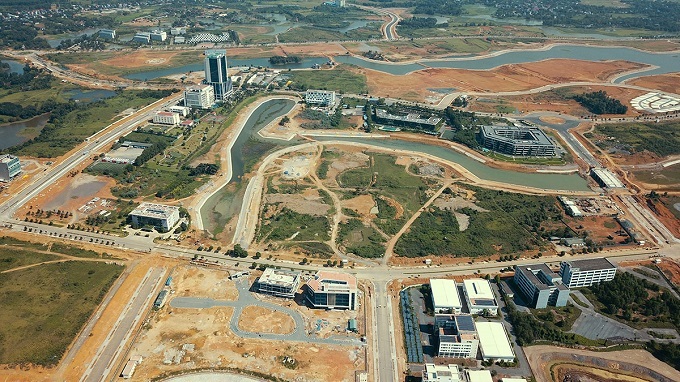
    Hanoi has submitted a proposal to the Ministries of Construction and Planning and Investment for building a new IT park possibly in Dong Anh District.

    It will be built by Vingroup on Vo Nguyen Giap Street on the way to Noi Bai Airport.

    It is estimated to cost US$302.54 million and likely to spread over 78.1 hectares, housing a maximum of 19,557 personnel.

    Its construction, to begin in the fourth quarter of this year, will be finished at the end of 2020, when it will open.

    Authorities hope it will interest both foreign and local IT companies thanks to its modern technical and social infrastructure, R&D facilities and other advantages.

    Vingroup also seeks to build facilities such as a data centre, IT functional zones, accommodation for specialists, commercial offices, an R&D complex, a training and consulting zone, exhibition space, parks and a recreation zone inside.

  • Vietnam plans to make loans easier for agriculture investors

    Vietnam plans to make loans easier for agriculture investors

    Prime Minister Nguyen Xuan Phuc has called for a drastic reduction in administrative procedures and easier access to agricultural loans.

    He said at a recent conference in the Central Highlands city of Da Lat that relevant departments and ministries should reduce the number of administrative procedures by 50 percent, make it easier for enterprises investing in agriculture to get loans, and create opportunities to expand infrastructure for agriculture production.

    The Ministry of Planning and Investment told the conference that just 8 percent of businesses nationwide, or 49,600, had invested in agriculture sector, as of the second quarter of 2018.

    The ministry also noted that capital investment by foreign investors in agriculture accounted for just two percent of the total.

    Le Van Cuong, president of the hi-tech agricultural company Dalat GAP, said getting a loan from the banks was an investor’s biggest challenge.

    The banks only accept land use right certifcate as collateral, but the land’s value affixed by the bank for the loan is much lower than its market price. Furthermore, no preferential interest rate is offered, which means borrowers would have to pay 8-8.5 percent per year on large sums that are needed to build glasshouses and other equipment, Cuong said.

    an unnamed World Bank representative said Vietnam’s agriculture sector faced three big challenges – fragmented agricultural chain value; low FDI; and modest overall capital investment. The representative suggested that the government issues fresh regulations and offers tax breaks to attract more foreign investors.

    Phuc wanted Vietnam to be listed among Top 10 agricultural production countries and for the nation’s agriculture sector to rank 15th, globally.

    Vietnam currently ranks second in Southeast Asia and 13th in the world in agricultural production, said Minister of Agriculture and Rural Development, Nguyen Xuan Cuong.

    Vietnam exported about $36.37 billion worth of agriculture and fisheries products last year.

  • FMCG sales slightly up in urban Vietnam

    FMCG sales slightly up in urban Vietnam

    National sales of FMCG on traditional and modern trade channels in urban areas reached $14 billion in Q2, growing 0.7 percent, Nielsen reported.

    The fast-moving consumer goods growth year-on-year was driven by sales increases seen across six out of seven super categories: beverages (including beer), milk and dairy products, household care products, personal care products, baby care products, and cigarettes.

    Baby care witnessed the biggest jump to 12 percent while food showed a decline of 1.9 percent, according to the market research firm’s newly-released Market Pulse Quarter 2 report.

    “FMCG has yet to reflect an upturn in economic conditions while Vietnam’s GDP growth hit 7.1 percent in the first half of 2018,” Nguyen Anh Dung, executive director of Nielsen Vietnam’s retail measurement services division, said.

    But there were many growth pockets, with modern trade channels seeing double-digit growth, he noted.

    Semi-retail channels comprising stores with both wholesale and retail sales also saw strong growth.

    Overall, the modern distribution channel enjoyed growth of 11.9 percent while the traditional channel was sluggish. Sales through traditional channels in urban areas rose 1.2 percent while in rural areas there was a drop of 2.4 percent.

    Dung said seasonality could provide an opportunity for certain categories such as snacks, dairy, beverages, and confectionary to innovate and connect with consumers in novel ways.

    “FMCG products have become basic while other products provide more excitement with innovation and new customer experiences. Consumers are willing to loosen their purse strings as reflected in strong growth in entertainment, tourism, cellphone, and automotive sales.”

    It is time for manufacturers to bring excitement back to the FMCG industry, and the most important thing is to listen to consumers and put them at the center of all decisions they make, he said.

    They provide the key growth cues if manufacturers can satisfy their needs, he added.

  • Baby product chain dupes clients with false labels

    Baby product chain dupes clients with false labels

    Con Cung, Vietnam’s largest baby products chain, has been using false labels to mislead its customers, authorities say.

    The chain was unable to furnish invoices and other legal documents for the products, which it claimed were imported, Nguyen Trong Tin, the deputy head of HCMC’s Market Surveillance Agency, said Tuesday.

    For instance, a plastic milk container it sells has a label claiming it is manufactured with German technology but fails to indicate origin, he said at a press conference on business fraud and fake and smuggled goods.

    Many of the firm’s products lack legally required information on their labels, Tin said.

    “These violations are enough for Con Cung to be dealt with legally.”

    His agency is continuing its investigation to decide how serious the firm’s violations are.

    Con Cung has come under the scanner in the last two months after a customer complained it had sold him a shirt with a label that said “Made in Thailand” but looked like it had been swapped with another label.

    The company responded that the shirt was imported from Thailand, but soon afterwards took it off its shelves and offered a coupon for the value of the shirt to almost 4,000 customers who had bought it.

    It had previously claimed it did not sell fakes and its labels were changed only because of “technical issues” after the manufacturer had made mistakes in them and its Thai partner company changed its own name.

    It even offered a reward of VND1 billion ($43,000) to the first person who can prove that it sells fake goods.

    “There is no reason for us to cheat,” its chairman, Nguyen Quoc Minh said at a press conference on Monday.

    Founded in 2011, the company has 288 Con Cung and 30 ToyCity stores, mostly in Ho Chi Minh City and southern provinces.

    The chain, which received funding from the Vietnamese-Japanese DAIWA-SSIAM Vietnam Growth Fund in 2017, plans to have more than 1,000 stores by 2020.

    Its pre-tax profits in 2016 were VND8 billion ($350,000) on revenues of VND524 billion ($22.9 million), according to the Vietnam Industry Research and Consultancy.

    HCMC’s Market Surveillance Agency busted over 88,000 cases of smuggling, business fraud and fakes in the first six months of this year and fined the offenders over VND7.4 trillion ($316 million).

  • Forbes lists Vietnam’s most valuable brands, Vinamilk, Viettel remain top

    Forbes lists Vietnam’s most valuable brands, Vinamilk, Viettel remain top

    Forbes Vietnam has released its third annual list of the 40 most valuable brands in Vietnam, putting their total value at $8.1 billion.

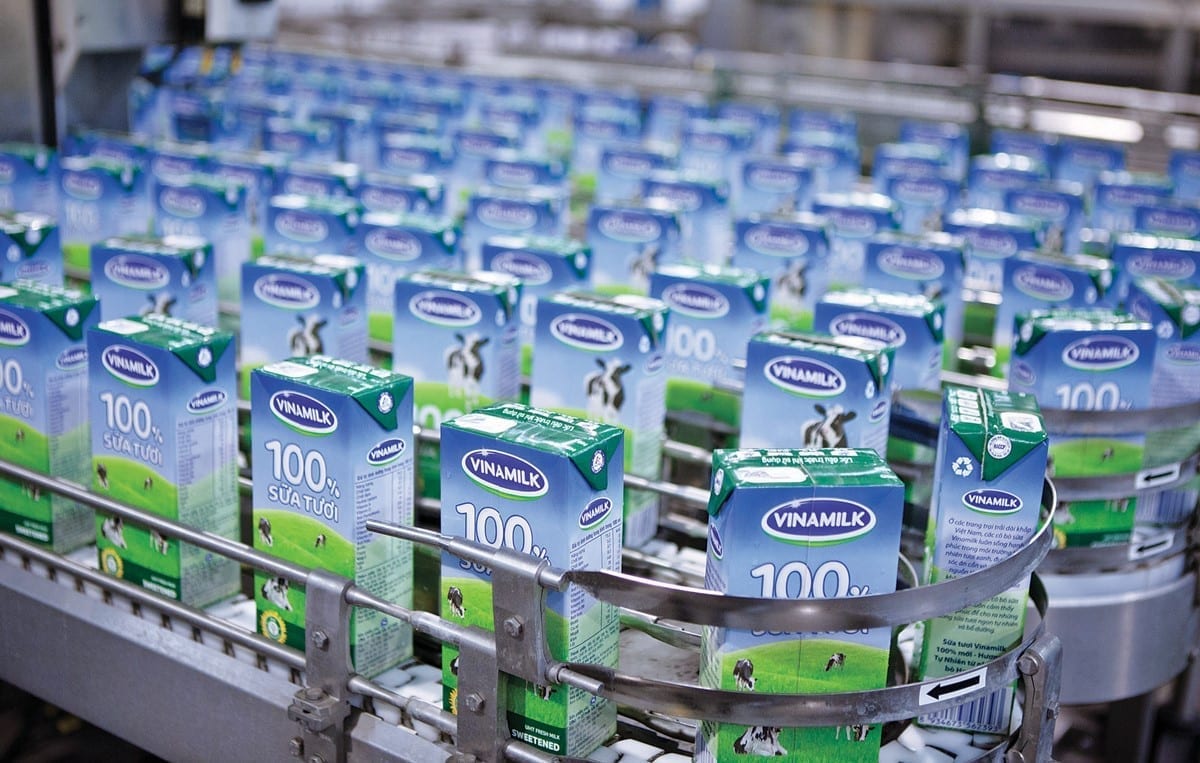
    The value is 50 percent up from last year. Dairy giant Vinamilk and military-run telecom firm Viettel remain the top two as they were in the two previous years.

    Forbes estimates Vinamilk’s brand value at $2.28 billion, much higher than the $1.7 billion last year, and Viettel’s at $1.39 billion.

    State-owned Vietnam Posts and Telecommunications Group (VNPT) takes over third position from Vingroup, Vietnam’s largest real estate company. With a value of $416 million, VNPT makes it to the list for the first time.

    The other brands in the top ten are the country’s biggest brewery Sabeco ($393 million), Vinhomes, the residential property arm of Vingroup ($384 million), Vinaphone, one of Vietnam’s big three mobile operators and belonging to VNPT ($308 million), Vingroup ($307.2 million), food and beverages producer Masan Consumer ($238 million), JSC Bank for Foreign Trade of Vietnam, or Vietcombank ($177.9), and tech giant FPT ($169 million).

    Vinhomes and Vinaphone are also newcomers.

    Just like last year, consumer goods brands account for the majority of this year’s list, followed by finance and banking and technology.

    But the gap between the total value of the finance-banking and consumer goods groups has narrowed, Forbes said.

    The other new entrants this year are Vincom Retail, the shopping mall subsidiary of Vingroup, top coffee firm Trung Nguyen Group, sugar, energy, real estate, and tourism conglomerate TTC Group, and Ho Chi Minh City Development Joint Stock Commercial Bank, or HD Bank.

    Forbes compiled the list by looking at brands’ incomes before and after tax based on their financial reports and data on the stock market.

  • Short-term leasing could be a long-term trend in Hanoi, HCMC

    Short-term leasing could be a long-term trend in Hanoi, HCMC

    Thanh’s apartments in Ho Chi Minh City have been behaving like hotels for more than a year now.

    Individuals and groups of tourists stay at his serviced apartments for a few days before they leave for another destination in the country, and the apartment is open almost immediately for new guests.

    Thanh, who did not want his surname revealed, has invested in three apartments in HCMC, and all of them can be booked by anyone on Airbnb, an online service that connects tourists with hosts offering accommodation in a room, or rooms, or an apartment or villa, typically for short stays.

    The large supply of apartments in major cities like Hanoi and Ho Chi Minh City has spurred investors who have spotted an opportunity to earn higher incomes through short-term leases rather than long-term rental contracts.

    In addition, the driving force shifting consumer attention to Airbnb in Vietnam is a willingness to experience something new and affordable when it comes to rented accommodation, said accounting and consulting firm Grant Thornton.

    According to a Nielsen report, 76 percent of respondents in Vietnam like using shared products or services, compared to 66 percent of consumers globally.

    The total number of Airbnb listings in Vietnam has surged exponentially since the service was officially launched in Vietnam in 2015.

    There were only 6,500 listings in 2016, but last year, this rose almost 2.5 times to 16,000, according to accounting and consulting firm Grant Thornton.

    The apartment rental market has changed remarkably in the last 12-18 months, with more owners moving from traditional rental services to listing their apartments on Airbnb or similar online housing services, said Tran Anh Khoa, a renting agent in HCMC.

    This transition is happening as owners realize short-term rentals can earn 15-20 percent higher revenues than long-term leases, Khoa said.

    A 50-square-meter serviced apartment in HCMC’s District 2 can earn its owner $700-800 a month in a long-term contract, but this revenue can go up to $1,000 a month if it is leased short-term with an occupancy rate of 80 percent a month, he said.

    Apartment owners like this model, especially real estate speculators who want to earn money while waiting to sell their apartments, Khoa added.

    “This way, owners don’t get tangled in contractual obligations with tenants when they want to sell the apartment,” he noted.

    Growing trend

    Airbnb and similar services are favored by single or small groups of guests as they offer cheaper prices compared to a hotel room or a fully-serviced apartment, said Stephen Wyatt, country head of real estate firm Jones Lang LaSalle Vietnam.

    The supply of apartments in Vietnam has been growing in recent years, especially in HCMC, with an additional 129,000 apartments coming on line by 2020, according to real estate service provider Savills Vietnam.

    The “oversupply” will likely lower the profitability of long-term rental apartments, Wyatt said.

    So short-term leasing of these apartments is a positive trend as their sales show signs of slowing down, he added.

    Pham Thi Thanh Huyen entered the apartment-sharing business a year ago to earn extra income apart from her office job.

    The 24-year-old paid a total of VND400 million ($17,200) to do up the interiors of two apartments in Hanoi which she rents for VND6 million each a month.

    One of her apartments has had an occupancy rate of almost 100 percent every month, and the other, over 70 percent. Together, she earns a net profit of VND10 million a month by subletting them for short periods.

    She was confident: “If your apartment is in a good location, it won’t be long before guests start to pour in.”

    In 2017, Vietnam welcomed nearly 13 million international visitors. In the first half of 2018, the number was nearly 7.9 million, a 27 percent increase over the same period last year, according to VNAT.

    Tourism is expected to contribute 10 percent to Vietnam’s gross domestic product by 2020 when the country hopes to welcome up to 20 million foreign visitors and earn $35 billion in tourism revenues. Vietnam has set a target of receiving 15-17 million foreign arrivals this year.

  • Foreign investors target Vietnam’s huge sports betting market

    Foreign investors target Vietnam’s huge sports betting market

    Choi Hak Soo, president of South Korea’s Golden Horse, said during a meeting with leaders of Bac Ninh last week that his company plans to set up a subsidiary in the northern province to build a racecourse.

    He expected the $500 million investment plan to be ready by October for submission to the government for approval, saying his company is in the process of mobilizing funds.

    Golden Horse had first proposed the plan to Bac Ninh last year when the National Assembly (NA) was wrapping up its discussion on legalizing sports betting.

    The 400-hectare entertainment complex will include a horse racecourse, a resort and a residential area, and create 5,000-10,000 jobs.

    The NA late last year approved a bill legalizing sports betting, and last month the government promulgated a decree regulating the sports-betting business, throwing open opportunities for foreign investors.

    Illegal sports betting used to be rampant in the country.

    A year earlier the government had also cautiously opened casino doors to locals.

    There are no official reports on the value of illegal sports betting, but a study by Prof Ha Ton Vinh, who has spent much of his professional life studying Vietnam’s gambling and sports betting activities, said Vietnamese used to spend an estimated $800 million a year overseas on gambling.

    The police have in the last two years busted dozens of illicit online gambling and sports betting operations worth hundreds of millions of US dollars.

    At the meeting in Bac Ninh, Choi said Golden Horse faces many rivals in sports betting in this country.

    Amplefield, a Singapore-listed company, is the latest name to enter the industry here. Last April it signed a memorandum of understanding to set up a joint venture for building a racecourse in HCMC.

    Amplefield will hold a 60 percent stake in it while Malaysia’s Equine Sanctuary, a provider of horse care services and horse-racing consultancy services in Singapore, will hold the rest.

    According to Amplefield, the joint venture will build a 300-hectare racecourse and property complex in Sing Viet City. It will include a residential component with some 16,000 units, horse racing, gaming and golfing facilities.

    “This is the first step towards the development of the racino facilities, and we are excited about what lies ahead as this has tremendous potential to be a huge draw for both tourists and locals and stimulate further development activities in the area,” Yap Weng Yau, executive director of Amplefield, said in a statement.

    Another South Korea firm, G.O.Max, is also pursuing a giant horse racing and entertainment complex in the province of Vinh Phuc at an estimated cost of $1.5 billion.

    It had been proposed to the Vinh Phuc People’s Committee as long ago as in 2005 as a $570 million investment, but was not approved. Now, following the new developments, the investor has again decided to throw its hat in the ring.

    G.O.Max has projected building a horse racecourse on a site of 200 hectares and running three races a week. Seventy betting points will be set up in 54 cities and provinces around the country, as well as an online betting system.

    Jung Young Jin, strategy director of G.O. Max, has indicated to the media there will be revenues of $972 million and taxes of $100 million a year in the first five years.

  • Asia’s large format retailers prepare for steady growth

    Asia’s large format retailers prepare for steady growth

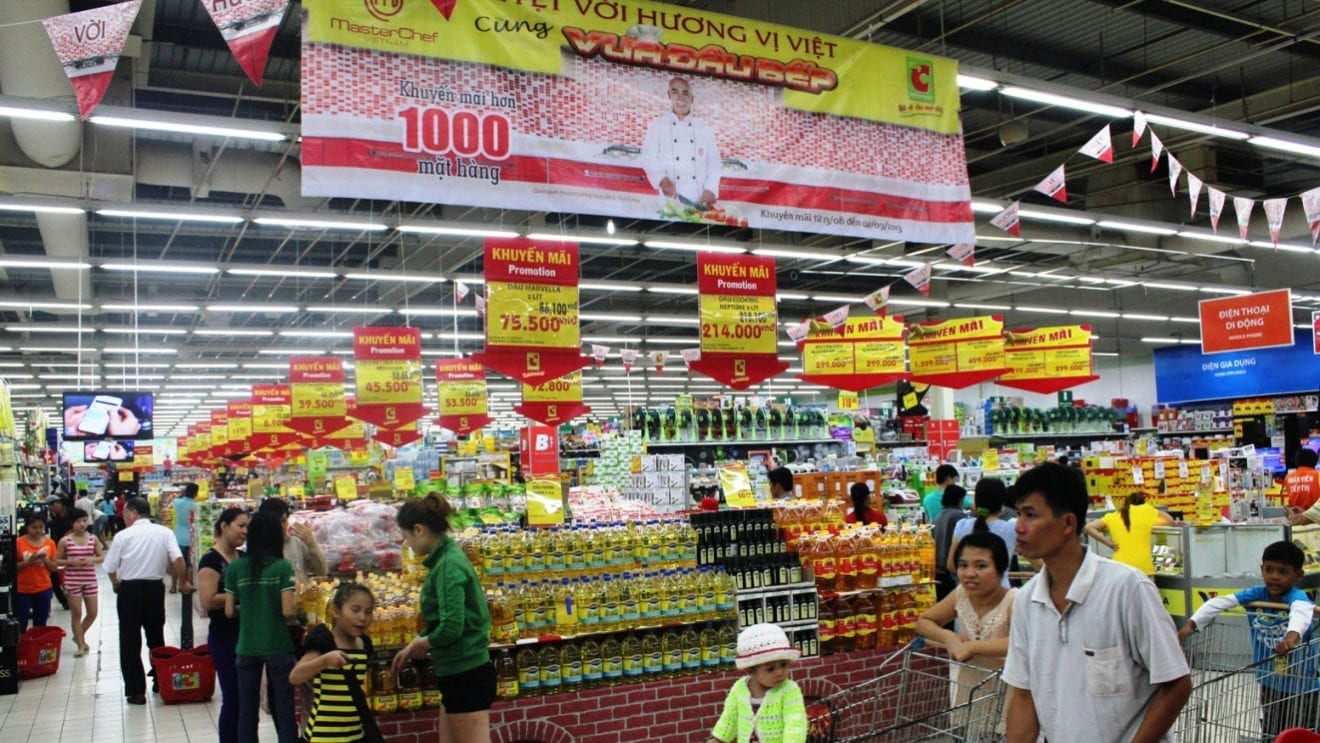
    Global research organisation IGD has reported that Asia’s large format retailers are set to grow 3.3 per cent a year to 2022, with Vietnam, India and the Philippines forecast to see double-digit growth from large format players over the next five years.

    Most of this growth is predicted to be driven by domestic retailers, except for Vietnam where foreign retailers have been investing to gain a foothold in this fast-growing market. Indonesia will see steady growth, also driven mainly by domestic players; with China coming through as another market with significant growth opportunities due to its vast geography.

    Many large format retailers in Asia are still enjoying steady growth through expansion although they are facing pressures from increased competition in more developed markets.

    Besides expansion to new regions, retailers are also digitising physical stores to create a seamless shopping experience in more matured markets.