Tag: Vietnam

  • Vietnam job seekers switch to foreign companies

    Vietnam job seekers switch to foreign companies

    The increase was recently announced by the executive search company Jobstreet.com.

    Le Thi Huyen Anh, key account sales manager at Jobstreet.com, attributed this to the appealing working environment, remuneration and bonus and other rewards at foreign firms.

    Speaking about the dramatic changes in the area of human resources, she said the element of technology is creating new job prospects, job titles and responsibilities and demanding specific skill sets and multitasking capabilities in new candidates as well as existing employees.

    But the ratio of Vietnamese employees who can meet the multitasking requirements in technology-based working environments remains modest, she said.

    According to Jobstreet’s bliss index of employees, a candidate’s final call on whether to select or prove their loyalty to a certain workplace depends not just on the income and job title. There are also other determinants such as position, reputation, corporate values, working culture and the community of fellow staff members, it said.

    Certain job titles like “officers” and “specialists” are offered higher wage increases and bonuses than others. Half of businesses recently surveyed by Jobstreet.com are committed to expanding recruitment while 10 percent plan to keep the recruitment ratio unaltered next year.

    Nguyen Thi Thu Trang, general manager of JobStreet.com, said the top three recruitment categories this year are wholesale-retail, communication-marketing and information technology.

    Vietnam received an estimated $16.2 billion in foreign direct investment (FDI) in the first half of this year, down 4.4 percent from the same period last year, according to the General Statistics Office.

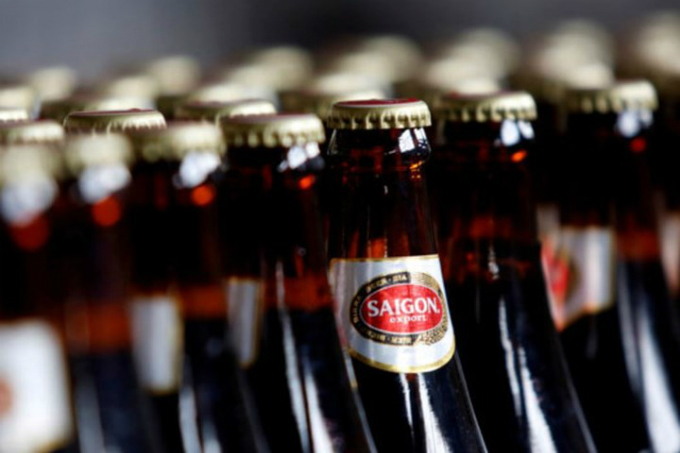
  • New management targets lower profits for Vietnam’s top beer maker

    New management targets lower profits for Vietnam’s top beer maker

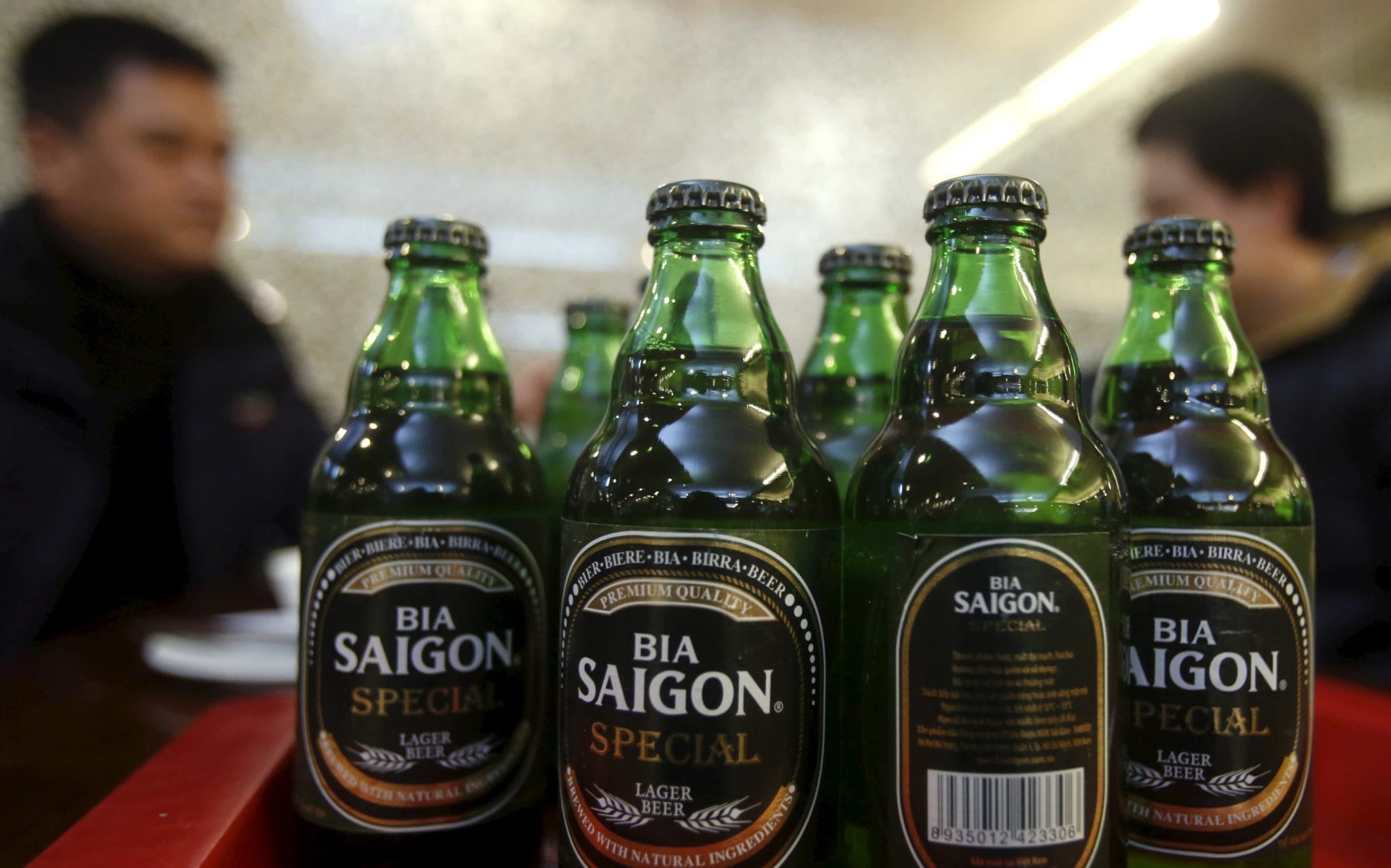
    Sabeco targets profits of VND4 trillion ($173 million) this year on revenues of VND36.09 trillion ($1.58 billion), a 2.4 percent rise over last year.

    Newly appointed chairman Koh Poh Tiong explained to shareholders that spending on brand promotion would be higher this year.

    He said rising cost of raw materials due to bad harvests across the world and the new special consumption tax, up to 60 percent from 50 percent, effective this year, would also hit profits.

    Last year Sabeco produced 1.8 billion liters of beer and reported sales of VND35.22 trillion ($1.54 billion), up 11.2 per cent year-on-year, and net profit of VND4.95 trillion ($216 million), up 9.6 percent.

    This is Sabeco’s first annual general meeting since the TCC Group, led by Thai tycoon Charoen Sirivadhanabhakdi, paid Vietnam’s Ministry of Industry and Trade (MOIT) VND110 trillion ($4.89 billion) for a 53.59 percent stake late last year.

    The management said that thanks to Sabeco’s collaboration with Thai Beverage it would be able to get raw materials cheaper in future.

    The firm also hopes to capitalize on ThaiBev’s experience in public relations, logistics and working with global PR agencies to promote its brand internationally.

    The management said Sabeco is exploring opportunities to expand capacity.

    Shareholders heard that the firm faced difficulties in competing with strong foreign brands, and so plans to further develop its distribution networks, especially in HCMC.

    Asked about the possibility that the Sabeco brand could disappear since “it is in Thai hands” now, especially if MOIT divests further, he said TCC Group plans to develop this brand since it had spent an enormous $4.89 billion to buy it.Koh said Sabeco has a 40 percent market share.

    Last April the ministry had called on Sabeco to pay VND2.5 trillion ($111 million) in undistributed profits to the government, the major shareholder with an 89.6 per cent stake as of December 31, 2016.

    Koh told shareholders that since the firm had submitted related documents to the government, he could not give them a more detailed answer.

    The AGM approved a new seven-member board for 2018-23 including four representatives of the Thai company – Koh, Michael Chye Hin Feh, Pramoah Phornprapha and Tran Kim Nga.

    Of the remaining three, chief accountant Nguyen Tien Dung and Luong Thanh Hai are MOIT’s representatives.

    The price of Sabeco (sticker SAB) shares on the Ho Chi Minh stock exchange has plunged since TCC Group’s acquisition.

    On July 20 it traded at around VND200,000 ($8.74), giving the company a market value of VND128 trillion ($5.6 billion).

    TCC Group had bought Sabeco’s shares at VND320,000 ($13.98).

    Koh told shareholders that the price merely reflects supply and demand in the market, while TCC looks at the long term and the firm’s future prospects.

    Vietnam is one of the top 10 beer producing countries in the world besides being the top consumer in Southeast Asia and the third largest in Asia with an average of 43 liters per person per year, according to Sabeco’s management.

    MOIT figures show that the brewery market growth has been slowing, growing at only around 5 per cent in the last five years compared with 10 per cent 10 years ago.

    Last year it grew at 5.6 per cent.

  • Vietnam Casino fined $15,000 for tax evasion

    Vietnam Casino fined $15,000 for tax evasion

    The Quang Ninh Tax Department says it has found the casino violating corporate tax and value-added tax regulations after inspecting returns filed in 2017 and its value-added-tax receipts until February 2018.

    The department has levied total fines of $15,000, including $10,500 for faulty reporting of value added tax and $3,700 for using illegal invoices.

    The Casino Gaming Club is the only gambling facility approved to serve foreigners exclusively in Ha Long Bay City, but it has been in the red since 2013.

    Last October, the company’s financial report stated that its losses in the third quarter had jumped 23 times from a year ago to more than $3.04 million.

    Managers said most of its customers were from Taiwan and mainland China, but their numbers have dwindled in recent times.

    In the first three months of this year, the company earned nearly $2.92 million in revenue, and around $69,000 in after tax profits. This is a sharp increase compared to a $908,000 loss during the same period last year.

    However, the company’s accumulated loss is estimated at more than $7.4 million on a total capital investment of $30.5 million.

    Vietnam has six casinos that are open exclusively for foreigners, and four of them are reporting losses.

    Earlier this year the government lifted a long standing gambling ban on Vietnamese nationals, allowing them to patronize two casinos, one on the southern resort island of Phu Quoc and the other at the Van Don Special Economic Zone in the northern province of Quang Ninh.

  • Collecting back taxes from Uber tough, say authorities

    Collecting back taxes from Uber tough, say authorities

    Apart from the company contesting the department’s claims, the fact that it has sold its Southeast Asia business to its former competitor Grab adds to the difficult, department deputy director Tran Ngoc Tam said at a recent half-year review meeting.

    He said the department had sent documents to many local banks asking them to deduct the full amount of money transferred to Uber’s bank account as a form of tax enforcement, but it turned out that the firm had not opened any account in the country.

    After an inspection that it carried out in September 2017, the department had requested the Vietnamese branch of Uber International Services Holding B.V. based in the Netherlands to pay VND66.68 billion ($2.91 million) in back taxes and fines for violating tax laws.

    However, the company appealed that decision, telling the General Department of Taxation as well as the Ministry of Finance, that it is not subject to paying taxes according to Vietnam’s agreement on double taxation avoidance with the Netherlands, where it is based.

    The Ministry of Finance issued an official reply, which rejected Uber’s argument. In response, the company filed two lawsuits against the Ho Chi Minh City Tax Department.

    Tam said at the meeting that while the court was handling the lawsuit, there was no certain time frame within which the issue could be resolved. He said it would be difficult to collect taxes and fine from Uber even if the department were to win the lawsuit, because the company did not have a bank account in Vietnam.

    Furthermore, the company had sold its Southeast Asia operations to competitor Grab on April 8, which means it no longer had a presence in Vietnam.

  • Standard Chartered Bank says Vietnam economy to grow faster than expected

    Standard Chartered Bank’s Global Focus report on the economy for the third quarter said manufacturing and construction will be the fastest growing sectors this year.

    FDI inflows will remain strong, with 50 percent coming into manufacturing, the report entitled “Fattening tail risks” said.

    Vietnam received an estimated $16.2 billion in FDI in the first half of this year, down 4.4 percent from the same period last year, according to the General Statistics Office (GSO).

    “We are positive on Vietnam’s growth medium-term on strong manufacturing activity as FDI inflows to manufacturing remain strong. We believe that Vietnam will remain one of the fastest growing economies in Asia in 2018,” Asia Economist for Standard Chartered Bank Chidu Narayanan said.

    The report said Vietnam would have a trade surplus this year due to high export growth and slowing imports.

    The country reaped export earnings of $113.9 billion between January and June, a year-on-year increase of 16 percent. Meanwhile, it spent $111.2 billion importing goods, up 10 percent.

    A World Bank report last month had said Vietnam’s economy might expand by 6.8 percent this year, revising upwards the bank’s previous forecast of 6.5 percent. It estimated growth of 6.6 percent in 2019 and 6.5 percent in 2020.

    Prime Minister Nguyen Xuan Phuc has said the target this year is to keep inflation below four percent and achieve economic growth of 6.7 percent. The consumer price index increased by 0.55 percent and 0.61 in May and June, pushing the inflation rate for the year-to-date to 3.29 percent.

  • Bamboo Airways expected to take off in October

    Bamboo Airways expected to take off in October

    According to an FLC Group spokesperson, the first passengers will be offered various discounts on services offered by FLC Group such as golfing and accommodation at its resorts.

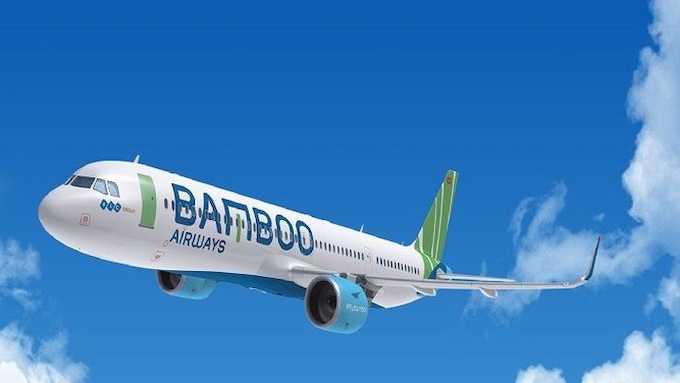
    Bamboo Airways will become Vietnam’s fifth airline.

    Dinh Viet Thang, general director of the Civil Aviation Administration of Vietnam (CAAV), said his agency has not granted the airline an operating license and it is still under consideration.

    This month the airline increased its charter capital to over $56 million with a fresh infusion of $26 million.

    The airfreight project, which has a 50-year operating license, is expected to cost $30 million and be implemented in 2019-23.

    Bamboo Airways is expected to buy 24 narrow-body Airbus A320NEO and 20 Boeing B787-9 Dreamliner aircraft at a list price of $8.6 billion.

    Bamboo is expected to be a hybrid carrier combining full-service and budget models.

    Vietnam’s four airlines are flag carrier Vietnam Airlines; budget operator Jetstar Pacific Airlines which is partly owned by Vietnam Airlines; budget carrier Vietjet Aviation and Vietnam Air Services Co.

    The country’s airport capacity has been reaching its limits as fast economic growth means more people in the nation of 90 million are taking flights.

    Hanoi-based FLC, whose main businesses are housing, resorts and golfing, had said it planned to operate international flights through Bamboo Airways to tourist spots in Vietnam including where FLC has properties and also plans domestic flights.

  • VietJet inked 100 Boeing 737 jets deal

    VietJet inked 100 Boeing 737 jets deal

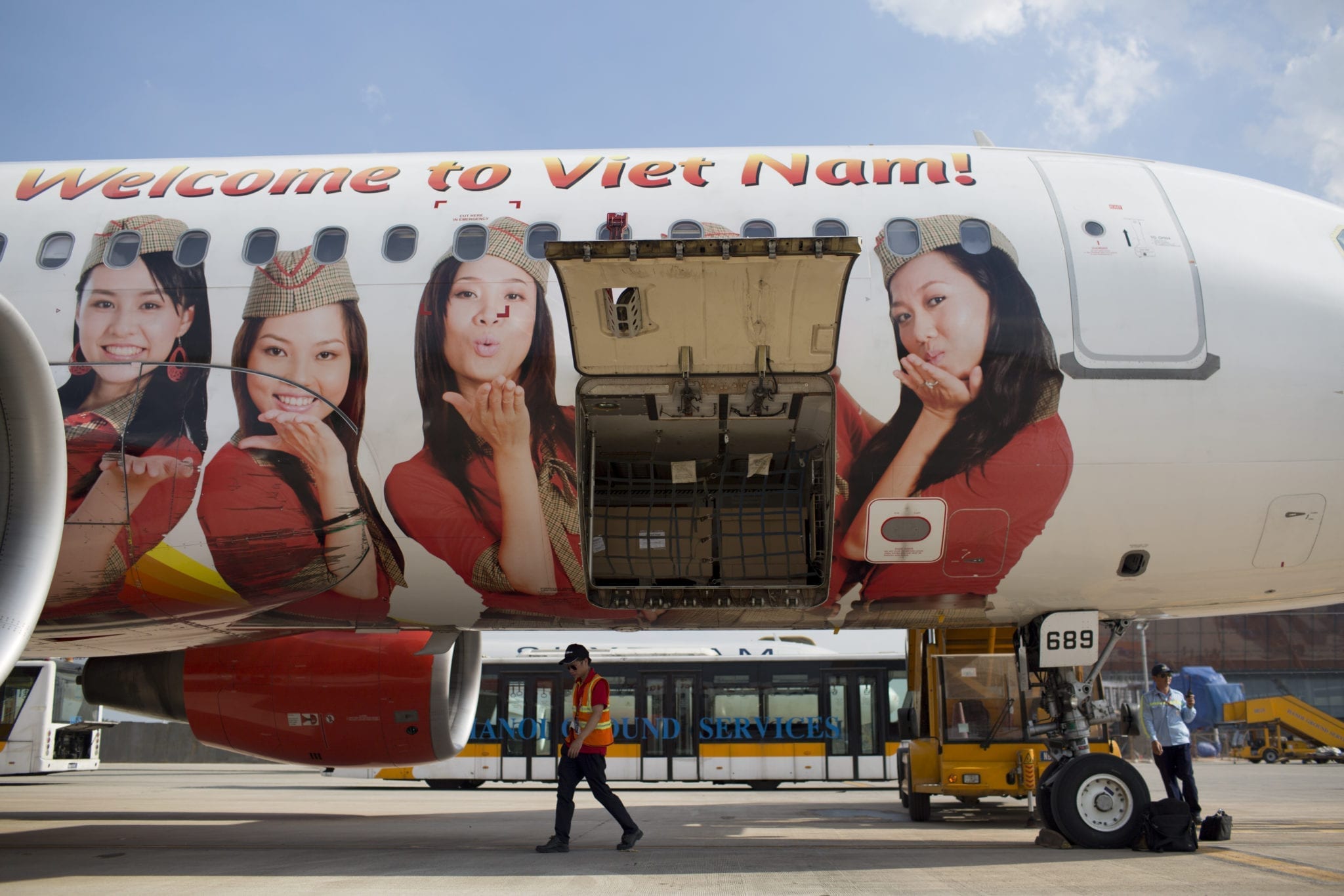
    Boeing Co struck a new deal for 100 passenger jets with Vietnamese budget airline VietJet Aviation JSC VJC.HM on Wednesday, deepening a battle for market share against rival Airbus (AIR.PA) in one of southeast Asia’s hottest markets.

    Boeing and VietJet signed the provisional order for 100 Boeing 737 MAX airplanes worth almost $13 billion at list prices at the Farnborough Airshow in southern England.

    Of these, 80 are the recently launched 737 MAX 10 – the largest version of Boeing’s best-selling 737 range – and 20 are the benchmark 737 MAX 8 model.

    “The growth is incredibly strong in Southeast Asia,” said Boeing Commercial Airplanes CEO Kevin McAllister. “VietJet is a major player there.”

    The draft deal comes two years after Boeing upstaged Airbus by clinching an order for 100 737 MAX jets during a visit by then-U.S. President Barack Obama.

    Until then, VietJet had only ordered planes from Airbus, including a bumper order for 92 jets in December 2013.

    However, aircraft finance industry sources have expressed doubts over whether all the planes on order would be delivered on schedule amid a glut of airplane orders in the region.

    VietJet CEO Nguyen Thi Phuong Thao insisted on Wednesday the airline would use both the A320 and 737 aircraft in its fleet and would have “no problem” taking delivery.

    The companies said VietJet, one of the fastest-growing carriers in southeast Asia, needed the planes to satisfy surging demand on high-dense domestic routes as well as popular routes throughout Asia.

    Vietnam’s first privately owned airline will become the largest MAX 10 customer in Asia once the deal is completed, with deliveries due in 2022-2025, the companies said.

  • Big changes brewing at Vietnam’s top beer maker

    Big changes brewing at Vietnam’s top beer maker

    Under a proposal seeking shareholder approval at the firm’s annual meeting on July 21, Mr. Koh Poh Tiong has been reappointed as chairman. The 72-year-old, who is a director of Fraser & Neave and chairman of ThaiBev and F & N Beer Group, is also on the boards of several other organizations in Singapore, Malaysia, Thailand, and China.

    He is to head a new seven-member board that will have another Singaporean, a Thai and four Vietnamese, according to the proposal.

    Last May the company had replaced three foreign deputy general directors, who had in turn replaced a Vietnamese trio just a month earlier, with Singaporeans Neo Gim Siong Bennett, Teo Hong Keng and Melvyn Ng Kuan Ngee.

    TCC Group, led by Thai tycoon Charoen Sirivadhanabhakdi, had paid VND110 trillion ($4.89 billion) for a 53.59 percent stake in Sabeco.

    According to a report prepared for the company’s next general shareholders meeting on July 21, its profit target for this year has been revised to VND4 trillion (about $173 million), a reduction of 19 per cent from last year’s results.

    The dividend target has been kept unchanged at 35 percent.

    The report says foreign brewers would continue to expand their production capacity, intensify brand promotion and sales support to gain more market share, exerting “great pressure” on Sabeco, especially when the special consumption tax rate has increased from 60 per cent to 65 percent since early th.

    It also says that Sabeco is confident about maintaining its No 1 brewer position in Vietnam, and expects to boost its exports to African and Asian markets (especially East Asia and Southeast Asia), North America, Russia, the Middle East and Europe (Italy, Netherlands).

    Vietnam’s stable growth, increase in average income and rising demand are favorable conditions to stimulate and stabilize consumption while creating good growth in rural markets, where its Saigon Beer brand has reasonable product positioning and a widespread distribution network, the report says.

    Meanwhile, the prices of main items like malt, hops and aluminum have increased significantly, allowing the brewer reduce production costs.

    This year, sabeco targets to produce 1.8 billion litres, increase export volume to 33,2 million liters.

    In April this year, the Ministry of Industry and Trade (MoIT) had asked Sabeco to pay about VND2.5 trillion ($111 million) in undistributed profits to the state budget.

    The demand was made after a government audit report said that money was part of the brewer’s VND2.7 trillion ($120 million) in undistributed profit, which belonged to the government as the major shareholder with an 89.6 per cent stake as of December 31, 2016.

    Local media reported that although Sabeco claimed such a request did not correspond with the Law of Enterprises and Sabeco’s charter, it had already paid the sum. This sum is not mentioned in the report prepared for shareholders, however.

    Currently, within SABECO, there are 26 breweries, 10 trading subsidiaries and has 37 branches nationwide.

    In the first quarter of 2018, Sabeco’s sales reached VND7.8 trillion, about 5 per cent higher than same period last year; while profits of VND1.4 trillion represented a 4 per cent decline.

    On July 18, more than 641 million shares with the sticker SAB declined slightly to VND217,900 ($9.47) each on the Ho Chi Minh stock exchange, for a market value of VND139.7 trillion ($6.07 billion).

  • Vietnam in danger of becoming a dump as China says no to trash

    Vietnam in danger of becoming a dump as China says no to trash

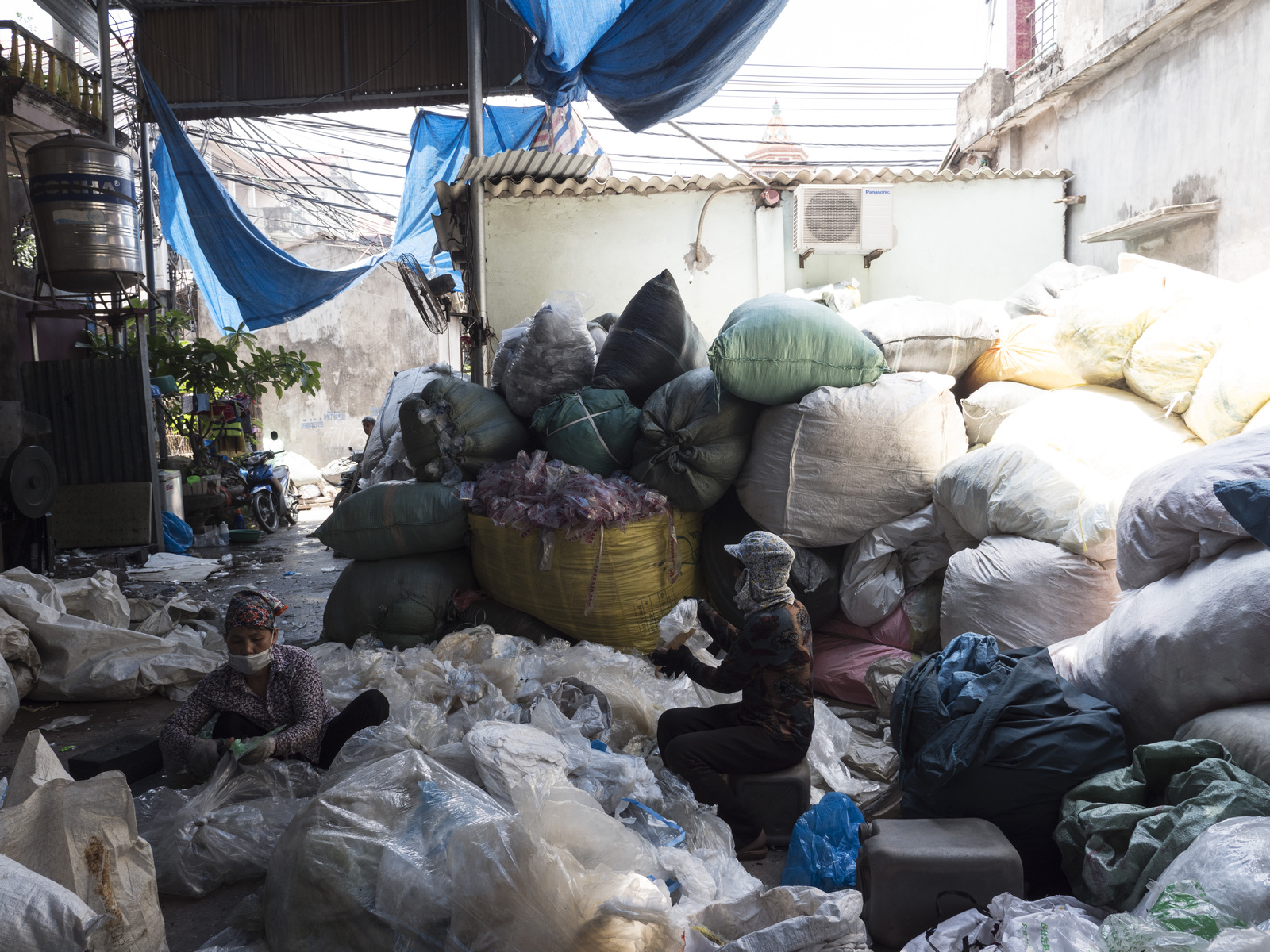
    It’s another waste-full day in Minh Khai, Hung Yen Province.

    Blocks of plastic bags sprawl on the ground, fill up alleys, besiege houses; machines groan and toss shredded plastic pieces into the air; sewage carrying debris leaks onto the streets; and kids splash themselves in a dark, murky pond.

    It is a scene similar to the recycling dead zones in China –exhaustively detailed in documentaries such as Plastic China and books like Adam Minter’s Junkyard Planet.

    There’s a big difference, though.

    China’s recycling villages are cleaning up their act in haste.

    Since January 1, the world’s biggest waste importer and recycler has said no to old mobile phones, paper, textiles and plastics it had always imported from the world for decades. It wants to take back its blue sky.

    While a blue sky has not been a frequent sight in industrial Hung Yen or polluted Hanoi, it has been definitively gray in Minh Khai, one of Vietnam’s largest plastic recycling villages.

    It’s noon, traditional Vietnamese nap time, but in Nguyen’s 100-square-meter workshop, the machines are still roaring.

    The 31-year-old recycler is overseeing five employees as they cut, melt and mold plastic, even as she darts between heaps of translucent bags and her kitchen to cook her family of six a quick lunch.

    These days, Nguyen, who declined to give her full name, can’t afford to take a long break. Her pellet-making machine handles about 1.5-2.5 tons of plastic per day, about 50-75 tons a month. Trash is pouring in from all over the world, Nguyen said, but mostly from Germany, Japan and the U.S.

    Nguyen has been a recycler for about two decades but only in the past year has she seen such a surge in the volume of foreign waste.

    She cannot cite figures; all Nguyen knows is that Chinese brokers hand her cash and tell her they need no contract. “I don’t even know who they are but every month, I buy about three containers from them,” Nguyen said.

    Like many recycling households in Minh Khai, Nguyen will sell her pellets back to China, where they are made into cheap plastic tables, stools, containers that find their way back to compete in Vietnamese market.

    Minh Khai has 1,000 households, of which more than 90 percent recycle plastic at home. Hanoi lacks an effective official recycling scheme, so for more than three decades, Minh Khai has been one of the major informal recycling hubs that handle plastic for the capital and the Red River Delta.

    Until 2017, only 143 households were registered businesses.

    “It’s only in the past two years that our village started buying more from Chinese brokers,” a 64-year-old recycler named Hoang remarked. “Truck after truck brings up to a thousand tons of plastic a day.”

    “My neighbors are not only working by day but they have started to run the machines at night as well to handle the new waste. I can’t get enough sleep,” Hoang complained.

    In May, a national TV channel estimated that around 1,000 tons of plastic waste was arriving in Minh Khai every day, a ten-fold surge since mid-2017.

    Hung Yen authorities acknowledge the surge in waste, but are not able to locate its origins. And until they find a way to sort this problem, informal recycling hubs like Minh Khai are not the only destinations that will see foreign waste pile up.

    From January to November 2017, Vietnam increased its imports of PE and PET plastic by more than 166 percent and 137 percent year-on-year, respectively. In November 2017, it was also the biggest importer of scrap plastics marked “mixed/other.”

    In the first quarter of 2018, Vietnam imported nearly 79 million pounds of recovered plastics, up from 40 million pounds over the same period in 2017. It became one of the U.S.’s largest scrap plastic buyers, Resource Recycling Inc. quoted the U.S. Census Bureau as saying.

    International dumping ground

    In 2011, China introduced its Green Fence program, an attempt to slowly close its doors to contaminated materials.

    China had been importing 45 percent of world’s plastic waste since 1992, and according to a research article published on Science Advances this June, the Chinese ban will displace an estimated 111 million metric tons of plastic waste by 2030.

    While major exporters like Europe and the United States are diverting their trash to Southeast Asia, industry insiders say that China’s recycling industry itself could shift to other destinations in the region, such as Vietnam.

    According to a report, Chinese recyclers are already moving much of their capacity abroad, as the curbs on imported trash have deprived them about half the materials they normally need to produce plastic pellets.

    The report says over 1,000 Chinese recyclers already investing in Southeast Asia, particularly Malaysia and Thailand, hoping to indirectly move processed foreign scrap in higher-grade form to meet their country’s new standard.

    However, the new routes have not been smooth since shipments have faced delays, while Thailand and Malaysia were also tightening regulations. One China-invested importer was already forced to close in Thailand, while Malaysia has not been accepting import permit applications since mid-May.

    In Vietnam, fears of the country turning into “an international dumping ground” are growing.

    Despite a halt in issuing scrap import permits since 2017, Vietnamese seaports have been clogged with thousands of containers of foreign scrap.

    As of May 2018, nearly 28,000 containers were stuck in seaports across Vietnam, according to the Vietnam Maritime Administration. The goods range from electric cords, outdated household appliances, secondhand fabric and used cars to plastic and paper scrap, which makes up the majority.

    Tan Cang Cat Lai, one of Vietnam’s largest shipping terminals, had more than 8,000 TEUs (1 TEU equals a 39-cubic-meter container) of plastic waste and paper as of May 21.

    The Tan Cang Cai Mep International Terminal also said that the large volume of plastic waste containers the port has received has caused troublesome backups and delays. Both terminals, which are operated by the Saigon Newport Corporation, say they are not accepting plastic scrap until October 15.

    Customs officials are ramping up inspections after a recent report of the  Vietnam Customs described numerous violations in scrap paper and plastic waste imports – including materials not meeting quality standards, mislabeling, forged import permits and even lack of permits.

    In a recent National Assembly session in Hanoi, Tran Hong Ha, Minister of Natural Resources and Environment, responding to concerns that the country can become a landfill of industrial and radioactive waste, said Vietnam has to start saying no to scrap import because the country is not able to deal properly with solid waste.

    “Waste in Vietnam is different from the world and even the advanced technologies that other developed countries use to treat their waste have turned out to be inappropriate in Vietnam,” he said.

    Many domestic waste treatment plants do not operate effectively and if those plants cannot meet technical and environment criteria, they should be shut down, the minister added.

    Until developed nations find a concrete solution for the new-found crisis, it appears that the burden will be borne by Vietnam’s seaports and its limited recycling infrastructure.

    For informal recyclers like Hoang and Nguyen of Minh Khai, business will remain hectic, but they are not complaining.

  • Vietnam’s Cong Ca Phe eyes South Korea expansion

    Vietnam’s Cong Ca Phe eyes South Korea expansion

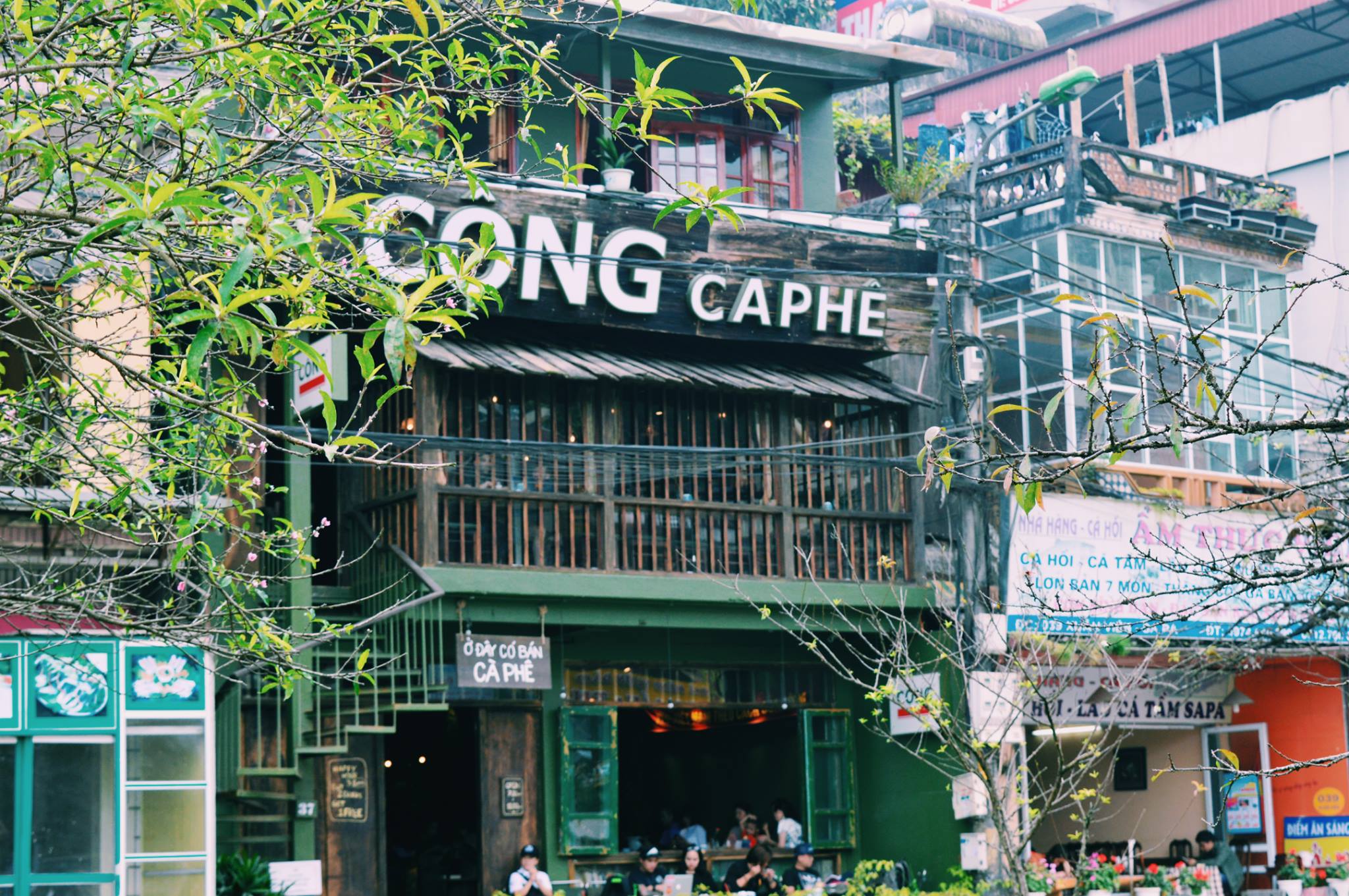
    Vietnamese traditional-coffee chain Cong Ca Phe is opening its first overseas outlet by the end of this month.

    The Hanoi-based chain has appointed a master franchise in South Korea and according to the Cong Ca Phe South Korea Instagram account, the first outlet will open in Yeonnam-dong, a popular destination for local youth.

    According to a report, all staff are being trained in Vietnam, and the main barista is Vietnamese.

    An all-original menu will be served in the Seoul outlet, including Cong’s signature coconut coffee and local Vietnamese snacks such as peanut brittle and sunflower seeds.

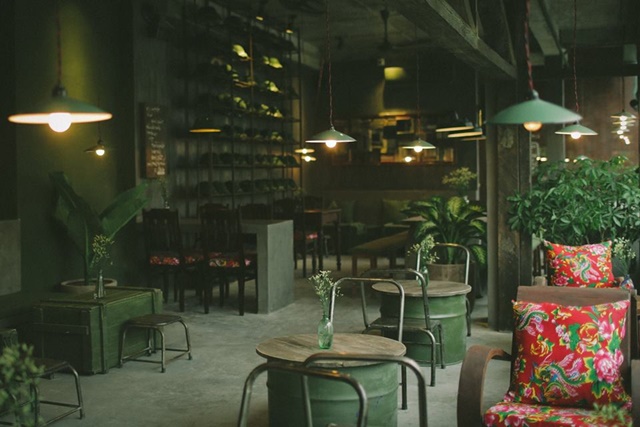
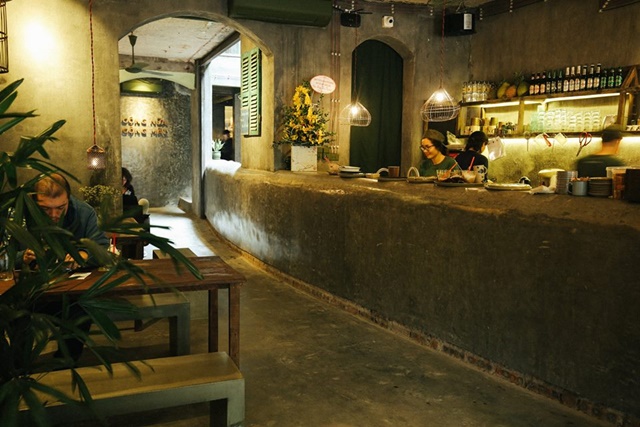
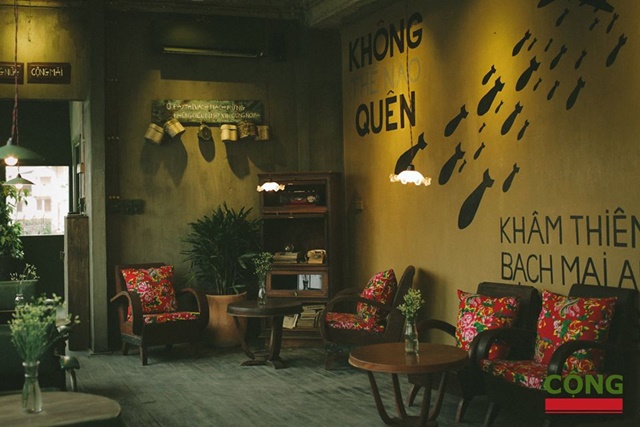
    Founded in 2007, Cong Ca Phe’s interior design is inspired by the 80s in Vietnam, the so-called “subsidy period” with colourful murals depicting old communist-era lifestyle. They usually have wooden floors, mid-tone brown tables, and antique wooden chairs, padded with chinese cotton-print cushions.


    The chain now has more than 50 outlets across Vietnam, both company owned and franchised.

  • Two foreign brands dominate personal hygiene market in Vietnam

    Two foreign brands dominate personal hygiene market in Vietnam

    Among the 10 most popular personal care brands in the country, Diana and Kotex hold a whopping 80 percent of the domestic market share.

    Unicharm, the Japanese company which owns the Diana brand, has been in Vietnam for 27 years.

    Diana brand products earned revenues of VND5 trillion ($218 million) in 2016, up 10.6 percent over 2015, for a net profit of VND819 billion ($35.7 million), making it the market leader by far.

    In second place is the Kotex brand, owned by the U.S. based Kimberly-Clark Corporation, which reported revenues of VND4.9 trillion ($214 million) in 2016, a year-on-year increase of 9 percent, for a net profit of VND485 billion ($21 million).

    With a large proportion of young people in its population of 93 million, both brands expect the Vietnamese market for personal sanitation products to grow significantly in the coming years.

  • E-commerce booms in Vietnam but top firms stay in the red

    E-commerce booms in Vietnam but top firms stay in the red

    Vietnam’s e-commerce sector grew by more than 25 percent last year and can maintain this growth rate in the next two or three years, according to the Vietnam E-Commerce Association (VECOM).

    It says online sales is set to hit $10 billion by 2020, accounting for five percent of the country’s total retail sales.

    Yet the four top firms that have built up the nation’s e-commerce so far, Lazada, Tiki, Shopee and Sendo, have repeatedly reported accumulated losses.

    Market observers explain that in a “primitive market with high growth rates,” top companies are not afraid to accumulate losses in order to entrench themselves in positions of strength by focusing on expanding their market share at “at all costs.”

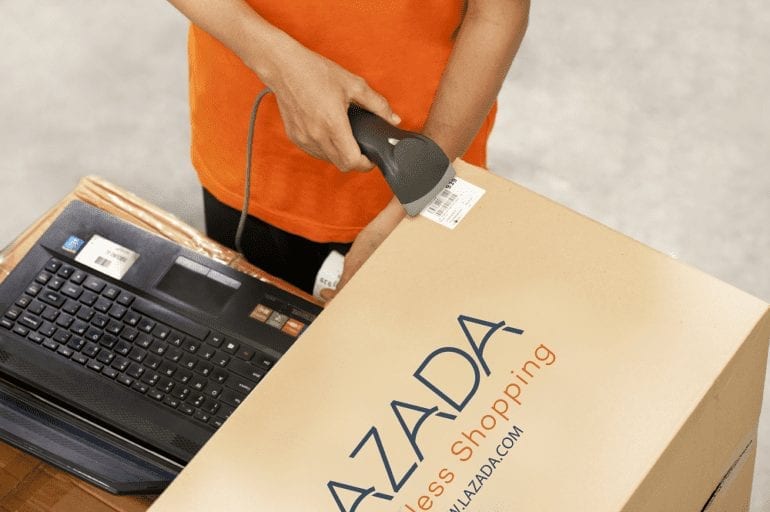
    Singapore-based Lazada entered Vietnam in 2012 when it was still owned by Germany’s Rocket Internet.

    In April 2016, China’s Alibaba Group Holding Ltd bought a controlling stake in Lazada for about $1 billion to support its expansion plans in Southeast Asia.

    In June 2017, Alibaba Group increased its investment in Lazada by an additional $1 billion, raising its stake from 51 percent to 83 percent.

    Lazada Vietnam reported a loss of VND977 billion ($42.2 million) in 2015 and over VND1 trillion ($43.3 million) in 2016. It attributed losses to big spending on management and sales promotions.

    By late 2016, its charter capital stayed at just VND15 billion and loans accounted for most of the working capital it was using.

    However, Lazada is still an attractive investment option, with Alibaba announcing in March that it would double its investment in the e-commerce firm to $4 billion.

    A project of Garena, a consumer Internet platform provider based in Singapore, Shopee is second in the list of e-commerce firms suffering big losses in Vietnam.

    In 2016 when it first entered Vietnam, Shopee posted losses of VND160 billion, but this had risen to more than VND600 billion last year.

    By the end of 2017, the total asset value of Shopee had risen ten times to more than VND730 billion as its parent firm raised its total capital by VND30 billion to more than VND1.14 trillion.

    Compared to Lazada and Shopee, which have giant firms backing them, Tiki and Sendo are quite modest, meaning they had made smaller losses.

    Tiki started off as an online book store in 2010 before venturing into e-commerce. Just six years later, the firm was valued at $45 million, following domestic tech firm VNG injecting some $17 million in a 38 percent stake acquisition deal.

    Tiki had posted revenues of nearly VND62.4 billion ($2.71 million) in 2016, a six-fold increase over 2015. However, this was accompanied by a loss of around VND179 billion ($7.78 million) because of high operational costs.

    In its annual report for 2017, VNG showed Tiki making a loss of VND282 billion ($12.26 million) for the year.

    Despite its losses, Tiki has remained attractive to investors as a leading brand in the market. In mid-January this year, JD.com Inc., a giant retailer in China, injected an unspecified sum into Tiki. The Chinese firm had announced last November that it would pump $44 million into the Vietnamese e-commerce platform, making it Tiki’s largest shareholder.

    The last of the top four is Sendo owned by Vietnamese tech giant FPT.

    Sendo raised more than VND400 billion in the two years of 2015 and 2016 and the company reported losses of VND60 billion in 2015 and VND136 billion in 2016.

    However, there its equity stands at more than VND227 billion thanks to a stock issue in 2016.

    In a report last April cited Bain, a U.S.-based global management consulting firm as saying online businesses were booming in Southeast Asia.

    Bain estimated that the region had 200 million digital consumers, or people who bought goods or services online, out of an adult population of 405 million. Vietnam, with a population of 93.7 million, accounted for 35 million of these consumers.

    Vietnam’s youthful population is among the keenest users of mobile devices in the region, while the country’s consumers spend more time online than most of their neighbors, several studies have pointed out.

    Research firm Nikkei estimated that Vietnamese people spend nearly 25 hours online per week, on a par with or just behind Singapore and the Philippines.

  • Vietnamese dong caught between rising dollar, falling yuan

    Vietnamese dong caught between rising dollar, falling yuan

    As the trade war of duties and counter duties escalates, China has weakened its currency to boost exports making its goods even cheaper in Vietnam.

    Local economists have noted that while the yuan has lost 4.18 percent against the U.S. dollar over the last two weeks, the Vietnamese dong has only lost a little above one percent, making Chinese imports much cheaper.

    Vietnam has to balance between keeping the trade deficit control and being able to compete with cheaper Chinese goods in the market.

    In the past three months, the yuan has fallen 3 percent against the dollar while Vietnam only devalued dong around 1.1 percent.

    And Vietnam should take precautions because the yuan could fall even further, financial expert Nguyen Tri Hieu said.

    “China has set the yuan’s foreign exchange rate at 6.95 per dollar,” he said. “But around two years ago, that number was even lower at 6.69 per dollar. So there is a potential for the yuan to slip further.”

    Hieu said he believes that if the government decides to devalue the dollar, a three percent drop by the end of this year is reasonable.

    Economist Ngo Tri Long, former director of the Market Price Research Institute under the Ministry of Finance, cautioned that that the central bank should adjust the dong’s exchange rate based on the market and not the yuan.

    “In my opinion, adjusting the dong’s value at the moment is a risky move, especially, with a three percent drop.

    “It is going to be hard to achieve the nation’s target of keeping inflation below four percent by the end of this year. Not to mention other future-factors we should take into consideration other factors like higher oil prices and damage caused by natural disasters.”

    But if Vietnam decides to move forward with devaluing the dong decision, the adjustments should be based on market demand and not on the yuan’s value. Long felt that a two percent drop would better match current market.

    On the other hand, president of Vietnam Institute for Economic and Policy Research Nguyen Duc Thanh stated that Vietnam should reduce dong’s currency exchange rate against the dollar and the yuan.

    However, such a move it would greatly affect many businesses, Thanh said.

    “This is a risky step since it will have ripple effects on many sectors like stocks and real-estate.”

    Asked how businesses can protect themselves from future foreign exchange fluctuations, Hieu recommended that businesses follow set contracts with fixed exchange rate.

  • Lazada Vietnam appoints Chinese CEO

    Lazada Vietnam appoints Chinese CEO

    Chinese national Zhang YiXing, 36, will take over from Alexandre Joel David Sylvain Dardy, who was the CEO since 2014.

    The change in leadership was announced by Lazada Vietnam’s legal representative, the Recess Company.

    In 2016, Chinese e-commerce giant Alibaba purchased 83 percent of Lazada’s stocks for $2 billion. In March, Alibaba injected another $2 billion into Lazada to boost its Southeast Asian expansion.

    Founded in 2012, Lazada currently operates in Indonesia, Malaysia, the Philippines, Singapore, Thailand and Vietnam, and has 560 million consumers in the region.

  • Vietnam stands to lose from trade war between big powers

    Vietnam stands to lose from trade war between big powers

    The Vietnam Institute for Economic and Policy Research (VEPR) has cautioned that the ongoing trade war between the U.S and China is changing the dynamics of trading in the world, and would eventurally hit Vietnam more than in its exports sector.

    Pham Sy Thanh, head of VEPR’s Chinese Economic Studies Program, said: “When a large economy decides to protect itself, other economies will start to imitate.”

    Global trade growth last year reached 4.7 percent, but this year’s estimate of 3.1 to 5.3 percent shows that even top economists are uncertain about how the trading picture will turn out after this trade war, he said.

    If this continues, multilateral relationships will be replaced by bilateral ones, which will be a disadvantage for a developing country like Vietnam, because stronger countries will have more resources and power to negotiate, he said.

    Another consequence of the trade war on Vietnam is that it will be profoundly affected as global production chains shift.

    As the lack of workforce is no longer a big problem thanks to the fourth industrial revolution, “smaller countries will lose their advantage in just a few years,” he said, adding that technology giants, such as Foxconn, are now investing more in manufacturing in its own country, the U.S.

    When large corporations no longer see the attractiveness of developing countries, their capital will flow back to the big countries, and the abundance of labor will no longer be perks for developing countries such as Vietnam, Thanh said.

    The U.S. has announced that it would slap a 10 percent tariff on $200 billion worth of Chinese export goods as soon as September. This announcement came after it slapped a 25 percent duty on about $34 billion worth of Chinese goods earlier this month.

    China had retaliated “immediately” with a similar action, the country’s foreign ministry had said in response to the first move by the U.S.