Tag: Vietnam

  • Vietnamese steel, wood firms might gain from US-China trade war

    Vietnamese steel, wood firms might gain from US-China trade war

    The recent escalation of trade tensions between the U.S. and China could have a positive effect for some industries in Vietnam, but experts warn these gains could prove short-lived.

    U.S. President Donald Trump announced last week that he would push ahead with tariffs on $50 billion of Chinese imports starting July 6, and China retaliated by slapping the same amount of duties on commodities from the U.S.

    The U.S. would impose a 25 percent tariff on more than 800 strategically important imports from China including cars and oil, while China announced that it would slap a 25 percent tariff on 659 U.S. products, from soybeans to seafood.

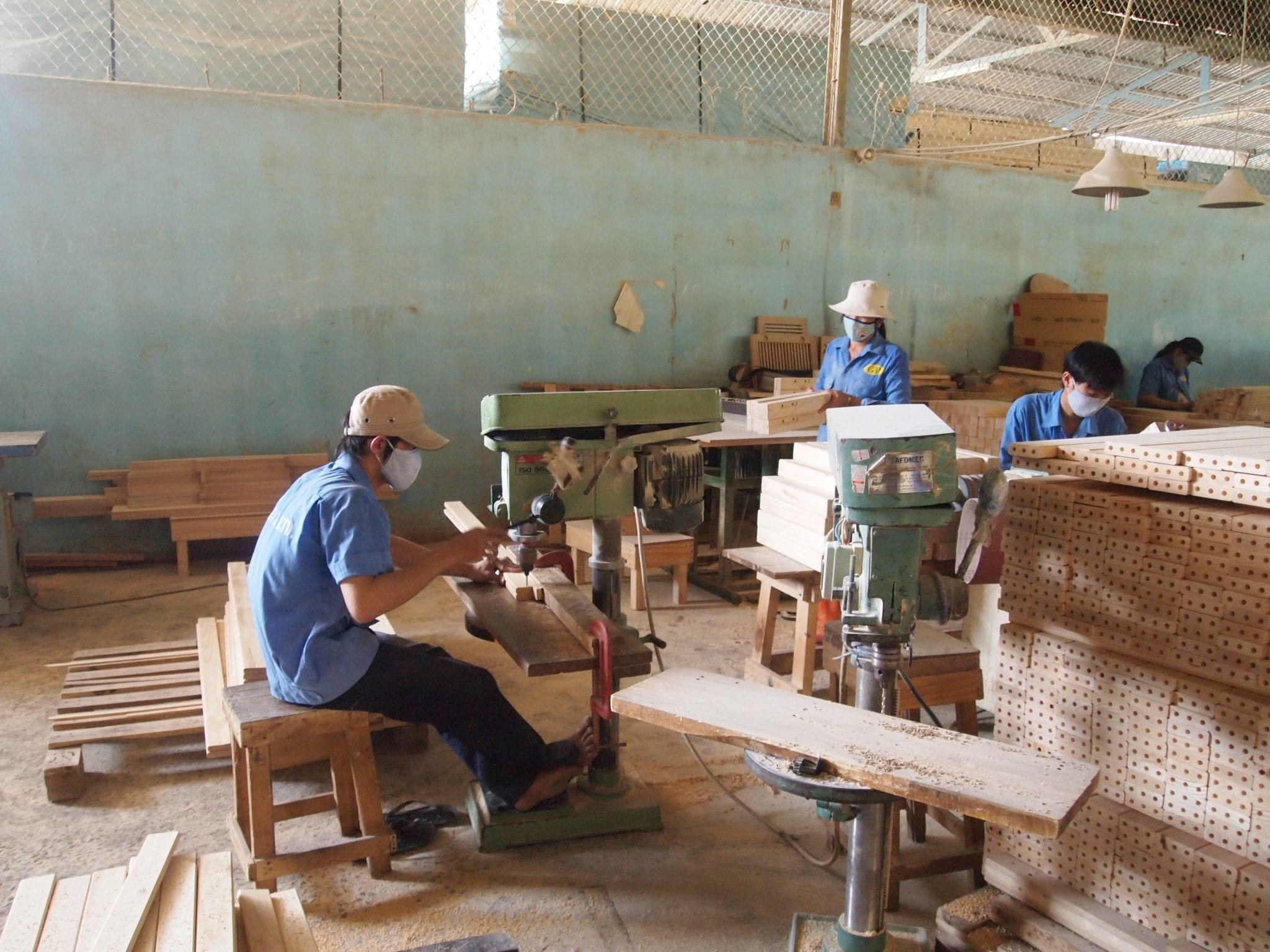
    Vietnamese wood businesses will be benefit from this trade war should the U.S. impose a heavy tax on Chinese wood starting this July, a representative of the Handicraft and Wood Industry Association of Ho Chi Minh City (HAWA) said.

    In the first two months this year, exports to the U.S. accounted for 39.7 percent of total wood export turnover, an increase of 14.6 percent from the same time last year, the source said.

    One of the reasons for this increase is the anti-dumping duties U.S. slapped on China at the end of last year, the source said.

    Vietnam is currently the fifth largest exporter of wood to the U.S., while China tops the list, according to HAWA statistics. If Vietnamese businesses can take this opportunity, growth can be much faster than now, the source said.

    Apart from wood, Vietnamese steel businesses would also enjoy a surge in steel exports to the U.S. if the latter ups its anti-dumping tariffs on China by 25-35 percent, Nguyen Huy Do, marketing director of Vietnam Italy Steel Jsc, said.

    However, industry insiders are warning that China might invest in manufacturing steel in Vietnam to have a ‘Vietnam label’ on products that will eventually be exported to the U.S.

    Last month, the U.S. Commerce Department slapped steep import duties on steel products from Vietnam that originated in China, finding that they evaded U.S. anti-dumping and anti-subsidy orders.

    After this, the Vietnam Steel Association has requested authorities to impose tighter controls on foreign investment in steel.

    Another risk is that China dumps its residual inventories on other countries in the region, including Vietnam, which will result in an unstable trade market, Dinh Tuan Minh, research director of market research firm Viet Analytics, said recently.

    Vietnam therefore needs to be careful amidst this trade war between the world’s largest economies and should not let itself be the target of steep tariffs, Minh said.

    “What the U.S. is doing to China can be done to Vietnam at some point,” he said.
  • ASEAN the next big fish for Vietnam’s seafood industry

    ASEAN the next big fish for Vietnam’s seafood industry

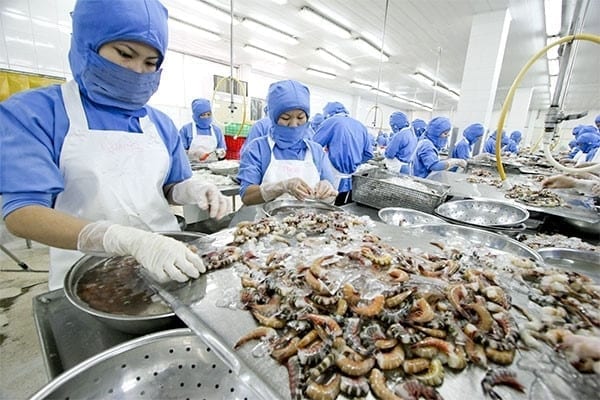
    Almost unnoticed, ASEAN is emerging as big market with big potential for Vietnamese seafood, industry insiders say.

    Vietnam exported $612 million worth of seafood last year to ASEAN countries, 9.2 times the $66 million in 1998.

    Local media reports have cited the Vietnam Association of Seafood Exporters and Producers (VASEP) as saying that last year, Vietnam exported seafood to all nine countries in the regional bloc.

    Of these, Thailand, the Philippines and Singapore were the largest importers. Thailand bought $248 million worth of seafood from Vietnam last year, accounting for 40 percent of total export value to ASEAN countries. Seafood export to Thailand reflected the regional intake, multiplying nine times in the last 20 years.

    Philippines, in the second place, imported seafood worth $132 million, a 2,000-fold increase over the paltry $63,000 in 1999.

    Export of sea fish to ASEAN countries reached $289 million last year, making it Vietnam’s main seafood export item to the regional bloc. Squid and octopus came in second at $71 million, more than 10 times the $7 million in 1998.

    The surge and potential of the ASEAN market notwithstanding, Vietnamese businesses have kept their main focus trained on the traditionally top markets for seafood export – the U.S., Japan, China and South Korea.

    These four countries account for 52.7 percent of total export value of Vietnamese seafood last year, according to the Ministry of Agriculture and Rural Development.

    In the first four months this year, China recorded a strong year-on-year growth of 28.8 percent in seafood imports from Vietnam. China is also the largest importer of Vietnamese pangasius fish, and potentially of shrimp in the future, a VASEP report says.

    The association has urged local businesses to look at ASEAN as the next potential market, saying establishment of ASEAN Economic Community (AEC) in 2015 has created an opportunity for Vietnam’s seafood industry with significant tax incentives.

    Moreover, ASEAN population is estimated to reach 790 million in 2050, creating a considerable demand for food. VASEP estimates that seafood consumption in the bloc will increase from 24.5 million tons in 2015 to 37 million in 2030, and per capita seafood consumption will grow from 38.4 kilograms per person a year to 51.5 kilograms in 2030.

    Vietnam exported $8.32 billion worth of seafood last year, a growth of 18 percent over 2016.

  • Vietnam’s renewable energy yet to get wind in its sails

    Vietnam’s renewable energy yet to get wind in its sails

    Vietnam is far away from realizing its short and medium term wind power goals, with no ready solution in sight to several impediments, experts say.

    They said at a recent conference on wind energy development in Vietnam that high interest rates, low selling prices and inadequate power purchase agreements from the investors’ point of view were major stumbling blocks to realizing set targets.

    Vietnam plans to produce 800 megawatts of wind energy by 2020 and 6,000 megawatts by 2030.

    However, the country has just 7 functioning wind energy projects with a total capacity of 190 megawatts, noted Nguyen Van Thanh from the Ministry of Industry and Trade.

    Tran Vinh Thong, technical officer for wind energy firm Thuan Binh, which is currently investing in the Phu Lac wind energy project in southern Binh Thuan Province, said the project’s initial cost was VND1.1 trillion ($49 million) and it generated an annual revenue of about VND100 billion, of which VND70-80 billion goes for just interest payments.

    “We only have VND20-30 billion left each year to pay our employees’ salaries and meet maintenance costs,” he said.

    Low electricity selling prices are also an issue, Thong added.

    Currently, electricity derived from wind energy costs about 7.8 cents per kilowatt per hour. At this price, the Phu Lac wind energy project would need 14 years to recoup its initial cost, while a typical wind energy project only lasts 20 years before it is replaced as maintenance costs soar, he said.

    Meanwhile, the buying price for wind power is 20 cents in Thailand, 29 cents in the Philippines and 30 cents in Japan.

    However, disadvantageous power purchase agreements remain the biggest obstacle to grow Vietnam’s wind energy industry, said Bui Vinh Thang, business development officer for Irish sustainable energy firm Mainstream.

    Currently, businesses in Vietnam who want to produce electricity can only sell their output to national distributor Vietnam Electricity Corporation (EVN), which has a monopoly on the service. Worse still, EVN can cancel the power purchase agreement at any time, regardless of the time agreed upon in the contract.

    “That is too much of a risk,” Thang said.

    Moreover, EVN unilaterally gets to temporarily suspend electricity distribution for energy grid maintenance should it deems necessary to do so.

    “During the time electricity distribution is temporarily suspended, we don’t make any money. And EVN doesn’t have to reimburse us at all,” Thang said.

    Last year, the Ministry of Industry and Trade proposed an increase in selling prices for wind energy. Land and sea projects would have their selling prices increased to 8.77 and 9.95 cents per kilowatt per hour, respectively.

    Vietnam is trying to generate enough energy to sustain the country’s growth and connect those who still do not have access to power, while gradually shifting towards clean and low-carbon energy.

    It aims to produce 10.7 percent of its total electricity through renewable energy by 2030, mainly through solar and wind sources.

  • Vietnamese importers fret over dollar rate

    Vietnamese importers fret over dollar rate

    The dollar gained against the Vietnamese dong on Tuesday as the U.S. Federal Reserve raised interest rates last week.

    As of 3 p.m. Tuesday, dollar selling prices reached 22,810 at some currency exchange points in Ho Chi Minh City. At Vietcombank, BIDV and Eximbank, the dollar was being sold for VND22,880, 22,885, and 22,890, respectively.

    Buying prices also rose to VND22,800-22,815 per dollar at local banks by 3 p.m. Tuesday.

    The USD/VND exchange rate has increased by VND40-45 from June 13 when the Fed upped dollar interest rates for the second time this year to between 1.75 and 2.00 percent, ending the pledge to keep rates low enough to bolster the economy for “some time.” It signalled it would tolerate above-target inflation at least through 2020.

    High dollar prices will create difficulties for Vietnamese import businesses, economist Nguyen Tri Hieu said.

    Viet Steel is a company which imports 1.5 million tons of raw materials every year for steel production. “As 80 percent of our material is imported, the company will be affected by the dollar hike,” said chairman Do Thuy Thai.

    The company leaders are discussing increasing the prices of steel products to retain profit, Thai said.

    As a small import business, the Como Textile Company is also worried about the high rate of the U.S. dollar. “We often import 60 percent of our material, thus this will be a big challenge for the company in the future,” chairman Nguyen Huu Phuc said.

    However, the higher dollar rate is not a completely adverse development for Vietnam. Export businesses will enjoy the high rate as they often change U.S. dollars to Vietnamese dong, economist Nguyen Tri Hieu said. He added that they should push further in manufacturing and take foreign currency loans as interest rates are currently low.

    Hike continues

    As the U.S. economy “appears to be in a pretty good place” to U.S. Federal Reserve officials, they plan to increase the interest rate two more times this year.

    Vietnamese experts are not too worried. They are confident that these hikes won’t affect the country’s economy in any major way.

    Despite the hike in dollar prices, there is no sign of tension in the supply and demand of foreign currency, financial expert Ngo Xuan Hai said.

    Vietnam currently enjoys record-high foreign exchange reserves at $63 billion. It recorded a $3.39 billion export surplus in the first five months this year and there is abundant foreign currency supply, so “there is no need to worry,” Hai said.

    Echoing Hai, HSBC country head of global markets Ngo Dang Khoa said Vietnam currently has favorable conditions to keep the USD/VND rate from fluctuating too strongly, particularly with foreign direct investment disbursement reaching 13 to 14 billion USD each year and has been increasing.

    “As foreign investors usually look at the long term, temporary fluctuations in exchange rate won’t affect their investment decisions” Khoa said.

    The State Bank of Vietnam (SBV) can take monetary measures to stablize the economy, economist Hieu said. “With abundant foreign exchange reserves it may intervene into the market to maintain the rates,” he said, estimating that the exchange rate will increase by 1-3 percent this year.

    “SBV is closely monitoring the exchange rate to take timely decisions,” SBV deputy director Nguyen Hoang Minh said.

  • Most Southeast Asian markets fall as trade tensions escalate

    Most Southeast Asian markets fall as trade tensions escalate

    Most Southeast Asian stock markets declined on Tuesday, in line with broader Asia, as U.S. President Donald Trump threatened new tariffs on Chinese goods in an escalating trade war between the world’s top two economies.

    Trump warned on Monday that Washington would impose a further 10 percent tariff on $200 billion of Chinese goods after Beijing’s decision to raise tariffs on $50 billion in U.S. goods, which was in retaliation for U.S. tariffs announced on Friday.

    Trump said if China increases its tariffs again in response to the latest U.S. move, “we will meet that action by pursuing additional tariffs on another $200 billion of goods.”

    “This is causing a little bit of uncertainty in the market. It is very worrisome for investors and they are staying on the sidelines and avoiding risky assets such as equities,” said Lexter Azurin, a senior equity analyst at Manila-based AB Capital Securities.

    MSCI’s broadest index of Asia-Pacific shares outside Japan hit its lowest since February as safe-haven assets such as gold and the Japanese yen gained.

    Philippine shares fell as much as 2.2 percent to their lowest since March 27, 2017, weighed down by industrials and financials. SM Investments Corp declined 3.2 percent, while BDO Unibank Inc shed 2.9 percent.

    A slim majority of economists believe the Philippine central bank will raise interest rates on Wednesday, but opinions are sharply divided, with the weak peso likely to be the factor that will tilt the scale.

    Thai shares fell nearly 1 percent to their lowest since Sept. 28, 2017 and were on track for a fifth straight session of decline.

    On Wednesday, the central bank is expected to leave its policy interest rate near a record low to encourage more broadly-based economic growth at a time when inflation remains low, according to all 21 economists surveyed in a Reuters Poll.

    Vietnam shares fell 2.8 percent to their lowest in nearly three weeks, with Petrovietnam Gas Joint Stock Corp declining to its lowest in six months, while Vietnam Technological and Commercial Joint Stock Bank dropped 6.8 percent.

    Malaysian shares were down for a seventh straight session, while Singapore shares rose on the back of gains in financials.

    Indonesian financial markets are closed through Tuesday for Eid Al-Fitr.

  • DHL eCommerce brings same-day metro deliveries to Vietnam

    DHL eCommerce brings same-day metro deliveries to Vietnam

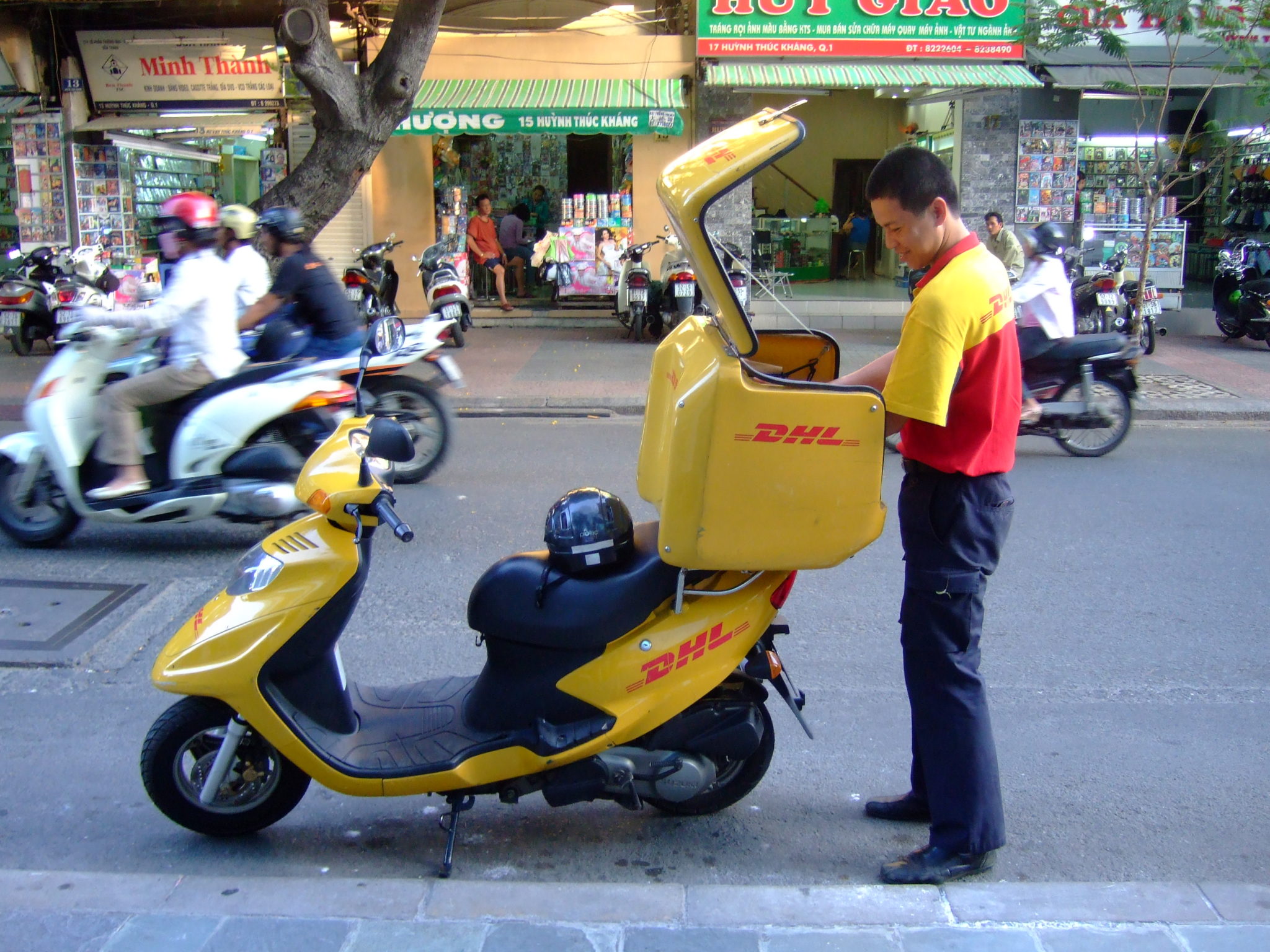
    DHL eCommerce, a division of Deutsche Post DHL Group, today announced the introduction of DHL Parcel Metro Same Day in Ho Chi Minh City and Hanoi. The service allows Vietnamese online retailers to offer same-day delivery to consumers in both cities with real-time tracking and rescheduling of deliveries through DHL’s digital platform. The service uses an “elastic delivery” concept where DHL taps into a varied set of delivery service providers. This allows deliveries to be fast and flexible while allowing same-day service to remain affordable for retailers.

    DHL Parcel Metro Same Day service allows retailers to offer same day delivery to consumers with real-time tracking and rescheduling of deliveries through its fully customizable digital platform.

    “Vietnam remains an exciting market for us with immense potential — Ho Chi Minh City is forecast to be the second fastest-growing Asian economy by 2021, with predicted annual growth of 8% . With about 30% of the Vietnamese population expected to shop online by 2020[2] , demand for e-commerce parcel deliveries will only increase,” said Charles Brewer, CEO, DHL eCommerce.

    “Globally, the demand for same-day delivery is expected to grow 43% till 2025 and capture 22% market share of domestic B2C delivery by then[3] . While the number of e-commerce parcel deliveries continues to soar, urban consumers are at the same time expecting instant and same-day delivery amid growing pressures of congestion, overtaxed infrastructure and costs. DHL Parcel Metro Same Day’s urban-friendly and flexible same-day delivery service aims to relieve last-mile pressures while providing retailers with fast, flexible, visible and reliable deliveries necessary to build consumer trust,” Brewer added.

    DHL Parcel Metro Same Day adds to DHL eCommerce Vietnam’s existing nationwide domestic delivery service supported by its fleet of vans and bikes, and regular air and road connections between its hubs for next-day delivery in Ho Chi Minh City, Hanoi and other primary markets. Coupled with its growing network of over 200 DHL ServicePoints, DHL eCommerce provides sellers and consumers with convenient pick-up and drop-off locations across the country. DHL eCommerce will also offer its fulfillment services along with DHL Parcel Metro Same Day to provide retailers a localized e-commerce solution, allowing them to store their inventory closer to their consumers and to deliver parcels faster and more efficiently to their shoppers.

    “Vietnam’s e-commerce market is growing 32% CAGR from 2018-2022 according to Euromonitor, and consumers — particularly the millennial and urban population — are increasingly expecting instant and same-day deliveries for their online purchases. For a great customer experience, retailers need not only fast and reliable delivery services, but also a personalized and seamless digital experience that inspires customer confidence from the very first click. DHL Parcel Metro Same Day’s customizable designs and Application Programming Interface (APIs) make it even easier for Vietnamese e-tailers to provide their customers with a seamless delivery experience and win their trust,” said Thomas Harris, Managing Director, DHL eCommerce Vietnam.

    DHL Parcel Metro Same Day also allows retailers to offer a fully branded experience in their delivery, with real-time tracking and rescheduling of deliveries through DHL’s fully-customizable digital platform. The digital platform uses a dynamic dispatching and routing engine to improve cost and operational efficiency, and supports a range of delivery modes — including motorcycles, bicycles, and foot couriers, alongside more conventional vans and cars — for maximal speed and agility in complex and often congested urban environments. This includes DHL’s own network of couriers and crowd-sourced partners that meet DHL’s stringent quality and standards.

    DHL eCommerce is part of Deutsche Post DHL Group, established in 2014 as part of the Group’s growing focus in e-commerce logistics solutions. Along with its sister divisions DHL Express, DHL Supply Chain and DHL Global Forwarding as well as its subsidiary Blue Dart Express in India, the Group offers end-to-end solutions for e-commerce retailers. This includes cross-border shipping with a premium offering from DHL Express and affordable solutions from DHL eCommerce; fulfillment solutions through DHL eCommerce and DHL Supply Chain; and air/sea/road/rail freight solutions from DHL Global Forwarding.

  • Vietnam’s Coffee King Makes a Public Appearance

    Vietnam’s Coffee King Makes a Public Appearance

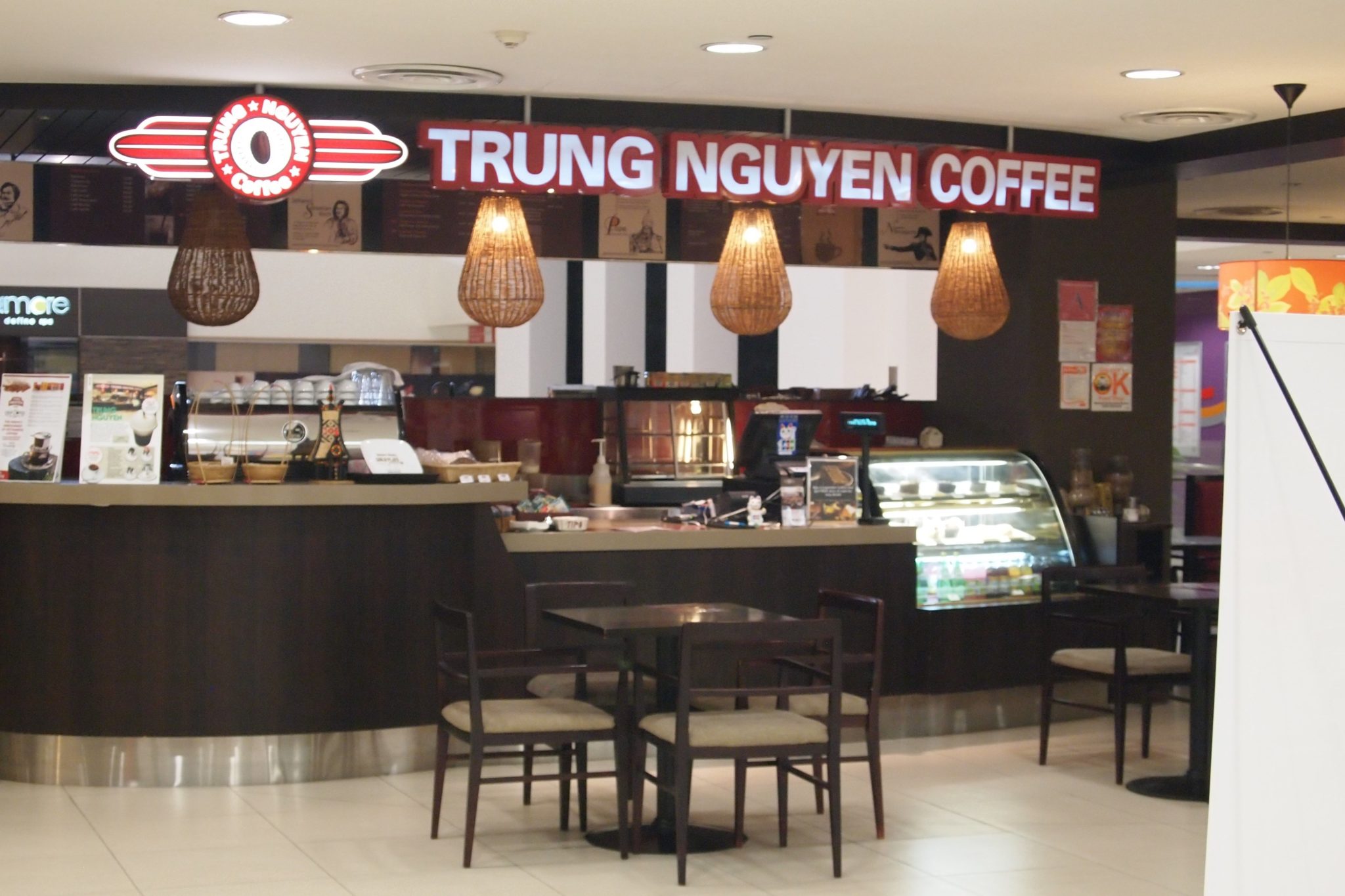
    CEO of Trung Nguyen Coffee put in an unannounced appearance and asked company staff to ‘revolutionize’ themselves. The CEO of Vietnam’s top coffee brand, Trung Nguyen, put in a surprise appearance at a company event on Saturday, after “disappearing” for almost five years.

    Dang Le Nguyen Vu, known as the Coffee King of Vietnam, had stayed away from public eye amidst a lengthy divorce process with his wife that is yet to end.

    Vu, who had nurtured Trung Nguyen Coffee and taken it to 60 international markets, amazed participants at the company event by turning up without prior notice.

    “Brothers and sisters, you have to start by revolutionizing yourselves,” he said in a short speech.The CEO exhorted Trung Nguyen’s leaders and staff to do everything differently from other companies in the world.

    Trung Nguyen must aim to become the number one coffee brand in the world, establishing its presence everywhere, he said.

    Vu said he had spent the last five years meditating up in the mountains and now had answers to “all the questions in this world.”

    The unannounced appearance of Vu has gathered a lot of public and media attention, particularly because his wife, Le Hoang Diep Thao, recently accused four leaders of Trung Nguyen Coffee for misusing their power to manipulate her husband’s company while he was away.

    Thao, who owns another coffee brand, King Coffee, said that incorrect information had been spread on social media to slander her husband, who was too sick to appear in public.

    “These leaders did this to manipulate Trung Nguyen for their personal gain,” she said.

    The divorce proceedings between Vu and Thao, who used to be the deputy director of Trung Nguyen, had also caught public attention in 2015, when they took each other to court, each accusing the other of obstructing the company’s operations.

    Vu and Thao have also been embroiled in a lengthy and costly legal battle for years over the ownership of Trung Nguyen Group, which has a charter capital of VND1.5 trillion ($65.8 million).

    Thao was a minority shareholder of the company until Vu ousted her in 2015.

    The court has not officially settled the divorce petition.

  • Facebook, Google okay with Vietnam’s cybersecurity law

    Facebook, Google okay with Vietnam’s cybersecurity law

    Representatives of tech giants raised no objections and said they would modify their strategies according to the new law, claims senior official.

    Facebook and Google found Vietnam’s cybersecurity law “appropriate” and did not object to it, a senior Public Security Ministry official said Friday.

    Vietnam’s cybersecurity law, which was approved by a majority vote in the National Assembly on Tuesday, requires foreign businesses like Facebook and Google to store Vietnamese users’ data within the nation’s territory and provide it authorities upon receipt of written requests.

    As the law was being drafted, lawmakers had reached out to Google and Facebook to discuss its provisions, said Lieutenant-general Hoang Phuoc Thuan, director of the ministry’s Cybersecurity Department.

    “They said that this law was appropriate and that they will research to modify their companies’ strategies accordingly,” Thuan told.

    Authorities will only ask businesses to provide users’ data when there are signs of violations of the law, Thuan said.

    “Providing customers’ data to security authorities is not a violation of privacy,” he added.

    Facebook Vietnam and Google were not immediately available for comment.

    The cybersecurity law, which has been discussed by Vietnamese legislators since October last year, had raised concerns of MPs and experts that the country would end up violating its international commitments.

    Thuan dismissed these concerns. “I have met with and listened to diplomats and they all affirmed that there are exceptions in every country.”

    He affirmed that the law doesn’t affect freedom of speech; it actually protects the rightful benefits of individuals and organizations on networks.

    The new cybersecurity law, which will take effect in 2019, bans internet users from organizing, encouraging or training other people for anti-state purposes.

    They are not allowed to distort history, negate the nation’s revolutionary achievements, undermine national solidarity, offend religions and discriminate on the basis of gender and race.

    The law also prohibits the spreading of incorrect information which causes confusion among people, hurts socio-economic activity, creates difficulties for authorities and those performing their duty, and violates the legal rights and benefits of other organizations and individuals.

  • Grabbing Grab’s share a tough question in Vietnam

    Grabbing Grab’s share a tough question in Vietnam

    Local ride-hailing firms lack deep pockets needed to out-incentivize market leader Grab. After Uber Technologies Inc sold its ride and food-delivery businesses in Southeast Asia to bigger regional rival Grab last March, Vietnamese firms have tried to chip away at Grab’s dominance.

    A number of ride-hailing apps have been introduced recently, like Aber, which was developed by a group of Vietnamese students studying in Europe; FastGo, an affiliate of NextTech Group; and MVLchain – a Singapore-based transportation startup; VATO; Didi; and MaiLinhBike.

    Besides competing in the bike- and car-hailing businesses with dominant player Grab, the new entrants also plan to offer good delivery, car rentals and long-haul ride services.

    But, for the moment, none of them have shown the ability to fill the gap left by Uber or to threaten Grab’s supremacy, because they have not differentiated themselves from the competition.

    Newcomers did look for some “killer features” that are absent from previous apps to lure customers. For instance, VATO allows users to bargain with the driver for the most competitive price and Mai Linh Bike says it will collect lower commissions from its drivers and will not increase ride prices during peak hours.

    But such measures are not enough because ride-hailing is a cash burn business and only those with strong financial resources can endure, experts say.

    EasyTaxi has probably learned how tough this fight is. The Brazil-based company came to Vietnam at the end of 2013, six months before Grab and Uber’s presence in this market. Despite being the first comer, it withdrew from the market just two years later. Money, or the lack of it, was the reason, industry insiders say.

    Cash burn strategy

    Even big players like Grab and Uber have reported heavy losses in Vietnam. According to the General Department of Taxation, Grab, with a total registered capital of only VND20 billion ($881,057), has incurred losses of nearly VND1 trillion in three years of operating in Vietnam.

    But this cash burn strategy is how Grab and Uber are eating up traditional taxi firms’ market share. In 2014-2015, they launched intense promotional programs including free rides and discounts to lure customers. They also expanded their driver networks by providing them with subsidies and big rewards based on performance.

    Limited funding limits the budding competitors’ ability to offer incentives the way the big players can, so the former are always playing catch up. They can’t offer discounts, and can’t expand their network of drivers in order to offer faster, better rides.

    In a price-driven market, customers are always looking to choose the cheapest possible ride. And they have complained that it is not easy to book a ride with the new apps even in downtown areas.

    Duc Huy, a senior student at the Academy of Journalism and Communication in Hanoi, told VnExpress that he found it difficult to get a ride on MaiLinhBike as there are not many drivers around North Tu Liem District where he lives.

    “I have to wait for 10 minutes to get on a MaiLinhBike ride because the river is 2-3 km away,” he said.

    Drivers too see Vietnamese ride-hailing platforms as backup options. They are not ready to switch despite Grab cutting back on drivers’ incentives.

    Taxi driver Duy Ngoc said he operates on both Grab and VATO apps, but gets just two or three rides booked on the VATO platform a day.

    “So, I mainly drive on the Grab platform to ensure my income,” he said.

    “New apps do not have a large customer base. Drivers just sign up to get incentives, so their main driving service remains the previous one (Grab),” said 25-year-old Grab motorcycle driver Quoc Anh.

    Market niches

    With Go-Jek about to set foot in Vietnam with its Go Viet app, competition is only get tougher for local firms. The Indonesian ride-hailing firm is a heavyweight competitor to Grab in the Southeast Asian region. Will local apps stand a chance? The answer is, unlikely, in a head-to-head fight.

    “Capital shortfall is a disadvantage for Vietnamese ride-hailing apps, so they should not enter the cash burn race,” said Dr Nguyen Duc Thanh, head of the Vietnam Institute for Economic and Policy Research.

    He said going head-to-head with bigger rivals is not the right path to follow. There are other ways to succeed, he added.

    “They can enter niche markets like good delivery, car rentals or long-distance ride services. Instead of trying to divide market share in the beginning, newcomers should think of a long-term strategy to build a solid foundation,” Thanh added.

    It was not a fluke that even a well funded Uber lost to a more localized opponent, he said.

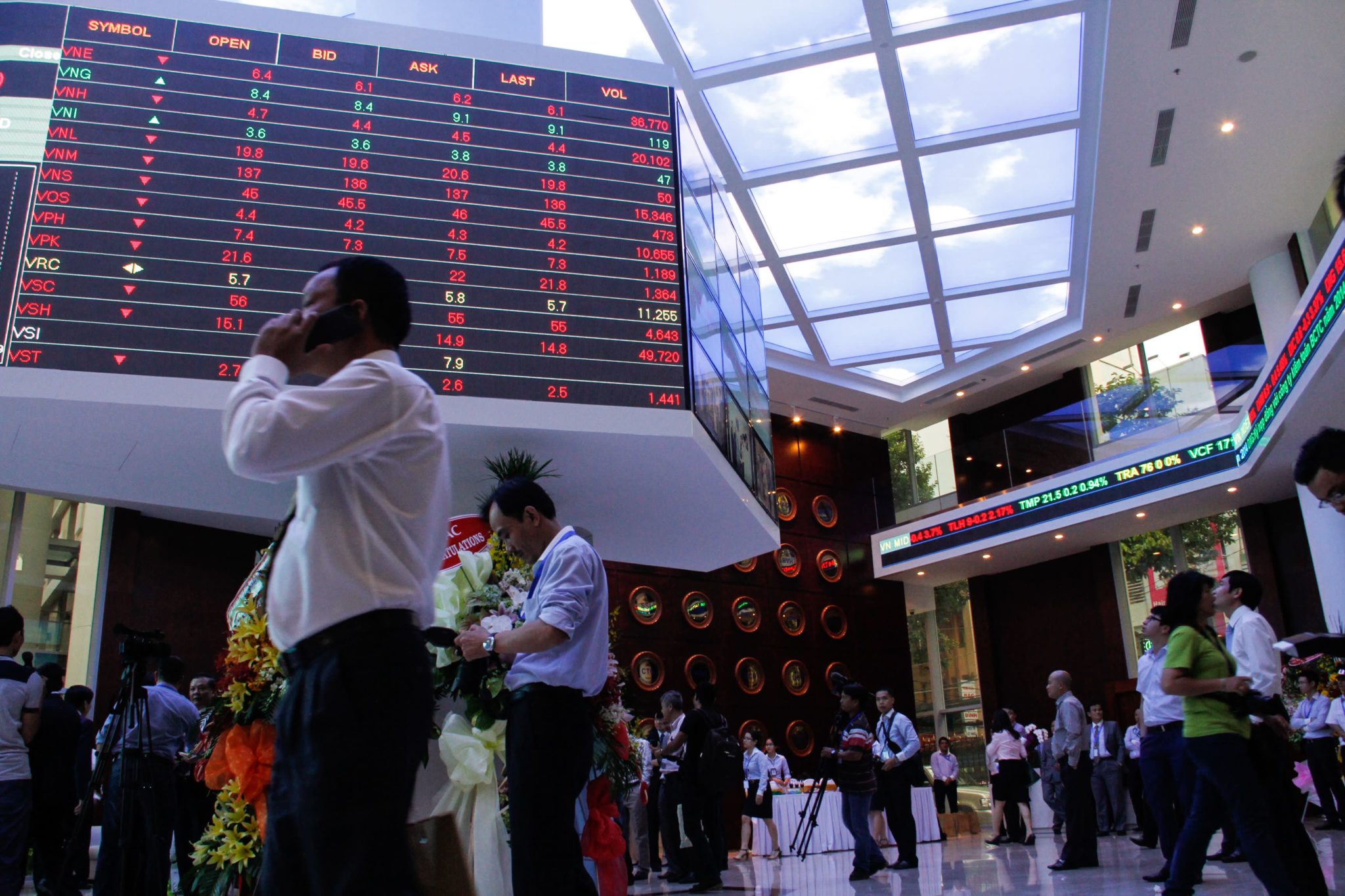
  • Vietnam stock market in Free Fall

    Vietnam stock market in Free Fall

    Vietnam’s stock market dropped 2.87 percent to more than 987 points on Monday, the second time this year that it has dropped below the 1,000-point level.

    The benchmark VN-Index on the Ho Chi Minh Stock Exchange (HOSE) fell from 1,000 points for the first time this year on May 23 and did not bounce back to that level until June 4.

    As supply surpassed demand, sellers were pushed to sell their stocks at all costs, leading to falling prices.

    The VN-Index hit 984.24 on the last trading day of 2017, the highest ever since 2007, before reaching 1,000 points early in January.

    Since then, it has stayed at more than 1,000 points until the drop on May 23.

  • No betting on World Cup matches in Vietnam allowed

    No betting on World Cup matches in Vietnam allowed

    Sports betting is legal, but a betting operator has not been selected for premier football event. Football fans and punters in Vietnam cannot bet on World Cup matches this year, even though sports betting has been legalized.

    Only a few companies have shown interest in operating a betting business in Vietnam, and none of them have actually submitted bidding documents.

    The lack of agreement between relevant ministries on how to organize the bidding process is among the reasons for the delay, an unnamed Finance Ministry source told Tuoi Tre.

    Limited betting options are another reason. Vietnam only allows betting on international soccer games recognized by the governing body FIFA and approved by the sports ministry. These include the World Cup, the Confederations Cup, Copa America, Champions League and Europa League. These are all short tournaments with limited number of matches, leaving a lot of “idle time.”

    Meanwhile, the most popular football leagues in Vietnam, the English Premier League (EPL), La Liga (Spanish League), German Bundesliga, Serie A (Italia) and Ligue 1 (France), are out of the betting pool.

    If a bookmaker were to operate for just FIFA recognized tournaments, they would suffer heavy losses, said economist Nguyen Tri Hieu.

    According to a government decree that took effect on March 31, 2017, Vietnamese citizens can bet on international football games and horse and greyhound races. Only those above 21 years old are allowed to gamble and bookmakers have to be at least 500 meters away from schools and other public venues for children. The minimum bet value is VND1,000 (4.42 cents) and the daily maximum limit is VND1 million ($44).

    Bookmakers will have to meet strict charter capital requirements: VND1 trillion ($44.2 million) for horse racing and soccer and VND300 billion ($13.2 million) for greyhound racing. It is planned that one soccer betting provider will be selected for a five-year trial phase through a bidding process.

    On Thursday, Vietnam’s National Assembly approved a new law that allows locals to bet on sports events. The law is based on the 2017 government decree. Under the new law, betting will be allowed for other sports when the government approves a decree proposed by the Ministry of Culture, Sports and Tourism. The new law will not come into effect until next year.

    Vietnamese are known for their love of gambling. It is estimated that they spend at least $800 million a year on gambling overseas, mainly in Macau, Singapore and Hong Kong.

    Official figures show that Vietnamese citizens spent $13 billion on the lottery between 2011 and 2015, driving an average 12 percent gain in annual revenues of lottery companies over that period, according to Nikkei.

    The Tuoi Tre report quoted a source from the Ministry of Culture and Information as saying that for now, “It is unclear when soccer betting will start.”

  • Internet streaming one up on traditional TV in Vietnam

    Internet streaming one up on traditional TV in Vietnam

    Industry insiders say local Over-The-Top service providers should act together instead of against each other. Vietnam is seeing a trend of people switching from traditional TV to over-the-top (OTT) media services which allow them to watch movies and other shows on the internet.

    In a recent survey done by Kantar Media Vietnam, an information and consultancy group, 84 percent of the respondents aged 15-54 said they use the internet every day. In Hanoi, people spend 229 minutes each day on the internet, almost an hour and a half higher than the time for TV, which is only 145 minutes, the survey found.

    A significant 45 percent of respondents in Hanoi, Ho Chi Minh City, the central city of Da Nang and southern Can Tho said they watched video on demand (VOD).

    Vietnam is one the leading countries in the online video trend, with 90 percent of the respondents saying they watch online videos every week, said market research firm Nielsen.

    “People nowadays want to watch what they want, whenever and wherever they want,” said Bui Huy Nam, CEO of state-owned cable TV provider VTVCab, adding that this trend makes the transition from traditional TV to OTT inevitable.

    YouTube remains the largest OTT service in the country, with 87.3 percent of respondents in the Kantar Media survey saying they use this website frequently to watch videos online.

    Local sites such as PhimMoi.net [New Movie] and ZingTV rank second and third with 28.9 percent and 26.4 percent respectively, the report said.

    With such a large market demand, local OTT providers are adopting different strategies to eke out an advantage in this tight race.

    National broadcaster VTVCab is looking to work with internet service providers to provide free content to users, earning revenue from advertisements. The company’s ambition is to create a platform where users can share their own video content.

    FPT Play, a cross-platform application which allows users to watch TV shows and movies online, is focusing on improving its content by working with strong media production companies in the country.

    While there is strong competition between legal OTT providers, they also need to fight the battle with illegal ones. Illegal content makes up about 95 percent of OTT services in Vietnam, said Ngo Thi Bich Hanh, vice chairwoman of media firm BHD.

    “There is an intense competition between OTT firms in the country. It’s a competition between local firms and between them and foreign providers,” Hanh said.

    To ensure the success of OTT services in Vietnam, local businesses need to cooperate on a shared platform, said Nguyen Thanh Lam, director of the Department of Radio and Television Communication and Electronic Information. “They should not go alone in this market,” he added.

    Echoing Lam, Le Quang Minh, director of the VTV24 News Center, said that working together will keep OTT businesses from “hitting the bottom.”

    “We want local OTT providers to sit down together to create a sustainable market which is strong enough to compete with the leading video streaming services in the region and in the world instead of racing against each other,” Minh said.

    A study by OTT provider Muvi estimates Southeast Asia market revenues reaching $650 million a year in the next three years. On the global scale, Netflix, Hulu, Amazon and Youtube have a total of 2 billion subscriptions, taking 40 percent of the world’s OTT market share, the study said.

  • Vietnam bank loans up 6.16 pct in 5 months

    Vietnam bank loans up 6.16 pct in 5 months

    Bad debts accounted for 2.18 percent of total lending at the end of the first quarter of 2017.

    Vietnamese banks’ total loans at the end of May were 6.16 percent larger than at the end of 2017, the State Bank of Vietnam said on Monday.

    Bad debts accounted for 2.18 percent of total lending at the end of the first quarter, it said in a statement.

    Vietnam aims to keep toxic debts ratio under 3 percent of total loans, while the central bank has said it targets credit growth at 17 percent this year.

  • Vietnam poised to build on IT outsourcing gains

    Vietnam poised to build on IT outsourcing gains

    Apart from skills and adaptability, low staff turnover in the sector makes the country more attractive to tech giants.

    Vietnam continues to be a favored outsourcing destination for multinational companies even as the current leader, India, experiences some hiccups.

    A recent article in the Forbes magazine said in its title that Vietnam was a “small but mighty powerhouse” for IT outsourcing.

    It said giant technology companies like Intel, IBM, Samsung Display, Nokia, and Microsoft continue to invest in Vietnam’s growing tech workforce.

    The author of the article, Anna Frazzetto, Chief Digital Officer and Senior Vice President at Harvey Nash, which has a decade plus of outsourcing experience in Vietnam, said, “technology specialists in Vietnam are comfortable with quickly becoming a natural extension of global clients, ready to challenge norms and bring innovative ideas to the table.”

    Another major factor that makes Vietnam attractive is the tendency of people to stay on in the country, unlike IT professionals in India, Malaysia and other countries who are ready to move to other countries for jobs that pay well.

    While the relative lack of fluency in English is a growth constraining factor, Vietnam’s investment in education, and the extra attention it pays to nurturing knowledge and talent in science and math is a positive aspect that will help Vietnam build on its outsourcing potential, she said.

    These positive factors have meant that business process outsourcing (BPO) is growing fast in Vietnam. In 2017, consulting firm PricewaterhouseCoopers (PwC)’s “Spotlight on Vietnam” report also indicated that BPO was among the country’s most five promising sectors to invest in.

    Also last year, the Vietnam Software and IT Services Association (VINASA) said the country’s BPO industry has grown 20 to 35 percent annually over a decade.

    A Global Services Location Index report in 2017 by A.T Kearney consulting firm said Vietnam has jumped five places to sixth for countries with great financial attractiveness, availability of highly skilled people and good business environment. The five countries above Vietnam were India, China, Malaysia, Indonesia and Brazil.

    Dinh Thi Quynh Van, general director of PwC Vietnam, said in a Voice of Vietnam report earlier this year that Vietnam’s BPO was following a similar growth trajectory to that of India and the Philippines.

    But she said Vietnam’s BPO workforce should stay innovative to meet ever-increasing demand in the market.

  • Lift non-tariff barriers on car imports, Thailand tells Vietnam

    Lift non-tariff barriers on car imports, Thailand tells Vietnam

    Thailand wants Vietnam to lift non-tariff barriers on its completely built-up car units (CBU).

    Earlier this year, the Vietnamese government had stiffened inspections on all CBUs, which are completely assembled units ready to export.

    The new restriction requires CBUs to pass environmental and emissions tests done by a Vietnamese laboratory.

    However, Vietnam lacks the laboratory facilities to handle a large number of cars, and the move could be a new measure to block car imports.

    Vietnam Register is currently the only car testing facility. The agency will test select a car from a shipment at random. The whole process will take about two months, a long time for a shipment to be passed.

    Somchai Harnhiran, Thailand’s deputy minister of industry, said the country’s automotive industry has lost 80 percent of its car exports to Vietnam. He said both governments will discuss this topic further in the future and hopes “for a good sign from both countries.”

    It is also reported that shipments of cars to Vietnam have been stalling for over six months.

    Thailand’s auto makers have reported that around 4,590 units were exported to Vietnam in the first quarter of this year, while the country’s annual target is 65,000 units.

    Auramon Supthaweethum, director-general of the Trade Negotiation Department, said that the country will continue to revisit this issue at every upcoming meeting with Vietnam and will propose mutual recognition arrangements (MRAs) at the Joint Trade Committee meeting in August.

    She explained that MRAs will allow Thailand to inspect its cars before shipping them to Vietnam.

    Vietnam has yet to agree on the MRAs.

    Among 922 imported cars since the beginning of June, 564 cars were from Thailand, according to General Department of Vietnam Customs.

    Beside Thailand, Vietnam has this year imported cars several other countries including China, Germany, Slovakia, Hungary, Spain.