Tag: Vietnam

  • Most Southeast Asia stocks end lower; Indonesia posts 11-month closing low

    Most Southeast Asia stocks end lower; Indonesia posts 11-month closing low

    Most Southeast Asian stock markets reversed early gains to end lower on Monday with Indonesia marking its lowest close in more than 11 months while Vietnam shed 2.5 percent.

    Jakarta’s main index closed at its lowest since June 2017, with banking stocks bearing the brunt.

    Bank Rakyat Indonesia ended 6.1 percent lower, while Bank Negara Indonesia lost 3.6 percent.

    Bank Indonesia said it would conduct three foreign exchange swap auctions this week to ensure there is enough currency liquidity in the market after it hiked its benchmark interest rate last week to support the rupiah and plug capital outflows.

    “As the U.S. continuously raises interest rates, it’s impacting a lot of emerging markets, such as Indonesia. Hence, the central bank has to raise interest rates to stamp out capital outflows,” said Joel Ng, analyst at KGI Securities.

    The index of the country’s most liquid stocks shed 1.3 percent.

    Vietnam ended 2.5 percent lower, with real estate and financials leading the fall. Vingroup Joint Stock was the biggest drag on the index, closing 7 percent lower.

    “Foreign selling recently has hit Vietnam harder. We went up a lot in the first quarter, so the impact of profit-taking is greater now,” said Fiachra Mac Cana, head of research at Ho Chi Minh Securities.

    Singapore nudged up 0.54 percent to end at a one-week high, while Thai stocks gained for a third straight session.

    Petroleum explorer PTT Exploration and Production closed 3.4 percent higher, while Kasikornbank gained 2.4 percent.

    Thailand saw its fastest economic growth in five years in the first quarter, boosted by strong exports and tourism, plus a slight firming in private consumption.

  • Despite growth, Vietnam’s beer market remains established giants’ playing field

    Despite growth, Vietnam’s beer market remains established giants’ playing field

    Many big companies have failed to tap into Vietnam’s competitive beer market despite steady growth, industry experts said.

    Nguyen Van Viet, chairman of Vietnam Beer, Alcohol, and Beverage Association (VBA), said that only big brands such as Heineken and Sabeco are doing well, while others are struggling.

    Take Sapporo for example, the company has maintained low levels of profit despite growing sales because of high operational and advertising costs, Viet said.

    Other big players have been even less successful. Masan Food, whose products are staples in Vietnamese families, has yet to dominate supermarket shelves with its White Lion premium lager beer four years after its launch.

    Another example would be, local dairy giant Vinamilk and British brewing company SABMiller (now belonging to Anheuser-Busch InBev). The two companies joined forces in 2006 to open a brewing venture. Their product has, however, failed to compete against other established brands and remains largely unknown. Vinamilk withdrew from the venture after just two years.

    However, the market is still considered a promising ones. Vietnam’s beer industry has seen a stable 5 percent annual growth even though world’s average consumption hasn’t budged in the past decade.

    According to Euromonitor’s Southeast Asia beer consumption report, Vietnam will be a noteworthy market in upcoming years given the current momentum.

    The international market research company also called Vietnam as “the next battlefield for brewers.”

    Vietnam consumed more than 4 billion liters of beer in 2017, according to VBA’s report.

    The industry aims to produce 4.1 billion liters of beer in 2020 and 5.5 billion liters in 2035

  • US slaps heavy duties on Chinese steel shipped from Vietnam

    US slaps heavy duties on Chinese steel shipped from Vietnam

    The U.S. Commerce Department on Monday slapped steep import duties on steel products from Vietnam that originated in China after a final finding they evaded U.S. anti-dumping and anti-subsidy orders.

    The decision marked a victory for U.S. steelmakers, who won anti-dumping and anti-subsidy duties against Chinese steel in 2015 and 2016 only to see shipments flood in from elsewhere. The industry has argued that Chinese products are being diverted to other countries to circumvent the duties.

    U.S. customs authorities will collect anti-dumping duties of 199.76 percent and countervailing duties of 256.44 percent on imports of cold-rolled steel produced in Vietnam using Chinese-origin substrate, the Commerce Department said in a statement.

    Corrosion-resistant steel from Vietnam faces anti-dumping duties of 199.43 percent and anti-subsidy duties of 39.05 percent, it said.

    The department has said it would apply the same Chinese anti-dumping and anti-subsidy rates on corrosion-resistant and cold-rolled steel from Vietnam that starts out as Chinese-made hot-rolled steel.

    The duties will come in addition to a 25 percent tariff on most steel imported into the United States that resulted from the Trump administration’s “Section 232” national security investigation into steel and aluminum imports.

    Although the steel subject to the latest anti-dumping and anti-subsidy duties was processed in Vietnam to be made corrosion resistant or cold-rolled for use in autos or appliances, the Commerce Department agreed with the claims of American producers that as much as 90 percent of the product’s value originated from China.

    The global steel industry is struggling with a glut of excess production capacity, much of it located in China, that has pushed down prices.

    The decision followed a European Union finding in November that steel shipments from Vietnam into the EU also circumvented tariffs.

    The Commerce Department said that after anti-dumping duties were imposed on Chinese steel products in 2015, shipments of cold-rolled steel from Vietnam into the United States shot up to $215 million annually from $9 million, while corrosion-resistant steel imports rose to $80 million from $2 million.

    The case stems from a petition filed by U.S. producers ArcelorMittal USA, Nucor Corp, AK Steel Holdings Corp and United States Steel Corp alleging that Chinese producers began diverting their steel shipments to Vietnam “immediately” after the duties were imposed.

  • Vietnam starts antitrust investigation into Uber-Grab deal

    Vietnam starts antitrust investigation into Uber-Grab deal

    Vietnamese authorities have launched an investigation into Grab’s acquisition of Uber’s Southeast Asia operations, which has shown signs of breaching local antitrust laws.

    The investigation is estimated to take 180 days, starting Friday and can be extended by another 120 days, Vietnam Competition Authority under the Ministry of Industry and Trade said in a statement.

    Earlier the same week, the competition authority’s investigation found that Grab’s market share in Vietnam has gone up to above 50 percent since its ride-hailing rival Uber left the Southeast Asian market last month.

    Vietnam’s Competition Law from 2004 requires that all mergers and acquisitions (M&As) that result in a company gaining over 30 percent of market share must be reported to competition authorities. M&As that result in a company gaining over 50 percent of market share are restricted and can only be completed with permission from authorities.

    Previously, Grab claimed that its combined market share with Uber in Vietnam is less than 30 percent, so it doesn’t have to “inform to the competition authority before proceeding and completing this transaction in the country.”

    However, the ride-hailing app company was unable to submit evidence to prove that it did not violate the law.

    In late March, Grab announced its acquisition of Uber in Southeast Asia, which saw Uber taking a 27.5 percent stake in Singapore-based Grab, and Uber CEO Dara Khosrowshahi joining Grab’s board.

    Grab was last valued in July last year at an estimated $6 billion.

  • Vietnam’s GDP growth to slow after record performance in Q1

    Vietnam’s GDP growth to slow after record performance in Q1

    Vietnam’s decade high growth in the first quarter is forecast to slow during the rest of the year, a parliamentary meeting heard on Monday.

    The country’s gross domestic product (GDP) grew 7.38 percent in the first three months thanks to strong performance in three key economic sectors, agriculture, industry-construction and processing-manufacturing, said deputy prime minister Truong Hoa Binh at the opening meeting of the 14th National Assembly, the highest legislative body in Vietnam.

    However, the deputy PM pointed out that GDP growth is unlikely to maintain its momentum for the rest of the year and slow down instead due to lack of any breakthrough factors compared to last year.

    In 2017, Vietnam’s economy expanded rapidly due to strong exports driven by South Korea’s electronics giant Samsung and Taiwanese steel firm Formosa.

    The deputy PM expects this year’s main driver of growth to be processing-manufacturing, the most likely sector to see any breakthroughs.

    Growth this year will be undermined by lower mining output, especially crude oil extraction which is forecast to be down by 2 million tons compared to 2017.

    The reduced tax on some items imported from ASEAN countries is also believed to obstruct growth, deputy PM Binh said.

    Vu Hong Thanh, chairman of the Economic Committee of the National Assembly, said high growth achieved in the first quarter has created a big challenge for the rest of the year if Vietnam is to aim for ever higher growth.

    Thanh is also concerned about increasing healthcare, education and food prices, which are forecast to contribute 2-2.5 percentage points to this year’s inflation hike.

    Protectionism and trade tensions between China and the U.S. have also affected Vietnam’s trade activities, Thanh said.

    The committee asked the government to pay greater attention to growth quality, restructure the economy and to continue to closely monitor the situation, keeping adjustments to fuel, service and food prices in mind.

    Vietnam’s annual trade now exceeds 185 percent of GDP, making it the second most trade dependent economy in Southeast Asia, behind Singapore, according to the Asian Development Outlook 2018 report released last month.

    The Ministry of Planning and Investment has forecast country’s economic growth this year to be at 6.7 or 6.8 percent.

  • Indonesian ride-hailing app revs up to join Vietnam’s transport market

    Indonesian ride-hailing app revs up to join Vietnam’s transport market

    Indonesian ride-hailing app Go-Jek will officially launch in Vietnam this July, bringing more competition to the market currently dominated by Grab after it had acquired Uber’s Southeast Asia operations in March.

    Founded in 2010, the Indonesian transport startup has since raised over $1.5 billion from investors such as Google or China’s Tencent Holdings, as reported by Reuters.

    Starting out as a phone-based motorbike ride-hailing app, Go-Jek is now a digital platform which offers transportation, logistics and delivery services.

    To attract Vietnamese drivers, Go-Jek won’t initially charge drivers 20 percent commission fee and is offering free installation of its geographical positioning system.

    “This looks like an attractive offer, as I currently have to pay a commission fee of 28 percent for Grab,” Tuan, a Vietnamese Grab driver said.

    Singapore-based blockchain-powered ride-hailing app MVL is also reported to be entering Vietnam’s market in July.

    MVL would not require its driver to pay any commission, but instead generate a profit through selling data generated from its daily operations to insurance and market survey companies, said its CEO Kay Woo during a conference in HCMC earlier this month.

    Ever since Uber left the Vietnamese market last month, Grab has raised suspicions about creating a monopoly in Vietnam, now that one of its biggest rivals is gone.

    An investigation conducted by Vietnamese authorities has said that the deal between Grab and Uber showed signs of breaching Vietnam’s antitrust laws, as reported by local media on Wednesday.

    Preliminary investigation results showed that Grab’s share in Vietnam exceeds 50 percent of Vietnamese market after acquiring Uber, which is a potential sign of violating Vietnam’s regulation on economic concentration.

    Vietnam’s Competition and Consumer Protection Department is considering opening an official investigation into the deal.

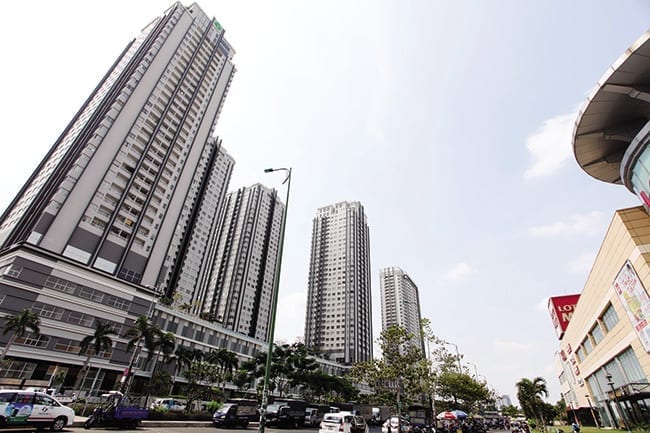
  • Vinhomes’ shares jump 20 percent shortly after listing on Vietnam’s stock market

    Vinhomes’ shares jump 20 percent shortly after listing on Vietnam’s stock market

    Vinhomes JSC, the residential property developer of Vietnam’s biggest conglomerate Vingroup, saw its share price rise 20 percent from VND92,100 to VND110,500 ($4.85) per share in its first trading session after it was officially listed on the Ho Chi Minh Stock Exchange (HoSE) on Thursday morning.

    The company put 2.68 billion shares on Vietnam’s main bourse HoSE, and by Thursday afternoon, its market cap jumped to more than VND296 trillion ($12.9 billion).

    This means Vinhomes is now the company with second biggest market cap on the country’s stock market, standing behind its parent Vingroup, which is currently valued at VND333 trillion.

    An initial equity offering of Vinhomes JSC, the residential property development unit of Vingroup JSC, raised about $1.35 billion in Vietnam’s biggest ever issue, sources said earlier this month.

    Existing Vinhomes investors were selling about 268 million shares, or 10 percent of the firm’s equity capital, at VND114,700 ($5.03) each, versus an indicative range of VND110,500-114,700, said the sources, who are familiar with the matter but did not want to be named as terms of the pricing were confidential.

    This eclipsed an equity offering from Vietnam Technological and Commercial Joint Stock Bank, or Techcombank, which raised about $920 million last month.

    Vingroup JSC has been looking to raise as much as $2 billion from the listing of Vinhomes.

    Last month, Singapore wealth fund GIC came in as a pre-IPO investor and took a roughly 7 percent stake in Vinhomes for about $853 million by buying shares from Vingroup and other shareholders, sources said.

    Vinhomes’ first-quarter net profit jumped five times from the same period last year to VND3.99 trillion, and revenue surged three times to VND10.54 trillion, its financial statements showed.

  • Hanoi approves plan for 203ha hi-biotech park

    Hanoi approves plan for 203ha hi-biotech park

    Ha Noi City’s People’s Committee has approved the adjustments of detailed planning for Ha Noi’s hi-biotechnology park in Tay Tuu, Lien Mac, Minh Khai and Thuy Phuong wards, Bac Tu Liem District.

    According to the approval, the hi-biotech park has a land area of ​​more than 203ha, including areas for the resettlement of about 1,000 people.

    The research area, located in the green belt of the Nhue River, will provide an open space, an ecological park that combines the functions of scientific research and the essential utility of the research environment.

    The Ha Noi hi-biotechnology park is being funded by Ireland’s Pacific Land Limited with a total investment capital of US$250 million for technical infrastructure and a number of service buildings, high-rise apartments and dormitories; and $800 million for specialised equipment, such as laboratory investments, research centres and universities.

    The park is to be developed into a high-tech, modern economic and scientific zone, serving research, education, development, application of experimental production and hi-tech transfers.

  • Foreign real estate brokers expanding in Vietnamese market

    Foreign real estate brokers expanding in Vietnamese market

    In July, ERA Real Estate, a foreign broker, quietly opened five transaction points and one commercial office in the central business district of HCM City. The company now has 300 consultancy officers trained and certified in accordance with international standards.

    The broker revealed an ambitious plan to become the leading real estate distributor in Vietnam in the next five years with a network of 50 transaction offices in large cities and staff of 5,000 well-trained workers.

    To quickly adapt to the emerging market of Vietnam, the US broker decided to join hands with Eurocapital Group, an investment conglomerate which has had offices in Vietnam since 2008, to establish ERA Vietnam.

    Thanks to cooperation with the partner, the US broker, new in Vietnam, has approached high-end and luxury real estate projects developed by Vietnamese conglomerates, including Sun Group, CEO Group, MIK, Sacomreal and Kien A, and foreign developers, including Keppel Land and Sunwah Group.

    Foreign real estate brokers were once ‘the big fish in the little pond’ of Vietnam in 2006-2008, when the real estate market was ‘scorching hot’. They obtained the right to manage and distribute many large-scale projects because investors believed that foreign brokers would be more professional than Vietnamese. They included CBRE, Savills, Colliers International, DTZ, Cushman & Wakefield, Knight Frank, Coldwell Banker and JLL.

    However, later, when the real estate market stagnated, the operation of foreign brokers narrowed considerably. Aldy Vina, Setia and Coldwell Banker all withdrew from the market. CBRE and Savills are among the few foreign real estate service providers which stayed in Vietnam.

    Nguyen Khai Hoan from Khai Hoan Land said that the Vietnamese real estate market has been experiencing a difficult period with policies changing regularly and the market fluctuating all the time.

    “They have strong brands and good technology. However, the Vietnamese market is different from other markets with different conditions of material facilities and staff,” he commented.

    In such a context, Vietnamese brokers, which understand the market and follow a flexible way to approach clients, has gradually regained the distribution market. STDA alone in 2016 had 9,796 successful transactions.

    However, analysts commented that the best pieces of the cake still belong to foreign service providers which have stronger capability and experience. The services which bring high profits such as office, apartment and hotel management and leasing are managed by foreign companies.

  • Vietnam cosmetics manufacturers face thorny path to develop organic products

    Vietnam cosmetics manufacturers face thorny path to develop organic products

    A report on the cosmetics market released by Kantar Worldpanel shows that 80 percent of urbanites buy at least one beauty care product a year, with one-fourth of consumer spending on personal care items reserved for beauty care products.

    Oriflame, the brand from Sweden, reported a growth rate of 18 percent. L’Occitane doesn’t make public its revenue, but the presence of its products at nearly all shopping malls show its prosperity.

    Multinational conglomerates with factories in Vietnam such as Unilever, Kao and P&G have been thriving with products made of natural materials from Vietnam, such as green tea, cucumber, algae, aloe, honey, ginseng, lemon and pomelo peel.

    Analysts say that though foreign brands are dominating the market segment, Vietnamese cosmetics manufacturers still have opportunities to earn money in the field because they understand the functions of Vietnamese traditional herbs and can take initiative in the material supply.

    Vo Thi Lieu, director of the Vinh Tan Technology Company, which makes skin care products from trom tree (Sterculia foetida) resin, said in the first months after the products were marketed, the company sold VND300 million worth of products and now the sales growth rate is at least 20 percent.

    The company has spent big money to import a production line from Japan meeting GMP standards, with capacity of 43 million products per annum, because it believes the natural cosmetics market in Vietnam has great potential.

    Doan Van Khanh, director of Long Thuan Private Enterprise, said the company earns VND1 billion at least from the sales of pomelo blossom essential oil through online channels alone.

    Meanwhile, Christine Nguyet, director of Skina Cosmetics, said the sales of the company were growing 10 percent monthly.

    Though business has been thriving, Vietnamese manufacturers complain that they find it difficult to scale up their production scale.

    Nguyet said Skina only has enough materials for small production scale. To expand production, the company would have difficulties because it still cannot develop organic material areas, and imports of raw materials will increase the production cost.

    Pham Minh Thien, director of Co May Company, said he harbored a plan of making high-end products such as rice bran essential oil and lotus essential oil. However, the plan is still on paper.

    “In order to make organic products, we will have to find a stable supply of organic rice bran. But it is very difficult to find supply sources,” he said.

  • Vietnam to make $835 million on radical divestment bout

    Vietnam to make $835 million on radical divestment bout

    Drastic state divestment initiative

    The total revenue gained from state divestment activities in 2017 is expected to add at least VND19 trillion ($835.62 million) to the national budget. The above figure was calculated based on the par value of the portion of state capital that is expected to be withdrawn from 135 enterprises this year. However, the value calculated based on the price of shares on the stock exchange can go far beyond VND29 trillion ($1.28 billion).

    Among these, 26 enterprises are operating under the management of particular ministries and government bodies, 109 are local businesses, and four other businesses will be transferred to State Capital Investment Corporation (SCIC) for divestment.

    This is part of Decision No.1232/2017/QD-TTg approving the list of state-owned enterprises marked for divestment during 2017-2020, signed by Deputy Prime Minister Vuong Dinh Hue on behalf of the prime minister, dated August 17, 2017.

    However, this is not the final sum that the state can raise from divestment activities in 2017.

    Le Manh Hung, deputy director of the Enterprise Development Agency under the Ministry of Planning and Investment, said that the Decision No.1232/2017/QD-TTg adopted a drastic mechanism to not only accelerate the progress, but also improve the effectiveness of the work.

    “The prime minister has allowed ministries, related government bodies, and localities to speed up the execution of divestment plans and increase the rate of divestment compared with the approved annual minimum rate based on market developments and the actual situation at enterprises. The active role of ministries, government bodies, and localities to take action is clearly highlighted,” Hung commented.

    Moreover, the number of enterprises marked for divestment in the portfolio only illustrates the minimum target. Ministries and other government bodies may increase the number of enterprises to be divested earlier than planned for each year or propose additions to the list.

    “Apparently, the ultimate principles are still effectiveness, openness, and transparency. In particular, the total revenue from divestments at the end of the period must reach the goal approved by the prime minister,” Hung said.

    A challenging plan

    Looking at the divestment plan for 2017, great pressure is being placed on the shoulders of ministries, government agencies, and localities, especially the Ministry of Transport, the Ministry of Construction, the Hanoi People’s Committee, and the Bac Giang People’s Committee. These government bodies are in charge of divesting state capital in quite a number of businesses (around 7-17 enterprises) in about four months.

    Moreover, during the implementation of the plan for SOE restructuring from 2011 to 2015, the speed of state capital withdrawal had always been slow and could only meet requirements in enterprises with positive business performance.

    Meanwhile, several cases of divestment failed to follow market principles and were undertaken in many other forms, such as debt clearing or debt conversion into capital contribution.

    However, from a market standpoint, these numbers are not too challenging. Quite a lot of names are drawing great market interest. Investors are also keeping their money until a more appropriate rate of divestment is announced.

    Moreover, the principles of divestment have also been well-defined in accordance with market mechanisms. It is possible to divest these businesses in instalments several times, but the rate of divestment must lie in the range of 20-36 per cent of the total capital holding.

    This is the reason why the approved number of enterprises marked for divestment each year during 2017-2020 has surpassed the announced number of 375 enterprises.

    “Allowing ministries, sectors, and localities to actively follow market signals will attract more major investors and increase the feasibility and effectiveness of each sale. Of course, completing the plan remains a remarkable challenge which requires drastic efforts from ministries, related government bodies, and localities,” Hung openly admitted.

    Also, it must be added that the implementation of the divestment plan is part of the government’s goal to open up capital flows and boost growth. Hence, discipline is significantly prioritised.

    Thus, besides the divestment plan of 2017, other divestment plans in the coming years, especially in 2018, should be gradually activated from now to sustain the pace of progress.

    Valuable market opportunity

    It should be noted that the state’s capital holdings in the remaining 375 state-owned enterprises is worth approximately VND108.502 trillion.

    The list does not include other enterprises under the Ministry of Defence, the Ministry of Public Security, the Ho Chi Minh People’s Committee, SCIC, and other businesses which would perform divestments on their own as requested by the prime minister’s guidelines (Habeco, Sabeco, Central Transport Hospital…). It means the over-VND100-trillion ($4.4 billion) state-owned capital on the list to be sold in the upcoming period is just the minimum.

    It is worth saying that the first opportunity to transform and restructure the portfolio is not only significant, but also very profitable for both domestic and foreign investors who are interested in this market.

    This is the first time the government has published its investment portfolio and the proportion of state capital in SOEs to be sold. In addition, the 2016-2020 equitisation plan approved in Decision No.58/2016/QD-TTg has also been published with the book value of the recovered state equity reaching over VND296 trillion ($13.02 billion). Investors can clearly perceive the need to restructure the state’s portfolio of assets to prepare resources for replacement strategies.

    Investors, however, were not provided with sufficient data to grasp the opportunities offered during the previous bout of state-owned enterprise restructuring, as divestment activities were carried out individually without guidance from an overall portfolio.

    Also, this divestment plan is quite different from the state divestment strategies usually mentioned in 2011-2015. In this period, state-owned corporations and economic groups were forced to divest their investments into five sensitive sectors (real estate, securities, finance-banking, insurance, and investment funds), meaning the sales revenues might be kept in state-owned enterprises. These divestment activities only changed the investment portfolio of SOEs.

    However, this time, together with the promotion of SCIC’s divestment of state capital in equitised firms, the divestment of the remaining state-owned enterprises will actually change the state’s portfolio of assets. In addition, this time, the state seeks to sell its stakes to raise revenue for the national budget, which will be allocated to public investment projects in turn, whereas the revenues from previous divestments could have been held back in the enterprises and might eventually increase the proportion of state capital in the business.

    Inevitably, the distribution of asset accumulation by economic sectors will follow a direction in which the private sector will continue to expand.

    “This is one of the goals pursued by restructuring of state-owned enterprises. This is also the message that the market is waiting for,” said Nguyen Dinh Cung, director of the Central Institute for Economic Management.
  • Aeon Mall Hai Phong Le Chan breaks ground

    Aeon Mall Hai Phong Le Chan breaks ground

    Aeon Mall Vietnam has started construction work on a mixed-use complex in the port city of Hai Phong, its third outlet in the north.

    A groundbreaking ceremony for Aeon Mall Hai Phong Le Chan was attended by Vietnamese Prime Minister Nguyen Xuan Phuc. Covering 9.3ha, the mall is the sixth of its kind for Vietnam, and is scheduled to be opened in 2020. It is expected to generate about 2500 jobs.

    The Japanese company expects its mall to attract more than 13 million visitors a year, from not only Hai Phong but also nearby provinces.

    The groundbreaking ceremony coincided with the 63rd anniversary of the establishment of the northern Vietnamese city. “We are honoured to be one of the key projects to celebrate this occasion,” says Aeon Mall Vietnam general director Iwamura Yasutsugu.

    Aeon Mall Vietnam, which has two outlets each in Hanoi and Ho Chi Minh City, and another in the southern province of Binh Duong, plans to have a total of 20 locations by 2025.

    Its first Vietnamese outlet, Aeon Tan Phu, opened in Ho Chi Minh City in 2014.

  • E-commerce giants struggle to find profit in Vietnamese market

    E-commerce giants struggle to find profit in Vietnamese market

    Some companies have been forced to shut down due to prolonged losses. Multiple online retailers in Vietnam have been struggling to gain profits for years due to high operational costs in a competitive market.

    Tiki.vn, one of the most popular e-commerce firms in Vietnam, recently reported a VND322 billion ($14 million) loss in two years.

    The loss in 2017 of the online retailer, which sells a variety of products including clothes, household items and electronic devices, has tripled its charter capital and is seven times its loss in 2016.

    Tiki.vn is not the only e-commerce company in Vietnam that has been suffering from losses in recent years.

    Before being acquired by the Chinese giant retailer Alibaba in 2016, Lazada Group said that it has lost $334 million in 2015 the Southeast Asia market, including Vietnam. This lost is double what it posted in 2014, according to TechCrunch.

    Some local e-commerce companies like Lingo.vn, Deca.vn and Beyeu.com have also been forced to shut down due to prolonged losses.

    Challenges for online retailers

    According to experts, e-commerce is an industry which requires a long time to recover capital and gain profit, therefore the losses of these giants in the Vietnamese market is understandable. Big brands in the field such as U.S.-based Amazon and Alibaba has to go for 10 years before having profit.

    Operating cost, especially logistics costs, is one of the main reasons for the losses. As large e-commerce firms often require massive warehouses covering thousands of square meters and hundreds of staff to work in them, logistics costs account for 60-70 percent of online retailers’ revenues, said trade expert Vu Vinh Phu.

    This enormous cost can be seen from the case of Tiki and Lazada Vietnam, each has a storage of over 4,000 square meters (about 1 acres) with 300 staff in Ho Chi Minh City. It is estimated that the operating cost of one of these storages is VND1 billion (about $44,000) a month. With three warehouses in operation, the two companies spend about $2 million a year, according to local media.

    In addition, marketing also plays a part in the high costs of e-commerce companies in Vietnam. When entering the market, Lazada Vietnam invested heavily in television and online advertising to attract users and gain market share. This company used to spend up to $2 million per month for advertising programs, local media said.

    The popularity of shopping on social networks such as Facebook or Zalo is also creating challenges for big online retailers. “There is an unbalanced competition between e-commerce giants such as Lazada, Tiki and Shopee with social network sellers,” said Pham Thai Binh, head of retails at property consultancy Savills Ho Chi Minh City.

    As businesses on social networks don’t have to pay high costs of investment, item price range is lower which in turn attracts the majority of Vietnamese people, Binh said. On the other hand, famous brands have to invest a great deal in terms of staff, operating system and other relating costs, he added.

    As Vietnamese has a habit of physically “touching” a product, they often surf the Internet for prices without actually ordering from the online retailers. The lack of information and customer service tools also plays apart in the problem.

    To compete in the market, retail giants in Vietnam are under pressure of price competition which leads to a loss of profit. Under pressure from investors, many businesses sometimes accept to sell 10 or 20 percent below market price, local media said.

    Potential market

    Despite those difficulties, experts believe that there is still great potential for e-commerce in Vietnam in the future.

    In a survey of about 1,000 participants conducted by CBRE Vietnam, a commercial real estate services and investment firm, 25 percent said that they will reduce the frequency of shopping at stores. About half of participants said that they will shop online more in the future.

    In the annual survey of Vietnam’s Business Studies and Assistance Center (BSA), the number of people shopping online has tripled from 0.9 percent in last year to 2.7 this year. As young people start to participate more in online shopping, e-commerce is a potential area for retailers to exploit, which will bring many benefits to customers, said a representative of BSA.

    E-commerce is a fast growing industry as customers’ behavior change every day, said Tran Tuan Anh, CEO of the online retailer Shopee Vietnam. “This year will be the year of e-commerce as Vietnamese people are now very familiar with online shopping,” he said.

    Price will continue to be an important factor for Vietnamese customers, but product quality and service are becoming more important, he said. As more and more consumers are aware of e-commerce, the brand, service, technology and value added services such as shipping and payment will need to be improved, Anh said.

    Tran Ngoc Thai Son, CEO of Tiki, also believes that the transition from traditional to online shopping is inevitable. E-commerce, now accounts for 3 percent of the $90-billion revenue of Vietnamese retail market, will grow to a 5 or 10 percent segment in the future, Son said. However, online shopping will not be able to replace brick and mortar businesses, he said.

    “The growth rate of Vietnam’s e-commerce market is estimated at about 35 percent, which is 2.5 times higher than Japan,” said industry expert Duc Tam at the Vietnam Online Business Forum 2017.

    According to one estimate, about 30 percent of the population will be buying goods and services over the internet in 2020, with each shopper spending an average of $350 per year.

  • Convenience stores in Vietnam quadruple in six years

    Convenience stores in Vietnam quadruple in six years

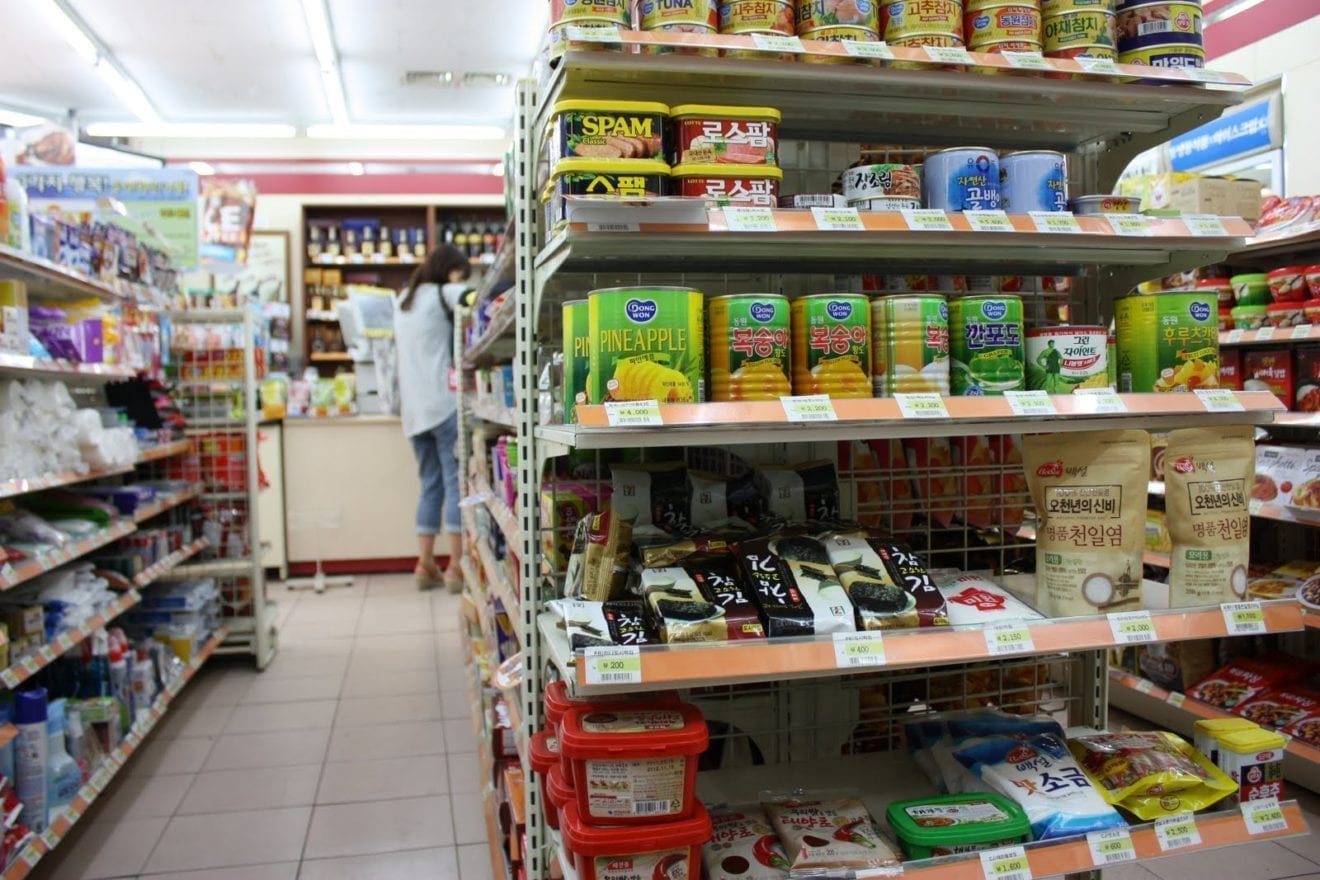
    The number of convenience stores in Vietnam has quadrupled over the last six years, according to global data analytics firm Nielsen released at a press conference on Thursday.

    “Convenience stores in Vietnam have become popular destinations for young consumers to shop and hang out, as the stores provide them with an air-conditioned environment, well-organized shelves and seating areas, high quality products and, in some stores, free Wi-Fi. It is also easier to get licenses for stores under 500 square meters, which is why retailers have been expanding to gain market share,” said Nick Miles, head of Asia-Pacific at international grocery research organization IGD last month.

    “Thanks to the rapid increase in the number of stores, modern trade has a much higher growth rate than traditional trade in Vietnam,” said Nielsen’s executive director Nguyen Anh Dung, as heard in the press release.

    The number of modern urban trade stores in Vietnam increased by 10.7 percent on-year during Q1 2018, compared to a decrease of 2.6 percent for traditional stores, according to Nielsen’s Market Pulse report, which looked at 31 fast-moving consumer goods categories in Vietnam.

    Dung also said that the number of stores which focus on beauty and health products has doubled over the last two years in Vietnam.

    “We also expect the number of small-scale supermarkets in Vietnam to significantly grow in the future,” said Dung.

    As of the end of March, Ho Chi Minh City has over 1,800 convenience stores and small-scale supermarkets, an increase of 5.1 percent compared to last year, said a Q1 report on Vietnam’s property market by Chicago-based real-estate firm Jones Lang LaSalle.

    Vietnam is forecast to be the fastest-growing convenience store market in Asia by 2021 with a growth rate of 37.4 percent, according to IGD, followed by the Philippines and Indonesia.

  • Vietnam’s communist heart Hanoi gets its first McDonald’s

    Vietnam’s communist heart Hanoi gets its first McDonald’s

    Global burger behemoth McDonald’s opened its first branch on Saturday (Dec 2) in the historic heart of communist Hanoi, a conservative city renowned for its traditional – and cheap – Vietnamese staples beloved by food-obsessed locals.

    Hungry customers lined up for Big Macs and Chicken McNuggets at the Vietnamese capital’s first location overlooking the tree-lined Hoan Kiem lake, which draws millions of tourists annually to see French-era colonial buildings and sample street-food favourites like pho noodle soup and banh mi sandwiches.

    The restaurant is the first outside of the southern commercial hub Ho Chi Minh City, where 16 branches have opened since McDonald’s first came to Vietnam in 2014 to much fanfare, especially among the rapidly-growing middle class and American-obsessed youth.

    The global fast food chain received a similarly warm welcome in Hanoi on Saturday, as hungry diners crammed into the two-storey eatery for a first taste of the Golden Arches.

    For 84-year-old Tran Dinh Luyen, who fought against the US in the Vietnam War, the restaurant was a sign of warming ties with a former enemy.

    “I am happy that McDonald’s has opened a restaurant in Hanoi. It’s a very famous American brand, so it shows how far US-Vietnam relations have come,” he told after mowing down on a Big Mac with his daughter and granddaughter.

    But not everyone agreed.

    “It’s a rip-off… this fast food is for kids only, it’s not good at all,” 90-year-old Ta Xuan Huong said, espousing his love for traditional cuisine.

    Some curious tourists stopped to see what all the fuss was about, perplexed that a brand ubiquitous in the West would draw so much attention.

    “It’s kind of random to see McDonald’s opening… it’s an interesting cultural experience to see how important it is that the store is opening here,” American Dan Moore told AFP, after his wife remarked she might not have expected to find one of the most salient symbols of capitalism in the communist country.

    The one-party state has seen dizzying economic growth in recent years as it has opened its doors to foreign investment – which has included an influx of Western chains like Starbucks, KFC and Burger King.

    Growth in the fast food sector has been buoyed by rapidly rising incomes – annual per capita income has more than doubled in the past decade to about US$2,100 (S$2,692) today – especially among under-30s, who make up half of Vietnam’s population of 93 million people.

    The fast food industry in Vietnam has seen double-digit growth annually for the past five years, and the country has the highest 2017 growth in Asia-Pacific for fast food chains, according to market research firm Euromonitor International.

    Though meals can cost as much as three times the local fare, customers are still showing strong appetite.

    “Young people like to hang out in fast food restaurants as they are seen as a cool and nice place… and these customers also like the taste of the food,” Euromonitor analyst Samuel Huynh told.