Tag: Vietnam

  • Net profit slumps 92 per cent for GS Retail, raise questions

    Net profit slumps 92 per cent for GS Retail, raise questions

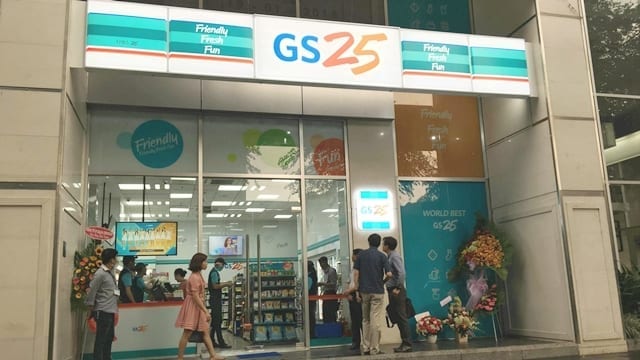
    GS Retail, which runs South Korea’s GS25 convenience store chain, is facing questions over its profitability after it posted contracted numbers in its earnings last year.

    According to its regulatory filing, GS Retail logged KW30.9 billion (US$28.4 million) in operating profit last year, down 19.3 per cent from 2016. Its net profit also skidded to KW10.7 billion, a  dive of 92.4 per cent.

    It has had slumps in its core business of convenience stores, which account for 70 per cent of its earnings.

    GS Retail last year posted KW1.57 trillion in sales from its convenience stores, up 6 per cent from 2016. The number of GS25 stores also increased from 12,199 to 12,429 last year.

    Despite this growth, the operating profit at its convenient stores declined by 6 per cent to KW37.1 billion during the same period. Per-store sales also shrank by 9 per cent.

    Saturated market

    Analysts say GS25’s weakening profitability is related to the saturation of the domestic convenience store industry.

    There are about 40,000 convenience stores in Korea. Between them, the main players – GS25, CU run by BGF Retail and 7-Eleven run by Lotte affiliate Korea Seven – have more than 30,000 outlets. This means there is one convenience store to every 1250 Koreans.

    Meanwhile, at the start of the year the government hiked the minimum wage rate by 16.4 per cent to KW7530, which is expected to add extra burden on franchise owners.

    Also, GS Retail has seen poor performance for its health and beauty products store chain. It has been the sole operator of Hong Kong-based Watsons in Korea since February last year.

    GS is hoping its earnings deadlock will be broken by its hotel and leasing subsidiary Parnas Hotel. This runs the Grand Intercontinental Seoul Parnas, the Intercontinental Seoul Coex and other hotels and malls in Seoul. It is also in charge of leasing Parnas Tower in Gangnam.

    Parnas Hotel logged KW75.4 billion in sales last year, up 15 per cent. Its operating profit also improved to KW17.1 billion, up 141 per cent as the leasing rate at Parnas Tower rose to 98 per cent.

    As part of its efforts to diversify revenue sources, GS Retail signed a memorandum of understanding with internet company Kakao last month for the development of a chatbot for the retailer.

    The company has also opened its first convenience stores outside Korea – in Vietnam’s commercial capital, Ho Chi Minh City, last month.
  • Starbucks opens first coffee store in Danang

    Starbucks opens first coffee store in Danang

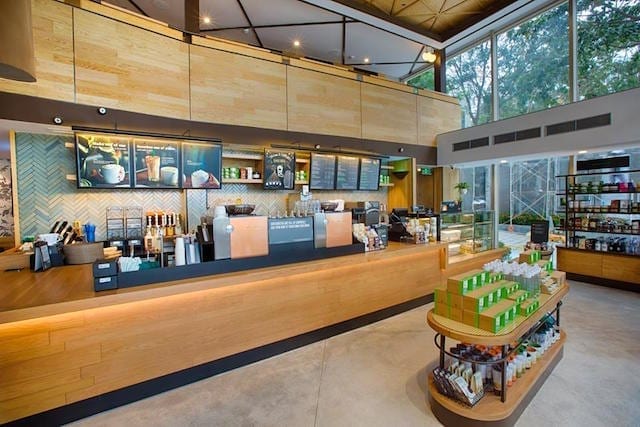
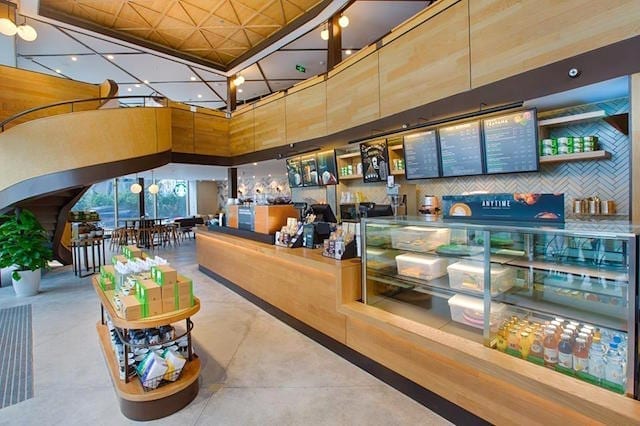
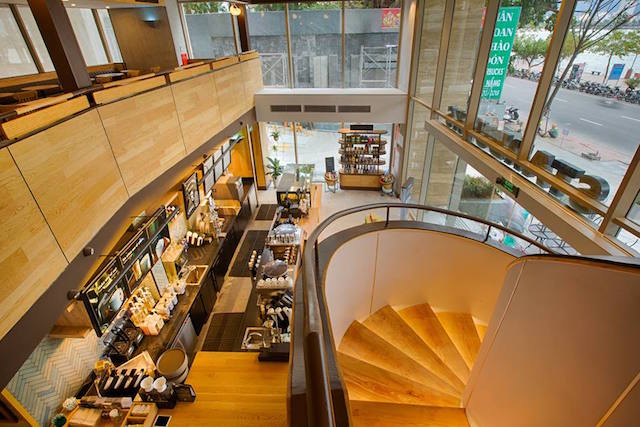
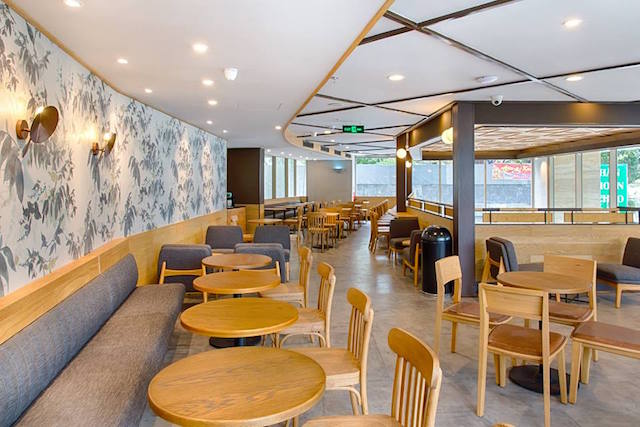
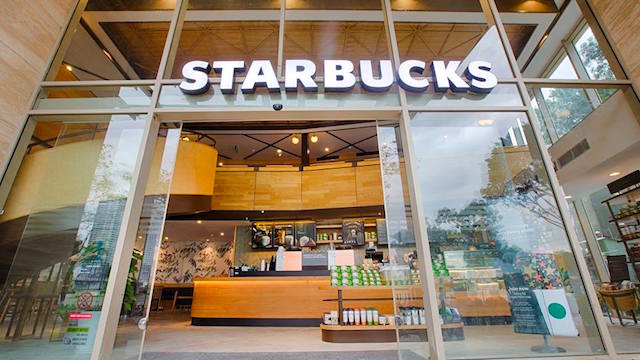
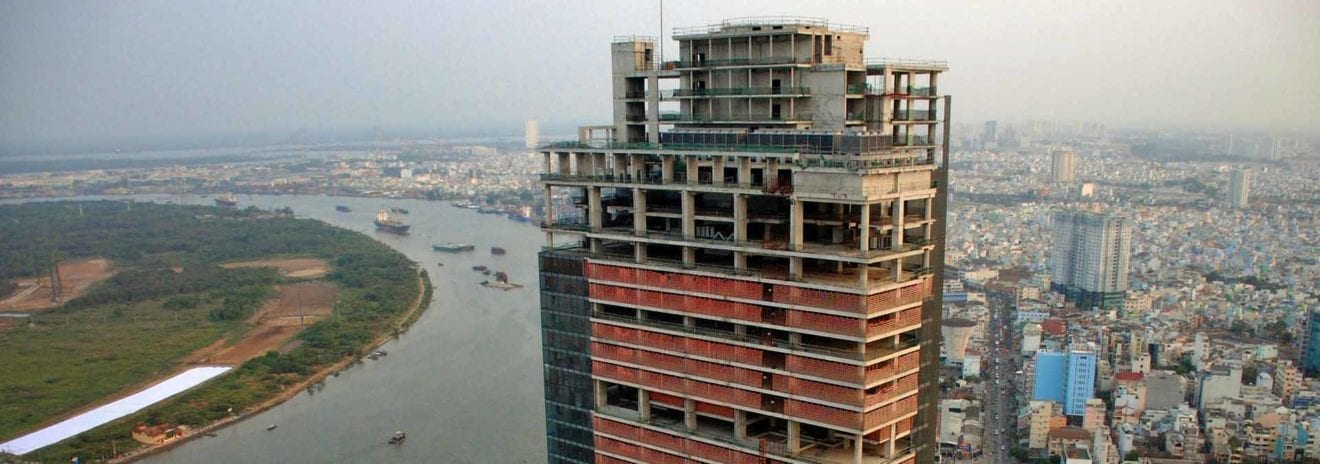
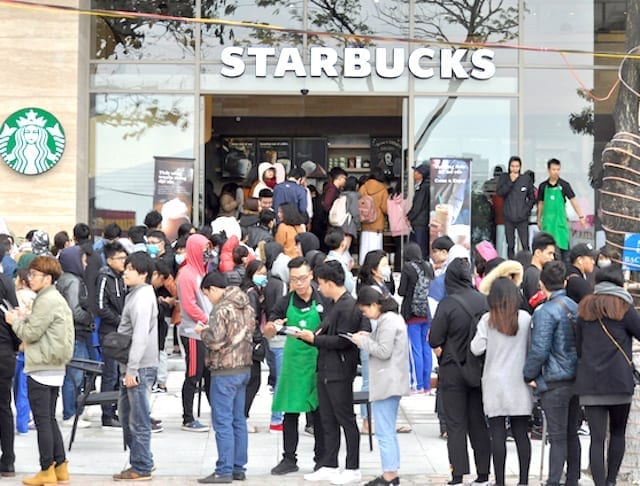
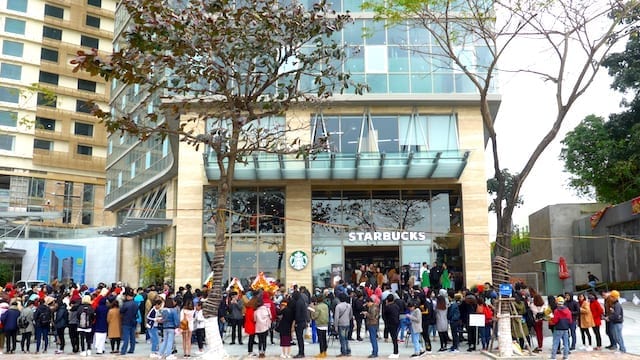
    While the Hilton hotel complex is still under construction in Da Nang, there was a queue all morning despite chilly weather when Starbucks Vietnam opened an outlet on the site on Saturday.

    Queue outside Starbucks on the cafe’s opening day at the unfinished Hilton Da Nang.

    On the ground floor of the unfinished building, it is the US coffee chain’s first outlet for the tourist city. Hilton has not yet released an opening day for its riverside hotel in Da Nang.

    Starbucks Vietnam GM Patricia Marques says the chain has further plans for this, its fifth year. It opened its first store in Ho Chi Minh City in February 2013 and this is its 35th outlet. It also has cafes in Hanoi and Hai Phong.


    To mark its fifth anniversary, Starbucks Vietnam is offering special prices with extra points under its Starbucks Rewards program.

    The company has also re-introduced its Starbucks Reserve Da Lat coffee, which first made an appearance in 2016.

  • Vietnam’s culture, tourist sites introduced at Brussels Holiday Fair

    Vietnam’s culture, tourist sites introduced at Brussels Holiday Fair

    Several Vietnamese companies have introduced Việt Nam’s cultural features, natural landscapes and cuisine to visitors at the 60th Brussels Holiday Fair that is being held in Belgium’s capital city from February 1 to February 4.

    At the event, representatives from Vietnam Airlines, the national flag carrier, have provided visitors with information on its inbound and outbound flights, especially air routes from Belgium and other European nations to Việt Nam.

    Vietnamese Ambassador to Belgium Vương Thừa Phong took the opportunity to promote the image of the Vietnamese land and people to Belgians and other international partners.

    Nguyễn Thị Dung Hạnh from the Gvietnamtravels Company said that this time her company was offering tours designed to fit the requirements of each group of customers and cater to all services, from visa application to buying flight tickets.

    According to her, Belgium is a promising market for Vietnamese travel agencies.

    At the event, several Belgian companies have also introduced their attractive tours to Việt Nam.


    Vietnam News Agency’s correspondent quoted Willy Somers, a representative of Belgian Lauwers Tourism Company, as saying that his company had introduced to its customers many tours from north to south Việt Nam that could be completed in 12 days to 15 days.

    He said the company’s customers have booked all the tours to Việt Nam departing next month.

    According to the plan, the company will conduct tours to Việt Nam throughout 2018, and this proves the Vietnamese market is interested in Belgian customers.

    Việt Nam welcomed nearly 13 million international tourists in 2017, up 29.1 per cent compared with the previous year, of which 1.9 million tourists were from Europe, including more than 29,000 Belgians.

    The 60th Brussels Holiday Fair is taking place from February 1 to February 4 in Brussels. This is a good opportunity for tour operators, airlines, hotels and tour operators in Belgium, as well as foreign partners to seek partners and business opportunities.


  • Massive expansion action by Phoenix Lava in Vietnam

    Massive expansion action by Phoenix Lava in Vietnam

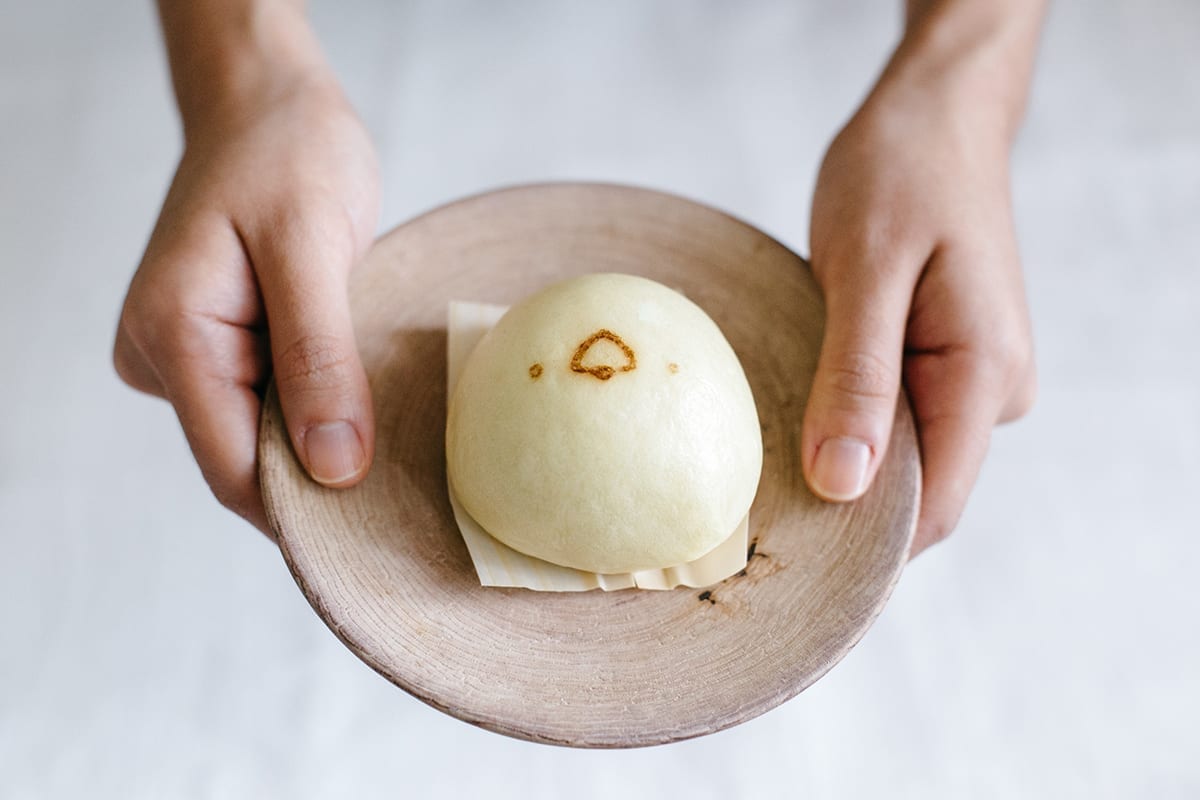
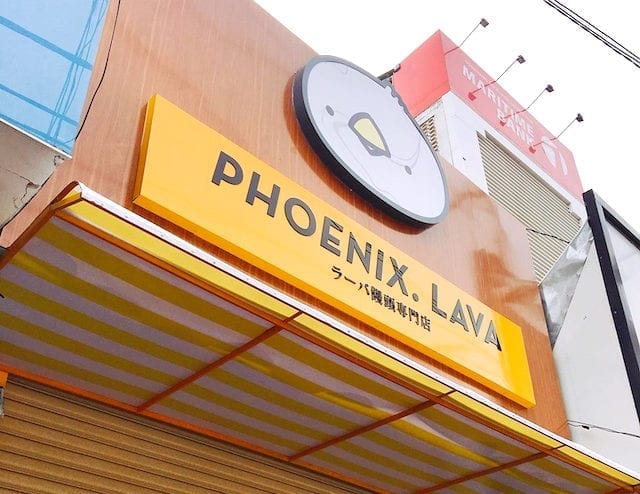
    Thailand’s steamed-bun chain Phoenix Lava has erupted in Vietnam, opening with four stores in Ho Chi Minh City.

    Its flagship store is in District 3 with the other outlets in Districts 1 and 5,  and one in the Vinhomes Central Park development in the Binh Thanh district.

    Inspired by Japanese-style lava buns and cakes, Phoenix Lava offers seven flavours for its phoenix-shaped buns – Uji tea, bamboo charcoal, chocolate, durian, cheese/bacon, pork and salted duck egg.

    Founded in 2013, the company has six branches in its homeland.

  • Vietnam property sales rise in January

    Vietnam property sales rise in January

    The domestic property market reported more sales in January compared to December 2017, according to the Ministry of Construction’s Housing and Property Market Management Department.

    It said that in January, Hà Nội had 1,650 transactions, an increase of 13.8 per cent and HCM City had 1,900, a rise of 8.6 per cent over December’s figures.

    In Hà Nội, many housing projects have been completed and offered with attractive trade promotion programmes. The offerings are in the high- and mid-end segments and are located in convenient places. There are many kinds of area and payment methods can be flexible, the department said.

    Some projects had many sales in January, including Season Avenue, Hà Đông; An Bình City-Bắc Từ Liêm; Sunshine Riverside Tây Hồ and Romance Plaza, Hà Đông.

    Average offered price of an apartment in January rose 0.14 per cent against the December price. Of which, the price surged 0.17 per cent for high-end apartments, 0.05 per cent for mid-end apartments and 0.56 per cent for affordable apartments.

    Price of house on land had an increase of 0.24 per cent compared with December.

    Liquidity on the HCM City property market also increased in January. High- and mid-end apartment segments reported many sales.

    Customers paid attention to apartments having one or two bedrooms and price at about VNĐ1 billion (US$44,000) per unit, but the supply was low.

    Projects reporting many transactions included New City Thủ Thiêm, District 2; Saigon Intela-Bình Chánh District; and Melosa Garden, District 9.

    Average selling price increased 0.24 per cent for apartments and 0.81 per cent for house and land.

    The price declined 0.05 per cent for high-end apartments, but rose 0.33 per cent for mid-end apartments and 0.53 per cent for affordable apartments.

    The department said that by January 20, the value of the property inventory stood at VNĐ25 trillion, a drop of 19 per cent from the previous month.

    The value of property inventory in January was VNĐ5.27 trillion in Hà Nội, VNĐ19 billion lower than the value in December.

    In HCM City, the property inventory was VNĐ4.62 trillion, a fall of VNĐ47 billion.

    According to the State Bank of Việt Nam’s report, total outstanding loans in the property sector reached VNĐ446.36 trillion in the third quarter of 2017, a quarter-on-quarter increase of 2.1 per cent.

    Resort property

    The department also had a report on development of resort property, the hot spot on the property market.

    In the report, the Ministry of Construction appraised 71 “condotel” and “officetel” projects that have been built nationwide since 2015. .

    Meanwhile, provincial and municipal authorities have given licences to develop many more projects.

    However, many difficulties have arisen over investment, construction, trading and management of operation for those projects, the department said.

    Therefore, the ministry has proposed that the Prime Minister direct ministries to solve them.


  • Vietjet IPO wins prestigious award for “Best Vietnam Deal” in 2017

    Vietjet IPO wins prestigious award for “Best Vietnam Deal” in 2017

    Vietjet Aviation Joint Stock Company (HOSE: VJC) has received the “Best Vietnam Deal” award from Asia’s leading publication, FinanceAsia, for its IPO held early 2017.

    The prestigious award not only highlighted Vietjet’s highly successful IPO but also the airline’s subsequent performance for the rest of the year, which boosted the position of Vietjet in particular but also Vietnam-based companies on the global capital market in general.

    The presentation ceremony for the FinanceAsia Awards, one of the world’s leading awards for the regional finance industry, took place at the Grand Hyatt Hong Kong on January 31, 2018. Mr. Chu Viet Cuong from the Vietjet Board of Directors represented the airline to receive the coveted award.

    Leading “a series of successful deals” in 2017, Vietjet’s US$164 million IPO was professionally conducted, involving the consultation of world-renowned law firms and financial institutions for a period of nearly 800 days (due on the listing date, February 28, 2017), and following all the international IPO standards Regulation S.

    Earlier, Vietjet was also awarded for “The IPO Deal of the Year 2017” and named “The Company with Best M&A Information Disclosure” at the M&A Awards 2016-2017 Vietnam as part of the Vietnam M&A Forum 2017 in Vietnam.

    The airline’s 2016 annual report also received a Platinum Award in early 2017 at the Vision Awards 2016 organized by the League of American Communications Professionals (LACP) which ranked Vietjet fourth out of all awardees from the Asia Pacific region and 11th out of 100 worldwide participating businesses. Themed as “the flight to the future”, the 150-paged annual report received top scores for sub-categories, including First Impression, Letter to Shareholders, Report Financials and sustainable development programs.

  • Many Korean goods to receive Vietnam tax exemption

    Many Korean goods to receive Vietnam tax exemption

    Many goods imported from the Republic of Korea (RoK) into Việt Nam will be exempted from import taxes in 2018, due to the Việt Nam-Korea Free Trade Agreement (VKFTA).

    The Government recently issued Decree No149/2017/NĐ-CP, which regulates a new special preferential import tariff, as agreed upon in the VKFTA, and to be put in place between 2018 and 2022.

    Under the decree, import taxes imposed on 704 types of products imported from the RoK to Việt Nam, will be eliminated in 2018. The groups of commodities that will enjoy tax exemptions this year are mainly in seafood, wheat flour, confectionery, diesel fuel, jet fuel, paint, laundry detergent, plastic, iron and steel products, power machinery and equipment, and electronic products.

    In 2018, an additional 653 products imported from the RoK will also have their tax rates lowered from last year.

    The preferential tax rates will be applied to commodities directly transported from the RoK to Việt Nam. The goods must also meet origin regulations, as stated in the agreement, and exporters must provide certificates of origin in a form stipulated by the Vietnamese Ministry of Industry and Trade.

    This year, Việt Nam has set several new preferential import tariffs to implement bilateral and multilateral FTAs with partner countries and territories, such as mainland China, Hong Kong, Japan and RoK.

    Under the Việt Nam-Japan Economic Partnership Agreement (VJEPA) and the ASEAN-Japan Comprehensive Economic Partnership Agreement (AJCEP) for 2016-19, nearly 4,000 import tariff lines for many groups of commodities imported from Japan will be also eliminated this year.


  • Innisfree Vietnam to set footprint in online presence

    Innisfree Vietnam to set footprint in online presence

    Innisfree Vietnam today launches its first official online store, on Lazada.

    The South Korean cosmetics brand is offering its full range of products on the site, including bodycare, make-up tools, skincare and men’s categories.

    Online customers will be offered frequent promotions as well as gifts for bulk orders, says Innisfree.

    In its two years, Innisfree Vietnam has opened three stores in Vietnam, all in Ho Chi Minh City.

  • Vietjet 2017 pre-tax profit reaches approximately USD209 million

    Vietjet 2017 pre-tax profit reaches approximately USD209 million

    Vietjet Aviation Joint Stock Company (HOSE code: VJC) announced its consolidated pre-audited financial statement report for 2017 with all indicators growing strongly compared with 2016 and exceeding the plan approved at the company’s Annual Shareholder Meeting.

    Specifically, total net revenue in 2017 reached nearly VND42,258 billion (USD1.86 billion), an increase of 53.7% year on year and exceeded the annual plan by 0.6%. Pre-tax profit stood at approximately VND4,755 billion (USD209 million), up 75.9% year on year and achieved a 126% increase over its yearly plan. After-tax profit of parent company’s shareholders reached VND4,527 billion (USD199 million), equivalent to VND10,065 (USD0.44) earning per share (EPS).

    Thanks to the expansion of its fleet by 17 aircraft in 2017 (including a modern A321 NEO – the first Airbus A321 NEO in Southeast Asia), Vietjet opened 22 new routes (one domestic and 21 international ones), increased its total operating routes to 82, including 38 domestic and 44 international ones. Vietjet carried over 17.11 million passengers in 2017. Air transportation revenue of the year was VND22,577 billion (USD995 million), up 41.8% year on year and exceeded the yearly plan by 4.6%.

    Up to December 31st, 2017, its total fleet consisted of 51 Airbus A320 and A321 aircraft. Vietjet received 39 aircraft out of the total of 219 aircraft ordered from Airbus and Boeing. On time performance in 2017 was 85.59%.

    Cost per available seat kilometers (CASK) excluding fuel decreased to 2.25 US cent, reduced by 7.3% year on year and at the lowest in the world due to the efficient cost control in 2017. CASK including fuel decreased by 2.27% to 3.79 US cent.

    In 2017, Vietjet paid 10% cash dividend, 40% share dividend for 2016 and advanced 20% cash dividend payment for 2017. With its positive business results, Vietjet has increased its 2017 dividend payment from 50% to 60% and

  • New shopping center opened in Ho Chi Minh City

    New shopping center opened in Ho Chi Minh City

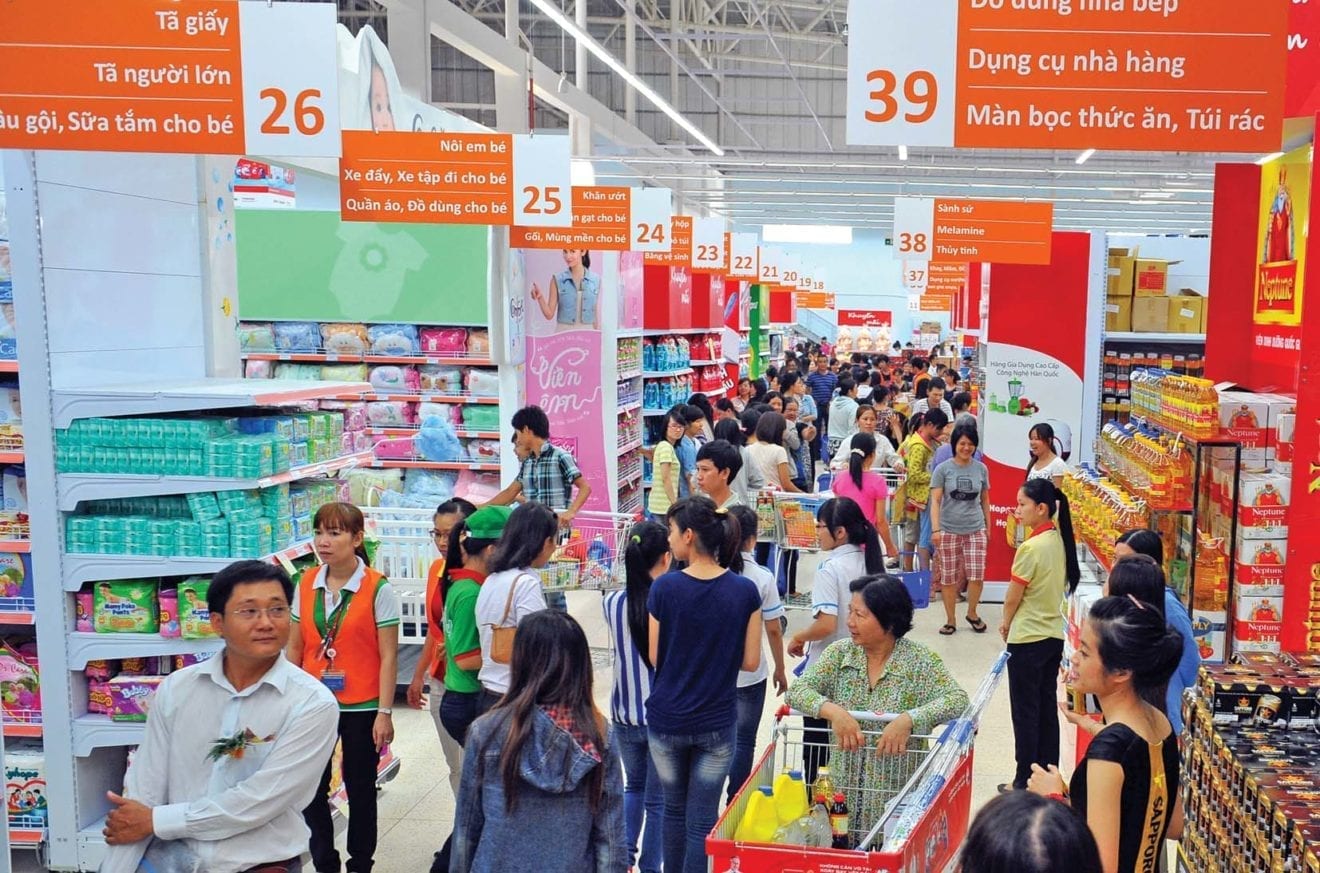
    Vietnam’s newest shopping centre, Van Hanh Mall, has opened in Ho Chi Minh City, on Su Van Hanh Street in District 10.

    Built on a 90,000sqm site, the shopping complex has 55,000sqm of retail space, which is 90 per cent occupied already, by more than 200 international and local brands.

    Tenants include Bata, Charles & Keith, Levi’s, Mujosh and Nike and a raft of dining options, including Buffalo Wild Wings, Crystal Jade, Sushi Kei, Starbucks and Phuc Long coffee.

    For entertainment, there is a CGV multiplex cinema, a Superbowl amusement center and a giant European-themed bookstore.

    A Co.opXtra hypermarket, operated by Saigon Co.op and Singapore’s NTUC FairPrice, also opened, marking the brand’s third outlet in the city.

    There are nine parking floors from basement to fifth floor, enough space for 350 cars and 3000 bikes.

    Built at the cost of VND1 trillion (US$43.9 million), Van Hanh mall rentals range from US$30-60 per sqm.

  • Korea’s PK Market to enter the US market

    Korea’s PK Market to enter the US market

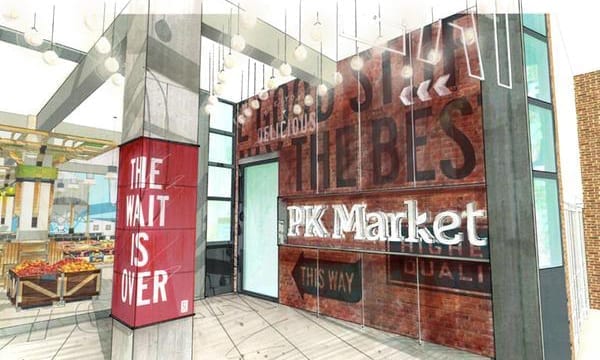
    Shinsegae’s discount chain E-mart plans to enter the US by opening its premium food outlet PK Market.

    While mostly high-end products will be sold at the South Korean group’s outlet, some of its low-tier private brands such as No Brand and Peacock will also be offered.

    E-mart is eyeing cities with significant Asian communities, such as Los Angeles and San Francisco. It may also acquire a food factory in Portland, Oregon, for producing its Peacock products for the US.

    E-mart has also joined hands with US shopping mall giant Taubman, which helped establish Starfield shopping malls in Korea.

    The Korean company has been trying to diversify its global reach, particularly after closing down stores in China over the THAAD row. Its accumulated operating loss in China has reached more than KW150 billion (US$141 million) since 2013, according to industry sources. E-mart finally exited the Chinese market last month.

    Meanwhile, the company plans to open its second outlet in Ho Chi Minh City in May.

  • Japanese firms mull over expansion plans in Vietnam

    Japanese firms mull over expansion plans in Vietnam

    Việt Nam maintained its position as an important investment destination for Japanese companies, with some 70 per cent of operational Japanese-invested firms making plans for business expansion here.

    This information was revealed by Hironobu Kitagawa, chief representative of Japanese External Trade Organisation (JETRO), in Hà Nội, at a meeting with the Ministry of Industry and Trade on January 29.

    According to the latest survey conducted by JETRO on the operation of Japanese firms in Asia and Oceania, 65.1 per cent of Japanese businesses operating in Việt Nam reported profits, up 2.3 points over the 2016 survey.

    Some 70 per cent of Japanese firms have mulled over expansion schemes in Việt Nam given the country’s market size, growth, stable political and social state of affairs, and cheap labour cost.

    This was a high rate in comparison with other countries where JETRO conducted the annual survey, Kitagawa said. “Việt Nam continues to be an important investment destination for Japanese businesses.”

    However, the head of JETRO in Hà Nội also pointed out the risks in the investment climate, concerns and obstacles that Japanese enterprises are facing during the investment process in Việt Nam.

    The latest survey was conducted with nearly 12,000 Japanese enterprises in 20 countries and territories in Asia and Oceania from October 10 to November 10, 2017. In Việt Nam, 1,345 Japanese firms participated in the survey.

    The full report will be made available next week.

    According to Deputy Minister of Industry and Trade Đỗ Thắng Hải, the survey provides comprehensive and objective information to help the Vietnamese Government and ministries to make effective and practical policies.


  • Vingroup eyes stake in mobile device retailer Vien Thong A

    Vingroup eyes stake in mobile device retailer Vien Thong A

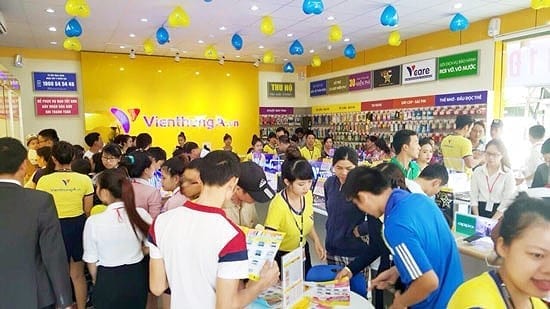
    VinPro, the electronics retail arm of Vietnamese conglomerate Vingroup, may invest in mobile device retailer Vien Thong A.

    However, Vien Thong A GM Hoang Ngoc Vy has denied the media reports, before enigmatically adding that further information would be forthcoming.

    VinPro was launched in March 2015 as part of the property giant’s foray into the nation’s US$4.5-billion electronics retail market. It has two brands: VinPro for big stores in Vincom Retail’s shopping malls, and VinPro+ for smaller stores.

    Established in November 1997, Vien Thong A has nearly 200 stores across Vietnam and 100 warranty centres.

    Vietnam’s electronic and electrical appliances market is expected to expand by 11.9 per cent by 2020, according to Boston Consulting Group and consumer information company GFK Vietnam.

    Meanwhile, the market is dominated by FPT Retail and Mobile World, which has just acquired about 95 per cent of Hanoi-based Tran Anh Digital World. Earlier, Thailand’s Central Group bought a 49 per cent stake in electronics retailer Nguyen Kim Trading.

  • Vinamilk set to expand abroad

    Vinamilk set to expand abroad

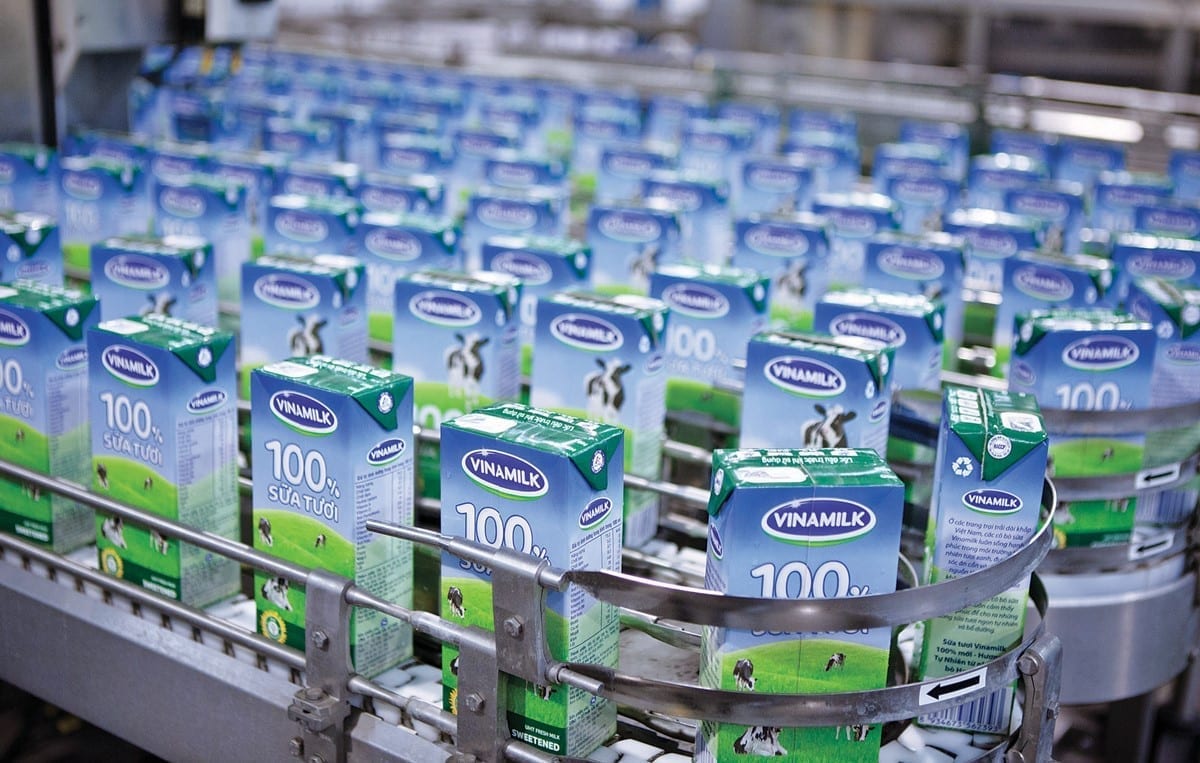
    Dairy giant Vinamilk will continue to expand abroad, especially in emerging market like Laos and Myanmar, this year.

    “Vinamilk will build a plant in Myanmar and an organic cow farm of several thousand hectares in Laos this year,” Đỗ Thanh Tuấn, the company’s PR director, told a press conference in HCM City on Thursday.

    All procedures have been completed for the farm, which will be just 100km from another Vinamilk farm in the central province of Nghệ An.

    “We will expand our [farms in Việt Nam] to meet demand.” Tuấn said.

    Now dairy production in the country only meets 35 per cent of the demand.

    “Vinamilk can collect 750 tonnes of fresh milk from its 10 farms and 8,000 farming households daily, and that is enough to meet the national demand for pasteurised milk,” Tuấn said.

    The company already has plans in place to process coconuts for export, especially to the United States.

    “Việt Nam has huge potential in coconut products, but only one domestic company, TTC, is exporting them. We recognise that demand for coconut products in the US is huge, and Vinamilk decided to enter the market and a large raw material supply area will be set up soon in the southern province of Bến Tre.”

    In the last 20 years, 2017 was the first time the company’s exports declined due to political fluctuations in the Middle East, a big market for it, he said.

    “We only achieved 67 per cent of the year’s export target, but thanks to an immediate change in strategy to focus on the domestic market, Vinamilk’s turnover still increased by 10 per cent from 2016.”

    At the end of last year, the company also marked its presence in the sugar industry by acquiring a 65 per cent stake in the Khánh Hòa Sugar Company for nearly VNĐ1 trillion (US$44 million) and changing its name to the Việt Nam Sugar Joint Stock Company (Vietsugar).

    “Every year, Vinamilk consumes around 130,000 tonnes of sugar, but the price of sugar in Việt Nam is always 30-40 per cent higher than in neighbouring countries, especially Thailand.

    “We will be very active in producing sugar and even plan to triple the capacity of Vietsugar to 500,000 tonnes a year,” Tuấn said.

    He promised that the sugar made by Vinamilk would be cheaper than others’ and the company could take advantage of its 260,000 retail shops to sell the product.

    Last year, the company had a 58 per cent stake of the estimated $4 billion dairy market.


  • Vietnam phone exports to China surge eight-fold

    Vietnam phone exports to China surge eight-fold

    Customs data shows China became the second largest importer of phones and phone parts from Vietnam last year, just behind the European Union with US$11.96 billion, a year-on-year increase of 6.4%.

    Exports of the products to South Korea also rose by a staggering 45.4% year-on-year to US$3.97 billion and shipments to the United Arab Emirates edged up a slight 1.6% to US$3.89 billion.

    The report indicates Vietnam spent US$8.75 billion importing phones and phone parts from China and US$6.18 billion from South Korea last year, up 42.4% and 72.6% from a year earlier.

    Therefore, for these products alone, Vietnam ran respective trade deficits of around US$600 million and US$2.21 billion with China and South Korea.

    Notably, according to the report, China has accounted for around half of phone and phone part exports to Vietnam in recent years.

    Apart from hi-end gadgets of tech giants like Samsung, Apple and HTC, industry watchers said Chinese brands such as Oppo, Huawei, Xiaomi and Vivo have dominated the mid-end and feature-phone market segments.

    Although some major Korean phone producers like Samsung and LG have set up shop in Vietnam, many parts suppliers of these tech firms have yet to come to the country. Therefore, analysts forecast Vietnam will have to continue importing phone parts from the Northeast Asian nation this year.

    Customs data shows Vietnam exported phones and phone parts worth US$45.27 billion last year, a year-on-year increase of 31.9%, while the country saw a 54.8% rise in imports of these products at US$16.34 billion. The products made up over 21% of the country’s export revenue last year.