Tag: Vietnam

  • Vietnam urged to focus on making 2-wheel vehicles

    Vietnam urged to focus on making 2-wheel vehicles

    While the Ministry of Industry and Trade (MOIT) and experts have decided that Vietnam needs to develop an automobile industry of its own, other experts believe that the ‘automobile dream’ is ‘far away’ and that Vietnam should focus on making 2-wheel vehicles.

    After five years of joining the market, Pega has announced it has succeeded in making electric vehicles, becoming the first Vietnamese brand in 2-wheel vehicle manufacturing.

    Pega’s products now have 85 percent of component value made domestically. Its main factory, covering an area of 15,000 square meters, located in Song Khe – Noi Hoang IZ in Bac Giang province, is designed to make 40,000 products a month.

    Pega’s major partners, the suppliers of components, have factories in Ha Dong district in Hanoi, Vinh Phuc and Bac Ninh. They are all prestigious companies which ensure high quality products. Vietnam’s bamboo-made bicycles worth thousands of dollars have also been launched into the domestic market and exported.

    Luong Thi Phi Loan, director of the Thien Chi Community Support & Development Center, a business in Binh Thuan province that manufactures and exports bicycles, said 80 percent of materials used on the bike are bamboo. The company has received numerous orders from the US and Germany.

    Vietbamboo is also a successful bamboo bicycle manufacturer with products sold between VND15 million and VND40 million.

    Analysts said that Vietnam has great opportunities to manufacture 2-wheel vehicles. It has a highly rated ecosystem with experienced component manufacturers which can satisfy requirements in materials, manufacturing standards, quality control and testing.

    Vietnam is one of the biggest personal 2-wheel vehicle consumer markets in the world.

    Analysts believe that it will continue to be a lucrative market in the upcoming years as demand has been increasing.

    To implement the localization plan, at first enterprises need to master the design and research, then seek component suppliers.

    They can also consider either making products in Vietnam or outsourcing to the ‘world’s production base’ – China.

    The localization will allow enterprises to stabilize production, satisfy market demand in the long term, and provide reasonable post-sale services.

    This will settle a problem now that manufacturers change design regularly and users have to throw away used vehicles because they cannot find high-quality spare parts.

    Le Hoang Long, CEO of Pega, said Vietnam now has excellent capability of making 2-wheel vehicles. He can also see great opportunities to cooperate with technology partners like Bosch and Panasonic to make electric scooters with smart features.

  • Vietnam’s coffee export plunge could raise global supply concerns

    Vietnam’s coffee export plunge could raise global supply concerns

    Lower outflow from Vietnam, coupled with falling exports from Brazil, could reduce the downward pressure on prices created by ample stocks in importing nations. Vietnam’s coffee exports fell last month by more than a fifth from the same period last year, extending a downward trend that started in March following a smaller harvest this season and a higher ratio of low-quality beans, government data showed.

    June shipments fell 22.7 percent from a year ago to 122,200 tons, or 2.04 million 60-kg bags, based on Vietnam Customs data released on Tuesday.

    Lower outflow from the Southeast Asian nation, coupled with falling exports from top producer Brazil, could reduce the downward pressure on prices created by ample stocks in importing nations, according to the International Coffee Organization (ICO).

    Vietnam’s coffee export volume in May fell to its lowest in six months after growers finished harvesting 26.7 million bags from the 2016/2017 season in January, down 7.7 percent from the previous crop, based on a U.S. Department of Agriculture (USDA) report published in June.

    The exportable volume of coffee left in Vietnam at the start of this month stood at 7.56 million bags, down nearly 30 percent from the same time in 2016, based on customs data and USDA figures for output, carryover stock and consumption.

    “Exporters in Vietnam, especially FDI firms, do not face any shortages,” a Vietnamese trader based in the Central Highlands province of Dak Lak said.

    Vietnam’s coffee outflow has been dropping since March because several major exporters have reduced loading due in part to thinner supply on the domestic market, while a larger proportion of bad-quality beans have also eaten into the volume of exportable beans, the dealer said.

    Unseasonal rain between October and December last year in Vietnam’s Central Highlands coffee belt not only delayed the harvest but also raised the ratio of black and broken beans, which are counted as defects in export terms.

    June’s shipments brought Vietnam’s total coffee exports in the three quarters ending June in the current 2016/2017 crop year to 1.21 million tons, or 20.17 million bags, down 8.6 percent from a year ago, based on data compiled by the customs department. Vietnam’s coffee season runs from October to September.

    In Brazil, coffee exports from January to May fell 8.2 percent on-year ago to 12.7 million bags, the Brazilian Coffee Exporters Council (Cecafe) said in a report.

    Cecafe estimated the export volume in June at 2.05 million bags, down more than 16 percent from the same month in 2016.

    “The reduced Brazilian export volume could be compensated by shipments from other origins,” the ICO said, citing higher supplies from Colombia, Ethiopia, Honduras, Indonesia, Peru and Uganda.

    While the global coffee market remained well supplied last month, a residual risk of frost in Brazil may affect the outlook for the next crop and “possible outbreaks of coffee leaf rust in countries such as Honduras may raise supply concerns in the market”, the ICO said.

    September arabica coffee contract settled up 0.7 cent at $1.276 per lb on Wednesday, and September robusta also ended up $25, or 1.21 percent, at $2,097 per ton, as chart signals strengthened after four sessions of losses, Reuters reported.

    It said dealers were closely watching the July contract amid expectations of tightening supplies over the next few months.

    Robusta bean prices in Vietnam trailed the rise, advancing to VND44,900-45,100 ($1.98-$1.99) per kg on Thursday in Dak Lak, the country’s biggest growing province, from VND44,400-44,600 the previous day.

    Vietnamese robusta grade 2, 5 percent black and broken from the last harvest was being quoted at discounts of $40-$50 a ton to November robusta futures contract, while beans of the same grade from the next harvest due to begin in October were also offered at similar discounts to the January contract.

    On June 22, exporters switched their quotations to discounts of $10-$20 a ton to London’s futures, the first discounts offered since late April.

  • 7-Eleven sees success in Vietnam after failure in Indonesia?

    7-Eleven sees success in Vietnam after failure in Indonesia?

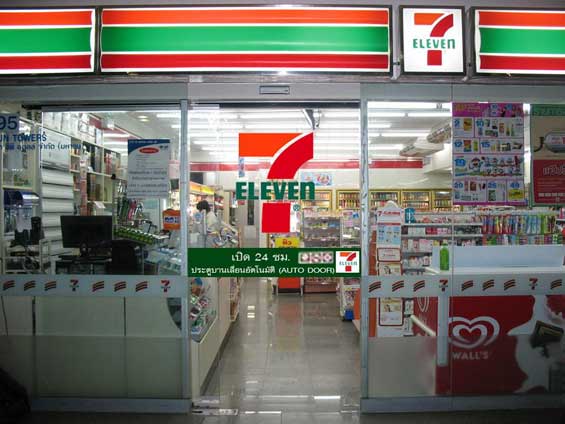
    After 7-Eleven’s initial success in the Vietnamese market, people are still questioning its long-term achievements as competition among different brands of convenience stores in Vietnam is getting more intense, and especially after 7-Eleven’s failure in Indonesia.

    Currently, people are less crazy about 7-Eleven after four new stores were opened within nearly a month. However, some people may still wish to experience this famous chain of convenience stores, while others who used to live abroad, especially in Japan, Thailand, and China, may not be too excited about 7-Eleven in Vietnam.

    At the middle of June, the debut of 7-Eleven in Vietnam lured great attention on newspapers and Facebook, there were even some rumours that customers were paid to queue in front of the first 7-Eleven store.

    In real life, there is not much talk about 7-Eleven, because they think that 7-Eleven stores are just like other convenience stores that have appeared in Vietnam in recent years, such as Ministop, B’s smart, Circle K, Vinmart+, and Shop & Go.

    Since three years ago, Nguyen Tan Minh, a communication employee at a big consumer goods corporation, said that he had not bought goods from traditional grocery stores or small shops on the pavements because he used to be sold the expired goods there, making him lose faith in these kinds of stores. Meanwhile, different chains of convenience stores are appearing everywhere, and the goods in these stores are regularly checked.

    In addition, buying goods in a 24-hour convenience store helps Minh to save time more than buying at a supermarket. Minh is a frequent customer of Ministop but he said that he would not hesitate to leave Ministop and buy in 7-Eleven if one opened closer to his home.

    “7-Eleven sells some kinds of homemade food that suit my taste, such as cakes or yogurt. I usually buy bread in this store for breakfast to save time,” Minh said.

    Besides, 7-Eleven attracts consumers by its own advantages, such as the various imported confectionery products. Specifically, 7-Eleven has a menu of 100 dishes which are cooked in Vietnamese style, and the menu changes every day. This is not only 7-Eleven’s advantage, but also a point of differentiation.

    However, the selling price at 7-Eleven is a little bit higher than some other stores. “This is not important, I love this store mainly due to its convenience,” Minh said and added that a little bit of difference in selling price does not originate from the popularity of a brand, but derives from the initial investment and lease fees.

    All four 7-Eleven stores are at prime locations in Ho Chi Minh City, the most populous and dynamic city in Vietnam. Still, consumers like Minh hope that after the early stage, the prices in 7-Eleven will go down.

    According to Minh, the only shortcoming of 7-Eleven is that there are few stores in the suburbs, so people in these areas must travel all the way to Saigon Trade Center at 37 Ton Duc Thang Street, District 1. However, this 7-Eleven store does not have its own parking lot for customers who drive motorbikes and it is such an inconvenience

    Factors behind 7-Eleven’s success

    Without aggressive advertising, numerous chains of convenience stores have silently entered the Vietnamese market in recent years, such as Circle K, B’s mart, Ministop, Shop & go, and Vinmart+. This year saw a boom of convenience stores with the participation of 7-Eleven.

    “Basically, these convenience stores are similar. I often visit a convenience store because it is near my house, not because of its Japanese or Thai goods,” Thy Thy, a communication employee of Asus Vietnam, said.

    Vietnamese customers’ habits often change quickly. Youngsters in Vietnam do not stick to certain brands and are willing to try new convenience stores if they offer various products at competitive prices, but above all comes convenience.

    Thus, 7-Eleven has the strategy of developing its chain of convenience stores everywhere, on crowded streets or in small and narrow lanes in residential areas.

    In Vietnam, 7-Eleven targets to open 100 stores within three years and 1,000 stores within the next ten years. 7-Eleven is the first foreign retailer in Vietnam that sets such a high target.

    The rumour among domestic retailers says that Henry Nguyen Bao Hoang, managing general partner of IDG Ventures Vietnam, the first technology venture capital fund in Vietnam, is the one who stands behind 7-Eleven stores in the country. He is also the person who brought the first McDonald’s to Vietnam.

    Notably, Pham Phu Ngọc Trai, an excellent Vietnamese CEO over two last decades, is a shareholder of Seven System Vietnam Joint Stock Company, a franchisee of 7-Eleven in Vietnam. He has mastered the retail sector and consumer goods industry in Vietnam.

    All of these things make people think that the 7-Eleven chain will flourish in Vietnam. However, the initial success does not ensure a bright future for 7-Eleven on its own.

    Threats from domestic competition

    While 7-Eleven is warmly welcomed in Vietnam, in Indonesia, it had to close all stores eight years after entering. Previously, Modern International, 7-Eleven’s franchisee in Indonesia, continuously expanded the brand outside the capital Jakarta.

    Like in Vietnam, 7-Eleven induced a modern space with various foods at reasonable prices for Indonesian youngsters. However, these were not enough for 7-Eleven to survive in Indonesia, because at the same time, it had two strong domestic rivals, Alfamart and Indomaret, two chains with a long history and expansive networks all over Indonesia.

    At first, Alfamart and Indomaret copied 7-Eleven upon seeing its success. Afterwards, they focused on raw and fresh food products rather than processed food.

    This is one precious lesson for 7-Elven Vietnam, but at present, it refuses to answer questions about domestic competition. In Vietnam, Vinmart+ of Vingroup may become the Vietnamese version of Alfamart and Indomaret, posing a threat to 7-Eleven.

    Vinmart+ entered the retail sector later than most domestic and foreign convenience stores and mini-marts, but it has one of the biggest number of stores. After only two years of operation, Vinmart+ has opened about 1,000 stores. It targets to open an additional 1,000 stores this year.

    Currently, Vinmart+ focuses on fresh and raw vegetables and fruits instead of cooked food to attract youngsters, who love a quick and convenient life, but the store is changing its strategy.

    Vinmart+ will supply clean vegetables and fruits from its eco-farm VinEco, necessities for housewives and busy officers, and fast food and processed food for youngsters. The food will be processed in VinmartCook and then distributed in Vinmart+ stores.

    Convenience stores in Vietnam have their own ways to approach potential customers. However, customers’ psychology and needs are always changing and they seem to be reluctant to stick to a single brand. This demonstrates that convenience stores that aim for success must understand their customers and adjust to the tren

  • Personal consumer credit becoming lucrative business

    Personal consumer credit becoming lucrative business

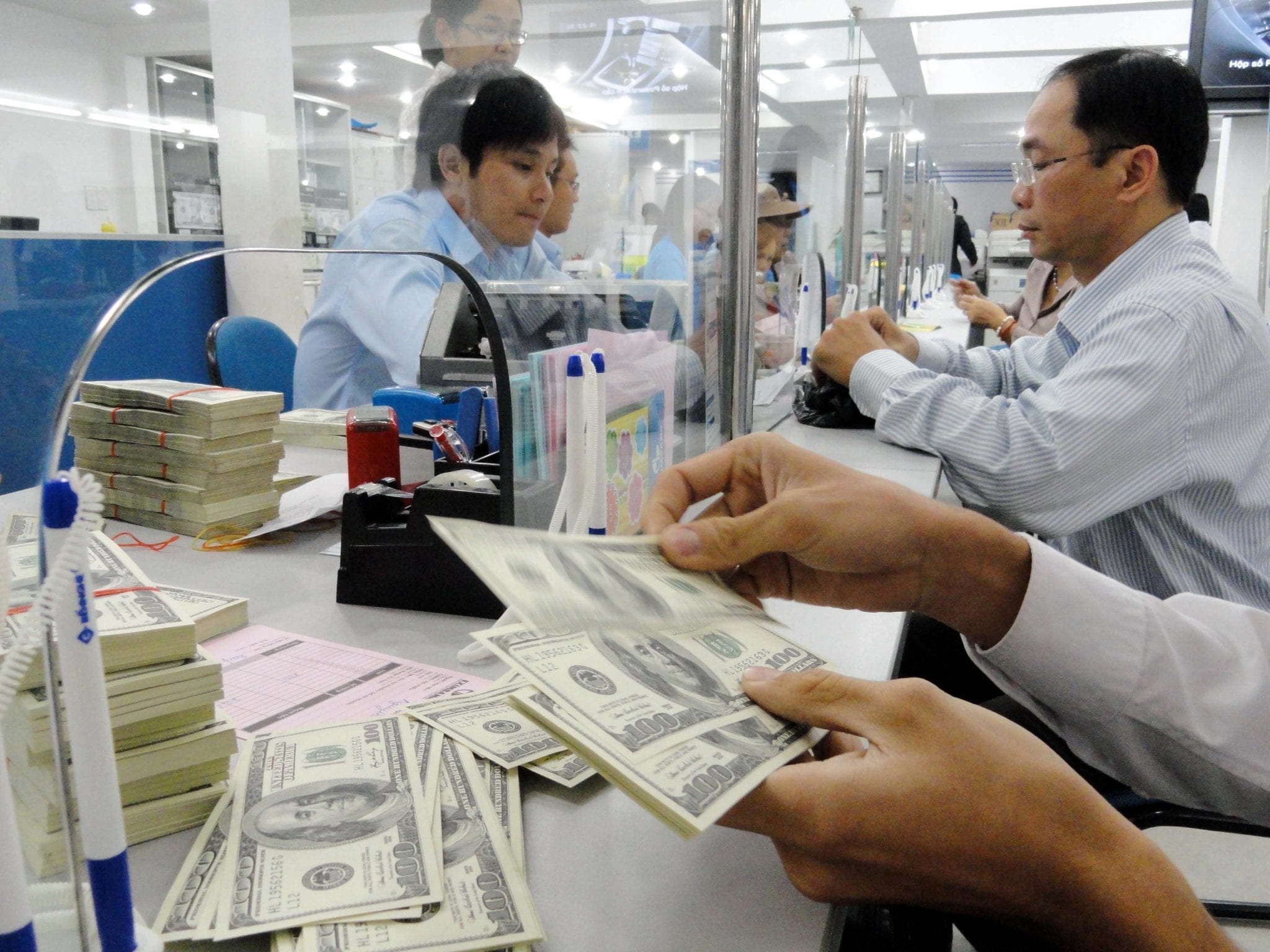
    FE Credit is leading the consumer finance market with $1.4 billion worth of loans provided in 2016, accounting for 48 percent of market share.  Its rivals, Home Credit, HD Saison and Prudential, hold 15.7 percent, 12.2 percent and 8.1 percent, respectively, according to StoxPlus. The other well-known names in the market are Mirae Asset Finance, JACCS and Toyota finance.

    The consumer finance market has become bustling thanks to high demand from borrowers and readiness by commercial banks and finance companies. Since customers are in both large cities and rural areas, it is easy for finance institutions to expand the market and disperse risks.

    Lending to fund personal consumption is lucrative, which accounts for 42.5 percent, followed by lending to fund household goods (28 percent), and transport means (19.6 percent).

    Regarding the growth rate, lending to fund transport purchases and house upgrading witnessed the highest growth rate of 42 percent each in 2016.

    Business Monitor International (BMI) predicted that the consumer finance market would perform well in 2016-2019, as personal income has growth rate of 13.2 percent per annum.

    Also according to BMI, consumer finance targets people of working age, expected to reach 56.2 million by 2020. The figure was 54.4 million in 2015.

    The consumer finance assets were reported as making up 12.4 percent of total assets in 2016.

    By the end of the year, the finance consumer value had reached VND598.5 trillion, an increase of 30 percent over 2015. This included VND453.1 trillion worth of loans provided without mortgaged asset requirement.

    Consumer finance in Vietnam in 2016 made up 9.8 percent of GDP. Meanwhile, the figure was 320 basic points higher in regional countries.

    Regarding credit types, the cash is predicted to decrease from 89 percent in 2016 to 81 percent of total outstanding loans by 2019 as the market share will fall into credit cards.

    Regarding the market structure, consumer finance is undertaken by retail banks and finance companies. Commercial banks tend to set up subsidiaries specializing in consumer finance or to take over existing companies.

    MB Bank in March 2016 took over Song Da Finance Company (SDFC) and renamed it MCredit. Later, in November 2016, after joining hands with Shinsei Financial from Japan, MCredit once again changed its name to MB Shinsei with 51 percent of capital contribution from MB Bank.

    In recent years, Vietnam has not granted licenses to companies providing only consumer finance services, which was a barrier to market admission.

  • VNPT upgrades charging and BSS with Ericsson

    VNPT upgrades charging and BSS with Ericsson

    Vietnamese telecoms operator VNPT has contracted Ericsson to upgrade its charging and business support system.

    Under the deal, Ericsson will provide a new online charging system to support VNPT’s 40 million prepaid and postpaid subscribers. Financial terms of the contract were not disclosed.

    The Ericsson Charging System is replacing VNPT’s legacy infrastructure, and the contract also includes a backend IT peripheral system, which will simplify integration of existing IT applications. The backend system will take full advantage of the new charging features and provides a flexible platform for VNPT to deploy new and innovative services, Ericsson said in a statement.

    The new online system will be put in service by VNPT during the fourth quarter, allowing VNPT to launch 4G services on this new platform. It also marks an important step in the company’s digital transformation, the Sweden vendor added.

    “Ericsson’s modernization of our charging system gives us the agility needed to meet the changing needs of our subscribers who expect greater control, personalization and flexibility,” said Nguyen Nam Long, general manager at VNPT Network. “It also helps us prepare for the introduction of 4G and makes it easier to further develop our service offering.”

    With the new system in service, VNPT’s subscribers will be able to request and update account information in real-time and automatically get notifications on costs, balances, and bonuses. The system will also give VNPT a better understanding of subscriber behavior and make it possible to rapidly create personalized offers, for example charging individual subscribers for bandwidth or specific services.

    Denis Brunetti, head of Ericsson Vietnam and Myanmar, said the Ericsson Charging System will help VNPT reduce the overall service management and service delivery costs. It will also enable VNPT to increase subscriber satisfaction and to capitalize on new business opportunities.

    The Ericsson Charging System has been deployed by over 200 customers supporting around 2.1 billion subscribers worldwide, Brunetti noted.

  • Vietnam to import more cashew

    Vietnam to import more cashew

    Viet Nam, the world’s No 1 exporter of cashew products, expects to import an aditional 500,000 tonnes of nuts from now until October to meet its annual export target, according to the Vietnam Cashew Association (Vinacas).

    Without imports, the industry will not meet its export target of 360,000 tonnes because unseasonal rains have shrunk the 2016-17 crop, which in any case would have been insufficient to meet processing demand, the association said. Currently, nearly two-thirds of the nuts for Vietnam’s cashew industry are imported.

    According to the General Department of Vietnam Customs, 165,000 tonnes of cashew nuts worth about US$1.62 billion were exported in the first six months of 2017, up 2.3 per cent in volume and 27 per cent in value year-on-year.

    But Vinacas Chairman Nguyen Duc Thanh said the domestic cashew supply was not sufficient for processing needs in the first half, so the industry had to import 400,000 tonnes of high-quality raw cashew nuts from Africa.

    However, processors complained that while imported nuts were expensive, processed product prices remained unchanged, leading to lower profits, Thanh noted.

    Vietnam has been the world’s No1 cashew nut exporter for 11 straight years and is set to keep this position for the 12th year as it is forecast to ship abroad 360,000 tonnes of cashew nuts worth $3.3 billion in 2017. Since the six-month shipments were equivalent to just 45 per cent of this year’s target, the industry must work harder to realise this goal, according to Vinacas. The year’s final harvest in the fall is not expected to make up the shortfall.

    Due to the shortage, the price of raw nuts on the domestic market was expected to rise, even for low-quality raw material, especially in the period from October to December 2017. Therefore, many plants have scheduled to reduce their processing capacity and some small plants will have to close.

    Nguyen Quang Huyen, General Director of the Hoang Son 1 Co, Ltd, said the shortage of raw cashew is not new. Major enterprises made preparations from the start of the year to ensure normal production activities. Only small firms without adequate storage have to wait for imported materials.

    According to Vinacas Chairman Thanh, to ensure bigger crops, new high-yield cashew varieties tolerant to climate change and disease must be planted, and the planting schedule should be adjusted to cope with climate change.

  • Ho Chi Minh City to crack down on tax-evading Facebook retailers

    Ho Chi Minh City to crack down on tax-evading Facebook retailers

    The tax man is threatening to shut down social media accounts, but savvy retailers know that it’s an empty threat. Ho Chi Minh City sent out tax demands to nearly 13,500 Facebook retailers over a month ago, but a representative from the city’s Tax Department told that so far only around 1,000 of them have responded.

    As a result, the city’s tax authorities have decided to work on tougher solutions to crack down on potential tax-evading online retailers, and have asked the Ministry of Finance to finalize regulations regarding tax declarations and deductions at source, as well as the supervision of online business activities.

    The city’s tax department also said it is considering a name-and-shame approach to individuals and organizations that refuse to pay tax.

    To combat retailers that open multiple Facebook accounts to avoid detection, the department claimed it had come up with multiple solutions, such as closing down accounts or sending officials posing as customers to confront them in person.

    It also said it would ask the State Bank of Vietnam for copies of retailers’ bank statements to determine their incomes, and courier companies would be asked to provide information on the quantity and value of the goods they transport for them.

    However, many online retailers say that the tax man has no authority over Facebook.

    Nguyen Thi Cuc, who chairs the Vietnam Tax Consultants’ Association, also told that Vietnam does not have a comprehensive tax policy for online businesses, and that collecting taxes is difficult because most transactions are conducted in cash.

    Many retailers claim they already have business licenses and have declared tax, and only use Facebook to advertise their products, while others say they earn less than VND100 million ($4,400) annually so they are not required to declare tax by law.

  • Central Bank of Vietnam cuts rates by 0.25-0.5 per cent

    Central Bank of Vietnam cuts rates by 0.25-0.5 per cent

    The State Bank of Viet Nam (SBV) has cut several interest rates for the first time since 2014 in order to support business and boost economic growth.

    According to the central bank’s statement, 0.25 percentage points have been shaved off the annual refinancing interest rate, rediscount interest rate, overnight interest rate applied to electronic inter-bank payments, and the rate of loans to offset capital shortage in clearing payments between the SBV and domestic banks. The new rates go into effect today.

    Specifically, the refinancing rate has been reduced from 6.5 per cent per year to 6.25; the rediscount rate from 4.5 per cent per year to 4.25; and other rates from 7.5 per cent to 7.25 annually.

    The maximum annual short-term interest rate for loans in Viet Nam dong to meet customer demand for capital in some sectors has also been cut by 0.5 percentage points.

    Businesses operating in agricultural, export and auxiliary industries; small and medium-sized enterprises (SMEs); and high-tech firms will now enjoy a short-term lending rate of 6.5 per cent per year, instead of 7 per cent.

    The maximum rate applied to loans supplied by the People’s Credit Fund and other micro-financial institutions has been lowered from 8 to 7.5 per cent.

    These adjustments are expected to help increase bank liquidity for loans, stabilise interest rates, the foreign exchange rate and the foreign currency market, thereby contributing to controling inflation and achieving sustainable economic growth.

    Move welcomed

    Many experts welcomed this move, saying the adjustment is a good sign for the economy and enterprises, especially given that business and production is facing many difficulties, including shortage of capical and high interest costs.

    The rate cut will help reduce costs for commercial banks seeking loans from the central bank, boosting lending to enterprises at lower interest rates, they said.

    Tran Hoang Ngan, a member of the National Assembly’s Economic Committee, said this decision would consolidate the confidence of the market as it proves that the bank system’s liquidity has stabilised after the bad debts resolution.

    Tran Du Lich, a member of the National Monetary and Financial Policy Advisory Council, said the cut was modest, proving a cautious decision and not signaling monetary policy loosening.

    Financial expert Phan Minh Ngoc said that with lower interest, credit growth might be speeded up in the coming months, but because the SBV still keeps the ceiling credit growth target at 18 per cent, commercial banks approaching the cap must be choosier in selecting customers.

    “Thus, the adjustment basically is not an action to loosen monetary policy, but to help restructure the loans of commercial banks,” Ngoc said, adding that it was unlikely to raise inflation

    The central bank will be able to maintain the new interest rates as long as inflation is controlled at low level. But if the US Fed continues raising its interest rates, which would put pressure on the VND/US$ exchange rate, SBV might have to amend its policy, the expert predicted

    Following moves

    The Bank for Investment and Development of Viet Nam (BIDV) today also announced that the bank would apply a maximum annual interest rate of 6 per cent for short-term dong loans to prioritised enterprises in accordance with the SBV’s decision.

    Start-ups, environmental firms and the bank’s regular customers for at least three years will be able to enjoy the preferential rate, too. Firms and households affected by floods in the central provinces will be offered a maximum rate of 5.5 per cent, according to the bank’s press release.

    In another development, VPBank has become the first private commercial bank to reduce its short-term interest rates by 0.5-1 percentage points for SMEs. The preferential rates will depend on the production sector of the borrowers, the length of the credit relations they established, as well as their record of debt payment.

    Vo Tan Hoang Van, general director of the Sai Gon Commercial Bank (SCB), told Phap Luat Tp Ho Chi Minh (HCM City Law) that in the next two weeks, SCB would lower interest rates by 0.5 percentage points for new credit contracts serving production in prioritised sectors or being signed by SMEs.

    Some other banks also plan a cut in lending interest rates, but say the cut rates must be calculated based on liquidity conditions and taking account other measures to save costs and improve business performance, the newspaper reported.

    Nguyen Van Duc, deputy director of the Dat Lanh Real Estate Company, said that the cut of 0.5 percentage points was not so big but it would have a positive impact on the market and business profits, especially for large firms with heavy loans, he said.

    Ly Thanh Sinh, general director of the Minh Long Hung Garment and Embroidery Joint Stock Company, said that beside reducing interest rates, it was important for SMEs to access capital to buy machines and production equipment.

    Curently, annual short-term interest rates range from 6.8-9 per cent for regular businesses, and 6-7 per cent for prioritised ones; while medium and long-term rates hover around 9-11 per cent for the former and 9-10 per cent for the latter.

  • Facebook business must pay five per cent revenue tax

    Facebook business must pay five per cent revenue tax

    Small and home-based business owners who use the Facebook platform to sell products and have revenue of more than VND100 million (US$4,500) per year will be taxed at five per cent. The money will be paid through a tax registration, value added tax, personal income tax and other taxes depending on the goods they sell.

    “With revenue of over $4,500 each year, a business on Facebook paying nearly VND2 million ($90) for tax is acceptable,” Nguyen Thai Son, a taxation consultant, said in the Thanh Nien (Young People) newspaper.

    The tax level for those who have the same revenue in a traditional business is around four times higher, nearly VND8 million ($360), he said.

    In early June, the HCM City and Ha Noi Taxation Departments sent 13,400 notifications to Facebook businesses and over 1,000 businesses contacted with tax officials in HCM City.

    “To reduce tax losses from online business, tax authorities have woked with Facebook, Google and Apple Store to have e-commerce accounts, worked with banks regarding revenue and worked with police to have a list of those who haven’t paid tax,” Le Thi Thu Huong, deputy head of the HCM City Taxation Department said.

    “The taxation department will collect information from different sources and publish names of organisations and individuals who evade taxes, as well as request relevant authorities to close any e-commerce websites if they do not pay tax,” she added.

    Huong also said that individuals who have online business in social media will be provided a taxation registration and code.

    In developed countries, all people and organisations are required to declare income and pay taxes.

    “Collecting taxes on sales through social networks is necessary,” Huong added.

    Bui Quang Tin, a lecturer in business administration at HCM City University of Banking, said that transactions on the Internet are difficult to control and collecting taxes should be done step by step. Initially, there should be requirements that all individuals conducting business via Facebook must register their operations and declare their income.

    He also noted that with millions of Facebook accounts, in the first phase, the tax authority should target large and professional businesses, because many individual dealers operate as side jobs, or even seasonal businesses. If it tried to control all of them, it would use significant resources and probably be inefficient. The difficulty in managing online sellers and collecting taxes is said to be the consequence of the low rate of non-cash transactions in Viet Nam.

    According to an official estimation, e-commerce activity has been booming, with 80,000 active websites in the city, half of which run stable operations, but tax collection in the field was very poor, especially sales activities through Facebook.

    In fact, in 2015, revenue from e-commerce in Viet Nam reached $4.1 billion, an increase of five times compared with 2012. It is expected to reach $10 billion by 2020, accounting for 5 per cent of total retail sales in the country. Therefore, e-commerce will play a significant role in the Vietnamese retail sector in the future.

  • Vietjet offers free tickets on new South Korea – Siem Reap routes

    Vietjet offers free tickets on new South Korea – Siem Reap routes

    Vietjet today announced a sales promotion for new connecting flights from Seoul/Busan (South Korea) to Siem Reap (Cambodia), that will ease the travel budgets of individuals, tourists and businessmen flying between the famous localities.

    On this occasion, Vietjet is to run a three—golden-day promotion from July 12, 13 and 14, 2017 offering 200,000 air tickets priced from HKD0 only. The promotion applies for all international routes between Hong Kong / Seoul, Busan (South Korea) / Kaoshiung, Tainan, Taichung and Taipei (Taiwan) / Singapore / Bangkok (Thailand) / Kuala Lumpur (Malaysia) / Yangon (Myanmar) / Siem Reap (Cambodia) and travels from September 1, 2017 to December 31, 2017.

    The Seoul – Siem Reap route is operated daily with tickets priced from HKD430 (USD55). The flight departs from Seoul at 11h05 (local time) with transit in Hanoi and arrives in Siem Reap at 18h40 (local time). The return flight takes off at Siem Reap at 19h30 (local time), transits in Hanoi and lands in Seoul at 07h55 (local time).

    The Busan – Siem Reap route is operated daily with tickets priced from HKD550 (USD70). The flight from Busan departs at 08h35 (local time) with transit in Hanoi and lands in Siem Reap at 19h00 (local time). The return flight takes off at Siem Reap at 20h05 (local time), transit in Hanoi and arrives in Busan at 07h00 (local time).

    The promotional tickets are available for booking within the golden hours from 13:00 to 15:00 at their website. Payment can be easily made with debit and credit cards of Visa, MasterCard, JCB, KCP and American Express.

    With its high-quality services, special low-fare tickets and diverse ticket classes, Vietjet offers its passengers enjoyable flights with dynamic and friendly flight crew, comfy seats, amazing hot meals, special surprises from the airline’s inflight activities and amazing ticket fares through “12pm, It’s time to Vietjet” promotion.

  • Restaurant industry starts 2017 on sour note

    Restaurant industry starts 2017 on sour note

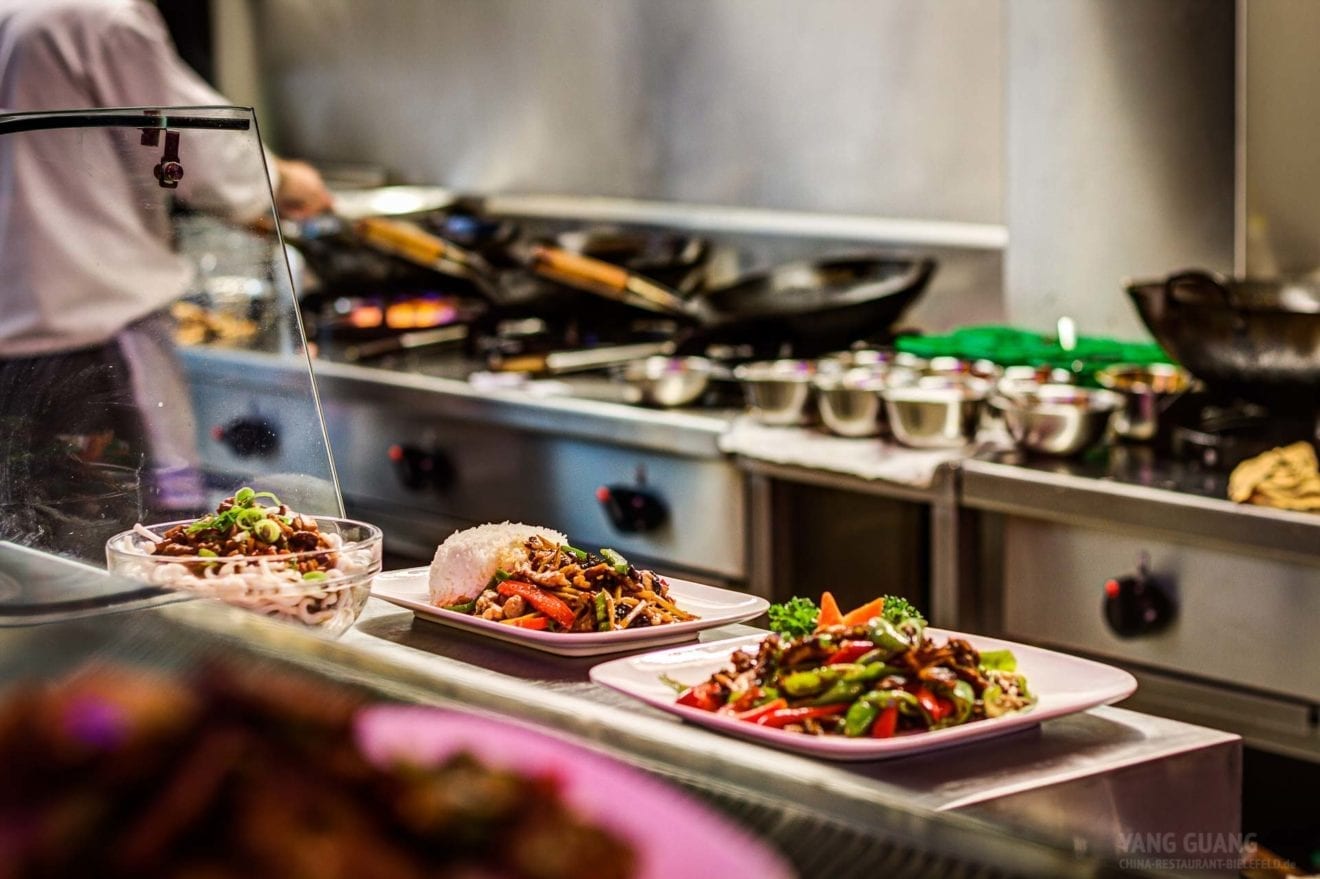
    The restaurant industry in the three largest cities of Vietnam struggled with weak sales and traffic throughout the first quarter of 2017, according to a report by Decision Lab, a marketing research company based out of Ho Chi Minh City.

    The number of customer visits to restaurants in Hanoi, Ho Chi Minh City and Danang for the three month period dropped 9% with average spending per visit plummeting 12% when compared against the previous quarter’s figures, said Decision Lab.

    The quarter closed with 20% lower total sales for the three cities than reported for the fourth quarter of 2016.

    The data collected from the Decision Lab Foodservice Monitor indicates that both full-service restaurants and quick service restaurants experienced a decline in sales and visits in the three month period.

    Meanwhile, street food and convenience store sales managed to maintain their market size.

    Decision Lab didn’t have a solid explanation as to what caused the substantial drop. However, the company rationalized that it was due to a variety of seasonal factors, mostly involving the Lunar New Year holiday.

    During the Lunar New Year, said Decision Lab, consumers have a higher tendency to travel out of the cities to their homeland.  They also spend more time with family and eating at home during the country’s biggest holiday.

    As Vietnamese consumers began saving for the biggest celebration of the year, they cut down on going to restaurants for Breakfast, Lunch, and Dinner, both in terms of visits and spending.

    As the quarterly Foodservice Monitor report from Decision Lab shows, Delivery is the only type of consumption that enjoys stability in its market size in quarter 1. Vietnamese still highly value the convenience of placing a delivery order, having their meal cooked by professional chefs and delivered to their doorstep. Especially before, during and after Lunar New Year when everyone is swamped with work, holiday preparation, and traditional rituals, the comfort a delivery can bring is even more appreciated.

    Although not cutting down on delivery per se, consumers did spend less per order as they stayed committed to their saving plan. To tackle this lower spending per order, restaurants can offer promotions that encourage more frequent orders from consumers. Operators should also consider offering snacks/drinks at lower price point, and cooperate with third party order platforms that take care of the delivery to save themselves on delivery cost.

  • Vietnam’s economic growth to out-tiger China by 2018

    Vietnam’s economic growth to out-tiger China by 2018

    Increased foreign investment is putting Vietnam on the right track. Swiss investment bank UBS has forecast that Vietnam will marginally outpace China’s economic growth for the first time in 2018.

    For the past 30 years, China has been the world’s fastest growing major economy, emerging as the star of Asia.

    However, last year China’s economy grew by 6.7 percent compared with 6.9 percent in 2015, according to official data, marking its slowest growth since 1990.

    UBS predicts Vietnam’s economic growth will expand by 6.5 percent in 2017, slightly lower than the 6.7 percent target set by the government, but still above 6 percent for the fourth consecutive year, defying the Asian slowdown.

    Vietnam’s economy expanded by 5.73 percent on-year in the first half of 2017, official data showed, mainly fueled by foreign direct investment (FDI), according to the UBS report.

    Vietnam’s FDI disbursement has grown at a compound annual rate of over 10 percent in the last five years, and actual disbursement reached a record $15.8 billion last year.

    During the first half of 2017, the country also welcomed over $19 billion in investment pledges, leaping 55 percent from a year earlier, mostly from North Asia’s technology powerhouses.

    The increased FDI flowing into Vietnam has resulted in a hike to the average income. The average monthly salary witnessed an increase of 88 percent from 2010-2015, according to UBS.

    By the end of this decade, Vietnamese urbanites are expected to earn an average $714 per month. Vietnam’s emerging consumer class, according to the report, will pave the way for investment growth in the country’s promising retail sector, especially with investment from overseas.

    However, UBS warned of the risk of trade protectionism following U.S. President Trump’s decision to ditch the Trans-Pacific Partnership this year.

    “Vietnam remains largely dependent on foreign capital and foreign technology. An FDI-led economic model is vulnerable and instable,” said Professor Pietro Masina of the University of Naples, who has spent years studying Vietnam’s economy.

  • Vietjet inks strategic aircraft financing agreement with German Operating Aircraft Leasing

    Vietjet inks strategic aircraft financing agreement with German Operating Aircraft Leasing

    Vietjet and German Operating Aircraft Leasing GmbH & Co. KG (GOAL), a joint venture of KGAL GmbH & Co. KG (KGAL) and Deutsche Lufthansa AG, today signed a strategic agreement paving the way for GOAL to finance Vietjet’s acquisition of four brand new A321 aircraft, worth US$464 million, according to the manufacturer’s listed price.

    Vietjet President & CEO Nguyen Thi Phuong Thao, Vietjet Vice President Dinh Viet Phuong, KGAL CEO Gert Waltenbauer and GOAL Managing Director Jochen Baltes represented both parties in signing the contract in the witness of the Vietnamese Prime Minister Nguyen Xuan Phuc and high-ranking dignitaries from Vietnam and Germany.

    The acquisition of the four aircraft is part of the A320 family aircraft contract signed earlier between Vietjet and European aircraft manufacturer Airbus. Vietjet will receive the four aircraft within 2017 to meet expansion plans for the airline’s domestic and international flight network.

    Speaking at the signing ceremony, GOAL Managing Director Jochen Baltes said: “GOAL and KGAL are very excited about the purchase and leaseback of these four aircraft with one of the world’s most dynamic low-cost airlines. Following this agreement, all parties will continue to work and cooperate together on more opportunities in aviation development in the coming time.”

    Vietjet President & CEO Nguyen Thi Phuong Thao commented: “We have received 16 new A321 aircraft from Hamburg, Germany, worth nearly US$2 billion in accordance with the manufacturer’s listed price, including Airbus’ 9,000th A320 aircraft, which created great excitement in Europe. Besides the fact that Germany has provided Vietjet with aircraft, we are truly delighted to work with GOAL, one of Germany’s top aircraft finance and aviation companies. Today’s deal ensures the financing and favorable conditions for Vietjet to further develop its modern fleet, thus helping to enforce the airline’s quality and safety in operations, a key part of our strategy for the long-term development of Vietjet.”

  • Multi-million dollar deals inked between Vietnamese, German firms

    Multi-million dollar deals inked between Vietnamese, German firms

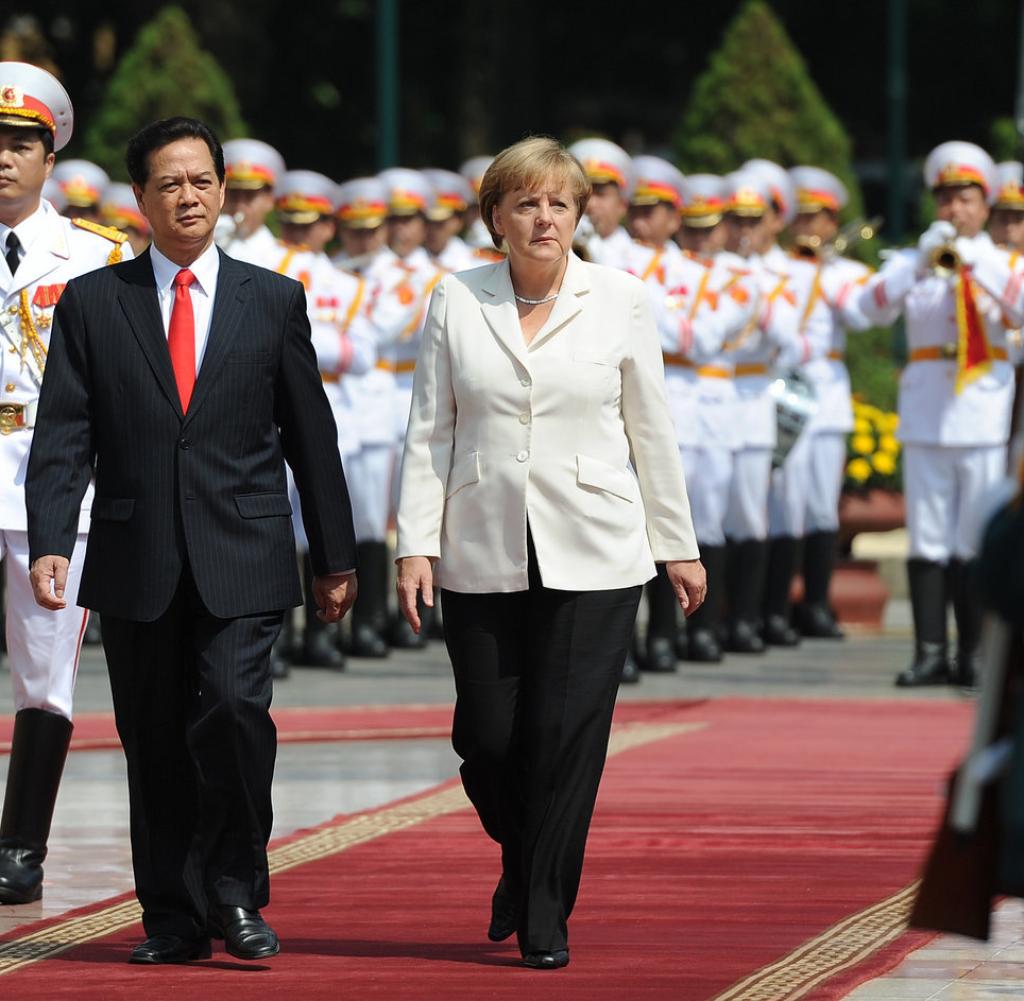
    Prime Minister Nguyen Xuan Phuc is hoping expert German support will help accelerate Vietnam’s automobile industry. Vietnamese and German businesses signed 28 agreements totaling 1.5 billion euros ($1.7 billion) on Thursday during Vietnamese Prime Minister Nguyen Xuan Phuc’s trip to the European powerhouse.

    Trade between the two countries reached $9 billion last year, making up 20 percent of the total turnover between Vietnam and the European Union.

    German investment in Vietnam recently hit $1.8 billion, PM Phuc told a business forum on the same day.

    Phuc went on to say that Vietnam has been taking great strides in improving its business environment and opening up its market, with 12 free-trade-agreements already signed with different countries and blocs.

    With the automobile industry developing fast in Vietnam, he asked German firms to invest in the country’s support industries to enable it to produce more parts domestically, as well as cooperate with Vietnam in the energy sector.

    Responding to Phuc’s suggestion, a representative of leading German auto firm BMW said the company was interested in exploring investment opportunities and building an auto components plant in Vietnam.

    AeroGround Flughafen München GmbH, which offers ground handling services, said it was willing to train airport staff in Vietnam, while BPCE International expressed an interest in cooperating with Vietnamese lenders to pilot a new banking model.

    PM welcomed the interest, and said the Vietnamese government will create favorable conditions for foreign investors to operate in the country.

    Brigitte Zypries, German minister for economics and energy, said Germany wants to raise bilateral trade to $15-20 billion by 2020, while taking advantage of the free trade agreement Vietnam and the EU are about to sign.

    During his trip to Germany, the PM will attend the G20 summit on Friday and Saturday.

  • Hong Kong investor stakes $500 million to build racecourse in southern Vietnam

    Hong Kong investor stakes $500 million to build racecourse in southern Vietnam

    The company claims the track could earn $2.2 billion a year now that betting has been legalized in Vietnam. A Hong Kong-based company has been given the all clear to conduct a feasibility study for a racecourse in Vietnam’s southern city of Can Tho.

    SIBC International Ltd. met with the city’s leaders on Wednesday to discuss plans to build an entertainment complex that would cover over 150 hectares (370 acres).

    The project, which also includes a hotel, park and golf course, is expected to cost $500 million, it said.

    Once completed, the track could host up to 16 races a day and earn VND50 trillion ($2.2 billion) a year, the company said, adding that it would contribute VND10 trillion in tax each year and create around 20,000 jobs.

    Can Tho officials said the racecourse would help boost local tourism, but given its scale, the city would have to consult the central government before making a final decision.

    The Mekong Delta’s urban center attracted more than 5.3 million tourists in 2016, which was up 14 percent from a year ago and included 22,600 foreigners. Tourism earned the city more than VND1.8 trillion last year.

    Vietnam legalized sports betting earlier this year, allowing its citizens to bet on international soccer games and horse and greyhound races from March 31. The historic decision, made after years of deliberation, has made racecourses a viable investment option.

    The country currently has one greyhound track in the southern beach town of Vung Tau, and a $100 million horse-racing course was opened in the southern province of Binh Duong two months ago. Hanoi has plans to build a $500 million racecourse, but progress has been delayed.