Tag: Vietnam

  • Vietnamese consumers among most demanding on e-commerce

    Vietnamese consumers among most demanding on e-commerce

    Nielsen has forecast that the Vietnamese e-commerce market will grow 22 per cent this year and 13.2 per cent by 2020.

    According to the Vietnam E-commerce Association (VECOM), the local e-commerce sector will become a 10-billion-dollar business in the next five years.

    However, local consumers are also demanding, with many complaints about price, product information and authorisation, which should be addressed by merchants to improve customers’ trust.

    A research conducted by iPrice and Trusted Company based on more than 30,000 reviews on 5,000 websites in Viet Nam, Malaysia, Singapore, Indonesia and the Philippines found that Vietnamese customers have the lowest trust on e-commerce and spend less money on shopping online.

    Vietnamese customers complain the most about “fake products”, 15 per cent higher than Thailand, the country with the second maximum complaints, given that fact that Thailand ranked 4th worldwide in the fake goods trade.

    The second maximum complaints on e-commerce sites by Vietnamese customers are about the price of products. Despite being an aggressive promotion hunter, the Vietnamese still think products listed by e-commerce merchants are overpriced.

    Given that 80 per cent of consumers prefer cash on delivery (COD) payment, the country also has the highest order cancellation rate, with 30 per cent of products not being accepted due to product failure, the research said.

    Unlike consumers in other Southeast Asian countries such as Singapore and Indonesia that have shared concerns on buying products, the most common queries of the Vietnamese are on product authorisation (store address) and availability. They are revealed to often use feedback forms to ask about products.

    Of all Southeast Asian countries, Viet Nam has an average rating of 3.7 out of five stars, the research has revealed. This is due to the fact that only large merchants have developed a rating scheme for a better shopping experience for consumers.

  • Vietnam Motor Show scheduled in August

    Vietnam Motor Show scheduled in August

    They include 12 brands of 10 members of the Viet Nam Automobile Manufacturers Association (VAMA) including Chevrolet, Ford, FUSO, Honda, Isuzu, Mercedes-Benz, Mitsubishi, Nissan, Suzuki, Toyota, and Do Thanh.

    The exhibition will also feature over 50 companies from supporting industries who will bring automobile parts and services.

    The event, which this year will have the theme “connected technology for smart moving”, will highlight the role of technology in modern life.

    Toru Kinoshita, chairman of VAMA, said: “The development of automobiles has had an enormous effect on people’s way of life all over the world. Advanced technology and innovation in the auto industry nowadays has given people incredible freedom of movement and influence over how they want to move, live and enjoy life.

    “Therefore we decided to choose this theme. We would like to express the impact of connected technology on Vietnamese life, thus enabling significant changes to patterns of living.”

    The exhibitors have said they will offer many promotions at the event.

    Also at the exhibition, conferences and forums will be held to discuss urgent issues facing the industry.

    The event, which will be held at the Sai Gon Exhibition and Convention Centre in District 7, expects to welcome 150,000-160,000 visitors.

  • Tourism plans in Mekong Delta called too ambitious

    Tourism plans in Mekong Delta called too ambitious

    Thirteen provinces and cities in Mekong Delta received 7.6 million travelers in 2016, including 900,000 foreign travelers, or 10 percent of total foreign travelers to Vietnam.

    Under the plan for Mekong Delta tourism development, the region would have turnover of VND25 trillion by 2020, or VND15.3 trillion higher than last year’s turnover.

    Some experts commented the plan is too ambitious, because the number of travelers to Mekong Delta has not increased sharply like other regions. With the overlap in tourism products, poor infrastructure and services, and bad marketing, Mekong Delta tourism agencies should not set a high target in the number of travelers.

    An analyst commented that there could be a ‘one for all’ tour, in which travelers visit one locality to experience all the products of the whole region.

    If travelers visit My Tho, they will not need to go to Can Tho, and if they visit Can Tho, they can go straight to Chau Doc or to Cambodia, and there would be no need to stop over in neighboring localities.

    My Tho and Ben Tre’s tourism has become nearly saturated as all tourism resources such as don ca tai tu (amateur music in southern Vietnam), hand rowing and craft villages.

    Travel firms report that travelers to Mekong Delta stay for 1-2 nights or go home within the day. While the central region can exploit its advantages to provide resort tourism or MICE, Mekong Delta has few large groups of 500-1,000 MICE travelers because of the lack of hotels and services.

    Nguyen Thi Hoa Le, CEO of Hoa Binh Tourism JSC, said that provinces and cities need to provide tourism products with ‘specific taste’.

    She has urged local authorities to make heavier investments in infrastructure and services. “All localities want to develop tourism, but how they can attract more tourists if they hesitate to make big investments?” she said.

    Some businesses think Mekong Delta has become less attractive because of rapid modernization. Many rural areas have lost the charm of the southern countryside.

    In Tien Giang and Can Tho provinces, for example, there are floating markets, an original characteristic of the southern region. However, the markets have become smaller as people now have other modern trade channels.

  • Pet breeding a popular business in Ben Tre Province

    Pet breeding a popular business in Ben Tre Province

    In recent years, professional systems that take care of breeding, veterinary services, and the buying and selling of pets have emerged in the province.

    Tran Tan Dat, a resident in Chau Thanh District’s Huu Dinh Commune, for example, invested in a pet-raising business after retirement.

    Initially, he had a couple of poodles but now has 20 poodles of different sizes, including teacup, toy, miniature and standard.

    He said that demand for poodles was high since the breed was friendly and easy to train.

    Nguyen Thanh Dong, a farmer in Ben Tre City’s Son Dong Commune, has raised a variety of breeds, including pugs, border collies, rottweilers, and Phu Quoc and berger dogs.

    Raising multiple breeds has allowed him to earn a profit from the most difficult buyers.

    Dong added that raising foreign dog breeds required more attention and resources compared to pure Vietnamese breeds.

    They need to be bathed regularly and given vaccinations to prevent disease, he said, emphasising that food sources must also be chosen carefully.

    If dogs are taken care of well, they can give birth three times per year, with four to six puppies each time.

    Besides the economic value, raising pets can bring joy and social connections, especially to retired workers like Dat.

    Last year, the Ben Tre Province’s Pet Association launched a dog-raising group with the aim of bringing together breeders and providing a platform to exchange ideas on the industry.

    The group has hosted several seminars and invited dog food companies to share their experience in raising quality pets.

    Le Van Huyen, director of the group, said that a thriving dog-breeding business required passion as well as thorough understanding.

    The group now has 40 official and about 60 unofficial members.

    Ben Tre, Tien Giang, HCM City and China are the most common destinations where locals sell their dogs, Huyen said.

    Nguyen Quoc Phuong, a resident who does not breed dogs, said that pet-raising was also an educational activity that helps children learn to love animals.

  • Vietnam bans new carpooling services from Uber, Grab

    Vietnam bans new carpooling services from Uber, Grab

    The authorities say sharing a car with a stranger comes with risks that passengers should not ignore. It’s yet another bumpy ride for popular ride-hailing services Uber and Grab.

    Their new carpool versions in Vietnam, UberPOOL and GrabShare, have been blocked by the Ministry of Transport, not long after their summer launch.

    Low-cost services that allow drivers to pick up an extra person along the way will create risks for the passenger, the ministry said in a new statement. stopping short of mentioning any such incidents.

    The ban is to protect Vietnamese passengers from what could happen, it said.

    If Uber and Grab disobey the rule, they will be fined VND4-6 million ($175-260) per ride.

    Last month, U.S.-based Uber and Malaysia-based Grab rolled out their carpooling services in Vietnam, promising to help passengers save 30 percent of payments by splitting the costs.

    Uber and Grab entered Vietnam in 2014. Since then, the two have repeatedly made headlines for regulatory issues.

    Exisiting service providers have not been happy. Vinasun and Mai Linh, the two major taxi companies in Vietnam, blame their business difficulties on Uber and Grab, saying the competition has been “unfair” because the foreign firms are not subjected to strict tax rules.

  • Car ownership ratio remains low

    Car ownership ratio remains low

    The industry’s growth for 2012-2016 period was 38%, the highest rate in the South East Asia. About 45% of the new cars were registered in Hanoi and HCM City.

    As of 2016, about 211,000 vehicles were registered in HCM City and 291,000 in Hanoi. 600,000 cars were sold in remaining provinces and cities.

    Cars from Japan and South Korea were favoured in Vietnam. Customers now have more choice as more European car brands have appeared in Vietnam such as Renault and Volkswagen.

    However, the car ownership ratio in Vietnam is only 16 cars for 1,000 people. This rate is lower than Malaysia’s 341 cars, Thailand’s 196 cars and Indonesia’s 55 cars.

    According to Solidiance, one of the reasons is because prices are still high. Car manufacturing, as well as supporting industries, are still weak so Vietnam has to import completely built units. Moreover, poor infrastructure and constant congestion have discouraged people from buying cars.

    It is predicted that the demand will continue to rise with steady economic growth and increasing personal incomes. Import taxes will be reduced or lifted from 2018 after Vietnam joins various trade agreements such as the ASEAN Trade in Goods Agreement. As a result, the car prices will fall and become more affordable.

  • Vietjet announces three new aircraft and more international routes

    Vietjet announces three new aircraft and more international routes

    Vietjet reported continuous growth in its business performance in May with the addition of three new aircraft to its new generation fleet, the launch of new international routes and increased frequencies of international flights to meet the increasing travel demand of domestic passengers in the high season.

    In May, Vietjet launched the Da Nang – Seoul route; opened sales for Hanoi – Yangon route, which is expected to operate as of August 31, 2017. Besides, Vietjet increased the frequencies of Hanoi – Taipei route to 11 return flights/ week from July 21, 2017 and Hanoi – Seoul route to 14 return flights/ week from August 2, 2017.

    Along with the series of new route launches, Vietjet maintained its high load factor, with a rate of over 88%. In the first 5 months of 2017, Vietjet operated nearly 39,100 safe flights, transported more than 6.5 million passengers, an increase of 29% as compared to the same period of 2016. In May, it carried over 1.5 million passengers

    Up to the end of May, Vietjet had its own channel for online ticket distribution and consumer services with 21,378 offline sales points, an increase by 2,803 points compared to that by December 31,2016.

    With this result, the revenue from airline operation of Vietjet in May approximately stood at VND8,352 billion (around USD3.6 billion), an increase of 44% compared to the same period of the preceding year and exceeding the budget forecast by 9%.

    On the international scene, on the visit of the Vietnamese Prime Minister Nguyen Xuan Phuc to the US in late May, Vietjet signed agreements with CFM International, GECAS and Honeywell Aviation, worth a total of USD 4.7 billion.

    Later, in Tokyo, Vietjet and Mitsubishi UFJ Lease & Finance (MUL), a member of Japan’s leading finance group Mitsubishi UFJ Financial Group (MUFG), signed a strategic agreement, which would pave the way for MUL to finance Vietjet’s acquisition of three brand new A321 aircraft, worth US$348 million.

  • Vietnam to continue fuel import

    Vietnam to continue fuel import

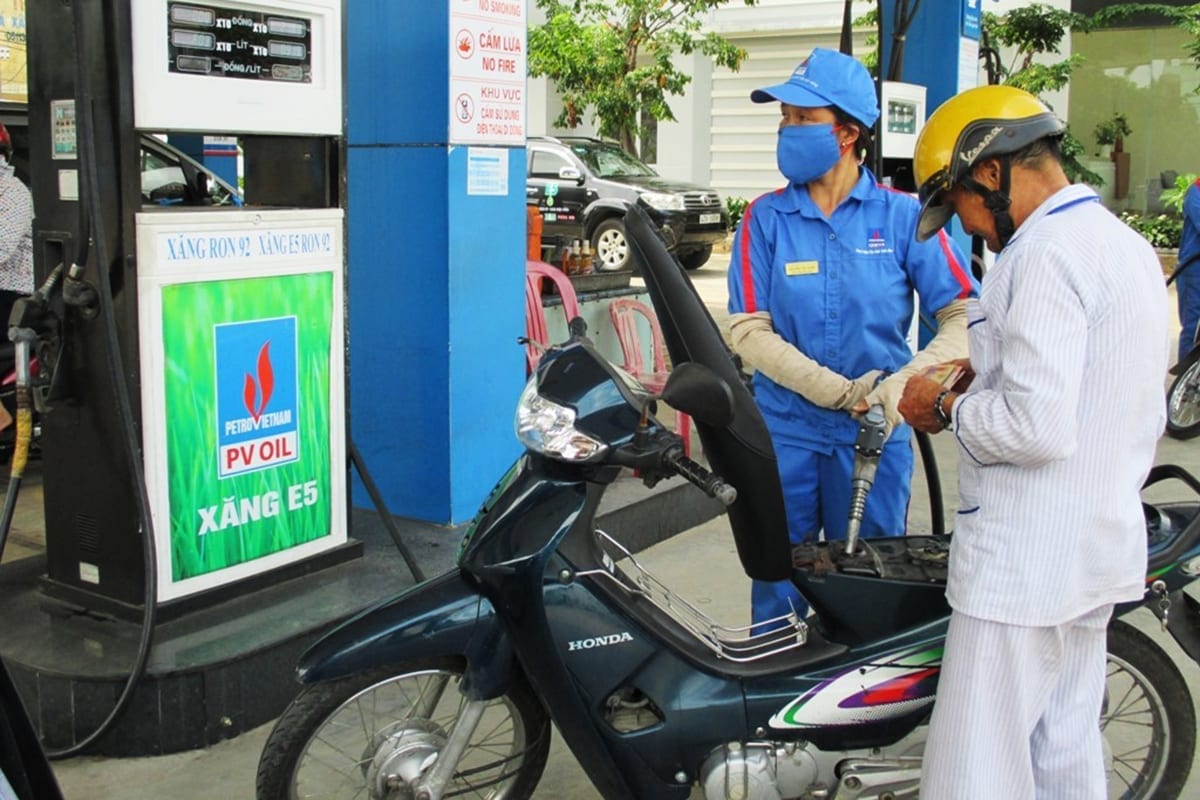
    According to a report issued June 26  by Binh Son Refining and Petrochemical Company (BSR), the operator of the US$3-billion Dung Quat Oil Refinery in Quang Ngai Province, the country is projected to consume 6.5 million tons of gasoline and 8.5 million tons of DO from 2018 to 2022.

    Meanwhile, Dung Quat and another oil refinery, Nghi Son, can supply nearly six million tons of petrol and seven million tons of DO from 2018, representing 92% and 82% of domestic demand respectively.

    The shortfall would be offset by fuel imports from Singapore, Malaysia, Thailand, South Korea and China.

    Nghi Son Oil Refinery in Thanh Hoa Province will be put into operation next year with an annual processing capacity of 10 million tons of crude oil. It is expected to supply 8.8 million tons of fuels, including about 2.3 million tons of petrol and 3.7 million tons of DO, meeting 40% of local needs.

    Condensate processing plants such as PVOIL Phu My, Saigon Petro, Nam Viet Oil and Dong Phuong have a combined annual capacity of 690,000 tons of gasoline.

    Since its debut seven years ago, Dung Quat has sold over 47 million tons of fuels with total revenue amounting to more than US$36 billion and profit reaching over VND13 trillion (US$0.57 billion) by the end of the first quarter of 2017.

    BSR has paid over US$7 billion in taxes to the State.

  • Vietnam’s employers, unions fight again over wage increase

    Vietnam’s employers, unions fight again over wage increase

    Discussions for the annual wage increase have started, and as expected, the business group at the table, the Vietnam Chamber of Commerce and Industry, has come in with a relatively low offer of 5 percent for 2018.

    That would be down from the 7.3 percent hike earlier this year and much lower than the preferred 13.3 percent bump wanted by the Vietnam General Confederation of Labor, which speaks for unions across the country.

    The business chamber, better known as VCCI, argued that businesses are facing harsh competition and many have to scale down their operations.

    But the labor confederation said a 5 percent increase would be just enough to offset inflation. Consumer prices rose 4.74 percent last year, according to official data.

    “Despite annual increases, the current minimum wages are not enough to pay for workers’ basic demands,” a spokesperson for the labor group said. If the group manages to have its way this year, the minumum wage for workers will be raised to as high as VND4.2 million ($185) a month.

    The two groups are the major parties of Vietnam’s National Wage Council, which also includes government officials.

    Minimum wage is used by businesses to calculate salaries for their workers, by multiplying the basic amount by a coefficient assigned to each worker, based on their skills and experience.

    Vietnam has been raising this yardstick every year, a policy that has pitted labor groups against employers.

    Last year, prolonged negotiations ended with a 7.3 percent increase, the smallest in 10 years. The wage now ranges between VND2.58 million and VND3.75 million ($113-165) depending on regions.

    In a March survey by the Vietnam’s Institute of Workers and Trade Unions, a third of the 2,600 workers questioned said their incomes were low and barely sufficient to live on, while 12 percent said their wages simply did not cover living expenses, forcing them to work extra hours.

  • Hanoi attempts to manage app-car services like taxis

    Hanoi attempts to manage app-car services like taxis

    Hanoi will manage the operation of app-based taxi service, including Uber and Grab, in a way similar to traditional taxis to guarantee a fair business environment.

    The move followed Hanoi, HCM City and Danang taxi associations petitioning the Ministry of Transport to call for a more equal business environment for taxi services.

    Hanoi People’s Committee have completed a plan on restricting the number of private vehicles for the 2017-2020 period and a vision until 2030 which is expected to be discussed and passed by the municipal people’s council at the meeting of early next month.

    According to the plan, the city will apply more strict management regulations on cars of below nine seats which operate under app-based taxi service in terms of vehicle number, quality and operational scope.

    App-based taxis will be managed in a way similar to traditional firms to ensure equal competition.

    The city’s transport department will check the specific number of Uber and Grab and if the figure exceeds the regulated level, the firms will have to stop operations.

    Uber and Grab taxis are also required to have logo, badge or their own paint colour. Signposts banning Uber, Grab maybe be put up on Hanoi streets.

    The associations called authorities to set the same rules for Uber and Grab.

    According to Do Quoc Binh, Chairman of Hanoi Taxi Association, over the past month, almost of 90 taxi firms in the city urged the association to seek the municipal trade union federation’s approval for their drivers to march through local streets in opposition to Uber and Grab.

  • Sun Group to launch luxury resort in Ha Long Bay

    Sun Group to launch luxury resort in Ha Long Bay

    The developer expects the project, designed by renowned experts, to stimulate tourism in Quang Ninh Province. Sungroup plans to open its luxury resort complex Sun Premier Village Ha Long Bay at Wyndham Legend Halong Hotel in the northern province of Quang Ninh on July 1.

    The developer expects the project to stimulate tourism in the province, the home of the world-famous Ha Long Bay.

    Carrying the luxury resort brand name, Sun Premier Village Ha Long Bay with resort villas and shophouses is among the first beach-view resorts of international standards in the northern region and is guaranteed to make profits.

    Sungroup offers buyers many attractive financial support programs, such as a preferential interest rate of 9 percent on loans within 15 years. Additionally, buyers who register to buy villas at the opening ceremony of the project will enjoy incentives of up to 5 percent off the selling price, excluding VAT.

    When buying resort villas, investors will be entitled to a special interest rate of zero percent for loans of up to 70 percent of the selling price.

    Villa owners will be issued long-term ownership certificates, in addition to enjoying 225 night stays free of charge at their properties, which can be exchanged with any hotel or resort developed by the Sun Group across Vietnam. These include InterContinental Danang Sun Peninsula Resort, Premier Village Danang Resort, Novotel Danang Premier Han River and JW Marriott Phu Quoc Emerald Bay Resort & Spa.

    They also have the opportunities to become members of the SOL Club for Sun Group’s investors, which will allow them to use golf courses and recreational parks built by the developer.

    Customers who own a shophouse will have two attractive financing options, which are zero percent interest rate subsidy for a loan of up to 70 percent of the value. It will come with a grace period of up to 12 months or they can get a discount of up to 3 percent on the shophouse at the time of signing sale contracts.

    Shophouse buyers who make the payment earlier than the schedule will be entitled to a preferential rate of up to 10 percent per year. Customers who pay up to 95 percent before July 30 will receive a payment voucher equivalent to 5 percent of the shophouse value.

    Designed by Australia’s renowned Dark Horse Architect and landscape experts from Hong Kong-based landscape design company, AEDAS, each villa includes a secluded space surrounded by lush tropical gardens. Sun Premier Village Ha Long Bay offers beach villas, ocean villas, garden villas and lake villas in a simple but delicate architectural style.

    Sun Premier Village Resort Ha Long Bay is located right next to the Sun World Halong Complex, which according to Duong Thuy Dung, Director of Research and Consulting, CBRE Viet Nam, “will help real estate investors increase their value.”

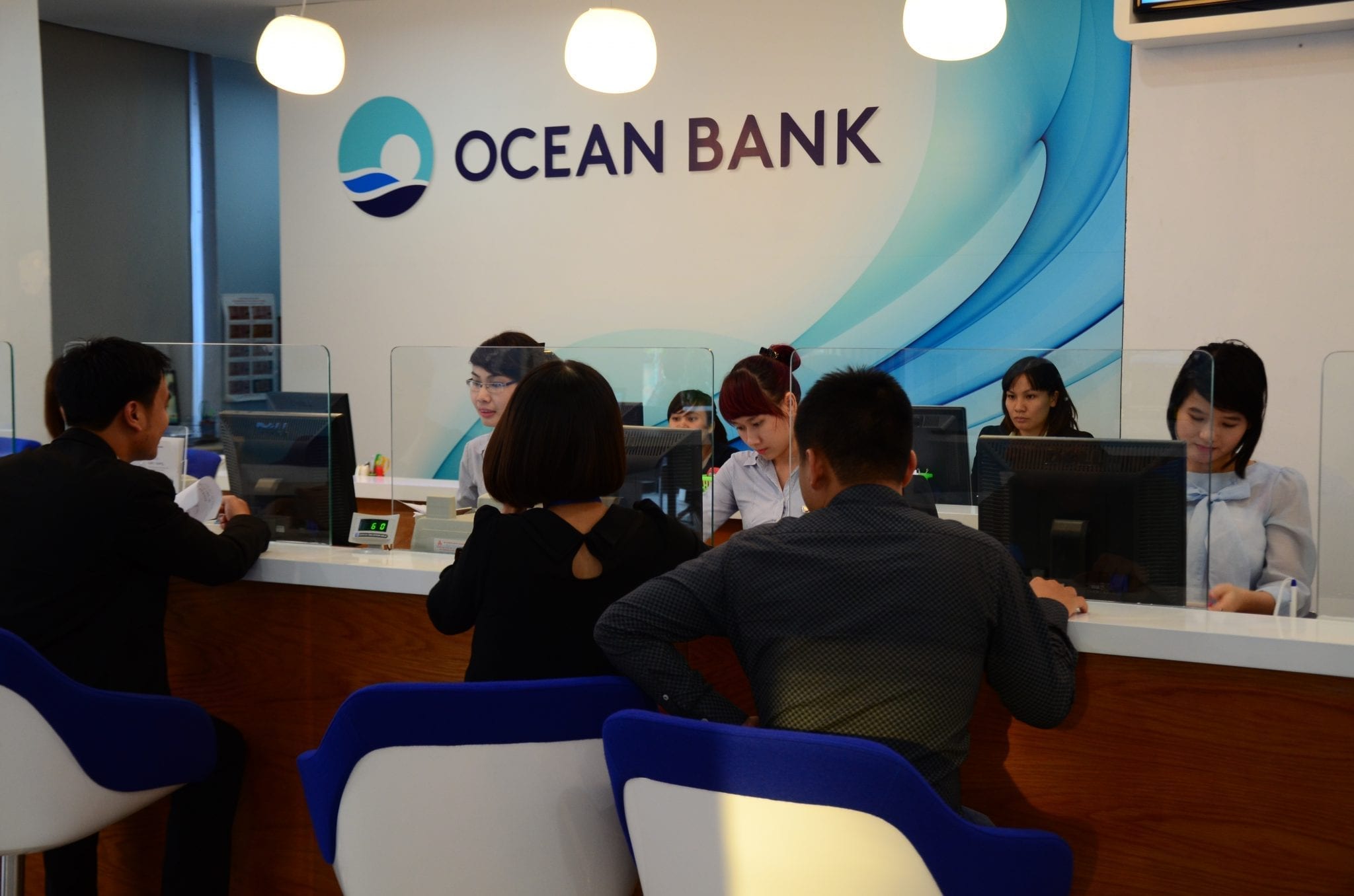
  • Ocean Bank finds new foreign owner

    Ocean Bank finds new foreign owner

    Although the buyers identity was undisclosed, the private source confirmed that the two sides are finishing the paper works.

    One Member Limited Liability Global Petroleum Bank (GPBank ), another zero VND bank, may be sold to a consortium of a foreign financial institution and an investment and real estate development company.

    The last zero VND bank, Vietnam Construction Bank (CBBank), is said to be implementing its restructuring plan before merging with a domestic bank.

    Besides, DongA Joint Stock Commercial Bank (DongA Bank) is said to be merging with Ho Chi Minh City Housing Development Bank (HDBank).

    At a press conference at the beginning of 2017, Nguyen Van Hung, deputy chief inspector of the State Bank of Vietnam’s Inspection and Supervision Agency, said that there would be solutions to address the five weak commercial banks, including three banks acquired by SBV for zero VND (CBBank, Ocean Bank, GPBank), DongA Bank, and Saigon Joint Stock Commercial Bank (Sacombank).

    “Although these banks’ operating activities have been improved to avoid the collapse of the whole banking system, they need a complete overhaul,” Hung said.

    Between the end of 2015 and October 2016, the bad debts of the three zero VND commercial banks declined by about 8 per cent. Of the total, the bad debts of Ocean Bank and GPBank significantly decreased. GPBank and CBBank’s outstanding loan balance for enterprises and individuals decreased dramatically. In addition, CBBank’s deposits even increased between the end of 2015 and November 2016 by nearly 14 per cent.

    At the 2017 conference on implementing plans for Ocean Bank, Do Thanh Son, chairman of Ocean Bank, said that in 2015 and 2016 the bank continuously reported profit, which partially covered its losses accumulated in the past.

    In 2017, Ocean Bank targets to receive more than VND30 trillion ($1.2 billion) in deposits and to report an outstanding loan balance of nearly VND18 trillion ($720 million).

    In February 2017, Ha Van Tham, former chairman of Ocean Bank, and 47 other former leaders and employees of the bank were tried for charges including breaching the regulations on loans of credit institutions, abusing their positions and power while on duty, and intentionally acting against the state’s laws on economic management, causing serious financial loss in the period before 2014.

    The Ocean Bank case is one of the six biggest economic crimes that the Central Anti-Corruption Steering Committee was asked to bring to trial. In the trial, Tham admitted to misconduct and said his actions were caused by a need to complete his quota and avoid being dismissed. He asked the court to reduce the legal responsibilities of his accomplices because they were forced to adapt to the difficult circumstances at the time.

    According to the indictment of the People’s Procuracy, Ha Van Tham, as Ocean Bank’s chairman at the time, directed his employees to approve Pham Cong Danh’s borrowings. Pham Cong Danh was the former chairman of Vietnam Construction Joint Stock Commercial Bank. He took up significant loans from Ocean Bank through Trung Dung Company without meeting the bank’s prescribed requirements and did not submit collateral. By lending to Danh, Ha Van Tham violated lending procedures, causing a loss of VND350 billion ($14 million) for Ocean Bank.

    Besides, Nguyen Xuan Son, who was the bank’s general director and the representative of Vietnam National Oil and Gas Group (PetroVietnam) capital contribution to the bank, had worked with Tham to illegally pay interest outside deposit contracts to customers, which caused a loss of nearly VND69 billion ($2.8 million) to the bank.

    A wide range of employees involved committed extremely serious violations in lending, mobilising deposits, and paying customers higher interest rates than the ceiling regulated by the central bank.

    In total, through their rampage of violations, Ha Van Tham and his employees caused a loss of nearly VND2 trillion ($80 million) to the bank, affecting the central bank’s monetary market management policy and hindering the implementation of the state’s monetary policy.


  • Undersea internet cable out of action for another three weeks in Vietnam

    Undersea internet cable out of action for another three weeks in Vietnam

    Repair work on the broken international cable won’t start until July 3 and will take at least 10 days to complete. International internet connections in Vietnam are likely to remain slow for another three weeks with repair work to a major internet cable which broke off central Vietnam last week expected to take until July 14, a service provider said.

    The source told us that repair work on the Asia Pacific Gateway won’t start until July 3 and is expected to take 10 days. The cable should be fully reconnected by July 14, depending on the extent of the problem, said the representative.

    The cable snapped on Tuesday afternoon about 125 kilometers off the coast of Da Nang.

    Service providers such as Viettel and VNPT said they have prepared contingency routes to minimize downtime.

    No announcement on the cause of the problem has been made.

    The cable was officially launched on January 3, but was quickly hit by a technical problem that took two weeks to fix.

    The cable cost $450 million and has a capacity of more than 54 Tbps, promising to double internet speeds in Vietnam and ease reliance on the notorious Asia America Gateway, which has ruptured or been shut down for maintenance on numerous occasions since 2011.

    The new system took four years to build, and links Japan with Hong Kong, mainland China, Malaysia, Singapore, South Korea, Taiwan, Thailand and Vietnam.

    Nearly 49 million people in Vietnam, or more than half of the country’s population, are online.

  • Vietnam’s pepper export revenue loses spice due to oversupply

    Vietnam’s pepper export revenue loses spice due to oversupply

    With supply exceeding demand, farmers are being told to hold on to their stocks and wait for prices to rise. Vietnam’s pepper shipments are forecast to reach around 101,000 tons for the first six months of 2017, up 13 percent on-year, but revenue is likely to fall 13 percent, according to Vietnam Pepper Association (VPA)’s chairman Do Ha Nam.

    “When supply exceeds demand, importers try to pull prices down. Vietnam, which provides some 60 percent of the global pepper output, will be heavily affected,” Nam told.

    In the peak harvest season, farmers need to sell large volumes of pepper to cover expenses, causing prices to fall. Local farmers are stuck in a dilemma: the more pepper they sell, the sharper prices decline.

    Domestic pepper prices have been falling throughout May and June, so the VPA is urging local farmers to hang on to their stocks and wait for prices to recover.

    “If farmers can hold on for the next 1-2 months, prices will rise again,” Nam said.

    The VPA has attributed falling prices to a 15 percent increase in pepper output in for this crop and the 20,000 tons of Cambodian pepper Vietnam has shipped in.

    However, the greatest problem facing the sector is the expanding pepper plantations.

    If the plantations continue to expand at their current rate, pepper prices will suffer as supply exceeds demand in the future.

    To reduce these risks, the VPA has advised farmers to stop growing pepper in unsuitable soil and switch to alternative crops to provide an additional income.

    Despite these warnings, farmers are continuing to expand their pepper plantations.

    The reason is that a hectare of pepper can earn farmers at least VND240 million ($10,600), while the same area of coffee will make them only VND100-150 million.

    In addition to this, Vietnam’s pepper industry also faces food hygiene and safety concerns in foreign markets.

    For example, in order to export 40,000 tons of pepper to the European Union, Vietnamese firms need to import 22,000 tons of clean pepper from Cambodia, Malaysia or Indonesia to process and export.

    Similarly, in order to ship the product to Japan, local companies must import raw pepper to process first.

    This is because in the past, Vietnamese pepper has been found to contain excessive chemical residue.
    To address the issue, Vietnamese and foreign firms are working with farmers to clean up the plantations.

    According to experts, organic pepper is slowly catching on, which may mean lower productivity but should ensure higher prices in a more stable market.

  • Vietnam set for co-working office boom

    Vietnam set for co-working office boom

    With both local and international operators strongly expanding into co-working in Vietnam, the industry is expected to develop rapidly, experts have said.

    An office building for lease in Ha Noi. Co-working offices are in great demand thanks to the flexibility, creativity and amenities tenants get. It also offers a far more cost-effective solution for tenants compared to traditional leased office space.

    They said the development of this new segment in the property market is being driven by start-ups, freelancers and increasingly by small companies.

    Vu Cam Giang, co-founder of Moonwork co-working space in Ha Noi, told that initially co-working had attracted students, employees allowed to work from home, start-ups, freelancers and artists who were curious about the new experience.

    But now only start-ups and freelancers hire co-working space, with many of them needing a place where they can bounce things of each other or explore co-operation opportunities, she said.

    Since it was launched more than a year ago her co-working space has been always full, indicating the high demand, she said.

    A recent report from property consultant CBRE Vietnam said the co-working segment has grown rapidly in Ha Noi and HCM City since it was first introduced in 2012 and started to gain traction in 2015 with the entry of local operators Toong and Dreamplex.

    The report said there are now 17 co-working space operators with 22 venues, all but one local, but the situation is set to change with the entry of regional operators later this year and in 2018.

    Talking about the growth, the report said the global co-working industry has been growing at 53 per cent a year for the last five years. In Vietnam the rate has been 58 per cent.

    But with the concept still being relatively new in the country, and major regional and international operators yet to enter, the rate is set to accelerate, it said.

    Co-working offices are in great demand thanks to the flexibility, creativity and amenities tenants get. It also offers a far more cost-effective solution for tenants compared to traditional leased office space.

    Office rents now range between $1,100 and $1,400 per month.

    Besides, co-working tenants do not have to shell out money for furnishing or even buying computers and other office equipment.

    CBRE said the cost of co-working space varies across cities, and is less in Ha Noi and HCM City than most other cities in the Asia Pacific.

    But the offices are generally not located in prime buildings or areas since operators seek to keep rental costs low. They are often situated in underutilised buildings in non-central locations, it said.

    The entry of larger operators would likely usher in a period of consolidation and M&A activity within the industry, forcing poorly managed or unsuitable co-working spaces out of the market and improving the quality of existing operators, it said.

    “With the development of start-ups and freelancers and people’s changing perception in choosing working space, the co-working segment will continue to expand in Vietnam,” Giang said.