Tag: Vietnam

  • Vietnamese banks look to tap into big data

    Vietnamese banks look to tap into big data

    To successfully deploy big data in the banking sector, there must be a comprehensive strategy using professional teams who have deep understanding of both finance and technology, said Nguyen Kim Anh, Deputy Governor of State Bank of Vietnam.

    At a conference on Thursday in Ha Noi, Anh said that digital data was becoming a new resource and big data was playing an important role in the banking and finance sectors.

    The conference, titled “Big data for banking and financial industry,” was organised by the Banking Academy of Vietnam.

    At the workshop, participants focused on big data technology from a variety of perspectives. They discussed the latest technology and ways for banks and financial institutions to optimise the application of big data into information systems.

    Through the discussion, experts shared hopes that they could identify the opportunities and challenges of big data to improve the productivity, quality and efficiency of financial and banking operations.

    The fourth industrial revolution is taking place across the globe and having a strong impact on all aspects of socio-economic life, according to the experts. It promises to create more opportunities and an impetus for the country development of each nation or organisation.

    The fourth industrial revolution with Internet of Things, automation and artificial intelligence has brought digital data to the centre of the business world.

    Digital data had become a very important resource from which businesses can generate revenue and provide new application ecosystems, services and digital products, said Anh.

    “Therefore, digital data will grow and become an important industry in the fourth industrial revolution,” he added.

    At the workshop, the deputy governor also said that the specificity of banking is creating a huge amount of data from structured data such as transaction histories and customer records to unstructured data such as customer activities on Internet and mobile banking application.

    “Applying big data to exploit the data will bring significant competitive advantages and efficiency for the banking and finance sectors,” he added.

    In addition, Pham Anh Tuan, director of Vietcombank’s tech modernisation department, said that data in the banking system and those collected from the outside include many types. These include structured data, semi-structured data, and unstructured data.

    “The current banking data is unstructured, which meets all big data standards in volume, movement and diversity,” Tuan emphasised.

    The representative of Vietcombank also said that when banks as well as financial institutions identify data with great value, they must consider data assets of the bank. “In other words, data must be treated like any bank assets, which have to be taken care of and ensured on asset security.”

  • Vietjet Air takes first step to list shares in New York

    Vietjet Air takes first step to list shares in New York

    Dinh Trong Thinh, an economist, said that listing shares on foreign stock markets is the goal of many enterprises because joining transparent financial markets will help them become global companies.

    However, Vietnamese enterprises will have to satisfy strict requirements. To be eligible to list shares on NYSE, for example, a business must have at least 5,000 shares, 2.5 million public shares, and $100 million of gross pre-tax profits made in the last three years.

    The high listing fee and the required financial sources to maintain presence on foreign bourses are also a big barrier.

    At SGX, for example, the lowest listing fee is 50,000 SGD and the highest is 200,000 SGD. The listing application fee is 20,000 SGD. Enterprises also have to pay a fee of 25,000 SGD to 100,000 SGD every year.

    Hoang Anh Gia Lai had to cancel the plan to list its shares at SGX because it was time- consuming and costly, and it was not sure about the efficiency.

    “These will still be challenges for Vietjet for the immediate time and future,” Thinh said.

    He said that it would be risky for Vietjet and any other Vietnamese businesses to list shares on foreign bourses if they still cannot satisfy requirements according to international standards.

    If they are weak at corporate governance, production and business capability, they will not be recognized in the international market, even if they can enter foreign bourses.

    “It is more important to consider how long they can stay on the bourse,” he said.

    “Vietjet needs to think if it is powerful enough and its shares are prestigious enough to interest international investors. It is not a simple matter,” he said.

    Tran Dinh Ba from the Vietnam Economics Science Association believes that with strong determination and potential, Vietjet will succeed.

    Vietjet Air is now second to Vietnam Airlines, the nation’s flag air carrer, in domestic market share, but the gap is small, just 1 percent (Vietjet Air 41 percent and Vietnam Airlines 42 percent).

    In the stock market, Vietjet Air’s share price is 4.2 times higher than Vietnam Airlines, while its capitalization value has exceeded VND1.448 trillion.

    VietJet Air CEO Nguyen Thi Phuong Thao,  is one of two Vietnamese representatives in Forbes 2017 billionaires list. The other is Vingroup chairman Pham Nhat Vuong.

  • Bibica power balance coming to an end?

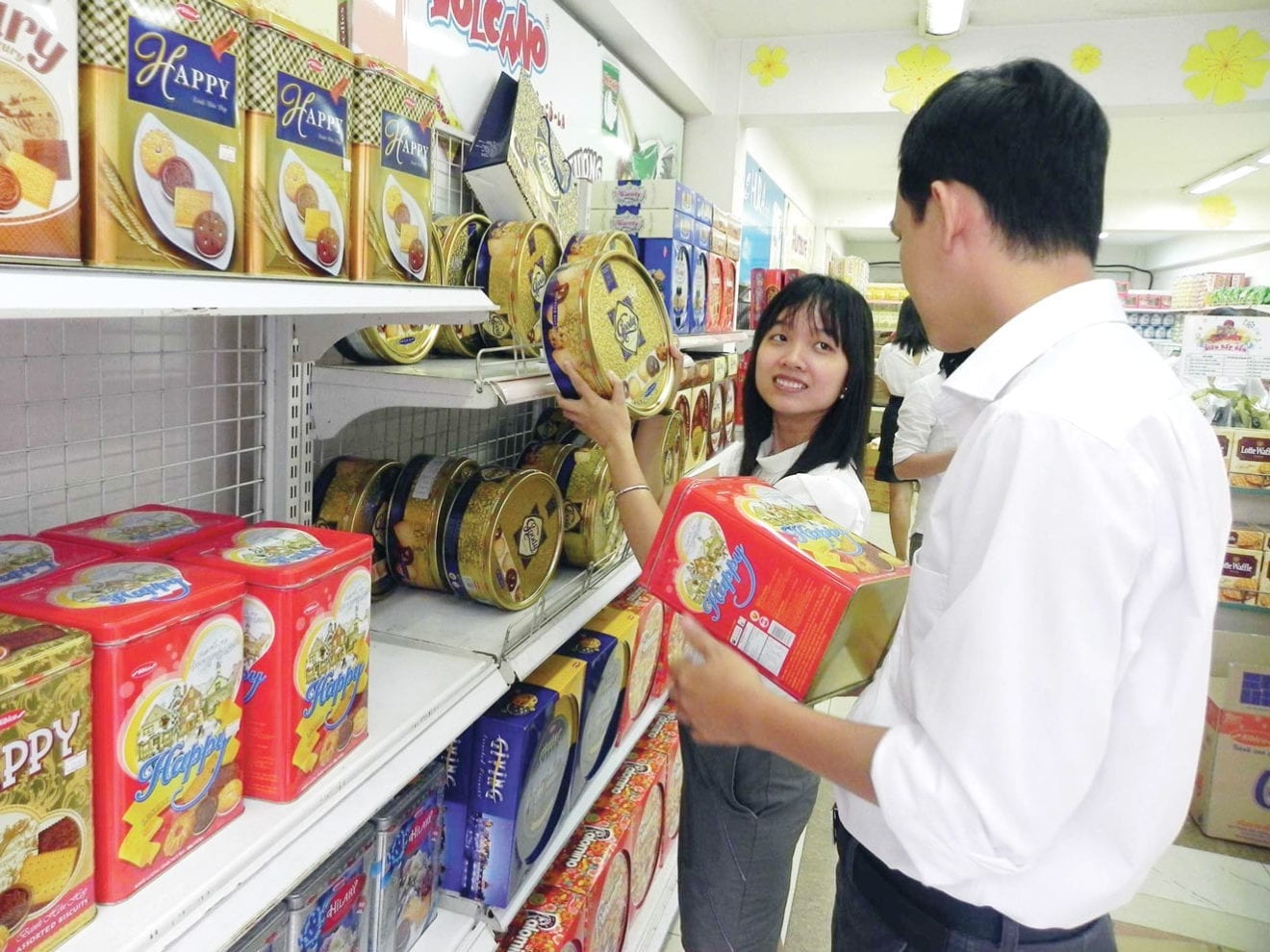
    Bibica power balance coming to an end?

    In June, Bibica announced that it has received PAN Food’s offer to purchase 7.27 per cent of its outstanding shares in the market, an equivalent of 1,121,670 shares, at the price of VND112,800 ($5) apiece.

    It means that PAN Food will have to spend about VND127 billion ($5.6 million) on the deal. If the transaction succeeds, PAN Foods’ stake in Bibica will rise to 51 per cent, turning Bibica into a subsidiary.

    However, currently, Lotte has two representatives in Bibica’s board of directors, while PAN Food has only one, Nguyen Khac Hai.

    Even if PAN Food can successfully hold 51 per cent stake in Bibica, it cannot add another representative to the board of directors immediately, as they will have to wait until a Lotte representative or an independent member end their term. Otherwise, in accordance with the Law on Enterprises, PAN Food should hold 65 per cent of Bibica’s stakes to call a shareholders’ meeting and call for the election of a new member.

    Previously, Truong Phu Chien, vice chairman cum general director of Bibica, registered to sell his 0.72 per cent stake in the company on May 19, 2017.

    Bibica’s leader, who has devoted 30 years of his life to Bibica, said that he wanted to transfer his entire shareholding due to personal financial reasons.

    However, investors do not completely give credence to this reason, as Chien used to say that stake sale was the best way to eliminate conflicts between the two biggest shareholders.

    At the same time as Chien, Vo Ngoc Thanh, another shareholder, also registered to sell a part of his stake in Bibica. From May 23 to June 11, 2017, 2.66 per cent of Bibica’s stakes have been offered for sale.

    From 2013, there have been conflicts between Bibica’s two biggest shareholders, PAN Food and Lotte, which was exacerbated by their similarly large holdings that prevented either of them from making the final decisions in the company.

    Purchasing this 7.27 per cent would give PAN Food an advantage over the other majority shareholder. Also, Chien’s wish for Bibica to have one biggest shareholder will come true.

    A shareholder in Bibica since 2007 by acquiring a 38 per cent stake, now Lotte holds 44.03 per cent as the biggest shareholder.

    Lotte is one of the most famous confectionery manufacturers, offering vital support to Bibica’s research and development department. Moreover, thanks to Lotte, Bibica’s products are now exported to five countries, all part of Lotte’s system of 16 foreign markets.

    Meanwhile, Saigon Securities Inc. (ticker SSI on HOSE) has been holding a 9 per cent stake in Bibica since the middle of 2009.

    As Nguyen Duy Hung fills the position of chairman at SSI and The PAN Group, this acquisition raised PAN Food’s stake in Bibica to 43.73 per cent.

    PAN Food offers Bibica both financial support (on account of SSI) and support in the agriculture and food sectors.

    Bibica scheduled electing additional member to its board of directors at its May 26, 2017 annual shareholders’ meeting, but the plan fell through and the board remained unchanged.

    Nevertheless, the two board members’ decision to sell is expected to alter the balance between the two biggest shareholders.

    Hung is expected to play a major role in this. In the past, when asked whether he wanted to increase ownership in Bibica and gain control, Hung said that even if he wanted to, not enough shares are available on the market.

    “When mentioning me or SSI, people may think that my investment in Bibica is a financial investment instead of a strategic one. If Kinh Do Vietnam Joint Stock Company (now Mondelez Kinh Do Joint Stock Company) had not sold 80 per cent of its stake in the confectionery sector to Mondelez International (an American multinational confectionery, food, and beverage company), we would not have invested in Bibica. We finally decided to invest in this company because in the next five years, we do not want to see our ancestors’ altars covered by foreign confectionery,” Hung told VIR at a recent meeting in Ho Chi Minh City.

    Ambition of becoming a leading confectionery company

    Chien agreed with Hung about Bibica’s development target, saying that the 2.66 per cent stake will be transferred to a new owner based on Bibica’ benefits, such as its brand and product development, instead of personal benefits.

    This is an important thing as Bibica is deploying its key products.

    One of its main products is chocolate pie. Upon mention of this type of confectionery, Vietnamese people may think of ChocoPie, a product of Orion Group, which generated $174.5 million of revenue in 2016 in Vietnam, or Lotte Pie.

    However, in April 2017, Bibica introduced Mini Pie Orienko, which was adjusted to better suit the Vietnamese taste, so that this product can compete with other foreign brands.

    Talking with VIR, Phan Van Thien, deputy general director of Bibica, said that this will be one of Bibica’s main products.

    The company targets to win 20 per cent of market share away from its competitors with this product.

    Previously, Bibica already introduced this product, geared towards the high-income segment, but failed.

    Thus, Orienko is now repositioned as a product for the middle-income segment at the price of VND30,000 ($1.32) per 264 gram box.

    “We employ high-technology for product preservation without using preservatives. The product’s quality is as good as foreign pies, while its price is 30-40 per cent lower. I believe that in the short term we will gain market share, and in the long term our products will replace foreign brands,” Thien said.

    With the capacity of 20 tonnes per day, this chocolate pie product is expected to induce VND200 billion ($8.8 million) of revenue, which will account for 13-14 per cent of Bibica’s total revenue in 2017.

    Currently, Bibica holds 30 per cent of the candy sector and 25 per cent of the pie/cake/cookies sectors.

    At present, Bibica is taking advantage of agricultural products, such as coffee and coconut, or manufacturing products with functions similar to supplementary food, such as candies for sore throat.

    Bibica develops its products based on the advantages of domestic agricultural products.

    Other candy brands for the high-income segment will be produced in June 2017 to reach the target of 50 per cent annual growth rate.

    Chien said that Bibica will develop its products in the domestic market and considers this its main market.

    Bibica’s products were exported to 15 countries, but they contributed only 7 per cent to the company’s total consolidated revenue.

    It is forecasted that the confectionery market in Vietnam will have a growth rate of 8.5-9 per cent per year, with more competition coming, as duties and tariffs in the ASEAN will be eliminated gradually.

    Regarding technology, most companies in the industry across the ASEAN stand on the same technological level (except for Korea and Japan). This requires every manufacturer to focus on quality to win market share.

    Bibica targets to become a leading confectionery company in Vietnam by 2021, with a revenue of VND2.618 trillion ($115.2 million), an equivalent of 20 per cent annual growth rate. This is a challenge to Bibica’s board of directors and supervisors.

    Bibica has announced expanding its manufacturing at Eastern Bibica Co., Ltd. and Northern Bibica Co., Ltd. In particular, in 2017, Bibica expects to spend about VND217 billion ($9.5 million) on investment (in 2016 the amount was $800,800).

    Targets include Bibica Bien Hoa factory (about $2.8 million), the biscuit production line in the Eastern factory ($5.6 million), upgrading the bread production line in the Hanoi factory ($316,800), upgrading the cookie production line ($264,000), and upgrading the fire protection system of Bibica Bien Hoa factory ($132,000).

    Additionally, Bibica is developing an online store with the aim of developing its distribution channels in Ho Chi Minh City and Hanoi, so that the two cities will contribute 30 per cent of Bibica’s total sales.

    At present, Bibica has more than 2000 products in over 500 big and small supermarkets, with 120 exclusive distributors and retail outlets in Vietnam.

    To reach these targets, it is vital for Bibica that its big shareholders get on with each other and put a stop to conflicts.

  • Zara looking to zip up fashion market with new store in Hanoi

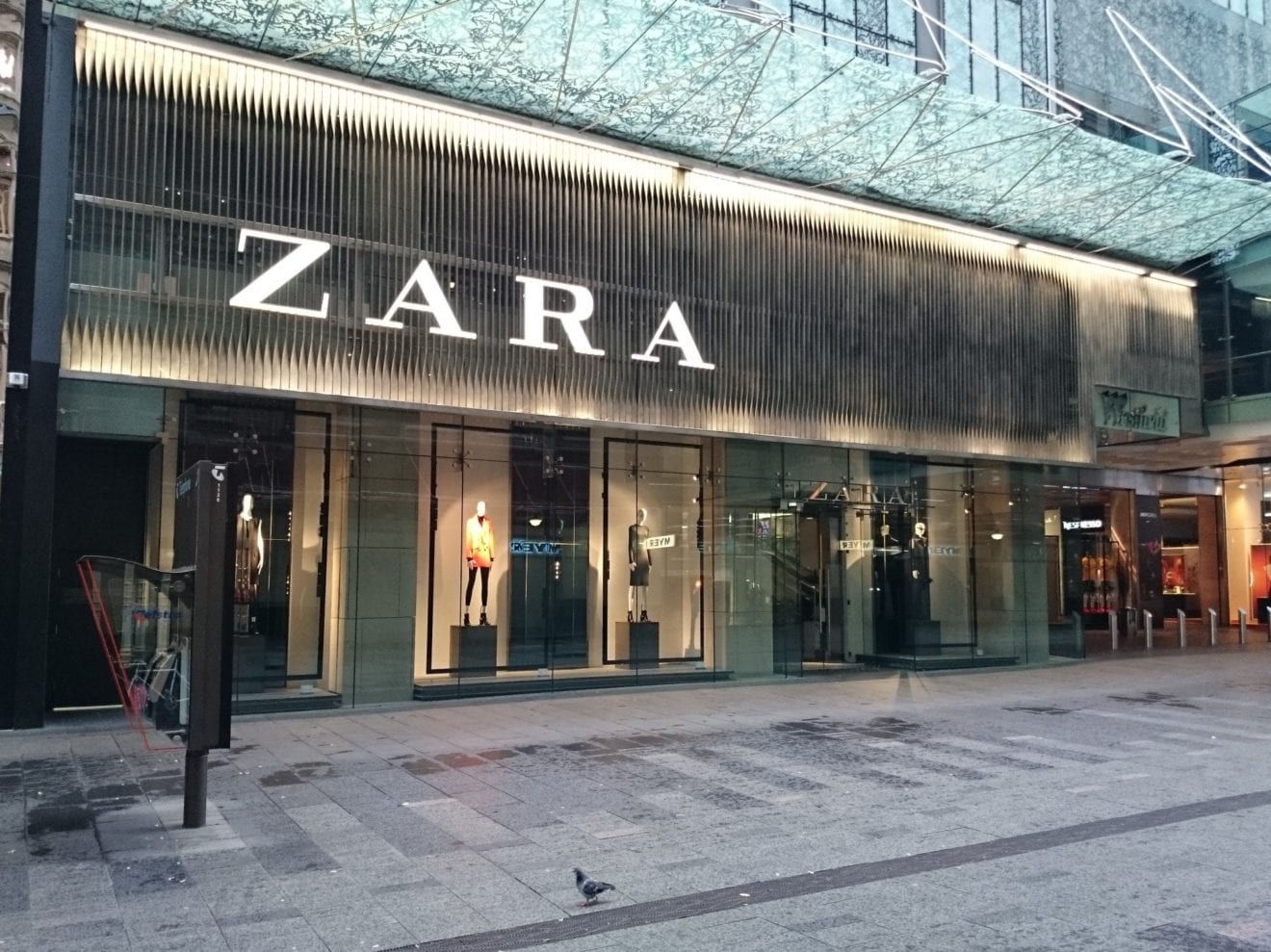
    Zara looking to zip up fashion market with new store in Hanoi

    Fashion lovers will have yet another reason to go shopping with the brand’s first store opening in the Vietnamese capital. High street retailer Zara has announced plans to open its first store in Hanoi in October.

    The world’s leading clothing and accessories retailer has selected the Vincom complex on Ba Trieu Street for the location of its first store in Vietnam’s capital.

    Zara opened its first store in Vietnam in Ho Chi Minh City’s Vincom Dong Khoi commercial center back in September 2016.

    The source also said Zara has spent months preparing for the launch of its Hanoi store.

    Established in Spain in 1975, Zara now has 2,213 stores strategically located in leading cities across 93 countries. The brand is popular thanks to its diversified products and reasonable prices.

    Zara is following in the footsteps of Sweden’s H&M, which has also confirmed the opening of its first store in Ho Chi Minh City’s Vincom Dong Khoi center.

  • Vietnam’s annual inflation expected at 2.6%

    Vietnam’s annual inflation expected at 2.6%

    Inflation this year is forecast at 2.6 per cent amid fluctuations in prices on world markets and adjustments in the cost of public services, according to the latest report from the government watchdog, the National Financial Supervisory Commission (NFSC).

    While average inflation during the first five months of this year hit 4.47 per cent, the NSFC believes it will fall towards the end of the year due to stability in food and restaurant prices.

    Figures from the General Statistics Office show a 0.53 per cent decline in the CPI in May against April, primarily due to sharp falls in food prices. May’s CPI rose 3.19 per cent year-on-year.

    Forex

    The NSFC also pointed out that exchange rates will be vulnerable against high foreign currency demand due to the rising trade deficit, where Vietnam may see its trade balance change from a surplus in 2016 to a deficit of about 3.5 per cent of total exports this year.

    Its calculations show that if the VND/USD exchange rate rises 1 per cent, inflation will increase by 0.17 per cent. The US Federal Reserve raising short-term interest rates in small adjustments has yet to put pressure on the exchange rate, however.

    It’s very likely, though, that “the VND will be under pressure by the US Fed’s roadmap of raising interest rates in the long run, along with unpredictable changes in the prices of the Chinese Yuan and Japanese Yen,” the NFSC said, adding that efforts are required to ease pressure on exchange rates and drastic measures needed to tackle bad debt.

    Earlier, BMI Research, a Fitch Group company, predicted that further Chinese Yuan weaknesses could prompt a slight devaluation of the VND in 2017 by the SBV to preserve export competitiveness.

    By end-May, the VND was down more than 1 per cent against the USD this year, according to State Bank of Vietnam (SBV) figures.

    Interest rates

    Vietnam is now more eager than ever to tackle the scale of bad debts in its banking sector, especially with the amount sold to the Vietnam Asset Management Company making up 10.08 per cent of total outstanding loans by end-2016.

    The government issued Decree No.61/2017 on May 16 on the verification of the initial price of bad debts and the formation of a council for bad debt auctions. A draft law on support for credit institution restructuring and bad debt settlement is also being finalized, and a decree on the settlement of credit institutions’ bad debt may be approved as soon as June 20.

    But while the NSFC report noted that measures to settle bad debts will help reduce interest rates, SBV Deputy Governor Ms. Nguyen Thi Hong made it clear in a meeting last week that lowering interest rates will remain a challenge for the central bank in 2017.

    “Some commercial banks have increased interest rates on certificates of deposit and VND deposits already, mainly for terms of over 12 months,” she said, adding that by the end of last month, the central rate was up 1 per cent from the same period last year.

    In a related note, the NFSC’s calculations show that the country’s ratio of credit-to-GDP has continuously increased since the last quarter of 2015, reaching 11 per cent in the first quarter of this year. This is the second highest level in the 2009-17 period, after the 13 per cent recorded in the first quarter of 2011.

    At end-May, credit had risen 5.7 per cent compared to the same period last year.

  • Vietnam Airlines targets nearly $4 bln in revenue for 2017

    Vietnam Airlines targets nearly $4 bln in revenue for 2017

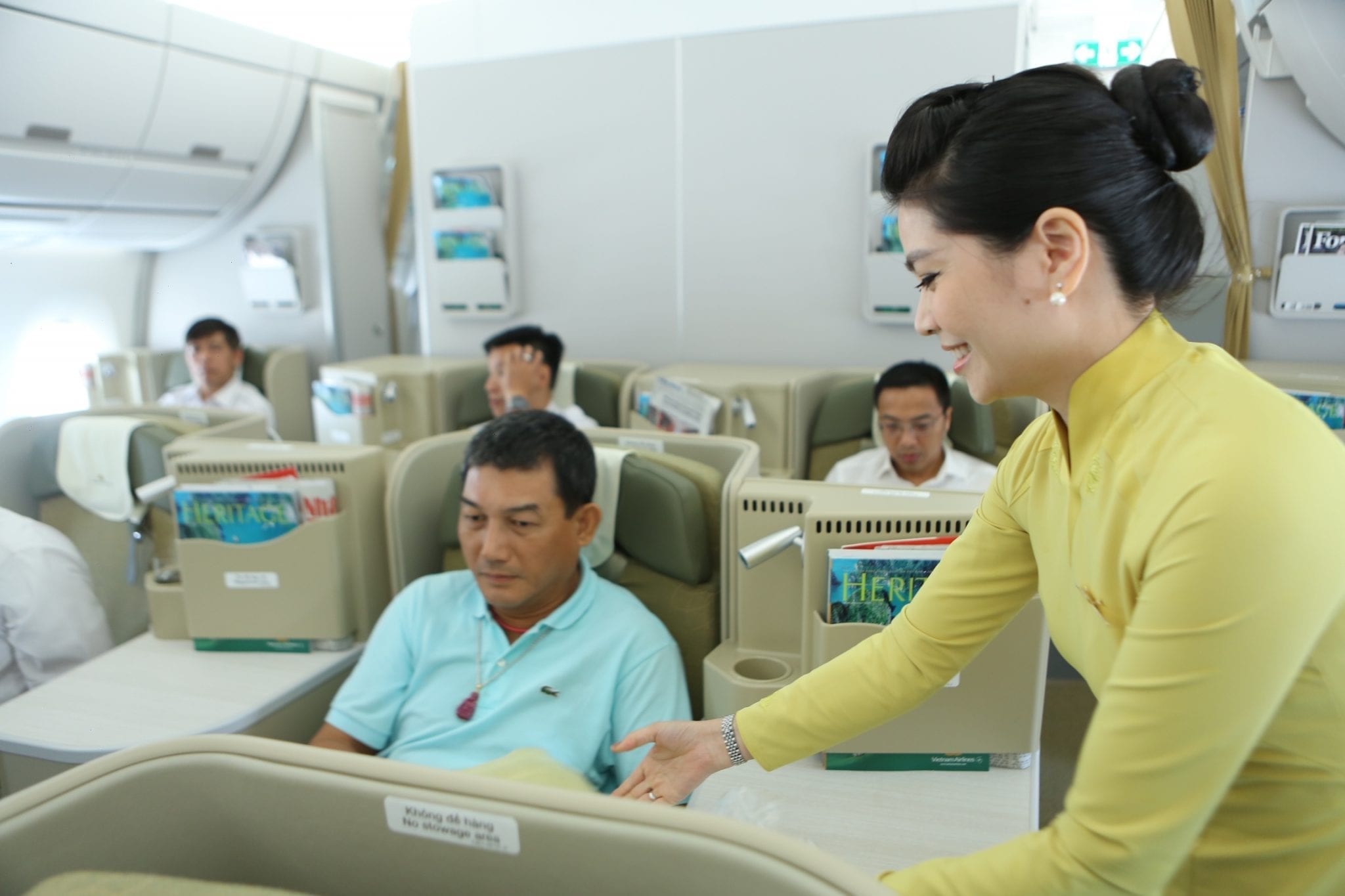
    A high salary bill and increased competition dragged on the carrier’s income last year. Vietnam’s national flag carrier Vietnam Airlines (VNA) has set a revenue target of VND87.9 trillion (nearly $4 billion) for 2017, up 22.7 percent from last year.

    A report to be submitted at VNA’s annual shareholder meeting on June 20 shows that 2016 was a difficult year for the carrier due to increased competition from budget airlines on international and domestic routes.

    In 2016, VNA’s revenue hit VND71.6 trillion, eight percent below its target. That was partly due to a salary bill for 6,199 workers that cost VND2.7 trillion.

    Pilots’ salaries rose 4.7 percent on average to VND115.3 million per month, while flight attendants enjoyed a rise of 10.9 percent from last year to VND25.5 million.

    According to the airline, the Vietnamese economy remains unpredictable due to foreign currency and fuel price fluctuations, as well as fiercer competition.

    At the upcoming meeting, VNA will ask shareholders to for approval to issue 191 million new shares to existing stakeholders at a starting price of VND10,000 in order to increase its charter capital.

    If the proposal is adopted, the shares will be issued in the fourth quarter of this year, bringing the airline’s charter capital to VND14.2 trillion.

    The money will be used to buy more Boeing Dreamliners and Airbus A350s.

  • Vietnam launches first specialties e-commerce platform

    Vietnam launches first specialties e-commerce platform

    The site offers about 20,000 agro-forestry-fishery products, herbal food, beverage and handicrafts and others from 5,000 suppliers. All listed goods have clear origins and quality certificates issued by competent authorities.

    The platform sells commodities directly to customers from suppliers. The VNPOST only cooperates with reputable partners who have obtained business licences and food safety certificates.

    Prices of goods and delivery services are posted publicly, while payment for the shipment is collected at the time of delivery.

    At the launching ceremony, Deputy Minister of Information and Communications Nguyen Minh Hong asked the VNPOST to pay attention to technical infrastructure and working mechanism for safe and legal transactions.

    VNPOST General Director Pham Anh Tuan said his company wants to form links with suppliers of specialties across regions.

    Through the site, VNPOST hopes to contribute to promoting the “Vietnamese people give priority to using Vietnamese goods” campaign, Tuan added.

  • Taxi booking service via Facebook Messenger launched

    Taxi booking service via Facebook Messenger launched

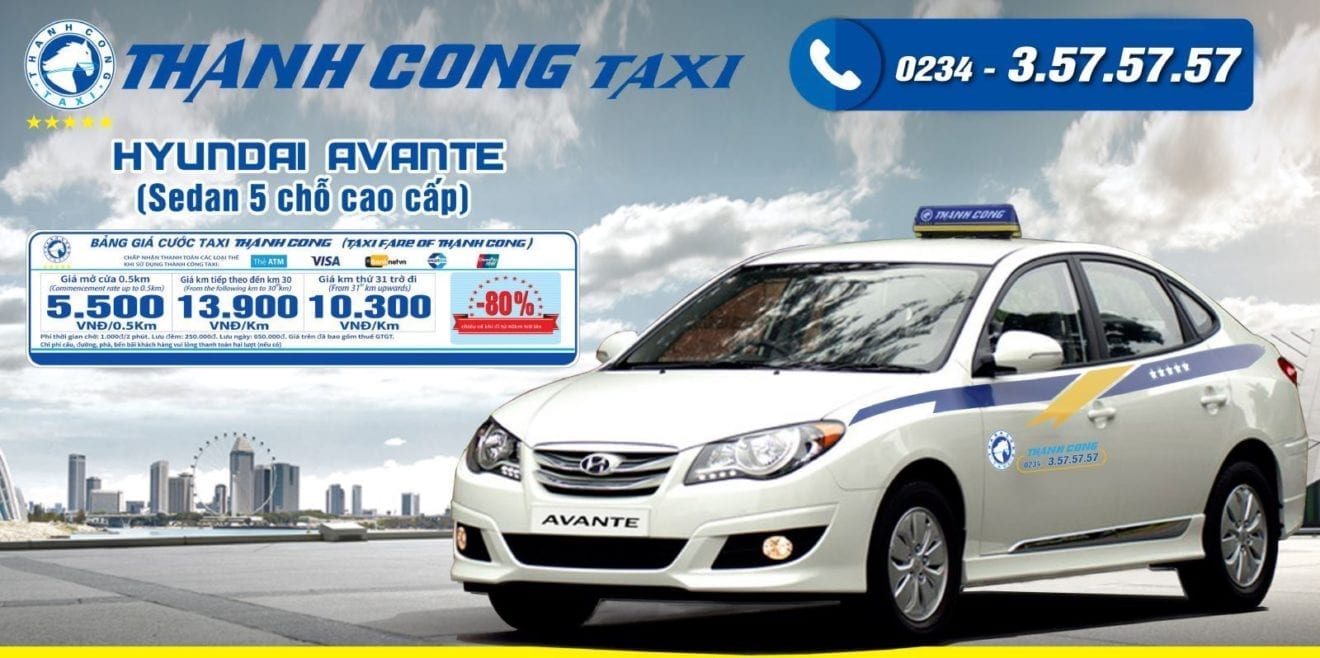
    The service launched by Thanh Cong Taxi on June 13 is the first of its kind in Vietnam, allowing people to hail a cab from the company without having to download and use a taxi-hailing app.

    Nguyen Khuong Duy, representative of Thanh Cong Taxi, said that Thanh Cong Taxi is a pioneer in Vietnam using the latest Chatbot technology of Facebook to develop the service.

    Thanh Cong company takes advantage of the Facebook Messenger application installed in mobile phones of some 40 million Vietnamese people to offer services to customers in the traditional to luxury segments.

    Besides requesting a ride, people can easily leave their comments by chatting via the messenger, Duy said.

  • Vietjet makes its debut at Hong Kong International Travel Expo with 5,000 free tickets

    Vietjet makes its debut at Hong Kong International Travel Expo with 5,000 free tickets

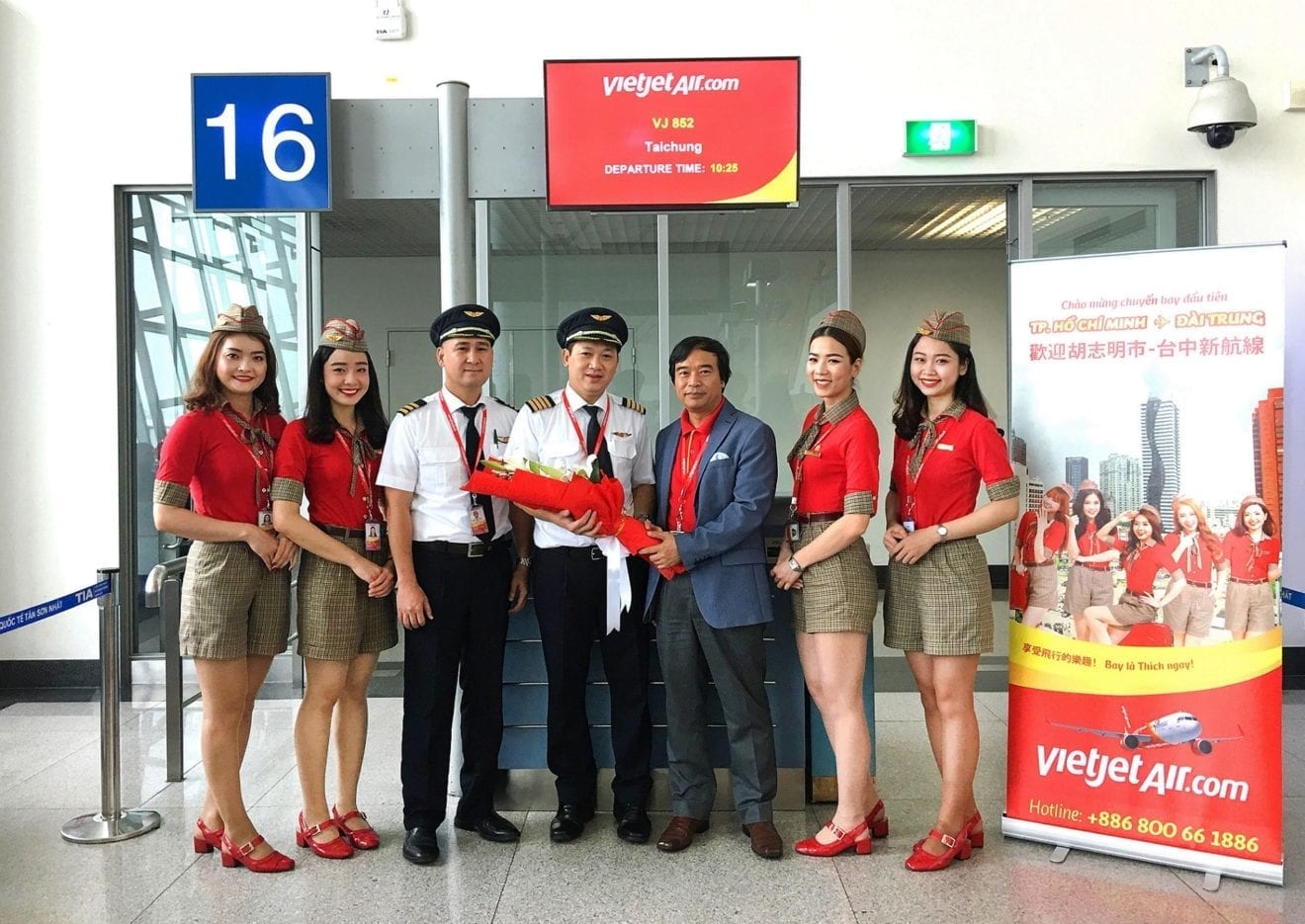
    The fast growing New-Age Carrier, Vietjet, will take part in the International Travel Expo (ITE) Hong Kong to be held at the Hong Kong Convention and Exhibition Centre from June 15 to 18, 2017.

    As a debutant of this star event of the Asia travel industry, Vietjet will turn out in full force with attractive and informative displays, special offers and promotion programs. The Vietjet Booth at G102 with the theme, “Free Summer, Fly for Free,” will spot the very attractive Vietjet Red and Yellow to welcome its visitors. They will be treated to interesting and interactive activities, from photo-taking opportunities with the popular Vietjet crew to mobile phone games with special prizes for the winners.

    The highlight of Vietjet’s presence in the ITE will be a feature performance on the Grand Stage at 2:00 pm on June 17 (Saturday), with a spectacular Flashmob Dance by a leading dance group Helki.Fam. There will also be a drama and game session on stage for visitors from the public.

    To celebrate Vietjet’s participation in the ITE, Vietjet also offers 5,000 promotional tickets priced only from HKD0 (excluding taxes & airport fees) within the golden hour 13h-15h during the ITE’s four-day time from June 15 to June 18, 2017 only at their website. The promotion applies for Ho Chi Minh City-Hong Kong route with flight time being from August 1 to December 31, 2017 (excluding national holidays).

    The recent Vietjet Summer Promotion, “Free Summer, Fly for Free,” held between April 25 and June 15, 2017, has proven to be very popular among travelers with the 1 million HKD0 tickets.

  • Vietnam, Indonesia have much faster internet speed than India

    Vietnam, Indonesia have much faster internet speed than India

    Ranked 89 globally, India’s average internet connection speed of 6.5 Mbps is slower than Vietnam and Indonesia, which are much faster, a report said on Friday.

    While Vietnam, ranked 58, had an average internet speed of 9.5 Mbps, Indonesia at rank 77 provided a speed of 7.2 Mbps, Global leader in content delivery network services Akamai Technologies’ “The State of the Internet Q1 2017 Connectivity” found.

    The report also said that India witnessed a 4 Mbps broadband adoption of 42 per cent in the first quarter of 2017 with a year-over-year change of 81 per cent.

    “Increases in connection speeds and broadband penetration have helped enable the internet to support levels of traffic that even just a few years ago would have been unimaginable,” David Belson, editor of the report, said in a statement.

    “One need only look to January’s US Presidential Inauguration, which broke traffic records for live coverage of a single news event delivered by Akamai, largely thanks to the combination of more viewers watching at increasingly higher levels of video quality,” Belson added.

    On a global level, the average connection speed was 7.2 Mbps – an increase of 15 per cent year-over-year – and average peak connection speed increased 28 per cent year-over-year to 44.6 Mbps in the first quarter of 2017.

    “While South Korea had the highest average connection speed globally at 28.6 Mbps in the first quarter, Singapore had the highest peak connection speed at 184.5 Mbps in the first quarter,” the report noted.

    The average mobile connection speeds ranged from a high of 26 Mbps in Britain to a low of 2.8 Mbps in Venezuela. Germany had the highest peak mobile connection speed at 200 Mbps in the first quarter.

  • Vietnam among top 6 most-attractive retail markets

    Vietnam among top 6 most-attractive retail markets

    Vietnam has been named among the Top 6 most-attractive retail markets in the world this year by A.T. Kearney in its Global Retail Development Index (GRDI), following India, China, Malaysia, Turkey, and the United Arab Emirates (UAE).

    It outstripped populous markets such as Indonesia (8th) and countries with good retail markets in recent years, such as Thailand (30th), Philippines (18th), Kazakhstan (16th), and Saudi Arabia (11th).

    This is evidence that Vietnam’s retail market is again attracting foreign investors, as it was outside of the Top 30 in 2002, then 6th in 2009, 14th in 2010, and 23rd in 2011, according to A.T. Kearney.

    The reason why Vietnam is in the Top 6 is that its investment laws are open and promote its attraction among foreign retailers.

    The government has permitted foreign retailers to own 100 per cent of capital in the country’s retail sector and has adopted priority policies to attract them.

    This is reflected in a 12.5 per cent increase in foreign investment in 2016. The recent free trade agreement (FTA) signed with the EU is expected to push investment even higher.

    Retail sales have also increased significantly in recent times, reaching $118 billion in 2016, up 10.2 per cent against 2015.

    “It’s a suitable time for Vietnam to boost up its economy, which is shifting towards private enterprise and high-value export items, and this is expected to increase incomes and consumption in the long term,” said Mr. Soon Ghee Chua, AT Kearney’s Southeast Asia chief.

    He also believes that government incentives, urban and middle-class population growth, a young population, and GDP growth expected at 6.6 per cent this year gives foreigners plenty of reason to be optimistic about Vietnam.

    E-commerce also contributes significantly to retail revenue in the country, which is expected to increase 22 per cent this year, and online discounts and promotions are boosting sales. AT Kearney notes, however, that businesses will have to be careful and have a long-term strategy to sustain this growth.

    Foreign retailers are expanding their business systems in the domestic market. According to A.T. Kearney, convenience stores and mini-marts are the fastest growing segments. Circle K and FamilyMart entered the market in 2009 and are expanding rapidly. FamilyMart expects to have more than 800 stores by 2020 and 7-Eleven will open its first store in Vietnam this month under a franchise agreement with Seven System Vietnam, and aims to open 1,000 stores over the next ten years.

    According to forecasts to 2020, modern retail channels will increase up to 45 per cent, the country will have about 1,200-1,300 supermarkets, the number of trade centers will also increase to over 300, and convenience stores will number in the thousands.

    The GRDI was first published in 2002, ranking 30 developing countries on their attractiveness for retail investment.

    It analyzes 25 factors related to macroeconomics and retail, to help retailers identify global strategies and identify emerging market investment opportunities. The study not only indicates the most attractive markets today but also potential markets in the future.

  • Hanoi shops employ topless men to lure customers

    Hanoi shops employ topless men to lure customers

    The trend started at a restaurant on Thai Ha Street. The images of young men without a shirt on and hot body made many curious and went to the restaurant to see for themselves.

    Tran Thai Linh, a local in Dong Da District, said she also went to the restaurant out of curiosity but then she was disappointed after discovering that the men only appeared for two minutes when the restaurant introduce new dishes.

    Linh said the restaurant definitely hit the nail on the head as everybody liked beautiful things. The images were shared by women are those who came to the restaurant at that moment.

    “I wasn’t there personally but it looked like both adults and children were at the restaurants while the topless waiters appeared. This may not be good for children as they are too young and people of different age groups also come here to eat and may find it offensive,” Linh said.

    After the images and the video clip were shared widely on the internet, many people commented that the PR stunt was crude and that they prefer waiters in ties and shirts.

    Nguyen Minh Hoang, head of the marketing department of the restaurants, said, “This is a private event to introduce new dishes. All 120 guests we invited are students and office workers age 18 to 35. However, some people who couldn’t attend gave their tickets to their relatives and acquaintances. That’s why there are elderly people and children.”

    Hoang said the restaurants couldn’t exactly tell the guests to leave then. He said such private event had been held in many countries before but the restaurant failed to predict the unexpected outcome.

    Not long after, another clip was quickly shared on Facebook, showing hairdressers in only trousers and ties serving customers. Many said they would ask their friends to go to the salon.

    Trinh Minh Hang from Quang Ninh Province said, “I needed my hair done and wanted to experience the service by those muscular and handsome men so I called the salon. However, they said the men were there for a special event and they only washed and dried your hair.”

    Kim Anh, an office worker in Thanh Tri District, said at first she wanted to try too but then was persuaded by her friends that it was not very appropriate.

    Hanoi Department of Culture, Sports and Tourism fined the Tran Anh Company which runs electronic goods stores VND40 million (USD1,920) fast year for employing promotional girls wearing bikinis to greet customers last year. The company claimed that they just co-operated with a partner to make a sex education video series, and it was not a marketing campaign.

    In 2012, VietJet Air was also fined VND20m for in-flight bikini show to celebrate its first flight between Ho Chi Minh City and Nha Trang.

  • Vietnam’s exporters hunt for robusta coffee as supplies dwindle

    Vietnam’s exporters hunt for robusta coffee as supplies dwindle

    International trade is holding bulk of Vietnamese robusta stocks. Vietnamese coffee exporters, faced with dwindling robusta supplies in the world’s top producer, are paying up to buy beans from international trade houses who scooped up much of the crop early in the season.

    Local exporters in Vietnam are struggling to find coffee to fulfill their contracts, trade sources said, after farmers sold forward much of the harvest early on in the season when global prices hit their highest in more than five years.

    The squeeze comes at a time of tight supplies in the country, after a smaller crop this season and heavy rains during harvesting that wreaked havoc on crop quality.

    Vietnam is the world’s top grower of robusta coffee, which is mainly used to produce instant or soluble coffee.

    The coffee is priced against ICE robusta futures and international trade houses were able buy at a discount of $50 to $70 a tonne when farmers were selling heavily.

    “The international trade has been stockpiling basically,” said one European trader. “They decided to get long early on.”

    Local exporters, now unable to get supplies from farmers, have been forced to buy from the international trade houses at premiums of $20 to $30 a ton, industry sources in Europe and Vietnam estimate.

    They pegged profits for the international trade houses, who have stored the coffee in their warehouses in Vietnamese ports, at $70 to $100 a ton.

    “They used financial leverage to buy at discounts at the beginning of the harvest season,” said Phan Hung Anh, deputy director of Anh Minh Co, a coffee-trading firm in Daklak, Vietnam’s largest coffee-growing province. “And now they sell back to companies at premiums.”

    “Vietnamese firms can’t do the same because their financial capability and storage don’t match those of international trading houses.”

    Vietnam is expected to produce 26.3 million bags of coffee in the 2016/17 season, down from 28.4 million in the prior season, Rabobank figures show.

    International traders were holding roughly 6.5 million 60-kg bags (390,000 tons) at the end of May, out of about 9 million in stocks in the country, sources estimated. They have sold about 30,000 to 40,000 tons to local exporters, Vietnamese traders said.

    These trades have been painful for local Vietnamese exporters, some of whom sell beans to coffee giants such as Nestle and Jacobs Douwe Egberts.

    Traders said many had sold coffee far in advance to roasters at much lower prices and are now feeling the pinch of strengthening differentials as they inch towards delivery.

    The exporters have been left with little choice, however, as farmers sit on their remaining good quality coffee in the hope that prices will climb.

    Farmers are holding less than 15 percent of the crop at this point in the season, compared to about 35 percent in a typical year, traders estimated.

    Local exporters could find themselves squeezed further in coming months as supplies continue to dwindle and differentials strengthen before the start of the next harvest in October.

    There is also a risk international trade houses may stop selling coffee to Vietnamese exporters, as they shift attention to delivering on their own contracts with roasters later in the year.

    “That tightness is starting to materialize,” said another trader. “And if they turn off the tap, the prices and the differentials will go even higher.”

  • Vietnamese steel faces anti-dumping investigation in Australia

    Vietnamese steel faces anti-dumping investigation in Australia

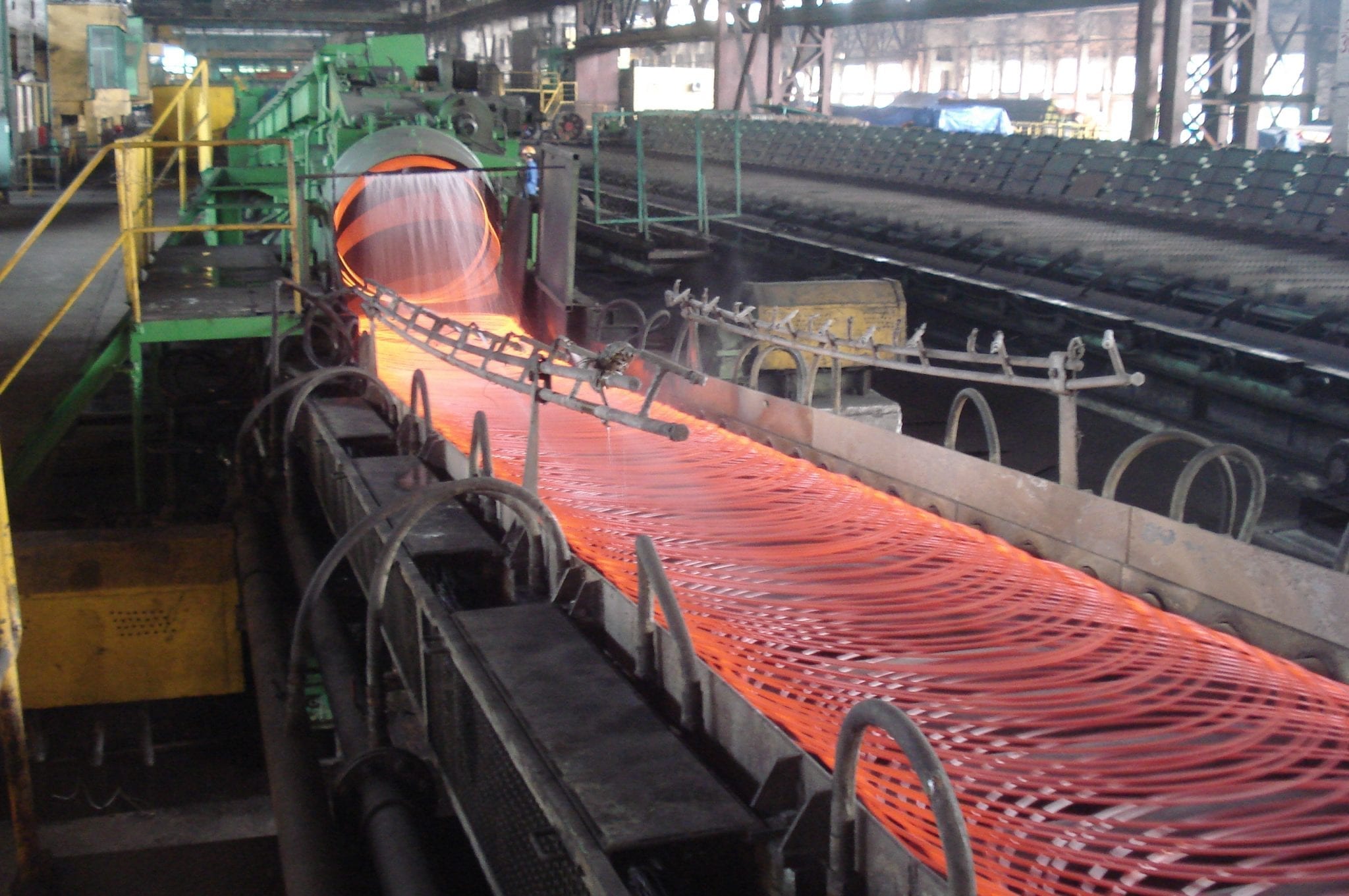
    An Australian firm has accused Vietnamese manufacturers of manipulating market prices. Australia’s Anti-Dumping Commission (ADC) has initiated an anti-dumping investigation into steel rods imported from Indonesia, South Korea and Vietnam.

    The investigation was launched following a complaint lodged by OneSteel Manufacturing Pty Ltd, a manufacturer of steel coil in Australia.

    OneSteel said that that the goods are being exported to Australia at prices less than their normal value and that dumping has damaged the Australian industry through loss of sales, market share and profits.

    The products include hot rolled rods in coils that are not subject to export tax in Australia at present.

    OneSteel alleged that the dumping margin on products from Vietnam is at least 30.6 percent. The company said that the price of these products in Vietnam should not be used to calculate their global market value.

    Steel products from Indonesia, Taiwan and Turkey have also been subject to anti-dumping investigations in Australia, and both Indonesia and Turkey were slapped with anti-dumping taxes in 2015 for a year, while the same products from China were hit with a tariff in April 2016.

  • Taxi boom blamed for traffic jams in HCM City

    Taxi boom blamed for traffic jams in HCM City

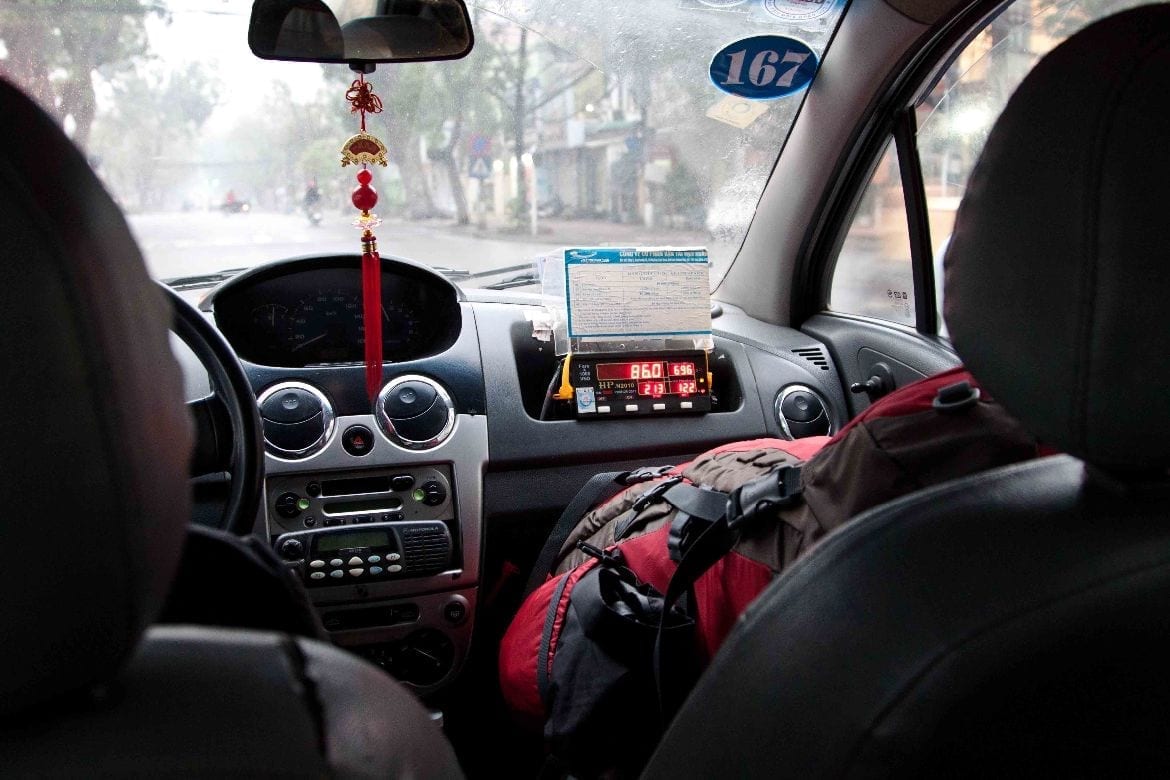
    The city was home to around 300 app-based taxis of less than nine seats in 2015. But the figure grew to 2,437 by the early 2016 and 22,000 by late April this year.

    Giao attempted to blame Uber and Grab for being partially responsible for HCM City’s traffic jams.

    Meanwhile, the city has more than 11,000 traditional taxis, raising the city’s total taxi number to over 33,000 against the set taxi number target of just no more than 12,700 by 2020. The mushrooming taxi development has worsened the city’s traffic jams.

    Nguyen Van Tam, deputy head of the HCM City Transport Department, suggested that app-based taxi boom has become a new problem for the city, so, the city has considered halting the transportation license for cars of below nine seats to operate under the form of app-based taxi service.

    The re-licensing will be carried out after the city finishes a plan on app-based taxi operation, Tam said.

    A representative from the Southern Airport Authority claimed the severe traffic congestion around Tan Son Nhat International Airport is also partially caused by Grab and Uber cars, many of which cruise around to wait for customers.

    Earlier, traditional taxi enterprises urged management agencies to take appropriate steps against foreign ride-hailing firms like Uber and Grab in order because they were proving far more competitive that traditional taxi services.